An Automated Detection Method for Motor Vehicles Encroaching on Non-Motorized Lanes Based on Unmanned Aerial Vehicle Imagery and Civilized Behavior Monitoring


Abstract
1. Introduction
- Simultaneous understanding of targets and regions: Detecting vehicles alone is insufficient to determine encroachment; pixel-level characterization of the non-motorized line area is required.
- Perspective and projection errors: Elevated/bird’s-eye view angles cause spatial misalignment between vehicle projections and lane markings, rendering simple line-crossing logic unreliable.
- UAV-oriented enforcement dataset and protocol: We curate a cross-view dataset for non-motorized lane encroachment, consisting of ~800 high-resolution frames/images (including ~500 UAV-view samples). The data cover multiple intersections, flight heights, and tilt angles, as well as diverse lighting/occlusion conditions. We adopt a scene-wise split by video sequence/intersection to reduce temporal leakage and annotate (i) vehicle HBBs and plate OBBs and (ii) a binary enforceable lane region mask.
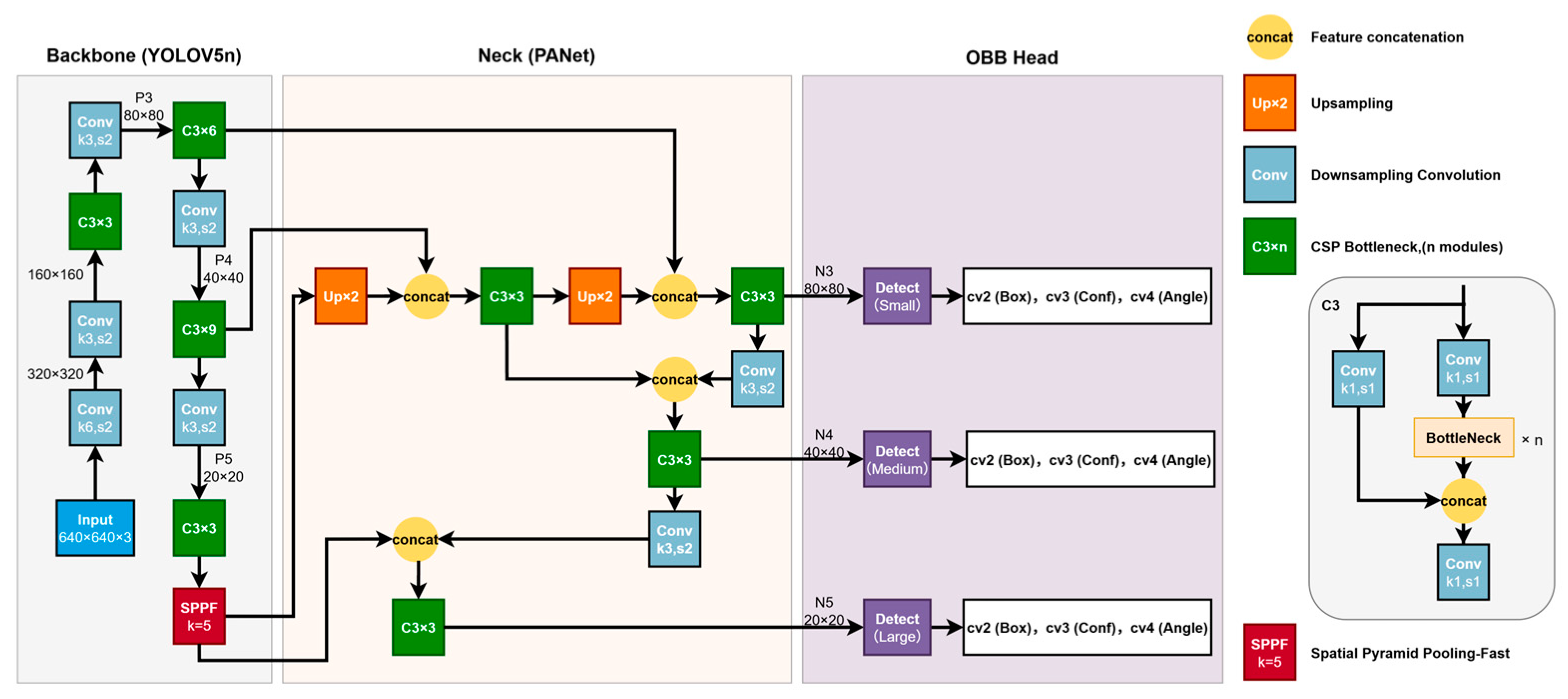
- Hybrid YOLOv5n-OBB for rotated plate localization under UAV views: We develop a lightweight hybrid detector via architecture grafting and weight transfer, using a stable YOLOv5n backbone with an Anchor-Free OBB head to localize rotated license plates under large pose variation and small-target conditions. In the end-to-end pipeline, vehicles are detected with axis-aligned boxes for occupancy computation, while plate OBBs provide cleaner crops for rectification and OCR evidence.
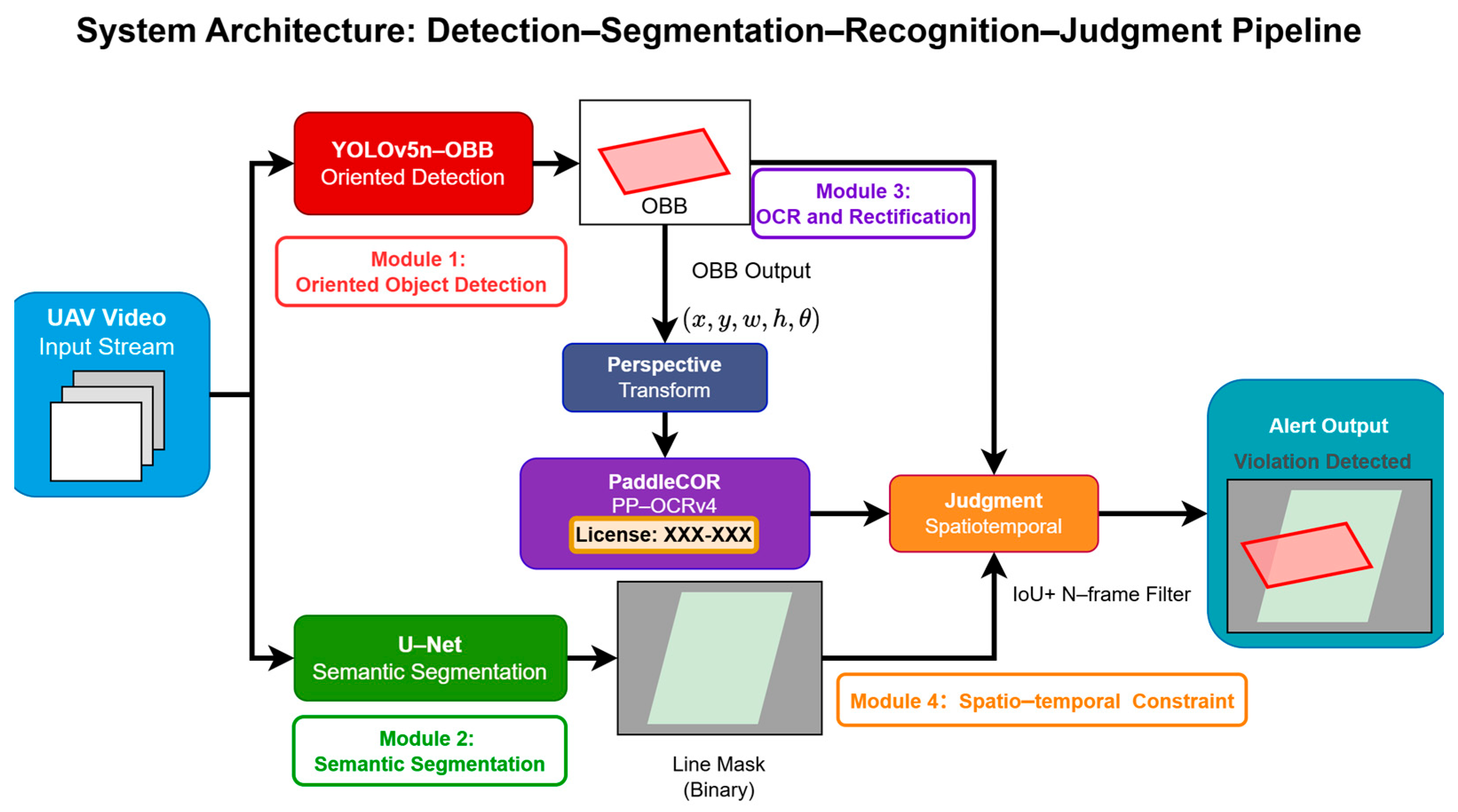
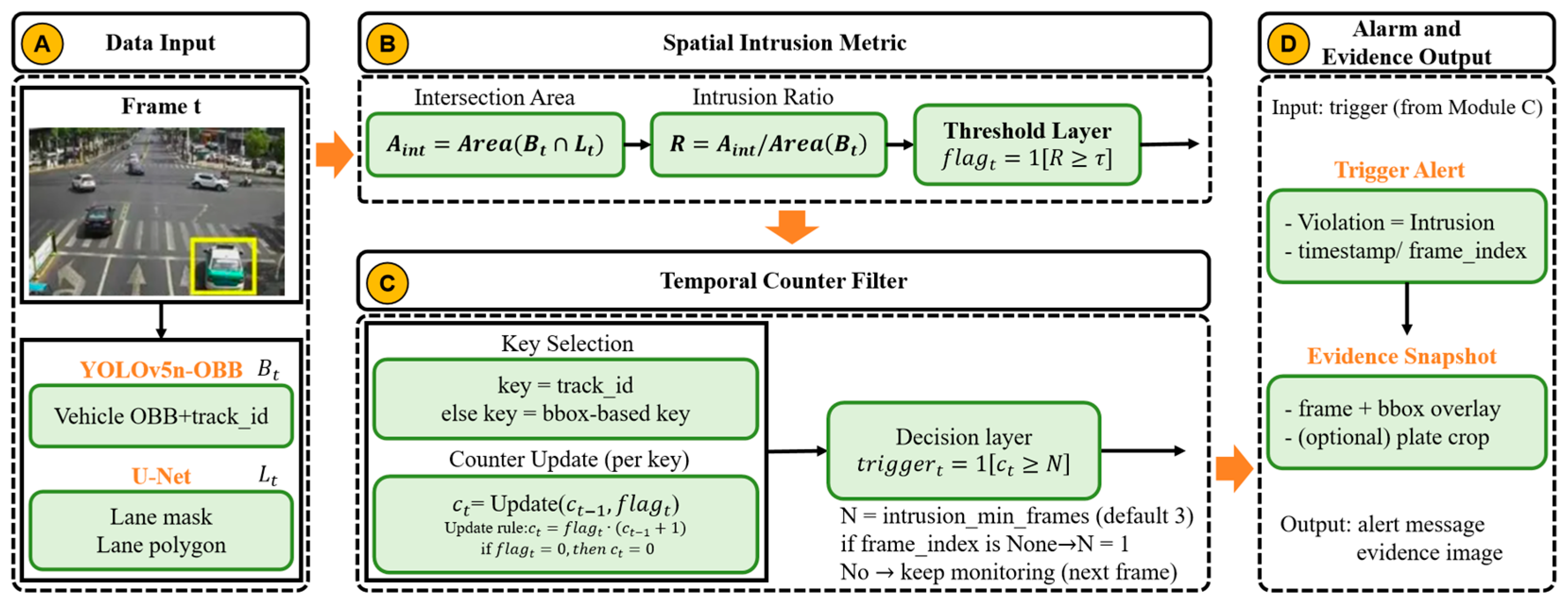
- Closed-loop decision with evidence output: We integrate lane region segmentation (U-Net) with an area ratio encroachment criterion and an N-frame temporal counter to suppress transient misdetections and stabilize alarms. To improve evidential value under UAV tilt, we apply perspective rectification on plate OBBs and perform evidence-triggered OCR, producing “alarm + readable plate evidence” outputs suitable for practical governance.
2. Research Advances in Lane Violation Detection and License Plate Recognition Technology
2.1. Deep Learning-Based Object Detection Techniques
2.2. Semantic Segmentation and Region Classification in Road Scenes
2.3. Optical Character Recognition (OCR) and License Plate Recognition
2.4. Current Research Status of Traffic Violation Detection Systems
3. Methodology
3.1. System Architecture and Data Flow
3.1.1. Overall System Architecture Design
3.1.2. Data Flow and Network Input/Output Process
3.2. Improved YOLOv5n-OBB Rotated Object Detection Model
3.2.1. “Grafting” Design of Model Architecture
3.2.2. Rotation Box Definition and Mathematical Expression
3.2.3. Distribution Focal Loss and Multi-Task Loss Function
- Rotated IoU Loss ()
- 2.
- Distribution Focal Loss ()
- 3.
- Classification Loss ()
3.2.4. Weight Transfer and Training Strategy
- Source Weight Selection: Load yolov5nu.pt. This is the weight file converted by Ultralytics to adapt YOLOv5n to the new codebase, with layer naming conventions compatible with v8/v11.
- Transfer Execution: The code automatically matches and loads the weight parameters for the backbone and neck networks.
- Cold Start and Fine-Tuning: Due to the OBB head’s structure (output channels include angle parameters) being fundamentally different from the original Detect head, these parameters are randomly initialized.
- Training Configuration: The model is fine-tuned end to end with 100 epochs and an early-stopping patience of 10. The input resolution is set to . Data augmentation includes Mosaic (probability 1.0), HSV (Hue, Saturation, and Value) transformation, and random translation (translate = 0.1). Mosaic augmentation is disabled during the last 10 epochs to improve localization accuracy.
3.3. U-Net-Based Semantic Segmentation of Non-Motorized Lane
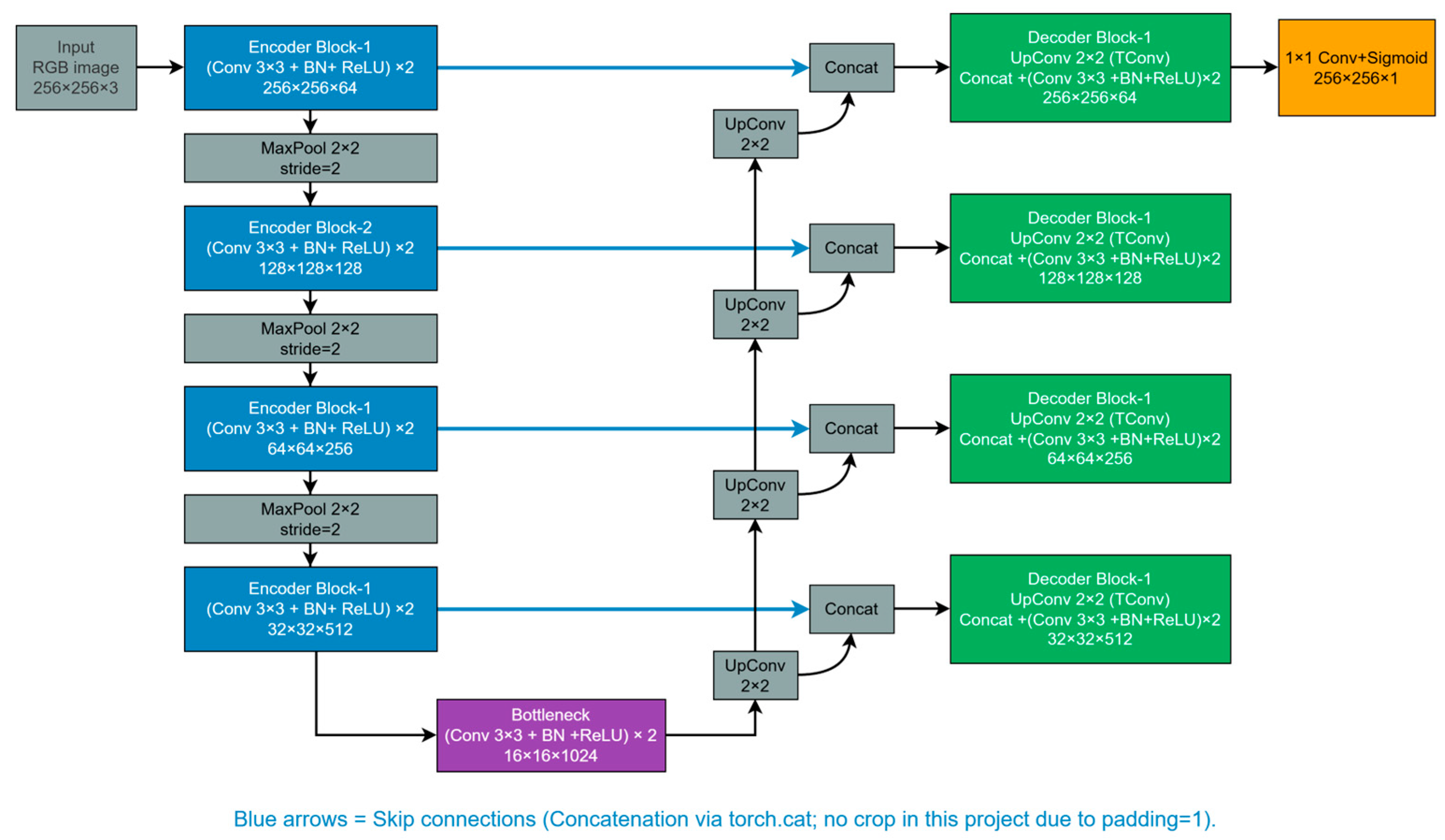
3.3.1. Network Topology: U-Net
- The encoder (shrink path) normalizes the input image size to [0, 1] using ToTensor. The encoder consists of four repeated structural blocks, each containing two consecutive convolutional units. Each block contains two Convolutional (Conv)–Batch Normalization (BN)–Rectified Linear Unit (ReLU) layers, followed by a max-pooling for downsampling. As the network deepens, the number of feature channels doubles per layer and ultimately reaches 1024 channels at the bottleneck layer. This process aims to extract high-level semantic features but sacrifices spatial resolution.
- Decoder (Expansion Path): The decoder also consists of four structural blocks. Each block first doubles the feature map size via a transposed convolution while halving the number of feature channels. Subsequently, a skip connection is employed to crop the feature map from the corresponding encoder layer and concatenate it with the upsampled feature map. This design effectively compensates for spatial detail information lost during downsampling, enabling the network to accurately reconstruct the edge contours of non-motorized lanes.
- The final layer of the output layer employs a convolution to map the feature vector into a single-channel output. This output then passes through a Sigmoid activation function, compressing the pixel values into the [0, 1] range to generate a binary mask.
3.3.2. Training Optimization for Small Samples
3.4. Character Recognition and Perspective Correction
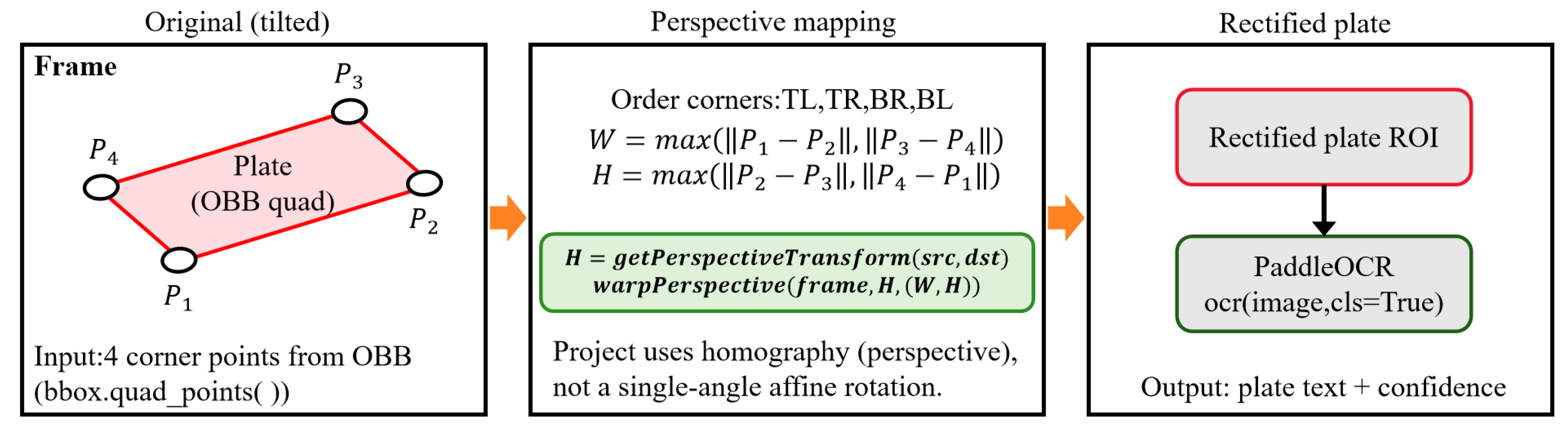
3.4.1. Geometric Projection-Based Image Correction
3.4.2. PP-OCRv4 Server Edition Recognition Model
- Text Detection (Detection): This utilizes the ch_PP-OCRv4_det_infer model, employing the DBNet (Differentiable Binarization) algorithm to precisely locate and correct character regions within calibrated images.
- Orientation Classification (Classification): This uses the ch_ppocr_mobile_v2.0_cls_infer model to determine whether license plates are rotated 180° and automatically corrects them.
- Text Recognition: This utilizes the ch_PP-OCRv4_rec_infer model. Based on the SVTR (Scene Text Recognition with a Single Visual Model) architecture, this model integrates CNN’s local feature extraction capabilities with Transformer’s global sequence modeling capabilities, enabling effective recognition of mixed sequences of Chinese characters, letters, and numbers [49].
3.5. Logic for Determining Encroachment and Spatial–Temporal Constraints
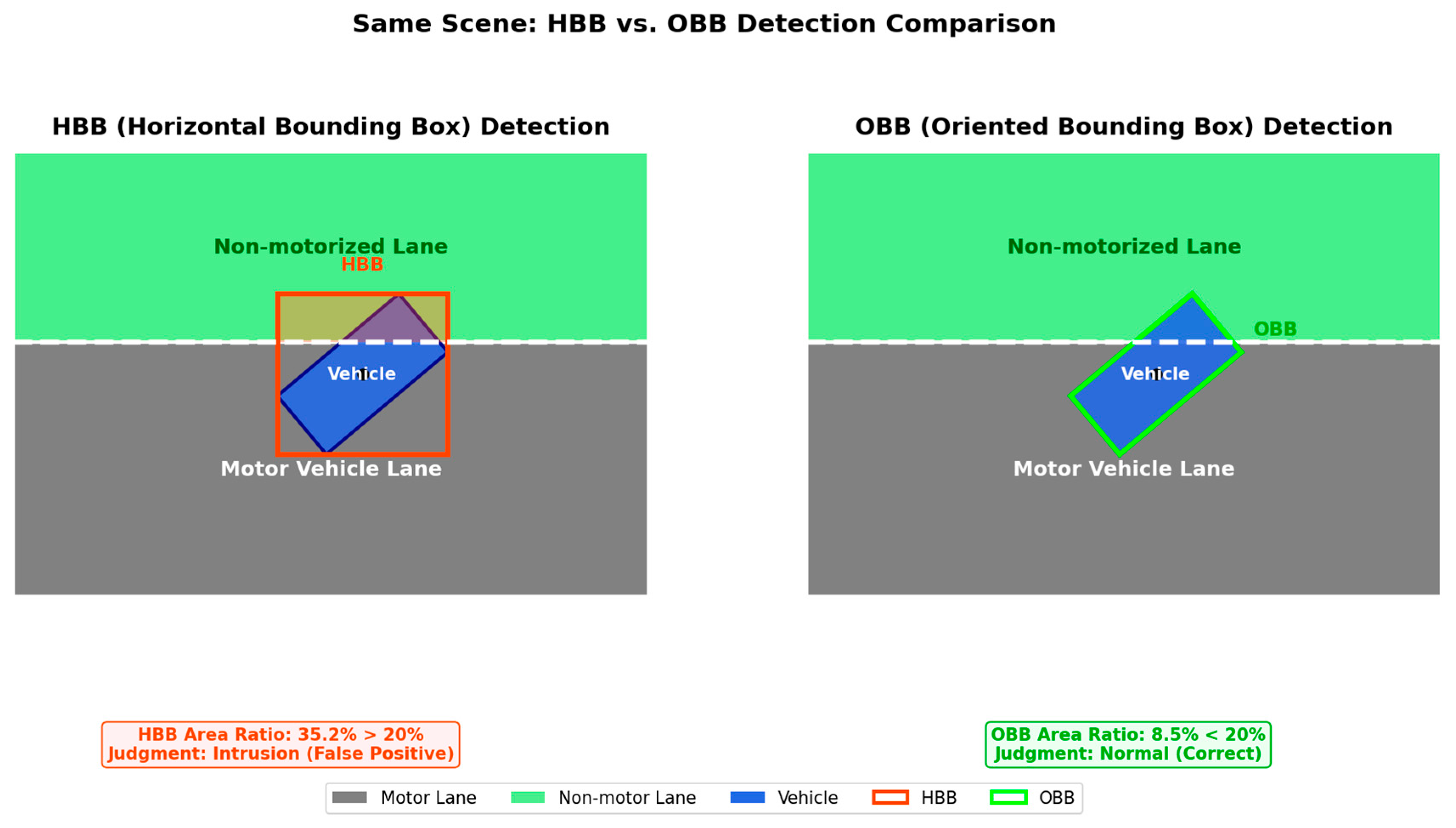
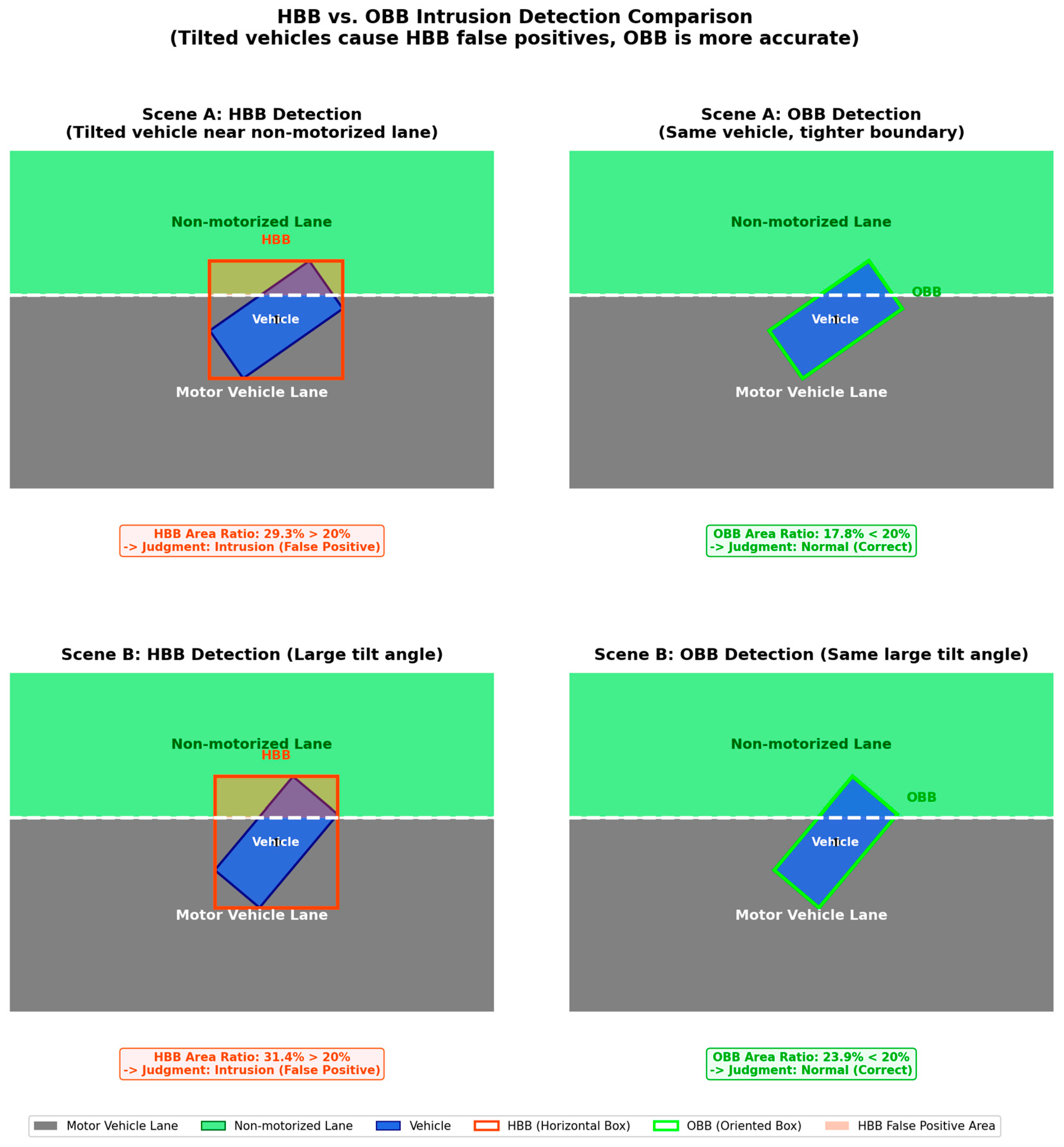
3.5.1. Area Ratio Criterion
3.5.2. Temporal Counter Filter
4. Experimental Results and Analysis
4.1. Experimental Setup
- The self-built Drone dataset, containing multiple top-down and oblique perspectives;
- The publicly available Chinese City Parking Dataset (CCPD) of license plate data for standard street scene comparisons;
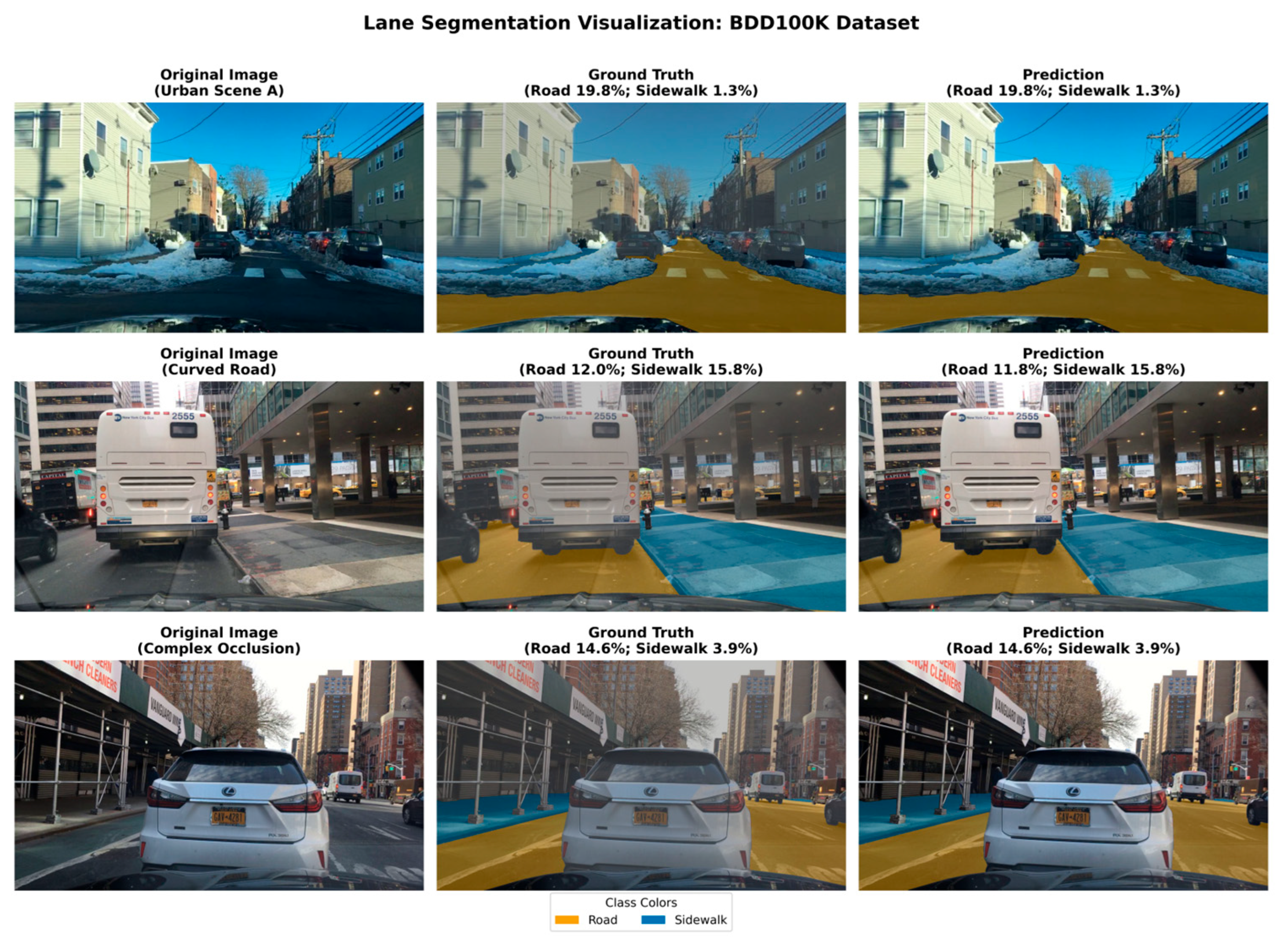
- The BDD100K dataset for non-motorized lane semantic segmentation experiments.
4.2. Recognition Performance Comparison of Different OCR Methods
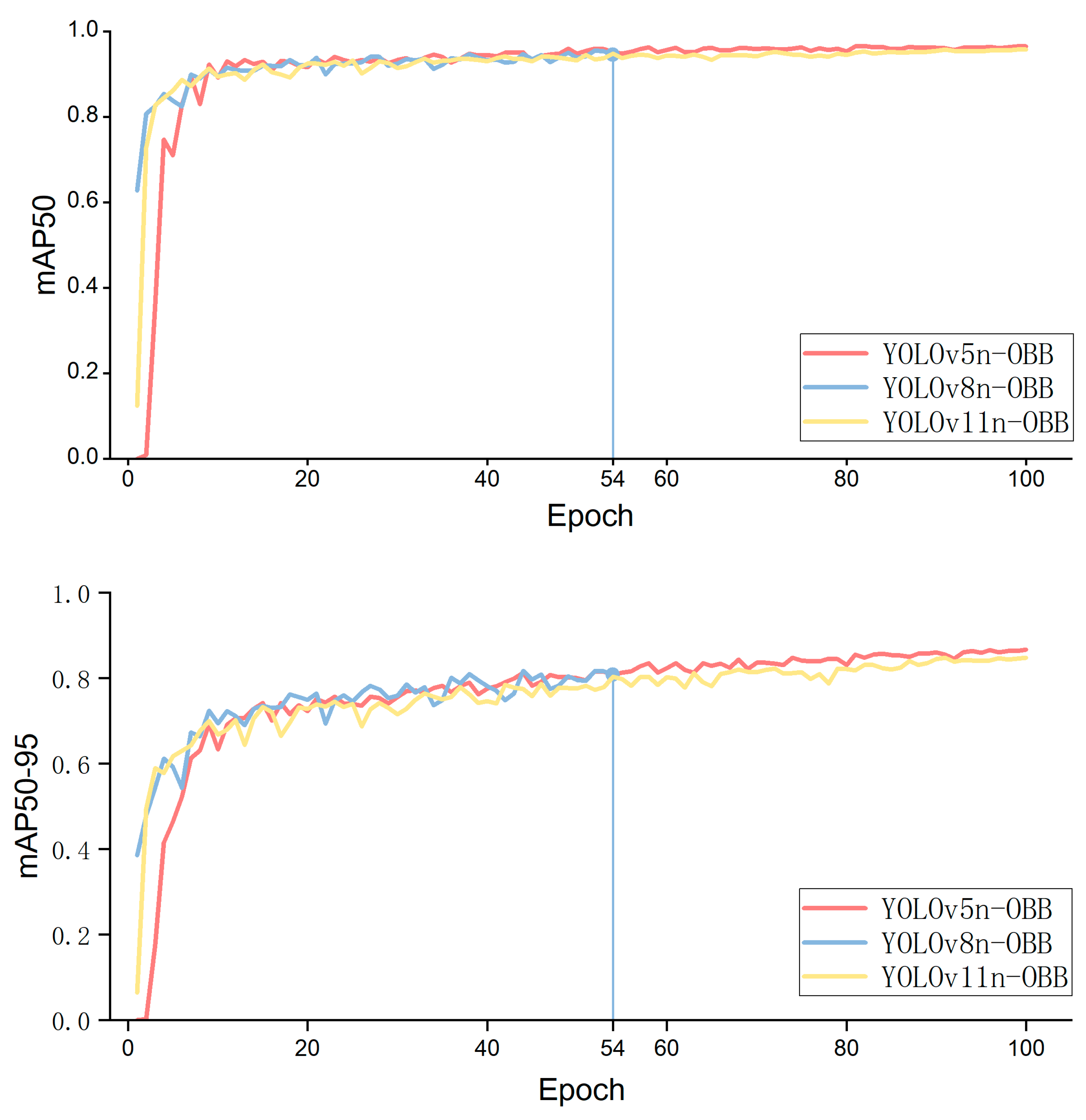
4.3. Performance Comparison of OBB Detection Models
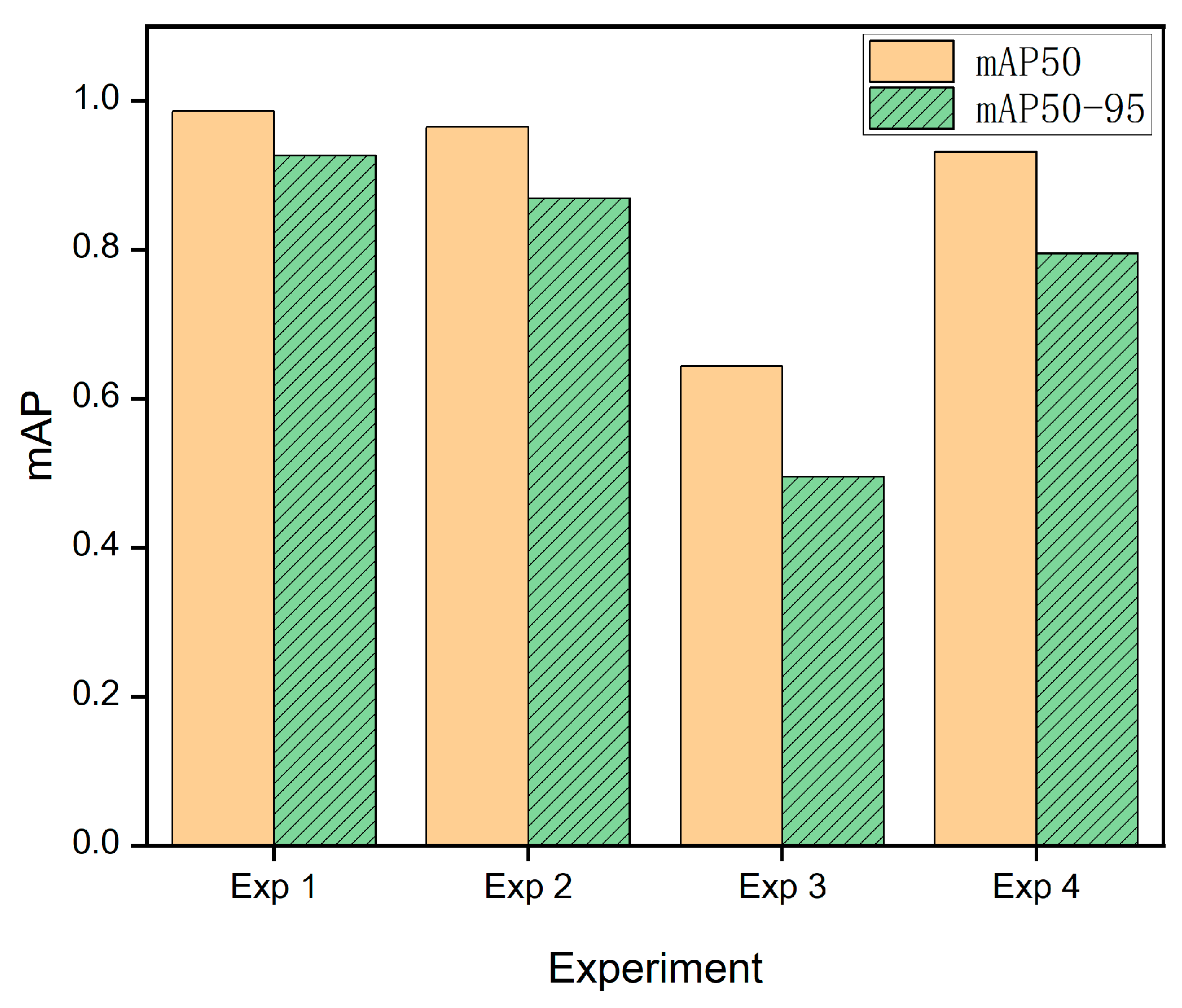
4.4. Cross-View Generalization Evaluation
4.5. Performance Evaluation of Lane Region Segmentation
4.6. Controlled Benchmark Evaluation of Encroachment Decision Methods
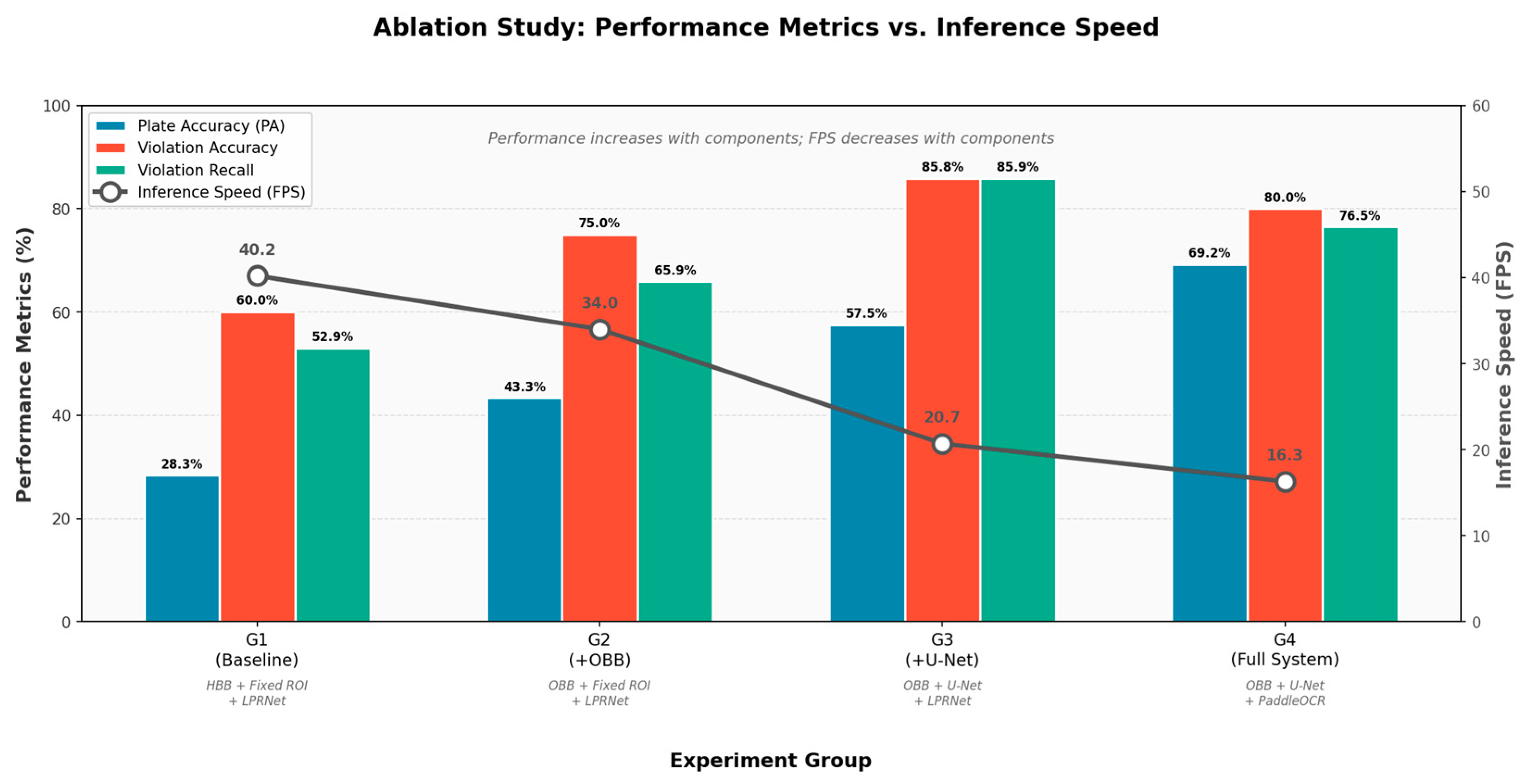
4.7. System Component Ablation Experiment
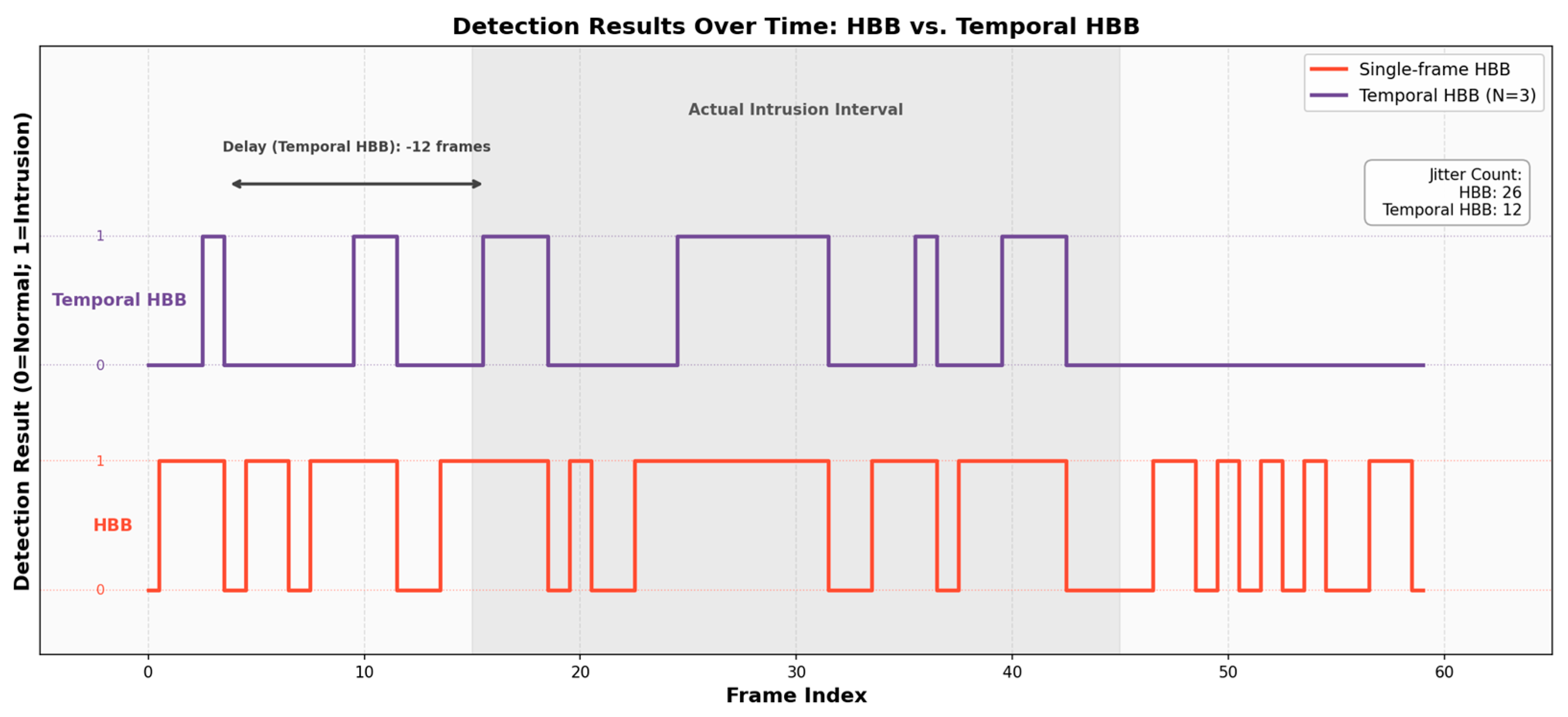
4.8. Temporal Stability Evaluation of the Deployed HBB-Based Decision Pipeline
- Single-frame HBB: using axis-aligned vehicle boxes with a single-frame decision as the baseline;
- Temporal HBB : applying the same N-frame temporal counter on top of the Single-frame HBB decisions to isolate the effect of temporal filtering, where a violation must be detected in three consecutive frames to trigger an alert.
4.9. Threshold Sensitivity Analysis
5. Conclusions and Outlook
Author Contributions
Funding
Data Availability Statement
Acknowledgments
Conflicts of Interest
References
- Zhang, J.; Wang, F.-Y.; Wang, K.; Lin, W.-H.; Xu, X.; Chen, C. Data-Driven Intelligent Transportation Systems: A Survey. IEEE Trans. Intell. Transp. Syst. 2011, 12, 1624–1639. [Google Scholar] [CrossRef]
- Du, S.; Ibrahim, M.; Shehata, M.; Badawy, W. Automatic License Plate Recognition (ALPR): A State-of-the-Art Review. IEEE Trans. Circuits Syst. Video Technol. 2013, 23, 311–325. [Google Scholar] [CrossRef]
- Yuan, Y.; Zou, W.; Zhao, Y.; Wang, X.; Hu, X.; Komodakis, N. A Robust and Efficient Approach to License Plate Detection. IEEE Trans. Image Process. 2017, 26, 1102–1114. [Google Scholar] [CrossRef]
- Riera, L.G.; Ozcan, K.; Merickel, J.; Rizzo, M.; Sarkar, S.; Sharma, A. Driver Behavior Analysis Using Lane Departure Detection Under Challenging Conditions. arXiv 2019, arXiv:1906.00093. [Google Scholar] [CrossRef]
- Mutlukaya, I.; Can Karakurt, R.; Cetinkaya, S.; Bayraktar, E. Visual detection and tracking of lane violations for heavy vehicles. Neural Comput. Appl. 2024, 36, 22633–22652. [Google Scholar] [CrossRef]
- Anagnostopoulos, C.N.E.; Anagnostopoulos, I.E.; Loumos, V.; Kayafas, E. A License Plate-Recognition Algorithm for Intelligent Transportation System Applications. IEEE Trans. Intell. Transp. Syst. 2006, 7, 377–392. [Google Scholar] [CrossRef]
- Shapiro, V.A.; Gluhchev, G. Multinational license plate recognition system: Segmentation and classification. In Proceedings of the 17th International Conference on Pattern Recognition, 2004. ICPR 2004, Cambridge, UK, 26 August 2004; Volume 354, pp. 352–355. [Google Scholar]
- Li, H.; Wang, P.; Shen, C. Toward End-to-End Car License Plate Detection and Recognition with Deep Neural Networks. IEEE Trans. Intell. Transp. Syst. 2019, 20, 1126–1136. [Google Scholar] [CrossRef]
- LeCun, Y.; Bengio, Y.; Hinton, G. Deep learning. Nature 2015, 521, 436–444. [Google Scholar] [CrossRef]
- Yu, F.; Chen, H.; Wang, X.; Xian, W.; Chen, Y.; Liu, F.; Madhavan, V.; Darrell, T. BDD100K: A Diverse Driving Dataset for Heterogeneous Multitask Learning. In Proceedings of the 2020 IEEE/CVF Conference on Computer Vision and Pattern Recognition (CVPR), Seattle, WA, USA, 4–19 June 2020; pp. 2636–2645. [Google Scholar]
- Bochkovskiy, A.; Wang, C.-Y.; Liao, H.-Y.M. YOLOv4: Optimal Speed and Accuracy of Object Detection. arXiv 2020, arXiv:2004.10934. [Google Scholar] [CrossRef]
- Redmon, J.; Divvala, S.K.; Girshick, R.B.; Farhadi, A. You Only Look Once: Unified, Real-Time Object Detection. In Proceedings of the IEEE Conference on Computer Vision and Pattern Recognition (CVPR), Las Vegas, NV, USA, 27–30 June 2016. [Google Scholar]
- Shi, B.; Bai, X.; Yao, C. An End-to-End Trainable Neural Network for Image-Based Sequence Recognition and Its Application to Scene Text Recognition. IEEE Trans. Pattern Anal. Mach. Intell. 2017, 39, 2298–2304. [Google Scholar] [CrossRef]
- Du, Y.; Li, C.; Guo, R.; Yin, X.; Liu, W.; Zhou, J.; Bai, Y.; Yu, Z.; Yang, Y.; Dang, Q.; et al. PP-OCR: A Practical Ultra Lightweight OCR System. arXiv 2020, arXiv:2009.09941. [Google Scholar] [CrossRef]
- Xu, Z.; Yang, W.; Meng, A.; Lu, N.; Huang, H.; Ying, C.; Huang, L. Towards End-to-End License Plate Detection and Recognition: A Large Dataset and Baseline. In Computer Vision—ECCV 2018; Lecture Notes in Computer Science; Springer: Cham, Switzerland, 2018; pp. 261–277. [Google Scholar]
- Zhu, P.; Wen, L.; Du, D.; Bian, X.; Fan, H.; Hu, Q.; Ling, H. Detection and Tracking Meet Drones Challenge. IEEE Trans. Pattern Anal. Mach. Intell. 2022, 44, 7380–7399. [Google Scholar] [CrossRef]
- Mokayed, H.; Shivakumara, P.; Woon, H.H.; Kankanhalli, M.; Lu, T.; Pal, U. A new DCT-PCM method for license plate number detection in drone images. Pattern Recognit. Lett. 2021, 148, 45–53. [Google Scholar] [CrossRef]
- Xie, X.; Cheng, G.; Wang, J.; Yao, X.; Han, J. Oriented R-CNN for Object Detection. In Proceedings of the 2021 IEEE/CVF International Conference on Computer Vision (ICCV), Montreal, QC, Canada, 10–17 October 2021; pp. 3500–3509. [Google Scholar]
- Han, J.; Ding, J.; Xue, N.; Xia, G. ReDet: A Rotation-equivariant Detector for Aerial Object Detection. In Proceedings of the 2021 IEEE/CVF Conference on Computer Vision and Pattern Recognition (CVPR), Montreal, QC, Canada, 10–17 October 2021; pp. 2785–2794. [Google Scholar]
- Elloumi, M.; Dhaou, R.; Escrig, B.; Idoudi, H.; Saidane, L.A. Monitoring road traffic with a UAV-based system. In Proceedings of the 2018 IEEE Wireless Communications and Networking Conference (WCNC), Barcelona, Spain, 15–18 April 2018; pp. 1–6. [Google Scholar]
- Laroca, R.; Severo, E.; Zanlorensi, L.A.; Oliveira, L.S.; Gonçalves, G.R.; Schwartz, W.R.; Menotti, D. A Robust Real-Time Automatic License Plate Recognition Based on the YOLO Detector. In Proceedings of the 2018 International Joint Conference on Neural Networks (IJCNN), Rio de Janeiro, Brazil, 8–13 July 2018; pp. 1–10. [Google Scholar]
- Zhang, Y.; Sun, P.; Jiang, Y.; Yu, D.; Yuan, Z.; Luo, P.; Liu, W.; Wang, X. ByteTrack: Multi-Object Tracking by Associating Every Detection Box. arXiv 2021, arXiv:2110.06864. [Google Scholar]
- Pan, S.J.; Yang, Q. A Survey on Transfer Learning. IEEE Trans. Knowl. Data Eng. 2010, 22, 1345–1359. [Google Scholar] [CrossRef]
- Weihong, W.; Jiaoyang, T. Research on License Plate Recognition Algorithms Based on Deep Learning in Complex Environment. IEEE Access 2020, 8, 91661–91675. [Google Scholar] [CrossRef]
- Weiss, K.; Khoshgoftaar, T.M.; Wang, D. A survey of transfer learning. J. Big Data 2016, 3, 9. [Google Scholar] [CrossRef]
- Ren, S.; He, K.; Girshick, R.B.; Sun, J. Faster R-CNN: Towards Real-Time Object Detection with Region Proposal Networks. IEEE Trans. Pattern Anal. Mach. Intell. 2015, 39, 1137–1149. [Google Scholar] [CrossRef] [PubMed]
- Liu, W.; Anguelov, D.; Erhan, D.; Szegedy, C.; Reed, S.; Fu, C.-Y.; Berg, A.C. SSD: Single Shot MultiBox Detector. In Proceedings of the Computer Vision—ECCV 2016; Springer: Cham, Switzerland, 2016; pp. 21–37. [Google Scholar]
- Li, X.; Wang, W.; Wu, L.; Chen, S.; Hu, X.; Li, J.; Tang, J.; Yang, J. Generalized Focal Loss: Learning Qualified and Distributed Bounding Boxes for Dense Object Detection. arXiv 2020, arXiv:2006.04388. [Google Scholar] [CrossRef]
- Bhavsar, Y.M.; Zaveri, M.S.; Raval, M.S.; Zaveri, S.B. Vision-based Investigation of Road Traffic and Violations at Urban Roundabout in India using UAV Video: A Case Study. Transp. Eng. 2023, 14, 100207. [Google Scholar] [CrossRef]
- Tang, G.; Ni, J.; Zhao, Y.; Gu, Y.; Cao, W. A Survey of Object Detection for UAVs Based on Deep Learning. Remote Sens. 2024, 16, 149. [Google Scholar] [CrossRef]
- Prechelt, L. Early Stopping—But When? In Neural Networks: Tricks of the Trade, 2nd ed.; Montavon, G., Orr, G.B., Müller, K.-R., Eds.; Springer: Berlin/Heidelberg, Germany, 2012; pp. 53–67. [Google Scholar]
- Canny, J. A Computational Approach to Edge Detection. IEEE Trans. Pattern Anal. Mach. Intell. 1986, PAMI-8, 679–698. [Google Scholar] [CrossRef]
- Yue, D.; Jintao, X.; Liangchao, L.; Jianyu, Y. Robust lane detection and tracking for lane departure warning. In Proceedings of the 2012 International Conference on Computational Problem-Solving (ICCP), Leshan, China, 19–21 October 2012; pp. 461–464. [Google Scholar]
- Pan, X.; Shi, J.; Luo, P.; Wang, X.; Tang, X. Spatial As Deep: Spatial CNN for Traffic Scene Understanding. In Proceedings of the AAAI Conference on Artificial Intelligence, San Francisco, CA, USA, 4–9 February 2017. [Google Scholar]
- Wu, D.; Liao, M.-W.; Zhang, W.-T.; Wang, X.; Bai, X.; Cheng, W.; Liu, W.-Y. YOLOP: You Only Look Once for Panoptic Driving Perception. Mach. Intell. Res. 2021, 19, 550–562. [Google Scholar] [CrossRef]
- Wang, J.; He, G.; Dai, X.; Wang, F.; Zhang, Y. Vision-Based Highway Lane Extraction from UAV Imagery: A Deep Learning and Geometric Constraints Approach. Electronics 2025, 14, 3554. [Google Scholar] [CrossRef]
- Ronneberger, O.; Fischer, P.; Brox, T. U-Net: Convolutional Networks for Biomedical Image Segmentation. arXiv 2015, arXiv:1505.04597. [Google Scholar] [CrossRef]
- Siddique, N.; Paheding, S.; Elkin, C.P.; Devabhaktuni, V. U-Net and Its Variants for Medical Image Segmentation: A Review of Theory and Applications. IEEE Access 2021, 9, 82031–82057. [Google Scholar] [CrossRef]
- Maisuria, H.; Mepani, K.; Shah, M.; Verma, J.; Narmawala, Z. D-ALPR: Drone-Based Automatic License Plate Recognition Within Restricted Parking Environment. In Innovations in Computational Intelligence and Computer Vision (ICICV 2024); Springer: Singapore, 2024; pp. 139–151. [Google Scholar]
- Smith, R. An Overview of the Tesseract OCR Engine. In Proceedings of the Ninth International Conference on Document Analysis and Recognition (ICDAR 2007), Washington, DC, USA, 23–26 September 2007; pp. 629–633. [Google Scholar]
- Du, Y.; Li, C.; Guo, R.; Cui, C.; Liu, W.; Zhou, J.; Lu, B.; Yang, Y.; Liu, Q.; Hu, X.; et al. PP-OCRv2: Bag of Tricks for Ultra Lightweight OCR System. arXiv 2021, arXiv:2109.03144. [Google Scholar] [CrossRef]
- Sandler, M.; Howard, A.; Zhu, M.; Zhmoginov, A.; Chen, L.-C. MobileNetV2: Inverted Residuals and Linear Bottlenecks. In Proceedings of the 2018 IEEE/CVF Conference on Computer Vision and Pattern Recognition, Salt Lake City, UT, USA, 18–22 June 2018; pp. 4510–4520. [Google Scholar]
- Gao, F.; Wang, C. Hybrid strategy for traffic light detection by combining classical and self-learning detectors. IET Intell. Transp. Syst. 2020, 14, 735–741. [Google Scholar] [CrossRef]
- Kalyan, S.S.; Pratyusha, V.; Nishitha, N.; Ramesh, T.K. Vehicle Detection Using Image Processing. In Proceedings of the 2020 IEEE International Conference for Innovation in Technology (INOCON), Bangaluru, India, 6–8 November 2020; pp. 1–5. [Google Scholar]
- Xie, X.; Wang, C.; Chen, S.; Shi, G.; Zhao, Z. Real-Time Illegal Parking Detection System Based on Deep Learning. In Proceedings of the 2017 International Conference on Deep Learning Technologies; Association for Computing Machinery: New York, NY, USA, 2017; pp. 23–27. [Google Scholar]
- Yang, X.; Yan, J. Arbitrary-Oriented Object Detection with Circular Smooth Label. In Proceedings of the Computer Vision—ECCV 2020; Springer: Cham, Switzerland, 2020; pp. 677–694. [Google Scholar]
- Yang, X.; Liu, Q.; Yan, J.; Li, A.; Zhang, Z.; Yu, G. R3Det: Refined Single-Stage Detector with Feature Refinement for Rotating Object. In Proceedings of the AAAI Conference on Artificial Intelligence, Honolulu, HI, USA, 27 January–1 February 2019. [Google Scholar]
- Milletarì, F.; Navab, N.; Ahmadi, S.-A. V-Net: Fully Convolutional Neural Networks for Volumetric Medical Image Segmentation. In Proceedings of the 2016 Fourth International Conference on 3D Vision (3DV), Stanford, CA, USA, 19 December 2016; pp. 565–571. [Google Scholar]
- Du, Y.; Chen, Z.; Jia, C.; Yin, X.; Zheng, T.; Li, C.; Du, Y.; Jiang, Y.-G. SVTR: Scene Text Recognition with a Single Visual Model. In Proceedings of the International Joint Conference on Artificial Intelligence, Vienna, Austria, 23–29 July 2022. [Google Scholar]



| Module | Setting/Notes |
|---|---|
| OBB detection (YOLOv5n-OBB) | ; batch size 32; 100 epochs; early stopping patience 10 (Section 4.3) |
| Lane segmentation (U-Net) | 31.04 M parameters; pre-trained on BDD100K (road/sidewalk) and fine-tuned on drone lane mask annotations (Section 4.5) |
| OCR (PaddleOCR) | PP-OCRv4; perspective-rectified plate ROI; orientation classification enabled (cls = True) (Section 3.4 and Section 4.2) |
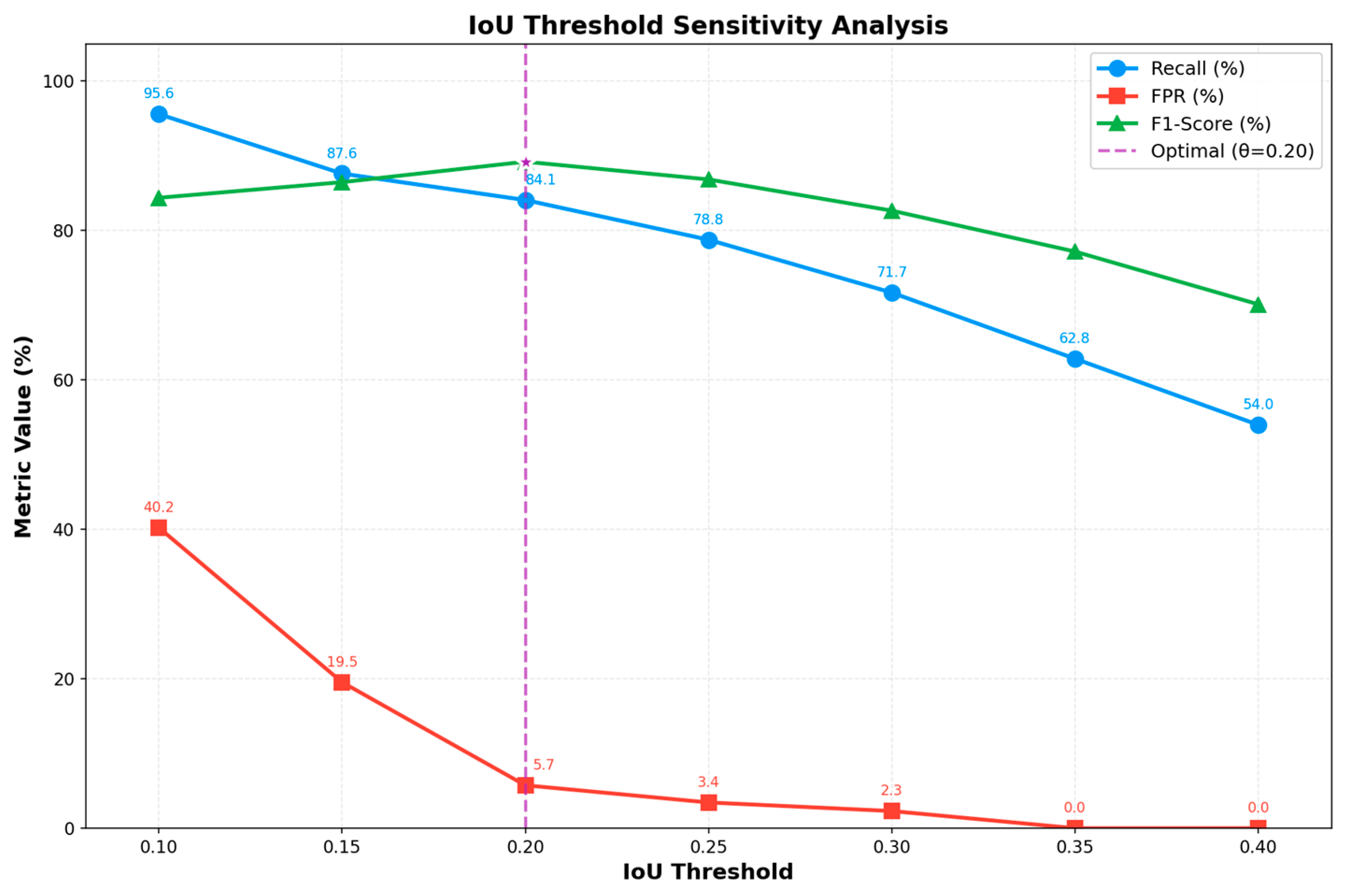
| Decision parameters | Encroachment threshold τ = 0.20 (default; Section 4.9); temporal counter N = 3 (default; Section 3.1.2 or Section 4.8) |
| Hardware | NVIDIA GeForce RTX 4090 GPU (Section 4.1) |
| OCR Methods | CA (%) | PA (%) | FPS | Average Inference Time (ms) |
|---|---|---|---|---|
| LPRNet | 88.98 | 40.00 | 117.96 | 8.48 |
| EasyOCR | 86.72 | 30.00 | 8.44 | 118.43 |
| PaddleOCR | 96.61 | 76.00 | 22.26 | 44.93 |
| Model | mAP50 (%) | mAP50-95 (%) | Precision (%) | Recall (%) | Val Box Loss | State |
|---|---|---|---|---|---|---|
| YOLOv8n-OBB | 94.6 | 80.8 | 93.7 | 86.2 | 0.591 | Early stopping (Ep 54) |
| YOLOv11n-OBB | 95.8 | 84.8 | 89.8 | 91.0 | 0.523 | Done (100 eps) |
| YOLOv5n-OBB | 96.5 | 86.6 | 93.0 | 91.1 | 0.482 | Done (100 eps) |
| Experiment Number | Train Set | Test Set | Purpose |
|---|---|---|---|
| Exp 1 | CCPD | CCPD | [Baseline A] Evaluate the theoretical performance upper bound of the model in standard and normalized scenarios. |
| Exp 2 | Drone | Drone | [Baseline B] Evaluate the model’s learning capability in complex scenarios with top-down views and large-angle rotations. |
| Exp 3 | CCPD | Drone | [Cross-validation] Test whether the model trained only on street-view frontal features can handle extreme rotation perspectives. |
| Exp 4 | Drone | CCPD | [Cross-validation] Test whether the model trained with multi-dimensional features can be downward compatible with standard scenarios. |
| Experiment | mAP50 | mAP50-95 | Conclusion Summary |
|---|---|---|---|
| Exp 1 | 0.986 | 0.926 | Ultra-high precision |
| Exp 2 | 0.965 | 0.869 | Excellent performance |
| Exp 3 | 0.644 | 0.495 | Limited generalization |
| Exp 4 | 0.931 | 0.795 | Strong generalization |
| Metric | Value |
|---|---|
| IoU | 39.63% |
| Dice | 55.30% |
| Precision | 46.13% |
| Recall | 72.35% |
| F1-score | 55.30% |
| FPS | 22.1 |
| Scenario | n | Pos | Neg | Accuracy (%) | Precision (%) | Recall (%) | F1 (%) | FPR (%) |
|---|---|---|---|---|---|---|---|---|
| Straight road | 19 | 19 | 0 | 94.74 | 100.00 | 94.74 | 97.30 | 0.00 |
| Diagonal/oblique view | 27 | 27 | 0 | 100.00 | 100.00 | 100.00 | 100.00 | 0.00 |
| Borderline near lane edge | 20 | 20 | 0 | 75.00 | 100.00 | 75.00 | 85.71 | 0.00 |
| Brief boundary interaction | 13 | 0 | 13 | 92.31 | N/A 1 | N/A | N/A | 7.69 |
| Occlusion/crowded | 21 | 0 | 21 | 95.24 | N/A | N/A | N/A | 4.76 |
| Overall | 100 | 66 | 34 | 92.00 | 96.77 | 90.91 | 93.75 | 5.88 |
| Metric | Baseline (HBB + Center Point) | OBB Reference (Area + Temporal Sequence) |
|---|---|---|
| Accuracy | 67.00% | 92.00% |
| Precision | 80.00% | 96.77% |
| Recall | 66.67% | 90.91% |
| F1-score | 72.73% | 93.75% |
| False Positive Rate (FPR) | 32.35% | 5.88% |
| Balanced Accuracy | 67.16% | 92.51% |
| MCC | 32.68% | 82.98% |
| Group | License Plate Recognition Rate (%) | Violation Accuracy (%) | Violation Recall (%) | F1 (%) | FPS | p50 Latency (ms) | p95 Latency (ms) |
|---|---|---|---|---|---|---|---|
| G1 | 28.33 | 60.00 | 52.94 | 65.22 | 40.2 | - | - |
| G2 | 43.33 | 75.00 | 65.88 | 78.87 | 34.0 | - | - |
| G3 | 57.50 | 85.83 | 85.88 | 89.57 | 20.7 | - | - |
| G4 * | 69.17 | 80.00 | 76.47 | 84.42 | 16.3 | 61.44 | 75.32 |
| Test Group | FPR (%) | Stability (%) | Response Delay (Frames) |
|---|---|---|---|
| Single-frame HBB | 37.1 | 56.1 | 0.2 |
| Temporal HBB (N = 3) | 7.6 | 80.0 | 1.6 |
Disclaimer/Publisher’s Note: The statements, opinions and data contained in all publications are solely those of the individual author(s) and contributor(s) and not of MDPI and/or the editor(s). MDPI and/or the editor(s) disclaim responsibility for any injury to people or property resulting from any ideas, methods, instructions or products referred to in the content. |
© 2026 by the authors. Licensee MDPI, Basel, Switzerland. This article is an open access article distributed under the terms and conditions of the Creative Commons Attribution (CC BY) license.
Share and Cite
Tan, Z.; Tan, Y.; Lin, P.; Su, W.; He, T.; Wu, W. An Automated Detection Method for Motor Vehicles Encroaching on Non-Motorized Lanes Based on Unmanned Aerial Vehicle Imagery and Civilized Behavior Monitoring. Sensors 2026, 26, 2027. https://doi.org/10.3390/s26072027
Tan Z, Tan Y, Lin P, Su W, He T, Wu W. An Automated Detection Method for Motor Vehicles Encroaching on Non-Motorized Lanes Based on Unmanned Aerial Vehicle Imagery and Civilized Behavior Monitoring. Sensors. 2026; 26(7):2027. https://doi.org/10.3390/s26072027
Chicago/Turabian StyleTan, Zichan, Yin Tan, Peijing Lin, Wenjie Su, Tian He, and Weishen Wu. 2026. "An Automated Detection Method for Motor Vehicles Encroaching on Non-Motorized Lanes Based on Unmanned Aerial Vehicle Imagery and Civilized Behavior Monitoring" Sensors 26, no. 7: 2027. https://doi.org/10.3390/s26072027
APA StyleTan, Z., Tan, Y., Lin, P., Su, W., He, T., & Wu, W. (2026). An Automated Detection Method for Motor Vehicles Encroaching on Non-Motorized Lanes Based on Unmanned Aerial Vehicle Imagery and Civilized Behavior Monitoring. Sensors, 26(7), 2027. https://doi.org/10.3390/s26072027