1. Introduction
The U.S. Department of Transportation requires bridges to be visually inspected every 2 years. These routine inspections are qualitative in nature and yield a simple 0 to 9 condition rating for the bridge deck, superstructure, and substructure [
1]. The lowest rating among the deck, superstructure, and substructure determines the overall condition of the bridge: a rating of 7 or greater is considered “good,” a rating of 5 or 6 is considered “fair,” and a rating of 4 or less is considered “poor.” The Federal Highway Administration’s (FHWA) National Bridge Inventory reports the number of good, fair, and poor condition bridges based on these inspections: as of June 2025, 43.7% were rated in good condition, 49.6% in fair condition, and 6.7% were rated in poor condition [
2].
Visual inspections can vary from one inspector to another, as condition states and levels of deterioration are open to interpretation. Consequently, a bridge’s condition may be overestimated as routine inspections do not provide insight into damage that is not visible to the naked eye or is hidden beneath the surface of, for example, a reinforced concrete member. A more quantitative assessment of the bridge can be undertaken using any number of tools and methodologies. Nondestructive evaluation methodologies, such as die penetrant, chain drag, impact echo, ground penetrating radar, or ultrasonic methods, may be used to identify specific types of defects [
3]. Diagnostic or proof load tests can be conducted to quantitatively evaluate the bridge’s global behavior, and the results can be used to calibrate a numerical model or develop refined load ratings for the bridge [
4]. Structural health monitoring (SHM) involves installing sensors on a bridge to monitor its behavior due to live loads (traffic, wind, seismic), thermal effects, creep, shrinkage, extreme events (e.g., pier impact, crashes on or under the bridge, fire on or under the bridge, and fracture of a member), and long-term deterioration. The rates at which the data is collected in SHM can vary from a reading every few minutes, which should capture very slowly varying changes due to thermal effects, material degradation, and dead load being redistributed due to failure of a member, to tens of samples per second to capture rapidly varying changes due to live load effects. SHM systems are designed to run unattended and can be set up to operate for periods of a few weeks or months (e.g., [
5,
6]) or as permanent installations that are intended to operate throughout the life of the structure. A few examples of permanent SHM systems include the Indian River Inlet Bridge in Delaware [
7], the Jiubao Bridge in China [
8], and the Great Belt Bridge in Denmark [
9].
Another tool for quantitative assessment of a bridge is a passive sensor that is only read periodically on an “as-needed” or “as-desired” basis. A key advantage of a passive sensor is that it does not require continuous power and is only read when it is energized by an external source. This type of sensor offers advantages for typical “bread-and-butter” bridges, i.e., one-, two-, and three-span highway overpasses that make up most bridges in the U.S. inventory. These bridges are unlikely to ever be monitored using sophisticated SHM systems, except in very special circumstances. As a result, there is a need to develop inexpensive, easily deployable, low-maintenance monitoring platforms for typical bridges. Passive sensors that measure strain, tilt, or deflection, which are read periodically, could provide valuable information for the long-term maintenance and operation of this class of bridges.
Passive sensors have attracted the attention of researchers in recent years. In 2013, Deivasigamani et al. [
10] provided a review of research on passive sensors based on MEMS, LC/RC circuits, and antennas. This included a comparison of the advantages and disadvantages of each of these technologies [
10]. Omachi et al. developed the Strain Visualization Sheet that uses the principle of Moiré fringes to passively measure strain. Strains were measured within an accuracy of +/− 50 microstrain (1 microstrain = 1 × 10
−6 m/m = 1 µε) with the naked eye and within and less than 15 µε using image processing and photos taken with an ordinary digital camera. The sensor was also tested in field applications and showed good results [
11]. Recent developments in magnetoelastic materials, such as those described by Ren et al., show that hourglass shaped magnetoelastic sensors have the potential to be more sensitive than the previously developed rectangular ones [
12]. Pepakayala et al. developed a passive strain sensor that is fabricated from magnetoelastic alloys. The sensor takes advantage of the change in Young’s modulus that results from strain and magnetization of the materials [
13]. The aerospace industry uses passive strain gauges for their ability to function in harsh environments where wires and batteries are prone to damage when exposed to excessive heat and loading, and sensors are often needed in areas too small to house batteries [
14]. Arms et al. developed a passive peak strain sensor using a microminiature half-bridge LVDT with an entrapment collar that mechanically stores the peak strain. The sensor reliably captured the peak strain of a vibrating beam out to 3000 µε, with an error of less than 5.4% compared to a resistive strain gauge [
15]. Nesser et al. reported on the development of a passive strain sensor based on an inductance–capacitance (LC) circuit with a parallel-plate capacitance sensing unit [
16].
The potential for using low-cost, passive sensors for bridge monitoring is significant. One way to encourage periodic monitoring of this class of bridges is to develop low-cost, passive systems that leverage resources and technology that bridge owners are familiar with and already possess [
10,
17,
18]. The accessibility and ease of use of a sensor like this would facilitate a quantitative analysis of bridges that otherwise would only be evaluated visually. It could be incorporated into current bridge inspection practices and used as a tool to further DOTs knowledge on how their structures are performing.
The authors have previously reported on the potential use of retroreflective sheeting material (RRSMs), which are commonly used to make highway traffic signs, as passive strain sensors. In their study, cyclic tension tests were conducted of 14 different types of RRSMs to assess the materials’ change in reflectivity with induced strain. A number of the materials exhibited sufficient strain sensitivity that they possibly could be used as a sensor for monitoring infrastructure [
19]. The advantage of a RRSM based-sensing system is that bridge owners procure RRSMs to make their signs and own the instrument used to measure sign reflectivity—thus they are familiar with the materials and equipment needed to implement the sensor. This should allow for an easy transfer of the technology for bridge monitoring to owners and their consultants. Bridge owners can place RRSM sensors on their structures and periodically collect data to assess the health of the structure. The data can be collected during routine bridge inspections, allowing seamless integration of the passive strain sensing system into the existing workflow.
This paper is a follow-up to the earlier work. The novel contribution presented herein is the development and testing of a passive sensor made with a particular RRSM that can be mounted to a structural member to measure the change in strain over some period of time. This includes the design, fabrication, and testing of the prototype sensor, the development of the calibration equation, and a description of how the sensor would be used in practice. The work demonstrates a laboratory proof-of-concept of the sensor.
The paper is organized as follows: first, a description of retroreflective sheeting materials is presented, followed by results of mechanical tests conducted on an ASTM Type XI RRSM; next, the results of tension tests of the Type XI RRSM mounted to a steel dogbone specimen are presented, which is the basis for the passive sensor; this is followed by the design of the production sensor and the development of the sensor calibration equation; then, the implementation and practical application of the sensor is presented; finally, there is a discussion of how the sensor would be used in practice, followed by concluding remarks.
2. Retroreflective Sheeting Materials
RRSMs are flexible, reflective materials that are primarily used to fabricate traffic signs. Minimum standards for RRSMs are outlined in ASTM D4956, “Standard Specification for Retroreflective Sheeting for Traffic Control” [
20]. Eleven types of material are outlined in the standard, from low-grade Type I that has the lowest reflectivity and would be used to make signs commonly found in parking lots to high-grade Type XI materials that are highly reflective and are used to make highway and construction zone signs. The proprietary materials are produced by various manufacturers and each uses unique technologies to meet the minimum standards for retroreflection [
21].
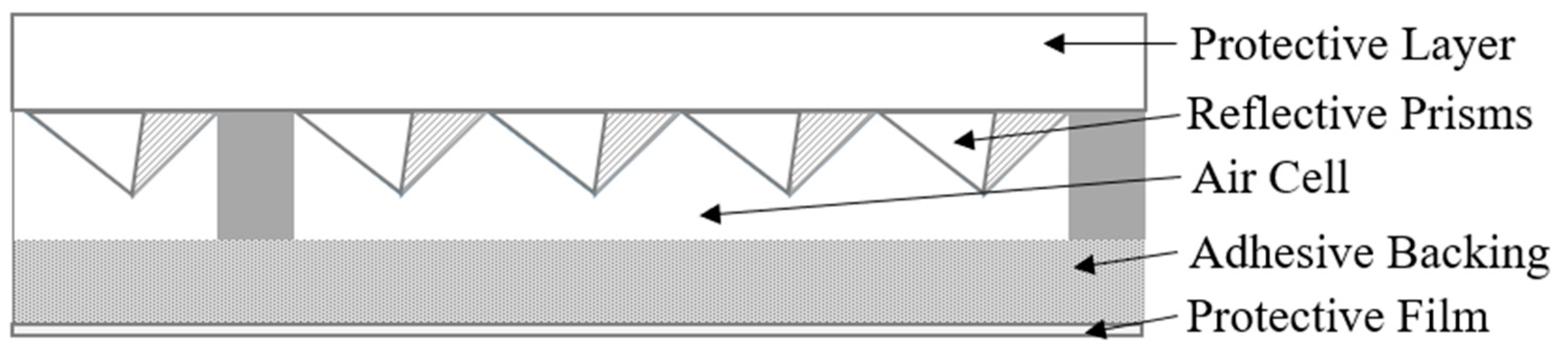
RRSMs are composed of several basic layers: (1) a protective layer, which is exposed to the incident light and protects the reflective layer; (2) a reflective layer, which functions to reflect light and where construction varies with the ASTM type of material; (3) an adhesive layer, which, when exposed, allows the material to be adhered to a substrate; and (4) a protective film, which protects the adhesive layer until the material is ready to be adhered to a surface. Some of the lowest-grade materials use glass beads as the reflecting layer. Higher-grade materials that have higher baseline values of retroreflectivity (RR) have a prismatic reflecting layer.
Figure 1 shows a schematic cross-section of a typical RRSM with a prismatic reflecting layer.
ASTM Type XI RRSMs are classified as unmetallized corner cube prismatic materials [
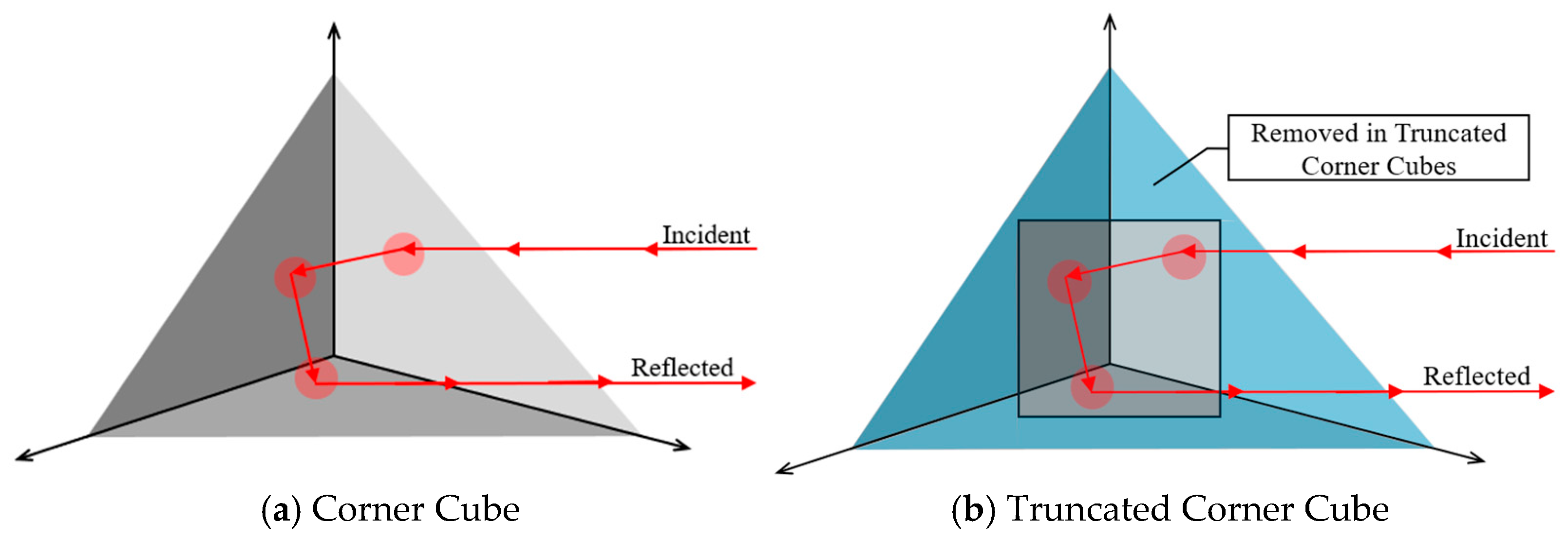
20] and have the highest retroreflection of all RRSMs. Corner cube retroreflection works by reflecting incident light 180 degrees to another side of the prism until it is returned to the source. The space near each vertex of a corner cube prism does not reflect incident light and does not contribute to a material’s retroreflection; therefore, any light that is emitted into these areas is lost. One way to increase the efficiency of this design is to use truncated corner cube prisms, which eliminate the areas near the prism vertices that do not contribute to retroreflection. The prisms can then be stacked tightly together so that there is very little space within the reflective layer that is not contributing to retroreflection. This type of system is approximately 68% efficient [
22].
Figure 2a shows a traditional corner cube prism with a retroreflected light beam, and
Figure 2b highlights the areas by the prism vertices that are removed to create truncated corner cube prisms.
2.1. Sensor Technology Is Established in DOT Workflows
The FHWA Manual on Uniform Traffic Control Devices [
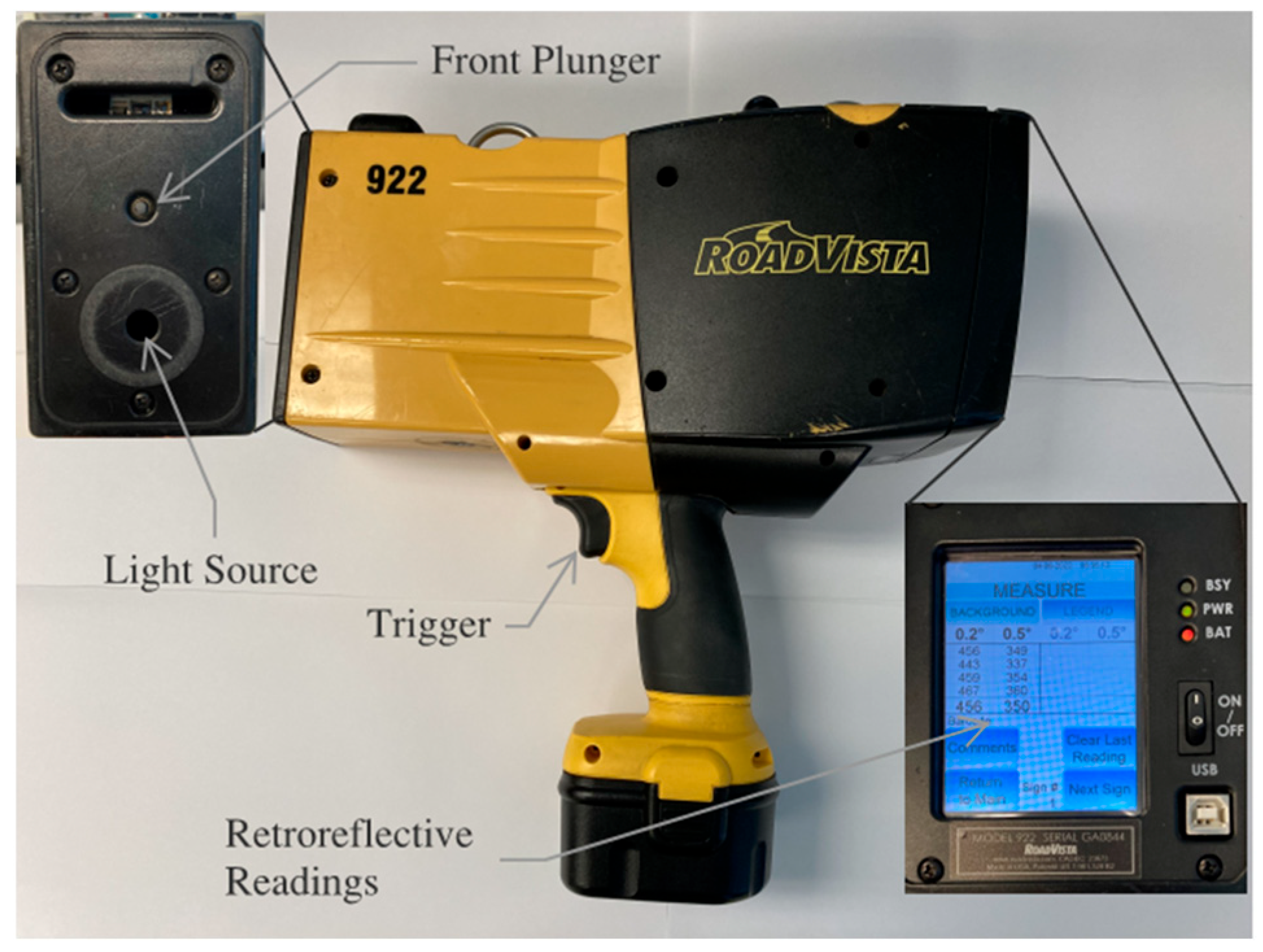
23] requires all public agencies to maintain minimum levels of sign retroreflectivity. To show compliance, agencies can measure retroreflectivity using a handheld retroreflectometer, such as the one shown in
Figure 3. To make a measurement, the face of the instrument is placed flush against the RRSM, the trigger pulled, and an RR reading is displayed on the screen. The reading is a measure of the amount of light (RR) returned to the source in candelas per lux per square meter. The process is comparable to taking a temperature measurement with an infrared thermometer. ASTM minimum standards of RR for RRSMs range from a low, of about 70 for Type I materials, to a high, of about 580, for the highly reflective Type XI materials [
20].
Many DOTs fabricate their own traffic signs and are required to periodically measure the retroreflectivity of their signs, thus they have access to and familiarity with retroreflectometers and RRSMs. The advantage of an RRSM passive strain sensing system is that bridge owners procure the RRSMs to make their signs and own the instrument used to measure sign reflectivity, thus they are already familiar with the materials and equipment needed to implement the strain sensor. This experience will make for an easy transfer of the technology of using RRSMs as passive strain sensors by the transportation industry.
2.2. Response of RRSMs to Induced Strain and Down-Selection to the Candidate RRSM
Previous work by the authors has shown that certain types of RRSM exhibit a linear relationship between induced strain (ε) and retroreflectivity—specifically, retroreflectivity decreases with increasing tensile strain [
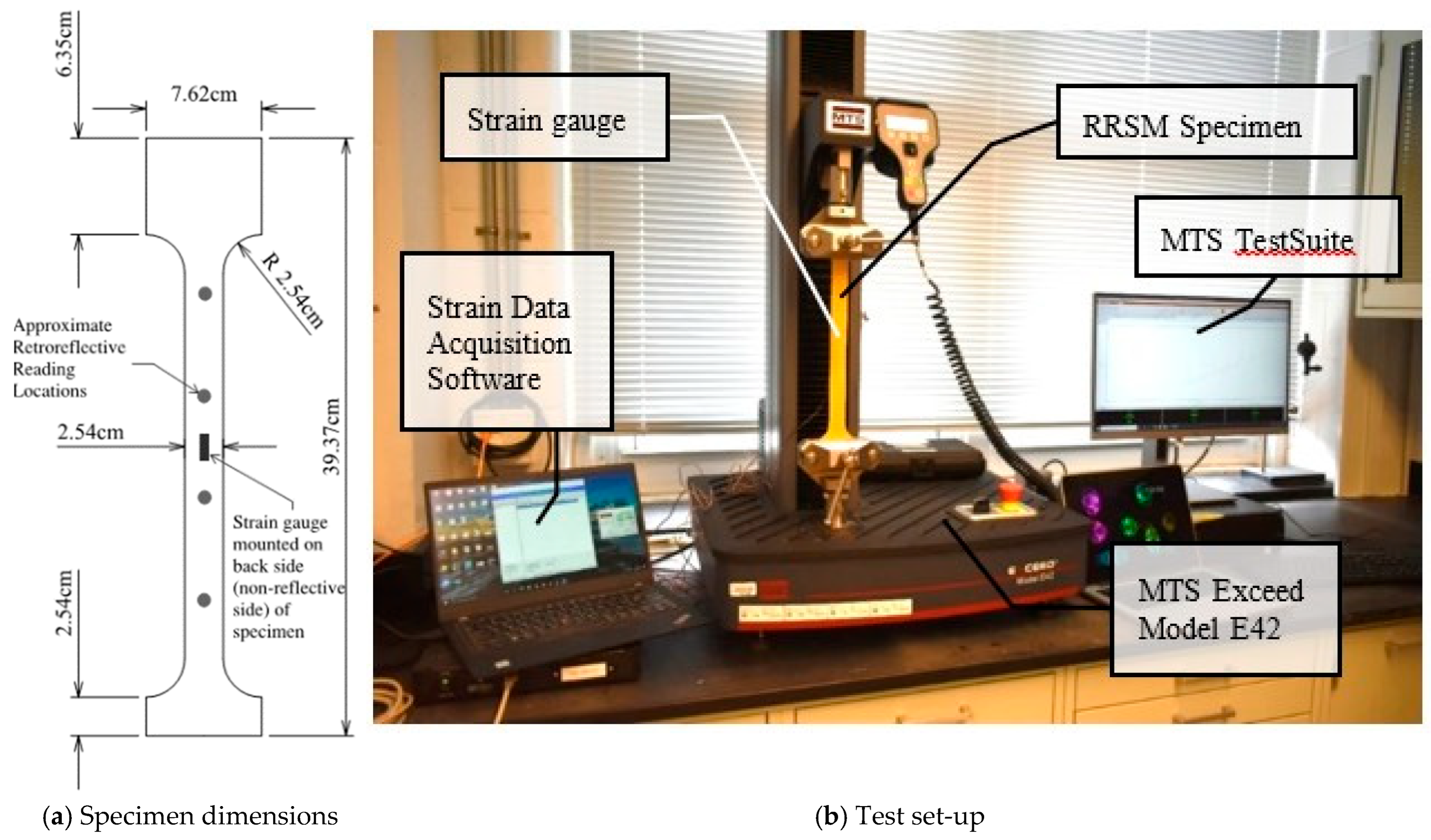
19]. Cyclic tension tests were conducted on different RRSMs to establish their sensitivity to strain. The tests were conducted on five different ASTM types (I, IV, XIII, IX, and XI) of RRSM in different colors, from two different manufacturers; a total of 14 different materials were tested. The tension tests were conducted in an MTS model E42 electromechanical test machine. The strain in the RRSM was measured using a 253SL 350-ohm resistive strain gauge manufactured by Micro-Measurements (Wendell, NC, USA) mounted to the back (non-reflective) side of the material using a quick-setting adhesive (Mbond 200) (Wendell, NC, USA). Retroreflectivity of the materials at different load/strain levels were measured using a RoadVista handheld reflectometer (
Figure 3), out to a maximum strain in the material of 4000 με. The specimen and test setup are shown in
Figure 4.
Many of the materials tested exhibit a linear relationship between retroreflectivity and strain, but, with varying levels of sensitivity, some exhibit a bilinear relationship. The material sensitivity to induced strain, i.e., change in retroreflectivity with strain (RR/µε), is the key factor to be determined when assessing an RRSM’s viability for use as a strain sensor. Other important factors that were assessed in the test program included: material hysteresis and degradation with loading and unloading, failure strength, and strain to failure. Based on these tests, a material was down-selected for further development into a passive sensor. That material is a Type XI (TXI-) fluorescent yellow-green (FYG) RRSM produced by one manufacturer. It is denoted here as TXIFYG.
3. TXIFYG Bare Material Response to Strain
TXIFYG comprises truncated corner cube prisms, and it has high sensitivity and good correlation to induced strain. For reference, the baseline (unstrained) RR of TXIFYG was measured by taking 100 retroreflective readings from a 0.09 square meter (one square foot) sample of material. The average RR was 765 cd/lx/m2 with a standard deviation of 40.8 cd/lx/m2, for a coefficient of variation of 5.3%. This is a measure of the baseline variability of the RR measurement made using a handheld retroreflectometer.
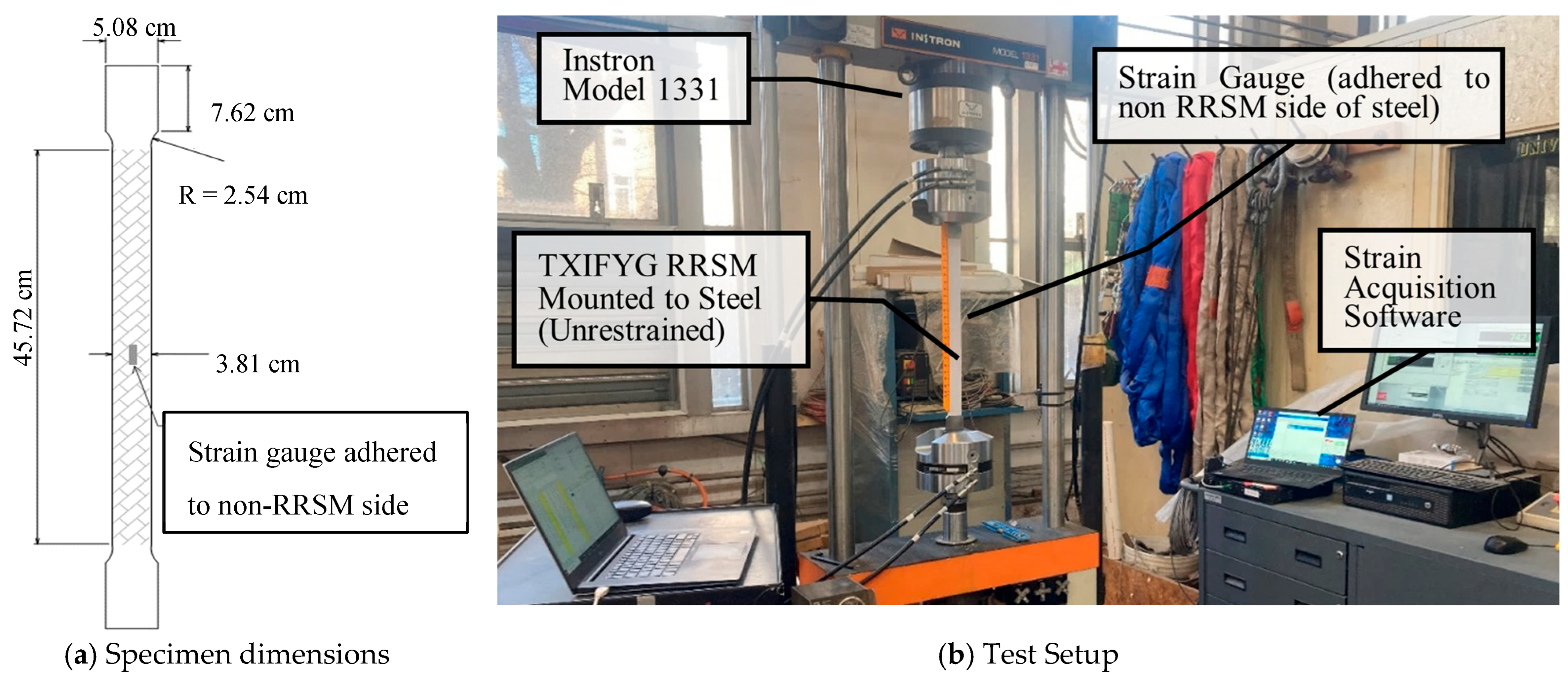
Three specimens of TXIFYG were cyclically loaded in tension while measuring the material RR and strain to determine the RR–µε relationship, as described previously. The specimens were cut into a “dogbone” shape, and a uniaxial strain gauge was mounted to the non-reflective side of the specimen (
Figure 4a). The tests were conducted in an MTS Exceed E42 Electromechanical Test System (Eden Prairie, MN, USA) fitted with a 500 kgf Transcell load cell (model BSS-XS-500kg) (Buffalo Grove, IL, USA); strain was measured with a Micro-Measurements 253SL 350-ohm resistive strain gauge mounted to the back (non-reflective) side of the material using a quick setting adhesive (Mbond 200) and recorded using a Micro Measurement System 8000 data acquisition system and StrainSmart software (version 5.1) (Wendell, NC, USA) (
Figure 4b). The specimen was loaded to approximately 4000 µε and unloaded three times. The first loading and unloading cycles were paused every 4.45 N (1 lb) to record strain and RR. The second and third loading and unloading cycles were paused every 8.90 N (2 lb) to record strain and RR. RRSM’s have innate variability, so four readings were taken at each load step and averaged. The average RR value was plotted versus the material strain, as measured by the resistive strain gauge to determine the RR–µε relationship.
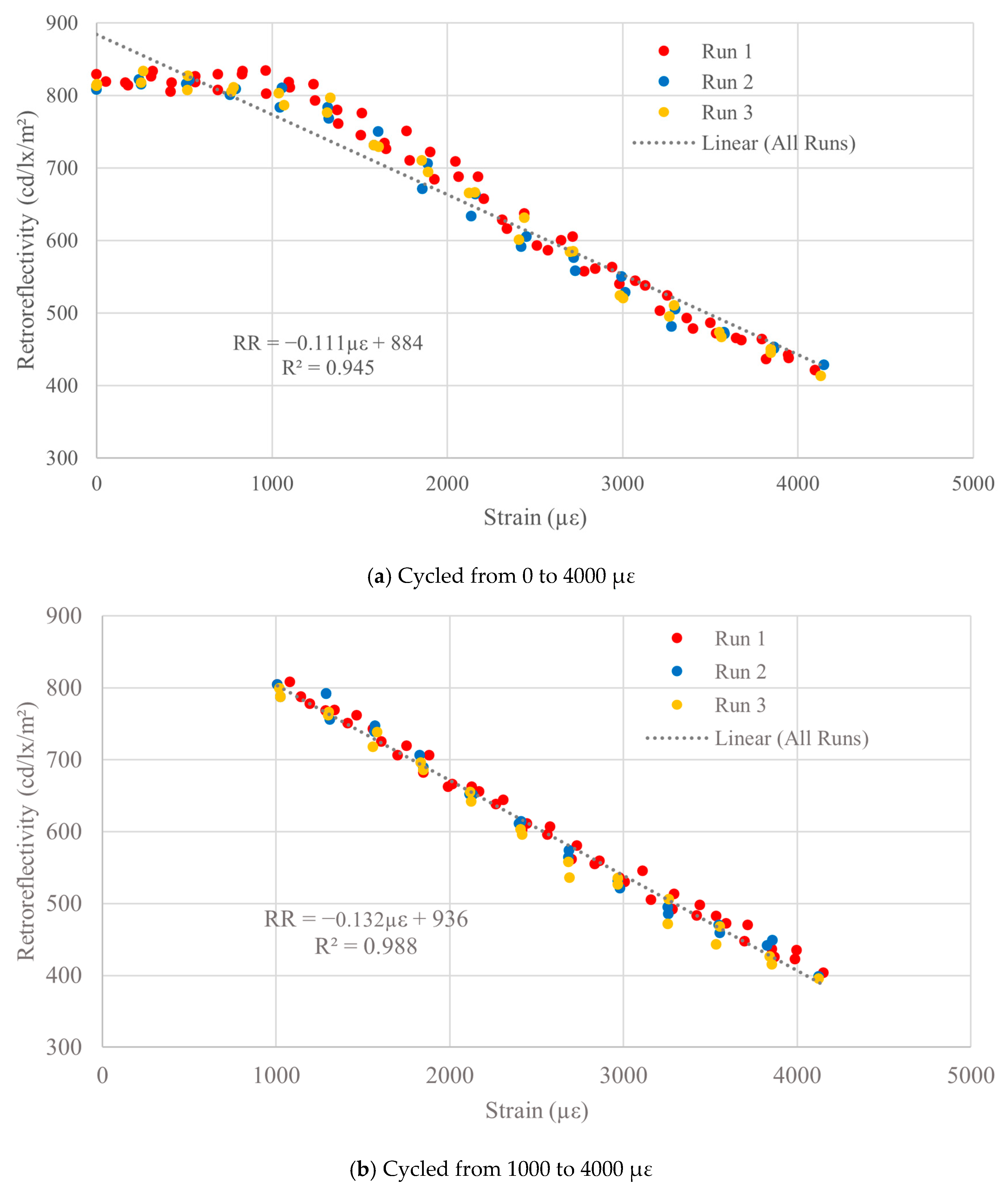
Presented in
Figure 5a is a plot of RR versus strain for the TXIFYG material; the plot is typical of the three replicate tests. Throughout this paper, retroreflectivity is plotted versus microstrain for the three loading and unloading cycles of a test. In this figure and similar plots, the first loading and unloading cycle data points are red, the second cycle data points are blue, and the third cycle data points are yellow.
Figure 5a clearly shows RR dependence on induced strain. There is an initial nearly constant region in which the RR does not vary significantly with strain; however, after about 1000 µε, the RR decreases in a nearly linear manner with increasing strain. A linear regression line for all loading and unloading cycles from the test is plotted along with the associated equation and R
2 value. The material sensitivity between 0 and 4000 µε is −0.111 RR/µε, with an R
2 value of 0.949. While there is a reasonably good linear correlation over the full strain range, the data follows more of a bilinear trend with little variation in RR up to about 1000 µε.
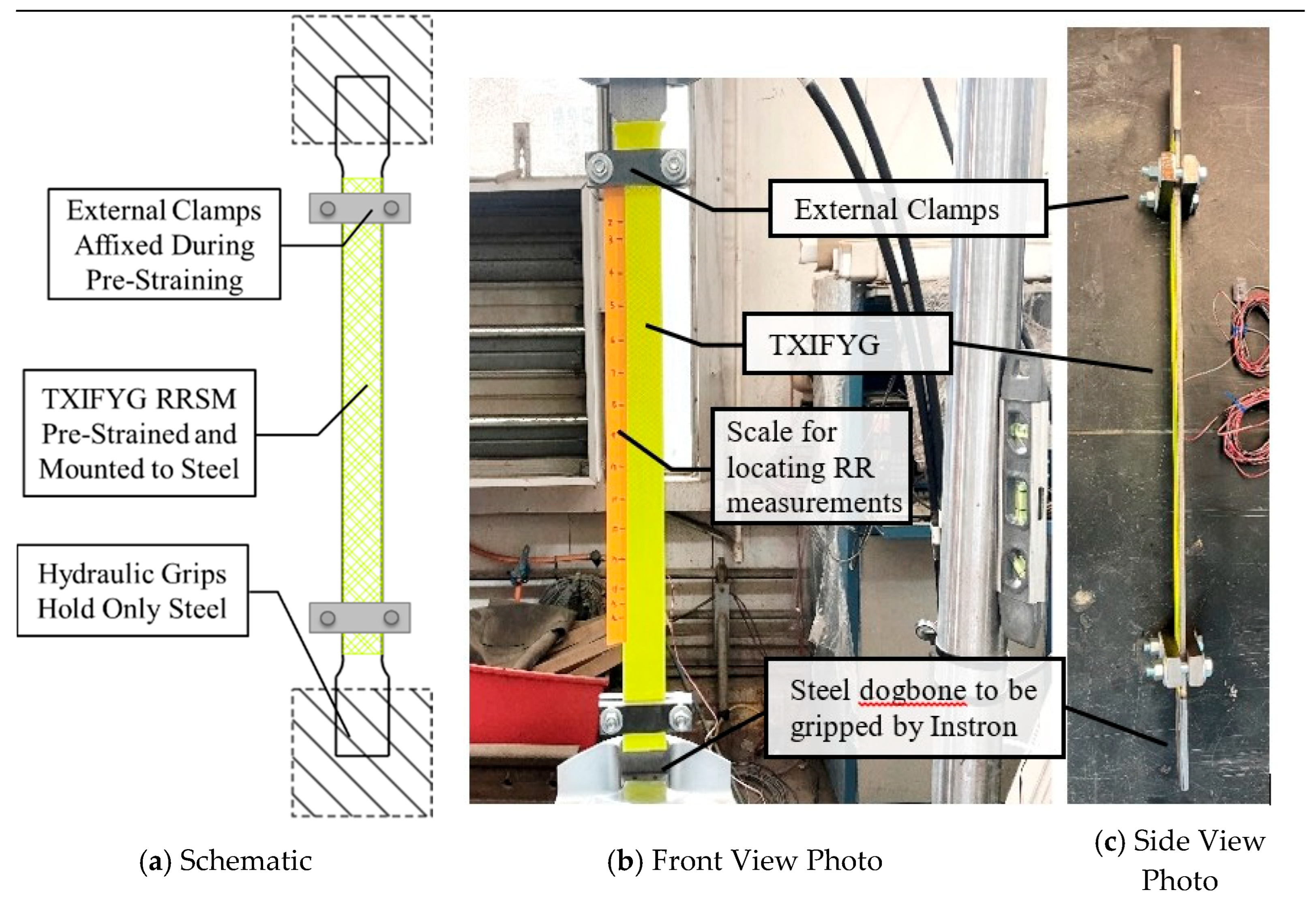
The same specimen was tested again but first loaded to approximately 1000 µε (i.e., pre-strained) and then cycled between 1000 and 4000 µε (
Figure 5b). When pre-strained and cycled between 1000 and 4000 µε, the sensitivity increased to −0.132 RR/µε, and the R
2 increased to 0.988. Similar results were observed in the other two specimens tested. These results demonstrate that the TXIFYG material could be used to measure changes in strain by measuring changes in retroreflectivity.
5. “Production” Sensor
The bare material and steel-mounted tests of the TXIFYG RRSM demonstrated its viability as a strain sensor; however, the material would need to be pre-strained and “clamped” to a surface to have a well-correlated linear strain response. Ideally, the material could be pre-strained and adhered directly to the surface on which the strain is to be measured. However, designing a method to clamp the ends of the material to the surface of a structural member would not be trivial and is counter to the objective of developing a simple, easy-to-use sensor. The alternative is to design a sensor that can hold the pre-strain, and then it would be clamped or bonded to the surface of a girder. This is similar to how other Wheatstone bridge strain transducers are utilized to conduct controlled load tests of bridges [
24]. This is the approach taken to develop the production passive strain sensor.
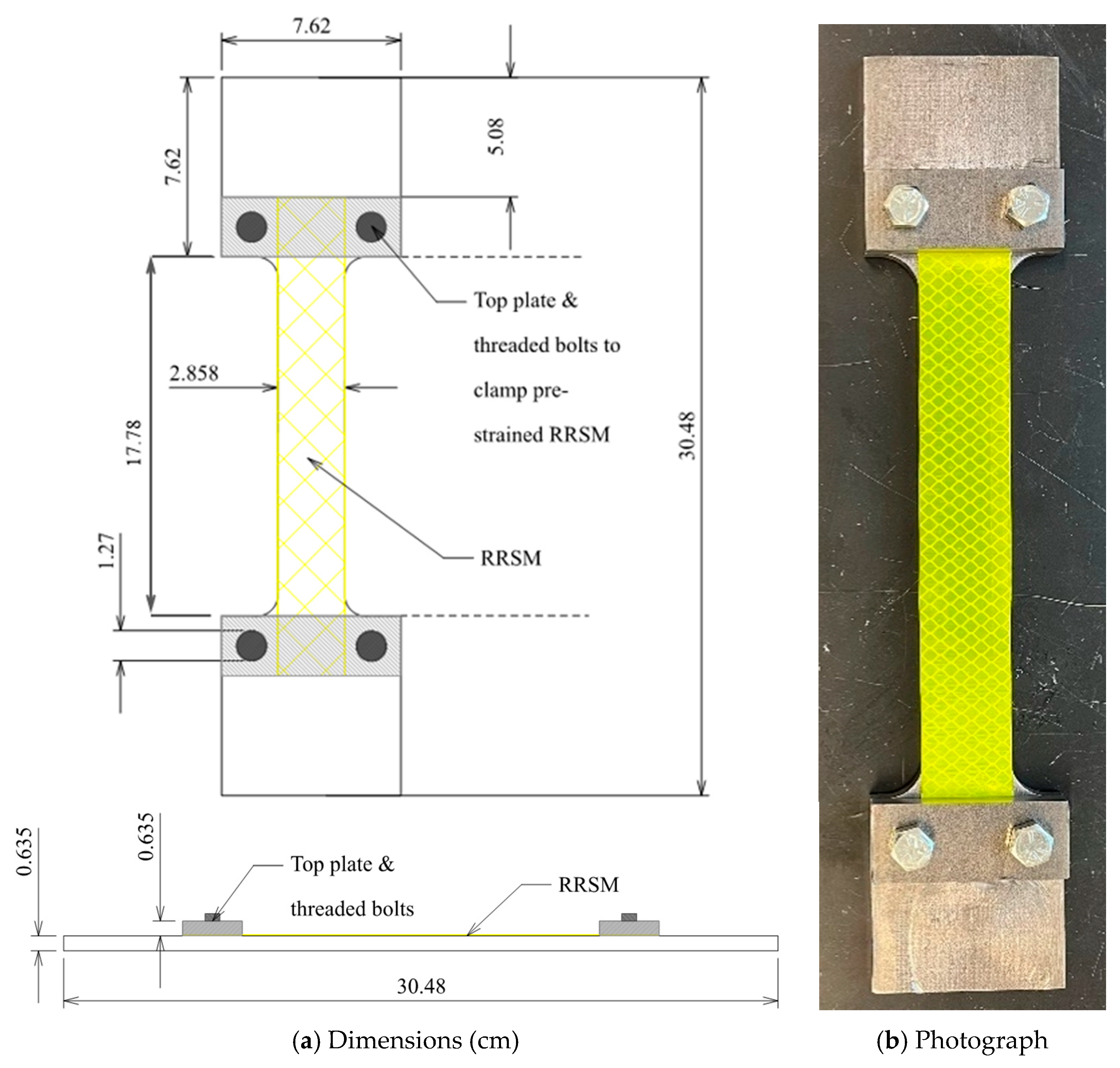
The sensor shown in
Figure 11 is similar to the steel dogbone specimens used in the steel mounted tests but shorter in length. It is wide enough to take RR readings with a handheld retroreflectometer, and the pre-strained RRSM is clamped using plates at each end that are bolted to the steel dogbone. With this design, the sensor can lay flush on a surface and be clamped or bonded to the structural element that is to be monitored. The gauge length is approximately 180 mm, which is slightly longer than other strain sensors used to monitor bridges today [
24,
25]. The ends of the sensor include flat regions where C-clamps can bear, so that it can be clamped to a surface, such as the edge of a built-up truss member or the flange of a girder.
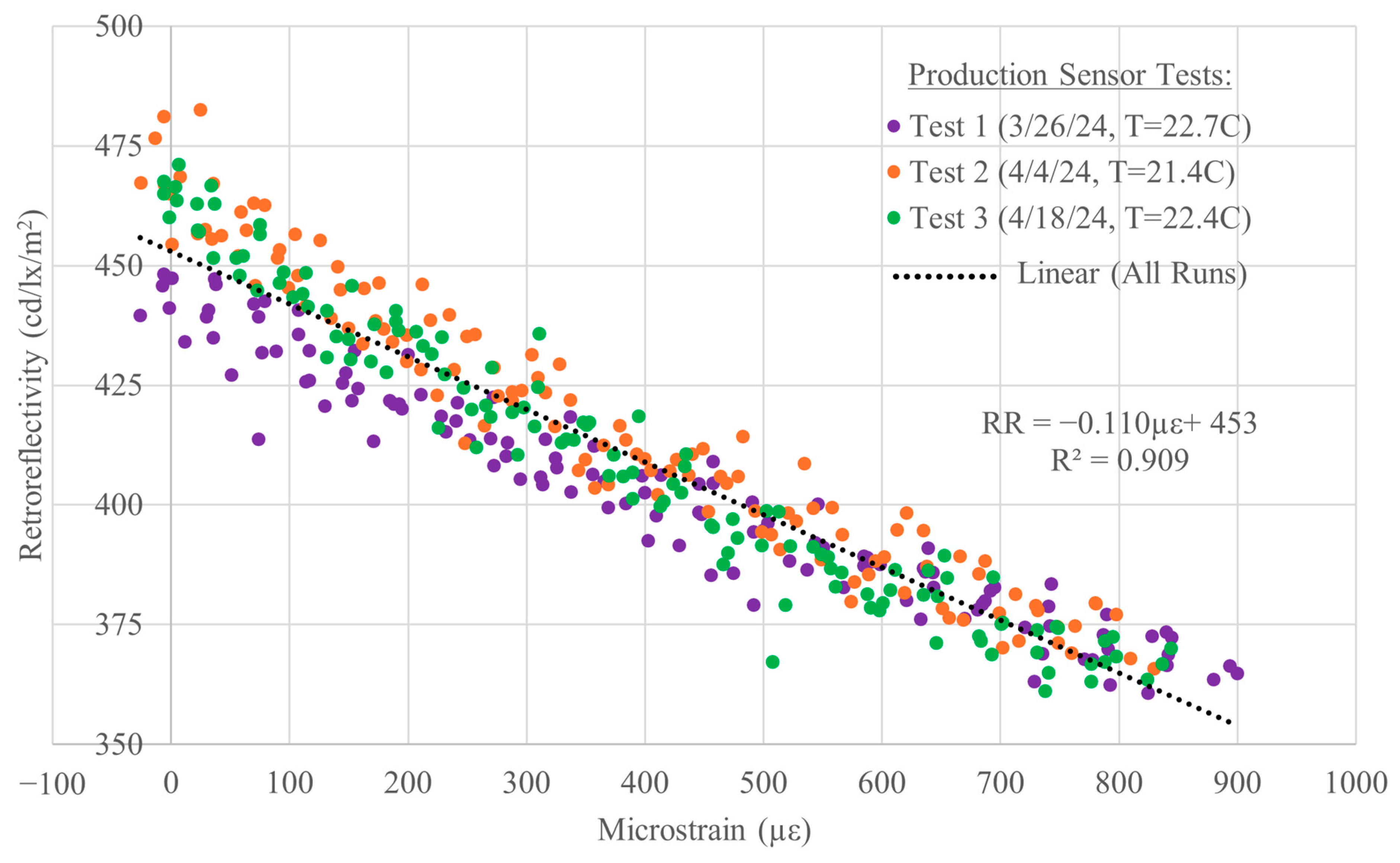
The production sensor was subjected to the same tension test procedure described earlier (three loading and unloading cycles) on three different days (nine cycles total). The temperatures during these tests were reasonably consistent. The sensor temperature, measured using a thermocouple attached to the non-reflective side of the sensor, ranged from 21.4 °C to 22.7 °C (70.6 °F to 72.8 °F). The results of all three tests are presented in
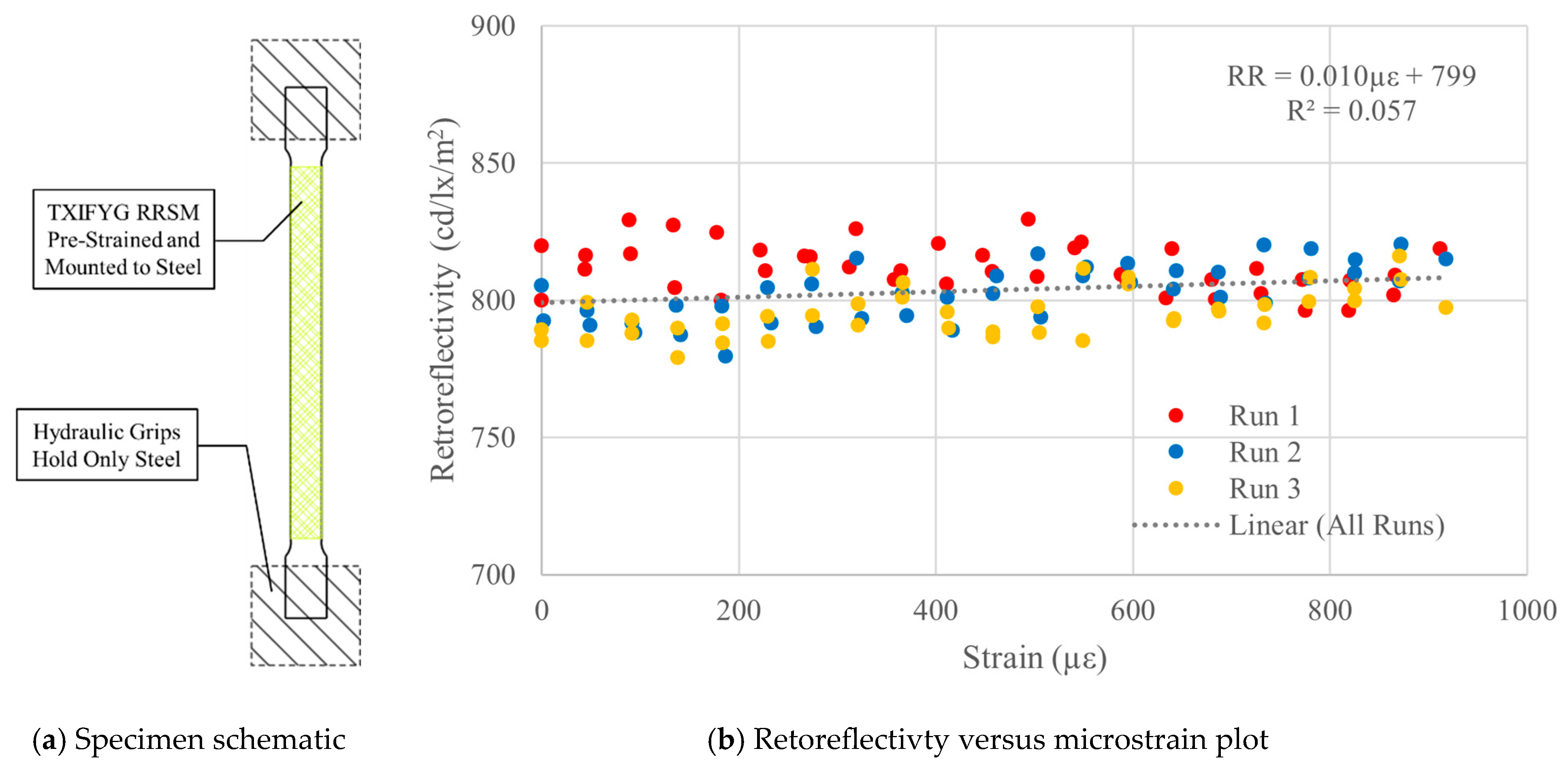
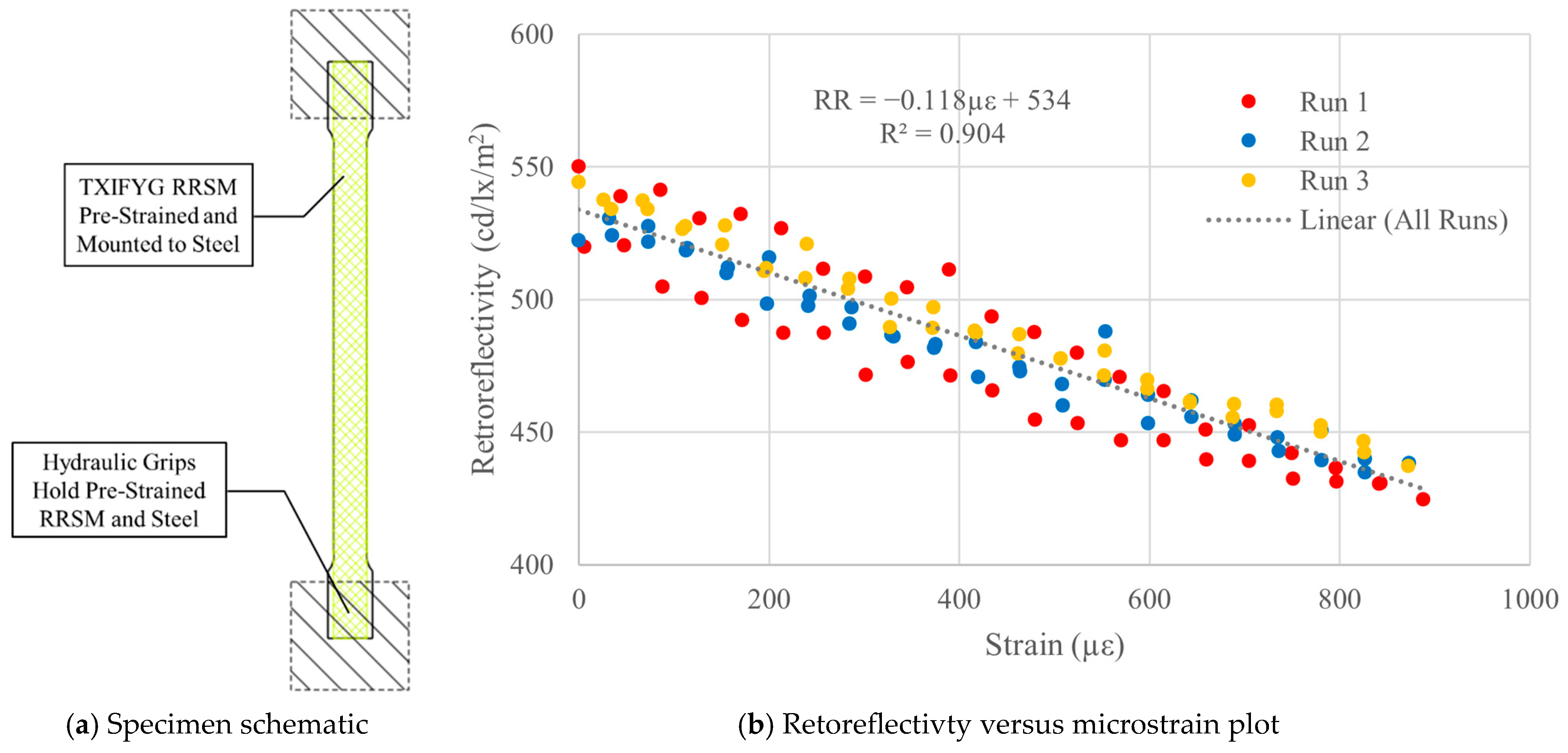
Figure 12, along with a linear best-fit line for the data from all three tests. The average RR sensitivity to strain of these three tests (−0.110 RR/µε) is comparable to the bare material results, as well as the results from the gripped specimen test (
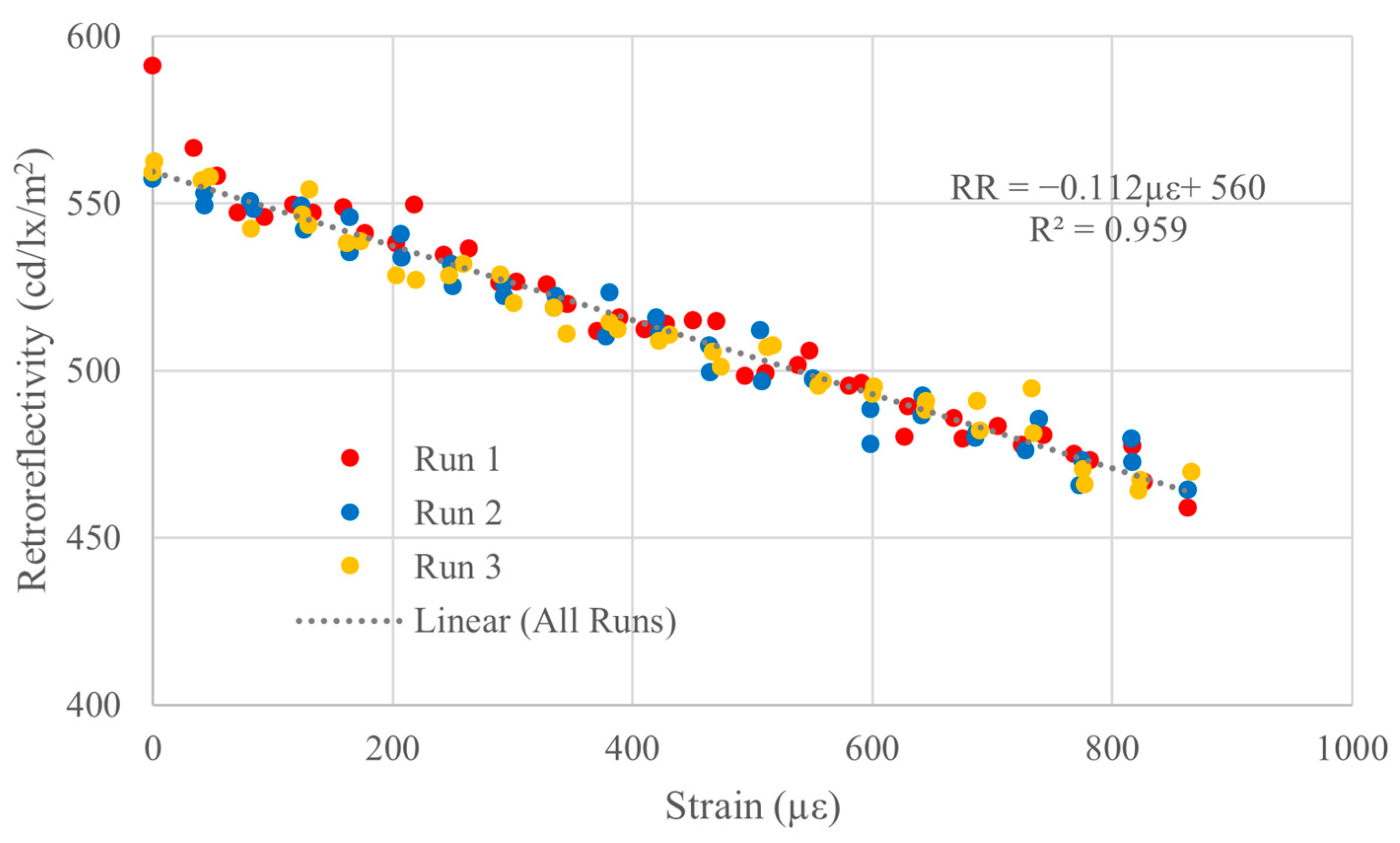
Figure 8) and from the externally clamped specimen (
Figure 10). The correlation of these three tests combined is R
2 = 0.909. These results are also presented in
Table 1 for comparison to the earlier tests.
5.1. Calibration Equation
A calibration equation for the production sensor was derived from the same data that is presented in
Figure 12 by plotting strain (
y-axis) versus retroreflectivity (
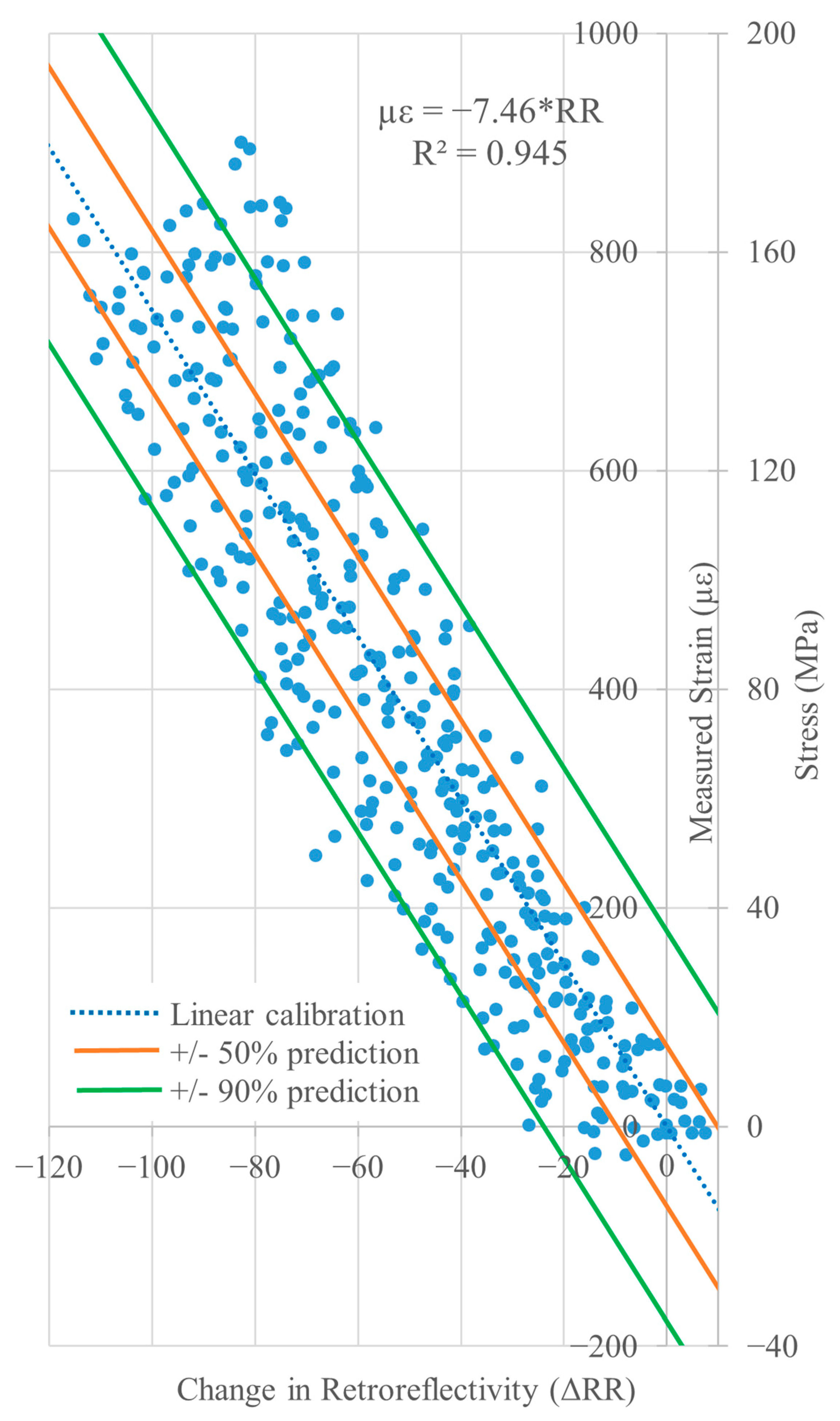
x-axis) and subtracting the zero-strain retroreflectivity from the RR readings so that the curve starts at ~0.0. Linear regression of the data in
Figure 13 yields the calibration factor for the production sensor of −7.46 με/RR; the correlation is R
2 = 0.945.
Note, the regressions presented in
Figure 12 and
Figure 13 are not perfect inverses of each other because exchanging the predictor and response variables results in different predictive model parameters. In least squares regressions, the model is fit by minimizing the squared residuals in the response variable. Consequently, by interchanging the x- and y-axes, the regression in
Figure 13 minimizes residuals to predict microstrain from change in retroreflectivity rather than minimizing residuals to predict RR from microstrain, as shown in
Figure 12. The total sum of squares and the regression sum of squares, which are used in the calculation of R
2, are based on the response variable; therefore, interchanging the axes results in a slightly different value for R
2 [
26].
In an actual monitoring program, the sensor would be mounted to a structural member and an initial “zero-strain” RR reading taken. This is denoted by
RRi and is the value that must be subtracted from all subsequent RR readings, i.e., zeroing the initial strain reading. This is not unlike zeroing a resistive strain gauge or other sensor before starting a test to remove any initial bias in the reading. In this case, the strain measured sometime later is given by:
where
RRi is the initial “zero-strain” average baseline
RR reading of the sensor at the time it was installed, and
RRn is the average
RR reading at a later time of interest; positive values indicate tensile strain.
5.2. Sensor Variability
Due to the variability in
RR measurements, there is uncertainty in Equation (1) prediction. Therefore, prediction intervals were computed using JMP [
27], and they are shown in orange at 50% and in green at 90% in
Figure 13. These intervals estimate a range, of a given likelihood, within which an individual predicted value of microstrain is likely to fall for a given change in retroreflectivity (ΔRR). The prediction intervals can be used to determine a reasonable range of change in strain in the structure based on the RR reading [
26]. Reading strain values corresponding to ΔRR from the +/−50% lines, there is a 50% chance that the actual change in strain falls between the maximum and minimum values indicated by those lines. Likewise, there is a 90% chance that the actual strain falls within the values given by the 90% lines. The “+” lines yield an upper-bound estimate of the likely maximum measured strain.
The root mean square error (RMSE) between the prediction and measured strain for this dataset is 108.2. Some of the scatter in
Figure 13 can be attributed to the inherent variability of the RR measurement of the unstrained material presented earlier in
Section 3.
Potential options for reducing the sensor variability are an area for continued investigation. These include: (1) modifications to the structure of the reflective material (i.e., a new design of RRSM); (2) testing of the RRSM on a more compliant substrate, such as a thinner steel dogbone, a thin aluminum dogbone, or a polymer dogbone; or (3) using duplicate sensors on the same member to provide multiple unique measurements.
5.3. Measurement Procedure
The following describes the procedure for using the RRSM sensor to monitor a structure.
- (1)
Mount the sensor to the tension face of a structural element. For example, the bottom chord or tension diagonal of a truss, a cross-bracing member, or the bottom flange of a large bridge girder.
- (2)
Take the initial RR readings along the length of the sensor and record the average value, RRi.
- (3)
At a later time, take new RR readings along the length of the sensor, record the average value RR1, and calculate ΔRR = RR1 − RRi.
- (4)
Calculate strain using Equation (1).
- (5)
Determine the desired estimated prediction interval from
Figure 13 or by using the following bounds by adding to or subtracting from the calculated strain from Equation (1):
90% prediction interval: µε ± 179.
50% prediction interval: µε ± 73.
- (6)
Repeat steps #3 to #5.
6. RRSM Sensor in Practice
6.1. Example Measurement
In a hypothetical example, the RRSM sensor is used to measure the strain in a tension member of a steel truss that is the result of a heavy vehicle load being placed on the bridge. The sensor is first clamped to the member and initial readings are taken: the average reading is
RRi = 500. Next, the heavy load is driven on to the bridge and parked in one location: new RR readings of the sensor are taken. The new average reading is
RR1 = 460. Using Equation (1), the change in strain in the structure at the sensor location is:
For the steel bridge with E = 200 GPa, this corresponds to an increase of ~60 MPa in tension in the member (see the secondary stress axis shown in
Figure 13). The 50% and 90% prediction intervals for the measurement are:
50% prediction interval: µε = 225 µε to 371 µε, in terms of stress, 45 to 74 MPa.
90% prediction interval: µε = 119 µε to 477 µε, in terms of stress, 24 to 95 MPa.
Thus, the average increase in live load stress is most likely approximately 60 MPa and not likely to be any higher than 95 MPa. The uncertainty in the result is certainly not comparable to that of a conventional strain sensor/transducer; however, the predicted strain/stress could be compared to a theoretical stress due to the load and used to assess general load distribution in the bridge: a measured value that is much greater than the theoretical one could indicate a potential problem with the bridge and trigger further analysis and testing with more sensitive, active strain sensors.
The variability of the measurement can also be assessed in relation to a typical design or yield stress. Assuming the bridge is constructed of Grade 50 steel, which has a yield stress of approximately 345 MPa (50 ksi), and assuming the design tensile strength for a member is approximately 60% of yield (207 MPa (30 ksi)), then the 50% and 90% prediction intervals represent 7% and 17% of the design stress. In the context of this example, 60 MPa corresponds to approximately 30% of the design stress. Even at the upper bound of the 90% prediction interval, 95 MPa, the stress in the member is approximately 46% of the design stress. With a calculated dead load stress, the predicted and upper-bound live load stress can be compared to the available live load capacity of the member, in effect calculating a load rating factor for the bridge. This demonstrates that, while the RRSM sensor is not as precise as conventional SHM sensors, its uncertainty still remains within limits that are practical for use in bridge health monitoring.
6.2. Environmental Factors
In the previous hypothetical example, because the test is conducted over a short period of time, the effects of temperature and the environment do not come into play. However, when monitoring over a period of time, these may have an influence on the sensor. Therefore, in practice, for-long term monitoring, the sensor should be protected with some manner of shield or enclosure or located on the member such that these factors are minimized to the extent possible. And, as much as possible, readings should be taken within a narrow range of temperatures. That said, work is ongoing to evaluate the effects of temperature and UV exposure on the sensor and will be reported in future publications.
6.3. Estimated Cost
The estimated cost of the production sensor is presented in
Table 2. The material costs are very low: most of the cost is in machining the steel body and clamping plates. Assembling the sensor is very straightforward and only requires a simple hanging weight apparatus to pre-strain the TYIXFYG before it is adhered to the steel.
The total cost to fabricate a single RRSM sensor is higher than some and lower than other active conventional active sensors. For example, a single weldable resistive strain gauge costs approximately $30, while a quick-mounting full bridge strain transducer costs between $500 and $600. Including the cost of signal conditioning and data acquisition for these conventional active sensor, the cost of the passive sensor becomes more viable. This is certainly true if a DOT already owns a reflectometer to measure the reflectivity of their traffic signs.
Note that the RRSM sensor described herein is made with steel as the backing material. Other equally durable materials could be used to fabricate the sensor, such as aluminum or possibly a 3D-printed backing. It is recommended that if a material other than steel is used to fabricate an RRSM, it should be tested and calibrated.