DC Series Arc Fault Detection in Electric Vehicle Charging Systems Using a Temporal Convolution and Sparse Transformer Network

 ,
,
Abstract
1. Introduction
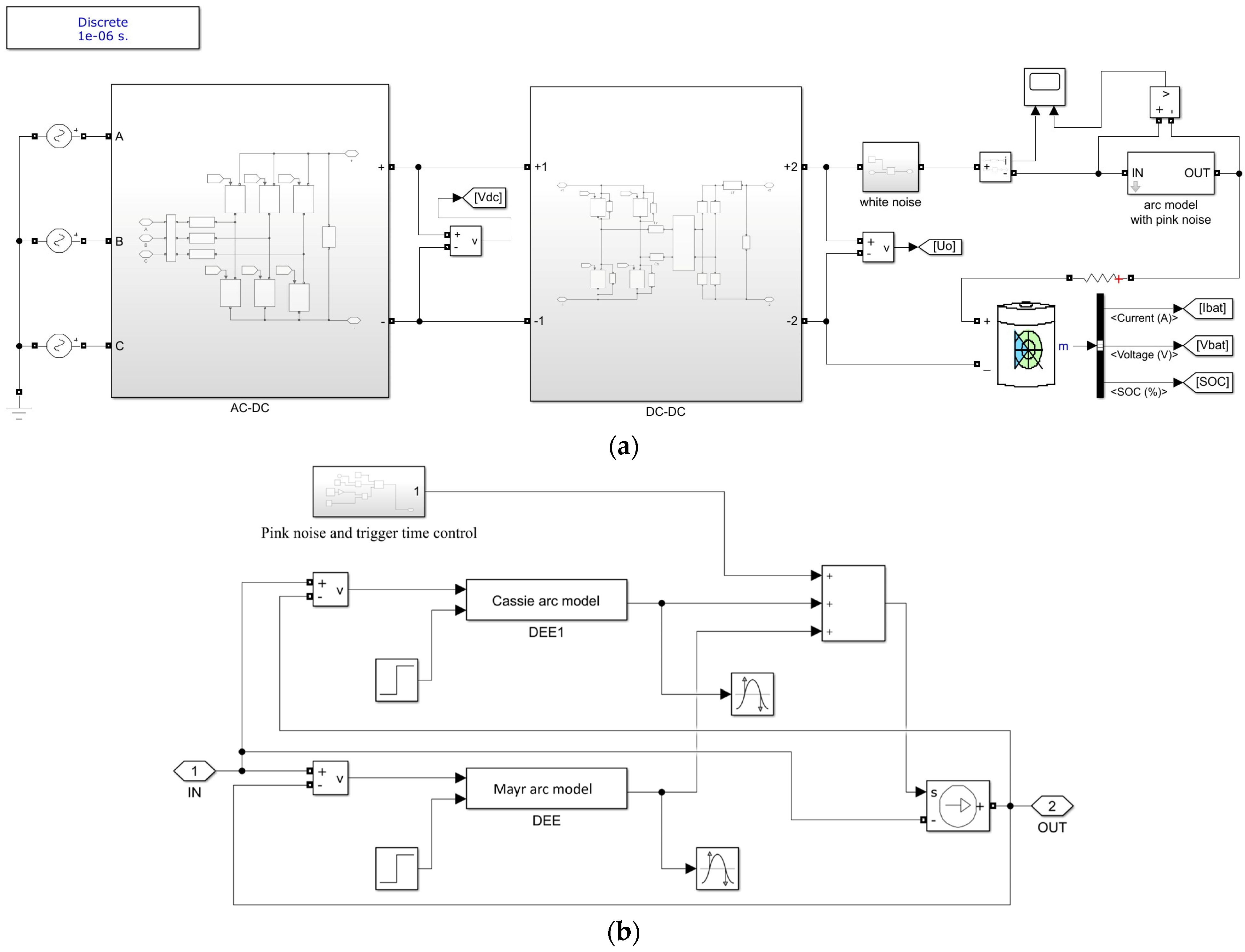
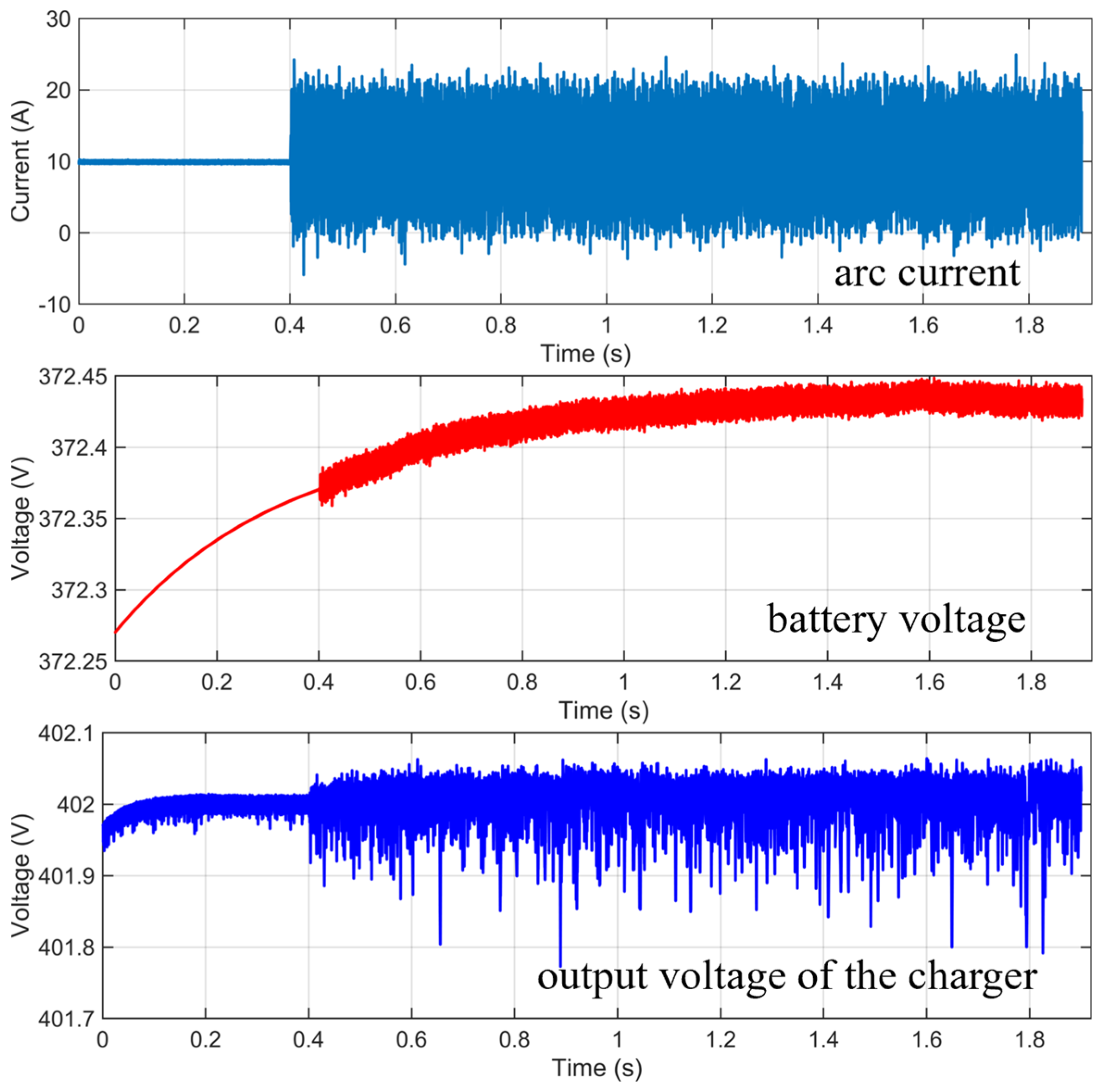
2. Arc Fault Model of the Electric Vehicle Charging System
Simulation Analysis
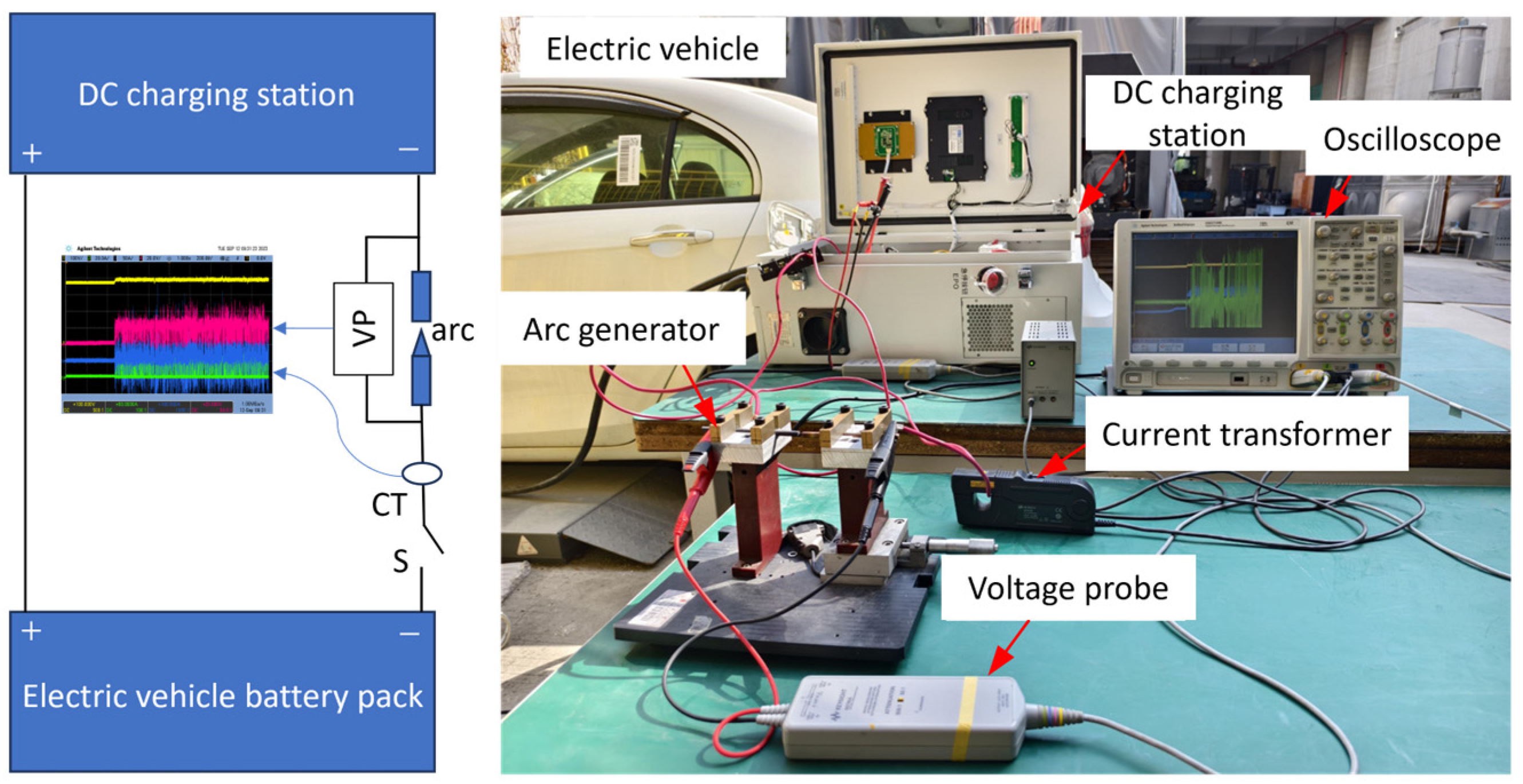
3. Experimental Study of DC Arc Faults During Electric Vehicle Charging
3.1. Experimental Platform
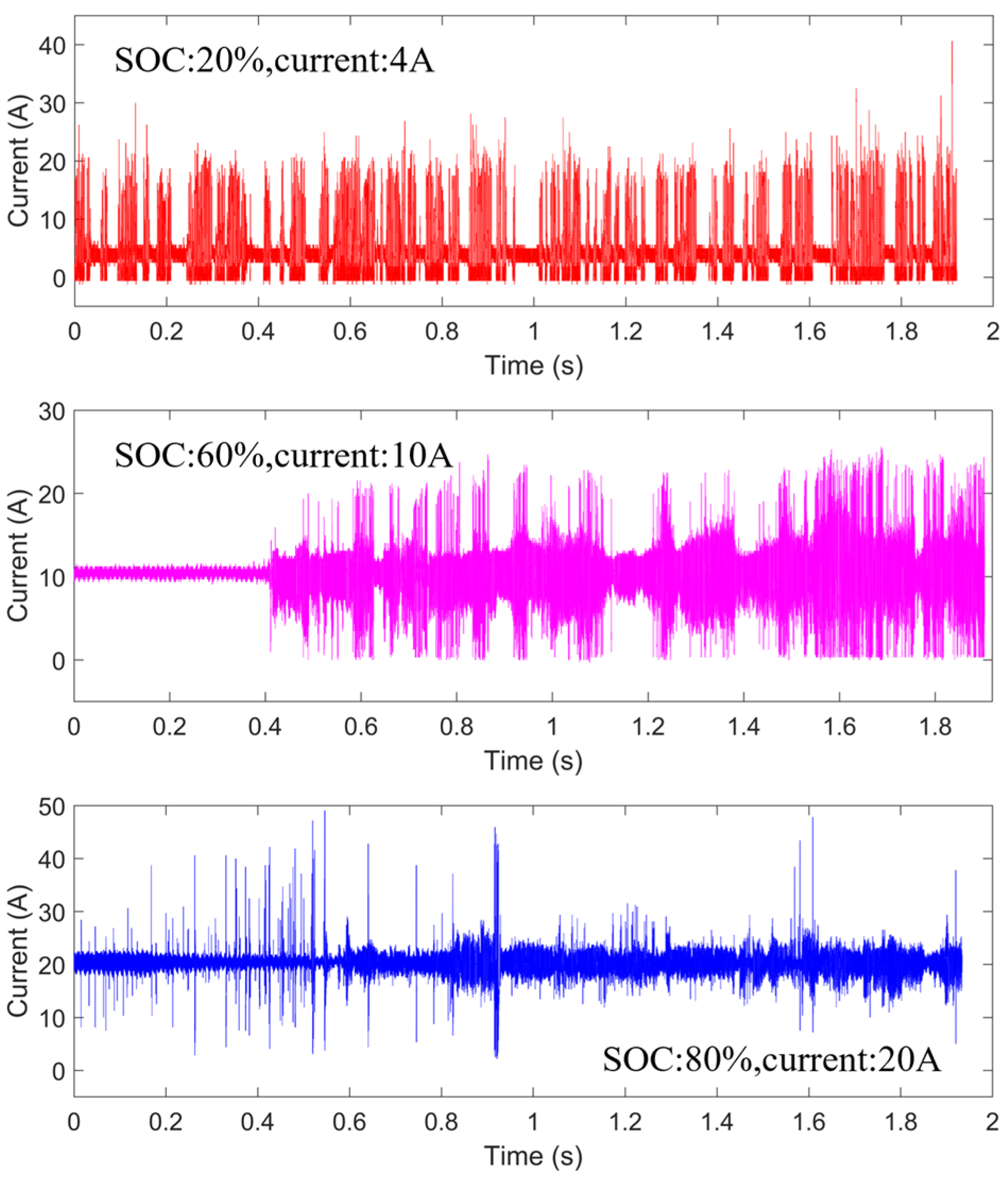
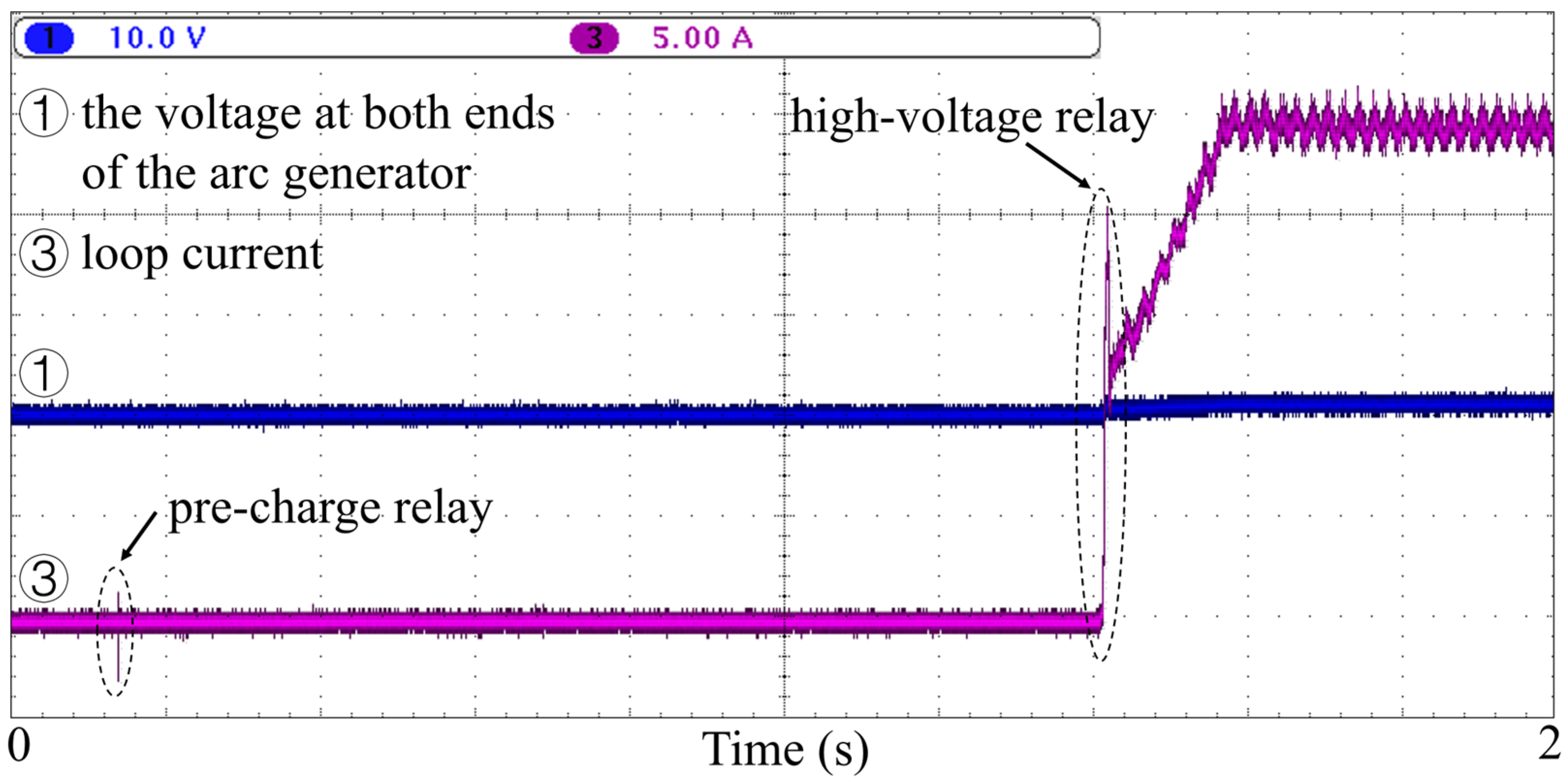
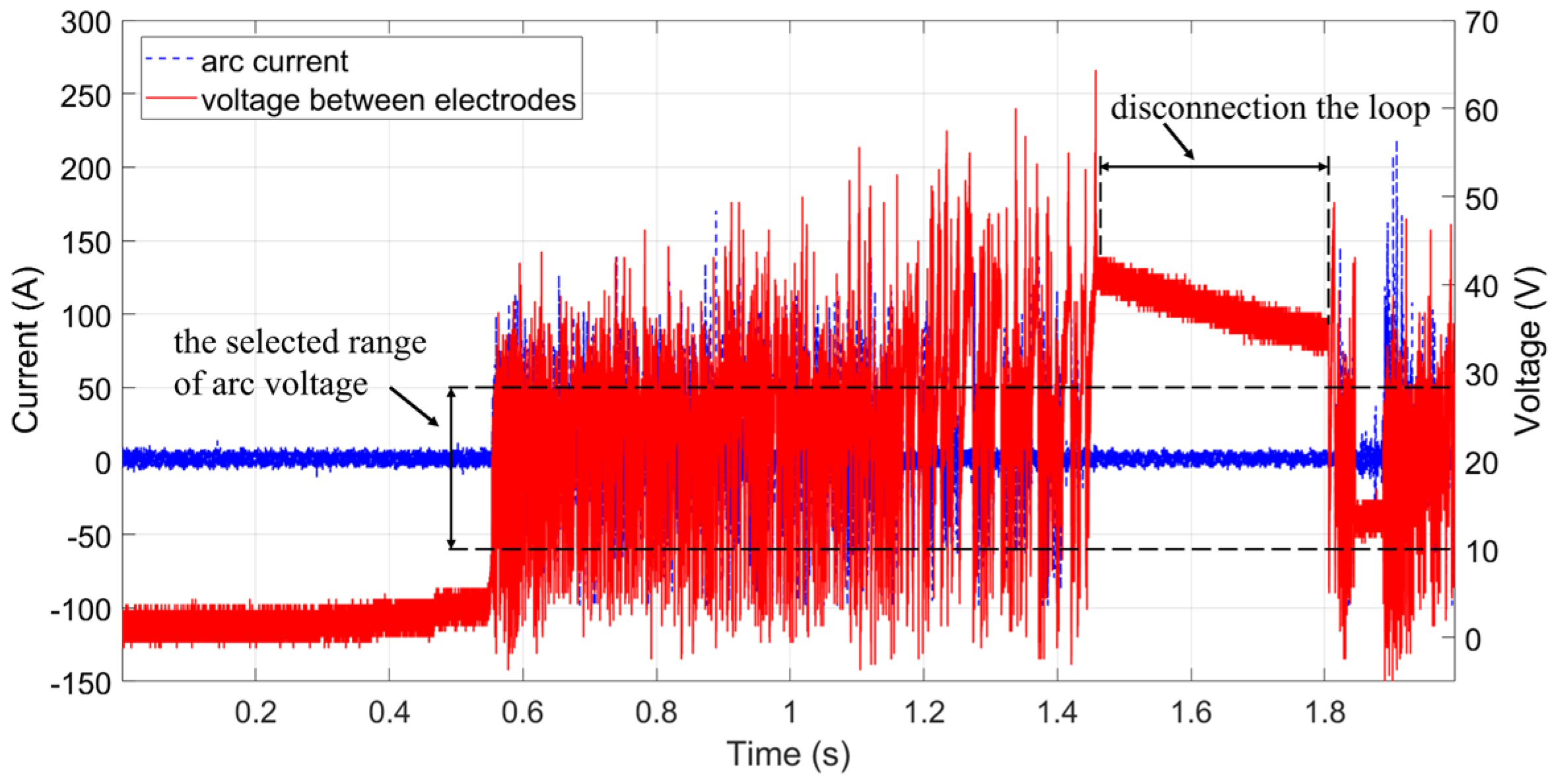
3.2. Arc Fault Experiments in EV Charging Systems
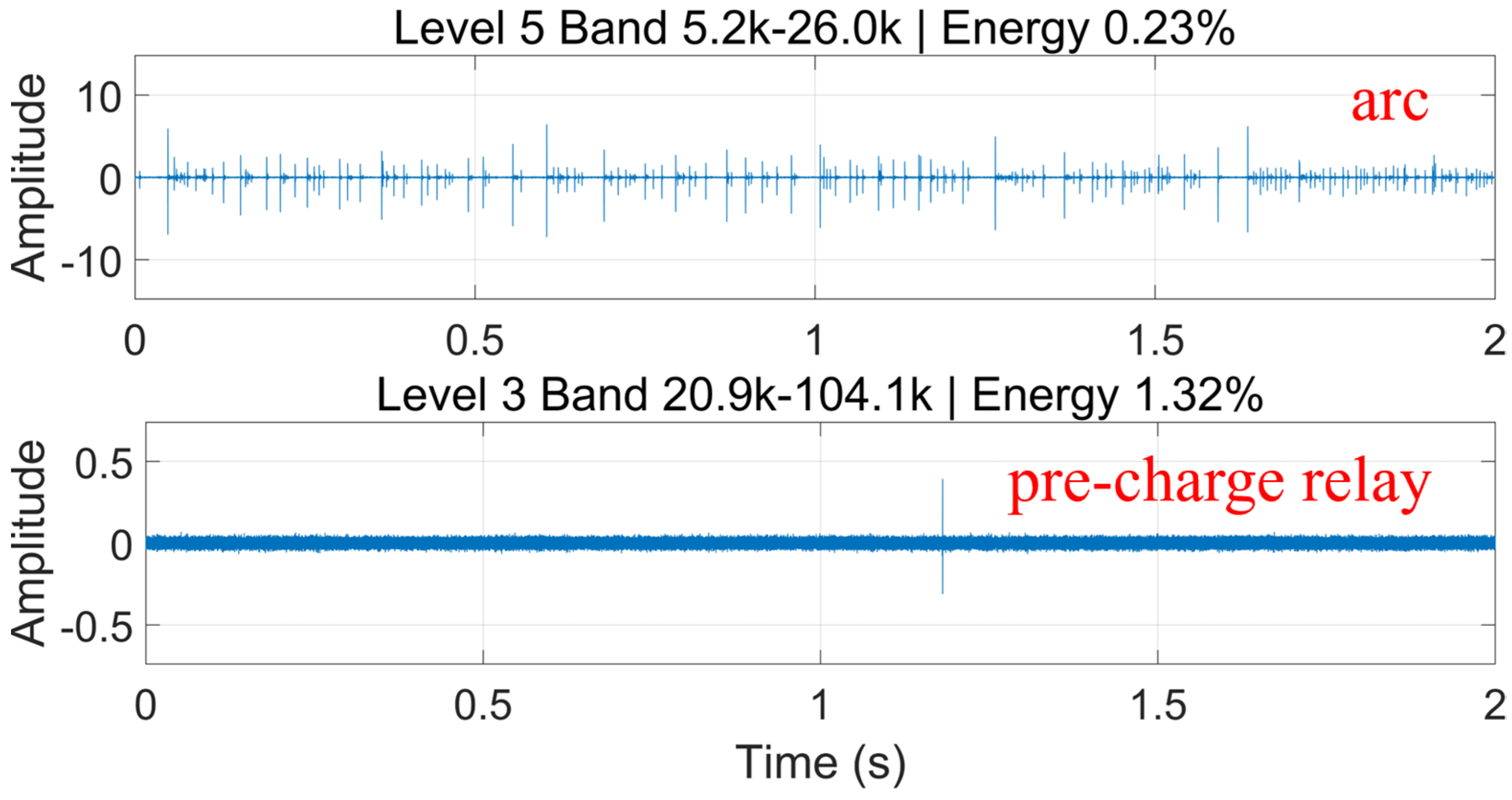
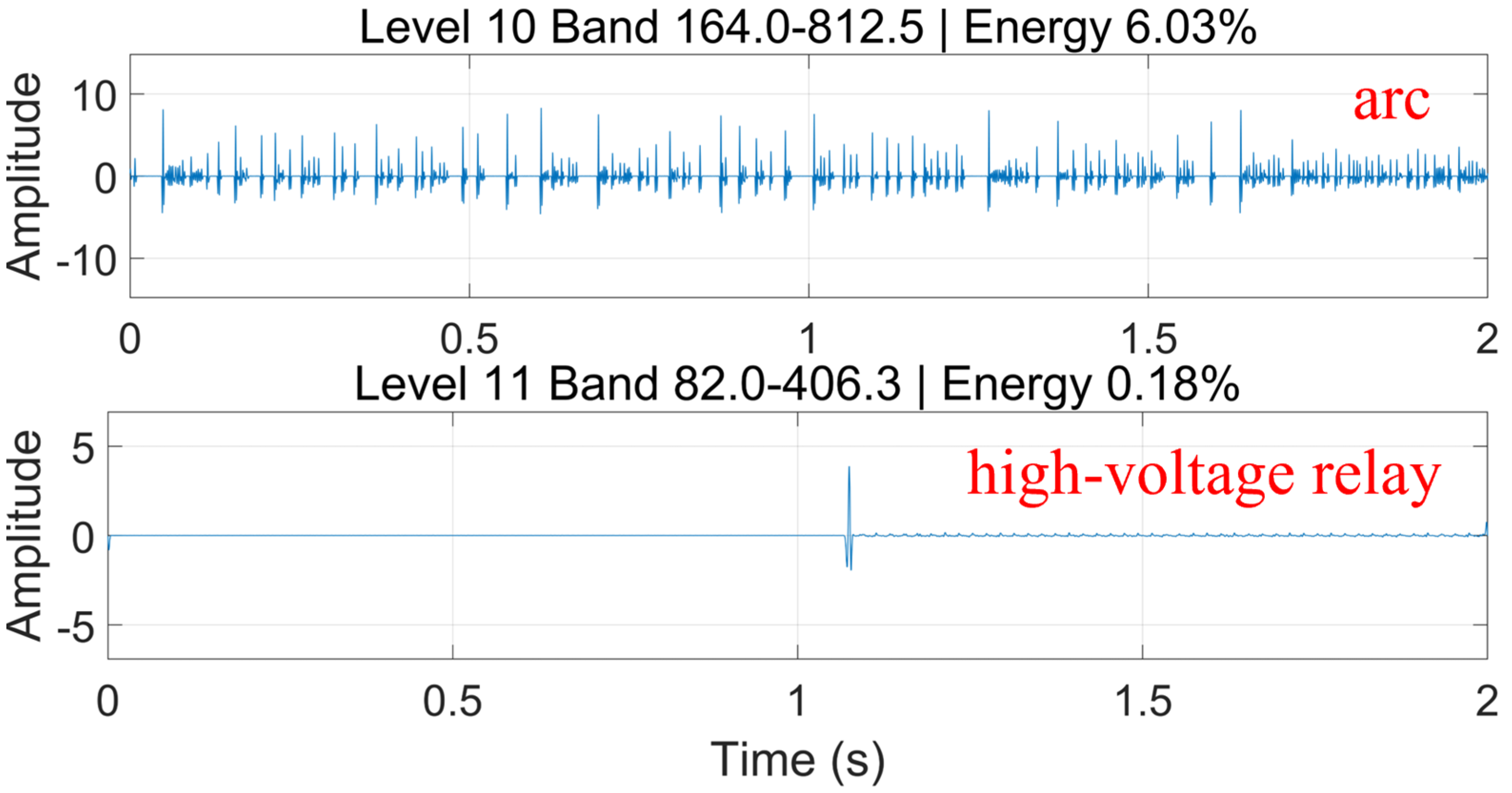
3.3. Time–Frequency Analysis of Charging Circuit Current Signals
4. Arc Fault Detection Algorithm Based on Deep Neural Networks
4.1. Automated Sample Labeling
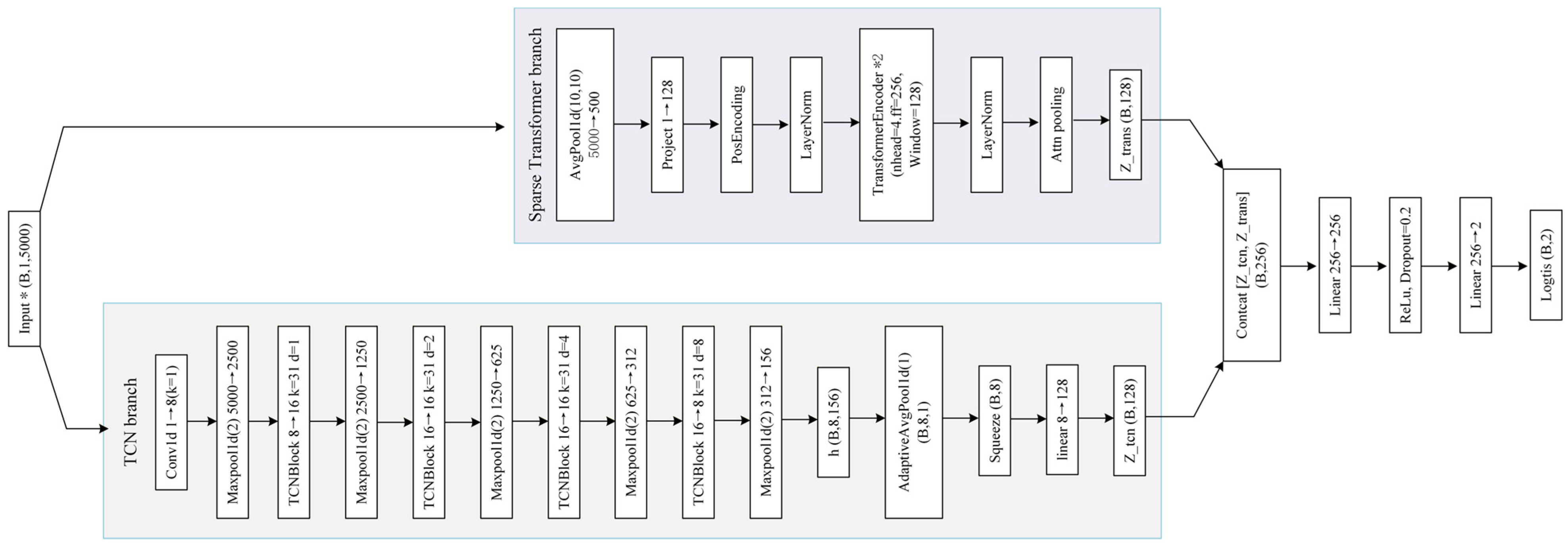
4.2. Network Architecture
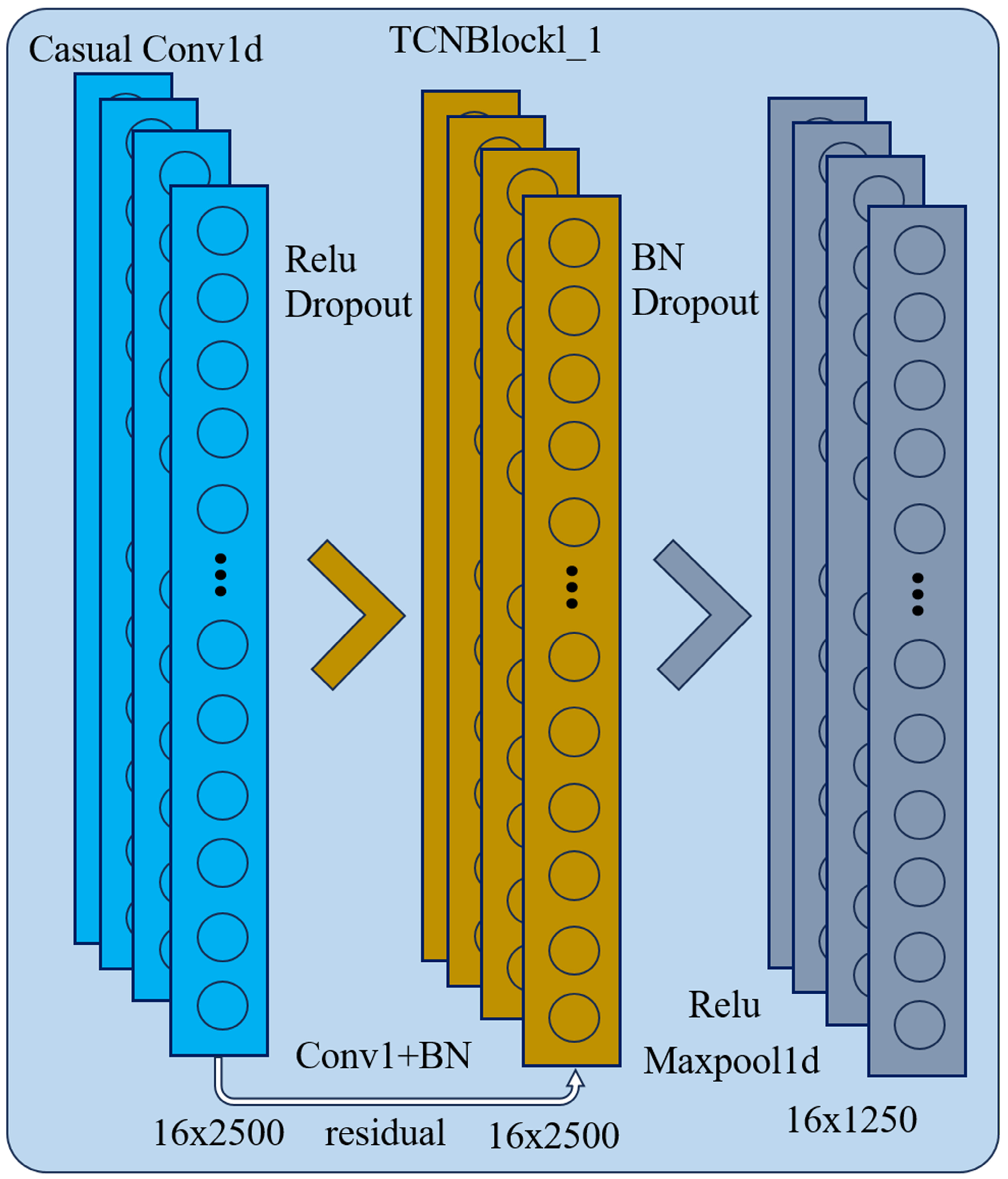
4.2.1. TCN Channel
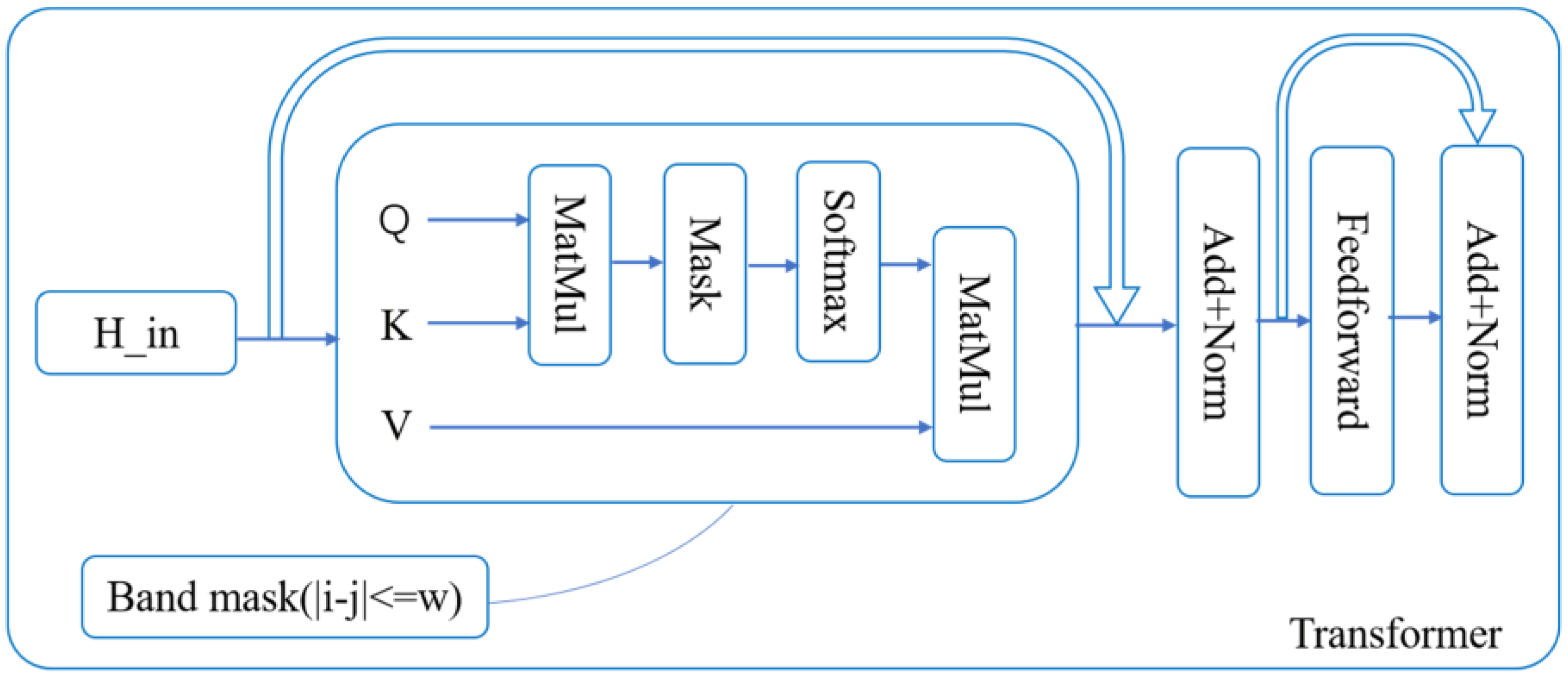
4.2.2. Sparse Transformer Channel
4.2.3. Feature Fusion and Classification
5. Experimental Results and Discussion
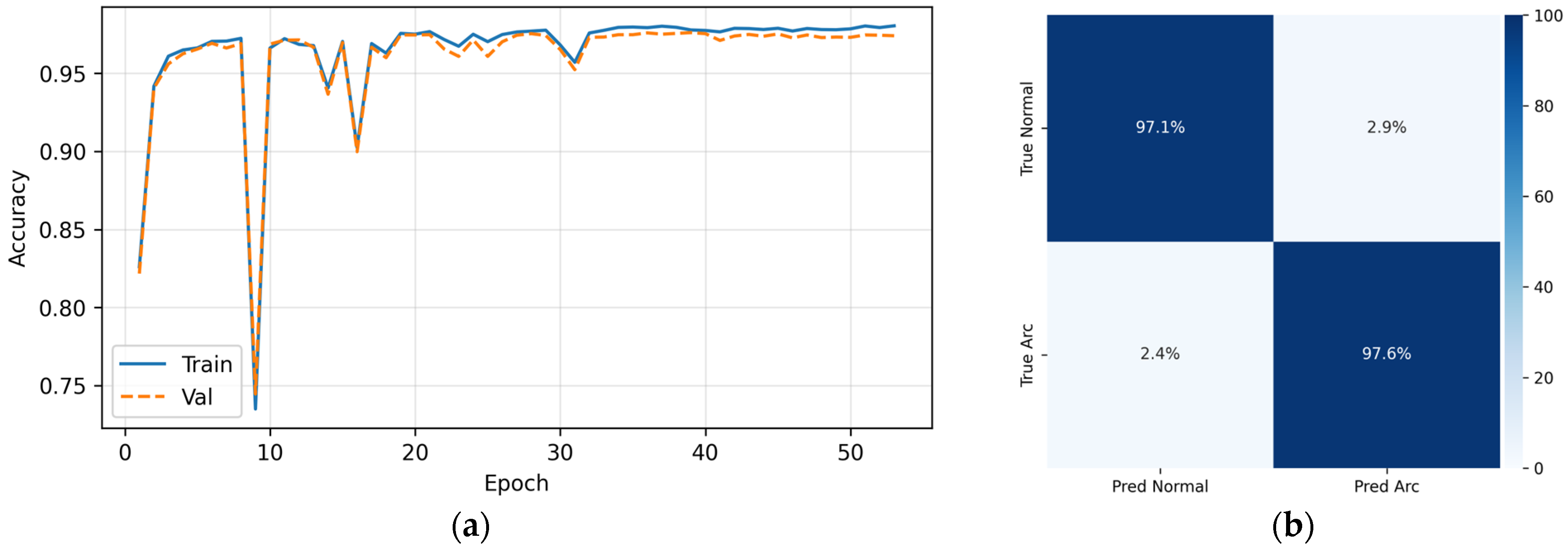
5.1. Algorithm Performance
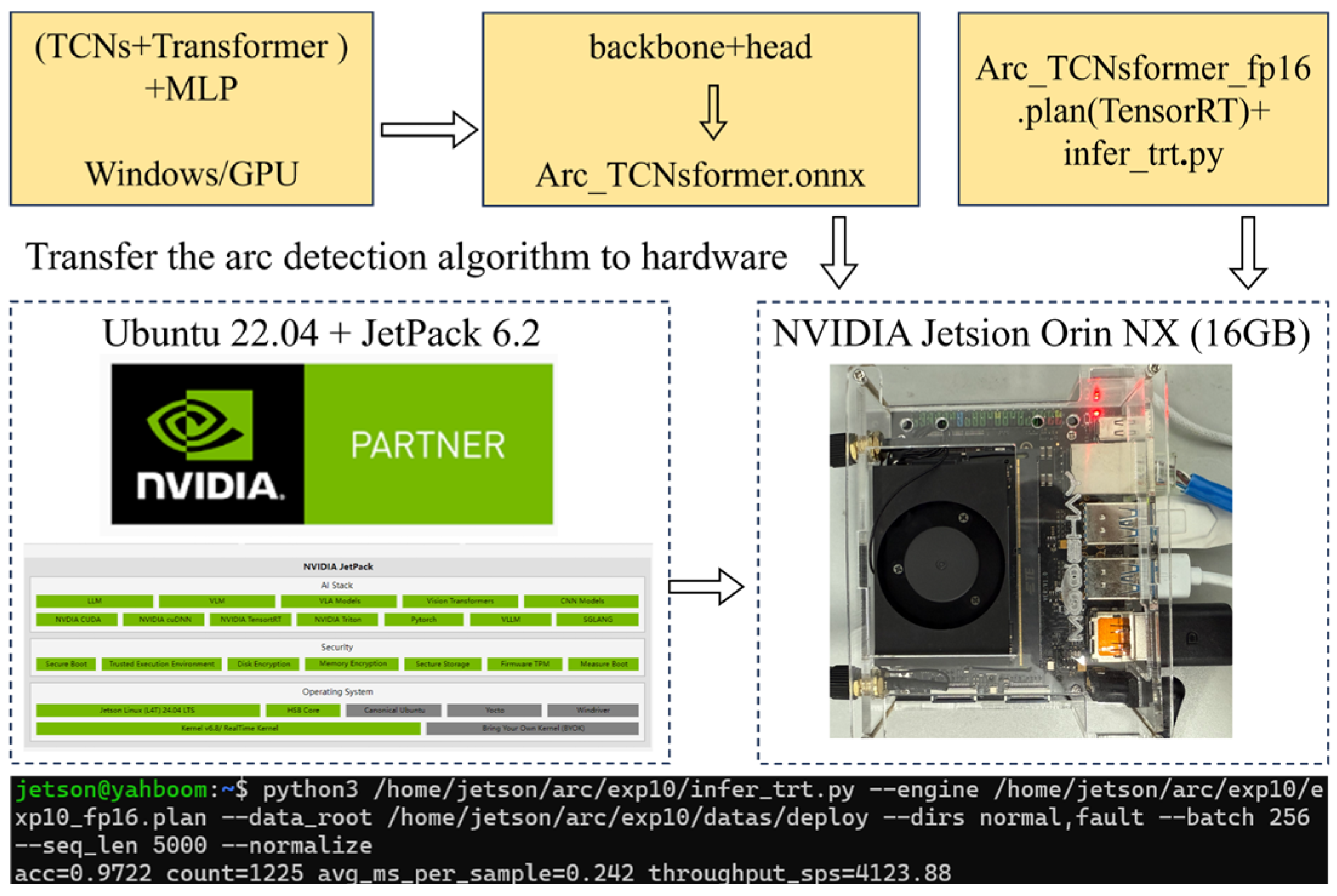
5.2. Algorithm Deployment
6. Conclusions
- (1)
- Experimental results demonstrate that the proposed Arc_TCNsformer model achieves an accuracy of 97.34% and an F1-score of 97.35%, outperforming the standalone Transformer model (94.82% accuracy) by 2.52 percentage points and the TCN-only model (96.96% accuracy) by 0.38 percentage points. Compared with the fully connected Transformer attention mechanism, the sparse attention strategy significantly reduces computational complexity while maintaining high recognition performance.
- (2)
- Furthermore, after deployment on the Jetson Orin NX SUPER platform, the optimized TensorRT FP16 engine achieves an average inference time of 0.242 ms per sample and a throughput of approximately 4123.88 samples per second, while maintaining a deployment accuracy of 97.22%, demonstrating strong real-time capability and robustness for embedded edge applications.
Author Contributions
Funding
Institutional Review Board Statement
Informed Consent Statement
Data Availability Statement
Conflicts of Interest
References
- Zhao, J.Y.; Xi, X.; Na, Q.; Wang, S.S.; Kadry, S.N.; Kumar, P.M. The technological innovation of hybrid and plug-in electric vehicles for environment carbon pollution control. Environ. Impact Assess. Rev. 2021, 86, 106506. [Google Scholar] [CrossRef]
- Topal, O. Assessing Risks of Electric Vehicles in Underground Parking Facilities: Strategies for Enhancing Urban Sustainability. Isi Bilim. Tek. Derg.-J. Therm. Sci. Technol. 2025, 45, 84–96. [Google Scholar] [CrossRef]
- Li, Y.X.; Mei, W.X.; Yu, Y.; Liu, C.S.; Zhang, Y.; Zhuo, P.; Chen, Y.; Sun, J.H.; Jin, K.Q.; Wang, Q.S.; et al. Revealing the self-ignition mechanism of lithium iron phosphate battery modules: The coupling effect of battery inconsistency and BMS failure. Etransportation 2025, 26, 100484. [Google Scholar] [CrossRef]
- Zhang, Z.Q.; Dong, H.L.; Wang, L.; Wang, Y.; He, X.M. Tracing Root Causes of Electric Vehicle Fires. Energy Technol. 2024, 12, 2400931. [Google Scholar] [CrossRef]
- Olona, A.; Castejon, L. Full-Scale Experimental Analysis of the Behavior of Electric Vehicle Fires and the Effectiveness of Extinguishing Methods. Fire 2025, 8, 301. [Google Scholar] [CrossRef]
- Kuntz, P.; Lonardoni, L.; Genies, S.; Raccurt, O.; Azaïs, P. Evolution of Safety Behavior of High-Power and High-Energy Commercial Li-Ion Cells after Electric Vehicle Aging. Batteries 2023, 9, 427. [Google Scholar] [CrossRef]
- Yang, Y.; Wang, R.J.; Shen, Z.J.; Yu, Q.Q.; Xiong, R.; Shen, W.X. Towards a safer lithium-ion batteries: A critical review on cause, characteristics, warning and disposal strategy for thermal runaway. Adv. Appl. Energy 2023, 11, 100146. [Google Scholar] [CrossRef]
- Mallick, S.; Gayen, D. Thermal behaviour and thermal runaway propagation in lithium-ion battery systems—A critical review. J. Energy Storage 2023, 62, 106894. [Google Scholar] [CrossRef]
- Li, W.F.; Rao, S.; Xiao, Y.; Gao, Z.H.; Chen, Y.P.; Wang, H.W.; Ouyang, M.G. Fire boundaries of lithium-ion cell eruption gases caused by thermal runaway. Iscience 2021, 24, 102401. [Google Scholar] [CrossRef]
- Feng, X.N.; Ren, D.S.; He, X.M.; Ouyang, M.G. Mitigating Thermal Runaway of Lithium-Ion Batteries. Joule 2020, 4, 743–770. [Google Scholar] [CrossRef]
- Ledinski, T.; Golubkov, A.W.; Schweighofer, O.; Erker, S. Arcing in Li-Ion Batteries. Batteries 2023, 9, 540. [Google Scholar] [CrossRef]
- Xia, K.; Guo, H.T.; He, S.; Yu, W.; Xu, J.J.; Dong, H. Binary classification model based on machine learning algorithm for the DC serial arc detection in electric vehicle battery system. Iet Power Electron. 2019, 12, 112–119. [Google Scholar] [CrossRef]
- Zhang, Y.; Ping, P.; Dai, X.; Li, C.; Li, Z.; Zhuo, P.; Tang, L.; Kong, D.; Yin, X. Failure mechanism and thermal runaway behavior of lithium-ion battery induced by arc faults. Renew. Sustain. Energy Rev. 2025, 207, 114914. [Google Scholar] [CrossRef]
- Li, C.; Wang, H.; Li, Y.; Lu, L. Venting particle-induced arc of lithium-ion batteries during the thermal runaway. eTransportation 2024, 22, 100350. [Google Scholar] [CrossRef]
- Gillman, T.H.; Le May, I. Mechanical and electrical failures leading to major fires. Eng. Fail. Anal. 2007, 14, 995–1018. [Google Scholar] [CrossRef]
- Zhang, S.Y.; Yang, Q.; Gao, Y.C.; Gao, D.X. Real-Time Fire Detection Method for Electric Vehicle Charging Stations Based on Machine Vision. World Electr. Veh. J. 2022, 13, 23. [Google Scholar] [CrossRef]
- Artale, G.; Cataliotti, A.; Cosentino, V.; Di Cara, D.; Nuccio, S.; Tine, G. Arc Fault Detection Method Based on CZT Low-Frequency Harmonic Current Analysis. IEEE Trans. Instrum. Meas. 2017, 66, 888–896. [Google Scholar] [CrossRef]
- Vu, H.D.; Calderon, E.; Schweitzer, P.; Weber, S.; Britsch, N. Multi criteria series arc fault detection based on supervised feature selection. Electr. Power Energy Syst. 2019, 113, 23–34. [Google Scholar] [CrossRef]
- Park, H.-P.; Chae, S. DC Series Arc Fault Detection Algorithm for Distributed Energy Resources Using Arc Fault Impedance Modeling. IEEE Access 2020, 8, 179039–179046. [Google Scholar] [CrossRef]
- Jalil, M.; Samet, H.; Ghanbari, T. Dynamic Polynomial Models with ARMA Coefficients Used for Modeling the DC Series Arc Fault in Photovoltaic Systems. IEEE Trans. Ind. Inform. 2023, 19, 6364–6375. [Google Scholar] [CrossRef]
- Ahn, J.-B.; Jo, H.-B.; Ryoo, H.-J. Real-Time DC Series Arc Fault Detection Based on Noise Pattern Analysis in Photovoltaic System. IEEE Trans. Ind. Electron. 2023, 70, 10680–10689. [Google Scholar] [CrossRef]
- Artale, G.; Caravello, G.; Cataliotti, A.; Cosentino, V.; Di Cara, D.; Guaiana, S.; Panzavecchia, N.; Tinè, G. Characterization of DC series arc faults in PV systems based on current low frequency spectral analysis. Measurement 2021, 182, 109770. [Google Scholar] [CrossRef]
- Miao, W.; Wang, Z.; Wang, F.; Lam, K.H.; Pong, P.W.T. Multicharacteristics Arc Model and Autocorrelation-Algorithm Based Arc Fault Detector for DC Microgrid. IEEE Trans. Ind. Electron. 2023, 70, 4875–4886. [Google Scholar] [CrossRef]
- Wang, Y.; Hou, L.; Paul, K.C.; Ban, Y.; Chen, C.; Zhao, T. ArcNet: Series AC Arc Fault Detection Based on Raw Current and Convolutional Neural Network. IEEE Trans. Ind. Inform. 2022, 18, 77–86. [Google Scholar] [CrossRef]
- Liu, H.; Li, J.; Wang, W.; Lu, S. Arc-1DCNN: An enhanced model for series arc fault detection. Measurement 2024, 234, 114814. [Google Scholar] [CrossRef]
- Gao, W.; Rao, J.; Cui, F.; Wai, R.-J. A two-level classification diagnosis method for AC arc faults based on data random fusion and MC-MGCNN network. Measurement 2024, 224, 113878. [Google Scholar] [CrossRef]
- Yan, J.C.; Li, Q.L.; Duan, S.X. A Simplified Current Feature Extraction and Deployment Method for DC Series Arc Fault Detection. IEEE Trans. Ind. Electron. 2024, 71, 625–634. [Google Scholar] [CrossRef]



| Parameters | Symbol | Numerical Value |
|---|---|---|
| conductivity | 1 ×10⁵ S | |
| arc voltage | u | Variable |
| Cassie arc characteristic voltage | 15 V | |
| Cassie time constant | 1.368 × 10⁻⁴ s | |
| arc current | i | Variable |
| arc column maintenance power | 10 W | |
| Mayr time constant | 0.225 × 10⁻³ s | |
| Constant of current | 1.5 A |
| Hyperparameters | Numerical Value |
|---|---|
| number of residual blocks | 4 |
| kernel sizes | 31 |
| tcn1 | k = 31, d = 1 |
| tcn2 | k = 31, d = 2 |
| tcn3 | k = 31, d = 4 |
| tcn4 | k = 31, d = 8 |
| Exp | Exp_Model | Params | VRAM (GB) | Complexity | Accuracy | Precision | Recall | F1 |
|---|---|---|---|---|---|---|---|---|
| 1 | {TCN//Sparse_Trans} + MLP (proposed model) | 383 K | 20–28 | O(h⦁L⦁w + L⦁d_model⦁dim_ff) + O(TCN) | 0.9734 | 0.9711 | 0.9760 | 0.9735 |
| 2 | TCN + Transformer + MLP | 350 K | 8–12 | O(h⦁ + L⦁d_model⦁dim_ff) + O(TCN) | 0.9714 | 0.9627 | 0.9810 | 0.9717 |
| 3 | TCN + MLP | 85 K | 4–6 | O(∑layers C_out⦁C_in⦁K⦁L_layer) | 0.9696 | 0.9638 | 0.9760 | 0.9698 |
| 4 | Transformer + MLP | 299 K | 16–24 | O(h⦁ + L⦁d_model⦁dim_ff) | 0.9482 | 0.9507 | 0.9456 | 0.9482 |
Disclaimer/Publisher’s Note: The statements, opinions and data contained in all publications are solely those of the individual author(s) and contributor(s) and not of MDPI and/or the editor(s). MDPI and/or the editor(s) disclaim responsibility for any injury to people or property resulting from any ideas, methods, instructions or products referred to in the content. |
© 2026 by the authors. Licensee MDPI, Basel, Switzerland. This article is an open access article distributed under the terms and conditions of the Creative Commons Attribution (CC BY) license.
Share and Cite
Yang, K.; Zhang, S.; Lin, R.; Tu, R.; Zhou, X.; Zhang, R. DC Series Arc Fault Detection in Electric Vehicle Charging Systems Using a Temporal Convolution and Sparse Transformer Network. Sensors 2026, 26, 1897. https://doi.org/10.3390/s26061897
Yang K, Zhang S, Lin R, Tu R, Zhou X, Zhang R. DC Series Arc Fault Detection in Electric Vehicle Charging Systems Using a Temporal Convolution and Sparse Transformer Network. Sensors. 2026; 26(6):1897. https://doi.org/10.3390/s26061897
Chicago/Turabian StyleYang, Kai, Shun Zhang, Rongyuan Lin, Ran Tu, Xuejin Zhou, and Rencheng Zhang. 2026. "DC Series Arc Fault Detection in Electric Vehicle Charging Systems Using a Temporal Convolution and Sparse Transformer Network" Sensors 26, no. 6: 1897. https://doi.org/10.3390/s26061897
APA StyleYang, K., Zhang, S., Lin, R., Tu, R., Zhou, X., & Zhang, R. (2026). DC Series Arc Fault Detection in Electric Vehicle Charging Systems Using a Temporal Convolution and Sparse Transformer Network. Sensors, 26(6), 1897. https://doi.org/10.3390/s26061897