3.2. Analysis of Mass Loss Test Results
Mass loss tests were conducted on Q355 steel specimens subjected to simulated splash conditions with a sedimentation rate of 1.0–2.0 mL/80 cm
2/h.
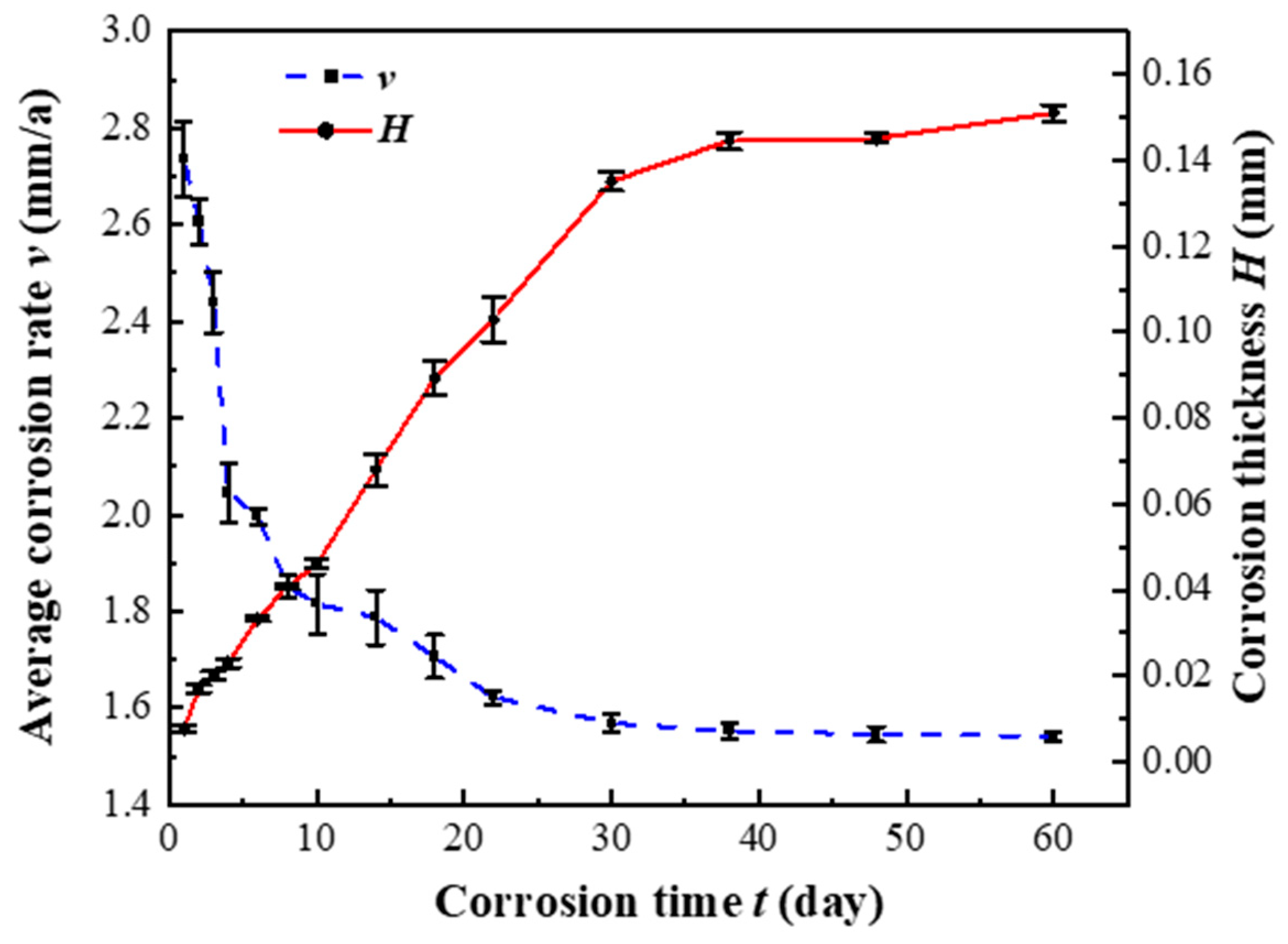
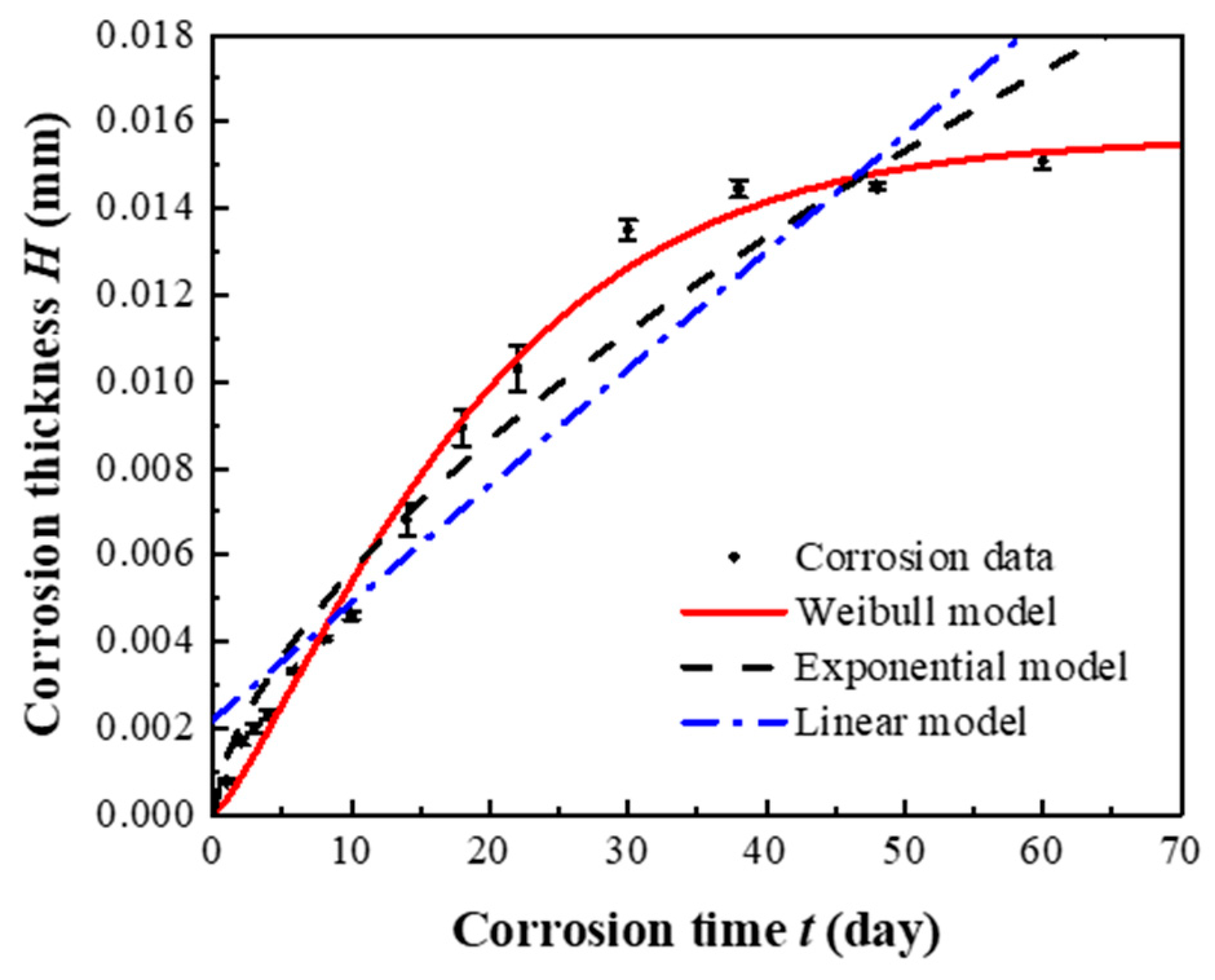
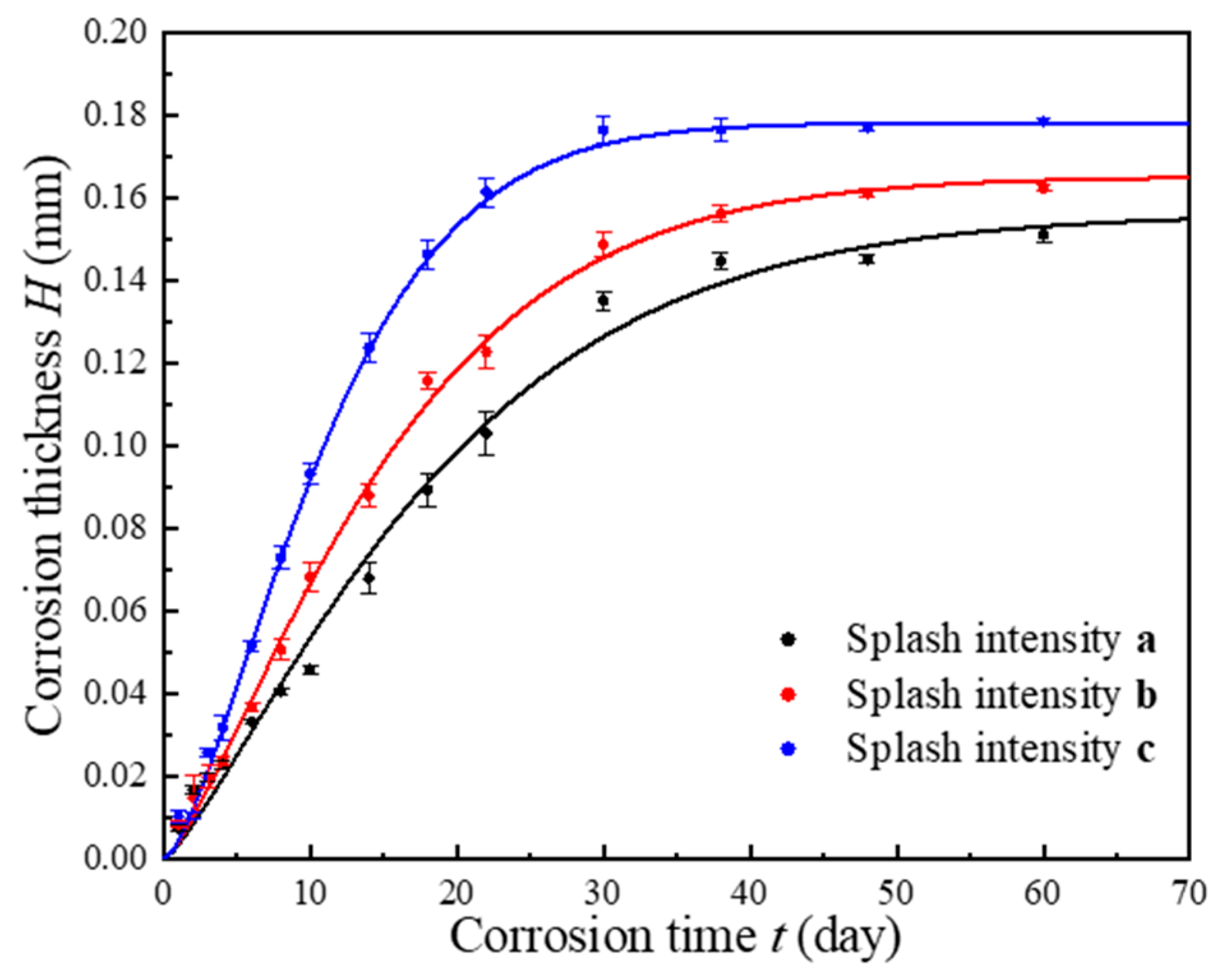
Figure 8 presents the temporal variations in corrosion rate and average corrosion depth for Q355 steel in the simulated seawater environment. The data reveal an inverse relationship between corrosion rate and time, while average corrosion depth exhibits a positive correlation with exposure duration. Based on the observed trends, the corrosion process can be delineated into three distinct phases: rapid corrosion phase (0 d–4 d), slow corrosion phase (4 d–30 d), and stable phase (30–60 d), where d denotes days of exposure.
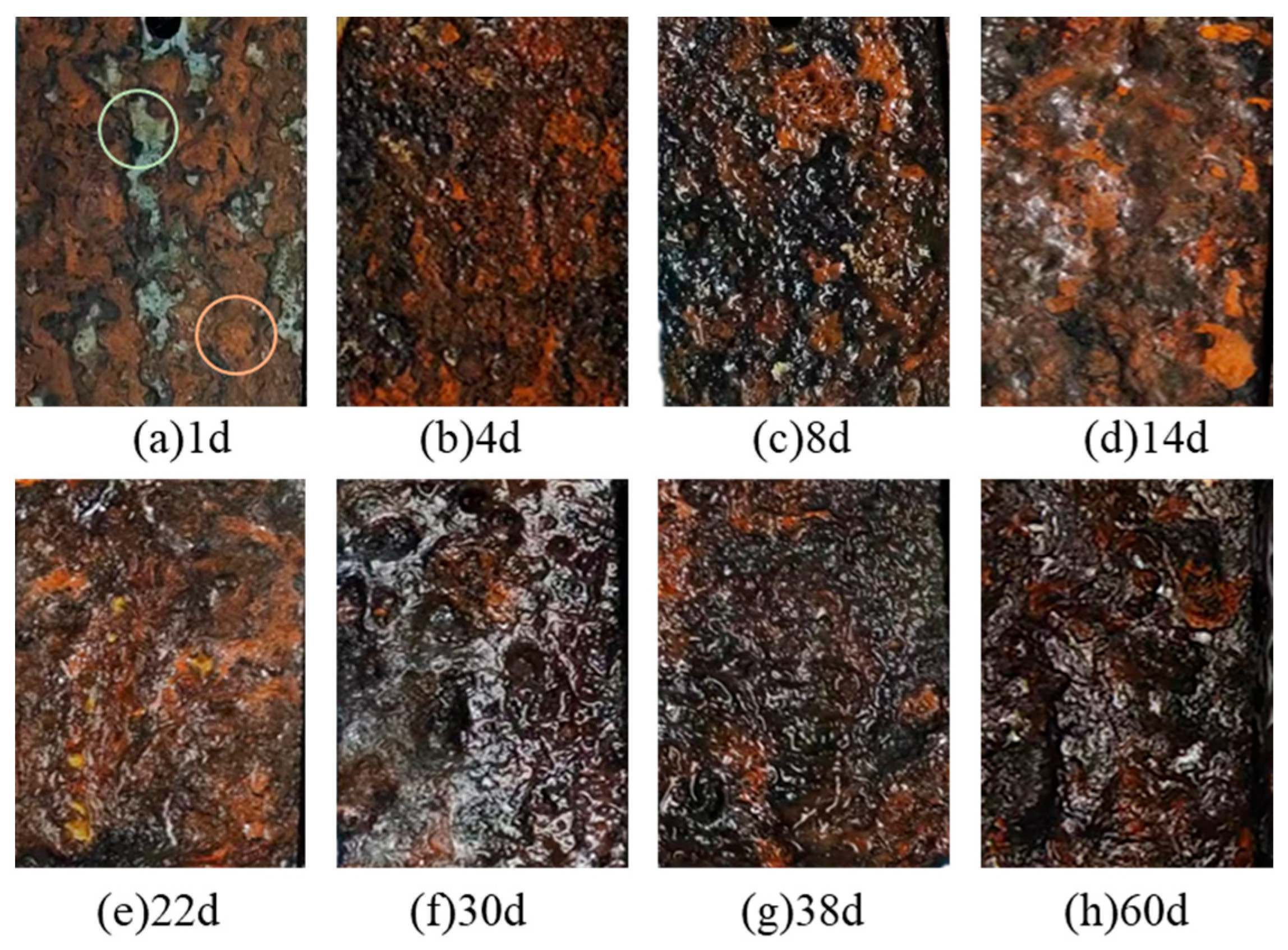
During the rapid corrosion phase (0 d–4 d), the initial high corrosion rate rapidly decreases. This phenomenon can be attributed to the full exposure of the fresh metal surface to simulated seawater, allowing for rapid initial corrosion. The availability of active sites for oxygen reduction and chloride ion interaction promotes an accelerated corrosion rate during this phase. As corrosion products begin to form and cover the surface, they reduce the effective reaction area, leading to a decline in corrosion rate.
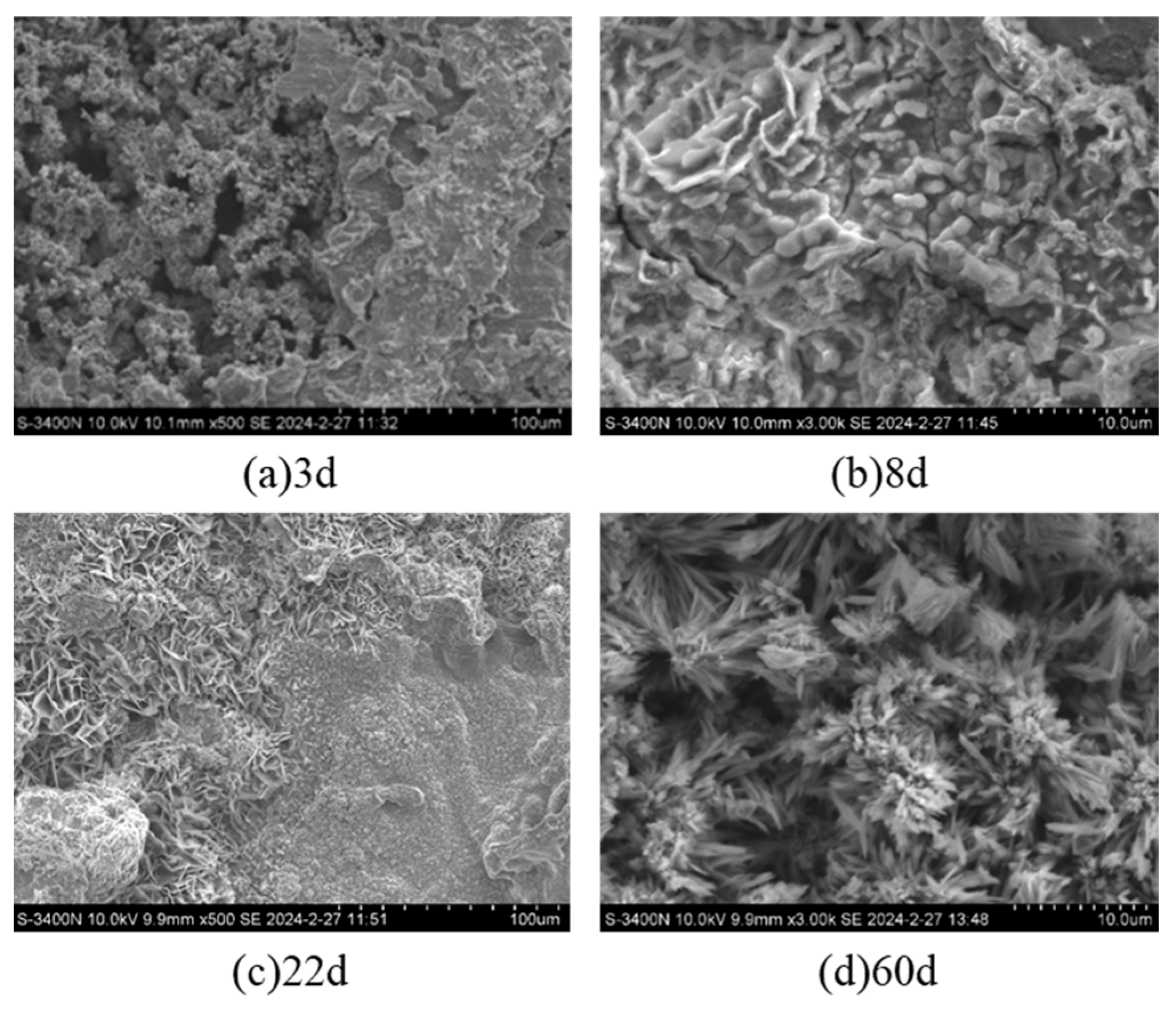
During the slow corrosion phase (4 d–30 d), the specimen surface becomes increasingly covered by a thickening rust layer. This layer impedes the penetration of dissolved oxygen, chloride ions, and atmospheric oxygen to the metal surface, decelerating the corrosion reaction and gradually stabilizing the corrosion rate.
In the stable corrosion phase (30 d–60 d), the corrosion products on the specimen surface reach a steady state, enhancing the specimen’s resistance to penetration by dissolved oxygen, chloride ions from the simulated seawater, and atmospheric oxygen. The progressive formation of the rust layer prevents direct contact between the corrosion medium and the metal surface, significantly limiting further corrosion. Consequently, the corrosion rate continues to decrease slowly until it stabilizes, with the rust layer playing a crucial protective role in mitigating metal corrosion.
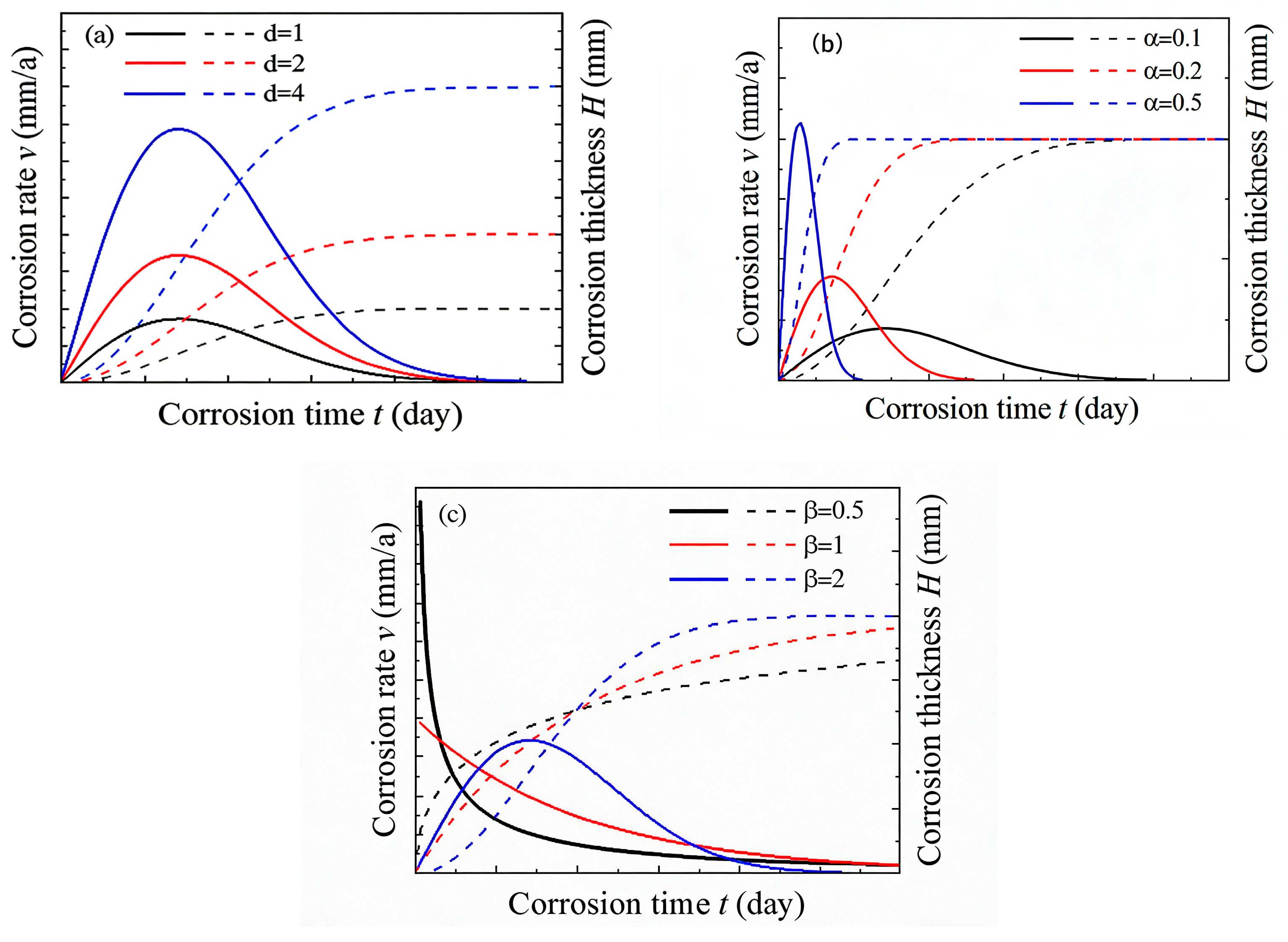
The clear demarcation of the corrosion process into rapid, slow, and stable phases, as quantified by mass loss and corrosion rate, provides a critical empirical benchmark. The Weibull model, with its flexible shape parameter, is inherently suited to capture such distinct sequential transitions in degradation rate, offering a significant advantage over simpler models that assume monotonic trends.
3.3. Electrochemical Impedance Spectroscopy
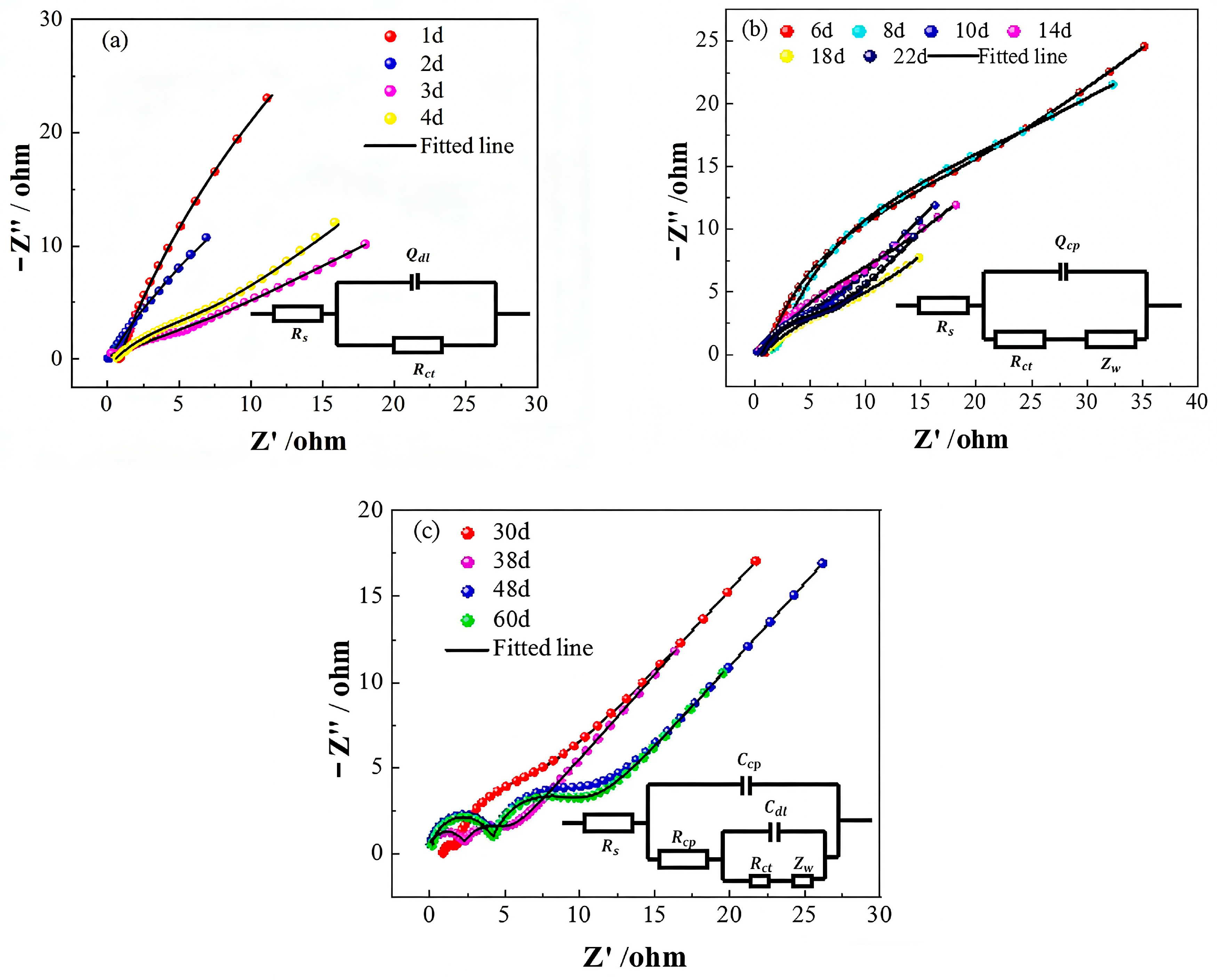
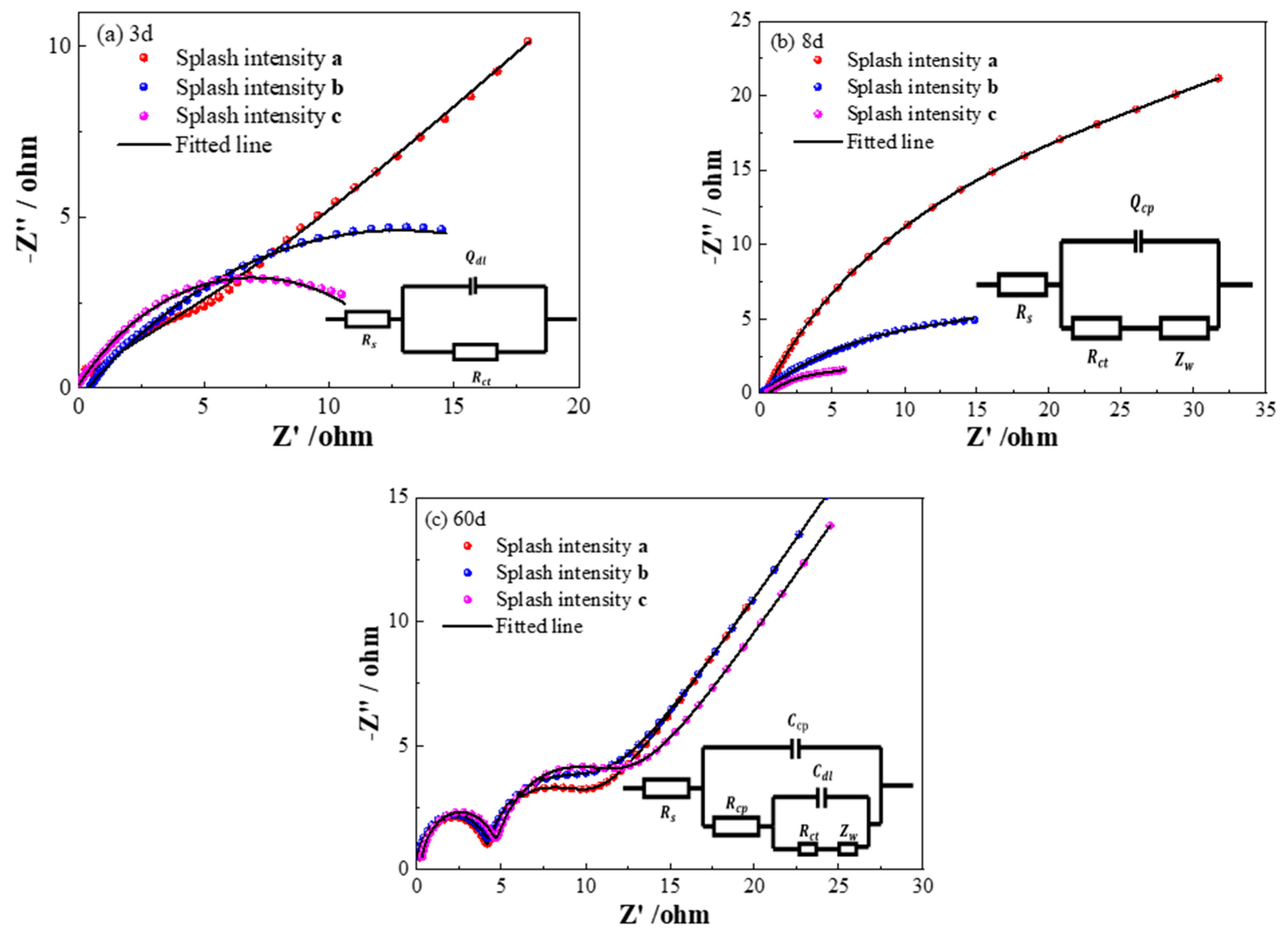
Nyquist plots obtained from Q355 steel subjected to various durations of corrosion in a cyclic wet–dry simulated splash environment are displayed in
Figure 9. By analyzing these plots, three equivalent circuit models for Q355 steel at different stages of corrosion were established.
Figure 9a shows the Nyquist plot and corresponding equivalent circuit model for the early stages of corrosion (1 d–4 d). In this model,
Rs denotes the electrolyte resistance,
represents the charge transfer resistance at the interface between the Q355 steel and the sodium chloride solution, and
denotes the constant phase element characterizing the interfacial behavior. To account for the influence of surface roughness on the working electrode, a constant phase element
replaces the ideal capacitive component, representing the non-ideal charge transfer capacitance at the metal-solution interface. Initially, the impedance spectra exhibit an incomplete semicircle that diminishes in diameter as corrosion progresses, indicating an accelerated corrosion rate. This evolution culminates in a small semicircle in the high-frequency region and a radial line in the low-frequency region, which corresponds to a rapid decrease in
. These observations suggest that the accumulation of corrosion products significantly affects mass transfer during the early stage of corrosion.
Figure 9b presents the Nyquist plot and the corresponding equivalent circuit model for the mid-stage of corrosion (5 d–22 d). In this model,
and
represent the charge transfer resistance and constant phase element at the interface, while
denotes the Warburg impedance. The presence of a capacitive arc at mid to high frequencies, formed by
and
, reflects the diffusion of corrosion products away from the working electrode surface and the concurrent diffusion of oxygen from the solution toward the surface. This process generates the Warburg impedance in the low-frequency region, indicating a deceleration in the electrochemical charge transfer process. As corrosion progresses, a protective film of corrosion products forms on the Q355 steel surface, which moderately inhibits further corrosion, aligning with the identified slow corrosion phase.
Figure 9c shows the Nyquist plot and equivalent circuit model for the later stages of corrosion (30 d–60 d). In this model,
and
represent the charge transfer resistance and capacitance at the Q355 steel interface with the sodium chloride solution, while
and
represent the charge transfer resistance and capacitance at the interface of the corrosion products on the Q355 steel surface. The Nyquist plot for this stage consists of a semicircle in the high-frequency region and a diffusive-like semicircle with a ray in the low-frequency region. The shape of the impedance spectrum and the equivalent circuit model for this stage differ significantly from the mid-stage (
Figure 9b), reflecting the development of a more complex corrosion product layer. The slight increase in the diameter of the high-frequency semicircle before stabilization indicates that the corrosion products formed in this phase significantly inhibit further corrosion, consistent with the observed stable corrosion phase.
The selection of these specific equivalent circuit models was guided by the distinct shapes of the Nyquist plots at each stage and established physical models for corroding interfaces. For the early stage (1 d–4 d), the depressed capacitive semicircle (
Figure 9a) is characteristic of a charge-transfer controlled process at a rough or inhomogeneous electrode surface, aptly modeled by a parallel RQ (Resistor-Constant Phase Element) combination. The emergence of a ~45° Warburg tail in the mid-stage Nyquist plots (
Figure 9b) is a definitive signature of diffusion-limited kinetics, necessitating the addition of a Warburg element (W) to the circuit. Finally, the appearance of two time constants in the later stage (
Figure 9c)—a depressed semicircle at high frequency and a diffusion-influenced feature at low frequency—reflects the formation of a dual-layer structure: a dense inner rust layer and a porous outer layer. This is commonly represented by a nested (R(C(R(Q(RW))))) type circuit, where distinct R-C/R-Q pairs model the different layers [
37].
These three models were selected to reflect the changing corrosion mechanisms at different stages of exposure. In the early stages, corrosion is dominated by charge transfer at the metal-solution interface. As corrosion progresses, the presence of corrosion products requires the inclusion of Warburg impedance to represent diffusion processes. In the later stages, additional elements are incorporated to represent the layered structure of corrosion products, which effectively hinder further corrosion.
Table 3,
Table 4 and
Table 5 show the curve-fitting results of each model.
The impedance value
is typically inversely correlated with the corrosion rate [
32].
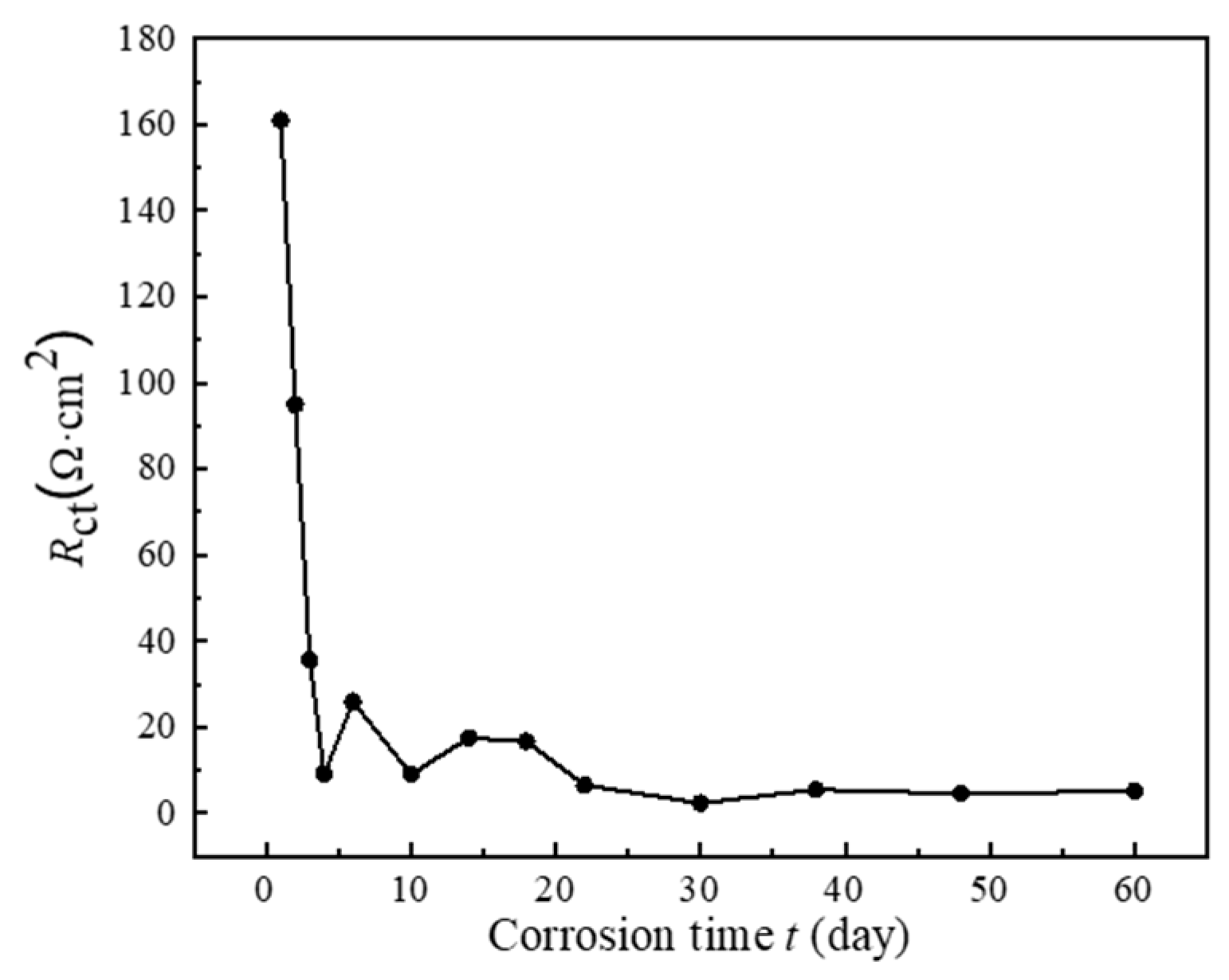
Figure 10 illustrates a decrease in
across different corrosion durations, with a notable minimum at day 60. This general decrease in
initially aligns with an increase in corrosion rate, evidenced by mass loss data. However, the correlation diverges during the mid to late stages of the experiment, where
levels off and then slightly increases, suggesting the formation of a more protective corrosion layer which may not effectively reduce the mass loss. While the charge transfer resistance (
) decreases rapidly in the early stages of corrosion, the mass loss continues to increase progressively over time. This behavior is expected as
reflects the resistance to electrochemical reactions at the metal-solution interface, and its decrease suggests an increase in corrosion activity, especially during the initial stages. Mass loss, on the other hand, is a cumulative measure of material degradation, which continues even as
stabilizes or remains low. Therefore, despite the seemingly opposing trends,
and mass loss describe different aspects of the corrosion process, with
highlighting electrochemical reactivity and mass loss reflecting overall material loss.
This divergence prompts a more nuanced discussion of the corrosion process, where initial rapid metal dissolution is gradually hindered by the development of a corrosion product layer. The protective quality of this layer may vary, reflecting differences in and mass loss trends. It’s possible that during the mid-stages of corrosion, the layer’s protective properties were compromised, perhaps due to environmental factors or changes in the layer’s morphology, before stabilizing towards the end of the testing period.
The evolution of equivalent circuit models and the fitted parameters (e.g., ) across the three corrosion stages reflects the changing interfacial properties and mass transfer limitations over time. These electrochemical signatures of time-varying corrosion behavior provide an independent set of data against which the kinetic trends predicted by the Weibull model can be cross-validated.
The evolution of the equivalent circuit models, from a simple R(QR) to R(QR)(W) and finally to R(C(R(C(R(W))))) circuits, aligns with the progressive development of a heterogeneous and stratified rust layer. The increasing complexity of the interfacial structure, as reflected in the circuit models, is consistent with the reported behavior of steel under cyclic wet–dry conditions where the corrosion product layer’s resistance and diffusion properties become dominant factors over time [
38]. The use of Constant Phase Elements (CPEs) instead of ideal capacitors is critical for accurately modeling the non-ideal capacitive behavior arising from surface roughness, porosity, and inhomogeneity of the rust layer, a well-established practice in modern EIS analysis of corroding metals [
39]