Estimation of Wind Turbine Heights with Shadows Using Gaofen-2 Satellite Imagery
 ,
,  ,
,
Abstract
1. Introduction
- (1)
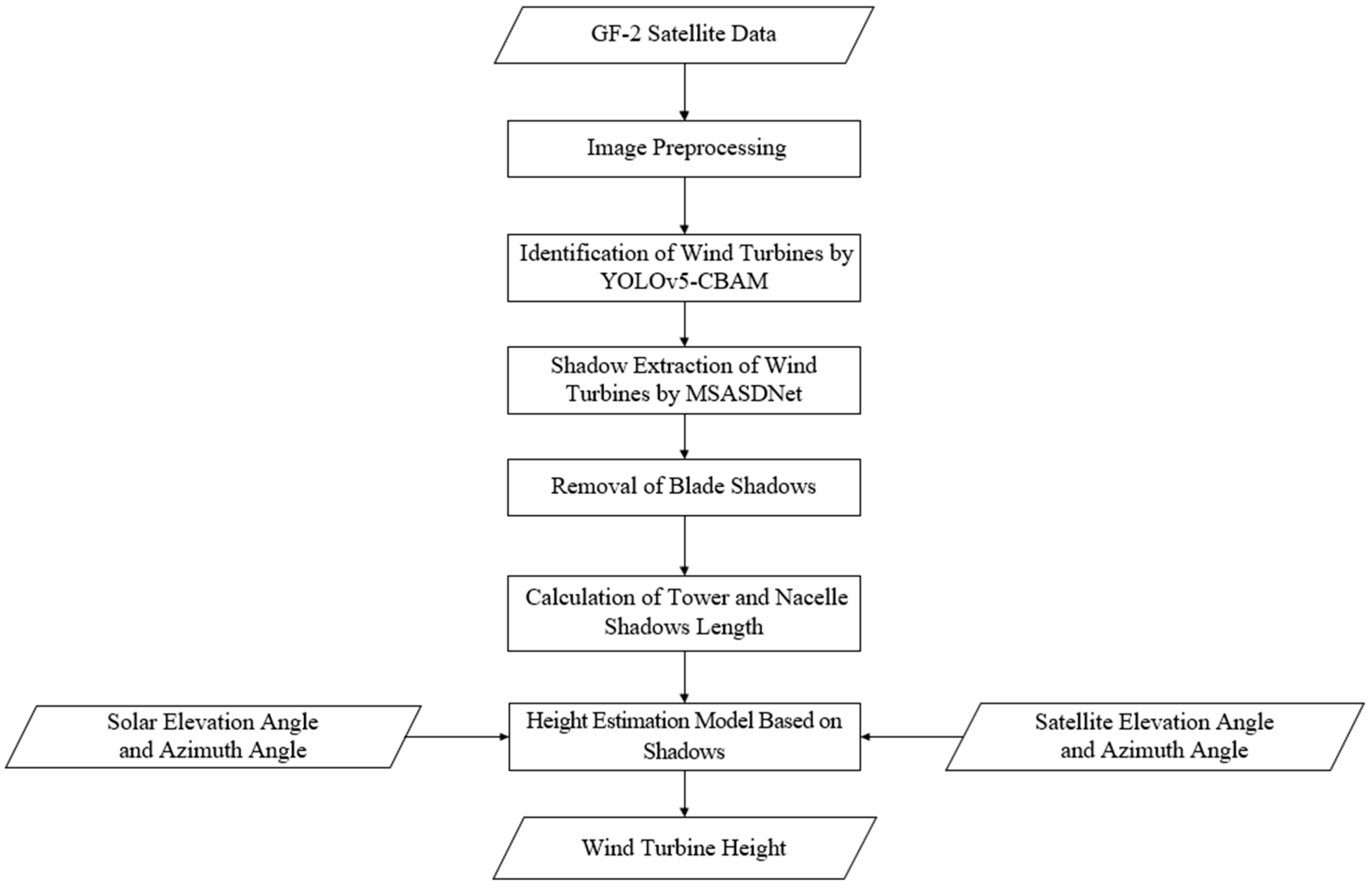
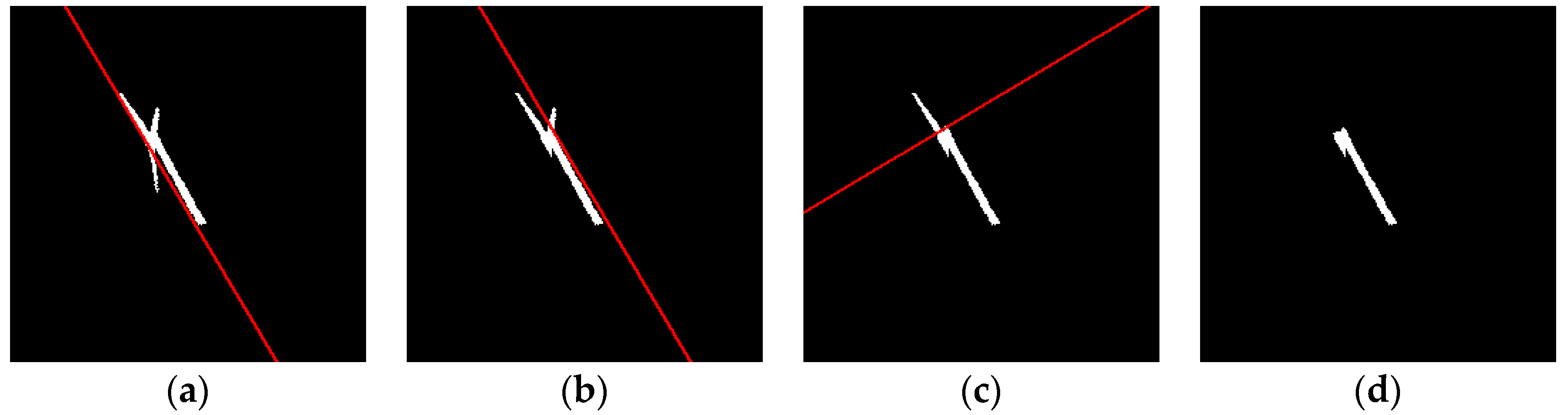
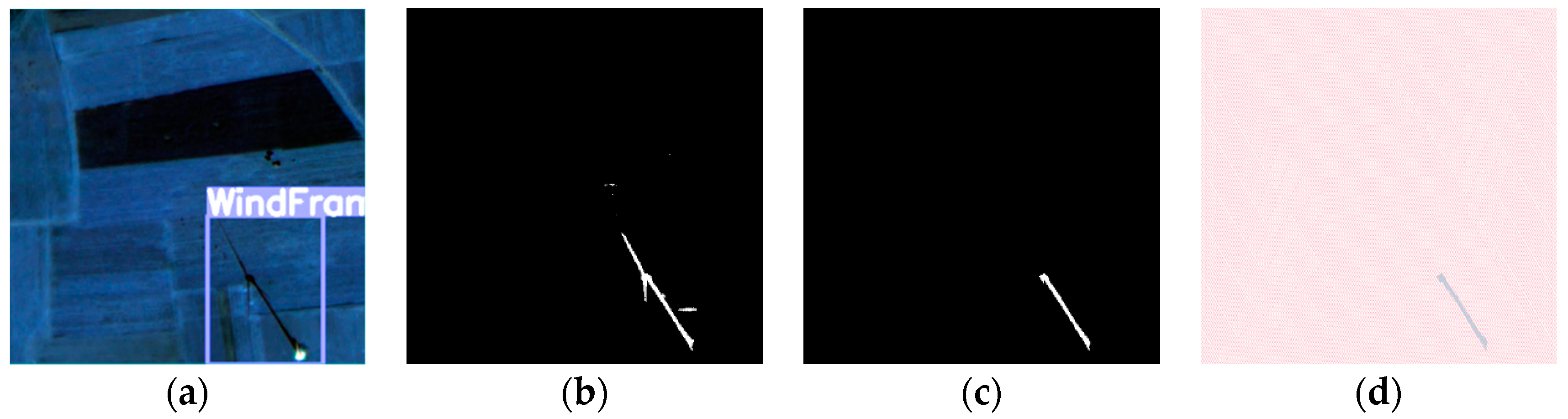
- Unlike conventional building height estimation methods that deal with static, rigid structures, we introduce a novel Scanline-based Blade Shadow Removal Algorithm tailored for wind turbines. This algorithm is capable of eliminating dynamic blade shadows from the turbine shadow, a technical innovation that effectively resolves the specific problem of blade interference affecting height estimation accuracy.
- (2)
- The new systematically comprehensive solution is novel. Unlike previous studies that focused on isolated steps, this study integrates target detection, shadow extraction, and height estimation to form a complete pipeline. This systematic integration itself constitutes an innovation for monitoring wind turbines.
2. Data
2.1. Data Source
2.2. Dataset
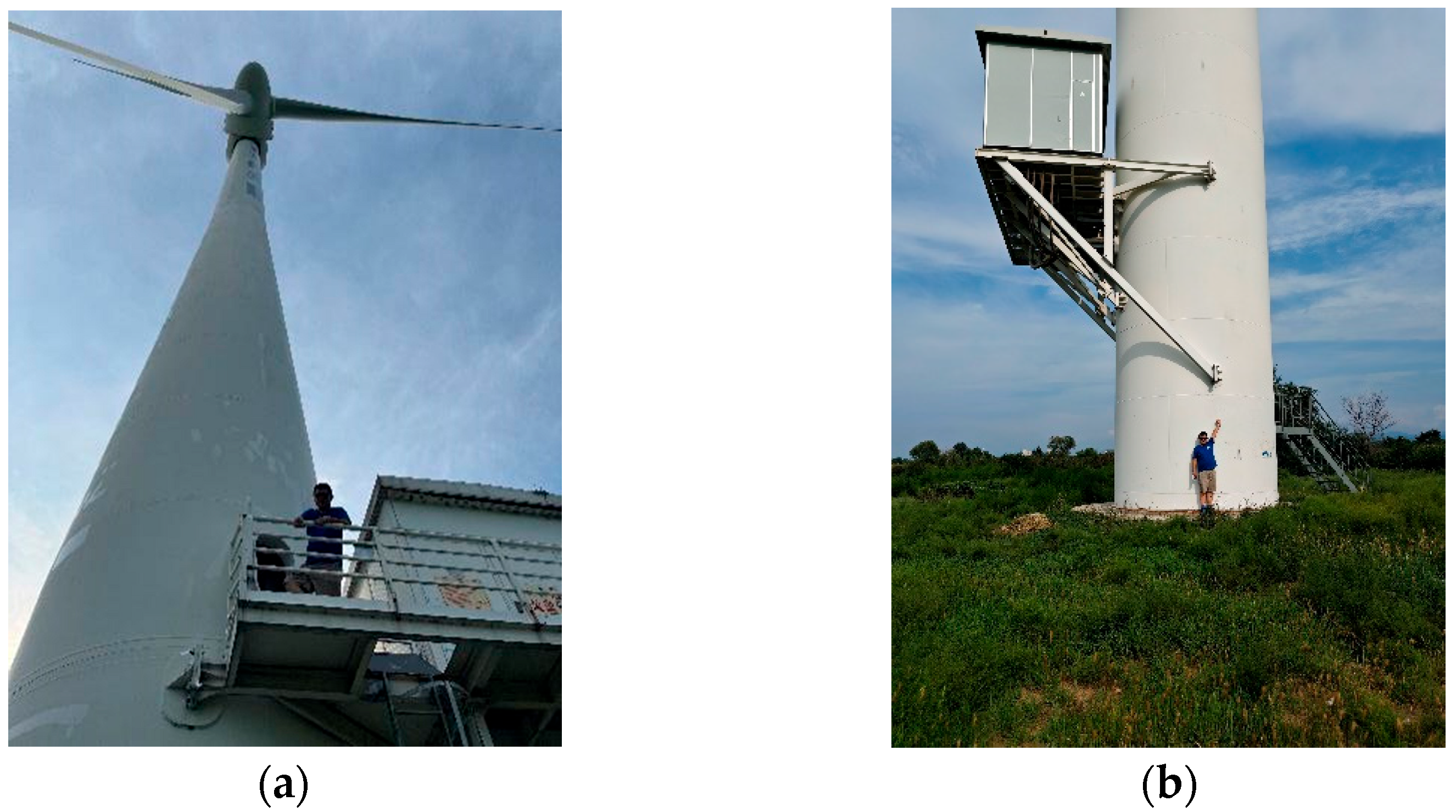
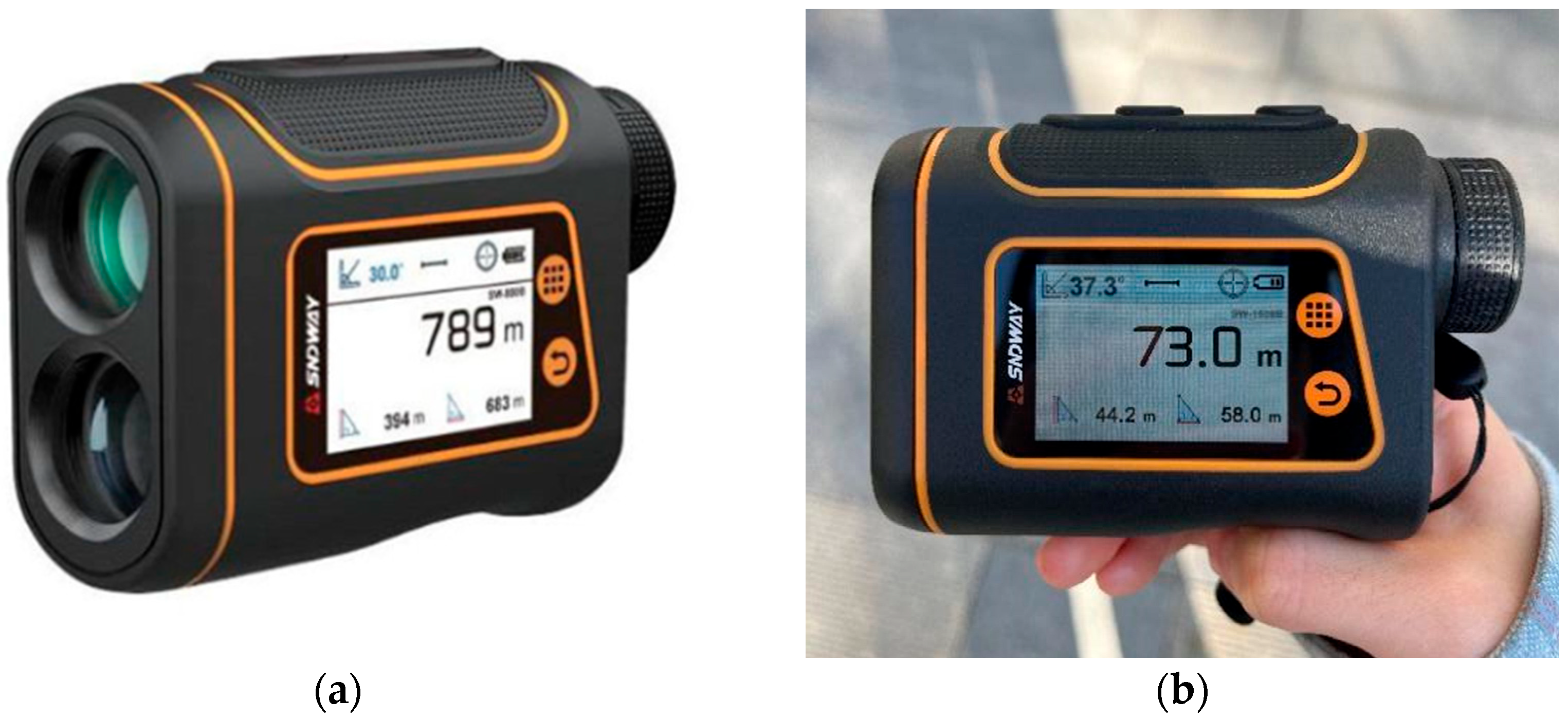
2.3. Validation Data
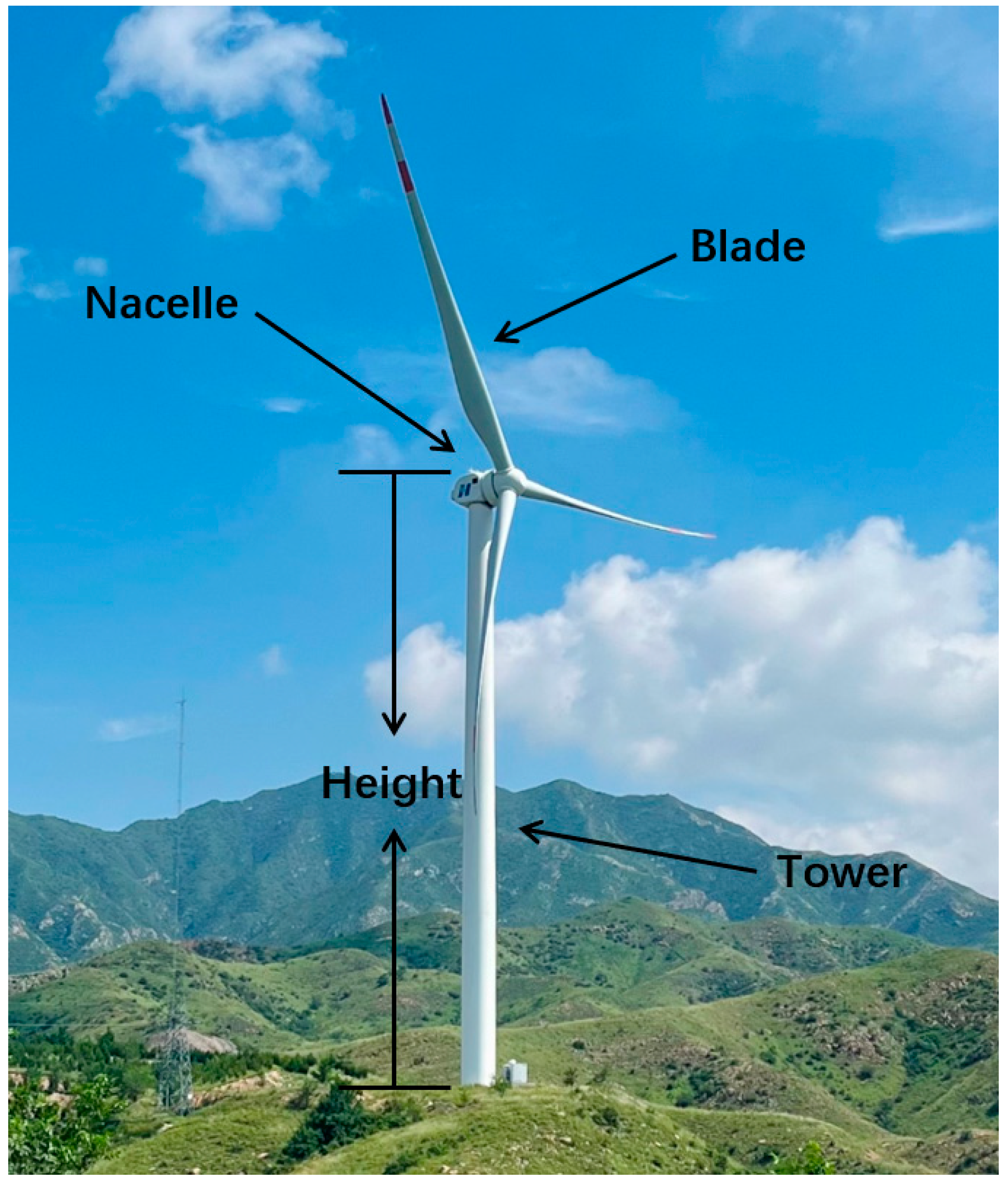
2.4. Definition of Wind Turbine Height
3. Method
3.1. Wind Turbine Identification
3.1.1. Target Detection Network Basics
3.1.2. Convolutional Block Attention Module
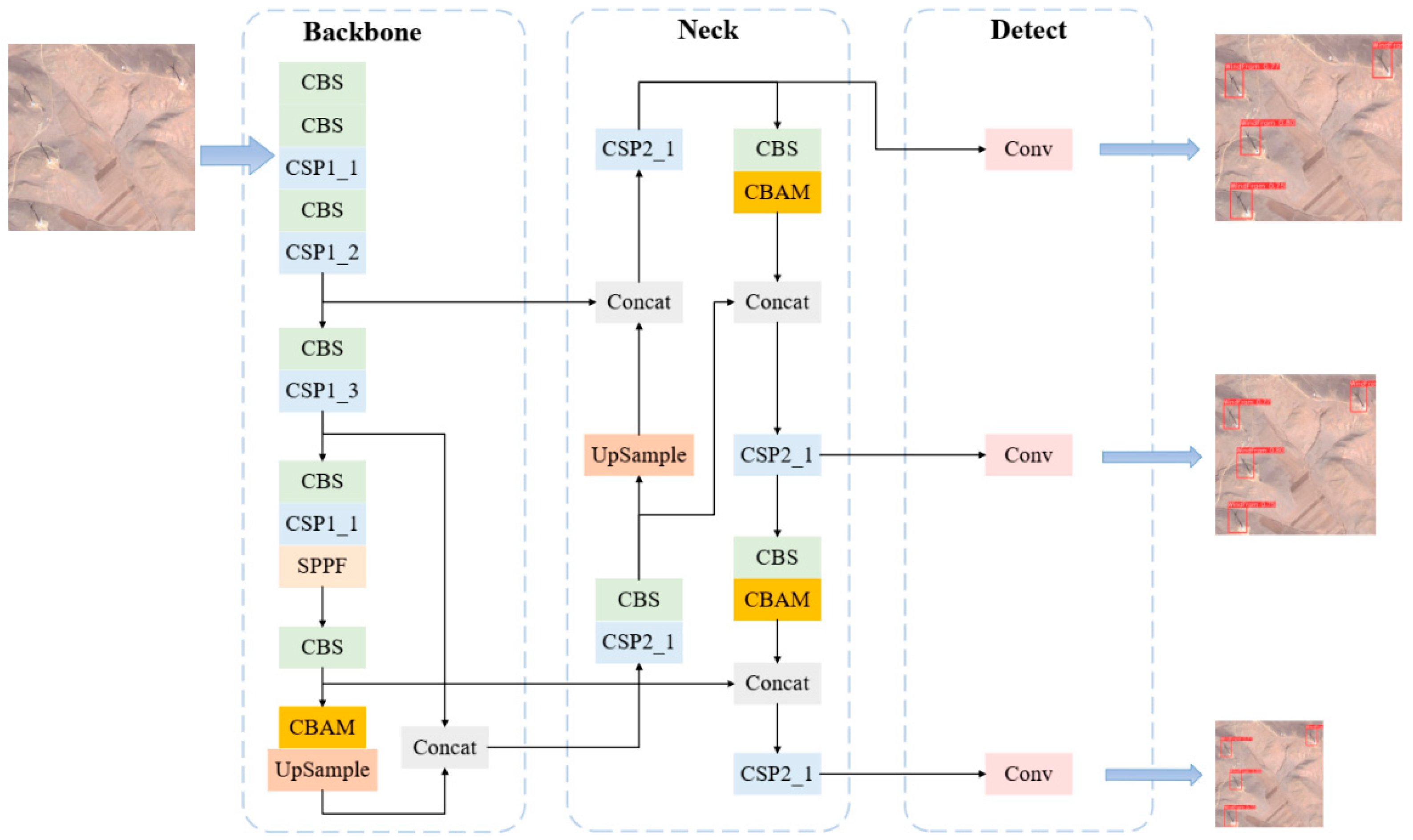
3.1.3. YOLOv5-CBAM
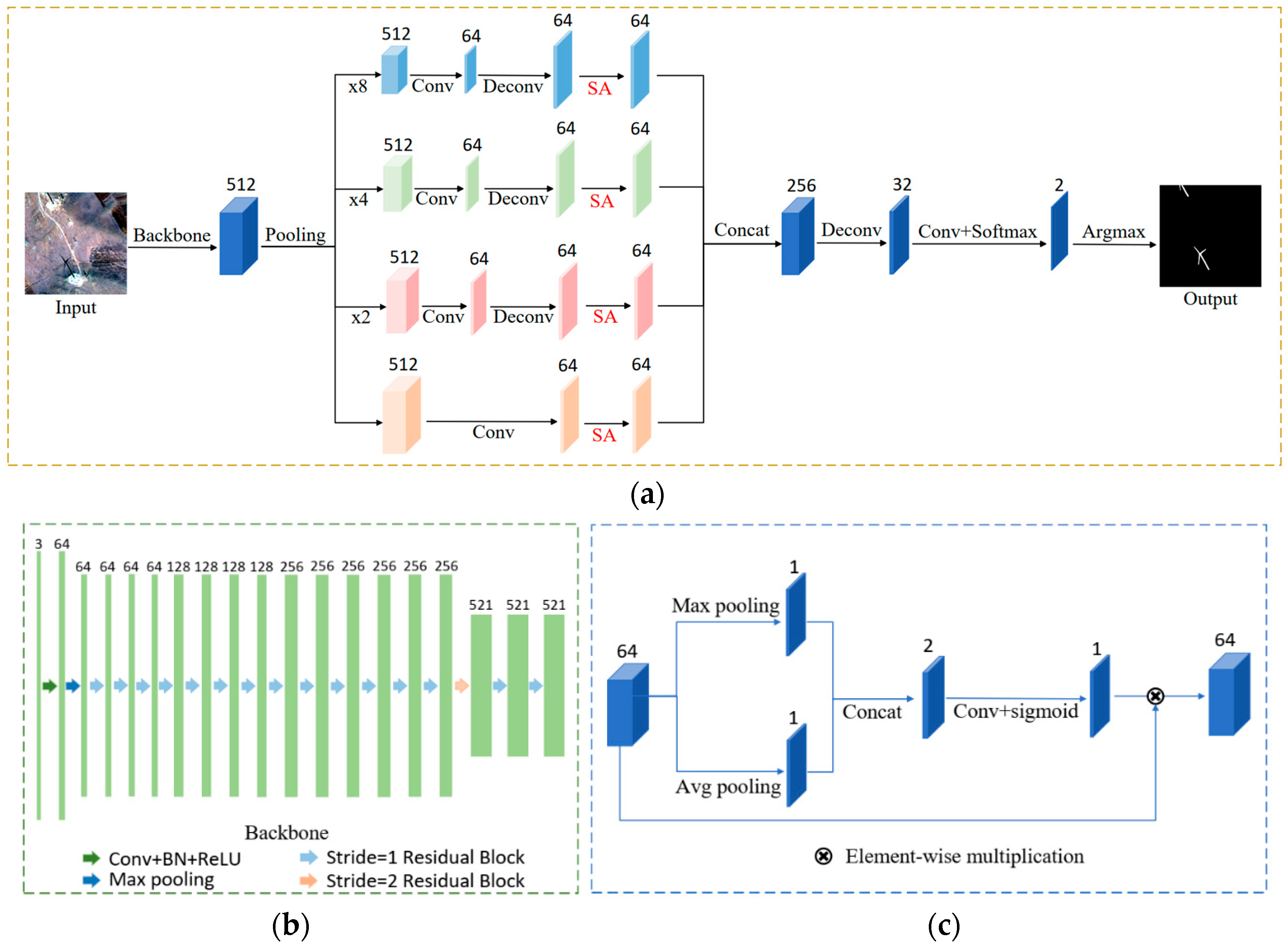
3.2. Wind Turbine Shadow Extraction
3.3. Wind Turbine Height Estimation
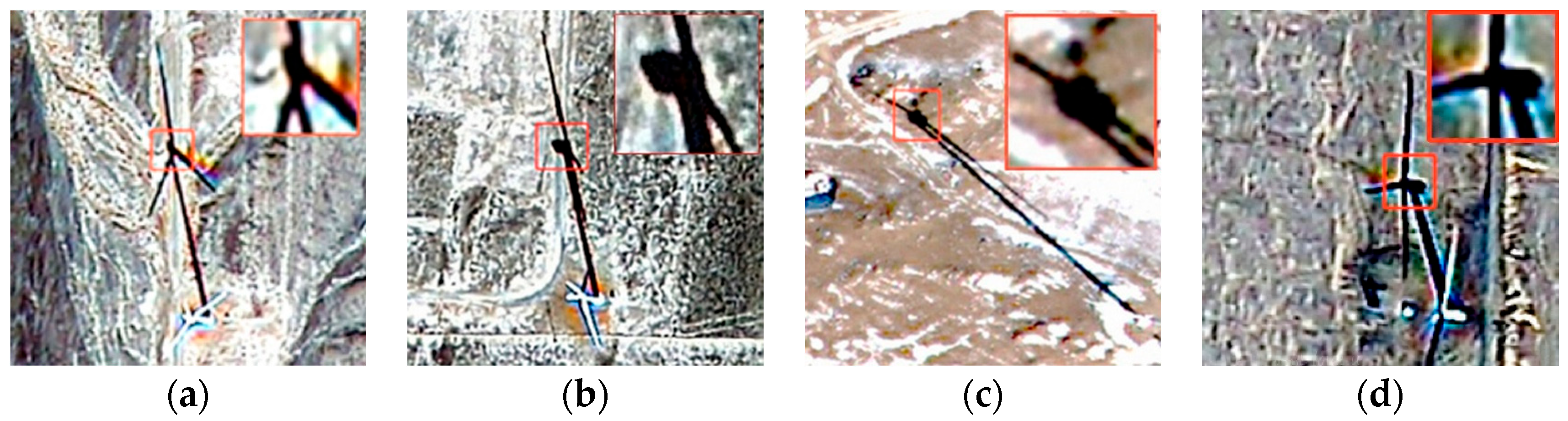
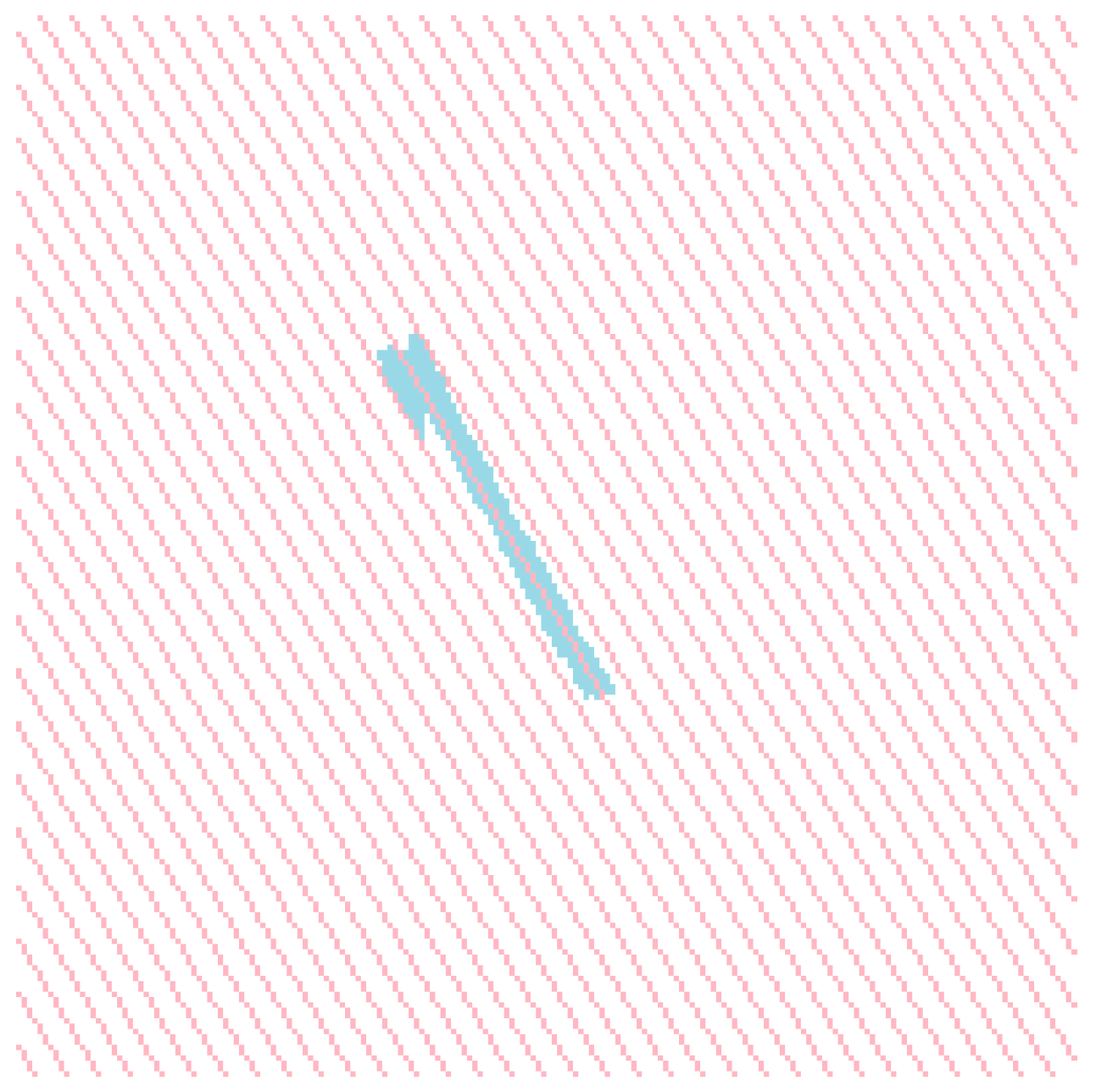
3.3.1. Description of Wind Turbine Shadows
3.3.2. Calculation of Wind Turbine Shadow Length
- (1)
- Calculate the standard deviation and the arithmetic mean of the overlapping line lengths within the shadows of the tower and nacelle.
- (2)
- Calculate the deviation of each overlapping line within the shadows of the tower and nacelle from the mean, as shown in Equation (2).
- (3)
- Define as the normal value range with a confidence level of 99.73%.
- (4)
- If , the overlapping line length is considered a normal value and is retained. If the overlapping line length is considered an outlier and is discarded.
- (5)
- Since removing outliers will alter the sample mean and standard deviation, the process needs to be repeated until no more data points are excluded.
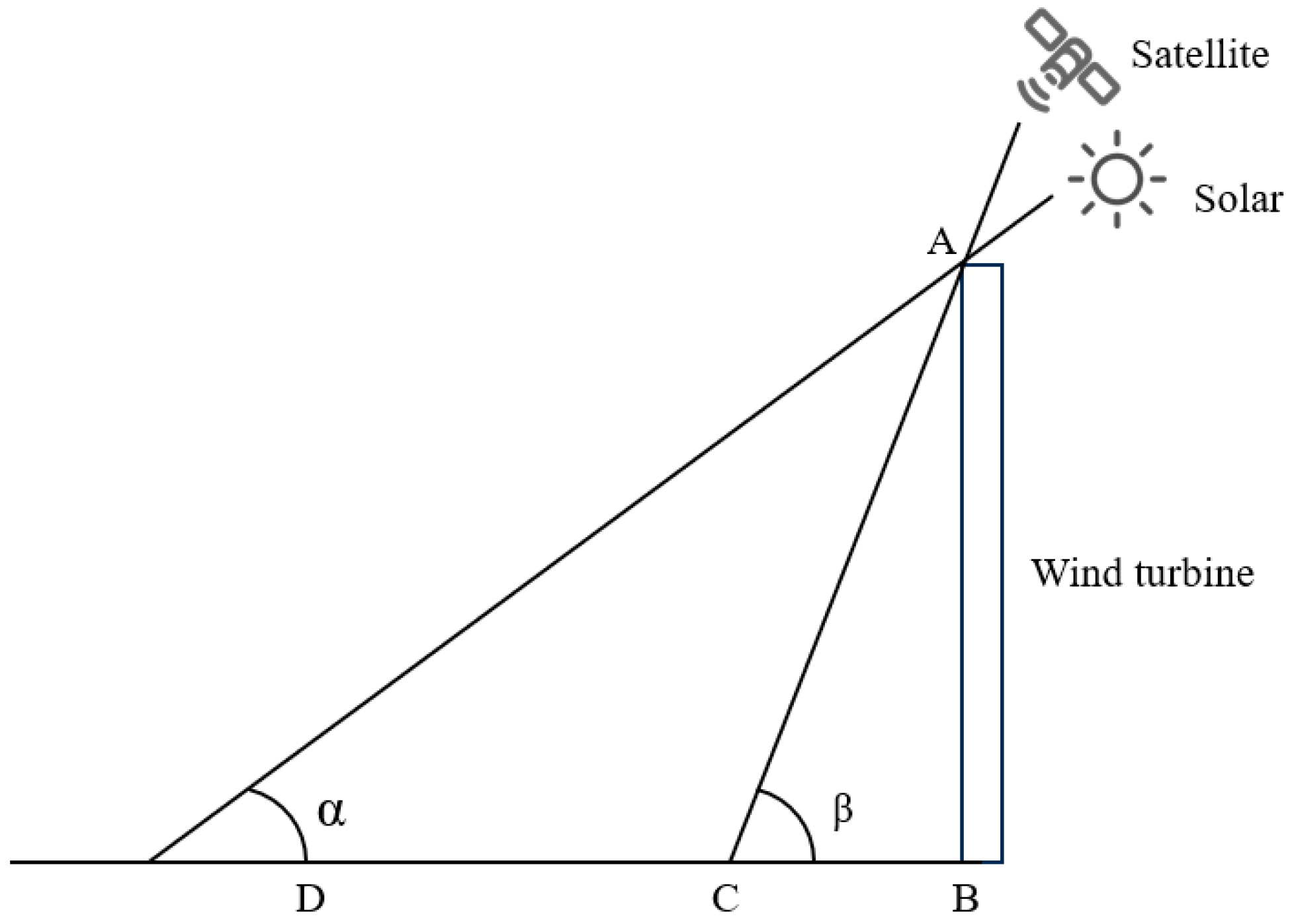
3.3.3. Wind Turbine Height Estimation Model Based on Shadows
- (1)
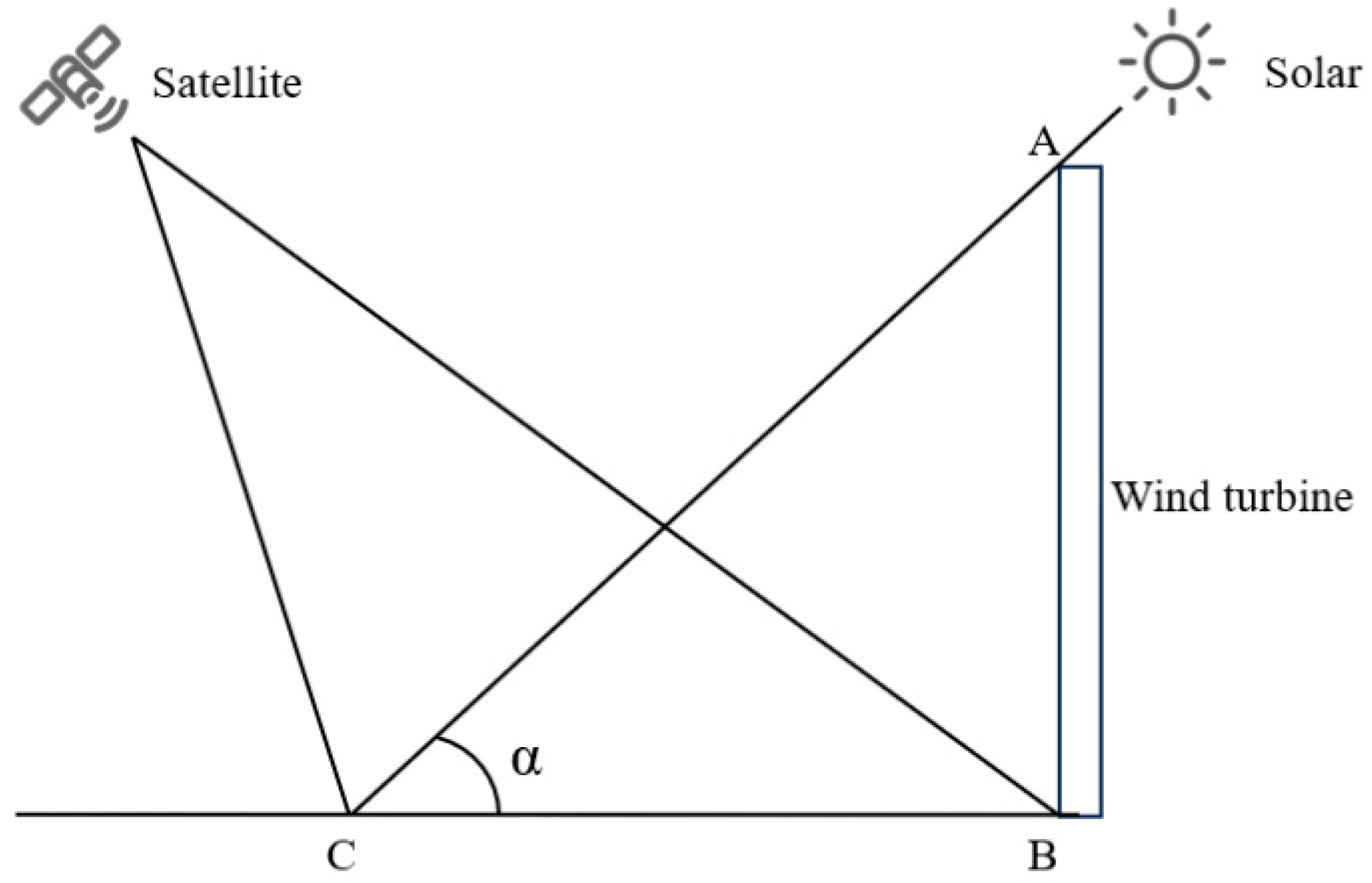
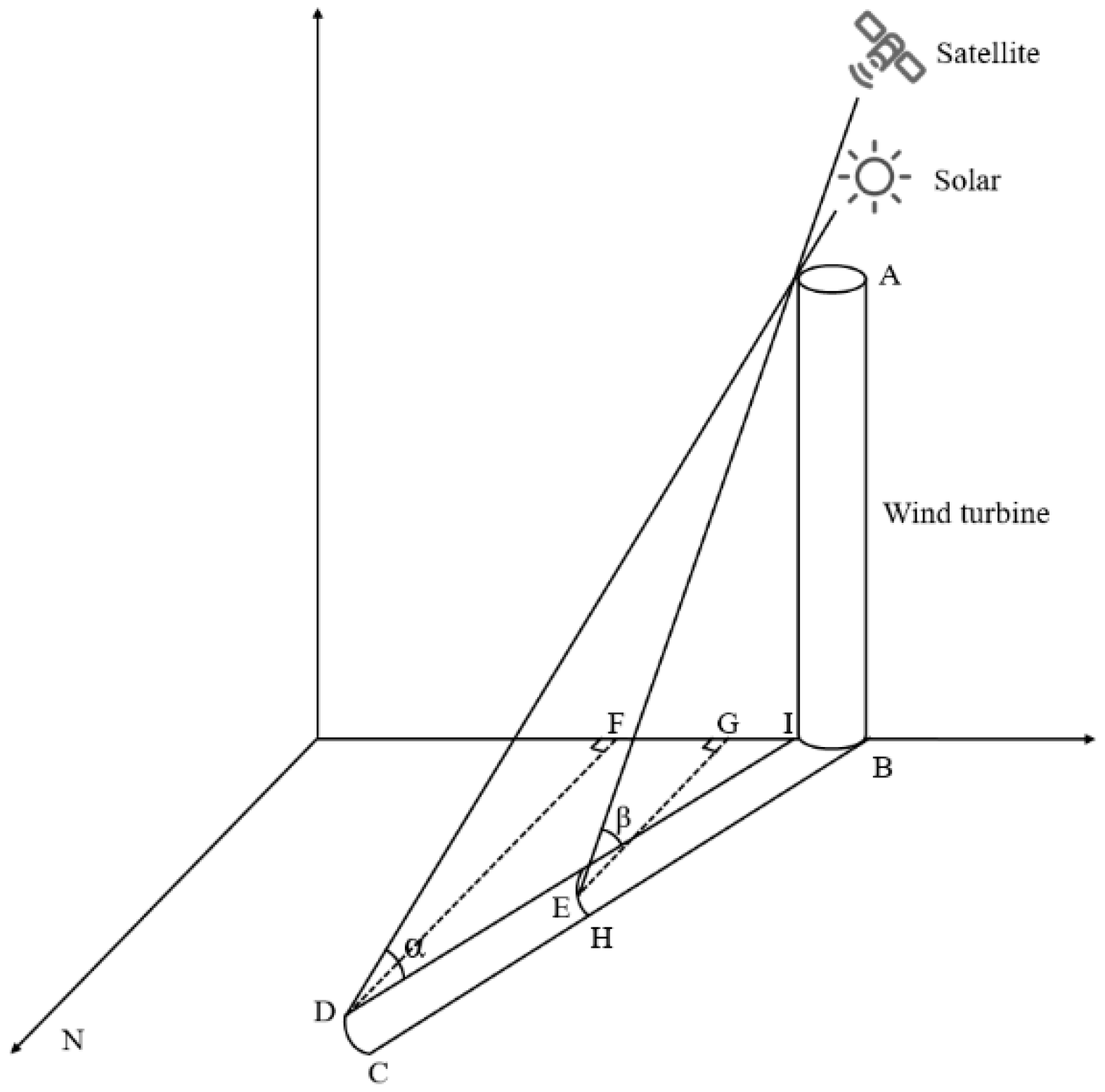
- When the solar azimuth angle, satellite azimuth angle, and elevation angle are all equal, the satellite cannot observe the wind turbine’s shadow.
- (2)
- When the solar azimuth angle and satellite azimuth angle are the same, and the solar elevation angle is 90°, the wind turbine casts no shadow. In this case, no shadow will be observed in the satellite imagery.
- (3)
- When the solar azimuth angle and satellite azimuth angle are the same, and the solar elevation angle is greater than or equal to the satellite elevation angle, the satellite cannot observe the wind turbine’s shadow.
4. Result and Analysis
4.1. Evaluation Indicator
4.1.1. Wind Turbine Identification
4.1.2. Wind Turbine Shadow Extraction
4.1.3. Wind Turbine Height Estimation
4.2. Experimental Results and Analysis
4.2.1. Wind Turbine Identification
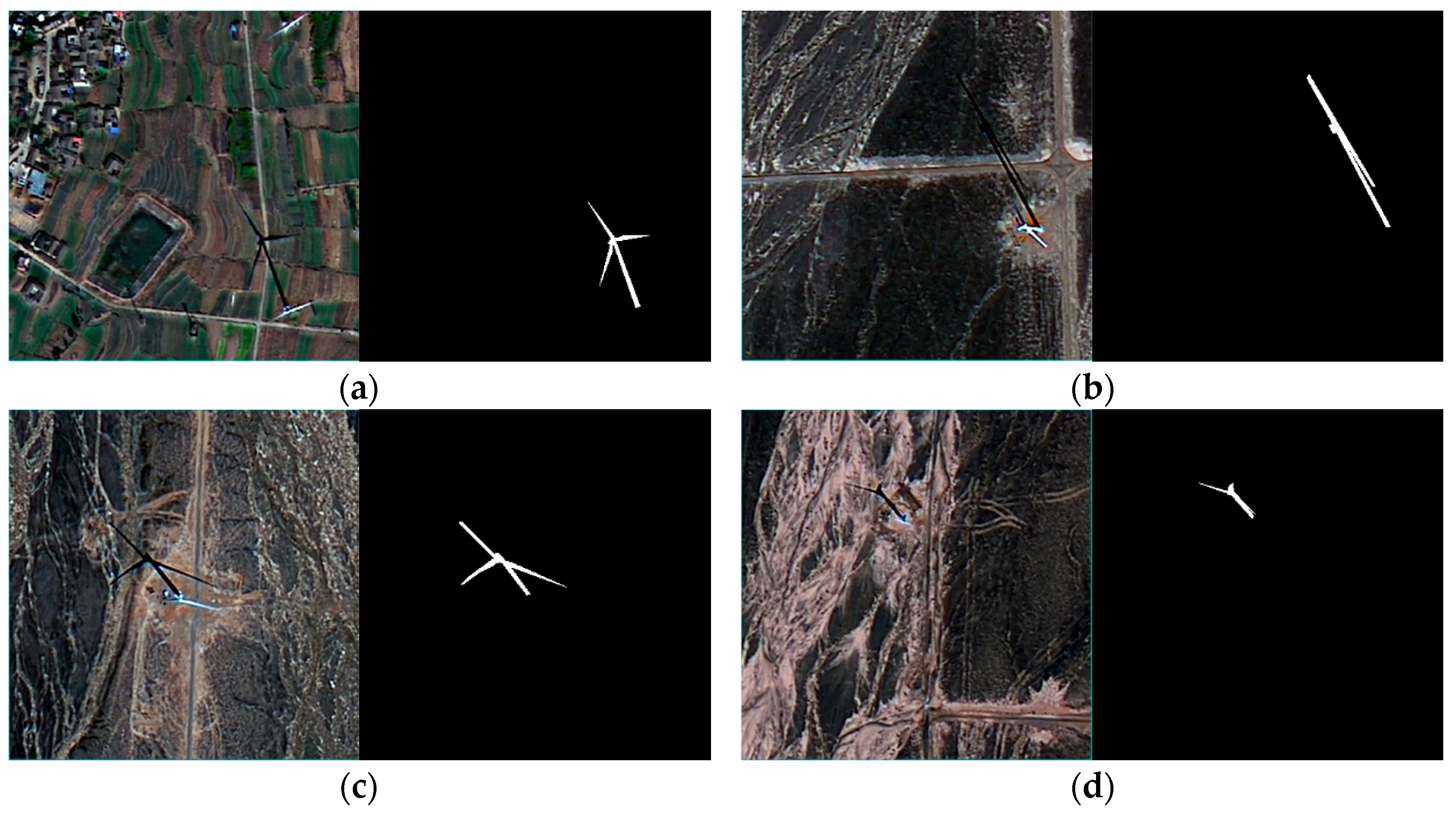
4.2.2. Wind Turbine Shadow Extraction
4.2.3. Height Estimation Experiment and Analysis
4.3. Error Analysis
- (1)
- Shadows projected onto bright surfaces, such as bare land, roads, or water, can cause significant changes in shadow spectral characteristics, affecting detection results. When shadows are cast on darker surfaces, such as vegetation shadows, the shadow areas may become excessively large, making them difficult to distinguish. Additionally, the shadow edges may become irregular. These situations may hinder the model’s ability to effectively differentiate shadows from other features, adversely affecting extraction results and causing subsequent calculation errors.
- (2)
- The premise of calculating the wind turbine height based on shadows in this study is that the ground where the turbine and its shadow are located is flat, and the shadow information is complete. Suppose the shadow is cast on uneven terrain. In that case, it may disrupt the geometric functional relationship between the turbine and its shadow, interfere with shadow detection results, and subsequently affect the height calculation results.
- (3)
- Errors may occur when removing wind turbine blade shadows, either by failing to remove them entirely or by excessively removing other shadow regions. These issues can affect the subsequent calculation of the tower shadow length, thereby impacting the height estimation results.
- (4)
- A higher spatial resolution enables a more precise extraction of wind turbine shadow areas, resulting in more accurate measurements of tower shadow lengths.
- (5)
- Poor weather conditions, such as haze, can slightly interfere with laser rangefinders. Additionally, inaccuracies in identifying the highest and lowest points of the wind turbine during field measurements can impact the height estimation accuracy.
5. Conclusions
Author Contributions
Funding
Data Availability Statement
Conflicts of Interest
References
- Gigović, L.; Pamučar, D.; Božanić, D.; Ljubojević, S. Application of the GIS-DANP-MABAC multi-criteria model for selecting the location of wind farms: A case study of Vojvodina, Serbia. Renew. Energy 2017, 103, 501–521. [Google Scholar] [CrossRef]
- Blaabjerg, F.; Ke, M. Future on Power Electronics for Wind Turbine Systems. IEEE J. Emerg. Sel. Top. Power Electron. 2013, 1, 139–152. [Google Scholar] [CrossRef]
- Anon. Global Wind Report. Global Wind Energy Council. 2023. Available online: https://www.gwec.net/reports/globalwindreport/2023 (accessed on 17 December 2024).
- CWIF (Caithness Windfarm Information Forum). Summary of Wind Turbine Accident Data to 31 December 2016. 2017. Available online: https://www.scribd.com/document/345901073/Summary-of-Wind-Turbine-Accident-Data-to-31-December-2016 (accessed on 9 December 2024).
- Tang, D.; Xu, M.; Mao, J.; Zhu, H. Unsteady performances of a parked large-scale wind turbine in the typhoon activity zones. Renew. Energy 2020, 149, 617–630. [Google Scholar] [CrossRef]
- Xu, Y. Super Typhoon Strikes China’s Hainan, Devastates Wind Farm. Upstream Online. 2024. Available online: https://www.upstreamonline.com/safety/super-typhoon-strikes-china-s-hainan-devastates-wind-farm/2-1-1706110 (accessed on 17 December 2024).
- Butt, U.A.; Ishihara, T. Seismic load evaluation of wind turbine support structures considering low structural damping and soil structure interaction. Eur. Wind Energy Assoc. Annu. Event 2012, 1, 439–447. [Google Scholar]
- Prowell, I.; Veers, P.S. Assessment of Wind Turbine Seismic Risk: Existing Literature and Simple Study of Tower Moment Demand; Report SAND2009-1100; Sandia National Laboratories: Albuquerque, NM, USA, 2009. [Google Scholar] [CrossRef]
- Xu, Y.; Ren, Q.; Zhang, H.; Shi, W. Collapse analysis of a wind turbine tower with initial-imperfection subjected to near-field ground motions. Structures 2021, 29, 373–382. [Google Scholar] [CrossRef]
- Harukigaoka Wind Power Co., Ltd. Accident Survey Report. 2018. Available online: https://www.meti.go.jp/shingikai/sankoshin/hoan_shohi/denryoku_anzen/newenergy_hatsuden_wg/pdf/009_05_00.pdf (accessed on 23 December 2024).
- Tercan, E. Land suitability assessment for wind farms through best-worst method and GIS in Balıkesir province of Turkey. Sustain. Energy Technol. Assess. 2021, 47, 101491. [Google Scholar] [CrossRef]
- Salam, R.; Pla, F.; Ahmed, B.; Painho, M. A Convolutional Neural Network-based approach for automatically detecting rainfall-induced shallow landslides in a data-sparse context. Nat. Hazards Res. 2024, 5, 175–186. [Google Scholar] [CrossRef]
- Abedin, J.; Rabby, Y.W.; Hasan, I.; Akter, H. An investigation of the characteristics, causes, and consequences of June 13, 2017, landslides in Rangamati District Bangladesh. Geoenviron. Disasters 2020, 7, 23. [Google Scholar] [CrossRef]
- Massumi, A.; Sadeghi, K.; Ghojoghi, O.; Soureshjani, O.K. Effect of aftershock characteristics on the fragility curve of post-mainshock RC frames. Soil Dyn. Earthq. Eng. 2024, 178, 108451. [Google Scholar] [CrossRef]
- WMO. Guide to Meteorological Instruments and Methods of Observation; World Meteorological Organization: Madison, WI, USA, 1996. [Google Scholar]
- Ayodele, T.R.; Ogunjuyigbe, A.S.O.; Odigie, O.; Munda, J.L. A multi-criteria GIS based model for wind farm site selection using interval type-2 fuzzy analytic hierarchy process: The case study of Nigeria. Appl. Energy 2018, 228, 1853–1869. [Google Scholar] [CrossRef]
- Enevoldsen, P.; Jacobson, M.Z. Data investigation of installed and output power densities of onshore and offshore wind turbines worldwide. Energy Sustain. Dev. 2021, 60, 40–51. [Google Scholar] [CrossRef]
- Liu, J.; Sun, Y.; Wang, R.; Xiao, L.; Yang, D. Assessment of Onshore Wind Energy Potential in Fujian Province Based on GIS. Resour. Sci. 2012, 34, 1167–1174. [Google Scholar]
- Xie, Y.; Feng, D.; Xiong, S.; Zhu, J.; Liu, Y. Multi-Scene Building Height Estimation Method Based on Shadow in High Resolution Imagery. Remote Sens. 2021, 13, 2862. [Google Scholar] [CrossRef]
- Li, X.; Zhou, Y.; Gong, P.; Seto, K.C.; Clinton, N. Developing a method to estimate building height from Sentinel-1 data. Remote Sens. Environ. 2020, 240, 111705. [Google Scholar] [CrossRef]
- Park, Y.; Guldmann, J.-M. Creating 3D city models with building footprints and LIDAR point cloud classification: A machine learning approach. Comput. Environ. Urban Syst. 2019, 75, 76–89. [Google Scholar] [CrossRef]
- Du, Y.-N.; Feng, D.-C.; Wu, G. InSAR-based rapid damage assessment of urban building portfolios following the 2023 Turkey earthquake. Int. J. Disaster Risk Reduct. 2024, 103, 104317. [Google Scholar] [CrossRef]
- Dubois, C.; Thiele, A.; Hinz, S. Building detection and building parameter retrieval in InSAR phase images. ISPRS J. Photogramm. Remote Sens. 2016, 114, 228–241. [Google Scholar] [CrossRef]
- Sun, Y.; Mou, L.; Wang, Y.; Montazeri, S.; Zhu, X.X. Large-scale building height retrieval from single SAR imagery based on bounding box regression networks. ISPRS J. Photogramm. Remote Sens. 2022, 184, 79–95. [Google Scholar] [CrossRef]
- Cao, Y.; Huang, X. A deep learning method for building height estimation using high-resolution multi-view imagery over urban areas: A case study of 42 Chinese cities. Remote Sens. Environ. 2021, 264, 112590. [Google Scholar] [CrossRef]
- Liasis, G.; Stavrou, S. Satellite images analysis for shadow detection and building height estimation. ISPRS J. Photogramm. Remote Sens. 2016, 119, 437–450. [Google Scholar] [CrossRef]
- Qi, F.; Zhai, J.Z.; Dang, G. Building height estimation using Google Earth. Energy Build. 2016, 118, 123–132. [Google Scholar] [CrossRef]
- Turker, M.; Sumer, E. Building-based damage detection due to earthquake using the watershed segmentation of the post-event aerial images. Int. J. Remote Sens. 2008, 29, 3073–3089. [Google Scholar] [CrossRef]
- Lin, S.; Zhang, C.; Ding, L.; Zhang, J.; Liu, X.; Chen, G.; Wang, S.; Chai, J. Accurate Recognition of Building Rooftops and Assessment of Long-Term Carbon Emission Reduction from Rooftop Solar Photovoltaic Systems Fusing GF-2 and Multi-Source Data. Remote Sens. 2022, 14, 3144. [Google Scholar] [CrossRef]
- Shi, S.; Zhong, Y.; Liu, Y.; Wang, J.; Wan, Y.; Zhao, J.; Lv, P.; Zhang, L.; Li, D. Multi-temporal urban semantic understanding based on GF-2 remote sensing imagery: From tri-temporal datasets to multi-task mapping. Int. J. Digit. Earth 2023, 16, 3321–3347. [Google Scholar] [CrossRef]
- Ren, K.; Sun, W.; Meng, X.; Yang, G.; Du, Q. Fusing China GF-5 Hyperspectral Data with GF-1, GF-2 and Sentinel-2A Multispectral Data: Which Methods Should Be Used? Remote Sens. 2020, 12, 882. [Google Scholar] [CrossRef]
- Liu, S.; Zhang, Y.; Zhao, L.; Chen, X.; Zhou, R.; Zheng, F.; Li, Z.; Li, J.; Yang, H.; Li, H.; et al. QUantitative and Automatic Atmospheric Correction (QUAAC): Application and Validation. Sensors 2022, 22, 3280. [Google Scholar] [CrossRef]
- Redmon, J.; Divvala, S.; Girshick, R.; Farhadi, A. You Only Look Once: Unified, Real-Time Object Detection. In Proceedings of the IEEE Conference on Computer Vision and Pattern Recognition, Las Vegas, NV, USA, 27–30 June 2016; pp. 779–788. [Google Scholar] [CrossRef]
- Jocher, G. YOLOv5 by Ultralytics. 2020. Available online: https://github.com/ultralytics/yolov5 (accessed on 9 October 2024).
- Sapkota, R.; Qureshi, R.; Flores-Calero, M.; Badgujar, C.; Nepal, U.; Poulose, A.; Zeno, P.; Vaddevolu, U.B.P.; Yan, H.; Karkee, M. YOLO11 to Its Genesis: A Decadal and Comprehensive Review of the You Only Look Once Series; Elsevier BV: Amsterdam, The Netherlands, 2024. [Google Scholar] [CrossRef]
- Hu, W.; Xiong, J.; Liang, J.; Xie, Z.; Liu, Z.; Huang, Q.; Yang, Z. A method of citrus epidermis defects detection based on an improved YOLOv5. Biosyst. Eng. 2023, 227, 19–35. [Google Scholar] [CrossRef]
- Li, Z.; Li, B.; Ni, H.; Ren, F.; Lv, S.; Kang, X. An Effective Surface Defect Classification Method Based on RepVGG with CBAM Attention Mechanism (RepVGG-CBAM) for Aluminum Profiles. Metals 2022, 12, 1809. [Google Scholar] [CrossRef]
- Ma, R.; Wang, J.; Zhao, W.; Guo, H.; Dai, D.; Yun, Y.; Li, L.; Hao, F.; Bai, J.; Ma, D. Identification of Maize Seed Varieties Using MobileNetV2 with Improved Attention Mechanism CBAM. Agriculture 2022, 13, 11. [Google Scholar] [CrossRef]
- Liu, D.; Zhang, J.; Wu, Y.; Zhang, Y. A Shadow Detection Algorithm Based on Multiscale Spatial Attention Mechanism for Aerial Remote Sensing Images. IEEE Geosci. Remote Sens. Lett. 2022, 19, 1–5. [Google Scholar] [CrossRef]
- Lehmann, R. 3σ-Rule for Outlier Detection from the Viewpoint of Geodetic Adjustment. J. Surv. Eng. 2013, 139, 157–165. [Google Scholar] [CrossRef]
- de Andrade, R.B.; Mota, G.L.A.; da Costa, G.A.O.P. Deforestation Detection in the Amazon Using DeepLabv3+ Semantic Segmentation Model Variants. Remote Sens. 2022, 14, 4694. [Google Scholar] [CrossRef]
- Yuan, W.; Wang, J.; Xu, W. Shift Pooling PSPNet: Rethinking PSPNet for Building Extraction in Remote Sensing Images from Entire Local Feature Pooling. Remote Sens. 2022, 14, 4889. [Google Scholar] [CrossRef]
- Kumar, S.S.; Kumar, R.V.; Ranjith, V.G.; Jeevakala, S.; Varun, S.S. Grey Wolf optimized SwinUNet based transformer framework for liver segmentation from CT images. Comput. Electr. Eng. 2024, 117, 109248. [Google Scholar] [CrossRef]



| Parameters | Panchromatic/Multispectral Camera | |
|---|---|---|
| Spatial Resolution | Panchromatic | 1 m |
| Multispectral | 4 m | |
| Spectral Band | Blue: 0.45–0.52 µm; | |
| Green: 0.52–0.59 µm; | ||
| Red: 0.63–0.69 µm; | ||
| NIR: 0.77–0.89 µm | ||
| Swath Width | 45 km (combined with 2 cameras) | |
| Revisit Cycle (with side-swing) | 5 days | |
| Product Parameters | |||
|---|---|---|---|
| Range Error | ±(1.0 m + D × 0.3%) | Field of View | 7.0° ± 5% |
| Telescope Magnification | 6X ± 5% | Diopter Adjustment Range | ±6° diopter |
| Telescope Objective Aperture | 23 mm | Angle Measurement Range | ±90° |
| Telescope Eyepiece Aperture | 15.0 mm | Measurement Units | m (meters)/Y (yards) |
| Method | ||||
|---|---|---|---|---|
| Faster RCNN | 0.934 | 0.943 | 0.937 | 0.675 |
| YOLOv7 | 0.935 | 0.944 | 0.938 | 0.670 |
| YOLOv5 | 0.957 | 0.946 | 0.953 | 0.744 |
| YOLOv5-CBAM | 0.960 | 0.949 | 0.957 | 0.746 |
| Model | PSPnet | DeepLabV3+ | SwinUnet | MSASDNet |
|---|---|---|---|---|
| mIoU | 57.83 | 64.95 | 62.89 | 74.91 |
| mPA | 62.58 | 75.23 | 77.31 | 82.53 |
| Wind Turbine Number | Measured Height (m) | Estimated Height (m) | Absolute Error (m) | Relative Error (%) |
|---|---|---|---|---|
| 1 | 63.1 | 65 | 1.9 | 3.01 |
| 2 | 64.2 | 61 | 3.2 | 4.98 |
| 3 | 64.6 | 62 | 2.6 | 4.02 |
| 4 | 77.3 | 75 | 2.3 | 2.98 |
| 5 | 75.5 | 77 | 1.5 | 1.99 |
| 6 | 76.0 | 74 | 2.0 | 2.63 |
| 7 | 75.2 | 77 | 1.8 | 2.39 |
| 8 | 75.2 | 75 | 0.2 | 0.27 |
| 9 | 72.7 | 75 | 2.3 | 3.16 |
| 10 | 79.2 | 75 | 4.2 | 5.30 |
Disclaimer/Publisher’s Note: The statements, opinions and data contained in all publications are solely those of the individual author(s) and contributor(s) and not of MDPI and/or the editor(s). MDPI and/or the editor(s) disclaim responsibility for any injury to people or property resulting from any ideas, methods, instructions or products referred to in the content. |
© 2026 by the authors. Licensee MDPI, Basel, Switzerland. This article is an open access article distributed under the terms and conditions of the Creative Commons Attribution (CC BY) license.
Share and Cite
Li, J.; Cui, X.; Chen, X.; Gong, H.; Hu, M.; Zhao, L.; Wang, Y.; Liu, K.; Liu, S.; Zhang, Y. Estimation of Wind Turbine Heights with Shadows Using Gaofen-2 Satellite Imagery. Sensors 2026, 26, 1330. https://doi.org/10.3390/s26041330
Li J, Cui X, Chen X, Gong H, Hu M, Zhao L, Wang Y, Liu K, Liu S, Zhang Y. Estimation of Wind Turbine Heights with Shadows Using Gaofen-2 Satellite Imagery. Sensors. 2026; 26(4):1330. https://doi.org/10.3390/s26041330
Chicago/Turabian StyleLi, Jiaguo, Xinyue Cui, Xingfeng Chen, Hui Gong, Mei Hu, Limin Zhao, Yanping Wang, Kun Liu, Shumin Liu, and Yunli Zhang. 2026. "Estimation of Wind Turbine Heights with Shadows Using Gaofen-2 Satellite Imagery" Sensors 26, no. 4: 1330. https://doi.org/10.3390/s26041330
APA StyleLi, J., Cui, X., Chen, X., Gong, H., Hu, M., Zhao, L., Wang, Y., Liu, K., Liu, S., & Zhang, Y. (2026). Estimation of Wind Turbine Heights with Shadows Using Gaofen-2 Satellite Imagery. Sensors, 26(4), 1330. https://doi.org/10.3390/s26041330