Article

Novel OA-ICOS Sensor for Real-Time Quantification of Enteric Methane from Ruminants

1
Changchun Institute of Optics, Fine Mechanics and Physics, Chinese Academy of Sciences, Changchun 130033, China
2
University of Chinese Academy of Sciences, Beijing 101408, China
3
College of Opto-Electronic Engineering, Changchun University of Science and Technology, Changchun 130022, China
4
Jilin Academy of Agricultural Sciences, Northeast Agricultural Research Center of China, Jilin 132102, China
*
Author to whom correspondence should be addressed.
Sensors 2026, 26(4), 1319; https://doi.org/10.3390/s26041319
Submission received: 30 January 2026 / Revised: 10 February 2026 / Accepted: 16 February 2026 / Published: 18 February 2026

Highlights

What are the main findings?
  • A sensing system for measuring methane emissions from ruminants has been developed, enabling real-time detection of methane (CH4).
  • A spindle-shaped integrating cavity structure is designed to achieve rapid gas concentration replacement and a fast response to changes in gas concentration.
What are the implications of the main findings?
  • An estimation of daily methane emissions from cattle rumination was conducted, and a correlation analysis was performed between characteristics of methane emission peaks and feeding times.

Abstract

Methane (CH4) is a potent greenhouse gas, with livestock rumination being a significant contributor to global emissions. This study developed a real-time monitoring system utilizing Off-Axis Integrated Cavity Output Spectroscopy (OA-ICOS) to simultaneously track rumination behavior and CH4 concentrations in cattle breath. By optimizing the off-axis integrated cavity structure and implementing a specialized environmental control system, we enhanced stability and detection accuracy, achieving a rapid 3 s response time to dynamic concentration changes. Laboratory stability tests and Allan deviation analysis demonstrated a minimum detection limit of 0.07 ppm. Continuous field monitoring of Simmental cattle revealed a daily methane production of approximately 311.83 L. The emission rates exhibited a distinct double-peak pattern heavily influenced by feeding schedules. Furthermore, a positive correlation was observed between the time elapsed post feeding and both the frequency and intensity of methane emission peaks. This method enables highly dynamic, stable, long-term monitoring of greenhouse gas emissions from ruminants, providing a robust tool for quantifying emissions and informing scientific feeding practices.

1. Introduction

Methane (CH4) is the second most potent greenhouse gas contributing to global warming [1]. Agriculture is the primary source of anthropogenic global emissions [2], with livestock systems accounting for approximately 80% of agricultural CH4 emissions [3], nearly 90% of which originates from enteric fermentation in ruminants such as cattle [4]. After ingestion, anaerobic microorganisms in the rumen ferment feed, producing CH4 as a by-product, which is subsequently released into the atmosphere through eructation during rumination [5]. Accurate quantification of CH4 emissions from ruminants like cattle is crucial for understanding the environmental impact of livestock farming and formulating effective mitigation strategies [6,7].
Common methods for greenhouse gas detection include electrochemical sensors, gas chromatography, and various optical techniques [8]. In the context of livestock greenhouse gas monitoring, electrochemical methods [9] offer low accuracy and poor environmental adaptability, making them suitable only for preliminary basic detection. Gas chromatography [10] provides high sensitivity and accurate quantification but involves lengthy analysis cycles, requires sample pretreatment, and is unsuitable for rapid on-site detection. Optical methods are more widely applied in livestock greenhouse gas detection. The respiration chamber method [11] is considered the benchmark for gas detection in animal science due to its high accuracy; however, it confines animals to sealed spaces, which interferes with natural behavior and physiological states, and is both costly and impractical for long-term large-scale monitoring. The GreenFeed system enables automated monitoring of rumination and gas emissions in a non-invasive manner, applicable to free-grazing or housed animals [12]. Nonetheless, it has limited mobility, requires animal training to induce visits for short-term measurements, involves high training costs, offers limited data representativeness, and relies on cloud-based data processing. The SF6 tracer technique partially addresses the issue of animal movement, but the complex sampling equipment is prone to damage, laboratory analysis is cumbersome, and temporal resolution is low, preventing real-time continuous monitoring [13]. Non-Dispersive Infrared (NDIR) technology is currently the most widely used gas detection method, offering good stability and strong anti-interference capabilities [14,15]. However, it has a short optical path, relatively high detection limits, and long response times. Cavity Ring-Down Spectroscopy (CRDS) employs high-reflectivity mirrors to form an optical resonator, measuring the ring-down time of laser light in the cavity to calculate gas concentration [16]. It achieves an effective absorption path length of several kilometers and extremely high detection precision, but the equipment is costly, requires precise temperature and humidity control, is sensitive to vibrations, and has a relatively long response time, making it unsuitable for practical measurements in livestock farming environments [17]. Therefore, to detect CH4 concentrations emitted by ruminants, it is essential to ensure high detection accuracy while also enabling rapid response to dynamic changes in gas concentration for high-temporal resolution monitoring.
In comparison to the above methods, Off-Axis Integrated Cavity Output Spectroscopy (OA-ICOS) technology is emerging as a research frontier in this field due to its unique advantages [18]. The core breakthrough of this technology lies in its optical resonator structure, which significantly extends the absorption path length, thereby achieving high sensitivity and precision [19]. C Yang et al. used a compact OA-ICOS system to detect CH4 by incorporating white noise perturbation, achieving a detection limit of 1.2 ppm and a signal-to-noise ratio of 113.9. However, the system exhibited long-term stability fluctuations of 20 ppm, rendering it unsuitable for prolonged monitoring of cattle rumination [20]. Q He et al. combined OA-ICOS with a PSO-SVM algorithm, achieving a measurement accuracy of 195 ppm and a response time of 20 s [21], yet this still falls short of the requirements for precision and response time in livestock monitoring. Consequently, there is a critical need to develop a CH4 sensing system that offers high stability, improved detection accuracy, and shorter response time for monitoring CH4 emissions from ruminants in livestock farming.
In summary, this study proposes a CH4 concentration detection system for ruminant emissions based on OA-ICOS technology. Through structural design and optimization, an off-axis integrated cavity with a length of 60 mm, a diameter of 22 mm, and an optical path length of 16.67 m was developed, enabling a rapid response time of 3 s to changes in gas concentration. Simulations of the CH4 absorption cross-section were conducted, and a DFB laser with a wavelength of 1650.9 nm was selected to effectively avoid interference from other gases. Coupled with a specially designed temperature and pressure control system tailored for this application, the system ensures stable operation over extended periods (on the order of days), making it suitable for long-term deployment and monitoring in actual farming environments. The system was calibrated experimentally under laboratory conditions and subsequently deployed in a practical farming environment to monitor CH4 concentrations emitted by Simmental cattle during rumination over an extended period. By analyzing the obtained CH4 concentration curves, daily CH4 emission amounts and rates from Simmental cattle rumination were estimated, and correlations between post feeding time and characteristics of CH4 emission peaks were examined.

2. Structure and Design of the CH4 Detector

2.1. Detection System Design

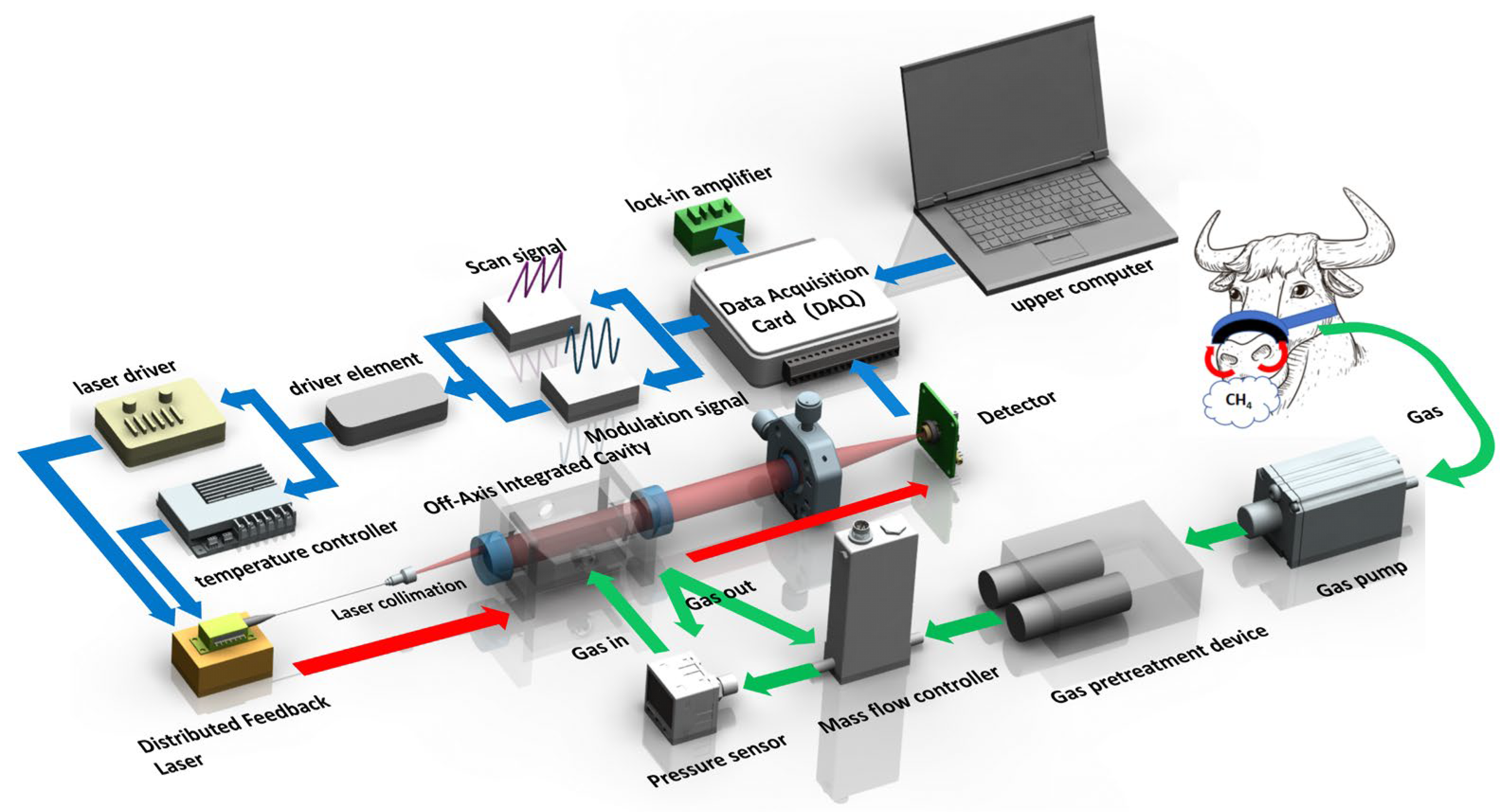
This study designed a CH4 detection system for ruminant animals in livestock farming, as illustrated in Figure 1. The system primarily consists of a tunable diode laser, an off-axis integrated cavity, a photodetector, a drive unit, a data acquisition unit, and a gas path control unit. The tunable diode laser is a DFB laser source with a wavelength of 1650.9 nm. Temperature and current control are applied to the laser to ensure stable operation and precise wavelength tuning. Modulated by TDLAS technology, the laser achieves narrow-linewidth tunable output within a range of several nanometers around the central wavelength [22]. After being collimated by an optical collimator, the laser beam is directed into the integrated cavity. Both ends of the cavity are equipped with mirrors, with a distance of 50 mm between them. Each mirror features a flat outer surface and a concave inner surface with a radius of curvature of 1 m. The inner surface is coated with a high-reflectivity film, providing a reflectance of 99.7%. This design enables an effective absorption path length of 16.67 m after practical assembly and alignment. To ensure operational stability of the cavity structure, the integrated cavity is manufactured from high-strength Invar.
CH4 in cattle exhaled gas is the target analyte. A gas pump in the system draws the exhaled gas from a collection device fixed around the cattle’s nose into the subsequent system. After passing through a gas pretreatment system, the dried gas is pumped into the integrated cavity. The target gas absorbs laser light at specific wavelengths, and the remaining light exits the cavity and is focused by a lens with a focal length of 50 mm onto the photosensitive surface of a photodiode. The photodiode converts the light intensity into an electrical signal, which is transmitted to a DAQ unit for signal collection and processing. An environmental control system, including temperature and pressure control, adjusts the system’s temperature and pressure in real time to eliminate the influence of environmental factors on detection.

2.2. Analysis of Absorption Spectral Lines

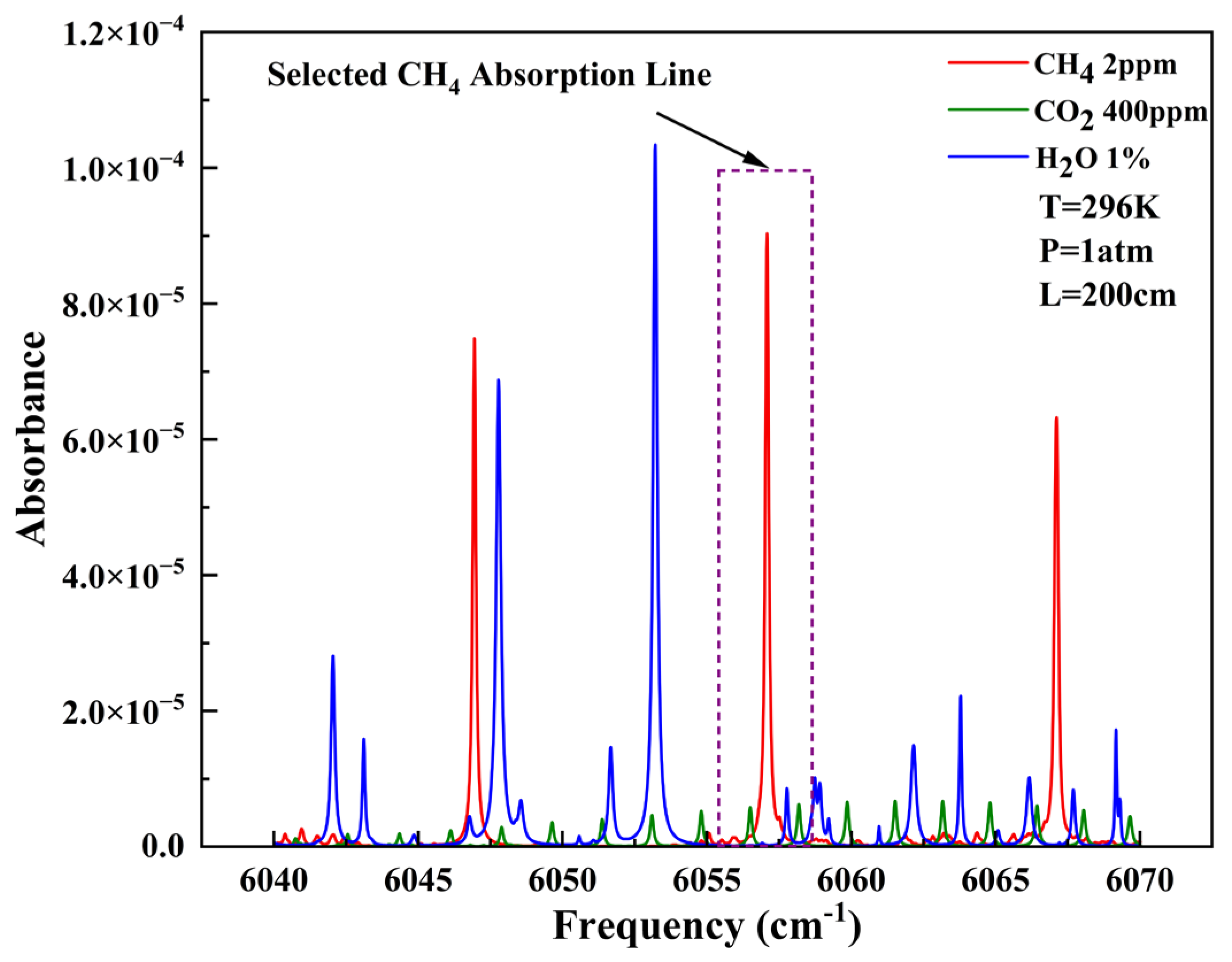
The practical application scenario of this study involves measuring CH4 exhaled by ruminant animals. Based on the HITRAN database [23], the absorption lines of CH4 were simulated and analyzed under standard temperature and pressure conditions (296 K, 1 atm). As shown in Figure 2, water vapor (H2O) and carbon dioxide (CO2), as the main interfering gases in animal exhaled breath, were analyzed in terms of their absorption cross-sections. Comparison revealed that at the wavenumber of 6057.09 cm−1 (wavelength of 1650.9 nm), the interference from these two gases on CH4 detection is relatively small, with both exhibiting an absorbance approximately one-ninth that of CH4. Such interference can be eliminated through subsequent data processing. Moreover, this spectral region meets the requirements for large dynamic range CH4 concentration measurements. Therefore, the absorption band of CH4 at 6057.09 cm−1 (1650.9 nm wavelength) was selected. A DFB laser with a central wavelength of 1650.9 nm was chosen as the light source. The selected tunable laser was modulated with a central current of 62 mA. The temperature of the internal TEC (thermoelectric cooler) module was set to 28 °C. The modulation depth of the sawtooth wave was 20 mA, while that of the sinusoidal modulation wave was 3 mA at a frequency of 2000 Hz.

2.3. Design of Gas Pretreatment and Environmental Control

Given that the subjects under investigation are Simmental beef cattle, whose exhaled breath contains a substantial amount of water vapor, and that feeding activities may introduce dust and other particulates into the sampling system, which could be drawn by the vacuum pump into the detection cavity and cause contamination, dust and moisture removal pretreatment of the gas sample is required prior to its introduction into the optical cavity. Considering the high flow rate of the exhaled gas from the cattle and the uncertainty in humidity variation, traditional calcium chloride drying tubes have low adsorption efficiency for water vapor. Moreover, to prevent the formation of gel after calcium chloride adsorbs water vapor, which could block the gas path, regular monitoring of the drying tube is required to replace the adsorbent. Taking into account both dehumidification efficiency and the impact of equipment maintenance on long-term monitoring, this study employs an electronic condenser as the dehumidification device. Its principle is based on the Peltier effect, where cooling is achieved through the cold end, and moisture is condensed and discharged upon reaching the preset temperature. This electronic condenser can control the gas humidity below 20% RH. The dust removal module consists of two stages: the first stage is a micro-fiber filter, which can remove part of the water vapor and impurities. This first-stage dust removal module is placed before the dehumidification module to ensure the proper operation of the dehumidification module. The second-stage dust removal module employs a CEMS (Continuous Emission Monitoring System) secondary filter [24], installed in the gas path after the dehumidification module, which can effectively filter solid impurities of 0.2 µm and larger. Through the above dust and moisture removal pretreatment of the exhaled gas from the cattle, the normal operation of the optical cavity can be ensured.
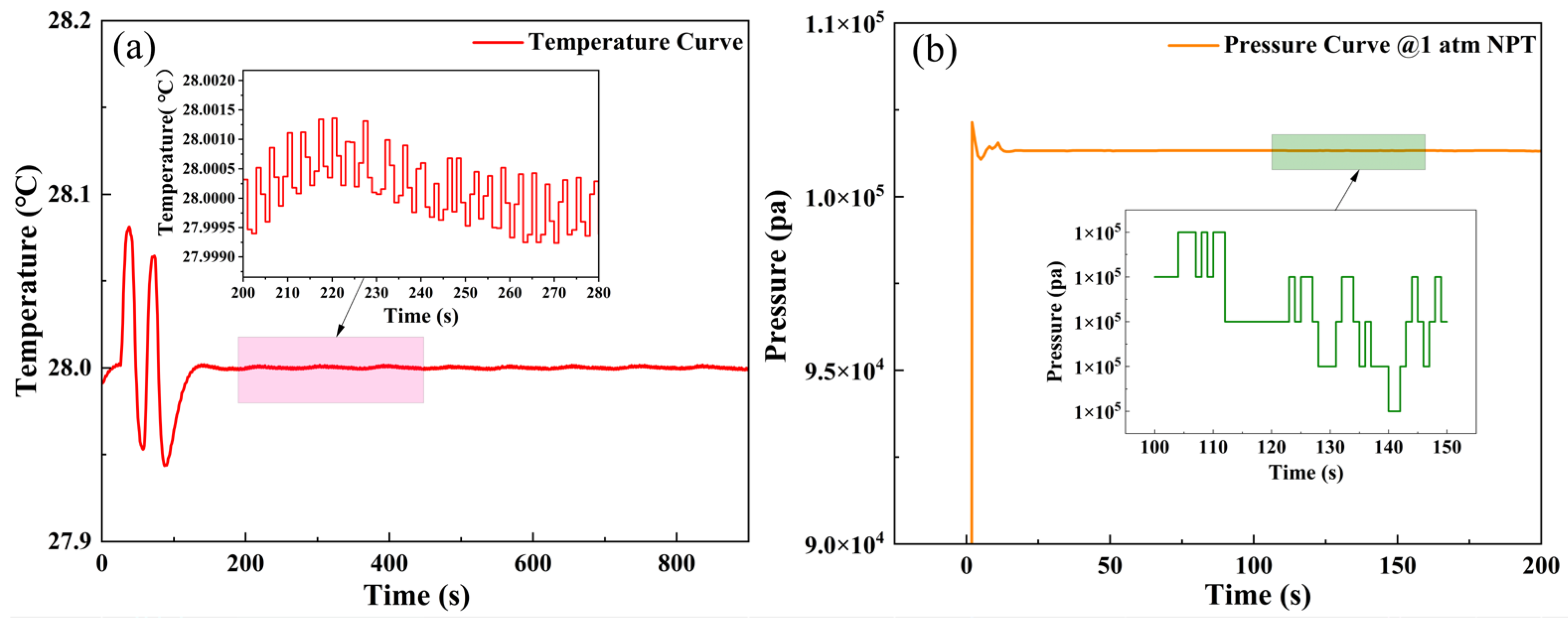
The performance of the optical cavity in this study is significantly affected by environmental factors, primarily temperature and gas pressure. For temperature control, the optical cavity is placed in a customized EPP material insulation box. The box wall is equipped with a heat dissipation device for internal and external air exchange, consisting of, from inside to out, a cooling fan, a TEC, and a water-cooling refrigeration component. By using PID control for the TEC, precise temperature control is achieved. As shown in Figure 3a, when the temperature is set to 28 °C, the temperature control accuracy reaches 0.002 °C after stabilization. For pressure control, a closed-loop pressure feedback control system is designed. Mass flow meters are installed at the inlet and outlet of the optical cavity to monitor changes in airflow pressure. The pressure control performance is illustrated in Figure 3b. When a sudden pressure change occurs, the pressure response time is less than 20 s, and the pressure fluctuation under steady state is less than 5 Pa. The temperature and pressure control systems ensure the stable and reliable operation of the OA-ICOS detection system in the cattle breath monitoring environment.

2.4. Design of a Rapid-Response Cavity

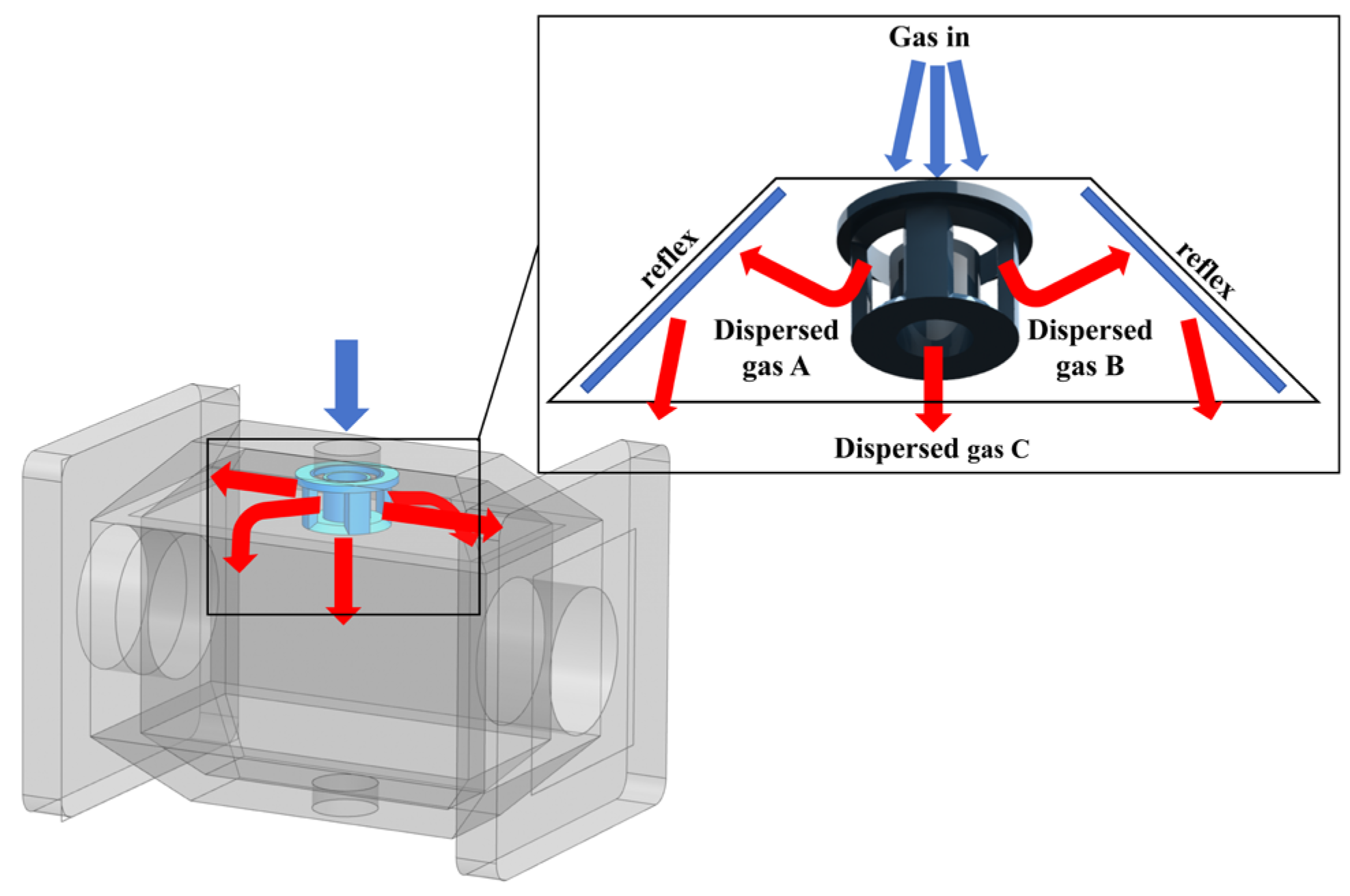
The instrument designed in this study is primarily used for dynamically detecting the concentration of in exhaled gas during cattle rumination, which requires the device to have a short response time. The key factor limiting the response time is the duration required for the measured gas to achieve concentration equilibrium as it flows through the cavity. Traditional integrating cavities feature a rectangular cross-section along the axis, with the inlet and outlet typically positioned on the same side of the cross-section. At high flow velocities, vortices tend to form near the right-angle regions of the inner wall, creating gas dead zones that impair gas renewal efficiency. To address this issue, this study proposes a novel spindle-shaped cavity structure along with a matched inlet flow-division grille. To achieve this unique structure while ensuring ease of manufacturing, the integrating cavity is designed as a split structure, with the schematic diagram shown in Figure 4. The structure consists of three components: a main cavity body and two quadrangular pyramid–shaped cavity walls (upper and lower), which are bolted together with sealing elements installed at the interfaces to ensure gas tightness. The inlet flow-division grille is mounted inside the inlet, dispersing the incoming gas flow into two directions: one portion is directed toward the peripheral side, guided by the 45° angled quadrangular pyramid-shaped inner wall, and flows along the wall toward the outlet; the other portion moves directly along a straight channel toward the outlet. This novel structure and flow path significantly reduce gas vortices and dead zones, enabling the measured gas to rapidly achieve concentration equilibrium upon entering the cavity, thereby effectively improving the temporal resolution of the instrument.
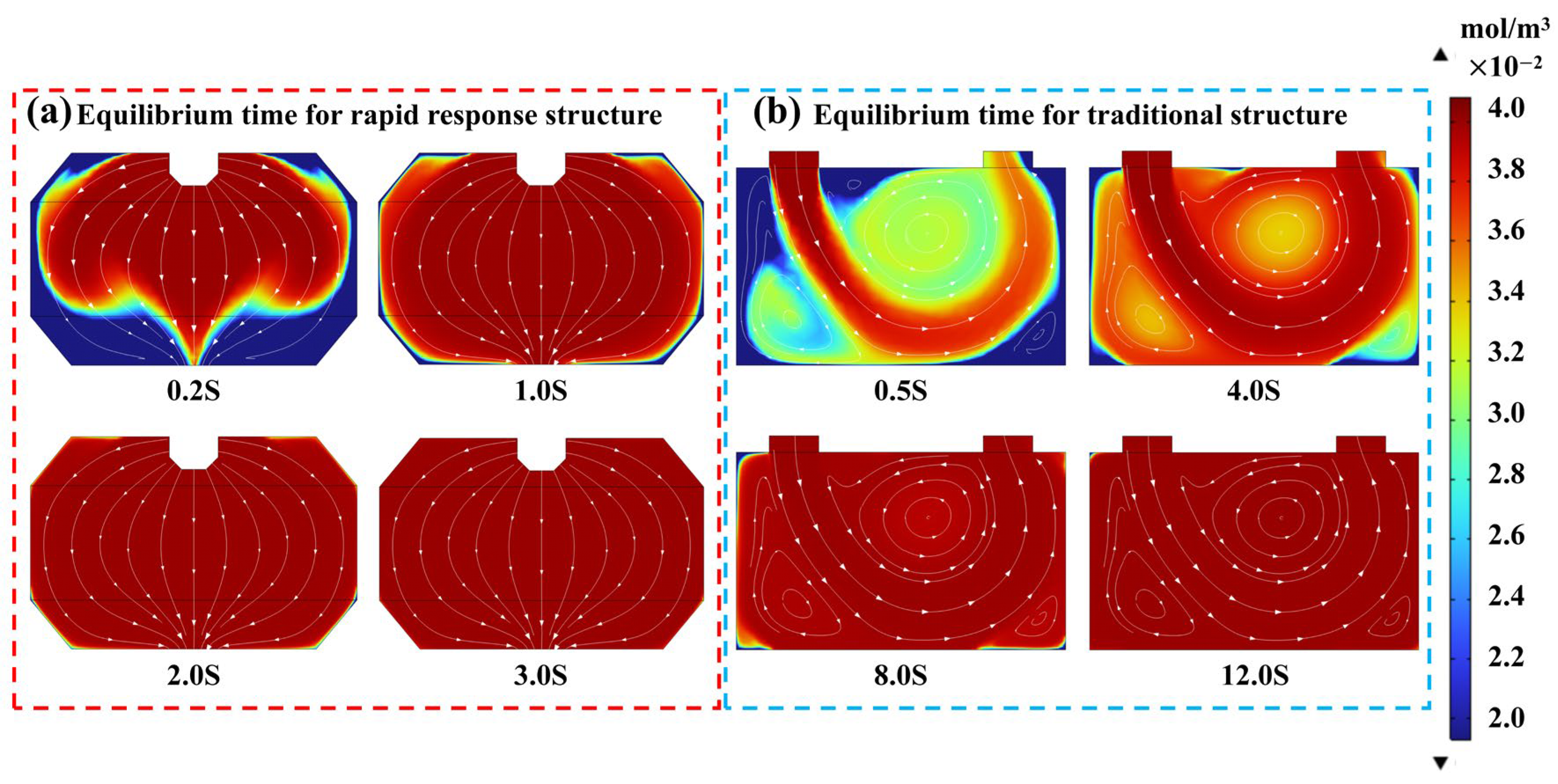
To further evaluate the gas concentration refresh rate and equilibrium performance of the newly designed fast-response integrating cavity structure developed in this study, simplified equivalent models were established for both the spindle-shaped cavity structure proposed in this work and a conventional integrating cavity structure, along with their respective gas inlet configurations. Simulations were conducted under an inlet flow rate of 1000 SCCM and a CH4 concentration of 0.04% to compare the CH4 concentration equilibration within the two types of cavities.
The simulation results indicate that during gas inflow into the cavity, particularly in the region where the laser beam undergoes multiple reflections, the airflow direction in the spindle-shaped cavity is nearly perpendicular to the laser propagation direction. Owing to the flow-guiding effect of the internal geometric features of the cavity, the airflow does not form vortices, thereby avoiding the creation of concentration dead zones that could adversely affect the gas refresh rate and steady-state equilibrium inside the cavity. Simulation results in Figure 5a indicate that the spindle-shaped cavity structure enables complete gas refreshment within 1.0 s, with the concentration stabilizing after 3.0 s. In contrast, Figure 5b reveals that in the conventional cavity structure, the internal gas refresh requires 8.0 s, and concentration stabilization is achieved only after 12.0 s. The novel cavity structure and its gas inlet/outlet configuration improve the concentration equilibration efficiency by approximately four times, significantly enhancing the temporal resolution of the system. This advancement makes it highly suitable for application in detection scenarios involving rapidly changing gas concentrations.

3. Results

3.1. Experimental Preparation

In the experiment, a commercial gas mixer SONIMIX-7100 (Switzerland LNI Swissgas, Versoix, Switzerland) was employed to prepare CH4 gas at different concentrations. Since N2 is the primary constituent of air and O2 does not absorb at 1650.9 nm, the collisional broadening effects in N2 are nearly identical to those in ambient air, making it a valid proxy for calibration. By mixing 1% concentration CH4 standard gas with high-purity nitrogen at different ratios as the gas source, constant-flow CH4 gas at various concentrations could be output under the control of two mass flow controllers. The OA-ICOS system was placed in an EPP insulated incubator. A high-precision temperature controller regulated the TEC, combined with water cooling, to achieve high-precision temperature control inside the incubator. Temperature control data were acquired and monitored in real time by an upper computer.
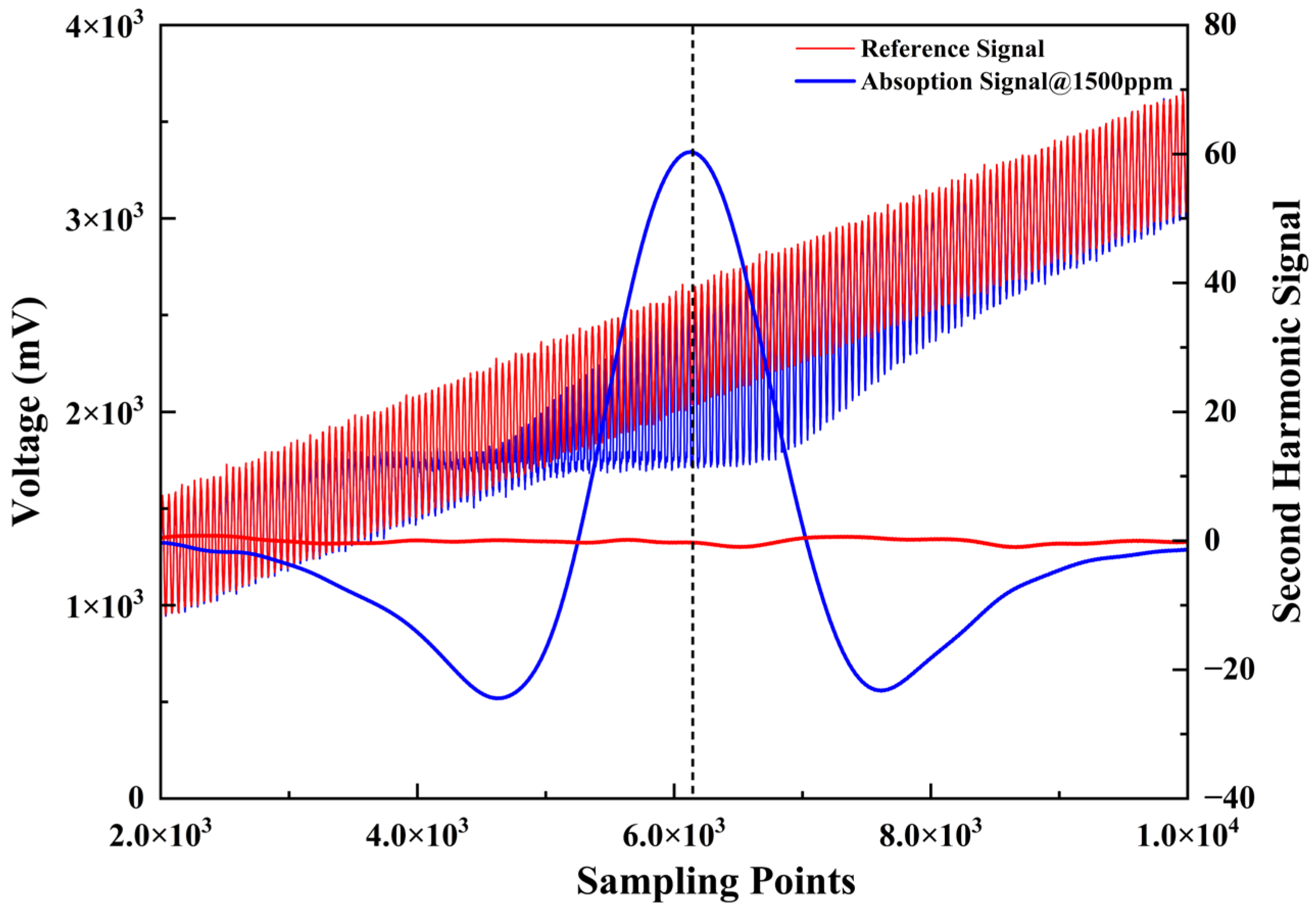
A sawtooth wave signal and a sinusoidal wave signal were superimposed onto the output of the DFB laser, causing the central wavelength of the laser to scan across the CH4 absorption peak at 1650.9 nm. As shown in Figure 6, after demodulating the voltage signal obtained by the detector, the red curve represents the original reference signal obtained by introducing N2, and the blue curve represents the original signal after CH4 absorption at 1500 ppm. The two signals were differentially processed and subjected to lock-in amplification to extract the second harmonic (2f) signal. The peak-to-peak value of the second harmonic signal exhibits a linear relationship with the gas concentration, which can be used to characterize and quantify the gas concentration.
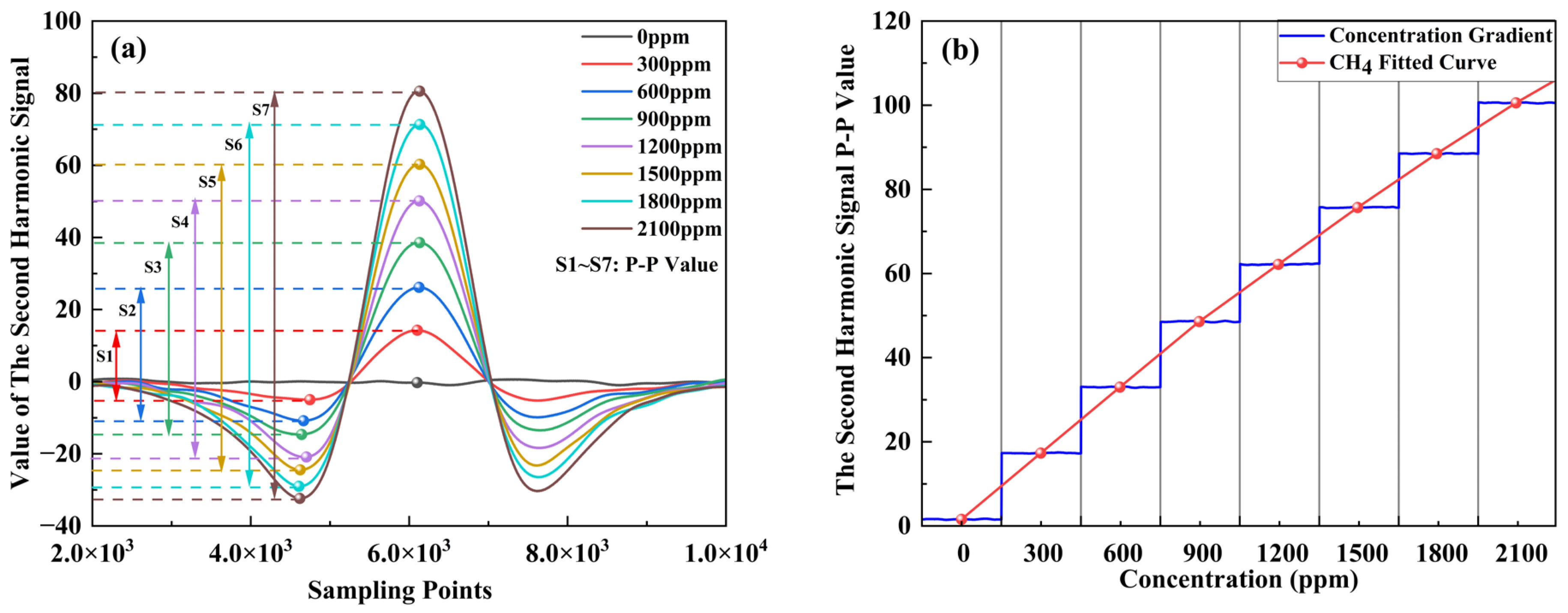
Based on the aforementioned experimental setup, system calibration was performed. The instrument was preheated for 10 min. After the system temperature stabilized, high-purity nitrogen was introduced for 30 min, and the maximum peak-to-peak value of the second harmonic was recorded as the signal value corresponding to 0 ppm concentration. Considering the practical scenario of monitoring CH4 concentrations emitted from cattle rumination, the instantaneous CH4 concentration peaks during cattle eructation typically range from 300 to over 2000 ppm, a sequence of CH4 standard gases with concentration gradients of 300 ppm was prepared by adjusting the mixing ratio of CH4 and nitrogen. The peak-to-peak values of the second harmonic signal obtained by the system for each concentration were recorded and extracted, as shown in Figure 7a. For the system calibration, each concentration point was introduced for 20 min, and the average value of the 2f signal from the last 10 min was used as the data representing that concentration (the sampling rate was 1 kHz).
Following the aforementioned experiments, a linear regression analysis was performed on the acquired data. As illustrated in Figure 7b, the peak-to-peak value of the second harmonic signal obtained from the demodulated voltage signal of the detector and the CH4 concentration conform to a regression model. Although the Beer–Lambert law predicts a linear relationship at low absorbances, a slight non-linearity was observed in the 2f signal response due to the wide dynamic range (0–2100 ppm) and the long effective optical path length. To compensate for this and minimize measurement error at higher concentrations, a quadratic regression model was employed. A quadratic fit was performed using the acquired second harmonic peak-to-peak values as the independent variable and the set concentration gradient as the dependent variable. The resulting fitting equation is y = 0.03807x2 + 18.11x − 19.62, achieving a high coefficient of determination (R2) of 0.9998.

3.2. System Performance

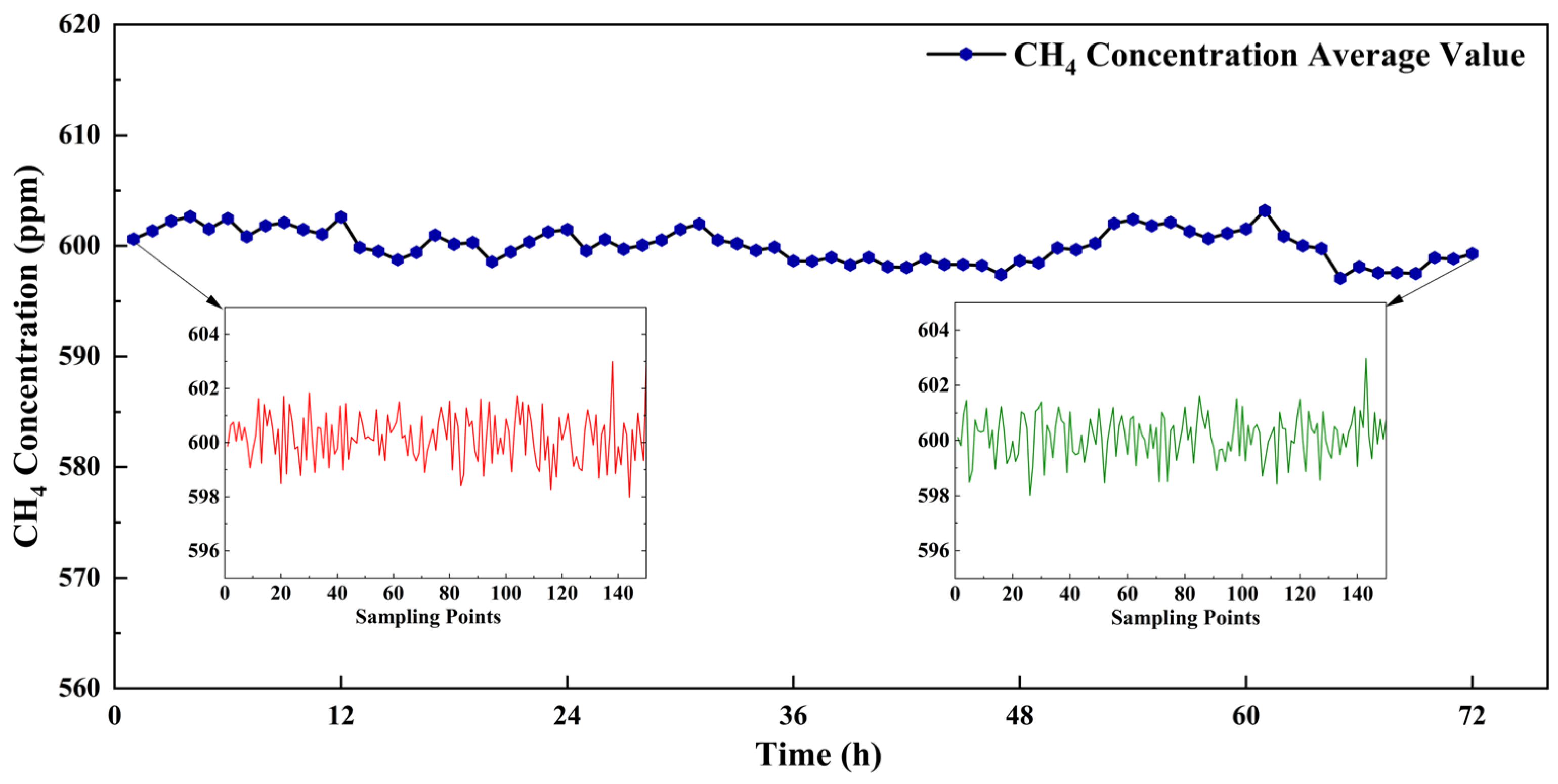
Considering the practical application scenario of this study, a 72 h operational stability test was conducted to verify the system’s capability for long-term stable operation. A 600 ppm CH4 standard gas was continuously introduced into the instrument via a laboratory gas mixer. Data were collected every 2 s, and hourly averages were calculated to obtain CH4 concentration measurements over the 72 h period. As shown in Figure 8, the standard deviation of the detected signal over 72 h for the introduced 600 ppm CH4 standard gas was 1.5183 ppm. The standard deviations for the first 5 min and the last 5 min of data were 0.9209 ppm and 0.8167 ppm, respectively. Given that the average CH4 concentration emitted during each cattle rumination event exceeds 50 ppm, the observed fluctuation in data deviation was considered negligible compared to the magnitude of CH4 exchange during rumination and has almost no impact on concentration retrieval. These results demonstrate that the proposed system is suitable for long-term monitoring of cattle rumination CH4 emissions over daily detection cycles. Additionally, for long-term deployment extending beyond several days, the system is programmed to perform an automatic zeroing calibration every 72 h using ambient air or standard nitrogen to eliminate cumulative baseline drift.
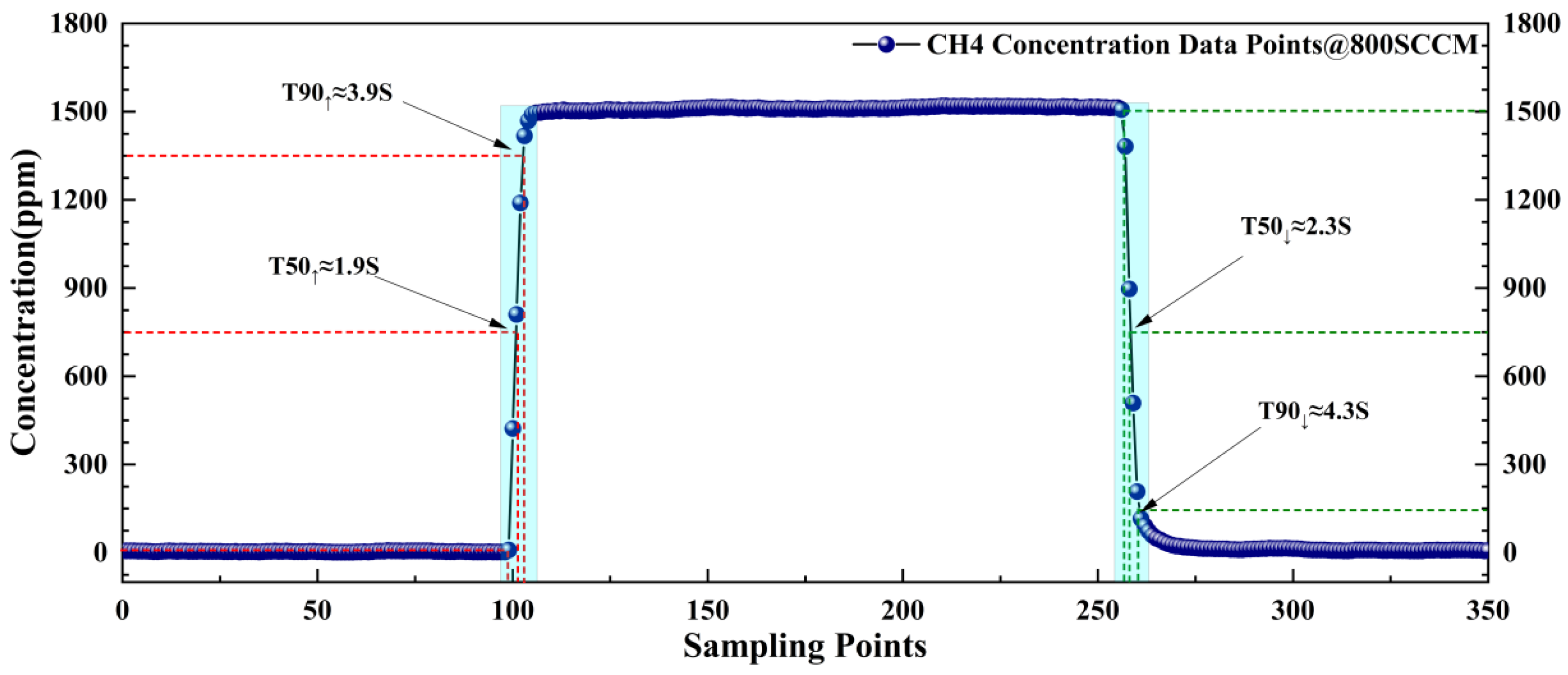
Secondly, to accurately characterize the capability of the OA-ICOS system in capturing transient changes in CH4 concentration within ruminant respiratory flow, this study quantified the instrument’s response time parameters—T50 and T90 (i.e., the time required to reach 50% and 90% of the target concentration from baseline)—through step concentration tests [25]. Under a concentration change of 1500 ppm, the resulting T50 and T90 are shown in Figure 9. After alternate rise/fall tests, the system exhibited a rise T50 of 1.9 s and T90 of 3.9 s, and a fall T50 of 2.3 s and T90 of 4.3 s. These results demonstrate that the system can fully resolve the CH4 concentration profile emitted during cattle rumination within the duration of a single ruminant breath event (>30 s). Combined with the cavity concentration refresh rate and equilibration time derived in the previous chapter, this confirms that the system meets the timeliness requirements for dynamic emission measurements.
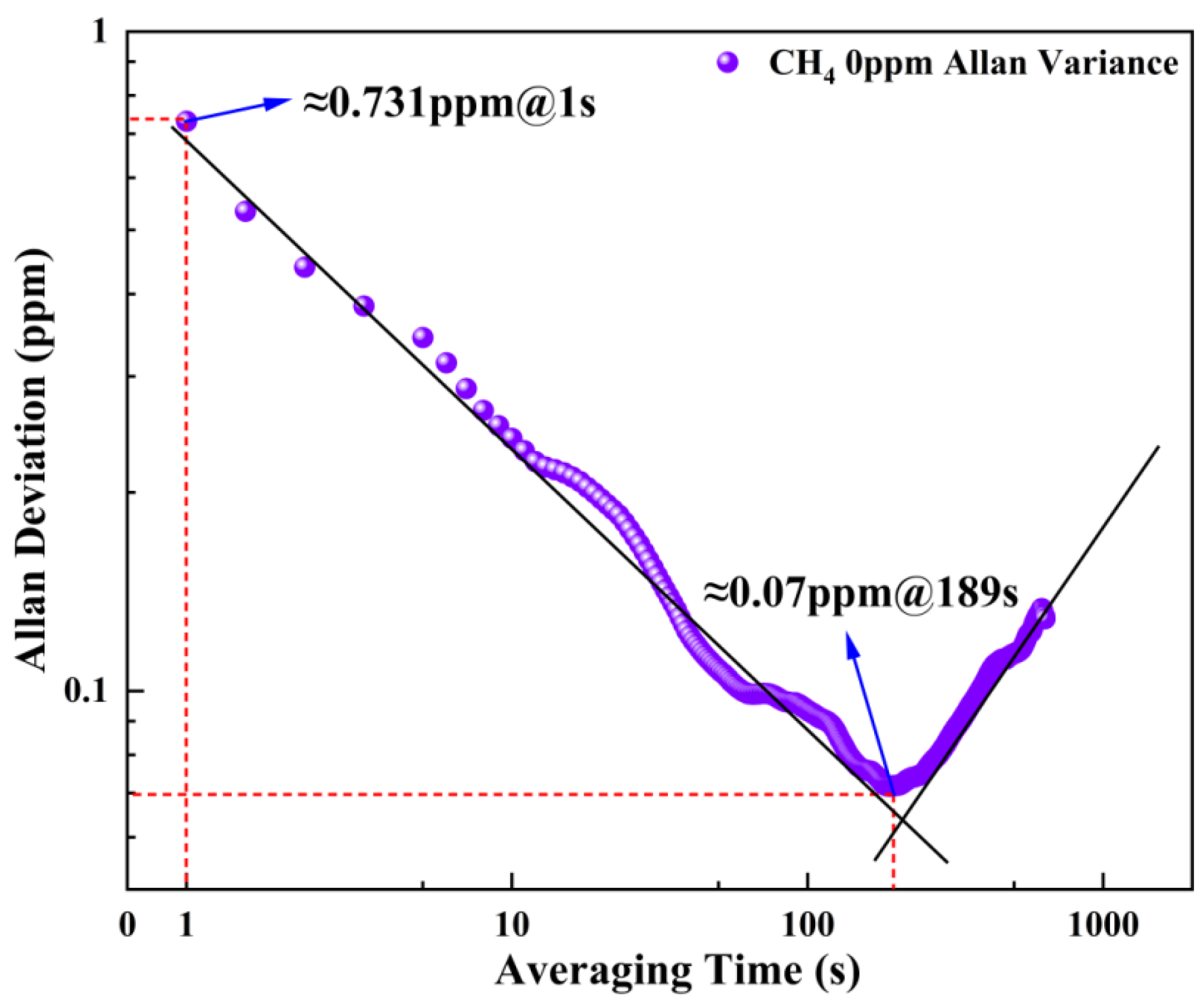
Allan variance is an important method for quantifying the stability and detection limit of the OA-ICOS system, as it can be used to analyze and determine the noise characteristics and minimum detectable concentration of the system [26]. During the experiment, N2 was purged into the cavity at a constant flow rate using a gas mixer. When the detection signal stabilized, long-term data acquisition was performed to calculate the Allan variance at different integration times.
In the CH4 concentration detection using this system, as shown in Figure 10, the detection limit at 1 s is approximately 0.731 ppm. As the integration time increases to 189 s, the minimum detection limit can reach 0.07 ppm. In practical applications of the system, appropriate adjustment of the integration time enables flexible adaptation to different detection environments and performance requirements.

3.3. Monitoring and Analysis of CH4 Emissions from Rumination

In this study, a gas sampling system with an inlet diameter of 6 mm was deployed in front of the cattle nostrils to collect exhaled breath from the animals, using a vacuum pump operating at a flow rate of 5 L/min. To account for the gas dilution effect during sampling, a laboratory simulation was conducted. A pressure-reducing valve was used to regulate the outflow velocity of standard gas from a cylinder, and the sampling inlet was positioned 2 mm away from the gas outlet. The collection efficiency of the sampling device was calculated by comparing the measured concentration signals with the known concentration of the standard gas released from the cylinder. This efficiency was then used to correct the raw concentration data. Based on the calibrated concentrations, the total exhaled CH4 volume and emission rate from the cattle were estimated. The actual concentration of CH4 in the exhaled breath was calculated using Formula (1):
C e   =   C m ( 1 α ) · C b α
where the measured concentration is denoted as Cm (ppm), the background CH4 concentration is Cb ≈ 1.8 ppm, and the capture efficiency of the cattle exhaled gas by the sampling system is α = 0.4. By measuring and subtracting Cb in this equation, the constant interference from ambient methane in the cattle barn environment is effectively eliminated, ensuring that the calculated Ce reflects only the methane contributed by the cattle’s exhalation. Based on the calibrated concentration results and the flow characteristics of the system, the total 24 h CH4 emission from cattle can be estimated using Formula (2) below:
V total   =   K · α · Q p · τ 10 6 · i = 1 N C e , i
Among these parameters, Qp represents the pump speed conversion value: 83.33 mL/s, τ is the sampling interval, N is the number of sampling points, and the constant K is the CH4 mass-to-volume conversion factor: 1.4 (L/g).
Based on the derived 24 h CH4 concentration curve during cattle rumination, in conjunction with the estimated total CH4 emission, the average CH4 emission rate Rv (L/h) and the instantaneous emission rate Ri (L/h) can be calculated using the following equations:
R v ¯   =   V total 24
R i   =   α · Q p · C e , i · K 3600
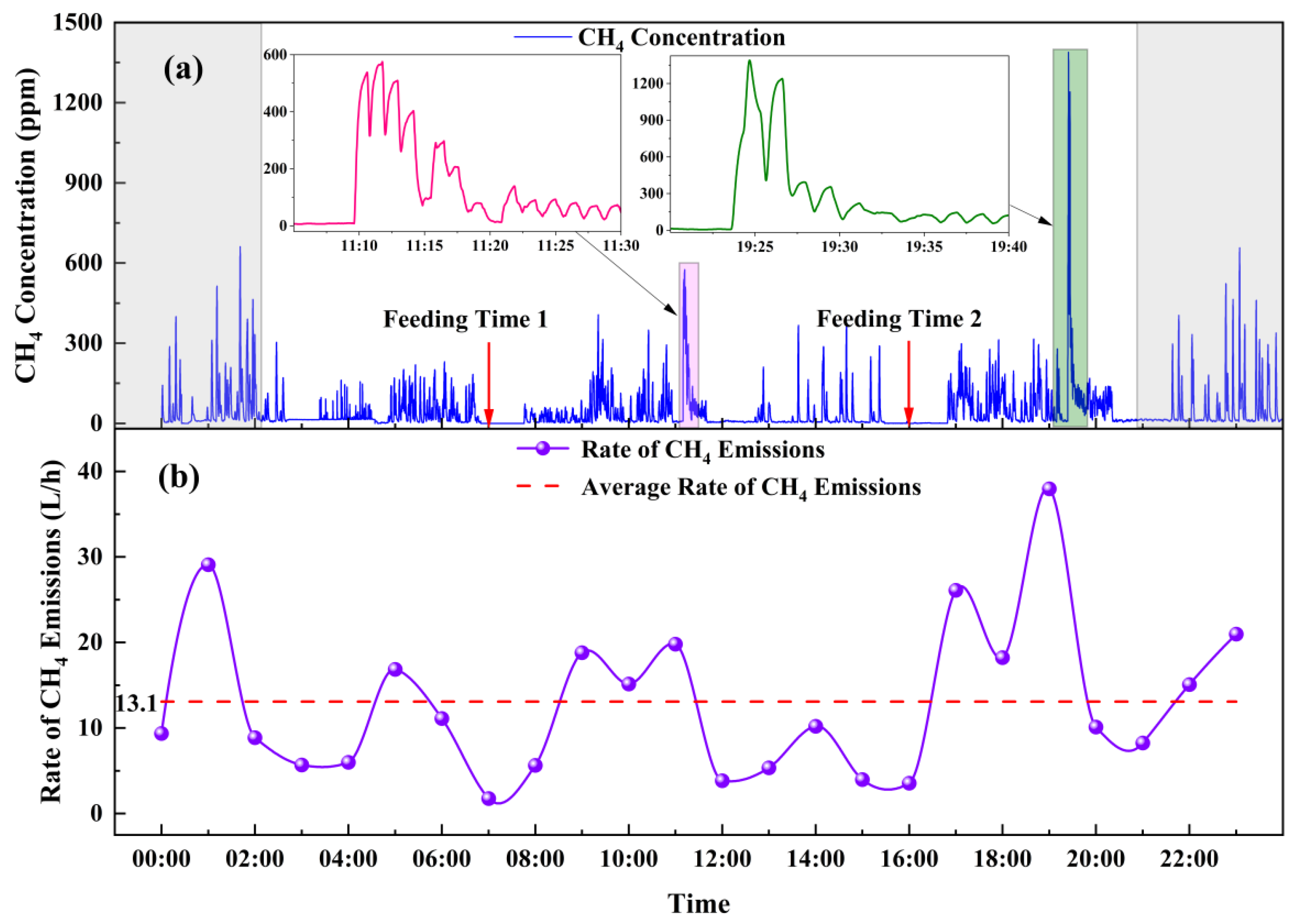
Based on the aforementioned calculations, the real-time monitoring system designed in this study successfully captured the dynamic changes in rumination behavior and CH4 emission concentrations from six Simmental cattle. Figure 11a shows the CH4 emission concentration curve detected over 24 h for one of the test subjects—a middle-aged Simmental cattle (22 months old).
As illustrated in the figure, during rumination, the animal exhibited multiple eructation events to release CH4 gas, with each spike in the curve representing the CH4 concentration captured by the system during eructation. Over the 24 h measurement period, feeding was conducted at 6:00 AM and 16:00 PM, respectively. The feed consisted of a mixture of roughage and concentrate [27]. The roughage included powdered Leymus chinensis and corn straw (4% ≤ CP ≤ 5%), while the concentrate was composed of soybean oil, soybean DDGS (CP > 30%), wheat bran, sodium bicarbonate, salt, limestone, and premix. Using the aforementioned formula, the total CH4 emissions from this animal were estimated to be approximately 311.83 L per day (at 25 °C and 1 atm).
Data analysis revealed that, compared to resting periods, CH4 emission concentration signals exhibited more frequent and intensive peaks approximately 1.5 h after feeding. This was characterized by a significant increase in CH4 concentration accompanied by high-intensity emission peaks, which exhibited a unique rhythmic pattern. In terms of external physiological manifestations, at the onset of rumination, the cattle slightly extended their necks followed by a brief swallowing movement in the reverse direction of normal deglutition (regurgitation). Through reverse peristalsis of the esophagus, the bolus was transported from the rumen back to the mouth. The cattle then continuously chewed the regurgitated bolus with a rhythmic jaw movement, typically at a rate of about 50 times per minute. Monitoring data indicated that the first peak occurred at 11:12:55 AM, with a concentration of 509.83 ppm (corrected to 1435.06 ppm), and the second peak appeared at 19:24:34 PM, with a concentration of 1388.34 ppm (corrected to 3468.07 ppm). This observation aligns with the established mechanism that rumen fermentation activity in ruminants significantly intensifies after feeding, leading to an increase in CH4 production. Notably, following high-intensity CH4 emission peaks, a diminishing rumination behavior lasting about 30 min was observed, until obvious eructation activities ceased. This is primarily because repeated chewing results in an overly softened rumen content, which reduces stimulation to the rumen and decreases neural afferent impulses, thereby insufficiently triggering effective regurgitation reflexes and gradually halting rumination [28].
Based on the CH4 emission concentration curve, the fitted 24 h CH4 emission rate is shown in Figure 11b. The intraday emission rate exhibited significant fluctuations: the minimum value occurred around 7:00 AM, one hour after morning feeding, at 1.8 L/h; the maximum value appeared around 19:00 PM, reaching 38.0 L/h. The calculated average CH4 emission rate over 24 h was 13.1 L/h. Further analysis revealed that the emission rate curve within six hours after feeding displayed a distinctive bimodal pattern, reflecting the physiological mechanism of rumination—regurgitation of coarse rumen contents back to the mouth (increased emission rate), followed by chewing mixed with saliva and re-swallowing (relatively decreased emission rate). The finer bolus, with increased surface area, promotes further microbial fermentation, leading to a significant rise in CH4 emission rate [29]. The diurnal variation trend and emission peak patterns of CH4 emissions during rumination observed in this study are consistent with previously reported daily CH4 emission data from cattle obtained using automated head chamber systems by Wang Rong et al. [30]. However, with higher temporal resolution, this study accurately captured rapid dynamic changes in CH4 emissions during rumination. It not only effectively identified higher CH4 emission peaks during rumination but also detected frequent, lower-concentration CH4 emission peaks. Additionally, gradually weakening minor emission peaks were observed near the end of rumination, providing more detailed experimental evidence for in-depth analysis of the physiological regulatory mechanisms of CH4 emissions in ruminants.
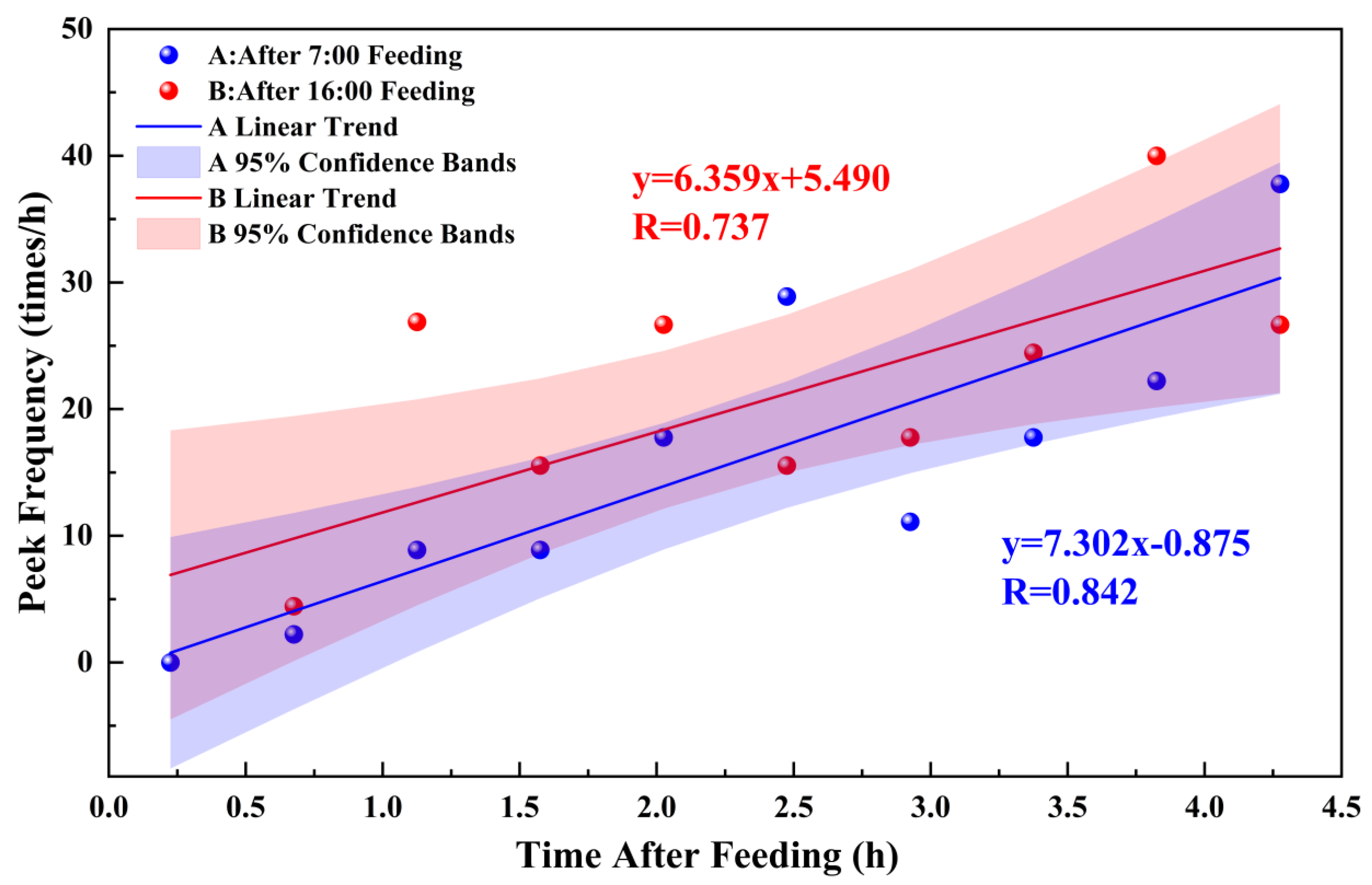
Within a certain period after feeding Simmental beef cattle, corresponding changes in the frequency and height of CH4 emission peaks were observed over time post feeding, as shown in Figure 12. Within 4.5 h after feeding, the frequency of CH4 emission peaks (Yf) gradually increased with time (Xf). Specifically, after morning feeding at 06:00, the frequency of CH4 emission peaks was described by Yf1 = 7.302Xf − 0.875 (R = 0.842, p < 0.01), while after afternoon feeding at 16:00, it followed Yf2 = 6.359Xf + 5.490 (R = 0.737, p < 0.01).
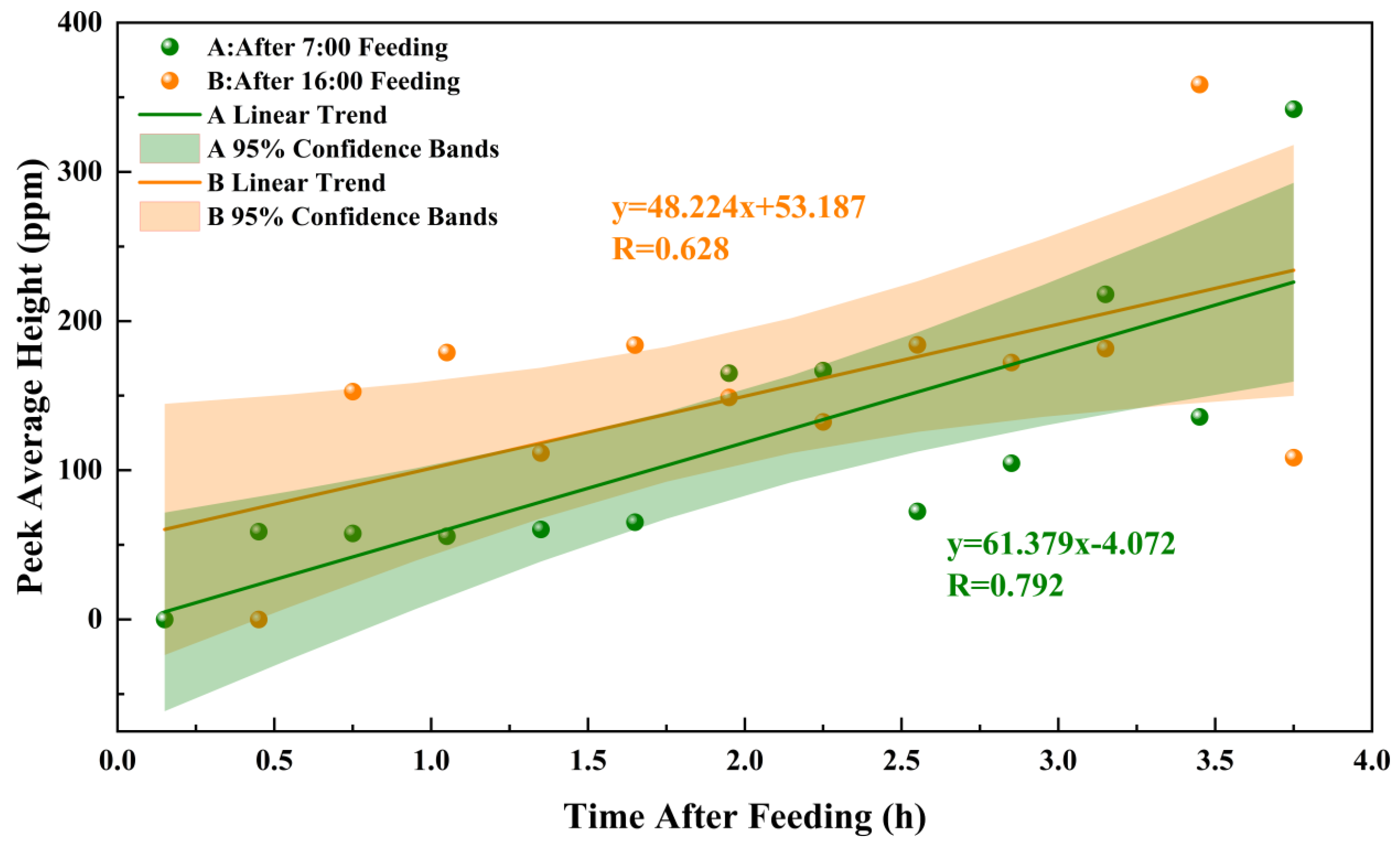
The CH4 emission peak height also exhibits certain correlative changes with the duration of time after feeding. Within 4 h after feeding, the regression fit of CH4 emission peak height (YH) over time (Xf) is shown in Figure 13. Specifically, after morning feeding at 06:00, the CH4 emission peak height is described by YH1 = 61.379Xf − 4.072 (R = 0.792, p < 0.01), while after afternoon feeding at 16:00, it is given by YH2 = 48.224Xf + 53.187 (R = 0.628, p < 0.01).
These results demonstrate that within a certain period after feeding, CH4 emissions during digestion and rumination in cattle follow a specific pattern. The characteristics of CH4 emission peaks during rumination are closely related to the time after feeding. As time progresses after feeding, the frequency of rumination gradually increases, and the intensity of CH4 emissions per rumination event also exhibits an increasing trend.
From the perspective of bovine physiological characteristics, this phenomenon is closely associated with the dynamic process of ruminal digestion and metabolism. In the initial stage of feeding, the ingested feed particles primarily undergo initial soaking and mixing in the rumen. At this stage, functional microorganisms such as fiber-degrading bacteria have not yet entered a highly efficient metabolic phase. The production of volatile fatty acids (VFAs) in the rumen remains relatively low, and the metabolic substrates (e.g., H2 and CO2) required by methanogens are insufficient, resulting in a slower initiation of rumination and weaker CH4 emission intensity [31]. As time elapses after feeding, the feed particles in the rumen gradually become finer due to mechanical mixing and microbial enzymatic hydrolysis. The degradation efficiency of fibrous substrates significantly improves, leading to the accumulation of intermediate metabolites such as H2. This provides ample substrates for CH4 synthesis by methanogens. Simultaneously, the continuous accumulation of CH4 in the rumen enhances the distension stimulus on the rumen wall, which promotes the initiation and increased frequency of rumination through neuroreflex mechanisms. Coupled with efficient substrate metabolism by methanogens, the intensity of CH4 emissions per rumination event gradually increases over time.
The above findings reveal the synergistic dynamic relationship among ruminal microbial metabolism, rumination behavior regulation, and CH4 emissions in cattle after feeding. This provides a basis for a deeper understanding of the physiological regulatory mechanisms of CH4 emissions in ruminants and offers scientific references for strategies such as optimizing feeding schedules and modulating the rumen microbial community to reduce CH4 emissions from ruminants.

4. Discussion

Compared to previously reported systems such as induced head-chamber measurement and respiration chamber techniques, our study developed a gas detection system capable of rapid response and data processing targeted at CH4 emissions from ruminating behavior. The system is relatively simple to operate, causes minimal disturbance to the subjects, and imposes fewer spatial constraints. Experimental results captured the daily variation curve of CH4 emission concentration in Simmental cattle. Based on the collected data, the total daily CH4 emission and the variation in emission rates were estimated. The estimated results are consistent in order of magnitude with previously reported CH4 emission values. Additionally, a positive correlation was observed between cattle ruminating behavior-related CH4 emissions and feeding time. Quantifying CH4 emissions can provide a scientific basis for formulating targeted emission reduction policies, reveal the patterns of material and energy exchange between ruminants and the environment, offer data support for understanding the carbon cycle equilibrium mechanism in grassland ecosystems, and guide the development and application of emission reduction technologies such as feed formula improvement and innovative breeding models—thereby promoting green and sustainable development of the livestock industry.
However, the current testing system still requires specific optimizations to enhance its robustness in complex field environments. First, regarding the gas sampling efficiency, to minimize the dilution effect and the impact on the animal’s normal behavior, we plan to optimize the aerodynamic design of the sampling inlet. Second, to mitigate the interference of environmental fluctuations, we will implement a multi-sensor fusion compensation strategy. We plan to integrate high-precision anemometers and temperature–humidity sensors at the sampling point to acquire real-time environmental data. This data will be utilized to further optimize the system’s compensation algorithms, thereby improving the measurement accuracy in open-field conditions.

5. Conclusions

In this study, an OA-ICOS system was established for the analysis of gases emitted during ruminant behavior, enabling high-precision and rapid real-time monitoring of CH4 concentration in animals during rumination. The system is capable of responding quickly to dynamic changes in gas concentration, providing accurate and representative data on CH4 emissions from dairy cattle during normal activities. The estimated total daily CH4 emissions align well with values reported in previous studies, and correlation analysis revealed significant relationships between CH4 emission characteristics and the behavior as well as feeding times of Simmental cattle. This system offers a robust tool for quantifying CH4 emissions from ruminants and lays the groundwork for further research on reducing greenhouse gas emissions in livestock farming. Future improvements to the system and expansion of the research scope will contribute to a more comprehensive understanding of cattle CH4 emissions and the development of more effective mitigation strategies.

Author Contributions

Conceptualization, Y.S., J.W. and G.L.; methodology, Y.S., D.Y. and J.W.; software, D.Y. and J.C.; validation, Y.S., J.C. and J.W.; formal analysis, J.L. and X.Y.; investigation, Y.S. and D.Y.; resources, G.L. and J.W.; data curation, Y.S.; writing—original draft preparation, Y.S.; writing—review and editing, J.W. and G.L.; visualization, Y.S., D.Y. and J.C.; supervision, J.C. and J.W.; project administration, G.L. and J.W.; funding acquisition, J.W. All authors have read and agreed to the published version of the manuscript.

Funding

Key Research and Development Program of Jilin Province (NO. 20250206045ZP).

Institutional Review Board Statement

Not applicable.

Informed Consent Statement

Not applicable.

Data Availability Statement

Data are contained within the article.

Conflicts of Interest

The authors declare no conflicts of interest.

Abbreviations

The following abbreviations are used in this manuscript:
OA-ICOSOff-Axis Integrated Cavity Output Spectroscopy
NDIRNon-Dispersive Infrared
CRDSCavity Ring-Down Spectroscopy
DFBDistributed Feedback Laser
TDLASTunable Diode Laser Absorption Spectroscopy
DAQData Acquisition
TECThermoelectric cooler
CEMSContinuous Emission Monitoring System
EPPExpanded Polypropylene
DDGSDistillers Dried Grains with Solubles
CPCrude Protein
VFAsVolatile Fatty Acids

References

  1. Zhang, S.; Ma, J.; Zhang, X.; Guo, C. Atmospheric remote sensing for anthropogenic methane emissions: Applications and research opportunities. Sci. Total Environ. 2023, 893, 164701. [Google Scholar] [CrossRef] [PubMed]
  2. Clark, M.A.; Domingo, N.G.; Colgan, K.; Thakrar, S.K.; Tilman, D.; Lynch, J.; Azevedo, I.L.; Hill, J.D. Global food system emissions could preclude achieving the 1.5 and 2 C climate change targets. Science 2020, 370, 705–708. [Google Scholar] [CrossRef] [PubMed]
  3. Zhang, L.; Tian, H.; Shi, H.; Pan, S.; Chang, J.; Dangal, S.R.; Qin, X.; Wang, S.; Tubiello, F.N.; Canadell, J.G. A 130-year global inventory of methane emissions from livestock: Trends, patterns, and drivers. Glob. Change Biol. 2022, 28, 5142–5158. [Google Scholar] [CrossRef] [PubMed]
  4. Reisinger, A.; Clark, H.; Cowie, A.L.; Emmet-Booth, J.; Gonzalez Fischer, C.; Herrero, M.; Howden, M.; Leahy, S. How necessary and feasible are reductions of methane emissions from livestock to support stringent temperature goals? Philos. Trans. A Math. Phys. Eng. Sci. 2021, 379, 20200452. [Google Scholar] [CrossRef]
  5. Min, B.-R.; Lee, S.; Jung, H.; Miller, D.N.; Chen, R.J.A. Enteric methane emissions and animal performance in dairy and beef cattle production: Strategies, opportunities, and impact of reducing emissions. Animals 2022, 12, 948. [Google Scholar] [CrossRef]
  6. Scoones, I. Livestock, methane, and climate change: The politics of global assessments. Wiley Interdiscip. Rev. Clim. Change 2023, 14, e790. [Google Scholar] [CrossRef]
  7. Chang, J.; Peng, S.; Yin, Y.; Ciais, P.; Havlik, P.; Herrero, M.J.A.A. The key role of production efficiency changes in livestock methane emission mitigation. AGU Adv. 2021, 2, e2021AV000391. [Google Scholar] [CrossRef]
  8. Laubach, J.; Flesch, T.K.; Ammann, C.; Bai, M.; Gao, Z.; Merbold, L.; Campbell, D.I.; Goodrich, J.P.; Graham, S.L.; Hunt, J.E.J.A.; et al. Methane emissions from animal agriculture: Micrometeorological solutions for challenging measurement situations. Agric. For. Meteorol. 2024, 350, 109971. [Google Scholar] [CrossRef]
  9. Liang, Y.; Wu, C.; Jiang, S.; Li, Y.J.; Wu, D.; Li, M.; Cheng, P.; Yang, W.; Cheng, C.; Li, L.J.S.; et al. Field comparison of electrochemical gas sensor data correction algorithms for ambient air measurements. Sens. Actuators B Chem. 2021, 327, 128897. [Google Scholar] [CrossRef]
  10. Pastor, K.; Ilić, M.; Vujić, D.; Ačanski, M.; Kravić, S.; Stojanović, Z.; Đurović, A. Gas chromatography and mass spectrometry: The technique. In Emerging Food Authentication Methodologies Using GC/MS; Springer: Berlin/Heidelberg, Germany, 2023; pp. 3–31. [Google Scholar]
  11. Tedeschi, L.O.; Abdalla, A.L.; Alvarez, C.; Anuga, S.W.; Arango, J.; Beauchemin, K.A.; Becquet, P.; Berndt, A.; Burns, R.; De Camillis, C.; et al. Quantification of methane emitted by ruminants: A review of methods. J. Anim. Sci. 2022, 100, skac197. [Google Scholar] [CrossRef]
  12. Huhtanen, P.; Bayat, A.-R. Potential of novel feed efficiency traits for dairy cows based on respiration gas exchanges measured by respiration chambers or GreenFeed. J. Dairy Sci. 2025, 108, 12340–12351. [Google Scholar] [CrossRef]
  13. Zhao, Y.; Nan, X.; Yang, L.; Zheng, S.; Jiang, L.; Xiong, B. A review of enteric methane emission measurement techniques in ruminants. Animals 2020, 10, 1004. [Google Scholar] [CrossRef]
  14. Kwaśny, M.; Bombalska, A.J.S. Optical methods of methane detection. Sensors 2023, 23, 2834. [Google Scholar] [CrossRef] [PubMed]
  15. Teng, T.-P.; Chen, W.-J. A compensation model for an NDIR-based CO2 sensor and its energy implication on demand control ventilation in a hot and humid climate. Energy Build. 2023, 281, 112738. [Google Scholar] [CrossRef]
  16. Jiang, J.; McCartt, A.D. Mid-infrared trace detection with parts-per-quadrillion quantitation accuracy: Expanding frontiers of radiocarbon sensing. Proc. Natl. Acad. Sci. USA 2024, 121, e2314441121. [Google Scholar] [CrossRef] [PubMed]
  17. Liu, Y.; He, Y.; Hu, M.; Chen, B.; Xu, Z.; Yao, L.; Wang, X.; Kan, R. Cavity ring-down spectroscopy with a laser frequency stabilized and locked to a reference target gas absorption for drift-free accurate gas sensing measurements. Front. Phys. 2023, 11, 1238869. [Google Scholar] [CrossRef]
  18. Li, Y.; Xu, H.; Guo, Y.; Li, Y.; Li, C.; Chen, C.; Tittel, F.K. A novel method for suppressing OA-ICOS cavity mode noise via active high-frequency vibration. IEEE Trans. Instrum. Meas. 2025, 74, 9509510. [Google Scholar] [CrossRef]
  19. Wang, K.; Shao, L.; Chen, J.; Wang, G.; Liu, K.; Tan, T.; Mei, J.; Chen, W.; Gao, X. A dual-laser sensor based on off-axis integrated cavity output spectroscopy and time-division multiplexing method. Sensors 2020, 20, 6192. [Google Scholar] [CrossRef]
  20. Yang, C.; Wen, M.; Chen, C.; Li, C.; Huang, J.; Song, L.; Li, Y. Improving the Accuracy of Methane Sensor with Dual Measurement Modes Based on Off-Axis Integrated Cavity Output Spectroscopy Using White Noise Perturbation. Appl. Sci. 2025, 15, 5562. [Google Scholar] [CrossRef]
  21. He, Q.; Li, M.; Lu, H.; Li, J. Environmental Oxygen Monitoring in Confined Spaces by a Mobile Sensor System Based on OA-ICOS and PSO-SVM Without Pressure Control. IEEE Sens. J. 2024, 24, 13410–13417. [Google Scholar] [CrossRef]
  22. Wu, Q.; Yang, Y.; Shi, Y.; Xu, Y.; Wang, W.; Men, C.; Yang, B. Highly responsive, miniaturized methane telemetry sensor based on open-path TDLAS. Photonics 2023, 10, 1281. [Google Scholar] [CrossRef]
  23. Gordon, I.E.; Rothman, L.S.; Hargreaves, R.J.; Hashemi, R.; Karlovets, E.V.; Skinner, F.; Conway, E.K.; Hill, C.; Kochanov, R.V.; Tan, Y.; et al. The HITRAN2020 molecular spectroscopic database. J. Quant. Spectrosc. Radiat. Transf. 2022, 277, 107949. [Google Scholar] [CrossRef]
  24. Choi, I.-Y.; Dinh, T.-V.; Kim, D.-E.; Jun, B.-H.; Lee, S.-A.; Park, Y.-M.; Kim, J.-C. The effect of a hybrid pretreatment device for CEMS on the simultaneous removal of PM2. 5 and water vapor. Atmosphere 2022, 13, 1601. [Google Scholar] [CrossRef]
  25. Lorenzo-Bayona, J.L.; León, D.; Amez, I.; Castells, B.; Medic, L. Experimental Comparison of Functionality between the Main Types of Methane Measurement Sensors in Mines. Energies 2023, 16, 2207. [Google Scholar] [CrossRef]
  26. He, Q.; Zheng, C.; Zheng, K.; Tittel, F.K. Off-axis integrated cavity output spectroscopy for real-time methane measurements with an integrated wavelength-tunable light source. Infrared Phys. Technol. 2021, 115, 103705. [Google Scholar] [CrossRef]
  27. Phesatcha, K.; Phesatcha, B.; Wanapat, M.; Cherdthong, A. Roughage to concentrate ratio and Saccharomyces cerevisiae inclusion could modulate feed digestion and in vitro ruminal fermentation. Vet. Sci. 2020, 7, 151. [Google Scholar] [CrossRef]
  28. Beauchemin, K.A. Invited review: Current perspectives on eating and rumination activity in dairy cows. J. Dairy Sci. 2018, 101, 4762–4784. [Google Scholar] [CrossRef]
  29. Hoffmann, G.; Strutzke, S.; Fiske, D.; Heinicke, J.; Mylostyvyi, R.J.S. A New Approach to Recording Rumination Behavior in Dairy Cows. Sensors 2024, 24, 5521. [Google Scholar] [CrossRef]
  30. Wang, R.; Cao, Y.R.; Zhang, X.M.; Zhang, F.; Tian, X.; Zhong, R.Z.; Tan, Z.L.; Wang, M. Relationship between daily variations of methane emissions and eructation peaks in dairy cows measured with an automated head-chamber system. Anim. Feed. Sci. Technol. 2023, 303, 115714. [Google Scholar] [CrossRef]
  31. Antanaitis, R.; Džermeikaitė, K.; Bespalovaitė, A.; Ribelytė, I.; Rutkauskas, A.; Japertas, S.; Baumgartner, W. Assessment of ruminating, eating, and locomotion behavior during heat stress in dairy cattle by using advanced technological monitoring. Animals 2023, 13, 2825. [Google Scholar] [CrossRef]
Figure 1. Schematic illustration of the CH4 emission detection system.
Sensors 26 01319 g001
Figure 2. Absorption lines of CH4 and interfering gases in cattle exhaled breath at STP.
Sensors 26 01319 g002
Figure 3. (a) Experimental data of temperature control performance. (b) Experimental data of pressure CH4 control performance.
Sensors 26 01319 g003
Figure 4. Schematic of the spindle-shaped cavity structure.
Sensors 26 01319 g004
Figure 5. (a) Equilibrium time for rapid response structure. (b) Equilibrium time for traditional structure.
Sensors 26 01319 g005
Figure 6. Raw signal and extracted 2f signal upon introduction of N2 and 1500 ppm CH4.
Sensors 26 01319 g006
Figure 7. (a) Extracted 2f signal for a 300 ppm CH4 concentration gradient. (b) Calibration of the extracted 2f signal against concentration.
Sensors 26 01319 g007
Figure 8. The 72 h detection signal for 600 ppm CH4.
Sensors 26 01319 g008
Figure 9. T50 and T90 response times of the instrument for 0–1500 ppm CH4 concentrations.
Sensors 26 01319 g009
Figure 10. Allan variance and the limit of detection.
Sensors 26 01319 g010
Figure 11. (a) CH4 emission concentration curve from one subject (Simmental cattle) over a 24 h period. (b) CH4 emission rate from one subject over a 24 h period.
Sensors 26 01319 g011
Figure 12. Correlation between the frequency of CH4 emission peaks and time after feeding.
Sensors 26 01319 g012
Figure 13. Correlation between CH4 emission peak height and time after feeding.
Sensors 26 01319 g013
Disclaimer/Publisher’s Note: The statements, opinions and data contained in all publications are solely those of the individual author(s) and contributor(s) and not of MDPI and/or the editor(s). MDPI and/or the editor(s) disclaim responsibility for any injury to people or property resulting from any ideas, methods, instructions or products referred to in the content.