Communication

Feasibility and Form Factor Validation of Reflective Shoulder-Mounted Pulse Oximeter in Patients with Suspected Sleep Apnea


1
Perelman School of Medicine, University of Pennsylvania, 3400 Civic Center Blvd, Philadelphia, PA 19104, USA
2
Sidney Kimmel Medical College, 1025 Walnut St #100, Philadelphia, PA 19107, USA
3
College of Electrical Engineering, Drexel University, 3141 Chestnut St, Philadelphia, PA 19104, USA
*
Author to whom correspondence should be addressed.
Sensors 2026, 26(4), 1276; https://doi.org/10.3390/s26041276
Submission received: 17 December 2025 / Revised: 19 January 2026 / Accepted: 9 February 2026 / Published: 15 February 2026

Highlights

What are the main findings?
  • Shoulder-based pulse oximetry results in decreased noisy data compared with traditional finger-based pulse oximetry.
  • Shoulder-based pulse oximetry is more comfortable than traditional finger-based pulse oximetry, resulting in fewer device removals and decreased self-reported sleep disruption.
What is the implication of the main finding?
  • New medical devices targeting the shoulder for respiratory monitoring in sleep-disordered breathing patients will be well received by patients.
  • It is feasible to get a high accuracy from shoulder-mounted devices.

Abstract

The shoulder may be an effective central site for continuous oxygen saturation (SpO2) monitoring but studies of shoulder-mounted pulse oximetry technology are limited. We hypothesized that an alternative location would be similar in function and user acceptance to a standard FDA-cleared finger-based pulse oximeter. We conducted a quantitative and descriptive pilot study of two prototype biosensor designs in patients with clinical suspicion of hypoxic episodes at an outpatient sleep center. Participants wore two prototype biosensors—the primary a shoulder-mounted adhesive and the secondary a combination ring–bracelet—in addition to a control FDA-approved finger-based pulse oximeter. We assessed the comfort of the devices based on a survey. We monitored 27 patients during an overnight polysomnography study. Participants rated the shoulder-mounted device more highly than the control device on a Likert scale survey of comfort (4.6 out of 5 versus 3.1 out of 5). Open-ended questionnaires showed that the two major criticisms of the control and ring devices were devices falling off and disruption to sleep, while only one participant commented on the shoulder device specifically. We also investigated SpO2 agreement between the primary shoulder-mounted prototype and the control finger-based pulse oximeter. This study confirms that alternative configurations for SpO2 monitoring offer potential as well-tolerated devices with preliminary findings of acceptable agreement. Problems with traditional pulse oximetry, such as false readings of hypoxia due to device removal or noisy data, were encountered less frequently in shoulder-mounted pulse oximetry than in the commercial finger-based device. Future directions include studies of additional populations that are at risk of respiratory collapse and surveys to elicit specific feedback on the configurations, whether positive or negative.

1. Introduction

Wearable continuous monitoring technologies are increasingly common in healthcare [1,2]. Continuous pulse oximetry would benefit several high-risk populations including patients with chronic lung disease, sleep-disordered breathing, and patients with active opioid use [3,4,5]. Conventional pulse oximeters limit the use of the hands, but alternate pulse oximeter probe sites range from the forehead to the toes, sometimes with smartphone interfacing [6,7,8,9,10]. Motion artifacts in ambulatory patients limit accuracy, potentially resulting in the delayed detection of hypoxemia [1,11]. Wearable biosensor technologies in the outpatient setting must be designed for user acceptability and device effectiveness and hold the potential for additional features such as integrated respiratory monitoring [4,12,13]. Finger-based pulse oximeters are particularly vulnerable to signal dropout and false desaturation during sleep due to motion, peripheral vasoconstriction, and inadvertent device removal given their position on the highly innervated fingertip.
Studies of shoulder-mounted pulse oximetry technology are limited [14,15]. Our group developed a shoulder-mounted device with a high level of acceptability in certain populations [16]. We sought to investigate the feasibility and acceptability of a shoulder-based pulse oximeter among a convenience cohort undergoing diagnostic polysomnography.

2. Materials and Methods

We conducted a quantitative and descriptive pilot of two prototype biosensor designs at the Penn Sleep Medicine Diagnostic Program, an outpatient sleep center in Philadelphia, PA, USA. The study protocol was approved by the University of Pennsylvania IRB and was performed in compliance with relevant laws and institutional guidelines. Inclusion criteria included clinical suspicion for sleep-disordered breathing and age > 21. Exclusion criteria included pregnancy.
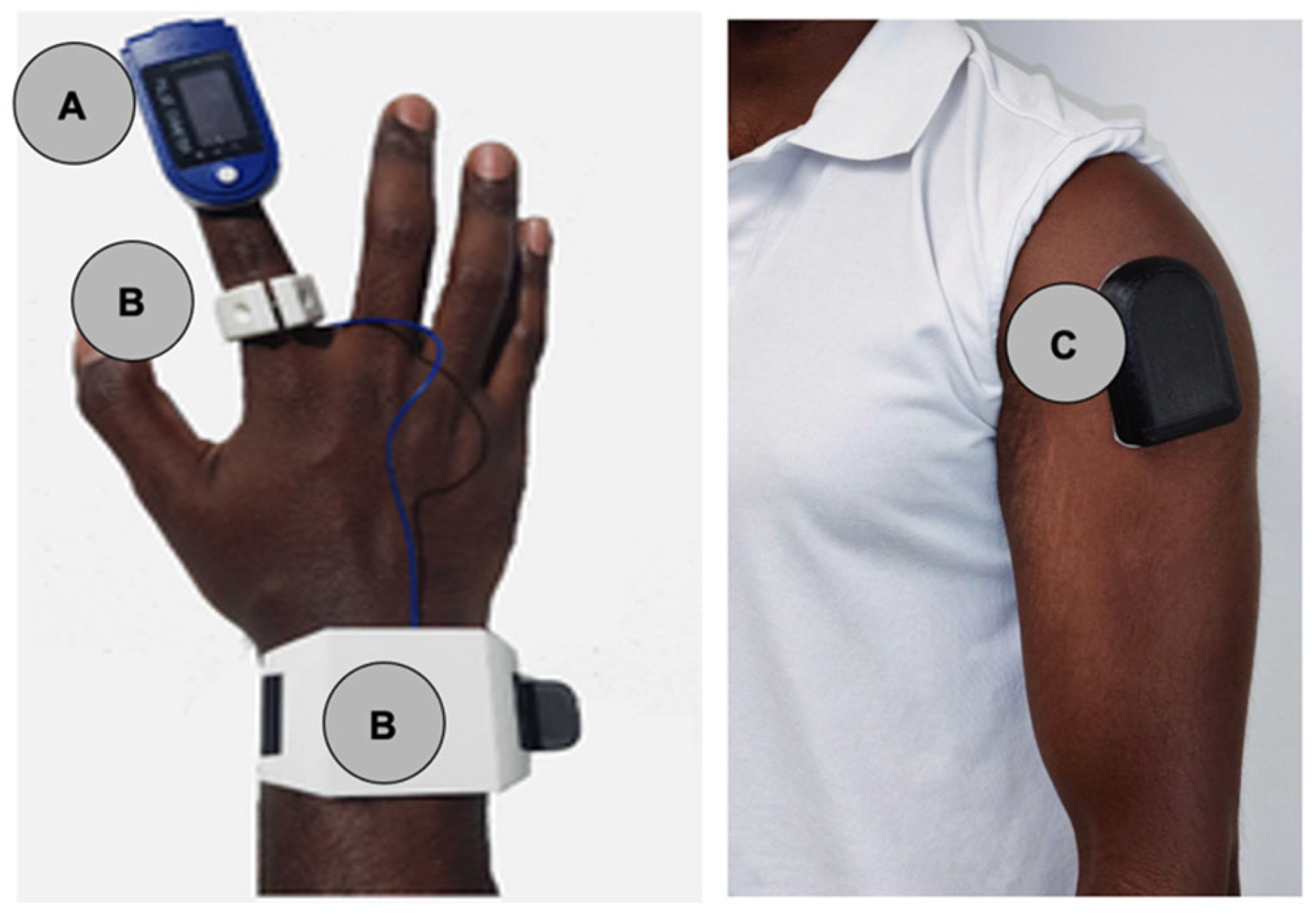
Patients wore a standard pulse oximeter EMO-80 Sleep Oxygen Monitor, (EMAY Hong Kong, China, Figure 1A) and two prototype biosensors: Prototype-ring (Figure 1B) and Prototype-shoulder (Figure 1C). Prototype-ring (Figure 1B) consisted of a ring worn on the index finger to assess oxygen saturation as well as a wristband containing a battery and data storage hardware. Prototype-shoulder (Figure 1C) was an adhesive armband worn over the deltoid. Prototype-shoulder was designated the primary investigational device for performance and agreement analyses; Prototype-ring was included for exploratory comparison and user perception assessment.
We assessed the prototypes based on comfort via a 5-point Likert scale and an open-ended qualitative questionnaire. In addition, we compared the calculated SpO2 of Prototype-shoulder to the FDA-approved fingertip sensor as per the FDA guidelines for pulse oximeters [17]. We also evaluated independent patient-level variables including demographics and participant BMI. Differences in mean results were assessed with a two-sided t-test with alpha 0.05.
The Prototype-shoulder device employs reflective optical spectroscopy to non-invasively gather photoplethysmography (PPG) data directly from the skin of the upper arm. We computed the conventional ratio-of-ratios (ratio of modulation) RSpO2 from the red/IR AC and DC components and included it as an input feature to the ML model. Then the model was trained on the entire dataset using a 70-15-15 split (train–test–validate) using SpO2 labels from the commercial finger pulse oximeter. The dual-channel optical sensor employs red and infrared (IR) LEDs with wavelengths of 660 nm and 880 nm, respectively, to interrogate dermal and subdermal vascular beds over the deltoid region. PPG signals were sampled at 25 Hz and stored locally for offline processing. The device enclosure was designed to minimize ambient light interference while maintaining patient comfort during sleep. The raw PPG and motion data were preprocessed using a Chebyshev Type II bandpass filter to mitigate noise; it operates between 0.5 Hz and 3 Hz for SpO2 and pulse rate monitoring. We trained the model using an 80-20 train–test split on a 5-fold cross validation. We then tested the R2 score, mean absolute error, and standard deviation of the mean absolute error to ensure the model was not overfitted. No adjustments were made for known confounders such as skin tone, positioning, or sleep stage.
Specifically, we textually summarize the downsampling pipeline as follows: Raw data were preprocessed for smoothness, calculating the relative magnitude of motion (Rmotion = x a x i s 2 + y a x i s 2 + z a x i s 2 ) and removing values for which 0.8 < Rmotion < 1.2. Processed data was filtered to have values only between SpO2 99 and 88% as these were the values of interest (with anything below 88% being a clinical event). Each SpO2 value was binned to identify the lowest SpO2 bin count, based on which all SpO2 values were randomly decreased. This ensured a uniform distribution and decreasing bias when training the model. Using the new downsampled uniform distribution, we passed it through our model using an 80-20 train–test split on a 5-fold cross-validation. Overall, 5 models were generated and 20% of data was used as the test data. Based on the R2 score, mean absolute error, and standard deviation of the MAE, the model did not overfit or underfit. It was trained following all the standard practices for a 5-fold cross-validation.

3. Results

Study Participants

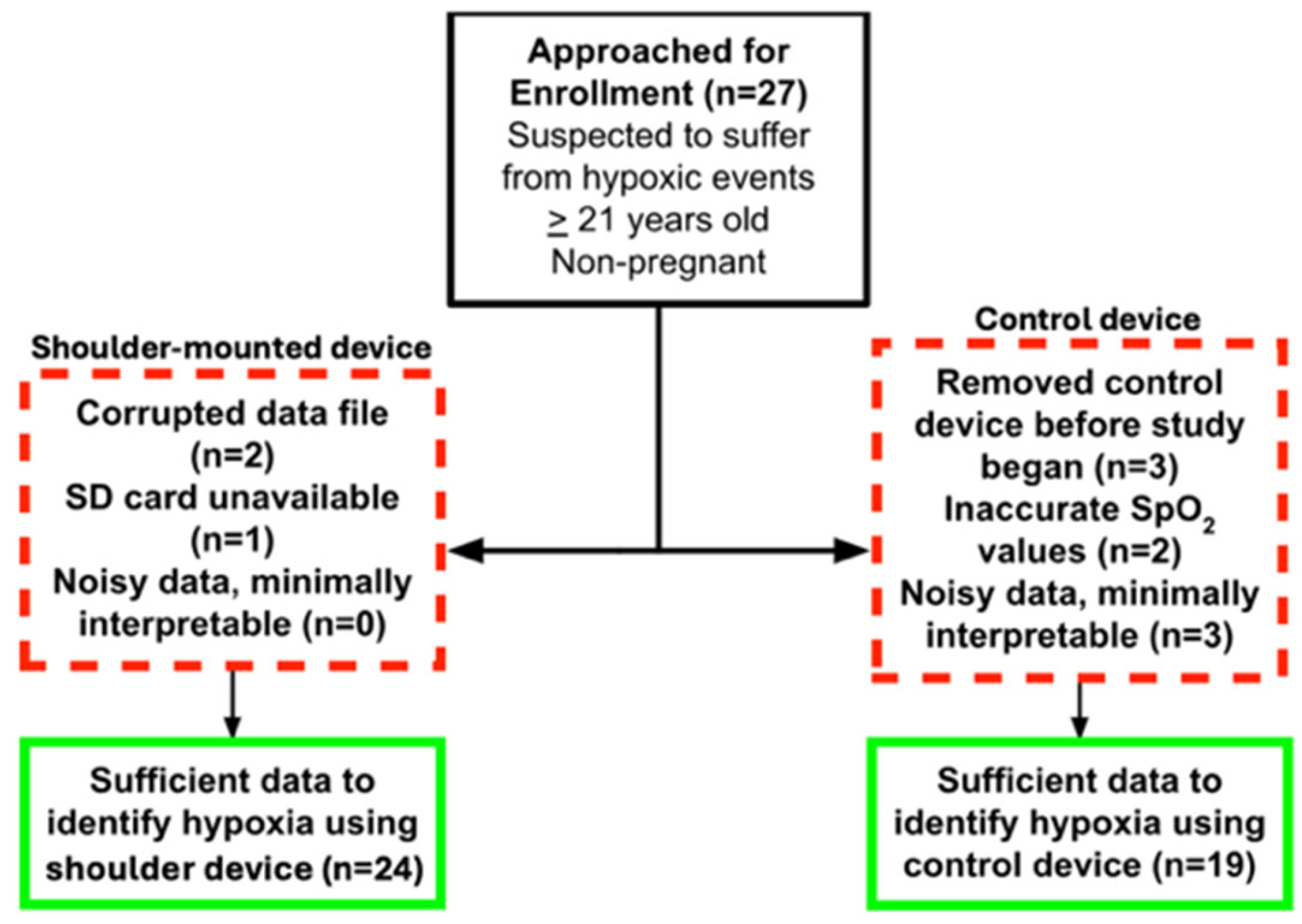
Participant demographic information is described in Table 1. The patients sampled were majority white (57.1%) and male (58.3%). Participants had a median BMI of 28.5 (IQR 26.5–35.1). A consort diagram is shown in Figure 2. Data from the shoulder was unusable for three patients due to corrupted data files (two) and SD card unavailability (one). The FDA-cleared control device had eight patients with unusable data. All patients with interpretable finger pulse oximetry data had interpretable shoulder-mounted data.
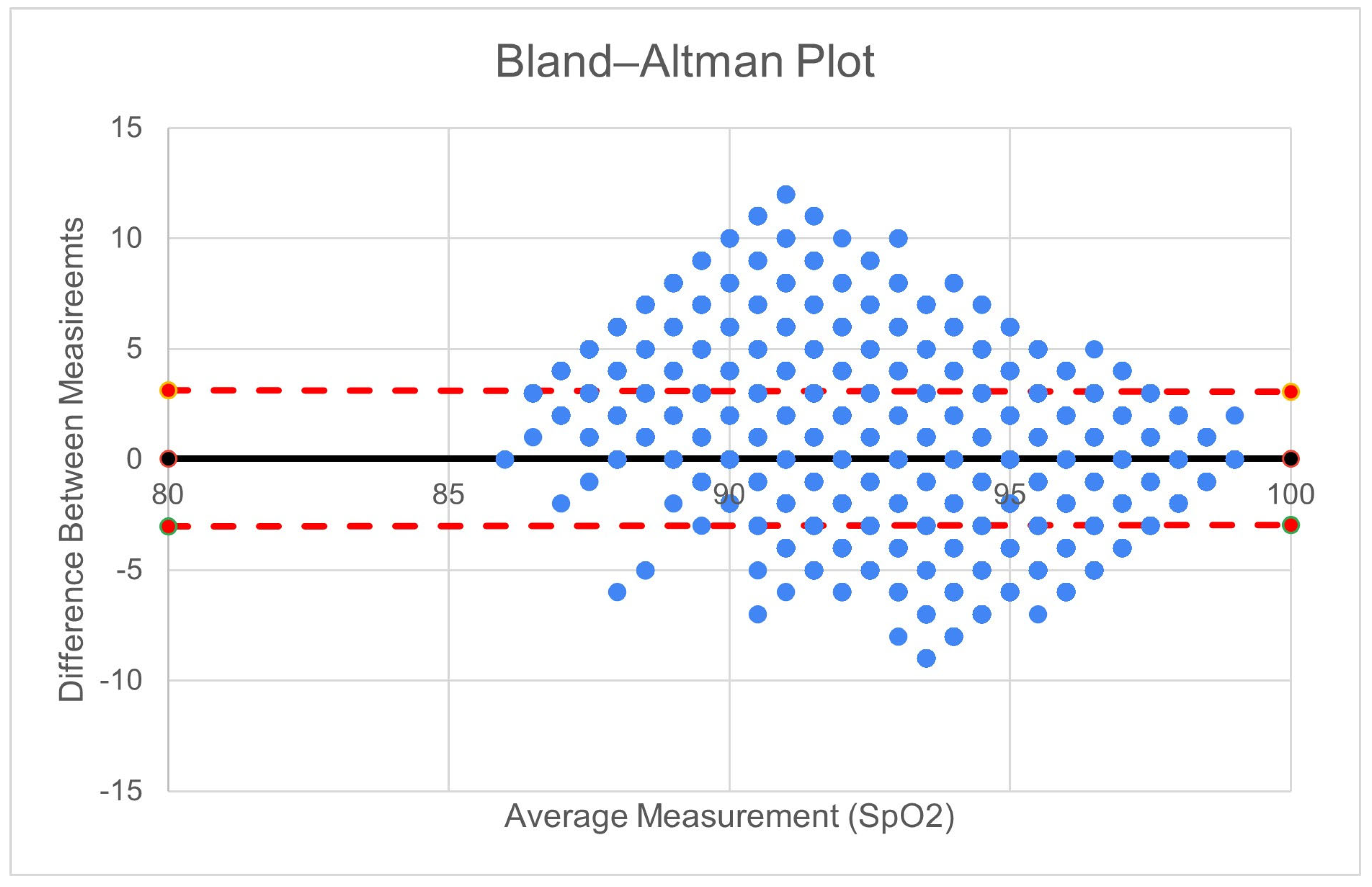
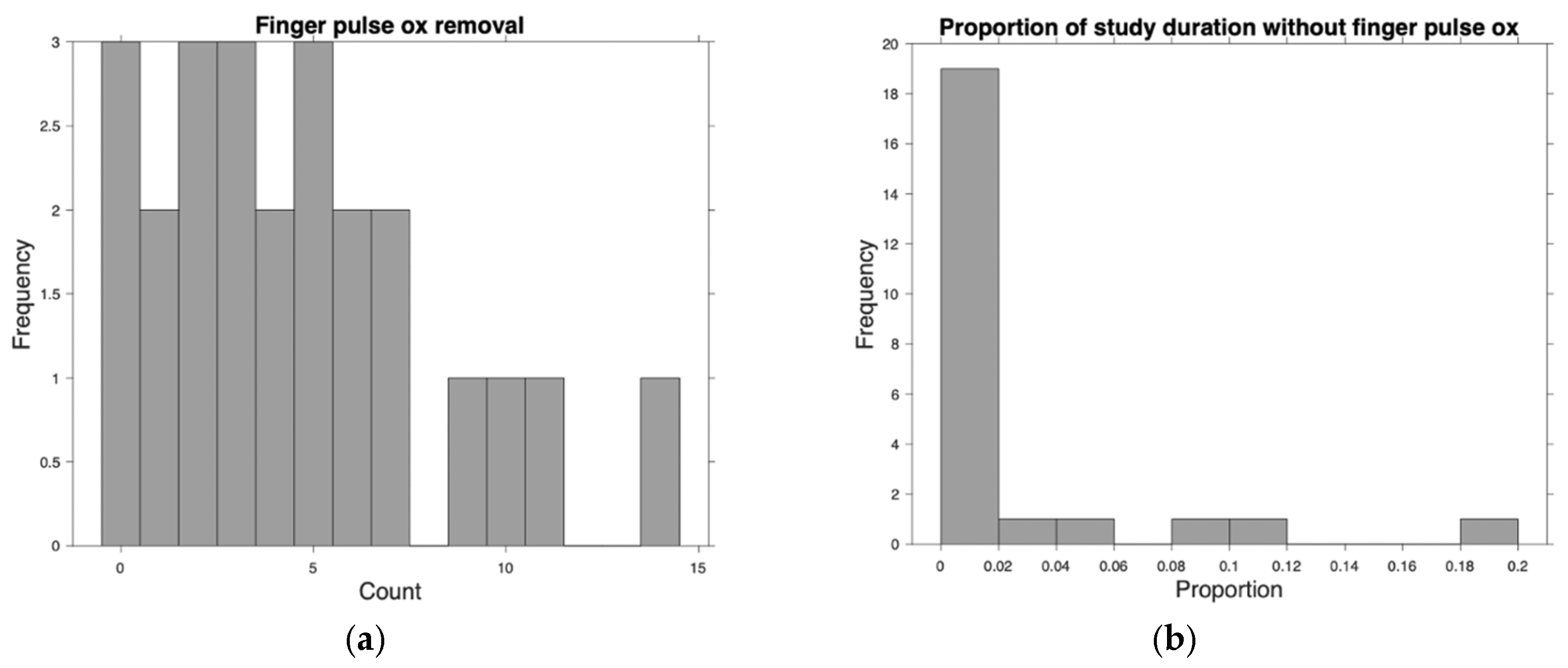
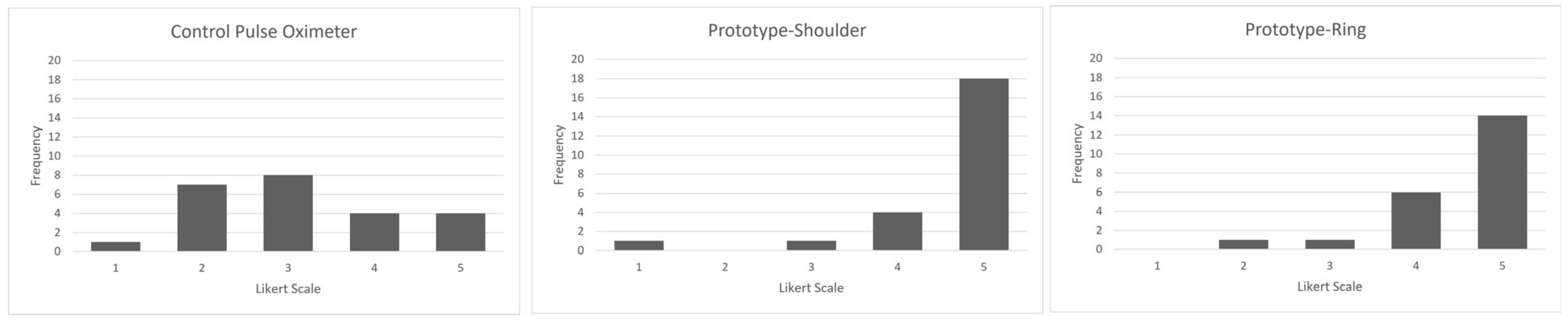
Agreement among the 354,002 measurements made on 19 patients with data from both devices is shown in Figure 3. The Prototype-shoulder pulse oximeter had a 0.72% mean absolute error from the control values of the commercial finger-based pulse oximeter. Participants removed the prototype 0 times and the control device a mean 4.6 (sd 3.7) times (Figure 4a)—the time removed is shown in Figure 4b. The five-point Likert scale feedback on comfort showed a mean rating of 4.6 for the shoulder, 4.5 for the ring, and 3.1 for the finger-mounted control (Figure 5). Both the shoulder and ring were rated higher than the control device (p < 0.01).
Themes were identified in open-ended questions regarding the comfort or fit of the study-provided devices: Many participants reported that their control devices fell off either before falling asleep or during the night. One participant noted that the finger-based “commercial device came off a few times before sleeping” which caused “restless sleep”. Several participants also noted that the control devices either fell off or were purposefully removed throughout the night. Participants cited irritation, fit, and using the restroom as reasons for control device removal. One person noted that the wristband portion of the Prototype-ring fell off in the middle of the night. None complained of comfort worsened by the shoulder-mounted device. Several participants complained that one or multiple devices disrupted their sleep. These devices included the Prototype-ring and commercial pulse oximeter. Tightness of fit was the most commonly problematic factor among these devices. One participant specifically cited the plastic shell that encased the data hardware of Prototype-ring as causing pain. Other participants removed the control device due to discomfort of a “burning sensation” or complaints that the device “was getting hot.” There was only one participant who specifically commented on Prototype-shoulder. This person stated that they slept on their side but there was “not much movement [to the device] while sleeping.”

4. Discussion

This study demonstrated that a shoulder-based investigational SpO2 monitor prototype was described as superior in comfort to a traditional commercial finger pulse oximeter. The open-ended questionnaire revealed that this stemmed from issues with security to the finger, fit, and temperature. Additionally, both shoulder-based and ring devices measured SpO2 with fewer interruptions to continuous monitoring than a traditional commercial finger pulse oximeter. Participants reported the accidental or purposeful removal of the commercial device both before and during their sleep studies, as well as interference with sleep from the control and ring devices. By contrast, the shoulder prototype did not produce the same reports. Additionally, the pulse oximetry performance of the shoulder-mounted device demonstrated acceptable agreement in this feasibility cohort. Collectively, these results support the concept that a shoulder-mounted pulse oximeter is a viable and potentially preferable configuration for SpO2 monitoring in patients receiving polysomnagraphy.
Shoulder-mounted pulse oximetry is also pertinent as an alternative to current finger-based wearables because it offers the opportunity to combine SpO2 monitoring with additional features, such as accelerometry, to detect apneic motion [4,12,15]. These applications are important for people with sleep-disordered breathing at the highest risk of respiratory compromise [13,18]. This study demonstrates that shoulder-mounted pulse oximeters may be more comfortable and less disruptive than traditional finger-based pulse oximetry. This could also be used to improve the overall accuracy of the device (see Supplemental Figure S1) in order to identify when motion artifacts are affecting sensitivity or specificity.
There were multiple limitations to this pilot. Firstly, the control pulse oximeter is an imperfect gold standard as its accuracy may be limited. Secondly, most participants did not provide constructive qualitative feedback for all study-provided devices, so it is difficult to evaluate the characteristics that drove improvements in Likert scale score. Additionally, we did not collect sufficient data to correlate data quality with the participants’ sleep position. While participants were able to recollect the removal and/or repositioning of the study-provided devices, the accuracy of their subjective reports is limited in the absence of a real-time record of behavior from the center’s technicians. Formal PPG signal quality indices, such as those proposed by Elgendi, were not applied in this pilot study [19]. Future work will incorporate established signal quality indices to enable the standardized assessment of signal robustness across anatomical sites. Finally, this study was not powered or designed to assess meaningful clinical outcomes, nor for generalizability to more ill populations.

5. Conclusions

Overall, this study confirms that alternative configurations for SpO2 monitoring offer potential as accurate and well-tolerated devices. Problems with traditional pulse oximetry, such as false readings of hypoxia due to device removal or noisy data, were encountered less frequently in Prototype-shoulder than in the commercial finger-based device. Users not only tolerated the shoulder-based form factor but also preferred this configuration relative to the traditional finger pulse oximeter.

Supplementary Materials

The following supporting information can be downloaded at: https://www.mdpi.com/article/10.3390/s26041276/s1, Figure S1: Sample of motion vs SpO2 over time.

Author Contributions

Conceptualization, K.N.K., J.S.B., C.M.B. and A.L.; methodology, J.S.B., C.M.B. and I.G.; software, A.L.; validation, A.L., O.O. and J.S.B.; formal analysis, K.N.K. and C.M.B.; investigation, A.W., D.G., A.S., A.L. and I.G.; resources, J.S.B. and I.G.; data curation, A.L.; writing—original draft preparation, K.N.K.; writing—review and editing, C.M.B., O.O., I.G., D.G. and J.S.B.; visualization, K.N.K.; supervision, J.S.B. and C.M.B.; project administration, A.W. and K.N.K.; funding acquisition, J.S.B. and O.O. All authors have read and agreed to the published version of the manuscript.

Funding

This research was funded by the Coulter-Drexel Translational Research Partnership program and the National Institute on Drug Abuse (NIDA R41DA056276).

Institutional Review Board Statement

The study protocol was approved by the University of Pennsylvania IRB and performed in compliance with relevant laws and institutional guidelines.

Informed Consent Statement

Informed consent was obtained from all subjects involved in this study.

Data Availability Statement

Anonymized analyzed datasets are available on request.

Acknowledgments

We would like to acknowledge Alexis Roth for her work on synchronous projects and patience with our team.

Conflicts of Interest

Cameron Baston receives consulting fees from Fujifilm/Sonosite. The other authors declare no conflicts of interest. The funders had no role in the design of the study; in the collection, analyses, or interpretation of data; in the writing of the manuscript; or in the decision to publish the results.

Abbreviation

The following abbreviation is used in this manuscript:
SpO2Peripheral Saturation of Oxygen

References

  1. Alberto, R.; Draicchio, F.; Varrecchia, T.; Silvetti, A.; Iavicoli, S. Wearable Monitoring Devices for Biomechanical Risk Assessment at Work: Current Status and Future Challenges-A Systematic Review. Int. J. Environ. Res. Public Health 2018, 15, 2001. [Google Scholar] [CrossRef]
  2. Kulkarni, M.B.; Rajagopal, S.; Prieto-Simón, B.; Pogue, B.W. Recent advances in smart wearable sensors for continuous human health monitoring. Talanta 2024, 272, 125817. [Google Scholar] [CrossRef] [PubMed]
  3. Khanna, A.K.; Banga, A.; Rigdon, J.; White, B.N.; Cuvillier, C.; Ferraz, J.; Olsen, F.; Hackett, L.; Bansal, V.; Kaw, R. Role of continuous pulse oximetry and capnography monitoring in the prevention of postoperative respiratory failure, postoperative opioid-induced respiratory depression and adverse outcomes on hospital wards: A systematic review and meta-analysis. J. Clin. Anesth. 2024, 94, 111374. [Google Scholar] [CrossRef] [PubMed]
  4. Oteo, A.; Daneshvar, H.; Baldacchino, A.; Matheson, C. Overdose Alert and Response Technologies: State-of-the-art Review. J. Med. Internet Res. 2023, 25, e40389. [Google Scholar] [CrossRef] [PubMed]
  5. Kapur, V.K.; Auckley, D.H.; Chowdhuri, S.; Kuhlmann, D.C.; Mehra, R.; Ramar, K.; Harrod, C.G. Clinical Practice Guideline for Diagnostic Testing for Adult Obstructive Sleep Apnea: An American Academy of Sleep Medicine Clinical Practice Guideline. J. Clin. Sleep Med. 2017, 13, 479–504. [Google Scholar] [CrossRef] [PubMed]
  6. Dcosta, J.V.; Ochoa, D.; Sanaur, S. Recent Progress in Flexible and Wearable All Organic Photoplethysmography Sensors for SpO2 Monitoring. Adv. Sci. 2023, 10, e2302752. [Google Scholar] [CrossRef] [PubMed]
  7. May, J.M.; Phillips, J.P.; Fitchat, T.; Ramaswamy, S.; Snidvongs, S.; Kyriacou, P.A. A Novel Photoplethysmography Sensor for Vital Signs Monitoring from the Human Trachea. Biosensors 2019, 9, 119. [Google Scholar] [CrossRef] [PubMed]
  8. Reich, J.D.; Connolly, B.; Bradley, G.; Littman, S.; Koeppel, W.; Lewycky, P.; Liske, M. Reliability of a single pulse oximetry reading as a screening test for congenital heart disease in otherwise asymptomatic newborn infants: The importance of human factors. Pediatr. Cardiol. 2008, 29, 371–376. [Google Scholar] [CrossRef] [PubMed]
  9. Şenaylı, Y.A.; Keskin, G.; Akın, M.; Şenaylı, A.; Ata, R.; Demirtaş, G.; Şenel, E. A prospective study for an alternative probe site for pulse oximetry measurement in male patients with severe burn trauma: Penile shaf. Turk. J. Med. Sci. 2023, 53, 504–510. [Google Scholar] [CrossRef] [PubMed]
  10. Masimo. Opioid HaloTM Opioid Overdose Prevention & Alert System. 2023. Available online: https://www.mymasimo.com/products/opioid-halo/ (accessed on 2 February 2026).
  11. Jubran, A. Pulse oximetry. Crit. Care 2015, 19, 272. [Google Scholar] [CrossRef] [PubMed]
  12. Chan, J.; Iyer, V.; Wang, A.; Lyness, A.; Kooner, P.; Sunshine, J.; Gollakota, S. Closed-loop wearable naloxone injector system. Scientific Rep. 2021, 11, 22663. [Google Scholar] [CrossRef] [PubMed]
  13. Svider, P.F.; Pashkova, A.A.; Folbe, A.J.; Eloy, J.D.; Setzen, M.; Baredes, S.; Eloy, J.A. Obstructive sleep apnea: Strategies for minimizing liability and enhancing patient safety. Otolaryngol.—Head Neck Surg. 2013, 149, 947–953. [Google Scholar] [CrossRef] [PubMed]
  14. Imtiaz, M.S.; Bandoian, C.V.; Santoro, T.J. Hypoxia driven opioid targeted automated device for overdose rescue. Sci. Rep. 2021, 11, 24513. [Google Scholar] [CrossRef] [PubMed]
  15. Kanter, K.; Gallagher, R.; Eweje, F.; Lee, A.; Gordon, D.; Landy, S.; Gasior, J.; Soto-Calderon, H.; Cronholm, P.F.; Cocchiaro, B.; et al. Willingness to use a wearable device capable of detecting and reversing overdose among people who use opioids in Philadelphia. Harm Reduct. J. 2021, 18, 75. [Google Scholar] [CrossRef] [PubMed]
  16. Lingamoorthy, A.; Watson, A.; Donlon, E.; Weimer, J.; Brenner, J.S. DOVE: Noninvasive Shoulder-based Opioid Overdose Detection Device. In Proceedings of the 2022 IEEE/ACM Conference on Connected Health: Applications, Systems and Engineering Technologies (CHASE), Arlington, VA, USA, 17–19 November 2022; IEEE: Piscataway, NJ, USA, 2022; pp. 182–183. [Google Scholar]
  17. FDA Executive Summary: Performance Evaluation of Pulse Oximeters Taking into Consideration Skin Pigmentation, Race, and Ethnicity; Anesthesiology and Respiratory Therapy Devices Panel of Medical Devices Advisory Committee: Silver Spring, MD, USA, 2024. Available online: https://www.fda.gov/media/175828/download (accessed on 30 December 2024).
  18. Fouladpour, N.; Jesudoss, R.; Bolden, N.; Shaman, Z.; Auckley, D. Perioperative Complications in Obstructive Sleep Apnea Patients Undergoing Surgery: A Review of the Legal Literature. Anesth. Analg. 2016, 122, 145–151. [Google Scholar] [CrossRef] [PubMed]
  19. Elgendi, M. Optimal signal quality index for photoplethysmogram signals. Bioengineering 2016, 3, 21. [Google Scholar] [CrossRef] [PubMed]
Figure 1. (A) Commercial pulse oximeter control; (B) Prototype-ring configuration; (C) Prototype-shoulder configuration.
Sensors 26 01276 g001
Figure 2. Proportion of devices with sufficient data to identify hypoxia. Red dashed boxes demonstrate patients lost from hypoxia detection analysis.
Sensors 26 01276 g002
Figure 3. Bland–Altman plot showing agreement between the commercial pulse oximeter to measured SpO2 with Prototype-shoulder for 354,002 measurements. Red dashed lines indicate 95% confidence intervals of agreement.
Sensors 26 01276 g003
Figure 4. (a) Number of commercial pulse oximeter removals. (b) Proportion of study duration during which the finger pulse oximeter was removed.
Sensors 26 01276 g004
Figure 5. Quantitative Likert scale feedback regarding the comfort of the study-provided devices: 1 is very uncomfortable, 5 is very comfortable.
Sensors 26 01276 g005
Table 1. Patient demographic information for the 27 recruited patients.
Age [median (IQR)]55 (38.5–69.5)
Male (%)58.3
Race (%)
White59.3
Black29.6
Asian7.4
   Native Indian/Native Hawaiian/Other0
BMI [median (IQR)]28.5 (26.5, 35.1)
Disclaimer/Publisher’s Note: The statements, opinions and data contained in all publications are solely those of the individual author(s) and contributor(s) and not of MDPI and/or the editor(s). MDPI and/or the editor(s) disclaim responsibility for any injury to people or property resulting from any ideas, methods, instructions or products referred to in the content.