A Wearable-Based Program to Optimise Stress Regulation, Resilience, and Wellbeing in Emergency Care Settings: A Proof-of-Concept Study Protocol

 , , , ,
  , , ,
, , ,
Abstract
1. Introduction
Study Objectives
- (1)
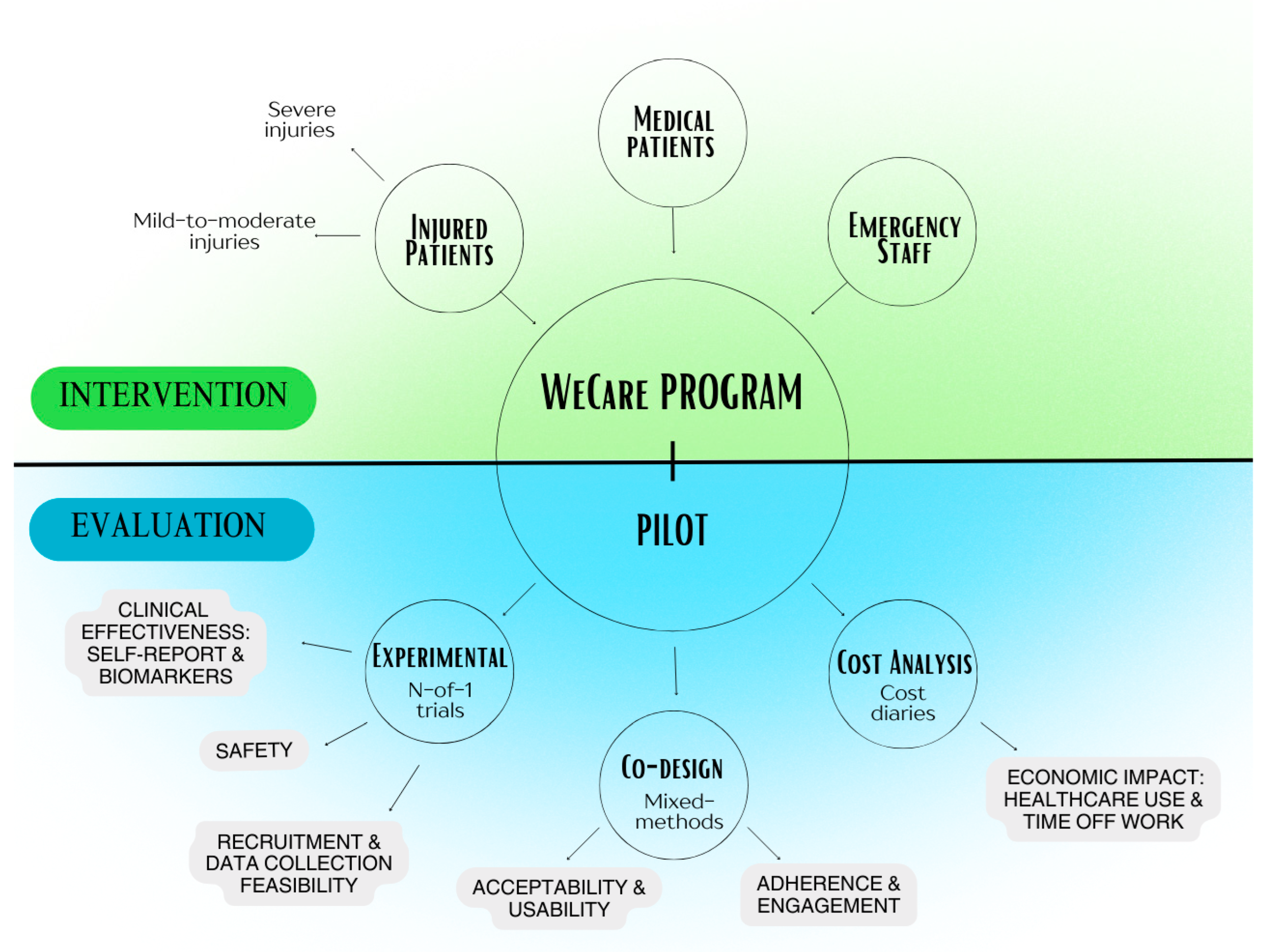
- Feasibility (practicality of study methods): Assessing the practicality of recruitment and data collection, adherence/engagement to the program, fidelity of program delivery and use, and program safety.
- (2)
- Acceptability and usability: Exploring user experience with the program and devices, including perceived benefits, challenges, and suggestions for improvement.
- (3)
- Preliminary clinical effectiveness: Evaluating changes in psychological health and wellbeing using self-reported outcomes (e.g., stress, mood, and anxiety) and physiological markers (e.g., HRV, sleep quality, and circadian rhythm).
- (4)
- Preliminary economic impact: Estimating the potential cost benefits/savings of WeCare as an early intervention for vulnerable ED populations.
2. Materials and Methods
2.1. Participants and Setting
- Sample 1: Patients presenting to the ED with mild-to-moderate injuries (Injury Severity Score, ISS < 15).
- Sample 2: Patients presenting to the ED with severe injuries (ISS ≥ 15).
- Sample 3: Patients presenting to the ED with acute non-traumatic, minor-to-moderate medical complaints (Australasian Triage Scale, ATS category 3–5 = less urgent).
- Sample 4: Emergency healthcare workers exposed to workplace stress.
2.2. Design Overview
2.2.1. Experimental Component
- Sample 2: More severely injured participants (ISS ≥ 15).
- Sample 3: Non-injured patients with acute stress from medical events.
- Sample 4: Health workers from the ED exposed to workplace stress.
2.2.2. Co-Design Component
2.2.3. Cost Analysis Component
2.3. Eligibility Criteria
2.4. Recruitment, Enrolment, and Randomisation
2.5. Intervention: WeCare Program
2.5.1. Wearable Integration and Personalised Data-Driven Feedback
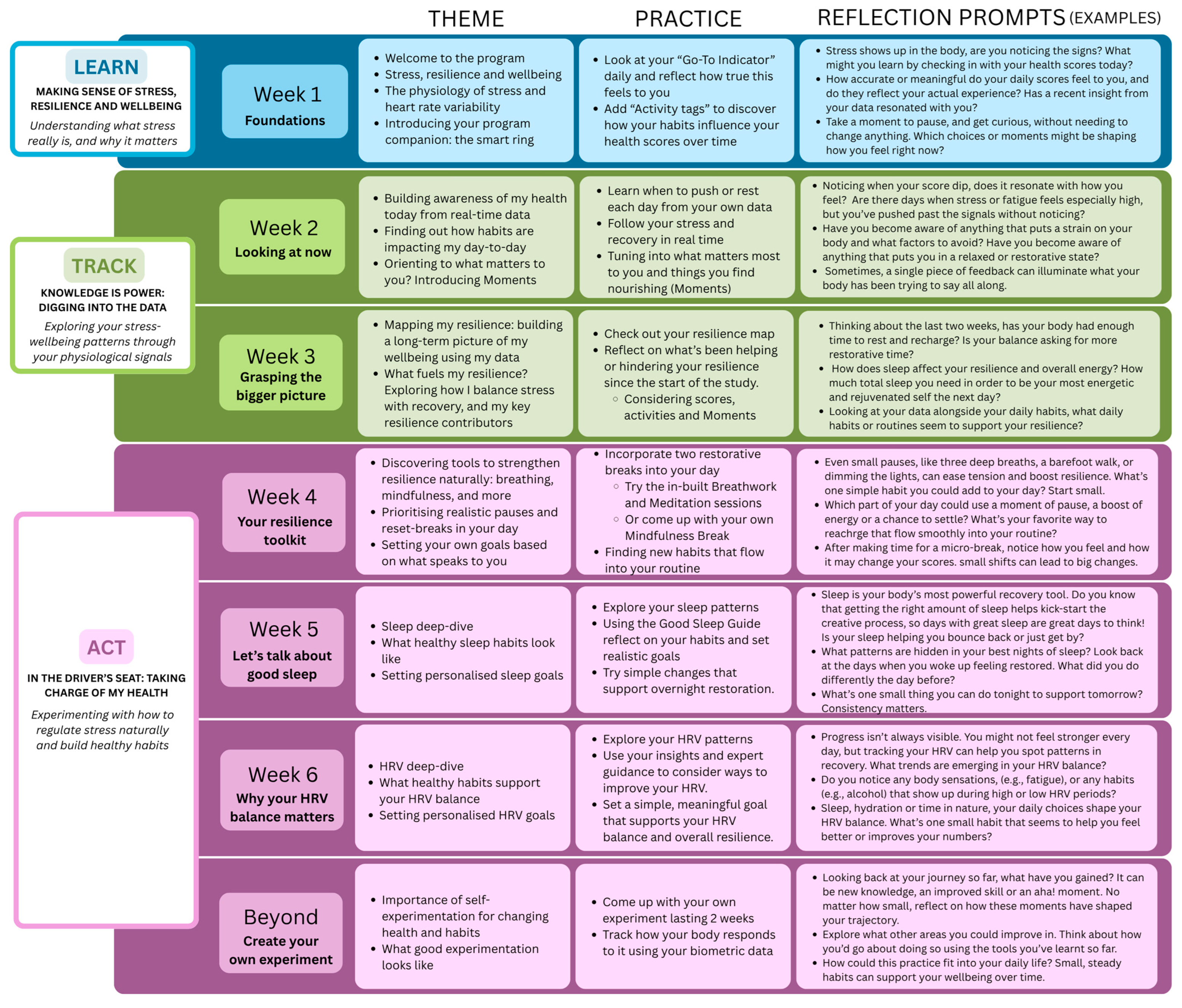
2.5.2. Program Framework: The “Learn–Track–Act” Paradigm
- Learn: Participants engage with digital psychoeducational content on stress, wellbeing, and self-regulation strategies via factsheets, videos, and real-life stories.
- Track: Participants monitor their daily physiological data, observe trends over time, and see how their activities influence key biometrics and how they feel, using the wearable-based app.
- Act: Participants receive personalised feedback via the app and expert guidance based on their data and engage in evidence-based self-regulation practices (e.g., lifestyle adjustments, paced breathing, and mindfulness) to support stress management and recovery.
2.5.3. Program Structure
- (1)
- Making sense of stress and wellbeing (Week 1)
- (2)
- Knowledge is power: digging into the data (Weeks 2–3)
- (3)
- In the driver’s seat: taking charge of my health (Weeks 4–6, and beyond)
2.5.4. Weekly Insights and Daily Practice Guidance
- Weekly thematic insights: Each week, participants are provided with evidence-based content aligned with the program’s focus. This includes short readings, video resources, e-learning links, and lived-experience stories. Weekly modules also offer practical guidance to support daily wellbeing practices and activities such as journaling, breathwork, mindfulness, and lifestyle modifications.
- Daily reflection prompts: To encourage engagement and deepen learning, participants receive structured prompts that support reflection on personal experiences, habits, and progress. These prompts aim to foster self-awareness and active participation in the program and behaviour change.
2.5.5. Human and AI-Based Support
2.6. Outcome Measures and Data Collection
2.6.1. Feasibility Outcomes
2.6.2. Clinical Effectiveness
- (a)
- Pre-baseline measures
- (b)
- Primary outcome measures
- Clinical self-report outcomes:
- Psychological distress: Daily ratings of 24 h average distress measured with the 1-item Subjective Units of Distress Scale (SUDS), ranging from 0 (no distress) to 100 (extreme distress) [69], plus ecological momentary assessments every 2 h for 4 days only (2 during baseline and 2 during intervention).
- Sleep quality: Measured each morning using a single-item scale from 0 (worst) to 10 (best), aligned with self-reported wake times to minimise recall bias.
- Psychophysiological outcomes: Continuously recorded via a smartwatch using photoplethysmography and an accelerometer. Adherence and data completeness will be monitored via app analytics and automated tracking tools.
- Heart rate variability (HRV) metrics: Reflects autonomic nervous system (ANS) activity. Higher parasympathetic (vagal) tone indicates improved regulation, whereas low HRV is associated with mental health risk [37,38,39]. HRV Root Mean Square of Successive Differences (HRV-rMSSD) and other time-, frequency-, and nonlinear-domain and composite metrics will be extracted from beat-to-beat intervals, especially during overnight monitoring.
- Sleep parameters: Includes sleep duration, bedtime, sleep onset latency, nocturnal heart rate, wake-up time, and sleep-related temperature deviation (if available).
- (c)
- Generalisation measures
- Clinical self-report outcomes:
- Mental health:
- Sleep quality: Pittsburgh Sleep Quality Index (PSQI) [74].
- Consumer perception of change: A 15-point Global Impression of Change Scale (−7 to +7).
- Overall health status: EQ-5D visual analogue scale (0–100).
- Psychophysiological outcomes: Continuously monitored via a smartwatch, including heart rate, respiratory rate, blood oxygen saturation (SpO2), activity metrics (e.g., steps, movement, calories, and circadian rhythm), and daily health summary metrics related to stress and daytime and night-time recovery.
2.6.3. Acceptability and Usability
- Quantitative methods: Questionnaires or visual analogue rating scales aligned with TFA constructs will assess anticipated acceptability among potential deliverers and recipients.
- Qualitative methods: Semi-structured interviews or focus groups, guided by the seven TFA constructs, will explore participants’ and stakeholders’ lived experiences of the intervention. These qualitative methods will offer in-depth insights into barriers, facilitators, and contextual factors influencing engagement, adherence, and perceived value, factors often not captured through quantitative means alone.
2.6.4. Cost Benefits
2.7. Sample Size
2.8. Data Analysis and Reporting
2.9. Study Approvals
3. Discussion
Strengths and Limitations
4. Conclusions
Author Contributions
Funding
Institutional Review Board Statement
Informed Consent Statement
Data Availability Statement
Conflicts of Interest
Abbreviations
| ANS | Autonomic nervous system |
| ATS | Australasian Triage Scale |
| ED | Emergency Department |
| GAD-7 | Generalised Anxiety Disorder Scale |
| HRV | Heart rate variability |
| ICU | Intensive Care Unit |
| ISS | Injury Severity Score |
| PCL-5 | PTSD Checklist for DSM-5 |
| PHQ-9 | Patient Health Questionnaire-9 |
| PSS | Perceived Stress Scale |
| PTSD | Post-traumatic stress disorder |
| PSI | Psychosocial Index |
| PSQI | Pittsburgh Sleep Quality Index |
| rMSSD | Root Mean Square of Successive Differences |
| RNSH | Royal North Shore Hospital |
| RoBiNT | Risk of Bias in N-of-1 Trials |
| SUDS | Subjective Units of Distress Scale |
| TFA | Theoretical Framework of Acceptability |
References
- Pilet, C.; Tandzi-Tonleu, F.; Lagarde, E.; Gil-Jardiné, C.; Galinski, M.; Lafont, S. Feelings of Patients Admitted to the Emergency Department. Healthcare 2025, 13, 500. [Google Scholar] [CrossRef]
- DeGennaro, A.P.; Gonzalez, N.; Peterson, S.; Gleason, K.T. How do patients and care partners describe diagnostic uncertainty in an emergency department or urgent care setting? Diagnosis 2024, 11, 97–101. [Google Scholar] [CrossRef]
- Gómez-Urquiza, J.L.; De la Fuente-Solana, E.I.; Albendín-García, L.; Vargas-Pecino, C.; Ortega-Campos, E.M.; Cañadas-De la Fuente, G.A. Prevalence of Burnout Syndrome in Emergency Nurses: A Meta-Analysis. Crit. Care Nurse 2017, 37, e1–e9. [Google Scholar] [CrossRef] [PubMed]
- Moukarzel, A.; Michelet, P.; Durand, A.-C.; Sebbane, M.; Bourgeois, S.; Markarian, T.; Bompard, C.; Gentile, S. Burnout Syndrome among Emergency Department Staff: Prevalence and Associated Factors. BioMed Res. Int. 2019, 2019, 6462472. [Google Scholar] [CrossRef] [PubMed]
- García-Tudela, Á.; Simonelli-Muñoz, A.J.; Rivera-Caravaca, J.M.; Fortea, M.I.; Simón-Sánchez, L.; González-Moro, M.T.R.; González-Moro, J.M.R.; Jiménez-Rodríguez, D.; Gallego-Gómez, J.I. Stress in Emergency Healthcare Professionals: The Stress Factors and Manifestations Scale. Int. J. Environ. Res. Public Health 2022, 19, 4342. [Google Scholar] [CrossRef] [PubMed]
- Basu, S.; Qayyum, H.; Mason, S. Occupational stress in the ED: A systematic literature review. Emerg. Med. J. 2017, 34, 441–447. [Google Scholar] [CrossRef]
- Wong, M.L.; Sanchez, L.D.; Peters, G.A. Emergency Medicine Residents Experience Acute Stress While Working in the Emergency Department. West. J. Emerg. Med. 2021, 22, 801. [Google Scholar] [CrossRef] [PubMed]
- Schneiderman, N.; Ironson, G.; Siegel, S.D. Stress and health: Psychological, behavioral, and biological determinants. Annu. Rev. Clin. Psychol. 2005, 1, 607–628. [Google Scholar] [CrossRef]
- Pozzato, I.; Craig, A.; Gopinath, B.; Kifley, A.; Tran, Y.; Jagnoor, J.; Cameron, I.D. Outcomes after traffic injury: Mental health comorbidity and relationship with pain interference. BMC Psychiatry 2020, 20, 189. [Google Scholar] [CrossRef]
- Kenardy, J.A.; Heron-Delaney, M.; Warren, J.; Brown, E. The effect of mental health on long-term health-related quality of life following a road traffic crash: Results from the UQ SuPPORT study. Injury 2015, 46, 883–890. [Google Scholar] [CrossRef]
- Pozzato, I.; Tran, Y.; Gopinath, B.; Cameron, I.D.; Craig, A. The importance of self-regulation and mental health for effective recovery after traffic injuries: A comprehensive network analysis approach. J. Psychosom. Res. 2024, 177, 111560. [Google Scholar] [CrossRef] [PubMed]
- McCraty, R.; Zayas, M.A. Cardiac coherence, self-regulation, autonomic stability, and psychosocial well-being. Front. Psychol. 2014, 5, 1090. [Google Scholar] [CrossRef] [PubMed]
- World Health Organisation. Mental Health; World Health Organisation: Geneva, Switzerland, 2022; Available online: https://www.who.int/news-room/fact-sheets/detail/mental-health-strengthening-our-response (accessed on 15 October 2025).
- Osório, C.; Probert, T.; Jones, E.; Young, A.H.; Robbins, I. Adapting to stress: Understanding the neurobiology of resilience. Behav. Med. 2017, 43, 307–322. [Google Scholar] [CrossRef]
- Haagsma, J.A.; Graetz, N.; Bolliger, I.; Naghavi, M.; Higashi, H.; Mullany, E.C.; Abera, S.F.; Abraham, J.P.; Adofo, K.; Alsharif, U.; et al. The global burden of injury: Incidence, mortality, disability-adjusted life years and time trends from the Global Burden of Disease study 2013. Inj. Prev. 2016, 22, 3–18. [Google Scholar] [CrossRef]
- World Health Organisation. Global Status Report on Road Safety 2018; World Health Organisation: Geneva, Switzerland, 2019. [Google Scholar]
- Holmes, A.C.; O’Donnell, M.L.; Williamson, O.; Hogg, M.; Arnold, C. Persistent disability is a risk factor for late-onset mental disorder after serious injury. Aust. N. Z. J. Psychiatry 2014, 48, 1143–1149. [Google Scholar] [CrossRef]
- O’Donnell, M.L.; Varker, T.; Holmes, A.C.; Ellen, S.; Wade, D.; Creamer, M.; Silove, D.; McFarlane, A.; Bryant, R.A.; Forbes, D. Disability after injury: The cumulative burden of physical and mental health. J. Clin. Psychiatry 2013, 74, e137–e143. [Google Scholar] [CrossRef]
- Marasini, G.; Caleffi, F.; Machado, L.M.; Pereira, B.M. Psychological consequences of motor vehicle accidents: A systematic review. Transp. Res. Part. F Traffic Psychol. Behav. 2022, 89, 249–264. [Google Scholar] [CrossRef]
- Pozzato, I.; Tran, Y.; Gopinath, B.; Thuraisingham, R.A.; Cameron, I.D.; Craig, A. The role of stress reactivity and pre-injury psychosocial vulnerability to psychological and physical health immediately after traumatic injury. Psychoneuroendocrinology 2021, 127, 105190. [Google Scholar] [CrossRef] [PubMed]
- Sim, A.; McNeilage, A.G.; Gholamrezaei, A.; Rebbeck, T.; Ashton-James, C. Impact of healthcare interventions on distress following acute musculoskeletal/orthopaedic injury: A scoping review of systematic reviews. BMJ Open 2024, 14, e085778. [Google Scholar] [CrossRef]
- Craig, A.; Tran, Y.; Guest, R.; Gopinath, B.; Jagnoor, J.; Bryant, R.A.; Collie, A.; Tate, R.; Kenardy, J.; Middleton, J.W. Psychological impact of injuries sustained in motor vehicle crashes: Systematic review and meta-analysis. BMJ Open 2016, 6, e011993. [Google Scholar] [CrossRef]
- Papadakaki, M.; Ferraro, O.E.; Orsi, C.; Otte, D.; Tzamalouka, G.; Von-der-Geest, M.; Lajunen, T.; Özkan, T.; Morandi, A.; Sarris, M. Psychological distress and physical disability in patients sustaining severe injuries in road traffic crashes: Results from a one-year cohort study from three European countries. Injury 2017, 48, 297–306. [Google Scholar] [CrossRef]
- Fitzgerald, J.M.; Timmer-Murillo, S.; Sheeran, C.; Begg, H.; Christoph, M.; deRoon-Cassini, T.A.; Larson, C.L. Psychophysiological predictors of change in emotion dysregulation 6 months after traumatic injury. Int. J. Psychophysiol. 2022, 173, 29–37. [Google Scholar] [CrossRef] [PubMed]
- Ma, H.; Huang, S.Q.; We, B.; Zhong, Y. Compassion fatigue, burnout, compassion satisfaction and depression among emergency department physicians and nurses: A cross-sectional study. BMJ Open 2022, 12, e055941. [Google Scholar] [CrossRef] [PubMed]
- Caruso, C.C. Negative impacts of shiftwork and long work hours. Rehabil. Nurs. 2014, 39, 16–25. [Google Scholar] [CrossRef]
- Janicki, A.J.; Frisch, S.O.; Patterson, P.D.; Brown, A.; Frisch, A. Emergency Medicine Residents Experience Acute Stress While Working in the Emergency Department. West. J. Emerg. Med. 2020, 22, 94–100. [Google Scholar] [CrossRef] [PubMed]
- Duan, H.; Yuan, Y.; Zhang, L.; Qin, S.; Zhang, K.; Buchanan, T.W.; Wu, J. Chronic stress exposure decreases the cortisol awakening response in healthy young men. Stress 2013, 16, 630–637. [Google Scholar] [CrossRef]
- Mober, S.; Mohemmed, M.; Khrizi, R.; Dabaa, H.; Zayed, T.; Tayeb, H.; Bajaafer, N.; Kariri, F. The Impact of Shift Work on Nurses’ well-being and Patient Care Excellence in Inpatient Settings. Br. J. Nurs. 2024, 4, 95–105. [Google Scholar] [CrossRef]
- Crosswell, A.D.; Lockwood, K.G. Best practices for stress measurement: How to measure psychological stress in health research. Health Psychol. Open 2020, 7, 2055102920933072. [Google Scholar] [CrossRef]
- Hickie, I.B.; Crouse, J.J. Sleep and circadian rhythm disturbances: Plausible pathways to major mental disorders? World Psychiatry 2024, 23, 150–151. [Google Scholar] [CrossRef]
- Alvares, G.A.; Quintana, D.S.; Hickie, I.B.; Guastella, A.J. Autonomic nervous system dysfunction in psychiatric disorders and the impact of psychotropic medications: A systematic review and meta-analysis. J. Psychiatry Neurosci. 2016, 41, 89–104. [Google Scholar] [CrossRef]
- Doherty, A. Circadian rhythms and mental health: Wearable sensing at scale. Lancet Psychiatry 2018, 5, 457–458. [Google Scholar] [CrossRef] [PubMed]
- Schneider, M.; Schwerdtfeger, A. Autonomic dysfunction in posttraumatic stress disorder indexed by heart rate variability: A meta-analysis. Psychol. Med. 2020, 50, 1937–1948. [Google Scholar] [CrossRef] [PubMed]
- Ahmed, A.; Aziz, S.; Alzubaidi, M.; Schneider, J.; Irshaidat, S.; Abu Serhan, H.; Abd-Alrazaq, A.A.; Solaiman, B.; Househ, M. Wearable devices for anxiety & depression: A scoping review. Comput. Methods Programs Biomed. Update 2023, 3, 100095. [Google Scholar] [CrossRef]
- Kim, H.G.; Cheon, E.J.; Bai, D.S.; Lee, Y.H.; Koo, B.H. Stress and Heart Rate Variability: A Meta-Analysis and Review of the Literature. Psychiatry Investig. 2018, 15, 235–245. [Google Scholar] [CrossRef] [PubMed]
- Cheng, Y.C.; Su, M.I.; Liu, C.W.; Huang, Y.C.; Huang, W.L. Heart rate variability in patients with anxiety disorders: A systematic review and meta-analysis. Psychiatry Clin. Neurosci. 2022, 76, 292–302. [Google Scholar] [CrossRef]
- Schiweck, C.; Piette, D.; Berckmans, D.; Claes, S.; Vrieze, E. Heart rate and high frequency heart rate variability during stress as biomarker for clinical depression. A systematic review. Psychol. Med. 2019, 49, 200–211. [Google Scholar] [CrossRef]
- Thayer, J.F.; Åhs, F.; Fredrikson, M.; Sollers, J.J., III; Wager, T.D. A meta-analysis of heart rate variability and neuroimaging studies: Implications for heart rate variability as a marker of stress and health. Neurosci. Biobehav. Rev. 2012, 36, 747–756. [Google Scholar] [CrossRef]
- Mccraty, R.; Shaffer, F. Heart Rate Variability: New Perspectives on Physiological Mechanisms, Assessment of Self-regulatory Capacity, and Health Risk. Glob. Adv. Health Med. 2015, 4, 46–61. [Google Scholar] [CrossRef]
- Stein, P.K.; Pu, Y. Heart rate variability, sleep and sleep disorders. Sleep. Med. Rev. 2012, 16, 47–66. [Google Scholar] [CrossRef]
- Bourdillon, N.; Jeanneret, F.; Nilchian, M.; Albertoni, P.; Ha, P.; Millet, G.P. Sleep Deprivation Deteriorates Heart Rate Variability and Photoplethysmography. Front. Neurosci. 2021, 15, 642548. [Google Scholar] [CrossRef]
- Hickey, B.A.; Chalmers, T.; Newton, P.; Lin, C.T.; Sibbritt, D.; McLachlan, C.S.; Clifton-Bligh, R.; Morley, J.; Lal, S. Smart Devices and Wearable Technologies to Detect and Monitor Mental Health Conditions and Stress: A Systematic Review. Sensors 2021, 21, 3461. [Google Scholar] [CrossRef]
- de Zambotti, M.; Goldstein, C.; Cook, J.; Menghini, L.; Altini, M.; Cheng, P.; Robillard, R. State of the science and recommendations for using wearable technology in sleep and circadian research. Sleep 2024, 47. [Google Scholar] [CrossRef]
- Long, N.; Lei, Y.; Peng, L.; Xu, P.; Mao, P. A scoping review on monitoring mental health using smart wearable devices. Math. Biosci. Eng. 2022, 19, 7899–7919. [Google Scholar] [CrossRef] [PubMed]
- Brinsley, J.; O’Connor, E.J.; Singh, B.; McKeon, G.; Curtis, R.; Ferguson, T.; Gosse, G.; Willems, I.; Marent, P.J.; Szeto, K.; et al. Effectiveness of Digital Lifestyle Interventions on Depression, Anxiety, Stress, and Well-Being: Systematic Review and Meta-Analysis. J. Med. Internet Res. 2025, 27, e56975. [Google Scholar] [CrossRef] [PubMed]
- Lai, M.Y.C.; Mong, M.S.A.; Cheng, L.J.; Lau, Y. The effect of wearable-delivered sleep interventions on sleep outcomes among adults: A systematic review and meta-analysis of randomized controlled trials. Nurs. Health Sci. 2023, 25, 44–62. [Google Scholar] [CrossRef]
- Patel, V.; Chesmore, A.; Legner, C.M.; Pandey, S. Trends in Workplace Wearable Technologies and Connected-Worker Solutions for Next-Generation Occupational Safety, Health, and Productivity. Adv. Intell. Syst. Adv. Intell. Syst. 2022, 4, 2100099. [Google Scholar] [CrossRef]
- Browne, J.D.; Boland, D.M.; Baum, J.T.; Ikemiya, K.; Harris, Q.; Phillips, M.; Neufeld, E.V.; Gomez, D.; Goldman, P.; Dolezal, B.A. Lifestyle Modification Using a Wearable Biometric Ring and Guided Feedback Improve Sleep and Exercise Behaviors: A 12-Month Randomized, Placebo-Controlled Study. Front. Physiol. 2021, 12, 777874. [Google Scholar] [CrossRef]
- Meng, F.; Cui, Z.; Guo, H.; Zhang, Y.; Gu, Z.; Wang, Z. Global research on wearable technology applications in healthcare: A data-driven bibliometric analysis. Digit. Health 2024, 10, 20552076241281210. [Google Scholar] [CrossRef]
- Smuck, M.; Odonkor, C.A.; Wilt, J.K.; Schmidt, N.; Swiernik, M.A. The emerging clinical role of wearables: Factors for successful implementation in healthcare. npj Digit. Med. 2021, 4, 45. [Google Scholar] [CrossRef]
- Croghan, I.T.; Hurt, R.T.; Fokken, S.C.; Fischer, K.M.; Lindeen, S.A.; Schroeder, D.R.; Ganesh, R.; Ghosh, K.; Bausek, N.; Bauer, B.A. Stress Resilience Program for Health Care Professionals During a Pandemic: A Pilot Program. Workplace Health Saf. 2023, 71, 173–180. [Google Scholar] [CrossRef]
- Wilton, A.R.; Sheffield, K.; Wilkes, Q.; Chesak, S.; Pacyna, J.; Sharp, R.; Croarkin, P.E.; Chauhan, M.; Dyrbye, L.N.; Bobo, W.V.; et al. The Burnout PRedictiOn Using Wearable aNd ArtIficial IntelligEnce (BROWNIE) study: A decentralized digital health protocol to predict burnout in registered nurses. BMC Nurs. 2024, 23, 114. [Google Scholar] [CrossRef]
- Sax Institute, Translational Research Framework. Testing Innovation in Policy, Programes and Service Delivery. Available online: https://www.saxinstitute.org.au/wp-content/uploads/Translational-Research-Framework.pdf (accessed on 15 October 2025).
- Tate, R.L.; Perdices, M.; Rosenkoetter, U.; Wakim, D.; Godbee, K.; Togher, L.; McDonald, S. Revision of a method quality rating scale for single-case experimental designs and n-of-1 trials: The 15-item Risk of Bias in N-of-1 Trials (RoBiNT) Scale. Neuropsychol. Rehabil. 2013, 23, 619–638. [Google Scholar] [CrossRef] [PubMed]
- Tate, R.L.; Rosenkoetter, U.; Sigmundsdottir, L.; Wakim, D.; Doubleday, J.; Togher, L.; McDonald, S.; Perdices, M. The Risk-of-Bias in N-of-1 Trials (RoBiNT) Scale. An Expanded Manual for the Critical Appraisal of Single-Case Reports; Robyn Tate: Sydney, Australia, 2015. [Google Scholar]
- Nikles, J.; Tate, R.L.; Mitchell, G.; Perdices, M.; McGree, J.M.; Freeman, C.; Jacob, S.; Taing, M.W.; Sterling, M. Personalised treatments for acute whiplash injuries: A pilot study of nested N-of-1 trials in a multiple baseline single-case experimental design. Contemp. Clin. Trials Commun. 2019, 16, 100480. [Google Scholar] [CrossRef] [PubMed]
- Duan, N.; Kravitz, R.L.; Schmid, C.H. Single-patient (n-of-1) trials: A pragmatic clinical decision methodology for patient-centered comparative effectiveness research. J. Clin. Epidemiol. 2013, 66, S21–S28. [Google Scholar] [CrossRef]
- Kratochwill, T.R.; Hitchcock, J.H.; Horner, R.H.; Levin, J.R.; Odom, S.L.; Rindskopf, D.M.; Shadish, W.R. Single-Case Intervention Research Design Standards. RASE 2013, 34, 26–38. [Google Scholar] [CrossRef]
- Tate, R.L.; Wakim, D.; Sigmundsdottir, L.; Longley, W. Evaluating an intervention to increase meaningful activity after severe traumatic brain injury: A single-case experimental design with direct inter-subject and systematic replications. Neuropsychol. Rehabil. 2020, 30, 641–672. [Google Scholar] [CrossRef]
- Manolov, R.; Tanious, R.; Fernández-Castilla, B. A proposal for the assessment of replication of effects in single-case experimental designs. J. Appl. Behav. Anal. 2022, 55, 997–1024. [Google Scholar] [CrossRef]
- Riley-Tillman, T.C.; Burns, M.K.; Kilgus, S. Evaluating Educational Interventions: Single-Case Design for Measuring Response to Intervention; Guilford Publications: New York, NY, USA, 2020. [Google Scholar]
- Kratochwill, T.R.; Levin, J.R. Single-Case Intervention Research: Methodological and Statistical Advances; American Psychological Association: Washington, DC, USA, 2014. [Google Scholar]
- Gabarron, E.; Larbi, D.; Rivera-Romero, O.; Denecke, K. Human Factors in AI-Driven Digital Solutions for Increasing Physical Activity: Scoping Review. JMIR Hum. Factors 2024, 11, e55964. [Google Scholar] [CrossRef]
- Avery, K.N.; Williamson, P.R.; Gamble, C.; O’Connell Francischetto, E.; Metcalfe, C.; Davidson, P.; Williams, H.; Blazeby, J.M. Informing efficient randomised controlled trials: Exploration of challenges in developing progression criteria for internal pilot studies. BMJ Open 2017, 7, e013537. [Google Scholar] [CrossRef]
- Sonino, N.; Fava, G.A. A simple instrument for assessing stress in clinical practice. Postgrad. Med. J. 1998, 74, 408–410. [Google Scholar] [CrossRef] [PubMed]
- Sullivan, M.J.L.; Bishop, S.R.; Pivik, J. The Pain Catastrophizing Scale: Development and validation. Psychol. Assess. 1995, 7, 524–532. [Google Scholar] [CrossRef]
- Schwarzer, R.; Jerusalem, M. Generalized Self-Efficacy Scale. In Measures in Health Psychology: A User’s Portfolio. Causal and Control Beliefs; Weinman, J., Wright, S., Johnston, M., Eds.; NFER-NELSON: Windsor, UK, 1995; pp. 35–37. [Google Scholar]
- Tanner, B.A. Validity of global physical and emotional SUDS. Appl. Psychophysiol. Biofeedback 2012, 37, 31–34. [Google Scholar] [CrossRef]
- Cohen, S.; Williamson, G. Perceived stress in a probability sample of the United States. In The Social Psychology of Health: Claremont Symposium on Applied Social Psychology; Spacapan, S., Oskamp, S., Eds.; Sage: Newbury Park, CA, USA, 2020. [Google Scholar]
- Kroenke, K.; Spitzer, R.L.; Williams, J.B.W. The PHQ-9. J. Gen. Intern. Med. 2001, 16, 606–613. [Google Scholar] [CrossRef]
- Blevins, C.A.; Weathers, F.W.; Davis, M.T.; Witte, T.K.; Domino, J.L. The Posttraumatic Stress Disorder Checklist for DSM-5 (PCL-5): Development and Initial Psychometric Evaluation. J. Trauma. Stress. 2015, 28, 489–498. [Google Scholar] [CrossRef] [PubMed]
- Spitzer, R.L.; Kroenke, K.; Williams, J.B.; Löwe, B. A brief measure for assessing generalized anxiety disorder: The GAD-7. Arch. Intern. Med. 2006, 166, 1092–1097. [Google Scholar] [CrossRef] [PubMed]
- Buysse, D.J.; Reynolds, C.F., III; Monk, T.H.; Berman, S.R.; Kupfer, D.J. The Pittsburgh Sleep Quality Index: A new instrument for psychiatric practice and research. Psychiatry Res. 1989, 28, 193–213. [Google Scholar] [CrossRef]
- Sekhon, M.; Cartwright, M.; Francis, J.J. Acceptability of healthcare interventions: An overview of reviews and development of a theoretical framework. BMC Health Serv. Res. 2017, 17, 88. [Google Scholar] [CrossRef] [PubMed]
- Sekhon, M.; Cartwright, M.; Francis, J.J. Development of a theory-informed questionnaire to assess the acceptability of healthcare interventions. BMC Health Serv. Res. 2022, 22, 279. [Google Scholar] [CrossRef]
- Braun, V.; Clarke, V. Conceptual and design thinking for thematic analysis. Qual. Psychol. 2022, 9, 3–26. [Google Scholar] [CrossRef]
- Braun, V.; Clarke, V.; Hayfield, N.; Davey, L.; Jenkinson, E. Doing Reflexive Thematic Analysis. In Supporting Research in Counselling and Psychotherapy: Qualitative, Quantitative, and Mixed Methods Research; Bager-Charleson, S., McBeath, A., Eds.; Springer International Publishing: Cham, Switzerland, 2022; pp. 19–38. [Google Scholar]
- Wiley, R.W.; Rapp, B. Statistical analysis in Small-N Designs: Using linear mixed-effects modeling for evaluating intervention effectiveness. Aphasiology 2019, 33, 1–30. [Google Scholar] [CrossRef]
- Tate, R.L.; Perdices, M.; Rosenkoetter, U.; Shadish, W.; Vohra, S.; Barlow, D.H.; Horner, R.; Kazdin, A.; Kratochwill, T.; McDonald, S.; et al. The Single-Case Reporting Guideline In BEhavioural Interventions (SCRIBE) 2016 Statement. Phys. Ther. 2016, 96, e1–e10. [Google Scholar] [CrossRef] [PubMed]
- Vohra, S.; Shamseer, L.; Sampson, M.; Bukutu, C.; Schmid, C.H.; Tate, R.; Nikles, J.; Zucker, D.R.; Kravitz, R.; Guyatt, G.; et al. CONSORT extension for reporting N-of-1 trials (CENT) 2015 Statement. J. Clin. Epidemiol. 2016, 76, 9–17. [Google Scholar] [CrossRef] [PubMed]
- Tong, A.; Sainsbury, P.; Craig, J. Consolidated criteria for reporting qualitative research (COREQ): A 32-item checklist for interviews and focus groups. Int. J. Qual. Health Care 2007, 19, 349–357. [Google Scholar] [CrossRef] [PubMed]



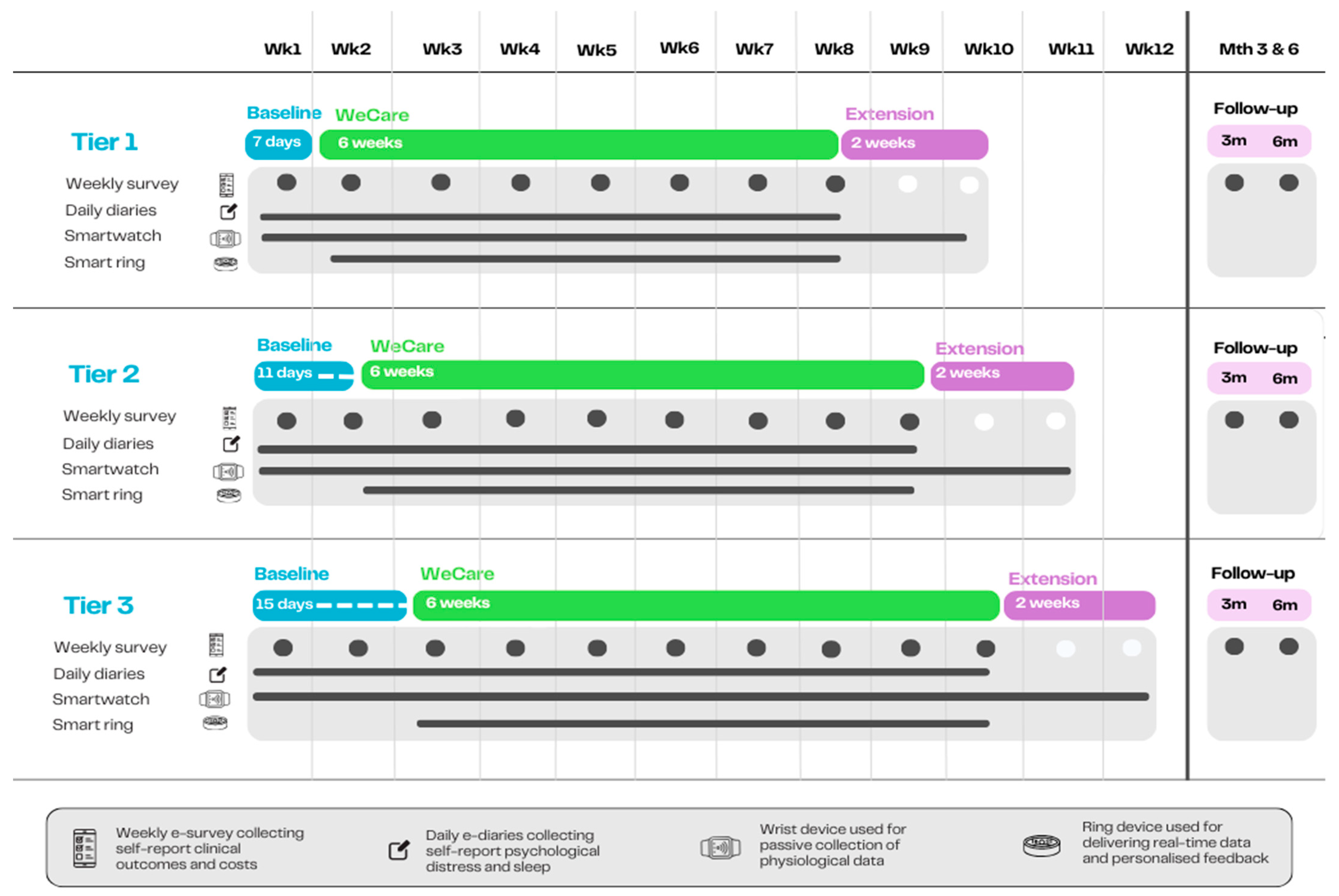
| Phase | When It Starts | How Long | Device Used | What Happens |
|---|---|---|---|---|
| Baseline (Usual care) |
| 1–3 weeks (7, 11, 15 days by tier) | “Blinded” smartwatch (wrist device) |
|
| WeCare Program (Intervention) | After baseline phase ends | 6 weeks (staggered by tier) | “Blinded” smartwatch Smart ring |
|
| Optional Extension (Device testing) | After intervention phase ends | 2 weeks | “Blinded” smartwatch |
|
| Participant Group | Inclusion Criteria | Exclusion Criteria |
|---|---|---|
| All |
|
|
| Mild-to-moderate injury patient group (Sample 1) |
|
|
| Severe injury patient group (Sample 2) |
|
|
| Medical patient group (Sample 3) |
|
|
| ED healthcare staff (Sample 4) |
|
|
| (a) PRE-BASELINE MEASURES | OUTCOME | Data Collection | Day 0 | Daily | Ecological * | Weekly | Pre-Program | Post-Program | Follow-Ups |
| Socio-demographic | Seven multiple-choice questions | Online/Paper | ✓ | - | - | - | - | - | - |
| Clinical | Medical and mental health history | Online/Paper | ✓ | - | - | - | - | - | - |
| Treatment and medication use | Online/Paper | ✓ | - | - | - | - | - | - | |
| Lifestyle habits | Online/Paper | ✓ | - | - | - | - | - | - | |
| Psychosocial | PSI stress | Online/Paper | ✓ | - | - | - | - | - | - |
| PSI wellbeing | Online/Paper | ✓ | - | - | - | - | - | - | |
| PSI psychological distress | Online/Paper | ✓ | - | - | - | - | - | - | |
| PSI abnormal illness behaviour | Online/Paper | ✓ | - | - | - | - | - | - | |
| PSI quality of life | Online/Paper | ✓ | - | - | - | - | - | - | |
| Pain Catastrophising Scale | Online/Paper | ✓ | - | - | - | - | - | - | |
| Injustice Experience Questionnaire | Online/Paper | ✓ | - | - | - | - | - | - | |
| Composite Scale of Morningness | Online/Paper | ✓ | - | - | - | - | - | - | |
| Brief Resilience Scale | Online/Paper | ✓ | - | - | - | - | - | - | |
| General Self-Efficacy Scale | Online/Paper | ✓ | - | - | - | - | - | - | |
| (b) PRIMARY OUTCOMES | OUTCOME | Data collection | Day 0 | Daily | Ecological * | Weekly | Pre-program | Post-program | Follow-ups |
| Mental health status | Subjective Units of Distress Scale | Online/Paper | ✓ | ✓ | ✓ | - | - | ✓ | ✓ |
| Sleep quality | Numeric Rating Scale (0 to 10) | Online/Paper | ✓ | ✓ | - | - | - | ✓ | ✓ |
| Autonomic function | HRV metrics | Wearable devices | - | ✓ ** | - | - | - | ✓ ** | ✓ ** |
| Sleep function | Sleep metrics | Wearable devices | - | ✓ ** | - | - | - | ✓ **^ | ✓ **^ |
| (c) GENERALISATION MEASURES | OUTCOME | Data collection | Day 0 | Daily | Ecological * | Weekly | Pre-program | Post-program | Follow-ups |
| ‘Proximal’ Generalisation Measures | |||||||||
| Mental health function | Perceived Stress Scale | Online/Paper | ✓ | - | - | ✓ | - | ✓ | ✓ |
| Patient Health Questionnaire | Online/Paper | ✓ | - | - | ✓ | - | ✓ | ✓ | |
| PTSD Checklist for DSM-5 | Online/Paper | ✓ | - | - | ✓ | - | ✓ | ✓ | |
| Generalised Anxiety Disorder Questionnaire | Online/Paper | ✓ | - | - | ✓ | - | ✓ | ✓ | |
| Sleep | The Pittsburgh Sleep Quality Index | Online/Paper | ✓ | - | - | ✓ | - | ✓ | ✓ |
| Adverse events and life stressors | Self-reported adverse events and stressors diaries | Online/Paper | ✓ | - | - | ✓ | - | ✓ | ✓ |
| Consumer perception | Numeric Rating Scale (−7 to +7) | Online/Paper | ✓ | - | - | ✓ | - | ✓ | ✓ |
| Quality of life | EQ-5D-5L—Health score (0 to 100) | Online/Paper | ✓ | - | - | ✓ | - | ✓ | ✓ |
| Physiological status | HR, RR, Sp02, activity, summary scores, temp | Wearable devices | - | ✓ ** | - | - | - | ✓ **^ | ✓ **^ |
| ‘Distal’ Generalisation Measures | |||||||||
| Mental wellbeing | The World Health Organisation-Five Well-Being Index | Online/Paper | - | - | - | - | ✓ | ✓ | ✓ |
| Cognitive functioning | Perceived Deficits Questionnaire | Online/Paper | - | - | - | - | ✓ | ✓ | ✓ |
| Pain interference | Numeric Rating Scales (0 to 10) | Online/Paper | - | - | - | - | ✓ | ✓ | ✓ |
| Fatigue | Numeric Rating Scales (0 to 10) | Online/Paper | - | - | - | - | ✓ | ✓ | ✓ |
| Social participation | WHODAS 2.0 Participation Domain | Online/Paper | - | - | - | - | ✓ | ✓ | ✓ |
| Consumer satisfaction | Was-It-Worth-It Questionnaire | Online/Paper | - | - | - | - | ✓ | ✓ | ✓ |
| Continuation of use | Three custom questions | Online/Paper | - | - | - | - | - | ✓ | ✓ |
Disclaimer/Publisher’s Note: The statements, opinions and data contained in all publications are solely those of the individual author(s) and contributor(s) and not of MDPI and/or the editor(s). MDPI and/or the editor(s) disclaim responsibility for any injury to people or property resulting from any ideas, methods, instructions or products referred to in the content. |
© 2025 by the authors. Licensee MDPI, Basel, Switzerland. This article is an open access article distributed under the terms and conditions of the Creative Commons Attribution (CC BY) license.
Share and Cite
Pozzato, I.; Parker, M.; Tate, R.; Arora, M.; Bourke, J.; Ahmadi, M.; Gillett, M.; McBain, C.; Tran, Y.; Arora, V.; et al. A Wearable-Based Program to Optimise Stress Regulation, Resilience, and Wellbeing in Emergency Care Settings: A Proof-of-Concept Study Protocol. Sensors 2026, 26, 104. https://doi.org/10.3390/s26010104
Pozzato I, Parker M, Tate R, Arora M, Bourke J, Ahmadi M, Gillett M, McBain C, Tran Y, Arora V, et al. A Wearable-Based Program to Optimise Stress Regulation, Resilience, and Wellbeing in Emergency Care Settings: A Proof-of-Concept Study Protocol. Sensors. 2026; 26(1):104. https://doi.org/10.3390/s26010104
Chicago/Turabian StylePozzato, Ilaria, Maia Parker, Robyn Tate, Mohit Arora, John Bourke, Matthew Ahmadi, Mark Gillett, Candice McBain, Yvonne Tran, Vaibhav Arora, and et al. 2026. "A Wearable-Based Program to Optimise Stress Regulation, Resilience, and Wellbeing in Emergency Care Settings: A Proof-of-Concept Study Protocol" Sensors 26, no. 1: 104. https://doi.org/10.3390/s26010104
APA StylePozzato, I., Parker, M., Tate, R., Arora, M., Bourke, J., Ahmadi, M., Gillett, M., McBain, C., Tran, Y., Arora, V., Schoffl, J., Cameron, I. D., Middleton, J. W., & Craig, A. (2026). A Wearable-Based Program to Optimise Stress Regulation, Resilience, and Wellbeing in Emergency Care Settings: A Proof-of-Concept Study Protocol. Sensors, 26(1), 104. https://doi.org/10.3390/s26010104