1. Introduction
Infrared thermography is a contact-free, light-independent method for monitoring emotion-related physiology [
1,
2,
3]. Because thermal cameras measure emitted rather than reflected radiation, they remain effective even in environments in which visible-light systems perform poorly [
2,
3]. Moreover, activation of the sympathetic nervous system induces vasoconstriction in cutaneous blood vessels and lowers skin temperature, allowing frame-level thermal fluctuations to serve as an immediate proxy for underlying autonomic changes [
4]. Thermal imaging requires no physical contact and avoids disturbing participants, making it especially suitable for monitoring vulnerable populations such as infants and clinical patients [
5,
6]. In addition, recent advances in low-cost uncooled microbolometer arrays and on-board calibration have improved spatial and temporal resolution, enabling thermography to be applied in large-scale, real-world emotion-sensing scenarios [
7]. Several previous studies have examined full-face thermal imaging during emotional states and reported that the temperatures of certain facial regions, including the nose tip, are negatively associated with subjective arousal states [
8,
9,
10,
11,
12].
A recent study further measured thermal images from the ear for emotion sensing [
13]. Compared to facial infrared thermography, ear thermography offers unique advantages in contexts in which face masks are worn, such as during influenza seasons or in medical settings. Anatomical and physiological studies have revealed dense sympathetic and parasympathetic innervation in several subregions of the ear, implying its potential to exhibit emotion-related vascular changes [
14]. In that study [
13], the researchers conducted an experiment in which unilateral (right) ear thermal images were acquired while participants viewed emotionally evocative video clips, along with second-by-second arousal ratings. Linear associations between ear temperature changes and subjective ratings were analyzed using pixel-wise statistical parametric mapping analysis [
15]. The results demonstrated robust negative associations between temperature in certain posterolateral ear regions and subjective arousal. These findings imply that ear thermal imaging may serve as a reliable index of subjective emotional arousal.
However, whether and how ear thermal changes are nonlinearly related to subjective emotional states remain untested. Machine learning (ML) methods offer a powerful framework for uncovering nonlinear associations in high-dimensional image data [
16]. A previous study in facial thermal imaging has demonstrated that ML models outperform linear models in estimating emotional arousal [
17], implying their broader applicability to peripheral thermal signals. In the literature on estimating emotional responses from non-thermal facial images using ML approaches, several studies have reported that deep learning-based models outperformed conventional ML models [
18,
19,
20]. Based on these findings, we hypothesized that ML models, particularly deep learning-based models, could more accurately estimate subjective emotional responses from thermal ear data than traditional linear regression models. If substantiated, such advancements could refine emotion estimation methodologies and open new avenues for real-world applications, including mental health assessment and consumer behavior modeling.
The superior predictive accuracy of ML models comes at a cost: their internal computations are largely opaque, limiting researchers’ ability to determine why a particular thermal pattern yields a specific arousal estimate. This “black-box” property constrains scientific interpretability and can undermine trust in clinical or consumer-facing applications [
21]. To gain insight into the mechanisms underlying ML-based arousal prediction from ear thermal images, a two-stage interpretability analysis can be used that combines spatial attention visualization with feature contribution analysis. First, Gradient-weighted Class Activation Mapping (Grad-CAM) identifies the anatomical regions of the ear that are most influential for arousal prediction by generating coarse localization maps from gradients in the final convolutional layer [
22]. Second, Shapley additive explanations (SHAP), a game-theoretic method that attributes additive contributions from each input pixel to the final prediction [
23], can be used to elucidate further the model’s internal decision processes. Whereas Grad-CAM indicates where the model attends spatially, SHAP quantifies how local thermal features increase or decrease the predicted arousal relative to a baseline. We hypothesized that these analyses would reveal physiologically plausible auricular subregions (e.g., the helix rim) whose temperature dynamics disproportionately influence model outputs, thereby providing evidence that the network relies on meaningful physiological cues.
To evaluate these hypotheses empirically, we reanalyzed data from a previous study that recorded right-ear infrared videos while participants viewed short, emotion-eliciting film excerpts [
15]. Following the initial viewing and thermal data acquisition, each excerpt was replayed twice. During these replays, participants used a slider-type affect rating dial [
24] to retrospectively and dynamically rate valence or arousal. Time-aligned thermal frames and self-report traces were then paired and used to train three arousal-prediction models: a multiple linear regression model using posterolateral ear regions as the regions of interest (ROIs) as a baseline, a random forest (RF) model as a representative conventional ML approach [
25], and a ResNet-50 convolutional neural network as a representative deep learning-based ML model [
26]. The predictive performance of each model was evaluated using a leave-one-participant-out cross-validation (LOPOCV) scheme. For interpretability analyses, we focused on the ResNet-50 model, which outperformed the other two models, and applied Grad-CAM to derive spatial importance maps. Subsequently, SHAP analysis was conducted to quantify how local ear temperature variations within these subregions influenced the model’s moment-to-moment arousal predictions.
2. Materials and Methods
2.1. Participants
The study cohort comprised 14 healthy adults from Japan (mean ±
SD age = 22.0 ± 2.6 years; 7 females, 7 males). The required sample size was determined using an
a priori power analysis conducted with G*Power (version 3.1.9.2) [
27]. We assumed a one-tailed
t-test with an α level of 0.05 and statistical power of 0.80. The effect size was assumed to be
d = 0.89, derived from a previous study comparing emotion-sensing performance between ML models and linear regression models using different physiological signals (i.e., facial electromyography) [
20]. This analysis indicated that a minimum of 10 participants would be required. Recruitment was conducted via advertisements at Kyoto University, and participants were compensated with a 4000 JPY book coupon for their participation. The inclusion criteria required that all participants be native Japanese speakers with no self-reported history of psychiatric or neurological disorders and with normal or corrected-to-normal vision. In addition, participants were required to be naïve to the experimental stimuli and to provide consent for both physiological and subjective measurements. The study protocol was approved by the RIKEN Ethics Committee, and all procedures were conducted in accordance with the Declaration of Helsinki and institutional guidelines. Written informed consent was obtained from all participants prior to participation, following a detailed explanation of the experimental procedures. The results of the linear analysis based on the present dataset have been reported previously [
13].
2.2. Apparatus
Stimulus presentation was controlled using Presentation software (Neurobehavioral Systems, Berkeley, CA, USA) running on a Windows-based workstation (HP Z200 SFF, Hewlett-Packard Japan, Tokyo). Visual stimuli were displayed on a 19-inch monitor (HM903D-A; Iiyama, Tokyo, Japan) with a resolution of 1024 × 768 pixels. Continuous self-reports were collected using an optical mouse (MS116, Dell, Round Rock, TX, USA), which transmitted responses to a separate laptop operating on Windows (CF-SV8; Panasonic, Tokyo, Japan). Ear-temperature recordings were acquired using an infrared camera (FLIR A655sc, FLIR Systems, Wilsonville, OR, USA; 640 × 480 pixels, 50 Hz) controlled by Research IR Max v. 4.40 software. The camera was positioned approximately 0.77 m to the participant’s right side and aligned with the ear. Although full-face RGB and thermal videos were recorded concurrently, these data were not included in the present analyses.
2.3. Stimuli
To elicit distinct affective states, five film excerpts were selected whose emotional effectiveness for Japanese audiences has been validated previously [
10]. Representative frames from the five excerpts are presented in
Figure 1 to illustrate the stimuli used for each emotion condition. The clips were intended to induce anger (Cry Freedom), sadness (The Champ), neutrality (Abstract Shapes), contentment (Wild Birds of Japan), and amusement (M-1 Grand Prix The Best 2007–2009). The mean ±
SD duration of the clips was 175.8 ± 22.2 s, with individual lengths of 157 s, 172 s, 206 s, 148 s, and 196 s, respectively. All stimuli were presented at a resolution of 640 × 480 pixels, subtending approximately 25.5° horizontally and 11.0° vertically. Prior to the main experimental session, two brief practice clips (The Silence of the Lambs and the Color Bars) were shown to familiarize participants with the task.
2.4. Procedure
Experimental sessions were conducted in a sound-attenuated and electrically shielded booth maintained at an ambient temperature between 23.5 °C and 24.5 °C, as monitored using a TR-76Ui thermometer (T&D Corp., Matsumoto, Japan) to minimize potential effects of minor environmental temperature fluctuations on skin temperature. Upon arrival, participants received a detailed explanation of the experiment, provided written informed consent, and remained seated quietly for approximately 10 min to acclimate to the room environment to allow participants to settle and reach a stable physiological state before thermal recording. Prior to the main experimental session, two brief practice clips were presented to familiarize participants with the task.
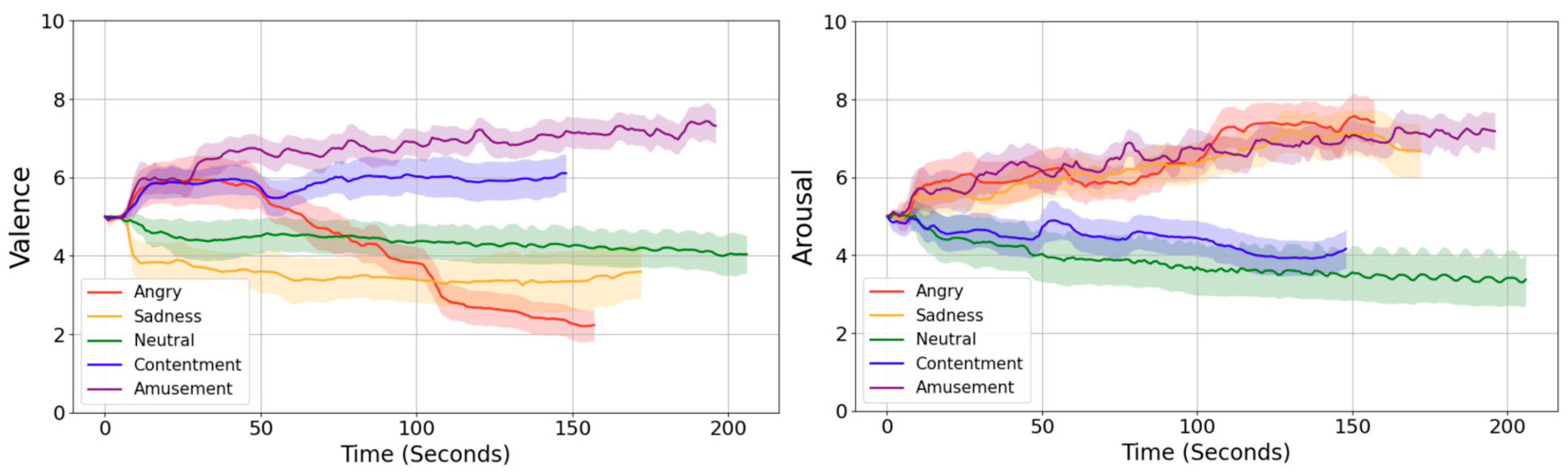
Participants viewed the film clips from a distance of 0.77 m while ear temperature was continuously recorded by the infrared camera. Each trial began with a 1 s fixation cross, followed by a 10 s white screen to establish a baseline. After the completion of each clip, a second 10 s white screen served as a post-stimulus baseline. Participants then rated overall valence and arousal using a nine-point affect grid by pressing the corresponding number keys. They were instructed to attend closely to the stimuli and to withhold their ratings until the clip had ended. The five film excerpts were presented in a pseudorandom order across participants to mitigate possible order effects. Inter-trial intervals consisted of a black screen lasting 24–30 s, with durations randomized across trials to reduce carry-over effects between clips. Digital trigger signals indicating stimulus onset were recorded concurrently with the thermal data.
Subsequently, the same five film excerpts were presented again during a cued recall session. Participants reconstructed their moment-to-moment emotional experiences from the initial viewing by moving a mouse, with the x- and y-coordinates sampled at 10 Hz. Valence ratings were obtained first, followed by arousal ratings, yielding continuous emotional time courses. Dynamic ratings were collected during stimulus replay (cued recall) rather than during the initial viewing to minimize movement and attentional interference during thermal recording. Cued recall ratings have been shown to approximate real-time emotional responses to film stimuli closely [
28,
29].
2.5. Workflow
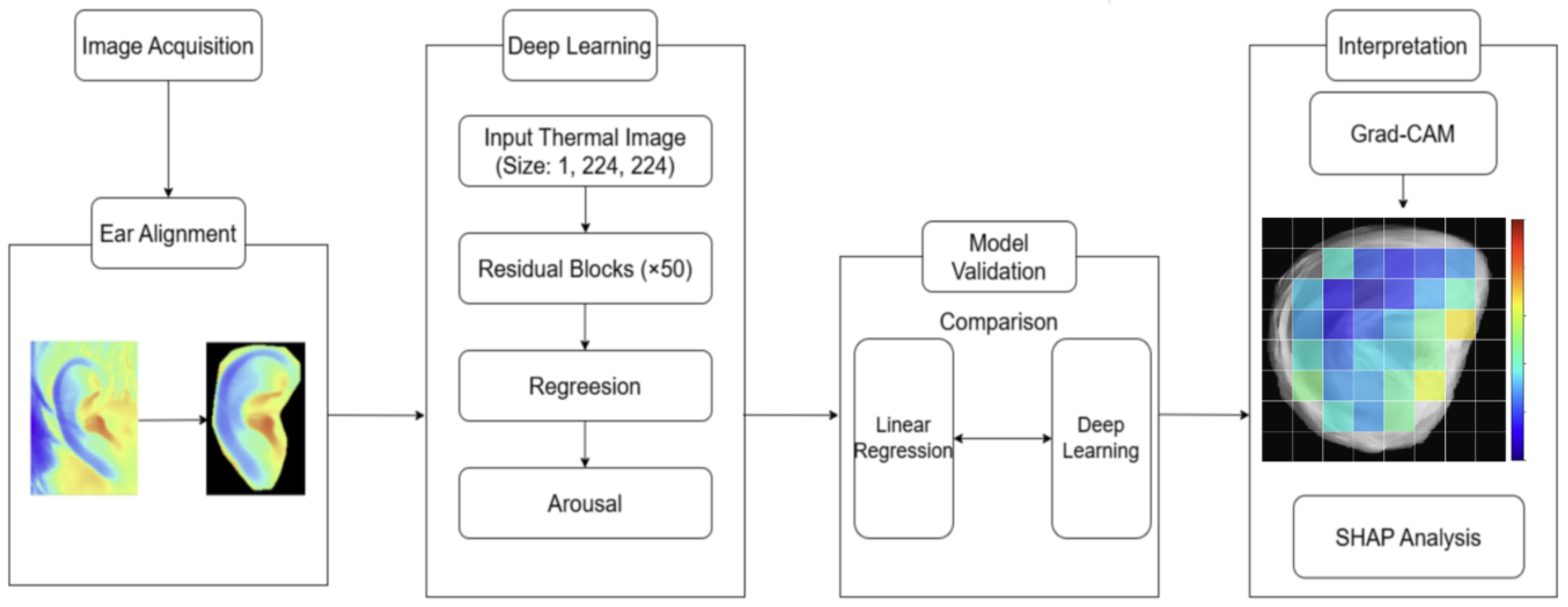
The overall workflow of the study is summarized in
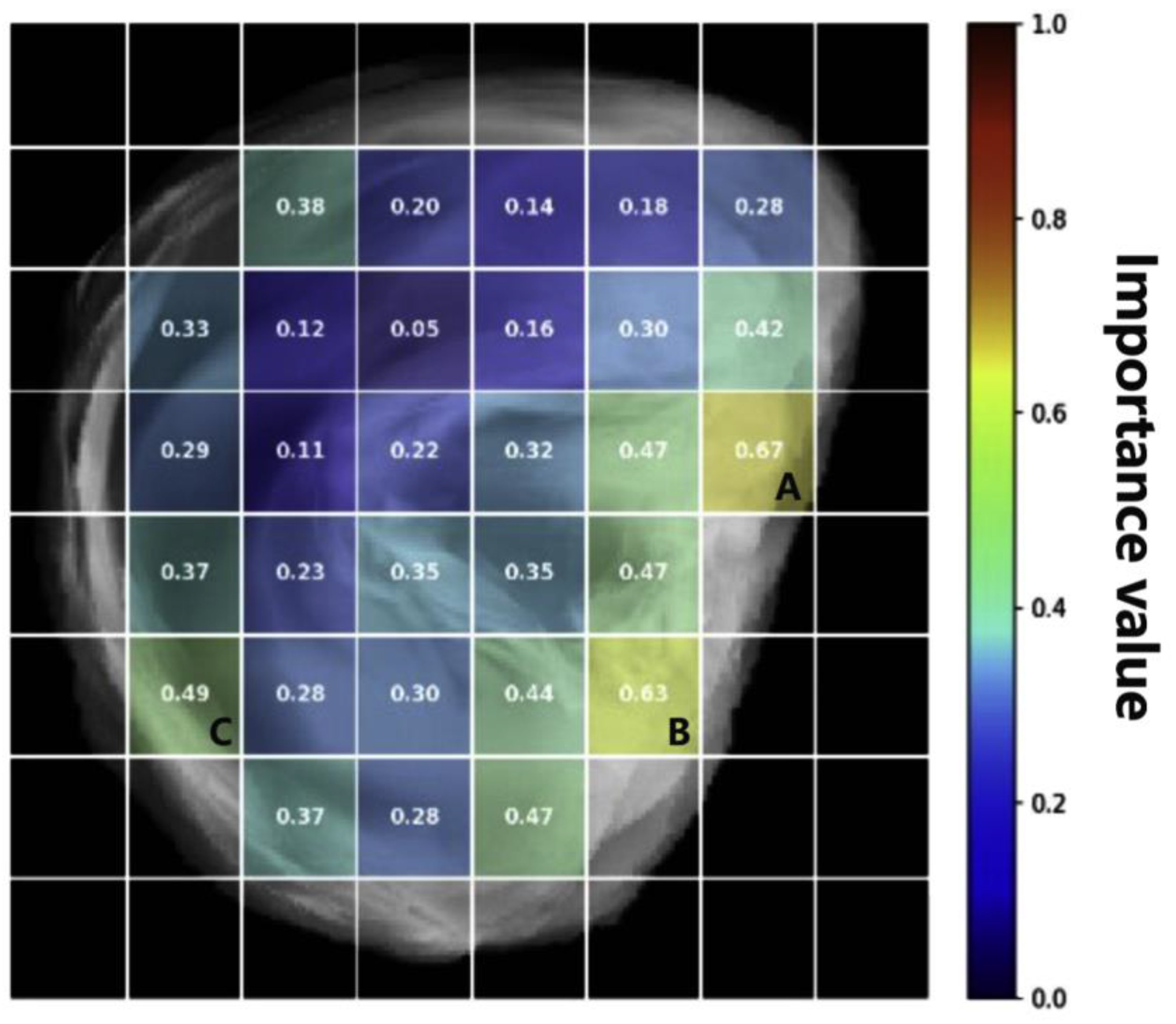
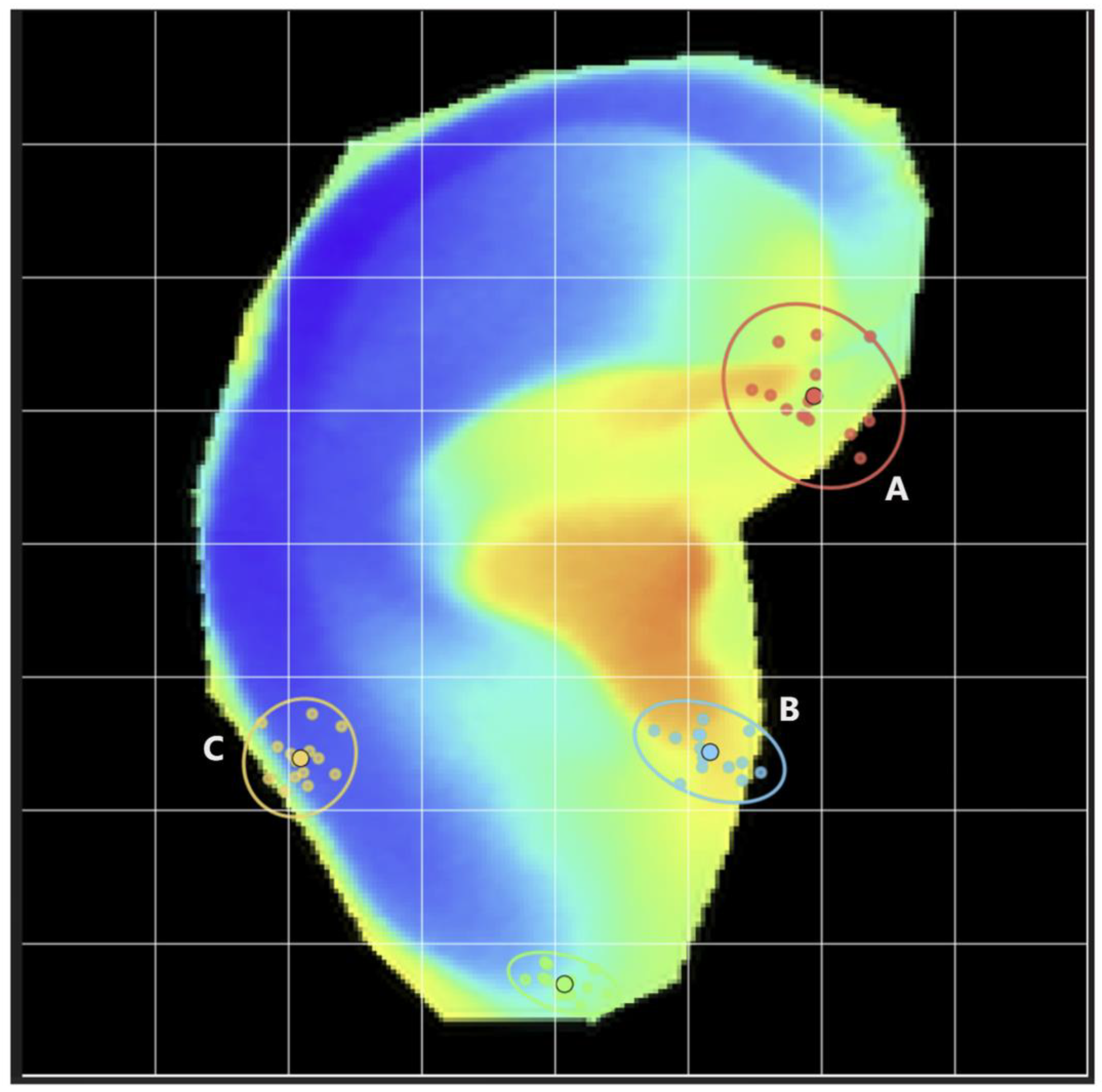
Figure 2. The process began with the acquisition of raw ear thermal video images, followed by a preprocessing step involving ear alignment, during which each frame was rotated, translated, and scaled to isolate and position the external ear in a standardized orientation for analysis. The aligned 224 × 224 thermal maps were then provided as input to the deep learning stage. A ResNet-50 regression model was used, which processed the single-channel ear images through 50 residual blocks and output a continuous arousal estimate for each frame. For model validation, the predictive performance of this deep learning model was evaluated using a LOPOCV scheme and compared with that of a baseline ordinary least-squares linear regression model. In the final interpretation stage, Grad-CAM was first applied to generate spatial importance maps across the ear, which were then summarized on an 8 × 8-grid. Based on these maps, the three grid regions with the highest contributions were selected, and SHAP analysis was subsequently performed for each region to quantify how local ear temperature within these subregions contributed to the model’s arousal predictions.
2.6. Preprocessing
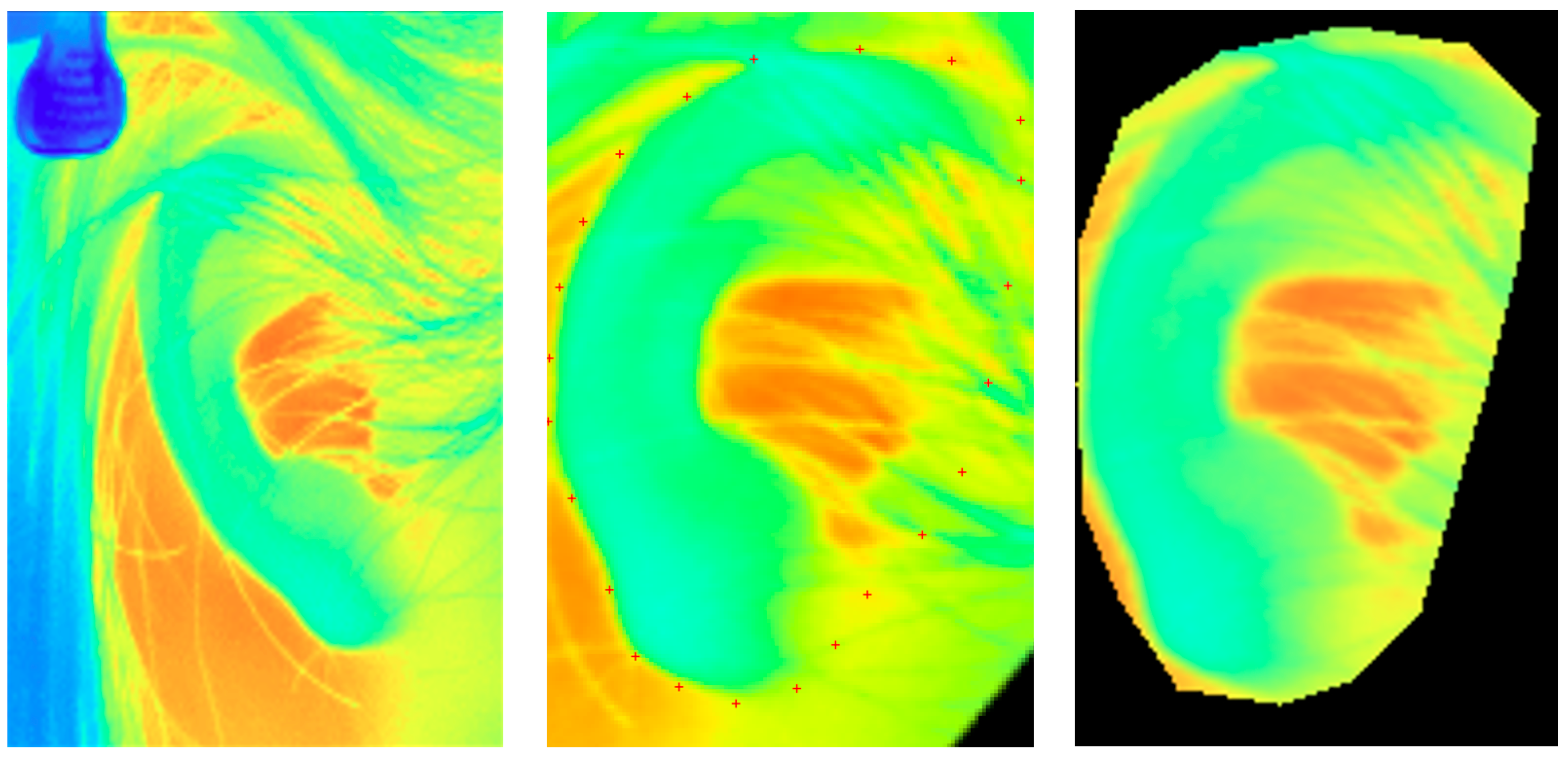
A two-stage preprocessing pipeline was developed to segment and normalize the ear region in each frame of the raw thermal video accurately. This procedure is visually summarized in
Figure 3. The first stage focused on global alignment and scaling. In the initial frame of each video, an operator manually annotated two key points corresponding to the superior and inferior extremities of the auricle. These key points were then automatically tracked across all subsequent frames using a custom algorithm. The coordinates of the tracked points were used to apply rotational and scaling transformations, thereby standardizing the orientation and size of the ear across the entire image sequence, thereby reducing variability due to small head/postural movements across frames.
Following this global alignment, a more precise segmentation procedure was applied. This step began with manual annotation of multiple points delineating the perimeter of the ear in the initial frame. These points were used to generate an accurate segmentation mask. A tracking algorithm then propagated this mask across subsequent frames, allowing minor deformations to accommodate subtle ear movements, and the resulting mask for each frame was saved. To ensure segmentation accuracy, the pipeline incorporated a semi-automated quality control process. When an observer detected a tracking failure in a given frame, one of two corrective actions could be taken: reverting to a previously validated mask from an earlier frame and restarting the tracking process from that point, or manually redrawing the mask on the problematic frame to establish a new reference for subsequent tracking. This robust preprocessing procedure ensured that a highly accurate segmented ear image was obtained for each frame, rendering the data suitable for input into the deep learning model.
2.7. Model Training
To predict emotional arousal from auricular thermal patterns, we trained and validated three regression models spanning a range of complexity, from a simple linear baseline to a deep convolutional network.
As a baseline approach, we implemented an ordinary least-squares linear regression model. Single-channel preprocessed ear images were first resized to 64 × 64 pixels, yielding a two-dimensional array of thermal intensity values. Each frame was then flattened into a 4096-dimensional feature vector, which served as the direct input to the linear regression model for mapping pixel intensities to continuous arousal scores. The data used for this analysis were extracted from the three ear ROIs exhibiting the strongest linear associations with arousal ratings in the previous statistical parametric mapping analysis [
13], and linear regression models were fitted using the average temperature values within these regions.
Next, we trained a RF regression model to capture potential nonlinear relationships while maintaining a relatively interpretable structure. For this model, aligned ear images were resized to 224 × 224 pixels and converted into flattened feature vectors. These vectors were used to train an RF regressor with 300 trees, a maximum tree depth of 15, and a minimum leaf size of 2 to predict arousal values.
Finally, the primary deep learning model was based on a ResNet-50 architecture fine-tuned end to end for regression. The network was initialized with ImageNet-pretrained weights, and the original classification head was replaced with a single linear output node to generate a continuous arousal estimate. Input ear images were converted to single-channel thermal maps, resized to 224 × 224 pixels, and normalized before being fed into the network. Model training utilized the Adam optimizer (learning rate = 1 × 10⁻⁴, weight decay = 1 × 10⁻⁴), a batch size of 32, and mean squared error (MSE) as the loss function over 10 epochs.
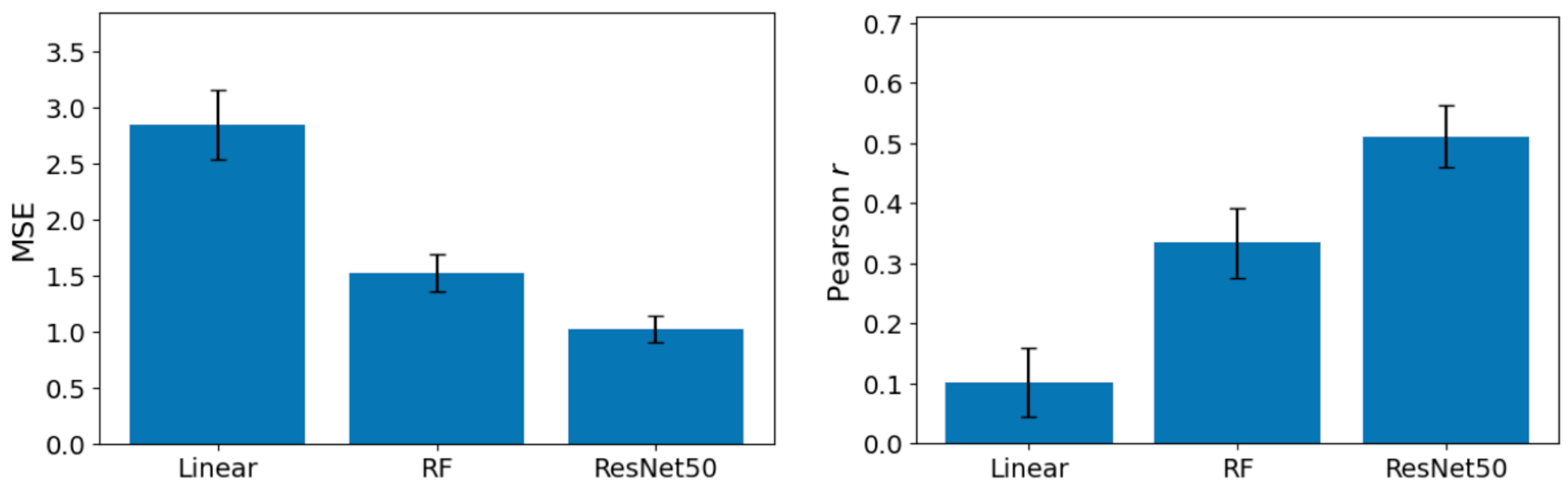
To evaluate model generalization, LOPOCV was applied to all three models. In each fold, data from one participant were reserved as the test set, while data from the remaining participants were used for training. This procedure ensured that performance estimates reflected the ability of the models to predict arousal in previously unseen individuals. Model performance was quantified using MSE and the Pearson correlation coefficient between predicted and self-reported arousal trajectories, enabling direct comparison across the linear regression, RF, and ResNet-50 models.
2.8. Statistical Analysis
To compare the predictive accuracy of the three regression models (linear regression, RF, and ResNet-50) formally, statistical analyses were conducted on the performance metrics derived from the LOPOCV procedure. The LOPOCV scheme yielded outcome measures for each participant, consisting of an MSE value and a Pearson correlation coefficient for each model. To assess whether statistically significant differences existed between models, pairwise one-tailed t-tests were performed.
Preplanned contrasts using one-tailed t-tests were conducted for both MSE values and Pearson correlation coefficients to evaluate the following comparisons: ResNet-50 versus linear regression, RF versus linear regression, and ResNet-50 versus RF. The significance threshold (α) for all statistical tests was set at 0.05.
2.9. Model Interpretation Methods
To elucidate the predictive mechanisms underlying the deep learning model, a two-stage interpretability analysis was performed on the ResNet-50 model, combining spatial attention visualization with feature contribution analysis.
First, to identify the anatomical regions of the ear that were most influential for arousal prediction, Grad-CAM was applied. Grad-CAM leverages the gradients of the target output with respect to the feature maps in the final convolutional layer to generate coarse localization maps that highlight regions of importance within the input image. For quantitative analysis, the standardized ear mask was partitioned into an 8 × 8 grid. Grad-CAM intensities were computed for each frame, upsampled to the input resolution, and aggregated within each grid cell to produce a normalized group-level importance map.
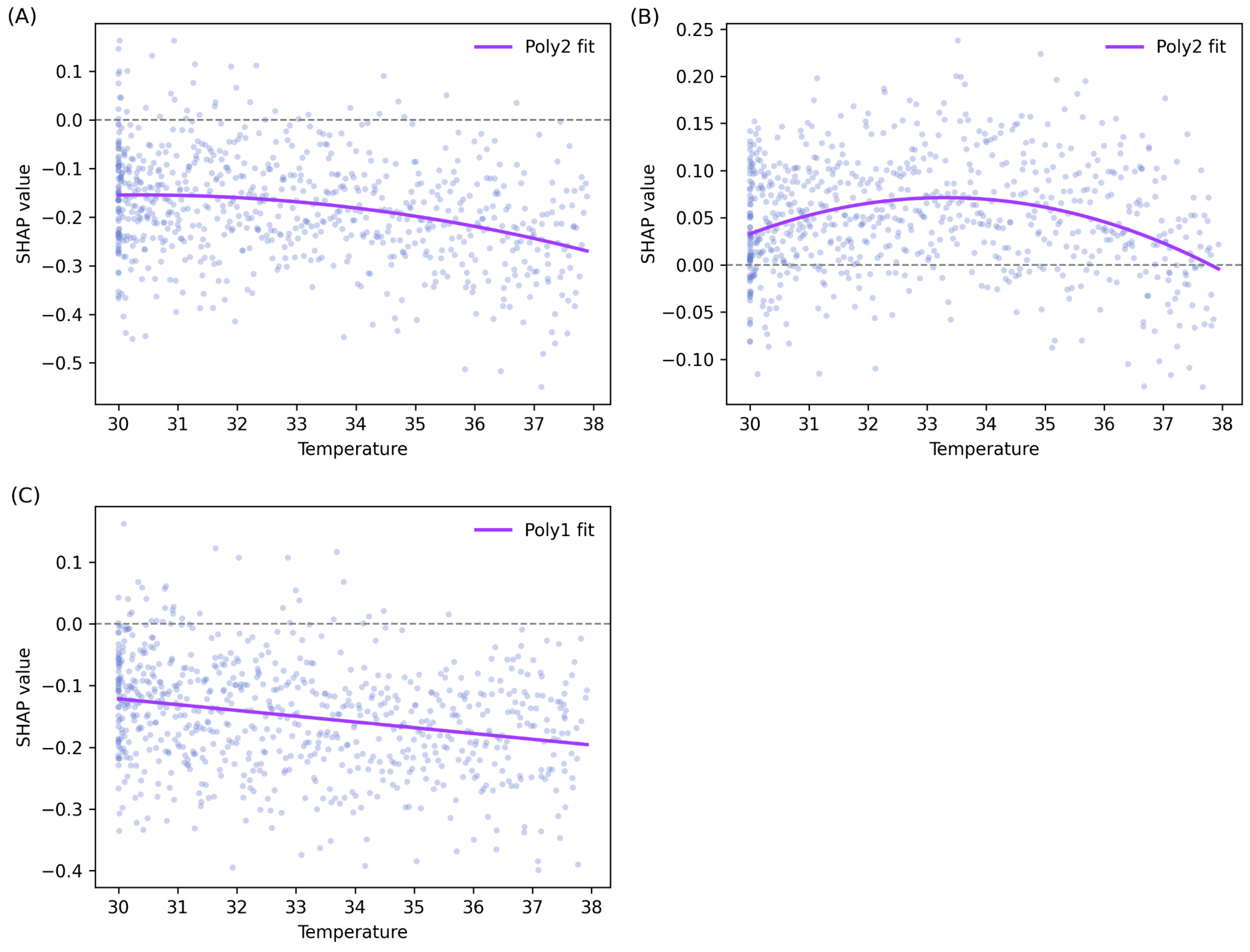
Second, to characterize the specific relationship between local ear temperature and the model’s output, SHAP was used. Whereas Grad-CAM indicates where the model attends, SHAP quantifies how individual feature values drive predictions higher or lower relative to a baseline. Using the same 8 × 8 grid representation, the grid cells exhibiting the highest contributions were identified. For these high-importance ROIs, mean temperature values and corresponding SHAP values were extracted for every frame across all participants. These relationships were then quantified by fitting first- through fourth-degree polynomial regression models to reveal potential nonlinear patterns. We evaluated the models using adjusted R2, root mean squared error (RMSE), and Bayesian information criterion (BIC).
4. Discussion
Our evaluation of model predictive accuracy using the LOPOCV scheme demonstrated that both ML models—the RF and ResNet-50 models—outperformed the linear regression model in predicting emotional arousal dynamics based on ear thermal imaging data. Although a previous study on ear thermography for emotion sensing reported primarily linear relationships between ear temperature and subjective arousal ratings [
13], the present findings imply that ear temperature-arousal associations are not exclusively linear but also encompass nonlinear components. These results are consistent with earlier research showing that ML models outperform linear models in estimating subjective emotional states from frontal facial thermal images [
12]. Moreover, our results indicate that the ResNet-50 model achieved superior predictive performance compared to the RF model when applied to ear thermal images. This pattern aligns with previous studies using non-thermal facial imaging, which reported that deep learning-based approaches outperformed conventional ML models in emotion sensing tasks [
18,
19,
20]. Altogether, the present findings provide new evidence that ML models, particularly deep learning-based architectures, can more effectively estimate subjective emotional arousal from ear thermal images than traditional linear regression models.
To interpret further the behavior of the ResNet-50 model in arousal prediction, we visualized its spatial attention patterns using Grad-CAM. For each frame, Grad-CAM maps were extracted from a late convolutional layer, upsampled to a standardized ear mask, and summarized on an 8 × 8 grid before aggregation within and across participants (
Figure 3). At the group level, the model did not weight the auricle uniformly; instead, it assigned disproportionately high importance to specific subregions, including anteromedial areas (i.e., the superior preauricular region and the tragus) and a posterolateral area (i.e., the lower helix). In other words, the network relied on anatomically specific auricular subregions rather than treating the ear as a spatially homogeneous thermal source. This observation is consistent with anatomical and physiological evidence indicating that different auricular regions vary in tissue composition, vascular supply, heat-dissipation properties, and autonomic nervous system innervation [
30,
31]. Accordingly, our analysis identified auricular subregions whose vascular characteristics imply stronger modulation by emotion-related autonomic nervous system activity.
To assess whether the local thermal cues used by the model to estimate arousal can be quantitatively interpreted, we used SHAP to examine how the temperature of high-contribution auricular subregions influences moment-to-moment arousal predictions. Specifically, we combined Grad-CAM defined high-contribution regions with SHAP. For each frame, we extracted the mean temperature within that region and computed the SHAP value of this local temperature for the frame’s predicted arousal. Two primary findings emerged. First, the SHAP dependence curve in the anteromedial regions (i.e., the superior preauricular region and the tragus) showed negative quadratic associations between temperature and arousal ratings: local temperature increased while arousal feeling increased at a certain level. These results may be compatible with anatomical data indicating that the anteromedial regions receive innervation from the auricular branch of the vagus nerve (i.e., the primary nerve of the parasympathetic division of the autonomic nervous system) [
32,
33]. A previous physiological study investigated the relationship between pharmacologically manipulated parasympathetic activity and heart rate variability, a common measure of parasympathetic activity [
34], and found a negative quadratic relationship [
35]. Therefore, the inverted-U-shaped relationships between temperature changes and subjective arousal in these regions may reflect parasympathetic activity. Second, SHAP values in the posterolateral region (i.e., the lower helix) showed a linear, negative relationship between temperature and arousal ratings. These results were consistent with previous findings using linear analysis [
13]. The results were also in agreement with anatomical and physiological data indicating that the posterolateral ear region receives blood supply primarily maintained by the posterior auricular artery and branches of the superficial temporal artery, governed by the sympathetic division of the autonomic nervous system [
14]. In summary, these findings highlight the linear and nonlinear relationships between temperature and subjective emotional arousal in the ear subregions.
The present results highlight several advantages of ML-based ear thermal imaging for real-world emotion monitoring. In situations where the nose and cheeks are partially or fully covered, for example, during influenza seasons, pollen allergy periods, or in clinical environments requiring face masks, face-centered thermography may be unreliable, whereas the external ear typically remains visible and accessible for contact-free, continuous monitoring. In addition, the auricle is mechanically more stable than many facial regions, being less affected by speech, chewing, and expressive facial movements, which reduces motion-related artifacts and facilitates consistent ROI tracking over time. These properties render auricular thermography particularly suitable for unobtrusive assessment of anxiety or distress in clinical and counseling contexts, offering an objective physiological measure with minimal burden on the user. Even when full facial information is available, ear temperature dynamics can provide a complementary channel to face-focused analyses, supplying an independent index of arousal-related vasomotor activity and enhancing robustness through multi-site data integration.
Despite these promising findings, several limitations should be acknowledged. First, although the LOPOCV scheme indicated model generalizability, the sample size was relatively small (n = 14) and the participants were limited to young Japanese adults. This limited cohort may not have fully captured interindividual variability in ear temperature responses to emotional arousal and, hence, may constrain the generalizability of the present findings across age groups and cultural backgrounds. Additionally, the stimulus set comprised only five emotion-eliciting film excerpts, which may have limited the diversity of affective contexts and response dynamics represented in the data. Future studies should rigorously evaluate the robustness of these effects by including larger, more diverse samples with broader age ranges and cultural backgrounds, as well as a wider range of emotional films.
Second, dynamic valence and arousal trajectories were obtained using a cued recall procedure during stimulus replay rather than online reporting during the initial viewing. Although this approach reduces movement and divided-attention demands during thermal acquisition, retrospective ratings may be subject to memory reconstruction bias. Future studies should directly compare online and cued recall ratings (e.g., within-subject) and evaluate whether potential discrepancies influence model training and performance.
Third, the present work treated ear thermal imaging as a single-modality predictor. This unimodal design did not allow us to validate the ear thermal thermography by cross-checking against other physiological measures. Moreover, the incremental benefit of ear thermography relative to established multimodal emotion-sensing approaches, as well as its potential complementarity with other signals, remains undetermined. Future studies should therefore acquire ear thermography alongside electrodermal activity, cardiovascular indices, or neural signals, and test convergent validity and multimodal integration.
Fourth, auricular temperature may be influenced by unmeasured individual factors such as skin condition, peripheral vascular regulation, and postural adjustments unrelated to emotion. Future studies should record these measures to quantify their effects and separate emotion-related signals from confounds.
Finally, the data were collected under controlled laboratory conditions with relatively stable ambient temperatures. While such control reduces nuisance variability and facilitates model training and interpretation, it may not fully reflect thermal noise and environmental variability in unconstrained real-world settings. Future studies should therefore evaluate model performance under more naturalistic conditions and develop calibration and robustness strategies that explicitly account for environmental fluctuations and recording-related variability.