Sparse Reconstruction of Pressure Field for Wedge Passive Fluidic Thrust Vectoring Nozzle


Abstract
1. Introduction
2. Methodology
2.1. Experimental Setup
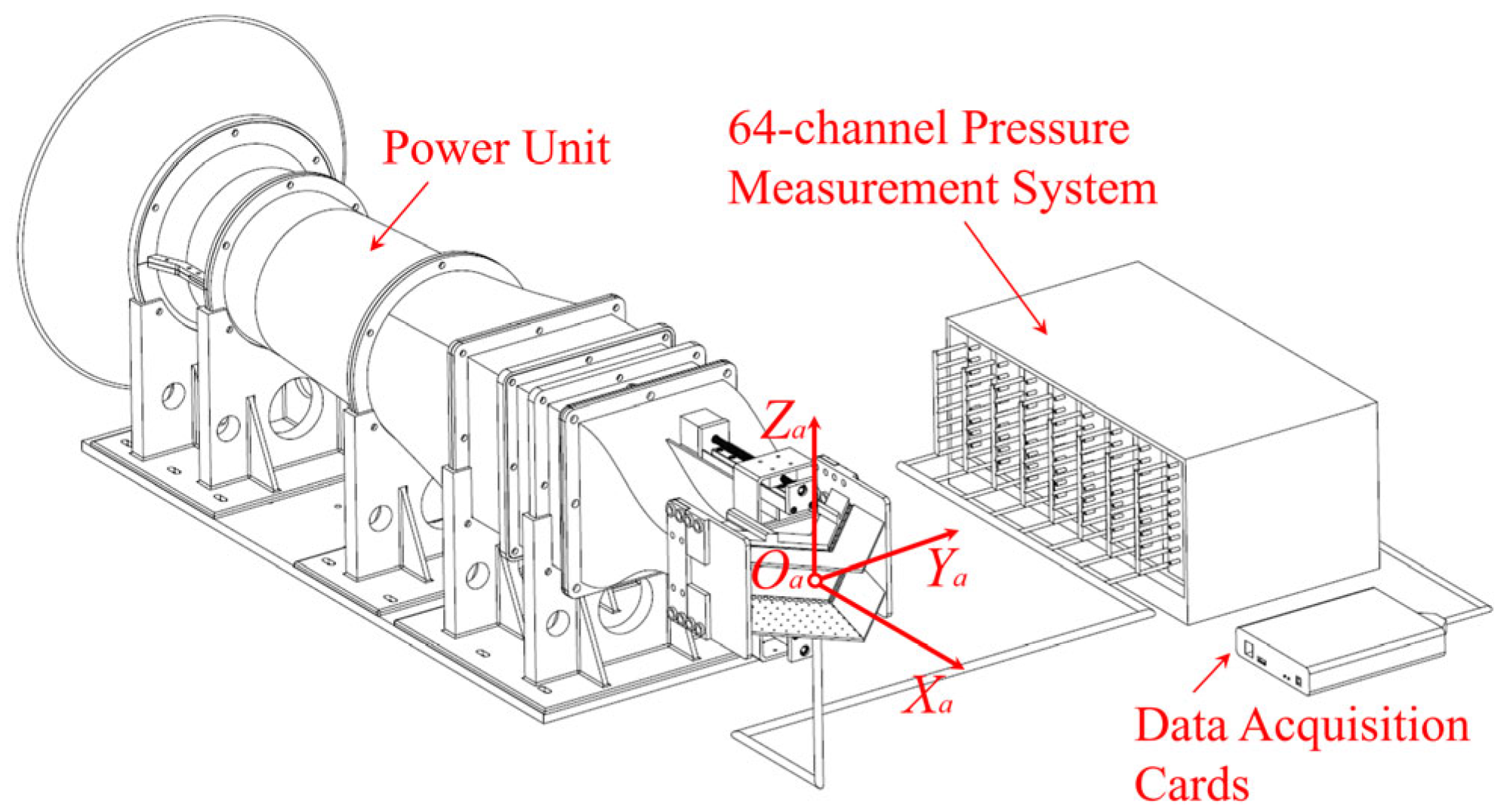
2.1.1. Setting of Low-Speed Jet Simulation Platform
2.1.2. Pressure Measurement System
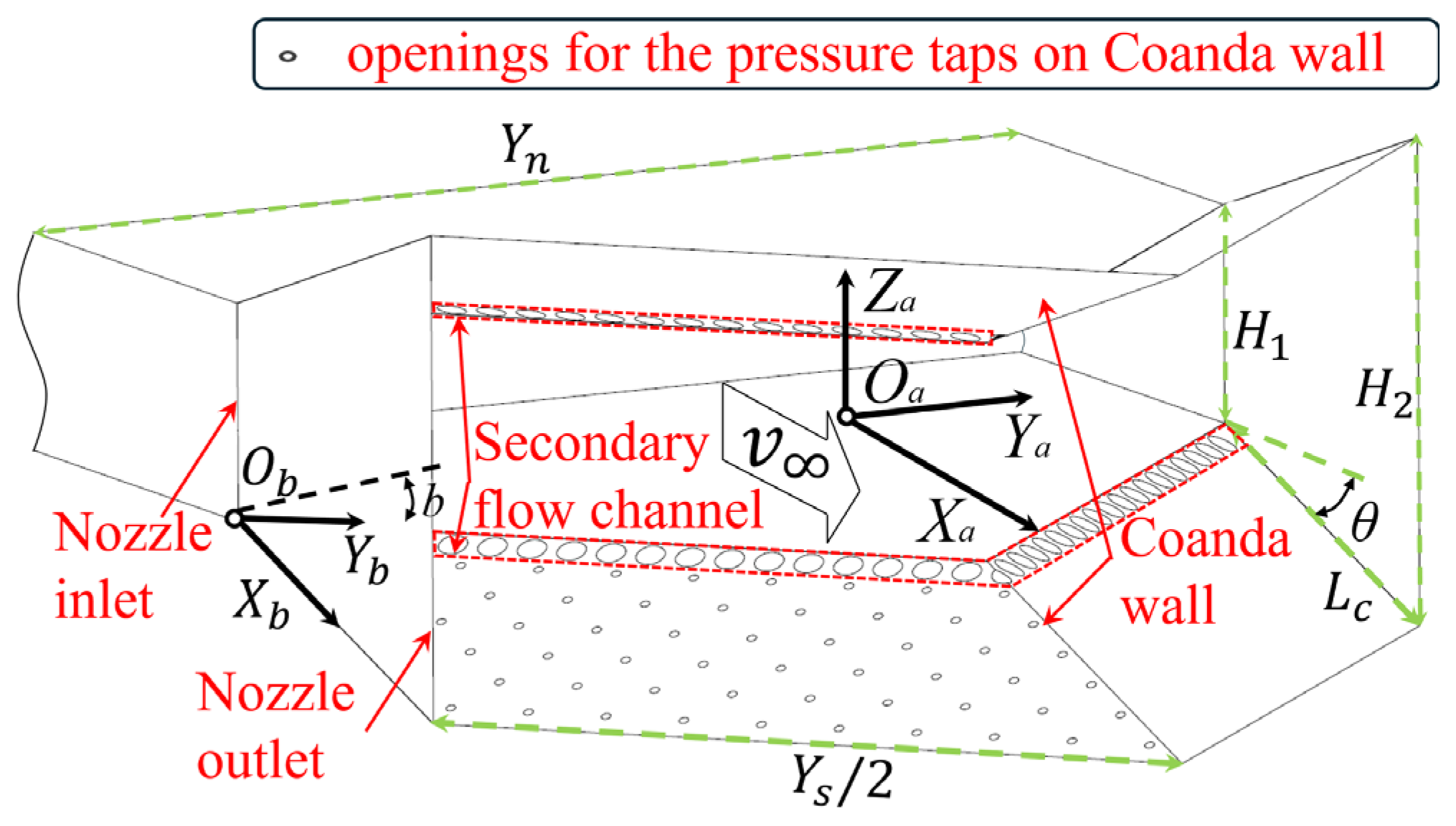
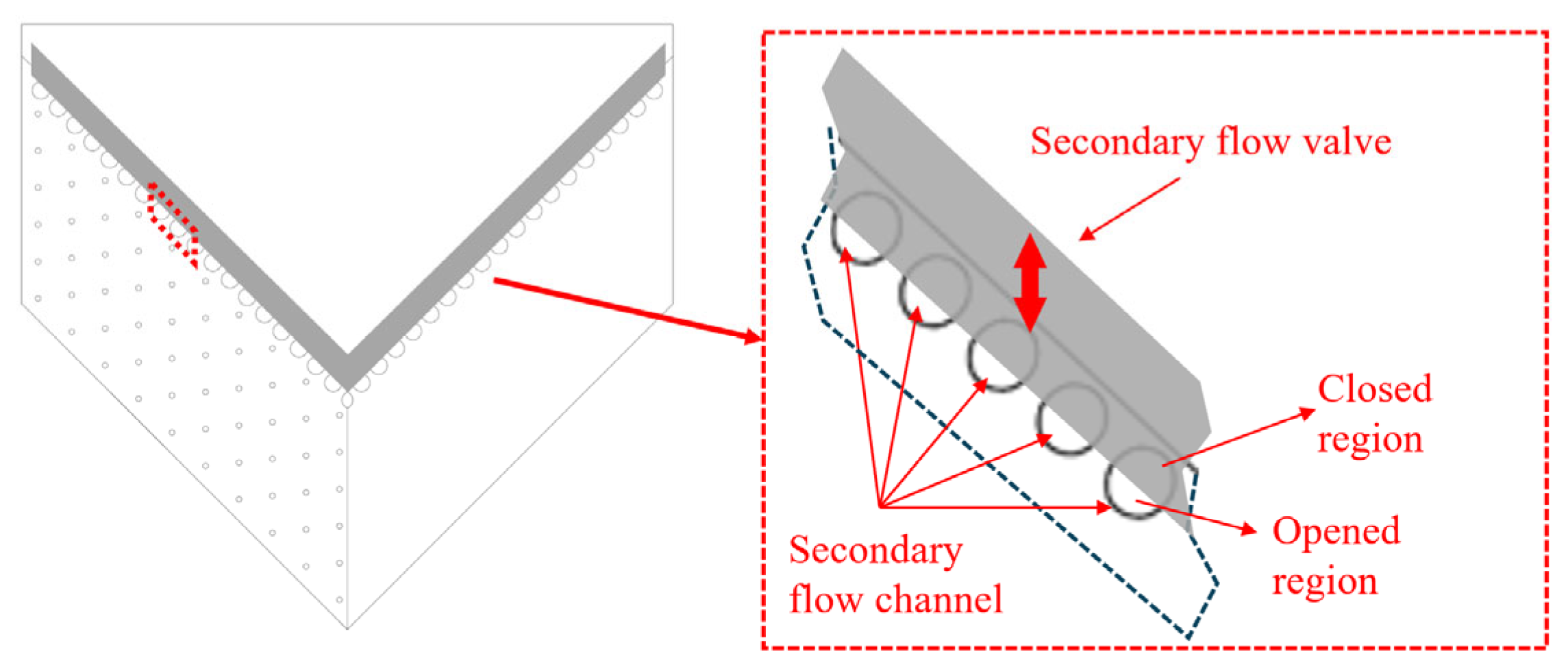
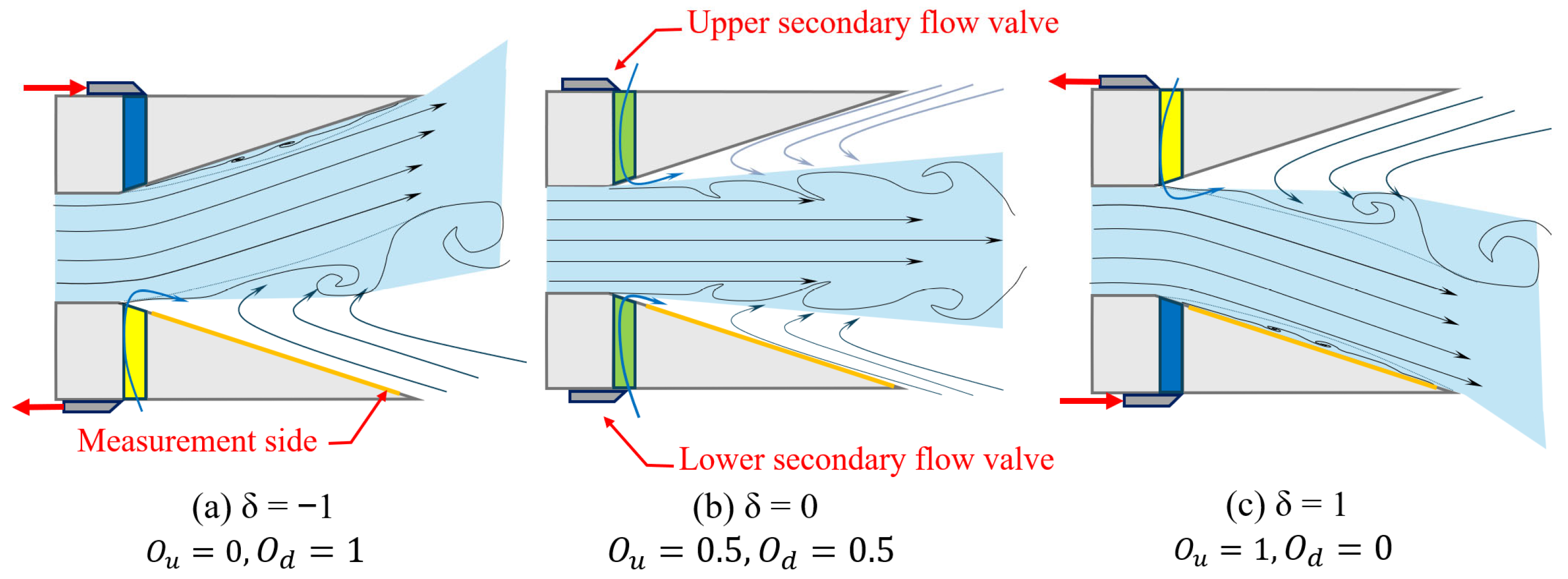
2.1.3. Passive Fluidic Thrust Vectoring Nozzle Model
2.2. Pressure Reconstruction Method
2.2.1. Extraction of Dominant POD Modes
2.2.2. Full-Field Pressure Reconstruction Based on Compressed Sensing
2.2.3. Sensor Layout Optimization Based on a Genetic Algorithm
3. Results and Discussion
3.1. Characteristics of the Pressure Field
3.2. POD Model Training Results
3.3. Sparse Reconstruction Results
3.4. Comparation with Kriging Method
4. Conclusions
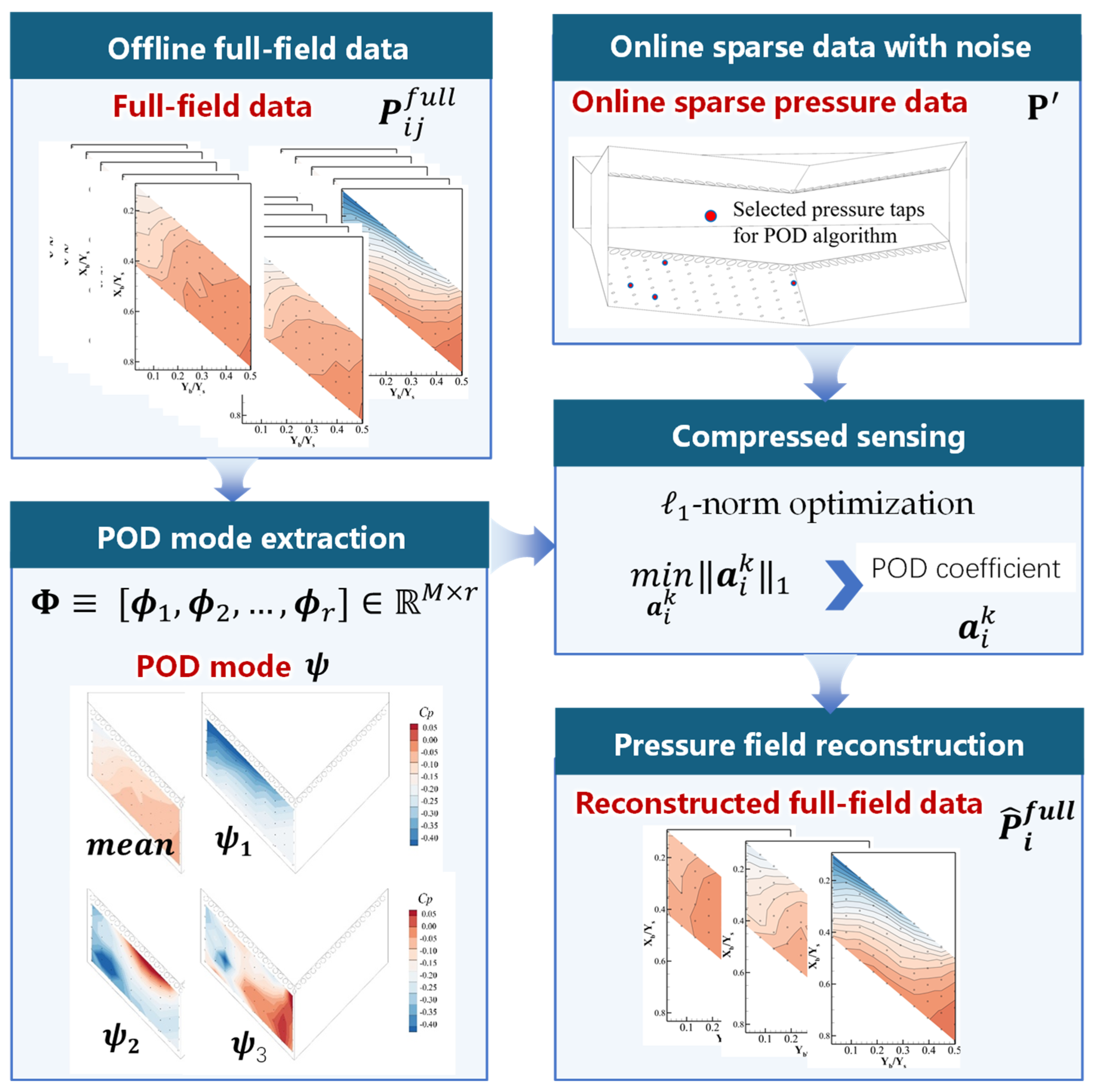
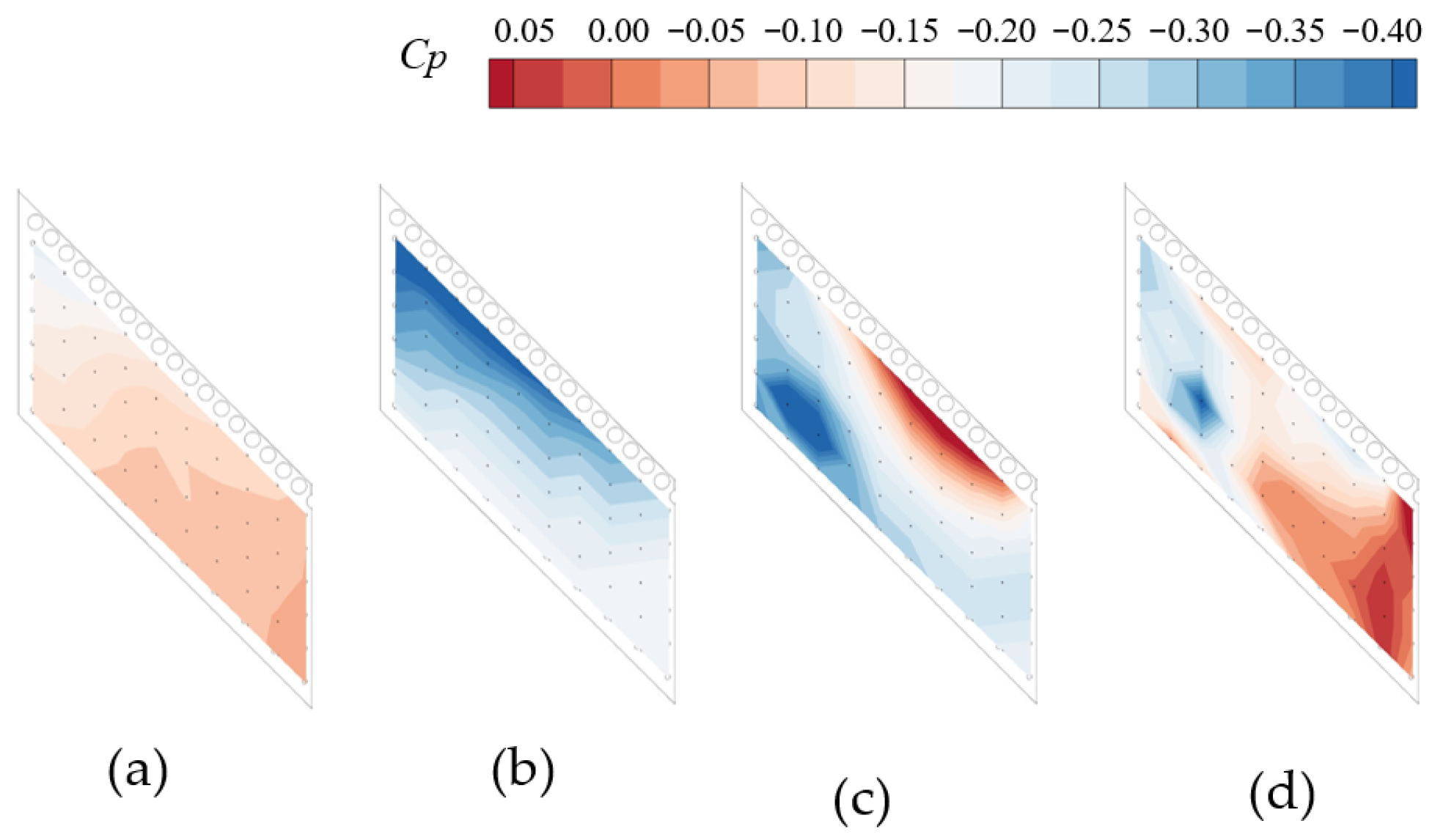
- Pressure field snapshots measured on the Coanda surface of various jet deflection statuses are decomposed using proper orthogonal decomposition (POD). The first two dominant modes are found to capture approximately of the cumulative modal energy, which is sufficient to represent the key three-dimensional features of the pressure field.
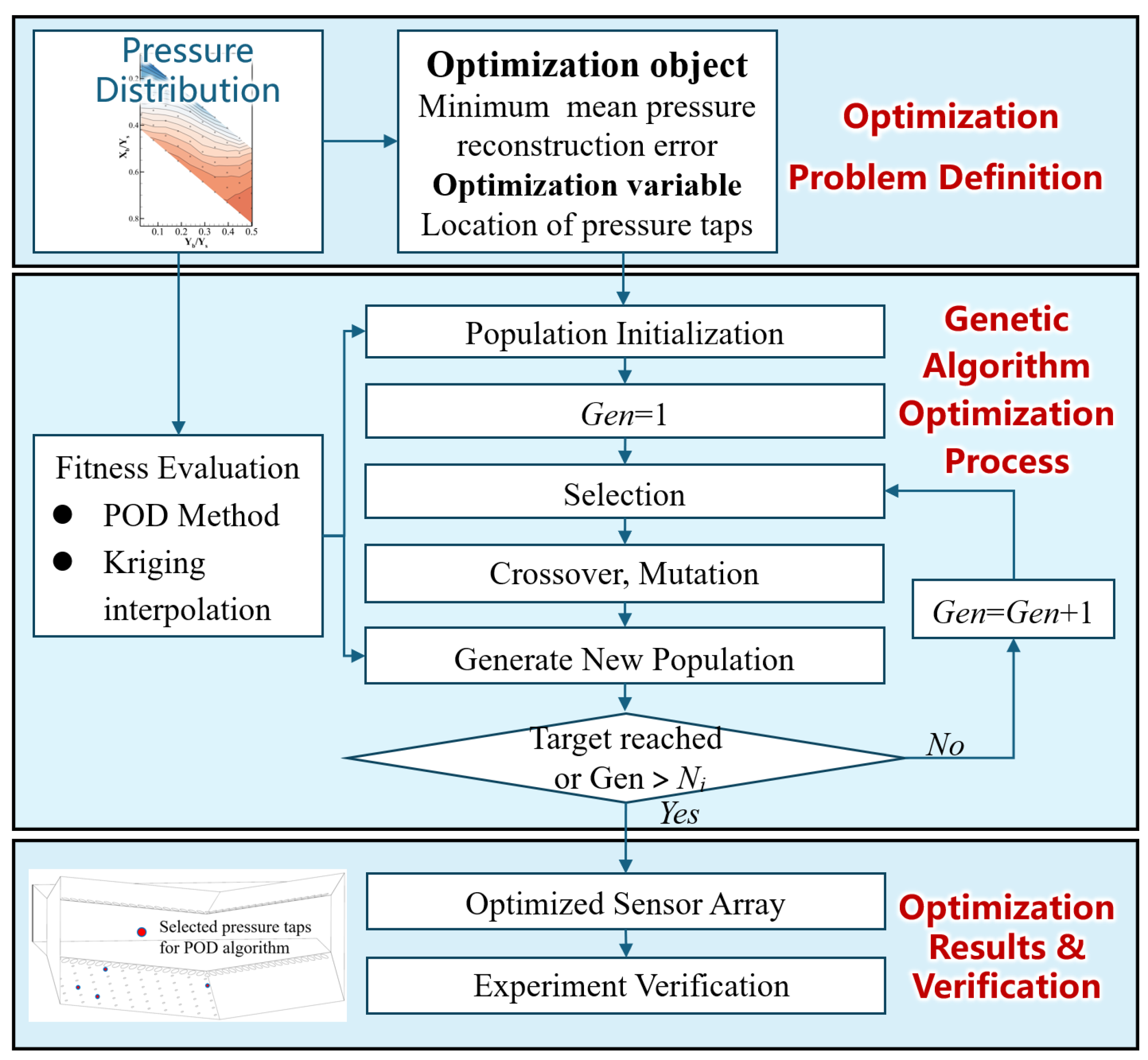
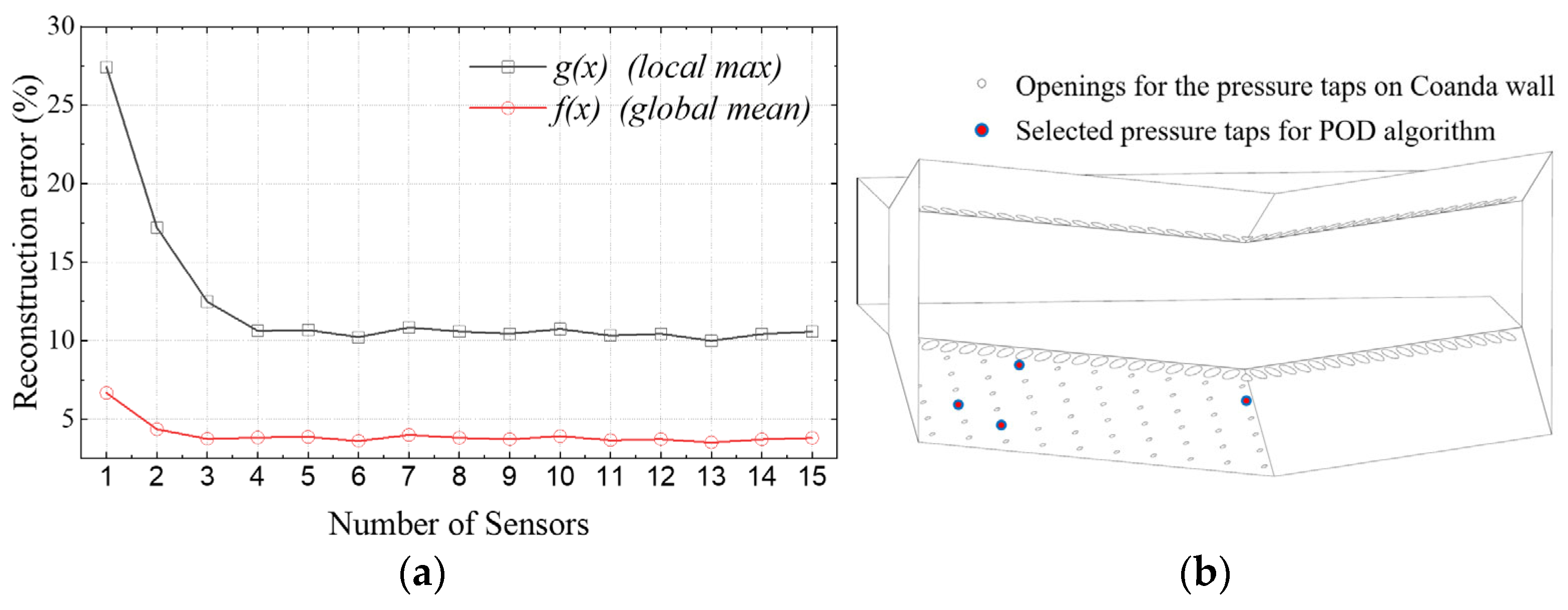
- By combining the POD basis with an -regularized compressed sensing formulation, the full Coanda wall pressure distribution is reconstructed from a limited set of pressure sensors. A genetic algorithm is employed to optimize the locations of pressure taps for a prescribed number of sensors. The reconstruction accuracy improves rapidly as the sensor count increases from one to four for the POD algorithm, after which the error curves gradually approach a plateau.
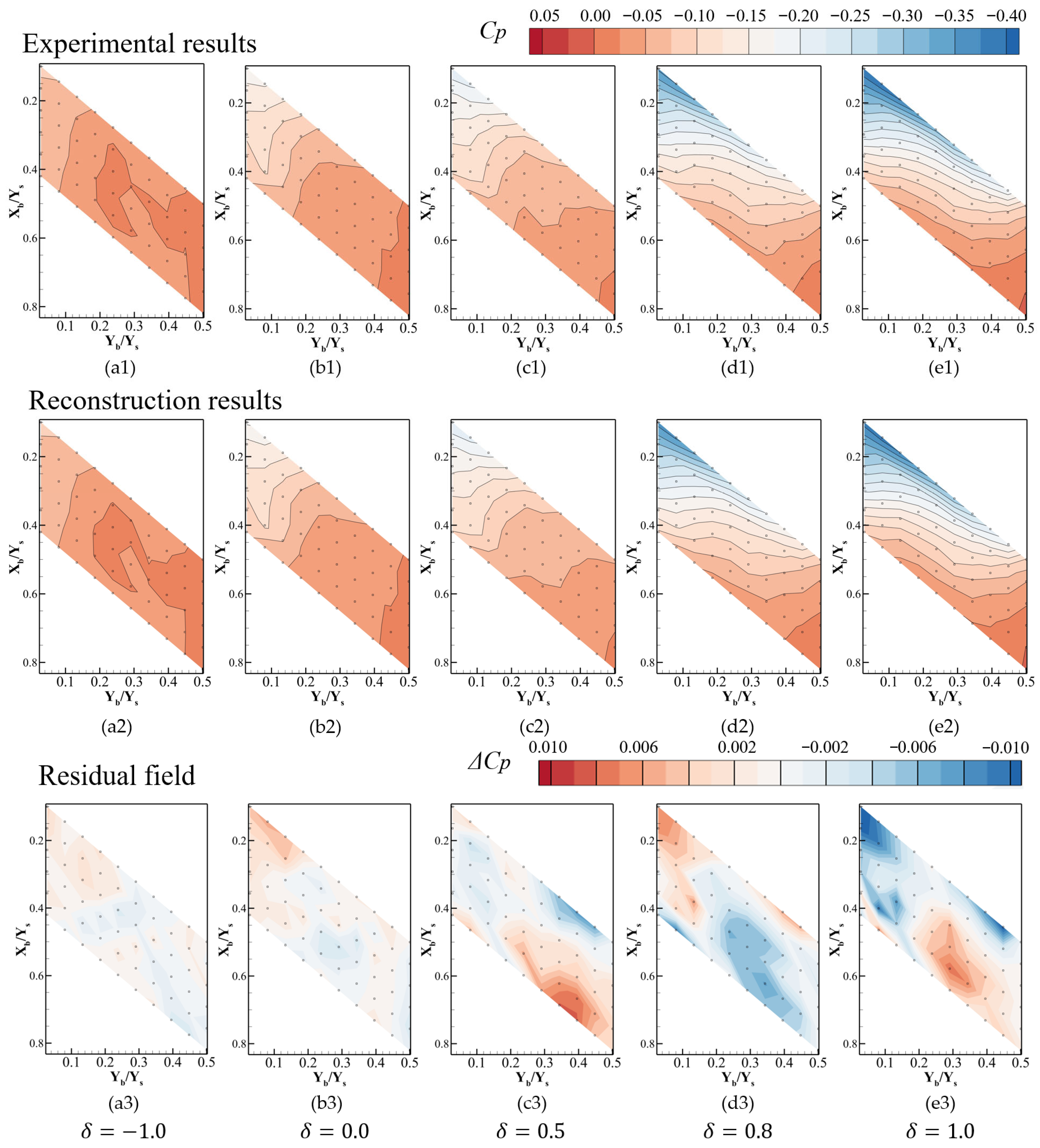
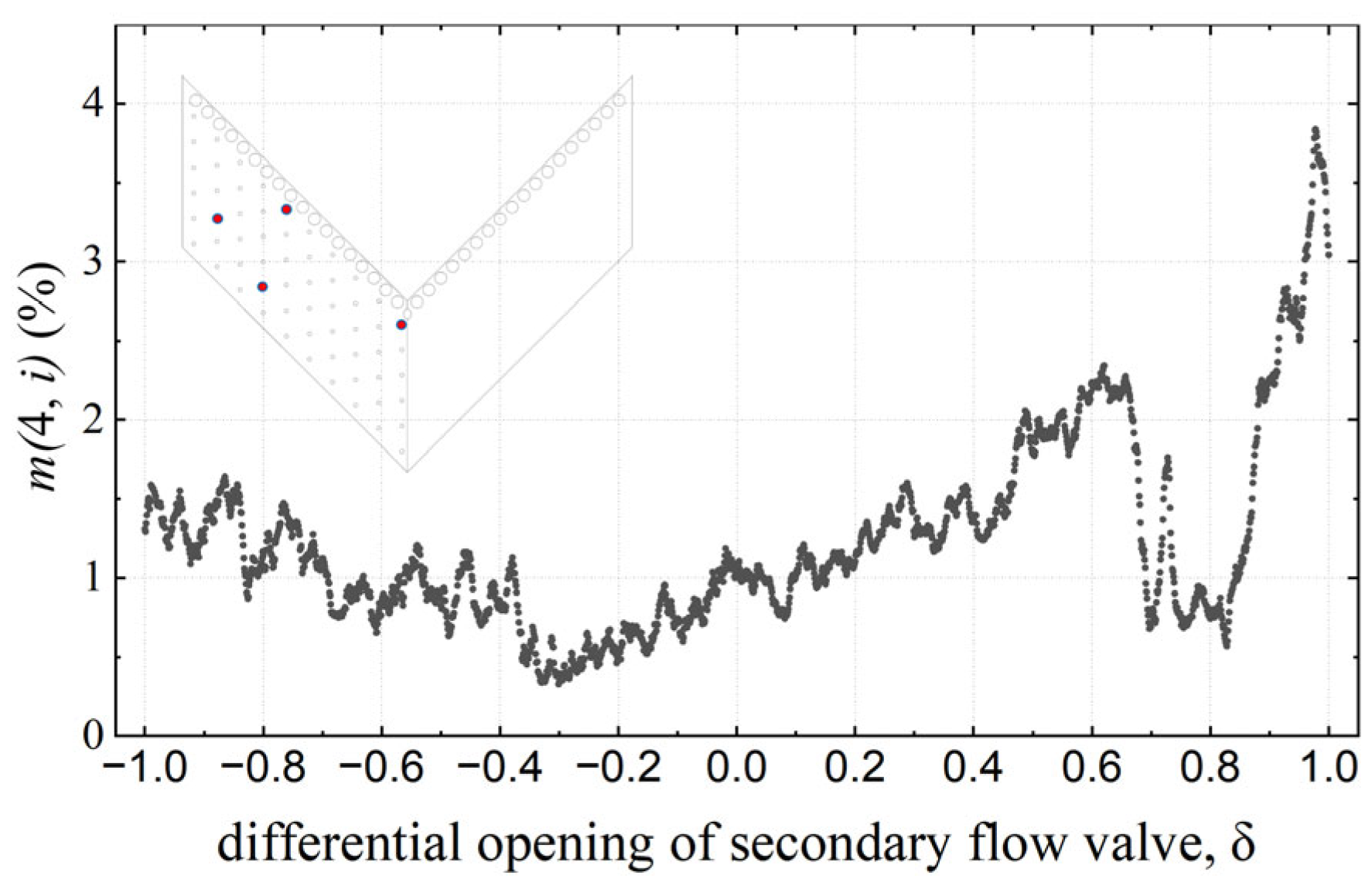
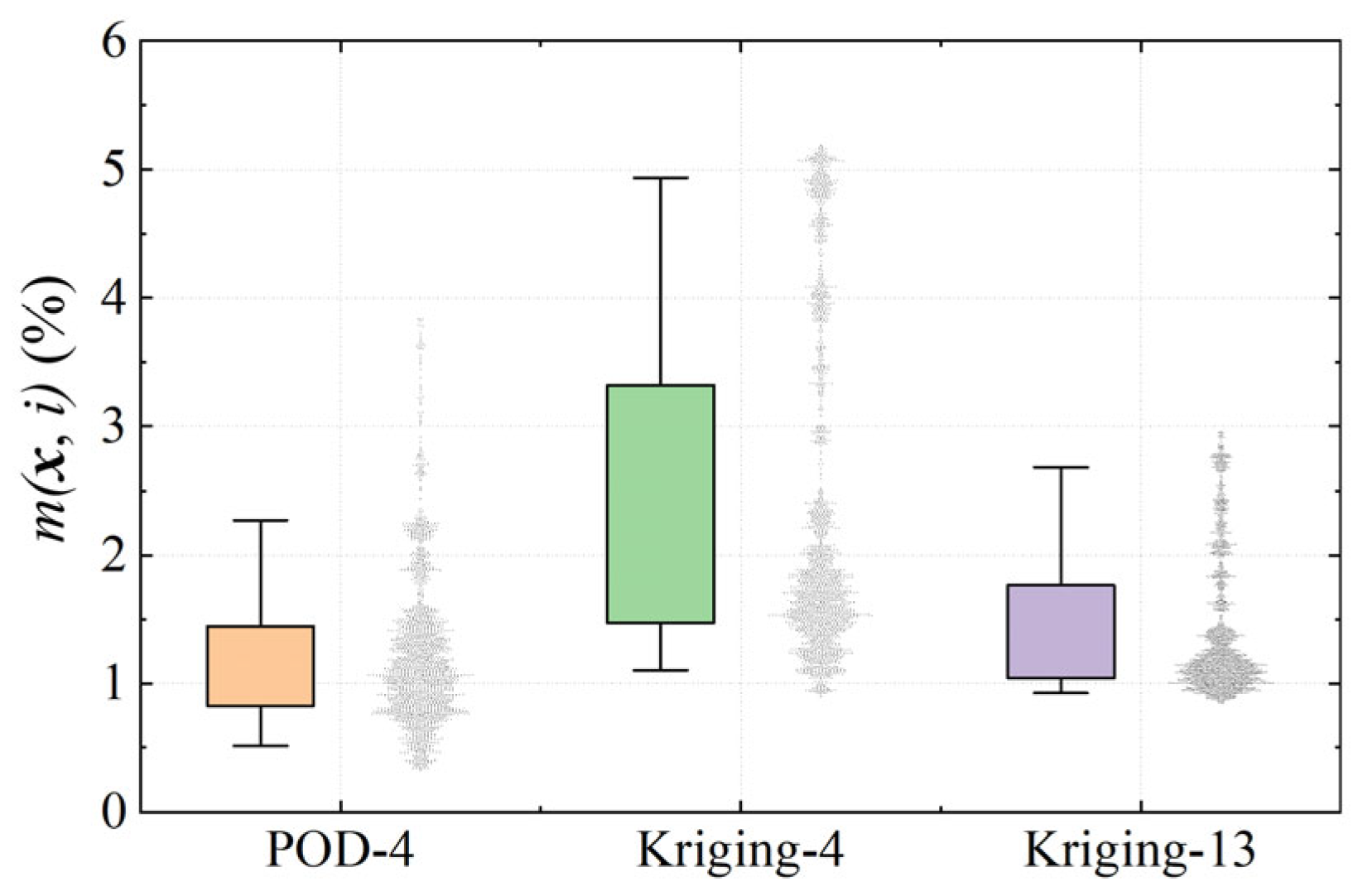
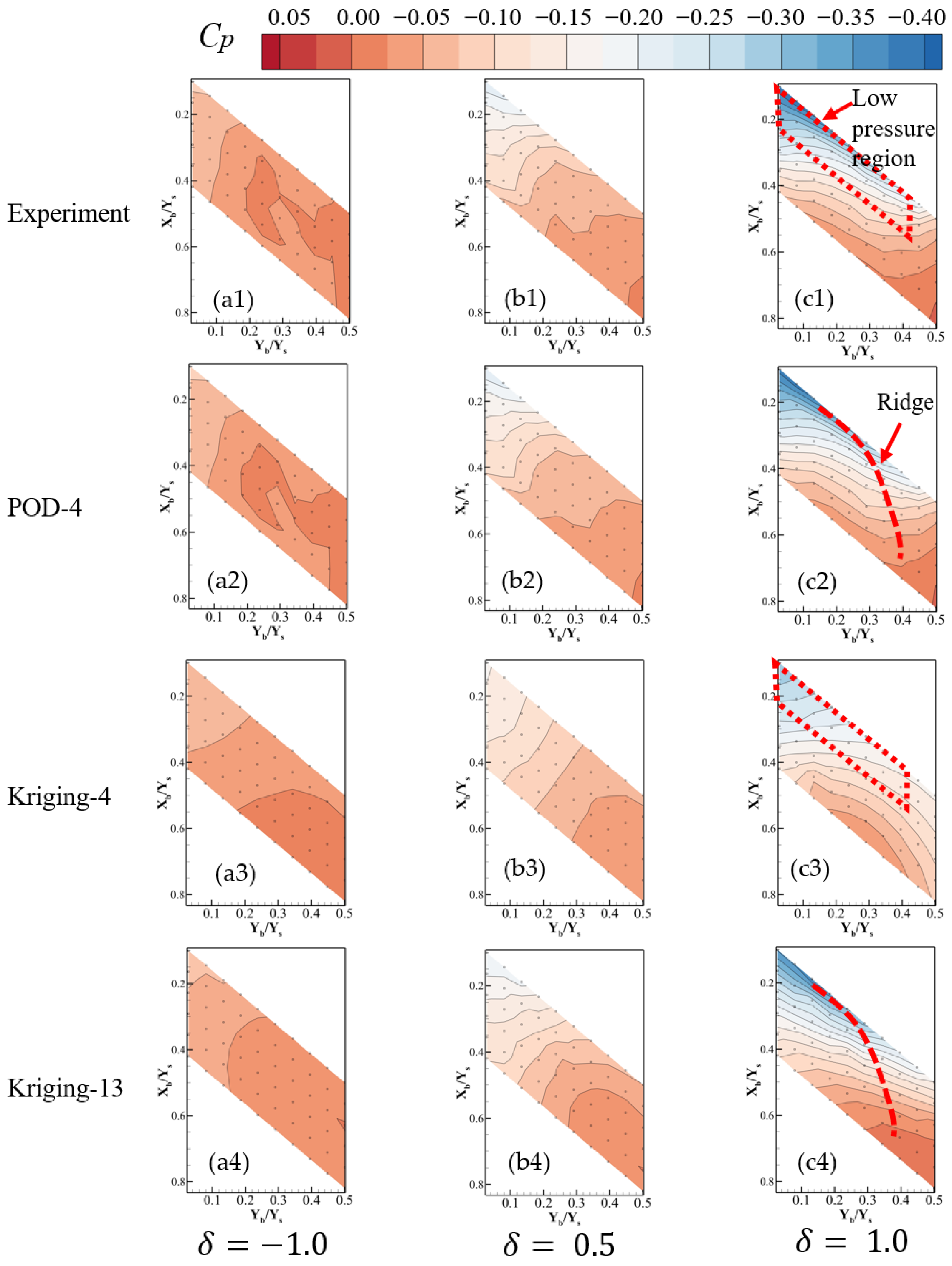
- The reconstructed fields closely matched the experimental measurements over the entire range of jet deflection conditions with only four sensors. The local reconstruction error remained within across the Coanda surface.
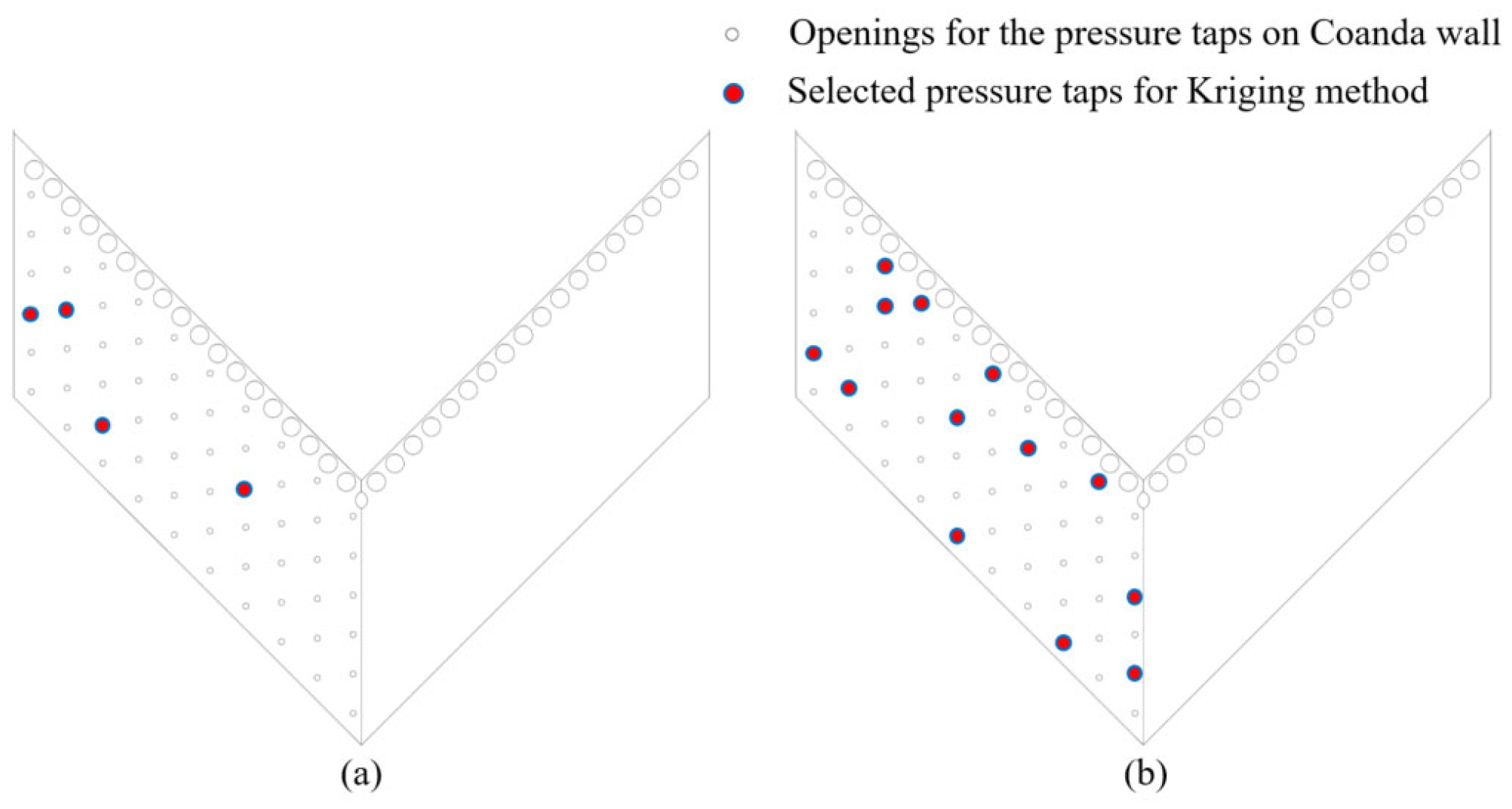
- In contrast, Kriging interpolation required increasing the sensor count to 13 to achieve comparable results to the POD-4 case, yet still exhibited larger errors and less fidelity in the structure of the pressure field.
- Evaluate the application effect of the proposed pressure field reconstruction algorithm under different inflow velocities;
- Predict the aerodynamic forces acting on the fluidic thrust vectoring nozzle using the reconstructed pressure field;
- Estimate the dynamic pressure field;
- Integrate algorithms such as Kalman filtering to enhance the robustness of the proposed algorithm under dynamic conditions and noise interference.
Author Contributions
Funding
Institutional Review Board Statement
Informed Consent Statement
Data Availability Statement
Conflicts of Interest
Nomenclature
| The differential opening of secondary flow valves | |
| X coordinates of pressure tap | |
| Coanda wall chord length | |
| Y coordinates of pressure tap | |
| Twice the length of the nozzle trailing edge | |
| Pressure measured by the pressure sensor | |
| Surface static pressure | |
| Atmospheric pressure | |
| Pressure coefficients | |
| Number of snapshots | |
| Number of wall locations for pressure measurement | |
| Wall pressure value measured at the j-th sensor location in the i-th snapshot | |
| Mean pressure vector | |
| Centered snapshot matrix | |
| Orthonormal matrix obtained from singular value decomposition | |
| Diagonal matrix containing singular values | |
| Matrix of spatial POD modes | |
| Individual POD modes | |
| Matrix of temporal coefficients corresponding to full POD modes | |
| Number of retained dominant POD modes | |
| Reduced modal basis composed of the first m dominant POD modes | |
| Matrix of temporal coefficients corresponding to the reduced modal basis | |
| Instantaneous wall pressure vector | |
| Vector of modal coefficients for the i-th snapshot | |
| Number of finite sensor locations | |
| Sampling matrix | |
| Sparse measurement vector corresponding to the i-th snapshot | |
| Modal coefficients in the compressed sensing framework | |
| Reconstructed full-field wall pressure vector | |
| Sensor layout | |
| Normalized error index, represents local max error | |
| Normalized error index, represents global mean error | |
| ) | |
| ) | |
| Global maximum absolute pressure from the reference dataset | |
| Reconstructed pressure coefficients | |
| Reconstruction pressure coefficient error |
References
- Das, A.K.; Acharyya, K.; Mankodi, T.K.; Saha, U.K. Fluidic Thrust Vector Control of Aerospace Vehicles: State-of-the-Art Review and Future Prospects. J. Fluids Eng. 2023, 145, 080801. [Google Scholar] [CrossRef]
- Deere, K.A. Summary of Fluidic Thrust Vectoring Research Conducted at NASA Langley Research Center. In Proceedings of the 21st AIAA Applied Aerodynamics Conference, Orlando, FL, USA, 23–26 June 2003. [Google Scholar]
- Luo, Y.; Cui, B.; Zhang, H. Review of Thrust Vectoring Technology Applications in Unmanned Aerial Vehicles. Drones 2025, 9, 689. [Google Scholar] [CrossRef]
- Afridi, S.; Khan, T.A.; Shah, S.I.A.; Shams, T.A.; Mohiuddin, K.; Kukulka, D.J. Techniques of Fluidic Thrust Vectoring in Jet Engine Nozzles: A Review. Energies 2023, 16, 5721. [Google Scholar] [CrossRef]
- Bowers, A.H.; Pahle, J.W. Thrust Vectoring on the NASA F-18 High Alpha Research Vehicle; NASA Technical Memorandum 4771; NASA Dryden Flight Research Center: Edwards, CA, USA, 1996. [Google Scholar]
- Warsop, C.; Forster, M.; Crowther, W.J. NATO AVT-239 Task Group: Supercritical Coanda-Based Circulation Control and Fluidic Thrust Vectoring. In Proceedings of the AIAA SciTech 2019 Forum, San Diego, CA, USA, 7–11 January 2019. [Google Scholar] [CrossRef]
- Shi, N.X.; Gu, Y.S.; Zhou, Y.H.; Wang, L.X.; Feng, C.; Li, L.K. Mechanism of Hysteresis and Uncontrolled Deflection in Jet Vectoring Control Based on Coanda Effect. Phys. Fluids 2022, 34, 084107. [Google Scholar] [CrossRef]
- Smith, B.L.; Glezer, A. Jet Vectoring Using Synthetic Jets. J. Fluid Mech. 2002, 458, 1–34. [Google Scholar] [CrossRef]
- Zaitsev, E.G. Investigation of the propagation of a two-dimensional wall jet over a step. Fluid Dyn. 1991, 26, 526–530. [Google Scholar] [CrossRef]
- Zivkovic, S.; Milinovic, M.; Gligorijevic, N.; Pavic, M. Experimental research and numerical simulations of thrust vector control nozzle flow. Aeronaut. J. 2016, 120, 1153–1174. [Google Scholar] [CrossRef]
- Zhou, Y.; Gu, Y.; Li, L.; Wang, Y.; Shi, N.X.; Huang, Z. Research on fluidic thrust vector technology based on passive secondary flow with dual inclined walls under low subsonic speed. Exp. Therm. Fluid Sci. 2024, 155, 111200. [Google Scholar] [CrossRef]
- Huang, Z.; Gu, Y.S.; Li, L.K.; Wu, Z.M.; Zhou, Y.H.; Deng, S. Trailing-Edge Beveling Effect on Passive Fluidic Thrust Vectoring Nozzle Jet Deflection Control. Aerospace 2025, 12, 1091. [Google Scholar] [CrossRef]
- Shi, N.; Gu, Y.; Wu, T.; Zhou, Y.; Wang, Y.; Deng, S. An Optimized Pressure-Based Method for Thrust Vectoring Angle Estimation. Aerospace 2023, 10, 978. [Google Scholar] [CrossRef]
- Strykowski, P.J. An Experimental/Modeling Study of Jet Attachment during Counterflow Thrust Vectoring. NASA CR-204436. 1997. Available online: https://ntrs.nasa.gov/citations/19970018356 (accessed on 17 October 2022).
- Candès, E.J.; Romberg, J.; Tao, T. Robust Uncertainty Principles: Exact Signal Reconstruction from Highly Incomplete Frequency Information. IEEE Trans. Inf. Theory 2006, 52, 489–509. [Google Scholar] [CrossRef]
- Mifsud, M.; Vázquez, M.; D’Alessandro, V. Fusing Wind-Tunnel Measurements and CFD Data Using Constrained Gappy proper orthogonal decomposition. Aerosp. Sci. Technol. 2019, 86, 312–326. [Google Scholar] [CrossRef]
- Bai, Z.; Wimalajeewa, T.; Berger, Z.; Wang, G.; Glauser, M.; Varshney, P.K. Low-Dimensional Approach for Reconstruction of Airfoil Data via Compressive Sensing. AIAA J. 2014, 54, 1098–1102. [Google Scholar] [CrossRef]
- Zhao, X.; Du, L.; Peng, X.H.; Deng, Z.C.; Zhang, W.W. Research on refined reconstruction method of airfoil pressure based on compressed sensing. Theor. Appl. Mech. Lett. 2021, 11, 100223. [Google Scholar] [CrossRef]
- Wei, W.; Xue, Y.; Lin, J.; Cheng, S.; Zhang, J.; Chen, X. Experimental Design and Regional Reconstruction Method for Wind Tunnel Pressure Measurements on Flight Vehicles. Acta Aerodyn. Sin. 2024, 42, 63–74. [Google Scholar] [CrossRef]
- Zhao, X.; Deng, Z.; Zhang, W. Sparse Reconstruction of Surface Pressure Coefficient Based on Compressed Sensing. Exp. Fluids 2022, 63, 156. [Google Scholar] [CrossRef]
- Zhong, Y.; Fukami, K.; An, B.; Taira, K. Sparse Sensor Reconstruction of Vortex-Impinged Airfoil Wake with Machine Learning. arXiv 2023, arXiv:2305.05147. [Google Scholar] [CrossRef]
- Srivastava, A.; Meade, A.J.; Long, K.R. Learning Air-Data Parameters for Flush Air Data Sensing Systems. J. Aerosp. Comput. Inf. Commun. 2012, 9, 373–386. [Google Scholar] [CrossRef]
- Liu, Y.; Xiao, D. Trade-Off Design of Measurement Tap Configuration and Solving Model for a Flush Air Data Sensing System. Measurement 2016, 90, 278–285. [Google Scholar] [CrossRef]
- Gálvez, A.; Cobo, A.; Puig-Pey, J.; Iglesias, A. Particle Swarm Optimization for Bézier Surface Reconstruction. In Computational Science—ICCS 2008; Bubak, M., van Albada, G.D., Dongarra, J., Sloot, P.M.A., Eds.; Springer: Berlin/Heidelberg, Germany, 2008; Volume 5101, pp. 504–513. [Google Scholar]
- Wang, P.; Hu, G.; Hu, W.; Xue, X.; Tao, J.; Wen, H. Deep Learning-Based Rapid Flow Field Reconstruction Model with Limited Monitoring Point Information. Aerospace 2024, 11, 871. [Google Scholar] [CrossRef]
- Qiu, B.; Fu, J.; Kong, X.; Zhang, H.; Yu, Q. Investigations on the Aerodynamic Interactions Between Turbine and Diffuser System by Employing the Kriging Method. Energies 2025, 18, 921. [Google Scholar] [CrossRef]
- Choi, S.; Lee, S.; Kim, D.; Seo, I.W.; Kang, Y.; Jeong, B. Three-Dimensional Field Investigation of Mixing Dynamics in a River Confluence Using a Mixing Proximity Index (MPI). Water 2025, 17, 3596. [Google Scholar] [CrossRef]
- Soto Sagredo, E.; Andersen, S.J. Wind-Field Estimation for Lidar-Assisted Control: A Comparison of Proper Orthogonal Decomposition and Interpolation Techniques. Wind Energy Sci. Discuss. 2025. [Google Scholar] [CrossRef]
- Berkooz, G.; Holmes, P.; Lumley, J.L. The Proper Orthogonal Decomposition in the Analysis of Turbulent Flows. Annu. Rev. Fluid Mech. 1993, 25, 539–575. [Google Scholar] [CrossRef]
- Willcox, K. Unsteady Flow Sensing and Estimation via the Gappy Proper Orthogonal Decomposition. Comput. Fluids 2006, 35, 208–226. [Google Scholar] [CrossRef]



| Axis | ||
|---|---|---|
| Value | 0.10, 0.26, 0.42, 0.58, 0.74, 0.90 | 0.05, 0.15, 0.25, 0.35, 0.45 0.55, 0.65, 0.75, 0.85, 0.95 |
| Parameter | Symbol | Accuracy |
|---|---|---|
| Coanda Wall Deflection Angle | ||
| Nozzle Exit Width | ||
| Nozzle Inlet Height | ||
| Nozzle Outlet Height | ||
| Coanda Wall Chord Length |
Disclaimer/Publisher’s Note: The statements, opinions and data contained in all publications are solely those of the individual author(s) and contributor(s) and not of MDPI and/or the editor(s). MDPI and/or the editor(s) disclaim responsibility for any injury to people or property resulting from any ideas, methods, instructions or products referred to in the content. |
© 2026 by the authors. Licensee MDPI, Basel, Switzerland. This article is an open access article distributed under the terms and conditions of the Creative Commons Attribution (CC BY) license.
Share and Cite
Huang, Z.; Gu, Y.; Xu, Q.; Li, L. Sparse Reconstruction of Pressure Field for Wedge Passive Fluidic Thrust Vectoring Nozzle. Sensors 2026, 26, 811. https://doi.org/10.3390/s26030811
Huang Z, Gu Y, Xu Q, Li L. Sparse Reconstruction of Pressure Field for Wedge Passive Fluidic Thrust Vectoring Nozzle. Sensors. 2026; 26(3):811. https://doi.org/10.3390/s26030811
Chicago/Turabian StyleHuang, Zi, Yunsong Gu, Qiuhui Xu, and Linkai Li. 2026. "Sparse Reconstruction of Pressure Field for Wedge Passive Fluidic Thrust Vectoring Nozzle" Sensors 26, no. 3: 811. https://doi.org/10.3390/s26030811
APA StyleHuang, Z., Gu, Y., Xu, Q., & Li, L. (2026). Sparse Reconstruction of Pressure Field for Wedge Passive Fluidic Thrust Vectoring Nozzle. Sensors, 26(3), 811. https://doi.org/10.3390/s26030811