Calibration of Low-Cost Sensors for PM10 and PM2.5 Based on Artificial Intelligence for Smart Cities

Highlights
- Improved calibration results using Fast DTW for data preprocessing.
- Comparative analysis of LCS calibration performance using statistical methods, machine learning models and deep learning.
- Determination of the feasibility of using calibrated LCS as a complement to traditional RMCA in the city of Bogotá.
- Application of machine learning models for LCS calibration.
Abstract
1. Introduction
2. Materials and Methods
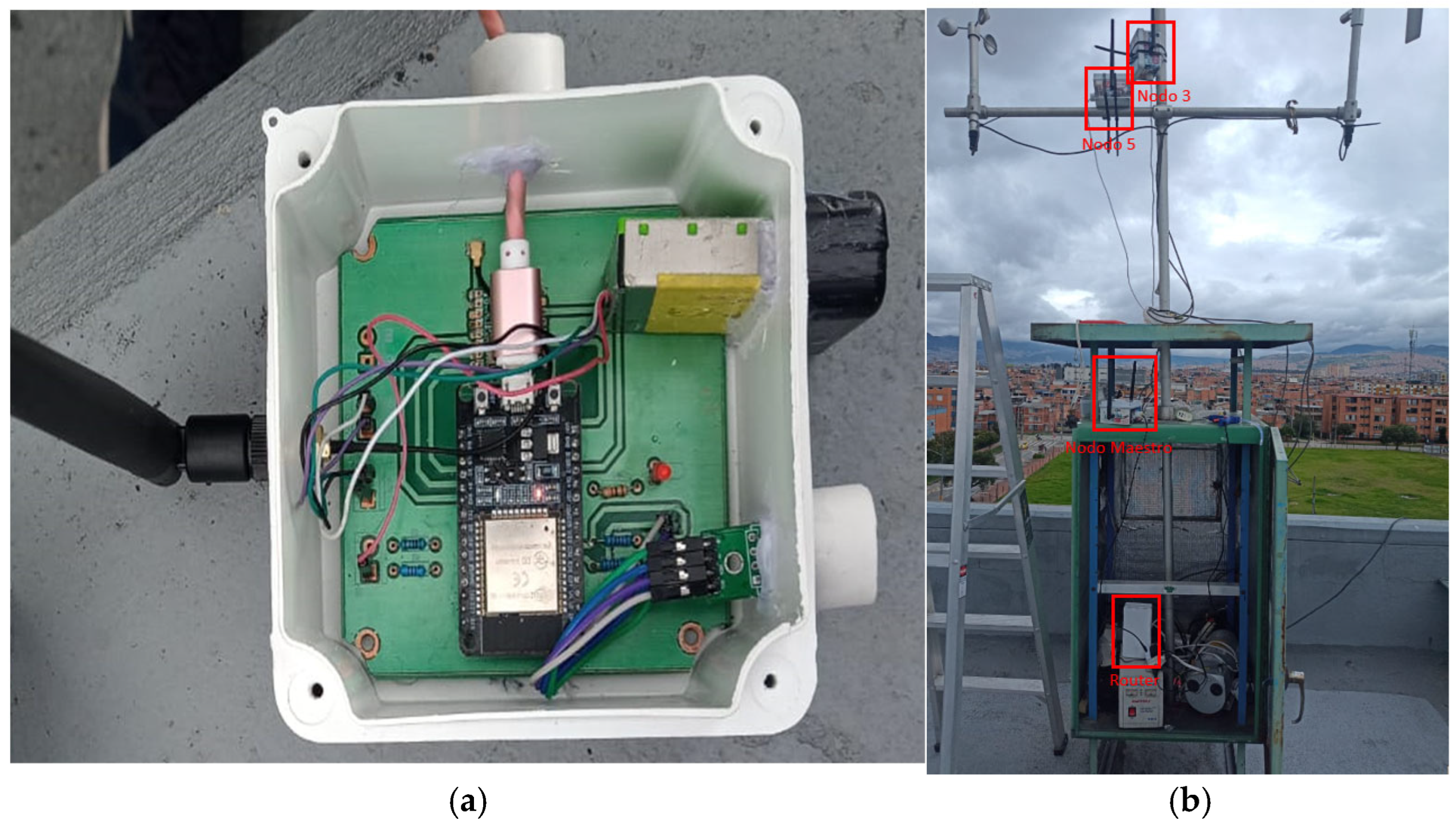
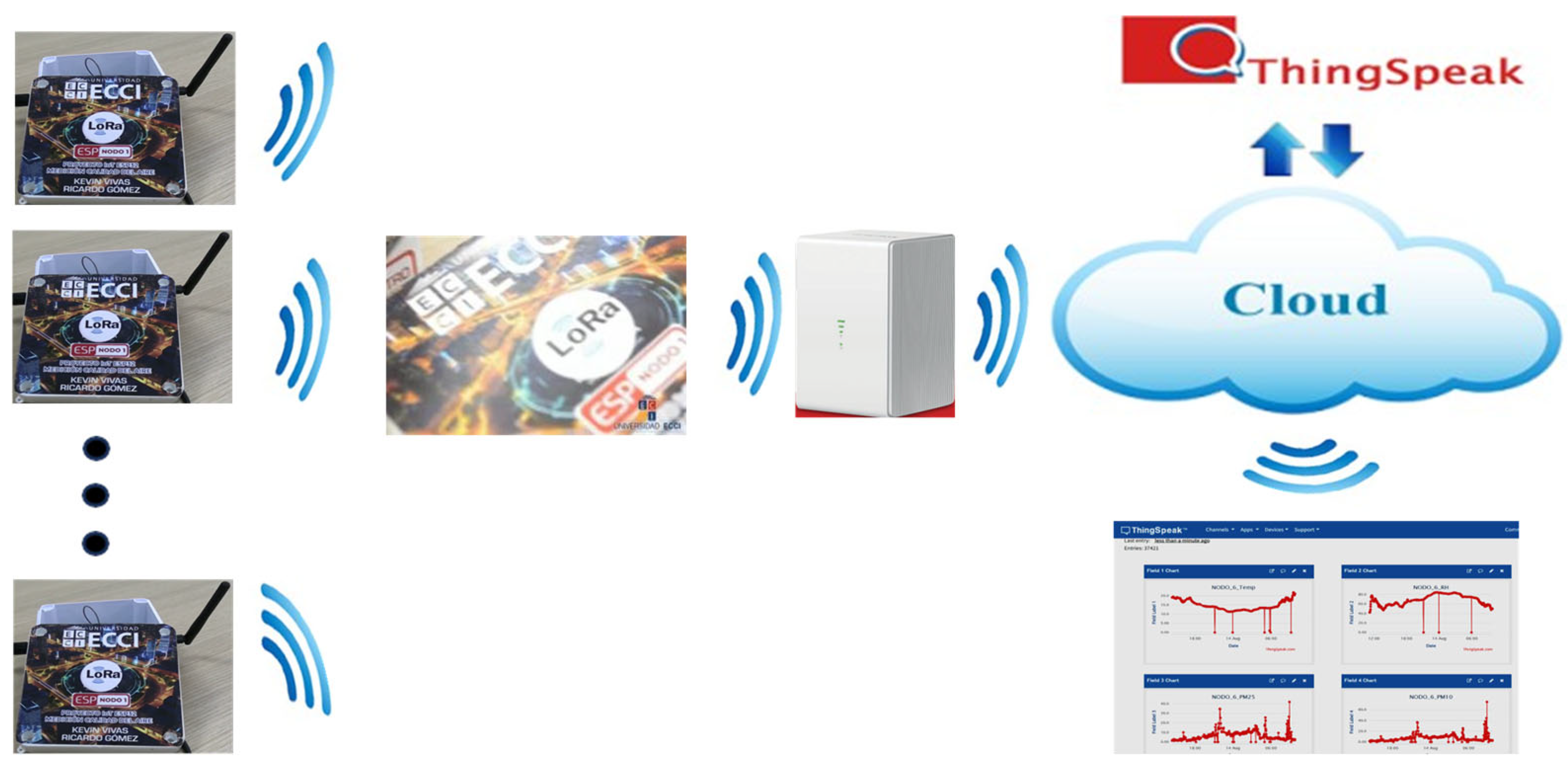
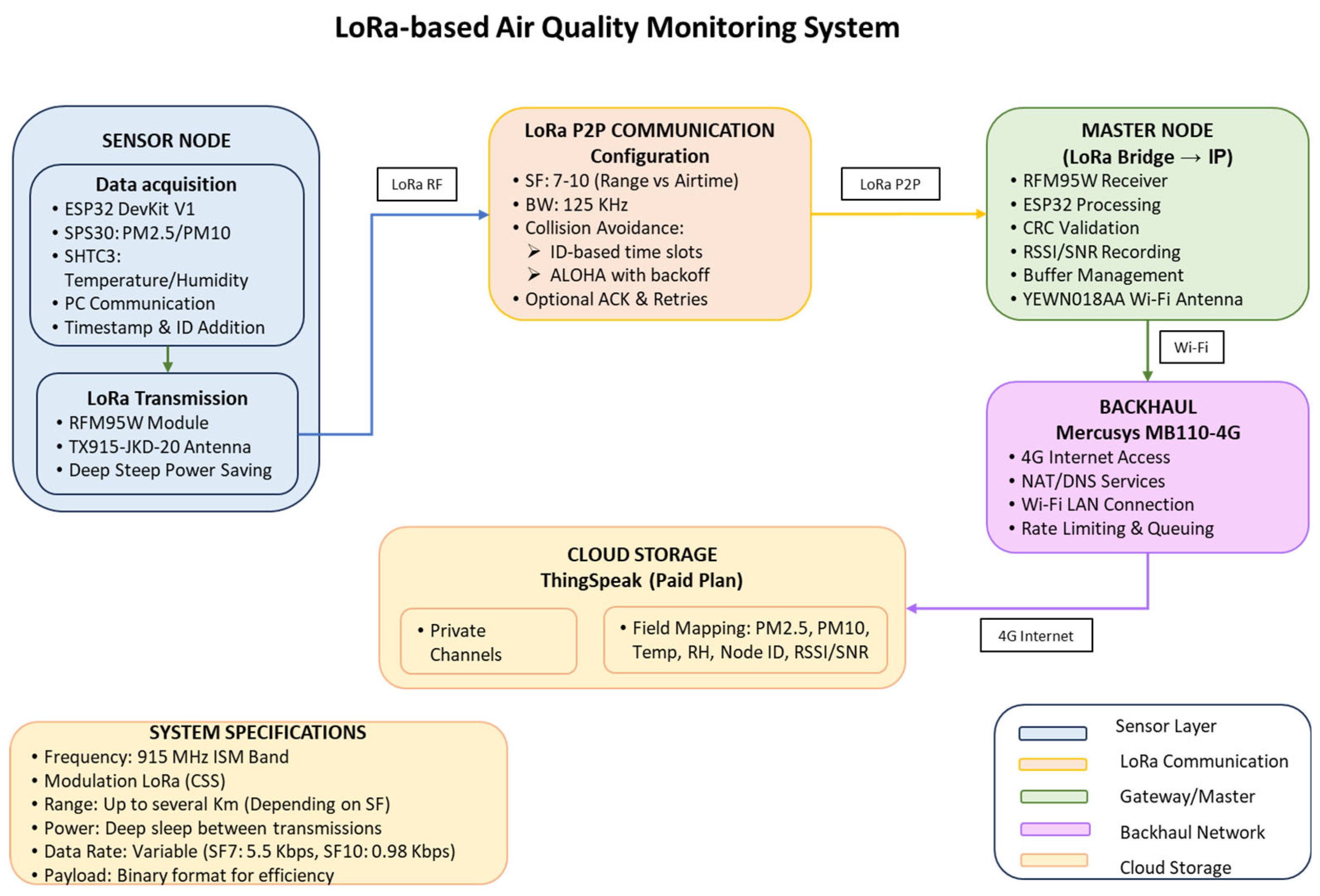
2.1. Monitoring Implementation and Cloud Storage
2.2. Data Preprocessing
Rationale (Why These Steps)
- Temporal synchronization: Measurements from the LCS and T640X were aligned using UTC timestamps at one-minute intervals. Offsets caused by optical sensor latency were corrected to ensure temporal comparability. Such co-location and temporal alignment constitute standard practice in the calibration of LCS networks.
- Normalization: To homogenize the scale of sensor data, PM10 concentrations were rescaled to the [0, 1] range using:
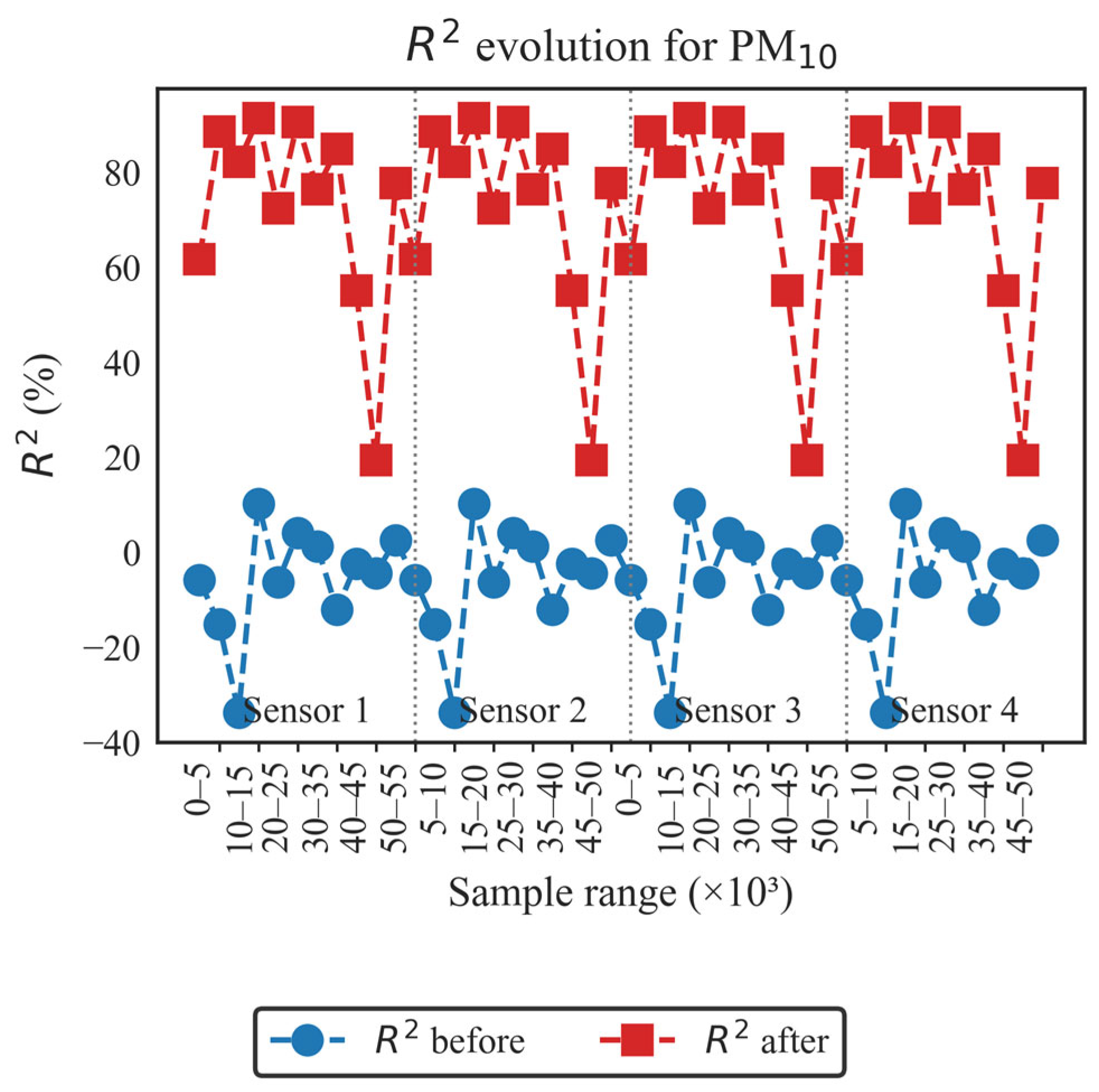
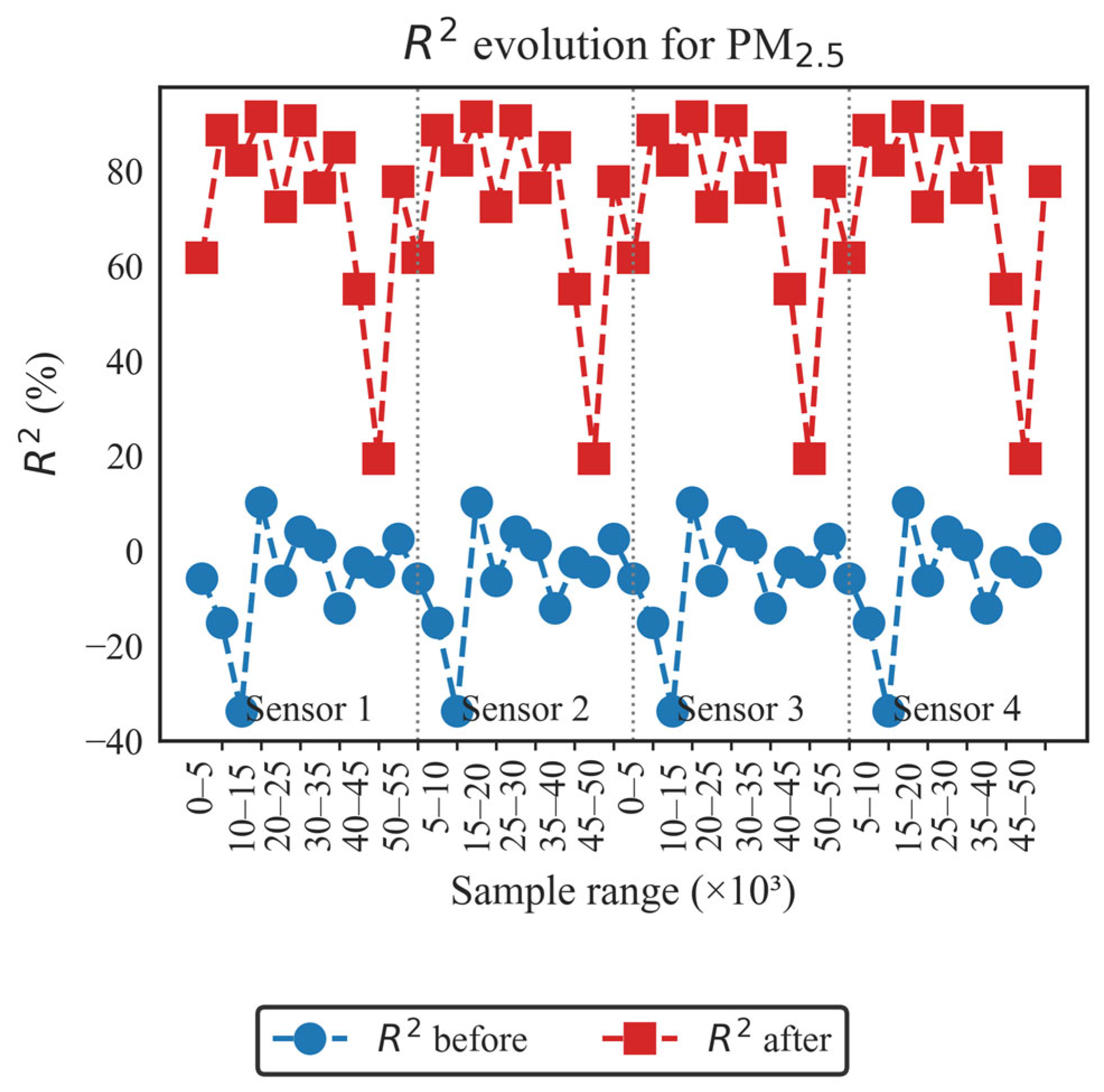
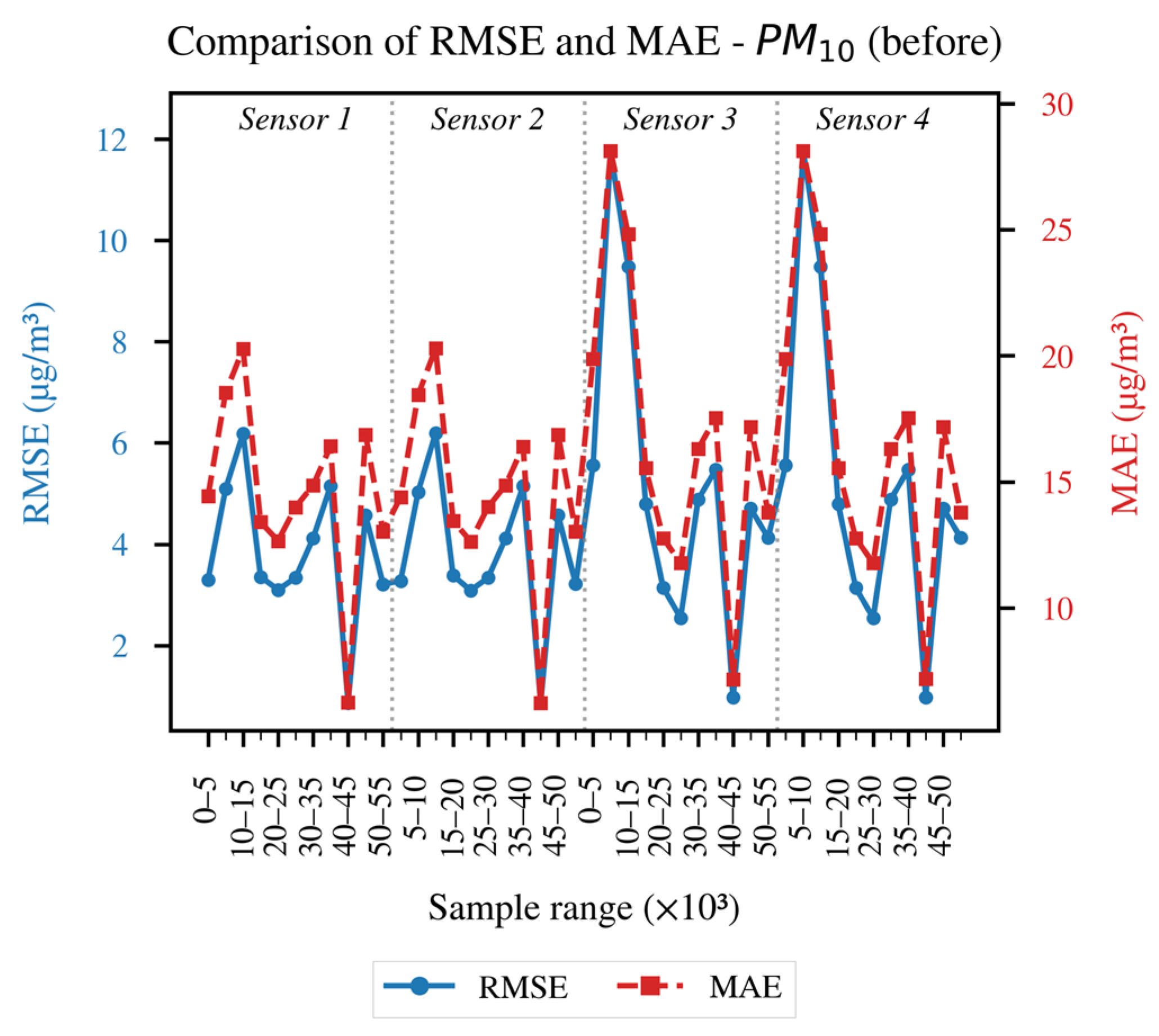
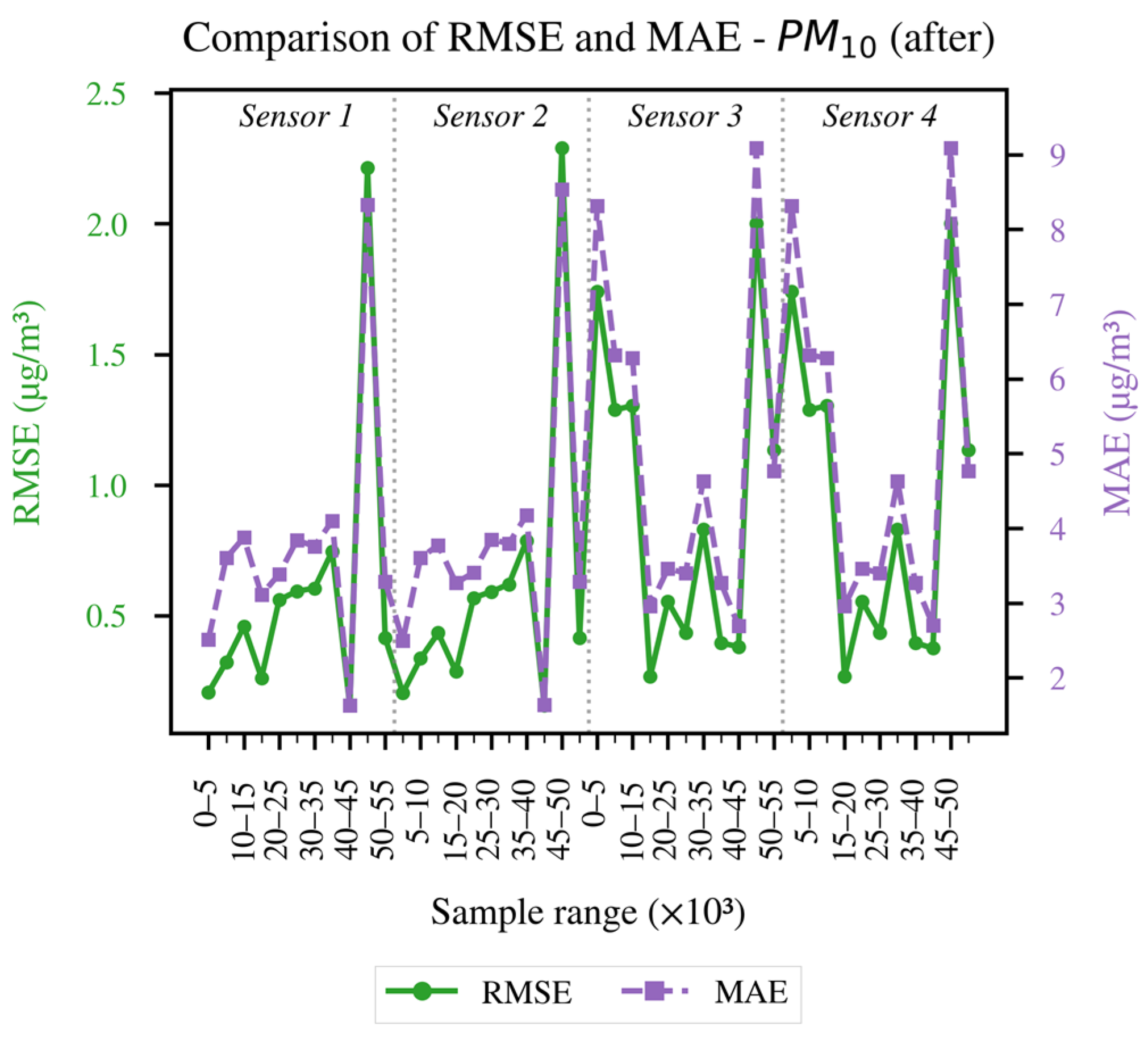
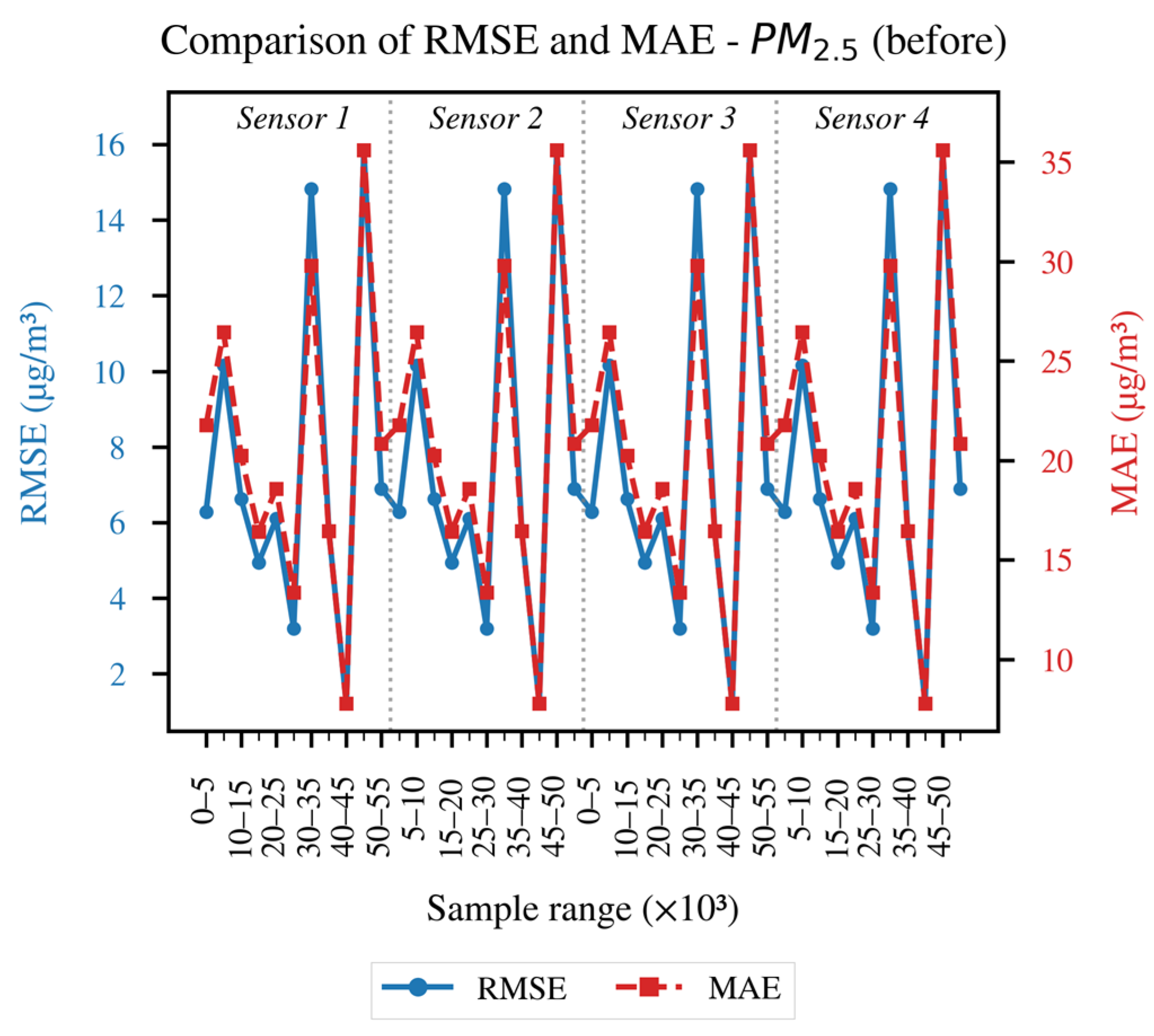
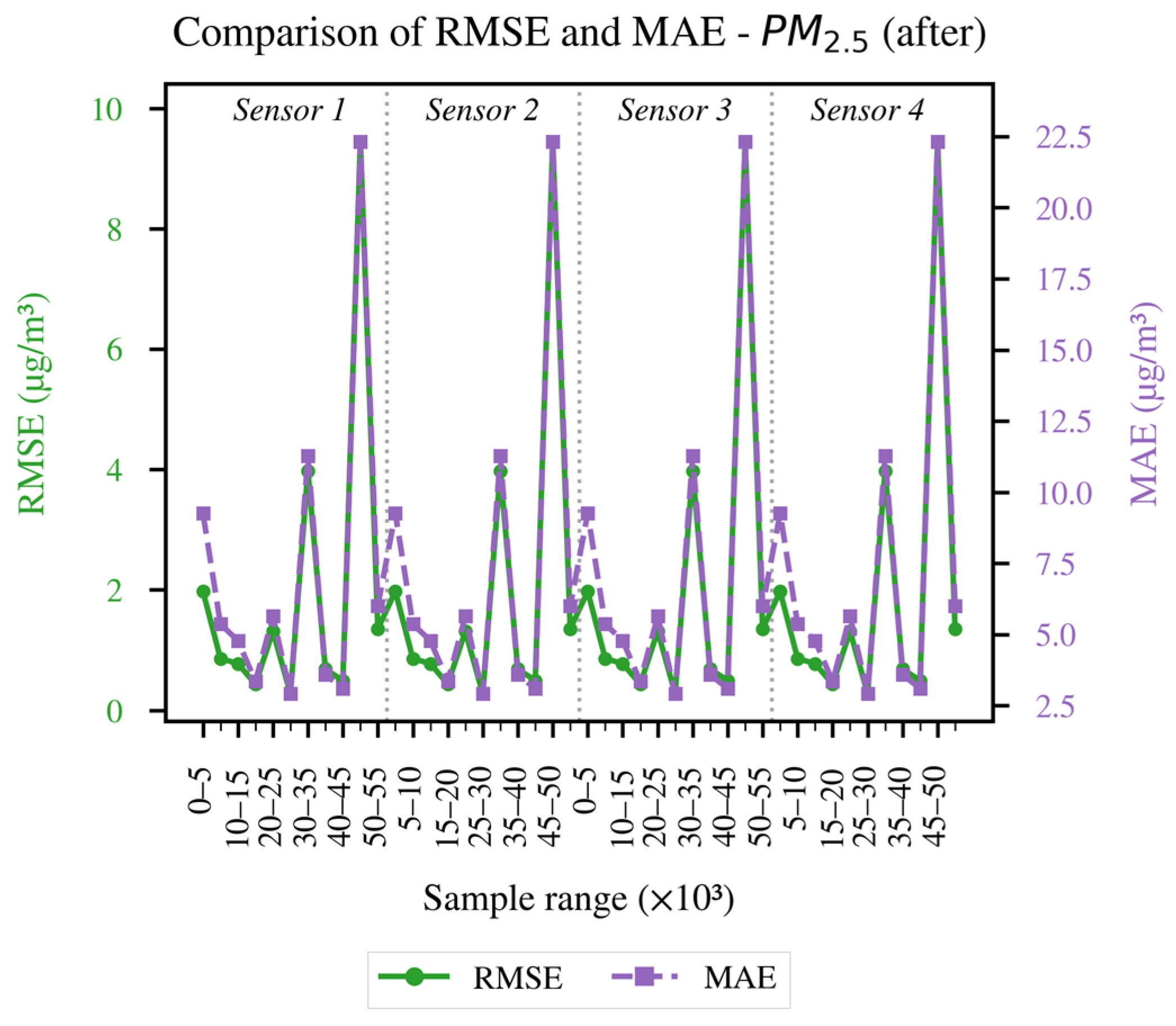
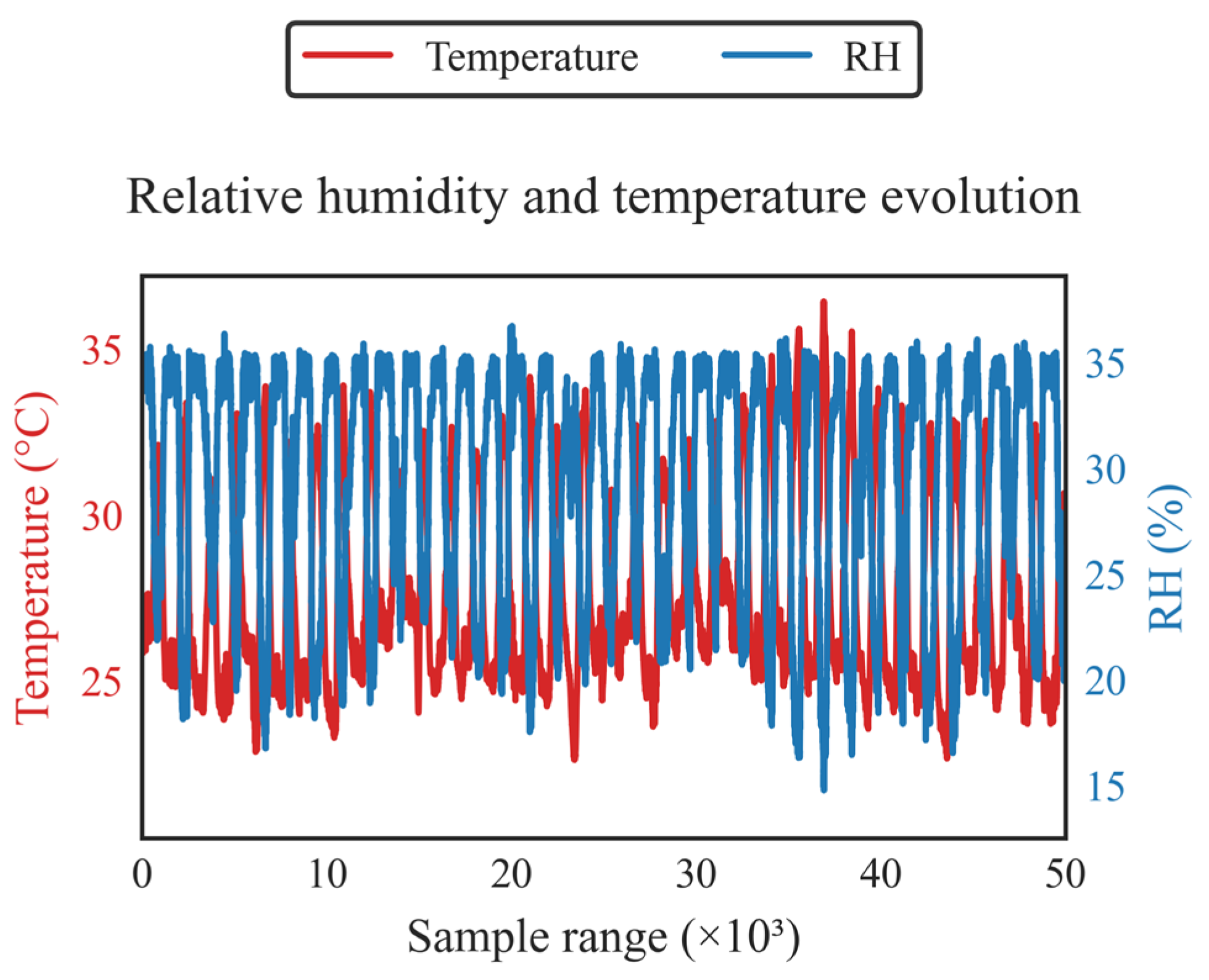
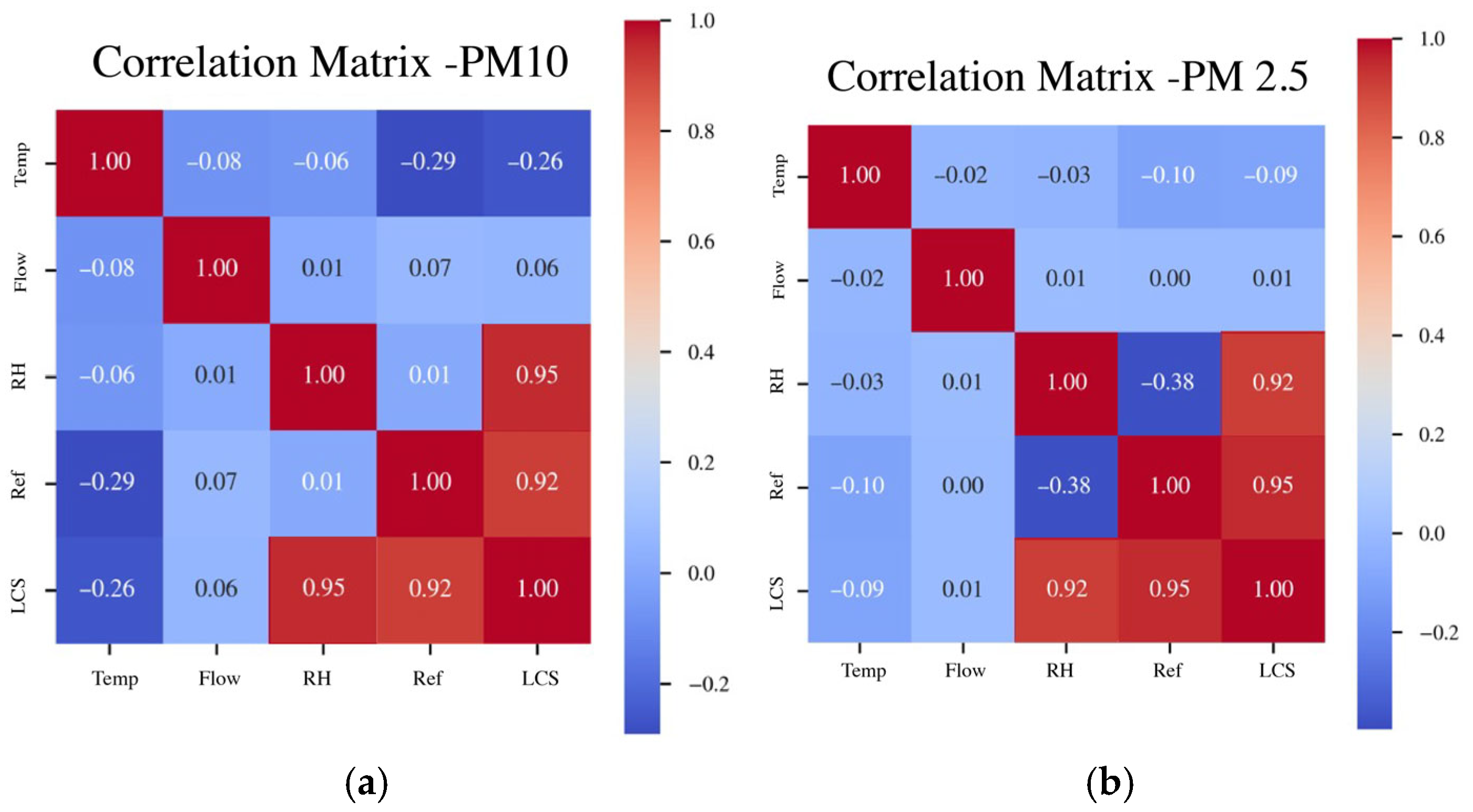
- Data segmentation: The data were divided into blocks of 5000 samples, yielding 11 data sets for each of the four sensors. This approach was adopted to facilitate the analysis of environmental conditions-specifically, the impact of RH on the accuracy of PM readings-a factor identified as critical for the calibration of Low-Cost Sensors (LCS) in the reviewed literature [15].
- FastDTW application: To measure similarity between time series exhibiting potential temporal offsets, the Fast Dynamic Time Warping (FastDTW) algorithm was employed. This method serves as an efficient approximation of the classical Dynamic Time Warping (DTW) technique, which determines the optimal alignment between two series by minimizing the total distance. While DTW possesses a quadratic complexity of O(N2)—rendering it computationally expensive for extended sequences—FastDTW significantly reduces this complexity to approximately O(N) with minimal loss of accuracy. This enhancement is achieved through a multi-level resolution strategy, which executes DTW on progressively more detailed iterations of the time series [16]. Consequently, the implementation of FastDTW facilitates rapid and sufficiently accurate alignments suitable for the requirements of this study.
- DTW and FastDTW have also been utilized as temporal alignment tools in fields such as biomedicine, where DTW has been applied to voice signals to align patterns and generate severity biomarkers in COVID-19 patients [17]. Similarly, in finance, multidimensional DTW has been employed to identify “lead–lag” relationships between time series, underscoring its capability to align trajectories with time-varying shifts [18].
- The calculation of Statistical metrics such as R2 (Coefficient of Determination), RMSE (Root Mean Square Error), and MAE (mean absolute error) was performed both before and after preprocessing. This approach helped quantify the level of agreement with the T640X data. The use of these metrics follows recent recommendations for comparing co-located calibrators and is now widely adopted, as highlighted by [19,20].
- ○
- R2 indicates how well the data fit a statistical model, with values close to 1 suggesting a strong fit.
- ○
- RMSE measures the average magnitude of the errors between predicted and observed values, providing insight into the model’s accuracy.
- ○
- MAE calculates the average absolute errors, offering a straightforward measure of prediction accuracy without emphasizing larger errors.
2.3. Calibration of LCS Sensors
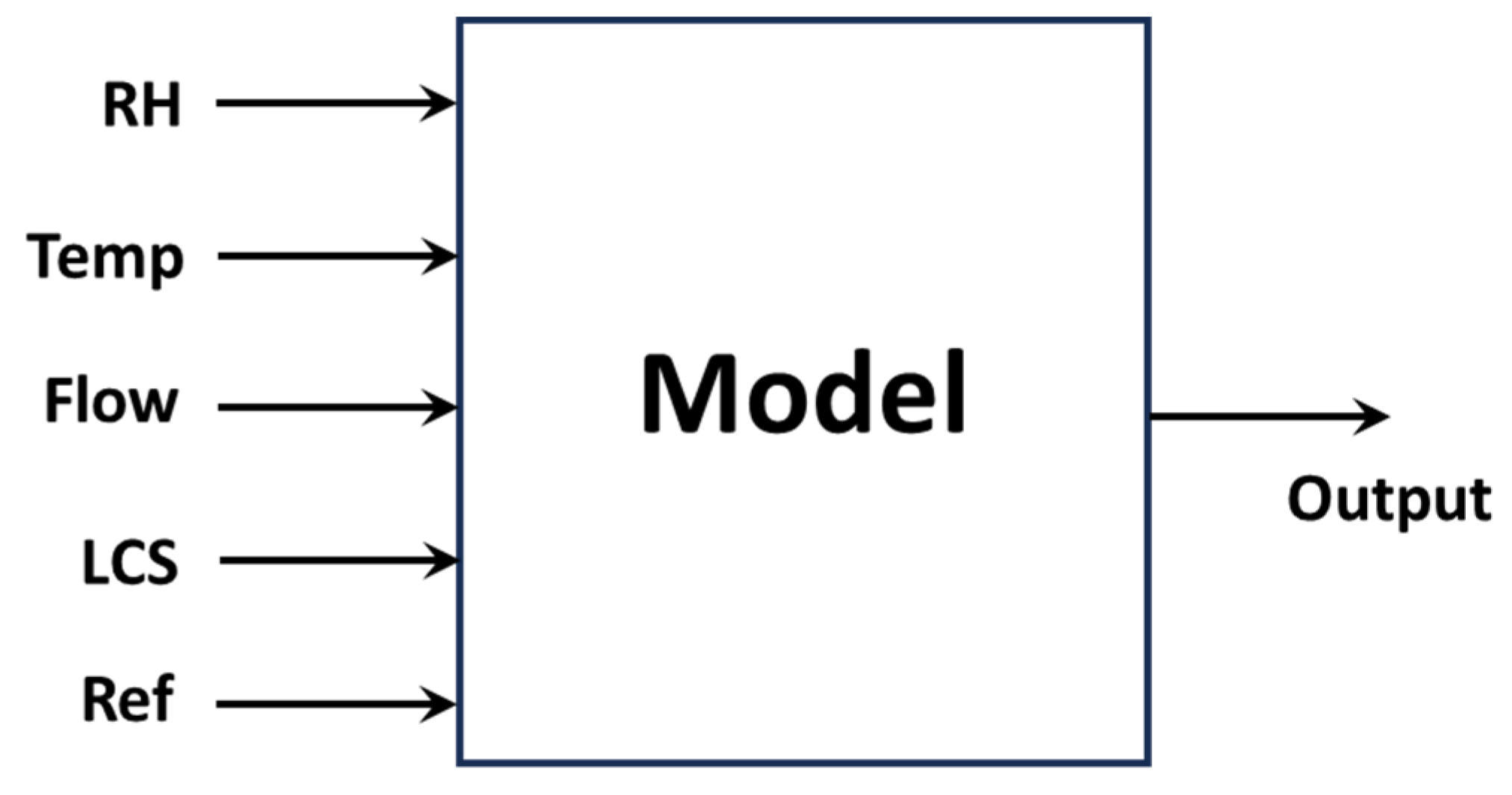
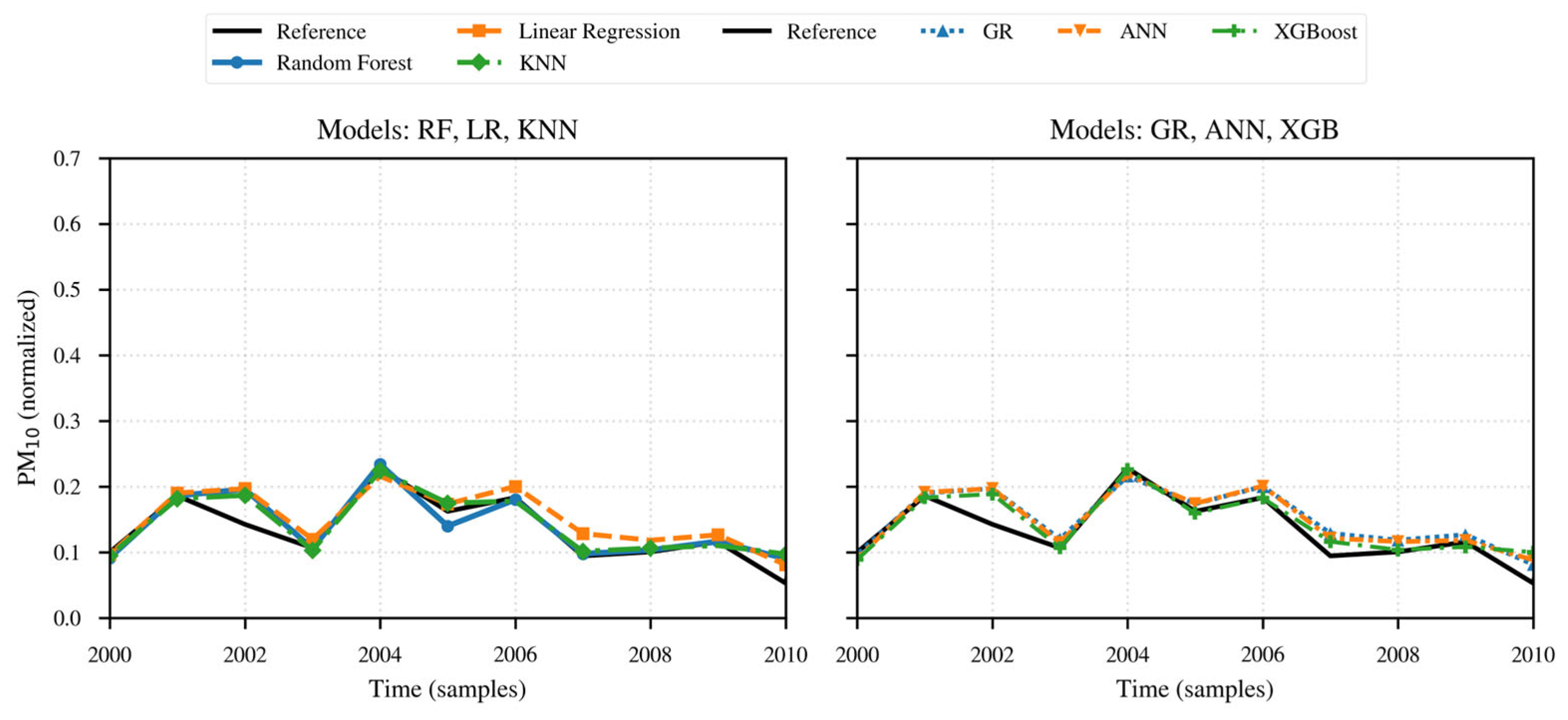
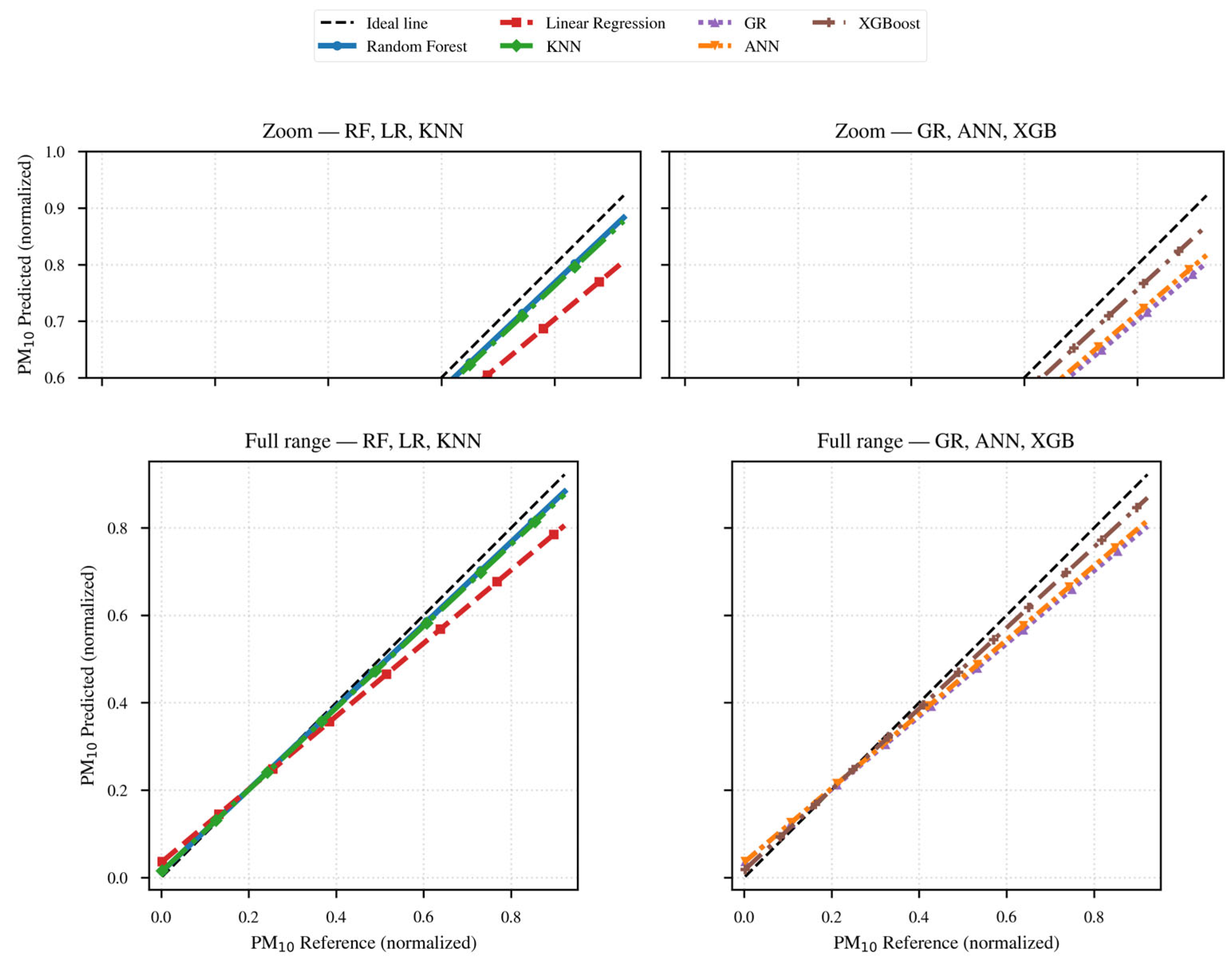
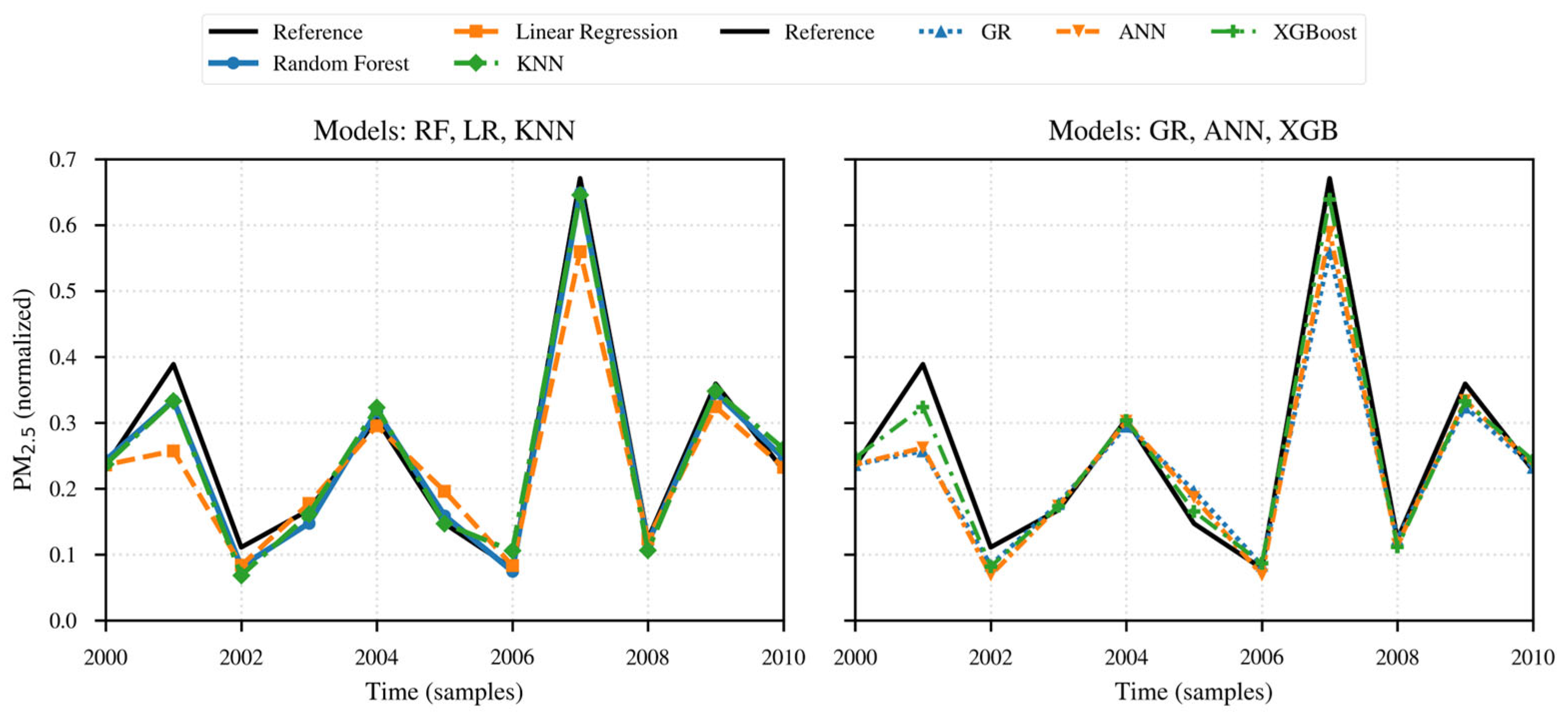
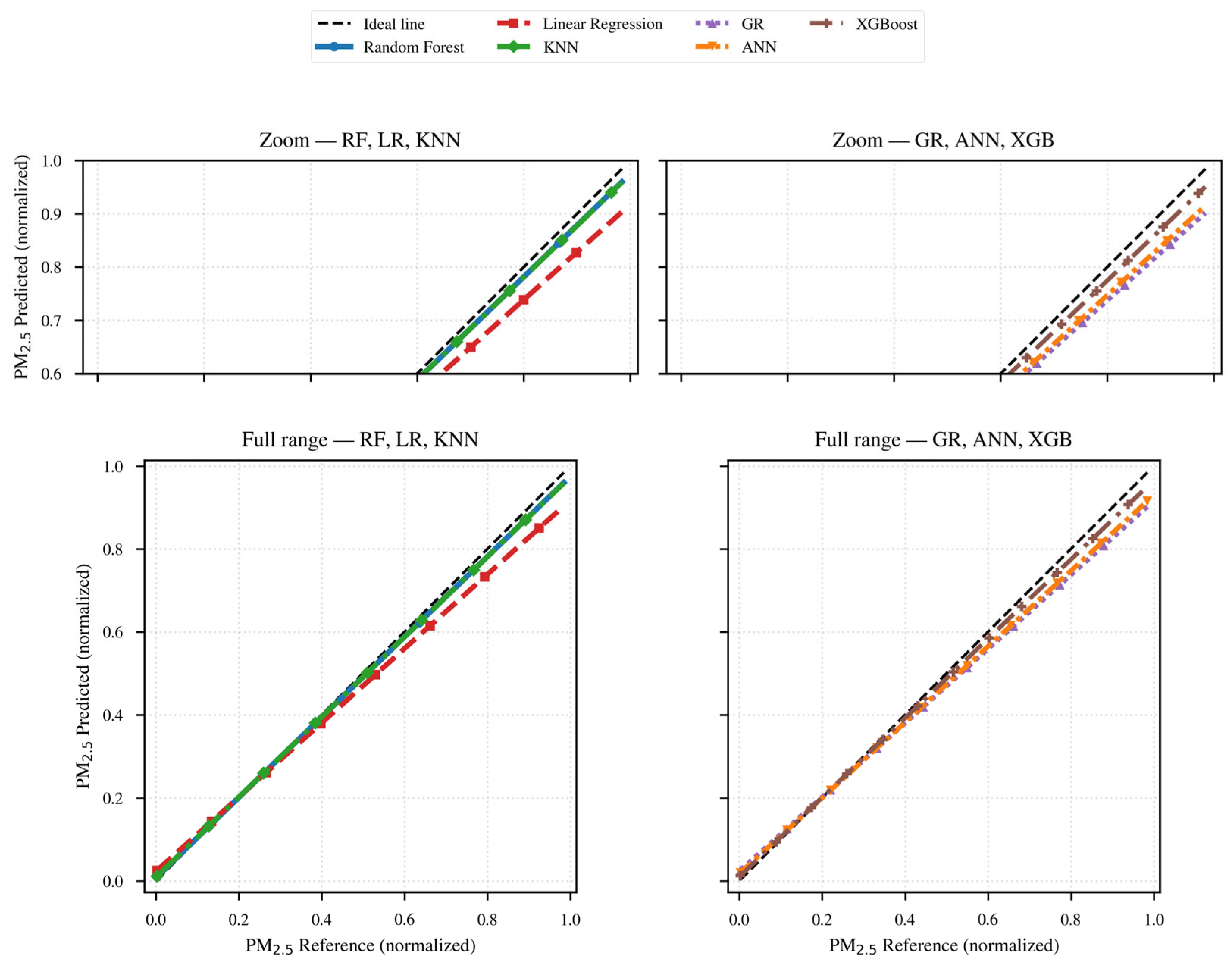
- Random Forest (RF): n_estimators 300–600 (≈500), max_depth 10–14, min_samples_leaf 3–7, max_features = ‘sqrt’.
- early_stopping_rounds = 50.
- KNN: n_neighbors 5–15 (≈9–11), weights = ‘distance’, Euclidean metric.
- ANN (MLPRegressor): 2–3 layers (e.g., 64–32–16), activation = ‘relu’, dropout 0.1–0.3 (if applicable), Adam (lr 1 × 10⁻³), max_iter 1000, early stopping.
- (LR/MLR were used as baselines with light L2 regularization).
3. Results
3.1. Data Preprocessing
3.2. Calibration of LCS Sensors
4. Conclusions
Author Contributions
Funding
Institutional Review Board Statement
Informed Consent Statement
Data Availability Statement
Acknowledgments
Conflicts of Interest
Abbreviations
| PM10 | Particulate Matter 10 |
| PM2.5 | Particulate Matter 2.5 |
| LCS | Low-Cost Sensors |
| RH | Relative Humidity |
| PDP | Partial Dependence Plot |
| SHAP | SHapley Additive exPlanations |
| CV | cross-validation |
| O(N) | Time grows linearly with N (twice the data → ~twice the time) |
| O(N2) | Twice the data → ~four times more time |
| MAPE | Mean Absolute Percentage Error |
| SMAPE | Symmetric Mean Absolute Percentage Error |
| LR | Linear Regression |
| GR | Generalized Regression |
| RF | Random Forest |
| KNN | K-Nearest Neighbors |
| ANN | Artificial Neural Networks |
| RMSE | Root Mean Square Error |
| MAE | Mean Absolut Error |
| R2 | Coefficient of Determination |
References
- Koziel, S.; Pietrenko-Dabrowska, A.; Wojcikowski, M.; Pankiewicz, B. Field Calibration of Low-Cost Particulate Matter Sensors Using Artificial Neural Networks and Affine Response Correction. Meas. J. Int. Meas. Confed. 2024, 230, 114529. [Google Scholar] [CrossRef]
- Logothetis, S.-A.; Kosmopoulos, G.; Panagopoulos, O.; Salamalikis, V.; Kazantzidis, A. Forecasting the Exceedances of PM2.5 in an Urban Area. Atmosphere 2024, 15, 594. [Google Scholar] [CrossRef]
- Abboud, M.; Taher, Y.; Zeitouni, K.; Olteanu-Raimond, A. How Opportunistic Mobile Monitoring Can Enhance Air Quality Assessment? Geoinformatica 2024, 28, 679–710. [Google Scholar] [CrossRef]
- Nguyen, A.D.; Phung, T.H.; Nguyen, T.D.; Pham, H.H.; Nguyen, K.; Le Nguyen, P. GAMMA: A Universal Model for Calibrating Sensory Data of Multiple Low-Cost Air Monitoring Devices. Eng. Appl. Artif. Intell. 2024, 128, 107591. [Google Scholar] [CrossRef]
- de Foy, B.; Edwards, R.; Joy, K.; Zaman, S.; Salam, A.; Schauer, J. Interpretable Machine Learning Tools to Analyze PM2.5 Sensor Network Data so as to Quantify Local Source Impacts and Long-Range Transport. Atmos. Res. 2024, 311, 107656. [Google Scholar] [CrossRef]
- Bachechi, C.; Rollo, F.; Po, L.R. HypeAIR: A Novel Framework for Real-Time Low-Cost Sensor Calibration for Air Quality Monitoring in Smart Cities. Ecol. Inform. 2024, 81, 102568. [Google Scholar] [CrossRef]
- Zhu, Q.; Cherqui, F.; Bertrand-Krajewski, J.-L. End-User Perspective of Low-Cost Sensors for Urban Stormwater Monitoring: A Review. Water Sci. Technol. 2023, 87, 2648–2684. [Google Scholar] [CrossRef]
- Shin, J.; Woo, J.; Choe, Y.; Min, G.; Kim, D.; Kim, D.; Lee, S.; Yang, W. Spatiotemporal Exposure Assessment of PM2.5 Concentration Using a Sensor-Based Air Monitoring System. Atmosphere 2024, 15, 664. [Google Scholar] [CrossRef]
- Lin, H.; Li, S.; Niu, J.; Yang, J.; Wang, Q.; Li, W.; Liu, S. Estimation of Ultrahigh Resolution PM2.5 in Urban Areas by Using 30 m Landsat-8 and Sentinel-2 AOD Retrievals. Remote Sens. 2025, 17, 2609. [Google Scholar] [CrossRef]
- Lu, C.; Li, Q.; Xing, C.; Hu, Q.; Tan, W.; Lin, H.; Lin, J.; Zhang, Z.; Chang, B.; Liu, C. A Novel Hyperspectral Remote Sensing Technique with Hour-Hectometer Level Horizontal Distribution of Trace Gases: To Accurately Identify Emission Sources. J. Remote Sens. 2023, 3, 0098. [Google Scholar] [CrossRef]
- U.S. Environmental Protection Agency (EPA). 40 CFR Part 53—Ambient Air Monitoring Reference and Equivalent Methods; §53.1 Definitions (Electronic Code of Federal Regulations, eCFR). Available online: https://www.ecfr.gov/current/title-40/chapter-I/subchapter-C/part-53/subpart-A/section-53.1 (accessed on 10 November 2025).
- Long, R.W.; Urbanski, S.P.; Lincoln, E.; Colón, M.; Kaushik, S.; Krug, J.D.; Vanderpool, R.W.; Landis, M.S. Summary of PM2.5 Measurement Artifacts Associated with the Teledyne T640 PM Mass Monitor under Controlled Chamber Experimental Conditions Using Polydisperse Ammonium Sulfate Aerosols and Biomass Smoke. J. Air Waste Manag. Assoc. 2023, 73, 295–312. [Google Scholar] [CrossRef] [PubMed]
- Hyndman, R.J.; Athanasopoulos, G. Forecasting: Principles and Practice, 3rd ed.; OTexts: Melbourne, Australia, 2021. [Google Scholar]
- Villarreal-Marines, M.; Pérez-Rodríguez, M.; Mancilla, Y.; Ortiz, G.; Mendoza, A. Field Calibration of Fine Particulate Matter Low-cost Sensors in a Highly Industrialized Semi-arid Conurbation. Npj Clim. Atmos. Sci. 2024, 7, 293. [Google Scholar] [CrossRef]
- Mathieu-Campbell, M.E.; Guo, C.; Grieshop, A.P.; Richmond-Bryant, J. Calibration of PurpleAir Low-cost Particulate Matter Sensors for Warm–Humid Climates. Atmos. Meas. Tech. 2024, 17, 6735–6756. [Google Scholar] [CrossRef] [PubMed]
- Salvador, S.; Chan, P. Toward Accurate Dynamic Time Warping in Linear Time and Space. Int. Data Anal. 2007, 11, 561–580. [Google Scholar] [CrossRef]
- Watase, T.; Omiya, Y.; Tokuno, S. Severity Classification Using Dynamic Time Warping-based Indices and Voice Biomarkers for COVID-19. JMIR Biomed. Eng. 2023, 8, e50924. [Google Scholar] [CrossRef]
- Stübinger, J.; Mangold, B. Using Multi-dimensional Dynamic Time Warping to Identify Lead–Lag Relationships. Sensors 2022, 22, 6884. [Google Scholar] [CrossRef] [PubMed]
- Bulot, F.M.J.; Ossont, S.J.; Morris, A.K.R.; Basford, P.J.; Easton, N.H.C.; Mitchell, H.L.; Foster, G.L.; Cox, S.J.; Loxham, M. Characterisation and Calibration of Low-cost PM Sensors at High Temporal Resolution to Reference-grade Performance. Heliyon 2023, 9, e15943. [Google Scholar] [CrossRef]
- Nobell, S.; Majumdar, A.; Mukherjee, S.; Chakraborty, S.; Chatterjee, S.; Bose, S.; Dutta, A.; Sethuraman, S.; Westervelt, D.M.; Sengupta, S.; et al. Validation of In-field Calibration for Low-cost Sensors Measuring Ambient Particulate Matter in Kolkata, India. Aerosol Air Qual. Res. 2023, 23, 230010. [Google Scholar] [CrossRef]
- deSouza, P.; Kahn, R.; Stockman, T.; Obermann, W.; Crawford, B.; Wang, A.; Crooks, J.; Li, J.; Kinney, P. Calibrating Networks of Low-cost Air Quality Sensors. Atmos. Meas. Tech. 2022, 15, 6309–6328. [Google Scholar] [CrossRef]
- Hua, J.; Zhang, Y.; de Foy, B. Improved PM2.5 Concentration Estimates from Low-cost Sensors Using Calibration Models Categorized by Relative Humidity. Aerosol Sci. Technol. 2021, 55, 557–570. [Google Scholar] [CrossRef]
- Hassani, A.; Castell, N.; Watne, Å.K.; Schneider, P. Citizen-Operated Mobile Low-Cost Sensors for Urban PM2.5 Monitoring: Field Calibration, Uncertainty Estimation, and Application. Sustain. Cities Soc. 2023, 95, 104607. [Google Scholar] [CrossRef]
- Patel, M.Y.; Hudda, N.; Chambliss, S.; Messier, K.; Apte, J.S. Towards a Hygroscopic Growth Calibration for Low-cost PM2.5 Sensors. Atmos. Meas. Tech. 2024, 17, 1051–1067. [Google Scholar] [CrossRef]
- Rueda, E.M.; Carter, E.; L’Orange, C.; Quinn, C.; Volckens, J. Size-resolved Field Performance of Low-cost Sensors for Particulate Matter Air Pollution. Env. Sci. Technol. Lett. 2023, 10, 247–253. [Google Scholar] [CrossRef]
- Ramirez-Espinosa, G.; Chiavassa, P.; Giusto, E.; Quer, S.; Montrucchio, B.; Rebaudengo, M. Improving Data Quality of Low-cost Light-scattering PM Sensors: Towards Automatic Air Quality Monitoring in Urban Environments. IEEE Internet Things J. 2024, 11, 28409–28420. [Google Scholar] [CrossRef]
- Wang, G.; Yu, C.; Guo, K.; Guo, H.; Wang, Y. Research of Low-cost Air Quality Monitoring Models with Different Machine Learning Algorithms. Atmos. Meas. Tech. 2024, 17, 181–196. [Google Scholar] [CrossRef]



| Model | R2 (%) | RMSE | MAE |
|---|---|---|---|
| LR | 84.0561 | 49.485 | 0.049 |
| Random Forest | 93.6363 | 31.263 | 0.031 |
| KNN | 92.1425 | 34.739 | 0.035 |
| GR | 84.0515 | 49.492 | 0.048 |
| ANN | 85.5123 | 47.623 | 0.03 |
| XGBoost | 92.9413 | 33.952 | 0.021 |
| Model | R2 (%) | RMSE | MAE |
|---|---|---|---|
| LR | 89.47 | 2.99 | 0.031 |
| Random Forest | 96.51 | 2.99 | 0.019 |
| KNN | 95.88 | 3.25 | 0.021 |
| GR | 89.46 | 5.28 | 0.031 |
| ANN | 90.93 | 4.84 | 0.028 |
| XGBoost | 96.52 | 3.21 | 0.021 |
Disclaimer/Publisher’s Note: The statements, opinions and data contained in all publications are solely those of the individual author(s) and contributor(s) and not of MDPI and/or the editor(s). MDPI and/or the editor(s) disclaim responsibility for any injury to people or property resulting from any ideas, methods, instructions or products referred to in the content. |
© 2026 by the authors. Licensee MDPI, Basel, Switzerland. This article is an open access article distributed under the terms and conditions of the Creative Commons Attribution (CC BY) license.
Share and Cite
Gómez, R.; Rodríguez, J.; Ferro, R. Calibration of Low-Cost Sensors for PM10 and PM2.5 Based on Artificial Intelligence for Smart Cities. Sensors 2026, 26, 796. https://doi.org/10.3390/s26030796
Gómez R, Rodríguez J, Ferro R. Calibration of Low-Cost Sensors for PM10 and PM2.5 Based on Artificial Intelligence for Smart Cities. Sensors. 2026; 26(3):796. https://doi.org/10.3390/s26030796
Chicago/Turabian StyleGómez, Ricardo, José Rodríguez, and Roberto Ferro. 2026. "Calibration of Low-Cost Sensors for PM10 and PM2.5 Based on Artificial Intelligence for Smart Cities" Sensors 26, no. 3: 796. https://doi.org/10.3390/s26030796
APA StyleGómez, R., Rodríguez, J., & Ferro, R. (2026). Calibration of Low-Cost Sensors for PM10 and PM2.5 Based on Artificial Intelligence for Smart Cities. Sensors, 26(3), 796. https://doi.org/10.3390/s26030796