High-Speed Image Restoration Based on a Dynamic Vision Sensor


Highlights
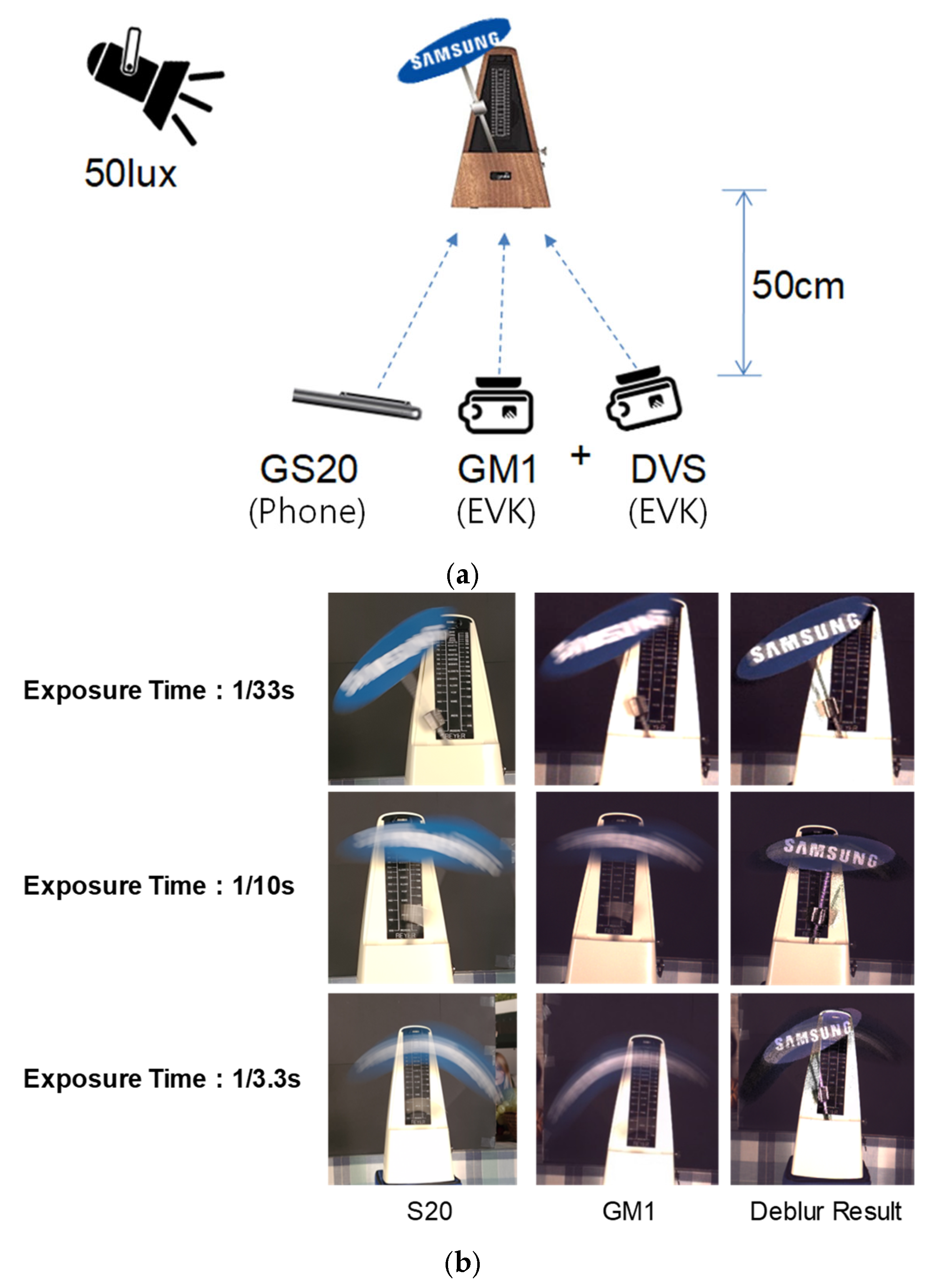
- We show that a Dynamic Vision Sensor (DVS), combined with a conventional image sensor and enhanced by event-driven techniques, can effectively suppress artifacts in motion blur compensation.
- We demonstrate that the proposed technique significantly improves the image quality of the blurred image.
- The event-based vision sensor can practically complement conventional CIS to achieve motion blur-resilient, high-speed imaging in smartphones without incurring prohibitive power or latency overhead.
- The demonstrated improvement under realistic low-illumination, fast-motion conditions suggests that future mobile camera designs can leverage DVS–CIS fusion as a viable system-level solution, rather than relying solely on heavier learning-based deblurring or more complex optics.
Abstract
1. Introduction
- We clearly position the novelty as a mobile-ready integration and optimization of known event- and frame-based techniques, tailored to CIS–DVS co-sensing, with an explicit handling of real-device mismatch artifacts.
- We propose an edge cross-correlation-based local threshold optimization to suppress color ghost artifacts while preserving true motion edges.
- We introduce a lightweight contrast maximization (CM) method that reduces computation while maintaining robust event alignment under low illumination and sensor noise.
- We propose a lightweight alignment compensation for CIS–DVS discrepancies, including deterministic resolution mismatch compensation via bicubic resampling (upsampling) and disparity matching; this step is not computation-heavy and deep learning-based super resolution.
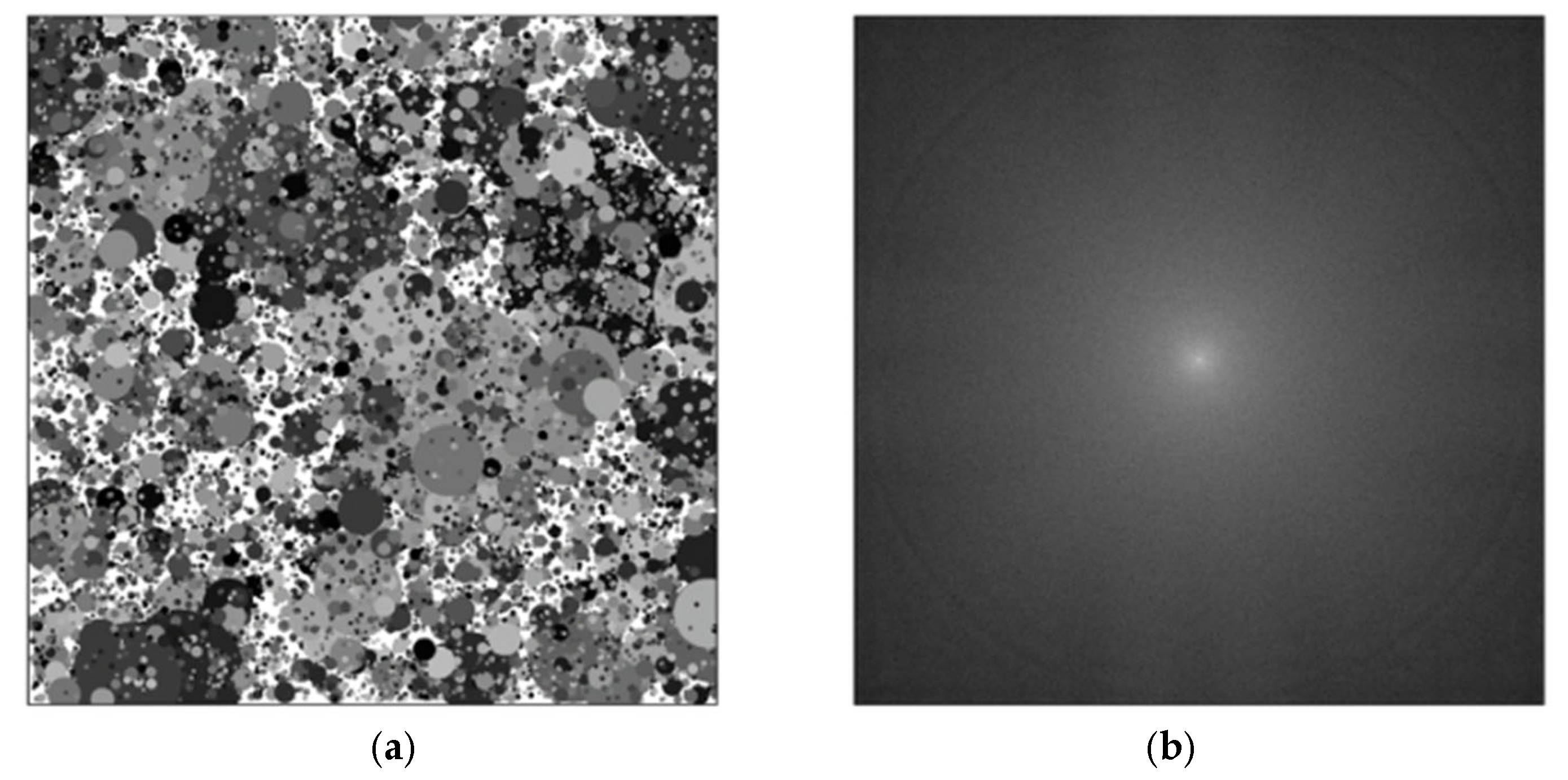
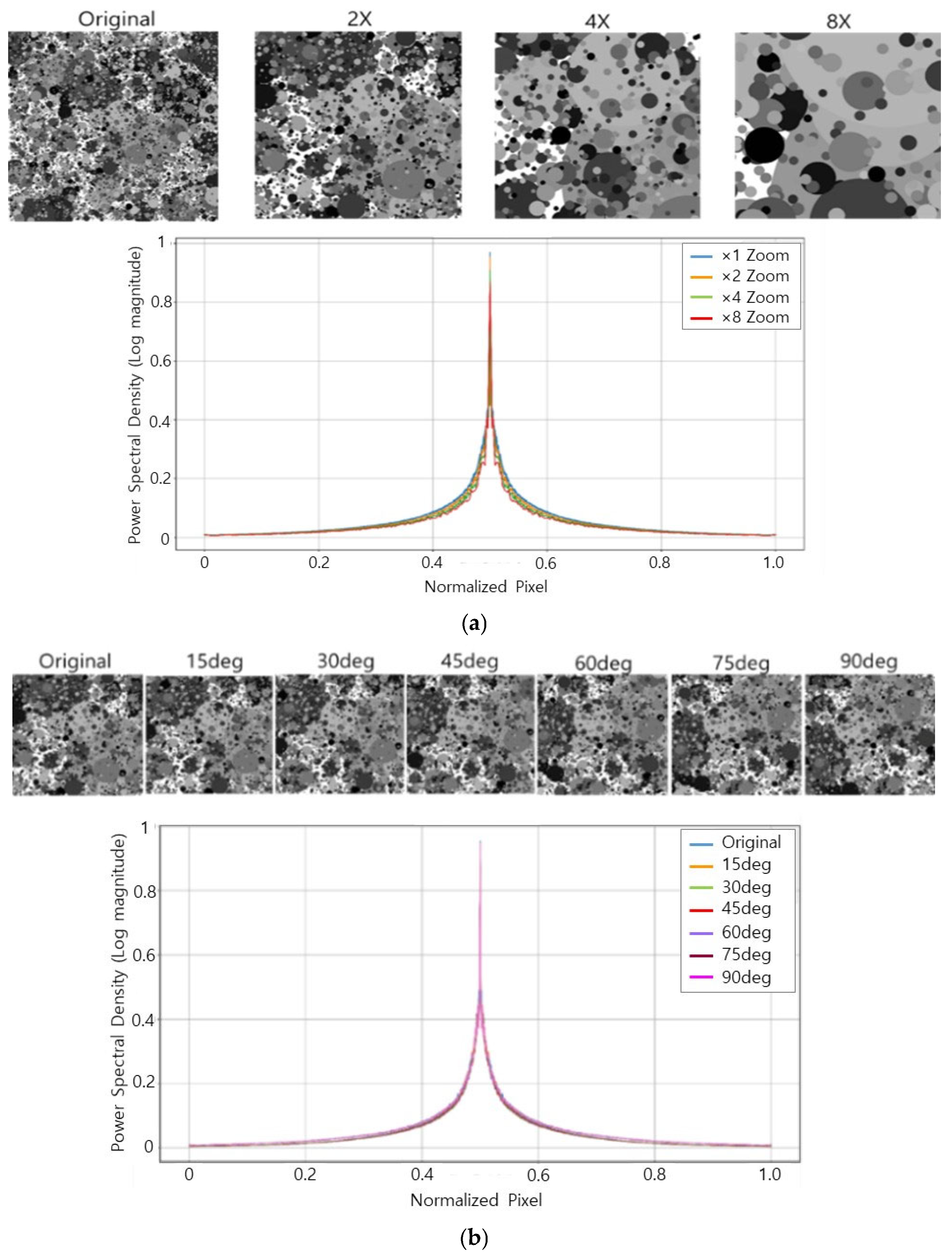
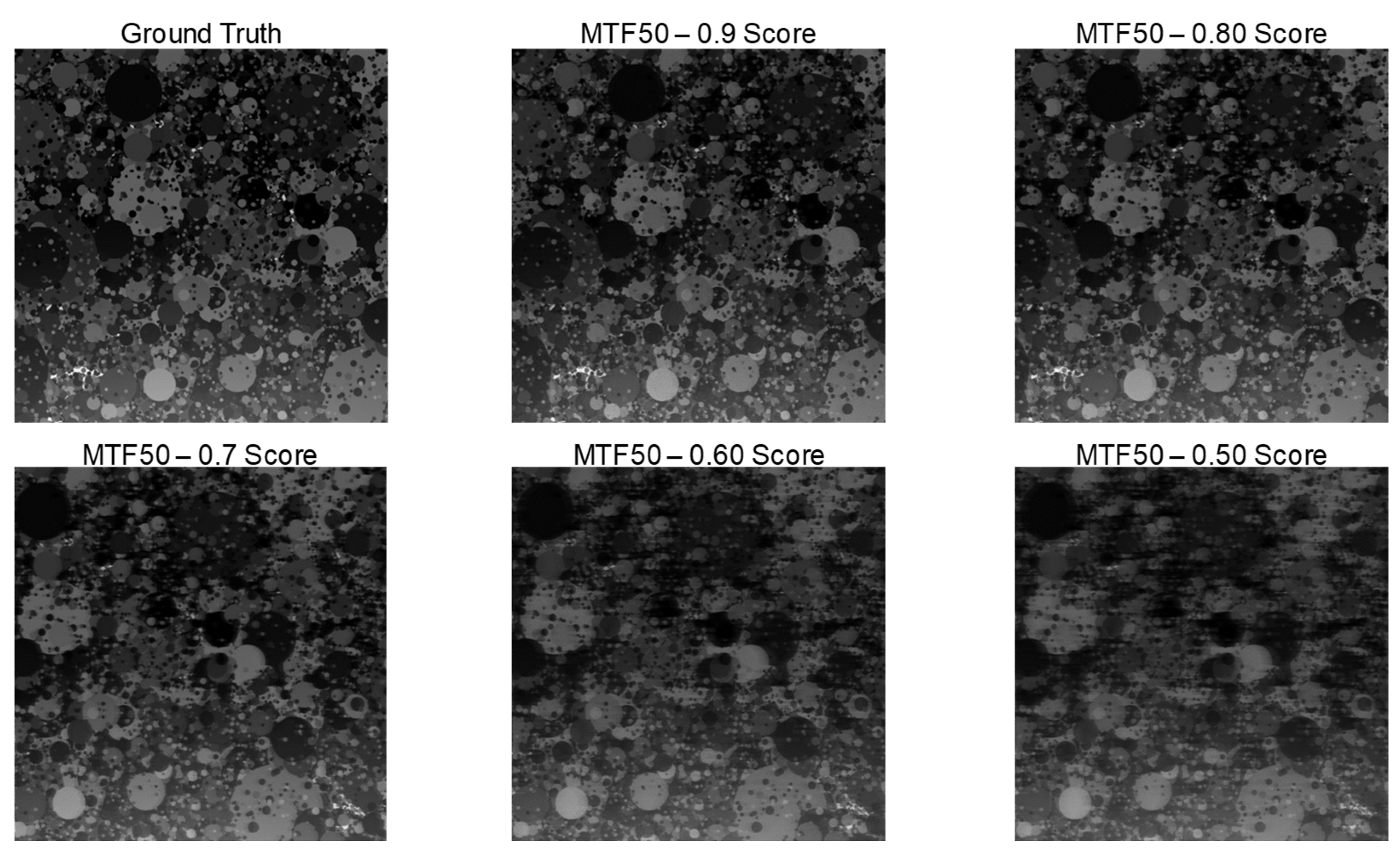
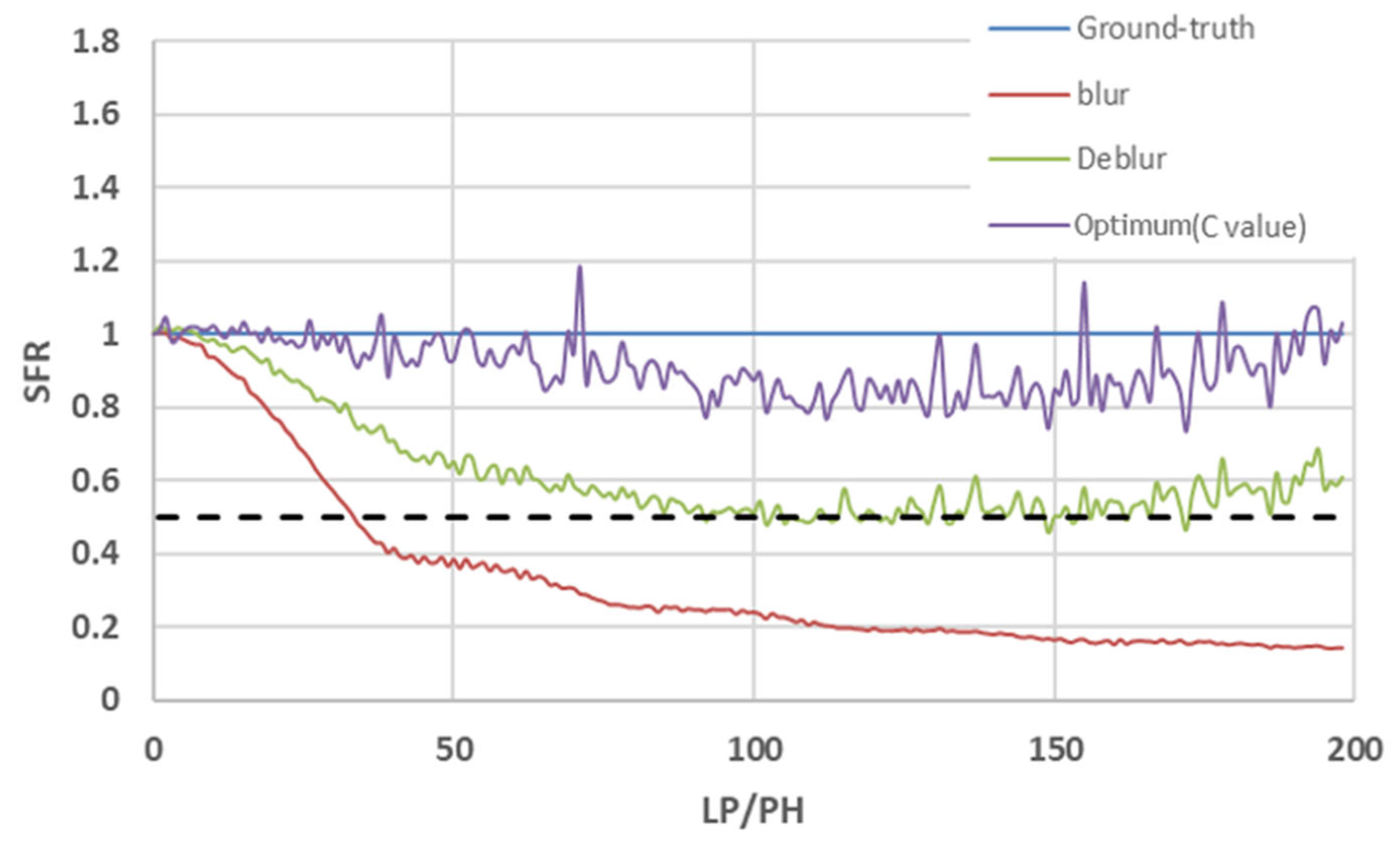
- We strengthen the evaluation by reporting complementary frequency-domain sharpness/blur metrics in addition to image quality metrics.
2. Frame and Event Based Sensors
2.1. Frame-Based CIS
2.2. Event-Based DVS
3. Principles and Issues
3.1. Principle of Event-Based Image Restoration
3.2. Issues of Event-Based Image Restoration
4. Evaluation Method
5. Results and Discussions
5.1. Color Ghosts
5.2. Event Noise
5.3. Discrepancies
6. Conclusions
Supplementary Materials
Author Contributions
Funding
Institutional Review Board Statement
Informed Consent Statement
Data Availability Statement
Acknowledgments
Conflicts of Interest
Abbreviations
| CMOS | Complementary Metal-Oxide Semiconductor |
| CIS | CMOS Image Sensor |
| DVS | Dynamic Vision Sensor |
| fps | Frames Per Second |
| PSNR | Peak Signal-to-Noise Ratio |
| SSIM | Structural Similarity Index Measure |
| SFR | Spatial Frequency Response |
| FFT | Fast Fourier Transform |
| PSD | Power Spectral Density |
| GT | Ground Truth |
| MTF | Modulation Transfer Function |
| ESF | Edge Spread Function |
| ISO | International Organization for Standardization |
| LSF | Line Spread Function |
| BEW | Blurred Edge Width |
| VoL | Variance of Laplacian |
| EDI | Event-Based Double Integral |
| LP/PH | Line Pairs/Picture Height |
| CM | Contrast Maximization |
| HDR | High Dynamic Range |
| ISP | Image Signal Processor |
| SoC | System on Chip |
References
- Chiu, C.; Chao, P.; Wu, D. Optimal design of magnetically actuated optical image stabilizer mechanism for cameras in mobile phones via genetic algorithm. IEEE Trans. Magn. 2007, 43, 2582–2584. [Google Scholar] [CrossRef]
- Carbajal, G.; Vitoria, P.; Lezama, J.; Muse, P. Blind motion deblurring with pixel-wise kernel estimation via kernel prediction networks. IEEE Trans. Comput. Imaging 2023, 9, 928–943. [Google Scholar] [CrossRef]
- Xiang, Y.; Zhou, H.; Li, C.; Sun, F.; Li, Z.; Xie, Y. Deep learning in motion deblurring: Current status, benchmarks and future prospects. Vis. Comput. 2024, 41, 3801–3827. [Google Scholar] [CrossRef]
- Pan, L.; Scheerlinck, C.; Yu, X.; Hartley, R.; Liu, M.; Dai, Y. Bringing a blurry frame alive at high frame-rate with an event camera. In Proceedings of the IEEE Conference on Computer Vision and Pattern Recognition, Long Beach, CA, USA, 16–20 June 2019. [Google Scholar]
- Jiang, M.; Liu, Z.; Wang, B.; Yu, L.; Yang, W. Robust intensity image reconstruciton based on event cameras. In Proceedings of the IEEE International Conference on Image Processing, Abu Dhabi, United Arab Emirates, 25–28 October 2020. [Google Scholar]
- Sun, L.; Alfarano, A.; Duan, P.; Su, S.; Wang, K.; Shi, B.; Timofte, R.; Paudel, D.P.; Van Gool, L.; Liu, Q.; et al. NTIRE 2025 challenge on event-based image deblurring: Methods and results. In Proceedings of the IEEE/CVF Conference on Computer Vision and Pattern Recognition Workshops, Nashville, TN, USA, 11–12 June 2025. [Google Scholar]
- Zhang, X.; Yu, L.; Yang, W.; Liu, J.; Xia, G.-S. Generalizing event-based motion deblurring in real-world scenarios. In Proceedings of the IEEE/CVF International Conference on Computer Vision, Paris, France, 4–6 October 2023. [Google Scholar]
- Xu, S.; Sun, Z.; Zhong, M.; Cao, C.; Liu, Y.; Fu, X.; Chen, Y. Motion-adaptive transformer for event-based image deblurring. In Proceedings of the AAAI Conference on Artificial Intelligence, Philadelphia, PA, USA, 25 February–4 March 2025. [Google Scholar]
- Xie, X.; Zhang, Q.; Zheng, W.-S. Diffusion-based event generation for high-quality image deblurring. In Proceedings of the IEEE/CVF Conference on Computer Vision and Pattern Recognition, Nashville, TN, USA, 13–15 June 2025. [Google Scholar]
- Lin, X.; Huang, Y.; Ren, H.; Liu, Z.; Huang, H.; Zhou, Y.; Fu, H.; Cheng, B. ClearSight: Human vision-inspired solutions for event-based motion deblurring. In Proceedings of the IEEE/CVF International Conference on Computer Vision, Honolulu, HI, USA, 19–23 October 2025. [Google Scholar]
- Yang, W.; Wu, J.; Li, L.; Dong, W.; Shi, G. Event-based motion deblurring with modality-aware decomposition and recomposition. In Proceedings of the ACM International Conference on Multimedia, Ottawa, ON, Canada, 29 October–3 November 2023. [Google Scholar]
- Li, H.; Shi, H.; Gao, X. A coarse-to-fine fusion network for event-based image deblurring. In Proceedings of the International Joint Conference on Artificial Intelligence, Jeju, Republic of Korea, 3–9 August 2024. [Google Scholar]
- Sun, Z.; Fu, X.; Huang, L.; Liu, A.; Zha, Z.-J. Motion aware event representation-driven image deblurring. In Proceedings of the European Conference on Computer Vision, Milan, Italy, 29 September–4 October 2024. [Google Scholar]
- Pan, L.; Hartley, R.; Scheerlinck, C.; Liu, M.; Yu, X.; Dai, Y. High frame rate video reconstruction based on an event camera. IEEE Trans. Pattern Anal. Mach. Intell. 2022, 44, 2519–2533. [Google Scholar] [CrossRef]
- Lin, S.; Zhang, L.; Huang, L.; Zhou, K.; Luo, T.; Pan, J. Fast event-based double integral for real-time robotics. In Proceedings of the IEEE International Conference on Robotics and Automation, London, UK, 29 May–2 June 2023. [Google Scholar]
- Lin, S.; Zheng, G.; Wang, Z.; Han, R.; Xing, W.; Zhang, Z.; Peng, Y.; Pan, J. Embodied neuromorphic synergy for lighting-robust machine vision to see in extreme bright. Nat. Commun. 2024, 15, 10781. [Google Scholar] [CrossRef]
- ISOCELL Bright GM1 Specifications. Available online: https://semiconductor.samsung.com/image-sensor/mobile-image-sensor/isocell-bright-gm1/ (accessed on 6 January 2026).
- Levin, A. Blind motion deblurring using image statistics. In Proceedings of the Advances in Neural Information Processing Systems, Vancouver, BC, Canada, 4–7 December 2006. [Google Scholar]
- Cho, S.; Lee, S. Fast motion deblurring. ACM Trans. Graph. 2009, 28, 1–8. [Google Scholar] [CrossRef]
- Oth, L.; Furgale, P.; Kneip, L.; Siegwart, R. Rolling shutter camera calibration. In Proceedings of the IEEE Conference on Computer Vision and Pattern Recognition, Portland, OR, USA, 23–28 June 2013. [Google Scholar]
- Fan, B.; Dai, Y.; He, M. Rolling shutter camera: Modeling, optimization and learning. Mach. Intell. Res. 2023, 20, 783–798. [Google Scholar] [CrossRef]
- Lu, Y.; Liang, G.; Wang, Y.; Wang, L.; Xiong, H. UniINR: Event-guided unified rolling shutter correction, deblurring, and interpolation. In Proceedings of the European Conference on Computer Vision, Milan, Italy, 29 September–4 October 2024. [Google Scholar]
- Lichtsteiner, P.; Posch, C.; Delbruck, T. A 128 × 128 120 dB 15 µs latency asynchronous temporal contrast vision sensor. IEEE J. Solid-State Circuits 2008, 43, 566–576. [Google Scholar] [CrossRef]
- Brandli, C.; Berner, R.; Yang, M.; Liu, S.-C.; Delbruck, T. A 240 × 180 130 dB 3 µs latency global shutter spatiotemporal vision sensor. IEEE J. Solid-State Circuits 2014, 49, 2333–2341. [Google Scholar] [CrossRef]
- Posch, C.; Serrano-Gotarredona, T.; Linares-Barranco, B.; Delbruck, T. Retinomorphic event-based vision sensors: Bioinspired cameras with spiking output. Proc. IEEE 2014, 102, 1470–1484. [Google Scholar] [CrossRef]
- Gallego, G.; Delbruck, T.; Orchard, G.; Bartolozzi, C.; Taba, B.; Censi, A.; Leutenegger, S.; Davison, A.J.; Conradt, J.; Daniilidis, K.; et al. Event-based vision: A survey. IEEE Trans. Pattern Anal. Mach. Intell. 2022, 44, 154–180. [Google Scholar] [CrossRef] [PubMed]
- Son, B.; Suh, Y.; Kim, S.; Jung, H.; Kim, J.; Shin, C.; Park, P.; Lee, K.; Park, J.; Woo, J.; et al. A 640 × 480 dynamic vision sensor with a 9 µm pixel and 300 Meps address-event representation. In Proceedings of the International Solid-State Circuits Conference, San Francisco, CA, USA, 5–9 February 2017. [Google Scholar]
- Park, P.; Lee, K.; Lee, J.; Kang, B.; Shin, C.; Woo, J.; Kim, J.; Suh, Y.; Kim, S.; Moradi, S.; et al. Computationally efficient, real-time motion recognition based on bio-inspired visual and cognitive processing. In Proceedings of the IEEE International Conference on Image Processing, Quebec, QC, Canada, 27–30 September 2015. [Google Scholar]
- Suh, Y.; Choi, S.; Ito, M.; Kim, J.; Lee, Y.; Seo, J.; Jung, H.; Yeo, D.; Namgung, S.; Bong, J.; et al. A 1280 × 960 dynamic vision sensor with a 4.95-μm pixel pitch and motion artifact minimization. In Proceedings of the IEEE International Symposium on Circuits and Systems, Seville, Spain, 10–21 October 2020. [Google Scholar]
- Imaging Sharpness. Available online: https://www.imatest.com/imaging/sharpness/ (accessed on 6 January 2026).
- Luo, L.; Yurdakul, C.; Feng, K.; Seo, D.E.; Tu, F.; Mu, B. Temporal MTF evaluation of slow-motion mode in mobile phones. In Proceedings of the IS&T International Symposium on Electronic Imaging: Image Quality and System Performance, Online, 17–26 January 2022. [Google Scholar]
- ISO 12233:2024(en); Digital Cameras—Resolution and Spatial Frequency Responses. International Organization for Standardization: Geneva, Switzerland, 2024. Available online: https://www.iso.org/obp/ui/en/#iso:std:iso:12233:ed-5:v1:en/ (accessed on 6 January 2026).
- Radomski, A.; Georgiou, A.; Debrunner, T.; Li, C.; Longinotti, L.; Seo, M.; Kwak, M.; Shin, C.; Park, P.; Ryu, H.; et al. Enhanced frame and event-based simulator and event-based video interpolation network. arXiv 2021, arXiv:2112.09379. [Google Scholar]
- Burns, P. Slanted-edge MTF for digital camera and scanner analysis. In Proceedings of the IS&T Image Processing, Image Quality, Image Capture, Systems Conference, Portland, OR, USA, 26–29 March 2000. [Google Scholar]
- Burns, P.D.; Masaoka, K.; Parulski, K.; Wueller, D. Updated camera spatial frequency response for ISO 12233. In Proceedings of the IS&T International Symposium on Electronic Imaging: Image Quality and System Performance, Online, 17–26 January 2022. [Google Scholar]
- Cunningham, I.A.; Fenster, A. A method for modulation transfer function determination from edge profiles with correction for finite-element differentiation. Med. Phys. 1987, 14, 533–537. [Google Scholar] [CrossRef] [PubMed]
- Li, T.; Feng, H.; Xu, Z. A new analytical edge spread function fitting model for modulation transfer function measurement. Chin. Opt. Lett. 2011, 9, 031101. [Google Scholar] [CrossRef]
- Lee, C.; Kim, D.; Kim, D. Quality assessment of high-speed motion blur images for mobile automated tunnel inspection. Sensors 2025, 25, 3804. [Google Scholar] [CrossRef]
- Dinh, H.; Wang, Q.; Tu, F.; Frymire, B.; Mu, B. Evaluation of motion blur image quality in video frame interpolation. In Proceedings of the IS&T International Symposium on Electronic Imaging: Image Quality and System Performance, San Francisco, CA, USA, 15–19 January 2023. [Google Scholar]
- Dugonik, B.; Dugonik, A.; Marovt, M.; Golob, M. Image quality assessment of digital image capturing devices for melanoma detection. Appl. Sci. 2020, 10, 2876. [Google Scholar] [CrossRef]
- Pertuz, S.; Puig, D.; Garcia, M.A. Analysis of focus measure operators for shape-from-focus. Pattern Recognit. 2013, 46, 1415–1432. [Google Scholar] [CrossRef]
- Sun, Y.; Duthaler, S.; Nelson, B.J. Autofocusing in computer microscopy: Selecting the optimal focus algorithm. Microsc. Res. Tech. 2004, 65, 139–149. [Google Scholar] [CrossRef]
- Eltoukhy, H.A.; Kavusi, S. Computationally efficient algorithm for multi-focus image reconstruction. In Proceedings of the SPIE 5017, Sensors and Camera Systems for Scientific, Industrial, and Digital Photography Applications IV, Santa Clara, CA, USA, 16 May 2003. [Google Scholar]
- Mao, J.; Wu, Z.; Feng, X. Image definition evaluations on denoised and sharpened wood grain images. Coatings 2021, 11, 976. [Google Scholar] [CrossRef]
- Gonzalez, R.C.; Woods, R.E. Digital Image Processing, 4th ed.; Pearson: New York, NY, USA, 2018; pp. 185–195 (Sobel operator), pp. 78–103 (Bicubic interpolation). [Google Scholar]
- Wang, Z.; Pan, L.; Ng, Y.; Zhuang, Z.; Mahony, R. Stereo hybrid event-frame cameras for 3D perception. In Proceedings of the IEEE/RSJ International Conference on Intelligent Robots and Systems, Prague, Czech Republic, 27 September–1 October 2021. [Google Scholar]
- Woodford, O.J. Least squares normalized cross correlation. arXiv 2018, arXiv:1810.04320. [Google Scholar]
- Gallego, G.; Rebecq, H.; Scaramuzza, D. A unifying contrast maximization framework for event cameras, with applications to motion, depth, and optical flow estimation. In Proceedings of the IEEE Conference on Computer Vision and Pattern Recognition, Salt Lake City, UT, USA, 18–23 June 2018. [Google Scholar]
- Keys, R. Cubic convolution interpolation for digital image processing. IEEE Trans. Acoust. Speech Signal Process. 1981, 29, 1153–1160. [Google Scholar] [CrossRef]
- Jing, Y.; Yang, Y.; Wang, X.; Song, M.; Tao, D. Turning frequency to resolution: Video super-resolution via event cameras. In Proceedings of the IEEE Conference on Computer Vision and Pattern Recognition, Nashville, TN, USA, 20–25 June 2021. [Google Scholar]
- Lu, Y.; Wang, Z.; Liu, M.; Wang, H.; Wang, L. Learning spatial-temporal implicit neural representations for event-guided video super-resolution. In Proceedings of the IEEE Conference on Computer Vision and Pattern Recognition, Vancouver, BC, Canada, 17–24 June 2023. [Google Scholar]
- Xiao, Z.; Kai, D.; Zhang, Y.; Zha, Z.-J.; Sun, X.; Xiong, Z. Event-adapted video super-resolution. In Proceedings of the European Conference on Computer Vision, Milan, Italy, 29 September–4 October 2024. [Google Scholar]
- Xiao, Z.; Wang, X. Event-based video super-resolution via state space models. In Proceedings of the IEEE Conference on Computer Vision and Pattern Recognition, Nashville, TN, USA, 10–17 June 2025. [Google Scholar]
- Zheng, X.; Liu, Y.; Lu, Y.; Hua, T.; Pan, T.; Zhang, W.; Tao, D.; Wang, L. Deep learning for event-based vision: A comprehensive survey and benchmarks. arXiv 2023, arXiv:2302.08890. [Google Scholar]



| Characteristics | Items | CIS (GM1) | DVS (RC1) |
|---|---|---|---|
| Specifications | Optical Format | 1/2″ | 1/3.03″ |
| Resolution | 4000 × 3000 | 960 × 720 | |
| Pixel Pitch | 0.8 μm | 4.95 μm | |
| Frame Rate | 30 fps | 2000 fps (minimum) | |
| Attributes | Sensing Principle | Frame-based integration of intensity over exposure | Event-based thresholding of log-intensity change |
| Output | Full frames at fixed rate | Asynchronous event stream | |
| Shutter | Electronic rolling shutter | Global event holding | |
| Strengths | Photorealistic intensity/color | Motion-robust edge timing | |
| Role in our work | Provides the target image content | Provides motion/edge cues |
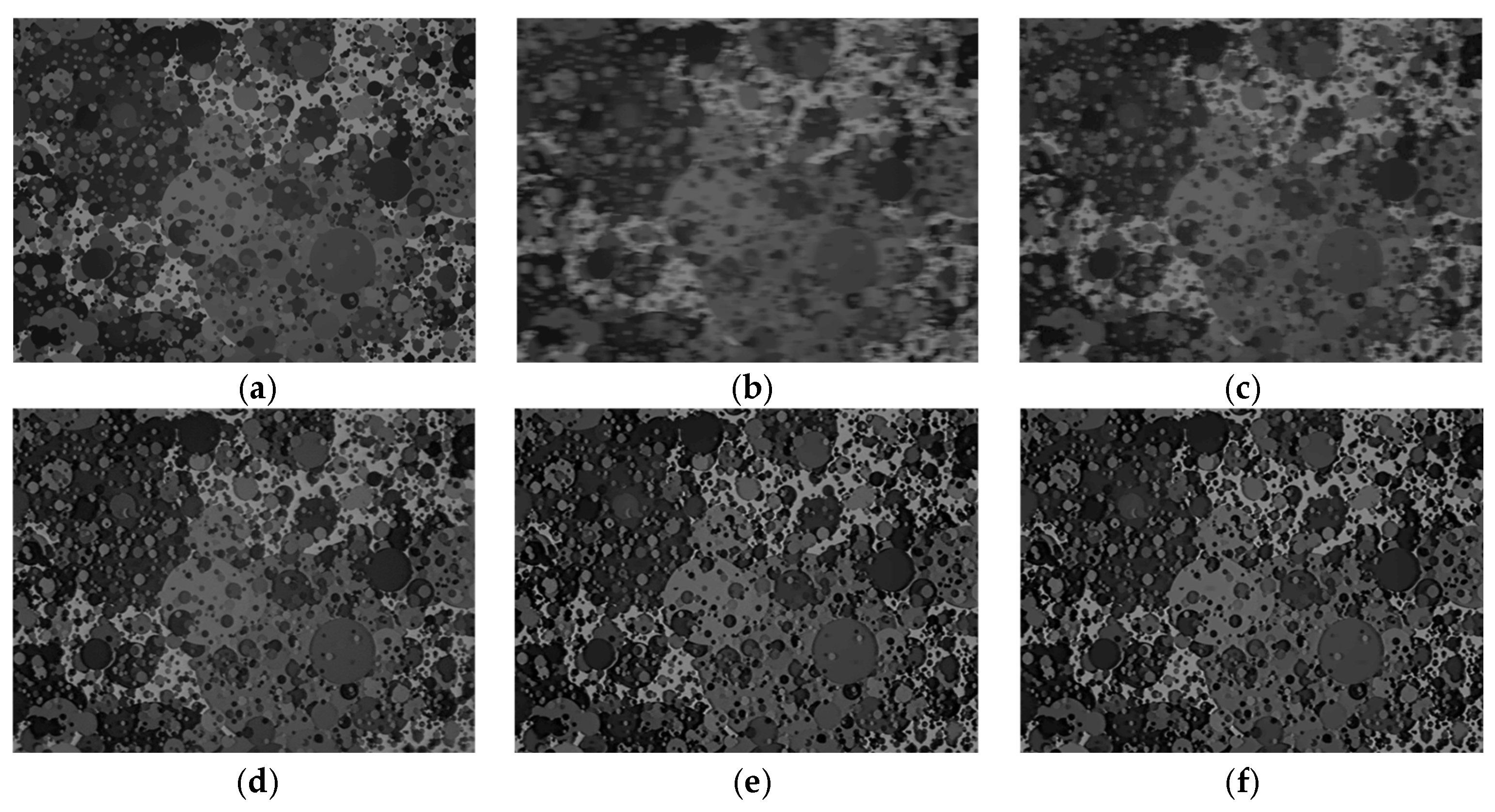
| PSNR (dB) | SSIM | SFR (MTF50 Ratio) | |
|---|---|---|---|
| Motion-blurred input (b) | 18.52 | 0.683 | 0.39 |
| Baseline EDI (c) | 27.74 | 0.787 | 0.64 |
| EDI w/compensation (d) | 37.86 | 0.901 | 0.90 |
| EDI w/compensation (e) | 38.67 | 0.909 | 0.98 |
| EDI w/compensation (f) | 38.72 | 0.911 | 0.99 |
Disclaimer/Publisher’s Note: The statements, opinions and data contained in all publications are solely those of the individual author(s) and contributor(s) and not of MDPI and/or the editor(s). MDPI and/or the editor(s) disclaim responsibility for any injury to people or property resulting from any ideas, methods, instructions or products referred to in the content. |
© 2026 by the authors. Licensee MDPI, Basel, Switzerland. This article is an open access article distributed under the terms and conditions of the Creative Commons Attribution (CC BY) license.
Share and Cite
Park, P.K.J.; Kim, J.; Ko, J.; Chang, Y. High-Speed Image Restoration Based on a Dynamic Vision Sensor. Sensors 2026, 26, 781. https://doi.org/10.3390/s26030781
Park PKJ, Kim J, Ko J, Chang Y. High-Speed Image Restoration Based on a Dynamic Vision Sensor. Sensors. 2026; 26(3):781. https://doi.org/10.3390/s26030781
Chicago/Turabian StylePark, Paul K. J., Junseok Kim, Juhyun Ko, and Yeoungjin Chang. 2026. "High-Speed Image Restoration Based on a Dynamic Vision Sensor" Sensors 26, no. 3: 781. https://doi.org/10.3390/s26030781
APA StylePark, P. K. J., Kim, J., Ko, J., & Chang, Y. (2026). High-Speed Image Restoration Based on a Dynamic Vision Sensor. Sensors, 26(3), 781. https://doi.org/10.3390/s26030781