Research on Hot Spot Fault Detection Method Based on Infrared Images of Photovoltaic Modules in Complex Background

Abstract
1. Introduction
- (1)
- To avoid the difficulty of accurately locating the hot spot fault target due to the interference of background pseudo-highlight features, a U-Net segmentation network is designed to remove the complex background and highlight the contour features of the photovoltaic module, laying a good foundation for the subsequent detection tasks.
- (2)
- To address the problems of difficulty in extracting multi-scale hot spot features and the balance between inference speed and detection accuracy, a deformable convolution and GhostNet is designed.
- (3)
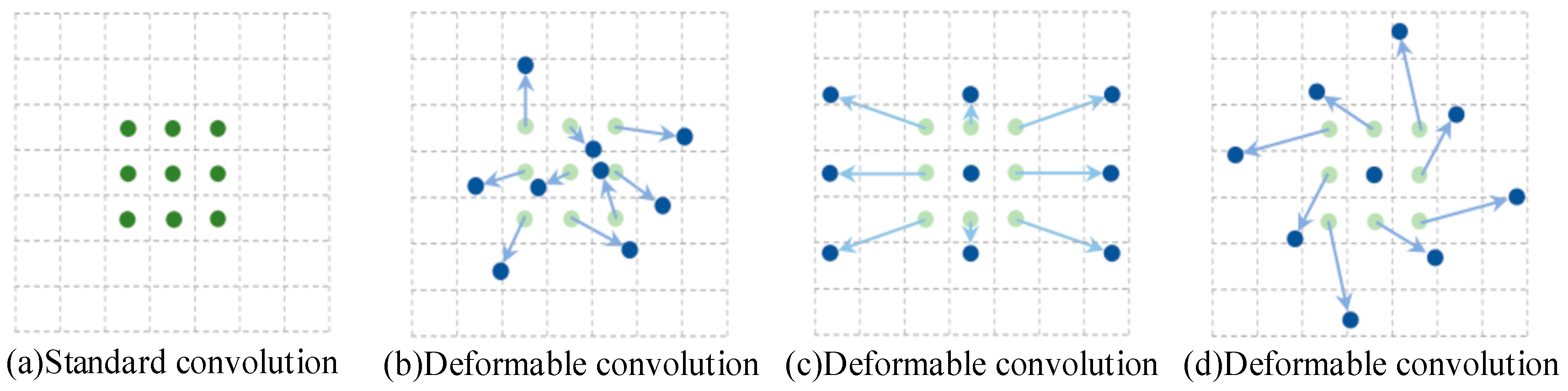
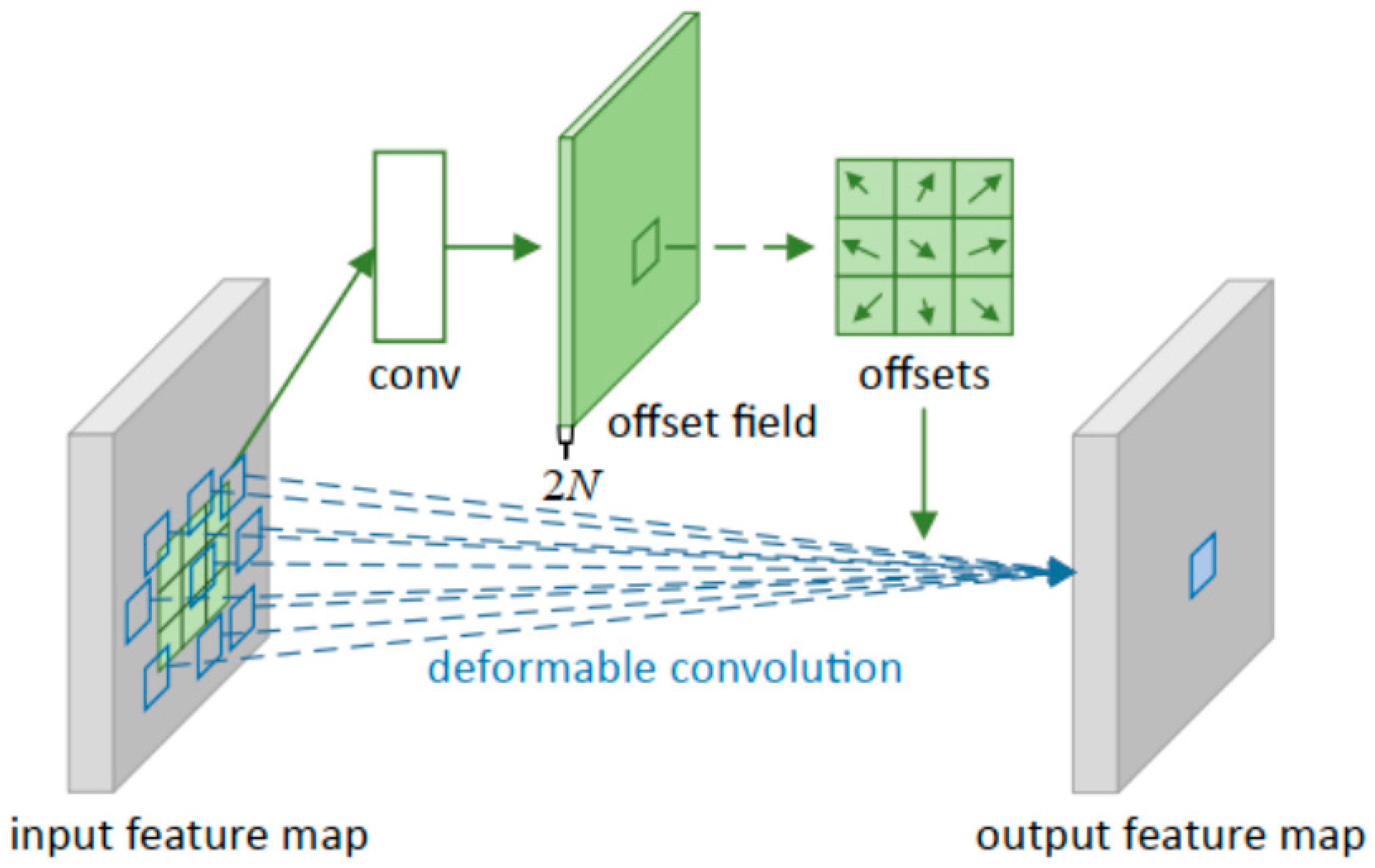
- To enhance the adaptability of convolutional networks to multi-scale hot spot targets, a deformable convolution (DCN) is introduced into the detection network. By adaptively adjusting the shape and size of the receptive field, the detection accuracy of multi-scale hot spot targets is improved.
- (4)
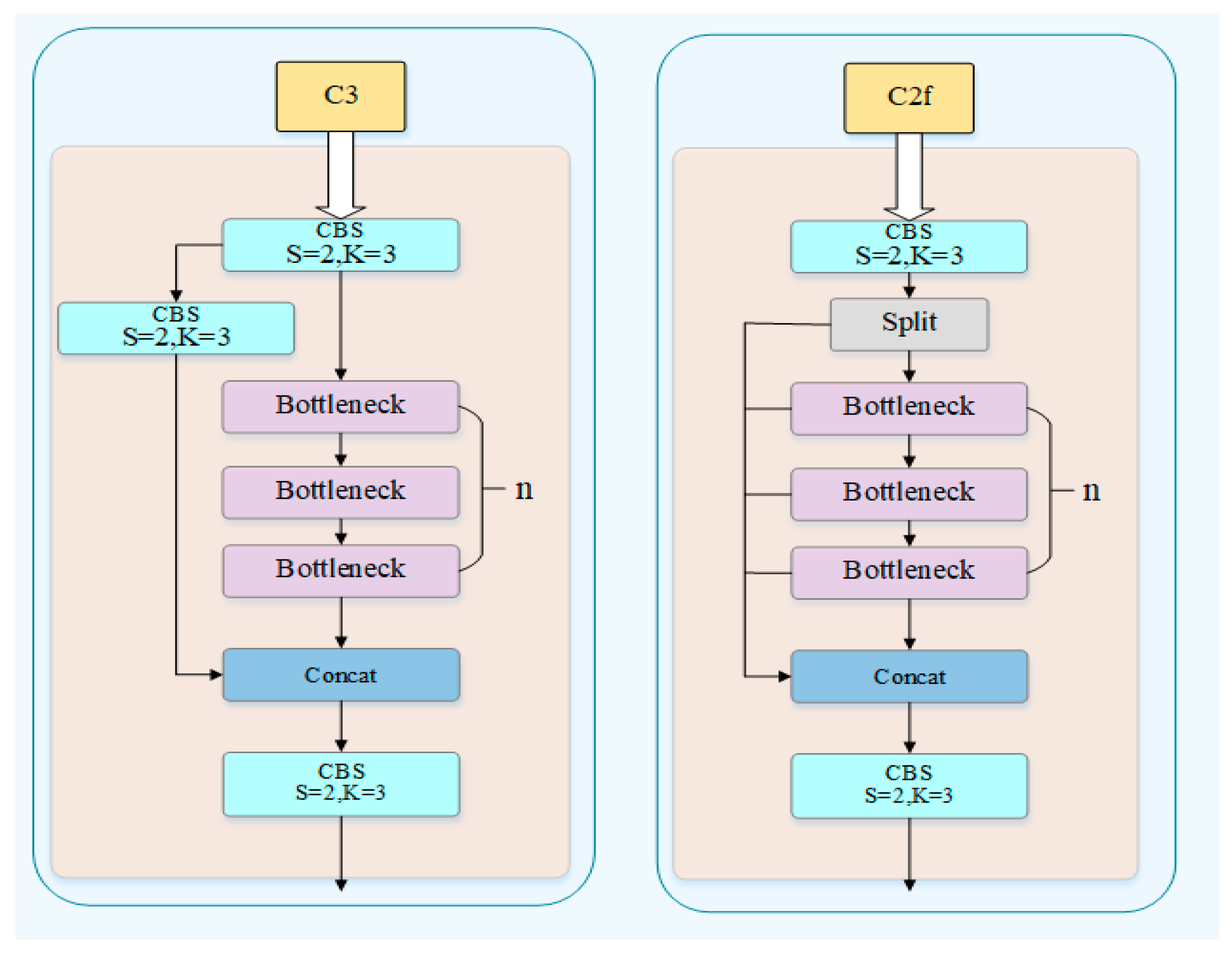
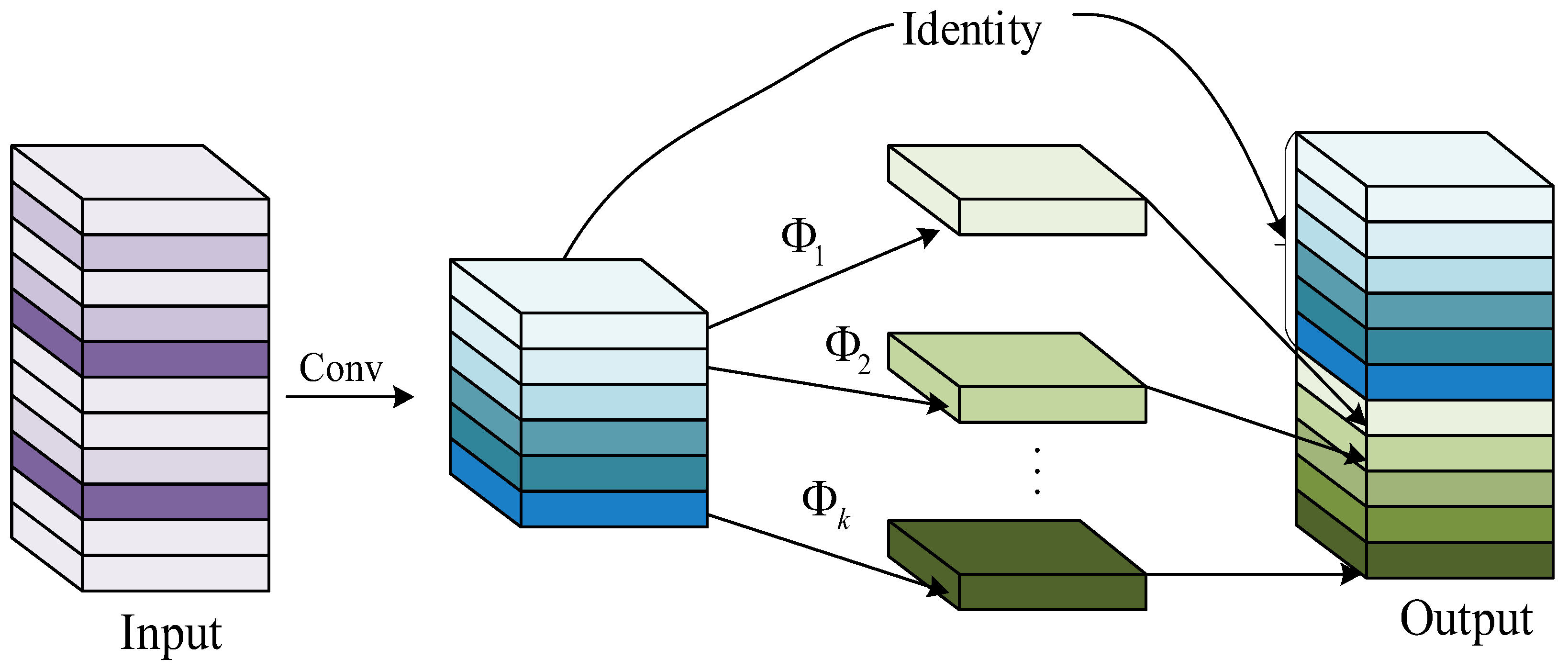
- Aiming at the issue that it is difficult to balance accuracy and speed in the detection network, the C2f_Ghost module is designed to simplify the network parameters and improve the model reasoning speed.
2. Problem Settings
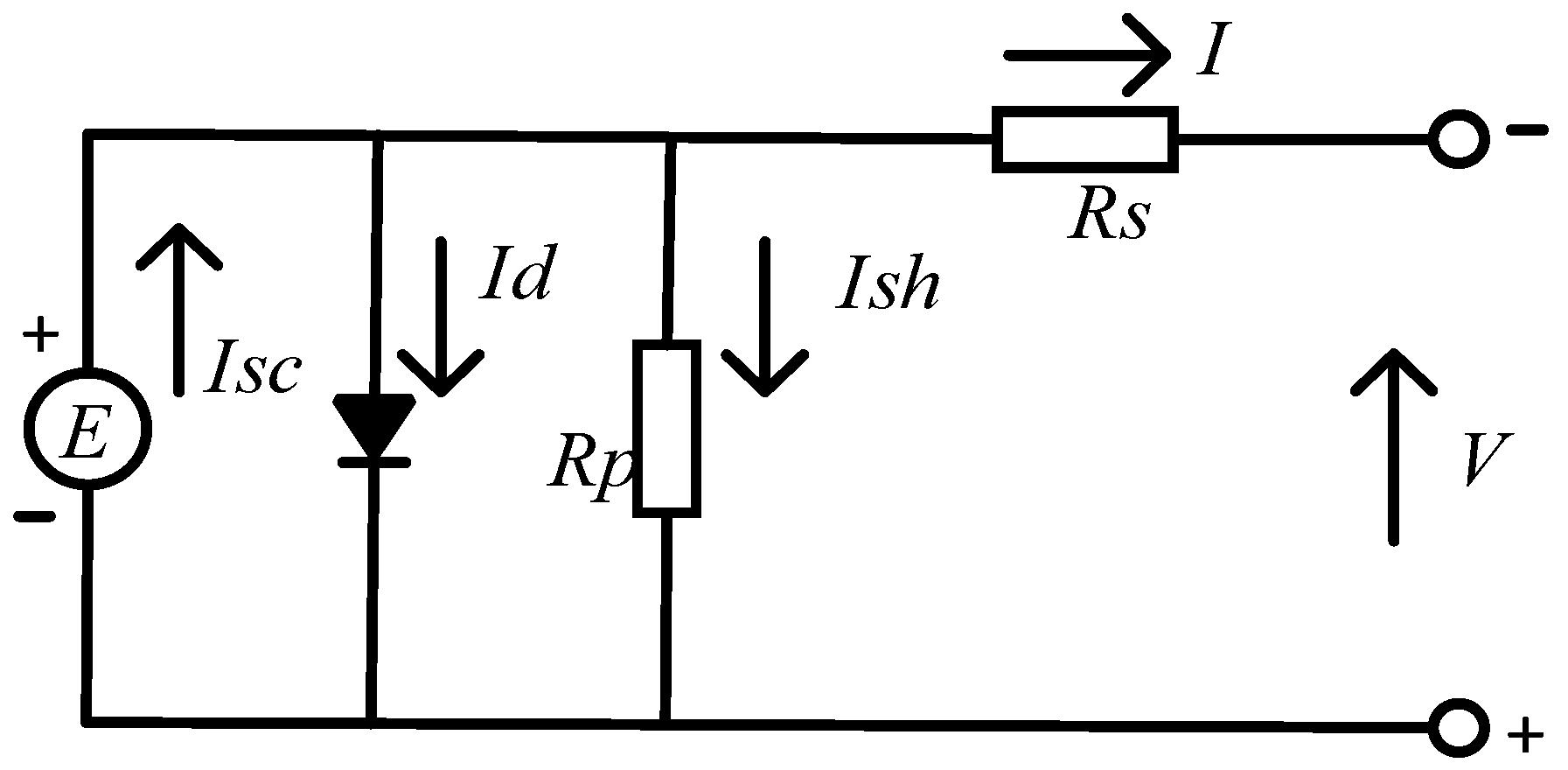
2.1. The Formation Mechanism of Hot Spots
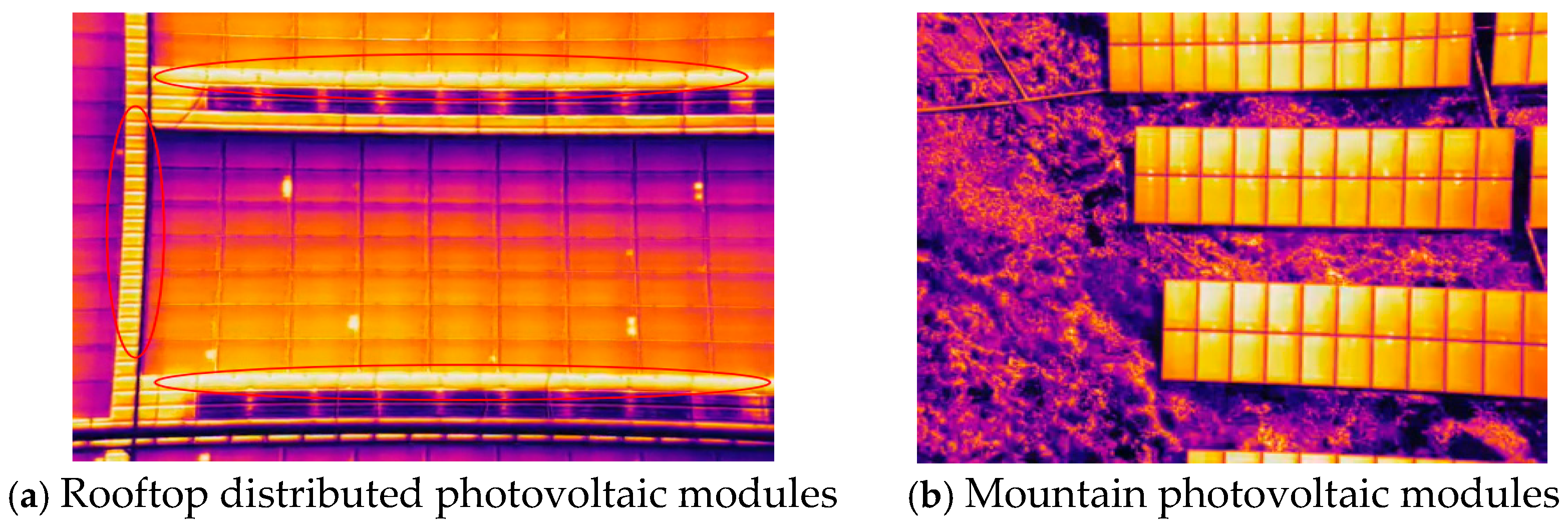
2.2. The Difficulties in Hot Spot Detection
3. Method
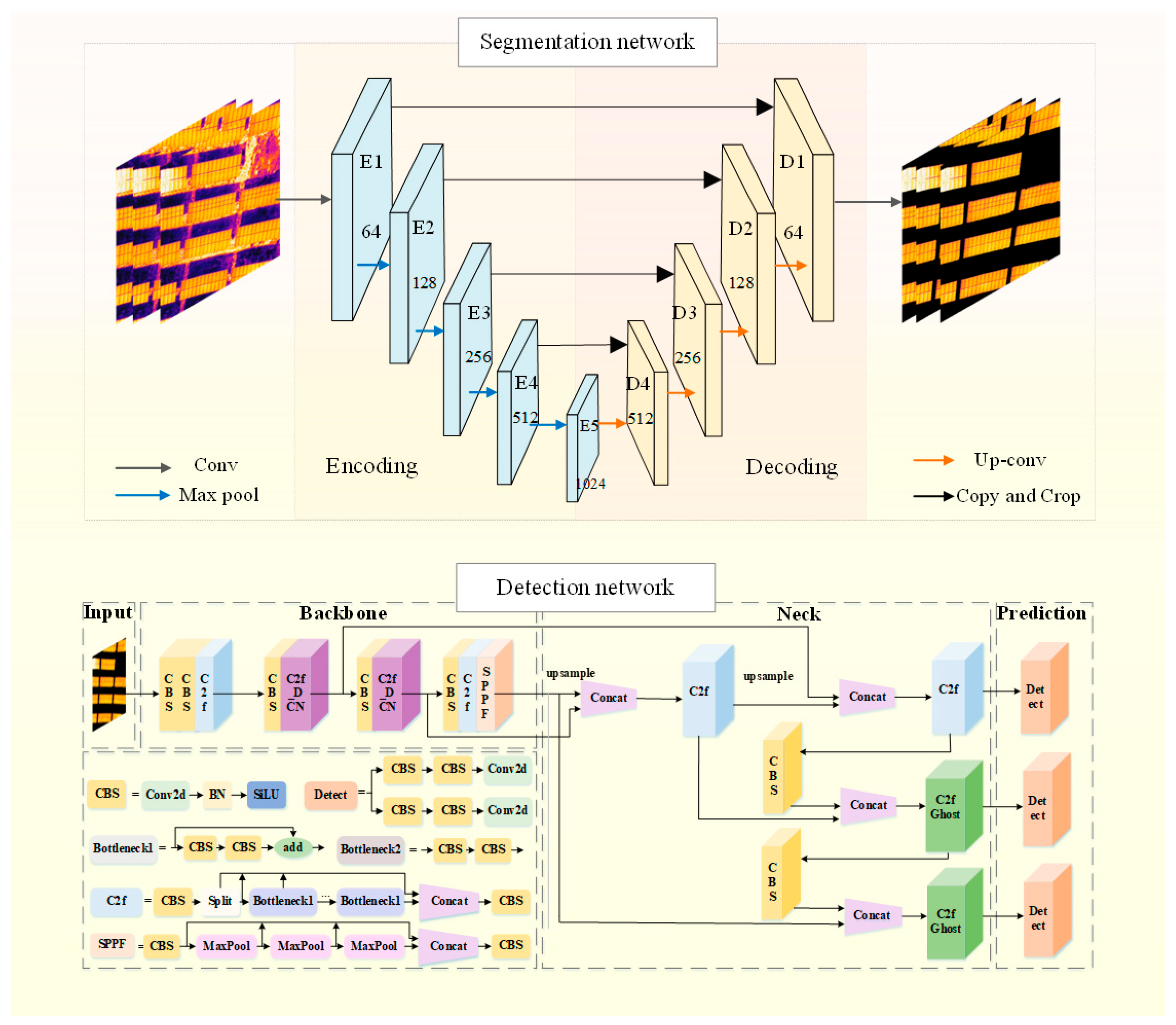
3.1. Overall Design of the Detection Algorithm
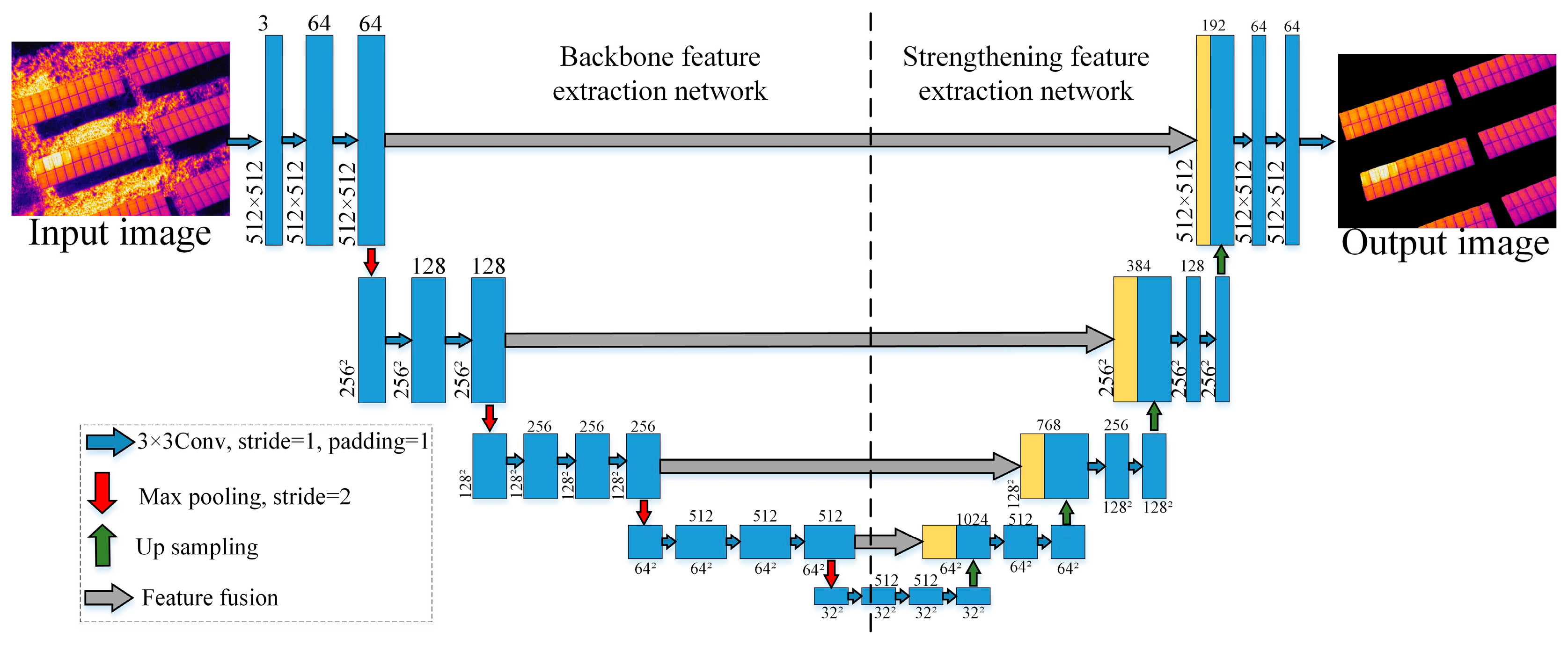
3.2. Photovoltaic Module Area Segmentation Network Based on U-Net
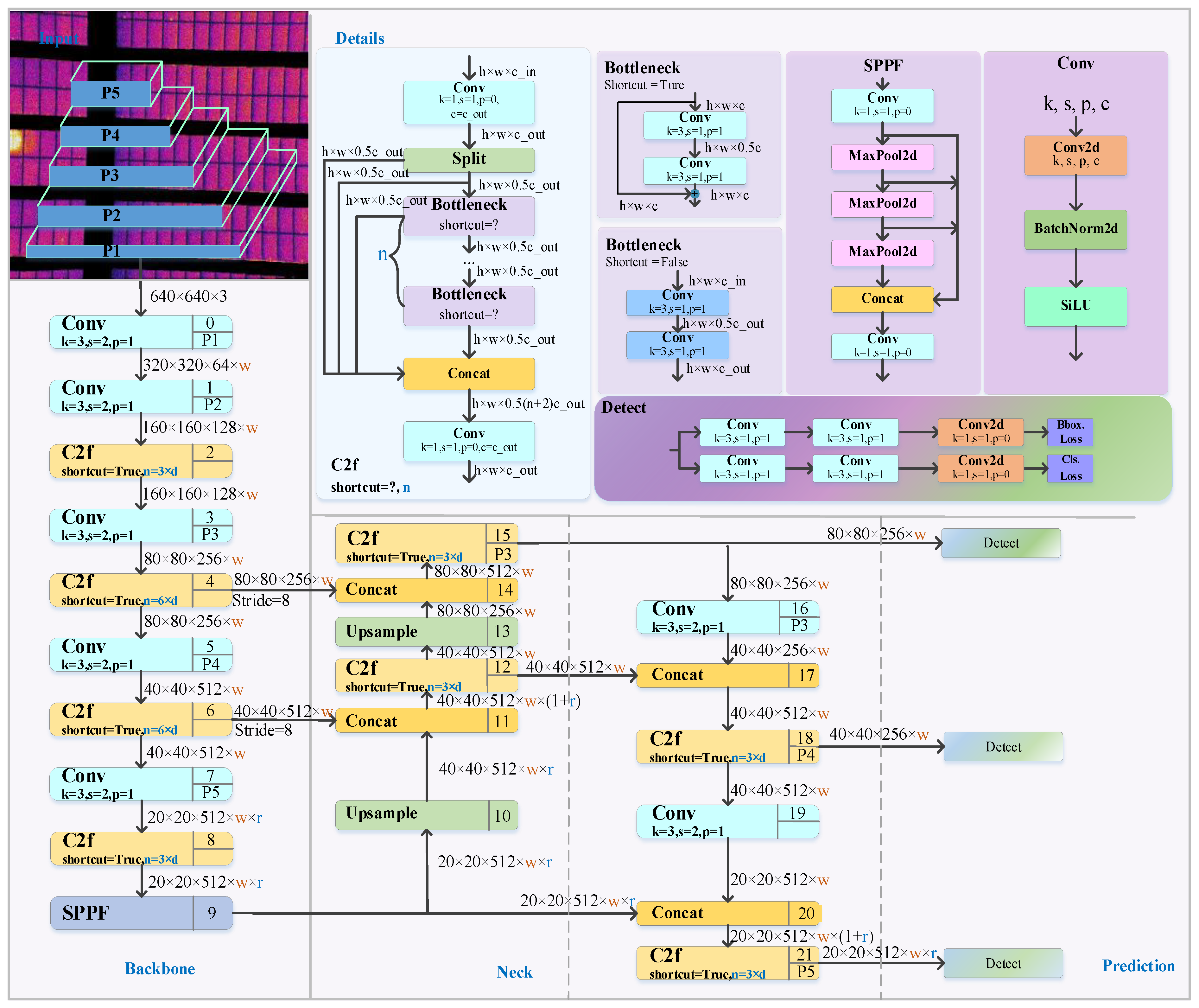
3.3. Detection Network Based on YOLOv8
3.3.1. Backbone Network
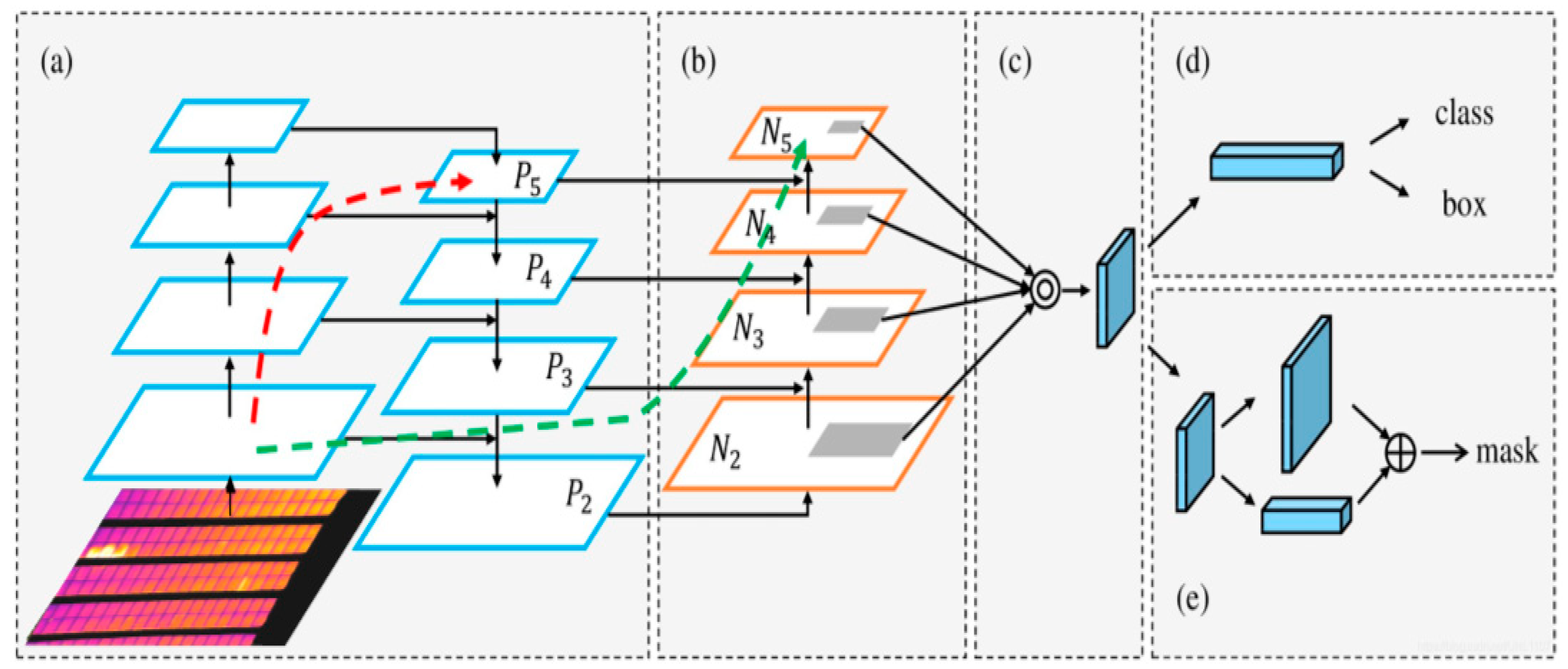
3.3.2. FPN–PAN Structure
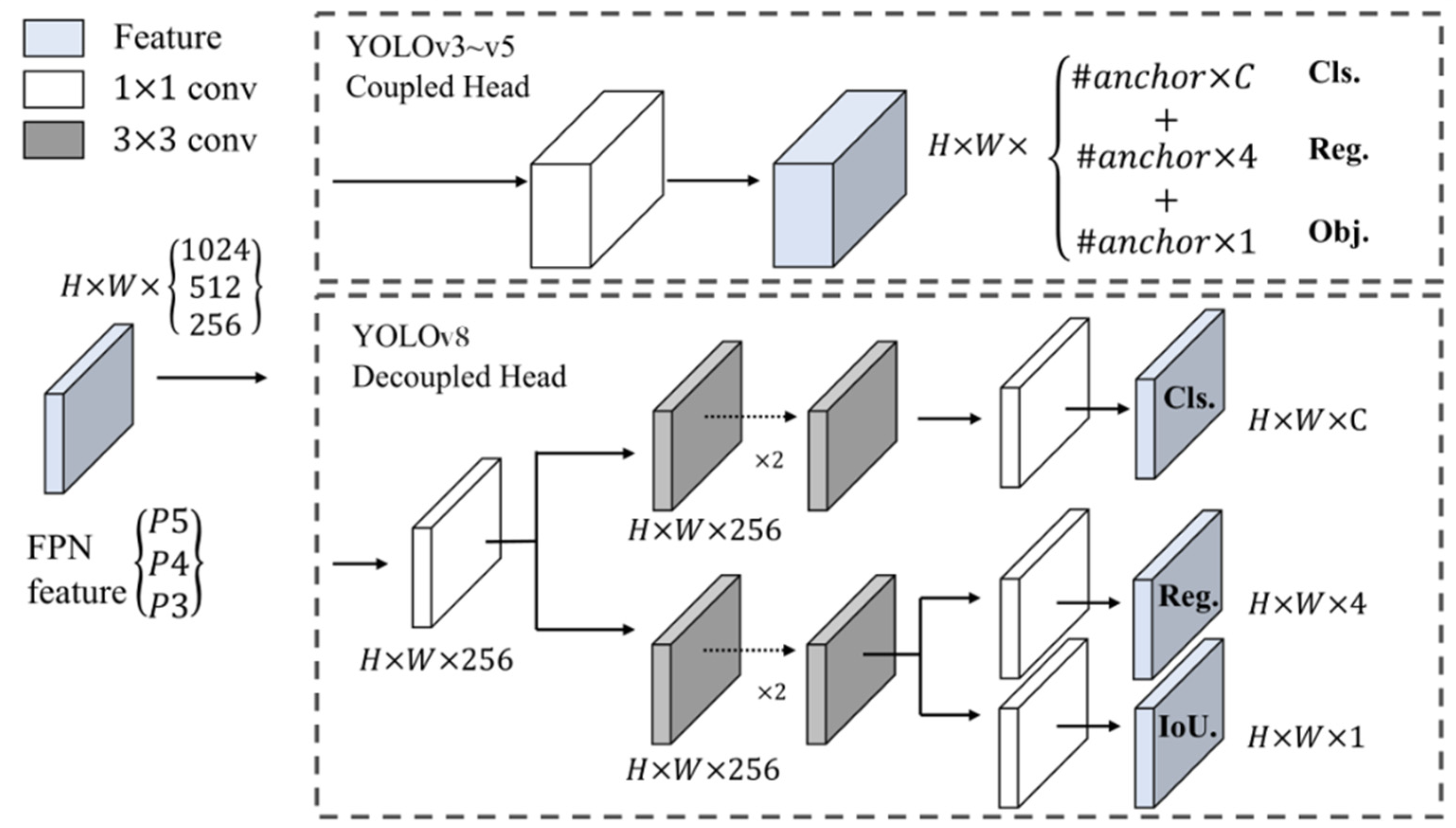
3.3.3. Detection Head
3.4. Hot Spot Detection Network Based on DCN-GYOLOv8
3.4.1. Deformable Convolution Network
3.4.2. GhostNet Module
4. Experimental Verification and Result Analysis
4.1. Acquisition and Processing of Datasets
4.2. Experimental Environment Configuration
4.3. Evaluation Metrics
4.4. Analysis of Experimental Results
5. Conclusions
- (1)
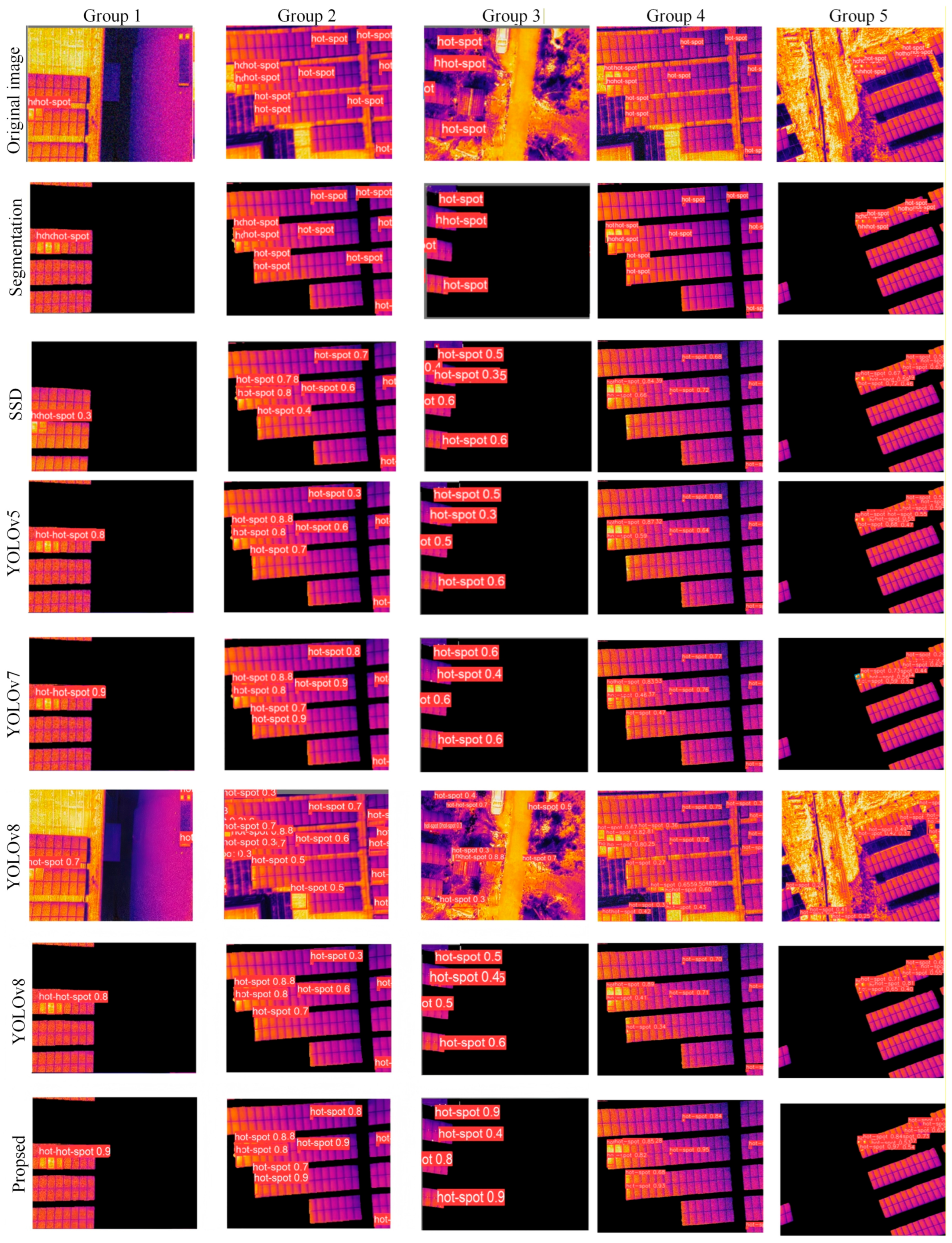
- Aiming at the interference of pseudo-highlighted areas with complex backgrounds on hot spot detection, the U-Net segmentation network is introduced to precisely capture the boundary features of photovoltaic panels, and its detection accuracy is improved by 1.8% compared with the original network.
- (2)
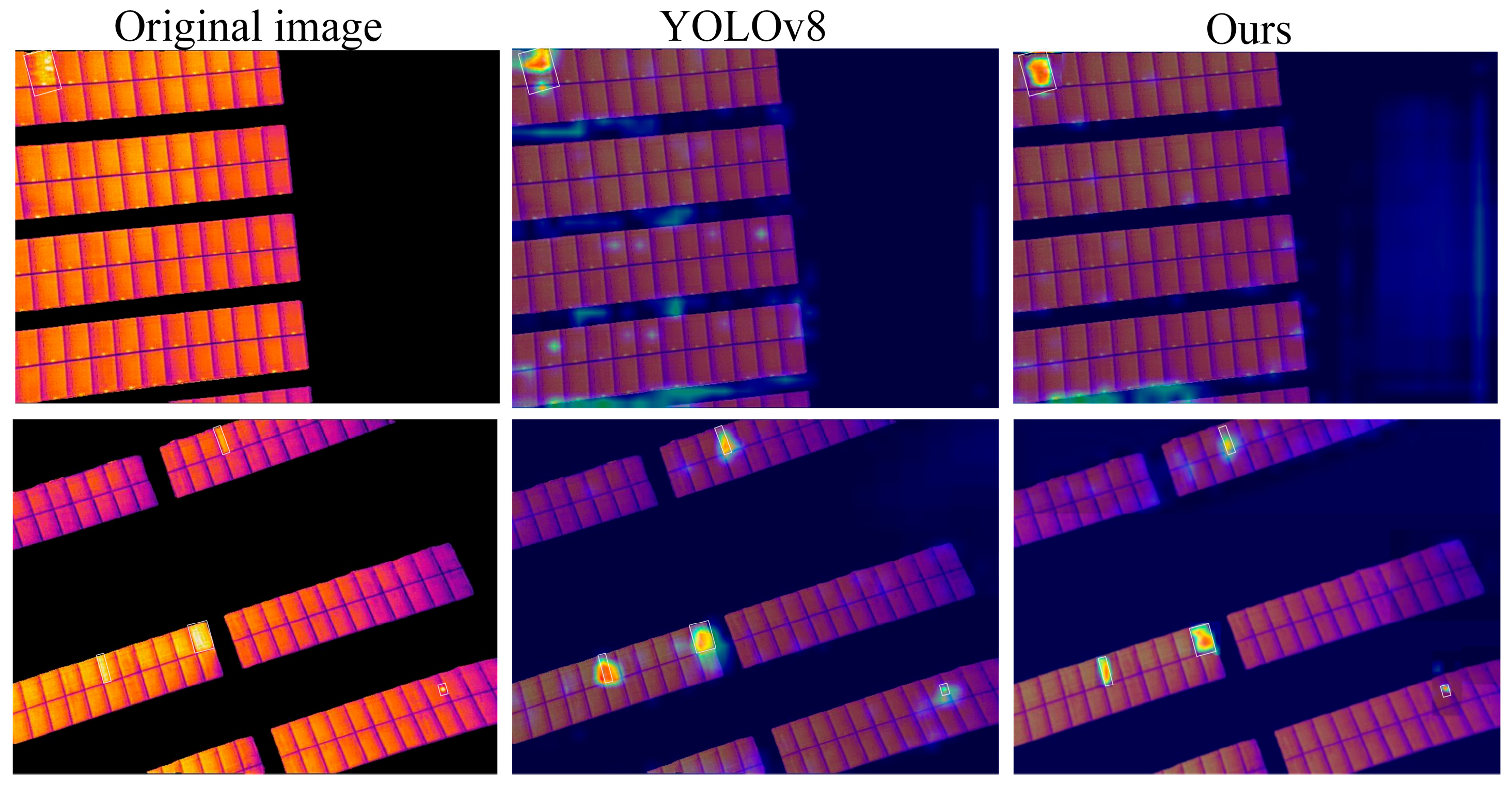
- To address the problem of difficult detection of small targets, this study optimized the YOLOv8 network architecture by introducing deformable convolutional DCN, thereby flexibly handling the problem of insufficient receptive fields for small targets.
- (3)
- In view of the difficulty for the detection algorithm to balance speed and accuracy, by designing the C2f_Ghost module to simplify the network parameters, the detection accuracy can be improved while ensuring the reasoning speed.
Author Contributions
Funding
Institutional Review Board Statement
Informed Consent Statement
Data Availability Statement
Conflicts of Interest
References
- Ding, H.; Guo, R.; Xing, H. Spatial–Temporal Hotspot Management of Photovoltaic Modules Based on Fiber Bragg Grating Sensor Arrays. Sensors 2025, 25, 4897. [Google Scholar] [CrossRef]
- Wang, Y.; Yun, W.; Xie, G. YOLO-WAD for Small-Defect Detection Boost in Photovoltaic Modules. Sensors 2025, 25, 1755. [Google Scholar] [CrossRef]
- Hao, S.; Li, J.; Ma, X. A Photovoltaic Hot-Spot Fault Detection Network for Aerial Images Based on Progressive Transfer Learning and Multiscale Feature Fusion. IEEE Trans. Geosci. Remote Sens. 2024, 62, 4709713. [Google Scholar] [CrossRef]
- Liu, B.; Chen, L.; Sun, K. A Hot Spot Identification Approach for Photovoltaic Module Based on Enhanced U-net with Squeeze-and-excitation and VGG19. IEEE Trans. Instrum. Meas. 2024, 73, 3516510. [Google Scholar] [CrossRef]
- Xiao, C.; Wei, D.; He, Y. A fault diagnosis method of hot spots for photovoltaic clusters based on model parameters. Energy Sci. Eng. 2024, 12, 3453–3464. [Google Scholar] [CrossRef]
- Tang, S.; Xing, Y.; Chen, L. Review and a novel strategy for mitigating hot spot of PV panels. Sol. Energy 2021, 214, 51–61. [Google Scholar] [CrossRef]
- Mao, C.; Long, M.; Ri, L. Automated visual inspection of solar cell images using adapted morphological and edge detection algorithms. J. Opt. 2023, 53, 1293–1301. [Google Scholar] [CrossRef]
- Čabo, F.; Marinić-Kragić, I.; Garma, T. Development of thermo-electrical model of photovoltaic panel under hot-spot conditions with experimental validation. Energy 2021, 230, 120785. [Google Scholar] [CrossRef]
- Bressan, M.; Gutierrez, A.; Gutierrez, L. Development of a real-time hot-spot prevention using an emulator of partially shaded PV systems. Renew. Energy 2018, 127, 334–343. [Google Scholar] [CrossRef]
- Mao, Y.; Zheng, H.; Li, L. Research on hot spot detection method of photovoltaic panel based on thermal infrared image. Process Autom. Instrum. 2024, 45, 25–29. [Google Scholar]
- Wang, D.; Zhang, Z.; Zheng, X. Knowledge expression and graph construction of hot spot effect faults of photovoltaic modules. Acta Energiae Solaris Sin. 2025, 46, 538–546. [Google Scholar]
- Sevilla, P.; Zuniga, M.; Robles, J. Novel Fault Detection and Location Method for PV Arrays Based on Frequency Analysis. IEEE Access 2019, 7, 772050–772061. [Google Scholar] [CrossRef]
- Tsanakas, J.; Chrysostomou, D.; Botsaris, P. Fault diagnosis of photovoltaic modules through image processing and Canny edge detection on field thermographic measurements. Int. J. Sustain. Energy 2015, 34, 351–372. [Google Scholar] [CrossRef]
- Dotenco, S.; Dalsas, M.; Winkler, L. Automatic detection and analysis of photovoltaic modules in aerial infrared imagery. In Proceedings of the 2016 IEEE Winter Conference on Applications of Computer Vision (WACV), Lake Placid, NY, USA, 7–10 March 2016; IEEE: New York, NY, USA, 2016; p. 7477658. [Google Scholar]
- Akram, M.; Li, G.; Jin, Y. Automatic detection of photovoltaic module defects in infrared images with isolated and develop-model transfer deep learning. Sol. Energy 2020, 198, 175–186. [Google Scholar] [CrossRef]
- Sun, T.; Xing, H.; Cao, S. A novel detection method for hot spots of photovoltaic (PV) panels using improved anchors and prediction heads of YOLOv5 network. Energy Rep. 2022, 8, 1219–1229. [Google Scholar] [CrossRef]
- Zheng, Q.; Ma, J.; Liu, M. Lightweight Hot-Spot Fault Detection Model of Photovoltaic Panels in UAV Remote-Sensing Image. Sensors 2022, 22, 4617. [Google Scholar] [CrossRef] [PubMed]
- Wang, Z.; Chen, J.; Wang, C.; Peng, C.; Xuan, J.; Shi, T.; Zuo, M. CNC-VLM: An RLHF-optimized industrial large vision-language model with multimodal learning for imbalanced CNC fault detection. Mech. Syst. Signal Process. 2026, 245, 113838. [Google Scholar] [CrossRef]
- Hao, S.; Li, T.; Ma, X. SDHS-RLDNet: A real-time lightweight detection network for small-dense photovoltaic hot-spots. J. Real-Time Image Process. 2025, 22, 34. [Google Scholar] [CrossRef]
- He, T.; Hao, S.; Zhang, X. APM2Det: A Photovoltaic Hot-Spot Fault Detection Network Based on Angle Perception and Model Migration. IEEE Trans. Dielectr. Electr. Insul. 2025, 31, 2938–2946. [Google Scholar] [CrossRef]
- Arunachalam, V.; Karthickraja, J.; Senthamizh, S. Wavelet transform based detection, classification and location of faults in a PV array. J. Ambient. Intell. Humaniz. Comput. 2023, 14, 11227–11237. [Google Scholar] [CrossRef]
- Ren, Y.; Yu, Y.; Li, J. Design of photovoltaic hot spot detection system based on deep learning. J. Phys. Conf. Ser. 2020, 1693, 012075. [Google Scholar] [CrossRef]
- Ronneberger, O.; Fischer, P.; Brox, T. U-Net: Convolutional networks for biomedical image segmentation. In Proceedings of the 18th International Conference on Medical Image Computing and Computer-Assisted Intervention, Munich, Germany, 5–9 October 2015; Springer: Cham, Switzerland, 2015; pp. 234–241. [Google Scholar]
- Varghese, R.; Sambath, M. Yolov8: A novel object detection algorithm with enhanced performance and robustness. In Proceedings of the 2024 International Conference on Advances in Data Engineering and Intelligent Computing Systems (ADICS), Chennai, India, 18–19 April 2024; IEEE: New York, NY, USA, 2024; pp. 1–6. [Google Scholar]
- Dai, J.; Qi, H.; Xiong, Y. Deformable convolutional networks. In Proceedings of the IEEE International Conference on Computer Vision, Venice, Italy, 22–29 October 2017; pp. 764–773. [Google Scholar]
- Rao, S. Ghost-ResNeXt: An Effective Deep Learning Based on Mature and Immature WBC Classification. Appl. Sci. 2023, 13, 4054. [Google Scholar]



| Equipment | Configuration |
|---|---|
| System type | 64-bit operating system, processor based on x64 |
| Processor | 12th Gen Intel(R) Core(TM) i5-12600KF@3.70 GHz |
| Graphics card | NVIDIA GeForce RTX 4060Ti |
| Operating system | Microsoft Windows11 |
| Development language | Python |
| Hyperparameter | Value | Description |
|---|---|---|
| Optimizer | SGD | Selected for stability over Adam in this task |
| Base Learning Rate | 1 × 10⁻² | Step decay schedule applied |
| Momentum | 0.937 | - |
| Weight Decay | 0.0005 | - |
| Batch Size | 16 | - |
| Input Resolution | 640 × 640 | Standardized for all models |
| Total Epochs | 300 | Convergence typically observed around epoch 250 |
| NMS Threshold | 0.60 | - |
| Data Split | 6:2:2 | Train:Validation:Test |
| Segmentation Network | DCN | C2f_Ghost | mAP@0.5 | mAP@0.5:0.95 | Parameters |
|---|---|---|---|---|---|
| 77.9% | 39.9% | 3.87 M | |||
| √ | 79.7% | 41.2% | 4.95 M | ||
| √ | √ | 82.3% | 42.3% | 7.31 M | |
| √ | √ | 80.0% | 42.1% | 2.37 M | |
| √ | √ | √ | 88.5% | 42.6% | 5.12 M |
| Algorithms | Recall (R) | Precision (P) | mAP@0.5 | mAP@0.5:0.95 | AP_small | Total Latency |
|---|---|---|---|---|---|---|
| SSD | 38.6% | 88.2% | 62.3% | 34.5% | 18.2% | 0.054 s |
| YOLOv5 | 72.5% | 82.2% | 79.1% | 40.8% | 24.5% | 0.027 s |
| YOLOv7 | 73.8% | 72.4% | 78.4% | 41.2% | 25.1% | 0.023 s |
| YOLOv8 | 75.6% | 76.2% | 79.7% | 42.5% | 26.8% | 0.018 s |
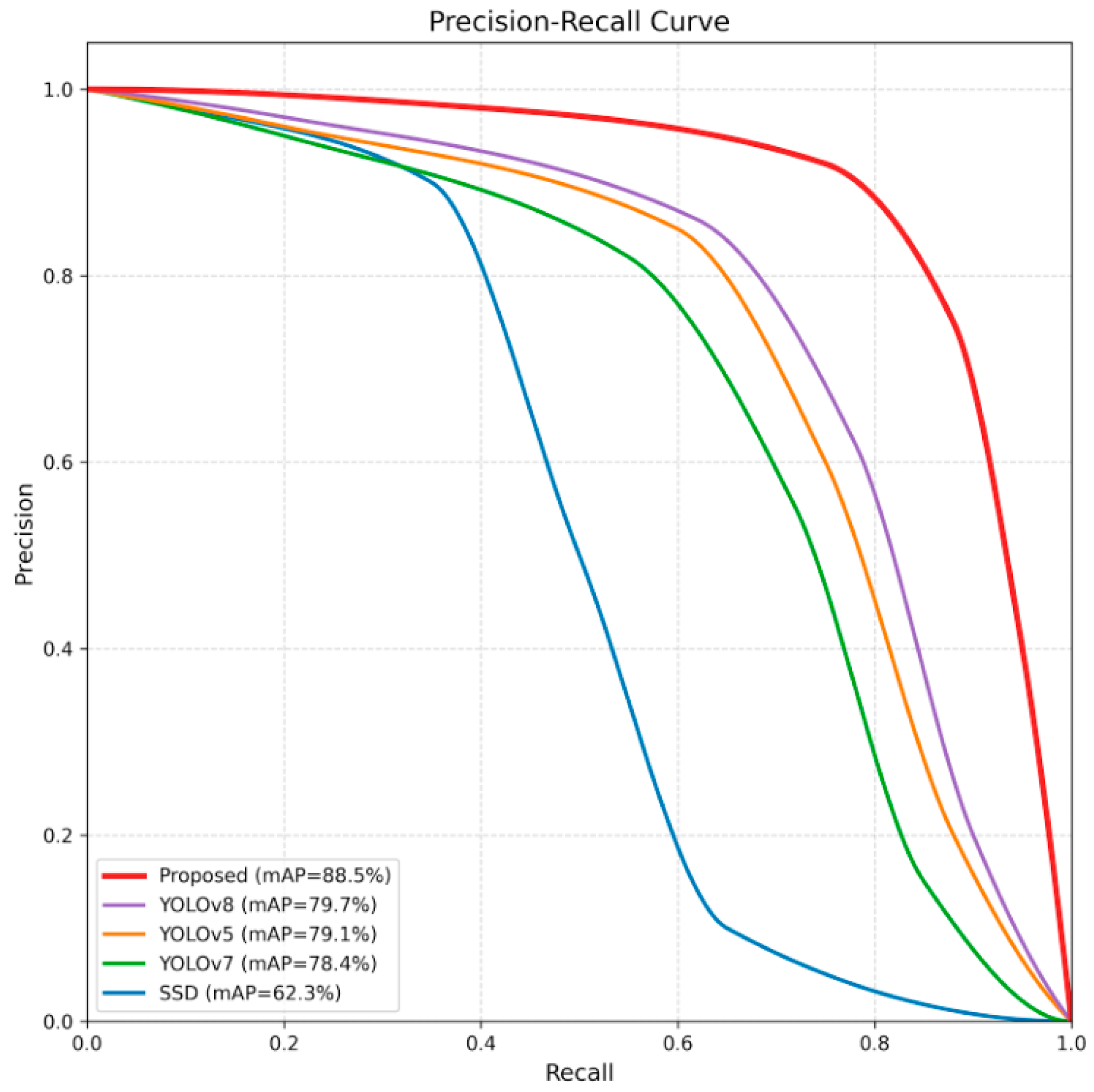
| Proposed | 78.7% | 79.8% | 88.5% | 49.8% | 35.4% | 0.014 s |
| Algorithms | Scenario 1 (Mountain) | Scenario 2 (Rooftop) | ||||
|---|---|---|---|---|---|---|
| Recall (R) | Precision (P) | mAP@0.5 | Recall (R) | Precision (P) | mAP@0.5 | |
| SSD | 37.7% | 87.9% | 60.1% | 39.4% | 88.5% | 63.5% |
| YOLOv5 | 72.1% | 83.6% | 78.2% | 73.6% | 82.5% | 80.2% |
| YOLOv7 | 72.0% | 73.5% | 77.9% | 73.9% | 73.5% | 82.1% |
| YOLOv8 | 74.6% | 78.2% | 79.5% | 75.8% | 77.2% | 82.9% |
| Proposed | 76.5% | 79.2% | 87.4% | 78.9% | 79.9% | 88.9% |
Disclaimer/Publisher’s Note: The statements, opinions and data contained in all publications are solely those of the individual author(s) and contributor(s) and not of MDPI and/or the editor(s). MDPI and/or the editor(s) disclaim responsibility for any injury to people or property resulting from any ideas, methods, instructions or products referred to in the content. |
© 2026 by the authors. Licensee MDPI, Basel, Switzerland. This article is an open access article distributed under the terms and conditions of the Creative Commons Attribution (CC BY) license.
Share and Cite
Li, L.; Wu, W.; Li, Z. Research on Hot Spot Fault Detection Method Based on Infrared Images of Photovoltaic Modules in Complex Background. Sensors 2026, 26, 1024. https://doi.org/10.3390/s26031024
Li L, Wu W, Li Z. Research on Hot Spot Fault Detection Method Based on Infrared Images of Photovoltaic Modules in Complex Background. Sensors. 2026; 26(3):1024. https://doi.org/10.3390/s26031024
Chicago/Turabian StyleLi, Lei, Weili Wu, and Zhong Li. 2026. "Research on Hot Spot Fault Detection Method Based on Infrared Images of Photovoltaic Modules in Complex Background" Sensors 26, no. 3: 1024. https://doi.org/10.3390/s26031024
APA StyleLi, L., Wu, W., & Li, Z. (2026). Research on Hot Spot Fault Detection Method Based on Infrared Images of Photovoltaic Modules in Complex Background. Sensors, 26(3), 1024. https://doi.org/10.3390/s26031024