Article

An Entropy-Weighted Multi-Factor Ambiguity Subset Selection Algorithm for Partial Ambiguity Resolution in Multi-GNSS and Multi-Frequency Precise Point Positioning

1
School of Geomatics and Urban Spatial Informatics, Beijing University of Civil Engineering and Architecture, Beijing 102616, China
2
Shanghai Surveying and Mapping Institute, Shanghai 200063, China
*
Authors to whom correspondence should be addressed.
Sensors 2026, 26(14), 4388; https://doi.org/10.3390/s26144388
Submission received: 5 June 2026 / Revised: 6 July 2026 / Accepted: 8 July 2026 / Published: 10 July 2026
(This article belongs to the Special Issue Advances in GNSS Signal Processing and Navigation—Second Edition)

Abstract

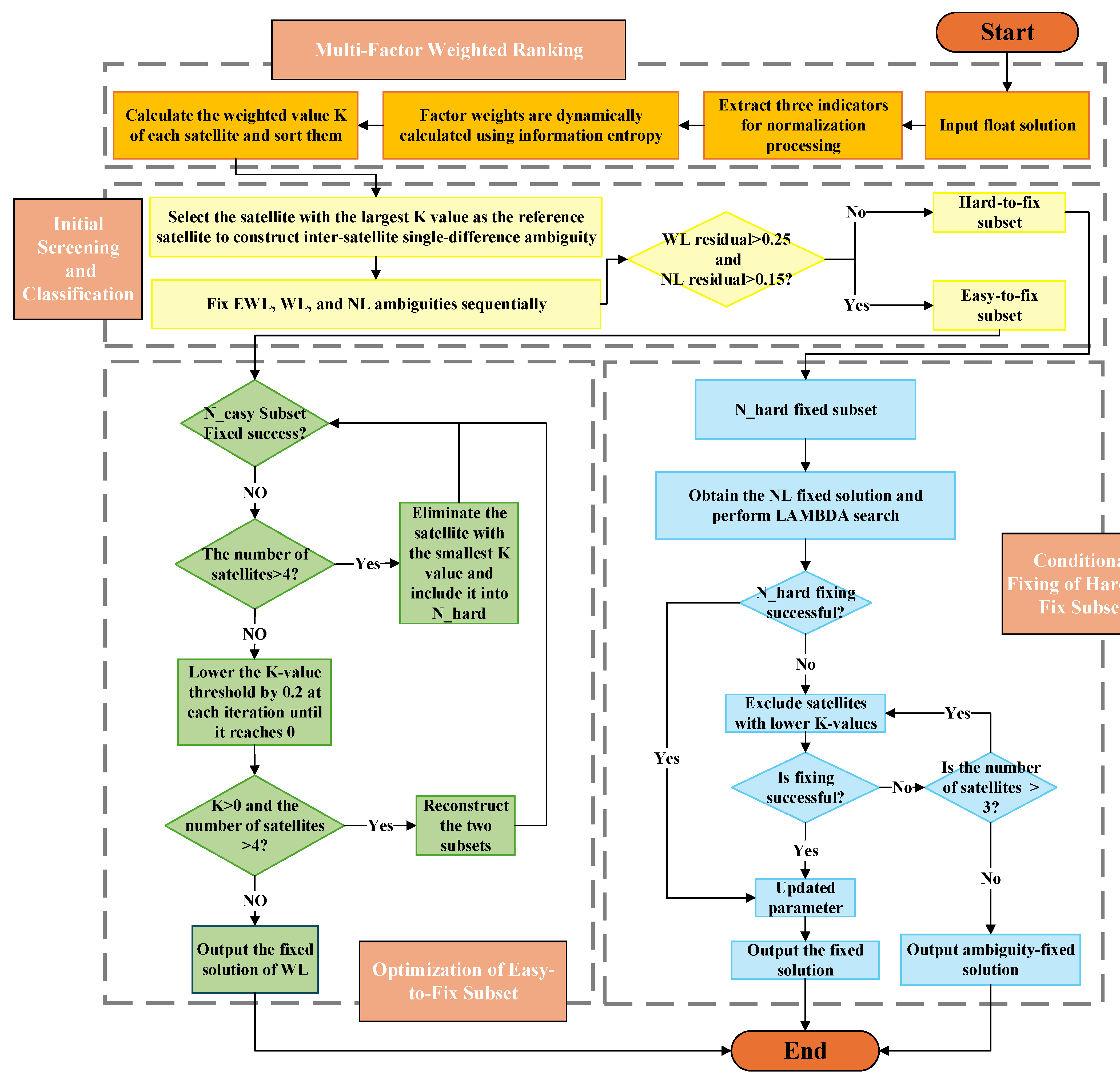
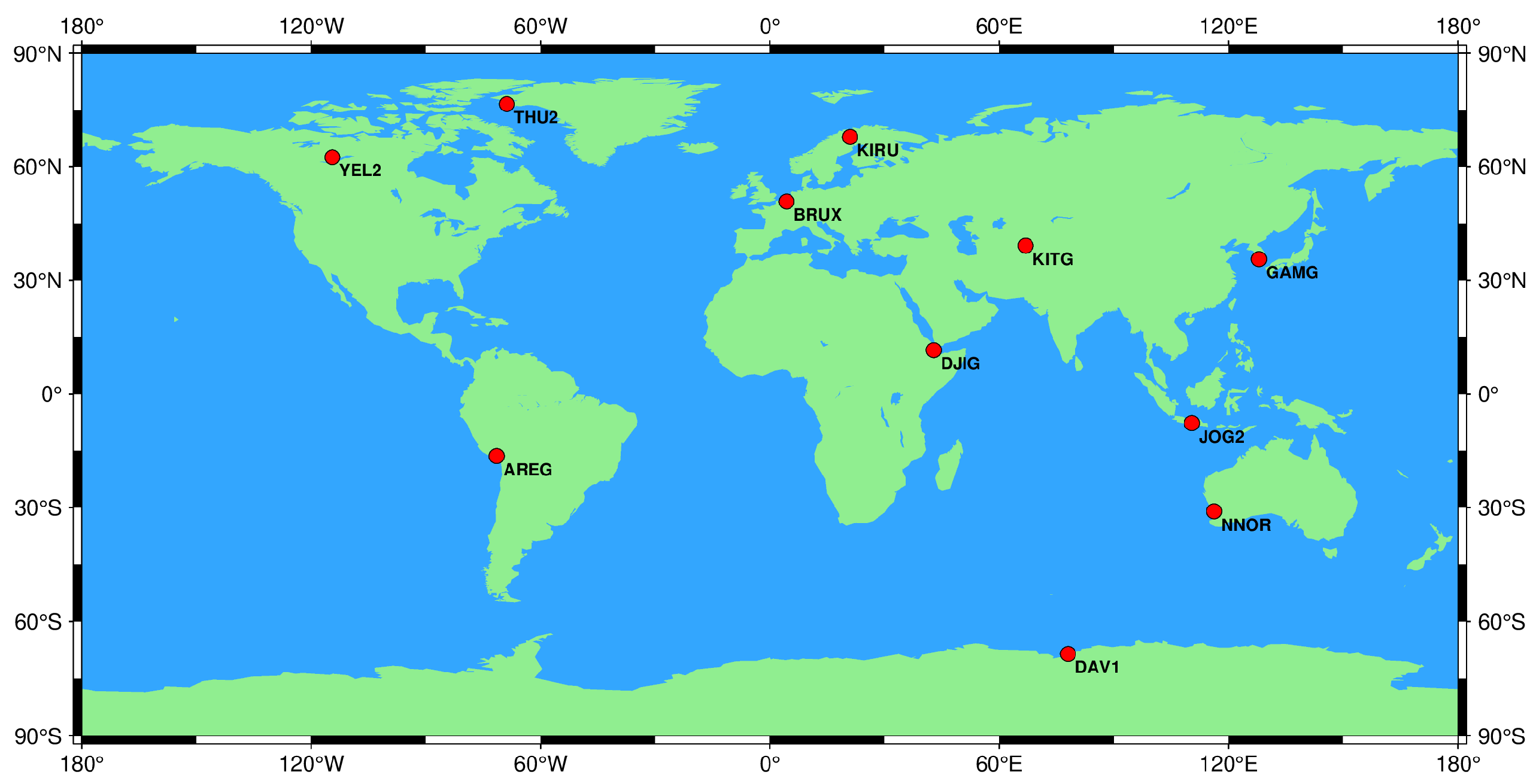
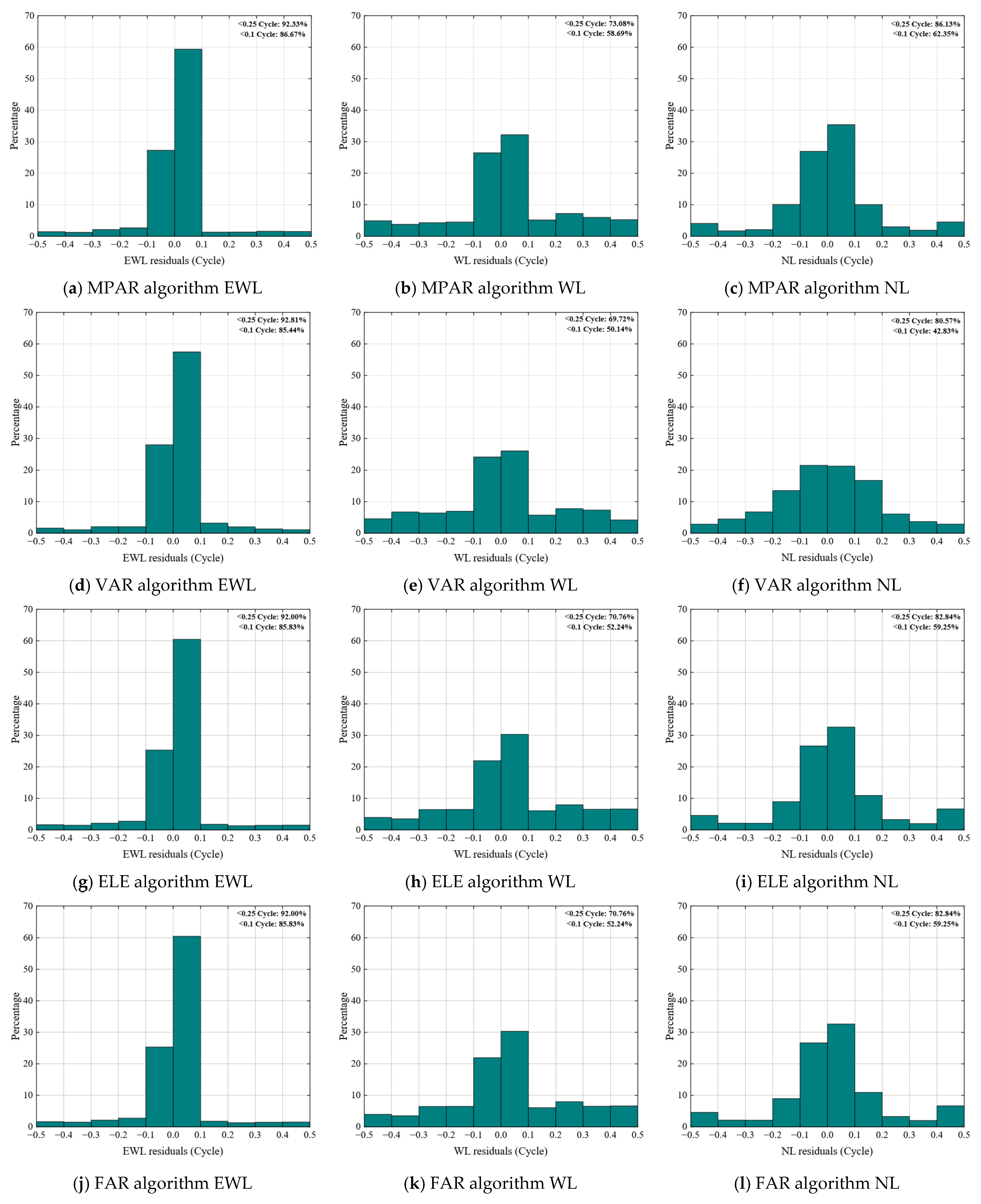
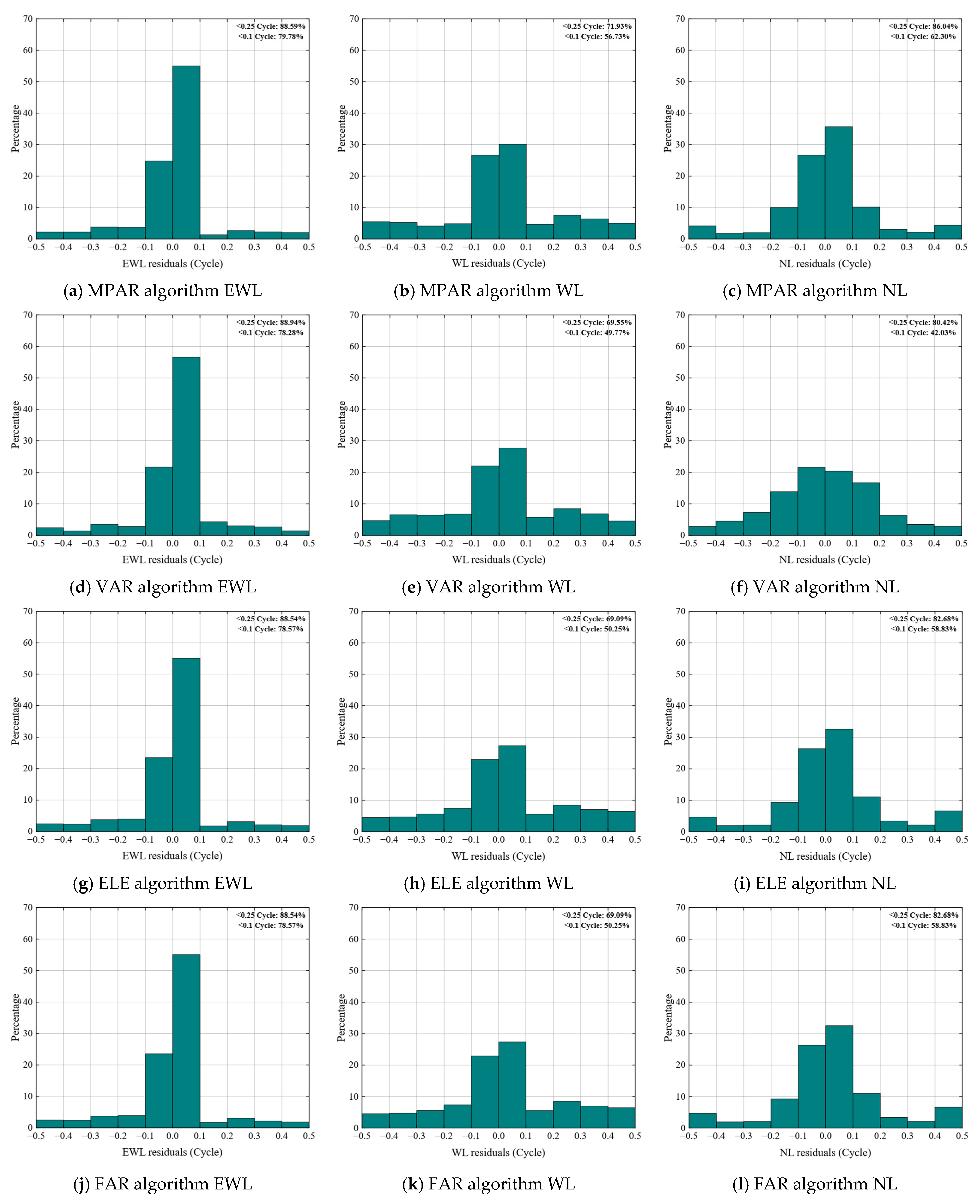
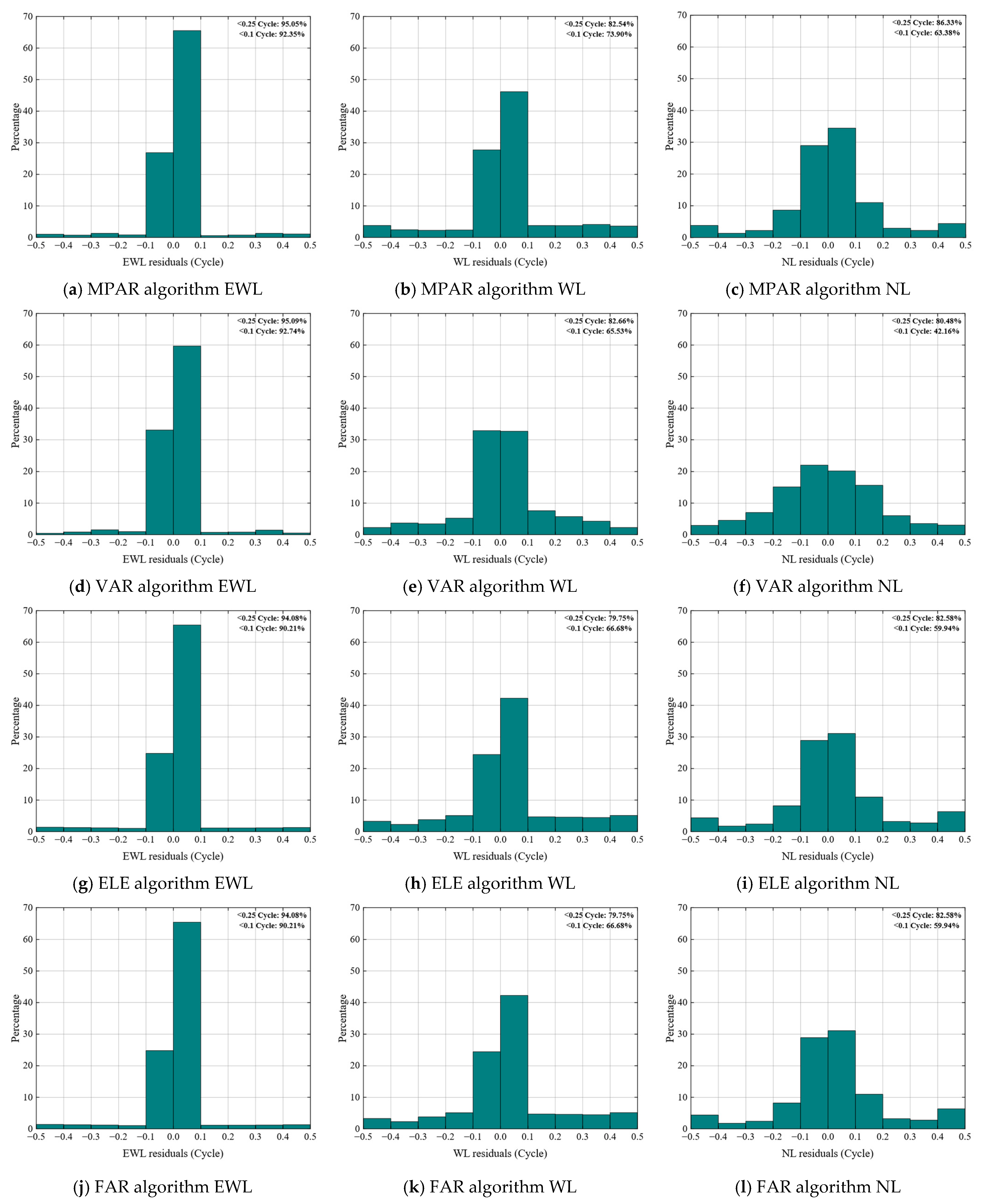
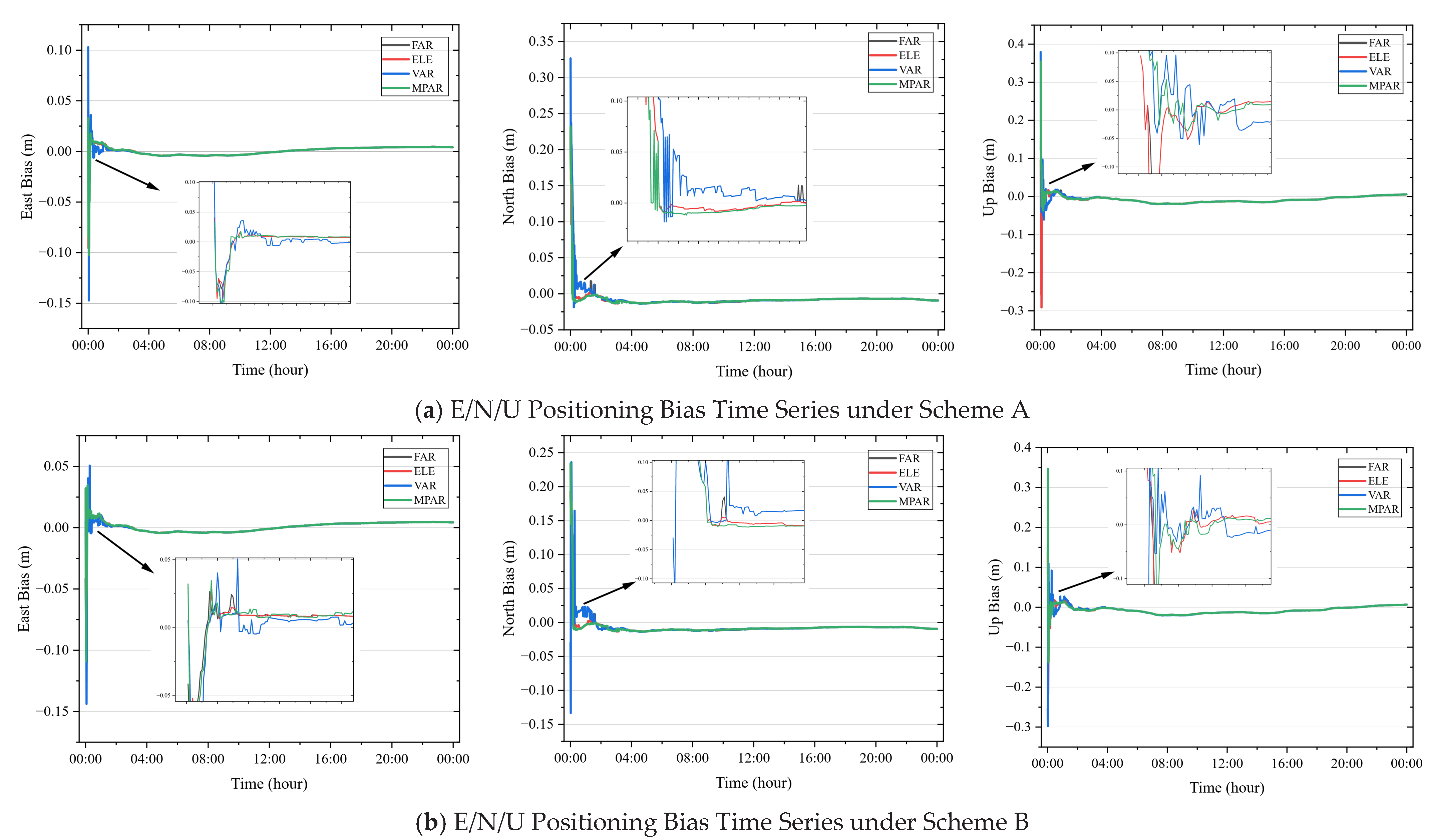
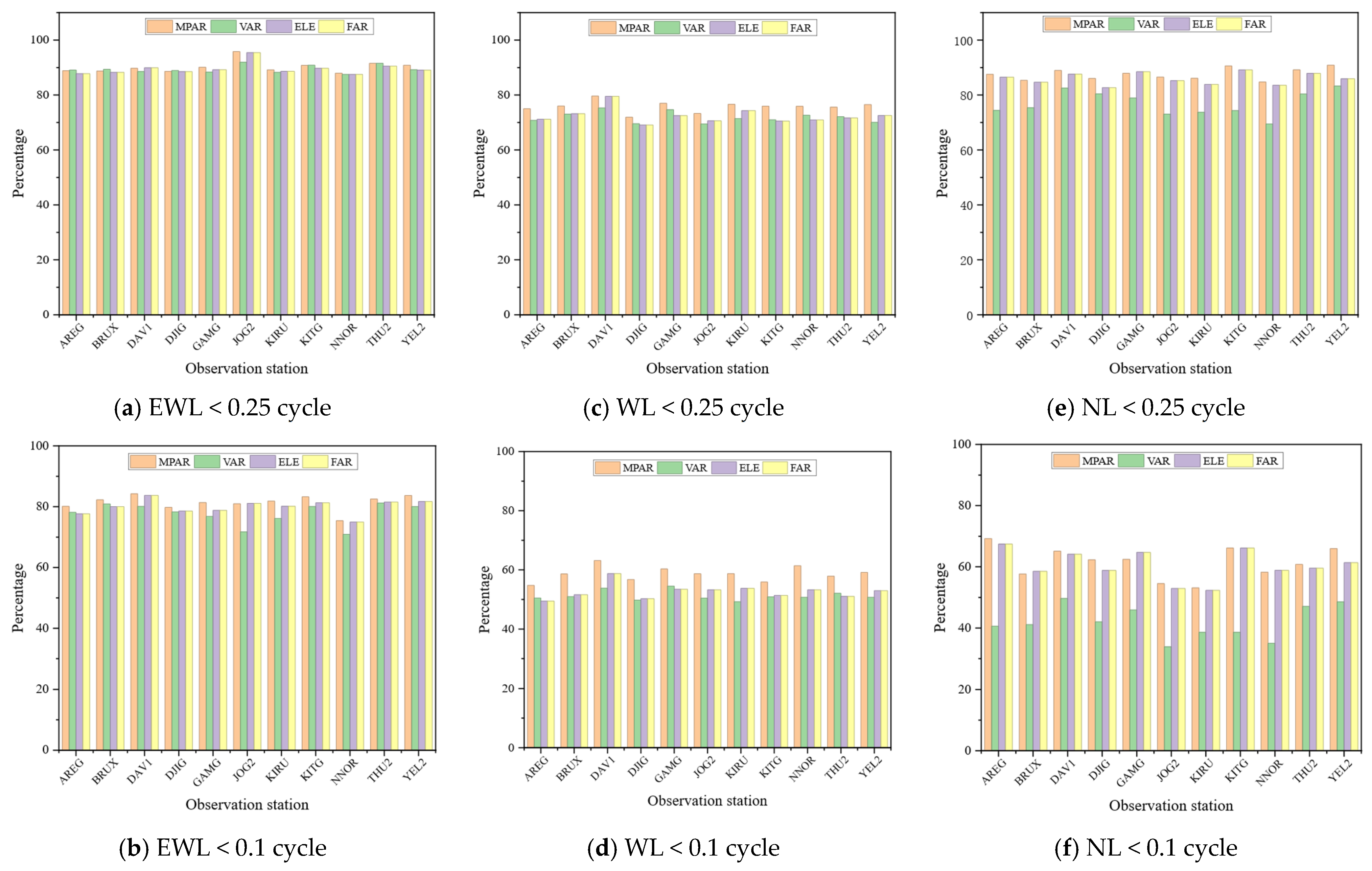
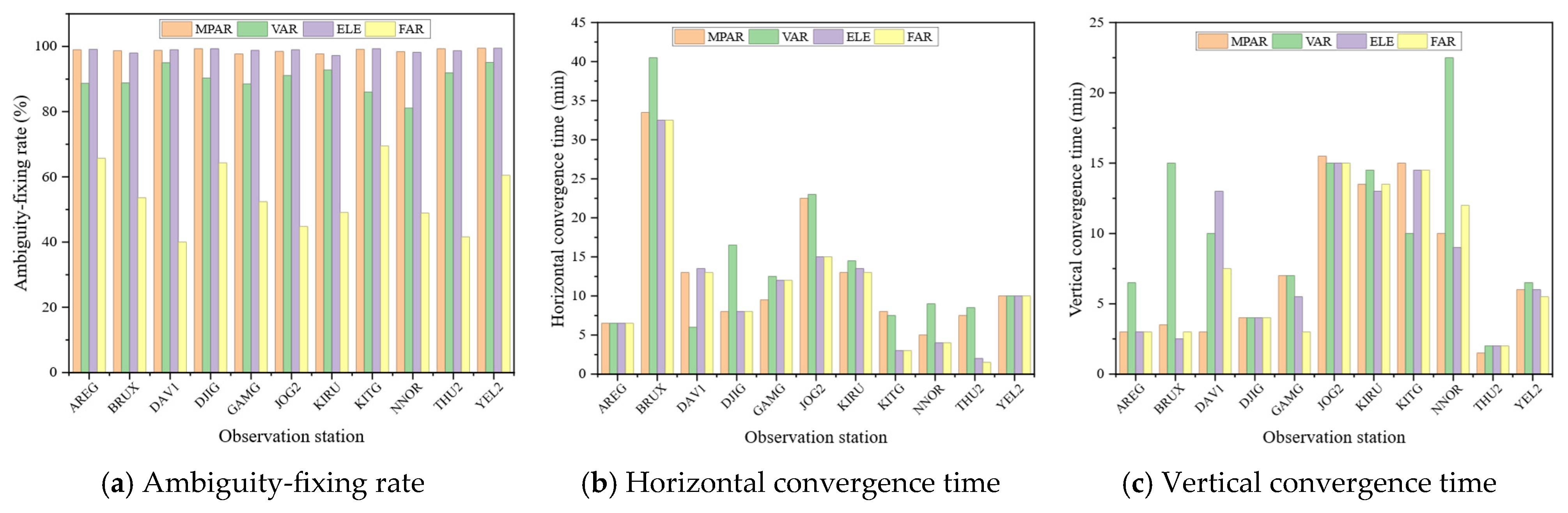
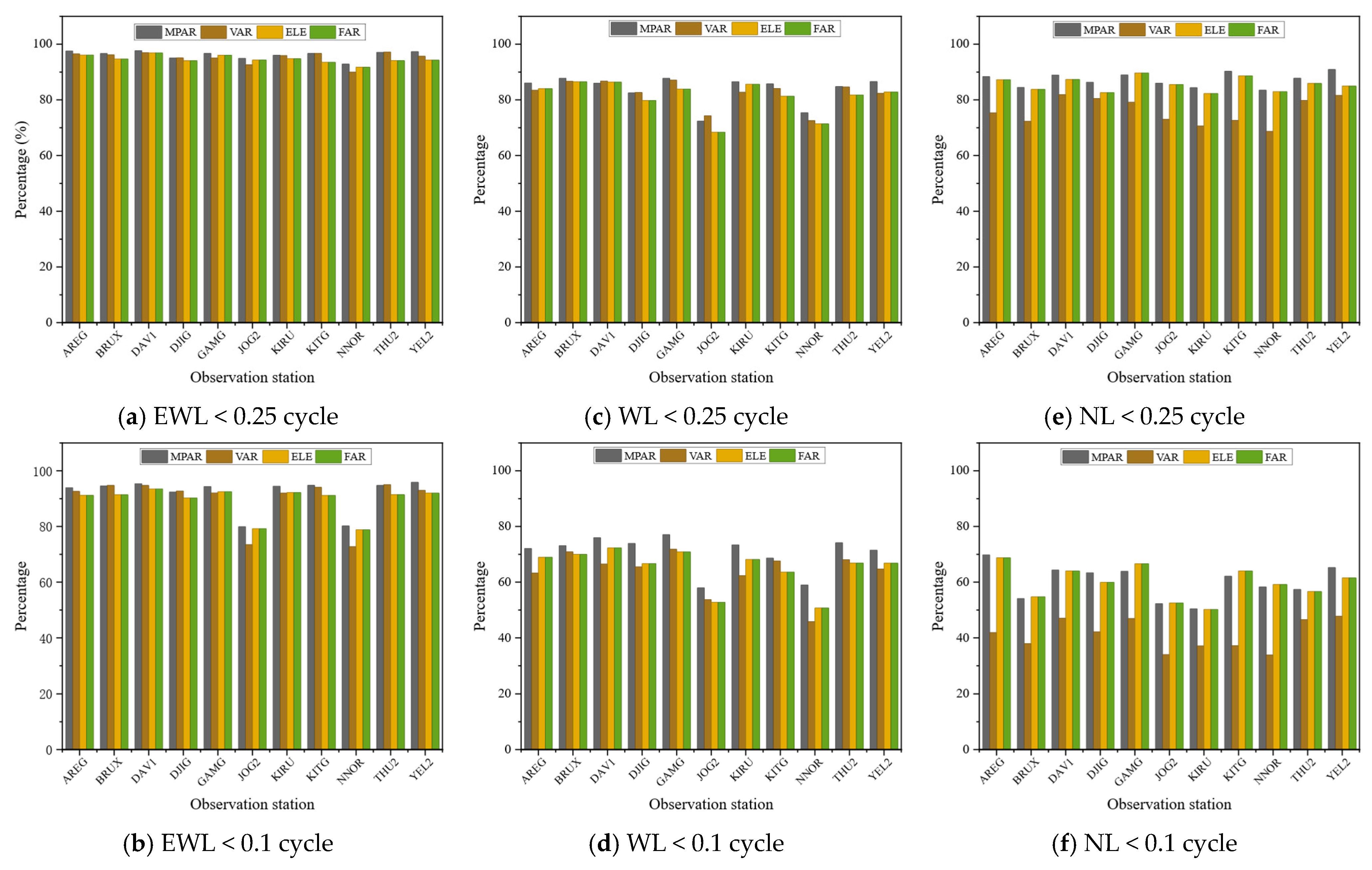
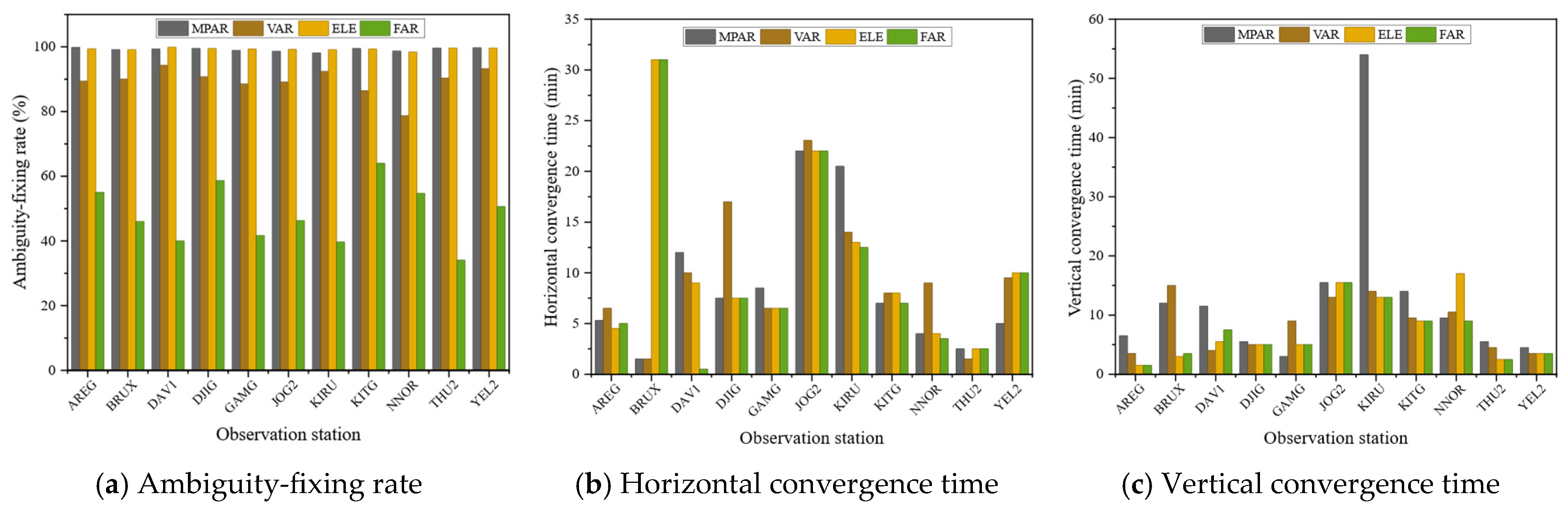
Reliable ambiguity subset selection is essential for partial ambiguity resolution (PAR) in multi-GNSS and multi-frequency precise point positioning (PPP), as the increasing number of satellite–frequency ambiguities expands the ambiguity search space and reduces ambiguity-fixing reliability in high-dimensional scenarios. To address this issue, this study proposes a multi-factor ranking and screening partial ambiguity resolution (MPAR) algorithm, an entropy-weighted multi-factor ambiguity subset selection algorithm designed for multi-GNSS and multi-frequency undifferenced and uncombined precise point positioning (UDUC PPP). The proposed MPAR algorithm evaluates candidate ambiguities using three quality indicators: signal-to-noise ratio, ambiguity variance, and carrier-phase residual. Min–max normalization is used to eliminate scale differences among the indicators, while entropy-based adaptive weighting is introduced to dynamically determine their relative contributions. Based on the integrated ranking results, ambiguities are divided into easy-to-fix and hard-to-fix subsets, with the hard-to-fix subset further refined through iterative screening before integer fixing. The proposed algorithm was validated using 24 h BDS-3/GPS/Galileo observations collected from 11 globally distributed MGEX stations on day 350 of 2025 under five-, four-, and three-frequency configurations. Its performance was compared with the baseline full ambiguity resolution strategy (FAR), which fixes all candidate ambiguities without subsequent iterative exclusion after an initial fixing failure, as well as elevation-angle-factor-based partial ambiguity resolution (ELE) and variance-factor-based partial ambiguity resolution (VAR). The MPAR algorithm achieved ambiguity-fixing rates of 98.9%, 98.7%, and 99.2% under the three configurations, respectively, exhibiting performance comparable to ELE while outperforming VAR and FAR. Compared with VAR, MPAR increased the average proportions of wide-lane and narrow-lane ambiguity residuals within ±0.1 cycle by 13.6% and 46.4%, respectively. Under the five-frequency configuration, MPAR achieved the best overall performance, with horizontal and vertical convergence times of 9.1 and 8.1 min, respectively. These results demonstrate that the proposed entropy-weighted multi-factor subset selection algorithm improves ambiguity estimation quality and enhances the reliability and convergence performance of high-dimensional multi-GNSS and multi-frequency PPP.
Keywords: multi-GNSS and multi-frequency PPP; undifferenced and uncombined PPP; partial ambiguity resolution; entropy-based adaptive weighting; multi-factor ranking and screening; ambiguity subset selection multi-GNSS and multi-frequency PPP; undifferenced and uncombined PPP; partial ambiguity resolution; entropy-based adaptive weighting; multi-factor ranking and screening; ambiguity subset selection