Enhancement of Signal-to-Noise Ratio of Void Detection Signals in Concrete-Filled Steel Tubular Structures Using the Good Point Set and Vibrational Snow Ablation Optimizer

Abstract
1. Introduction
- (i)
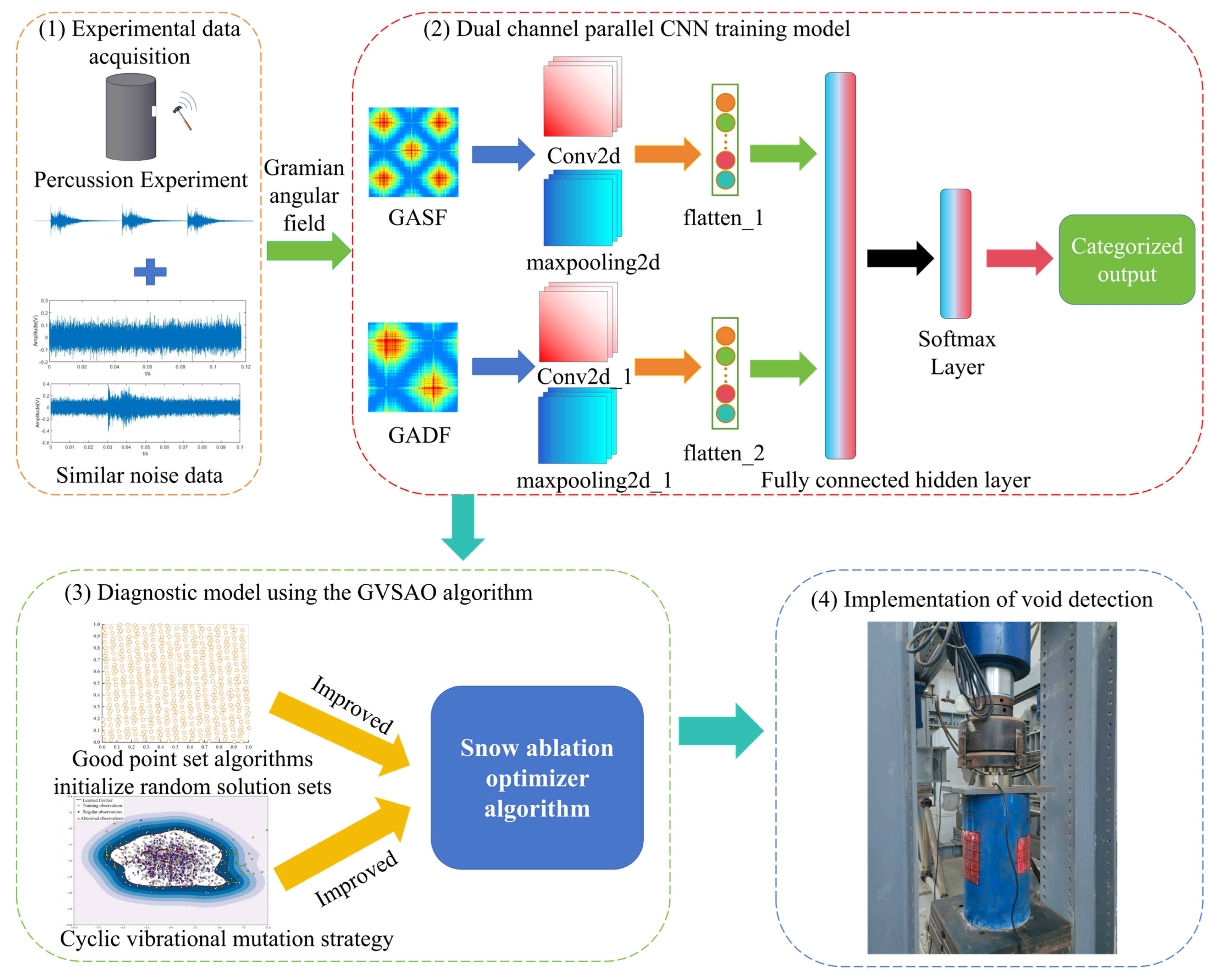
- The proposed method ensures the complete preservation of both temporal and spatial characteristics of the percussion sound signal while effectively mitigating interference from various construction noises.
- (ii)
- The proposed method has the effect of visualizing and processing signal features in a certain way.
2. CFST Structural Void Detection Method
2.1. Enhanced Signal Robustness
2.2. Signal Feature Extraction
2.2.1. GAF−Based Data Visualization
- (1)
- Standardized scaling: the time−series Z in the Cartesian coordinate system is first scaled to in the range of [−1, 1] using Equation (1).
- (2)
- Polar coordinate transformations: The polar coordinate transformation converts the time-series magnitude data into vectors and subsequently performs the inner product operation. Its transformation formula is as follows:
2.2.2. GAF Transform
2.3. Training Process Using Dual-Channel Parallel CNNs
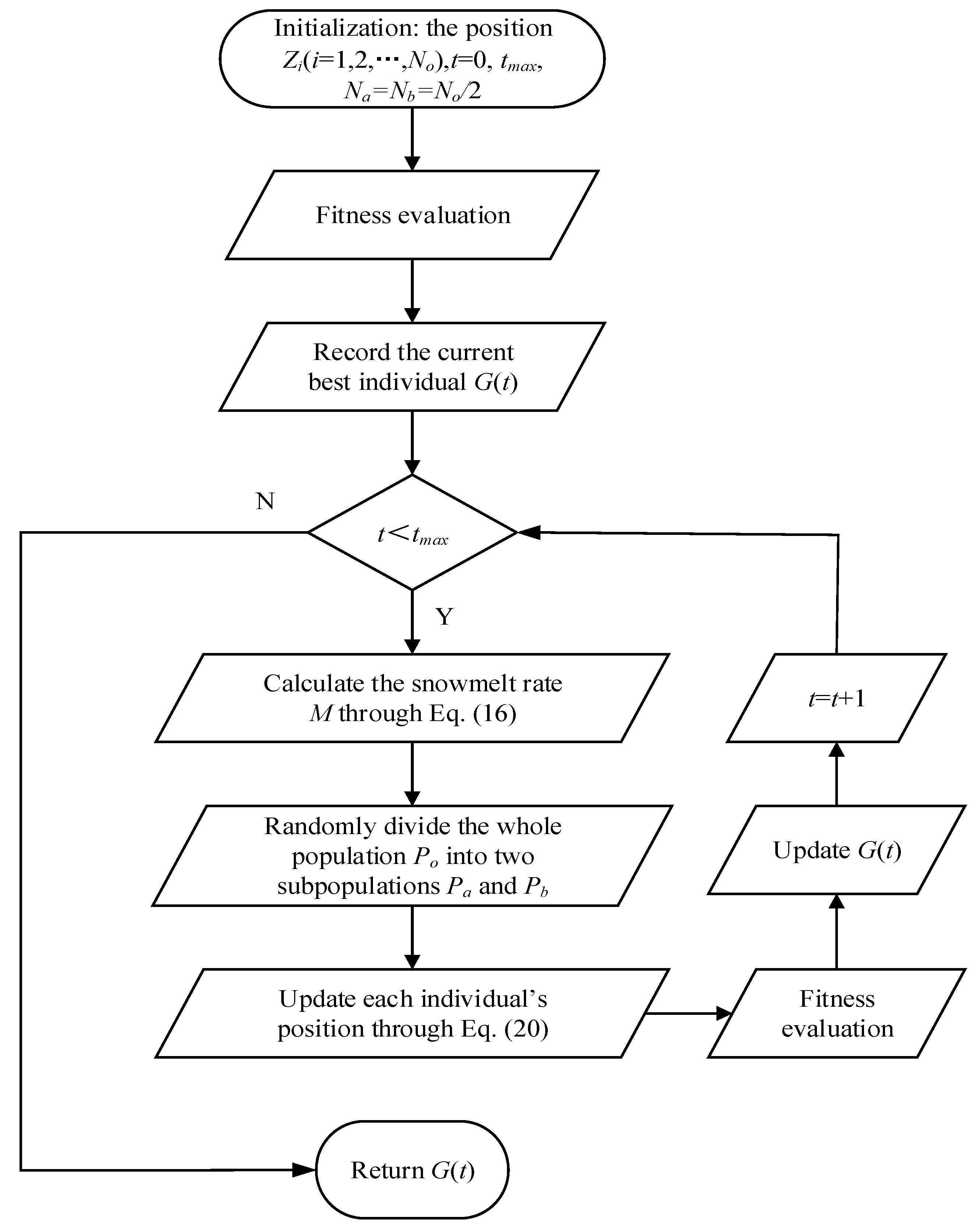
2.4. Diagnostic Model Construction Based on the GVSAO Algorithm
- (1)
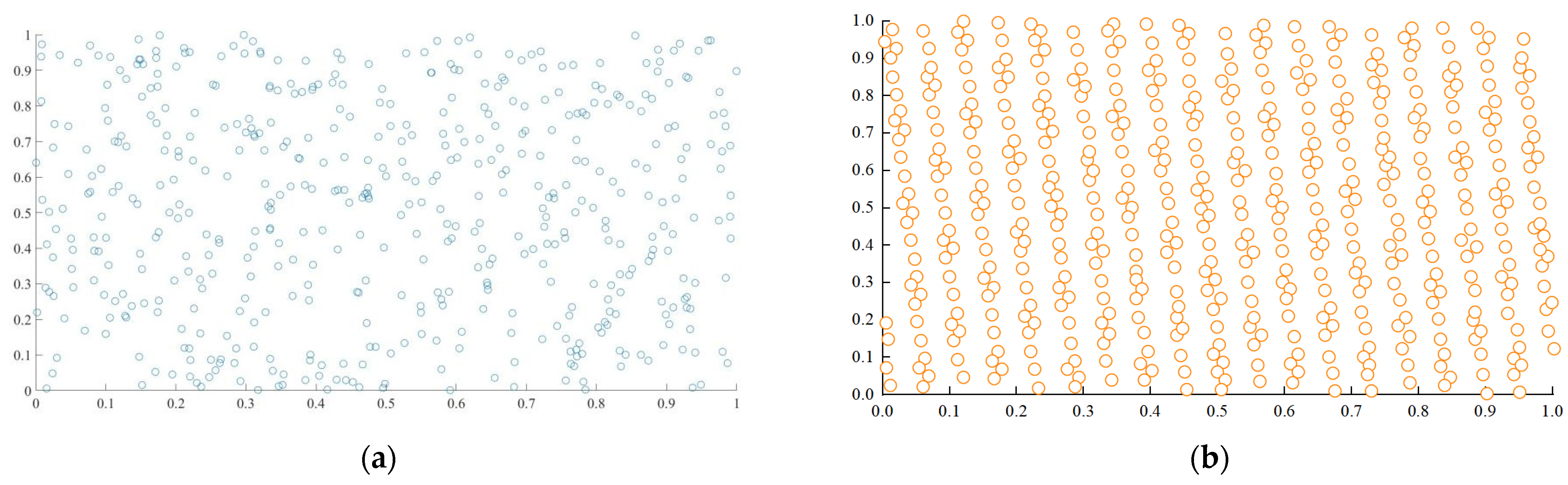
- Good point set algorithms initialize random solution sets
- (2)
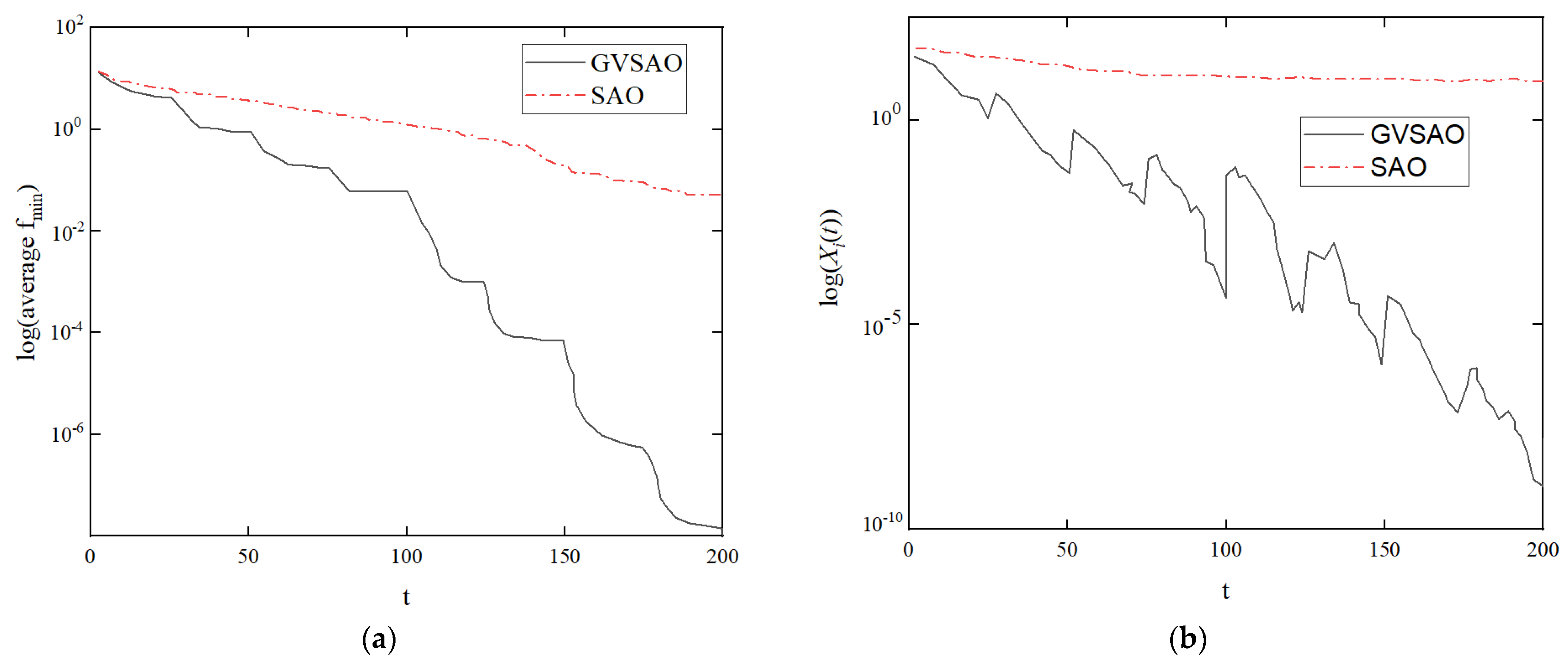
- Periodic oscillatory mutation policy search for optimal solutions
- (3)
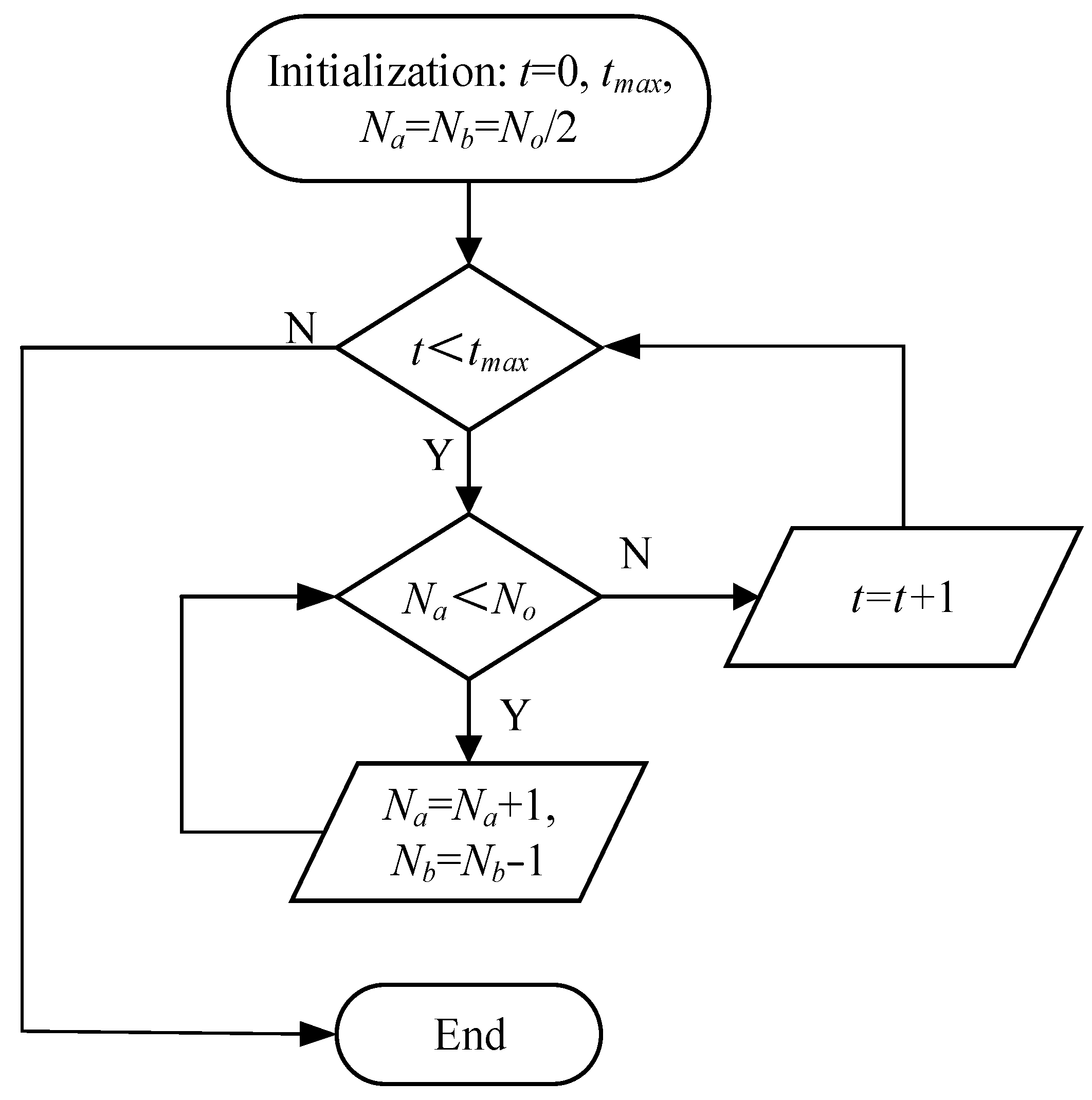
- Dual population mechanism balances computational accuracy and efficiency
3. Test Step
- (1)
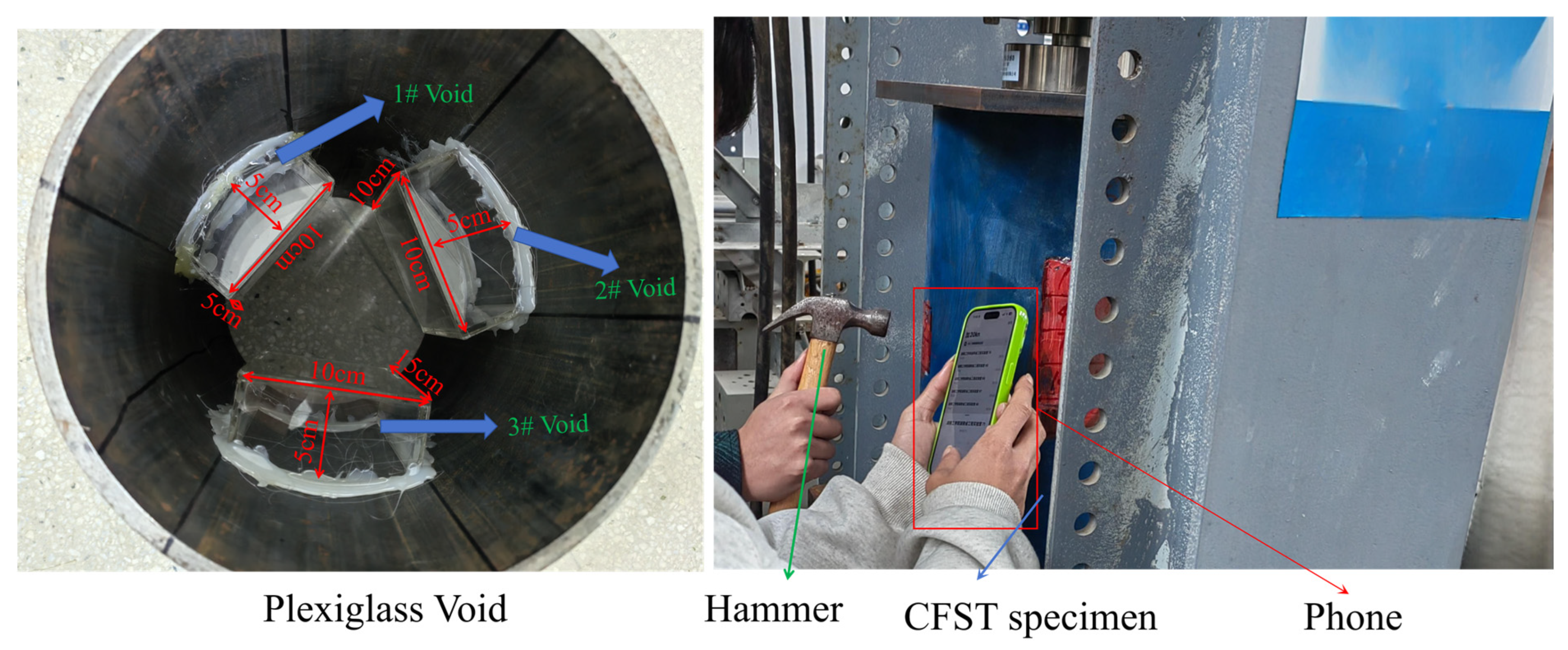
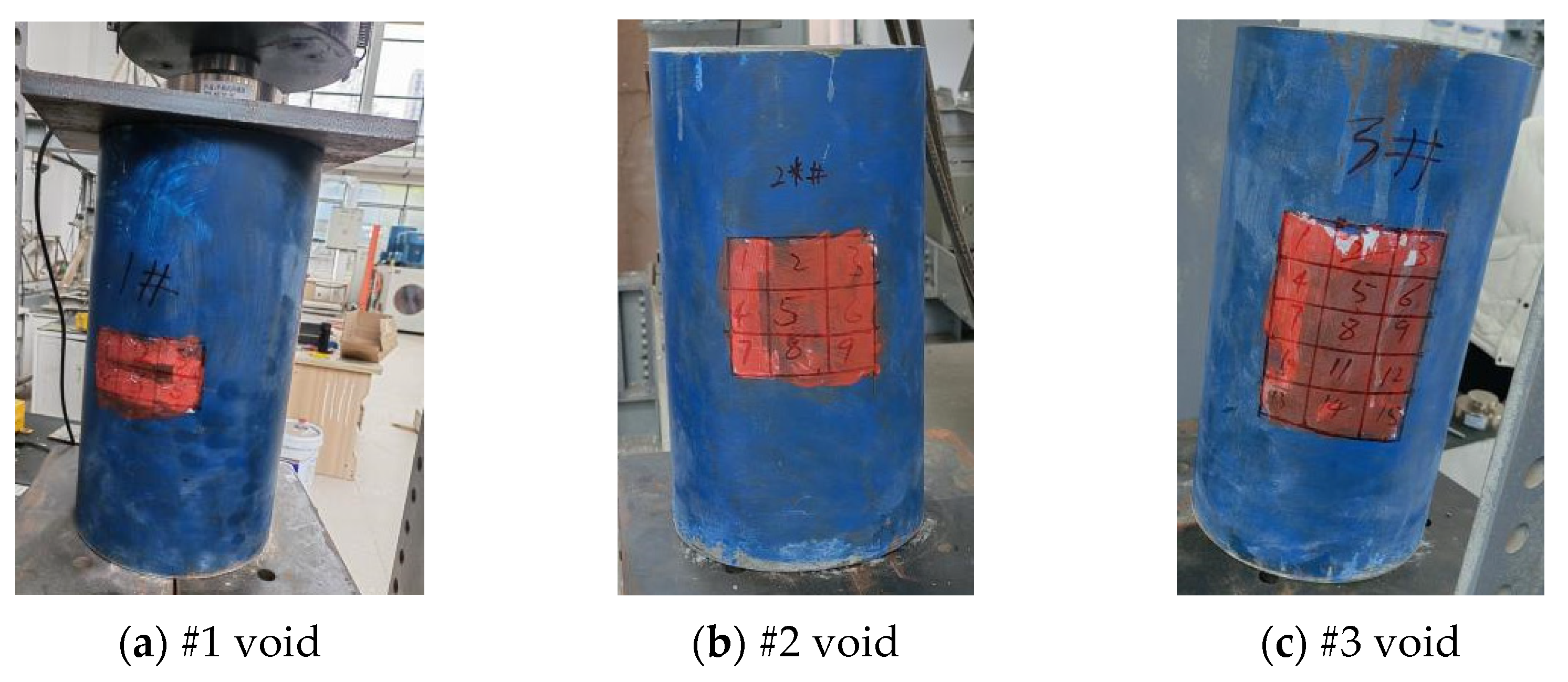
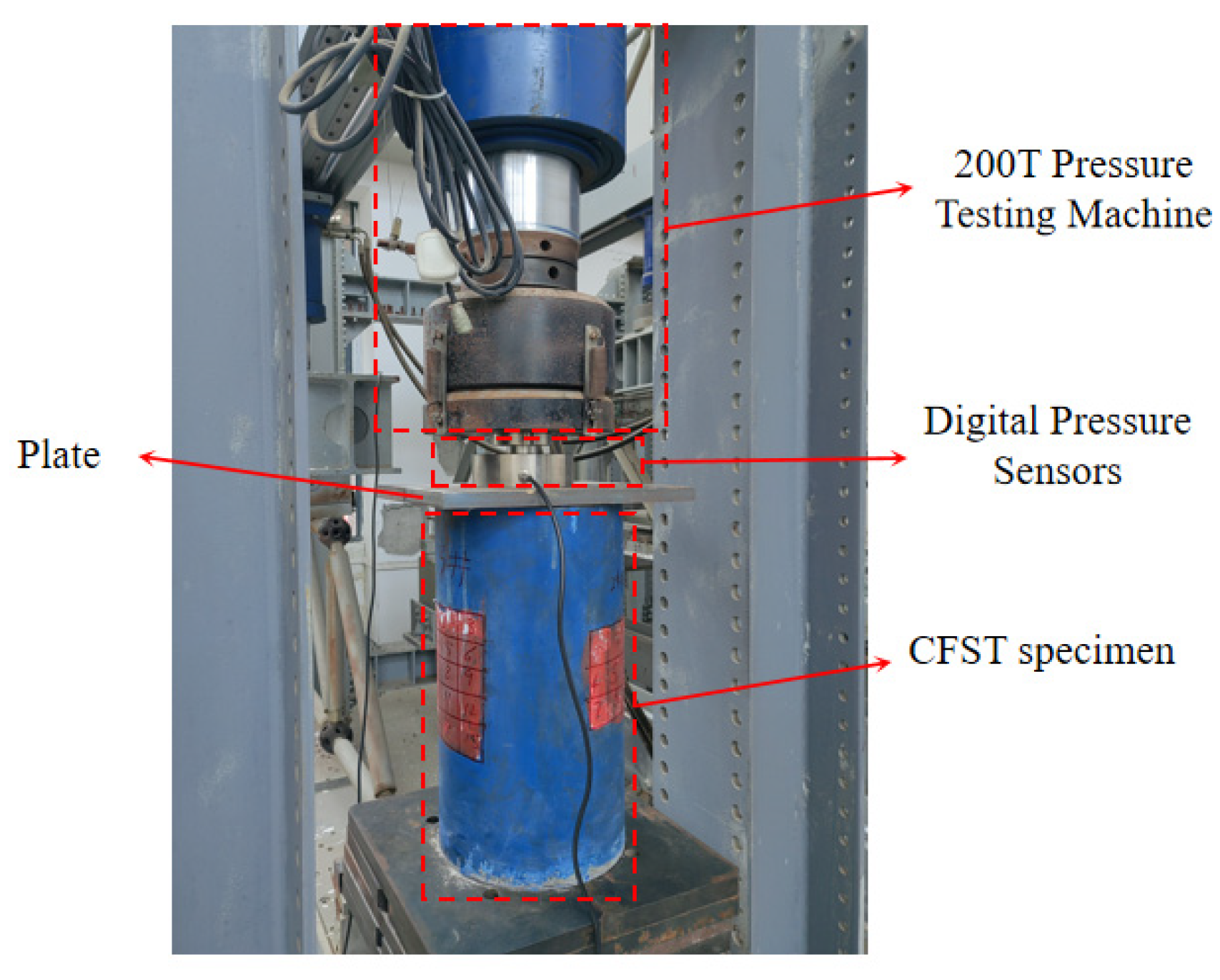
- CFST specimens were tested by placing them in a pressure tester 28 days after the completion of the concrete placement, as shown in Figure 11. First, when the pressure was zero, each labeled void position was sequentially percussed with a hammer, and the resulting sound was recorded using a cell phone. For each percussion, a sample sound was recorded, and the corresponding sound file was appropriately labeled.
- (2)
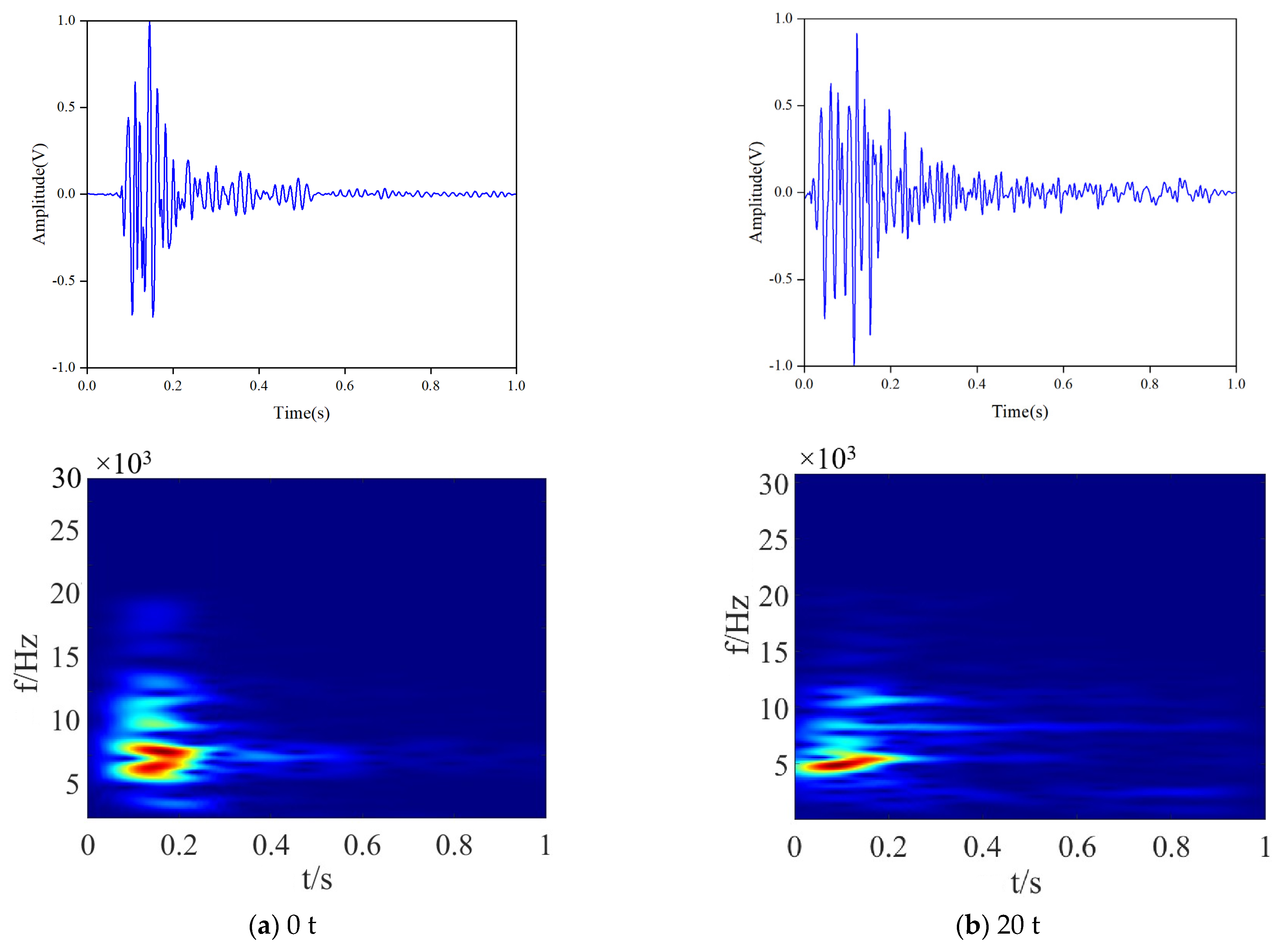
- Pressure was applied by the press, and when the pressure was 20 tons, the labeled position of each void was percussed sequentially with a hammer, and the sound was recorded with a cell phone. For each percussion, a sample sound was recorded, and the sound file was appropriately labeled.
- (3)
- When the pressure was 50 tons, a hammer was used to percuss the labeled position of each void in turn, and a cell phone was used for sound recording. For each percussion, a sample sound was recorded, and the sound file was appropriately labeled.
- (4)
- When the pressure was 100 tons, a hammer was used to percuss the labeled position of each void in turn, and a cell phone was used for sound recording. For each percussion, a sample sound was recorded, and the sound file was appropriately labeled.
4. Results and Discussion
4.1. CFST Void Detection Training Under Different Pressure Loads
4.2. Accuracy and Efficiency of Predictive Modeling
4.3. Comparison of the Effectiveness of Different Algorithms in Optimizing the Training Model
4.4. Robustness Analysis
5. Discussion
6. Conclusions
- (1)
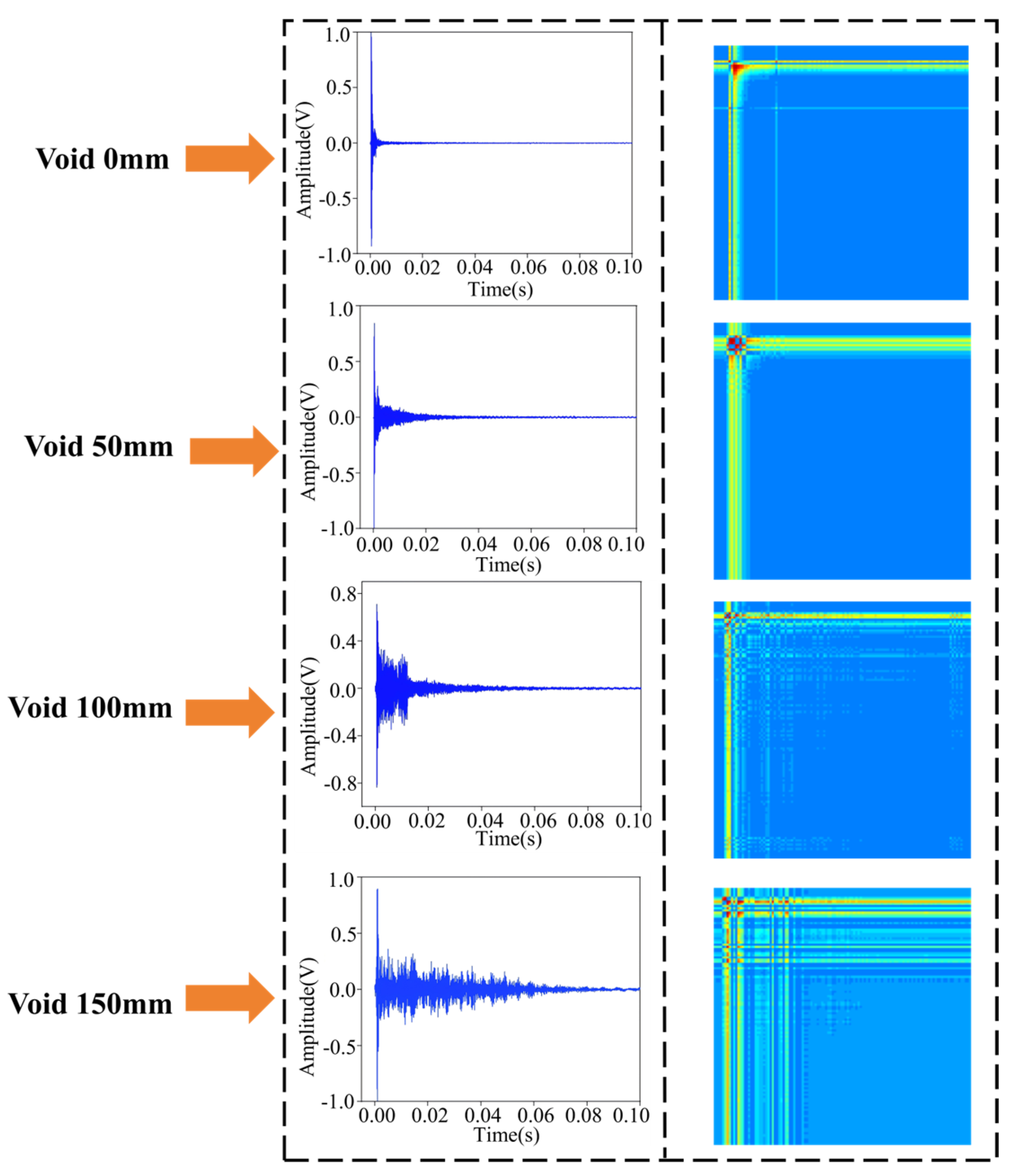
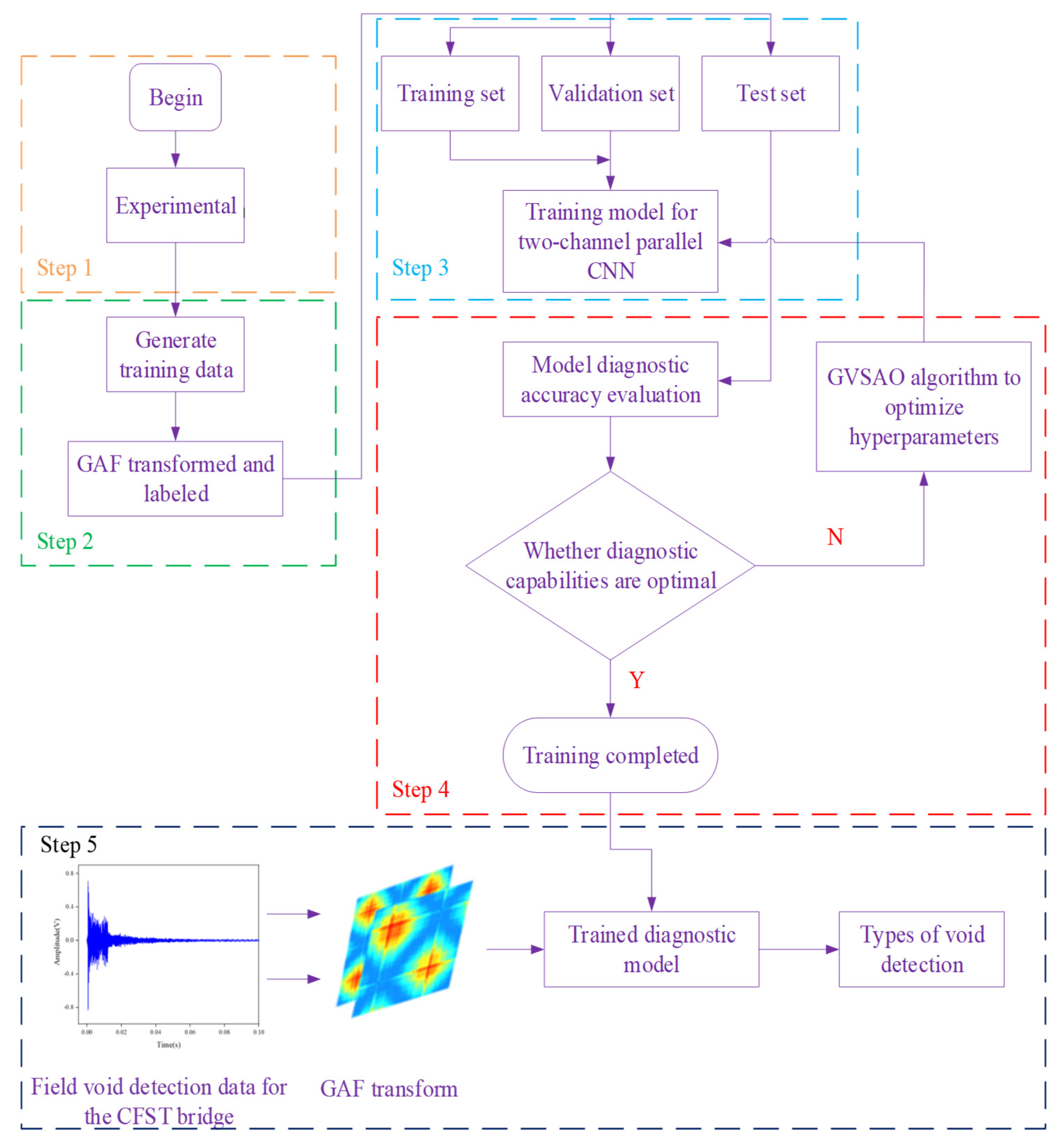
- GAF is utilized to image the percussive sound signal to construct a dual-channel parallel CNN structure. The GAF is decomposed into a GASF map and GADF map, which are simultaneously fed into the CNN for training. Subsequently, the outputs of the two channels are spliced and fused. Finally, the GVSAO algorithm is utilized for classification. This method ensures that both the temporal and spatial features of the percussion sound signal are fully preserved, while the interference of different construction noises is effectively avoided.
- (2)
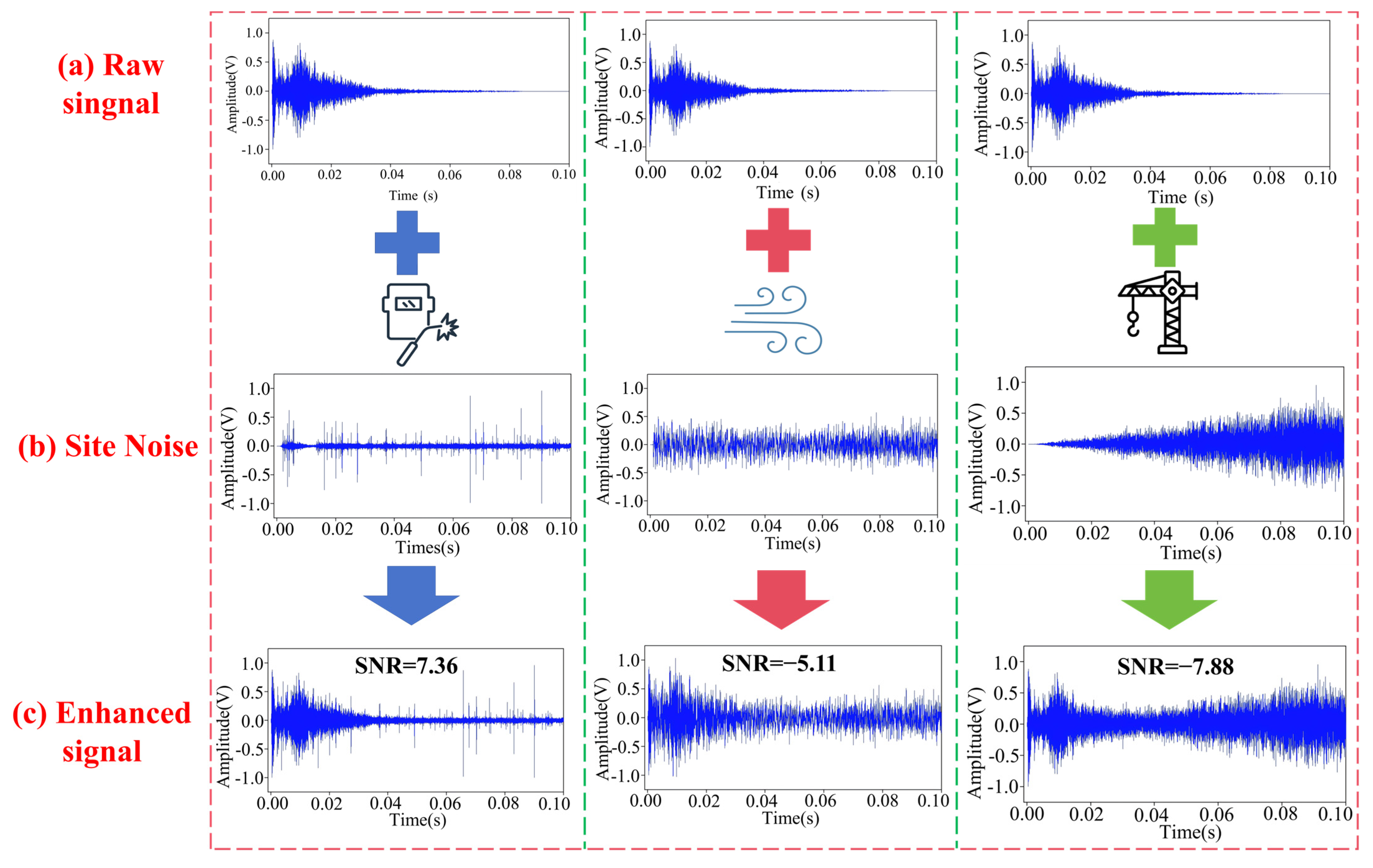
- To enhance the robustness of the diagnostic model to external disturbances, this study records and integrates three types of on-site construction noises—mechanical equipment noise, wind noise, and welding noise—and reconstructs them into a signal-enhanced dataset. Given that the CFSTs in arch bridges is under full-section pressure for long periods, the percussion sound samples of the CFST specimens under pressure loads of 0 ton, 20 tons, 50 tons, and 100 tons are recorded. Finally, by labeling, the original dataset and signal enhancement dataset of the void percussion signals under different pressure loads are composed.
- (3)
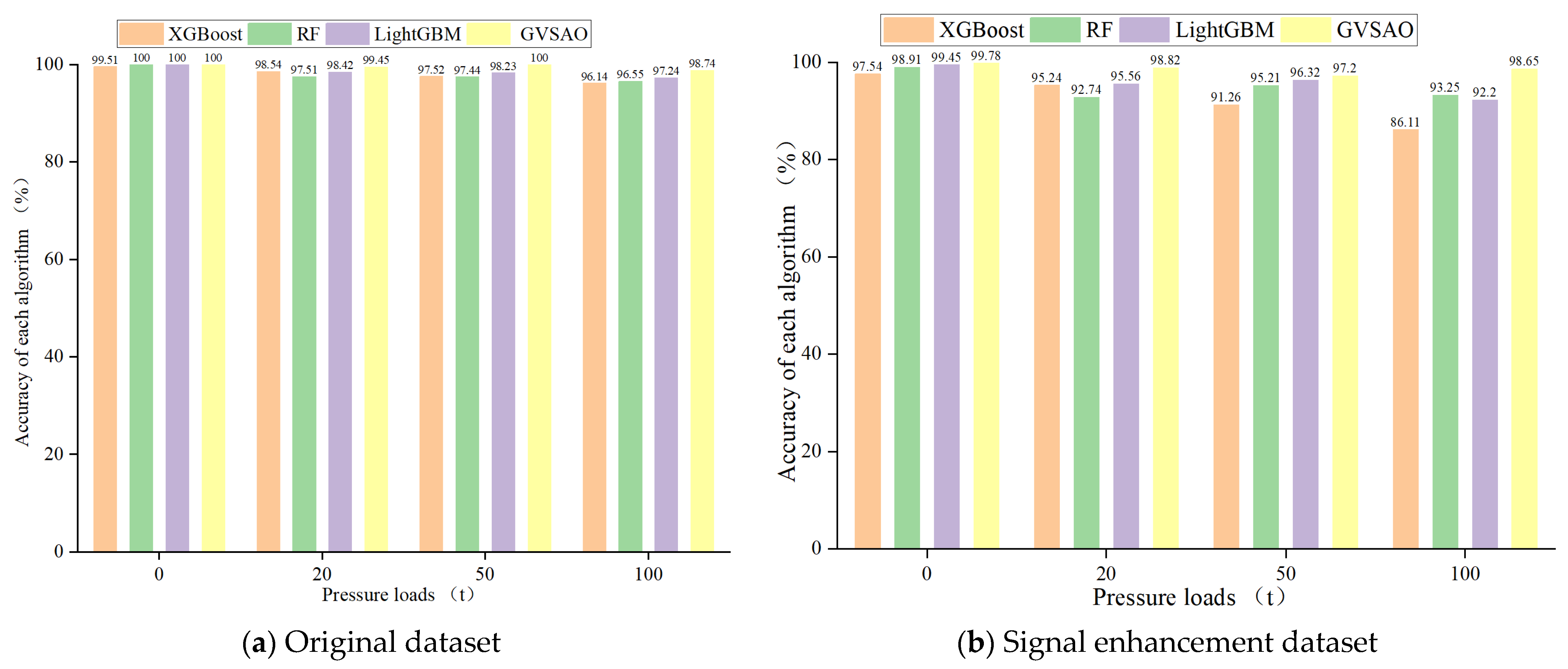
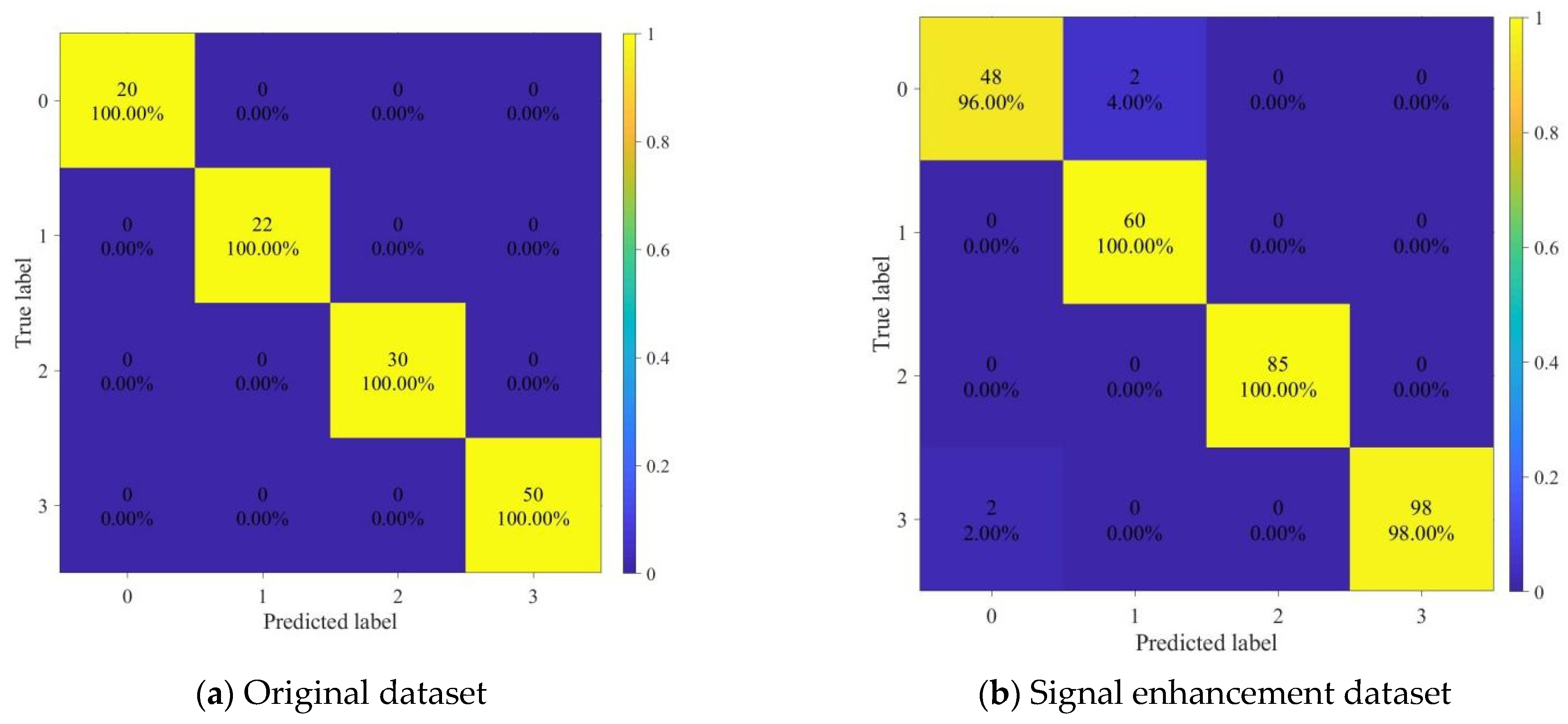
- Using the GVSAO algorithm with the dual-channel parallel CNN prediction model, the test accuracies on the original signal dataset exceeded 98.74%. Notably, the accuracy reached 100% for pressure loads of 0 tons and 50 tons. In addition, the test accuracies on the signal enhancement dataset exceeded 97.2%. This shows that the model still maintains a high level of classification, indicating that it can suppress noise significantly and has excellent robustness.
- (4)
- The model that integrates the GVSAO algorithm with a parallel CNN has the advantage of higher prediction accuracy compared with other traditional machine learning and deep learning algorithms after iterative training parameter optimization. It outperforms algorithms such as XGBoost, RF, and LightGBM in terms of diagnostic robustness. Furthermore, in the presence of noise interference, the proposed model maintains a diagnostic accuracy of over 96%, thereby validating its effectiveness and strong anti-interference capability.
Author Contributions
Funding
Institutional Review Board Statement
Informed Consent Statement
Data Availability Statement
Conflicts of Interest
References
- Editorial Department of China Journal of Highway and Transport. Review on China’s bridge engineering research: 2024. China J. Highw. Transp. 2024, 37, 1–160. [Google Scholar]
- Xiao, L.; Wei, X.; Wen, Z.; Kang, Z. State-of-the-artreview of steel-concrete composite bridges in 2019. J. Civ. Environ. Eng. 2020, 42, 168–182. [Google Scholar]
- Han, X.; Liu, C.; Hu, Q.; Wei, C.; Wang, Y.; Wang, L. Experimental and numerical study on in-plane behavior of concrete-filled steel tubular arches with local corrosion. Eng. Struct. 2025, 328, 119744. [Google Scholar]
- Chen, B.C.; Liu, J.P.; Wei, J. Concrete-Filled Steel Tubular Arch Bridges; Springer Nature: Singapore, 2023. [Google Scholar]
- Liu, X.; Huang, D.; Hou, X.; Yu, S. The bond behavior of the interface between high-strength concrete-filled double-skin steel tube. J. Constr. Steel Res. 2025, 226, 109320. [Google Scholar]
- Almasaeid, H.H.; Salman, D.G.; Abendeh, R.M.; Allouzi, R.A.; Rabayah, H.S. Interfacial bond capacity prediction of concrete-filled steel tubes utilizing artificial neural network. Cogent Eng. 2024, 11, 2297501. [Google Scholar] [CrossRef]
- Liu, J.; Yu, D.; Wang, G.; Qin, X. Size effect of core samples on bridge concrete strength with drilled core method. In Proceedings of the 2015 International Conference on Intelligent Transportation, Big Data and Smart City; ACM: New York, NY, USA, 2015; pp. 725–728. [Google Scholar]
- Chen, H.; Nie, X.; Gan, S.; Zhao, Y.; Qiu, H. Interfacial imperfection detection for steelconcrete composite structures using NDT techniques: A state-of-the-art review. Eng. Struct. 2021, 245, 112778. [Google Scholar]
- Mutlib, N. Evaluation of concrete compressive strength in CFST column using ultrasonic bulk waves: A simulation study. IOP Conf. Ser. Mater. Sci. Eng. 2020, 518, 022020. [Google Scholar]
- Dong, W.; Wu, Z.M.; Zhou, X.M.; Tan, Y. Experimental studies on void detection in concrete-filled steel tubes using ultrasound. Constr. Build. Mater. 2016, 128, 151–162. [Google Scholar] [CrossRef]
- Bang, H.; Park, S.; Jeon, H. Defect identification in composite materials via thermography and deep learning techniques. Compos. Struct. 2020, 246, 112405. [Google Scholar] [CrossRef]
- Xu, B.; Zhang, T.; Song, G.; Gu, H. Active interface debonding detection of a concretefilled steel tube with piezoelectric technologies using wavelet packet analysis. Mech. Syst. Signal Process. 2013, 36, 7–17. [Google Scholar] [CrossRef]
- Jiang, T.; Kong, Q.; Wang, W.; Huo, L.; Song, G. Monitoring of Grouting Compactness in a Post-Tensioning Tendon Duct Using Piezoceramic Transducers. Sensors 2016, 16, 1343. [Google Scholar] [CrossRef] [PubMed]
- Chen, H.; Zhou, M.; Gan, S.; Nie, X.; Xu, B.; Mo, Y. Review of wave method-based nondestructive testing for steel-concrete composite structures: Multiscale simulation and multi-physics coupling analysis. Constr. Build. Mater. 2021, 302, 123832. [Google Scholar]
- Tinkey, Y.; Olson, L.D. Sensitivity studies of grout defects in posttensioned bridge ducts using impact echo scanning method. Transp. Res. Rec. 2007, 2028, 154–162. [Google Scholar] [CrossRef]
- Yao, F.; Chen, G.Y.; Su, J.H. Experimental research and numerical simulation on grouting quality of shield tunnel based on impact echo method. Shock Vib. 2016, 2016, 1–10. [Google Scholar] [CrossRef]
- Zhang, T.S.; Ren, Z. Sound signal feature extraction of mine roof percussion based on human auditory model. J. Mine Autom. 2016, 42, 80–82. [Google Scholar]
- Zhou, Y.; Pei, Y.L.; Liu, M. Non-contact diagnosis for interface debonding of steelconcrete composited structure by using impact resonance test with microphone. Earthq. Eng. Eng. Dyn. 2020, 40, 67–79. [Google Scholar]
- Cawley, P.; Adams, R. The mechanics of the coin-tap method of non-destructive testing. J. Sound Vib. 1988, 122, 299–316. [Google Scholar]
- Duffour, P.; Morbidini, M.; Cawley, P. A study of the vibro-acoustic modulation technique for the detection of cracks in metals. J. Acoust. Soc. Am. 2006, 119, 1463–1475. [Google Scholar] [CrossRef]
- Chen, D.D.; Montano, V.; Huo, L.S.; Song, G. Depth detection of subsurface voids in concrete-filled steel tubular (CFST) structure using percussion and decision tree. Measurement 2020, 163, 107869. [Google Scholar] [CrossRef]
- Haque, A.; Raju, P.K. Acoustic impact technique for characterization of defects in laminated composites. In Proceedings of the 14th Biennial Conference on Mechanical Vibration and Noise: Vibration Isolation, Acoustics, and Damping in Mechanical Systems, Albuquerque, NM, USA, 19–22 September 1993; pp. 111–116. [Google Scholar]
- Wu, H.; Siegel, M. Correlation of accelerometer and microphone data in the “coin tap test”. IEEE Trans. Instrum. Meas. 2000, 49, 493–497. [Google Scholar] [CrossRef]
- Watts, G.; Pradyumna, S.; Singha, M. Nonlinear analysis of quadrilateral composite plates using moving kriging based element free Galerkin method. Compos. Struct. 2017, 159, 719–727. [Google Scholar] [CrossRef]
- Madhavan, S.; Sridharan, N.; Mahanta, T.; Vaithiyanathan, S. Diagnosis of Surface Defects in Hot-Rolled Steel from Deep Learning Features Using Machine Learning Algorithms. Arab. J. Sci. Eng. 2024, 50, 18333–18353. [Google Scholar] [CrossRef]
- Khazaee, M.; Ahmadi, H.; Omid, M.; Banakar, A.; Moosavian, A. Feature-level fusion based on wavelet transform and artificial neural network for fault diagnosis of planetary gearbox using acoustic and vibration signals. Insight-Non-Destr. Test. Cond. Monit. 2013, 55, 323–330. [Google Scholar] [CrossRef]
- Hu, Y.; Tu, X.T.; Li, F.C. High-order synchrosqueezing wavelet transform and application to planetary gearbox fault diagnosis. Mech. Syst. Signal Process. 2019, 131, 126–151. [Google Scholar] [CrossRef]
- Li, Y.B.; Li, G.Y.; Wei, Y.; Liu, B.; Liang, X. Health condition identification of planetary gearboxes based on variational mode decomposition and generalized composite multi-scale symbolic dynamic entropy. ISA Trans. 2018, 81, 329–341. [Google Scholar] [CrossRef] [PubMed]
- Chen, R.X.; Huang, X.; Yang, L.X.; Xu, X.; Zhang, X.; Zhang, Y. Intelligent fault diagnosis method of’ planetary gearboxes based on convolution neural network and discrete wavelet transform. Comput. Ind. 2019, 106, 48–59. [Google Scholar]
- Jiang, Z.D.; Luk, B.L.; Liu, K.P. Bispectra-based impact acoustic non-destructive evaluation. NDT E Int. 2009, 42, 652–657. [Google Scholar]
- Kang, S.H.; Yu, J.D.; Hong, W.T.; Lee, J. Estimation of cavities beneath plate structures using a microphone: Laboratory model tests. Sensors 2021, 21, 2941. [Google Scholar] [CrossRef]
- Chen, D.D.; Montano, V.; Huo, L.; Fan, S.; Song, G. Detection of subsurface voids in concretefilled steel tubular (CFST) structure using percussion approach. Constr. Build. Mater. 2020, 262, 119761. [Google Scholar] [CrossRef]
- Chen, D.D.; Shen, Z.; Huo, L.; Narazaki, Y. Percussion-based quasi real-time void detection for concrete-filled steel tubular structures using dense learned features. Eng. Struct. 2023, 274, 115197. [Google Scholar]
- Shen, Z.; Chen, D.D.; Zhao, L.; Wei, Y. Toward the balance between computational cost and model performance for the void detection of concrete-filled steel tubular structure using one-dimensional Mel-frequency cepstral coefficients and ensemble machine learning. Constr. Build. Mater. 2024, 411, 134366. [Google Scholar]
- Wang, Z.; Oates, T. Imaging time-series to improve classification and imputation. arXiv 2015, arXiv:1506.00327. [Google Scholar]
- Deng, L.Y.; Liu, S.Y. Snow ablation optimizer: A novel metaheuristic technique for numerical optimization and engineering design. Expert Syst. Appl. 2023, 225, 120069. [Google Scholar] [CrossRef]
- Hua, L.G. Applications of Number Theory to Modern Analysis; Science Press: Beijing, China, 1978. [Google Scholar]
- Zhou, G.; Cui, M.Y.; Wan, J.H.; Zhang, S. A review on snowmelt models: Progress and prospect. Sustainability 2021, 13, 11485. [Google Scholar] [CrossRef]
- Martinec, J.; Rango, A. Parameter values for snowmelt runoff modelling. J. Hydrol. 1986, 84, 197–219. [Google Scholar] [CrossRef]
- Pehlivanoglu, Y. A New Particle Swarm Optimization Method Enhanced with a Periodic Mutation Strategy and Neural Networks. IEEE Trans. Evol. Comput. 2013, 17, 436–452. [Google Scholar]
- Zhu, F.L.; Li, G.S.; Tang, H.; Li, Y.; Lv, X.; Wang, X. Dung beetle optimization algorithm based on quantum computing and multi-strategy fusion for solving engineering problems. Expert Syst. Appl. 2024, 236, 121219. [Google Scholar]





| Layer (Type) | Output Shape | Connected To |
|---|---|---|
| Input_1 (InputLayer) | (None, 227, 227, 3) | |
| Input_2 (InputLayer) | (None, 227, 227, 3) | |
| conv2d (Conv2D) | (None, 115, 115, 64) | input_1 |
| conv2d_1 (Conv2D) | (None, 115, 115, 64) | input_2 |
| max_pooling2d | (None, 58, 58, 64) | conv2d |
| max_pooling2d_1 | (None, 58, 58, 64) | conv2d_1 |
| flatten_1 (Flatten) | (None, 120) | max_pooling2d |
| flatten_2 (Flatten) | (None, 120) | max_pooling2d_1 |
| Concatenate | (None, 240) | flatten, flatten_1 |
| Void Height (mm) | Void Scope (mm) | Label Number | Percussion Number | Data Augmentation |
|---|---|---|---|---|
| 0 | 0 × 0 | 0 | 25 | 75 |
| 50 | 100 × 50 | 1 | 30 | 90 |
| 100 | 100 × 50 | 2 | 45 | 135 |
| 150 | 100 × 50 | 3 | 75 | 225 |
| Dataset Index | Training Set | Validation Set | Testing Set | Total Number |
|---|---|---|---|---|
| Raw dataset | 540 | 180 | 180 | 900 |
| Enhanced signal dataset | 2160 | 720 | 720 | 3600 |
| Hyperparameters | Learning Rate | Convolutional Kernel Size | Number of Neurons |
|---|---|---|---|
| Upper limit | 0.01 | 5 | 120 900 |
| Lower limit | 0.001 | 1 | 1 |
| Final values | 0.003570254 | 3 | 120 |
| Pressure Loads (t) | Raw Dataset | Enhanced Signal Dataset |
|---|---|---|
| 0 | 900 | 3600 |
| 20 | 900 | 3600 |
| 50 | 900 | 3600 |
| 100 | 900 | 3600 |
| Dataset Index | 0 t | 20 t | 50 t |
|---|---|---|---|
| Raw dataset | 100 | 99.45 | 100 |
| Enhanced signal dataset | 99.78 | 98.82 | 97.20 |
| Model | Hyperparameter |
|---|---|
| XGBoost | learning rate = 0.1, n_estimators = 100, max depth = 3 = 5, min_num_neurons = 150 |
| RF | max depth = 3, n_estimators = 150, min_samples_leaf = 7 min_samples_leaf = 7 |
| LightGBM | learning rate = 0.1, n_estimators = 50, num_leaves = 8 num_leaves = 8 |
| GVSAO | learning rate = 0.01, size_kernel = 5, max_iter = 10, min_num_neurons = 120, num_folds = 10 |
| Algorithm Type | SNR | ||||
|---|---|---|---|---|---|
| −10 dB | −5 dB | 0 dB | 5 dB | 10 dB | |
| XGBoost | 89.54 | 92.56 | 97.52 | 98.45 | 98.48 |
| RF | 93.78 | 94.23 | 97.44 | 98.65 | 98.87 |
| LightGBM | 93.51 | 95.55 | 98.23 | 98.98 | 99.54 |
| GVSAO | 96.78 | 97.85 | 100 | 100 | 100 |
Disclaimer/Publisher’s Note: The statements, opinions and data contained in all publications are solely those of the individual author(s) and contributor(s) and not of MDPI and/or the editor(s). MDPI and/or the editor(s) disclaim responsibility for any injury to people or property resulting from any ideas, methods, instructions or products referred to in the content. |
© 2026 by the authors. Licensee MDPI, Basel, Switzerland. This article is an open access article distributed under the terms and conditions of the Creative Commons Attribution (CC BY) license.
Share and Cite
He, G.; Tian, Z.; Guo, F.; Chen, J.; Xu, B. Enhancement of Signal-to-Noise Ratio of Void Detection Signals in Concrete-Filled Steel Tubular Structures Using the Good Point Set and Vibrational Snow Ablation Optimizer. Sensors 2026, 26, 4261. https://doi.org/10.3390/s26134261
He G, Tian Z, Guo F, Chen J, Xu B. Enhancement of Signal-to-Noise Ratio of Void Detection Signals in Concrete-Filled Steel Tubular Structures Using the Good Point Set and Vibrational Snow Ablation Optimizer. Sensors. 2026; 26(13):4261. https://doi.org/10.3390/s26134261
Chicago/Turabian StyleHe, Gen, Zhongchu Tian, Fanbo Guo, Jiaqi Chen, and Binlin Xu. 2026. "Enhancement of Signal-to-Noise Ratio of Void Detection Signals in Concrete-Filled Steel Tubular Structures Using the Good Point Set and Vibrational Snow Ablation Optimizer" Sensors 26, no. 13: 4261. https://doi.org/10.3390/s26134261
APA StyleHe, G., Tian, Z., Guo, F., Chen, J., & Xu, B. (2026). Enhancement of Signal-to-Noise Ratio of Void Detection Signals in Concrete-Filled Steel Tubular Structures Using the Good Point Set and Vibrational Snow Ablation Optimizer. Sensors, 26(13), 4261. https://doi.org/10.3390/s26134261