Proactive Early Warning of Vortex Ring State in Coaxial UAVs: A Physics-Informed Multimodal ViT-LSTM Approach

Abstract
1. Introduction
- 1.
- Establishment of a three-class ordinal early warning system. We define a 1.5 s precursor window, constructing a temporal trajectory of Normal → Precursor → VRS to grant the flight control system ample intervention time [6].
- 2.
- Proposal of the MTSF-Net architecture and the companion CBN strategy. We pioneer the novel CBN pre-processing strategy to preserve absolute physical vibration scales across sensors while ensuring real-time unidirectional inference, resolving the flaws of local normalization.
- 3.
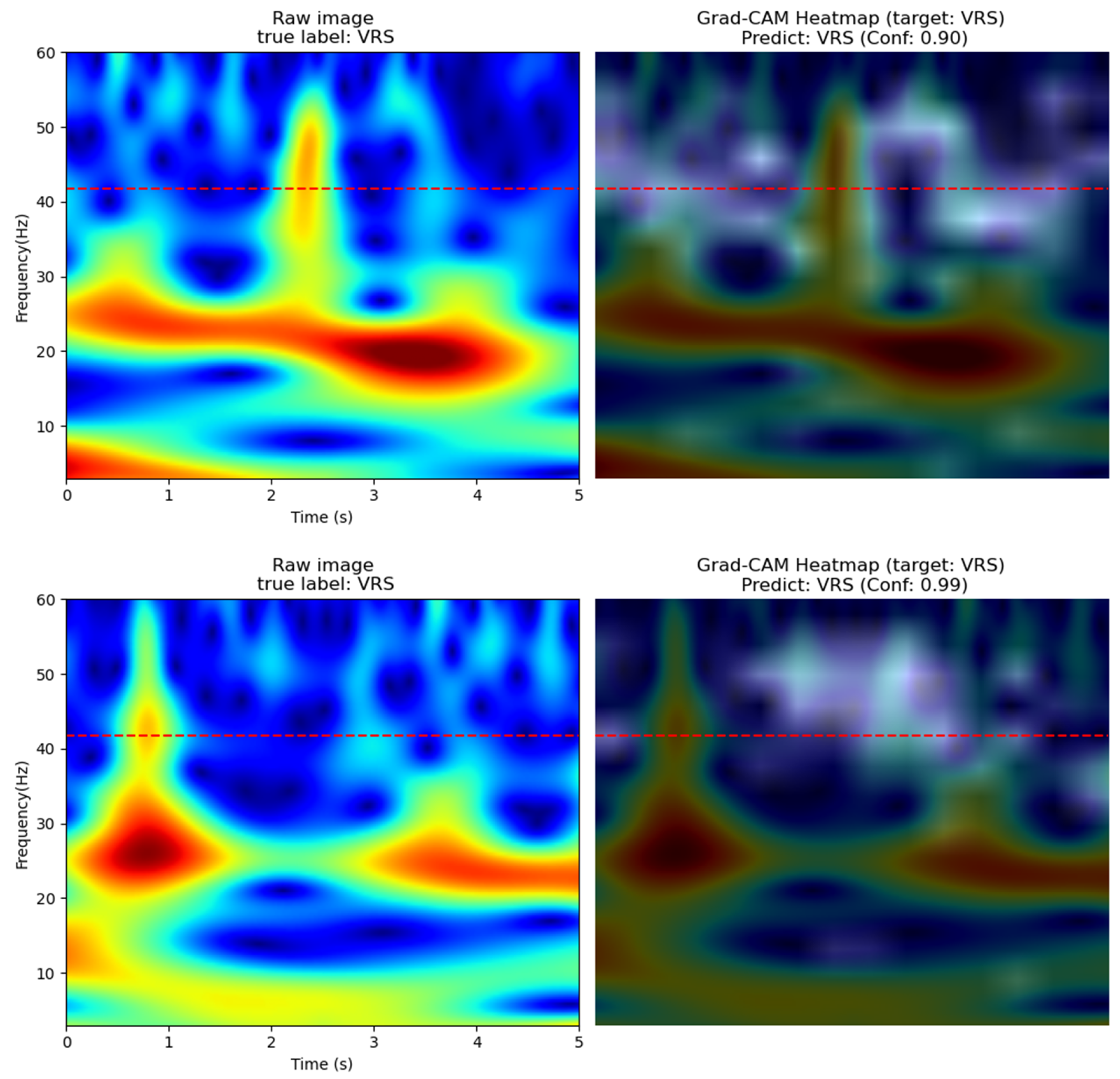
- System Reliability Verification via Grad-CAM. We provide visually quantifiable evidence that the model’s decisions anchor onto authentic physical frequency bands, closing the loop between AI sensing and rotor aerodynamics to ensure engineering credibility [7].
2. Related Work
2.1. Traditional Rotor Dynamics and Threshold-Based Detection
2.2. Data-Driven State Identification and the “Data Leakage” Crisis
2.3. Handling Extreme Imbalance: From Resampling to Ordinal Regression
3. Materials and Methods
3.1. Experimental Platform and Avionics System
3.2. Multi-Source Cross-Validated Data Labeling
- 1.
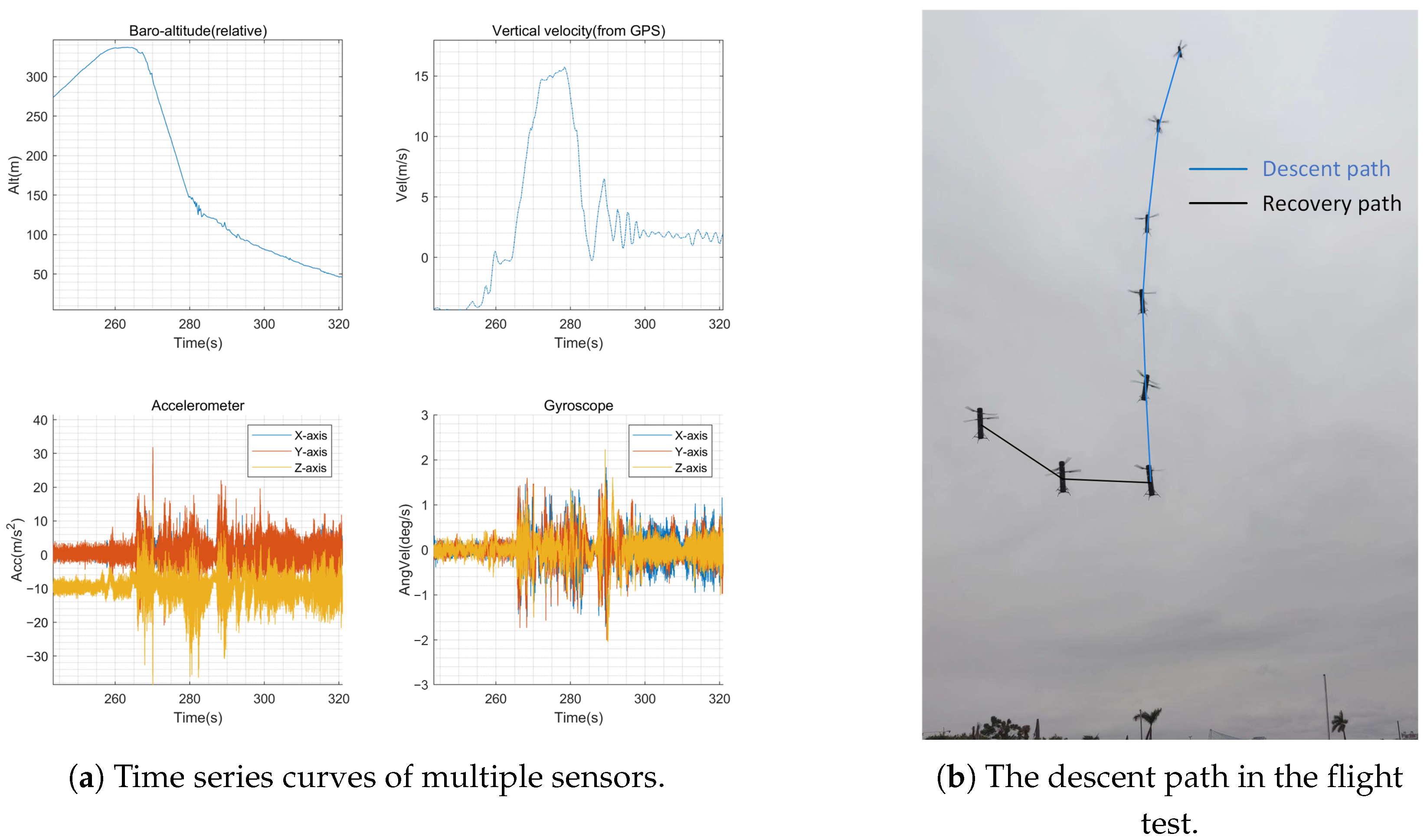
- Kinematic Screening: GPS data isolates flight segments satisfying VRS onset conditions [8].
- 2.
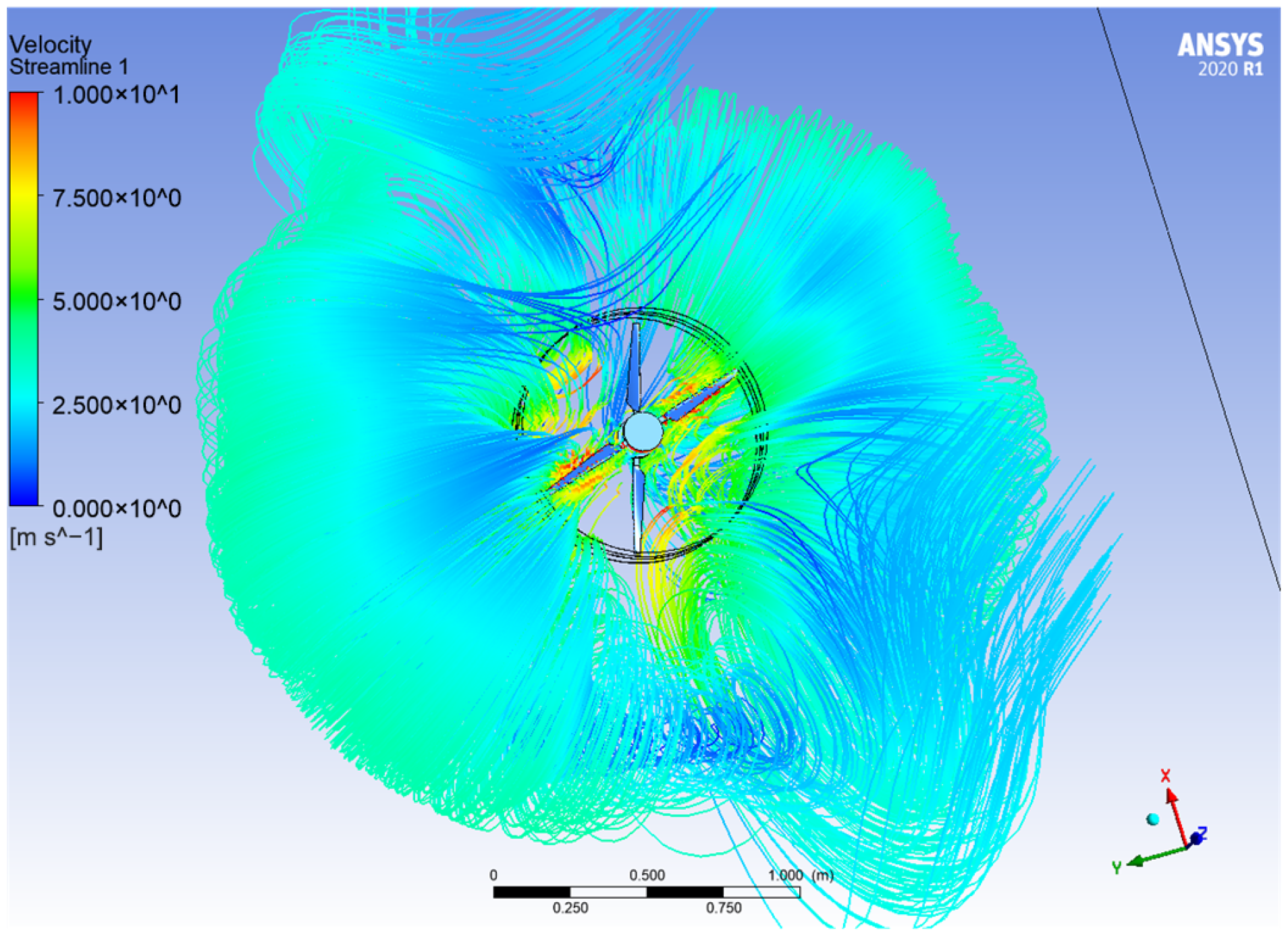
- CFD Verification: Boundary conditions are extracted to conduct high-fidelity, unsteady flow field simulations [16]. A segment is confirmed only if it exhibits classic VRS topology.
- 3.
- Wind Tunnel Calibration: Scaled-model tests acquire empirical aerodynamic load data [17].
- 4.
- High-Precision Annotation: The raw flight onboard-recorded sensor data is rigorously annotated into classes.
3.3. Multimodal Time-Frequency Transformation
Engineering Causality Constraint
3.4. Calibrated Benchmark Normalization (CBN) Strategy
- 1.
- Offline Calibration: Extracting the 0.1th percentile (Hover state) as and the 99.9th percentile (Windmill state, representing the unpowered autorotation regime where the rotors freewheel, marking the aerodynamic upper bound of vibration) as . Importantly, these calibration percentiles are derived exclusively from offline calibration flights; absolutely no data from the test set (Sortie 5) is utilized during this phase.
- 2.
- Deployment Phase:
3.5. Proactive Warning Strategy and Hybrid Ordinal Loss
3.6. The MTSF-Net Early Warning Architecture
4. Results
4.1. Ablation Study on Architecture and Modality
4.2. Sensitivity Analysis of Hybrid Ordinal Loss Hyperparameters
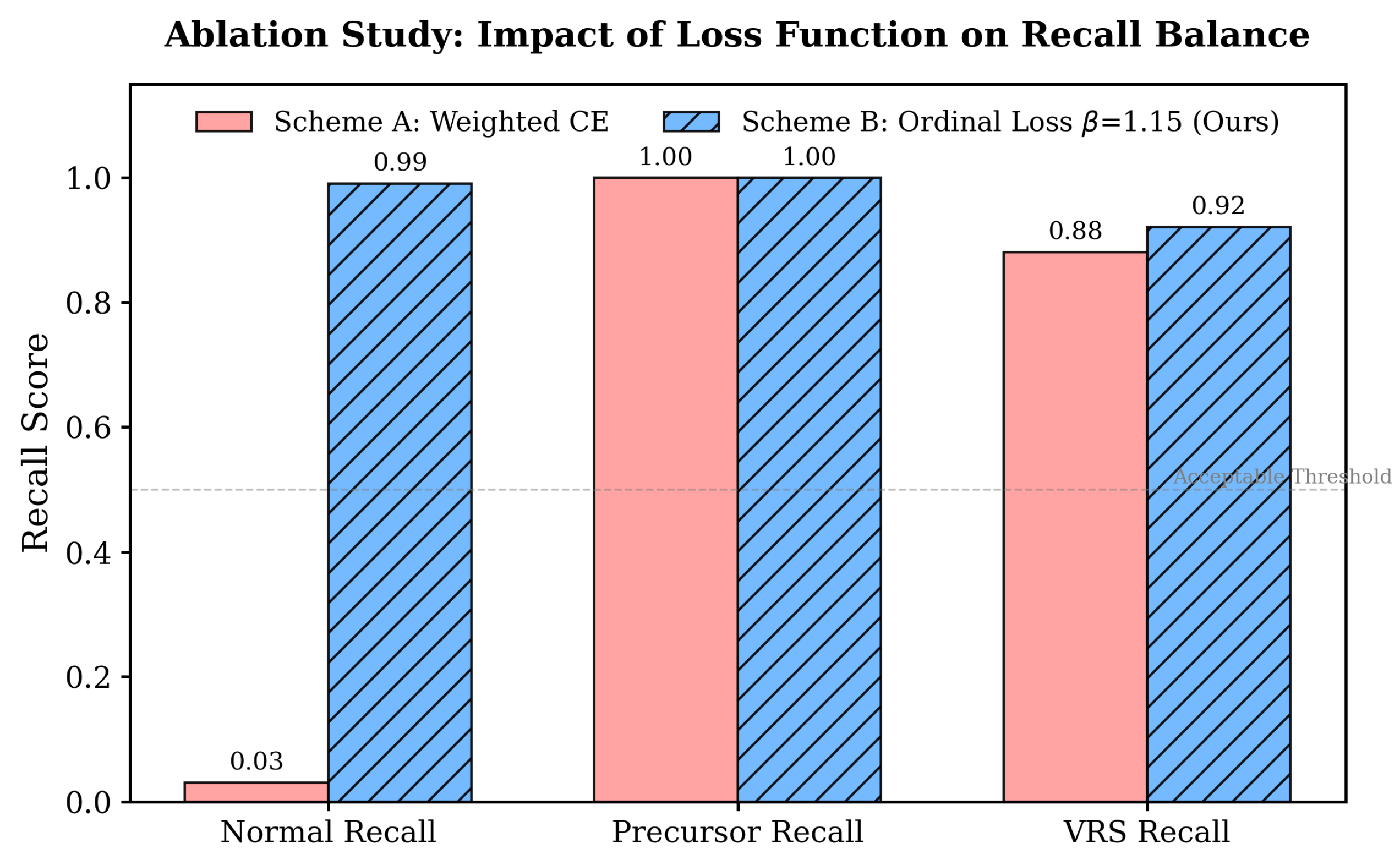
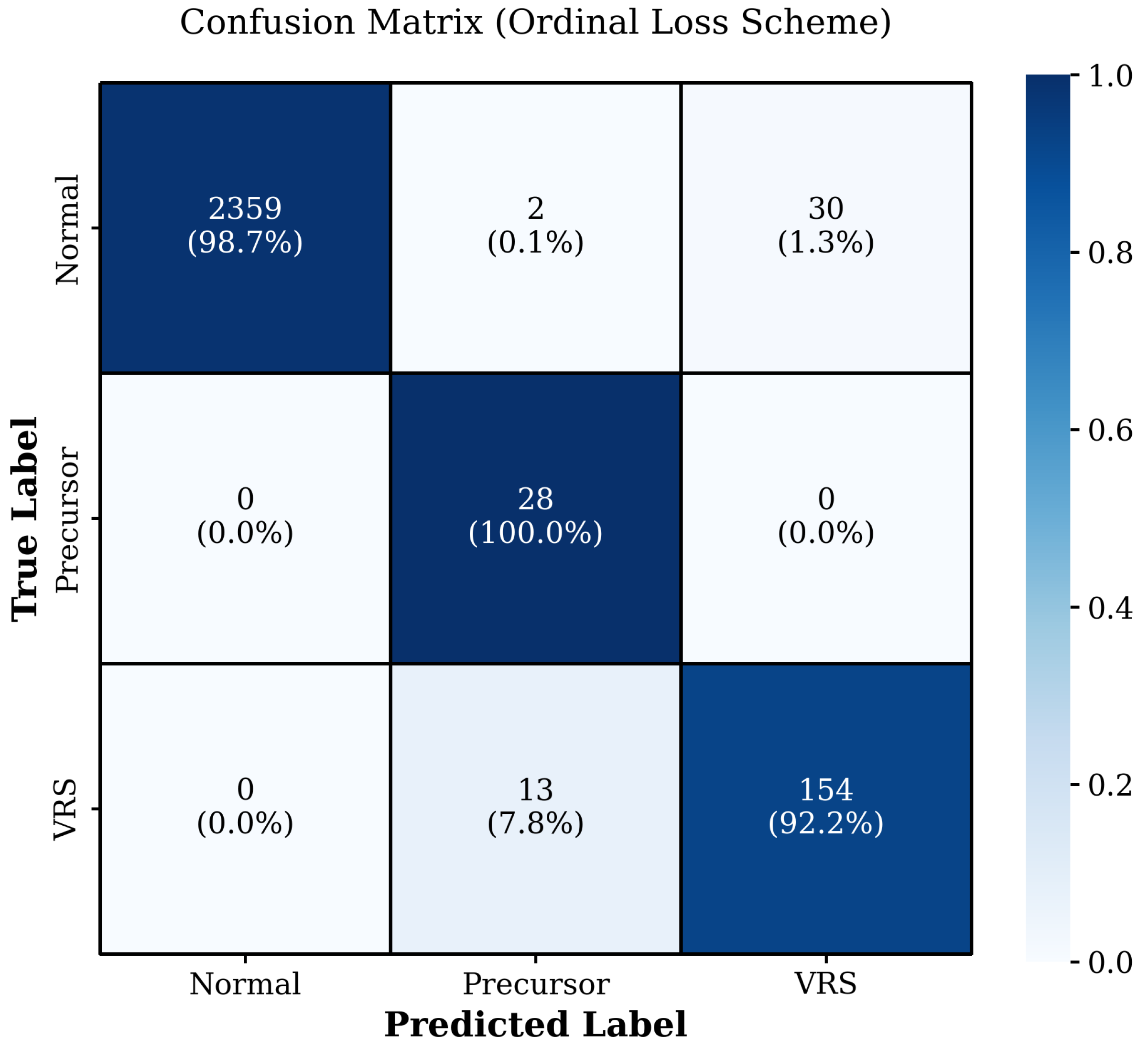
4.3. Early Warning Performance and the Necessity of Ordinal Constraints
- Robust Nominal Flight Accuracy (98.6%): The network successfully maintains a high true-negative rate for safe hovering and basic maneuvers, avoiding severe alarm fatigue.
- Optimal VRS Detection (92.2%): The model achieves robust identification of fully developed VRS hazard zones.
- Proactive Precursor Interception (100.0%): The model successfully intercepted all 28 impending VRS samples in the unseen test set, demonstrating an optimal capability to secure the crucial 1.5 s intervention window.
- Elimination of Fatal Misclassifications: Catastrophic cross-level misclassifications were completely suppressed. Fatal missed detections (VRS samples misclassified as Normal) were reduced to , and false-positive VRS predictions triggered by Precursor states were also completely eliminated ().
5. Discussion
5.1. Verification of Sensing Interpretability via Grad-CAM
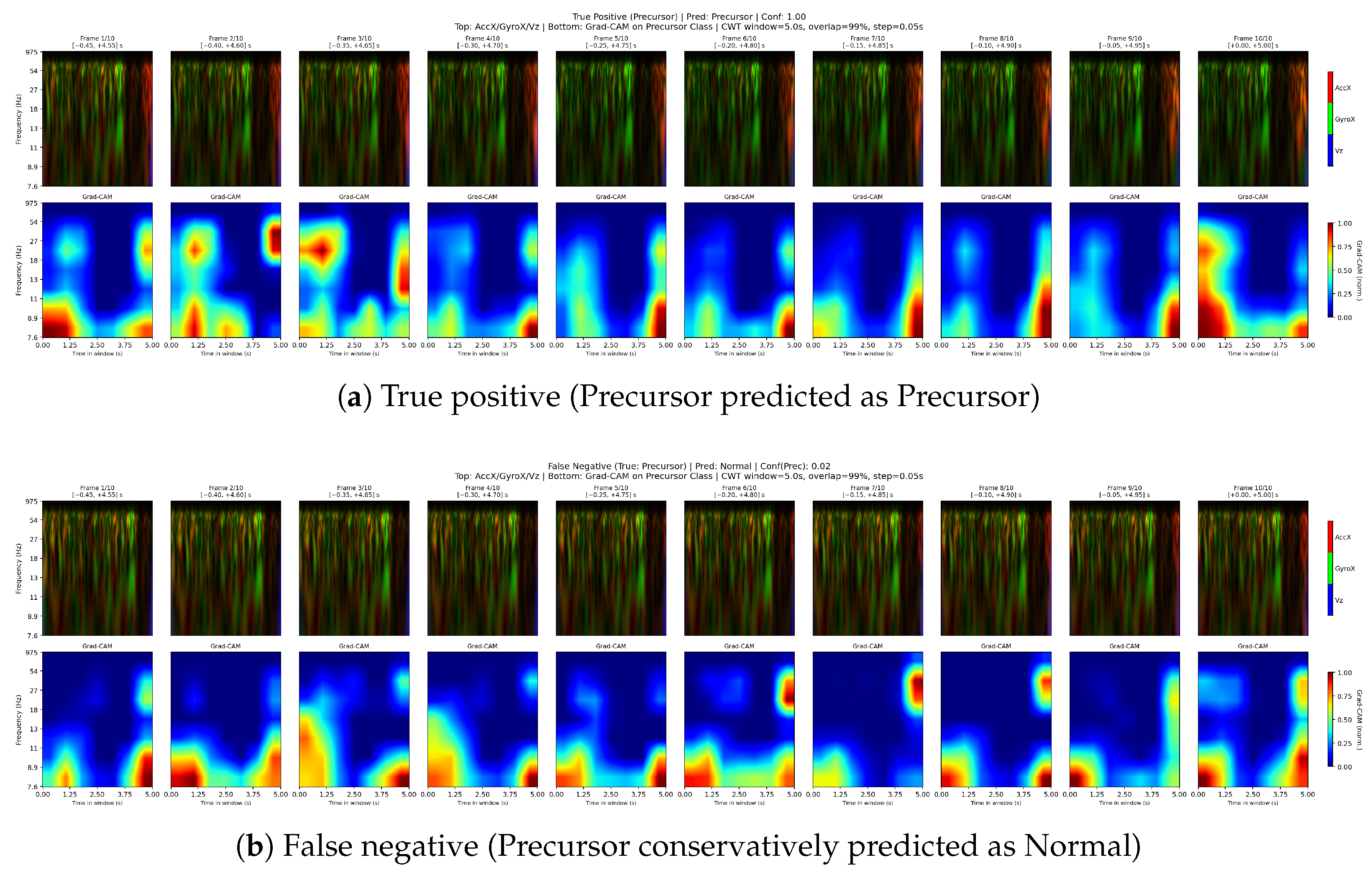
5.2. Robustness and Algorithmic Conservatism: Analyzing False Negatives
5.3. Engineering Implications: The Value of Early Warning
5.4. Limitations and Future Work
6. Conclusions
Author Contributions
Funding
Institutional Review Board Statement
Informed Consent Statement
Data Availability Statement
Acknowledgments
Conflicts of Interest
Abbreviations
| 1P | First Harmonic Fundamental Frequency |
| Accl | Accelerometer |
| CBN | Calibrated Benchmark Normalization |
| CFD | Computational Fluid Dynamics |
| CNN | Convolutional Neural Network |
| CWT | Continuous Wavelet Transform |
| ESC | Electronic Speed Controller |
| FN | False Negative |
| FPR | False-Positive Rate |
| GPS | Global Positioning System |
| Grad-CAM | Gradient-weighted Class Activation Mapping |
| IMU | Inertial Measurement Unit |
| LSTM | Long Short-Term Memory |
| MSE | Mean Squared Error |
| MTSF-Net | Multi-channel Time-Frequency Fusion Network |
| RPM | Revolutions Per Minute |
| TP | True Positive |
| UAV | Unmanned Aerial Vehicle |
| ViT | Vision Transformer |
| VRS | Vortex Ring State |
| WCE | Weighted Cross-Entropy |
References
- Vertical Aviation Safety Team. Airmanship Bulletin: Vortex Ring State Part 1—VAST; Vertical Aviation Safety Team: Alexandria, VA, USA, 2023. [Google Scholar]
- Johnson, W. Model for Vortex Ring State Influence on Rotorcraft Flight Dynamics. In Proceedings of the American Helicopter Society 60th Annual Forum, Baltimore, MD, USA, 7–10 June 2004. [Google Scholar]
- Betzina, P. Aerodynamic Characteristics of a Rotor in Vortex Ring State. J. Am. Helicopter Soc. 2001, 46, 1–10. [Google Scholar]
- Khelifi, A. Intelligent Skies: Deep Learning Architectures for Scalable Aviation Safety Systems. Master’s Thesis, Rowan University, Glassboro, NJ, USA, 2025. [Google Scholar]
- Diez, Y.; Kentsch, S.; Fukuda, M.; Caceres, M.L.L.; Moritake, K.; Cabezas, M. Deep Learning in Forestry Using UAV-acquired RGB Data: A Practical Review. Remote Sens. 2021, 13, 2837. [Google Scholar] [CrossRef]
- Strauss, J.A.; Allen, R.M. Benefits and Costs of Earthquake Early Warning. Seismol. Res. Lett. 2017, 88, 1–15. [Google Scholar]
- Lin, C.J.; Jhang, J.Y. Bearing Fault Diagnosis Using a Grad-CAM-based Convolutional Neuro-Fuzzy Network. Mathematics 2021, 9, 1502. [Google Scholar]
- Marshall, M.A.; Williams, J.R.; Lee, K.D. Performance of the Dragonfly Lander’s Coaxial Rotor in Vortex Ring State. In Proceedings of the AIAA SCITECH 2024 Forum, Orlando, FL, USA, 8–12 January 2024. [Google Scholar]
- Palamas, A.; Souli, N.; Panayiotou, T.; Kolios, P.; Ellinas, G. A Multi-Task Learning Framework for Drone State Identification and Trajectory Prediction. arXiv 2023, arXiv:2309.06741. [Google Scholar]
- Lepin, F.; Velastin, S.A.; León, R.; García-Herrero, J.; Rojas-Martínez, G.; Espinosa-Oviedo, J.E. UTUAV: A Drone Dataset for Urban Traffic Analysis. Drones 2025, 10, 15. [Google Scholar] [CrossRef]
- Yang, L.; Li, S.; Zhang, Y.; Zhu, C.; Liao, Z. Deep Learning-Assisted Unmanned Aerial Vehicle Flight Data Anomaly Detection: A Review. IEEE Sens. J. 2024, 24, 31681–31695. [Google Scholar] [CrossRef]
- Cerqueira, V.; Moniz, N.; Inácio, R.; Soares, C. Time Series Data Augmentation as an Imbalanced Learning Problem. arXiv 2024, arXiv:2404.18537. [Google Scholar]
- Lin, T.Y.; Goyal, P.; Girshick, R.; He, K.; Dollár, P. Focal Loss for Dense Object Detection. In Proceedings of the IEEE International Conference on Computer Vision (ICCV), Venice, Italy, 22–29 October 2017; pp. 2980–2988. [Google Scholar]
- Niu, Z.; Zhou, M.; Wang, L.; Gao, X.; Hua, G. Ordinal Regression with Multiple Output CNN for Age Estimation. In Proceedings of the IEEE Conference on Computer Vision and Pattern Recognition (CVPR), Las Vegas, NV, USA, 27–30 June 2016; pp. 4920–4928. [Google Scholar]
- Liu, F.; Zhang, Y.; Wang, J.; Chen, H. Adversarial Evolving Neural Network for Longitudinal Knee Osteoarthritis Prediction. IEEE Trans. Med. Imaging 2022, 41, 3207–3217. [Google Scholar] [CrossRef] [PubMed]
- Leishman, J.G. Principles of Helicopter Aerodynamics; Cambridge University Press: Cambridge, UK, 2006. [Google Scholar]
- Green, R.B.; Gillies, E.A.; Brown, R.E. The flow field around a rotor in axial descent. J. Fluid Mech. 2005, 534, 237–261. [Google Scholar] [CrossRef]
- Luczak, M. Mechanical Vibrations Analysis in Direct Drive Using CWT with Complex Morlet Wavelet. Measurement 2020, 165, 108205. [Google Scholar]
- Jin, Z.; Xu, Q.; Jiang, C.; Wang, X.; Chen, H. Ordinal few-shot learning with applications to fault diagnosis of offshore wind turbines. Renew. Energy 2023, 206, 1158–1169. [Google Scholar] [CrossRef]
- Dosovitskiy, A.; Beyer, L.; Kolesnikov, A.; Weissenborn, D.; Zhai, X.; Unterthiner, T.; Dehghani, M.; Minderer, M.; Heigold, G.; Gelly, S.; et al. An Image is Worth 16x16 Words: Transformers for Image Recognition at Scale. arXiv 2020, arXiv:2010.11929. [Google Scholar]



| Sensor Type | Freq. (Hz) | Main Performance |
|---|---|---|
| Accelerometer | 1200 | Range: 200 G; |
| Zero-bias Stability: mg; | ||
| Bandwidth: 200 . | ||
| Gyroscope | 1200 | Range: 2000° s−1; |
| Zero-bias Stability: 16° h−1; | ||
| Bandwidth: 200 . | ||
| Barometer | 100 | Working Pressure: 100–1300 hPa; |
| Resolution: ± ; | ||
| Relative Accuracy: ± . | ||
| GPS | 10 | Horizontal Accuracy: m; |
| Elevation Accuracy: m. |
| Sortie No. | IMU Samples | VRS Samples | VRS % |
|---|---|---|---|
| 1 | 164,419 | 9855 | 5.99% |
| 2 | 202,515 | 10,638 | 5.25% |
| 3 | 224,192 | 11,515 | 5.14% |
| 4 | 328,621 | 25,563 | 7.78% |
| 5 | 324,447 | 17,824 | 5.49% |
| Network | Input Sensor | Data Norm. | Global | Precursor | VRS |
|---|---|---|---|---|---|
| Configuration | Modalities | Strategy | F1-Score | Recall | Recall |
| Baseline A | Accelerometer (3 ch) | Local Batch Norm | 76.2% | 14.2% | 81.5% |
| Baseline B | Accl. + Gyroscope (6 ch) | Local Batch Norm | 82.5% | 28.6% | 85.1% |
| Baseline C | Accl. + (4 ch) | Local Batch Norm | 84.1% | 35.9% | 88.3% |
| Baseline D | Full Multimodal (7 ch) | Local Batch Norm | 88.7% | 46.1% | 90.2% |
| MTSF-Net (Proposed) | Full Multimodal (7 ch) | Physical Calibrated CBN | 94.4% | 60.7% | 94.0% |
| Weight () | Test Accuracy | MAE | Macro F1 | Precursor F1 | VRS F1 |
|---|---|---|---|---|---|
| 0.00 (Scheme A) | 0.0963 | 0.9320 | 0.323 | 0.023 | 0.890 |
| 0.50 | 0.9269 | 0.0959 | 0.473 | 0.015 | 0.425 |
| 0.85 | 0.9625 | 0.0642 | 0.592 | 0.000 | 0.795 |
| 1.00 (Baseline) | 0.9764 | 0.0379 | 0.818 | 0.586 | 0.880 |
| 1.15 (Optimal) | 0.9826 | 0.0290 | 0.886 | 0.789 | 0.877 |
| 1.30 | 0.9687 | 0.0503 | 0.608 | 0.000 | 0.839 |
| 1.50 | 0.9551 | 0.0514 | 0.676 | 0.182 | 0.864 |
Disclaimer/Publisher’s Note: The statements, opinions and data contained in all publications are solely those of the individual author(s) and contributor(s) and not of MDPI and/or the editor(s). MDPI and/or the editor(s) disclaim responsibility for any injury to people or property resulting from any ideas, methods, instructions or products referred to in the content. |
© 2026 by the authors. Licensee MDPI, Basel, Switzerland. This article is an open access article distributed under the terms and conditions of the Creative Commons Attribution (CC BY) license.
Share and Cite
Zhou, X.; Sun, J.; Zhao, J.; Shuang, F. Proactive Early Warning of Vortex Ring State in Coaxial UAVs: A Physics-Informed Multimodal ViT-LSTM Approach. Sensors 2026, 26, 3888. https://doi.org/10.3390/s26123888
Zhou X, Sun J, Zhao J, Shuang F. Proactive Early Warning of Vortex Ring State in Coaxial UAVs: A Physics-Informed Multimodal ViT-LSTM Approach. Sensors. 2026; 26(12):3888. https://doi.org/10.3390/s26123888
Chicago/Turabian StyleZhou, Xiang, Jiawei Sun, Jiannan Zhao, and Feng Shuang. 2026. "Proactive Early Warning of Vortex Ring State in Coaxial UAVs: A Physics-Informed Multimodal ViT-LSTM Approach" Sensors 26, no. 12: 3888. https://doi.org/10.3390/s26123888
APA StyleZhou, X., Sun, J., Zhao, J., & Shuang, F. (2026). Proactive Early Warning of Vortex Ring State in Coaxial UAVs: A Physics-Informed Multimodal ViT-LSTM Approach. Sensors, 26(12), 3888. https://doi.org/10.3390/s26123888