1. Introduction
Autonomous navigation is essential for mobile robots, enabling them to perform tasks in diverse environments [
1], especially in large-scale road environments like university campuses, industrial parks, and residential communities. Autonomous navigation technologies are increasingly empowering robots to perform tasks such as security patrols and logistics transportation in these environments [
2].
A critical aspect of autonomous navigation is localization, which enables robots to determine their position and effectively avoid obstacles. GNSS can provide direct localization. However, in some outdoor environments, GNSS signals are often weak or blocked by tall buildings, trees or other obstructions, and high-precision GNSS systems remain cost-prohibitive. Given these limitations and owing to its stability and adaptability, LiDAR-based localization has become a widely adopted alternative [
3]. However, in large-scale road environments, the wider coverage, increased complexity, and dynamic changes still pose significant challenges for LiDAR-based localization [
4].
The first challenge is constructing and maintaining high-precision maps over vast areas, which is a complex and resource-intensive task. Some proposed localization methods use pre-built maps to match real-time LiDAR data, allowing the robot to estimate its position on the map while reducing drift [
5]. However, constructing and maintaining maps in large-scale road environments remains challenging [
6]. In these environments, the map construction process is time-consuming and large-scale, and without GNSS correction or loop closure detection, map building is highly susceptible to deviations [
7]. Additionally, reference [
8] indicates that high-precision LiDAR can generate point clouds at over one million points per second in urban road settings. As a consequence of such high acquisition rates, the accumulated data per square kilometer easily reaches hundreds of millions of points. Reference [
9] further shows that even a map covering a space of 600 m
3 already contains more than 17 million points and occupies nearly 1 GB of storage; high-definition maps for large-scale road environments will therefore inevitably require tens of gigabytes or more, imposing considerable pressure on data storage and transmission. Furthermore, continuous changes in buildings, roads, and obstacles cause maps to rapidly become outdated. As stated in reference [
10], the map must undergo large-scale updates every 3 to 6 months, incurring high costs and demanding substantial computational resources.
The second challenge is accumulated drift. Some localization methods do not rely on pre-built maps but instead use historical point cloud data and real-time point cloud registration to construct LiDAR odometry for localization [
11]. While these methods avoid the problem of constructing large-scale maps, they still face the common issue of accumulated drift in large-scale road environments. In such environments, long-distance driving can cause small errors between odometry frames due to sensor noise and point cloud registration errors, which accumulate over time, ultimately leading to large errors that compromise localization accuracy or even cause failure [
12]. For instance, the LeGO-LOAM algorithm [
13], a representative of pure LiDAR odometry, only loosely couples IMU data for motion distortion correction and result constraints, which causes larger frame-to-frame errors during significant attitude changes. In long-distance localization, this accumulated error grows substantially. On the public KITTI 05 benchmark, LeGO-LOAM accumulated an average error of 27.603 m and a maximum error of 67.561 m over a 2.2 km trajectory without loop closure. LIO-SAM [
14], a representative of LiDAR-inertial odometry, tightly couples the IMU, leading to improved localization accuracy compared to LeGO-LOAM. However, it still cannot eliminate small frame-to-frame errors, which accumulate into larger errors over long distances. After 1219 m of testing, the error still accumulated to around 5 m. Despite incorporating GPS factors and loop closure detection to reduce drift, LIO-SAM faces challenges in large-scale road environments. Tall roadside buildings, bridges, and tunnels can block GNSS signals, and loop closure detection requires the robot to follow a specific route and revisit previous positions, which significantly impacts navigation efficiency. Existing methods to eliminate accumulated drift thus remain considerably limited.
Additionally, existing LiDAR-based localization methods largely rely on point cloud data, but most of these methods inadequately preprocess the data, leading to localization errors or anomalies. In road environments, when ground robots use LiDAR for localization, point cloud data often contains a large number of ground points, which lack effective features and are mixed with sensor noise, resulting in incorrect feature extraction and point cloud misalignment, thereby increasing localization errors and causing jumps in positioning [
15]. While algorithms like LeGO-LOAM [
13] optimize for ground robots by filtering ground points, they rely solely on angular changes between point clouds to roughly segment ground points, which often leads to misclassification and incorrectly filtering out non-ground planar points. Furthermore, these methods have poor adaptability in environments with significant slope changes. Ground robot localization in large-scale road environments therefore requires targeted optimization.
To address the challenges of map construction and accumulated drift, researchers have turned to open-source digital maps such as OpenStreetMap (OSM) [
16] as an alternative source of global reference. Unlike high-precision prior maps, OSM provides globally available, continuously updated road network topology at no construction cost. Several recent works have leveraged OSM data for robot localization, demonstrating that digital maps can serve as effective priors for drift reduction [
17,
18]. However, existing digital-map-based methods still face notable limitations. They often focus on specific structured environments and have rarely been validated in large-scale road scenarios. Consequently, achieving robust, real-time localization in large-scale road environments using digital maps remains an open challenge.
In this study, to address the aforementioned issues, we propose a localization method called Large-scale Drift-Resilient Localization via Multi-Sensor Fusion and Topological Map Matching. Building on the promise of OSM as a freely available prior, our method extracts topological road networks from OSM to provide global reference information without requiring high-precision environmental maps. For the accumulated drift issue, we propose a topology-based map matching approach for drift correction. By extracting road network topological maps from OSM and matching them with the robot’s historical trajectory, we construct a Hidden Markov Model (HMM) [
19] and apply the Viterbi algorithm [
20] to estimate and eliminate accumulated drift without GNSS. Finally, to address the over-reliance on LiDAR and insufficient point cloud preprocessing, we use the efficient Line-Fit algorithm [
21] to filter out ground points, significantly reducing their impact. LiDAR odometry is then fused with IMU pre-integration factors and wheel odometry, which directly measures the robot’s velocity via encoders on the chassis [
22], in a back-end factor graph optimization to achieve multi-sensor fusion odometry construction. Ultimately, this design yields a drift-resilient localization system that requires no high-precision prior map and relies on GNSS only for initialization, making it particularly suitable for large-scale road environments. The main contributions of this study are as follows:
A localization method based on multi-sensor fusion odometry and topological map matching, which provides localization through multi-sensor fusion odometry and uses topological map matching to eliminate accumulated drift, offering drift-resilient localization without requiring high-precision environmental maps.
A topology-based drift correction method that estimates and eliminates accumulated drift without GNSS by matching the robot’s trajectory with a topological road network extracted from digital maps, using an HMM and the Viterbi algorithm for error correction.
A multi-sensor fusion odometry system that accurately filters out ground point interference using the Line-Fit algorithm and integrates wheel odometry velocity factors into back-end factor graph optimization for higher precision localization.
The remainder of this manuscript is organized as follows:
Section 2 reviews related work on LiDAR-based localization methods.
Section 3 outlines the system framework of our methods.
Section 4 details the tightly coupled multi-sensor fusion odometry.
Section 5 presents the topology-based map matching approach for drift correction.
Section 6 discusses large-scale road localization experiments conducted on a custom-built robotic platform.
Section 7 gives the conclusion and further discussion.
3. System Framework
The system framework of the proposed method is shown in
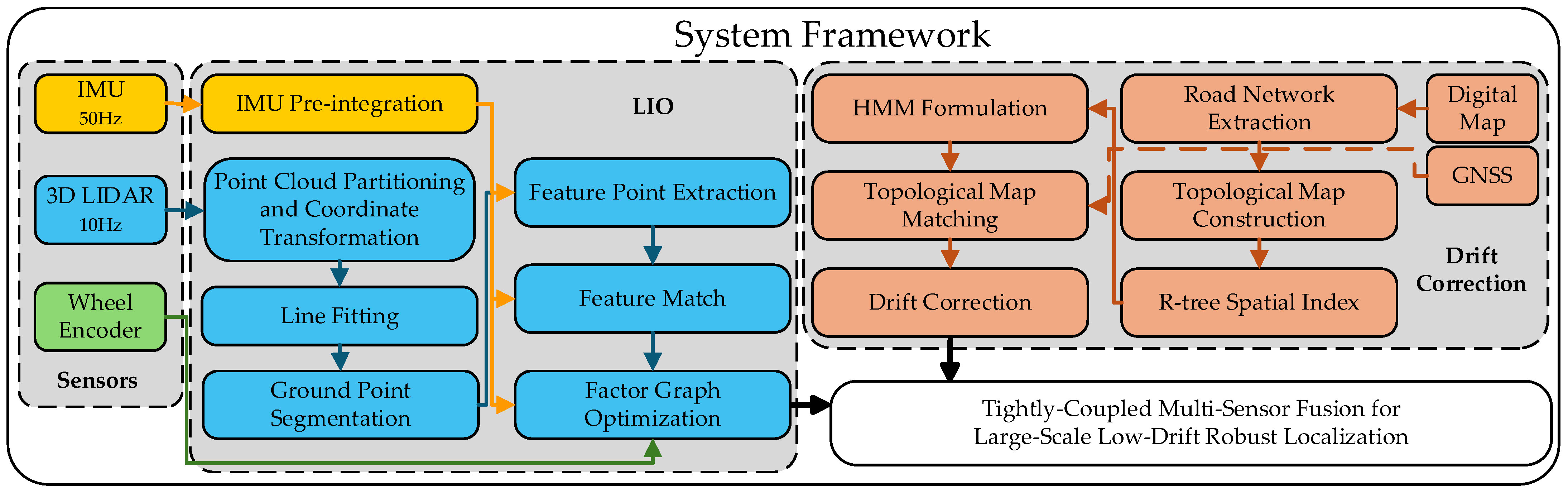
Figure 1 and consists of two main components: multi-sensor fusion odometry and drift correction. The initial localization results are obtained from multi-sensor fusion odometry, and the drift correction component eliminates the accumulated drift, ultimately providing a drift-resilient localization solution.
The multi-sensor fusion odometry system takes IMU, LiDAR, and wheel encoder data as input sensors. The IMU pre-integrated results are used for motion distortion correction of the LiDAR and also serve as prior pose estimates for feature point matching. The IMU data ultimately acts as an IMU factor in the factor graph optimization. As the primary sensor, LiDAR first processes the input point cloud through partitioning and coordinate transformation. The Line-Fit algorithm is then applied to fit lines that describe the ground points, enabling ground point cloud segmentation and removal. After removing the ground points, feature point extraction and matching are performed, which leads to estimating the relative transformation between consecutive LiDAR frames to build the LiDAR odometry. The odometry results are introduced as a LiDAR factor into the factor graph. Finally, the velocity factor obtained from the wheel encoder measurements is added to the factor graph, followed by unified factor graph optimization to yield the final multi-sensor fusion odometry localization data.
The digital map is processed through road network extraction, topological map creation, and R-tree [
40] spatial indexing. Afterward, the topological map and odometry trajectory are input into the drift correction component. An HMM is constructed, and accumulated drift is estimated and corrected via topological map matching. In this process, GNSS is only used for initialization to determine the robot’s position within the topological road network at system startup. Following these steps, precise, stable, and low-drift localization data is achieved.
To validate the effectiveness of the proposed multi-sensor fusion odometry and drift correction methods, a series of experiments were conducted and analyzed (
Section 6). In addition to the public KITTI benchmark, real-world validation was performed on a self-built unmanned ground vehicle (UGV) platform. The sensor suite consisted of an LSLiDAR C32 LiDAR (Shenzhen Leishen Intelligent System Co., Ltd., Shenzhen, China) with 32 channels, a 360° horizontal field of view, a vertical field of view ranging from −16° to +15°, and a point cloud output frequency of 10 Hz, along with a TL740D MEMS IMU (Shenzhen Rion Technology Co., Ltd., Shenzhen, China). The ground-truth trajectory was provided by a CGI410 high-precision GNSS (Shanghai Huace Navigation Technology Ltd., Shanghai, China).
To evaluate the performance of the proposed method in large-scale road environments, two datasets were collected in different campus settings: the College Dataset and the School Dataset, with total travel distances of 1219 m and 3564 m, respectively. The robot platform has a maximum linear velocity of 1.5 m/s and a maximum angular velocity of 0.5 rad/s. All algorithms were implemented in C++ and Python 2.7 using the Robot Operating System (ROS) Melodic version and executed on a laptop equipped with an Intel i7-10750H CPU.
4. Multi-Sensor Fusion Odometry
To address the challenges of low accuracy and insufficient stability in road environment localization identified in prior work, this section introduces a multi-sensor fusion odometry system. Unlike LeGO-LOAM, which ground point filtering is unstable, our method incorporates a Line-Fit algorithm to more accurately filter out ground points, improving robustness in complex environments.
The proposed system constructs a LiDAR-inertial odometry pipeline using the ground-removed point cloud, similar to traditional LiDAR-inertial odometry, but extends it by integrating wheel odometry constraints within a factor graph optimization framework. This integration provides additional velocity constraints, which further improve localization stability, especially in large-scale environments.
4.1. Ground Point Cloud Filtering
Feature-based registration algorithms are designed for point cloud matching, so extracting features from ground points is problematic as these features lack distinctiveness, and stable correspondences cannot be reliably established. Efficient and accurate segmentation of ground points is therefore a critical preprocessing step. Since LeGO-LOAM employs a simple angle-based ground filtering strategy, it has limited adaptability to environments with significant slope variations and may erroneously classify planar surfaces of non-ground objects as ground points. In this work, we employ the Line-Fit algorithm [
21], a stable and computationally efficient method for ground point segmentation, which proceeds through three main steps: point cloud partitioning and coordinate transformation, line fitting, ground point segmentation.
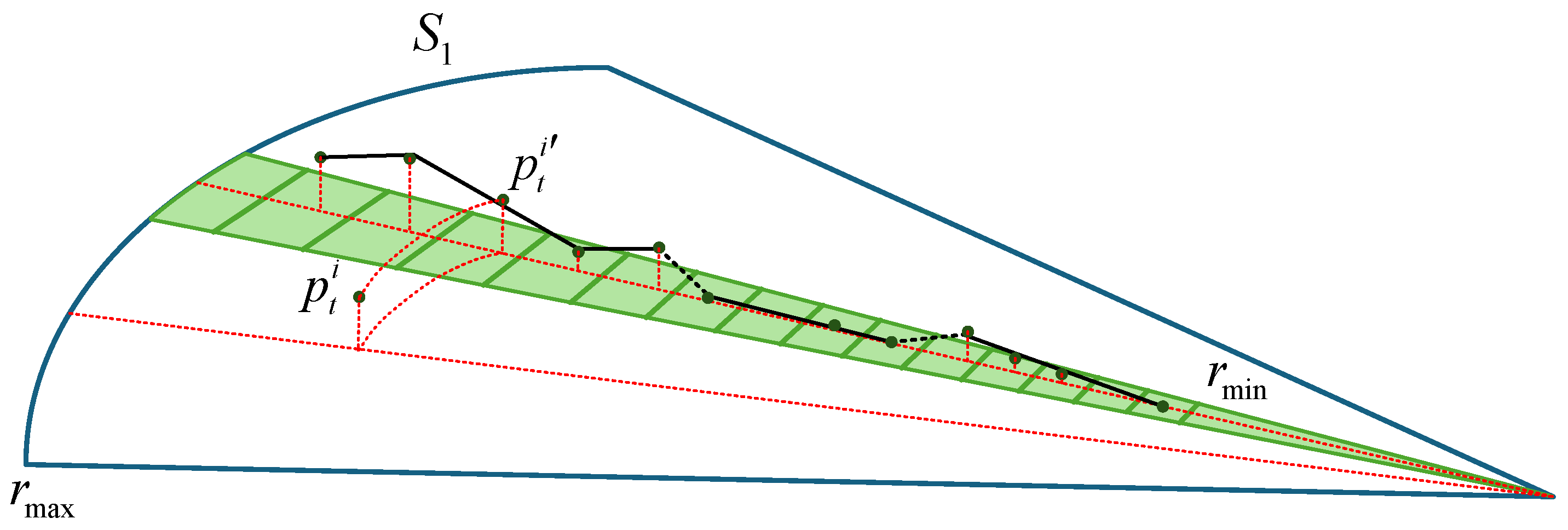
The first step involves dividing the point cloud into partitions and coordinate transformation. For a given point cloud set
, each point
is projected onto the XOY plane by discarding its Z-coordinate. A circular region centered at the LiDAR origin, with an infinitely large radius, is divided into
sectors
, each spanning an angle of
. Within each sector, the radial range between the minimum detection radius
and the maximum radius
is uniformly divided into
sub-sectors
. Each 3D point
inside a sub-sector is transformed into a 2D representation
, preserving its Z-coordinate and radial distance:
Line fitting is then performed within each sector
. The point with the smallest
in each sub-sector is selected as the initial point, and the points are sorted by their radial distance
. An incremental least squares method is applied to progressively fit a line
by adding points sequentially as shown in
Figure 2. The fitting process restarts with a new line once the inclusion of a new point causes the fitting error to exceed a predefined threshold.
Finally, ground points are segmented by evaluating the fitted lines. Among the multiple lines fitted in a sector, only those that satisfy the following criteria are considered as representing the ground:
Slope: The slope of the line should not be too steep, as the ground inclination should be relatively moderate.
Intercept: The intercept of the line should not be too large, as ground height is not expected to vary significantly.
Fitting error and continuity: The fitting error and the continuity of adjacent lines should be within acceptable bounds, as the ground should not be excessively rough.
After identifying the ground-representing lines in each sector, every original 3D point is evaluated by computing its Euclidean distance to the nearest ground line. Points whose distance falls below a set threshold are classified as ground points and removed from subsequent feature extraction. This procedure effectively filters out ground points and yields a non-ground point cloud , thus improving the reliability of feature extraction and enhancing the overall stability and accuracy of the odometry.
4.2. Feature Point Extraction
Feature-based point cloud matching methods [
11] significantly reduce computational load while preserving the geometric structure of the environment. The point clouds used for feature extraction are first pre-processed by de-skewing using IMU data, which enhances the accuracy of feature matching. These methods also capture global structural information between point clouds, exhibiting strong robustness against noise and partial occlusion.
To select representative features from the point cloud, the smoothness of each point is used to classify LiDAR data. The smoothness is computed as described in Equation (2):
where
is one point in
,
denotes the set of neighboring points around
within a local window,
is another point in
distinct from
, and
is the number of points in
. Each scan line of the multi-beam LiDAR is evenly divided into four sectors. Points within each sector are sorted by their smoothness. Points with smoothness values above a defined threshold are classified as edge features, while those below another threshold are classified as planar features. To ensure an even distribution of features across the environment, each sector contributes at most two edge points and four planar points, which are added to the edge feature set
and planar feature set
, respectively.
Using the robot pose from the previous frame, IMU pre-integration results, and the LiDAR extrinsic parameters, the feature sets are transformed into the world coordinate frame to form a LiDAR keyframe . A sliding-window approach is adopted to construct a local map from a fixed number of recent keyframes. The local map consists of an edge map and a planar map , which are then used for robust and efficient scan matching in subsequent stages.
4.3. Pose Estimation Based on Multi-Sensor Fusion
After completing the preprocessing of IMU and LiDAR data described in the preceding sections, a multi-sensor fusion-based pose estimation scheme is constructed to achieve accurate and stable localization.
4.3.1. LiDAR Feature Matching and Odometry Construction
Once a new LiDAR scan has been processed into a LiDAR feature keyframe
through the aforementioned steps, it is matched against the local map
using the ICP algorithm. For edge features, a point-to-line distance metric is employed, while for planar features, a point-to-plane distance metric is used. The corresponding residuals are formulated as follows:
where
denote the closest points in the local map to the new edge point
or planar point
. The edge residual
represents the distance from the point to the local edge line, while the planar residual
represents the distance to the local planar surface.
The objective is to estimate the optimal pose transformation represented by the rotation matrix
and translation vector
for the current frame by solving the optimization problem:
In this formulation, edge and planar residuals are weighted by a robust kernel that assigns higher weights to smaller residuals and down-weights potential outliers, following the practice in LIO-SAM. This nonlinear least-squares problem is solved using the Gauss-Newton method [
41] to obtain the optimal
and
. The optimization is initialized using the pose predicted by IMU pre-integration and iterates until the pose update increments fall below a predefined threshold or a maximum number of iterations is reached. Given the pose of the previous frame, the relative transformation is computed and incorporated into the optimization as a LiDAR factor.
At this stage, a LiDAR-inertial odometry system has been constructed. It takes IMU pre-integration outputs and LiDAR point clouds as inputs, performs ground point filtering, feature extraction, and point cloud matching, and outputs frame-to-frame pose estimates. However, in this formulation, IMU data are primarily used for motion distortion correction and to provide a motion prior, without being fully integrated into the optimization process. As a result, the system operates in a loosely coupled manner, leading to an over-reliance on LiDAR measurements and reduced robustness, particularly in challenging environments.
4.3.2. Tightly Coupled Multi-Sensor Fusion via Factor Graph Optimization
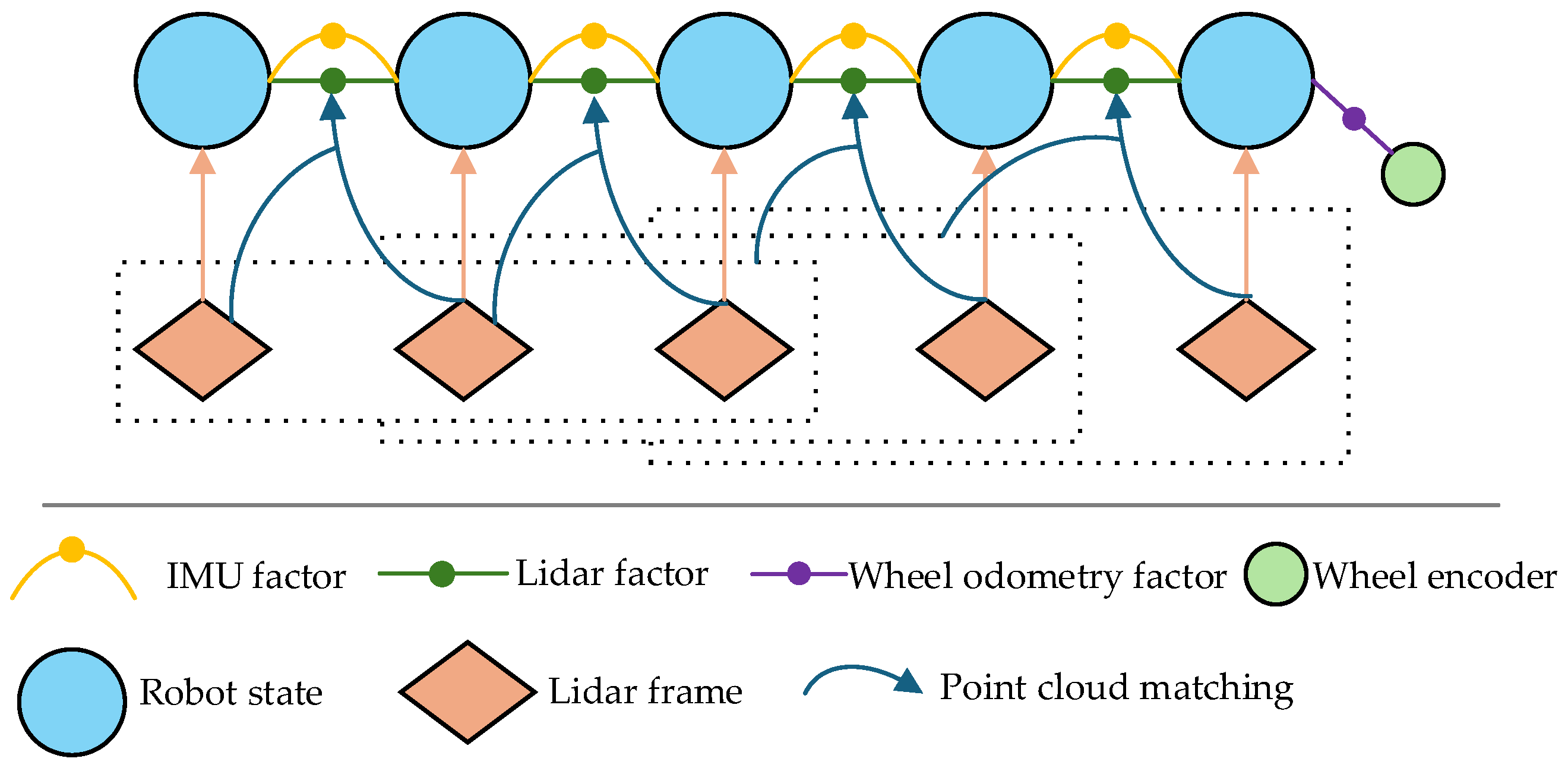
To overcome this limitation, we adopt a factor graph–based optimization framework, as illustrated in
Figure 3, to tightly integrate measurements from multiple sensors in a unified probabilistic formulation. The factor graph incorporates three types of factors: IMU factors derived from pre-integrated IMU measurements, wheel odometry factors constructed from wheel speed measurements, and LiDAR factors obtained from scan-matching residuals.
The multi-sensor fusion and state estimation problem is formulated as a large-scale nonlinear least-squares optimization, which jointly minimizes the residuals associated with all sensor measurements and robot states. IMU and LiDAR factors directly constrain the robot’s pose transformation, while the wheel odometry factor—providing velocity observations—imposes constraints on the robot’s velocity estimate, thereby enhancing motion consistency and stability.
Regarding the uncertainty modeling, the covariance matrices for the IMU and LiDAR factors follow the standard practice in LIO-SAM, with noise parameters derived from sensor specifications and empirical tuning. The wheel odometry factor covariance is adapted online according to the road surface condition, i.e., low on smooth roads and high on rough or slippery surfaces, reflecting the expected measurement confidence. To bound the computational cost, a pseudo-sliding window strategy is adopted: the factor graph is reset every 100 keyframes, which implicitly marginalizes old states and keeps the graph size manageable for real-time operation. Loop closure factors are intentionally not included in our framework, as large-scale road environments often contain long traversals without repeated visits to previously mapped areas, making loop closure detection unreliable and impractical in such scenarios.
The resulting factor graph is optimized incrementally using the iSAM2 algorithm [
42], enabling efficient real-time inference. This process yields a high-accuracy and high-robustness estimate of the robot’s pose, completing the construction of a tightly coupled multi-sensor fusion odometry suitable for robust localization in large-scale environments.
5. Drift Correction Using HMM and Topological Map
As analyzed in
Section 2, a critical limitation of existing localization methods is the accumulation of drift over time. In this section, we present a drift correction scheme based on digital map matching. The proposed method leverages open-source digital maps together with the robot trajectory estimated by the multi-sensor fusion odometry to reduce or even eliminate the impact of accumulated drift in large-scale robot localization.
5.1. Overall Framework
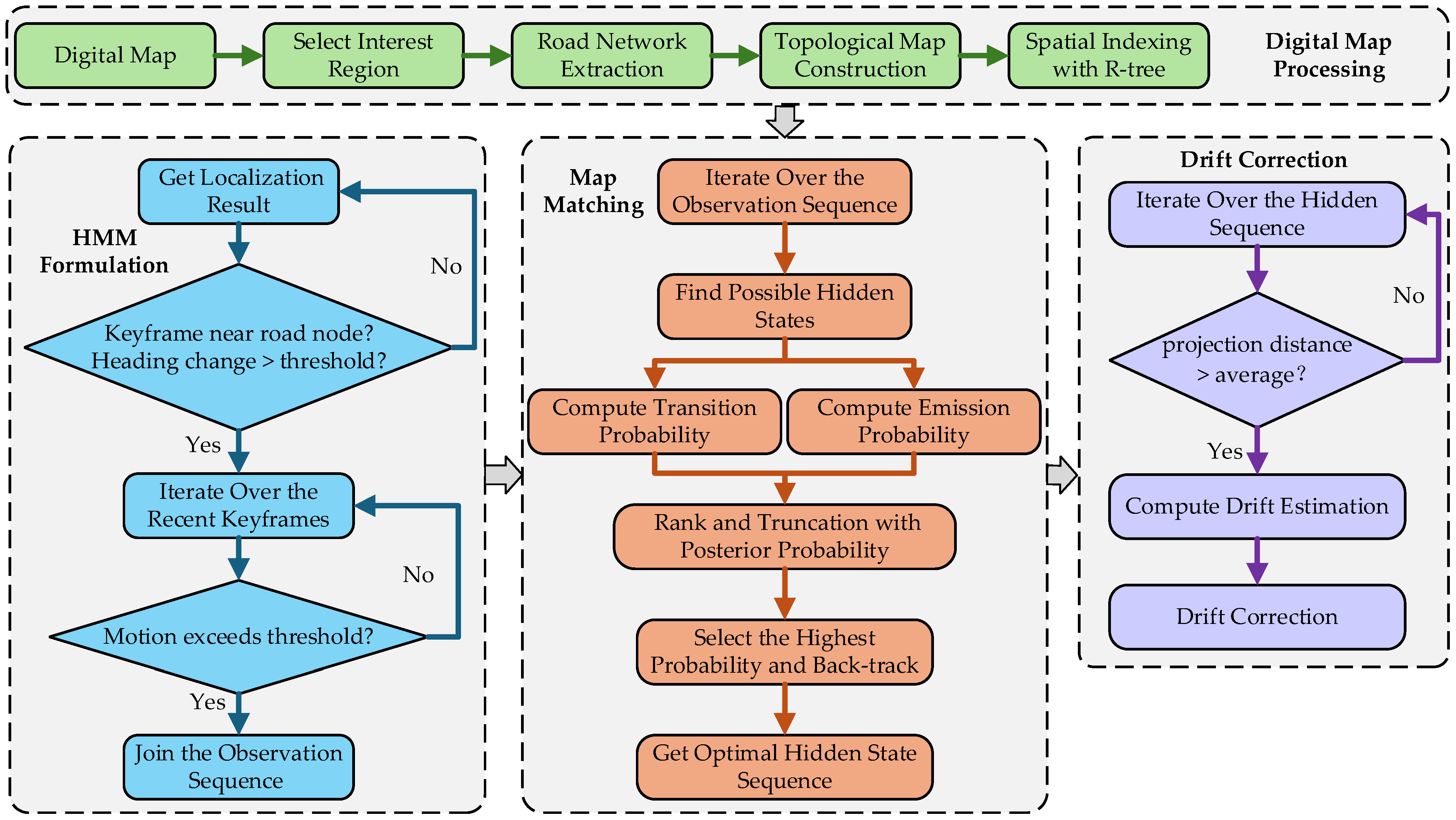
The overall pipeline of the proposed drift correction method is illustrated in
Figure 4. First, an open-source digital map (e.g., OpenStreetMap) is acquired and preprocessed to extract road information, which is then converted into a topological road network to facilitate mathematical representation and reasoning. A spatial R-tree index is then constructed for each road segment in the topological map, enabling efficient spatial queries and rapid retrieval of candidate segments during map matching.
When predefined triggering conditions are satisfied, recent LiDAR keyframes are matched against nearby road segments in the topological map to identify the road segment on which the robot is currently traveling. The absolute positional constraints provided by the digital map are then used to adjust the robot’s pose estimate, thereby correcting accumulated drift.
5.2. Topological Map Construction
To enable drift correction using digital maps, preprocessing is required to facilitate subsequent operations. This section describes the conversion of open-source digital maps into a topological representation, which consists of three main steps: road information extraction, topological road network construction, and spatial indexing using an R-tree.
First, road information is extracted from the digital map. Digital maps typically contain diverse geographic elements, such as buildings, administrative boundaries, and road networks. In this work, the OSMNX library is used to parse OpenStreetMap (OSM) data. A region of interest is selected on the OSM website, and the corresponding map file is exported in XML format. The file contains a series of geographic tags, where each node element represents a landmark defined by its longitude (lon) and latitude (lat) coordinates. Since OSM includes heterogeneous and complex geographic information, much of which is irrelevant for road-based navigation, further filtering is performed to retain only road-related data. The way element in OSM contains a unique ID, a list of node IDs that make up the way, and a set of descriptive tags. The highway key within these tags indicates whether a way corresponds to a road. Using this key–value pair, the road network can be efficiently extracted from the raw OSM dataset.
After extracting road data, the map is converted into a topological representation. Following graph-theoretic principles, road intersections are modeled as nodes , while road segments connecting them are modeled as edges . The weight of each edge is defined as its geometric length. Consequently, the digital map is represented as a weighted graph .
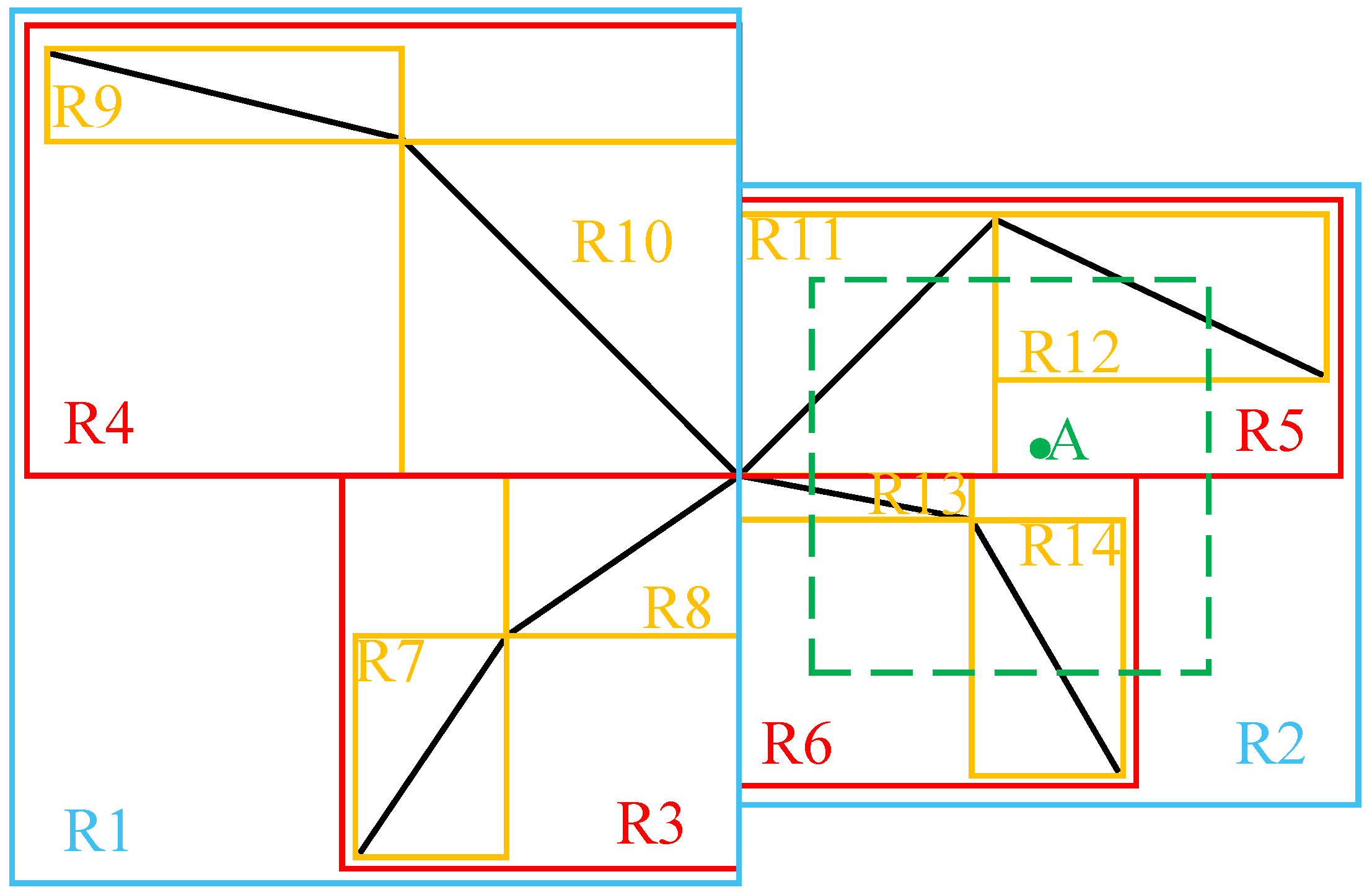
To enable efficient spatial queries during trajectory matching, the road segments are indexed using an R-tree. The R-tree organizes spatial objects hierarchically using Minimum Bounding Rectangles (MBRs). Leaf nodes correspond to individual road segments, while higher-level nodes recursively group spatially proximate MBRs, thereby partitioning the entire map space as shown in
Figure 5. When querying nearby road segments, a candidate bounding box centered at the query location is generated based on a predefined search radius. The R-tree is traversed from the root to the leaf nodes, retrieving only those road segments whose MBRs intersect the query box. By grouping spatially adjacent segments under common parent nodes, the R-tree significantly reduces search complexity and improves matching efficiency.
5.3. Drift Correction
After preprocessing, the open-source OSM data are converted into a topological road network and indexed using an R-tree. This subsection presents a cumulative drift correction method based on matching the robot’s estimated trajectory to the topological map. By filtering LiDAR keyframes to construct a representative trajectory and aligning it with the digital map, the system estimates accumulated drift and maintains low localization error over long-term operation.
5.3.1. Formulation as a Hidden Markov Model
The problem of matching selected LiDAR keyframe positions to the topological road network is formulated as a decoding problem in an HMM. The sequence of filtered LiDAR keyframe poses constitutes the observation sequence while the corresponding true positions on the road network form the hidden state sequence .
Intuitively, the closer an observation lies to a road segment, and the more consistent the inter-frame motion is with the corresponding displacement along the road network, the higher the probability that the observation corresponds to that segment. Accordingly, the emission probability is modeled as a function of the distance between the observation and its projection onto the road network, while the transition probability is derived from the discrepancy between consecutive observations and the distance traveled along the road network. The HMM satisfies the standard assumptions: Markov property is the current hidden state depends only on the previous hidden state; observation independence is each observation depends only on the current hidden state.
LiDAR keyframes are selected according to the following criteria: consecutive keyframes are generated when the translational displacement exceeds 0.3 m or the rotational change exceeds 10°. A feature trajectory starts and ends when the keyframe lies within 5 m of a road network node and the heading change between the start and end exceeds 30°. Only sequences satisfying these conditions are used as observation sequences. This strategy ensures that map matching is performed using informative and well-distributed keyframes, thereby improving both efficiency and robustness.
5.3.2. Topological Map Matching
During map matching, each observation corresponds to multiple candidate hidden states. To identify the most probable hidden state sequence given the observation sequence, the decoding problem is solved using the Viterbi algorithm.
Let the current observation sequence be
where
corresponds to the most recent keyframe. Starting from the first observation
, the R-tree index is queried to retrieve all road segments within a predefined search radius. Each candidate segment is projected onto the observation to generate a set of possible hidden states
. The emission probability for each candidate is computed using a Gaussian model:
where
is the standard deviation of the projection error. Candidates are ranked by probability, and only the most likely states are retained via truncation.
Since the hidden state at the next time step can only lie on the same road segment as the previous state or on a directly connected segment, the transition search space is further constrained. For observation
, the transition probability from
to
is defined as:
where
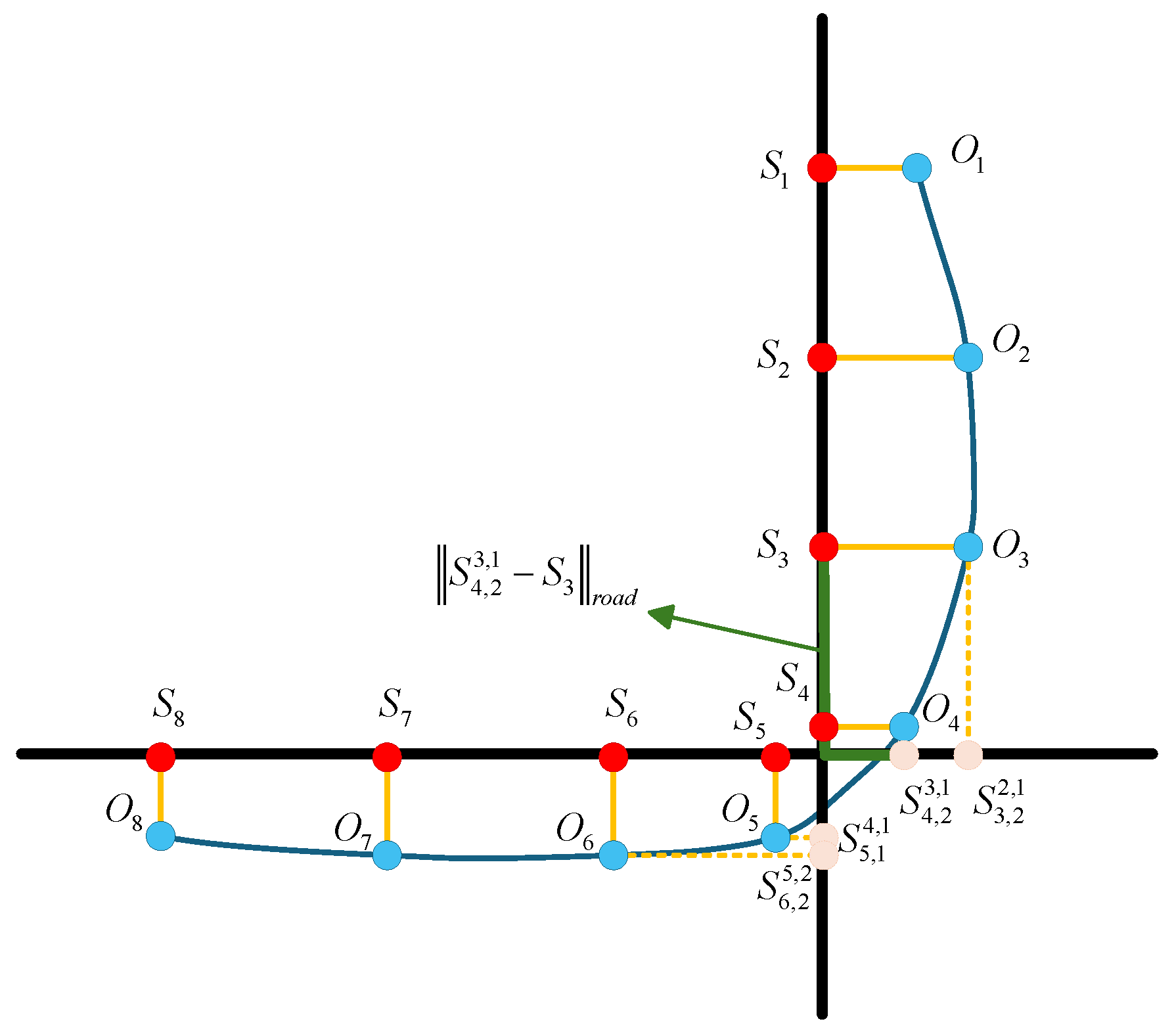
is the distance along the road network like green line in
Figure 6 (including junction paths if the segments differ), if
and
lie on different segments, the distance includes the path through the connecting junction. In addition,
is the standard deviation of the error that between consecutive observations and the
.
The posterior probability of each candidate hidden state is updated recursively using , followed by ranking and truncation. After processing all frames, the hidden state with the highest probability is selected, and back tracking yields the optimal hidden state sequence , completing the map trajectory alignment.
5.3.3. Drift Correction Implementation
Once the -th map matching yields the new matched road positions corresponding to the observed trajectory . Drift is estimated using only those frames whose projection distance exceeds the average projection distance . Since the robot’s true trajectory cannot perfectly align with the road network, this approach mitigates the resulting mismatch.
Let the
map matching drift
be updated incrementally as:
where
is the number of observations
whose projection distance exceeds
. Since the road network provides only latitude and longitude information, the correction is inherently limited to the horizontal plane. In ground robot road navigation scenarios, vertical deviations are typically small and have less impact on overall performance, and planar accuracy remains the primary concern, this makes horizontal-only correction
a reasonable design choice. Finally, the estimated drift
is subtracted from the current localization output to obtain the corrected pose, effectively compensating for accumulated drift.
6. Experiment Results
To validate the effectiveness of the proposed multi-sensor fusion odometry and drift correction method, a series of experiments were conducted and analyzed. The experimental site and hardware setup are described in
Section 3. To evaluate performance in large-scale and complex road environments, two datasets were collected in different campus settings: the College Dataset and the School Dataset.
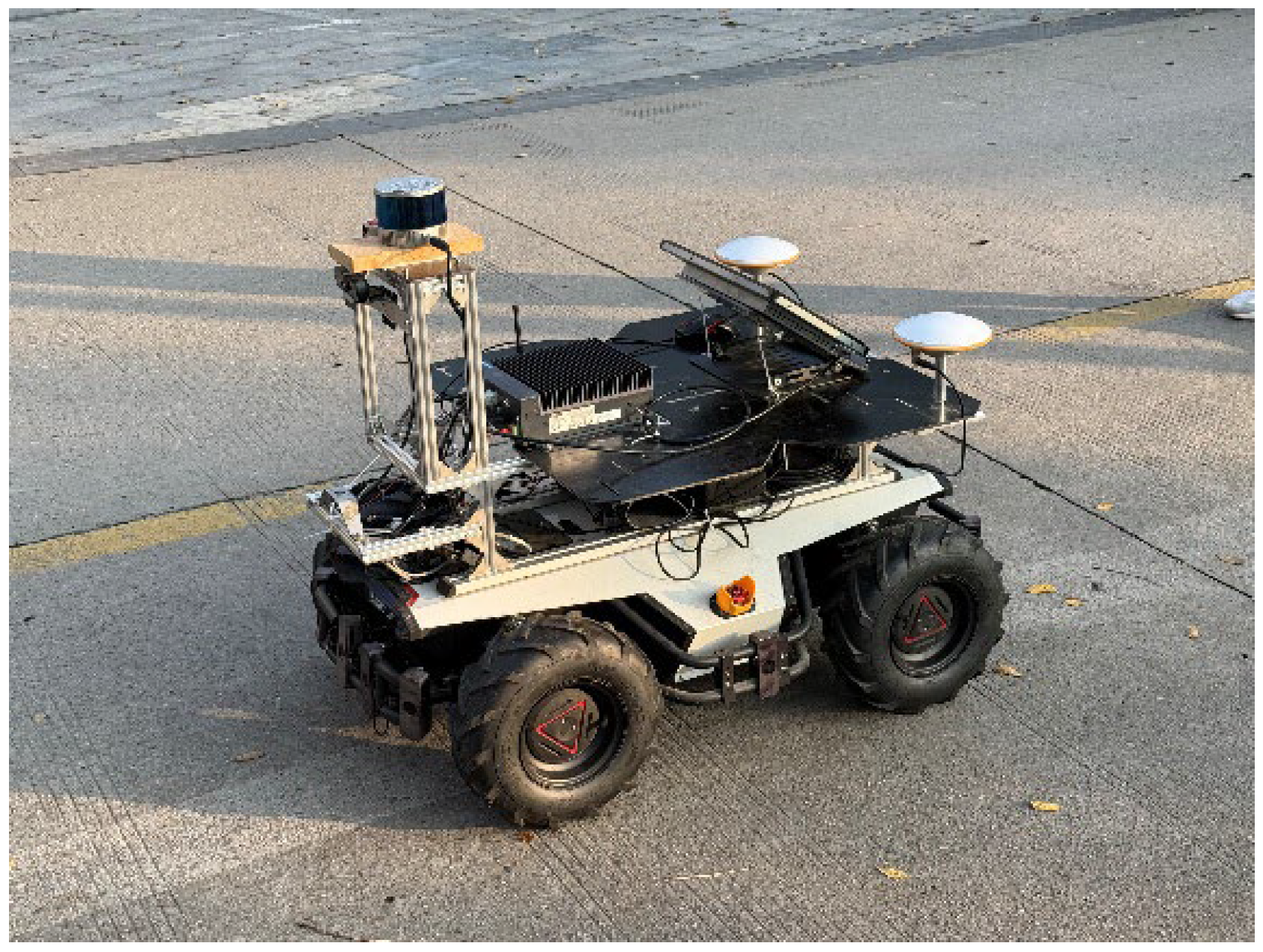
The sensor platform was a self-built unmanned ground vehicle (UGV), as shown in
Figure 7. Both datasets were recorded on various road types within the campuses, including structured main roads and unstructured branch roads.
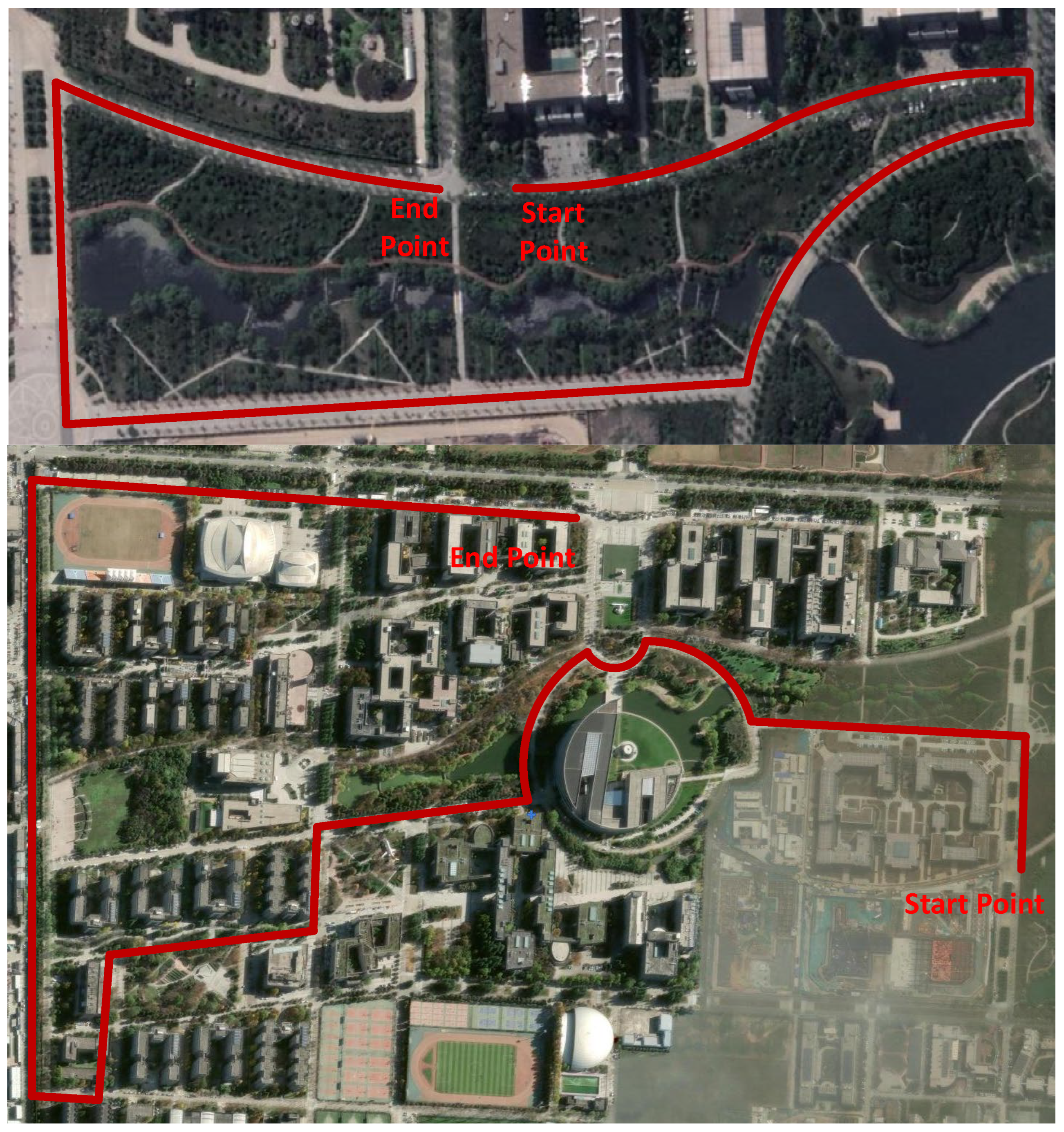
Figure 8 shows satellite imagery of the two test areas with the UGV trajectories overlaid in red. To highlight the role of road network matching in drift correction, the UGV was driven along routes closely aligned with the OpenStreetMap (OSM) road network during data collection. Unless otherwise specified, the following default covariance settings were used throughout all experiments. For the LiDAR and IMU factors, the covariance matrices followed the standard configuration in LIO-SAM. For the newly introduced wheel odometry factor, the pose covariance was set to
, and a velocity covariance was set to
.
To evaluate the individual contributions of the three proposed modules, ground point filtering, the wheel odometry factor, and topological map matching, an ablation study was first conducted on the College Dataset. To assess the generalization capability of the localization method, experiments were then performed on the public KITTI odometry benchmark (Sequence 05), where the proposed algorithm was compared with LeGO-LOAM, LIO-SAM, and FAST-LIO2. Subsequently, the topological map matching module, as the core component for drift correction, was analyzed in depth across all datasets to examine its correction behavior. Finally, to demonstrate the advantage of the proposed method in large-scale road environments, a long-distance experiment was conducted on the School Dataset, comparing the proposed method against LeGO-LOAM, LIO-SAM and FAST-LIO2.
6.1. Ablation Study
To evaluate the individual contributions of the three proposed modules—ground point filtering, wheel odometry factor, and topological map matching—an ablation study was conducted on the College Dataset. Four configurations were compared:
LIO: the baseline LiDAR-inertial odometry without any of the proposed modules.
LIO + Wheel: LIO augmented with the wheel odometry factor.
LIO + Wheel + Ground Filter: both wheel odometry and Line-Fit ground filtering.
Full Method (LIO + Wheel + Ground Filter + Map Matching): the complete proposed system.
All experiments were performed on the same College Dataset. To quantitatively evaluate localization accuracy, the estimated trajectories were compared with the ground-truth trajectory provided by the CGI410 high-precision integrated navigation system. Both the ground-truth and estimated trajectories were recorded at 10 Hz and aligned to the same global coordinate frame using the initial GNSS pose obtained during system initialization. Localization accuracy was assessed using the Absolute Trajectory Error (ATE) [
43] metrics, including the maximum error (Max), mean absolute error (MAE), root mean square error (RMSE), and standard deviation (STD) of the Euclidean distance between the estimated and ground-truth positions. Let
and
denote the estimated and ground-truth positions at time step
on the horizontal plane.
denotes the total number of samples. The MAE, RMSE, and STD are defined as follows:
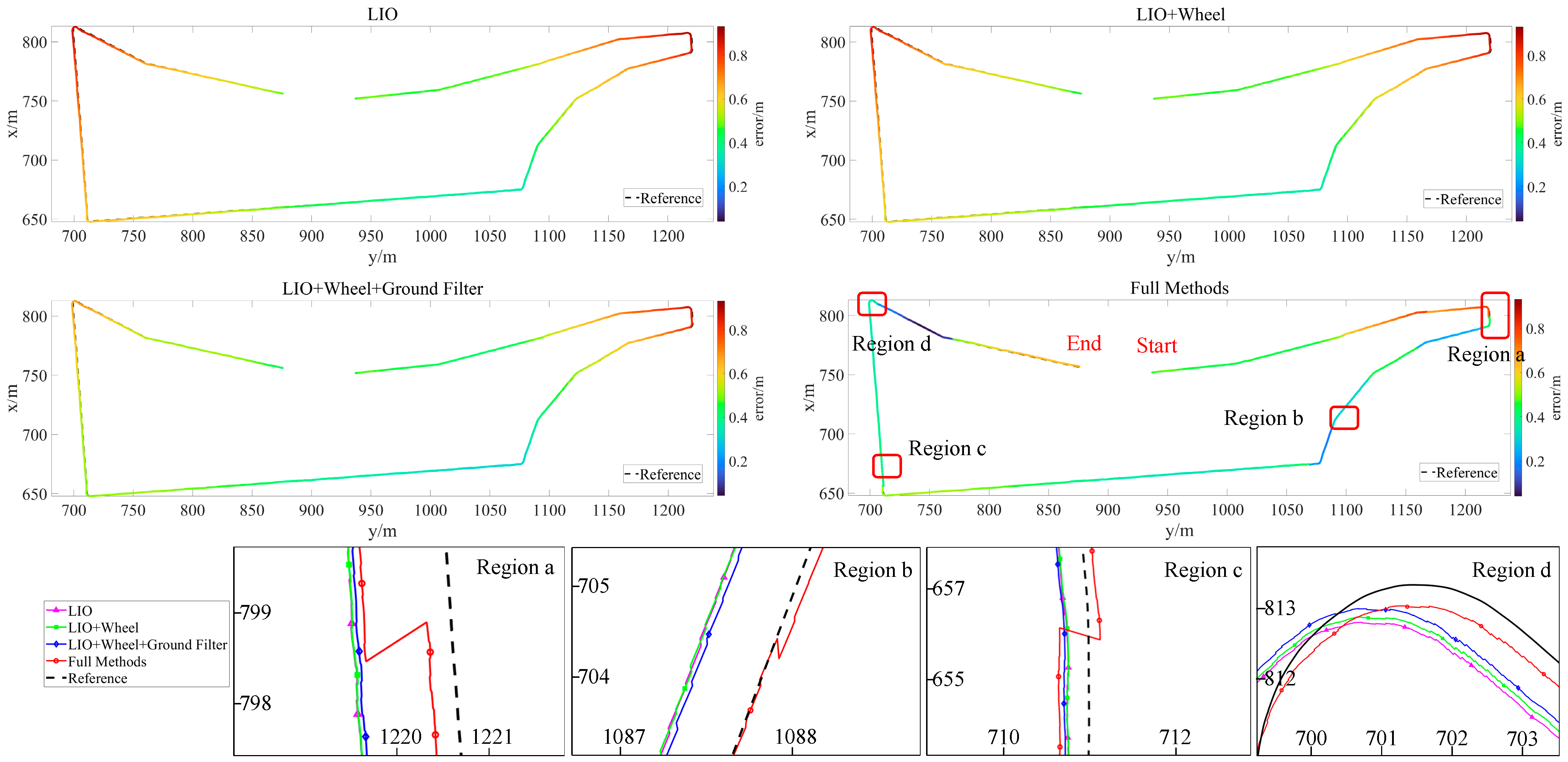
Figure 9 shows the global localization trajectories estimated by the four configurations on the College Dataset, along with enlarged views of four key regions (labeled a–d). These regions highlight the effectiveness of topological map matching and the influence of each module after the vehicle has traveled a certain distance. In the figure, the magenta line with triangle markers represents LIO; the green line with square markers represents LIO + Wheel; the blue line with diamond markers represents LIO + Wheel + Ground Filter; and the red line with circle markers represents the Full Method. The black line denotes the ground-truth trajectory.
The zoomed-in views in
Figure 9. a–d reveal how the localization error evolves and how each module contributes to drift correction. In region (a), (b) and (c), immediately after the vehicle passes the first sharp turn, the Full Method leverages topological map matching to directly correct the drifted estimate back to the vicinity of the reference trajectory, whereas the other variants remain visibly deviated. As the travel distance increases, cumulative drift becomes more pronounced for the configurations without map matching; nevertheless, the Full Method continues to suppress this drift through repeated topological corrections. Finally, after the vehicle has traversed the long-range route, region (d) clearly demonstrates the progressive benefit of each module: LIO + Wheel, by incorporating the wheel odometry factor to constrain the robot velocity, achieves a smaller error than the baseline LIO; LIO + Wheel + Ground Filter further removes ground points and reduces environmental noise, thereby improving scan-matching accuracy and yielding an even lower error; and the Full Method, which continuously corrects the accumulated drift via topological map matching, attains a substantial improvement in localization accuracy and remains the closest to the reference trajectory among all configurations.
To quantify the contribution of each module, the average Absolute Trajectory Error (ATE) statistics over the seven repeated runs are summarized in
Table 1, and the detailed data for each run are shown in
Appendix A. Among the three proposed modules, topological map matching yields the most significant improvement: it reduces the mean absolute error (MAE) by 17.4% compared with the configuration without map matching (LIO + Wheel + Ground Filter), and also substantially improves the other error metrics. The only exception is the STD of the error, which is slightly higher for the Full Method. This is an expected consequence of the discrete jump corrections performed by map matching—the estimate is occasionally pulled directly to a much more accurate position, resulting in a mixture of very small and relatively large errors and therefore a larger dispersion. The ground point filtering module consistently improves all ATE metrics. By removing ground points, it reduces environmental noise and enhances the accuracy of scan matching, which is the core of the LiDAR-inertial odometry, thus leading to an overall improvement in localization performance. The wheel odometry factor contributes a moderate yet consistent improvement. By incorporating velocity observations, it constrains the robot’s motion and suppresses short-term drift, particularly during aggressive turns or in feature-sparse segments, thereby complementing the other modules and enhancing overall robustness. The statistical significance of the improvements was further assessed using the Wilcoxon signed-rank test. Both the ground point filtering and the topological map matching modules demonstrated strong significance, with a
p-value of 0.0156. The wheel odometry factor also exhibited statistical significance, although at a weaker level, with a
p-value of 0.0313.
In summary, the ablation study confirms that all three proposed modules contribute positively to localization accuracy. Topological map matching provides the largest improvement by directly correcting accumulated drift, while ground point filtering enhances scan-matching quality and yields a consistent overall gain. The wheel odometry factor offers a moderate but stable improvement by constraining short-term motion drift, and its combination with the other two modules achieves the best performance across all metrics except for STD.
6.2. Evaluation on Public Benchmark
To assess the generalization capability of the proposed method, experiments were conducted on a public benchmark dataset. Although most public datasets do not include wheel odometry data, the ablation study in
Section 6.1 has demonstrated that the wheel odometry factor provides a moderate but non-essential improvement to the overall accuracy; its absence does not fundamentally compromise the localization performance. Testing on public benchmarks without wheel odometry can therefore still meaningfully reflect the effectiveness of the proposed approach. The KITTI odometry Sequence 05 was selected for this evaluation, as it covers a total length of 2205 m in an urban road environment, closely matching the large-scale road environments targeted in this work. The proposed method was compared with three mainstream baselines: LeGO-LOAM, LIO-SAM, and FAST-LIO2. For all algorithms, GNSS was used exclusively during initialization to align the coordinate frame, and loop closure detection was disabled, to better emulate the long-range, large-scale localization conditions without global corrections.
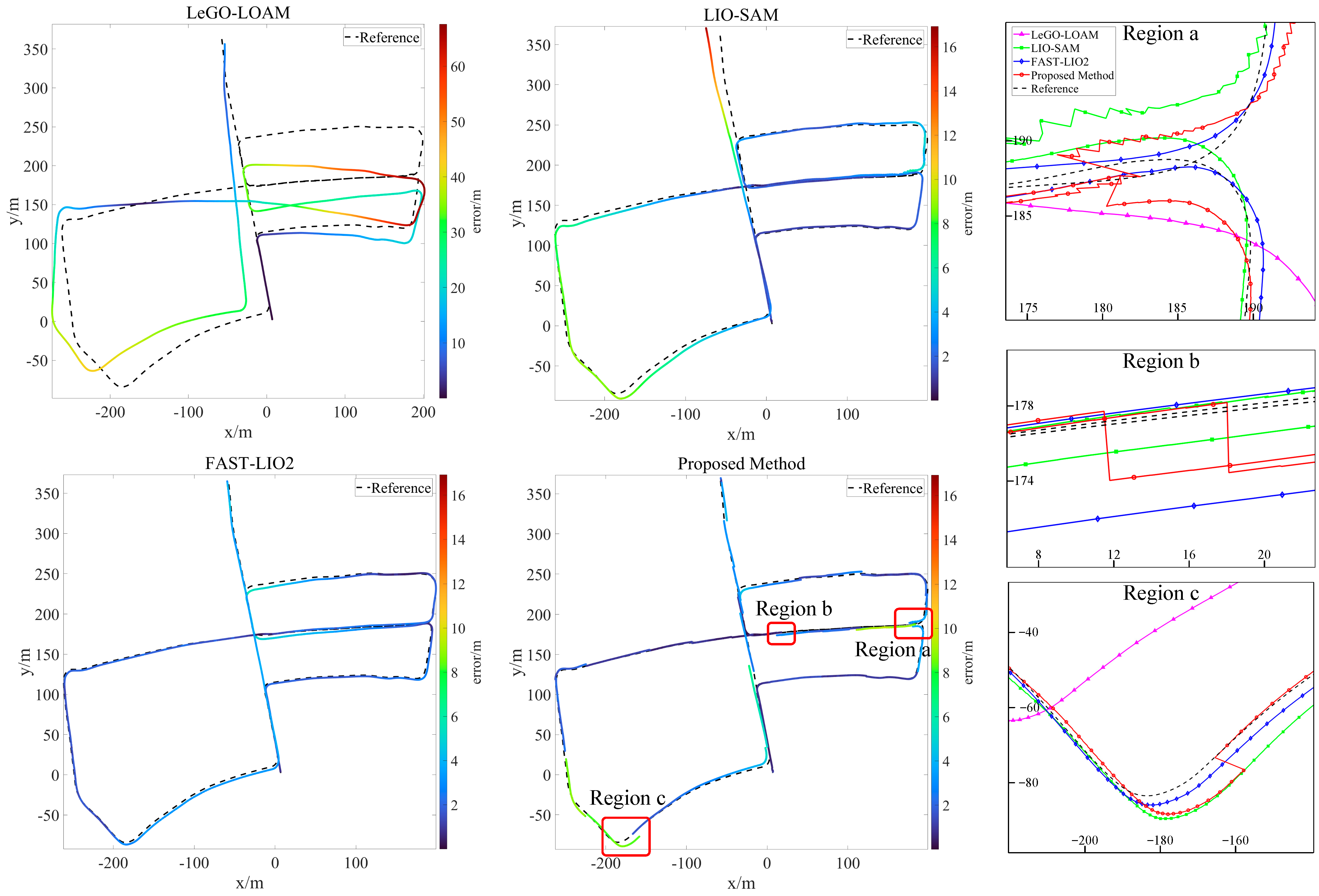
Figure 10 (left) presents the error heatmaps of the four compared algorithms. It is evident that both LeGO-LOAM and LIO-SAM accumulate substantial drift as the travel distance increases, while FAST-LIO2 and the proposed method maintain the error at a considerably lower level. This performance advantage stems from two factors: first, the ground filtering module enhances the accuracy of the underlying LiDAR-inertial odometry, thereby reducing the baseline drift rate; second, the topological map matching module directly corrects the accumulated drift, effectively suppressing the growth of error over long trajectories. The effectiveness of these corrections is clearly illustrated in the enlarged regions (b) and (c), where the proposed trajectory stays tightly aligned with the reference.
However, region (a) reveals a limitation related to the quality of the OSM road network. Since the KITTI Sequence 05 was not originally recorded with OSM alignment in mind, the reference trajectory does not closely follow the OSM road centerlines. In this specific turn, the vehicle approaches from below and turns left; after the turn, its path deviates upward from the OSM road geometry. Consequently, the map-matching correction pulls the estimate toward the OSM road network, which—being offset from the actual driven path—introduces a noticeable residual error. In contrast, the trajectory approaching from above and turning right follows the OSM road network more closely, and the correction there yields a much smaller error. This observation indicates that the proposed method relies on a reasonable level of OSM map accuracy and alignment with the actual driving path. Nevertheless, in the vast majority of the trajectory, the map-matching correction remains reliable and significantly improves overall localization accuracy.
Table 2 summarizes the ATE statistics for all four methods. LeGO-LOAM exhibits the largest drift by a considerable margin, with an average error of 27.603 m and a maximum error exceeding 67 m, confirming that even with ground point filtering, a LiDAR-only odometry cannot suppress the accumulated drift over long distances. LIO-SAM significantly reduces the average error to 3.812 m, but its maximum error remains above 16 m, indicating that drift continues to accumulate over the trajectory. FAST-LIO2 achieves the lowest error among the baselines (average 2.586 m, maximum 5.763 m), benefiting from its robust LiDAR-inertial odometry. The proposed method yields an average error of 2.779 m, which is very close to that of FAST-LIO2 despite operating without wheel odometry on this dataset, and its RMSE (3.642 m) remains competitive. The slightly larger maximum error (10.023 m) and variance can be attributed to the occasional mis-correction caused by OSM misalignment, as discussed for region (a) in
Figure 10. Overall, these results demonstrate that the proposed approach generalizes well to a public benchmark and remains highly competitive with state-of-the-art methods.
In summary, the evaluation on the KITTI Sequence 05 public benchmark demonstrates that the proposed method generalizes well beyond the proprietary campus datasets. Even in the absence of wheel odometry data, it maintains localization accuracy competitive with FAST-LIO2 and substantially outperforms LeGO-LOAM and LIO-SAM. However, the occasional mis-correction observed in region (a) of
Figure 10 highlights a sensitivity to the alignment between the OSM road network and the actual driven path. When the vehicle trajectory deviates from the mapped road centerline, the map-matching correction may pull the estimate toward the map and temporarily increase the error. This motivates a deeper investigation into the correction behavior of the topological map matching module, which is presented in the following section.
6.3. Analysis of Topological Map Matching Correction
This section evaluates the proposed topology-based map matching drift correction method on all datasets.
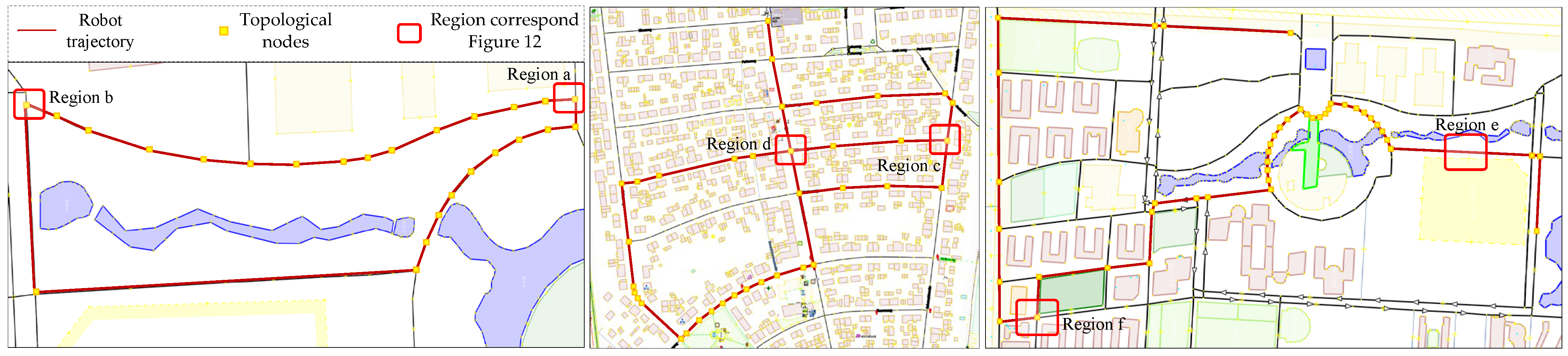
Figure 11 shows the OSM and road networks of the three test areas, with the UGV trajectories plotted in red and topological nodes marked as yellow squares.
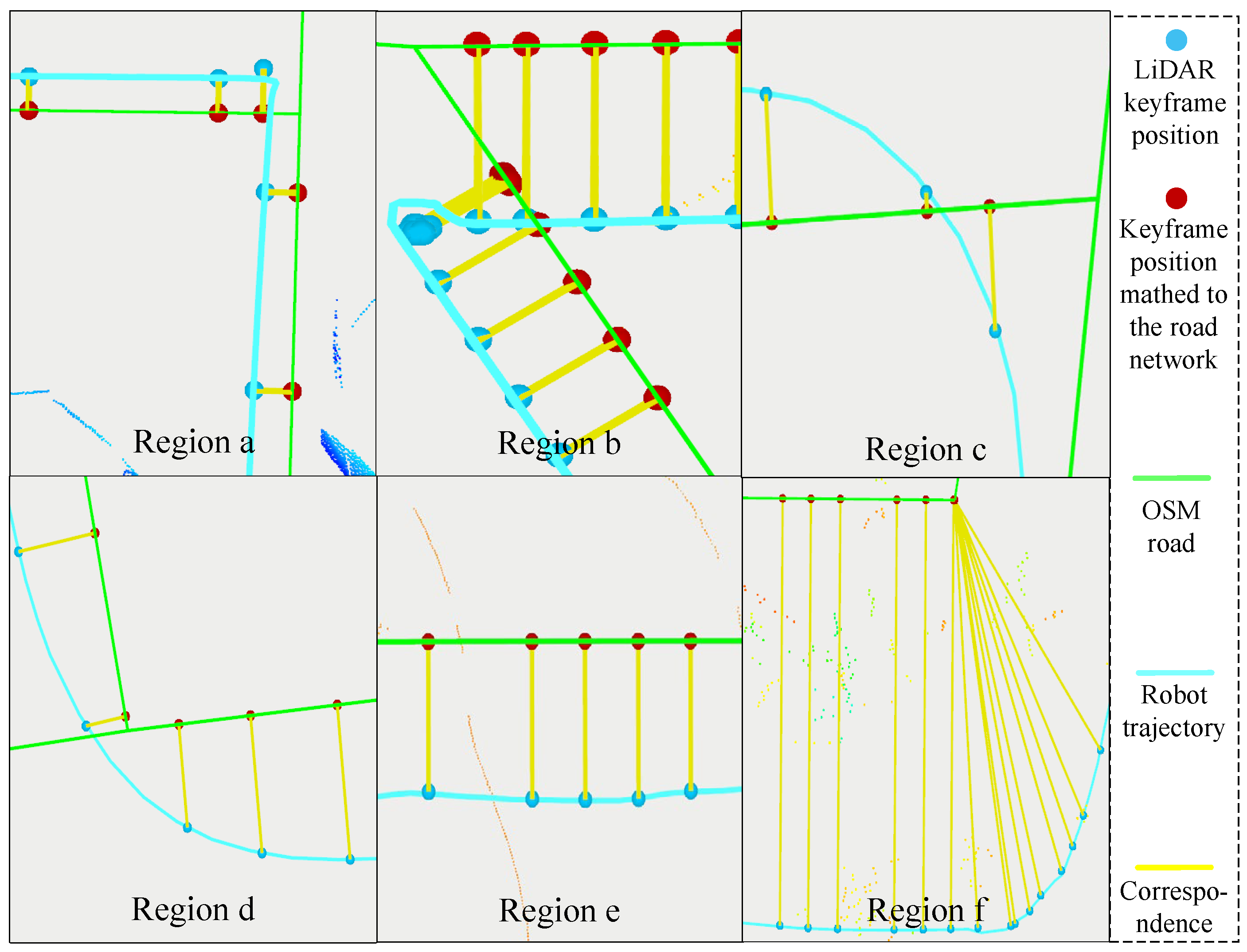
Figure 12 illustrates the topological map matching results corresponding to the six regions (a–f) highlighted in
Figure 11. In the figure, green lines denote the OSM road segments, blue dots represent the LiDAR keyframe positions, red dots indicate keyframes that are successfully matched to the OSM road network, and the cyan curve shows the keyframe trajectory. In all regions except (c), the algorithm reliably matches keyframes to the OSM network on both straight and curved road sections, even when a certain lateral deviation exists between the trajectory and the map. However, in region (c), the vehicle path deviates substantially from the OSM road geometry due to inaccuracies in the OSM map, causing the matching to fail. This observation reinforces the conclusion drawn from the KITTI experiment: the topological map matching module is generally robust, but its performance is contingent on a reasonable alignment between the driven path and the OSM road network.
To quantitatively assess matching performance, we analyzed the localization error before and after each successful match. Specifically, the difference between the error at the matched keyframe and that at the immediately preceding moment was computed, representing the single-match correction magnitude
. The mean correction is
. The correction ratio relative to the pre-match error was also calculated as
where
is the error between the keyframe and reference. Ten matches were performed on the College Dataset, twenty-seven on KITTI 05, and forty-one on the School Dataset. The quantitative results are summarized in
Table 3.
As shown in
Table 3, the number of successful map matching corrections increases with travel distance, particularly as the vehicle undergoes more large-angle turns. On the College and School datasets, where the OSM maps were manually corrected for higher accuracy, the correction ratio remains at approximately 50%. This means that, on average, each topological map matching operation eliminates roughly half of the accumulated drift. Furthermore, the mean correction magnitude grows with the travel distance, reflecting the progressive accumulation of odometry drift. In contrast, on the KITTI 05 dataset, the OSM map was directly downloaded without manual refinement, resulting in lower map quality and a reduced correction ratio of 12.3%. Despite this lower ratio, the map matching still contributes meaningfully to drift reduction: when the accumulated error reaches the meter level after long-distance travel, even a 12% correction can translate to a decimeter-level improvement in localization accuracy.
6.4. Large-Scale Localization on School Dataset
To highlight the advantage of the proposed method in large-scale road environments, a long-distance experiment was conducted on the School Dataset, which spans 3645 m without any loop closure. GNSS data was used exclusively during initialization for coordinate frame alignment, simulating the typical large-scale road scenario where GNSS is frequently unavailable due to tall buildings, dense tree canopies, or similar obstructions.
The proposed method was compared against LIO-SAM and FAST-LIO2 under identical conditions.
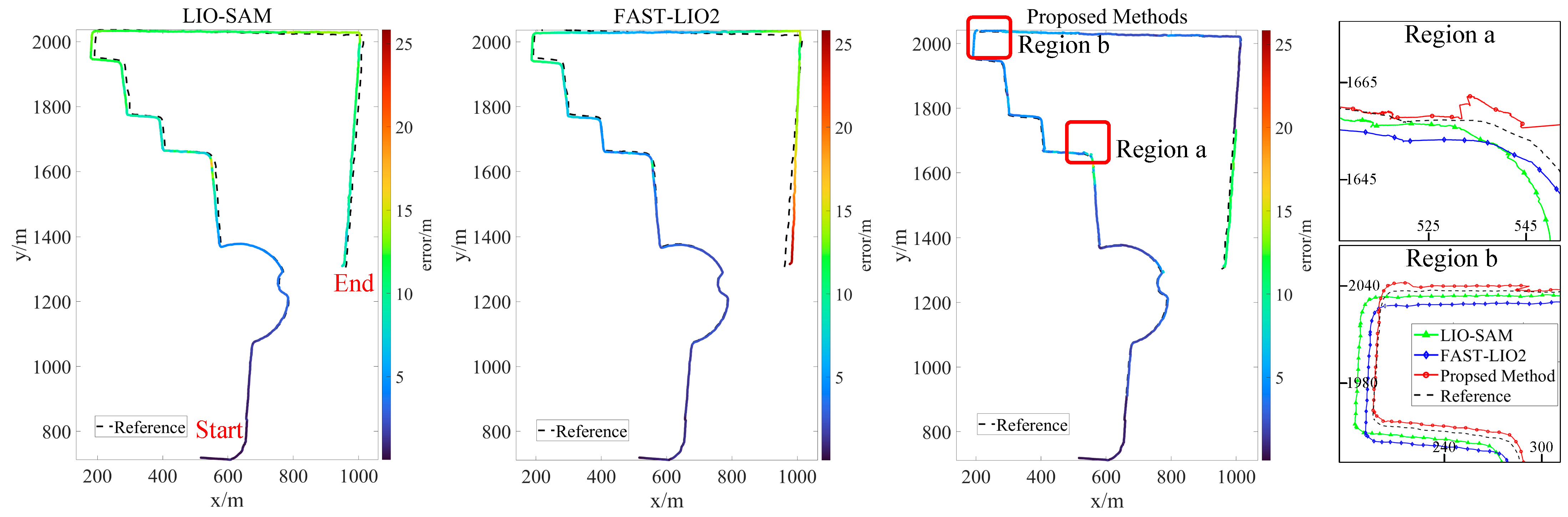
Figure 13 presents the error heatmaps of the global trajectories (left) and enlarged views of two representative regions (a and b, right).
As shown in the error heatmaps, both LIO-SAM and FAST-LIO2 suffer from pronounced cumulative drift. In particular, FAST-LIO2 exhibits a steadily increasing error that exceeds 25 m over the long trajectory. In contrast, the proposed method maintains a much lower error level throughout the entire route. This superior performance is attributed to three synergistic factors: first, the ground point filtering module improves the accuracy of the LiDAR odometry, reducing the per-frame drift; second, the wheel odometry factor provides additional motion constraints that further slow down error accumulation; and third, the topological map matching module continuously corrects the accumulated drift, preventing it from growing to large magnitudes.
The effectiveness of the map-matching correction is clearly visible in the magnified regions. In region (a), after the vehicle executes a sharp turn, the map-matching correction pulls the drifted trajectory back to the vicinity of the reference. As the travel distance increases further, region (b) shows that both LIO-SAM and FAST-LIO2 have already accumulated errors on the order of 10 m, whereas the proposed method keeps the error at or below 5 m through repeated topological corrections.
Table 4 summarizes the ATE statistics for the three methods on the School Dataset. The proposed method achieves an average error of 4.199 m, representing a reduction of 48.1% compared to LIO-SAM (8.086 m) and 44.2% compared to FAST-LIO2 (7.531 m). The RMSE follows a similar trend, with the proposed method attaining 5.343 m versus 9.188 m (LIO-SAM) and 9.621 m (FAST-LIO2). Notably, FAST-LIO2 yields the largest maximum error (25.837 m) and STD (35.859 m
2) among all methods, indicating that while its average performance is competitive, its drift grows more aggressively in certain segments of this long-distance, loop-free trajectory. This behavior aligns with the error heatmap in
Figure 13, where FAST-LIO2 exhibits steadily increasing warm-colored regions as the travel distance grows. In contrast, the proposed method maintains the lowest maximum error (16.271 m) and the smallest variance, confirming that the combination of ground filtering, wheel odometry, and topological map matching not only reduces the overall drift but also improves stability throughout the entire 3645 m traversal.
In summary, the School Dataset experiment confirms that the proposed method effectively handles long-range, loop-free scenarios under GNSS-denied conditions. By synergistically combining ground point filtering, wheel odometry, and topological map matching, it reduces the average error by 48.1% relative to LIO-SAM and 44.2% relative to FAST-LIO2, while also achieving the lowest maximum error and variance. These results demonstrate strong drift resilience and robust localization in large-scale road environments.
7. Conclusions and Discussion
This study presents a large-scale drift-resilient localization method via multi-sensor fusion and topological map matching. To eliminate the need for constructing and maintaining high-precision prior maps, the proposed framework leverages the topological road network extracted from open-source digital maps (OSM) as the only prior information. A LiDAR-inertial odometry augmented with improved ground point filtering and a wheel odometry factor is first developed to enhance the baseline localization accuracy. A topological map matching module then corrects the accumulated odometry drift by matching the robot’s trajectory to the OSM road network. Comprehensive experiments on two proprietary campus datasets and the public KITTI 05 benchmark demonstrate the effectiveness of the proposed method. The ablation study confirms that each of the three modules—ground point filtering, wheel odometry factor, and topological map matching—contributes positively, with map matching providing the largest gain (MAE reduction of 17.4%). On the School Dataset (3645 m, loop-free), the proposed method reduces the average error by 48.1% and 44.2% compared with LIO-SAM and FAST-LIO2, respectively.
Despite these promising results, several limitations should be acknowledged. First, the localization accuracy is fundamentally dependent on the availability and quality of OSM data. The ablation study reveals that while ground point filtering and the wheel odometry factor moderately improve accuracy, the dominant performance gain comes from topological map matching. In regions without OSM coverage or where the OSM road geometry deviates significantly from the actual driven path, the drift correction may fail or even introduce additional errors, as observed on the KITTI 05 dataset. Under such conditions, the method remains functional as a LiDAR-inertial odometry, but it does not surpass existing methods. The road structure also influences performance: LiDAR-inertial odometry inherently benefits from structured road scenes with distinct geometric features, but the decisive factor determining overall localization accuracy remains OSM data quality. Second, the method incurs a non-negligible computational cost. The factor graph optimization, which constitutes the primary computational burden, requires adequate processing power. On a computer equipped with an Intel i7-10750H CPU, the system runs in real time, but its applicability to more resource-constrained platforms has not been verified. Finally, the drift correction primarily operates on planar position errors. In typical ground robot road environments, vertical deviations are relatively small compared with horizontal errors and change only modestly; nevertheless, the proposed method lacks an explicit mechanism for correcting errors in the vertical direction. Furthermore, although the wheel odometry factor introduces velocity constraints, the topological map matching module corrects only the position estimate without directly constraining velocity or orientation, which may limit performance in highly dynamic maneuvers.
Future work will focus on reducing the reliance on map accuracy, for instance, by developing robust matching strategies that tolerate significant deviations between the trajectory and the OSM network, or by integrating probabilistic map models that encode OSM accuracy. Additionally, extending the framework to support multi-platform deployment and conducting long-term evaluations under varying environmental conditions are planned.