An Arduino-Based, Portable Prototype for the Recording and Analysis of EEG Signals to Support Self-Detection and Self-Monitoring of Stress

 , ,
, ,  , and
, and
Abstract
1. Introduction
2. Description of the System’s Modules
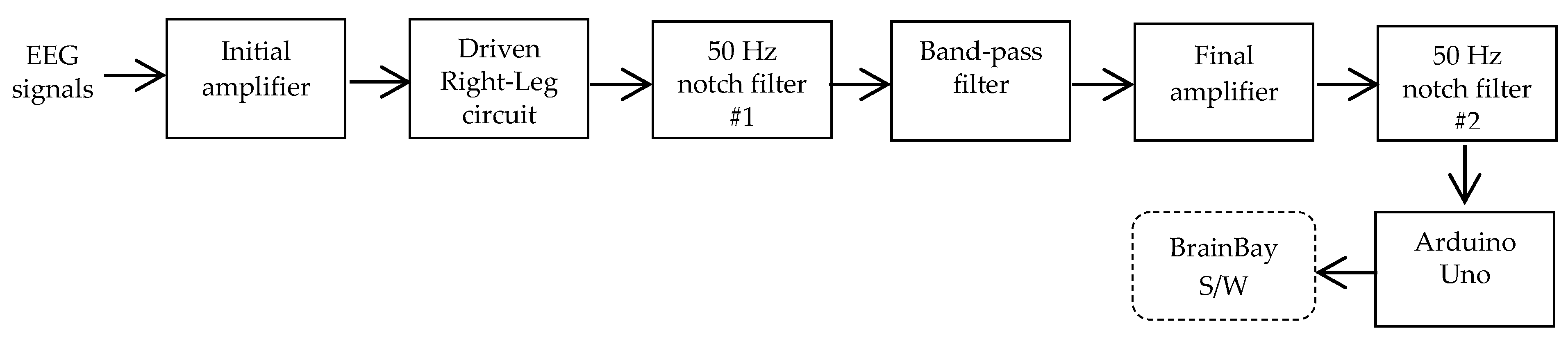
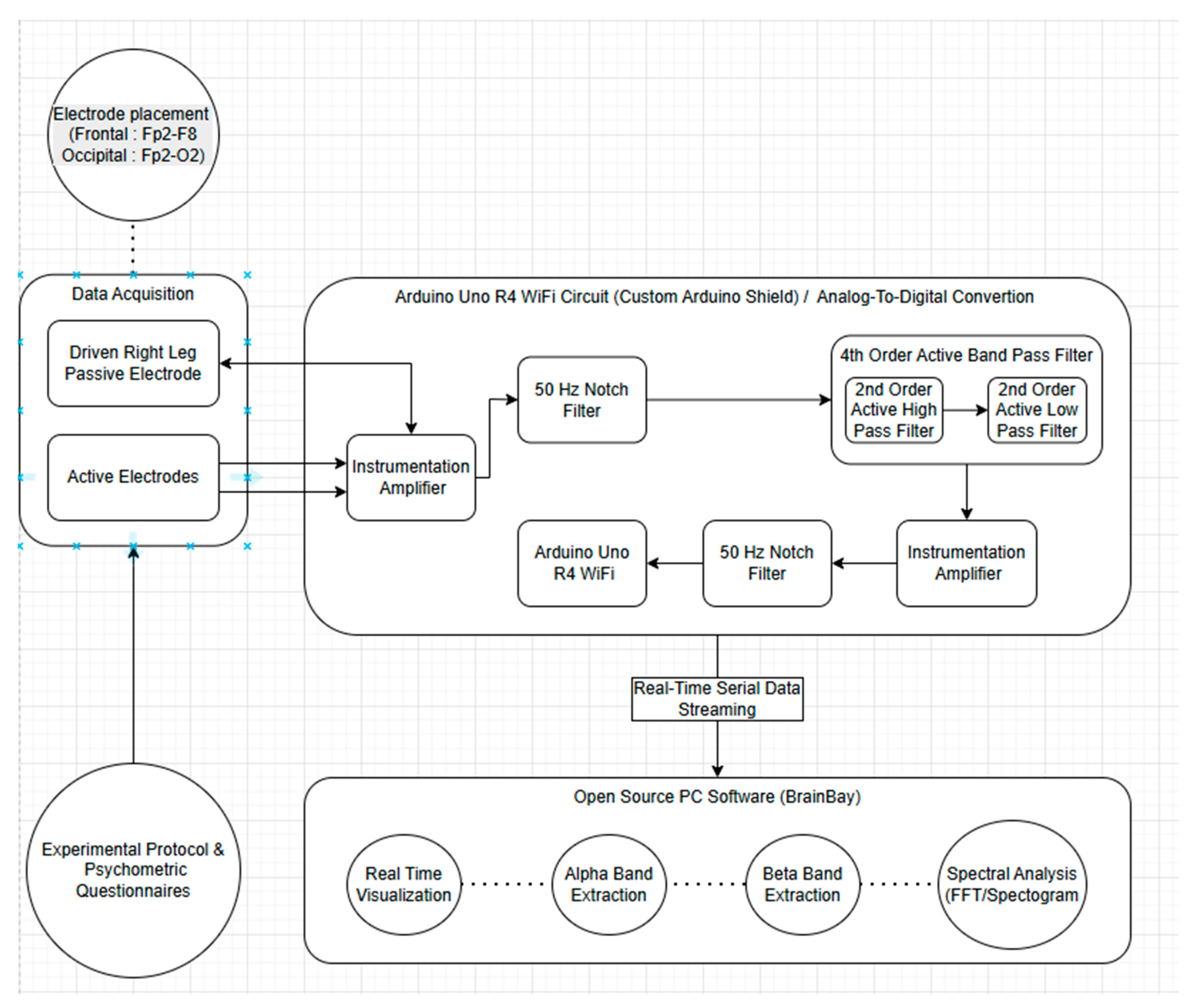
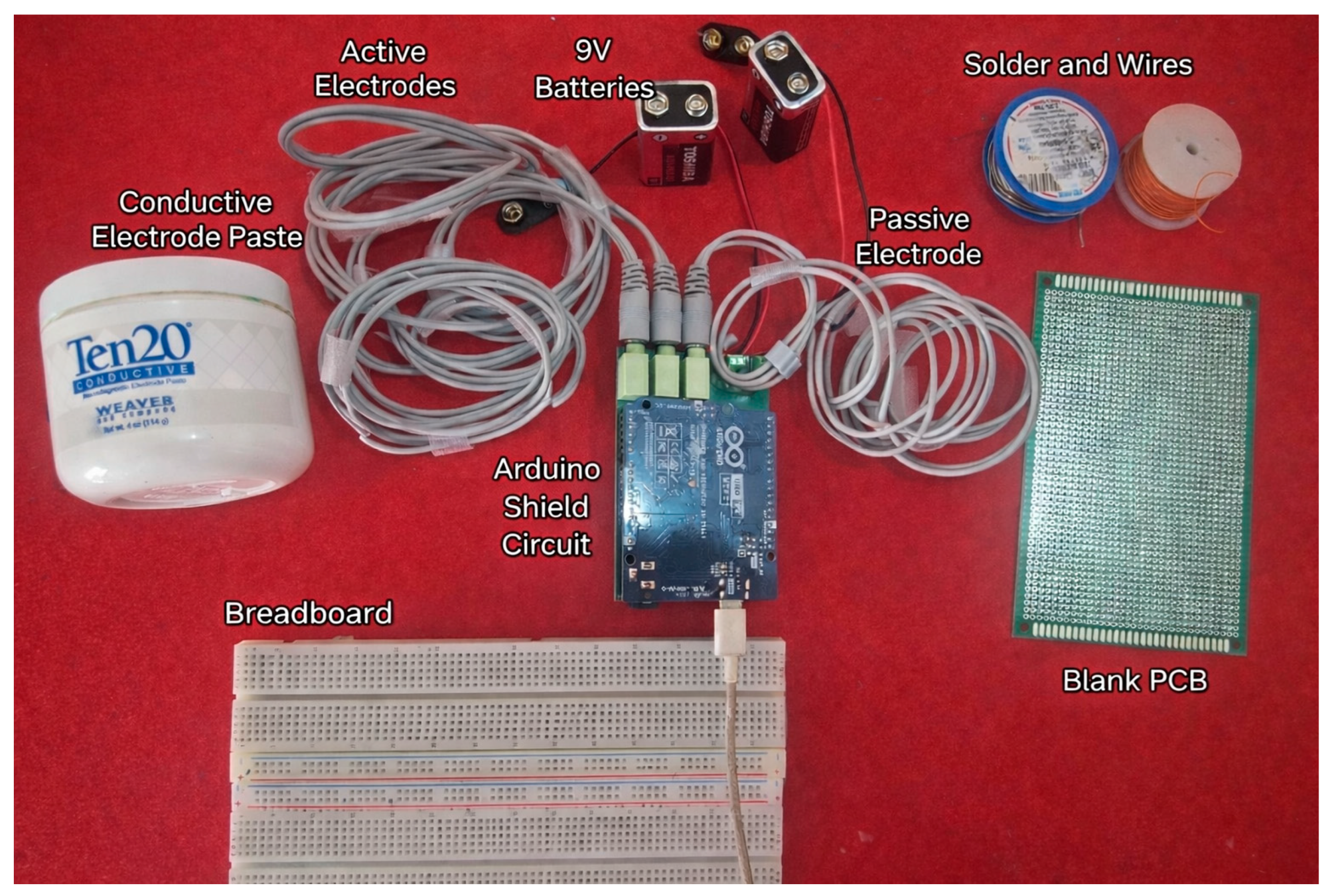
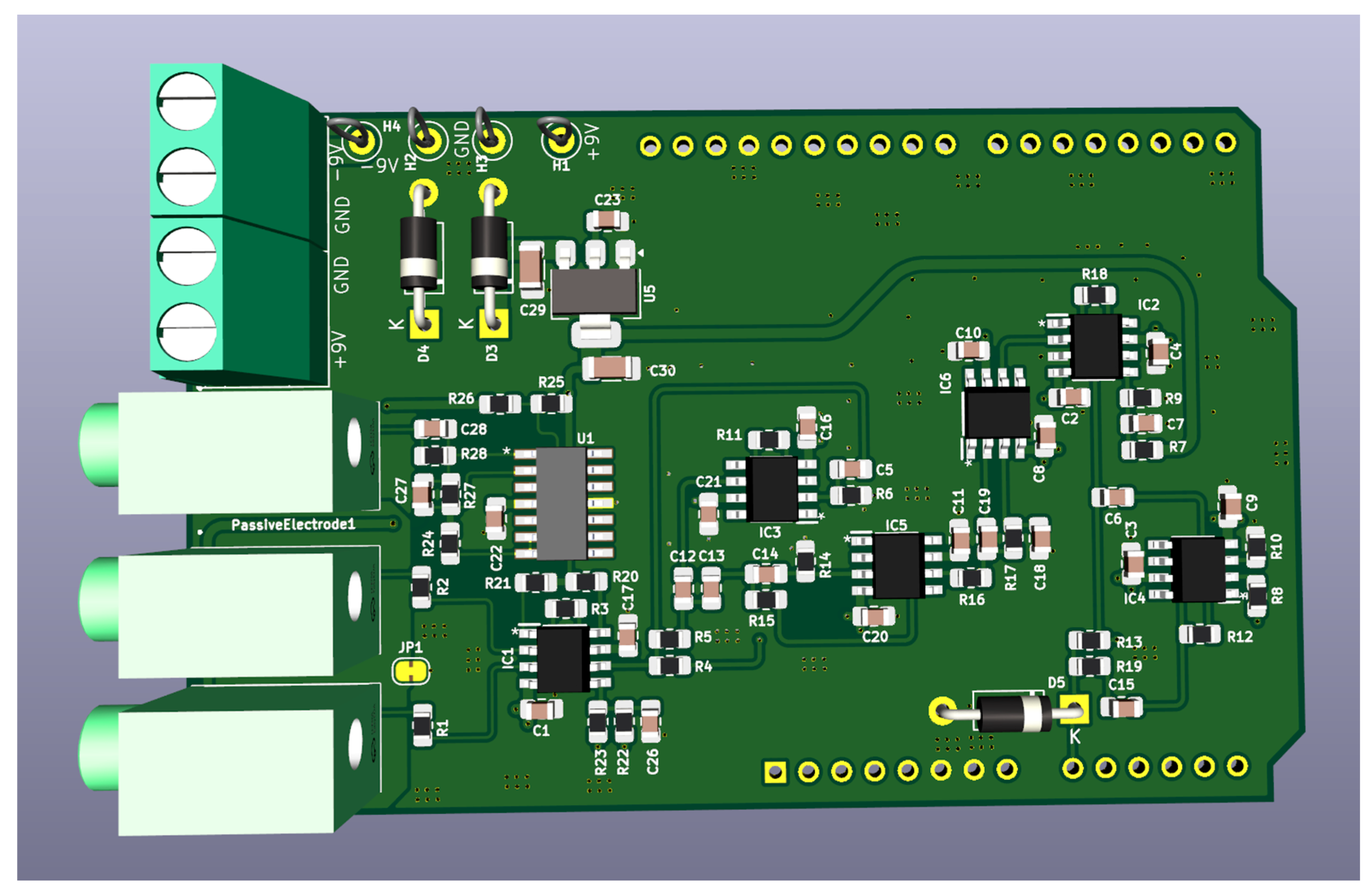
2.1. Overview of the Proposed System
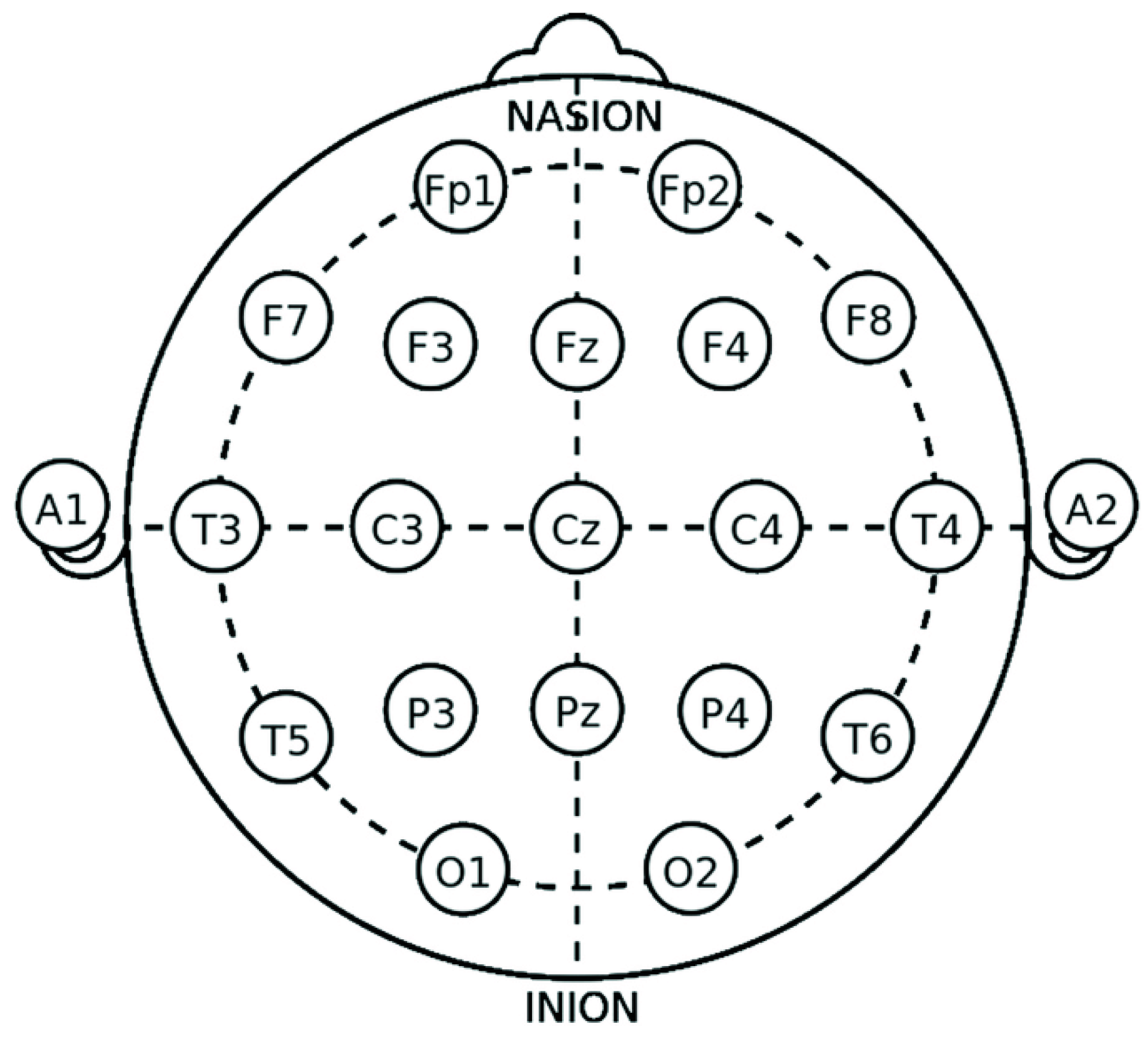
2.2. Electrodes and Input Interface
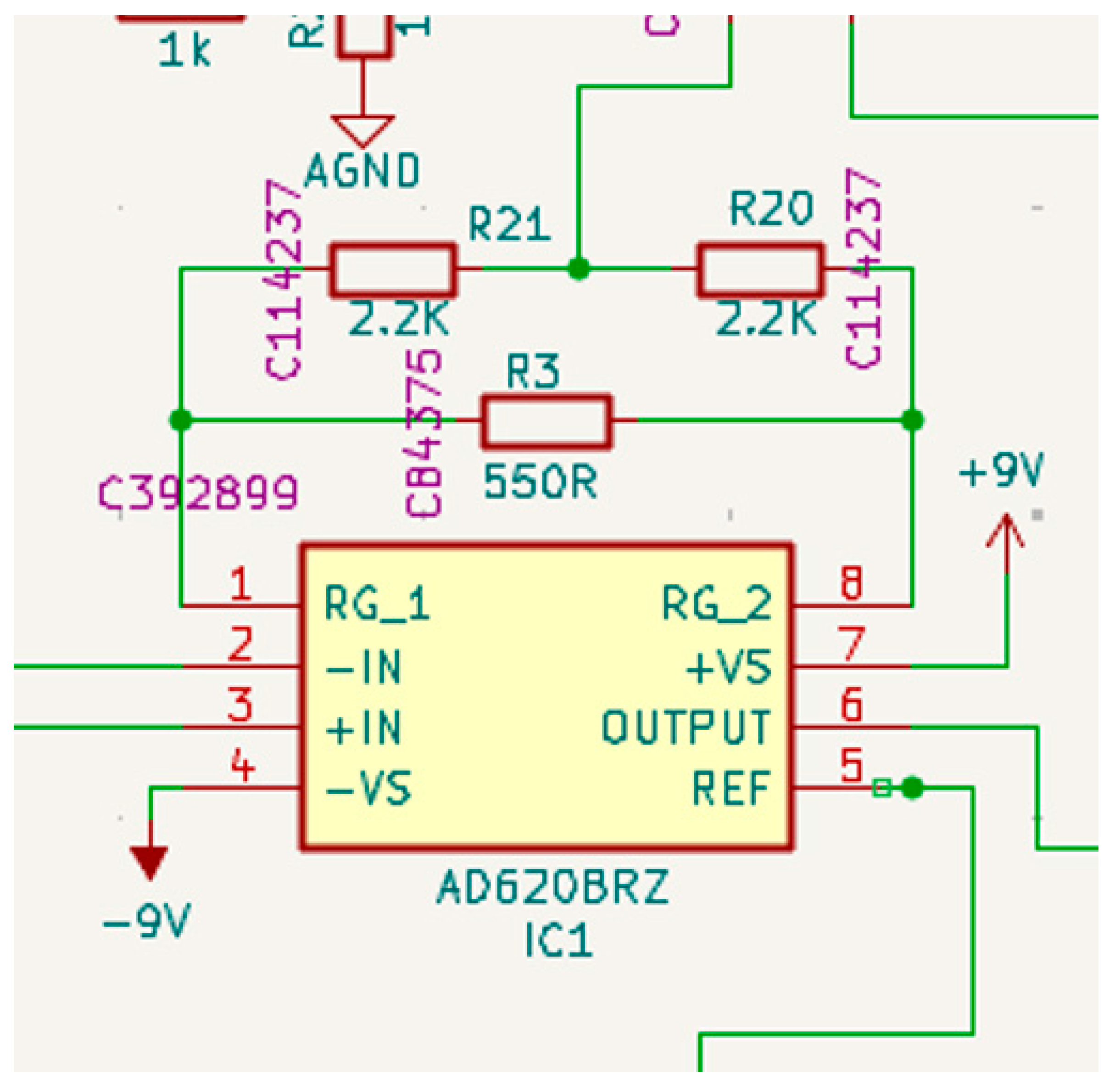
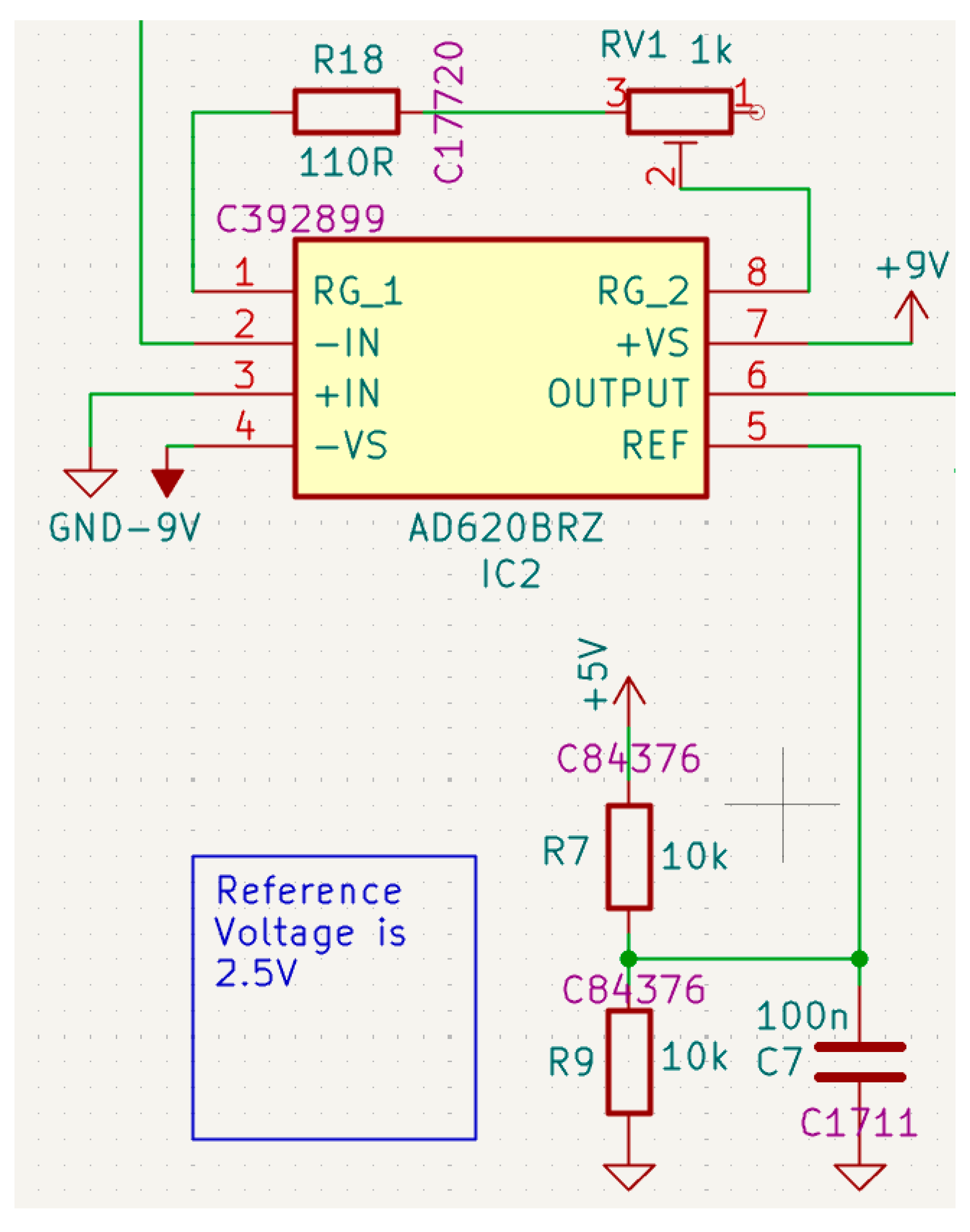
2.3. Initial Amplifier
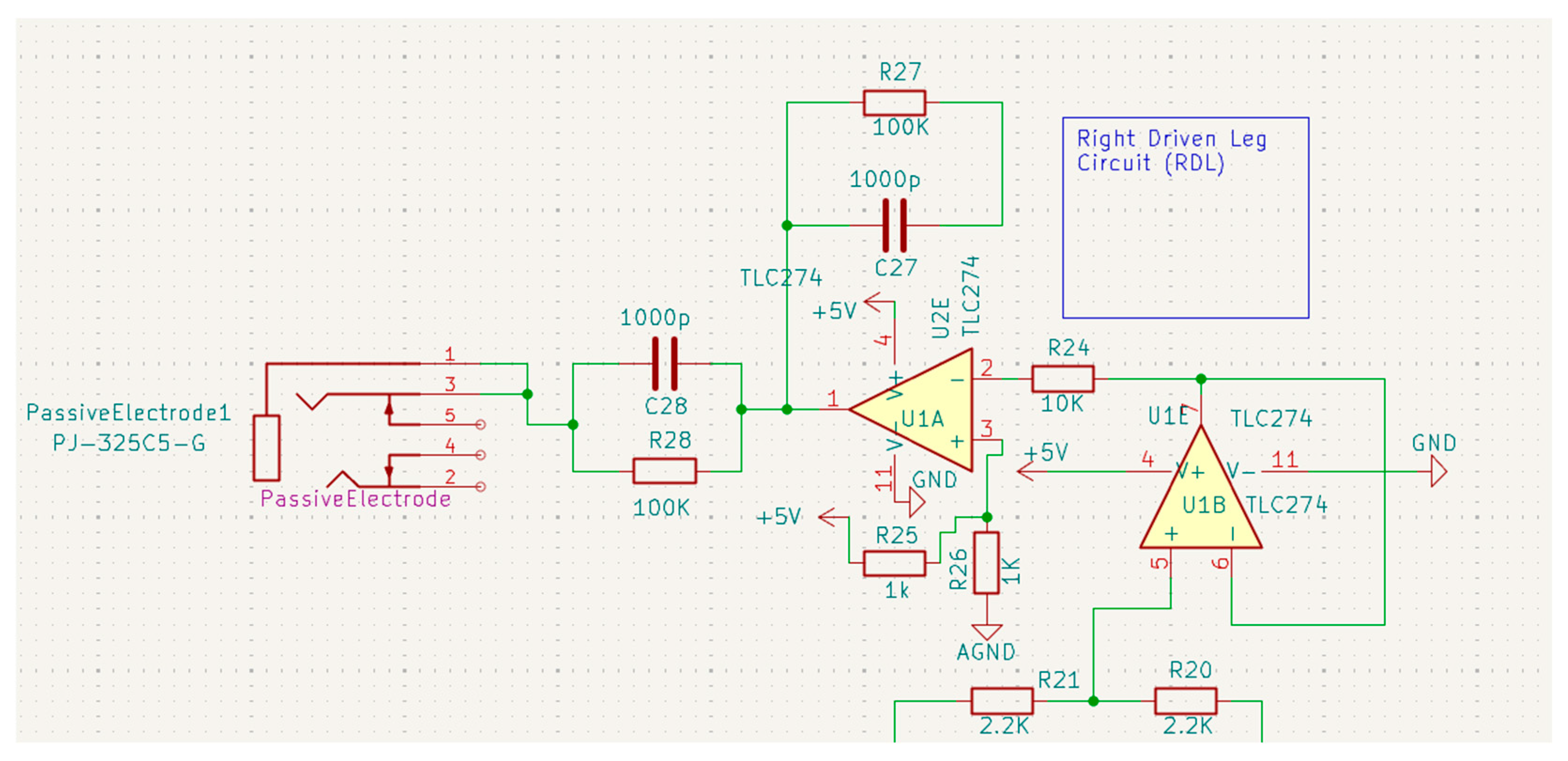
2.4. Driven Right-Leg (DRL) Circuit
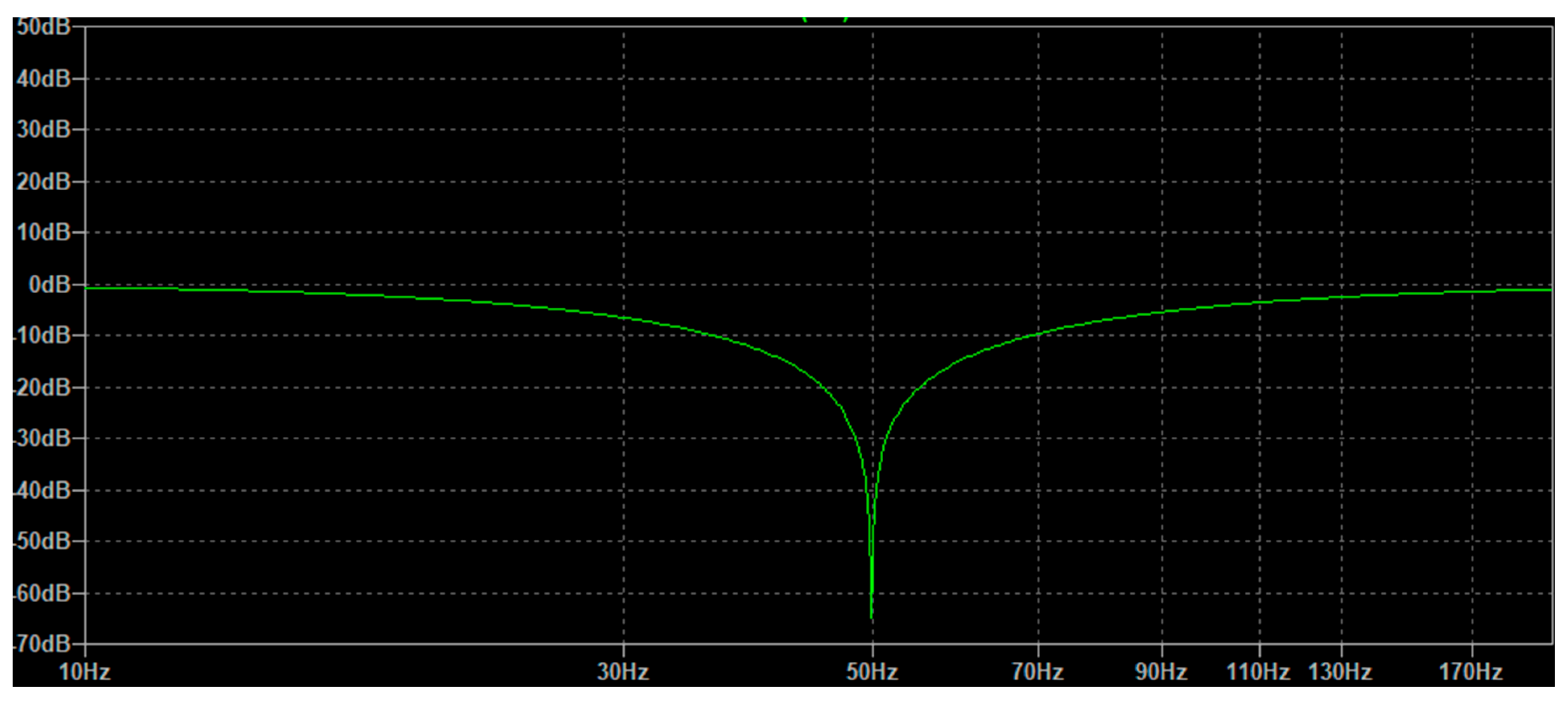
2.5. Initial Notch Filter
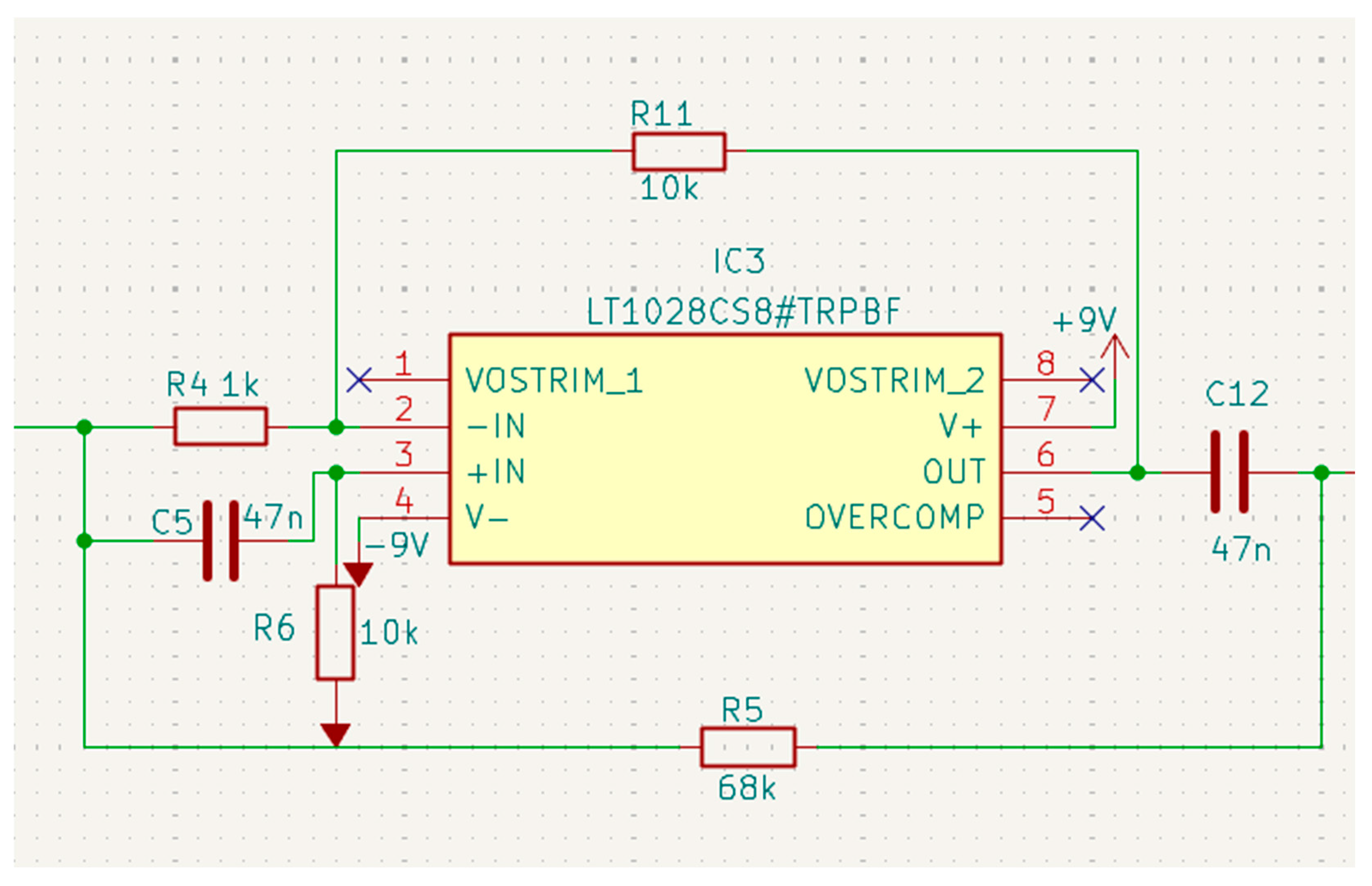
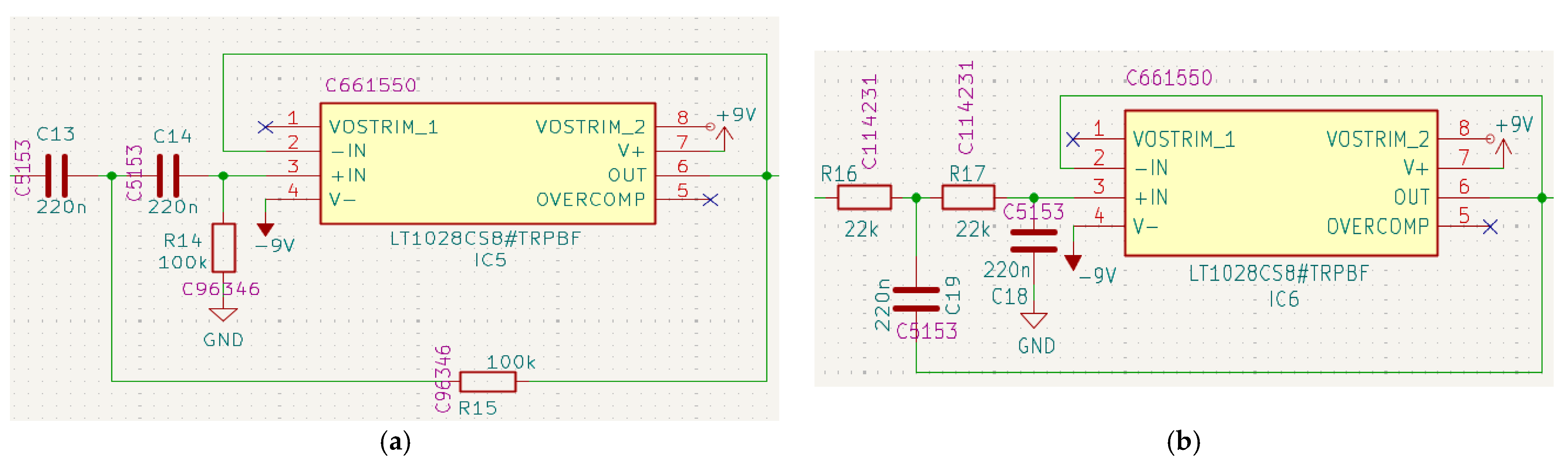
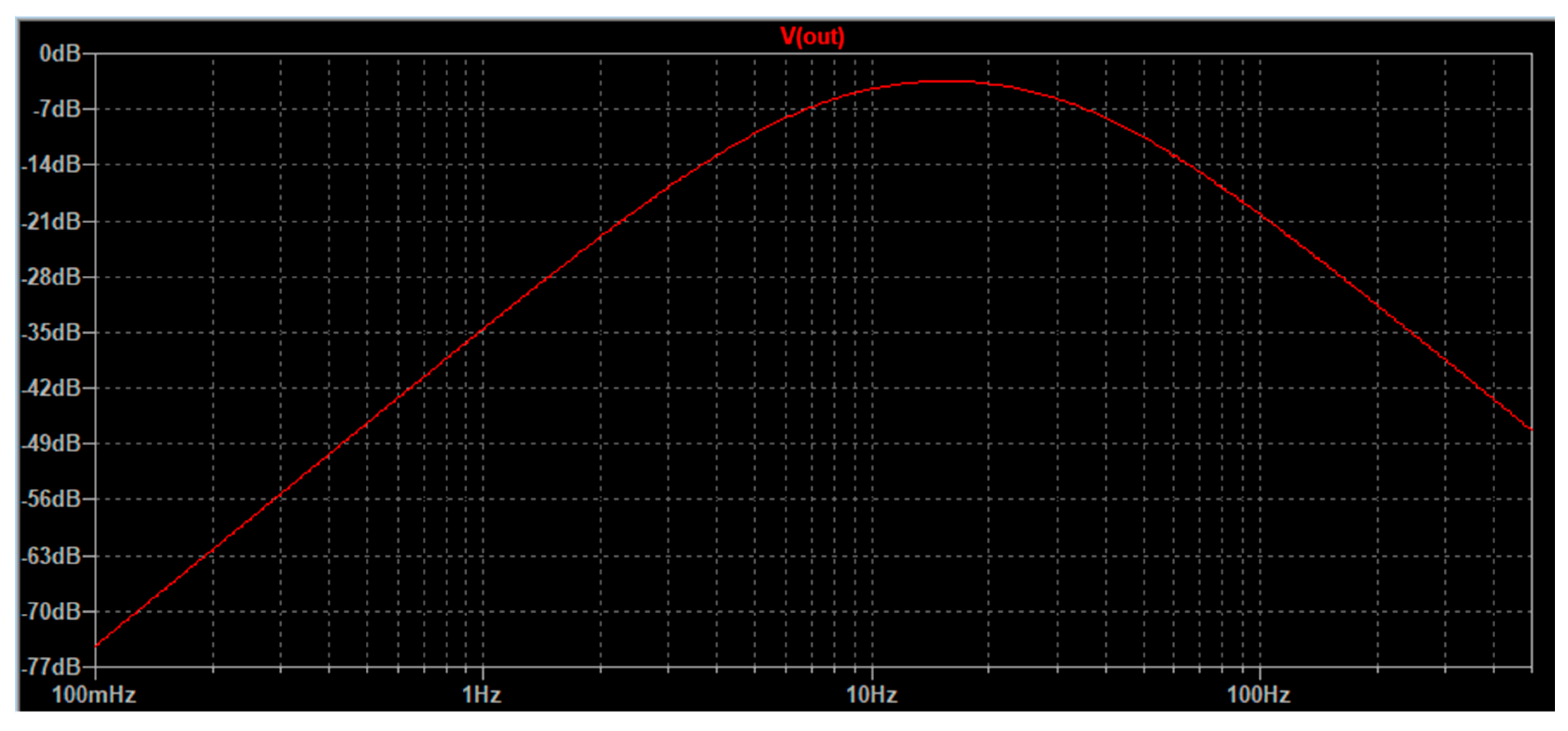
2.6. Band-Pass Filter
2.7. Final Amplification
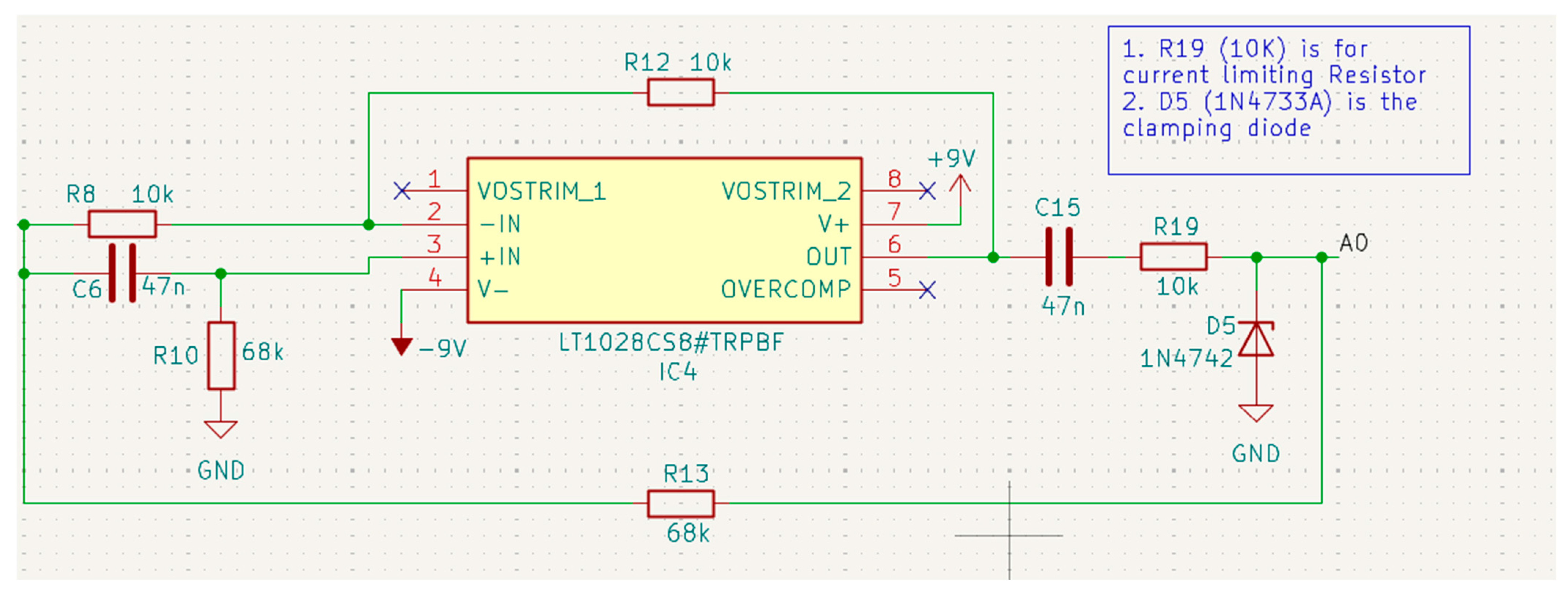
2.8. Final Notch Filter
2.9. Power Supply
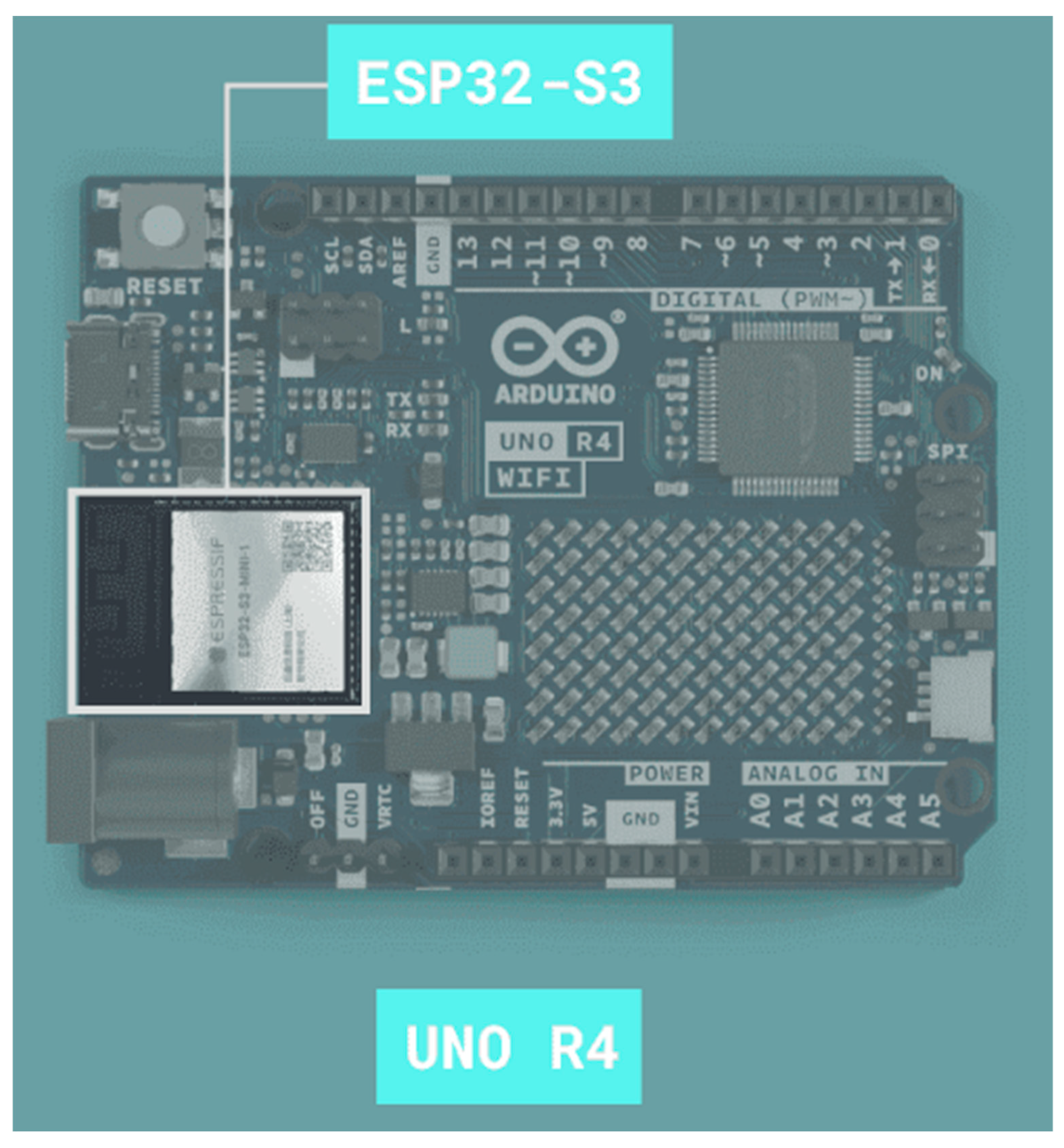
2.10. The Arduino Unit
3. System’s Operation
- (a)
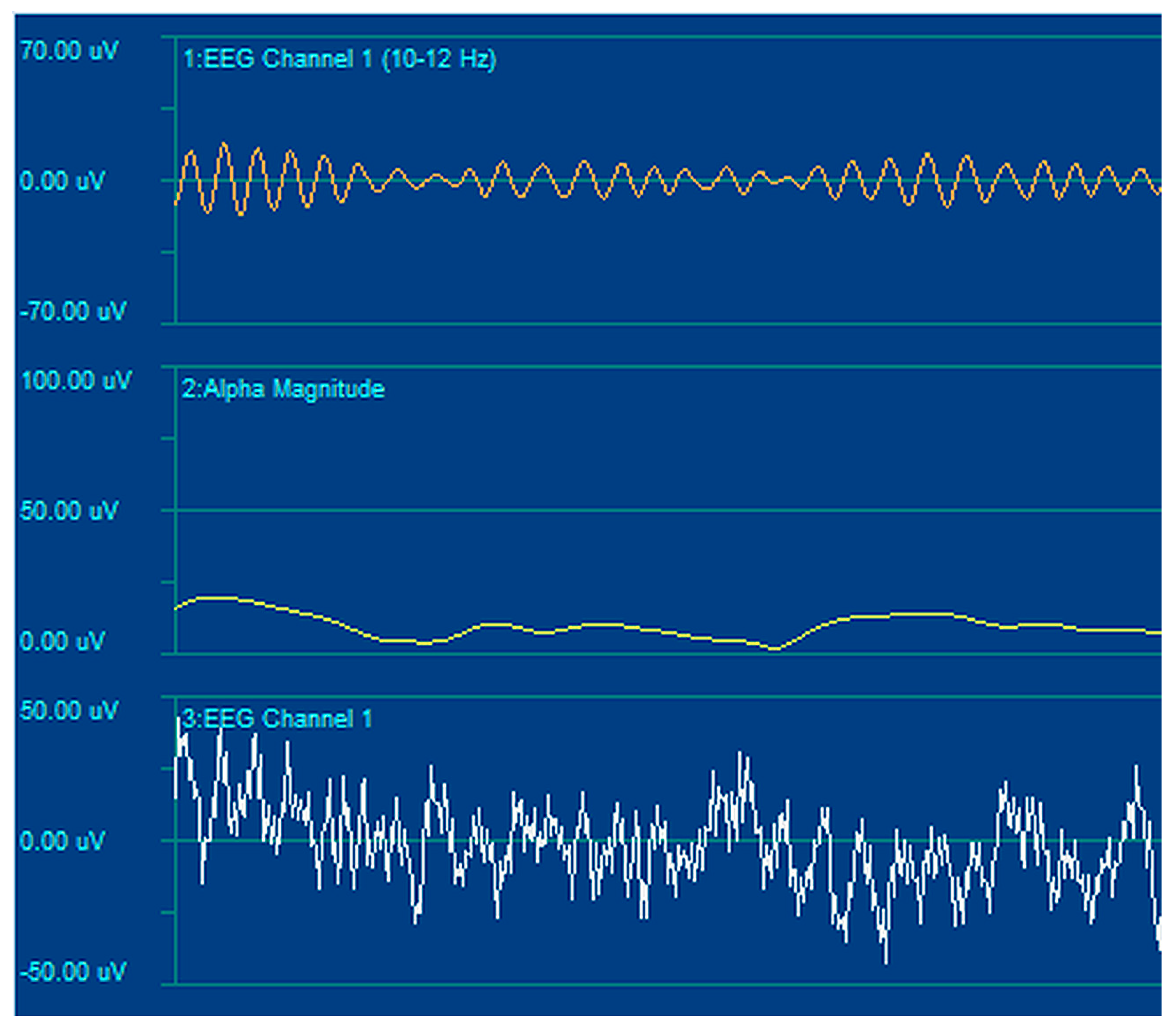
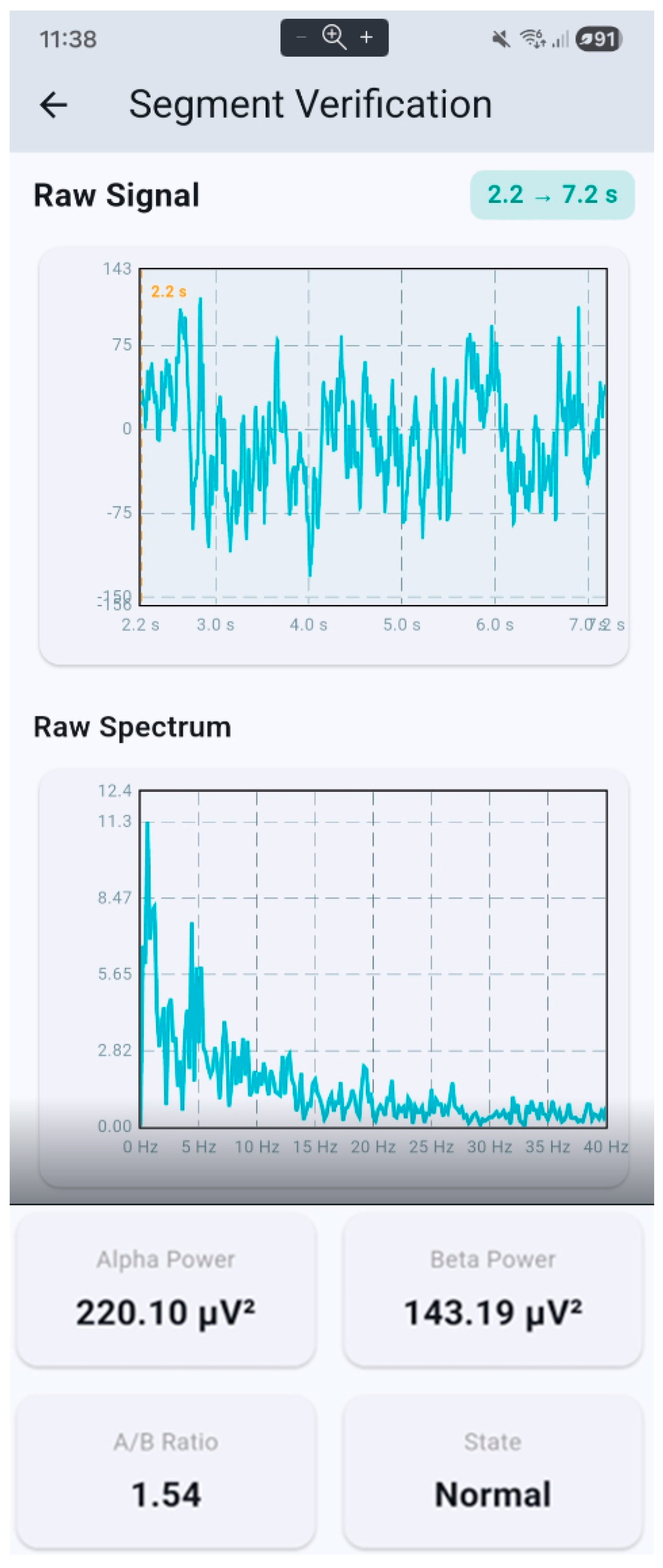
- Resting state.
- (b)
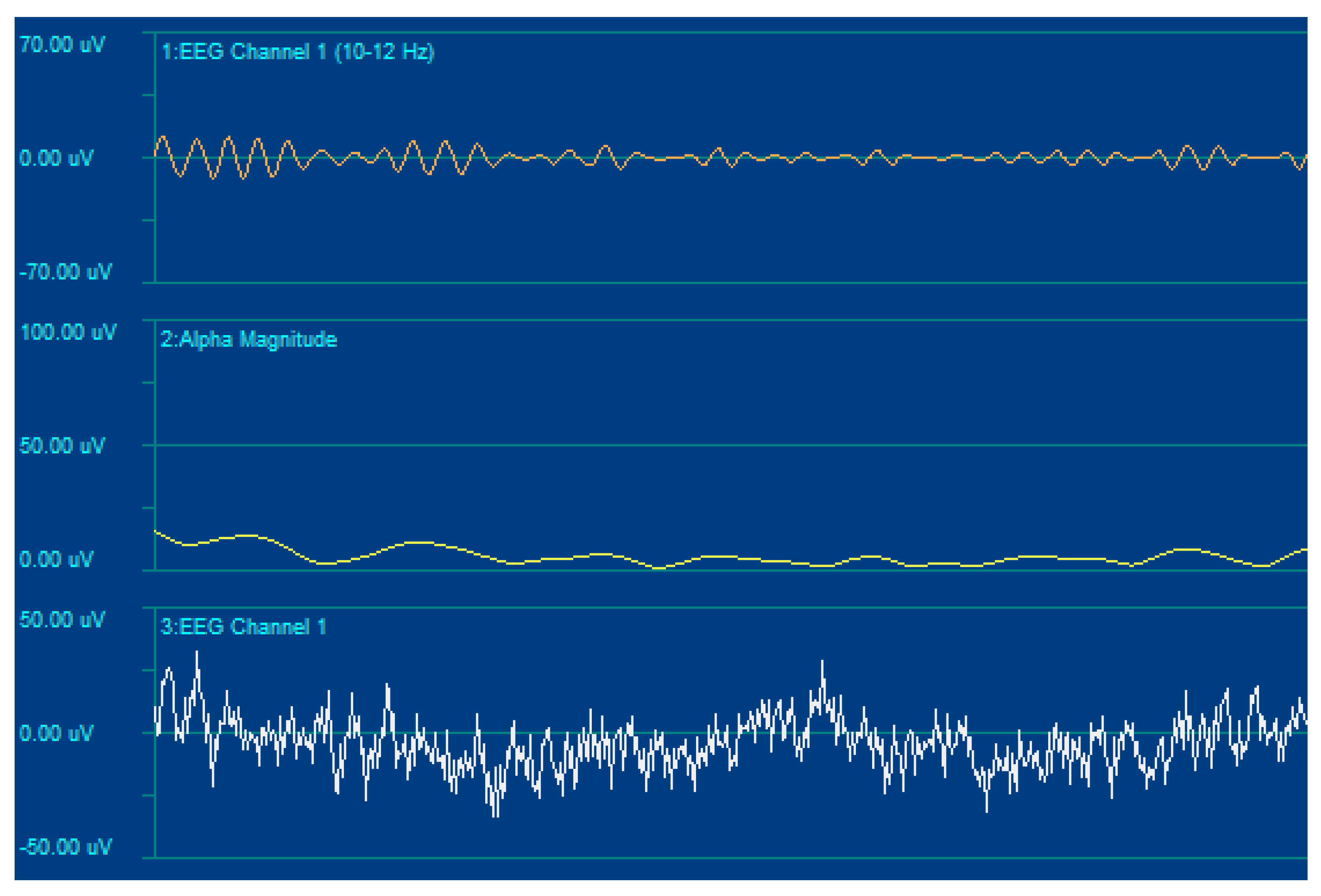
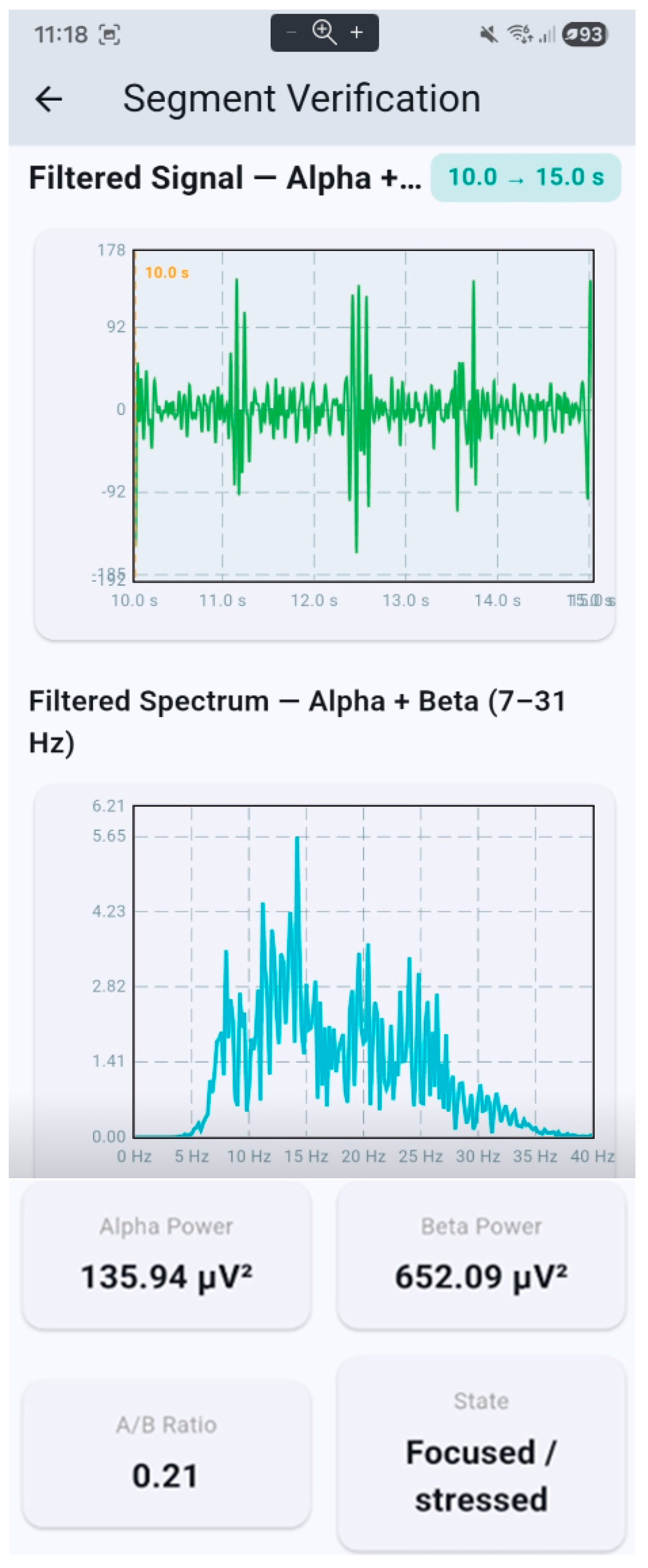
- Experimentally induced stress state (according to the Trier Mental Challenge Test—TMCT).
- (c)
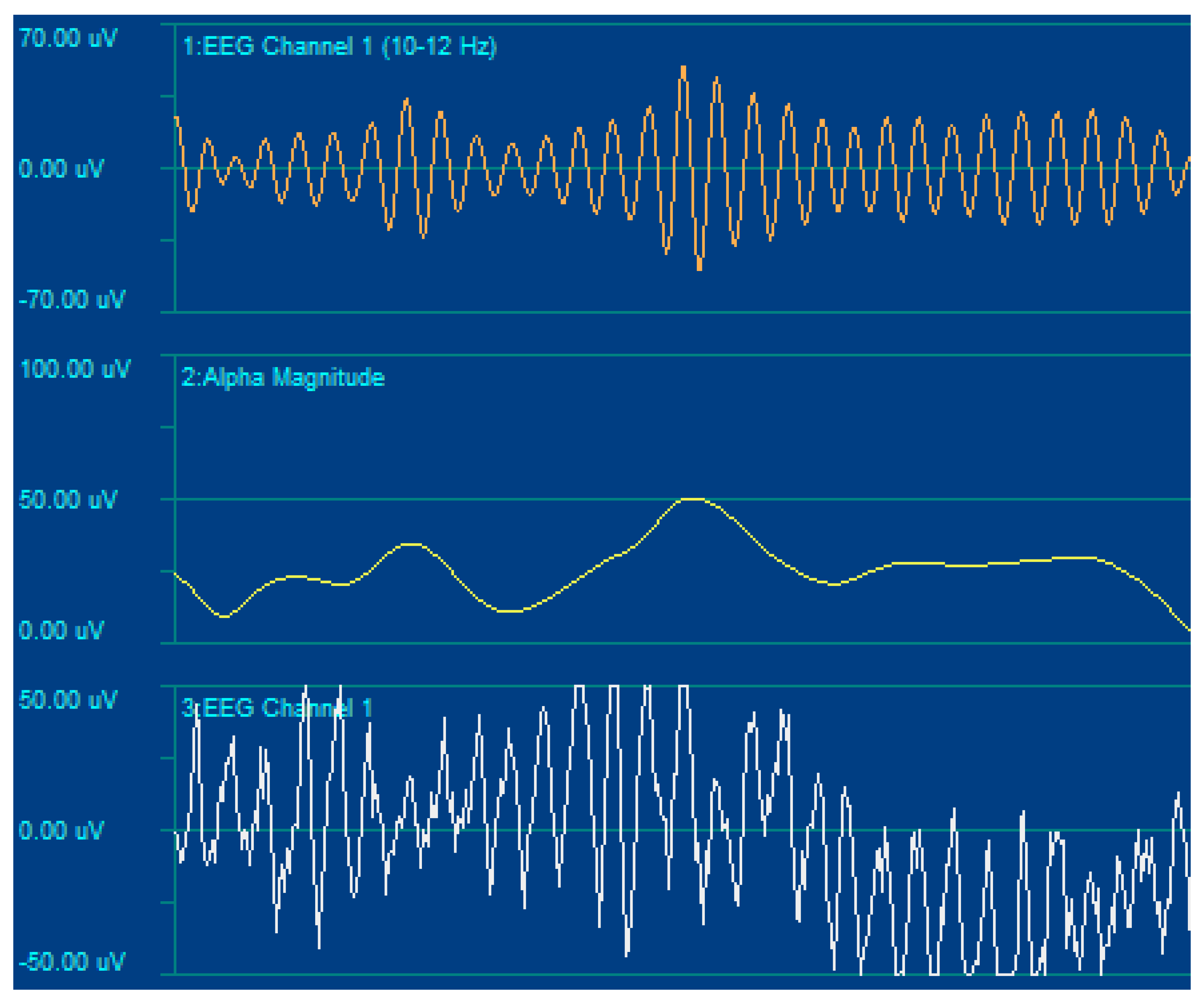
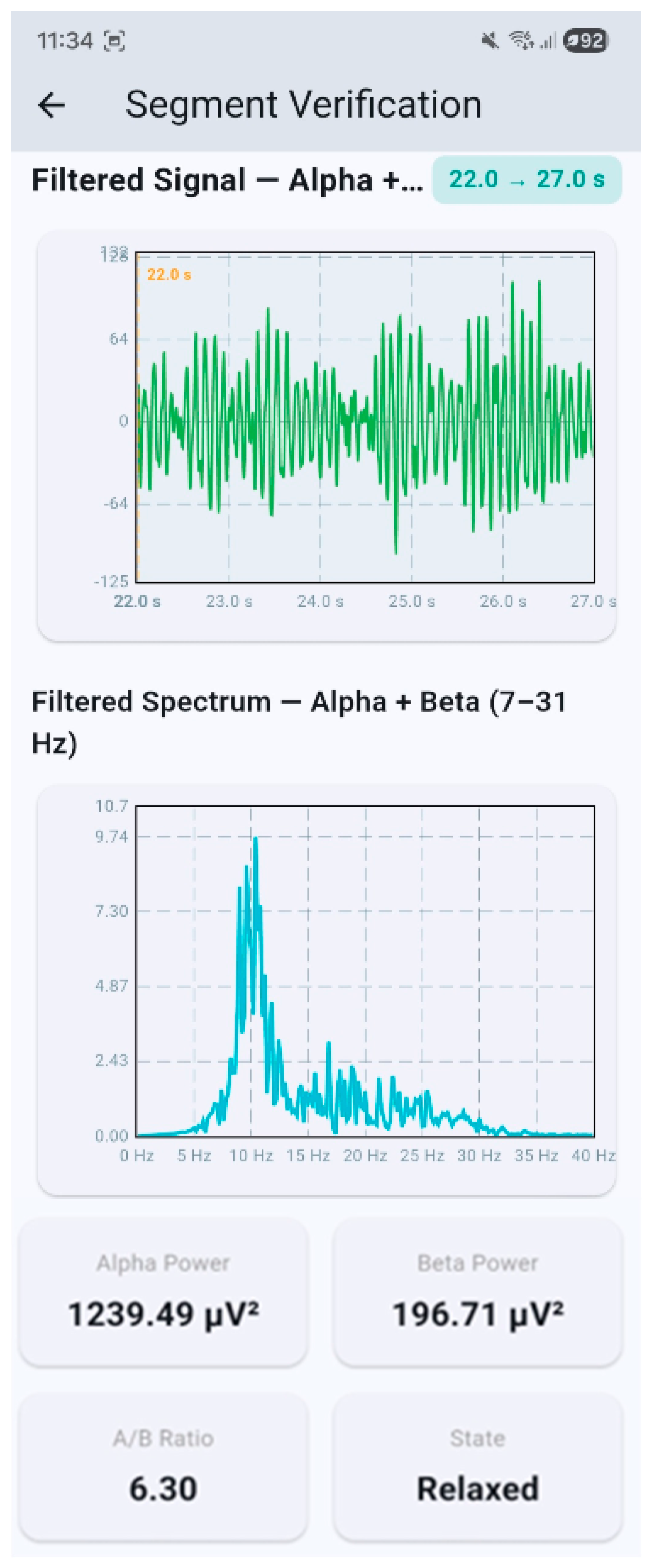
- Self-regulation/relaxation (with eyes closed) by means of a controlled breathing exercise (through controlled diaphragmatic breathing using the 4–7–8 breathing technique).
4. Discussion
5. Conclusions
Author Contributions
Funding
Informed Consent Statement
Data Availability Statement
Conflicts of Interest
Abbreviations
| CMRR | Common-Mode Rejection Ratio |
| DRL | Driven Right Leg |
| EEG | Electroencephalogram |
| EEPROM | Electrically Erasable Programmable Read-Only Memory |
| IDE | Integrated Development Environment |
| LDO | Low Drop-Out |
| PCB | Printed Circuit Board |
| STEAM | Science, Technology, Education, Arts, and Mathematics |
| TMCT | Trier Mental Challenge Test |
| TRL | Technology Readiness Level |
References
- Wilmer, M.T.; Anderson, K.; Reynolds, M. Correlates of quality of life in anxiety disorders: Review of recent research. Curr. Psychiatry Rep. 2021, 23, 77. [Google Scholar] [CrossRef] [PubMed]
- Candilis, P.J.; Mclean, R.Y.; Otto, M.W.; Manfro, G.G.; Worthington, J.J., III; Penava, S.J.; Marzol, P.C.; Pollack, M.H. Quality of life in patients with panic disorder. J. Nerv. Ment. Dis. 1999, 187, 429–434. [Google Scholar] [CrossRef] [PubMed]
- Luisi, L. Working principle of Arduino and using IT as a tool for study and research. Int. J. Control Autom. Commun. Syst. 2016, 1, 21–29. [Google Scholar] [CrossRef]
- Kondaveeti, H.K.; Kumaravelu, N.K.; Vanambathina, S.D.; Mathe, S.E.; Vappani, S. A systematic literature review on prototyping with Arduino. Comput. Sci. Rev. 2021, 40, 2–28. [Google Scholar] [CrossRef]
- Michailidis, J.; Mountzouris, P.; Triantis, P.; Pagiatakis, G.; Papadakis, A.; Dritsas, L. An Arduino-based portable weather monitoring system, remotely usable through the mobile telephony network. Electronics 2025, 14, 2330. [Google Scholar] [CrossRef]
- Akritidis, G.; Dritsas, L.; Pagiatakis, G.; Papadakis, A.; Katsiris, I.; Voudoukis, N.; Karaoulanis, D.; Uzunidis, D. Use of Arduino-Based Projects to Support Education in Electrical and Electronic Engineering. In EDULEARN-25 Conference Proceedings; IATED: Palma, Spain, 2025. [Google Scholar]
- Saptono, D.; Wahyudi, B.; Irawan, B. Design of EEG signal acquisition system using Arduino MEGA1280 and EEG Analyzer. MATEC Web Conf. 2016, 75, 04003. [Google Scholar] [CrossRef]
- Aziz, S.N.; Dewangan, N.K.; Sharma, V. Analysis of Electroencephalogram (EEG) signals. Int. J. Integr. Eng. 2018, 5, 90–101. [Google Scholar] [CrossRef]
- Rakhmatulin, I. Low-Cost Shield ardEEG to Measure EEG with Arduino Uno R4 WiFi. 2024. Available online: https://www.preprints.org/manuscript/202405.1643 (accessed on 25 February 2026).
- Correa, A.G.; Laciar, E.; Patiño, H.D.; Valentinuzzi, M.E. Artifact removal from EEG signals using adaptive filters in cascade. J. Phys. Conf. Ser. 2007, 90, 012081. [Google Scholar] [CrossRef]
- Sharma, R.; Meena, H.K. Emerging trends in EEG signal processing: A systematic review. SN Comput. Sci. 2024, 5, 415. [Google Scholar] [CrossRef]
- Mahajan, R.; Bansal, D. Real time EEG based cognitive brain computer interface for control applications via Arduino interfacing. Procedia Comput. Sci. 2017, 115, 812–820. [Google Scholar] [CrossRef]
- Kannan, R.; Ali, S.S.A.; Farah, A.; Adil, S.H.; Khan, A. Smart wearable EEG sensor. Procedia Comput. Sci. 2017, 105, 138–143. [Google Scholar] [CrossRef]
- Wen, T.Y.; Aris, S.M. Electroencephalogram (EEG) stress analysis on alpha/beta ratio and theta/beta ratio. Indones. J. Electr. Eng. Comput. Sci. 2020, 17, 175–182. [Google Scholar]
- Saeed, S.M.U.; Anwar, S.M.; Khalid, H.; Majid, M.; Bagci, U. EEG based classification of long-term stress using psychological labeling. Sensors 2020, 20, 1886. [Google Scholar] [CrossRef] [PubMed]
- Katmah, R.; Al-Shargie, F.; Tariq, U.; Babiloni, F.; Al-Mughairbi, F.; Al-Nashash, H. A review on mental stress assessment methods using EEG signals. Sensors 2021, 21, 5043. [Google Scholar] [CrossRef] [PubMed]
- Premchand, B.; Liang, L.; Phua, K.S.; Zhang, Z.; Wang, C.; Guo, L.; Ang, J.; Koh, J.; Yong, X.; Ang, K.K. Wearable EEG-based brain–computer interface for stress monitoring. NeuroSci 2024, 5, 407–428. [Google Scholar] [CrossRef] [PubMed]
- Analog Devices. AD620 (Rev. H). Available online: https://www.analog.com/media/en/technical-documentation/data-sheets/ad620.pdf (accessed on 25 February 2026).
- Linear Technology. LT1028/LT1128. Available online: https://www.alldatasheet.com/datasheet-pdf/pdf/191682/LINER/LT1028_01.html (accessed on 25 February 2026).
- Arduino UNO R4 WiFi User Manual|Arduino Documentation. Available online: https://docs.arduino.cc/tutorials/uno-r4-wifi/cheat-sheet/ (accessed on 25 February 2026).
- OpenBCI Docs. BrainBay (Compatible Third-Party Software). Available online: https://docs.openbci.com/Software/CompatibleThirdPartySoftware/BrainBay/ (accessed on 25 February 2026).
- IEC 60601-1; Medical Electrical Equipment—Part 1: General Requirements for Basic Safety and Essential Performance (Edition 3.2). International Electrotechnical Commission: Geneva, Switzerland, 2020.
- IEC 60601-1-11; Medical Electrical Equipment—Part 1-11: General Requirements for Basic Safety and Essential Performance—Collateral Standard: Requirements for Medical Electrical Equipment and Medical Electrical Systems Used in the Home Healthcare Environment (Edition 2). International Electrotechnical Commission: Geneva, Switzerland, 2015.
- EEG Motor Movement/Imagery Dataset 1.0.0. Available online: https://physionet.org/content/eegmmidb/1.0.0/S001/S001R01.edf (accessed on 1 May 2026).
- Roy, S.; Nuamah, J. Neurophysiological Dataset of Stress Resilience During Human-Computer Interaction (Version 1.0.0). PhysioNet. RRID:SCR_007345. Available online: https://physionet.org/content/neuro-stress-resilience-hci/1.0.0/EEGfNIRSeye_p1-p5/p01/ (accessed on 1 May 2026).
- EEG Motor Movement/Imagery Dataset 1.0.0. Available online: https://physionet.org/content/eegmmidb/1.0.0/S001/S001R02.edf (accessed on 1 May 2026).
- Heder, M. From NASA to EU: The evolution of the TRL scale in Public Sector Innovation. Innov. J. 2017, 22, 3. [Google Scholar]
- Mishra, P.; Kohler, M.J. Technological pedagogical content knowledge: A framework for integrating technology in teacher knowledge. Teach. Coll. Rec. 2006, 108, 1017–1054. [Google Scholar] [CrossRef]
- Armstrong, P. Bloom’s Taxonomy. Vanterbilt University Center for Teaching. Available online: https://cft.vanderbilt.edu/guides-sub-pages/blooms-taxonomy (accessed on 12 September 2023).









| Signal | Typical Frequency Range (Hz) | Typical Amplitude (μV) | Comments |
|---|---|---|---|
| Delta | 0.5–4 | 20–200 | Deep sleep, low arousal, slow cortical activity |
| Theta | 4–8 | 10 | Drowsiness, memory processes, internal attention, cognitive control |
| Alpha | 8–13 | 20–200 | Relaxed wakefulness, closed-eyes resting state, reduced visual input, cortical idling/inhibition |
| Beta | 13–30 | 5–10 | Active attention, alertness, cognitive effort, sensorimotor processing, task engagement |
| Gamma | >30 | 5–10 | Higher cognitive processing, perceptual binding, local cortical processing |
| Parameter | Value |
|---|---|
| Processor | RA4M1 |
| Frequency | 48 MHz |
| Analog inputs/outputs | 6 |
| Digital inputs/outputs | 14 |
| Memory size | 256 KB flash + 1 KB EEPROM + 32 KB SRAM |
| Voltage | 5 V |
| Dimensions | 69 × 54 mm |
| Weight | 23 g |
| Individual’s Condition | Alpha Signal Power (μV2) | Beta Signal Power (μV2) | Alpha/Beta Power Ratio |
|---|---|---|---|
| Resting baseline | 220.10 | 143.19 | 1.54 |
| Experimentally induced stress | 135.94 | 652.09 | 0.21 |
| Relaxation/eyes closed | 1239.49 | 196.71 | 6.30 |
| Component | Estimated Cost (EUR) |
|---|---|
| Active electrodes (×2) | 25.00 |
| Passive electrode (×1) | 5.00 |
| AD620BRZ amplifiers (×2) | 20.00 |
| LT1028CS8 amplifiers (×4) | 70.00 |
| DRL | 10.00 |
| Arduino Uno R4 (×1) | 40.00 |
| Resistors (×30) | 5.00 |
| Capacitors (×20) | 20.00 |
| Jumpers, cables, etc. | 10.00 |
| PCB or breadboard | 10.00 |
| Gel (for the electrodes) | 15.00 |
| TOTAL COST | 230.00 |
| Component | Voltage (V) | Current (mA) per Component | Quantity | Current (mA) 1 | Power (mW) 2 |
|---|---|---|---|---|---|
| Active electrodes | 5 | 0.4–0.8 | 2 | 0.8–1.6 | 4.0–8.0 |
| AD620BRZ amplifiers | 18 | 1.3–1.5 | 2 | 2.6–3.0 | 46.8–54.0 |
| LT1028CS8 amplifiers | 18 | 8.5–11.0 | 4 | 34.0–44.0 | 612–792 |
| DRL (TLC274) | 5 | 2.8–6.4 | 2 | 5.6–12.8 | 28.0–64.0 |
| Voltage divider (±9 V) | 18 | 9.0 | 1 | 9.0 | 162 |
| Voltage divider (5 V) | 5 | 2.5 | 1 | 2.5 | 12.5 |
| REF divider | 5 | 0.3 | 1 | 0.3 | 1.5 |
| Voltage regulator | 5 | 5.0–10.0 | 1 | 5.0–10.0 | 25.0–50.0 |
| Arduino Uno (WiFi off) | 5 | 70–120 | 1 | 70–120 | 350–600 |
| Arduino Uno (WiFi on) | 5 | 110–175 | 1 | 110–175 | 550–875 |
| TOTAL (WiFi off) | - | - | - | 129.8–203.2 | 1241.8–1744 |
| TOTAL (WiFi on) | - | - | - | 169.8–258.2 | 1441.8–2019 |
Disclaimer/Publisher’s Note: The statements, opinions and data contained in all publications are solely those of the individual author(s) and contributor(s) and not of MDPI and/or the editor(s). MDPI and/or the editor(s) disclaim responsibility for any injury to people or property resulting from any ideas, methods, instructions or products referred to in the content. |
© 2026 by the authors. Licensee MDPI, Basel, Switzerland. This article is an open access article distributed under the terms and conditions of the Creative Commons Attribution (CC BY) license.
Share and Cite
Baltzis, S.; Pagiatakis, G.; Voudoukis, N.; Papadakis, A.; Dritsas, L.; Uzunidis, D. An Arduino-Based, Portable Prototype for the Recording and Analysis of EEG Signals to Support Self-Detection and Self-Monitoring of Stress. Sensors 2026, 26, 3410. https://doi.org/10.3390/s26113410
Baltzis S, Pagiatakis G, Voudoukis N, Papadakis A, Dritsas L, Uzunidis D. An Arduino-Based, Portable Prototype for the Recording and Analysis of EEG Signals to Support Self-Detection and Self-Monitoring of Stress. Sensors. 2026; 26(11):3410. https://doi.org/10.3390/s26113410
Chicago/Turabian StyleBaltzis, Stamatios, Gerasimos Pagiatakis, Nikolaos Voudoukis, Andreas Papadakis, Leonidas Dritsas, and Dimitris Uzunidis. 2026. "An Arduino-Based, Portable Prototype for the Recording and Analysis of EEG Signals to Support Self-Detection and Self-Monitoring of Stress" Sensors 26, no. 11: 3410. https://doi.org/10.3390/s26113410
APA StyleBaltzis, S., Pagiatakis, G., Voudoukis, N., Papadakis, A., Dritsas, L., & Uzunidis, D. (2026). An Arduino-Based, Portable Prototype for the Recording and Analysis of EEG Signals to Support Self-Detection and Self-Monitoring of Stress. Sensors, 26(11), 3410. https://doi.org/10.3390/s26113410