Occupancy-Aware Neural Distance Perception for Manipulator Obstacle Avoidance in the Tokamak Vacuum Vessel

Abstract
1. Introduction
Contributions
- A novel Occupancy-Aware Neural Distance Perception (ONDP) framework specifically tailored for tokamak vacuum vessels. Targeting this large-scale complex scenario, we propose, for the first time, a high-precision distance prediction method capable of providing continuous, sensor-less geometric representations. This approach addresses the limitations of low accuracy and high latency in traditional collision detection methods, laying a solid foundation for high-precision and efficient motion planning in such environments.
- A Physically-Stratified Sampling strategy derived from Finite Element Analysis (FEA). Unlike heuristic methods, this strategy explicitly compensates for the heavy-duty manipulator’s elasticity by enforcing dense supervision in safety-critical deformation buffers, ensuring strictly bounded prediction errors.
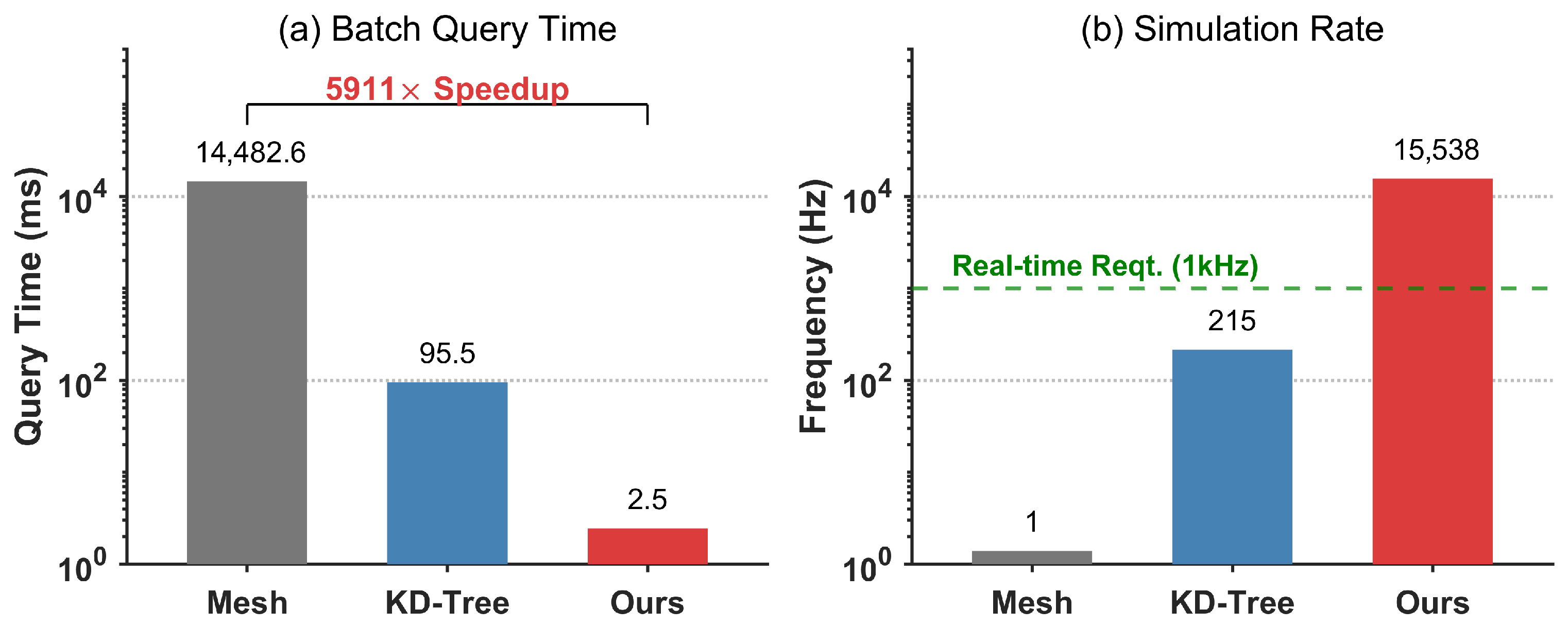
- A continuous collision checking mechanism validated by simulation benchmarks. The proposed method achieves a query frequency exceeding 15 kHz, demonstrating a 5911× acceleration over mesh-based methods to support high-precision, real-time trajectory optimization.
2. Methodology
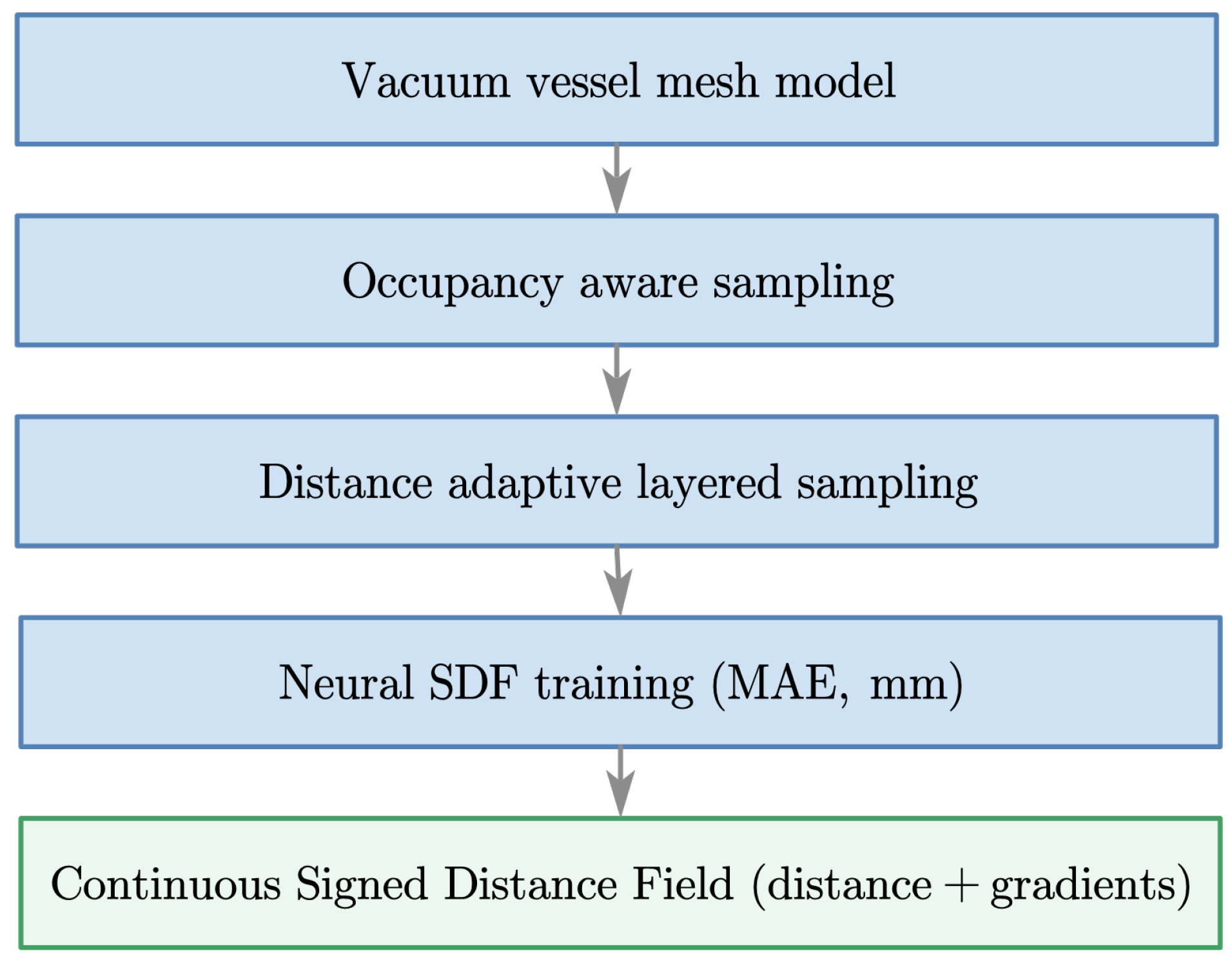
2.1. Overall Framework
- Geometry preprocessing. The vacuum-vessel mesh is validated for completeness, and surface watertightness is enforced. For correct signed-distance computation throughout the workspace, outward-facing normals are oriented away from the cavity centroid on the outer surface, while inward-facing normals are oriented toward the centroid on the inner surface. This guarantees consistent sign conventions for the distance field.
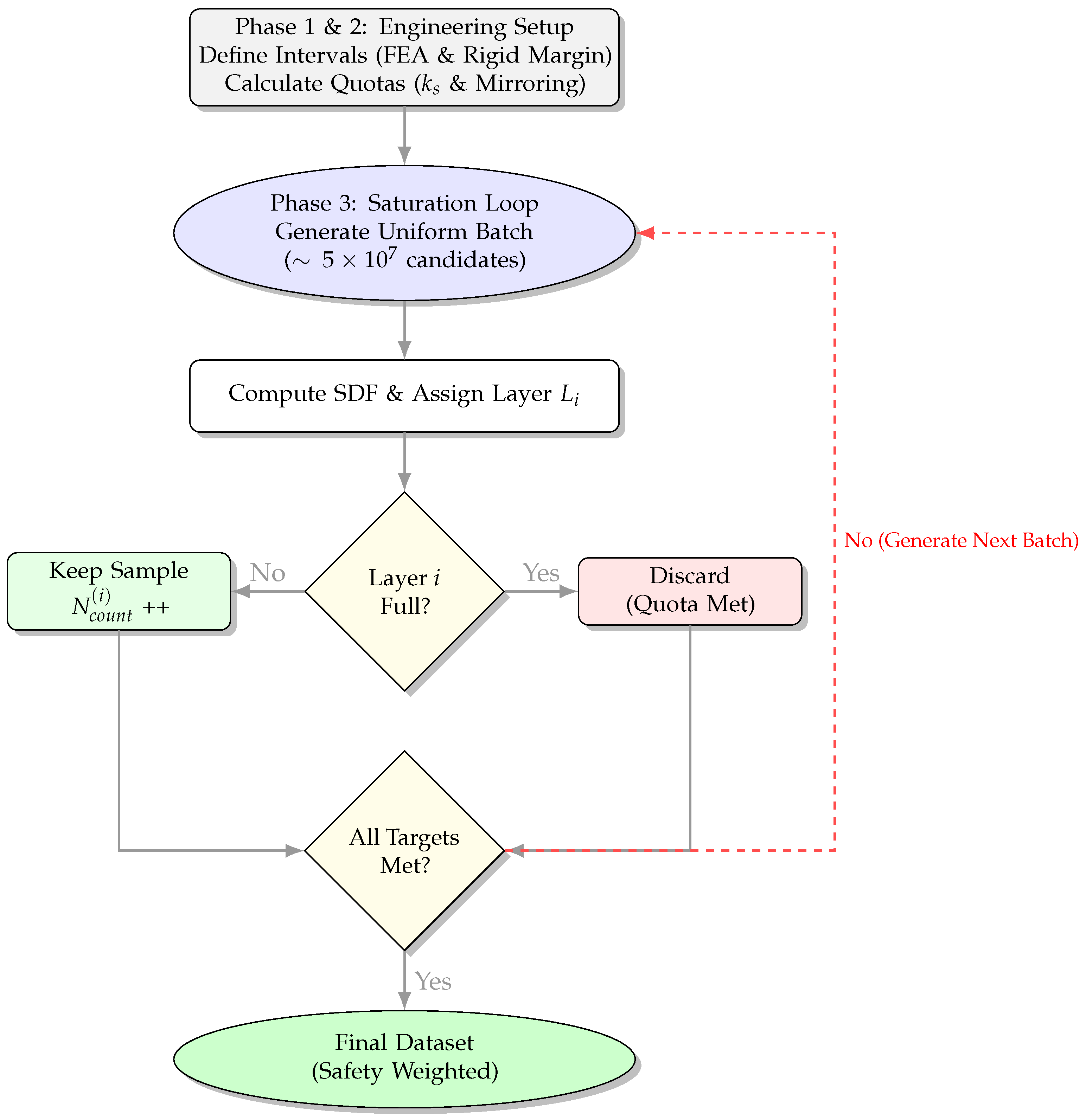
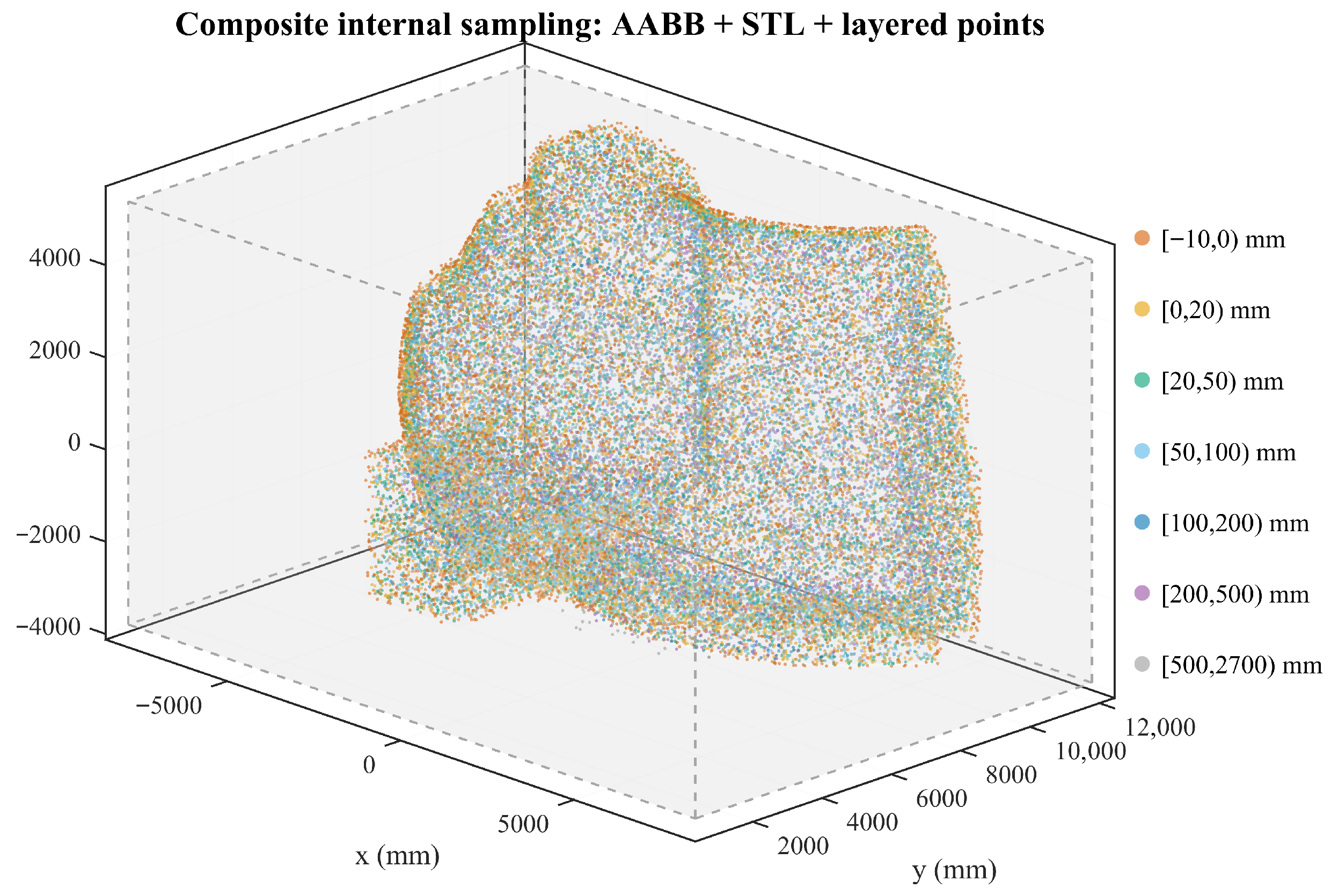
- Occupancy-Aware and Physically-Stratified Sampling.Candidate samples are generated both in the cavity and within a thin in-wall shell. An occupancy test combining normal-based and winding-number checks discards invalid points.A Physically-Stratified Sampling strategy allocates denser samples near the wall and sparser samples toward the interior of the vessel, providing geometry-aware supervision.
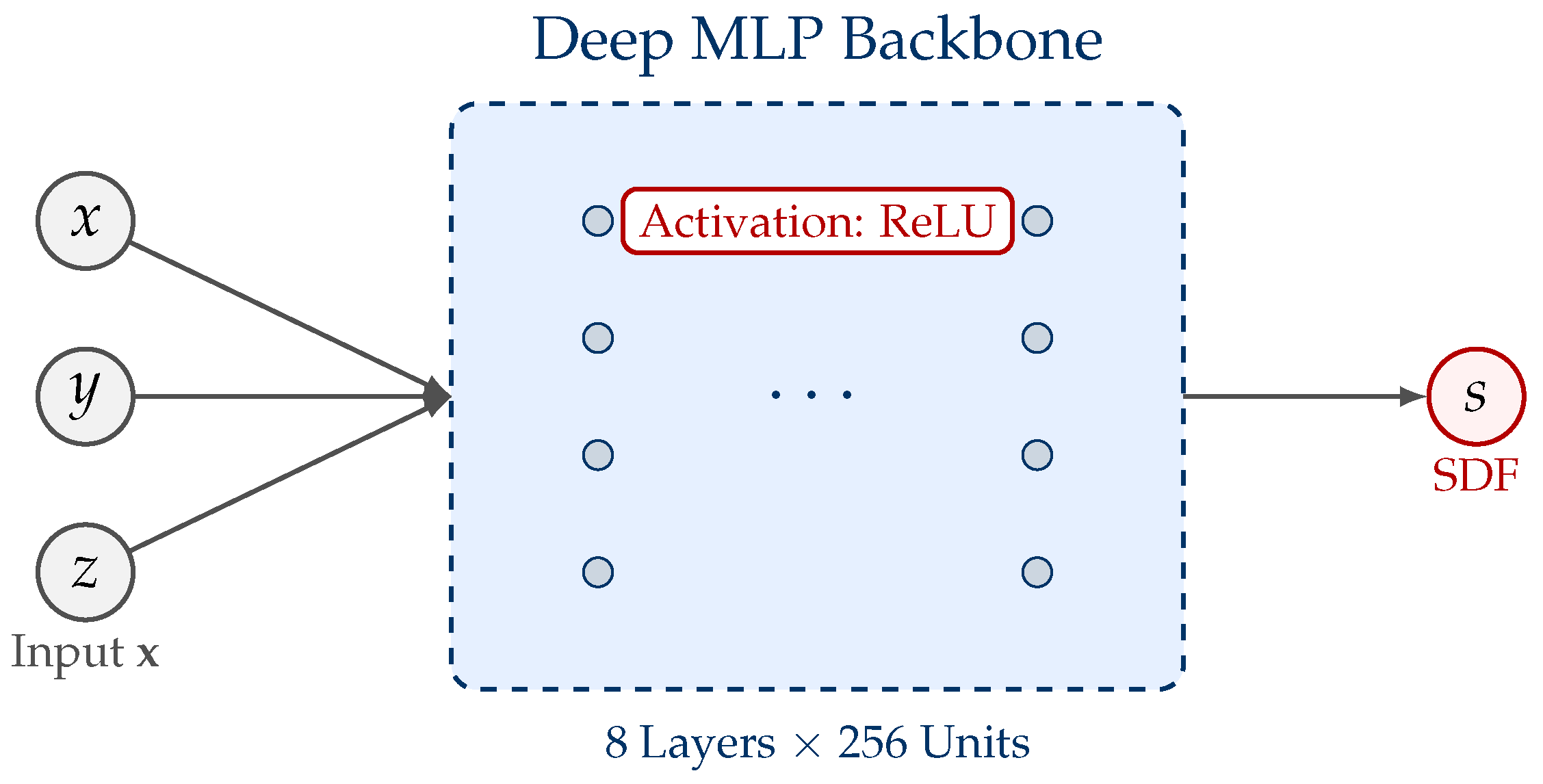
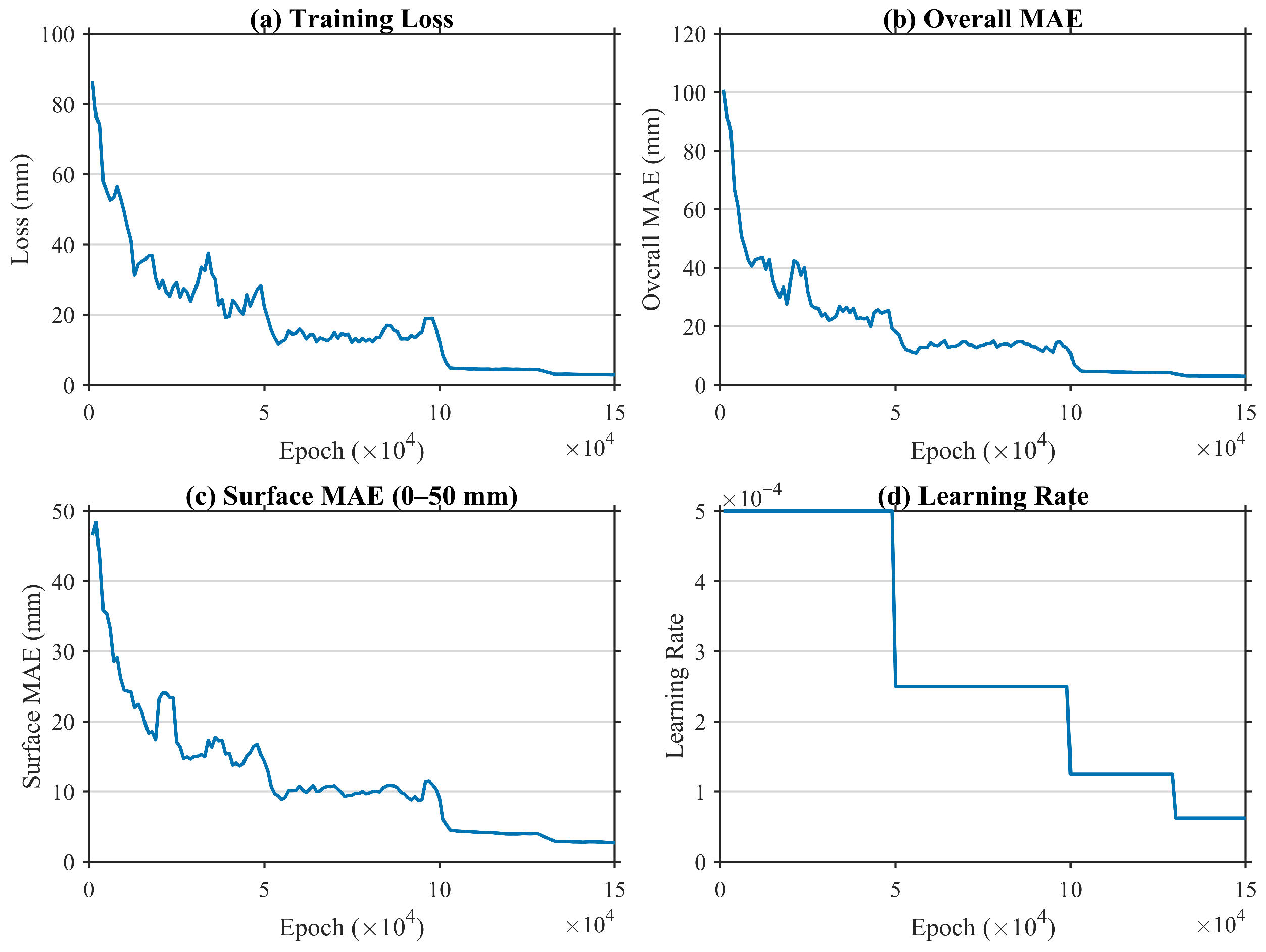
- Neural SDF learning. A multilayer perceptron maps 3D coordinates to metric signed-distance values. The model is trained using a mean absolute error loss without additional weighting or regularization, preserving metric consistency across the full workspace.
2.2. SDF Representation
- Continuity: enables distance evaluation at arbitrary 3D locations without voxel discretization artifacts.
- Differentiability: provides smooth gradients yielding consistent surface normals for geometry-aware computation.
- Compactness: encodes geometry within neural network parameters rather than dense volumetric grids.
- Generality: represents highly non-convex, tunnel-like vessel interiors with narrow clearances.
2.3. Physically-Stratified Sampling Strategy
- 1.
- Engineering-Driven Discretization
- Rigid Safety Margin (0–20 ): This layer represents the absolute safety buffer. We strictly enforce high sampling density here to minimize prediction error. This ensures that the prediction deviation remains significantly smaller than the safety margin (), guaranteeing collision-free operation even under uncertainty.
- Deformation Buffer (20–50 ): This layer covers the 30 potential positional drift caused by manipulator elasticity, ensuring the network perceives obstacles before they breach the rigid margin.
- 2.
- Safety-Factor Weighted Quota
- 3.
- Saturation Rejection Sampling
2.4. Neural Network and Training Objective
3. Experiments and Results
3.1. Implementation Details and Training Dynamics
3.2. Model Evaluation and Discussion
- (1)
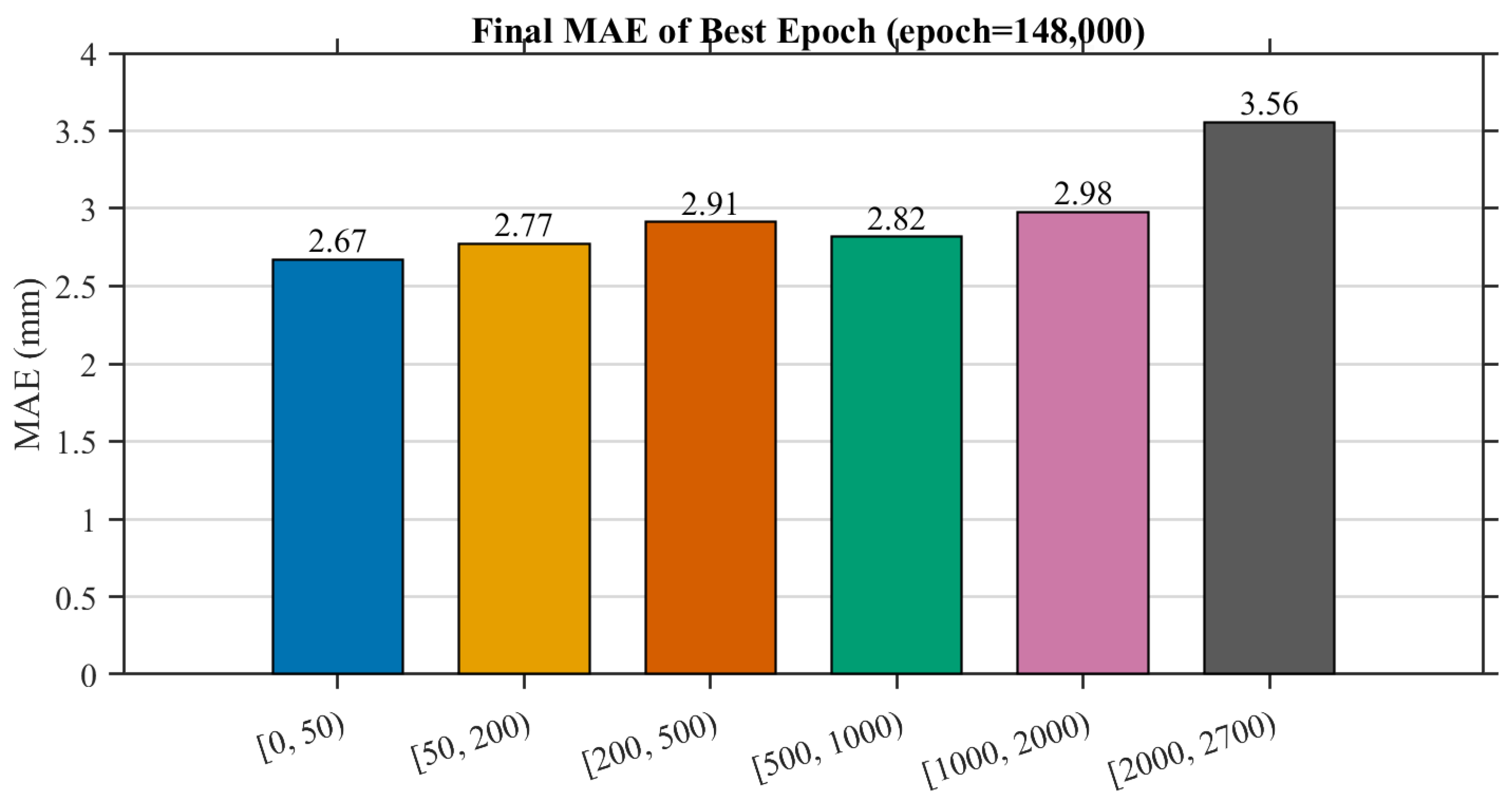
- Prediction Accuracy
- (2)
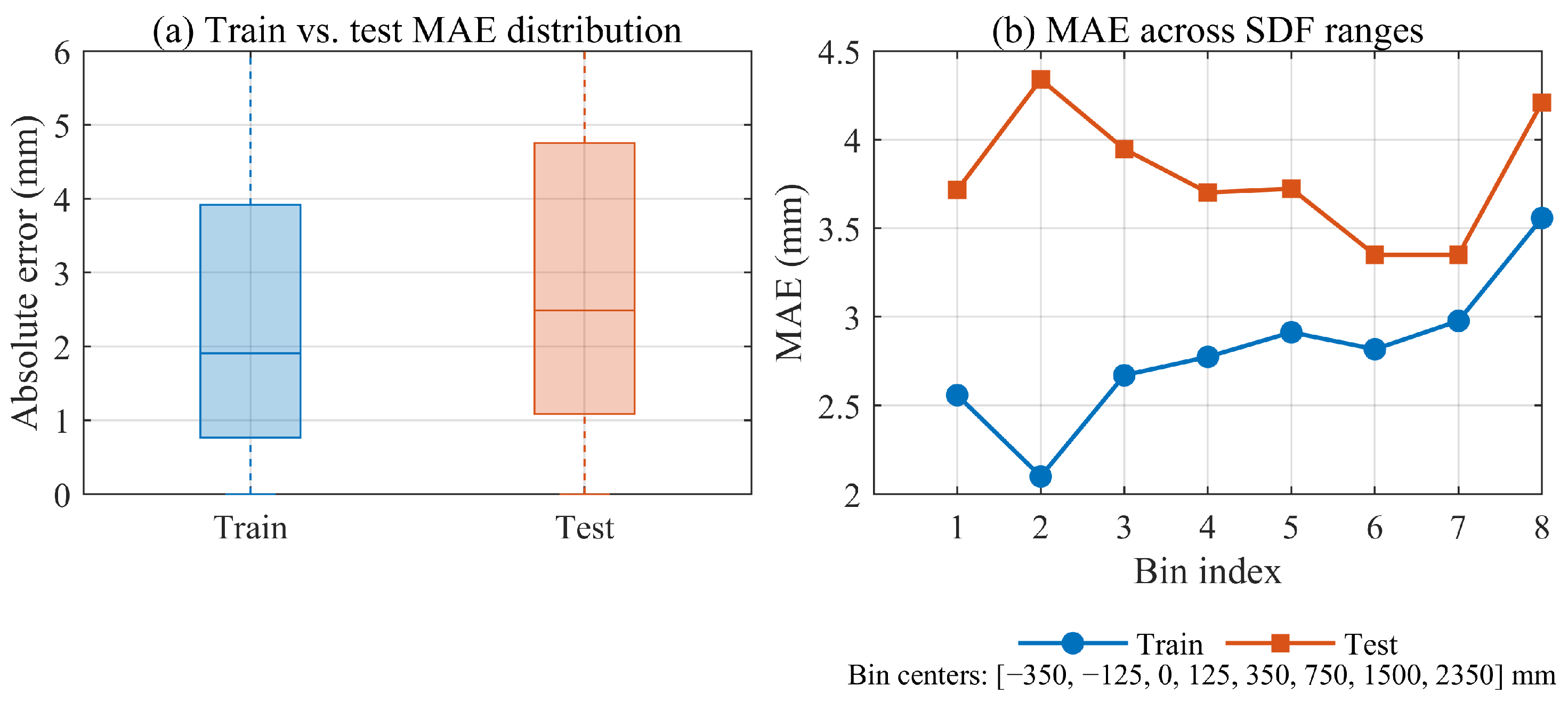
- Generalization Capabilities
- (3)
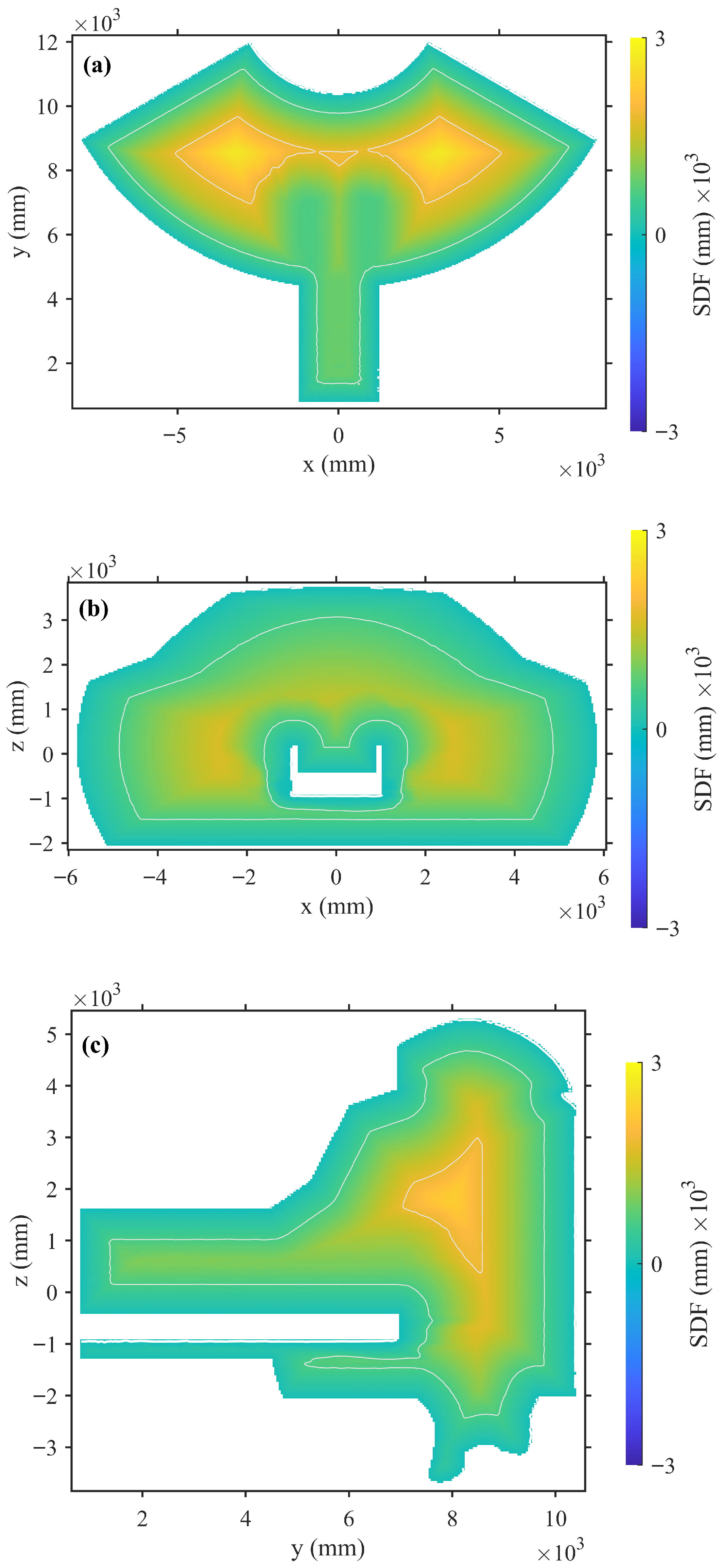
- Field Smoothness
- (4)
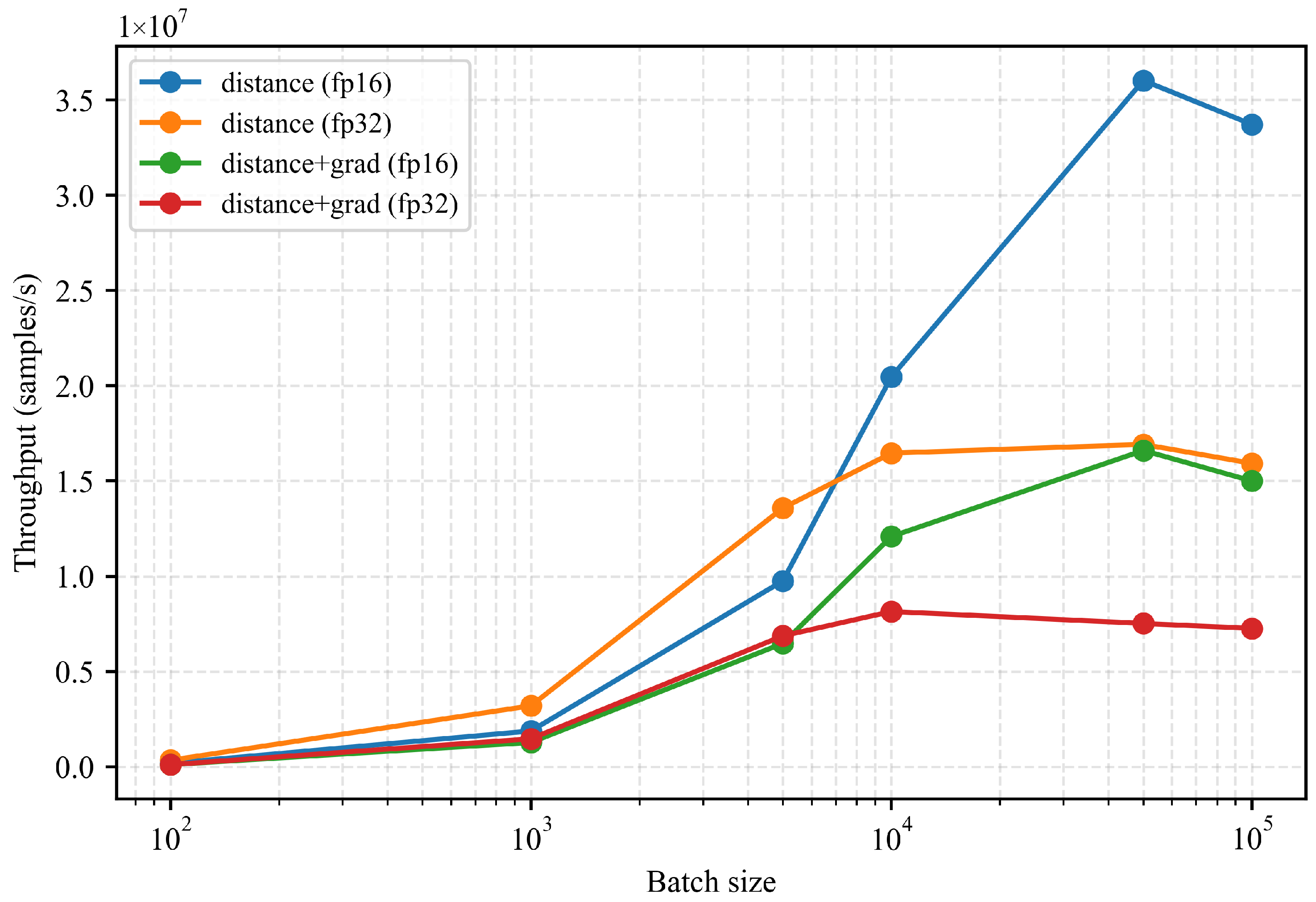
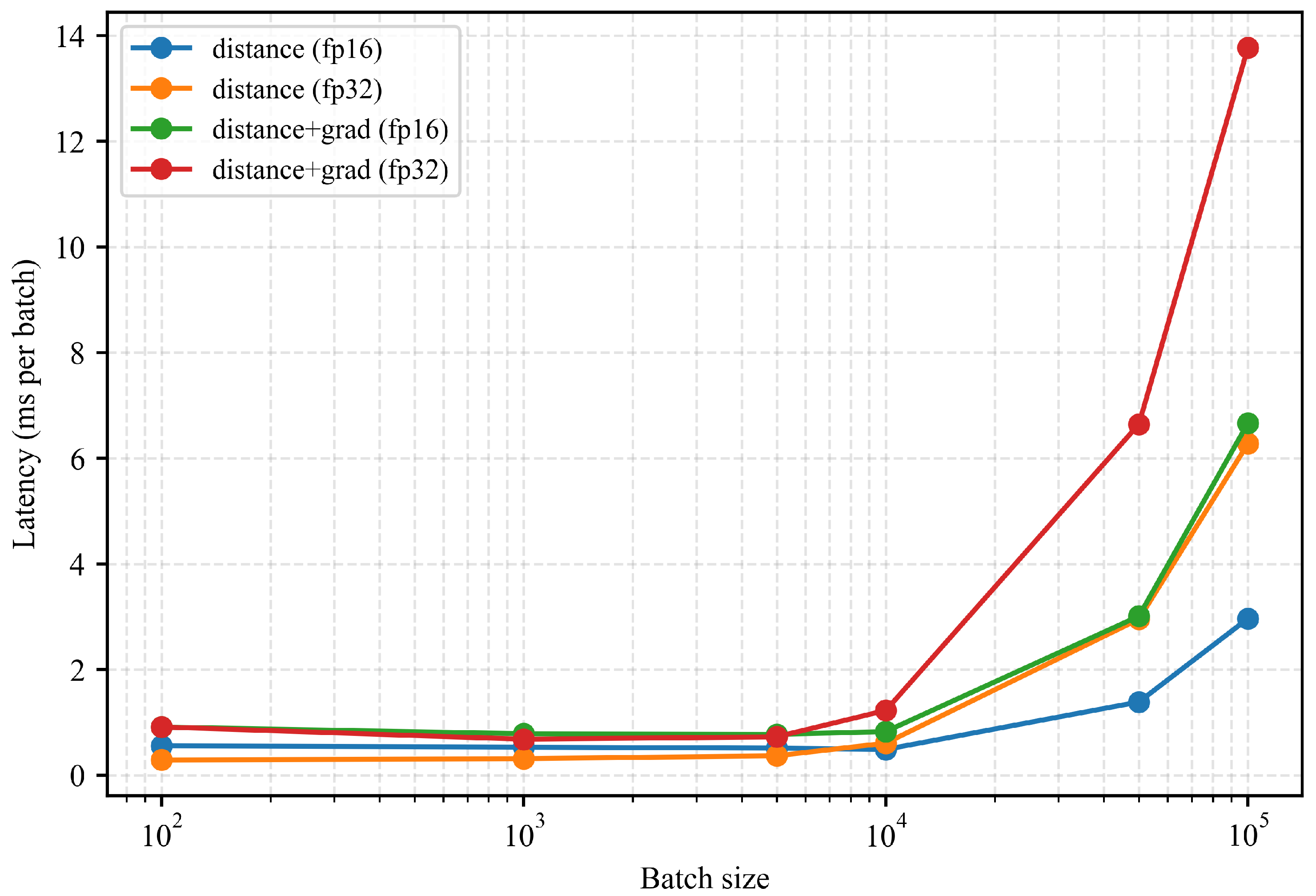
- Inference Efficiency
3.3. Comparative Benchmark in Robotic Simulation
4. Discussion
4.1. Safety Guarantees and Operational Scope
- (1)
- Conservative Safety Buffer
- (2)
- Coarse-to-Fine Manipulation Strategy
4.2. Implication for Future Motion Planning
4.3. Limitations
- Static Environment Assumption: The trained ONDP represents a static snapshot of the tokamak vessel and does not account for real-time changes such as movable components.
- Dependence on CAD Fidelity: The model’s accuracy is bounded by the input mesh quality. Installation tolerances or discrepancies between the CAD model and the physical reactor will propagate into the distance field.
- Offline Preprocessing Cost: To ensure high precision near vessel walls, our Physically-Stratified sampling strategy generates a large number of candidate points. While this guarantees runtime accuracy, the offline data generation process is computationally intensive compared to analytical methods.
- Extrapolation Risks: Predictions far outside the calibrated workspace are mathematically undefined. We currently mitigate this by clamping the workspace boundaries during planning.
5. Conclusions
Author Contributions
Funding
Institutional Review Board Statement
Informed Consent Statement
Data Availability Statement
Conflicts of Interest
References
- Bigot, B. ITER construction and manufacturing progress toward first plasma. Fusion Eng. Des. 2019, 146, 124–129. [Google Scholar] [CrossRef]
- Mozzillo, R.; Bachmann, C.; Aiello, G.; Marzullo, D. Design of the European DEMO vacuum vessel inboard wall. Fusion Eng. Des. 2020, 160, 111967. [Google Scholar] [CrossRef]
- Choi, C.H.; Tesini, A.; Subramanian, R.; Rolfe, A.; Mills, S.; Scott, R.; Froud, T.; Haist, B.; McCarron, E. Multi-purpose Deployer for ITER In-vessel Maintenance. Fusion Eng. Des. 2015, 98–99, 1448–1452. [Google Scholar] [CrossRef]
- Rolfe, A.; Brown, P.; Carter, P.; Cusack, R.; Gaberscik, A.; Galbiati, L.; Haist, B.; Horn, R.; Irving, M.; Locke, D.; et al. A Report on the First Remote Handling Operations at JET. Fusion Eng. Des. 1999, 46, 299–306. [Google Scholar] [CrossRef]
- Fusco, S.; Sofia, A.; Grazioso, S.; Fontanelli, G.A.; Di Gironimo, G. Brief Overview of Long Reach Manipulators for Remote Maintenance in Fusion Reactors. In Proceedings of the Third International Conference of the Italian Association of Design Methods and Tools for Industrial Engineering, Florence, Italy, 6–8 September 2023; Springer: Cham, Switzerland, 2023; pp. 279–288. [Google Scholar]
- Crofts, O.; Loving, A.; Torrance, M.; Budden, S.; Drumm, B.; Tremethick, T.; Chauvin, D.; Siuko, M.; Brace, W.; Milushev, V.; et al. EU DEMO Remote Maintenance System development during the Pre-Concept Design Phase. Fusion Eng. Des. 2022, 179, 113121. [Google Scholar] [CrossRef]
- Li, F.; Pan, H.; Bachmann, C.; Janeschitz, G.; Cheng, Y.; Chou, W. Concept design of automatic connector for maintenance cask of EU-DEMO and CFETR. Fusion Eng. Des. 2024, 199, 114122. [Google Scholar] [CrossRef]
- Buonocore, S.; Zoppoli, A.; Gironimo, G.D. An obstacle avoidance path planning algorithm to simulate hyper redundant manipulators for tokamaks maintenance. Fusion Eng. Des. 2024, 202, 114334. [Google Scholar] [CrossRef]
- Hornung, A.; Wurm, K.M.; Bennewitz, M.; Stachniss, C.; Burgard, W. OctoMap: An efficient probabilistic 3D mapping framework based on octrees. Auton. Robot. 2013, 34, 189–206. [Google Scholar] [CrossRef]
- Curless, B.; Levoy, M. A volumetric method for building complex models from range images. In Proceedings of the 23rd International Conference on Computer Graphics and Interactive Techniques, New Orleans, LA, USA, 4–9 August 1996; pp. 303–312. [Google Scholar]
- Pan, J.; Manocha, D. FCL: A general purpose library for collision and proximity queries. In Proceedings of the IEEE International Conference on Robotics and Automation (ICRA), Saint Paul, MN, USA, 14–18 May 2012; pp. 3859–3866. [Google Scholar]
- Park, J.J.; Florence, P.; Straub, J.; Newcombe, R.; Lovegrove, S. DeepSDF: Learning continuous signed distance functions for shape representation. In Proceedings of the IEEE Conference on Computer Vision and Pattern Recognition (CVPR), Long Beach, CA, USA, 15–20 June 2019; pp. 165–174. [Google Scholar]
- Wang, P.; Liu, L.; Liu, Y.; Theobalt, C.; Komura, T.; Wang, W. NeuS: Learning Neural Implicit Surfaces by Volume Rendering for Multi-view Reconstruction. In Proceedings of the Advances in Neural Information Processing Systems (NeurIPS), Online, 6–14 December 2021. [Google Scholar]
- Bukhari, S.T.; Lawson, D.; Qureshi, A.H. Differentiable Composite Neural Signed Distance Fields for Robot Navigation in Dynamic Indoor Environments. arXiv 2025, arXiv:2502.02664. [Google Scholar] [CrossRef]
- Gil, G.; Cobano, J.A.; Merino, L.; Caballero, F. C-3TO: Continuous 3D Trajectory Optimization on Neural Euclidean Signed Distance Fields. arXiv 2025, arXiv:2509.20084. [Google Scholar] [CrossRef]
- Gil, G.; Cobano, J.A.; Caballero, F.; Merino, L. A Framework for Safe Local 3D Path Planning Based on Online Neural Euclidean Signed Distance Fields. In Proceedings of the 2025 International Conference on Unmanned Aircraft Systems (ICUAS), Charlotte, NC, USA, 14–17 May 2025; pp. 511–517. [Google Scholar] [CrossRef]
- Cai, J. Towards Intelligent Object Manipulation: Vision-Based Grasping, Pose Estimation, and Physical Property Identification. Ph.D. Thesis, Hong Kong University of Science and Technology, Hong Kong, China, 2025. [Google Scholar]
- Li, L.; Kong, L.; Liu, C.; Wang, H.; Wang, M.; Pan, D.; Tan, J.; Yan, W.; Sun, Y. Efficient Path Planning for Collision Avoidance of Construction Vibration Robots Based on Euclidean Signed Distance Field and Vector Safety Flight Corridors. Sensors 2025, 25, 1765. [Google Scholar] [CrossRef] [PubMed]
- Fang, R.; Zhu, X.; Cai, Y.; Kang, R.; Zhao, J.; Pan, R. Signed distance field-based collision-free trajectory planning for on-machine measurement of conical covers. Precis. Eng. 2025, 96, 507–521. [Google Scholar] [CrossRef]



| Layer Interval | Safety | Ratio | Role & Description |
|---|---|---|---|
| N/A | 20% | Aux. Gradient Support | |
| 1.2 | 20% | Rigid Safety Margin (Base) | |
| 1.5 | 16% | Deformation Buffer (FEA) | |
| 1.0 | 10% | Transition Zone | |
| 1.0 | 8% | Planning Zone | |
| 1.0 | 8% | Deep Zone | |
| 1.0 | 18% | Far-field Exploration |
Disclaimer/Publisher’s Note: The statements, opinions and data contained in all publications are solely those of the individual author(s) and contributor(s) and not of MDPI and/or the editor(s). MDPI and/or the editor(s) disclaim responsibility for any injury to people or property resulting from any ideas, methods, instructions or products referred to in the content. |
© 2025 by the authors. Licensee MDPI, Basel, Switzerland. This article is an open access article distributed under the terms and conditions of the Creative Commons Attribution (CC BY) license.
Share and Cite
Li, F.; Chou, W. Occupancy-Aware Neural Distance Perception for Manipulator Obstacle Avoidance in the Tokamak Vacuum Vessel. Sensors 2026, 26, 194. https://doi.org/10.3390/s26010194
Li F, Chou W. Occupancy-Aware Neural Distance Perception for Manipulator Obstacle Avoidance in the Tokamak Vacuum Vessel. Sensors. 2026; 26(1):194. https://doi.org/10.3390/s26010194
Chicago/Turabian StyleLi, Fei, and Wusheng Chou. 2026. "Occupancy-Aware Neural Distance Perception for Manipulator Obstacle Avoidance in the Tokamak Vacuum Vessel" Sensors 26, no. 1: 194. https://doi.org/10.3390/s26010194
APA StyleLi, F., & Chou, W. (2026). Occupancy-Aware Neural Distance Perception for Manipulator Obstacle Avoidance in the Tokamak Vacuum Vessel. Sensors, 26(1), 194. https://doi.org/10.3390/s26010194