An ns-3 Evaluation Framework for Receiver-Initiated MAC Protocols with Configurable Enhancement Modules Across Various Network Scenarios

Abstract
1. Introduction
Contributions
- RIT-compliant MAC implementation in ns-3: A new implementation of an IEEE 802.15.4e RIT-based receiver-initiated MAC was developed for ns-3, clearly defining its core behaviors such as state transitions, sender/receiver switching, and timeout handling. The implementation is publicly available to support reproducibility and further research (the source code is available at: https://github.com/kawalab/ns3-rit-mac accessed on 19 December 2025).
- Modular integration of representative enhancement mechanisms: Key enhancement mechanisms, including simplified carrier sensing and beacon randomization, were modularized and incorporated into a unified multi-layer evaluation environment.
- Identification of environment-dependent behavior: Simulation results revealed that the effectiveness of enhancement mechanisms is highly dependent on network conditions, and that beacon randomization may degrade performance under low-load settings.
2. Background and Related Work
2.1. Overview of Receiver-Initiated MAC Protocols
2.2. Structural Challenges of Receiver-Initiated MAC Protocols
- Sender Contention: Because multiple sender nodes may respond to the same beacon, contention around the beacon timing is likely to occur. Since the communication opportunity is restricted to the beacon event, sender-side collisions are more frequent than in conventional CSMA/CA-based approaches, especially under locally concentrated traffic.
- Energy–Delay Trade-off: A shorter beacon interval increases communication opportunities and reduces delay, but also raises the receiver’s energy consumption due to more frequent beacon transmissions. In contrast, a longer interval improves energy efficiency but reduces throughput and increases delay, while also increasing the probability of sender contention.
- Performance Variation under Different Topologies and Loads: In multi-hop networks, load tends to concentrate on relay nodes or nodes with high forwarding demand. As beacon waiting time accumulates, network-wide communication efficiency and fairness in energy consumption are negatively affected.
- Lack of Dynamic Adaptability: When the beacon interval is fixed, the protocol cannot flexibly adapt to temporal or spatial variations in traffic. In bursty traffic conditions, insufficient adaptation may lead to increased delay and a reduced success rate.
2.3. Evolution of Receiver-Initiated MAC Protocols
2.3.1. Origins and Early Development of Receiver-Initiated MAC Protocols
2.3.2. Predictive Beacon Scheduling
2.3.3. Enhancements for Collision and Congestion Reduction
2.3.4. IEEE 802.15.4e RIT
2.3.5. Practical Extensions of IEEE 802.15.4e RIT
2.4. Limitations of Existing Receiver-Initiated MAC Research
2.4.1. Structural Congestion in Many-to-One and Multi-Hop Topologies
2.4.2. Lack of Cross-Layer Integration
2.4.3. Lack of Consistent Implementation and Evaluation Practices
2.5. Positioning of This Work
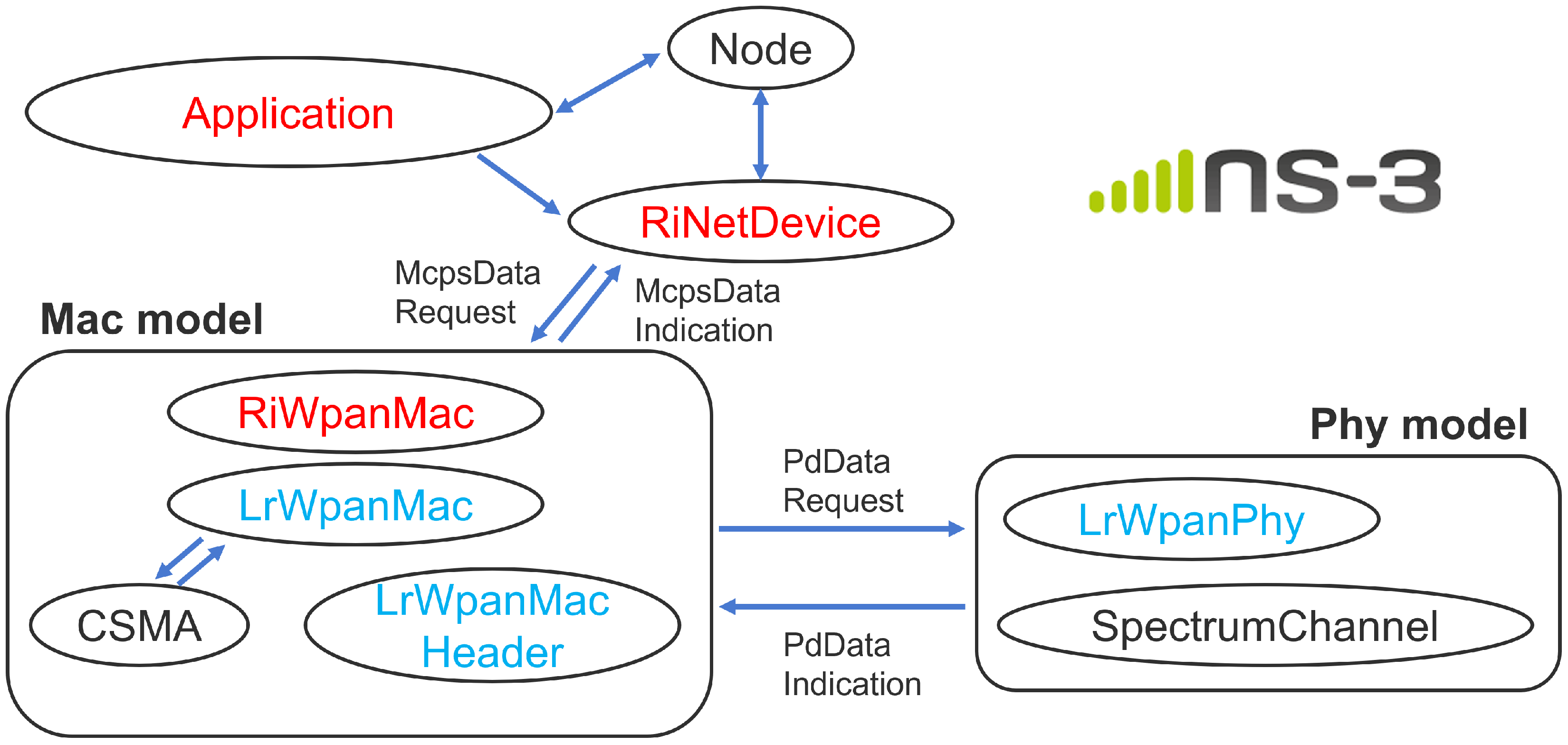
3. Implementaion in ns-3
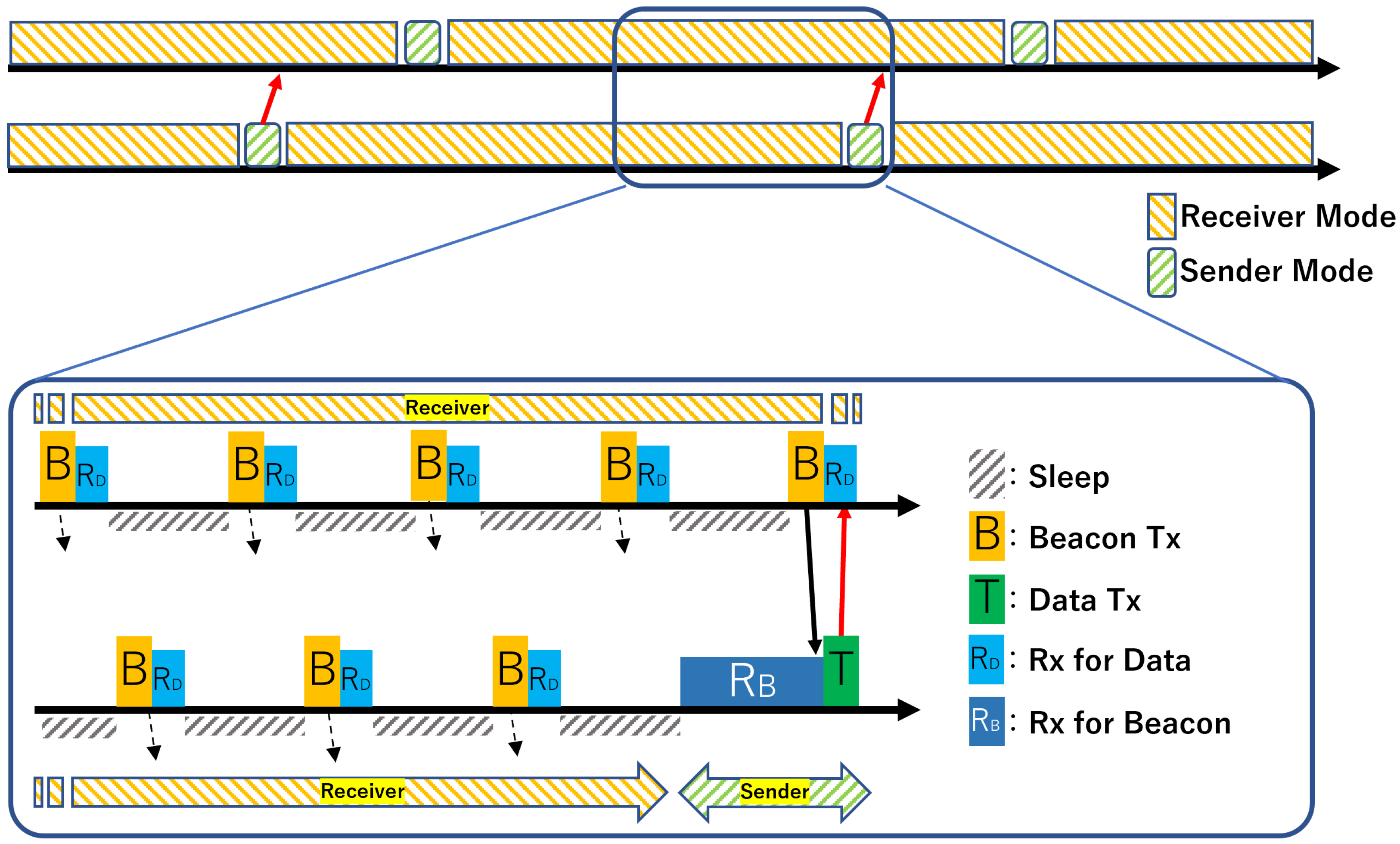
3.1. Mode Management
3.2. Beacon Transmission: "PeriodicRitDataRequest()"
3.3. Transmission Requests from Upper Layers
- Immediately before periodic beacon transmission (“RECEIVER_MODE”)
- Right after finishing “SENDER_MODE”
- Right after finishing “RECEIVER_MODE”
3.4. Data Frame Transmission
3.5. Receive Completion Callback: “PdDataIndication()”
3.5.1. Reception of Data Frames
3.5.2. Reception of Beacon Frames
3.5.3. Reception of ACK Frames
3.6. Transmission Completion Callback: “PdDataConfirm()”
3.6.1. Successful Transmission
- (a)
- “SENDER_MODE”: If a data frame is transmitted successfully and ACKs are not required, the node immediately returns to “RECEIVER_MODE”. If ACKs are required, the node transitions to “MAC_ACK_PENDING” and waits for the ACK.
- (b)
- “RECEIVER_MODE”: After a beacon is transmitted, the receiver must enter a short listening phase (DWD) to accept responses from child nodes. When this waiting period starts, a reception timeout (TWD) is also scheduled for the upper layer. The node then transitions to the receive state.
3.6.2. Failed Transmission
- (a)
- “SENDER_MODE”: When a data transmission fails, the event is reported to the upper layer, which decides whether to retry. If no retransmission is requested, the pending transmission request is discarded and the node returns to the listening state to wait for the next beacon.
- (b)
- “RECEIVER_MODE”: If a beacon transmission fails, the receiver does not attempt retransmission. Instead, it immediately transitions to the sleep state.
3.7. Timeout Event
3.7.1. Receiver Timeout: “ReceiverCycleTimeout()”
3.7.2. Sender Timeout: “SenderCycleTimeout()”
3.7.3. Cancellation of Timeout Events
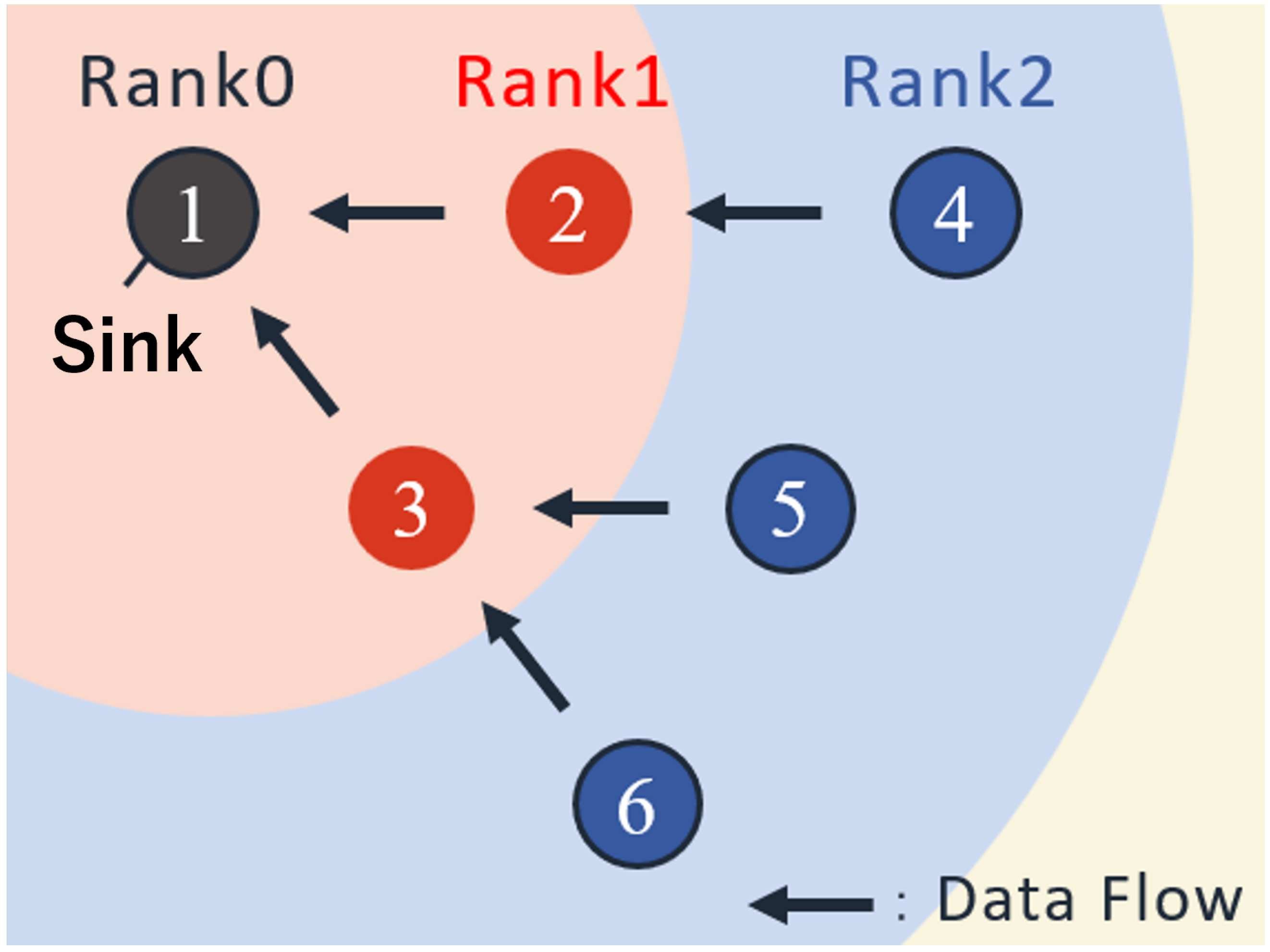
3.8. Routing
4. Modular Implementation of RIT Enhancement Options in ns-3
4.1. Selectable Channel Access Mechanisms
- CSMA/CA: The standard IEEE 802.15.4 method. A transmission is controlled by a combination of random backoff and CCA, and the sender retries when CCA fails until the retry limit is reached.
- Pre-CS: A lightweight carrier sensing method proposed in F-RIT. Only a single CCA is performed immediately before transmission, and no backoff or retry is executed. If the CCA fails, the node abandons the transmission opportunity.
- No Carrier Sense: CCA is skipped entirely and the frame is transmitted immediately. This option is mainly used for small frames such as ACKs where quick response is required.
4.2. Beacon ACK
4.3. Beacon Interval Control (Fixed or Randomized)
- Fixed Interval: The beacon is always transmitted at a constant period. This is the standard behavior defined in IEEE 802.15.4e RIT.
- Randomized Interval: Proposed in RI-MAC. The beacon interval is varied randomly within the range of 0.5 to 1.5 times a predefined base value.
4.4. Compact Beacon Frame
5. Simulation Setup
5.1. Clock Drift
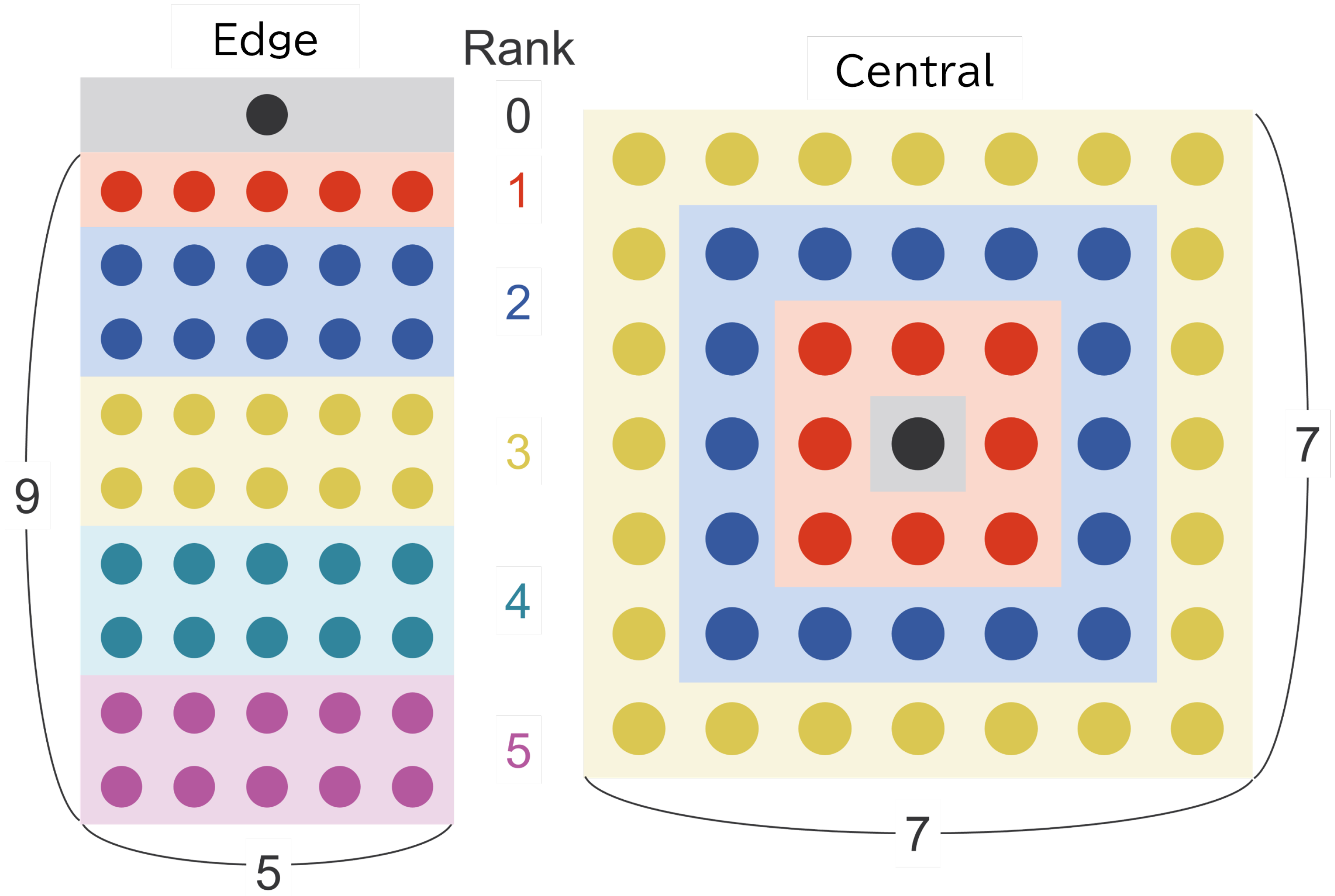
5.2. Network Topology
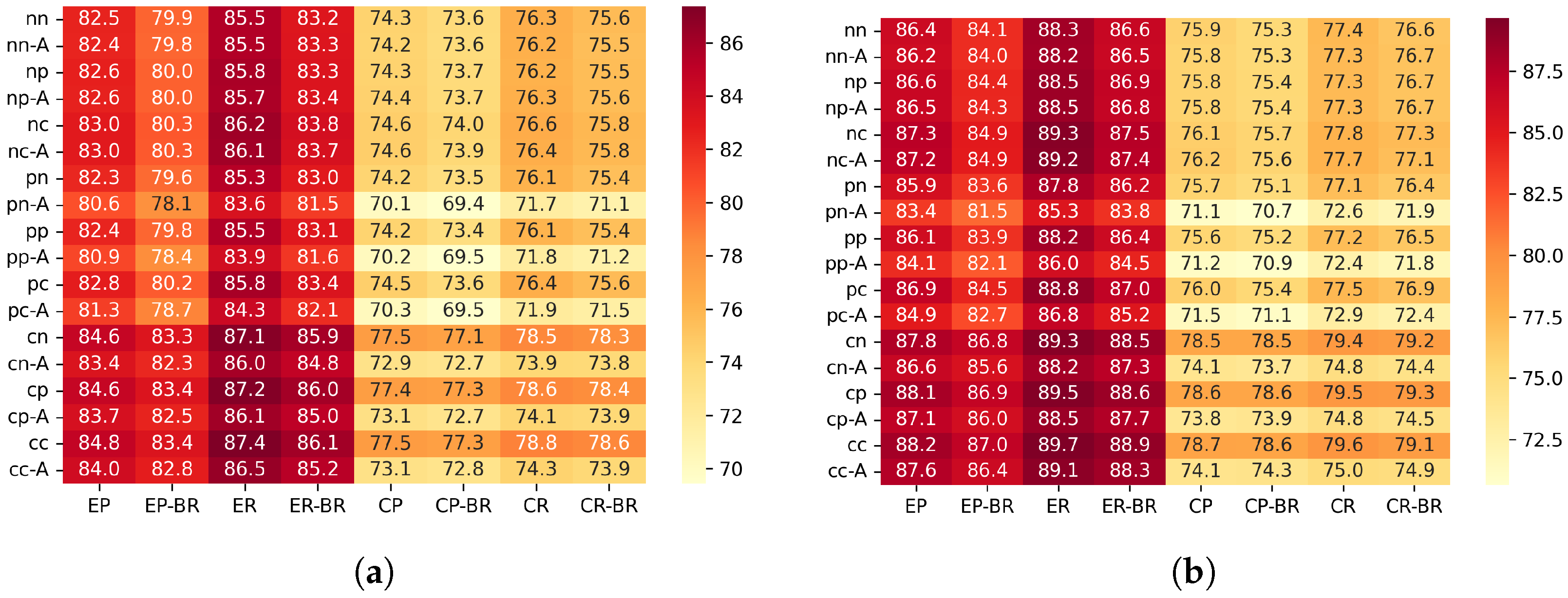
- Edge: The sink node is placed 50 m outside the edge of the grid so that five Rank 1 nodes remain within its communication range. The maximum rank is set to five, representing a medium-scale multi-hop network with multiple forwarding stages. Router nodes are placed at 25 m intervals, producing significant coverage overlap and frequent channel interference. The number of Rank 1 nodes is limited to five in order to avoid excessive overhead around the sink.
- Central: The sink node is located at the center of the grid, and all router nodes are placed uniformly at 50 m spacing. In this configuration, many nodes may respond to the sink’s beacon simultaneously, increasing the likelihood of contention and hidden-terminal effects. This topology is intentionally designed to emphasize interference and to evaluate the robustness of MAC-layer contention-avoidance mechanisms.
5.3. Application Model
- Periodic Transmission: Each node sends data at a constant interval. This pattern represents applications such as environmental monitoring or periodic status reporting.
- Random Transmission: Each node determines its transmission interval based on a uniform random distribution, resulting in irregular data generation. This pattern is intended to model event-driven applications or traffic with occasional bursts.
5.4. Input Parameters and Simulation Settings
5.5. Use of Generative AI
- assisting in organizing information from previous studies during the literature review,
- generating auxiliary Python scripts for parsing and visualizing simulation logs.
6. Simulation Results and Discussion
6.1. Evaluation Metrics
6.2. PDR
6.2.1. Differences Between Scenarios (PDR)
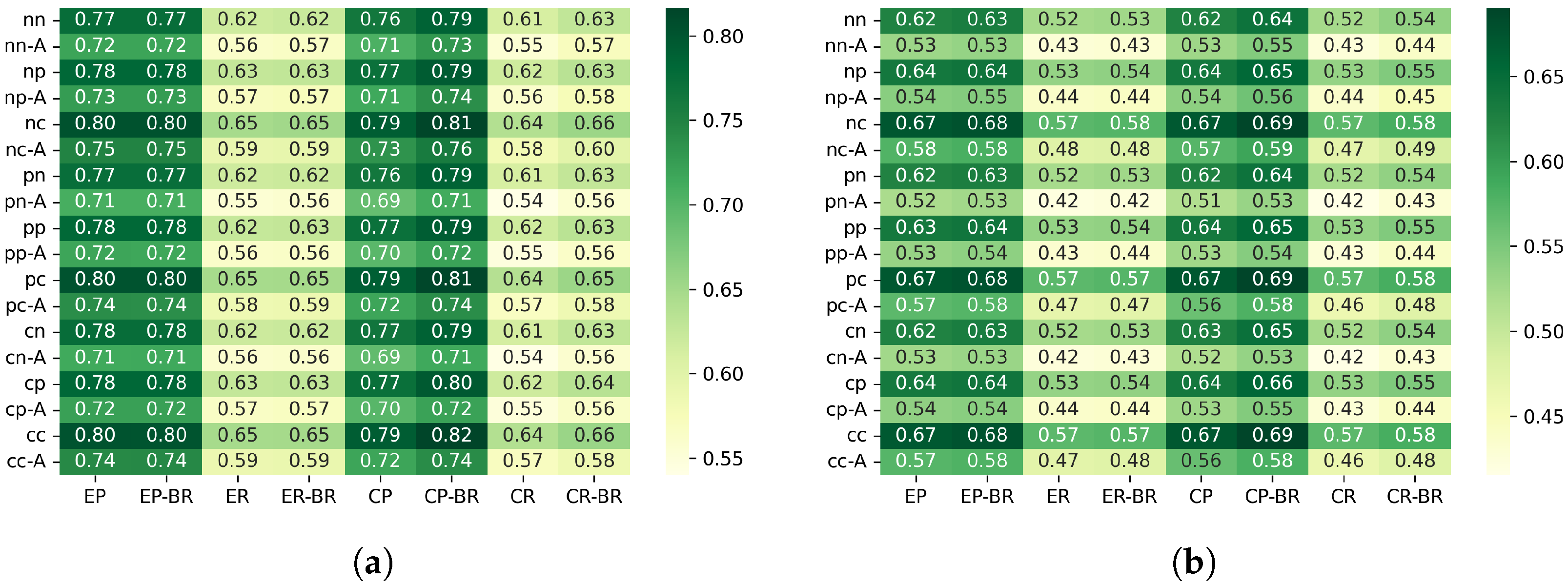
6.2.2. Effectiveness of Beacon Randomization (PDR)
6.2.3. Effectiveness of Beacon ACK (PDR)
6.2.4. Effectiveness of Channel Access Mechanisms for Data Transmission
6.2.5. Effectiveness of Channel Access Mechanisms for Beacon Transmission
6.2.6. Throughput
6.3. Wakeup Ratio
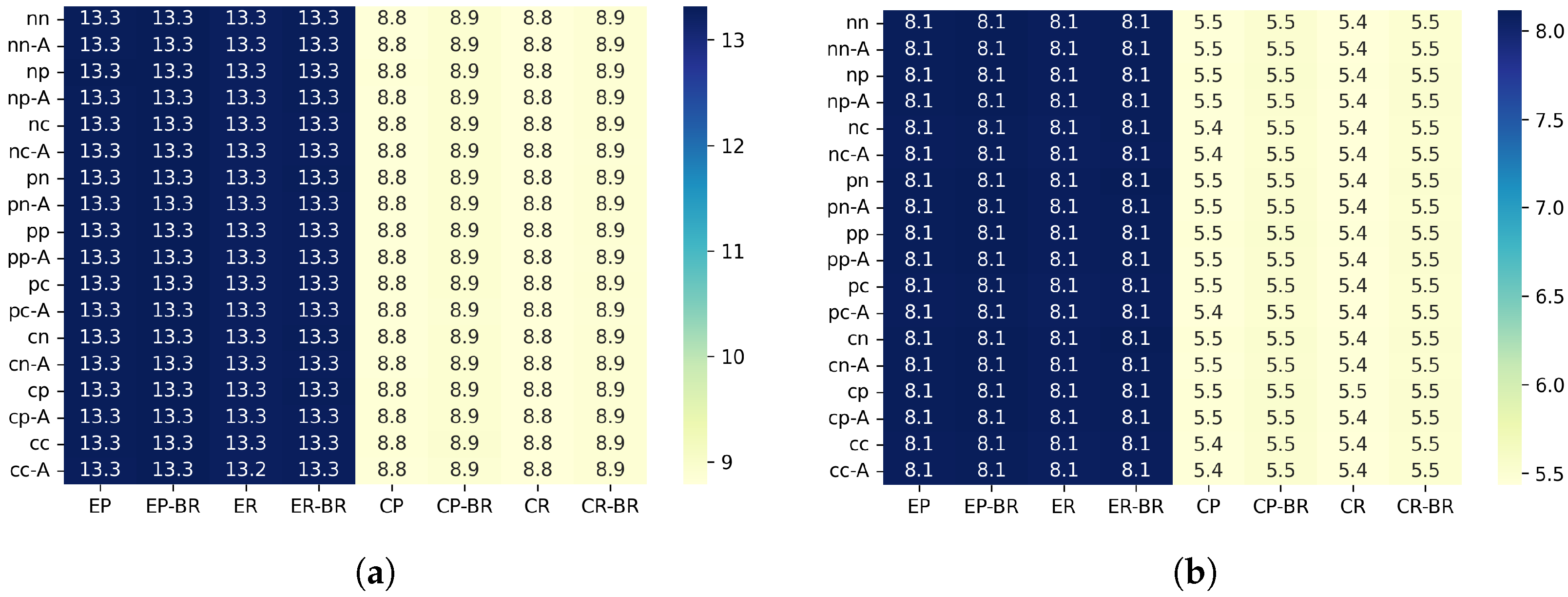
6.3.1. Differences Between Scenarios (Wakeup Ratio)
6.3.2. Effectiveness of Beacon Randomization (Wakeup Ratio)
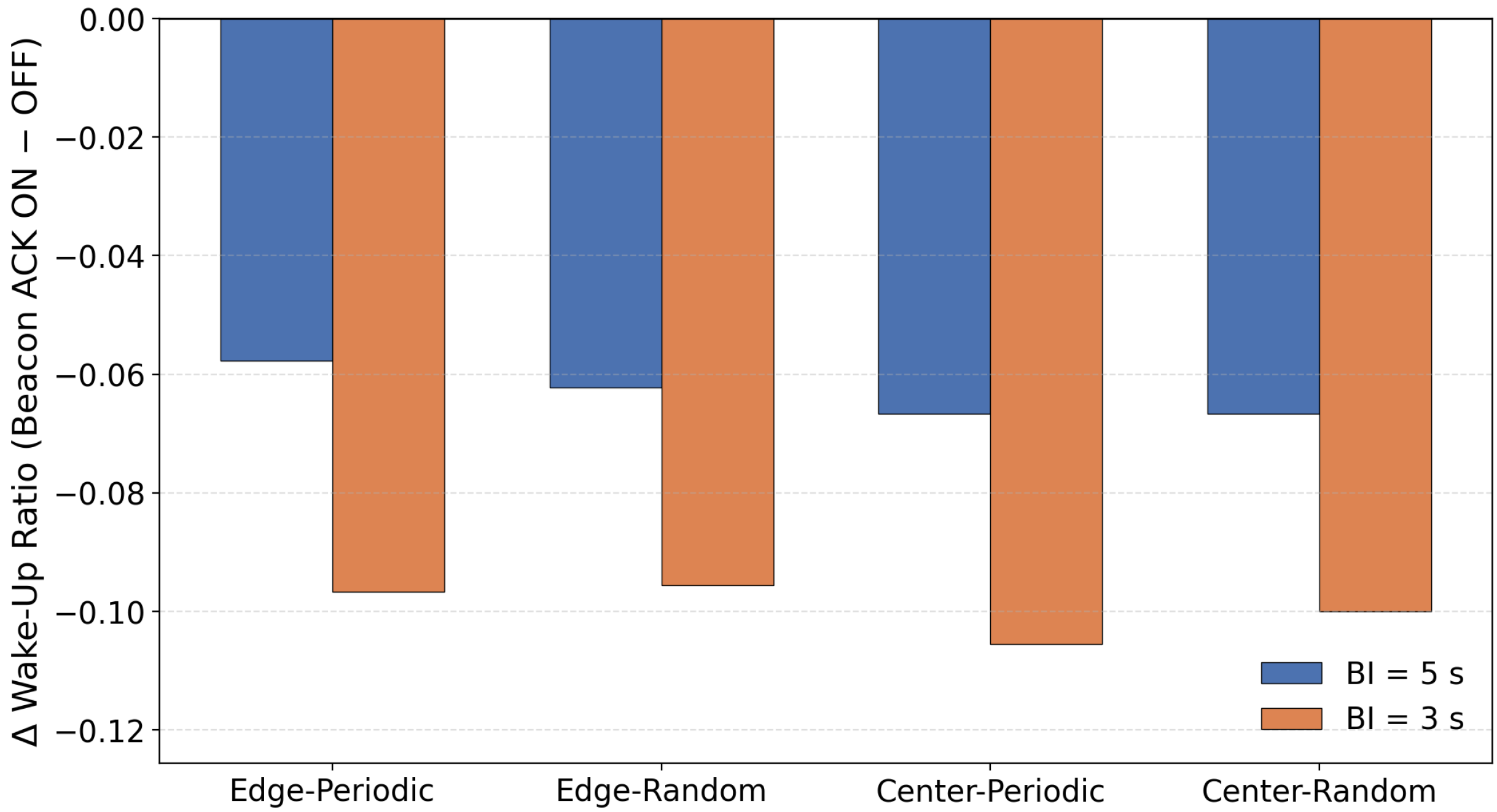
6.3.3. Effectiveness of Beacon ACK (Wakeup Ratio)
6.4. End-to-End Latency
6.5. Discussion and Design Guidelines
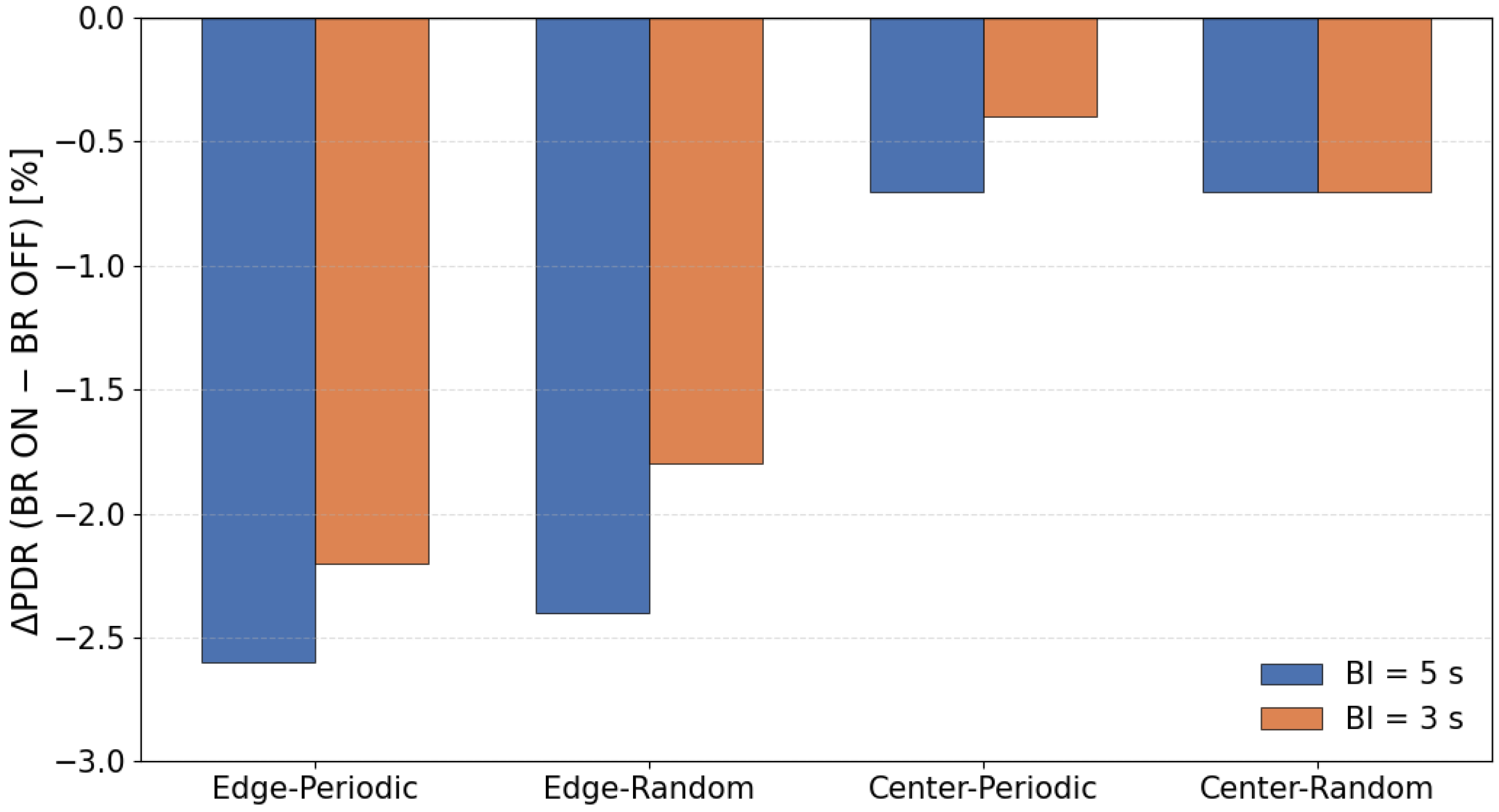
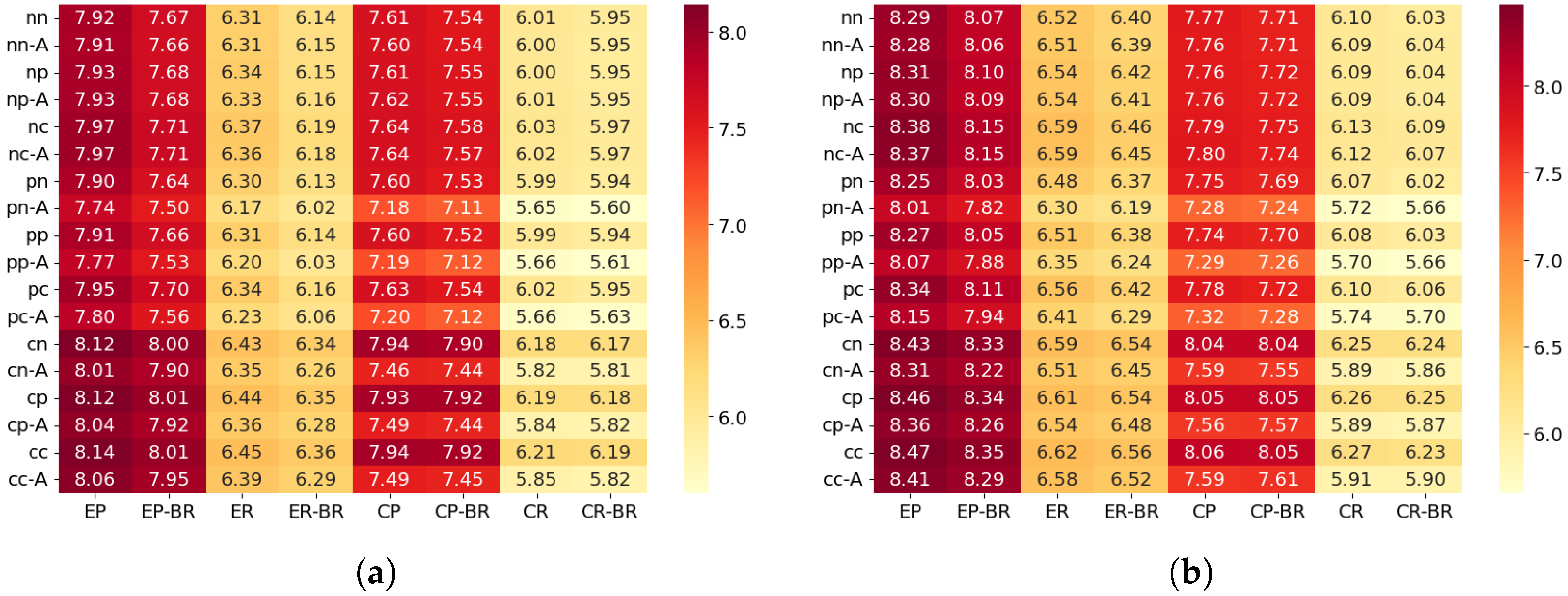
- Beacon randomization (“-BR”) should be applied carefully in low-load environments.Under the evaluation conditions of this study, BR increased the average awake ratio and led to PDR degradation in the Edge scenario. In low-load, many-to-one network configurations, BR cannot provide its intended desynchronization effect, and the fluctuation of the beacon interval instead increases temporary waiting time. Therefore, in low-load networks, the use of BR should be carefully judged depending on the node placement.
- CSMA/CA is effective for data transmission, and Pre-CS may be useful for beacon transmission.For data transmission, CSMA/CA helps mitigate sender contention and provides a stable improvement. For beacon transmission, differences in channel access mechanisms did not significantly affect PDR or delay under the low-load and low-density conditions of this study. However, in real deployments, external noise and interference from other users may cause beacon collisions. In such cases, Pre-CS, which has smaller transmission delay, may be more advantageous. The choice should consider both the operating environment and the balance with energy consumption.
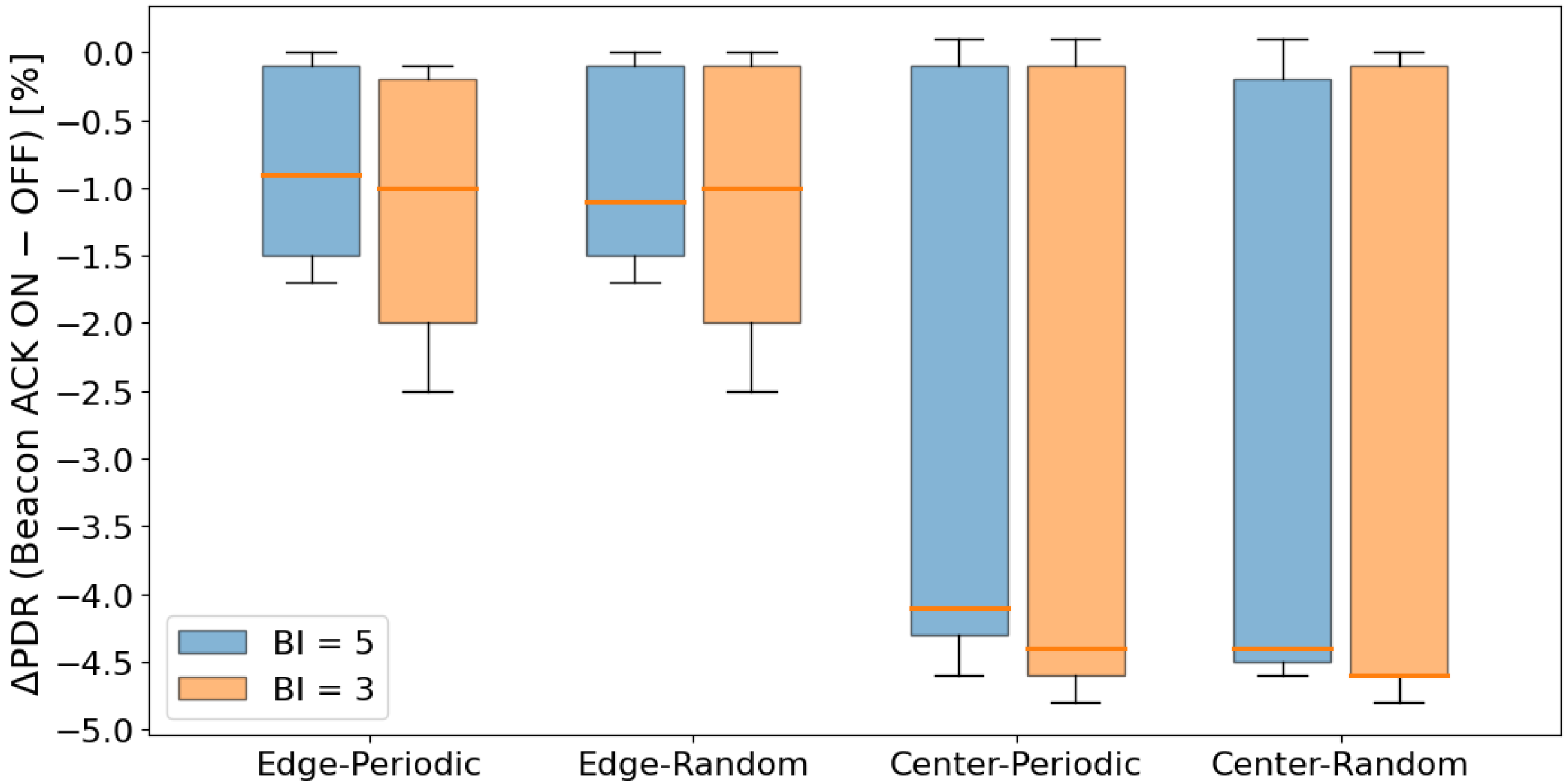
- Beacon ACK may degrade performance but significantly reduces energy consumption.Beacon ACK can reduce PDR because the ACK response increases channel occupancy and may introduce additional contention. However, in the Edge scenario, where traffic concentration near the parent is relatively small, this negative impact is limited, and the reduction in energy consumption becomes more dominant. In contrast, in dense topologies such as the Center scenario, the risk of losing the channel before ACK transmission is higher due to interference or hidden nodes. This may lead to prolonged CSMA/CA delay or transmission failures. Therefore, the use of beacon ACK should be carefully decided based on the topology and interference environment.
7. Conclusions
Author Contributions
Funding
Institutional Review Board Statement
Informed Consent Statement
Data Availability Statement
Acknowledgments
Conflicts of Interest
References
- 802.15.4-2006; IEEE Standard for Local and Metropolitan Area Networks—Part 15.4: Low-Rate Wireless Personal Area Networks (LR-WPANs). IEEE: Piscataway, NJ, USA, 2011. [CrossRef]
- Henderson, T.R.; Riley, G.F.; Lacage, M.; Carneiro, G.; Dowell, C.; Bhattacharjea, R.; Pecorella, T.; Bojovic, B.; Barnes, P.; Avallone, S.; et al. ns-3: A Discrete-Event Network Simulator for Internet Systems. Version 3.0 and Later, Ongoing Development. 2008. Available online: https://www.nsnam.org/ (accessed on 25 November 2025).
- Polastre, J.; Hill, J.; Culler, D. Versatile low power media access for wireless sensor networks. In Proceedings of the 2nd International Conference on Embedded Networked Sensor Systems, Baltimore, MD, USA, 3–5 November 2004. [Google Scholar] [CrossRef]
- Buettner, M.; Yee, G.V.; Anderson, E.; Han, R. X-MAC: A short preamble MAC protocol for duty-cycled wireless sensor networks. In Proceedings of the 4th International Conference on Embedded Networked Sensor Systems, Boulder, CO, USA, 31 October–3 November 2006; pp. 307–320. [Google Scholar] [CrossRef]
- Lin, E.Y.; Rabaey, J.; Wolisz, A. Power-efficient rendez-vous schemes for dense wireless sensor networks. In Proceedings of the 2004 IEEE International Conference on Communications (IEEE Cat. No.04CH37577), Paris, France, 20–24 June 2004; Volume 7, pp. 3769–3776. [Google Scholar] [CrossRef]
- Sun, Y.; Gurewitz, O.; Johnson, D.B. RI-MAC: A receiver-initiated asynchronous duty cycle MAC protocol for dynamic traffic loads in wireless sensor networks. In Proceedings of the 6th ACM Conference on Embedded Network Sensor Systems, Raleigh, NC, USA, 5–7 November 2008. [Google Scholar] [CrossRef]
- Kominami, D.; Sugano, M.; Murata, M.; Hatauchi, T.; Fukuyama, Y. Performance evaluation of intermittent receiver-driven data transmission on wireless sensor networks. In Proceedings of the 2009 6th International Symposium on Wireless Communication Systems, Siena, Italy, 7–10 September 2009; pp. 141–145. [Google Scholar] [CrossRef]
- Tang, L.; Sun, Y.; Gurewitz, O.; Johnson, D.B. PW-MAC: An energy-efficient predictive-wakeup MAC protocol for wireless sensor networks. In Proceedings of the 2011 Proceedings IEEE INFOCOM, Shanghai, China, 10–15 April 2011. [Google Scholar] [CrossRef]
- Hamada, L.; Henna, S. AS-PW-MAC: An adaptive scheduling predictive wake-up MAC protocol for wireless sensor networks. In Proceedings of the 2016 Sixth International Conference on Innovative Computing Technology (INTECH), Dublin, Ireland, 24–26 August 2016; pp. 525–530. [Google Scholar] [CrossRef]
- Wymore, M.L.; Qiao, D. RIVER-MAC: A Receiver-Initiated Asynchronously Duty-Cycled MAC Protocol for the Internet of Things. In Proceedings of the 2019 IEEE 43rd Annual Computer Software and Applications Conference (COMPSAC), Milwaukee, WI, USA, 15–19 July 2019; pp. 860–869. [Google Scholar] [CrossRef]
- Dutta, P.; Dawson-Haggerty, S.; Chen, Y.; Liang, C.J.M.; Terzis, A. A-MAC: A versatile and efficient receiver-initiated link layer for low-power wireless. ACM Trans. Sens. Netw. 2012, 8, 1–29. [Google Scholar] [CrossRef]
- Tang, H.W.; Cao, J.N.; Sun, C.X.; Lu, K. REA-MAC: A low latency routing-enhanced asynchronous duty-cycle MAC protocol for wireless sensor networks. J. Cent. South Univ. 2013, 20, 678–687. [Google Scholar] [CrossRef]
- 802.15.4-2015; IEEE Standard for Low-Rate Wireless Networks. IEEE: Piscataway, NJ, USA, 2011. [CrossRef]
- Okumura, R.; Mizutani, K.; Harada, H. Feasibility Study of Wi-SUN JUTA Profile-Compliant F-RIT Protocol. IEICE Trans. Commun. 2021, E104.B, 1354–1365. [Google Scholar] [CrossRef]
- Okumura, R.; Fujiwara, J.; Mizutani, K.; Harada, H. Enhanced F-RIT Protocol for Wireless Smart Utility Networks with High Traffic Bi-Directional Communications. IEICE Trans. Commun. 2018, E101.B, 2487–2497. [Google Scholar] [CrossRef]
- Kawaguchi, T.; Ishibashi, K. ZEN-MAC: Zero Excess Node MAC for Multihop Sensor Networks With Energy Harvesting. IEEE Internet Things J. 2025, 12, 27818–27834. [Google Scholar] [CrossRef]
- The VINT Project: LBNL, UC Berkeley, USC/ISI, and Xerox PARC. The Network Simulator – ns-2 Manual. Available online: https://www.isi.edu/nsnam/ns/ (accessed on 25 October 2025).
- Österlind, F. A Sensor Network Simulator for the Contiki OS; SICS Technical Report, 2006:05; Swedish Institute of Computer Science: Sweden, 2006; p. 40. Available online: https://urn.kb.se/resolve?urn=urn:nbn:se:ri:diva-22018 (accessed on 25 October 2025).
- Varga, A. The OMNeT++ Discrete Event Simulation System. In Proceedings of the European Simulation Multiconference (ESM), Prague, Czech Republic, 6–9 June 2001. [Google Scholar]
- Levis, P.; Madden, S.; Polastre, J.; Szewczyk, R.; Whitehouse, K.; Woo, A.; Gay, D.; Hill, J.; Welsh, M.; Brewer, E.; et al. TinyOS: An Operating System for Sensor Networks. In Ambient Intelligence; Springer: Berlin/Heidelberg, Germany, 2025; pp. 115–148. [Google Scholar] [CrossRef]
- Dunkels, A.; Grönvall, B.; Voigt, T. Contiki - a Lightweight and Flexible Operating System for Tiny Networked Sensors. In Proceedings of the 29th Annual IEEE International Conference on Local Computer Networks (LCN 2004), Tampa, FL, USA, 16–18 November 2004; pp. 455–462. [Google Scholar] [CrossRef]
- Wi-SUN Alliance. Wi-SUN Alliance-Interoperable Communications Solutions. March 2016. Available online: https://wi-sun.org/wp-content/uploads/Wi-SUN-Interoperability-Standards.pdf (accessed on 19 December 2025).
- Aby, A.T.; Pomportes, S.; Servajean, M.F.; Misson, M. Is “Outperform” Still Appropriate to Qualify the Simulation Results of Proposed Protocols for WSNs? J. Commun. 2019, 14, 987–1001. [Google Scholar] [CrossRef]
- Okumura, R.; Mizutani, K.; Harada, H. Efficient Polling Communications for Multi-Hop Networks Based on Receiver-Initiated MAC Protocol. IEICE Trans. Commun. 2021, E104.B, 550–562. [Google Scholar] [CrossRef]



| Parameter | Values |
|---|---|
| Simulation Time | 1 days |
| User Data Generation Interval | 300 s, 180∼600 s |
| User Data Payload Length | 8 bytes |
| RIT MAC Period Time | 1 s (Sink Node), 3 s, 5 s |
| RIT Tx Wait Duration | 3 s, 5 s |
| RIT Data Wait Duration | 2 ms (BeaconAck), 5 ms |
| Clock Drift Skew | ±250 ppm |
| Propagation Loss Model | LogDistancePropagationLossModel |
| Propagation Delay Model | ConstantSpeedPropagationDelayModel |
| Metric | Description |
|---|---|
| PDR (Packet Delivery Ratio) | Percentage of successfully delivered packets (%) |
| Wake-Up Ratio | Percentage of time during which each node is awake (%) |
| End-to-End Latency | Time from packet generation to successful reception (s) |
| Label | Density | Application | Beacon Randomization |
|---|---|---|---|
| EP | Edge | Periodic | OFF |
| EP-BR | Edge | Periodic | ON |
| ER | Edge | Randomization | OFF |
| ER-BR | Edge | Randomization | ON |
| CP | Center | Periodic | OFF |
| CP-BR | Center | Periodic | ON |
| CR | Center | Randomization | OFF |
| CR-BR | Center | Randomization | ON |
| Label | Data | Beacon | Beacon ACK |
|---|---|---|---|
| nn | None | None | OFF |
| nn-A | None | None | ON |
| np | None | Pre-CS | OFF |
| np-A | None | Pre-CS | ON |
| nc | None | CSMA/CA | OFF |
| nc-A | None | CSMA/CA | ON |
| pn | Pre-CS | None | OFF |
| pn-A | Pre-CS | None | ON |
| pp | Pre-CS | Pre-CS | OFF |
| pp-A | Pre-CS | Pre-CS | ON |
| pc | Pre-CS | CSMA/CA | OFF |
| pc-A | Pre-CS | CSMA/CA | ON |
| cn | CSMA/CA | None | OFF |
| cn-A | CSMA/CA | None | ON |
| cp | CSMA/CA | Pre-CS | OFF |
| cp-A | CSMA/CA | Pre-CS | ON |
| cc | CSMA/CA | CSMA/CA | OFF |
| cc-A | CSMA/CA | CSMA/CA | ON |
| Scenario | Number of Nodes | Maximum Throughput [bps] |
|---|---|---|
| EP | 45 | 9.60 |
| ER | 45 | 7.38 |
| CP | 48 | 10.24 |
| CR | 48 | 7.87 |
Disclaimer/Publisher’s Note: The statements, opinions and data contained in all publications are solely those of the individual author(s) and contributor(s) and not of MDPI and/or the editor(s). MDPI and/or the editor(s) disclaim responsibility for any injury to people or property resulting from any ideas, methods, instructions or products referred to in the content. |
© 2025 by the authors. Licensee MDPI, Basel, Switzerland. This article is an open access article distributed under the terms and conditions of the Creative Commons Attribution (CC BY) license.
Share and Cite
Murata, T.; Sakamoto, S.; Kawanami, T. An ns-3 Evaluation Framework for Receiver-Initiated MAC Protocols with Configurable Enhancement Modules Across Various Network Scenarios. Sensors 2026, 26, 164. https://doi.org/10.3390/s26010164
Murata T, Sakamoto S, Kawanami T. An ns-3 Evaluation Framework for Receiver-Initiated MAC Protocols with Configurable Enhancement Modules Across Various Network Scenarios. Sensors. 2026; 26(1):164. https://doi.org/10.3390/s26010164
Chicago/Turabian StyleMurata, Tomoya, Shinji Sakamoto, and Takashi Kawanami. 2026. "An ns-3 Evaluation Framework for Receiver-Initiated MAC Protocols with Configurable Enhancement Modules Across Various Network Scenarios" Sensors 26, no. 1: 164. https://doi.org/10.3390/s26010164
APA StyleMurata, T., Sakamoto, S., & Kawanami, T. (2026). An ns-3 Evaluation Framework for Receiver-Initiated MAC Protocols with Configurable Enhancement Modules Across Various Network Scenarios. Sensors, 26(1), 164. https://doi.org/10.3390/s26010164