Application of Self-Attention Generative Adversarial Network for Electromagnetic Imaging in Half-Space




Abstract
1. Introduction
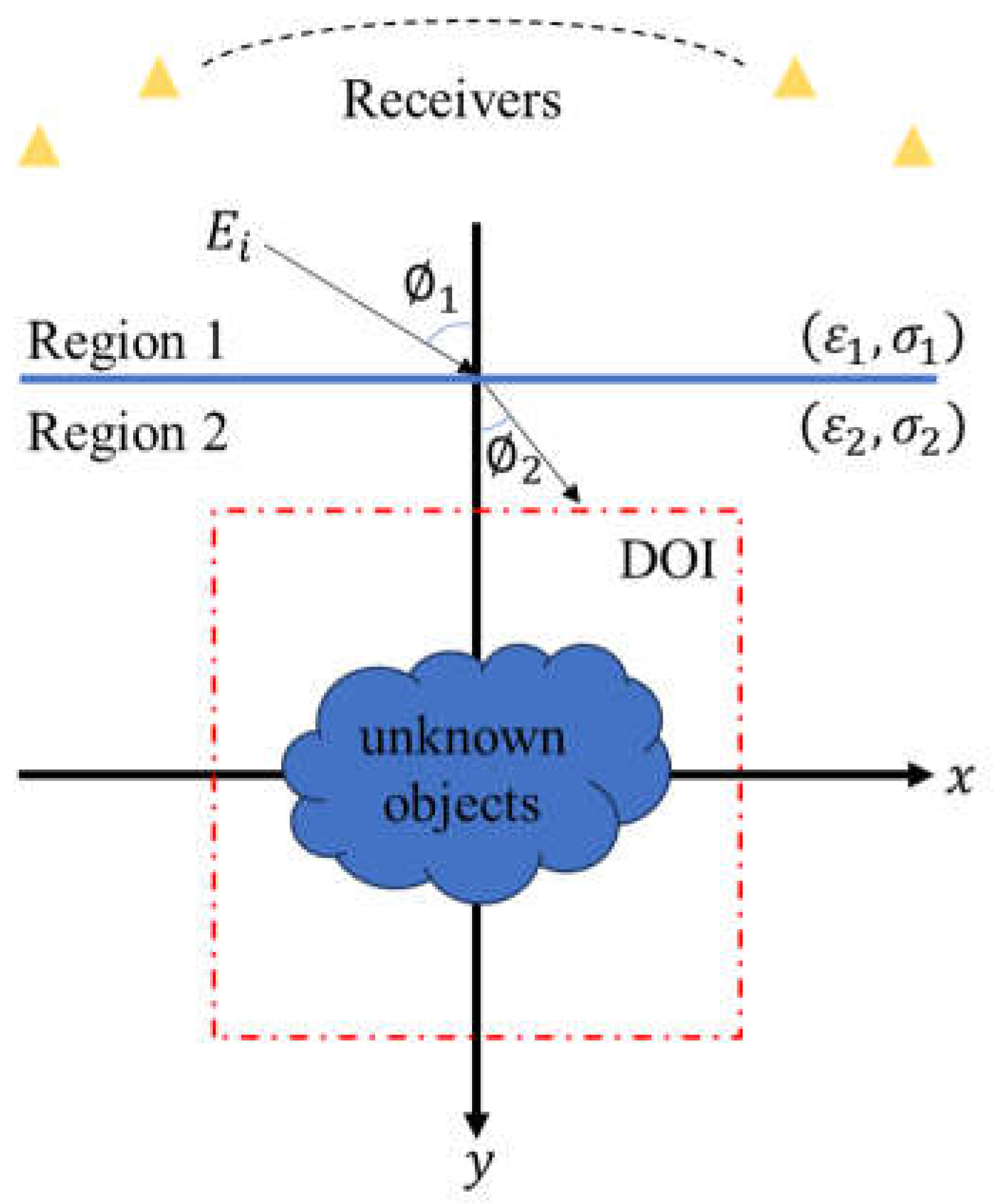
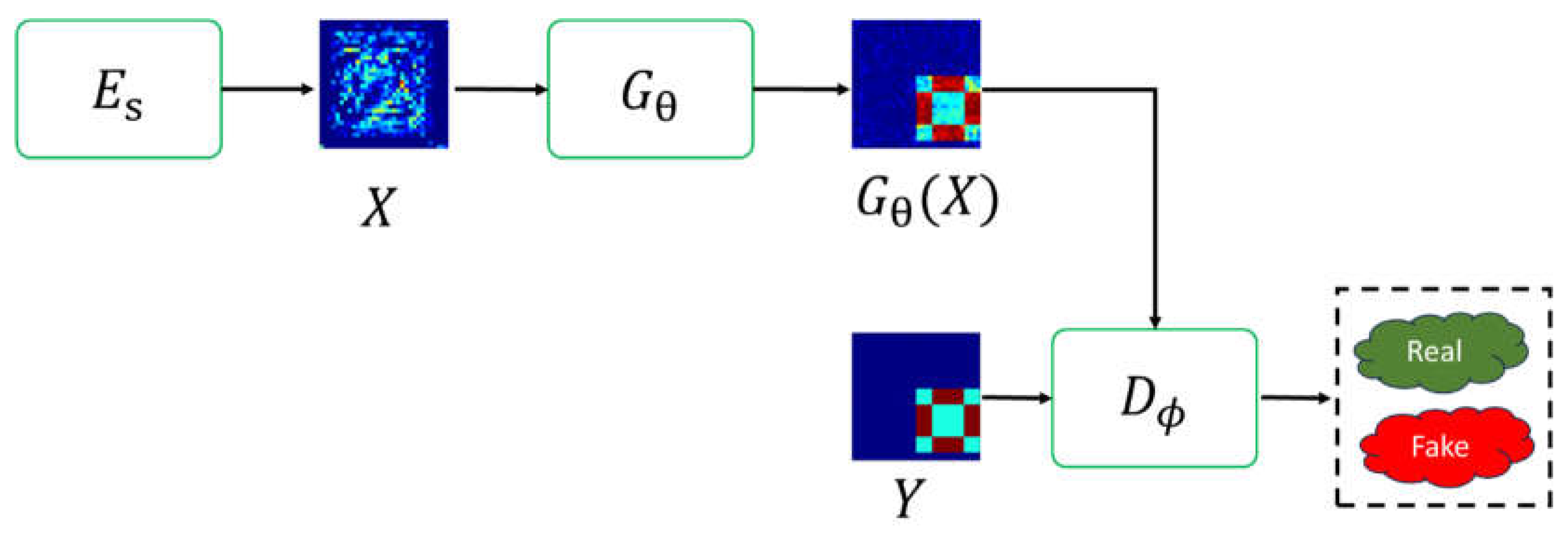
- To the best of our knowledge, there is no half-space electromagnetic imaging publication so far for SAGAN. In this article, we propose SAGAN to solve highly nonlinear inverse scattering problems. Since measurements can only be made in the upper space, the measurement angle will be limited. Numerical results show that our proposed method is capable of producing fast and accurate imaging, specifically for highly nonlinear scatterers.
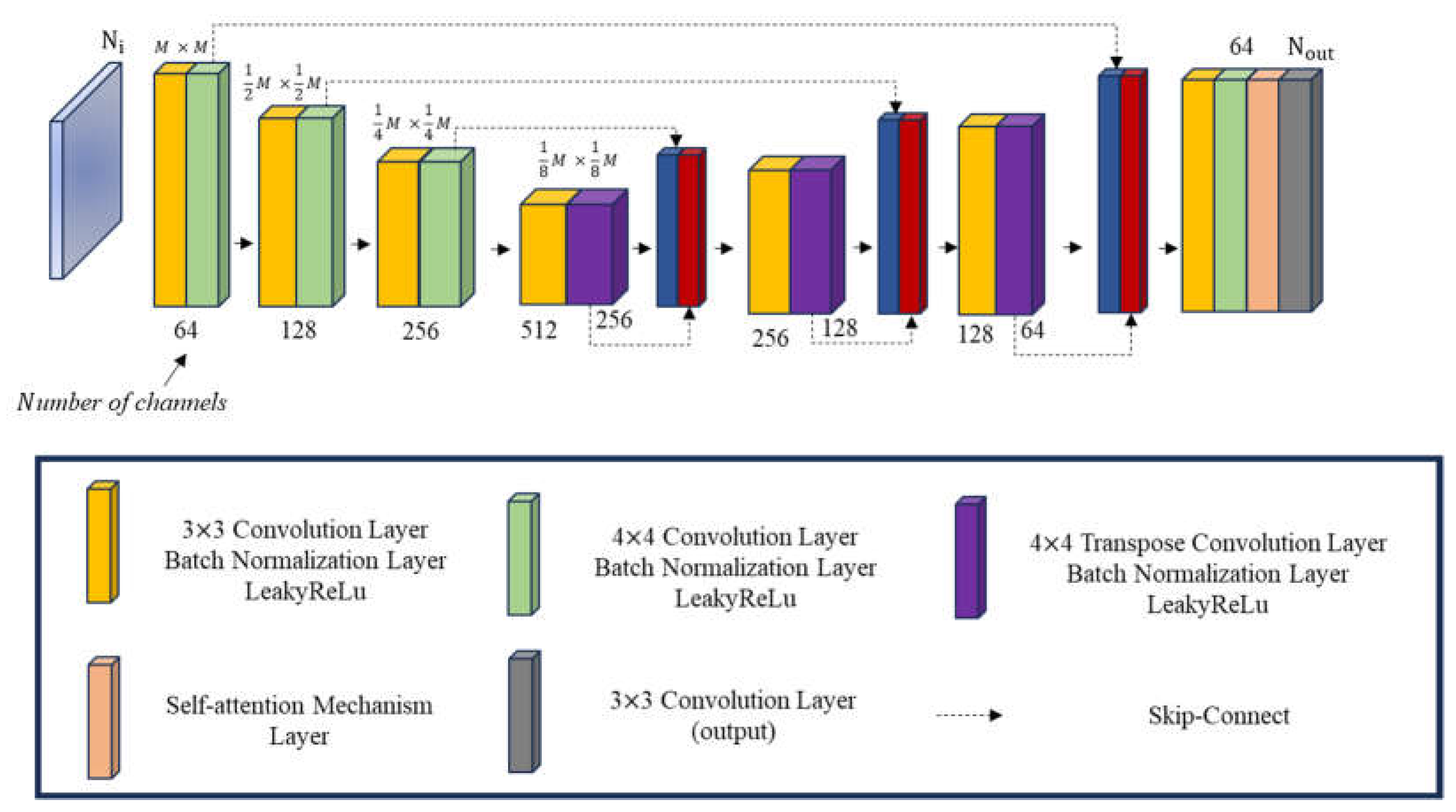
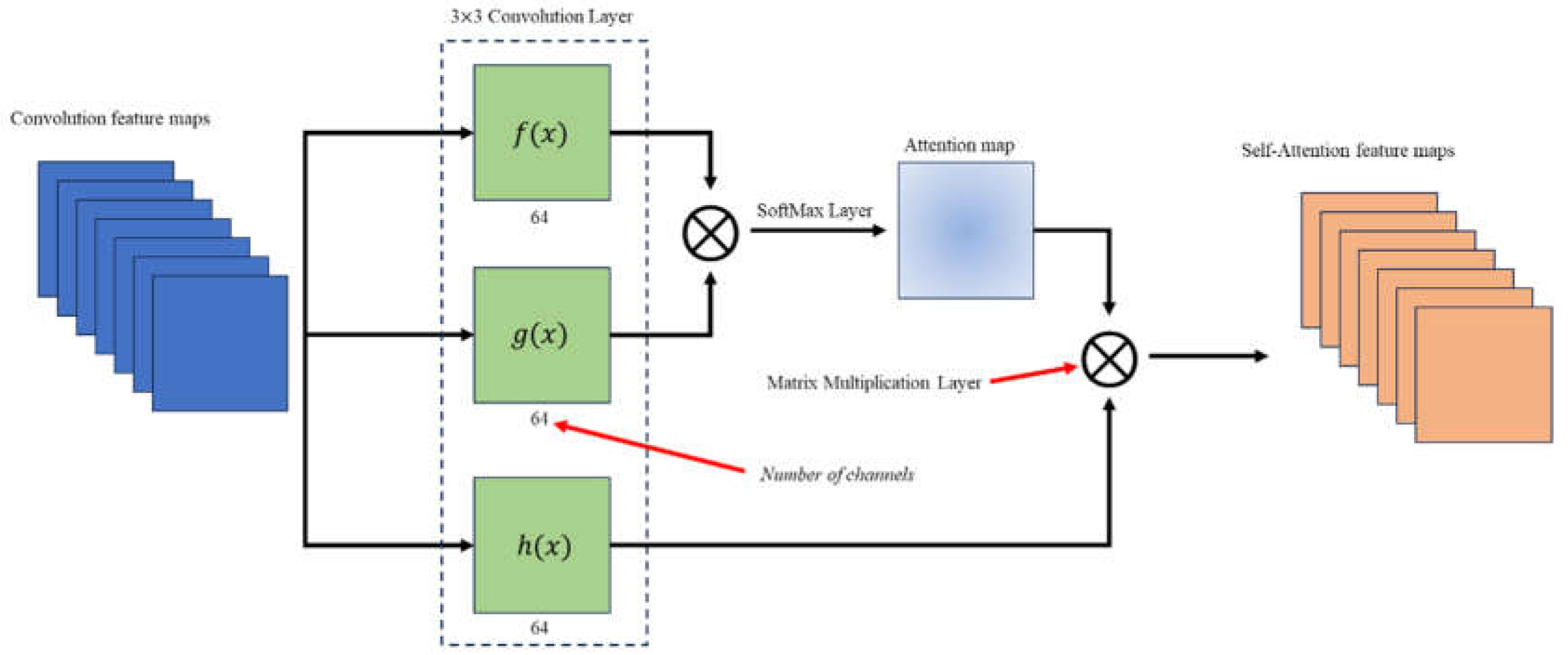
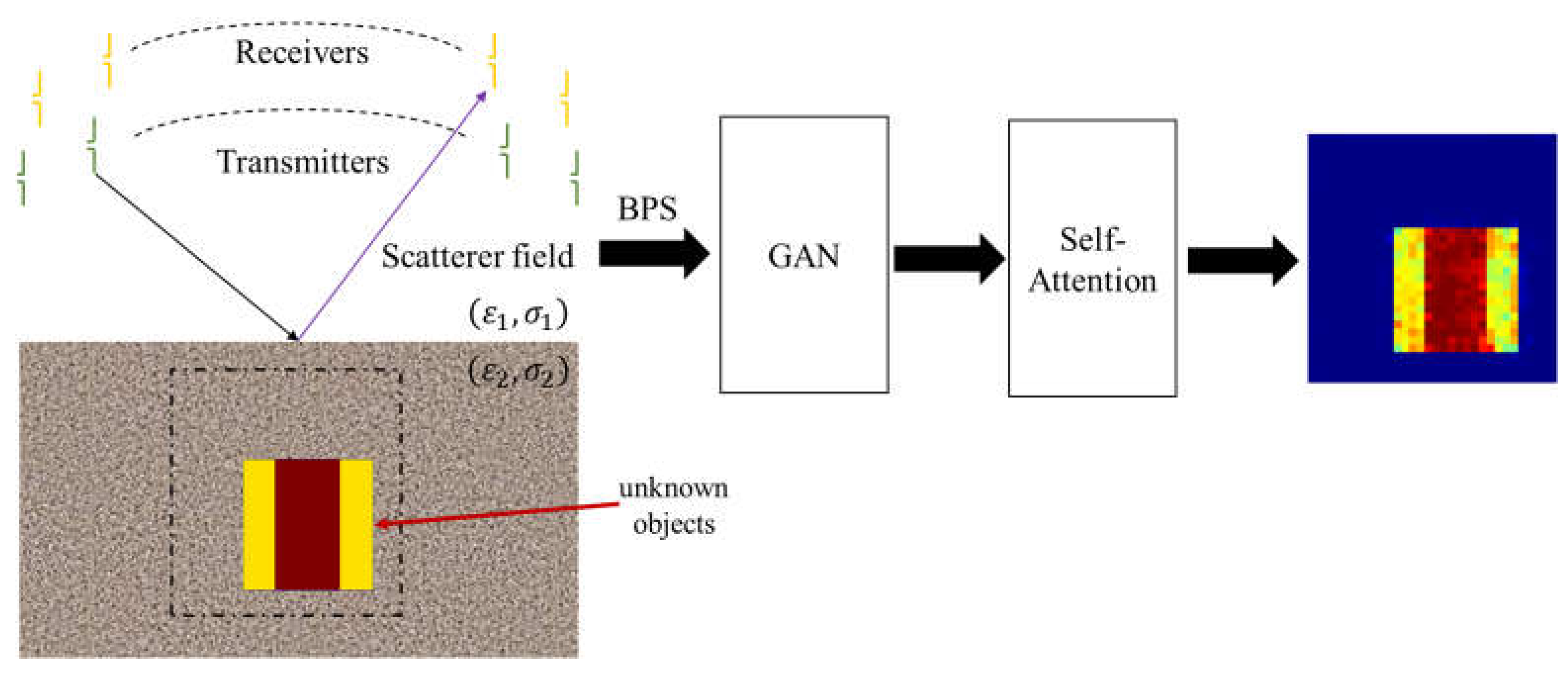
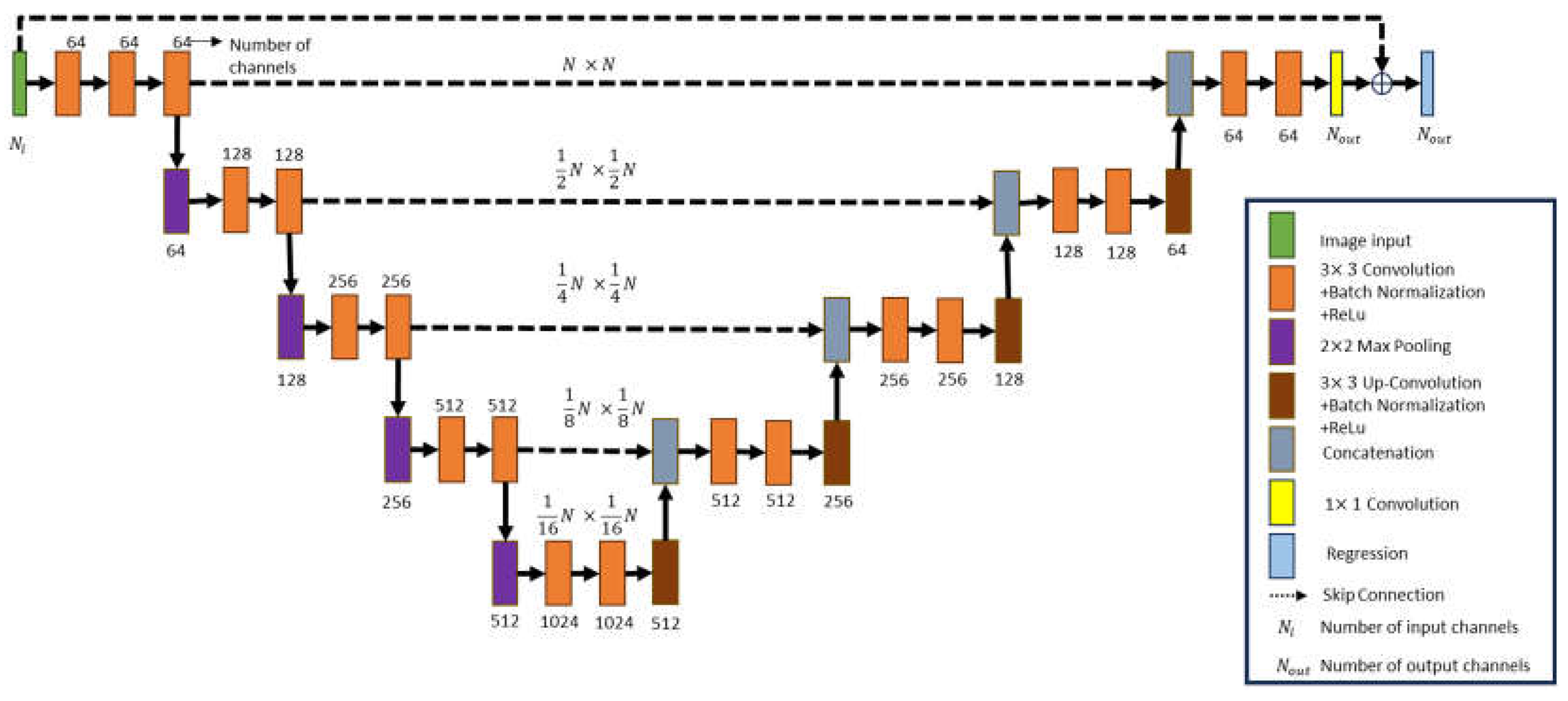
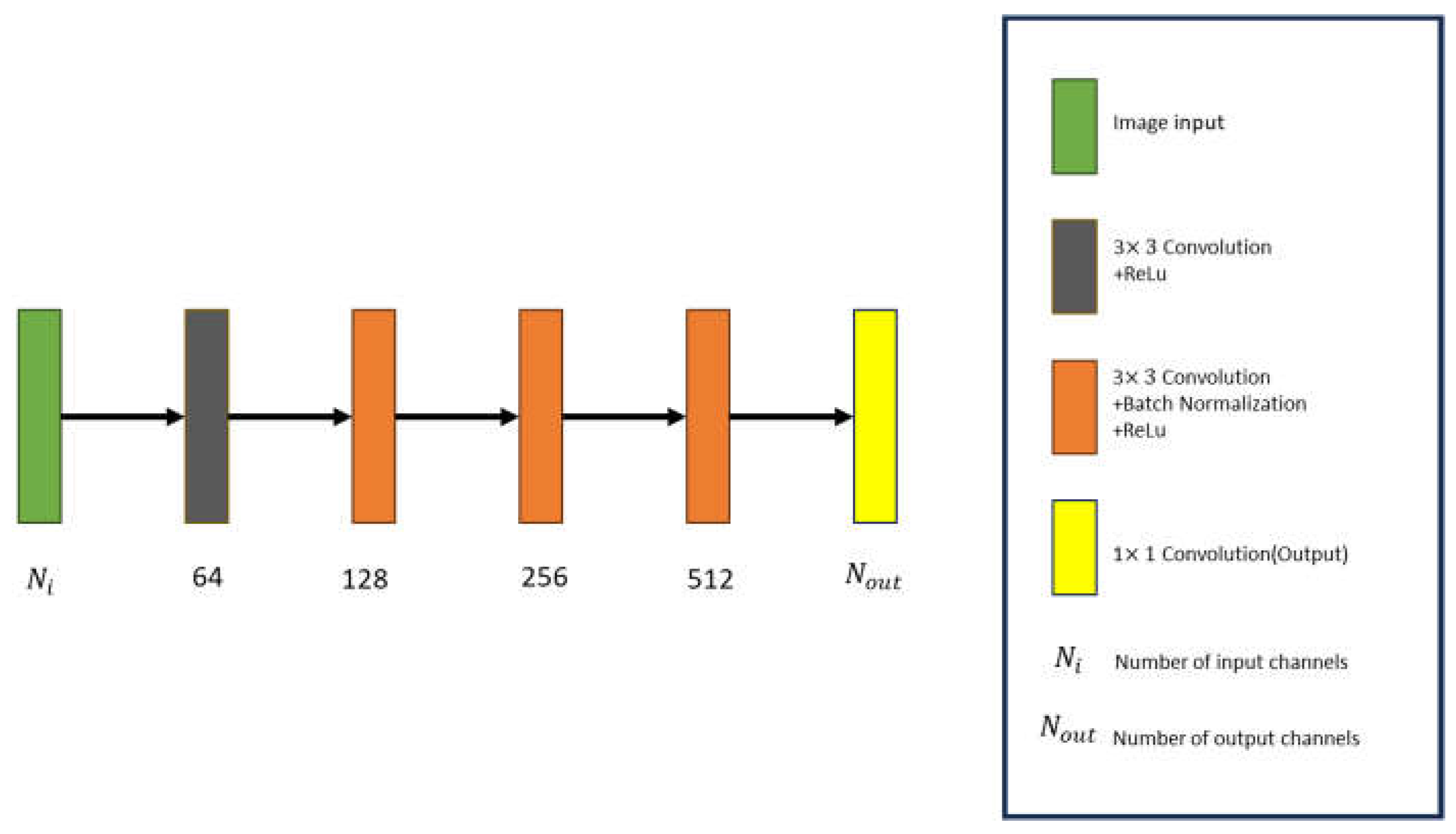
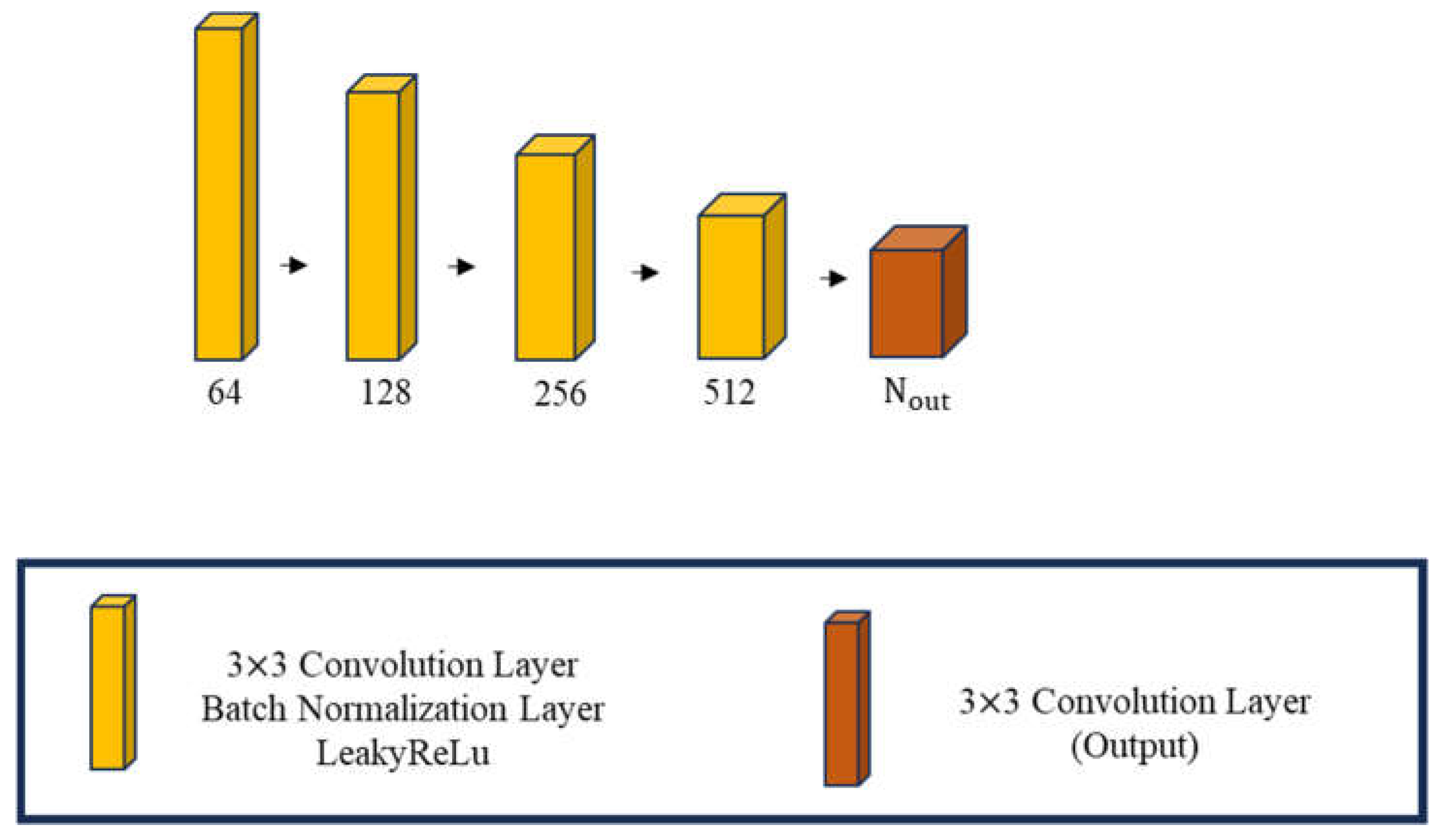
- We have successfully implemented GAN and SAGAN to reconstruct electromagnetic images buried in half-space and compared their performance. In the SAGAN model, we design a hybrid loss function in the generator network to improve the quality of the reconstructed image. Furthermore, the self-attention module is used for regularizing the physical equations and mimicking the multiple scattering effect in modeling.
- In the numerical results, we analyze the reconstruction effect of the self-attention mechanism in electromagnetic imaging. To verify the effectiveness of our proposed method, we use the trained model to reconstruct the case of high-permittivity distribution. Results showed that our proposed method is still highly reliable in the half-space environment.
- By training the network model in advance with appropriate parameter configuration, we can obtain the results rapidly by inputting new data into the model. In other words, we use the trained SAGAN to recover high-resolution electromagnetic imaging in half-space effectively.
2. Theory and Formulas
2.1. Direct Problems
2.2. Back Propagation Scheme
3. Neural Network
4. Numerical Results
4.1. GAN and SAGAN Performance Comparison for Reconstruction Permittivity Between 3 and 3.5 with 20% Noise Level
4.2. GAN and SAGAN Performance Comparison for Reconstruction Permittivity Between 3.5 and 4 with 10% Noise Level
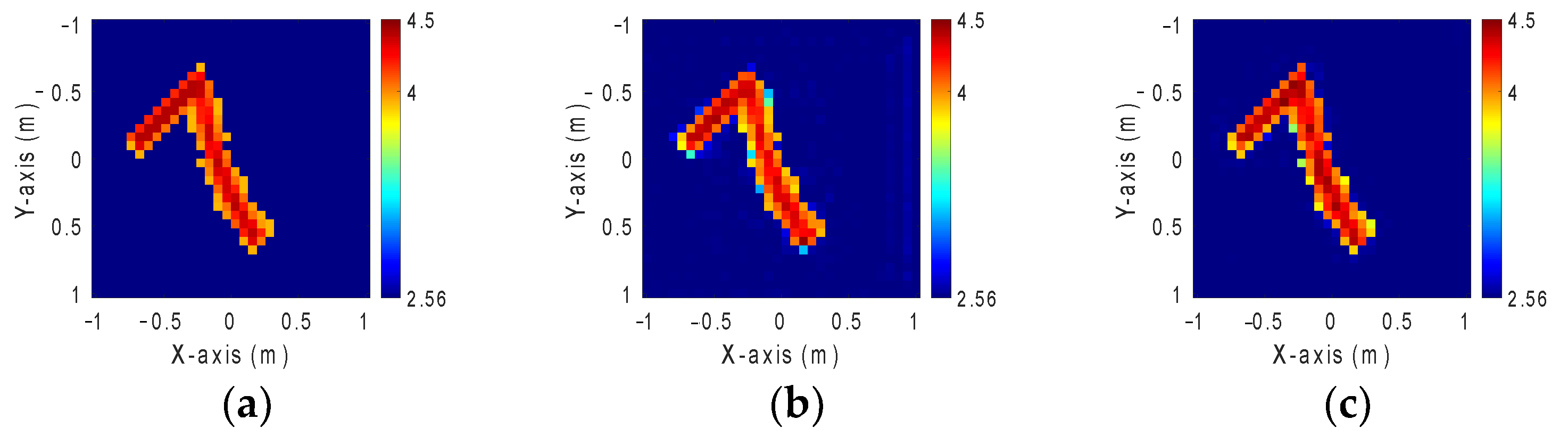
4.3. GAN and SAGAN Performance Comparison for Reconstruction Permittivity between 4 and 4.5 with 10% Noise Level
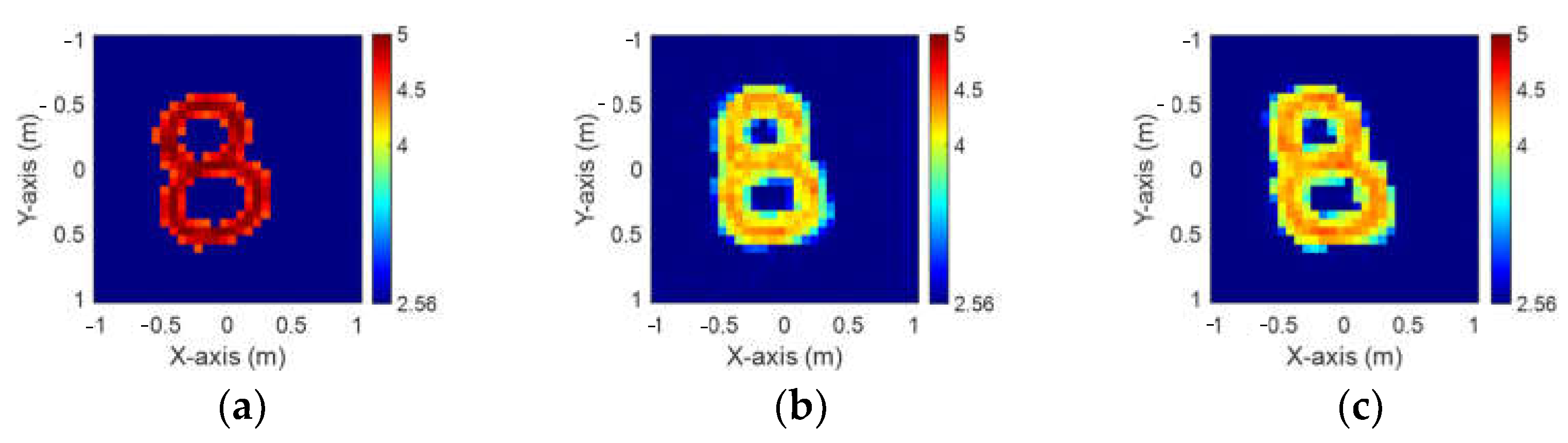
4.4. GAN and SAGAN Performance Comparison for Reconstruction Permittivity Between 4.5 and 5 by Case C Model
5. Conclusions
Author Contributions
Funding
Institutional Review Board Statement
Informed Consent Statement
Data Availability Statement
Conflicts of Interest
References
- Zhang, Y.; Zhao, Q.; Zhao, Z.; Nie, Z. A Hierarchical Subspace-Based Optimization Method for Reconstruction of 2-D Uniaxial Anisotropic Scatterers Using Multi-Frequency Data. IEEE Trans. on Magn. 2021, 57, 7500204. [Google Scholar] [CrossRef] [Scilit]
- Yin, F.; Chen, C.; Chen, W. Resolution Enhancement for Mixed Boundary Conditions in Inverse Scattering Problems. IEEE Trans. Antennas Propag. 2022, 70, 3643–3655. [Google Scholar] [CrossRef] [Scilit]
- Sun, S.; Dai, D.; Wang, X. A Fast Algorithm of Cross-correlated Contrast Source Inversion in Homogeneous Back-ground Media. IEEE Trans. Antennas Propag. 2023, 71, 4380–4393. [Google Scholar] [CrossRef] [Scilit]
- Yao, H.M.; Sha, W.E.I.; Jiang, L. Two-Step Enhanced Deep Learning Approach for Electron. Inverse Scattering Problems. IEEE Antennas Wirel. Propag. Lett. 2019, 18, 2254–2258. [Google Scholar] [CrossRef] [Scilit]
- Yao, H.M.; Jiang, L.; Sha, W.E.I. Enhanced Deep Learning Approach Based on the Deep Convolutional Encoder–Decoder Architecture for Electron. Inverse Scattering Problems. IEEE Antennas Wirel. Propag. Lett. 2020, 19, 1211–1215. [Google Scholar] [CrossRef] [Scilit]
- Zhang, H.H.; Yao, H.M.; Jiang, L.; Ng, M. Enhanced Two-Step Deep-Learning Approach for Electromagnetic -Inverse-Scattering Problems: Frequency Extrapolation and Scatterer Reconstruction. IEEE Trans. Antennas Propag. 2023, 71, 1662–1672. [Google Scholar] [CrossRef] [Scilit]
- Xu, K.; Wu, L.; Ye, X.; Chen, X. Deep Learning-Based Inversion Methods for Solving Inverse Scattering Problems with Phaseless Data. IEEE Trans. Antennas Propag. 2020, 68, 7457–7470. [Google Scholar] [CrossRef] [Scilit]
- Guo, L.; Song, G.; Wu, H. Complex-Valued Pix2pix—Deep Neural Network for Nonlinear Electromagnetic Inverse Scattering. Electronics 2021, 10, 752. [Google Scholar] [CrossRef] [Scilit]
- Liu, Z.; Roy, M.; Prasad, D.K.; Agarwal, K. Physics-Guided Loss Functions Improve Deep Learning Performance in Inverse Scattering. IEEE Trans. Comput. Imag. 2022, 8, 236–245. [Google Scholar] [CrossRef] [Scilit]
- Liu, H.; Yuan, H.; Hou, J.; Hamzaoui, R.; Gao, W. PUFA-GAN: A Frequency-Aware Generative Adversarial Network for 3D Point Cloud Upsampling. IEEE Trans. Image Process. 2022, 31, 7389–7402. [Google Scholar] [CrossRef] [Scilit] [PubMed]
- Wang, Y.; Zhao, Y.; Wu, L.; Yin, X.; Zhou, H.; Hu, J.; Nie, Z. An Early Fusion Deep Learning Framework for Solving Electromagnetic Inverse Scattering Problems. IEEE Trans. Geosci. Remote Sens. 2023, 61, 2005914. [Google Scholar] [CrossRef] [Scilit]
- Zhang, L.; Xu, K.; Song, R.; Ye, X.; Wang, G.; Chen, X. Learning-Based Quantitative Microwave Imaging with a Hybrid Input Scheme. IEEE Sens. J. 2020, 20, 15007–15013. [Google Scholar] [CrossRef] [Scilit]
- Chiu, C.C.; Kang, T.H.; Chen, P.H.; Jiang, H.; Chen, Y.K. Comparison of U-Net and OASRN Neural Network for Microwave Imaging. J. Electron. Waves Appl. 2022, 37, 93–109. [Google Scholar] [CrossRef] [Scilit]
- Yang, B.; Wang, H.; Zhang, M.; Jia, F.; Liu, Y.; Lu, Z. Mechanically strong, flexible, and flame-retardant Ti3C2Tx MXene-coated aramid paper with superior electromagnetic interference shielding and electrical heating performance. Chem. Eng. J. 2023, 476, 146834. [Google Scholar] [CrossRef] [Scilit]
- Li, Y.; Mavromatis, S.; Zhang, F.; Du, Z.; Sequeira, J.; Wang, Z.; Zhao, X.; Liu, R. Single-Image Super-Resolution for Remote Sensing Images Using a Deep Generative Adversarial Network With Local and Global Attention Mechanisms. IEEE Trans. Geosci. Remote Sens. 2022, 60, 3000224. [Google Scholar] [CrossRef] [Scilit]
- Xu, H.; Chen, J. Highlight Removal from A Single Grayscale Image Using Attentive GAN. Appl. Artif. Intell. 2022, 36, 1988441. [Google Scholar] [CrossRef] [Scilit]
- Xu, K.; Qian, Z.; Zhong, Y.; Su, J.; Gao, H.; Li, W. Learning-Assisted Inversion for Solving Nonlinear Inverse Scattering Problem. IEEE Trans. Microw. Theory Techn. 2023, 71, 2384–2395. [Google Scholar] [CrossRef] [Scilit]
- Wang, J.; Wang, B.; Wang, X.; Zhao, Y.; Long, T. Hybrid Attention-Based U-Shaped Network for Remote Sensing Image Super-Resolution. IEEE Trans. Geosci. Remote Sens. 2023, 61, 5612515. [Google Scholar] [CrossRef] [Scilit]
- Pastorino, M.; Randazzo, A. Buried Object Detection by an Inexact Newton Method Applied to Nonlinear Inverse Scattering. Int. J. Microw. Sci. Technol. 2012, 2012, 637301. [Google Scholar] [CrossRef] [Scilit]
- Chiu, C.C.; Lee, G.Z.; Jiang, H.; Hong, B.J. Microwave Imaging of a Periodic Homogeneous Dielectric Object Buried in Rough Surfaces. J. Electromagn. Waves Appl. 2019, 33, 1905–1919. [Google Scholar] [CrossRef] [Scilit]
- Huang, X.; Li, J.; Zhuo, J.; Han, F.; Liu, Q.H. Fast and Reliable Reconstruction of 3-D Arbitrary Anisotropic Objects Buried in Layered Media by Cascaded Inverse Solvers. IEEE Geosci. Remote Sens. Lett. 2021, 19, 8011805. [Google Scholar] [CrossRef] [Scilit]
- Liang, B.; Shen, F.; Wang meng, S.; Zhou, Y.; Yang, Y.; Cheng, K.; Gong, Y. Reconstruction of three-dimensional objects in layered composite structures from multimode orbital angular momentum. Phys. Rev. E 2022, 105, 025302. [Google Scholar] [CrossRef] [Scilit]
- Ozkaya, U.; Seyfi, L. Deep dictionary learning application in GPR B-scan images. Signal Image Video Process. 2018, 12, 1567–1575. [Google Scholar] [CrossRef] [Scilit]
- Barkataki, N.; Tiru, B.; Sarma, U. A CNN model for predicting size of buried objects from GPR B-scans. J. Appl. Geophys. 2022, 200, 104620. [Google Scholar] [CrossRef] [Scilit]
- Wang, H.; Liu, Q.; Liao, K.; Zhou, L. Deep-Learning-Based Method for Estimating Permittivity of Ground-Penetrating Radar Targets. Remote Sens. 2022, 14, 4293. [Google Scholar] [CrossRef] [Scilit]


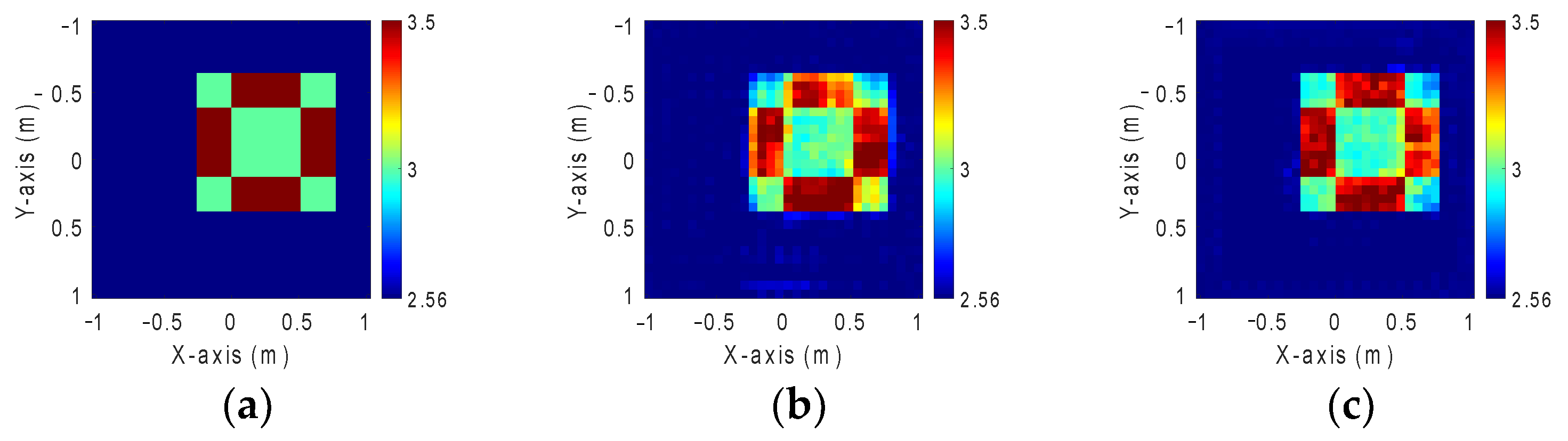



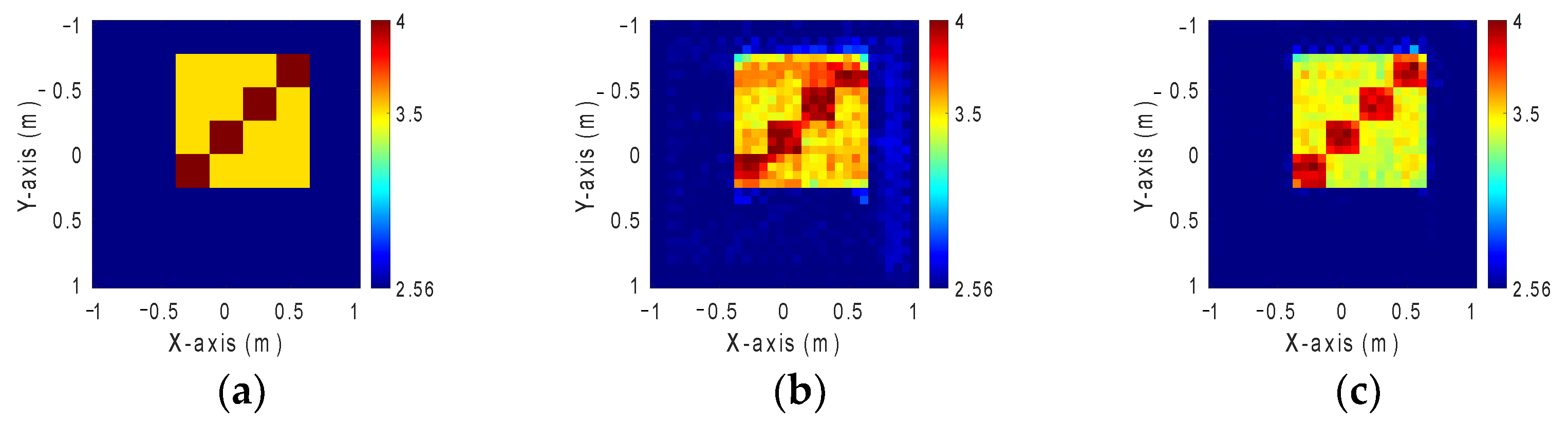
| GAN | SAGAN | |
|---|---|---|
| RMSE | 2.3% | 1.76% |
| SSIM | 89.6% | 94.5% |
| GAN | SAGAN | |
|---|---|---|
| RMSE | 2.96% | 2.45% |
| SSIM | 79.8% | 95.6% |
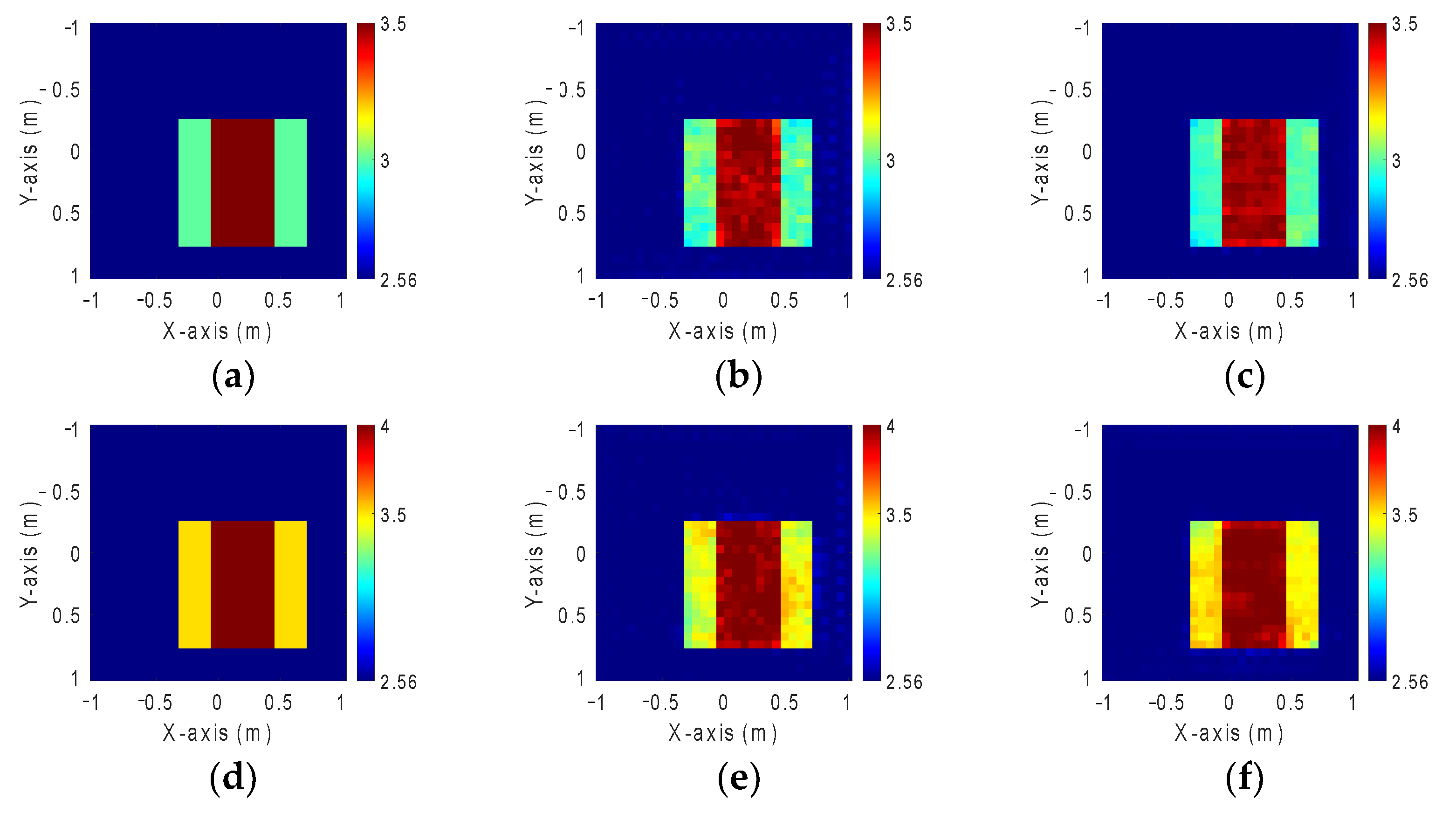
| Performance | 3–3.5 | 3.5–4 | ||
|---|---|---|---|---|
| GAN | SAGAN | GAN | SAGAN | |
| RMSE | 0.94% | 0.89% | 2.96% | 2.45% |
| SSIM | 97.6% | 98.9% | 79.8% | 95.6% |
| GAN | SAGAN | |
|---|---|---|
| RMSE | 2.48% | 1.29% |
| SSIM | 88.1% | 98.8% |
| GAN | SAGAN | |
|---|---|---|
| RMSE | 12.75% | 11.3% |
| SSIM | 72.9% | 78.1% |
Disclaimer/Publisher’s Note: The statements, opinions and data contained in all publications are solely those of the individual author(s) and contributor(s) and not of MDPI and/or the editor(s). MDPI and/or the editor(s) disclaim responsibility for any injury to people or property resulting from any ideas, methods, instructions or products referred to in the content. |
© 2024 by the authors. Licensee MDPI, Basel, Switzerland. This article is an open access article distributed under the terms and conditions of the Creative Commons Attribution (CC BY) license (https://creativecommons.org/licenses/by/4.0/).
Share and Cite
Chiu, C.-C.; Lee, Y.-H.; Chen, P.-H.; Shih, Y.-C.; Hao, J. Application of Self-Attention Generative Adversarial Network for Electromagnetic Imaging in Half-Space. Sensors 2024, 24, 2322. https://doi.org/10.3390/s24072322
Chiu C-C, Lee Y-H, Chen P-H, Shih Y-C, Hao J. Application of Self-Attention Generative Adversarial Network for Electromagnetic Imaging in Half-Space. Sensors. 2024; 24(7):2322. https://doi.org/10.3390/s24072322
Chicago/Turabian StyleChiu, Chien-Ching, Yang-Han Lee, Po-Hsiang Chen, Ying-Chen Shih, and Jiang Hao. 2024. "Application of Self-Attention Generative Adversarial Network for Electromagnetic Imaging in Half-Space" Sensors 24, no. 7: 2322. https://doi.org/10.3390/s24072322
APA StyleChiu, C.-C., Lee, Y.-H., Chen, P.-H., Shih, Y.-C., & Hao, J. (2024). Application of Self-Attention Generative Adversarial Network for Electromagnetic Imaging in Half-Space. Sensors, 24(7), 2322. https://doi.org/10.3390/s24072322