Article

Wearable Sensor-Based Residual Multifeature Fusion Shrinkage Networks for Human Activity Recognition


School of Electronics and Information, Guangdong Polytechnic Normal University, Guangzhou 510660, China
*
Author to whom correspondence should be addressed.
Sensors 2024, 24(3), 758; https://doi.org/10.3390/s24030758
Submission received: 22 November 2023 / Revised: 20 January 2024 / Accepted: 22 January 2024 / Published: 24 January 2024
(This article belongs to the Section Sensor Networks)

Abstract

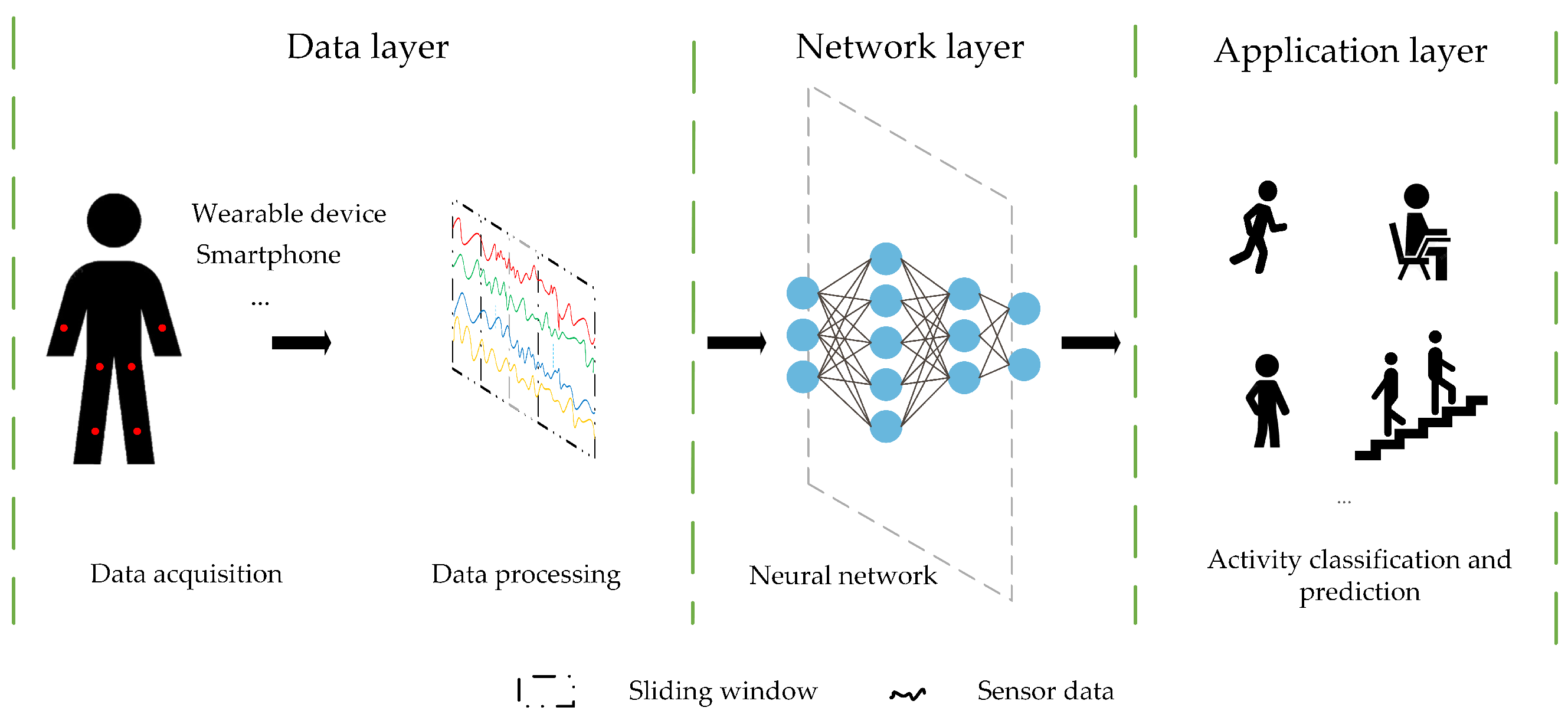
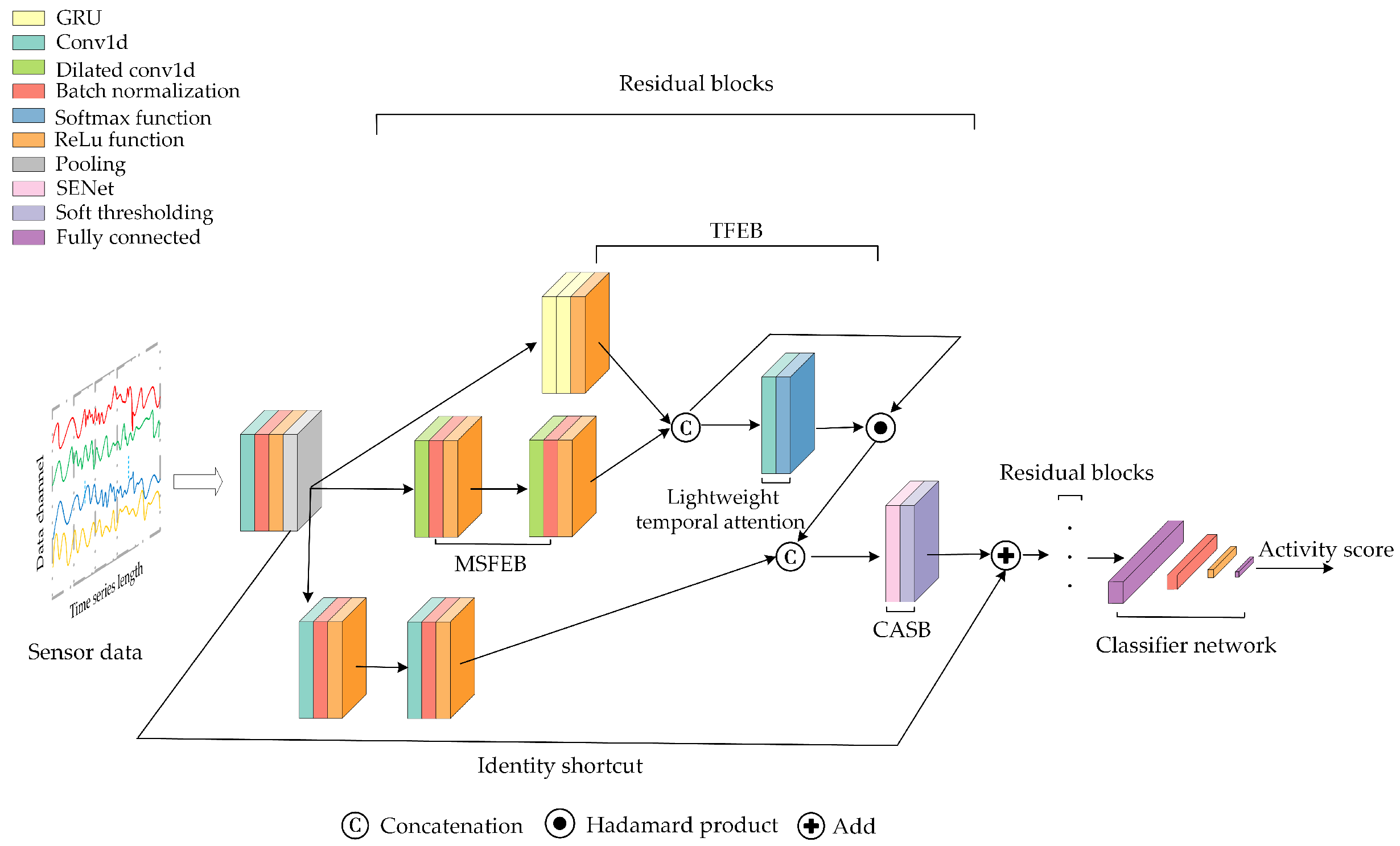
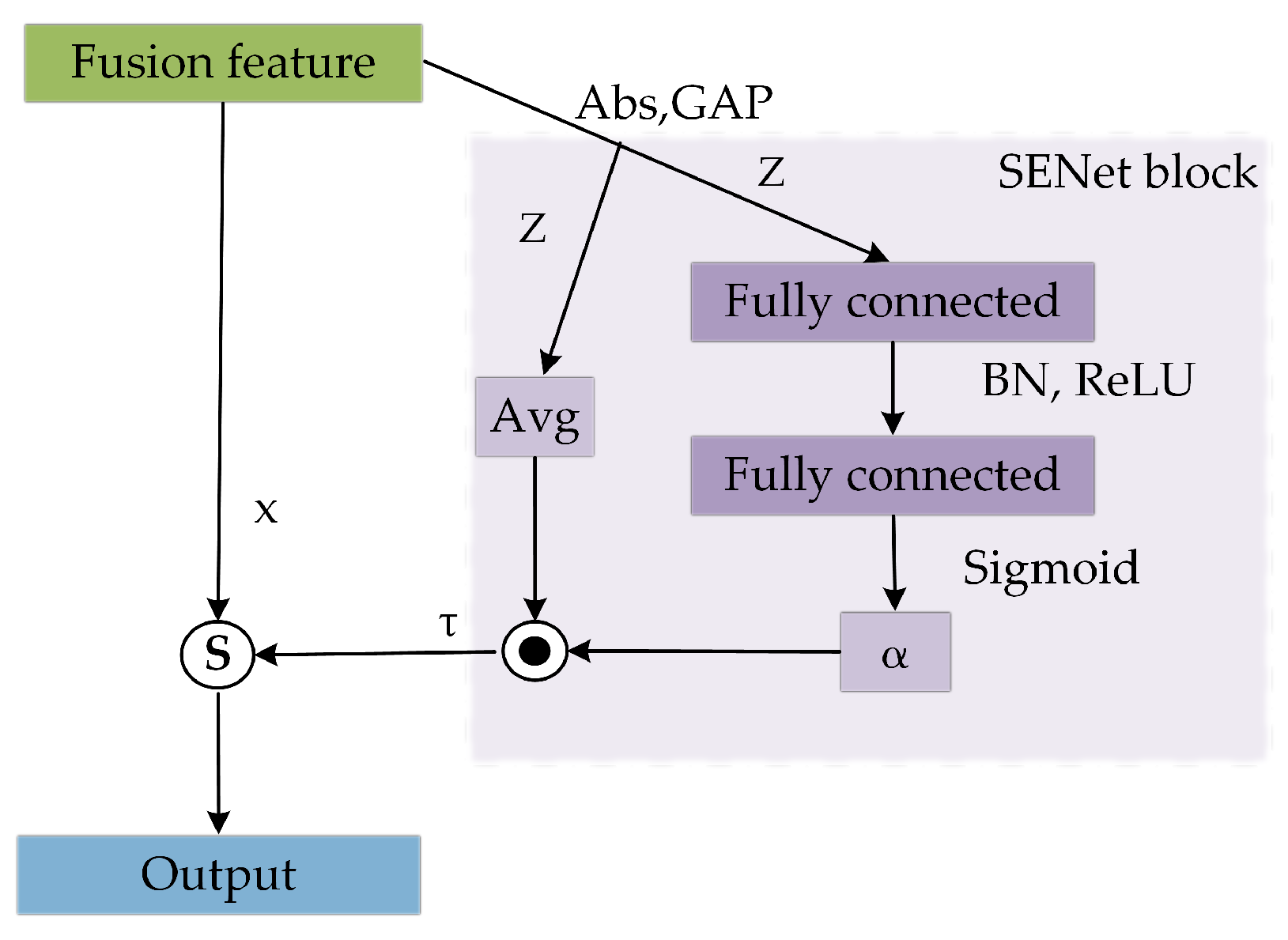
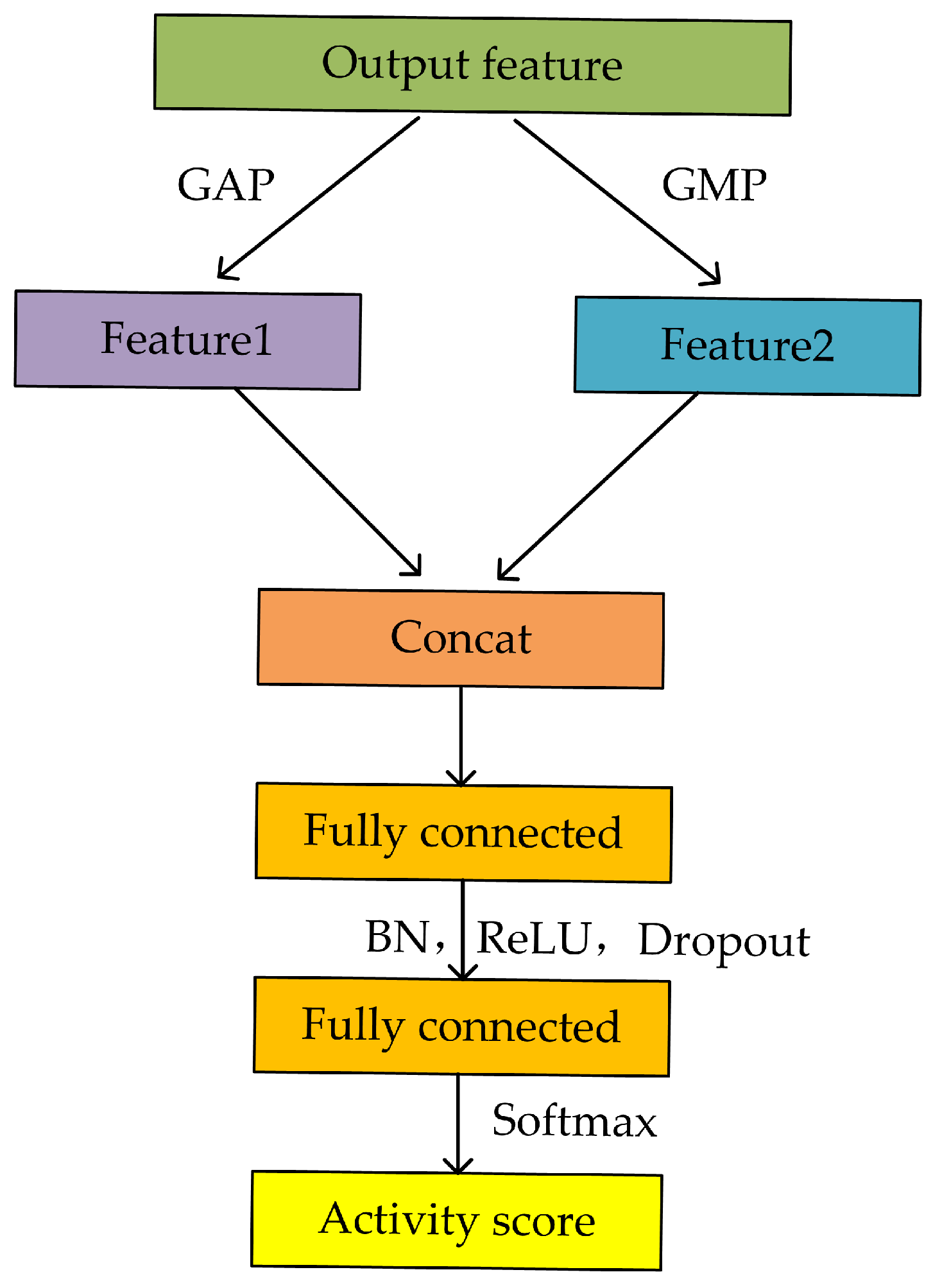
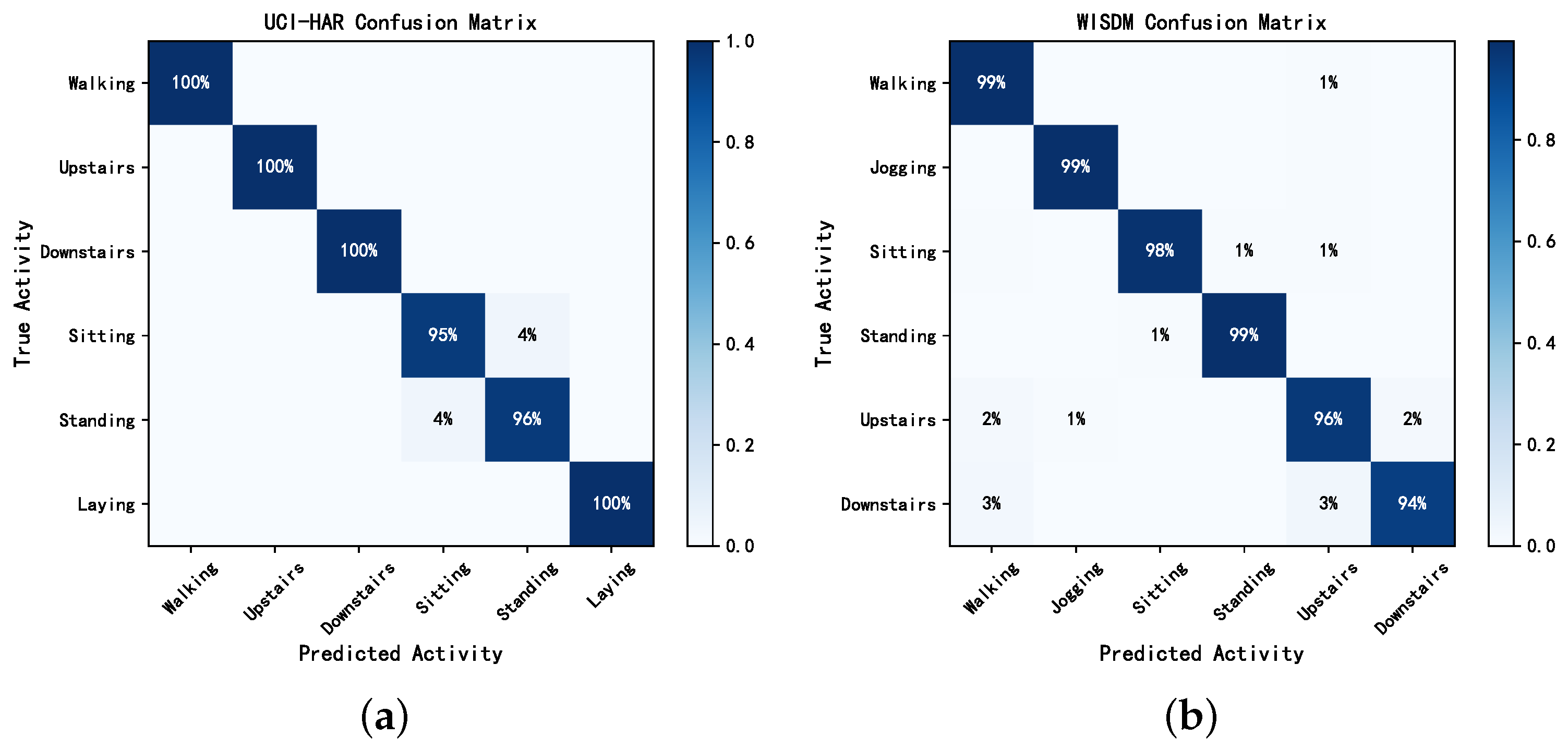
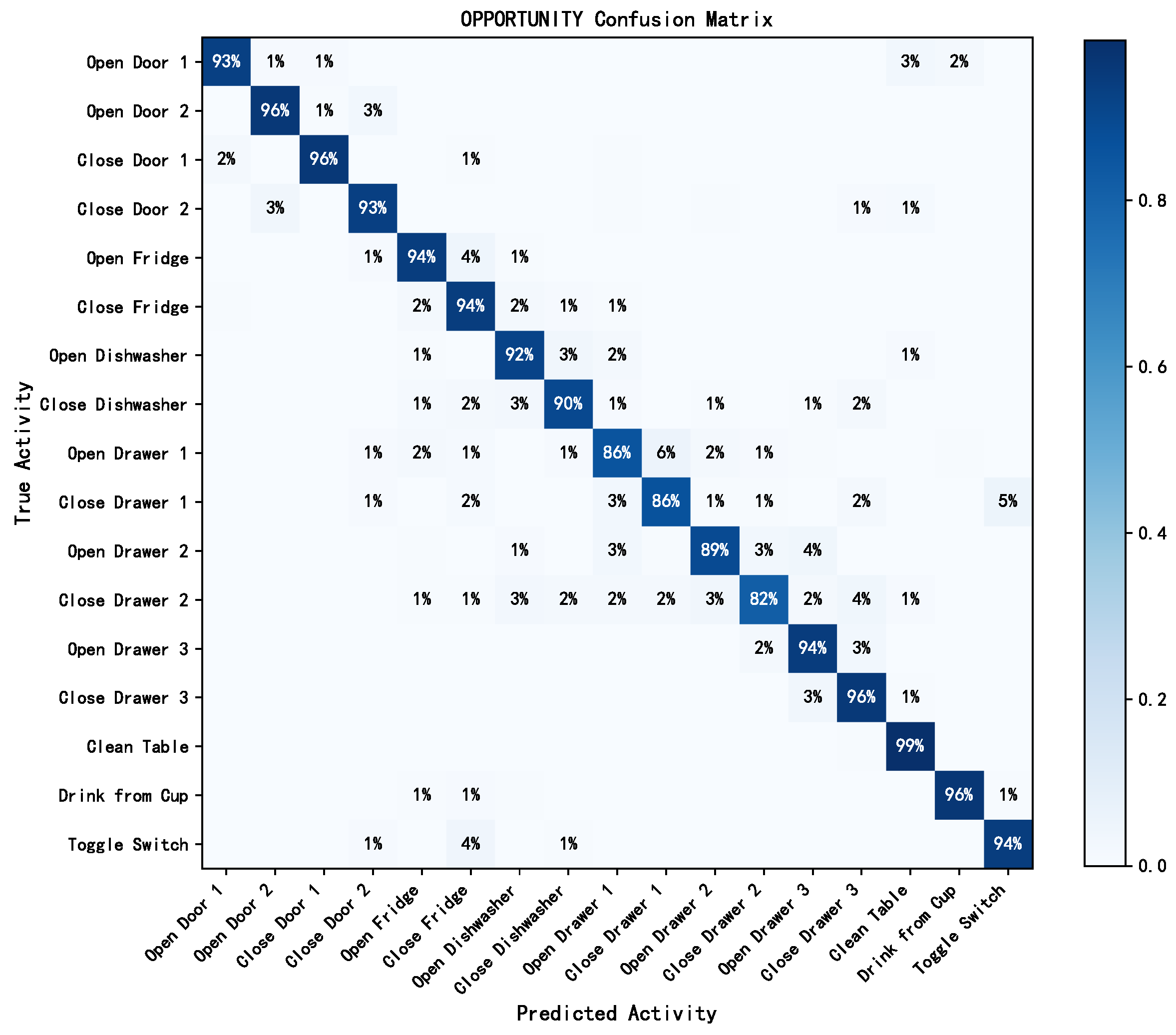
Human activity recognition (HAR) based on wearable sensors has emerged as a low-cost key-enabling technology for applications such as human–computer interaction and healthcare. In wearable sensor-based HAR, deep learning is desired for extracting human active features. Due to the spatiotemporal dynamic of human activity, a special deep learning network for recognizing the temporal continuous activities of humans is required to improve the recognition accuracy for supporting advanced HAR applications. To this end, a residual multifeature fusion shrinkage network (RMFSN) is proposed. The RMFSN is an improved residual network which consists of a multi-branch framework, a channel attention shrinkage block (CASB), and a classifier network. The special multi-branch framework utilizes a 1D-CNN, a lightweight temporal attention mechanism, and a multi-scale feature extraction method to capture diverse activity features via multiple branches. The CASB is proposed to automatically select key features from the diverse features for each activity, and the classifier network outputs the final recognition results. Experimental results have shown that the accuracy of the proposed RMFSN for the public datasets UCI-HAR, WISDM, and OPPORTUNITY are 98.13%, 98.35%, and 93.89%, respectively. In comparison with existing advanced methods, the proposed RMFSN could achieve higher accuracy while requiring fewer model parameters.
Keywords: human activity recognition (HAR); multifeature extraction; feature fusion; attention mechanism; feature selection human activity recognition (HAR); multifeature extraction; feature fusion; attention mechanism; feature selection