Article

Multi-Activity Step Counting Algorithm Using Deep Learning Foot Flat Detection with an IMU Inside the Sole of a Shoe


by
Quentin Lucot
1,2,*,
Erwan Beurienne
1,3 and
Michel Behr
1
1
LBA UMR T24, Université Gustave Eiffel, Aix-Marseille Université, 13015 Marseille, France
2
Wizwedge SARL, 13004 Marseille, France
3
Context’, Tyyny, 42500 Le Chambon-Feugerolles, France
*
Author to whom correspondence should be addressed.
Sensors 2024, 24(21), 6927; https://doi.org/10.3390/s24216927
Submission received: 23 September 2024 / Revised: 23 October 2024 / Accepted: 25 October 2024 / Published: 29 October 2024
(This article belongs to the Section Wearables)

Abstract

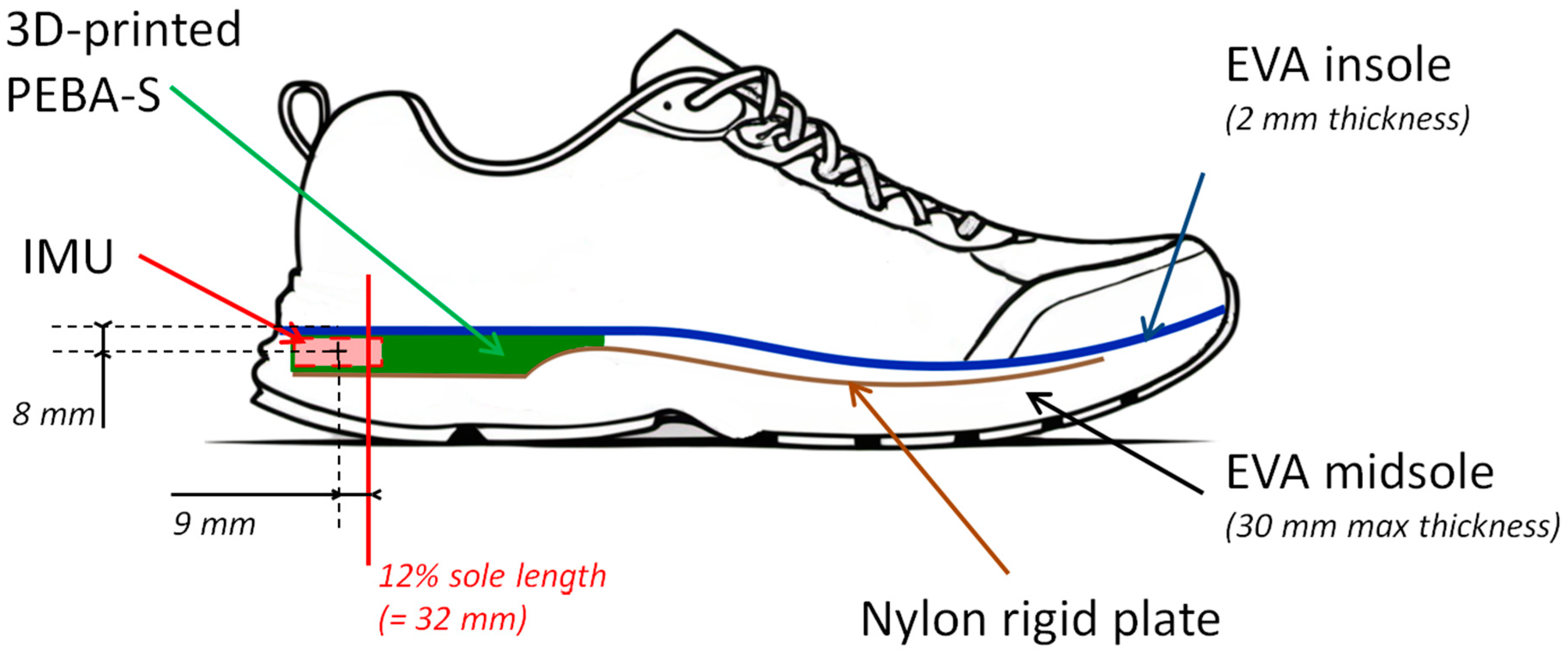
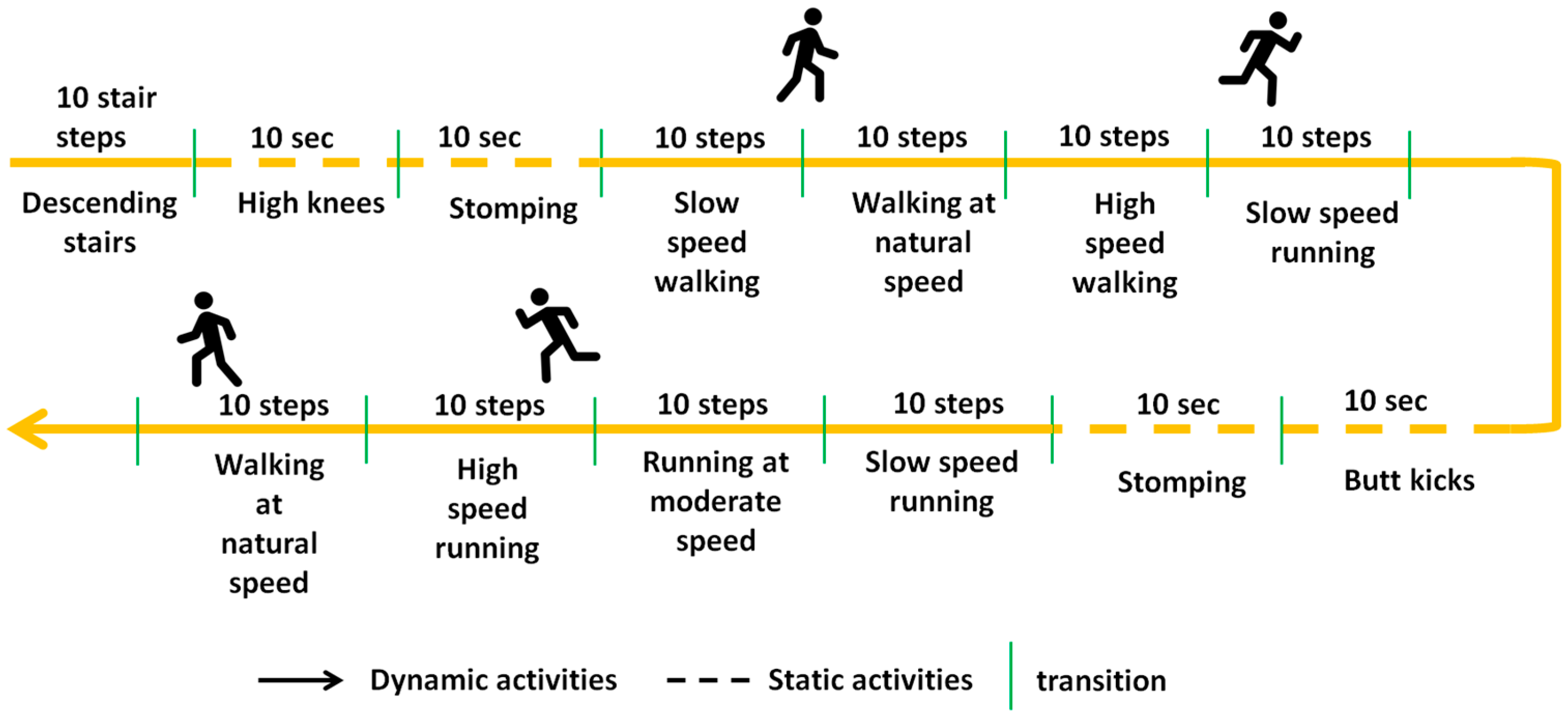
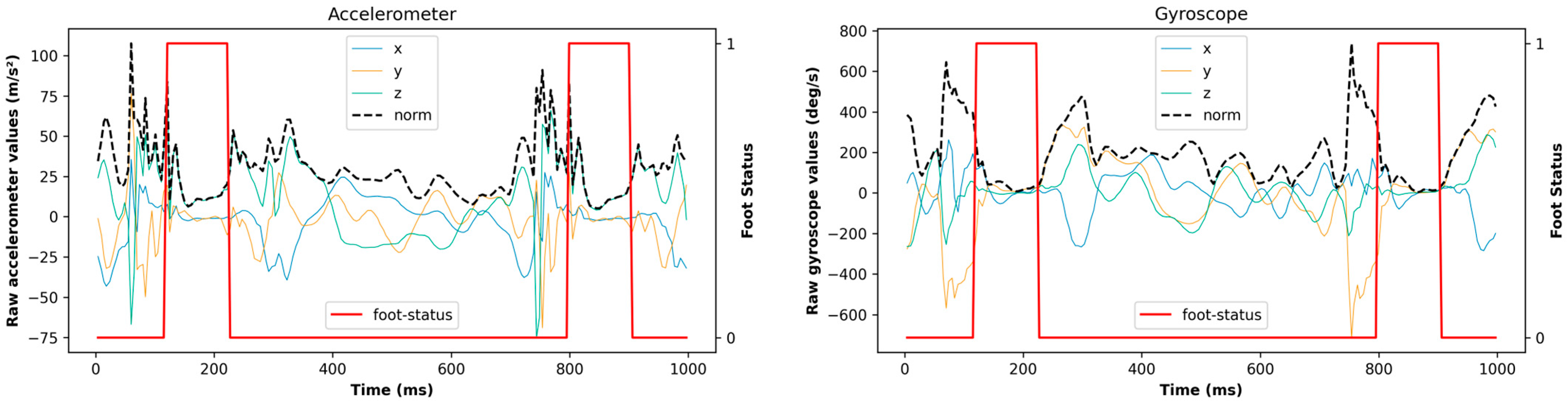
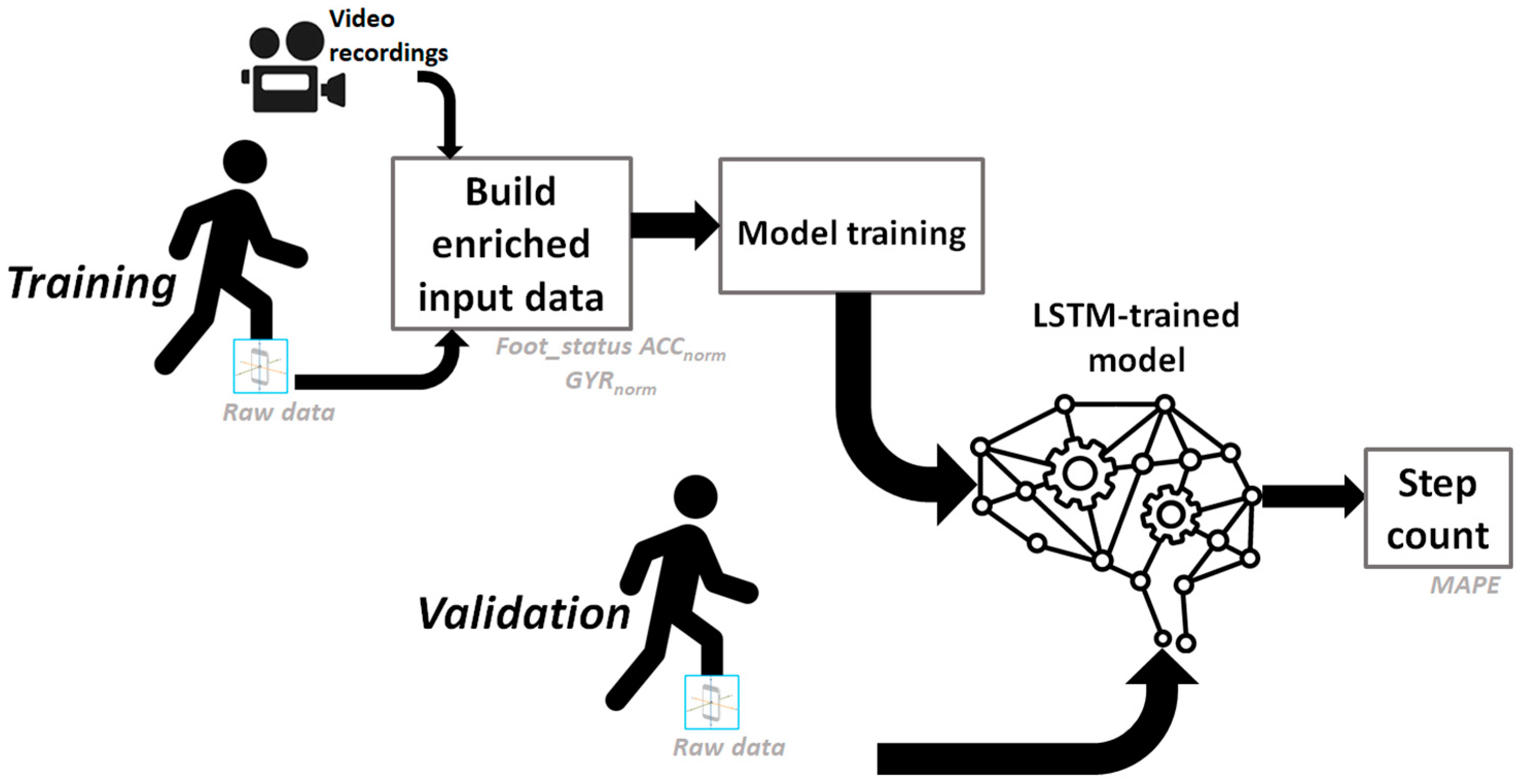
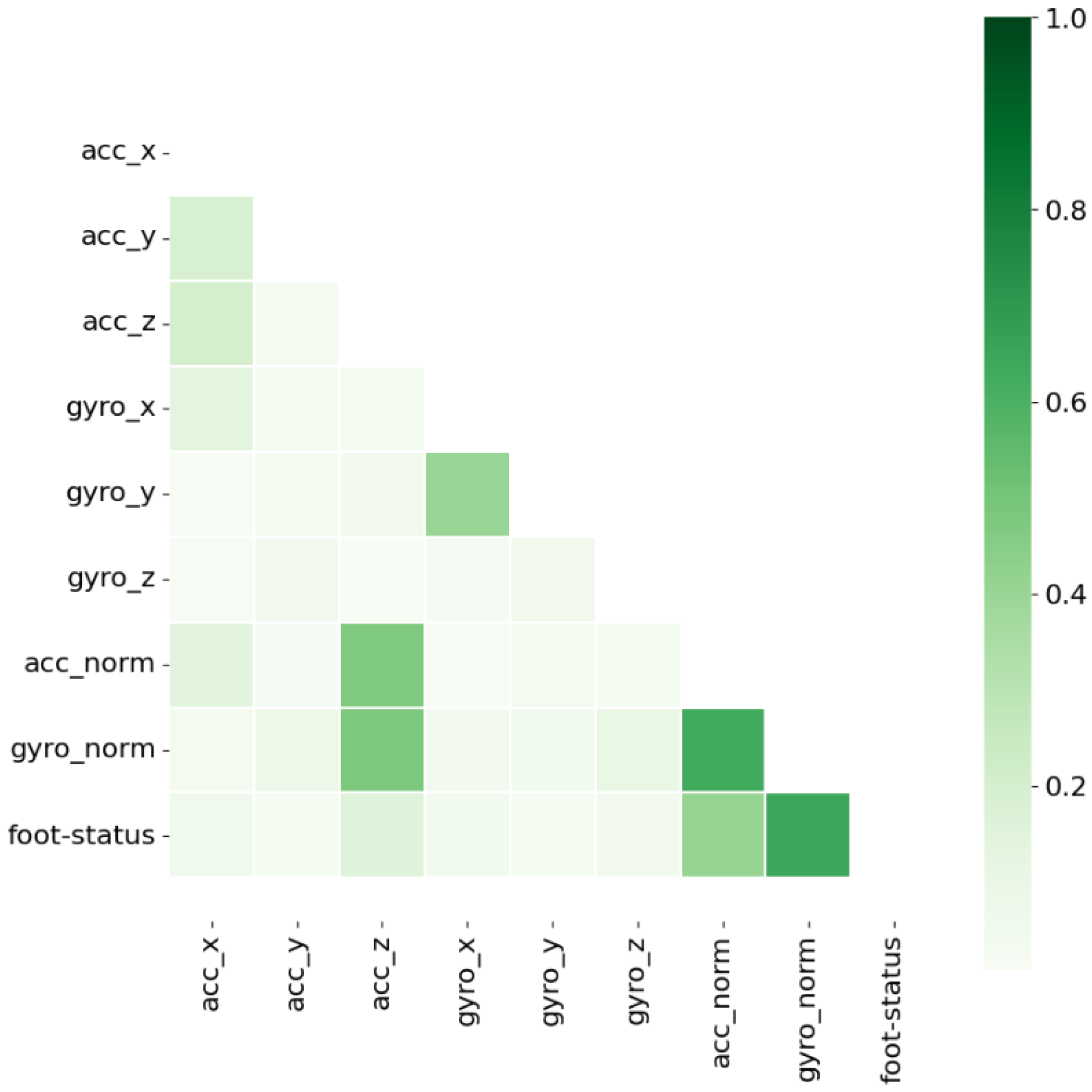
Step counting devices were previously shown to be efficient in a variety of applications such as athletic training or patient’s care programs. Various sensor placements and algorithms were previously experimented, with a best mean absolute percentage error (MAPE) close to 1% in simple mono-activity walking conditions. In this study, an existing running shoe was first instrumented with an inertial measurement unit (IMU) and used in the context of multi-activity trials, at various speeds, and including several transition phases. A total of 21 participants with diverse profiles (gender, age, BMI, activity style) completed the trial. The data recorded was used to develop a step counting algorithm based on a deep learning approach, and further validated against a k-fold cross validation process. The results revealed that the step counts were highly correlated to gyroscopes and accelerometers norms, and secondarily to vertical acceleration. Reducing input data to only those three vectors showed a very small decrease in the prediction performance. After the fine-tuning of the algorithm, a MAPE of 0.75% was obtained. Our results show that such very high performances can be expected even in multi-activity conditions and with low computational resource needs making this approach suitable for embedded devices.
Keywords: step counting; IMU; gait analysis; deep learning; pedometer; LSTM step counting; IMU; gait analysis; deep learning; pedometer; LSTM