Article

A Deep Learning-Based Two-Branch Generative Adversarial Network for Image De-Raining

Key Laboratory of Modern Power System Simulation and Control & Renewable Energy Technology, Ministry of Education, Northeast Electric Power University, Jilin 132012, China
*
Author to whom correspondence should be addressed.
Sensors 2024, 24(20), 6724; https://doi.org/10.3390/s24206724
Submission received: 23 August 2024 / Revised: 16 October 2024 / Accepted: 18 October 2024 / Published: 19 October 2024
(This article belongs to the Section Sensing and Imaging)

Abstract

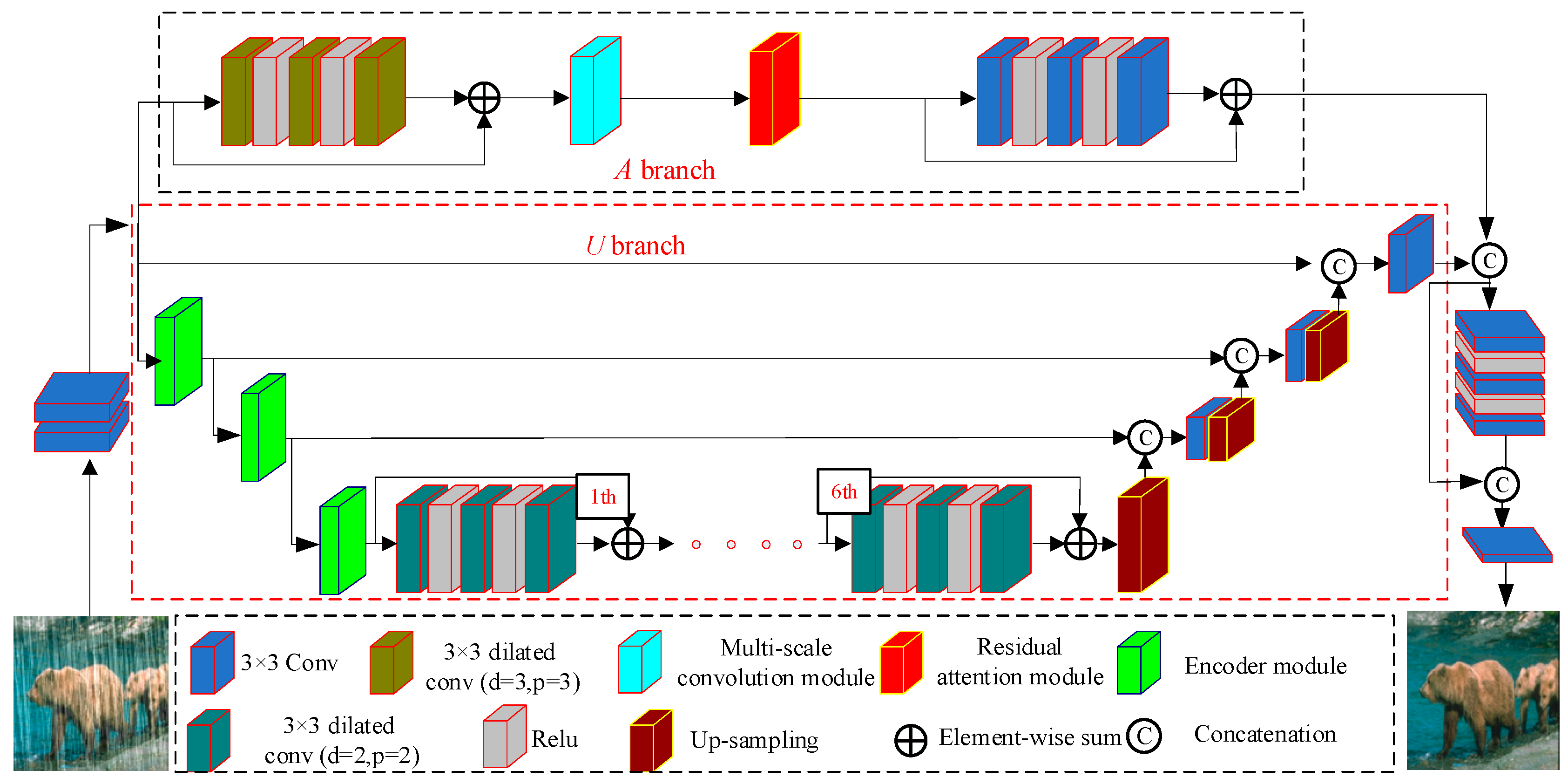
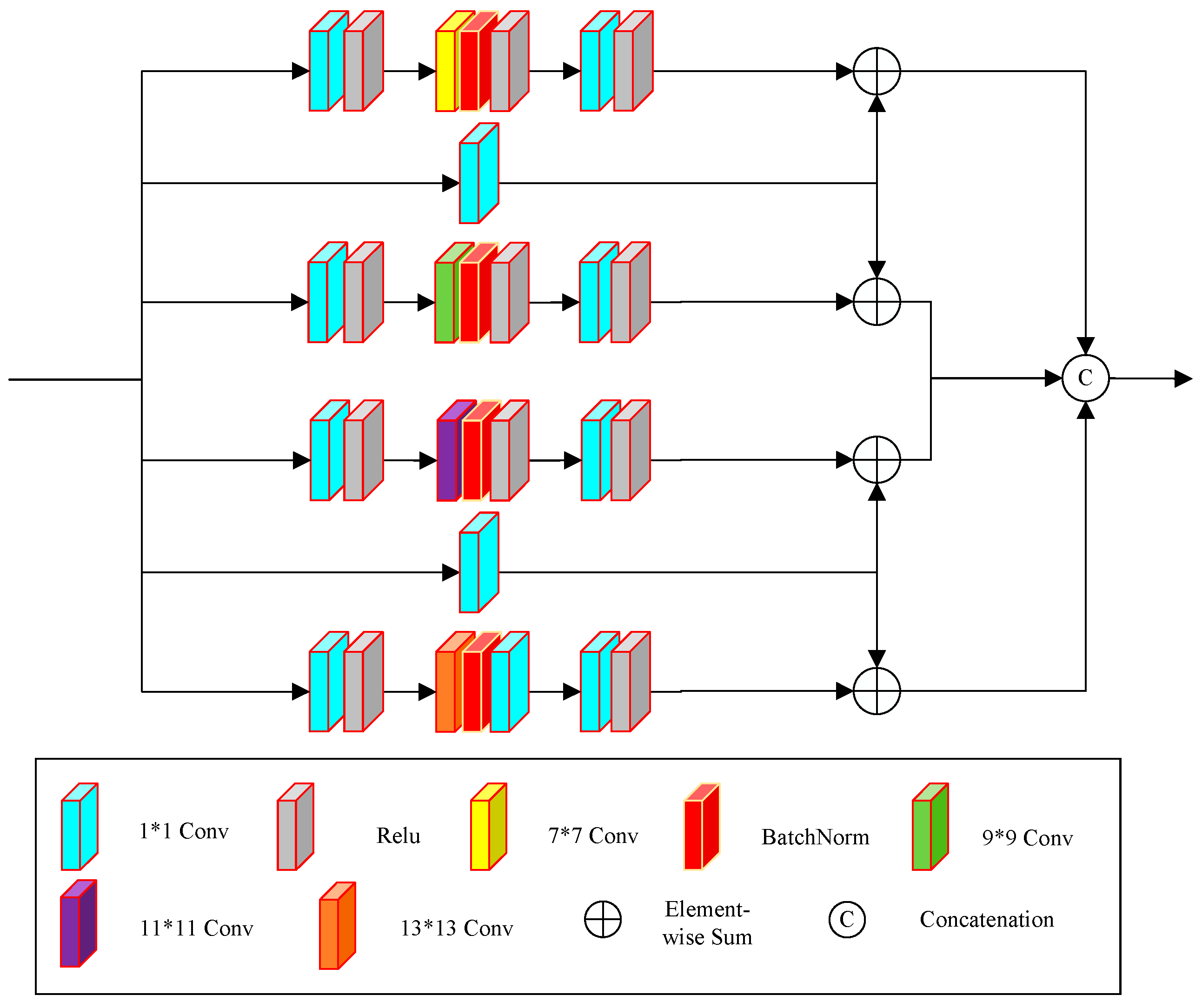
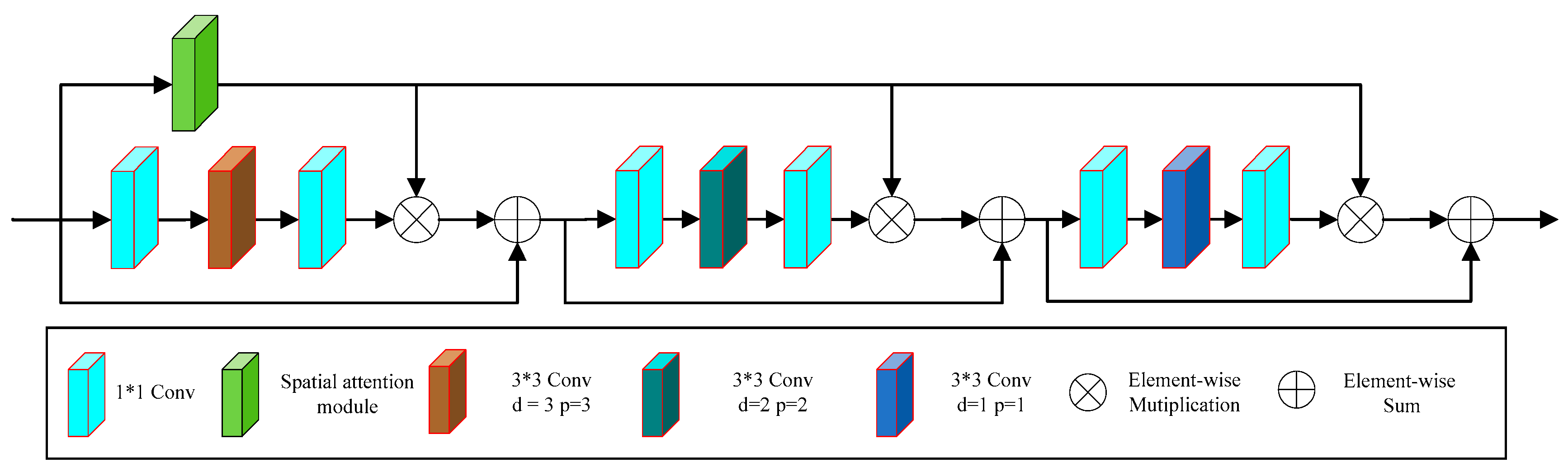
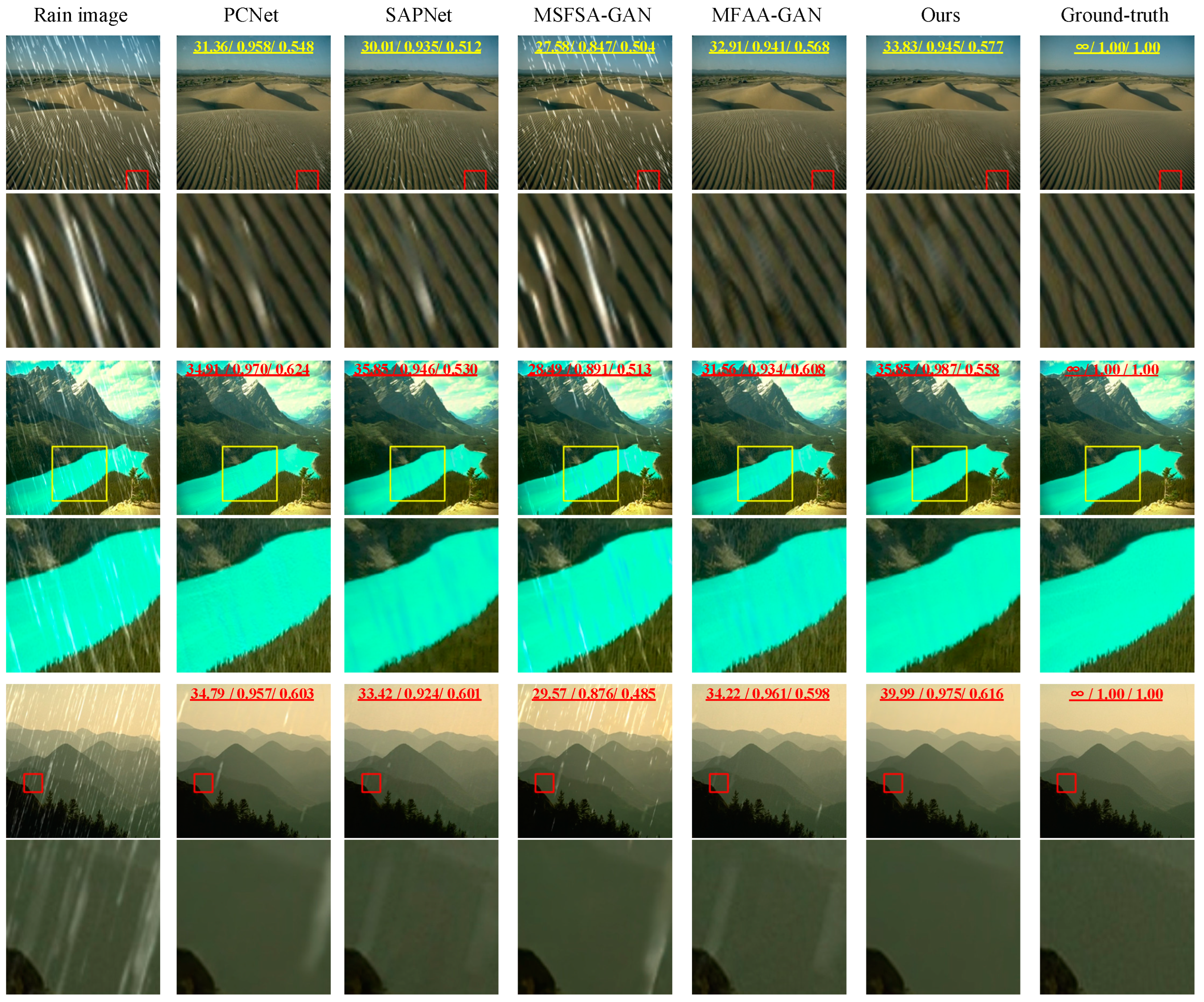
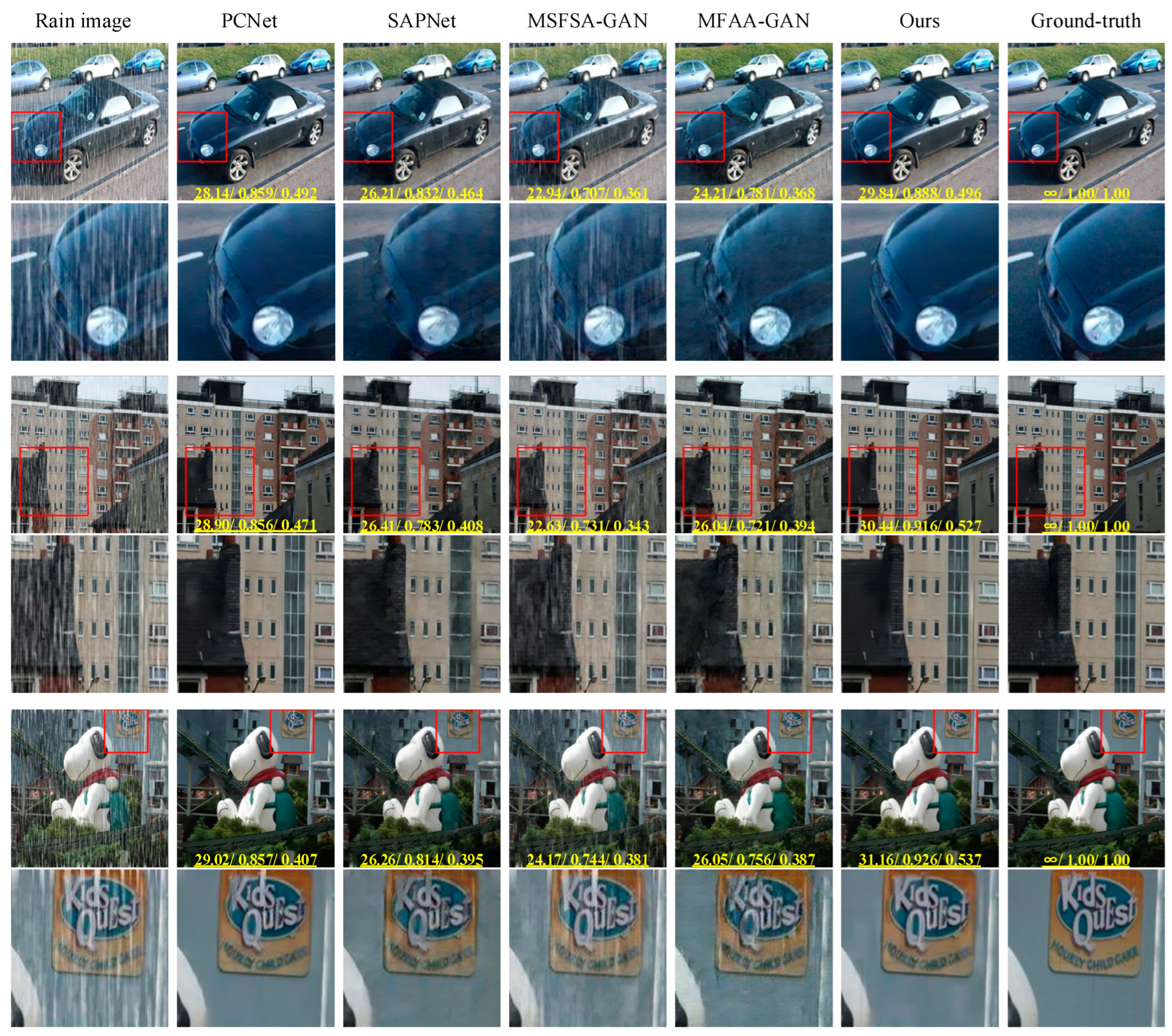
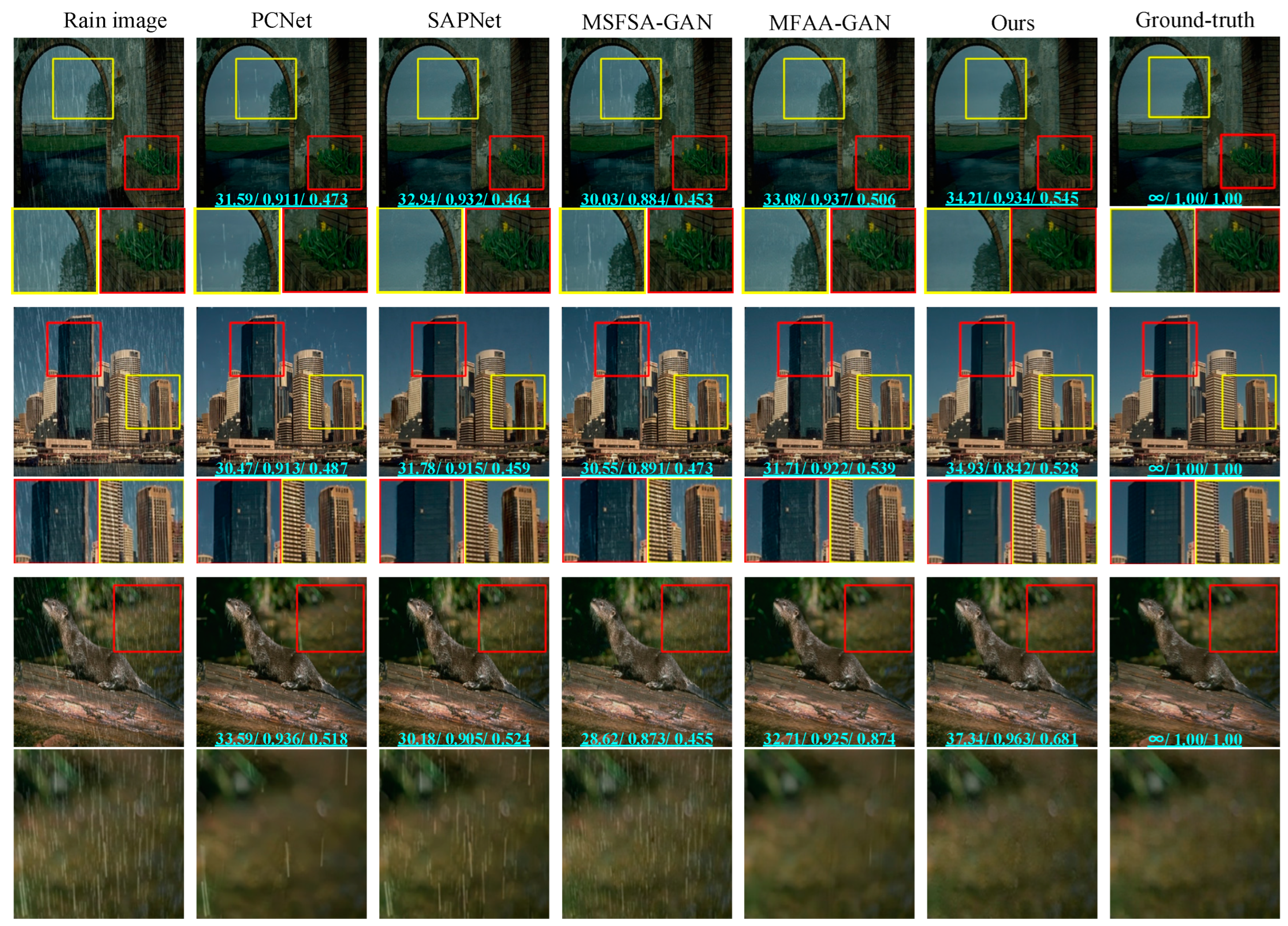
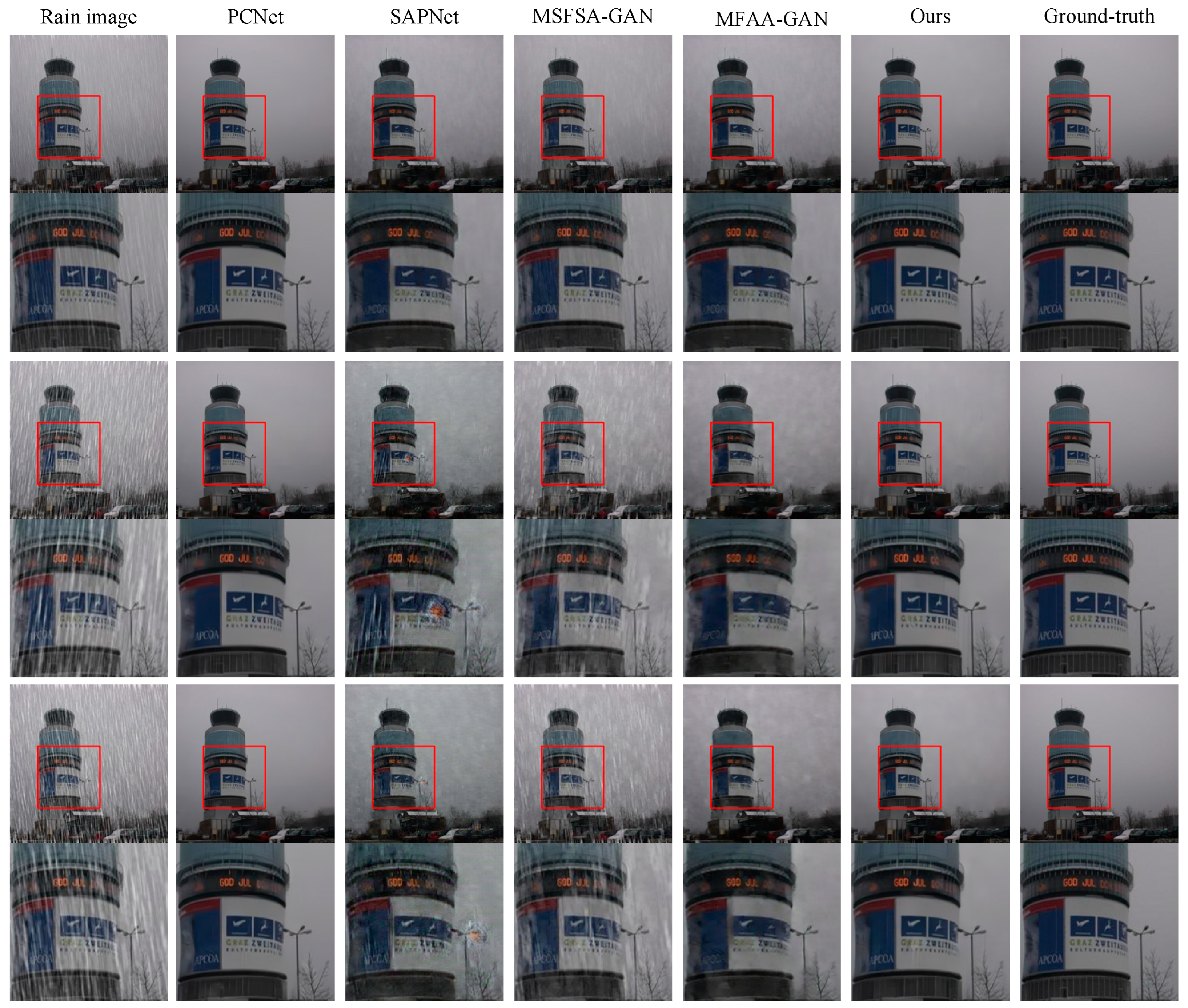
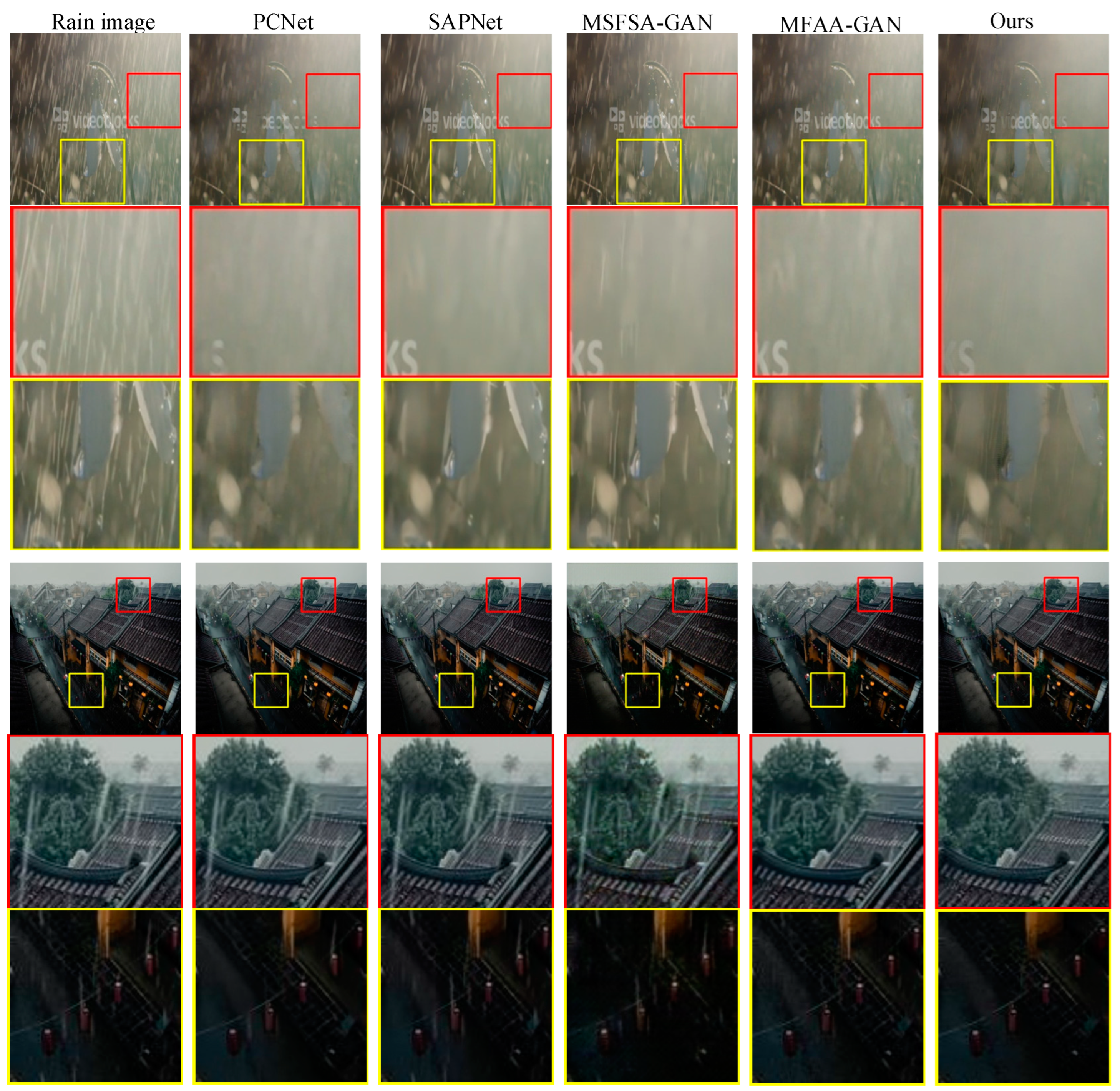
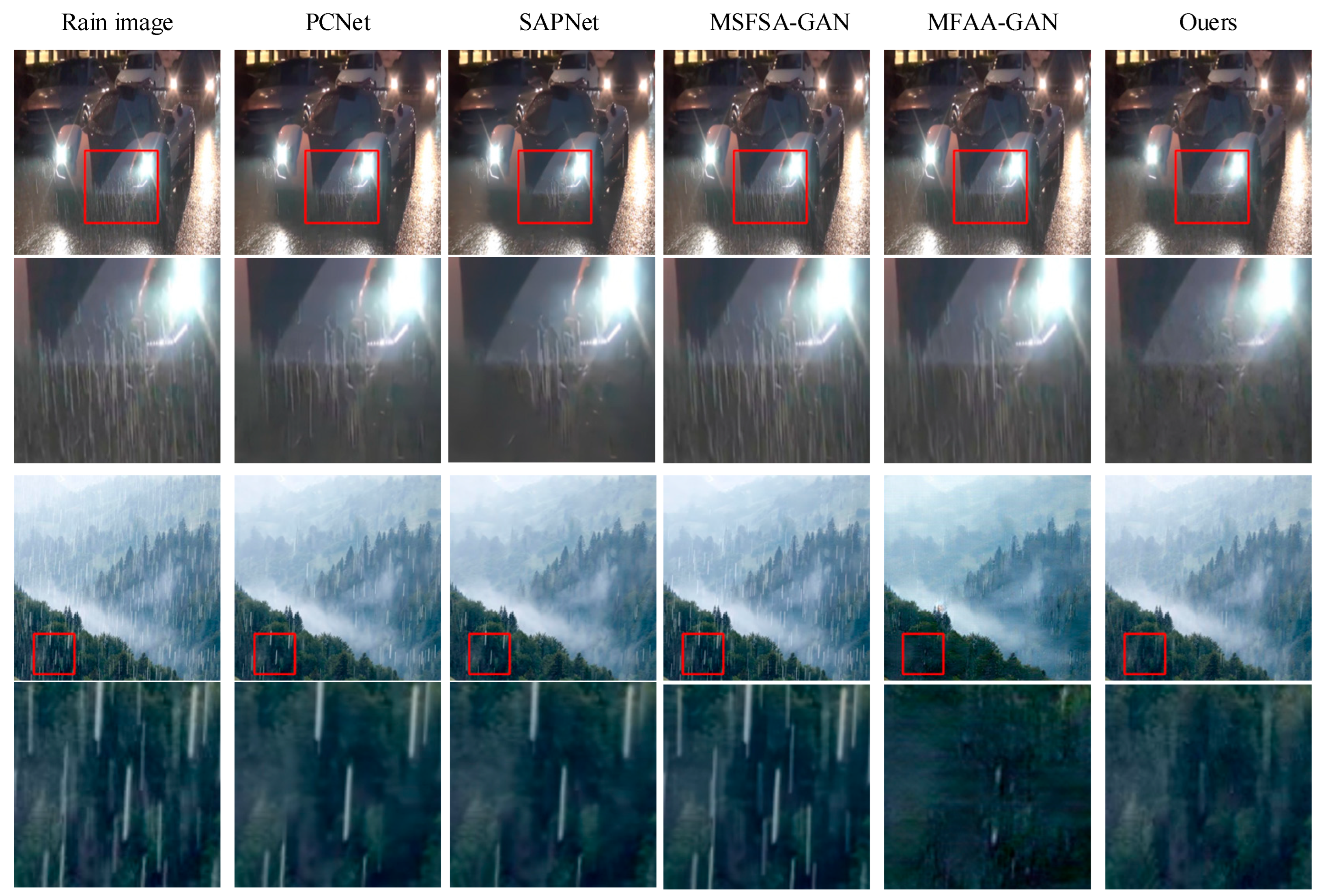
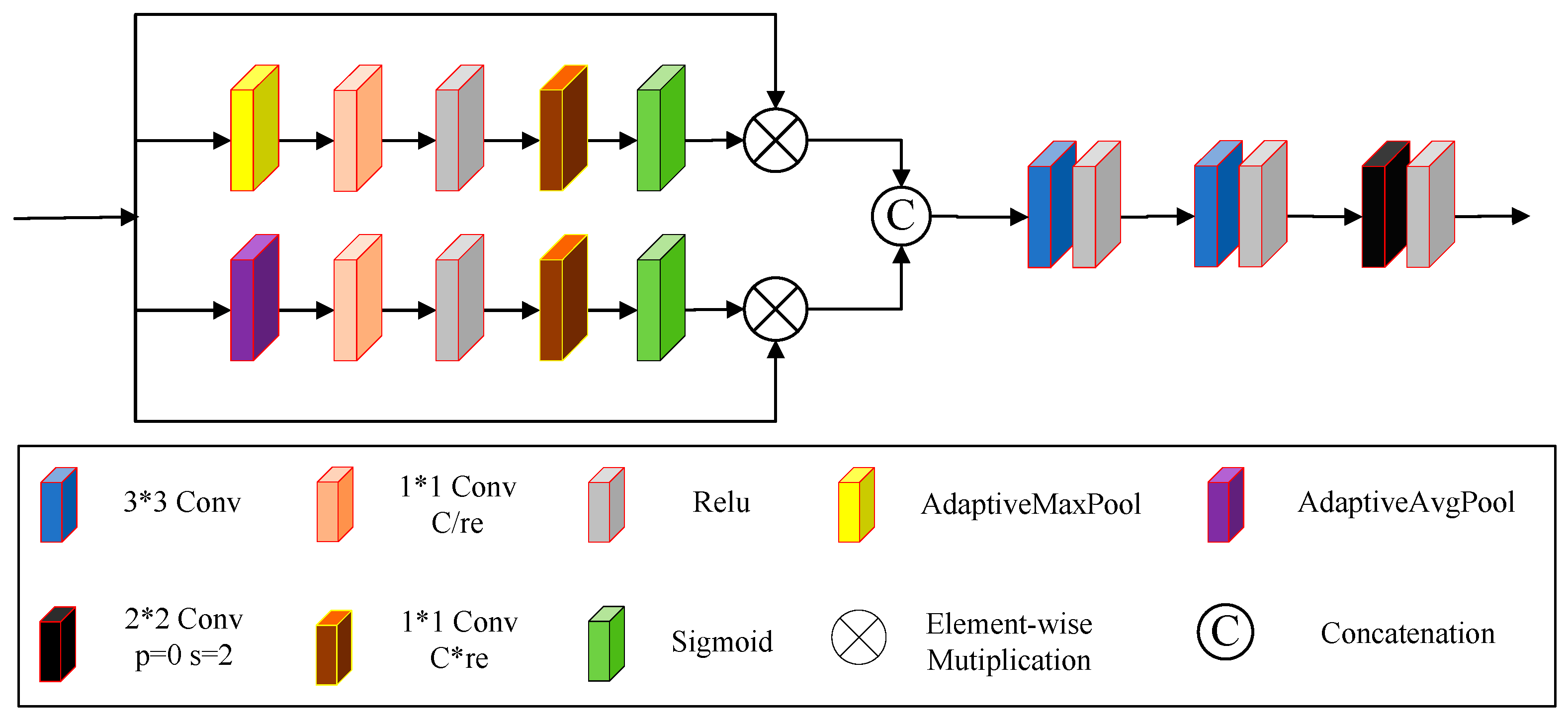
Raindrops can scatter and absorb light, causing images to become blurry or distorted. To improve image quality by reducing the impact of raindrops, this paper proposes a novel generative adversarial network for image de-raining. The network comprises two parts: a generative network and an adversarial network. The generative network performs image de-raining. The adversarial network determines whether the input image is rain-free or de-rained. The generative network comprises two branches: the A branch, which follows a traditional convolutional network structure, and the U branch, which utilizes a U-Net architecture. The A branch includes a multi-scale module for extracting information at different scales and a residual attention module to reduce redundant information interference. The U branch contains an encoder module designed to address the loss of details and local information caused by conventional down-sampling. To improve the performance of the generative network in image de-raining, this paper employs a relative discriminator incorporating a mean squared error loss. This discriminator better measures the differences between rainy and rain-free images while effectively preventing the occurrence of gradient vanishing. Finally, this study performs visual and quantitative comparisons of the proposed method and existing methods on three established rain image datasets. In the quantitative experiments, the proposed method outperforms existing methods regarding PSNR, SSIM, and VIF metrics. Specifically, our method achieves an average PSNR, SSIM, and VIF of approximately 5%, 3%, and 4% higher than the MFAA-GAN method, respectively. These results indicate that the de-rained images generated via the proposed method are closer to rain-free images.
Keywords: image de-raining; generative adversarial network; two-branch; multi-scale; residual attention image de-raining; generative adversarial network; two-branch; multi-scale; residual attention