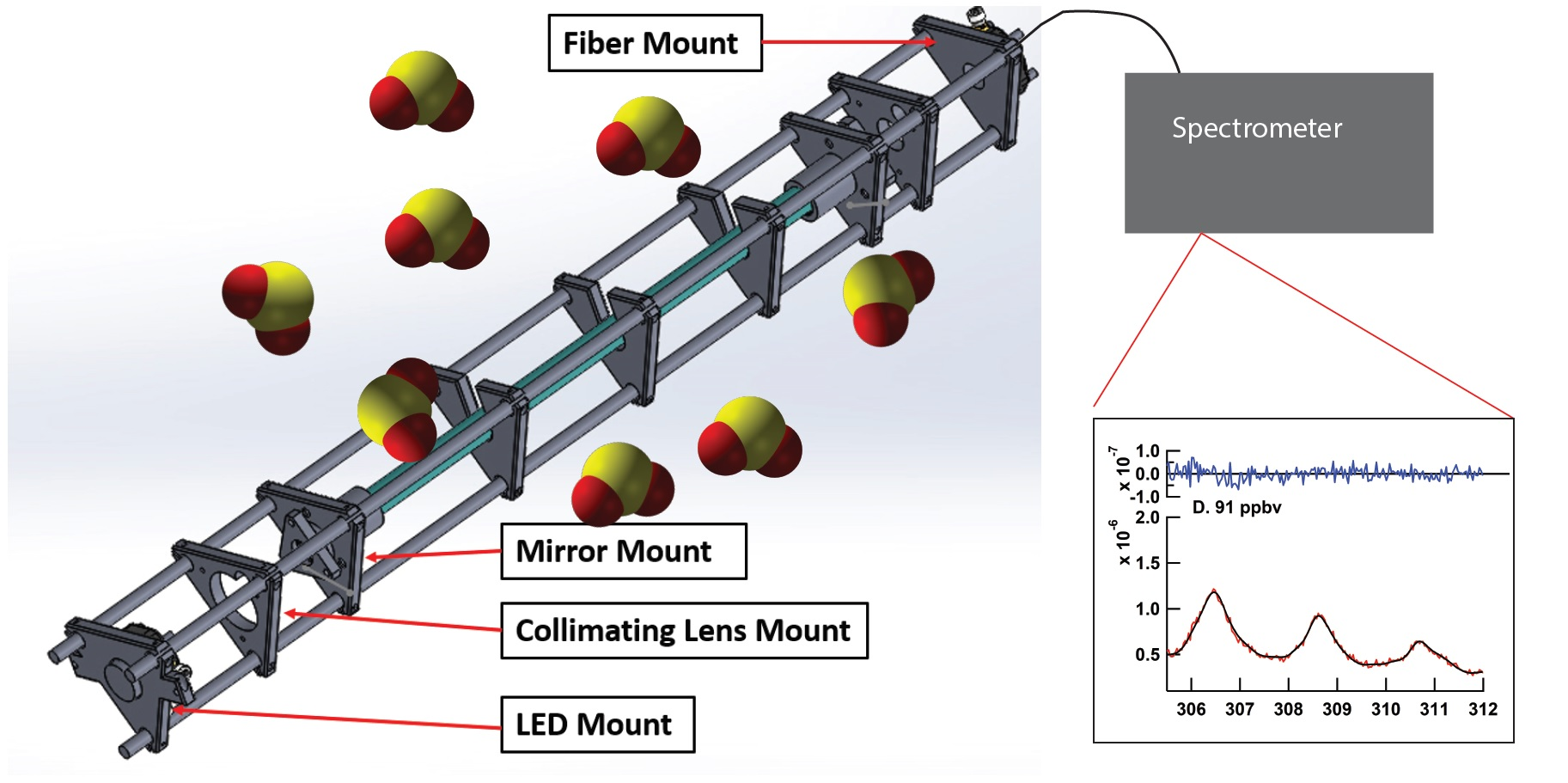
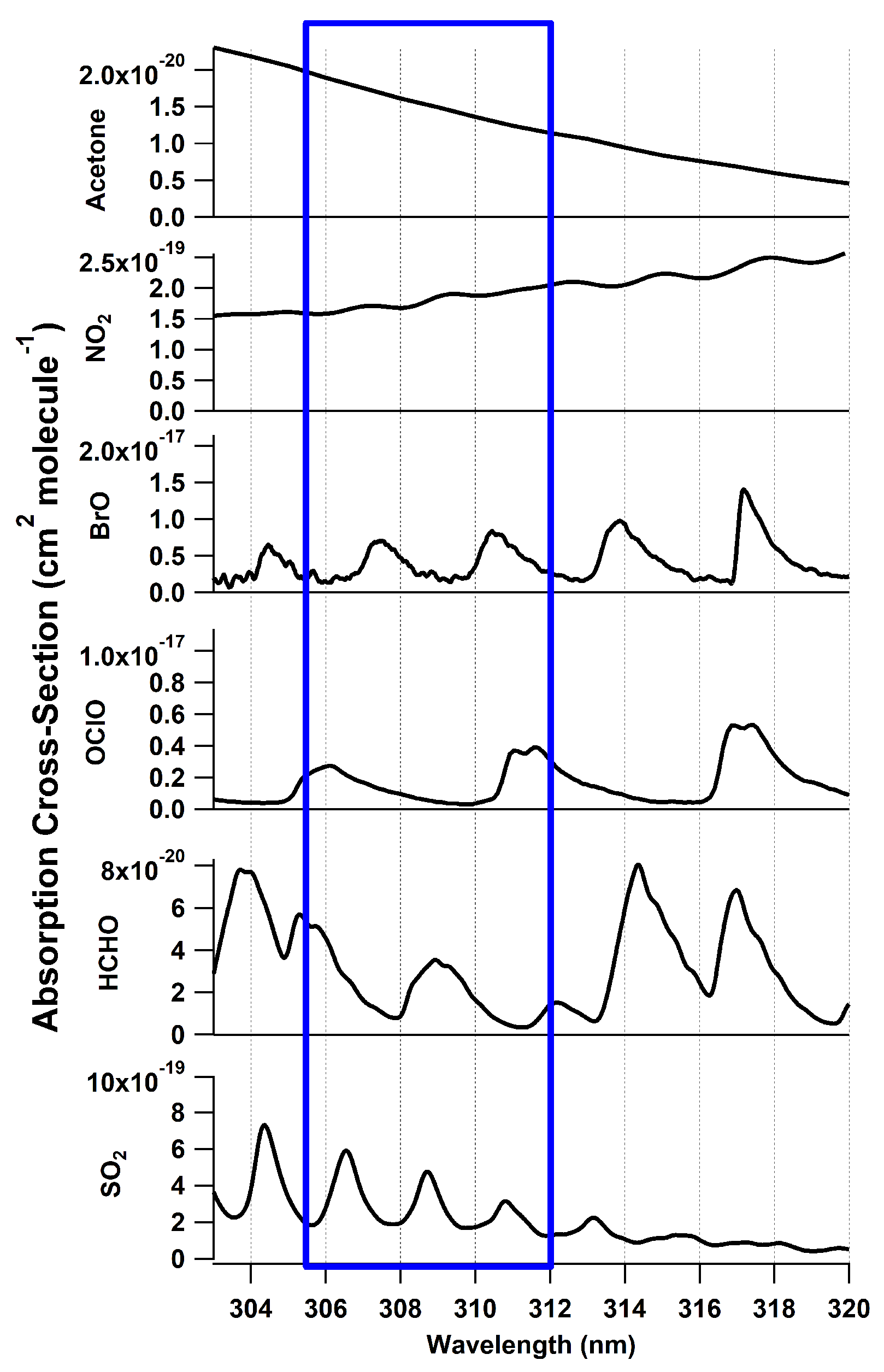
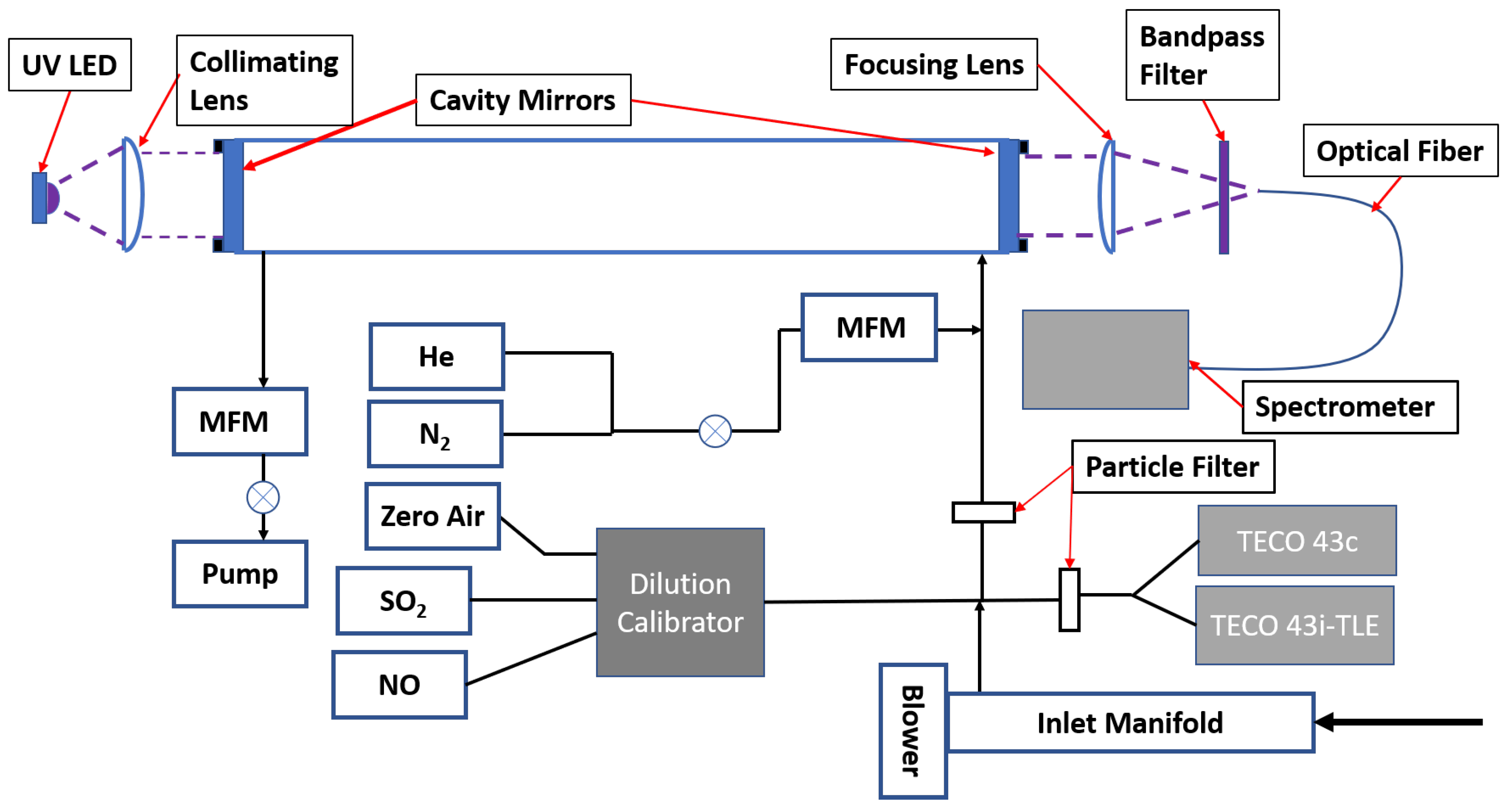
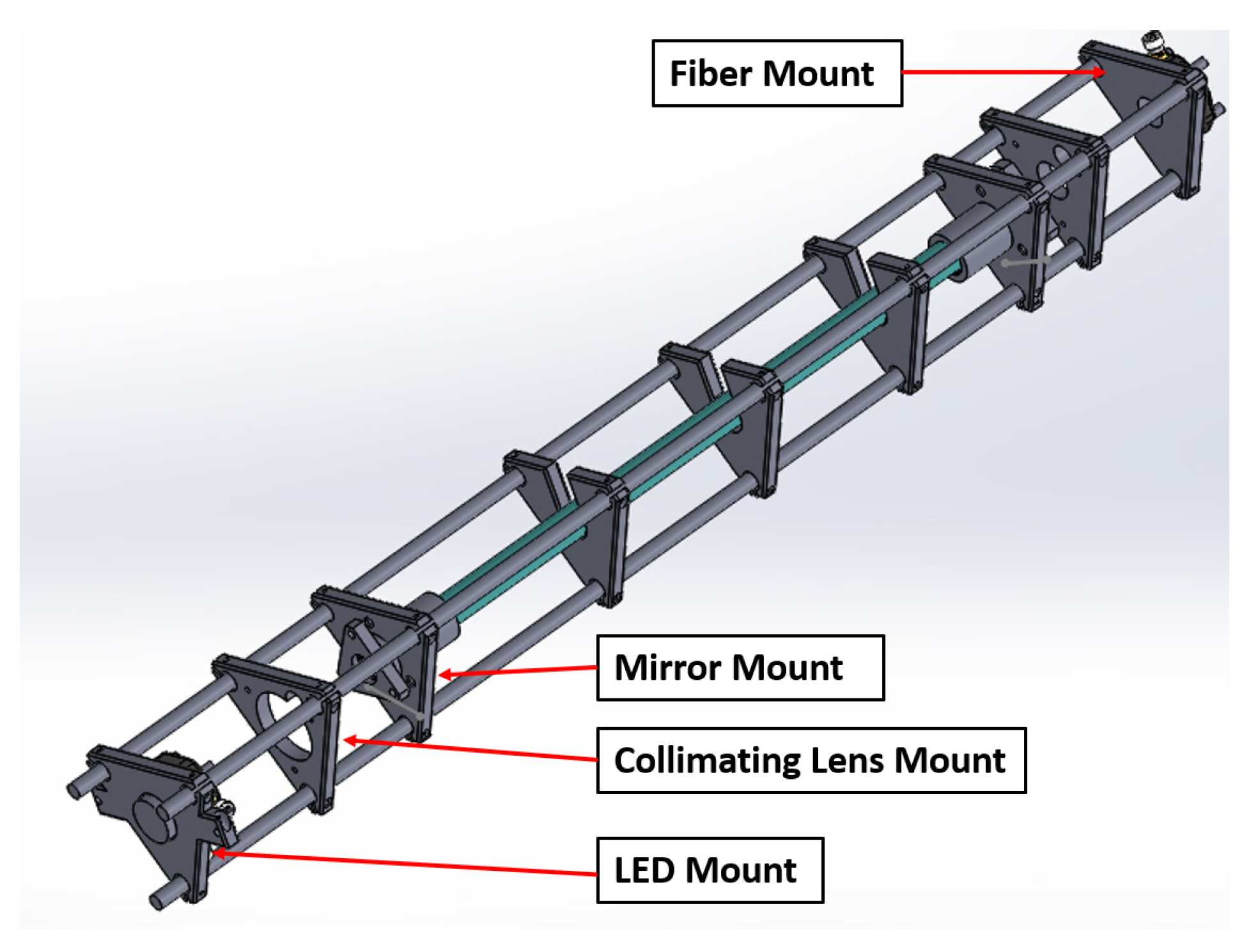
Detection of Sulfur Dioxide by Broadband Cavity-Enhanced Absorption Spectroscopy (BBCEAS)

Abstract
Share and Cite
Thalman, R.; Bhardwaj, N.; Flowerday, C.E.; Hansen, J.C. Detection of Sulfur Dioxide by Broadband Cavity-Enhanced Absorption Spectroscopy (BBCEAS). Sensors 2022, 22, 2626. https://doi.org/10.3390/s22072626
Thalman R, Bhardwaj N, Flowerday CE, Hansen JC. Detection of Sulfur Dioxide by Broadband Cavity-Enhanced Absorption Spectroscopy (BBCEAS). Sensors. 2022; 22(7):2626. https://doi.org/10.3390/s22072626
Chicago/Turabian StyleThalman, Ryan, Nitish Bhardwaj, Callum E. Flowerday, and Jaron C. Hansen. 2022. "Detection of Sulfur Dioxide by Broadband Cavity-Enhanced Absorption Spectroscopy (BBCEAS)" Sensors 22, no. 7: 2626. https://doi.org/10.3390/s22072626
APA StyleThalman, R., Bhardwaj, N., Flowerday, C. E., & Hansen, J. C. (2022). Detection of Sulfur Dioxide by Broadband Cavity-Enhanced Absorption Spectroscopy (BBCEAS). Sensors, 22(7), 2626. https://doi.org/10.3390/s22072626