Article

Predicting Chemical Carcinogens Using a Hybrid Neural Network Deep Learning Method

by
Sarita Limbu
and
Sivanesan Dakshanamurthy
*
Lombardi Comprehensive Cancer Center, Georgetown University Medical Center, Washington, DC 20057, USA
*
Author to whom correspondence should be addressed.
Sensors 2022, 22(21), 8185; https://doi.org/10.3390/s22218185
Submission received: 13 September 2022 / Revised: 11 October 2022 / Accepted: 23 October 2022 / Published: 26 October 2022
(This article belongs to the Special Issue Artificial Neural Networks for IoT-Enabled Smart Applications)

Abstract

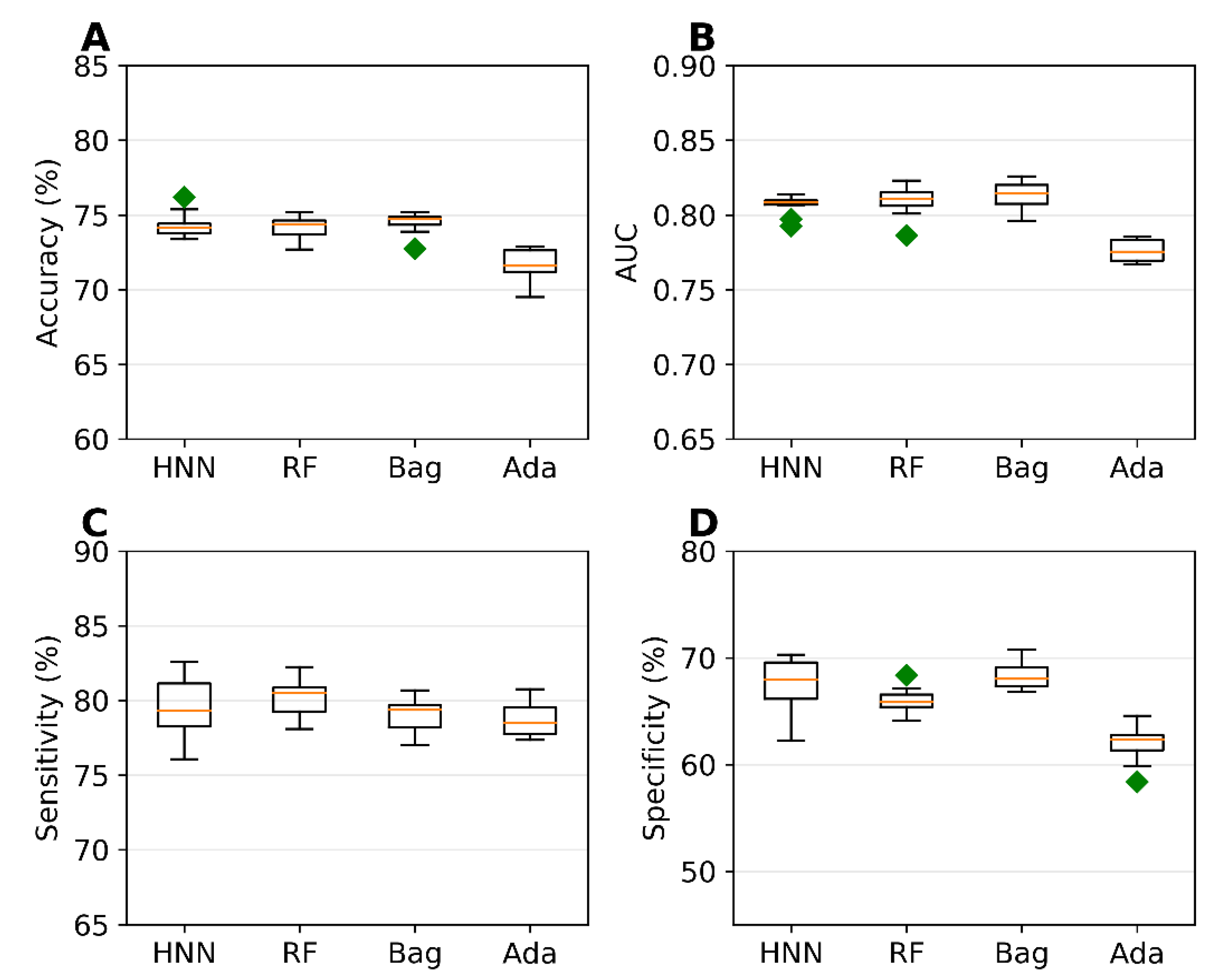
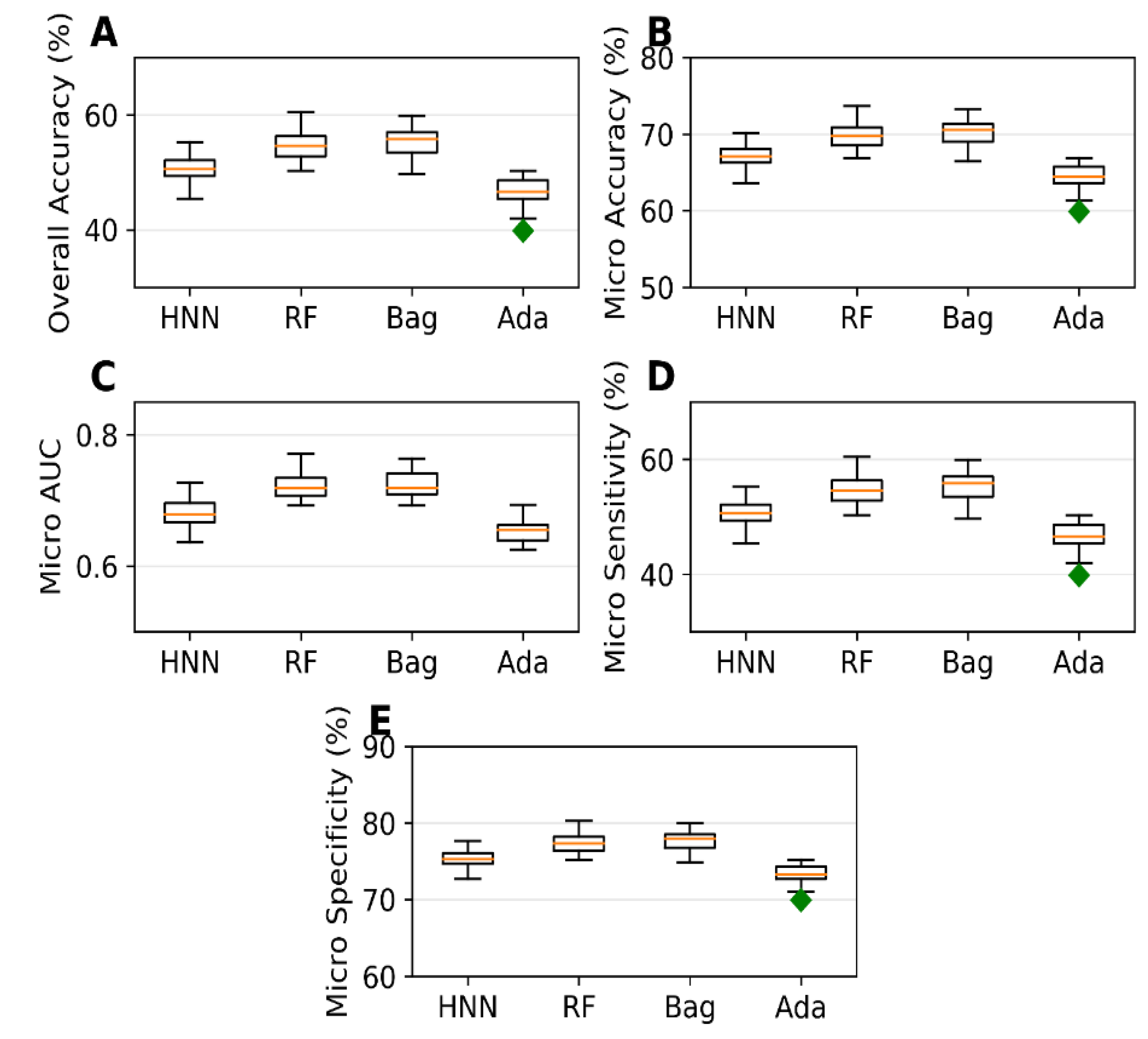
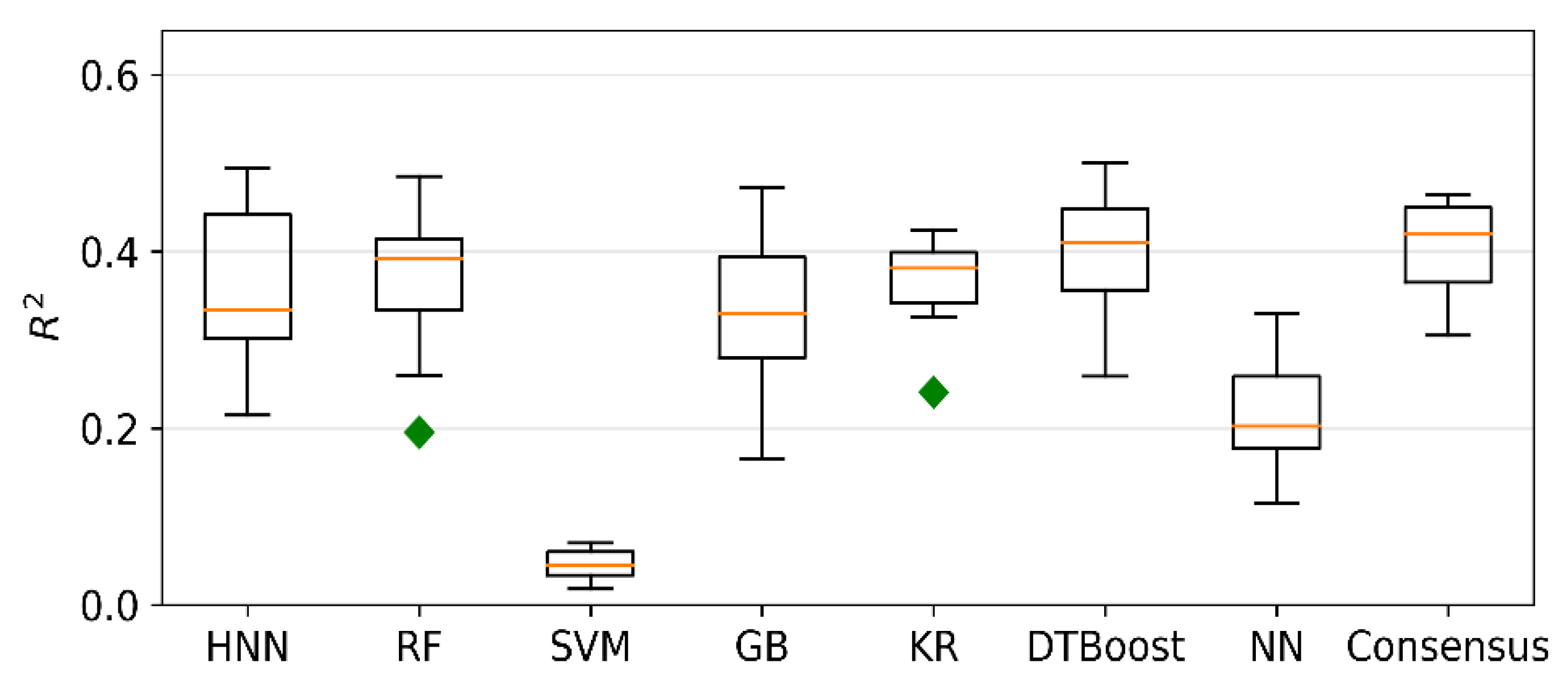
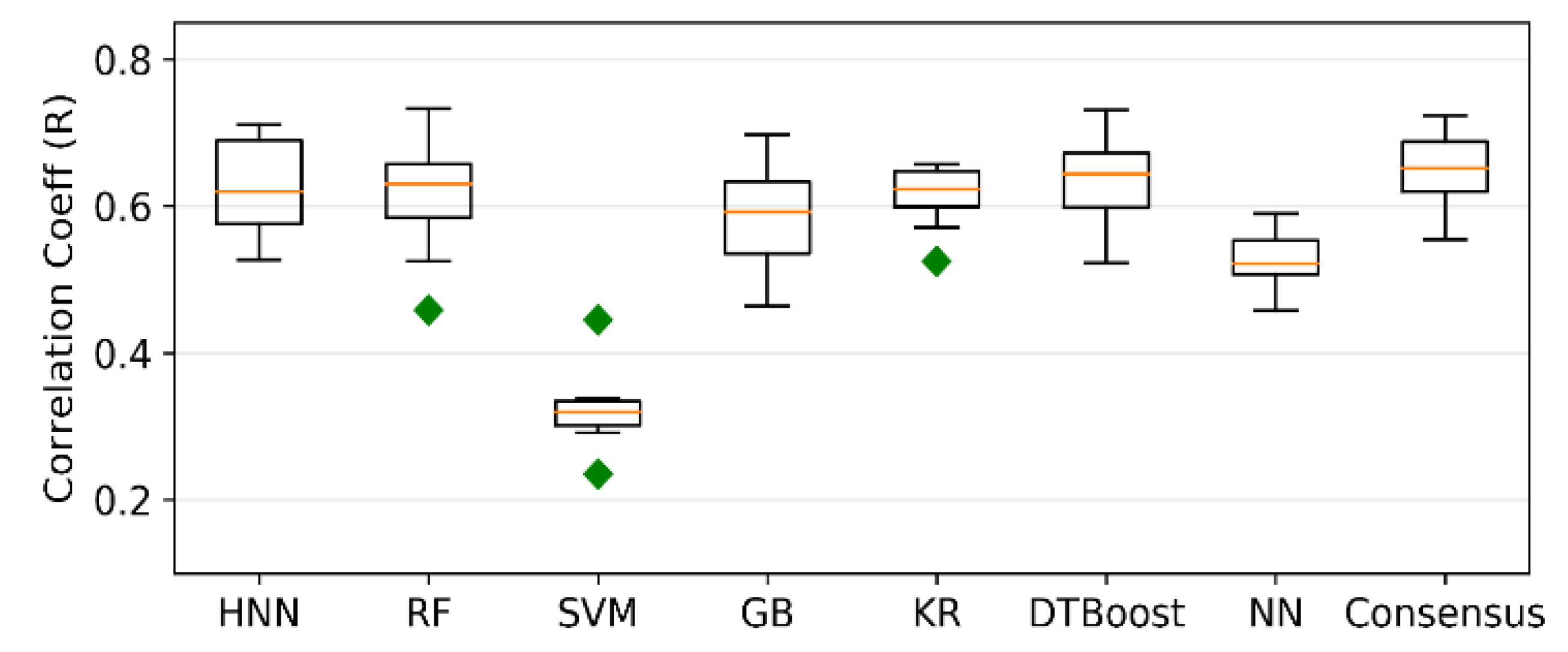
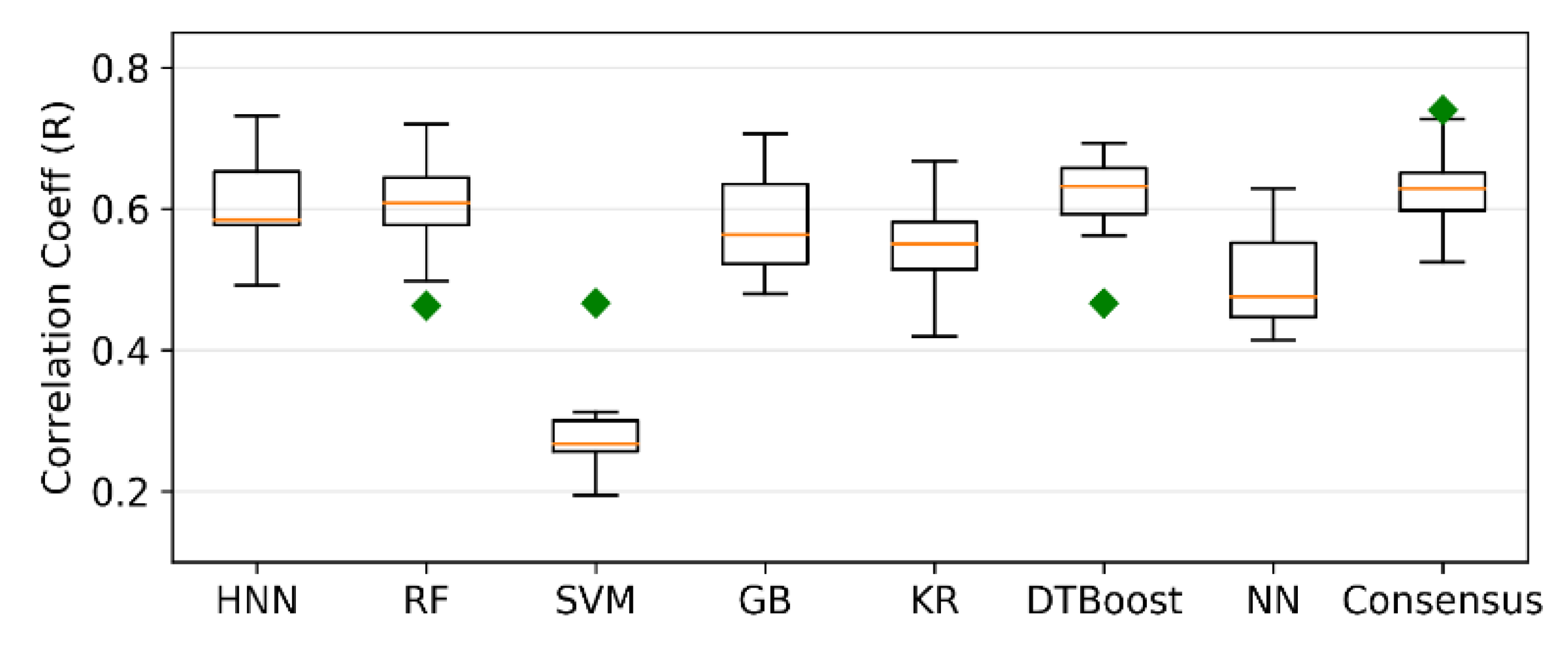
Determining environmental chemical carcinogenicity is urgently needed as humans are increasingly exposed to these chemicals. In this study, we developed a hybrid neural network (HNN) method called HNN-Cancer to predict potential carcinogens of real-life chemicals. The HNN-Cancer included a new SMILES feature representation method by modifying our previous 3D array representation of 1D SMILES simulated by the convolutional neural network (CNN). We developed binary classification, multiclass classification, and regression models based on diverse non-congeneric chemicals. Along with the HNN-Cancer model, we developed models based on the random forest (RF), bootstrap aggregating (Bagging), and adaptive boosting (AdaBoost) methods for binary and multiclass classification. We developed regression models using HNN-Cancer, RF, support vector regressor (SVR), gradient boosting (GB), kernel ridge (KR), decision tree with AdaBoost (DT), KNeighbors (KN), and a consensus method. The performance of the models for all classifications was assessed using various statistical metrics. The accuracy of the HNN-Cancer, RF, and Bagging models were 74%, and their AUC was ~0.81 for binary classification models developed with 7994 chemicals. The sensitivity was 79.5% and the specificity was 67.3% for the HNN-Cancer, which outperforms the other methods. In the case of multiclass classification models with 1618 chemicals, we obtained the optimal accuracy of 70% with an AUC 0.7 for HNN-Cancer, RF, Bagging, and AdaBoost, respectively. In the case of regression models, the correlation coefficient (R) was around 0.62 for HNN-Cancer and RF higher than the SVM, GB, KR, DTBoost, and NN machine learning methods. Overall, the HNN-Cancer performed better for the majority of the known carcinogen experimental datasets. Further, the predictive performance of HNN-Cancer on diverse chemicals is comparable to the literature-reported models that included similar and less diverse molecules. Our HNN-Cancer could be used in identifying potentially carcinogenic chemicals for a wide variety of chemical classes.
Keywords: chemical carcinogens; machine learning; deep learning neural network; hybrid neural network; convolution neural network; fast forward neural network chemical carcinogens; machine learning; deep learning neural network; hybrid neural network; convolution neural network; fast forward neural network