Article

Step Climbing Control of Snake Robot with Prismatic Joints
1
Department of Mechanical and Intelligent Systems Engineering, The University of Electro-Communications, Chofu 182-8585, Japan
2
Department of Mechanical Science and Engineering, Nagoya University, Nagoya 464-8601, Japan
*
Author to whom correspondence should be addressed.
These authors contributed equally to this work.
Sensors 2022, 22(13), 4920; https://doi.org/10.3390/s22134920
Submission received: 29 April 2022 / Revised: 2 June 2022 / Accepted: 27 June 2022 / Published: 29 June 2022
(This article belongs to the Special Issue Advances in Snake Robots of Bio-Inspired Robotics)

Abstract

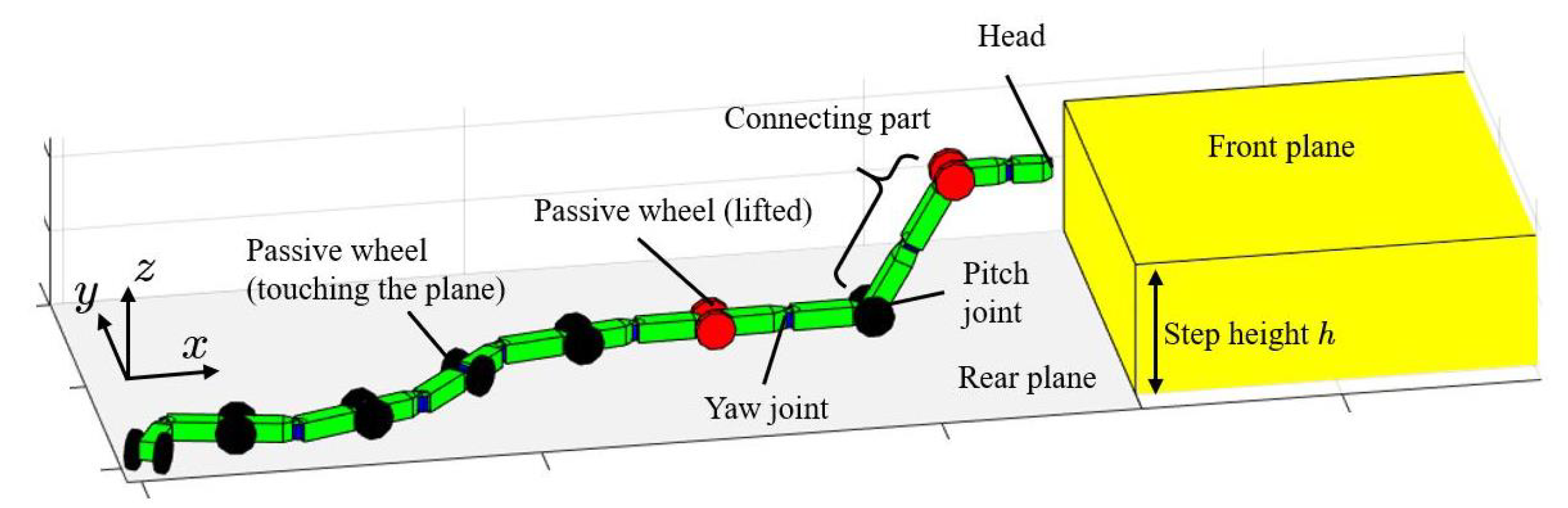
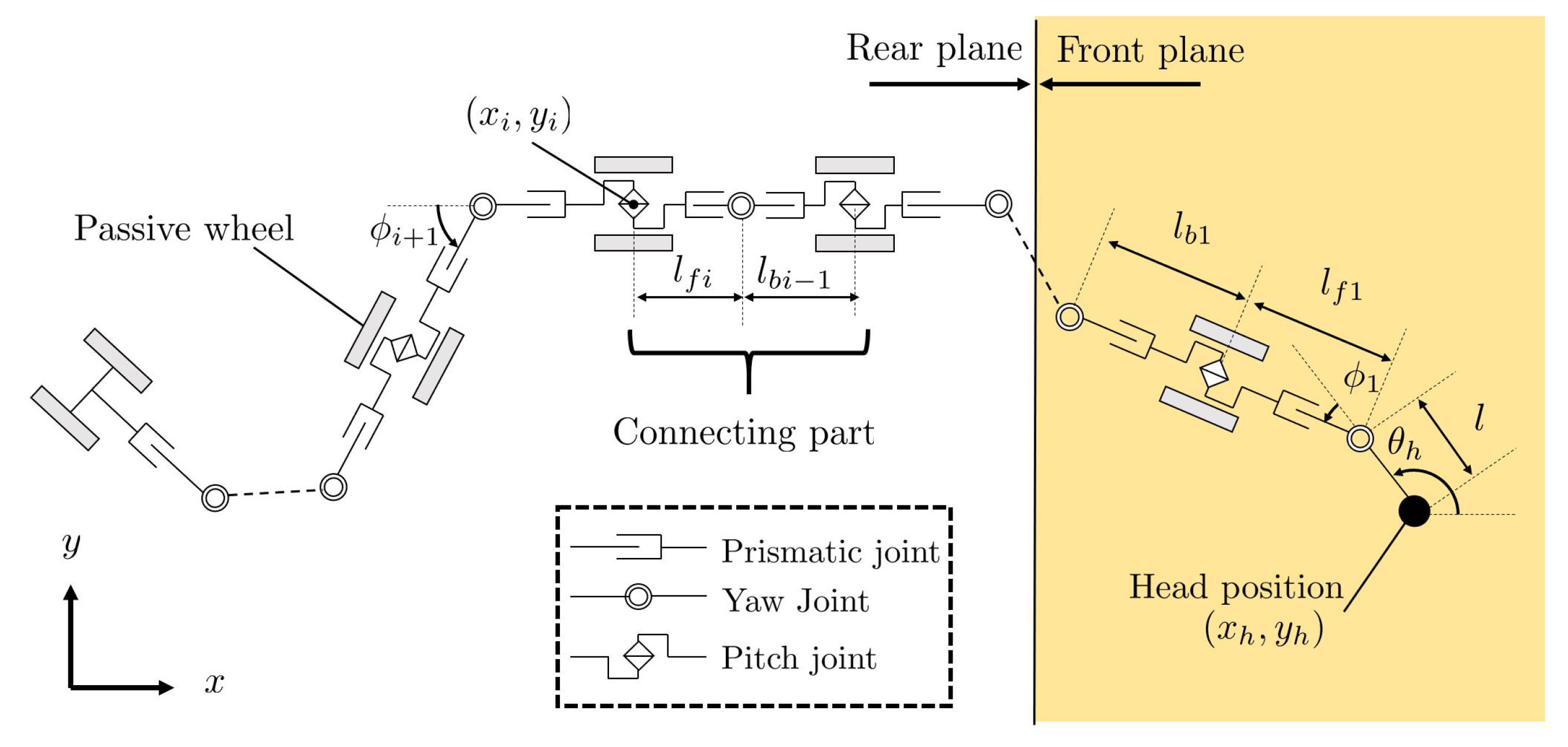
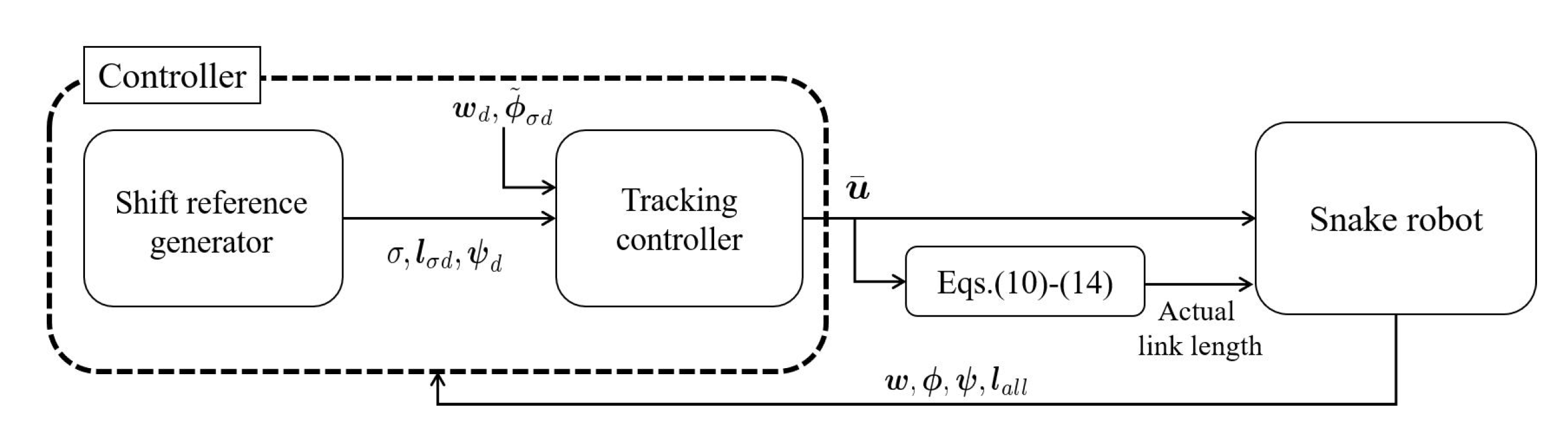
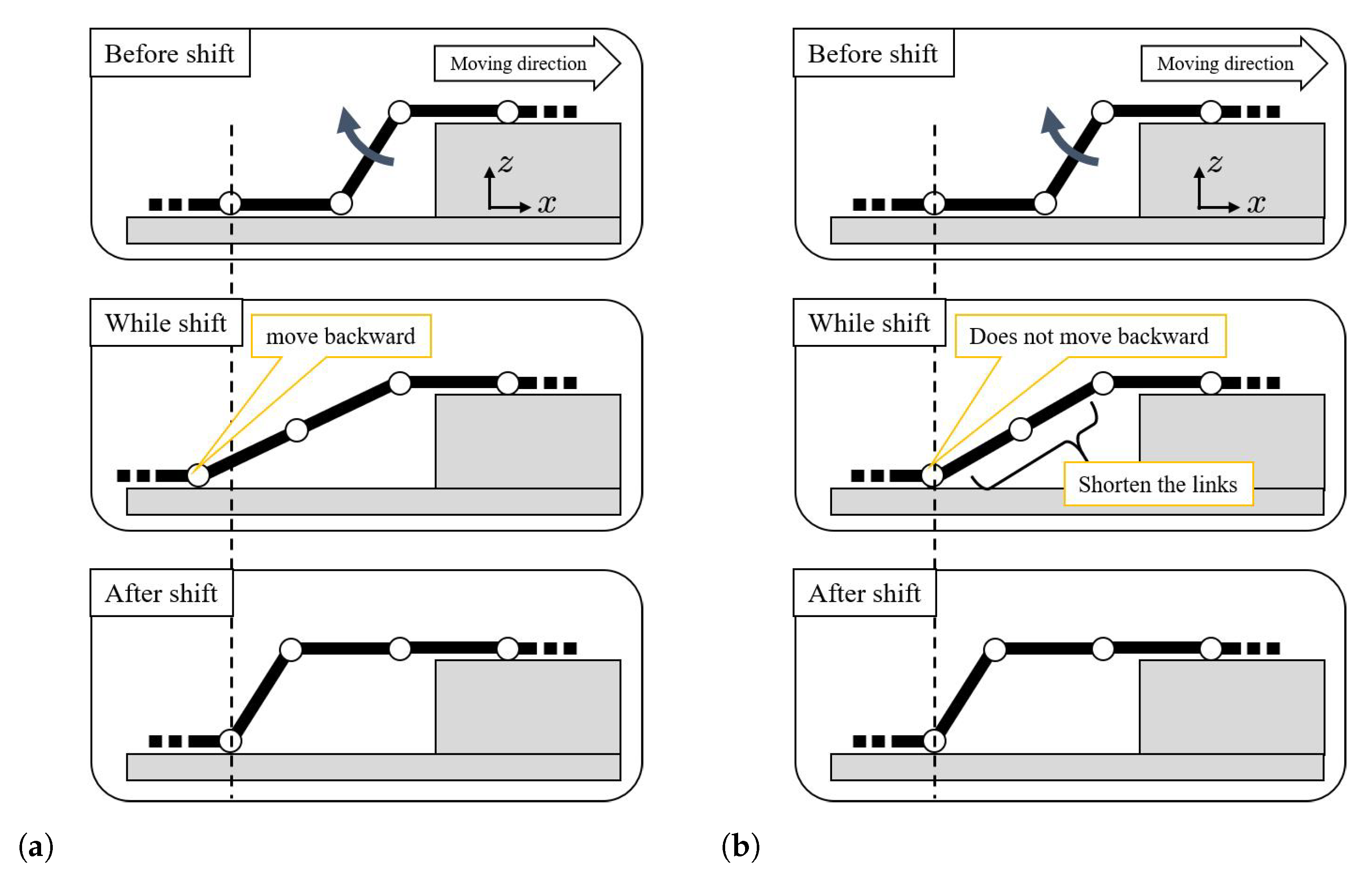
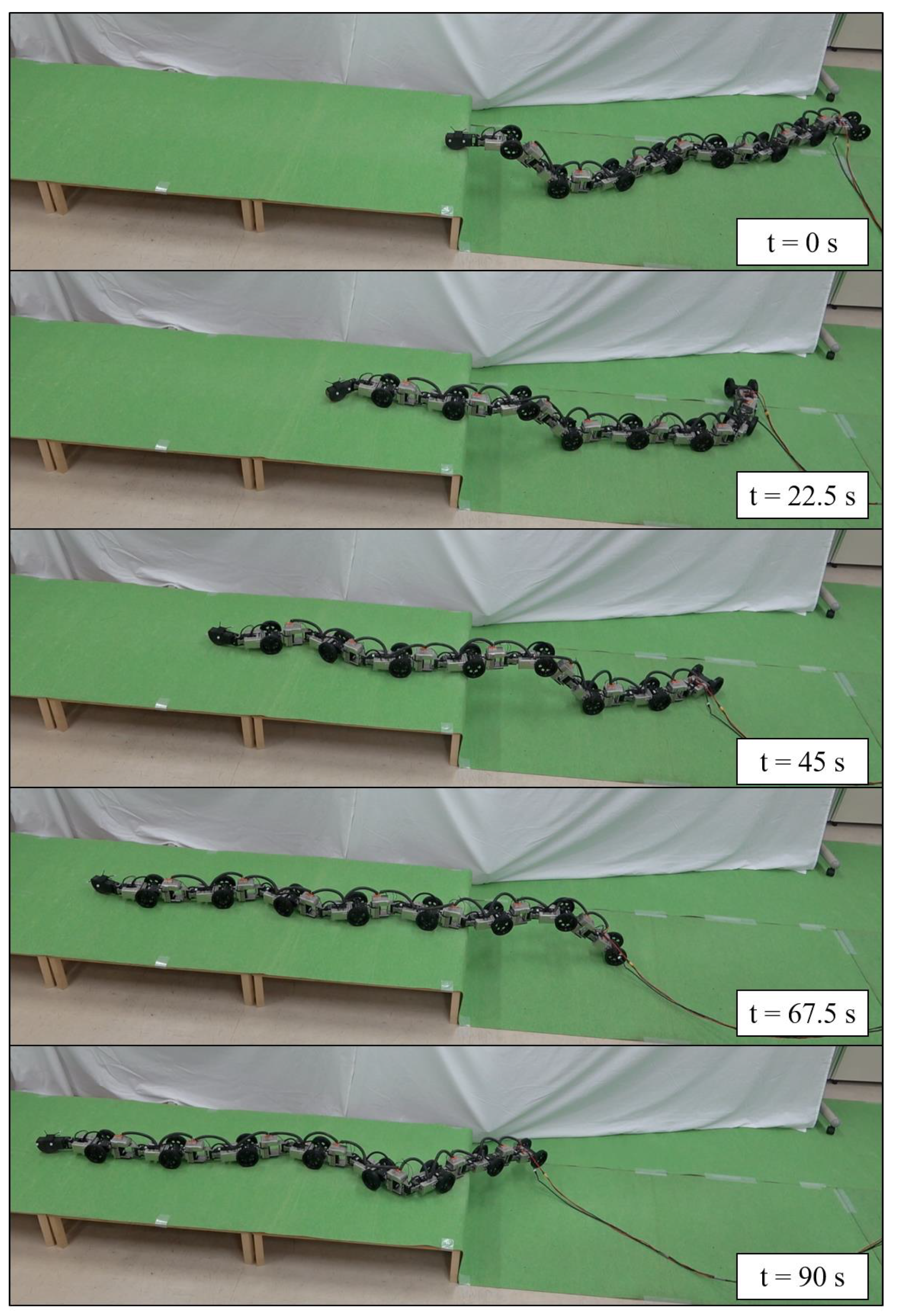
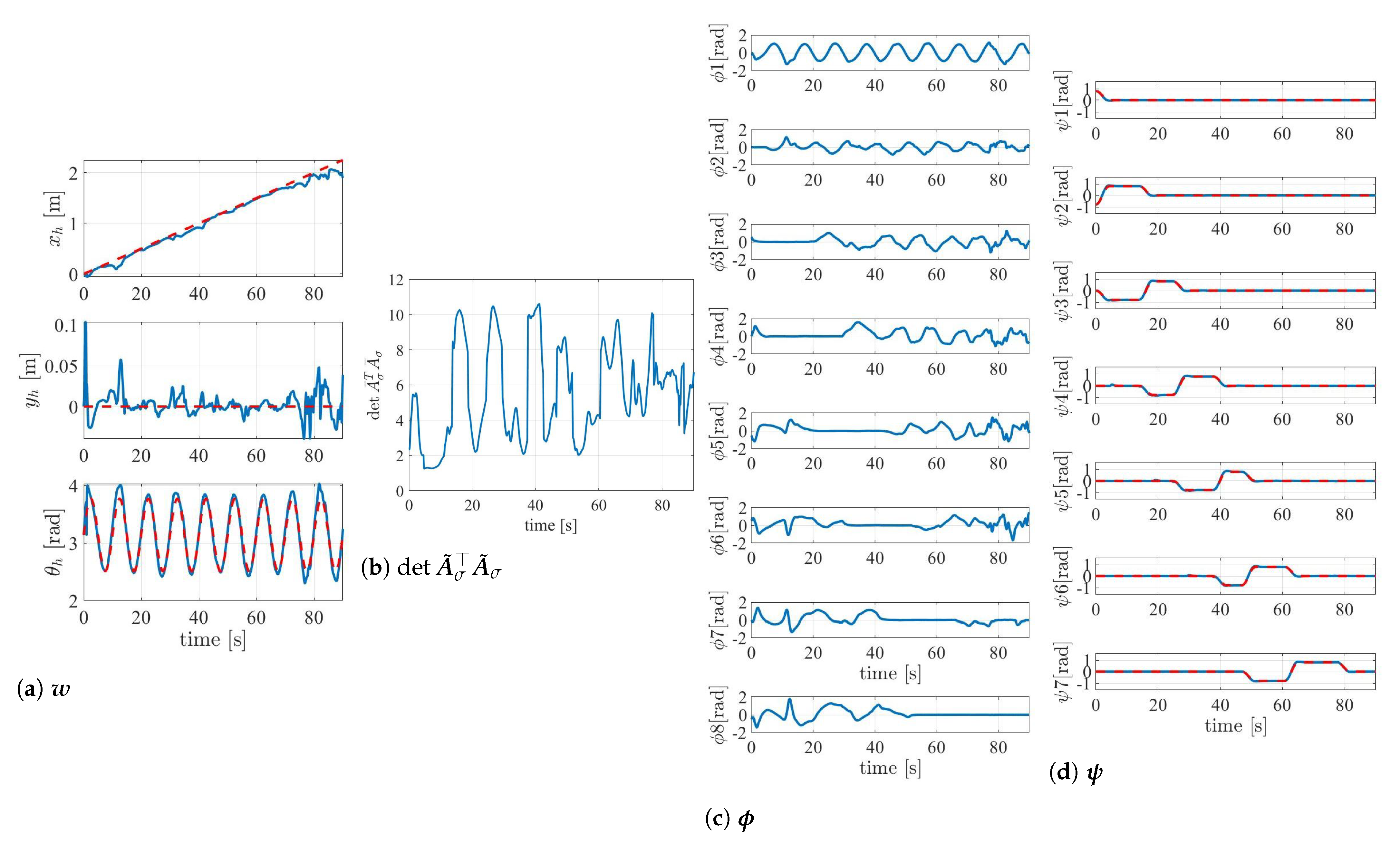
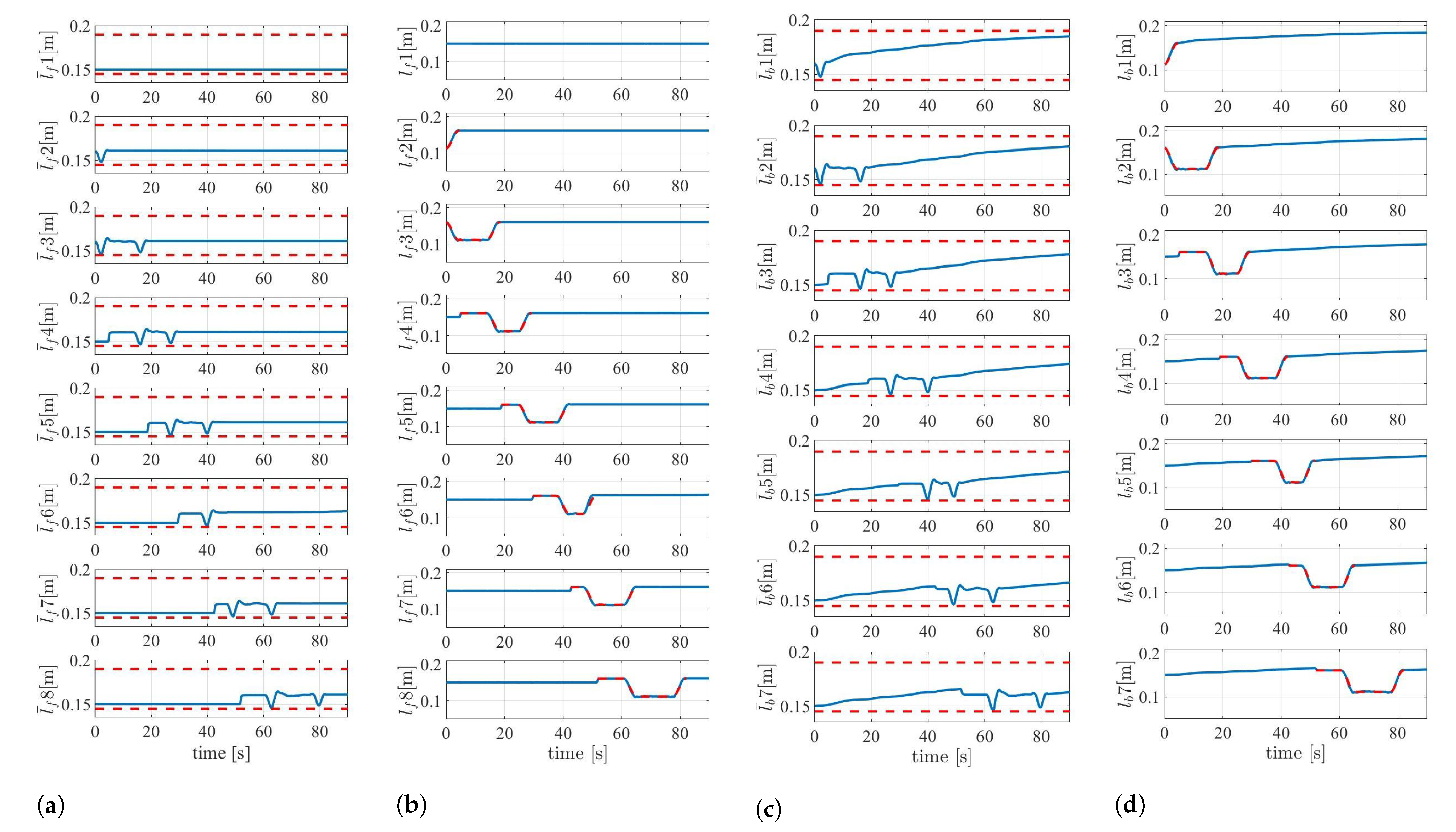
The ultimate goal of this research study is to perform continuous rather than sequential movements of prismatic joints for effective motion of a snake robot with prismatic joints in a complex terrain. We present herein a control method for robotic step climbing. This method is composed of two parts: the first involves the shift reference generator that generates the joint motion for climbing a step, and the other is use of the trajectory tracking controller, which generates the joint motion for the head to track the target trajectory. In this method, prismatic joints are divided into those that are directly controlled for climbing a step and those that are represented as redundancies. By directly controlling the link length, it is possible to prevent the trailing part from back motion when climbing a step, and to avoid a singular configuration in the parts represented as redundancies. A snake robot that has rotational and prismatic joints and can move in three-dimensions was developed, and the effectiveness of the proposed method was demonstrated by experiments using this robot. In the experiment, it was confirmed that the proposed method realizes the step climbing, and the link length limitation using the sigmoid function works effectively.
Keywords: prismatic joints; linear joints; redundancy; snake robot; step climbing prismatic joints; linear joints; redundancy; snake robot; step climbing