Article

Hierarchical Novelty Detection for Traffic Sign Recognition
Computer Vision Center and Computer Science Department, Universitat Autònoma de Barcelona, 08193 Bellaterra, Spain
*
Author to whom correspondence should be addressed.
Sensors 2022, 22(12), 4389; https://doi.org/10.3390/s22124389
Submission received: 3 May 2022 / Revised: 2 June 2022 / Accepted: 8 June 2022 / Published: 10 June 2022

Abstract

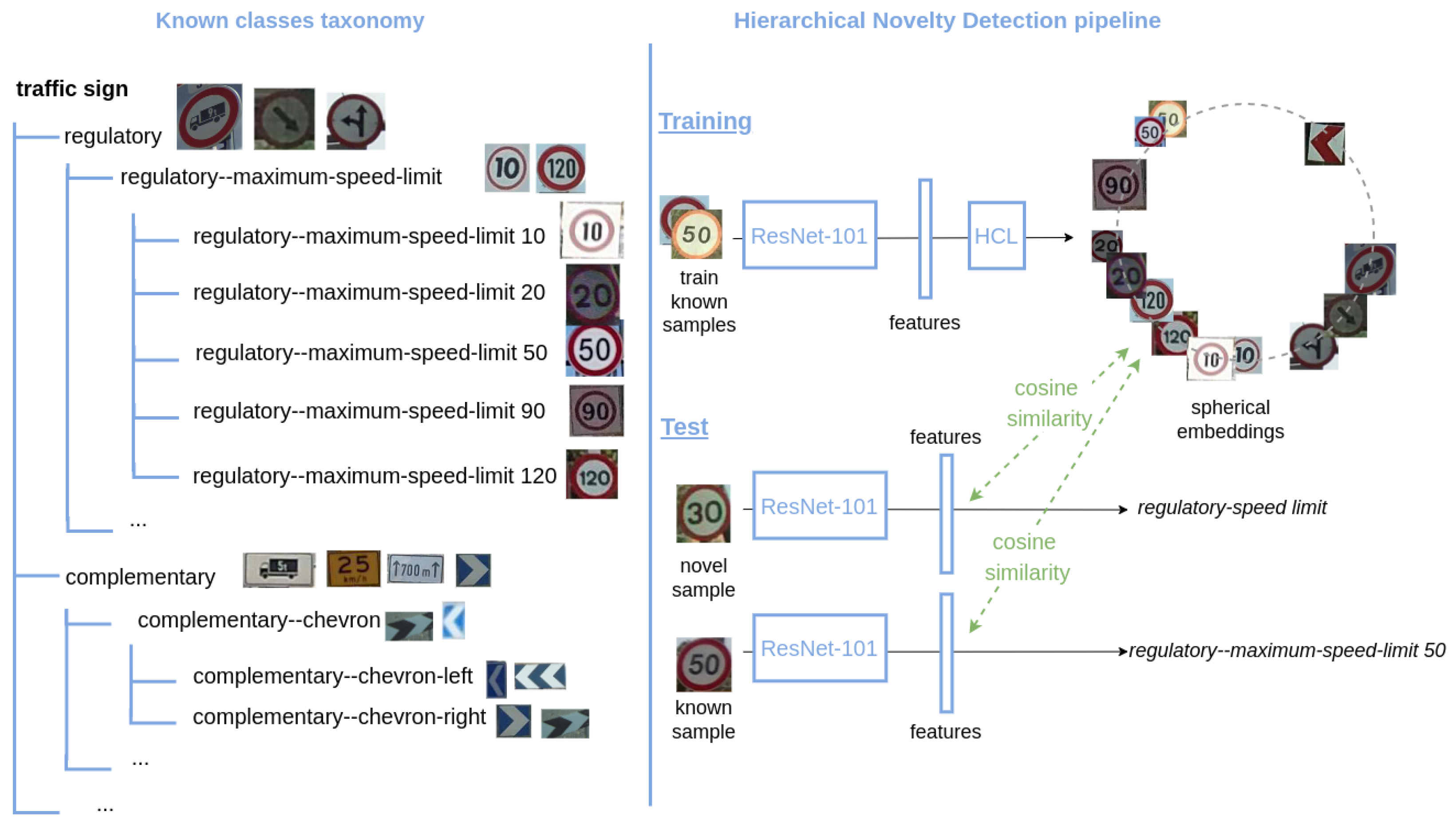
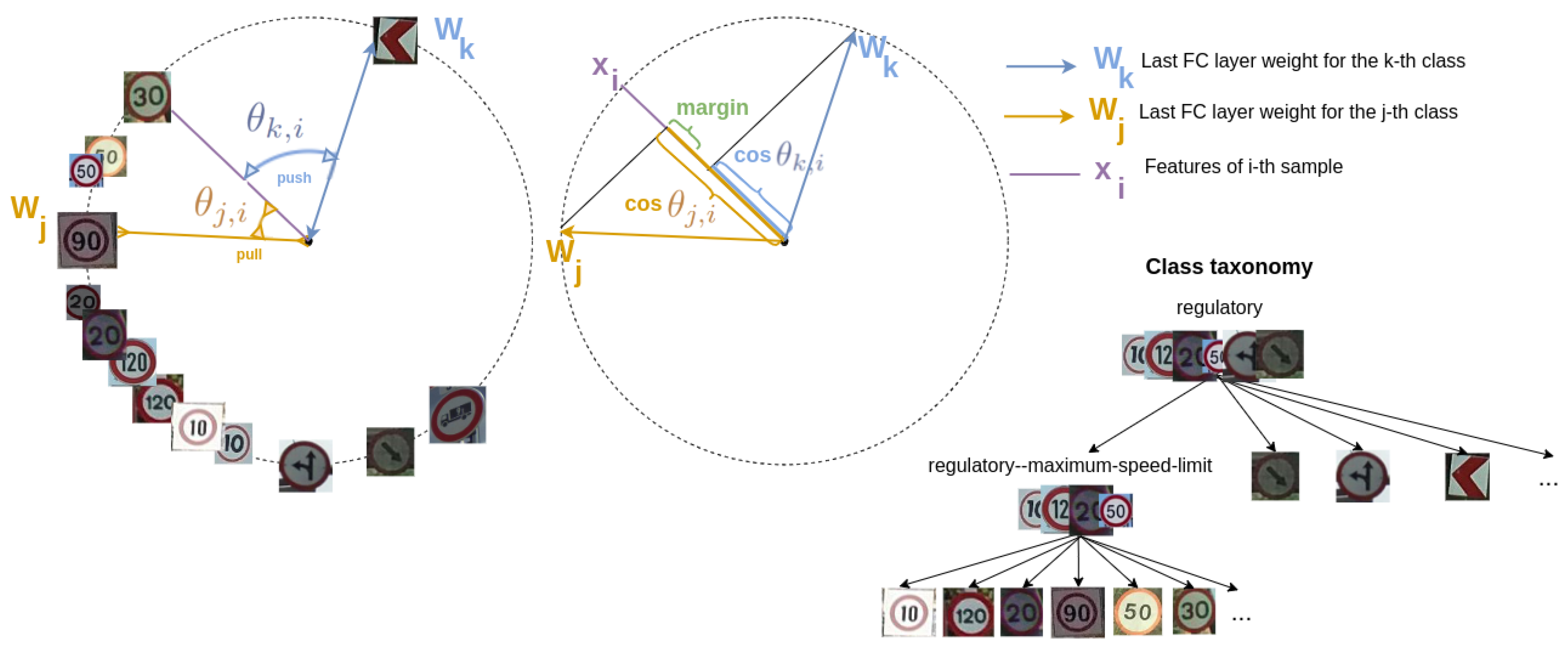
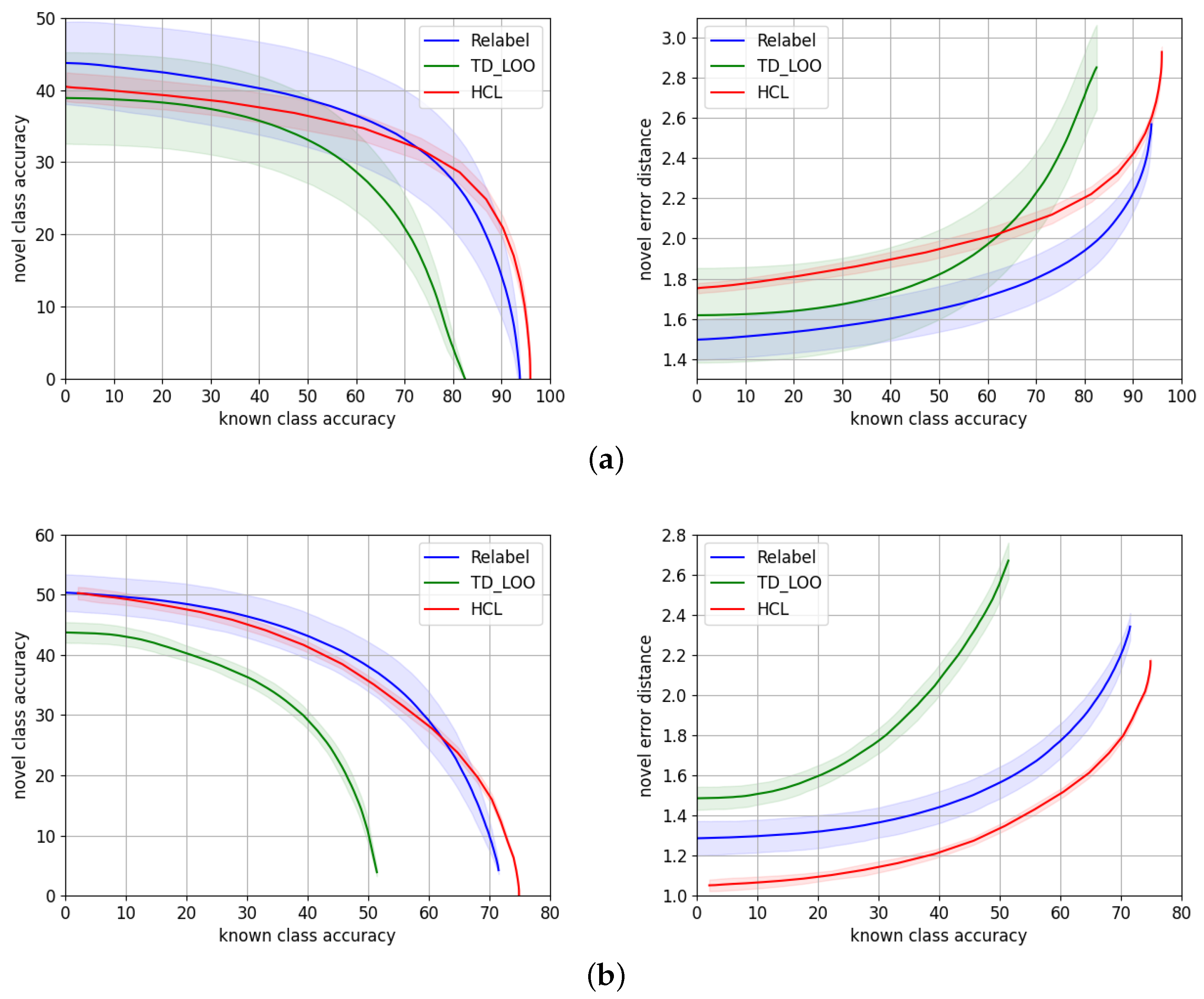
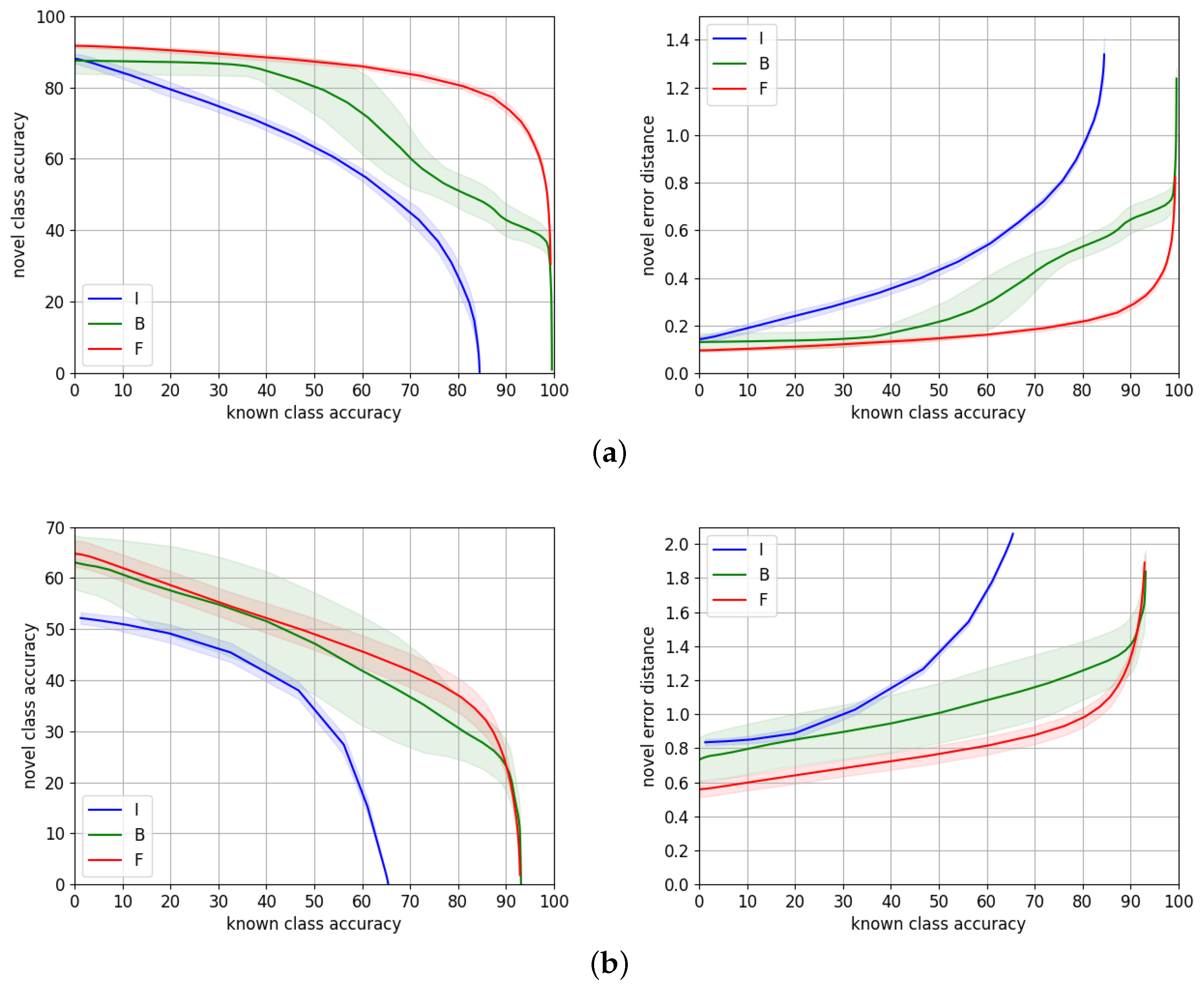
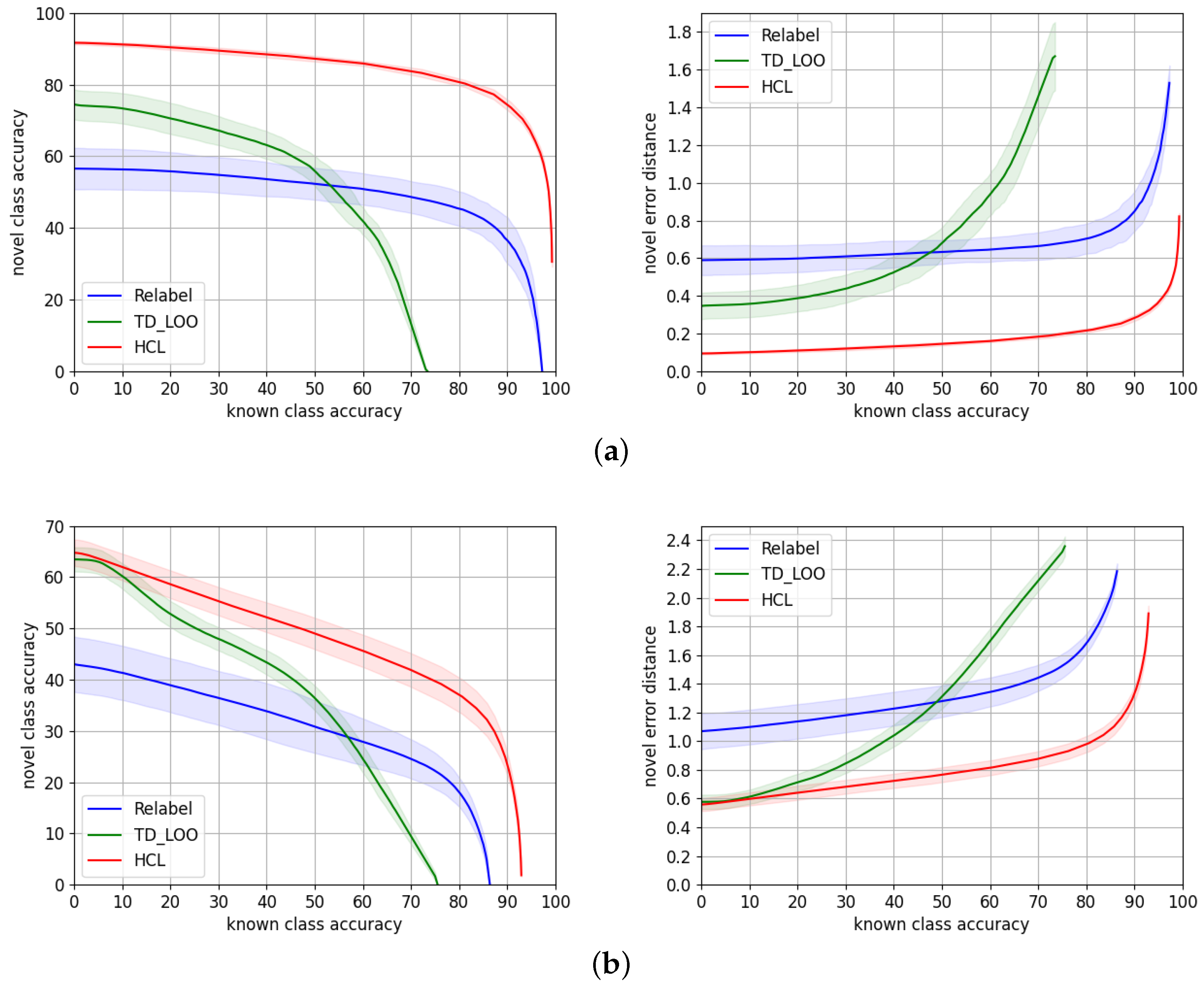
Recent works have made significant progress in novelty detection, i.e., the problem of detecting samples of novel classes, never seen during training, while classifying those that belong to known classes. However, the only information this task provides about novel samples is that they are unknown. In this work, we leverage hierarchical taxonomies of classes to provide informative outputs for samples of novel classes. We predict their closest class in the taxonomy, i.e., its parent class. We address this problem, known as hierarchical novelty detection, by proposing a novel loss, namely Hierarchical Cosine Loss that is designed to learn class prototypes along with an embedding of discriminative features consistent with the taxonomy. We apply it to traffic sign recognition, where we predict the parent class semantics for new types of traffic signs. Our model beats state-of-the art approaches on two large scale traffic sign benchmarks, Mapillary Traffic Sign Dataset (MTSD) and Tsinghua-Tencent 100K (TT100K), and performs similarly on natural images benchmarks (AWA2, CUB). For TT100K and MTSD, our approach is able to detect novel samples at the correct nodes of the hierarchy with 81% and 36% of accuracy, respectively, at 80% known class accuracy.
Keywords: novelty detection; hierarchical classification; deep learning; traffic sign recognition; autonomous driving; computer vision novelty detection; hierarchical classification; deep learning; traffic sign recognition; autonomous driving; computer vision