Article

Searching and Tracking an Unknown Number of Targets: A Learning-Based Method Enhanced with Maps Merging

1
School of Astronautics, Harbin Institute of Technology, Harbin 150001, China
2
Aerospace Technology Research Institute, China Aerodynamics Research and Development Center, Mianyang 621000, China
*
Author to whom correspondence should be addressed.
Sensors 2021, 21(4), 1076; https://doi.org/10.3390/s21041076
Submission received: 4 January 2021 / Revised: 29 January 2021 / Accepted: 2 February 2021 / Published: 4 February 2021
(This article belongs to the Special Issue Advanced Perception-Planning Fusion Technology in Robotics)

Abstract

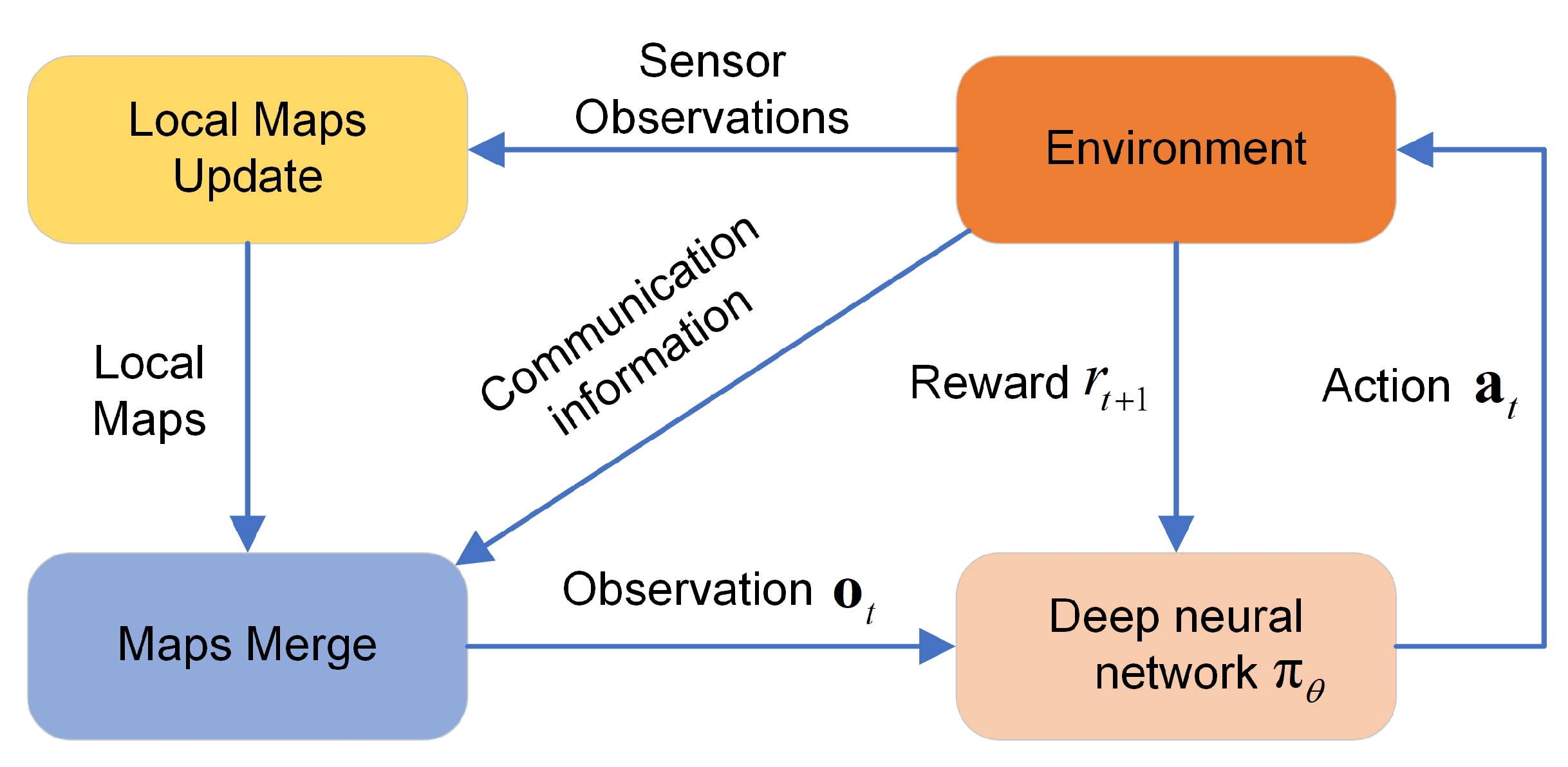
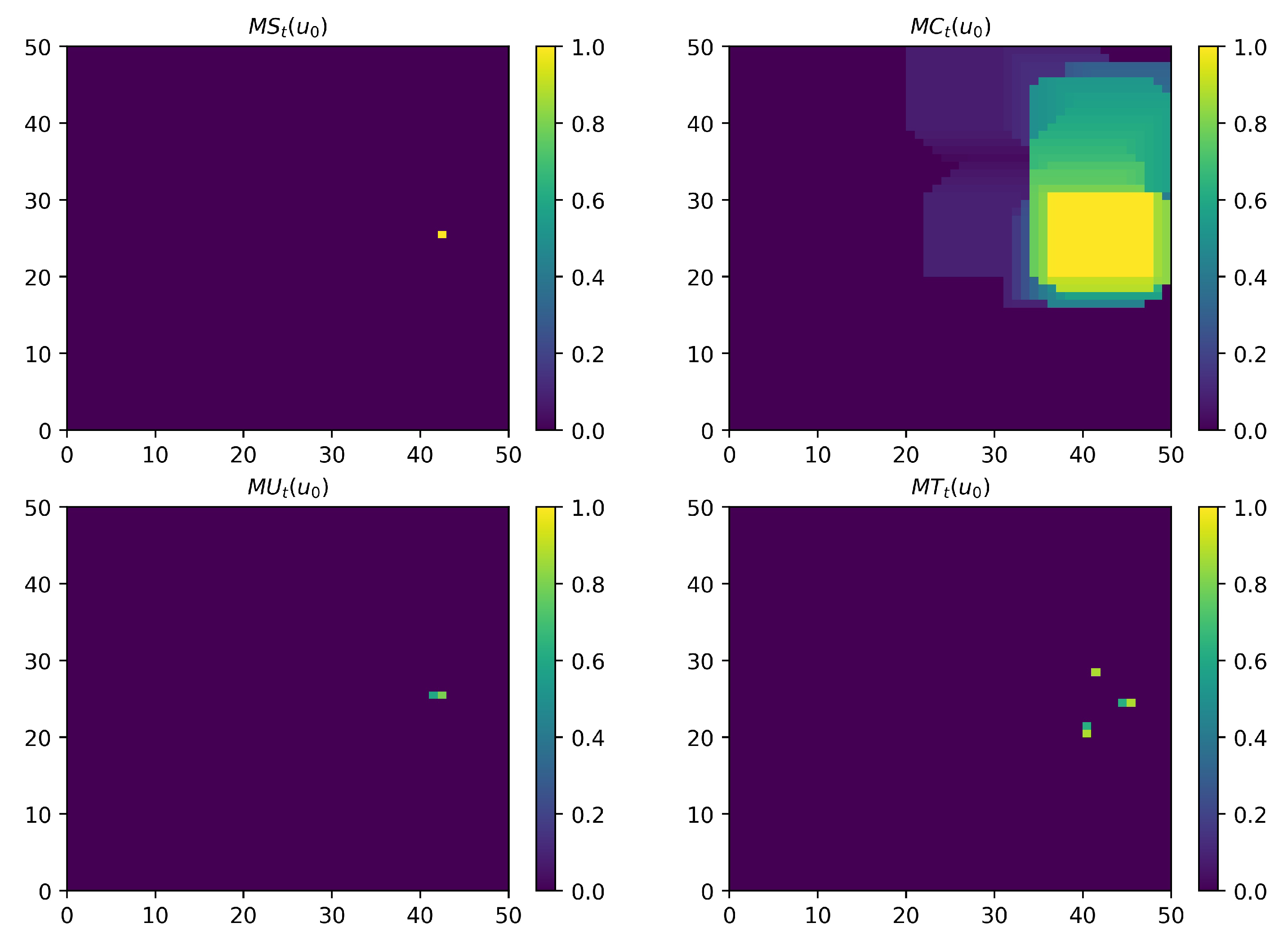
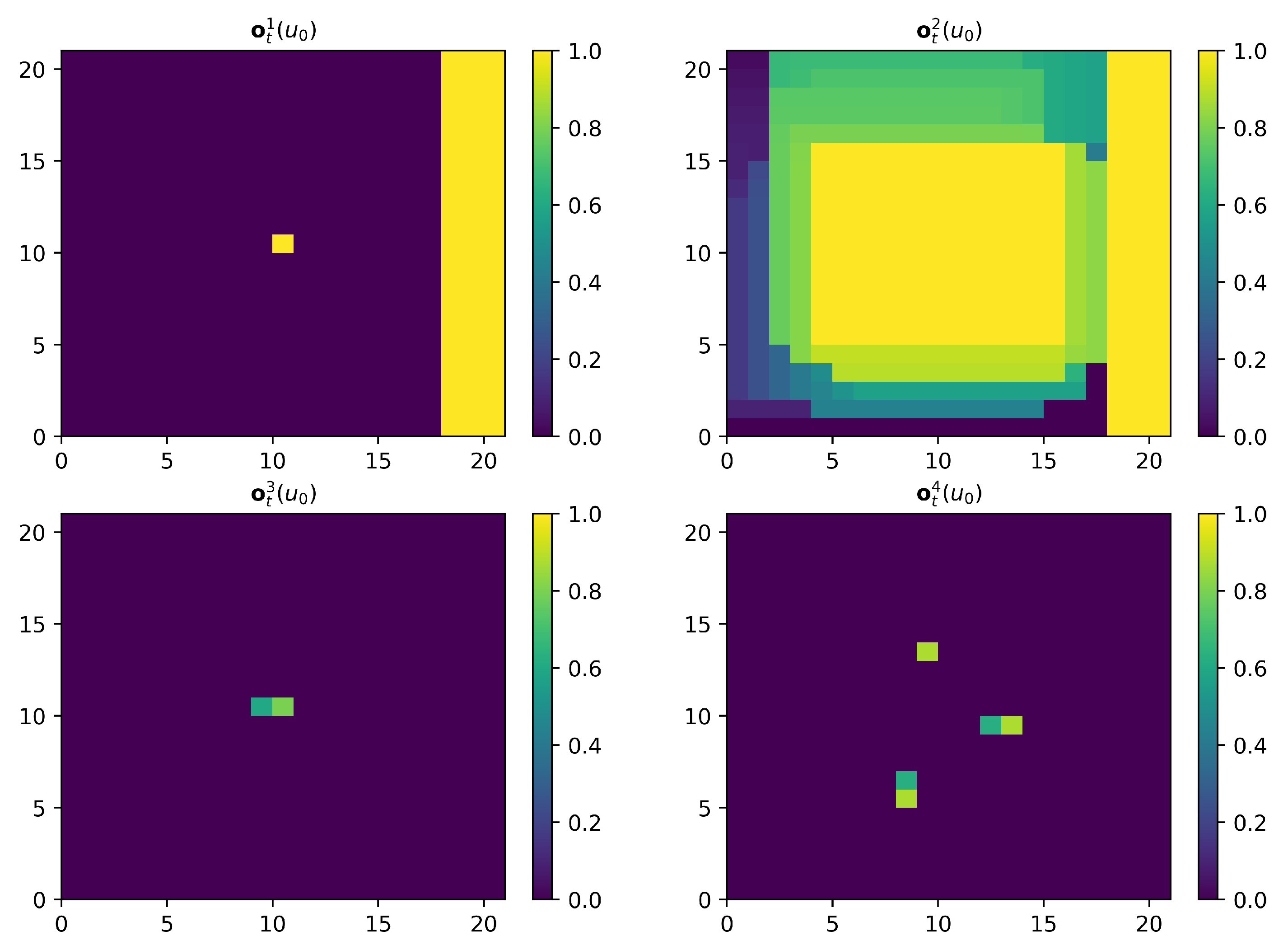
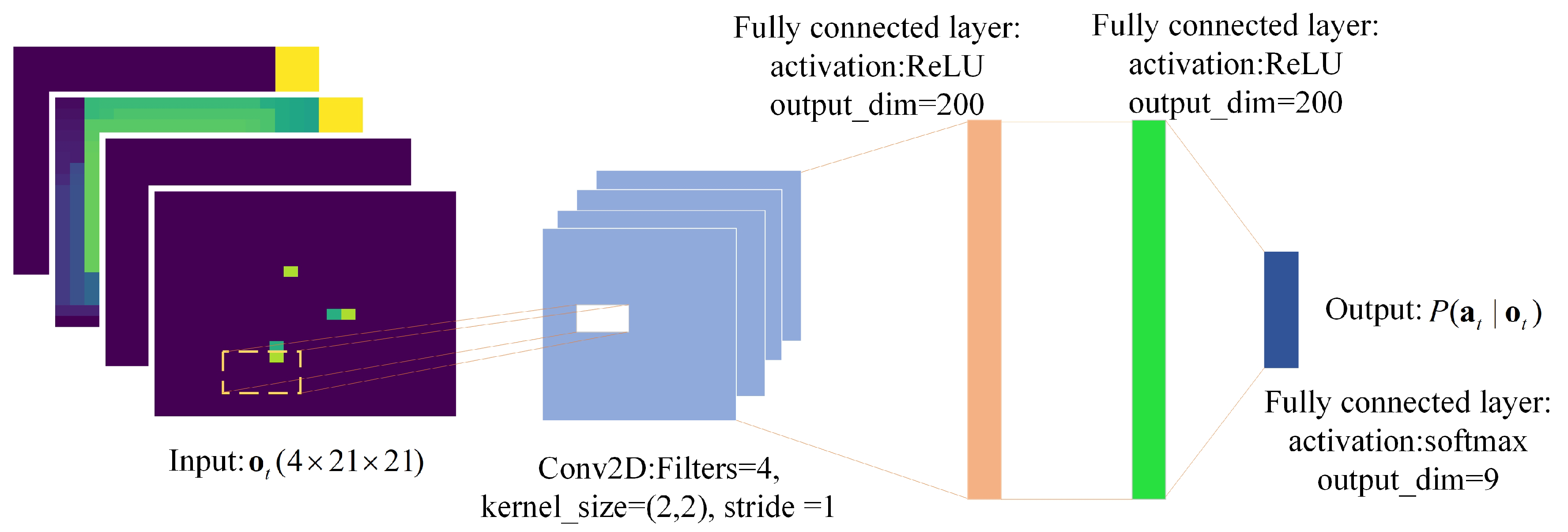
Unmanned aerial vehicles (UAVs) have been widely used in search and rescue (SAR) missions due to their high flexibility. A key problem in SAR missions is to search and track moving targets in an area of interest. In this paper, we focus on the problem of Cooperative Multi-UAV Observation of Multiple Moving Targets (CMUOMMT). In contrast to the existing literature, we not only optimize the average observation rate of the discovered targets, but we also emphasize the fairness of the observation of the discovered targets and the continuous exploration of the undiscovered targets, under the assumption that the total number of targets is unknown. To achieve this objective, a deep reinforcement learning (DRL)-based method is proposed under the Partially Observable Markov Decision Process (POMDP) framework, where each UAV maintains four observation history maps, and maps from different UAVs within a communication range can be merged to enhance UAVs’ awareness of the environment. A deep convolutional neural network (CNN) is used to process the merged maps and generate the control commands to UAVs. The simulation results show that our policy can enable UAVs to balance between giving the discovered targets a fair observation and exploring the search region compared with other methods.
Keywords: unmanned aerial vehicle (UAV); search and track; deep reinforcement learning (DRL); maps merging; convolutional neural network (CNN) unmanned aerial vehicle (UAV); search and track; deep reinforcement learning (DRL); maps merging; convolutional neural network (CNN)