Article

Hybrid Random Forest and Support Vector Machine Modeling for HVAC Fault Detection and Diagnosis


1
Faculty of Design, Architecture and Building, University of Technology Sydney, 15 Broadway, Ultimo, NSW 2007, Australia
2
Faculty of Engineering and IT, University of Technology Sydney, 15 Broadway, Ultimo, NSW 2007, Australia
*
Author to whom correspondence should be addressed.
Sensors 2021, 21(24), 8163; https://doi.org/10.3390/s21248163
Submission received: 25 October 2021 / Revised: 28 November 2021 / Accepted: 3 December 2021 / Published: 7 December 2021
(This article belongs to the Special Issue Sensors for Construction Automation and Management)

Abstract

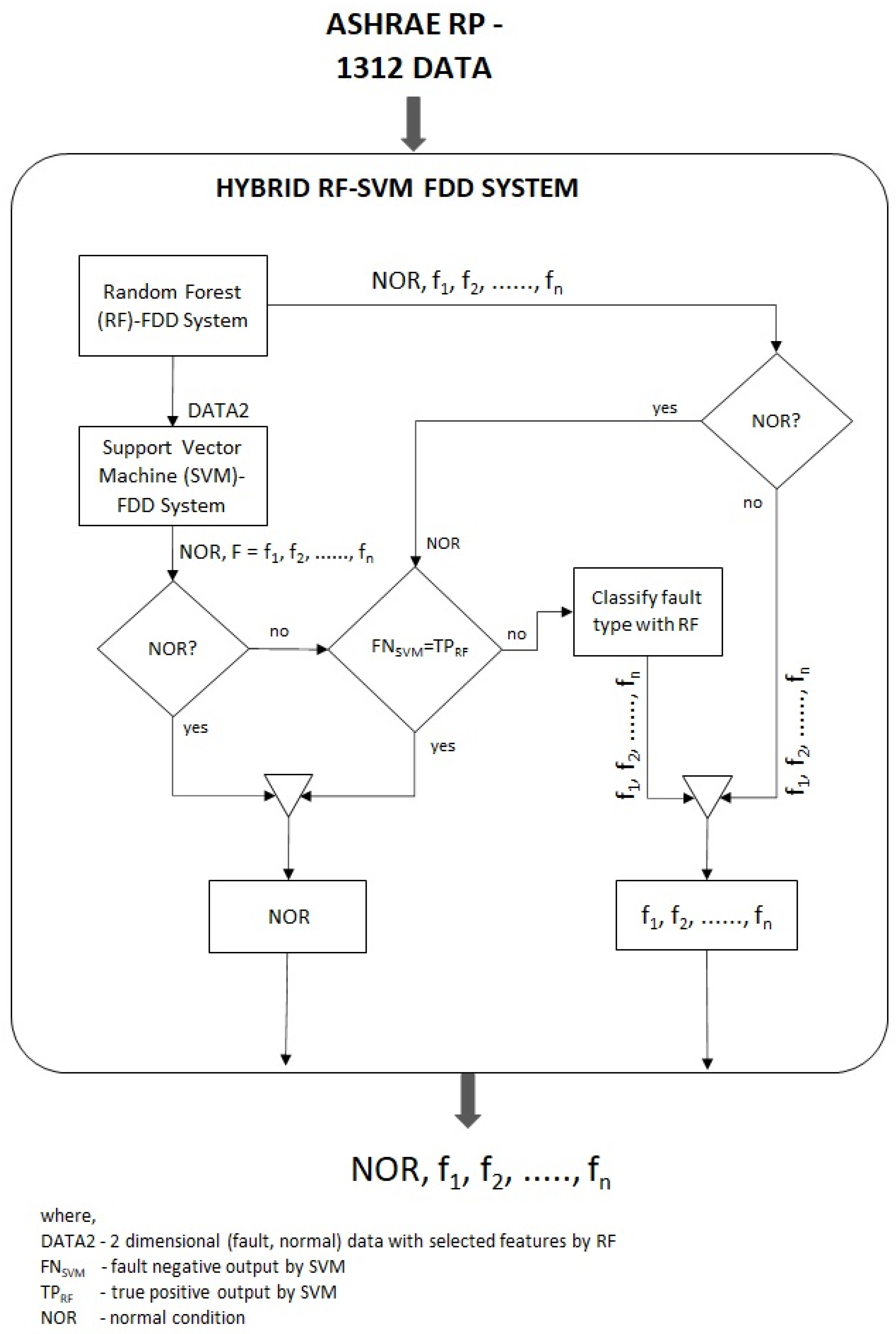
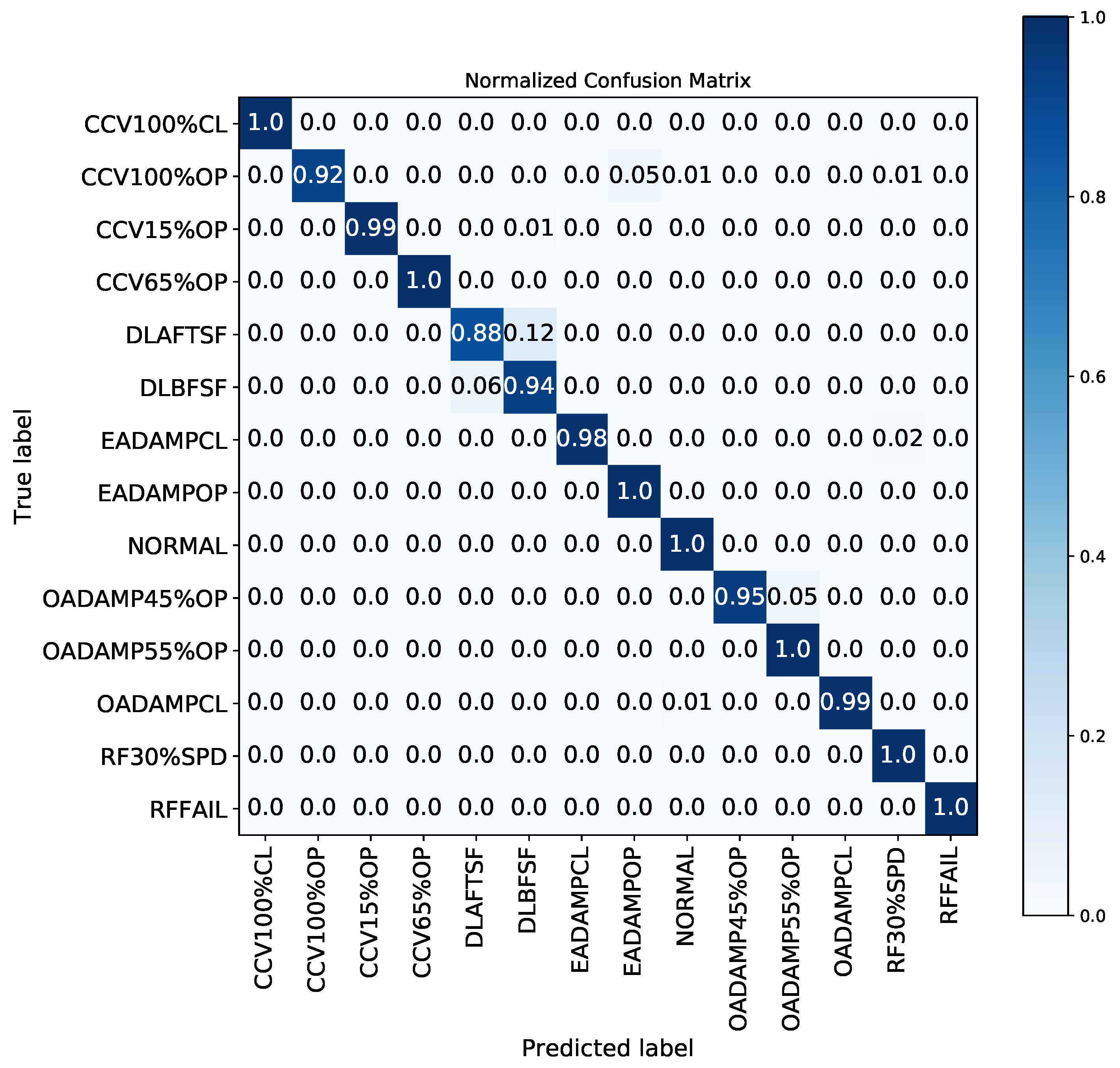
The malfunctioning of the heating, ventilating, and air conditioning (HVAC) system is considered to be one of the main challenges in modern buildings. Due to the complexity of the building management system (BMS) with operational data input from a large number of sensors used in HVAC system, the faults can be very difficult to detect in the early stage. While numerous fault detection and diagnosis (FDD) methods with the use of statistical modeling and machine learning have revealed prominent results in recent years, early detection remains a challenging task since many current approaches are unfeasible for diagnosing some HVAC faults and have accuracy performance issues. In view of this, this study presents a novel hybrid FDD approach by combining random forest (RF) and support vector machine (SVM) classifiers for the application of FDD for the HVAC system. Experimental results demonstrate that our proposed hybrid random forest–support vector machine (HRF–SVM) outperforms other methods with higher prediction accuracy (98%), despite that the fault symptoms were insignificant. Furthermore, the proposed framework can reduce the significant number of sensors required and work well with the small number of faulty training data samples available in real-world applications.
Keywords: heating, ventilation, and air conditioning (HVAC); fault detection and diagnosis (FDD); building management system (BMS); sensors; support vector machine (SVM); random forest (RF) heating, ventilation, and air conditioning (HVAC); fault detection and diagnosis (FDD); building management system (BMS); sensors; support vector machine (SVM); random forest (RF)