Article

A Physics-Informed Neural Network Approach for Nearfield Acoustic Holography
Dipartimento di Elettronica, Informazione e Bioingegneria (DEIB), Politecnico di Milano, Piazza Leonardo da Vinci 32, 20133 Milan, Italy
*
Author to whom correspondence should be addressed.
Sensors 2021, 21(23), 7834; https://doi.org/10.3390/s21237834
Submission received: 31 October 2021 / Revised: 18 November 2021 / Accepted: 21 November 2021 / Published: 25 November 2021
(This article belongs to the Special Issue Audio Signal Processing for Sensing Technologies)

Abstract

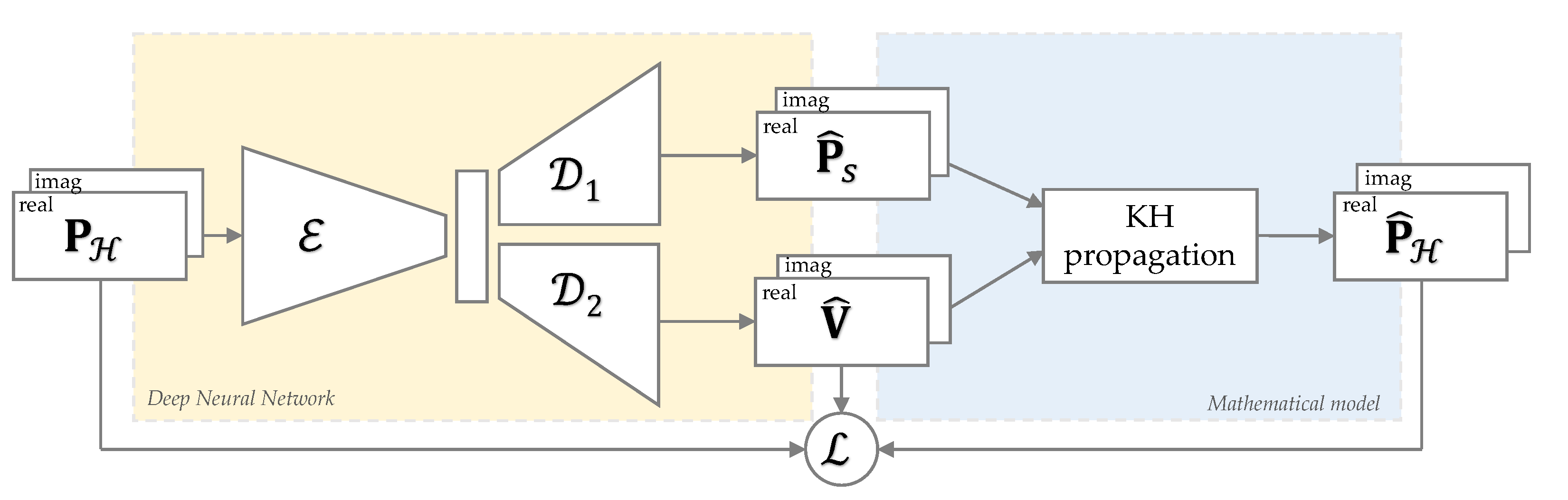
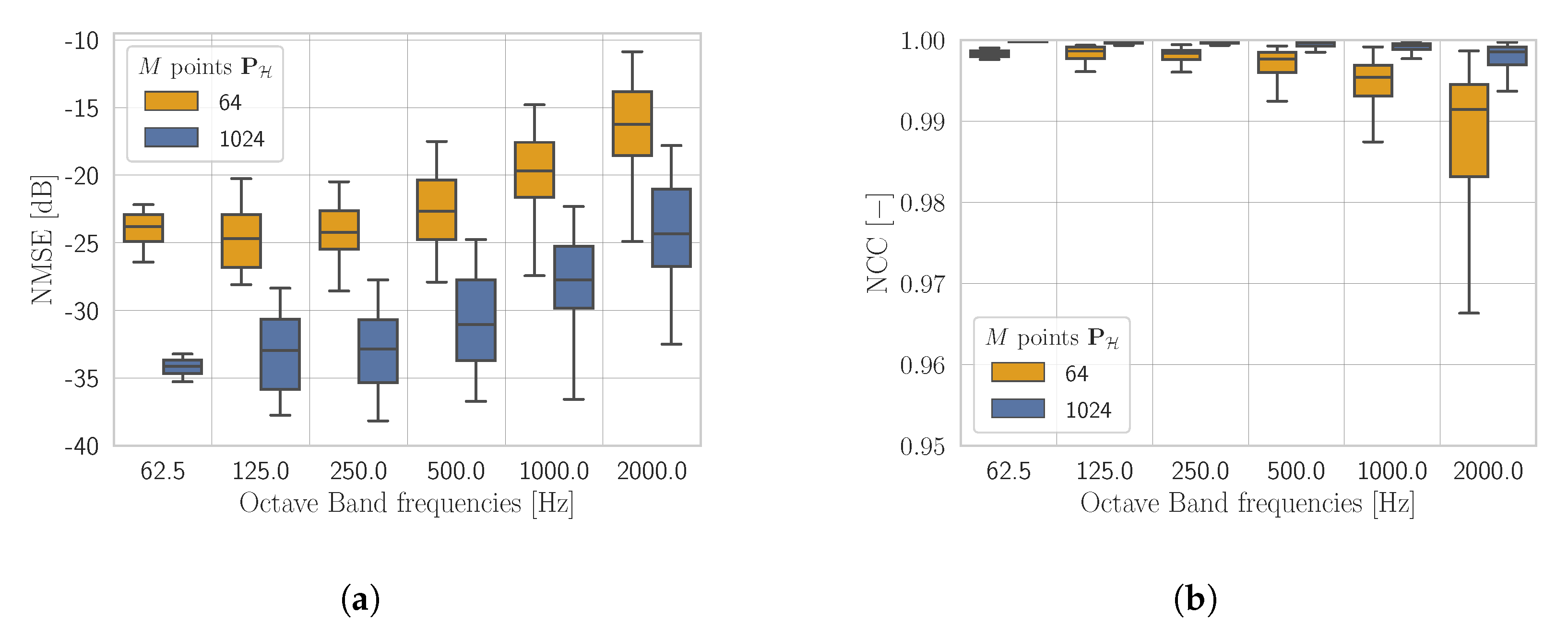
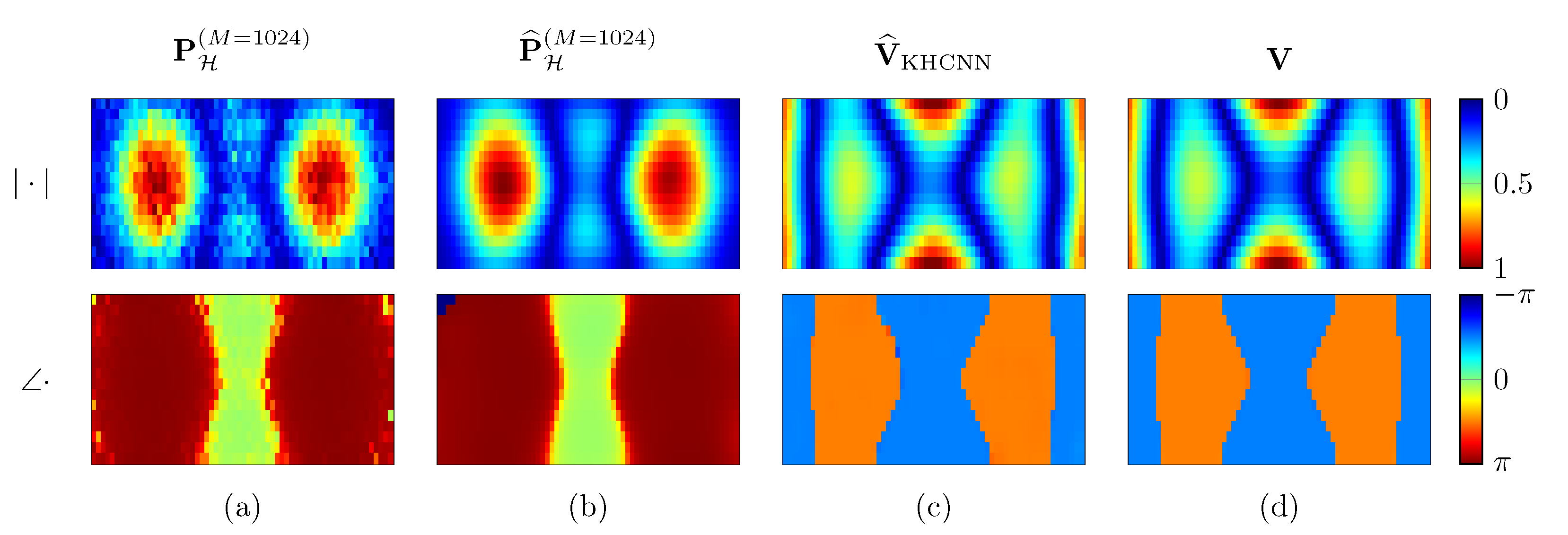
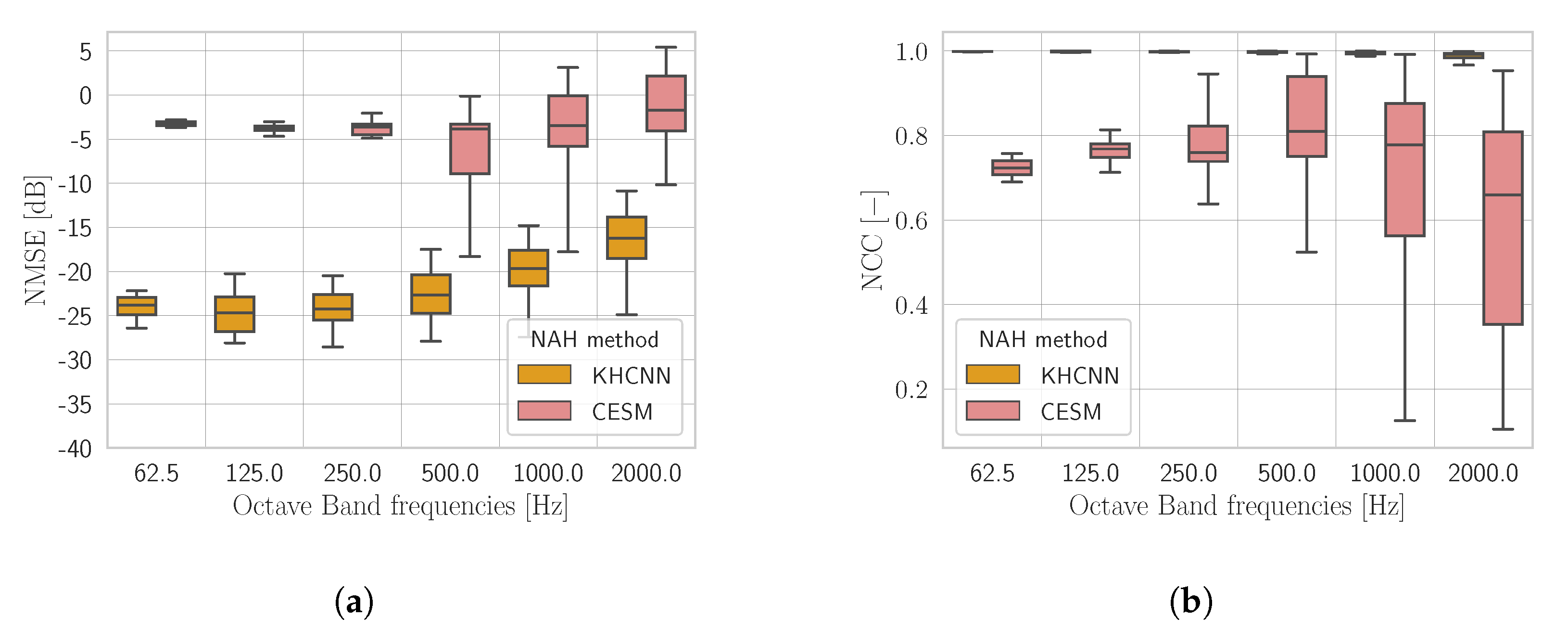
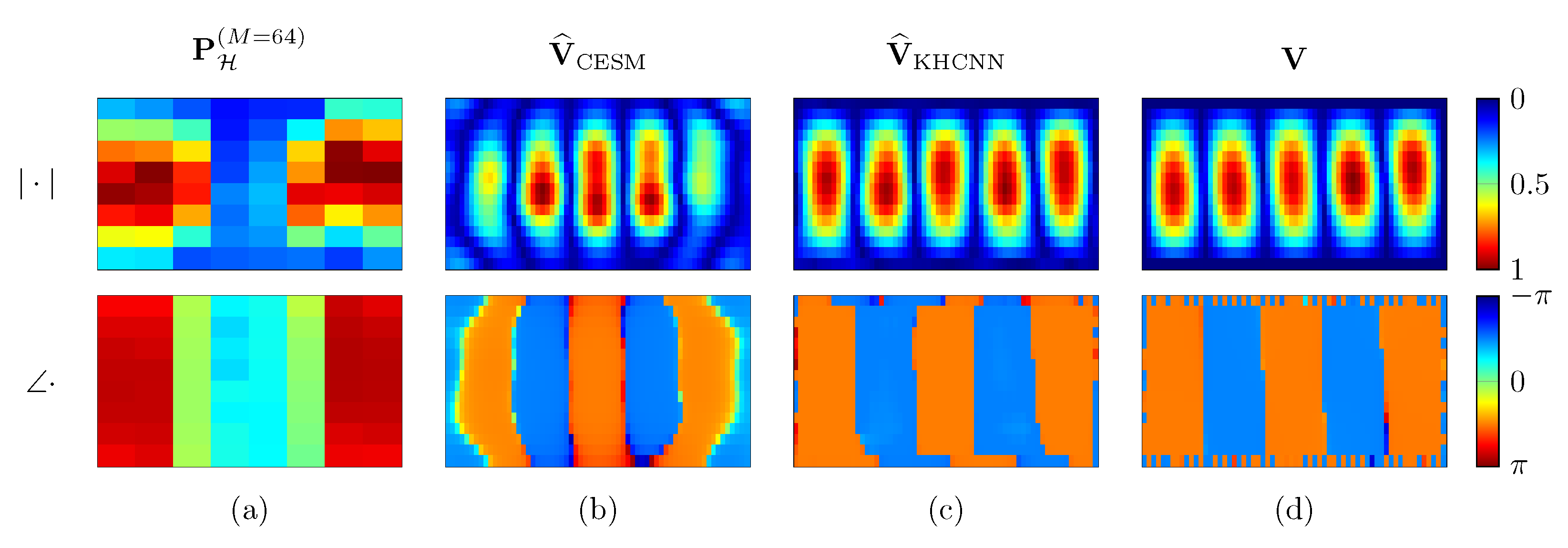
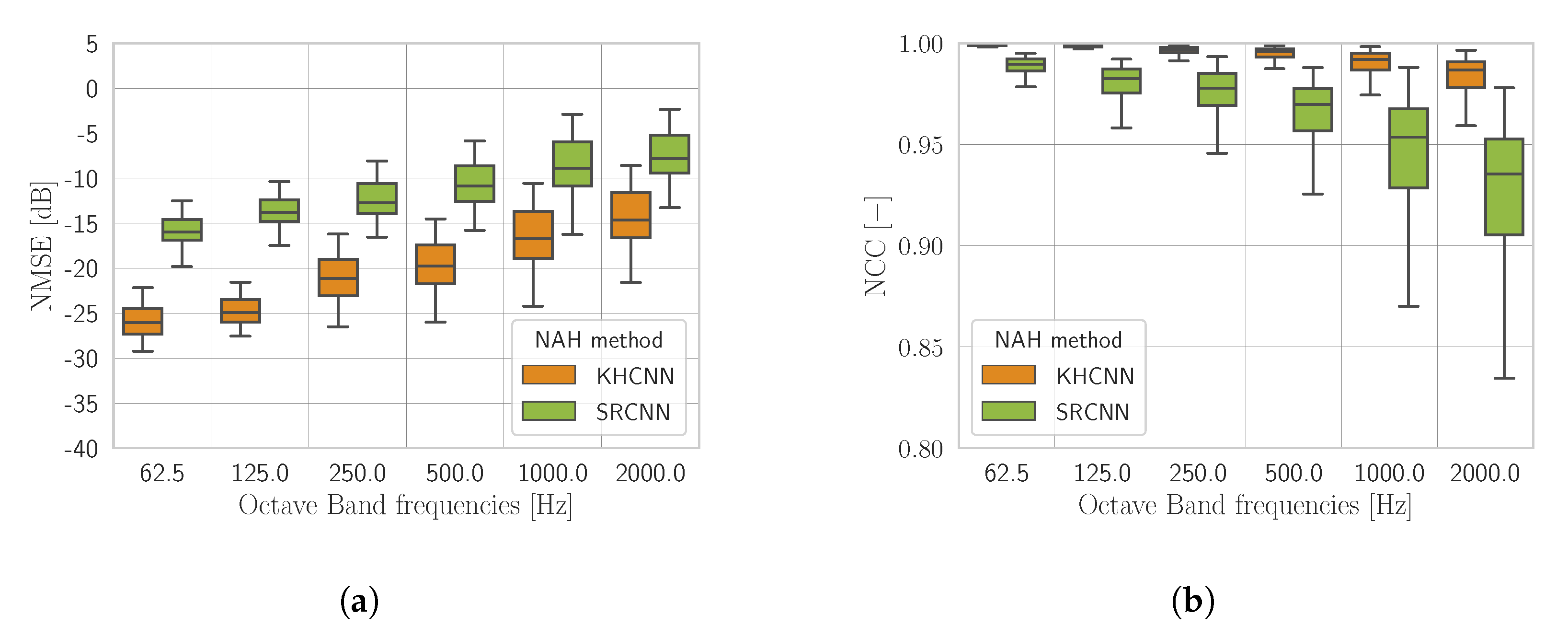
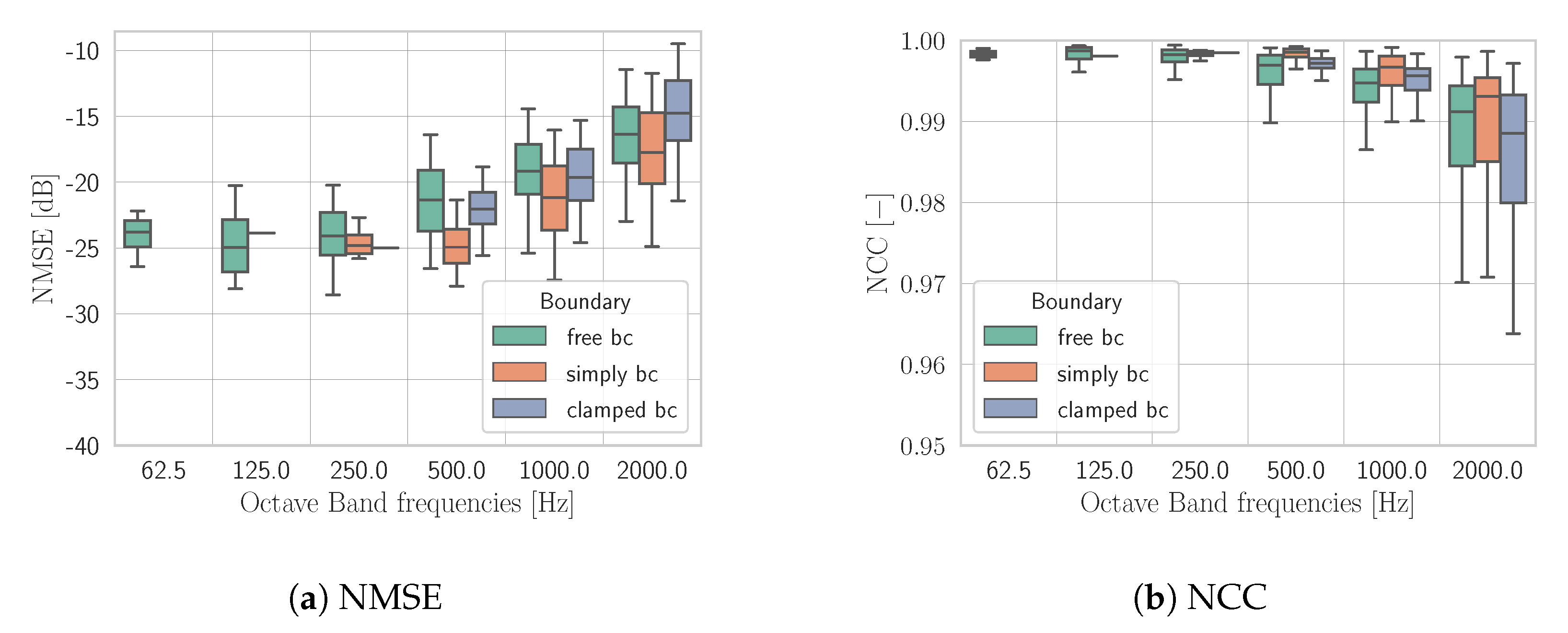
In this manuscript, we describe a novel methodology for nearfield acoustic holography (NAH). The proposed technique is based on convolutional neural networks, with autoencoder architecture, to reconstruct the pressure and velocity fields on the surface of the vibrating structure using the sampled pressure soundfield on the holographic plane as input. The loss function used for training the network is based on a combination of two components. The first component is the error in the reconstructed velocity. The second component is the error between the sound pressure on the holographic plane and its estimate obtained from forward propagating the pressure and velocity fields on the structure through the Kirchhoff–Helmholtz integral; thus, bringing some knowledge about the physics of the process under study into the estimation algorithm. Due to the explicit presence of the Kirchhoff–Helmholtz integral in the loss function, we name the proposed technique the Kirchhoff–Helmholtz-based convolutional neural network, KHCNN. KHCNN has been tested on two large datasets of rectangular plates and violin shells. Results show that it attains very good accuracy, with a gain in the NMSE of the estimated velocity field that can top 10 dB, with respect to state-of-the-art techniques. The same trend is observed if the normalized cross correlation is used as a metric.
Keywords: nearfield acoustic holography; convolutional neural network; Kirchhoff–Helmholtz integral; finite element method nearfield acoustic holography; convolutional neural network; Kirchhoff–Helmholtz integral; finite element method