Communication

Hybrid Carbon Microfibers-Graphite Fillers for Piezoresistive Cementitious Composites

by
Hasan Borke Birgin
1,
Antonella D’Alessandro
1,
Simon Laflamme
2 and
Filippo Ubertini
1,*
1
Department of Civil and Environmental Engineering, University of Perugia, via Goffredo Duranti 93, 06125 Perugia, Italy
2
Department of Civil, Construction and Environmental Engineering, Iowa State University, Ames, IA 50011, USA
*
Author to whom correspondence should be addressed.
Sensors 2021, 21(2), 518; https://doi.org/10.3390/s21020518
Submission received: 2 December 2020 / Revised: 7 January 2021 / Accepted: 11 January 2021 / Published: 13 January 2021
(This article belongs to the Special Issue Sensors: 20th Anniversary)

Abstract

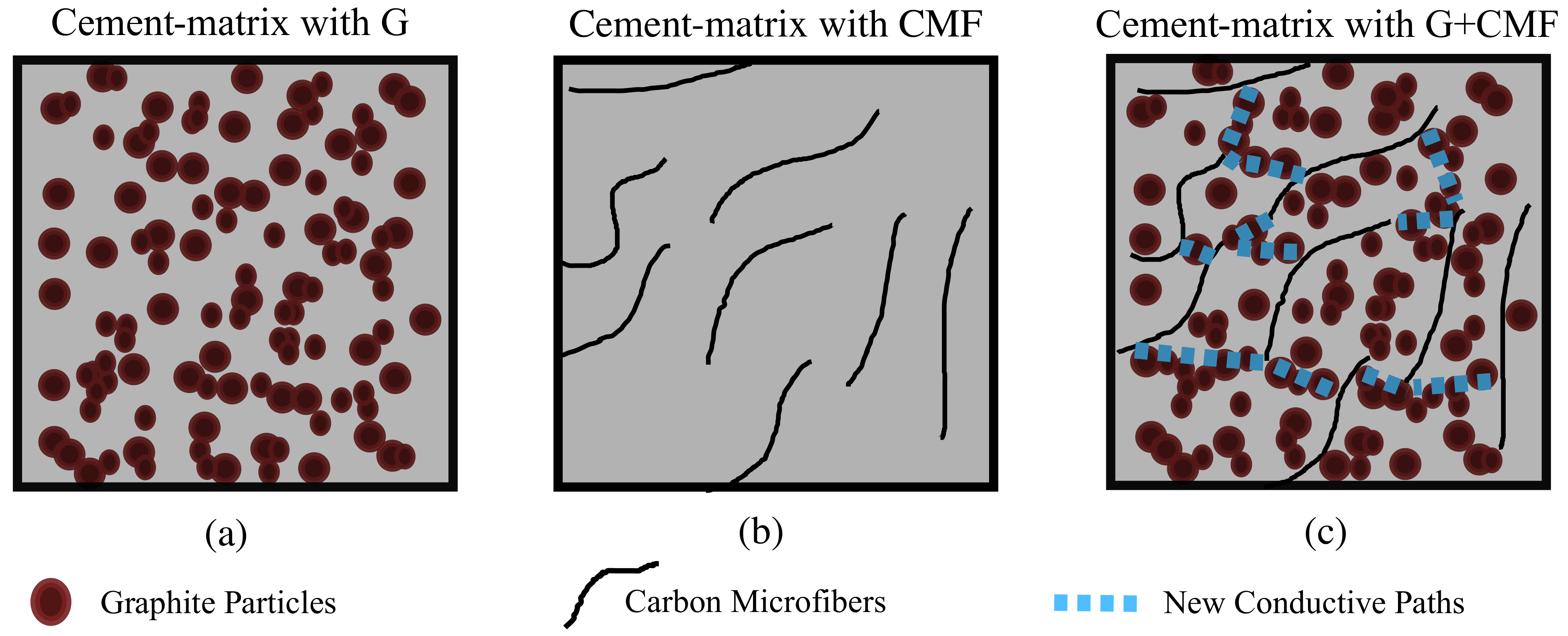

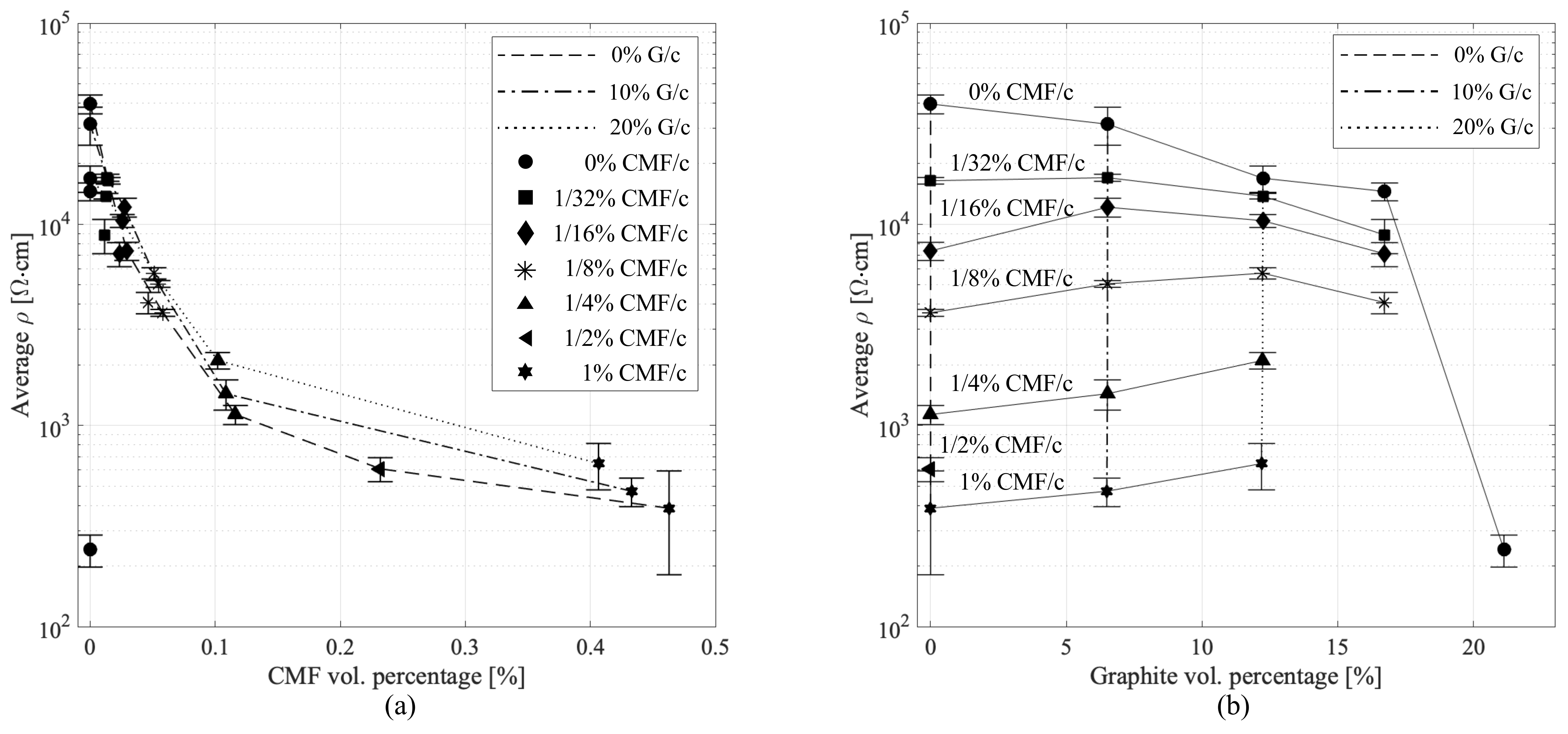
Multifunctional structural materials are very promising in the field of engineering. Particularly, their strain sensing ability draws much attention for structural health monitoring applications. Generally, strain sensing materials are produced by adding a certain amount of conductive fillers, around the so-called “percolation threshold”, to the cement or composite matrix. Recently, graphite has been found to be a suitable filler for strain sensing. However, graphite requires high amounts of doping to reach percolation threshold. In order to decrease the amount of inclusions, this paper proposes cementitious materials doped with new hybrid carbon inclusions, i.e., graphite and carbon microfibers. Carbon microfibers having higher aspect ratio than graphite accelerate the percolation threshold of the graphite particles without incurring into dispersion issues. The resistivity and strain sensitivity of different fibers’ compositions are investigated. The electromechanical tests reveal that, when combined, carbon microfibers and graphite hybrid fillers reach to percolation faster and exhibit higher gauge factors and enhanced linearity.
Keywords: smart-materials; hybrid fillers; graphite; carbon microfibers; strain sensing; piezoresistivity; conductivity; self-monitoring smart-materials; hybrid fillers; graphite; carbon microfibers; strain sensing; piezoresistivity; conductivity; self-monitoring