Article

An Unsupervised Learning-Based Multi-Organ Registration Method for 3D Abdominal CT Images
1
School of Automation, Central South University, Changsha 410083, China
2
Hunan Xiangjiang Artificial Intelligence Academy, Changsha 410083, China
3
Hunan Engineering Research Center of High Strength Fastener Intelligent Manufacturing, Changde 415701, China
4
School of Computer Science and Engineering, Hunan University of Science and Technology, Xiangtan 411201, China
*
Author to whom correspondence should be addressed.
Sensors 2021, 21(18), 6254; https://doi.org/10.3390/s21186254
Submission received: 24 July 2021 / Revised: 22 August 2021 / Accepted: 26 August 2021 / Published: 18 September 2021
(This article belongs to the Special Issue Advanced Optoelectronic Sensors and Biomedical Application)

Abstract

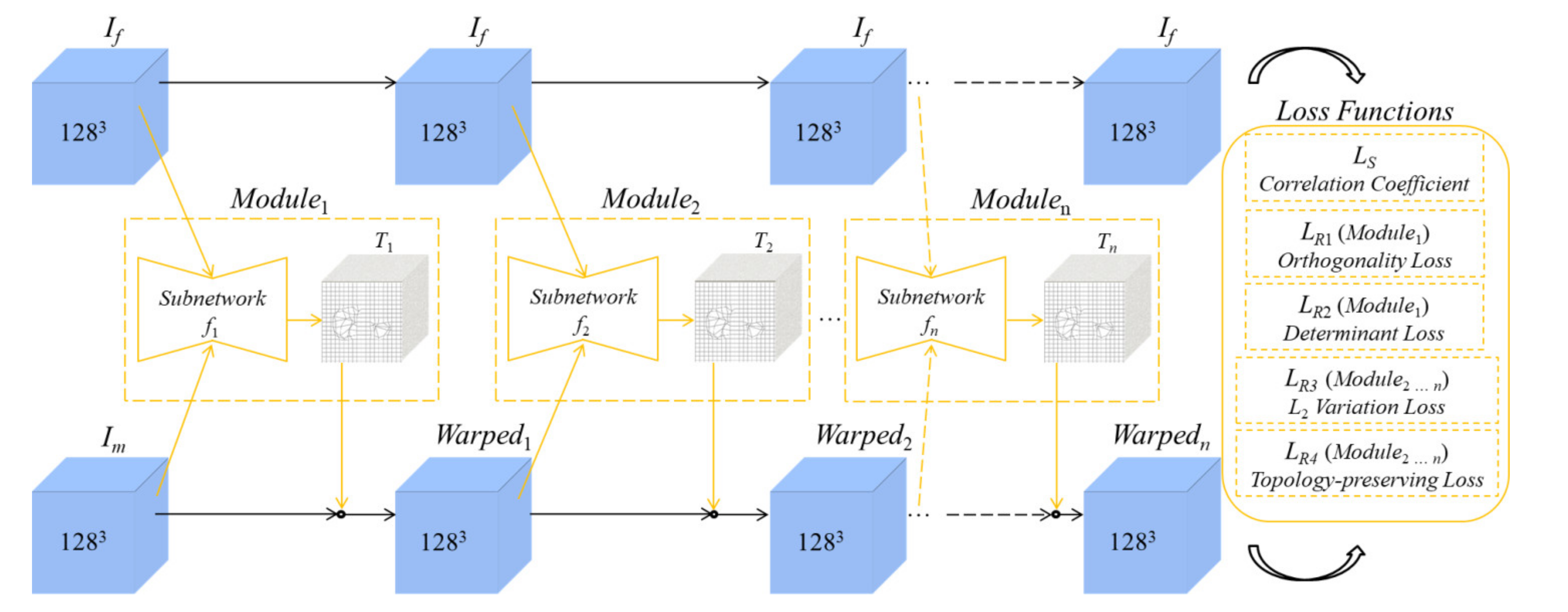
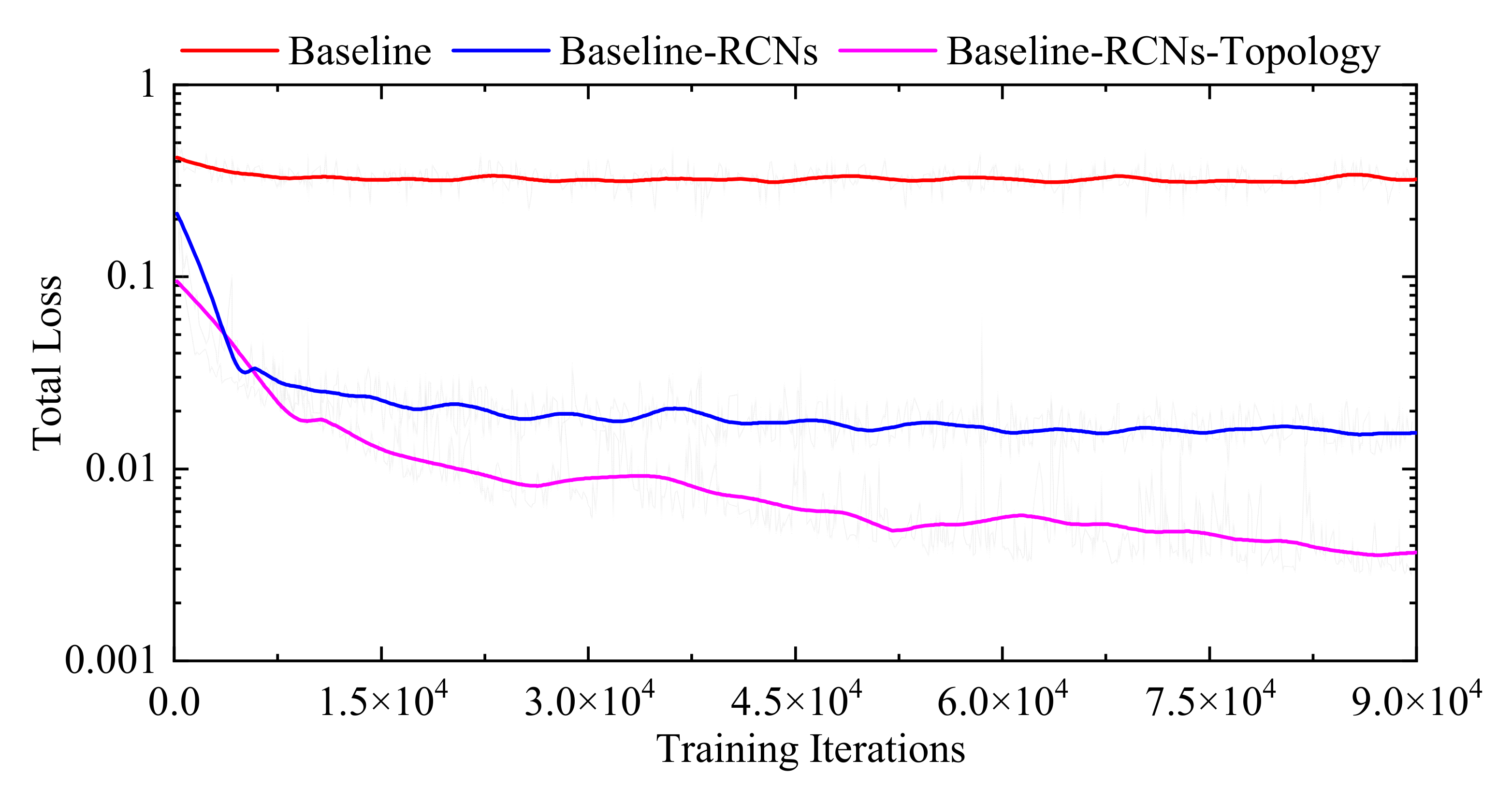
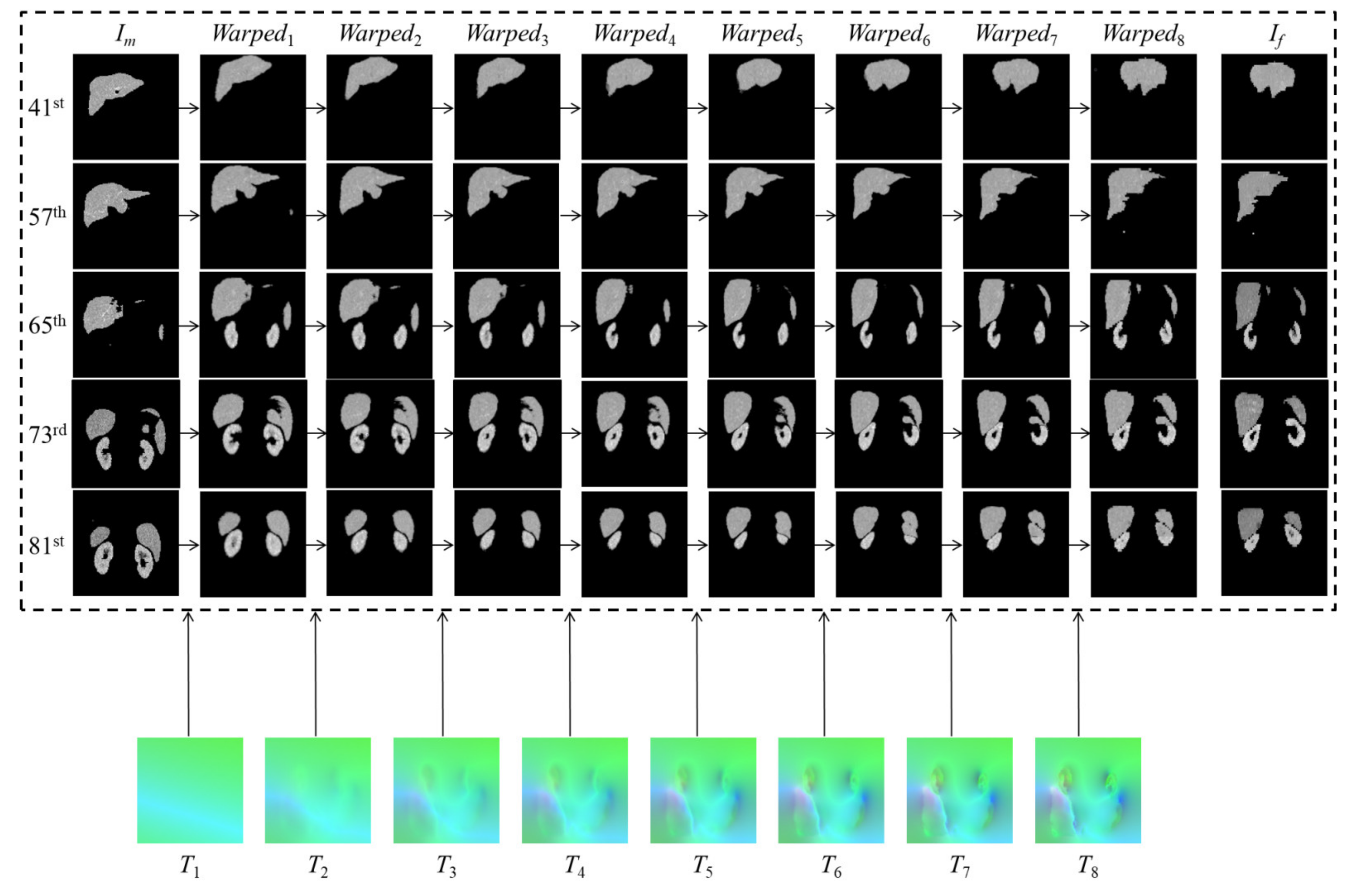
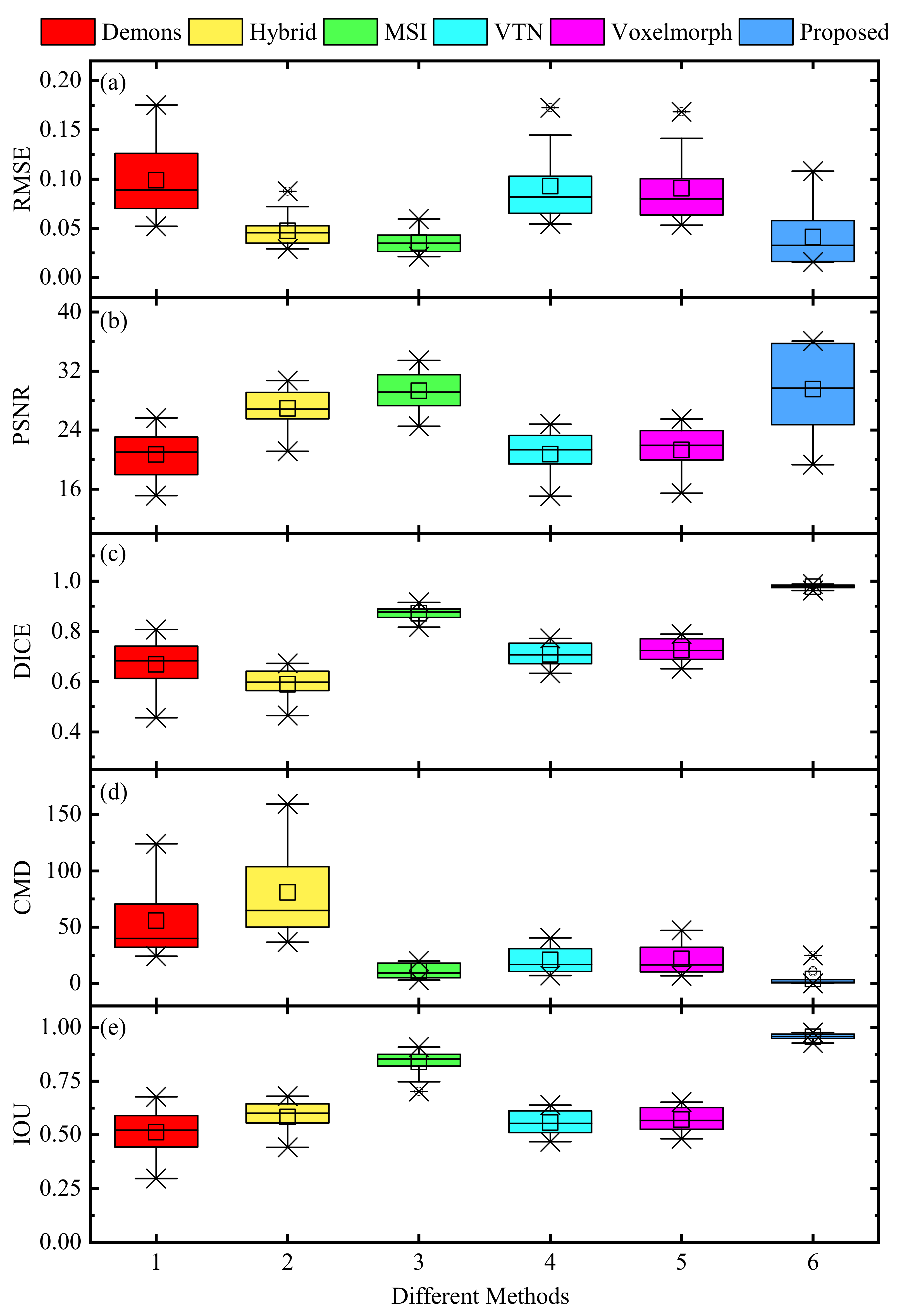
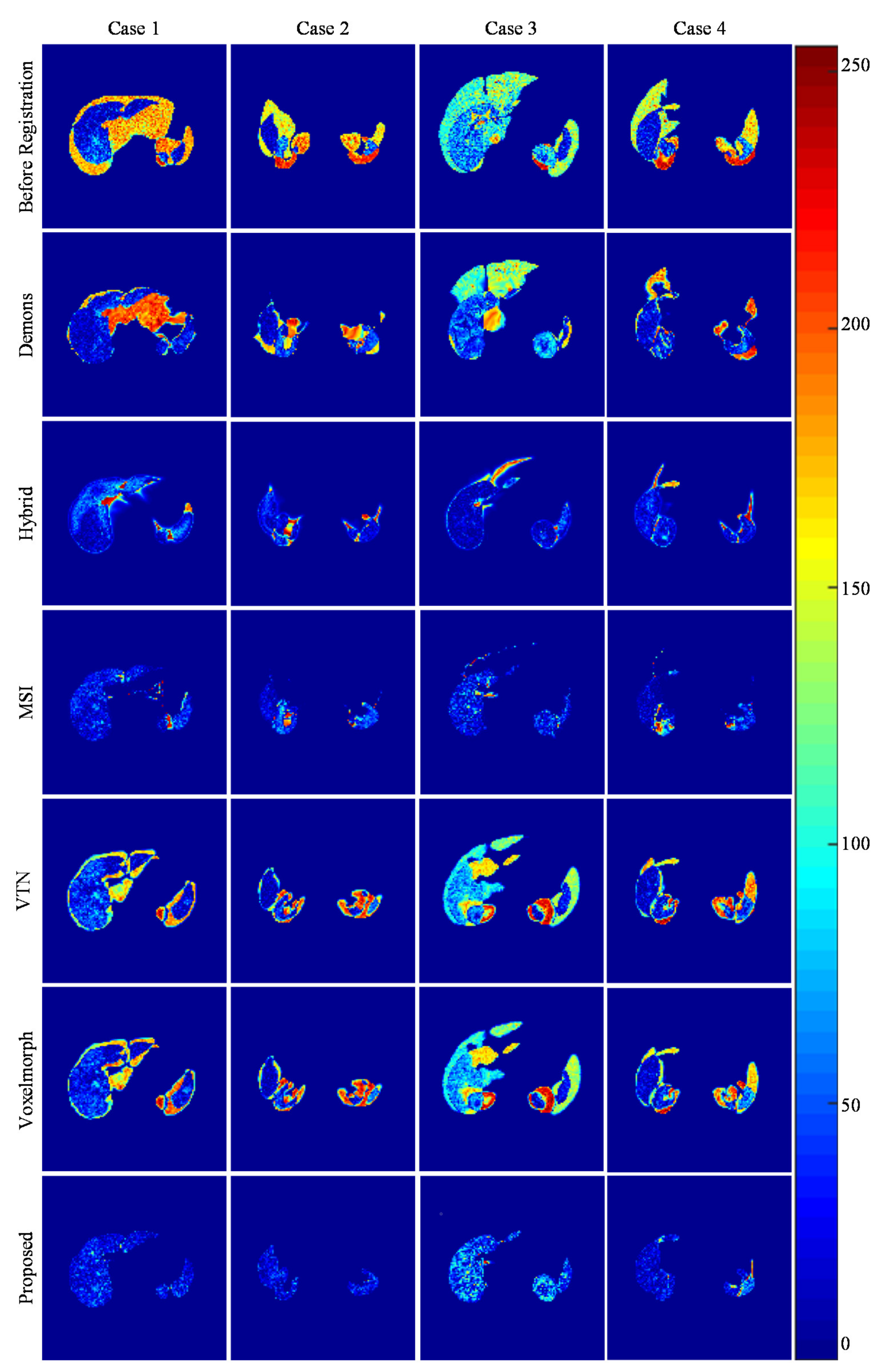
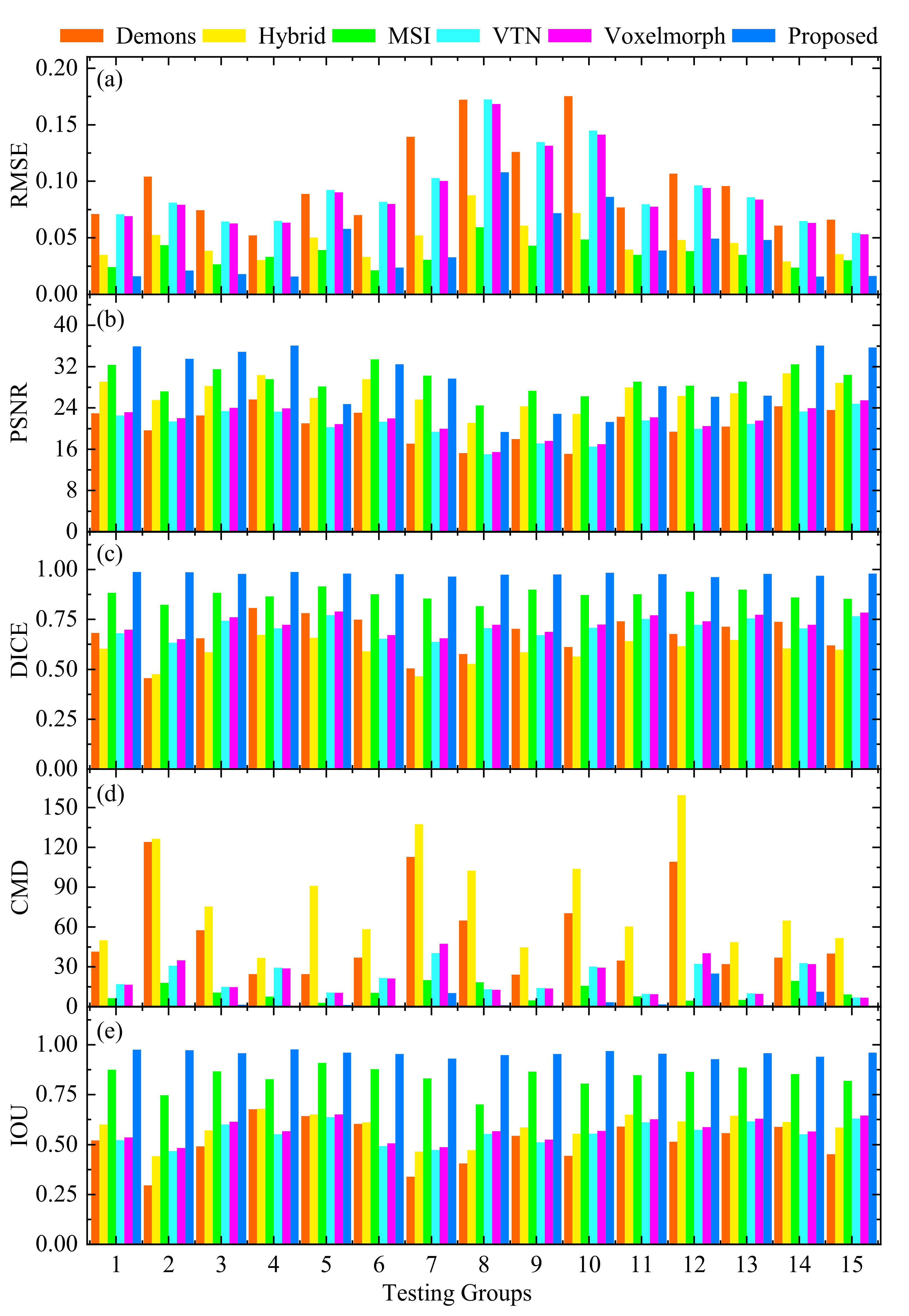
Medical image registration is an essential technique to achieve spatial consistency geometric positions of different medical images obtained from single- or multi-sensor, such as computed tomography (CT), magnetic resonance (MR), and ultrasound (US) images. In this paper, an improved unsupervised learning-based framework is proposed for multi-organ registration on 3D abdominal CT images. First, the explored coarse-to-fine recursive cascaded network (RCN) modules are embedded into a basic U-net framework to achieve more accurate multi-organ registration results from 3D abdominal CT images. Then, a topology-preserving loss is added in the total loss function to avoid a distortion of the predicted transformation field. Four public databases are selected to validate the registration performances of the proposed method. The experimental results show that the proposed method is superior to some existing traditional and deep learning-based methods and is promising to meet the real-time and high-precision clinical registration requirements of 3D abdominal CT images.
Keywords: registration; convolutional neural network; medical image; abdominal CT registration; convolutional neural network; medical image; abdominal CT