Optimum PZT Patch Size for Corrosion Detection in Reinforced Concrete Using the Electromechanical Impedance Technique

Abstract
1. Introduction
2. Electromechanical Impedance Theory
2.1. Background
2.2. Optimal Frequency and Patch Sizing Selection
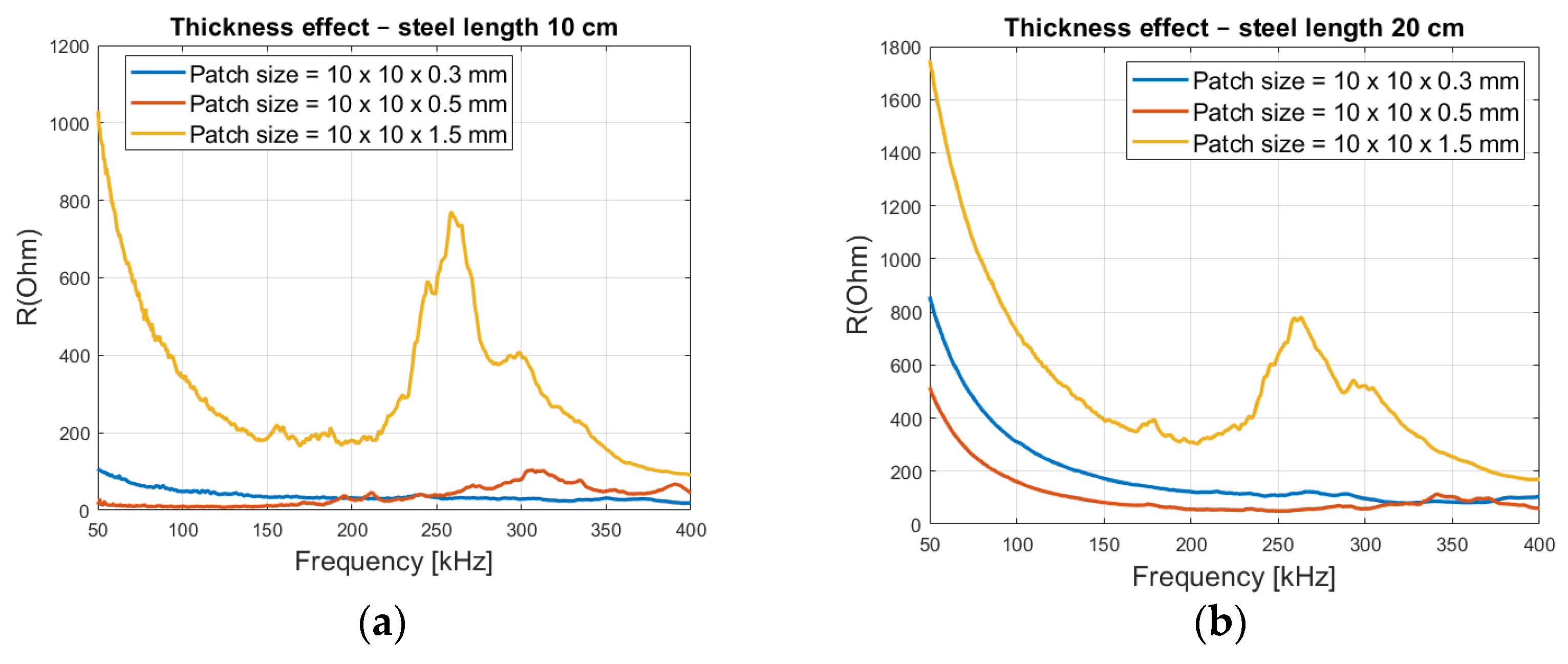
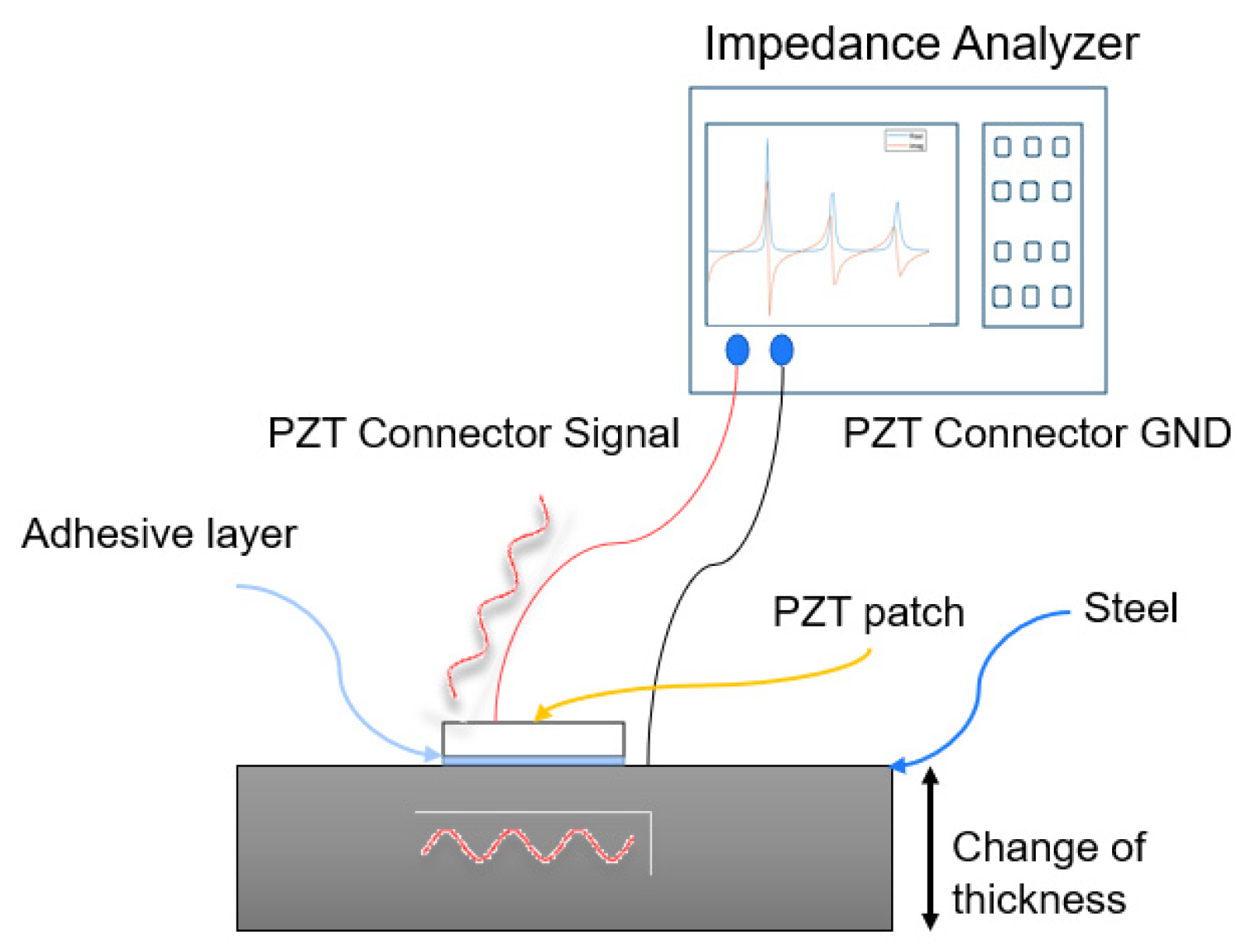
2.3. Frequency Sensitivity by Thickness Variation
3. Experimental Results
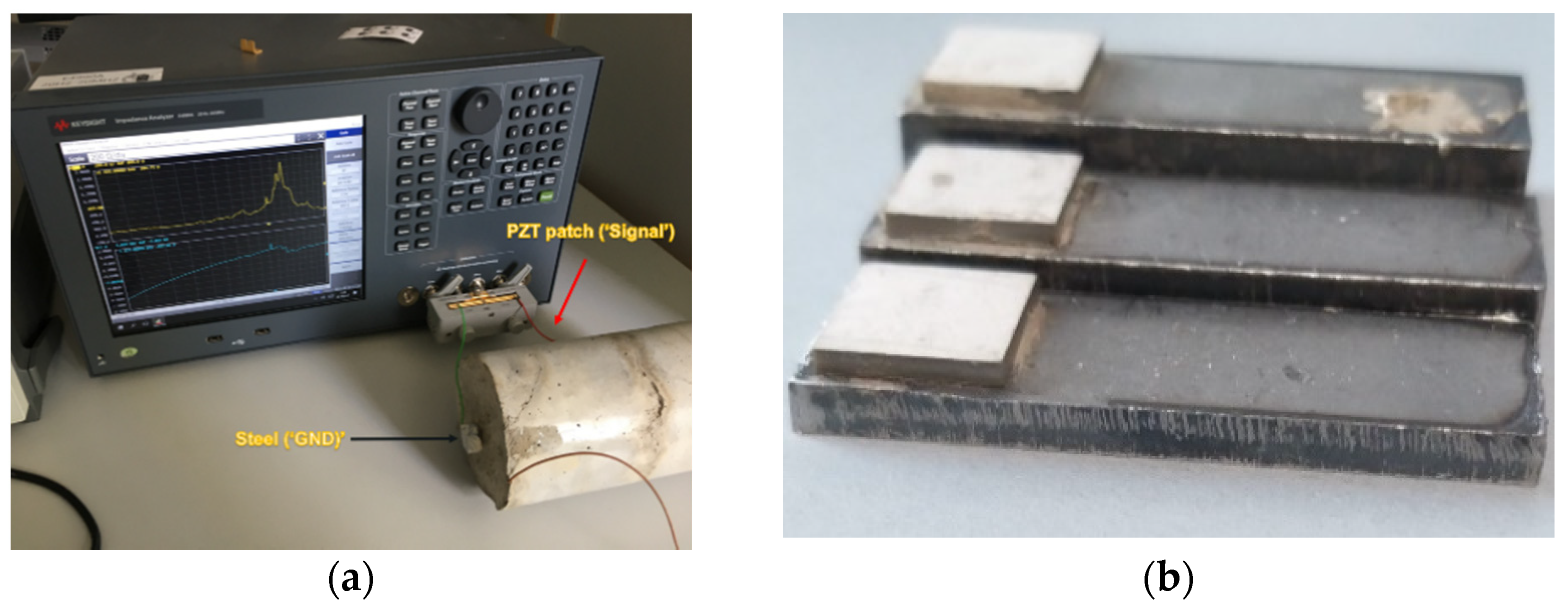
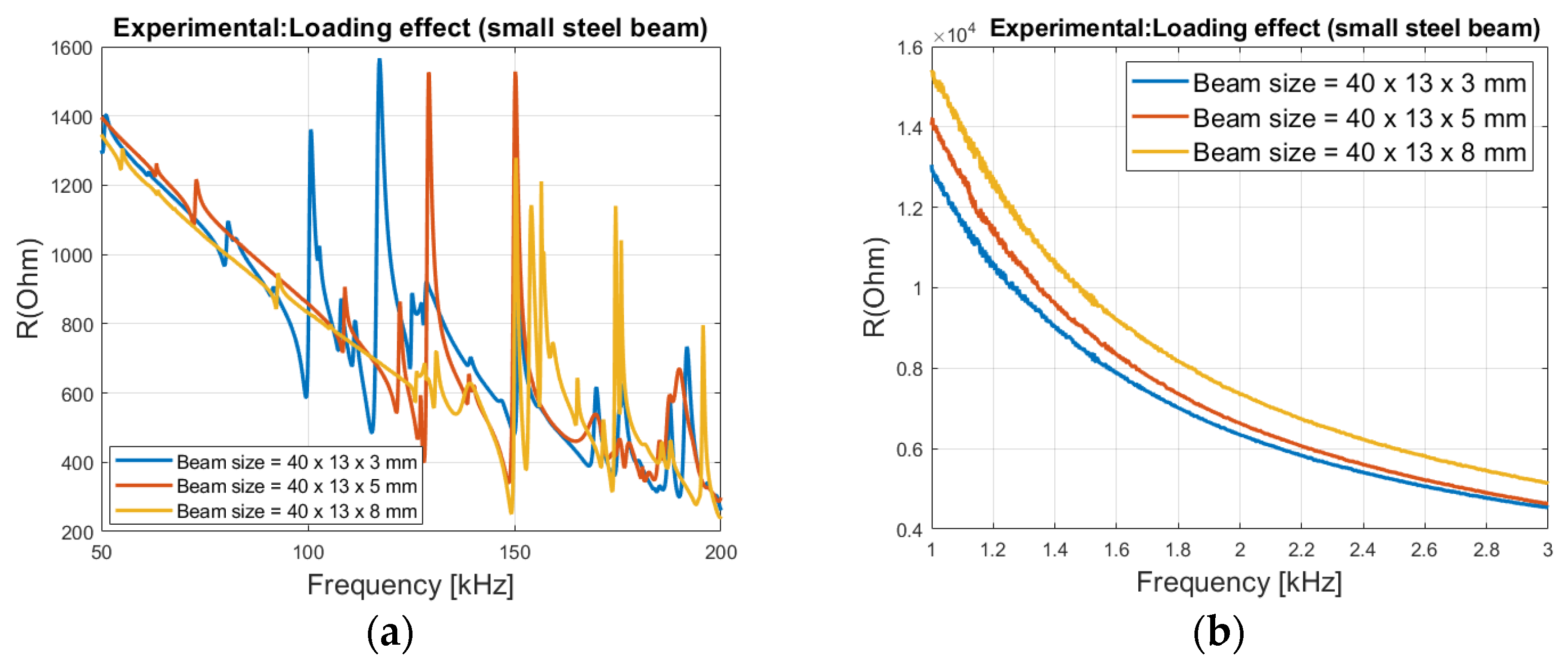
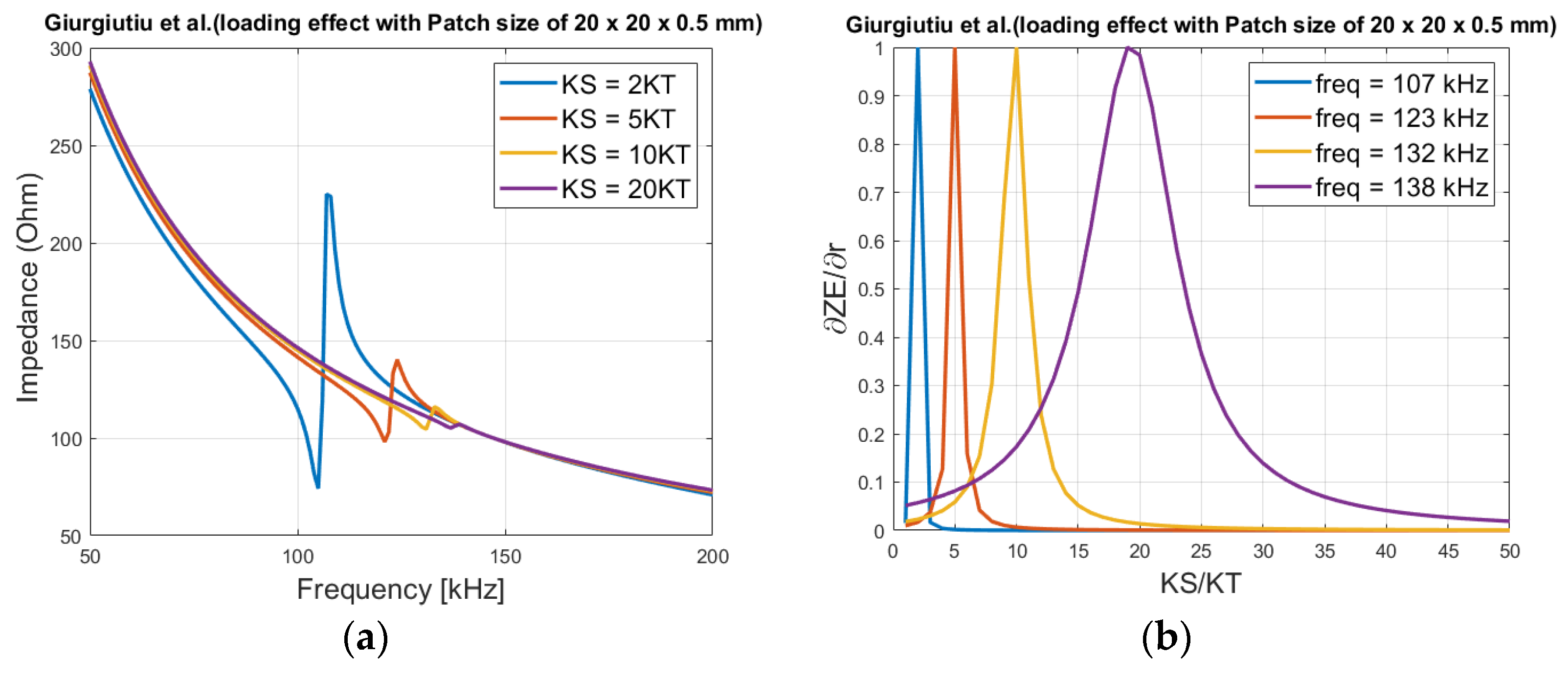
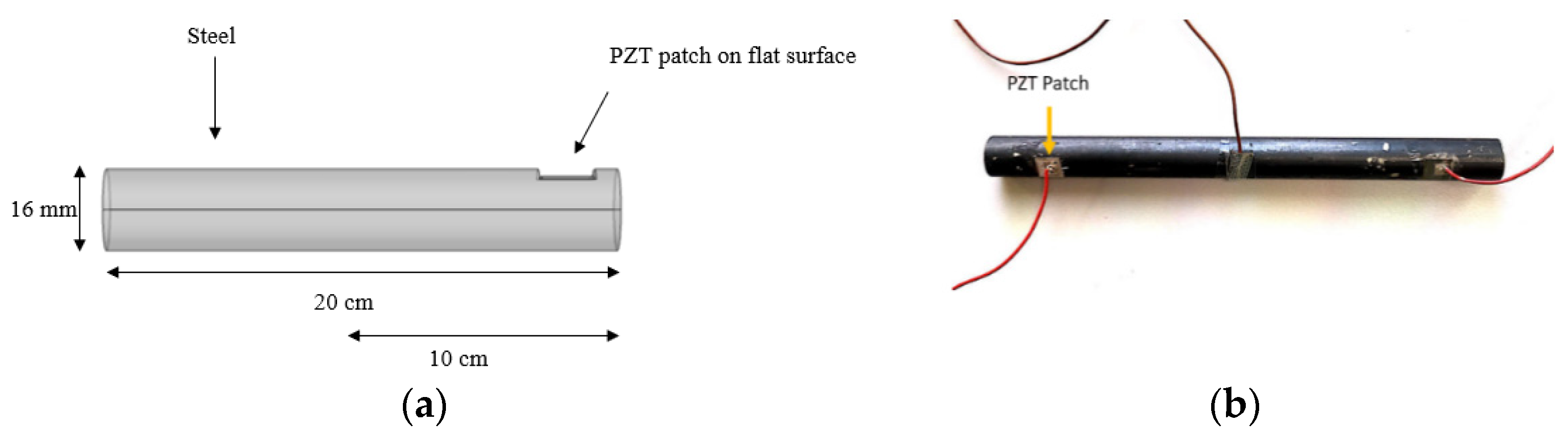
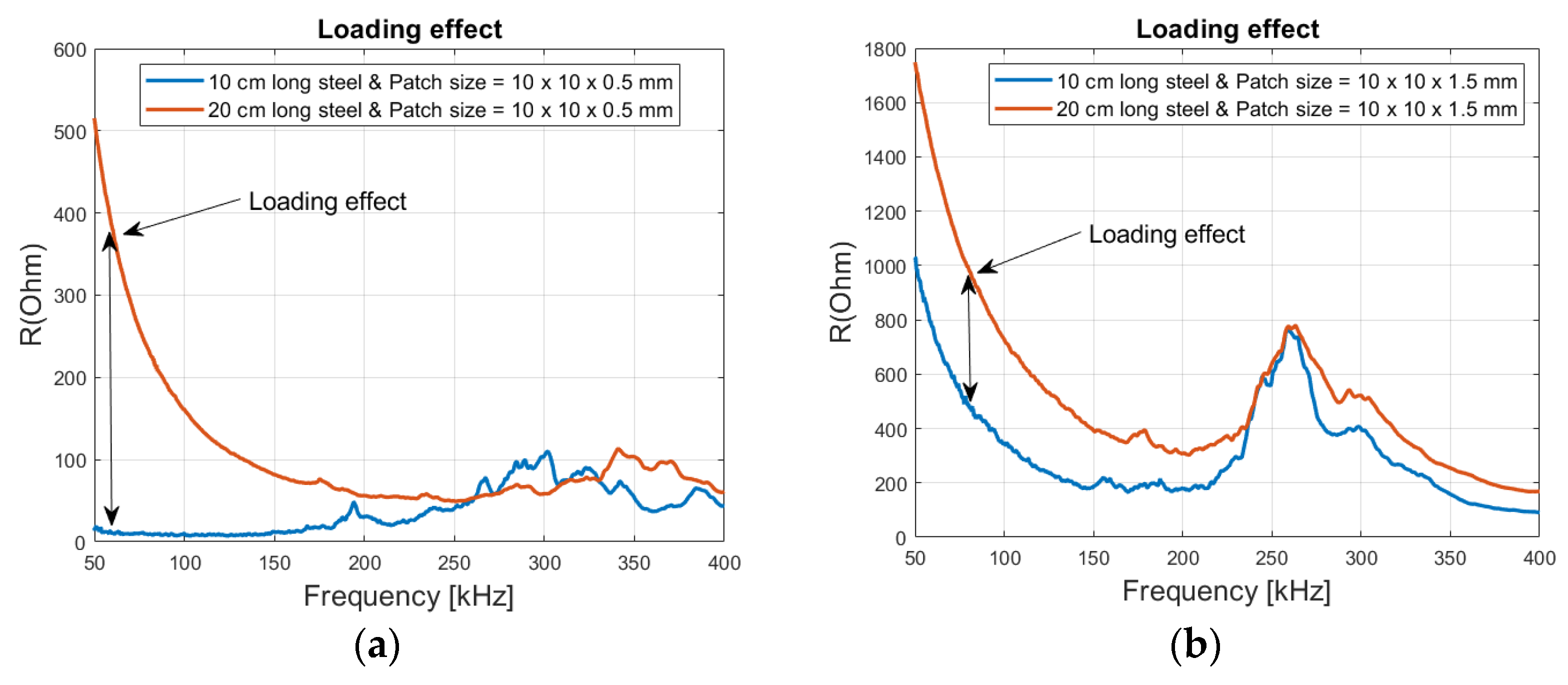
3.1. Loading Effect Investigation on Small Steel Beams
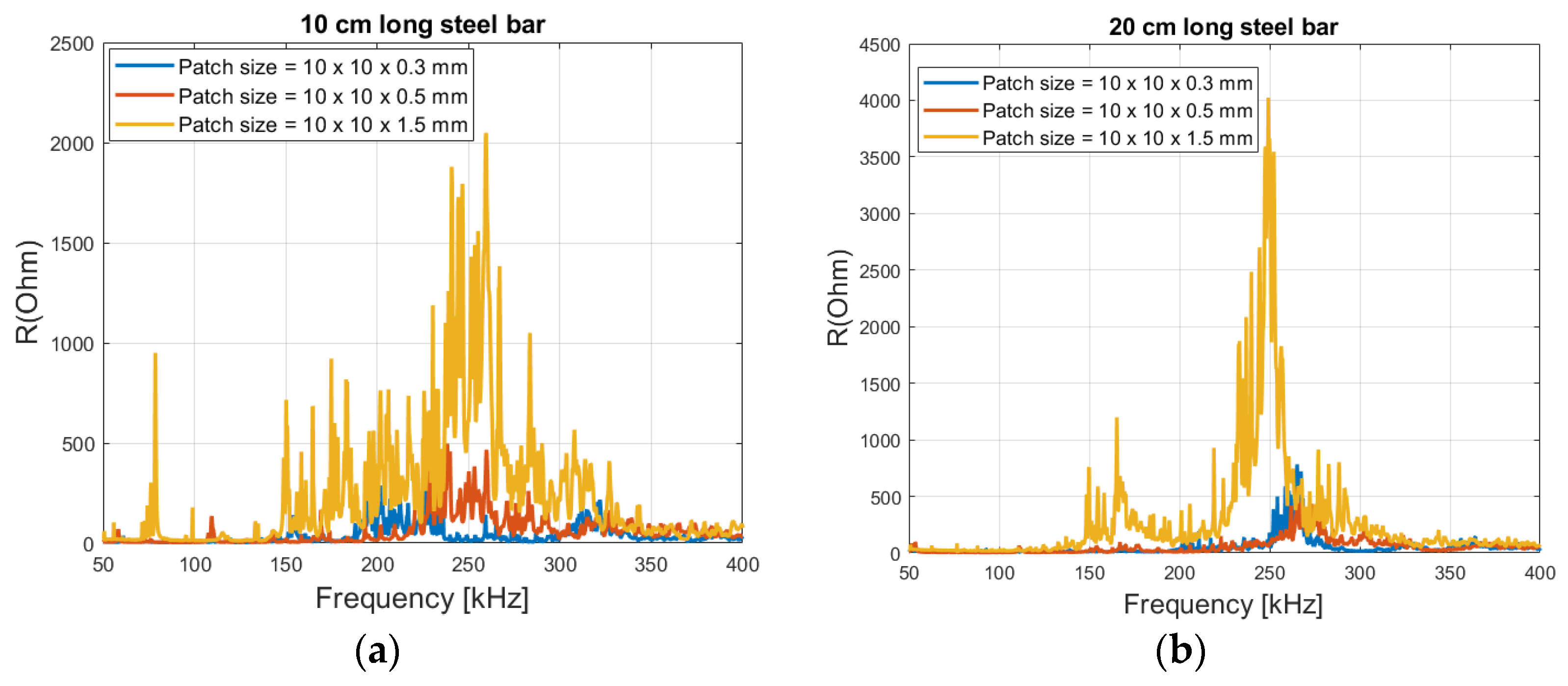
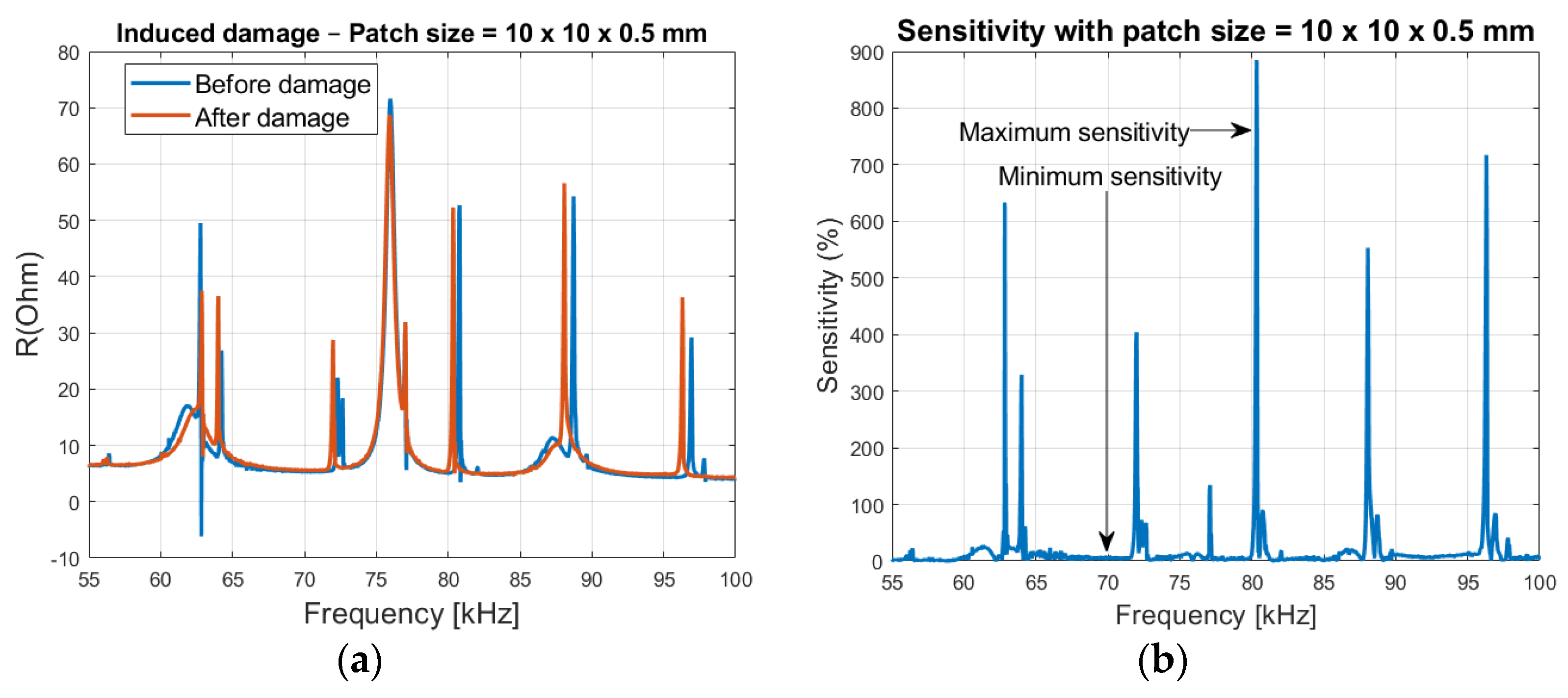
3.2. Reinforcement Steel Rod and Damage Detection in Free Air
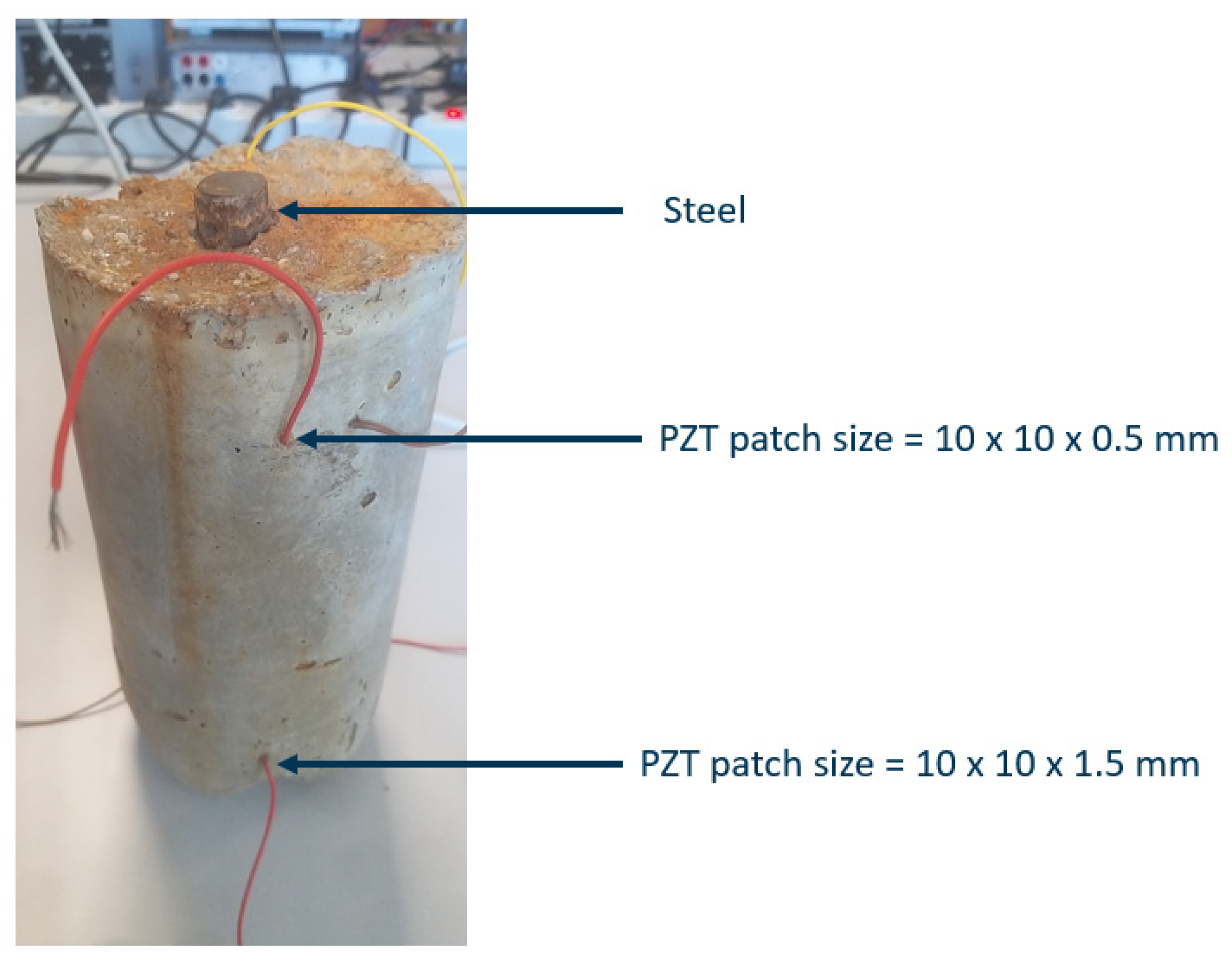
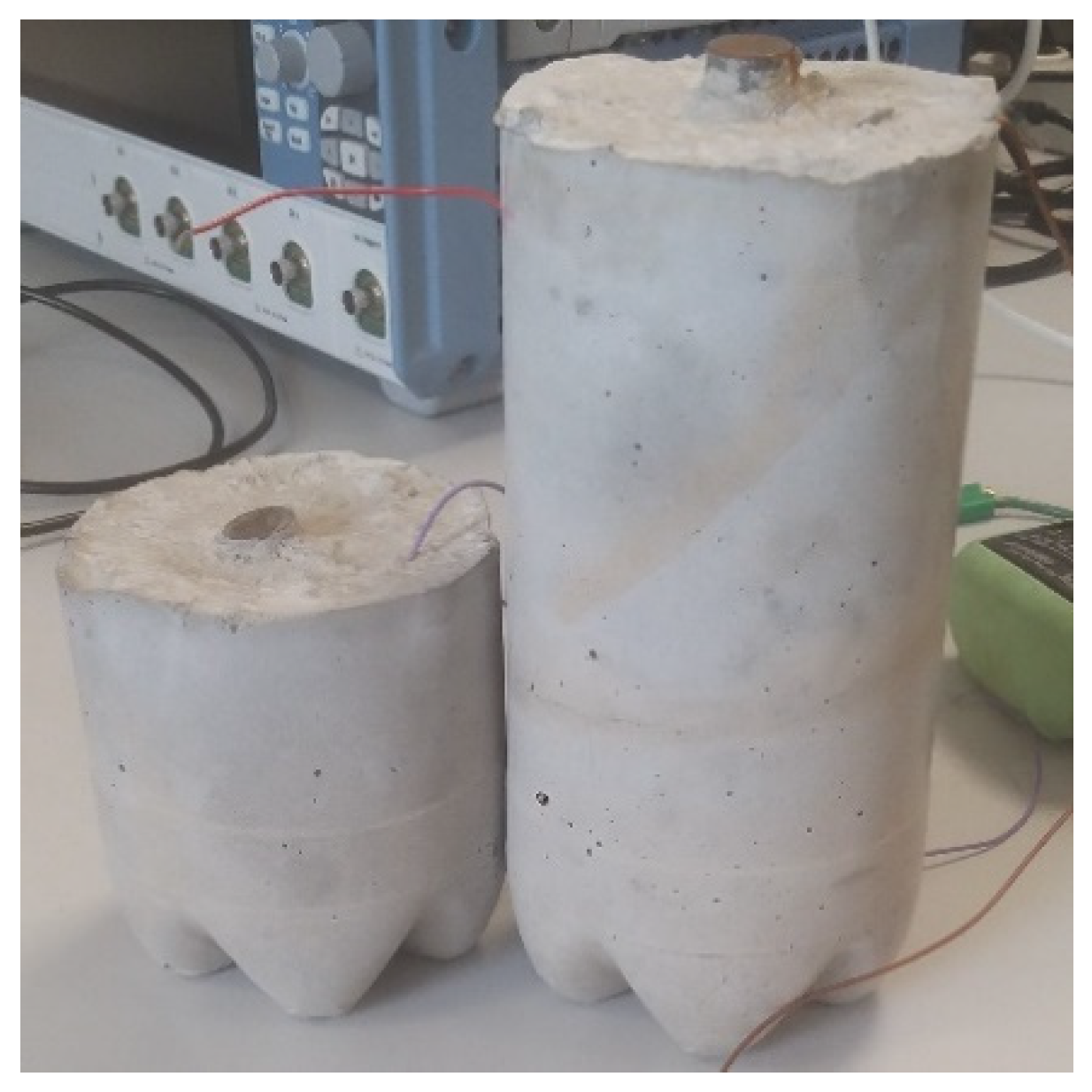
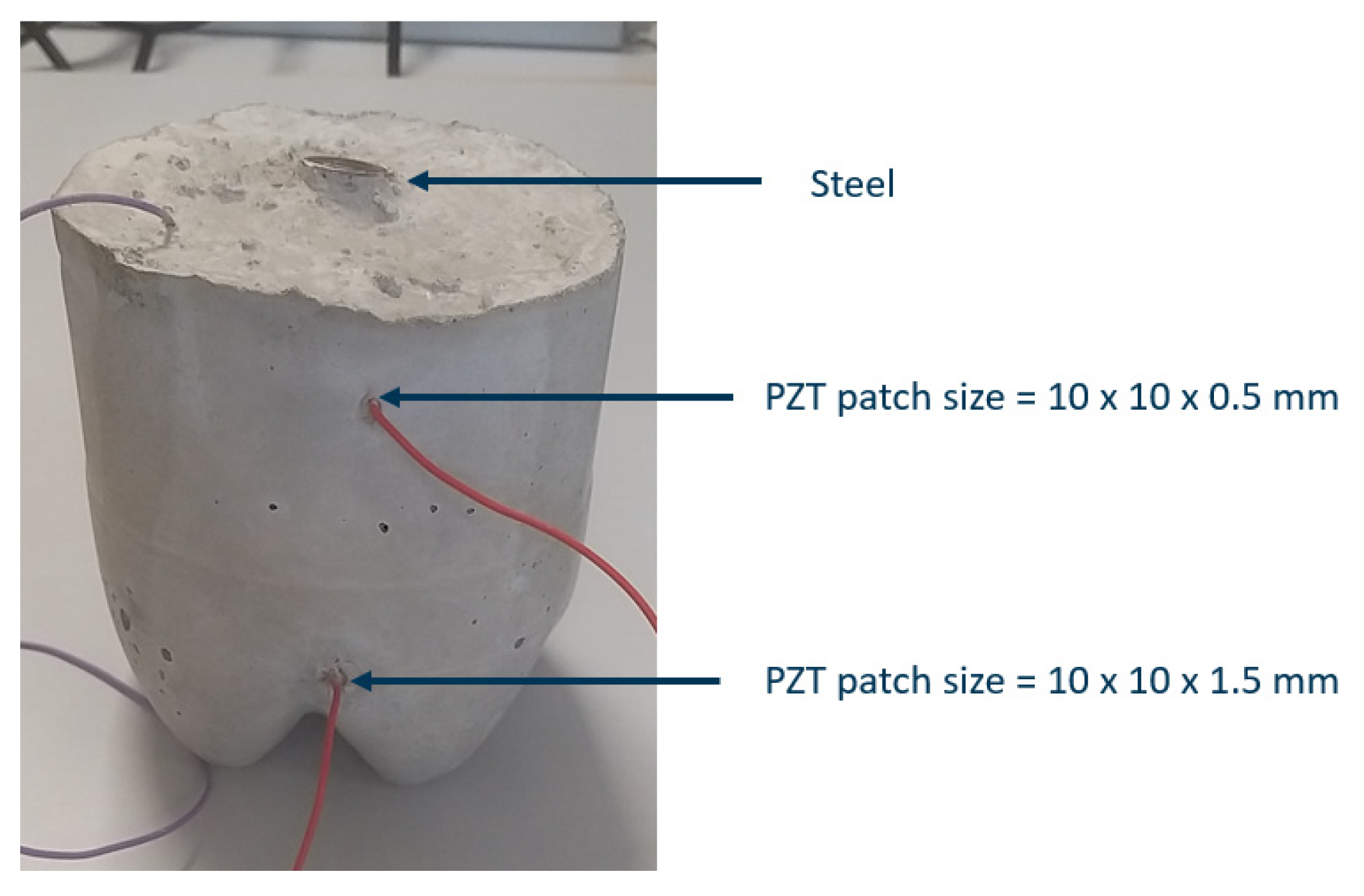
3.3. Patch Sizing in Reinforced Concrete
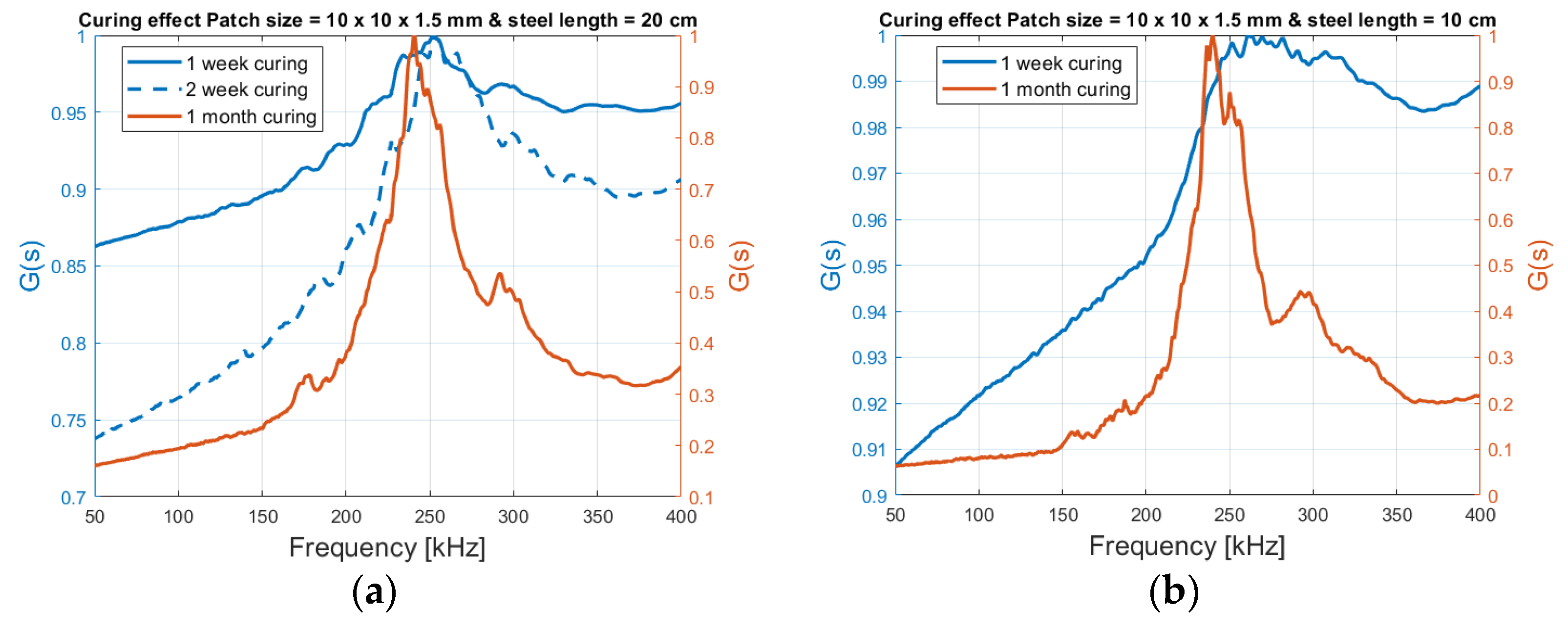
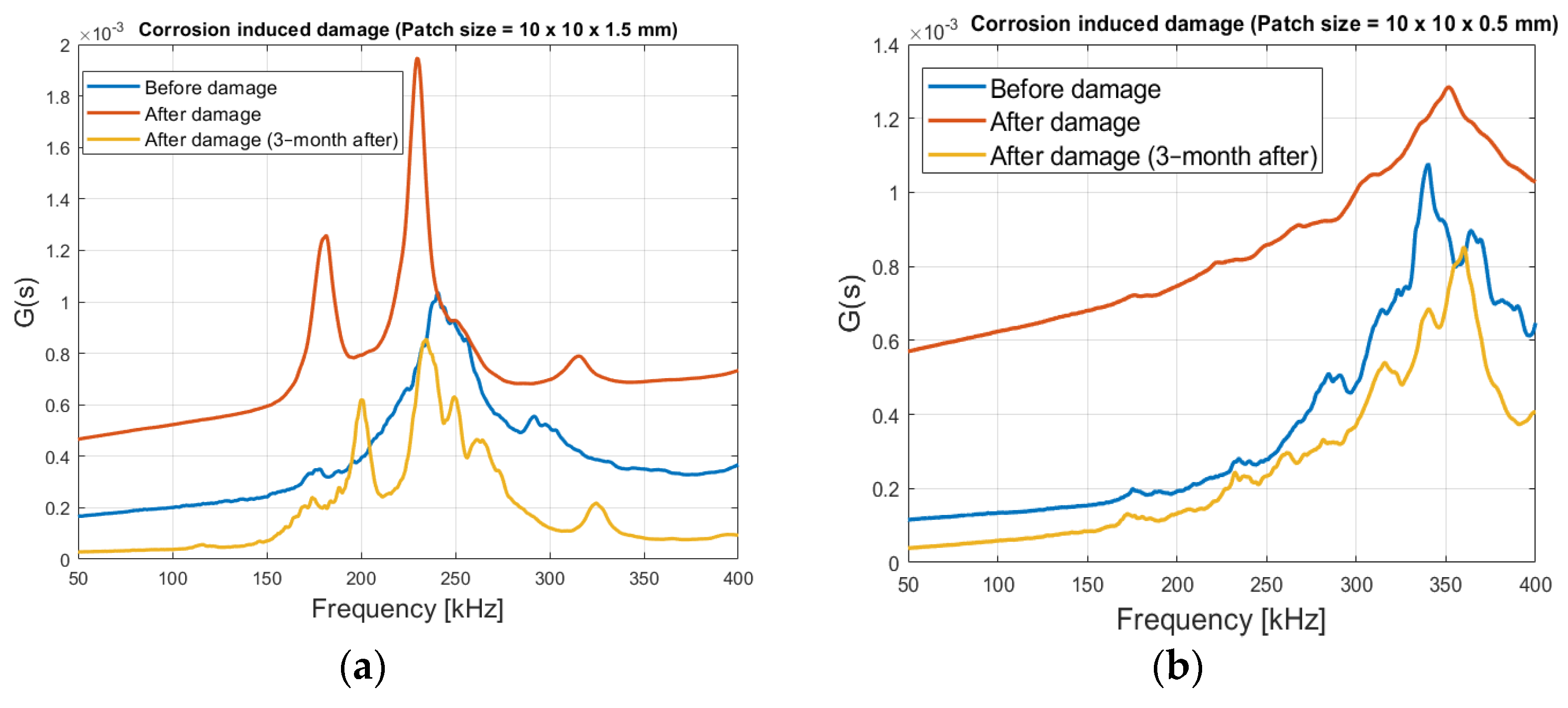
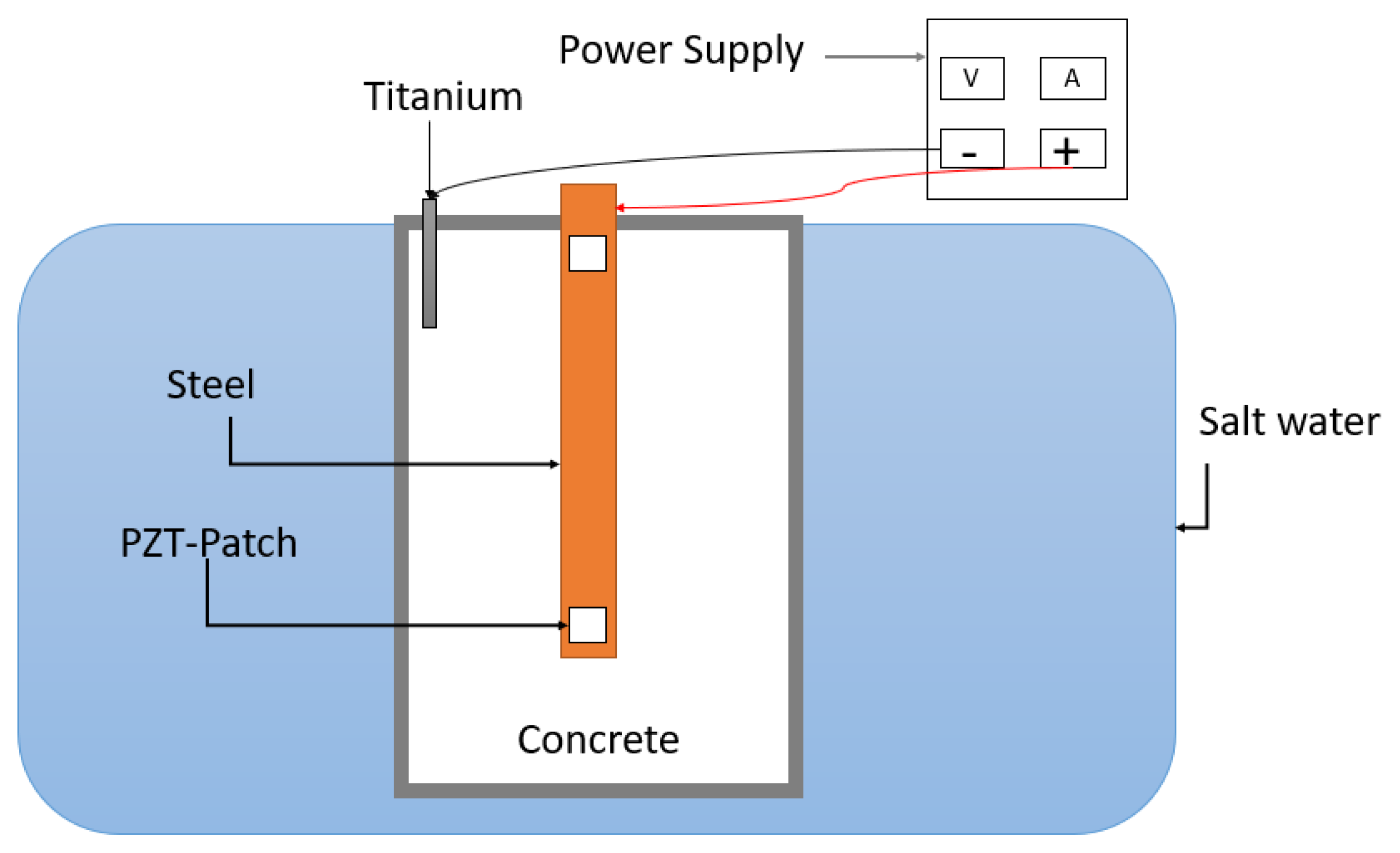
3.4. Accelerated Corrosion of the Reinforced Concrete
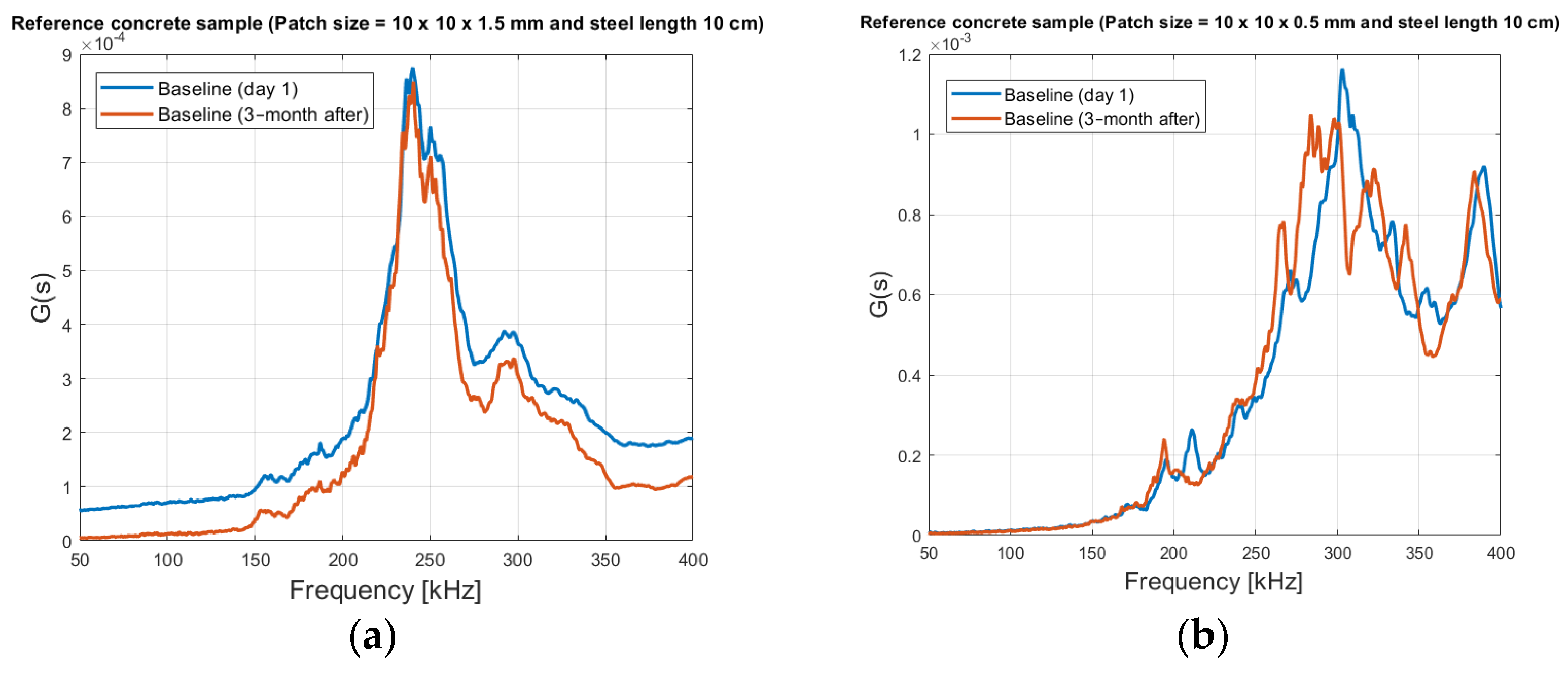
3.5. Reference Reinforced Concrete Sample
4. Discussion
5. Conclusions
Author Contributions
Funding
Data Availability Statement
Acknowledgments
Conflicts of Interest
References
- Böhni, H. Corrosion in Reinforced Concrete Structures; CRC Press LLC: Boca Raton, FL, USA, 2000. [Google Scholar]
- NACE International, NACE International. 2016. Available online: http://impact.nace.org/ (accessed on 15 March 2021).
- Winfield, N. “INDEPENDENT.co.uk,” NEWS CORP the Independent. August 2018. Available online: https://www.independent.co.uk/news/world/europe/genoa-bridge-collapse-engineer-riccardo-morandi-warning-corrosion-rust-concrete-a8498716.html (accessed on 15 March 2021).
- Jones, D.A. Principles and Prevention of Corrosion; Prentice-Hall: Upper Saddle River, NJ, USA, 1996. [Google Scholar]
- Wong, H.S.; Zhao, Y.X.; Karimi, A.R.; Buenfeld, N.R.; Jin, W.L. On the penetration of corrosion products from reinforcing steel into concrete due to chloride induced corrosion. ELSEVIER Corros. Sci. 2010, 52, 2469–2480. [Google Scholar] [CrossRef]
- Soudki, K.A.; Sherwood, T.; Masoud, S. FRP Repair of Corrosion-Damaged Reinforced Concrete Beams; University of Waterloo: Waterloo, ON, Canada, 2002. [Google Scholar]
- Christodoulou, C.; Glass, G.; Austin, S.; Goodier, C. Assessing the long-term benefits of Impressed Current Cathodic Protection. ELSEVIER Corros. Sci. 2010, 52, 2671–2679. [Google Scholar] [CrossRef]
- Song, H.W.; Velu, S. Corrosion Monitoring of Reinforced Concrete Structures. Int. J. Electrochem. Sci. 2007, 2, 1–28. [Google Scholar]
- Nygaard, P. Non-Destructive Electrochemical Monitoring of Reinforcement Corrosion; Technical University of Denmark (DTU): Copenhagen, Denmark, 2008. [Google Scholar]
- Yang, L. Techniques for Corrosion Monitoring; Woodhead Publishing Limited: Abington, UK; Cambridge, UK, 2008. [Google Scholar]
- Cheng, Y.; Hanif, A.; Chen, E.; Ma, G.; Li, Z. Simulation of a novel capacitive sensor for rebar corrosion detection. ELSEVIER Constr. Build. Mater. 2018, 174, 613–624. [Google Scholar] [CrossRef]
- de Alcantara, N.P., Jr.; da Silva, F.M.; Guimaräes, M.T.; Pereira, M.D. Corrosion Assessment of Steel Bars Used in Reinforced Concrete structures by Means of Eddy Current Testing. Sensors 2016, 16, 15. [Google Scholar] [CrossRef] [PubMed]
- Fuhr, P.; Huston, D. Corrosion detection in reinforced concrete roadways and bridges via embedded fiber optic sensors. Smart Mater. Struct. 1998, 7, 217. [Google Scholar] [CrossRef]
- Tawie, R.; Park, H.B.; Baek, J.; Ba, W.S. Damage Detection Performance of the Electromechanical Impedance (EMI) Technique with Various Attachment Methods on Glass Fibre Composite Plates. Sensors 2019, 19, 1000. [Google Scholar] [CrossRef]
- Liu, Y.; Feng, X. Monitoring corrosion-induced thickness loss of stainless-steel plates using the electromechanical impedance technique. Meas. Sci. Technol. 2020, 32, 025104. [Google Scholar] [CrossRef]
- Zhu, J.; Qing, X.; Liu, X.; Wang, Y. Electromechanical impedance-based damage localization with novel signatures extraction methodology and modified probability-weigted algorithm. Mech. Syst. Signal Process. 2021, 146, 107001. [Google Scholar] [CrossRef]
- Xu, J.; Dong, J.; Li, H.; Zhang, C.; Ho, S.C. Looseness Monitoring of Bolted Spherical Joint Connection Using Electro-Mechanical Impedance Technique and BP Neural Networks. Sensors 2019, 19, 1906. [Google Scholar] [CrossRef]
- Giurgiutiu, V. Structural Health Monitoring with Piezoelectric Wafer Active Sensors; Academic Press: Cambridge, MA, USA, 2014. [Google Scholar]
- Talakokula, V.; Bhalla, S.; Ashok, G. Corrosion assessment of reinforced concrete structures based on equivalent strucutural parameters using electro-mechanical impedance technique. J. Intell. Mater. Syst. Struct. 2013, 25, 17. [Google Scholar]
- Li, W.; Liu, T. PZT Based Smart Corrosion Coupon Using Electromechanical Impedance; Elsevier: Amsterdam, The Netherlands, 2019; p. 15. [Google Scholar]
- Ahmadi, J.; Feirahi, M.H.; Tabar, S.F.; Fard, A.H. A novel approach for non-destructive EMI-based corrosion monitoring of concrete-embedded reinforcements using multi-orientation. Constr. Build. Mater. 2020, 273, 121689. [Google Scholar] [CrossRef]
- Liang, C.; Sun, F.B.; Rogers, C.A. Coupled Electro-Mechanical Analysis of Adaptive Material System—Determination of the Actuator Power Consumption and System Energy Transfer. J. Intell. Mater. Syst. Struct. 1997, 8, 335–343. [Google Scholar] [CrossRef]
- Bhalla, S. A Mechanical Impedance Approach for Structural Identification, Health Monitoring and Non-Destructive Evaluation Using Pieze-Impedance Transducers. Ph.D. Thesis, Nanyang Technological University, Singapore, 2004. [Google Scholar]
- Bhalla, S.; Sumedha, M.; Talakokula, V. Piezoelectric Materials—Applications in SHM, Energy Harvesting and Bio-Mechanics; John Wiley & Sons Ltd.: London, UK, 2017. [Google Scholar]
- Baptista, F.G.; Filho, J.V. Transducer Loading Effect on the Performance of PZT-Based SHM systems. IEEE Trans. Ultrason. Ferroelectr. Freq. Control 2010, 57, 933–941. [Google Scholar] [CrossRef]
- Giurgiutiu, V.; Zagrai, A.N. Embedded Self-Sensing Piezoelectric Active Sensors for On-line Structural Identification. J. Vib. Acoust. 2002, 124, 116–125. [Google Scholar] [CrossRef]
- Annamdas, V.G.M.; Soh, K.C. Application of Electromechanical Impedance Technique for Engineering Structures: Review and Future Issues. J. Intell. Mater. Syst. Struct. 2009, 21, 41–59. [Google Scholar] [CrossRef]
- Yan, W.; Chen, W.Q. Structural Health Monitoring Using High-Frequency Electromechanical Impedance Signatures. Adv. Civ. Eng. 2010, 2010, 11. [Google Scholar] [CrossRef]
- Baptista, G.F.; Filho, J.V.; Inman, D.J. Sizing PZT Transducers in Impedance-Based Structural Health Monitoring. IEEE Sens. J. 2011, 11, 1405–1414. [Google Scholar] [CrossRef]
- Baptista, F.G.; Filho, J.V. Optimal Frequency Rang Selection for PZT Transducers in Impedance-Based SHM Systems. IEEE Sens. J. 2010, 10, 1297–1303. [Google Scholar] [CrossRef]
- Piezo, A. Available online: https://www.americanpiezo.com/apc-materials/physical-piezoelectric-properties.html (accessed on 12 March 2021).
- Lim, Y.Y.; Smith, S.T.; Padilla, R.V.; Soh, C.K. Monitoring of concrete curing using the electromechanical impedance technique: Review and path forward. SAGE J. Struct. Health Monit. 2019, 20, 604–636. [Google Scholar] [CrossRef]
- Lim, Y.Y.; Soh, K.C. Estimation of fatique life using electromechanical Impedance technique. Sens. Smart Struct. Technol. Civ. Mech. Aerosp. Syst. 2010. [Google Scholar] [CrossRef]
- Kaur, N.; Li, L.; Bhalla, S.; Xia, Y. A low-cost version of electromechanical impedance technique for damage detection in reinforced concrete structures using multiple piezo configurations. SAGE J. Adv. Struct. Eng. 2016, 20, 1247–1254. [Google Scholar] [CrossRef]
- Ai, D.; Zhu, H.; Luo, H. Sensitivity of embedded active PZT sensor for concrete structural impact damage detection. Constr. Build. Mater. 2016, 111, 348–357. [Google Scholar] [CrossRef]
- Baptista, F.G.; Budoya, D.E.; Almeida, V.A.; Ulson, J.A.C. An Experimental Study on the Effect of Temperature on Piezoelectric Sensors for Impedance-Based Structural Health Monitoring. Sensors 2014, 14, 1208–1227. [Google Scholar] [CrossRef] [PubMed]
- Piezo, A. Available online: https://www.americanpiezo.com/product-service/custom-piezoelectric-elements/tolerances.html (accessed on 12 March 2021).
- Technology, F. Available online: https://forcetechnology.com/-/media/force-technology-media/pdf-files/corrosion-protection/0-to-4000/2522-corrowatch-installation-instructions.pdf (accessed on 12 March 2021).










| Property | Symbol | Value |
|---|---|---|
| Compliance, in plane | s11 | 15·10−12 Pa−1 |
| Dielectric constant | ε33 | 1750·ε0 |
| In-plane induced-strain coefficient | d31 | −175·10−12 m/V |
| Density | ρ | 7700 kg/m3 |
| Mechanical loss factor | η | 2% |
| Electrical loss factor | δ | 1% |
Publisher’s Note: MDPI stays neutral with regard to jurisdictional claims in published maps and institutional affiliations. |
© 2021 by the authors. Licensee MDPI, Basel, Switzerland. This article is an open access article distributed under the terms and conditions of the Creative Commons Attribution (CC BY) license (https://creativecommons.org/licenses/by/4.0/).
Share and Cite
Hire, J.H.; Hosseini, S.; Moradi, F. Optimum PZT Patch Size for Corrosion Detection in Reinforced Concrete Using the Electromechanical Impedance Technique. Sensors 2021, 21, 3903. https://doi.org/10.3390/s21113903
Hire JH, Hosseini S, Moradi F. Optimum PZT Patch Size for Corrosion Detection in Reinforced Concrete Using the Electromechanical Impedance Technique. Sensors. 2021; 21(11):3903. https://doi.org/10.3390/s21113903
Chicago/Turabian StyleHire, Jaamac Hassan, Seyedsina Hosseini, and Farshad Moradi. 2021. "Optimum PZT Patch Size for Corrosion Detection in Reinforced Concrete Using the Electromechanical Impedance Technique" Sensors 21, no. 11: 3903. https://doi.org/10.3390/s21113903
APA StyleHire, J. H., Hosseini, S., & Moradi, F. (2021). Optimum PZT Patch Size for Corrosion Detection in Reinforced Concrete Using the Electromechanical Impedance Technique. Sensors, 21(11), 3903. https://doi.org/10.3390/s21113903