Article

FilterNet: A Many-to-Many Deep Learning Architecture for Time Series Classification


by
Robert D. Chambers
and
Nathanael C. Yoder
*,†
Pet Insight Project, Kinship, 1355 Market St #210, San Francisco, CA 94103, USA
*
Author to whom correspondence should be addressed.
These authors contributed equally to this work.
Sensors 2020, 20(9), 2498; https://doi.org/10.3390/s20092498
Submission received: 21 February 2020 / Revised: 14 April 2020 / Accepted: 26 April 2020 / Published: 28 April 2020
(This article belongs to the Section Intelligent Sensors)

Abstract

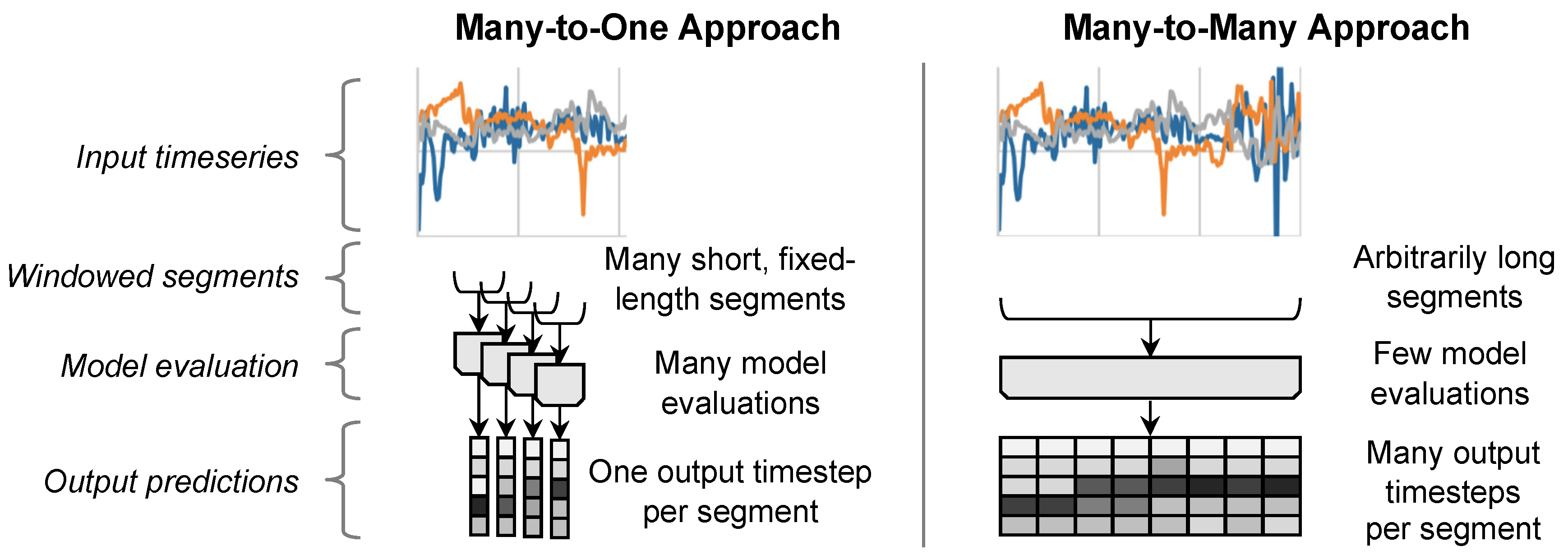
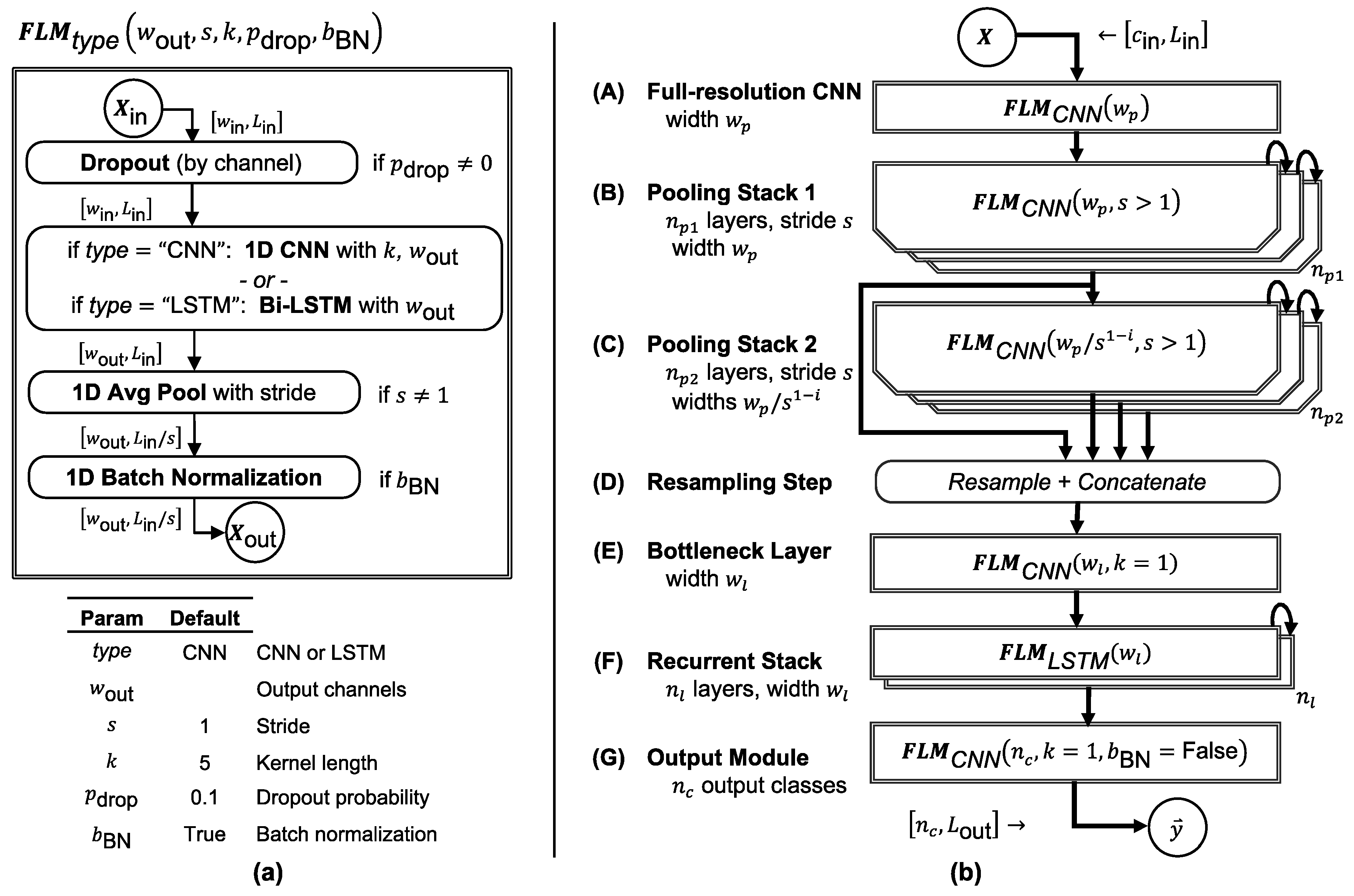
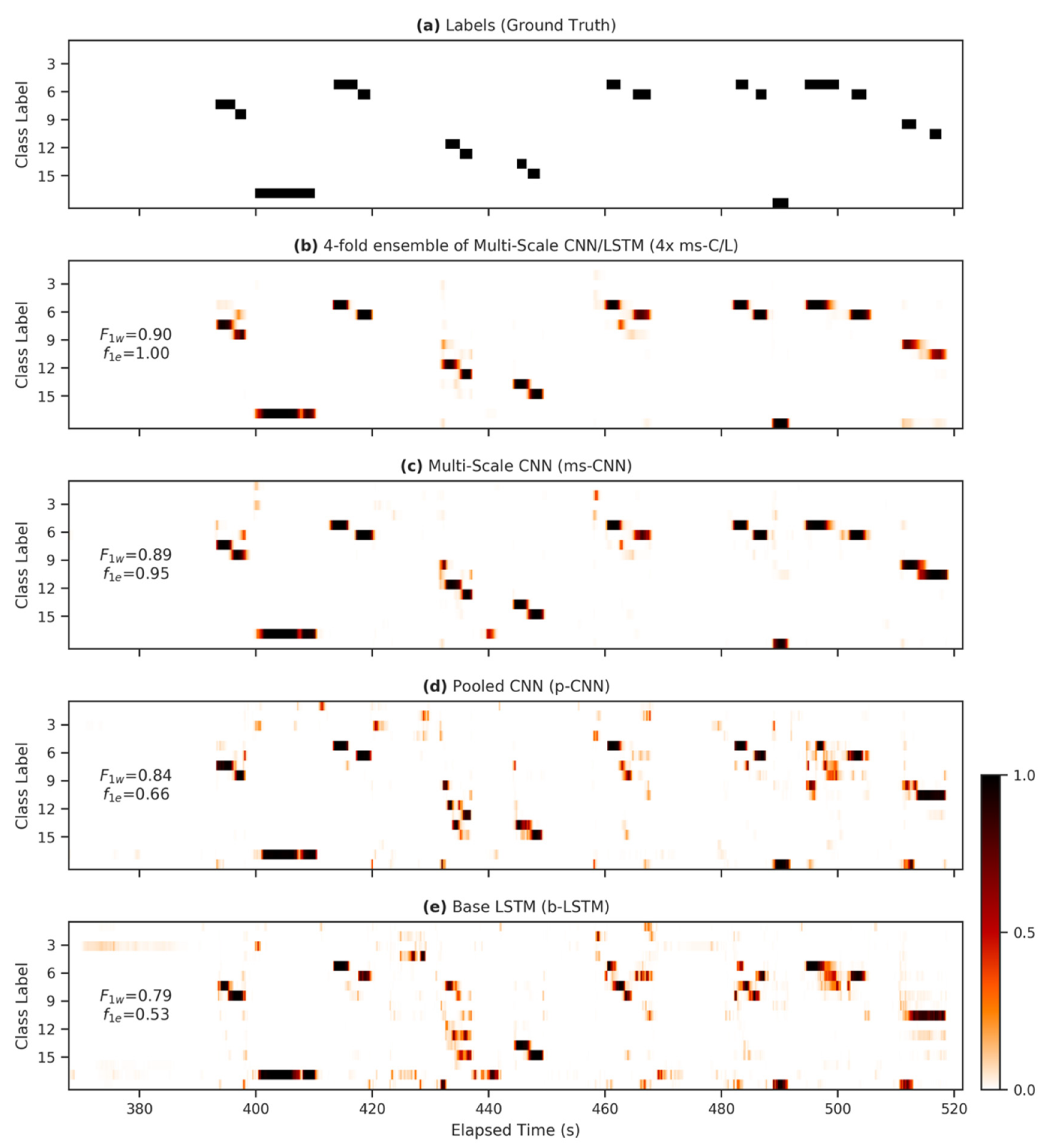
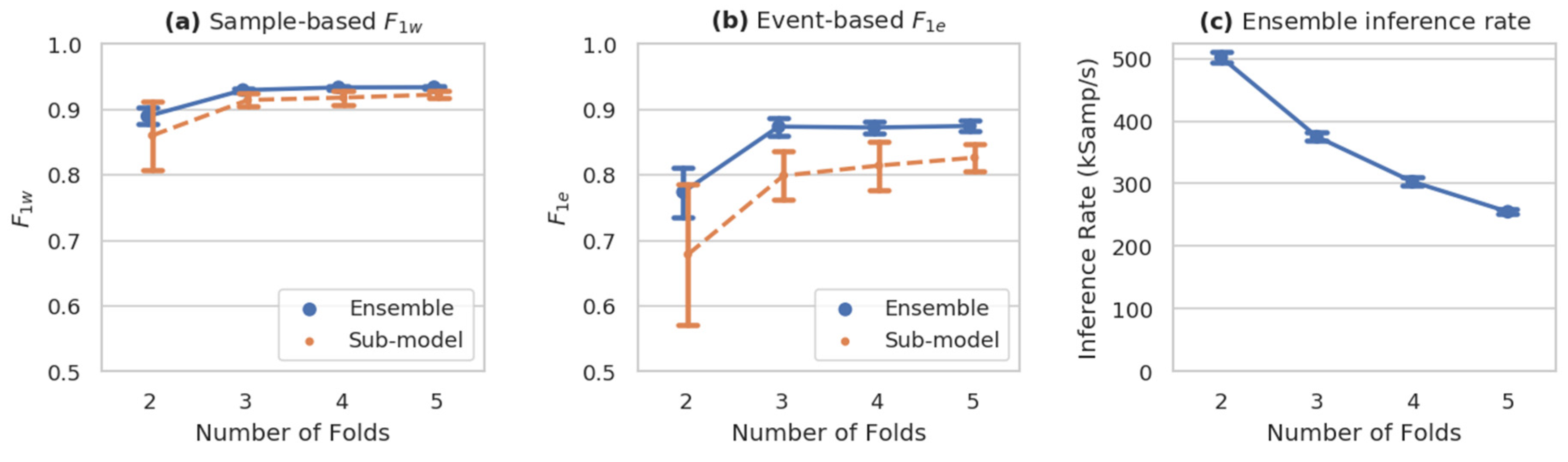
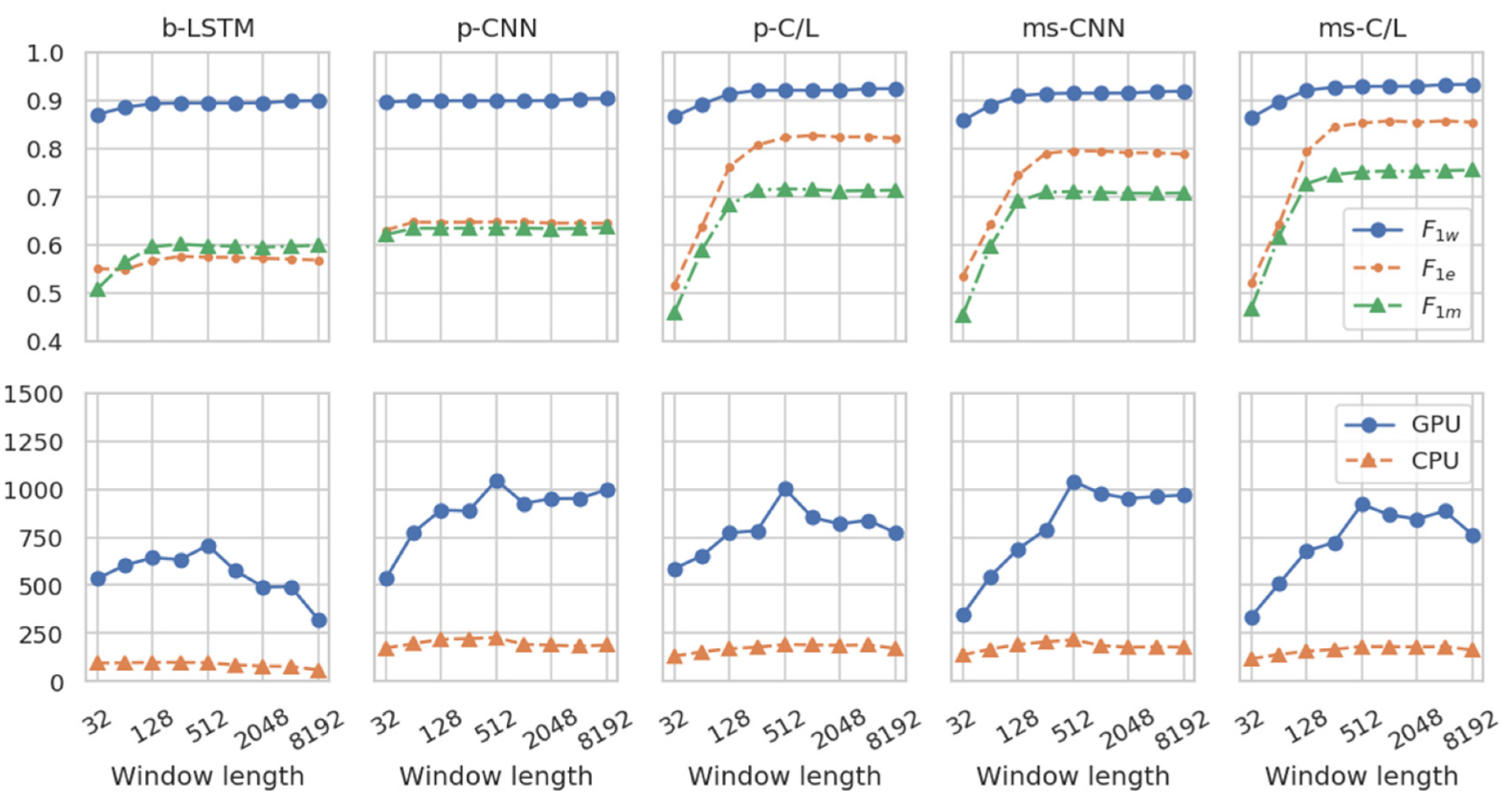
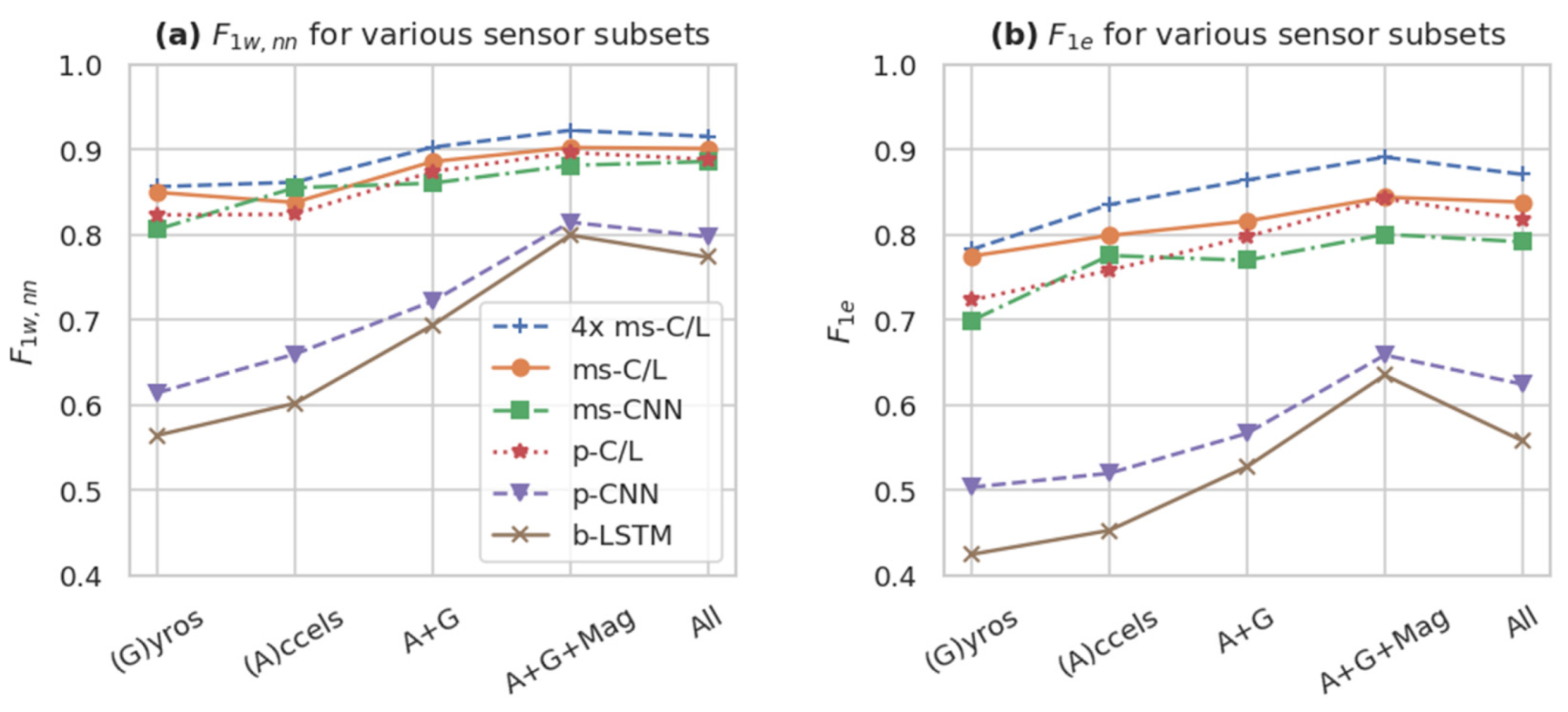
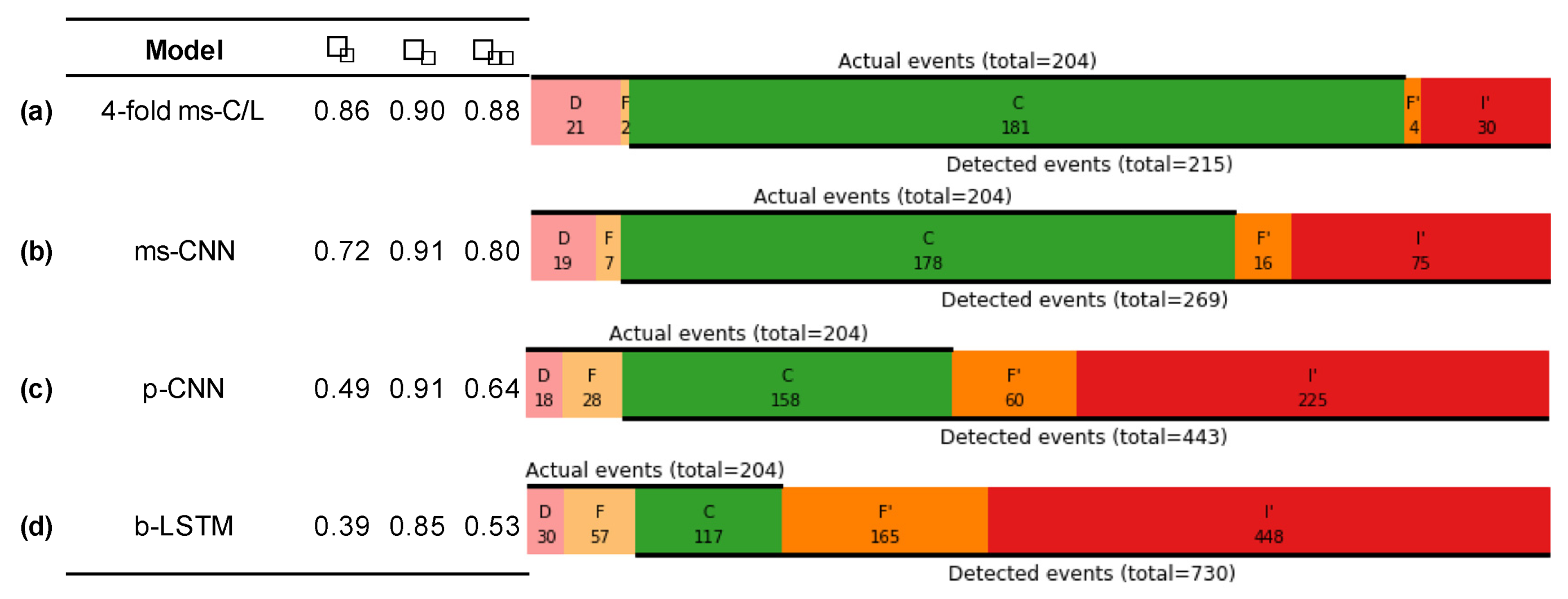
In this paper, we present and benchmark FilterNet, a flexible deep learning architecture for time series classification tasks, such as activity recognition via multichannel sensor data. It adapts popular convolutional neural network (CNN) and long short-term memory (LSTM) motifs which have excelled in activity recognition benchmarks, implementing them in a many-to-many architecture to markedly improve frame-by-frame accuracy, event segmentation accuracy, model size, and computational efficiency. We propose several model variants, evaluate them alongside other published models using the Opportunity benchmark dataset, demonstrate the effect of model ensembling and of altering key parameters, and quantify the quality of the models’ segmentation of discrete events. We also offer recommendations for use and suggest potential model extensions. FilterNet advances the state of the art in all measured accuracy and speed metrics when applied to the benchmarked dataset, and it can be extensively customized for other applications.
Keywords: activity recognition; time series classification; neural; networks; deep learning; machine learning; CNNs; LSTMs; many-to-many activity recognition; time series classification; neural; networks; deep learning; machine learning; CNNs; LSTMs; many-to-many