Traffic Offloading in Multicast Device-to-Device Cellular Networks: A Combinatorial Auction-Based Matching Algorithm



Abstract
1. Introduction
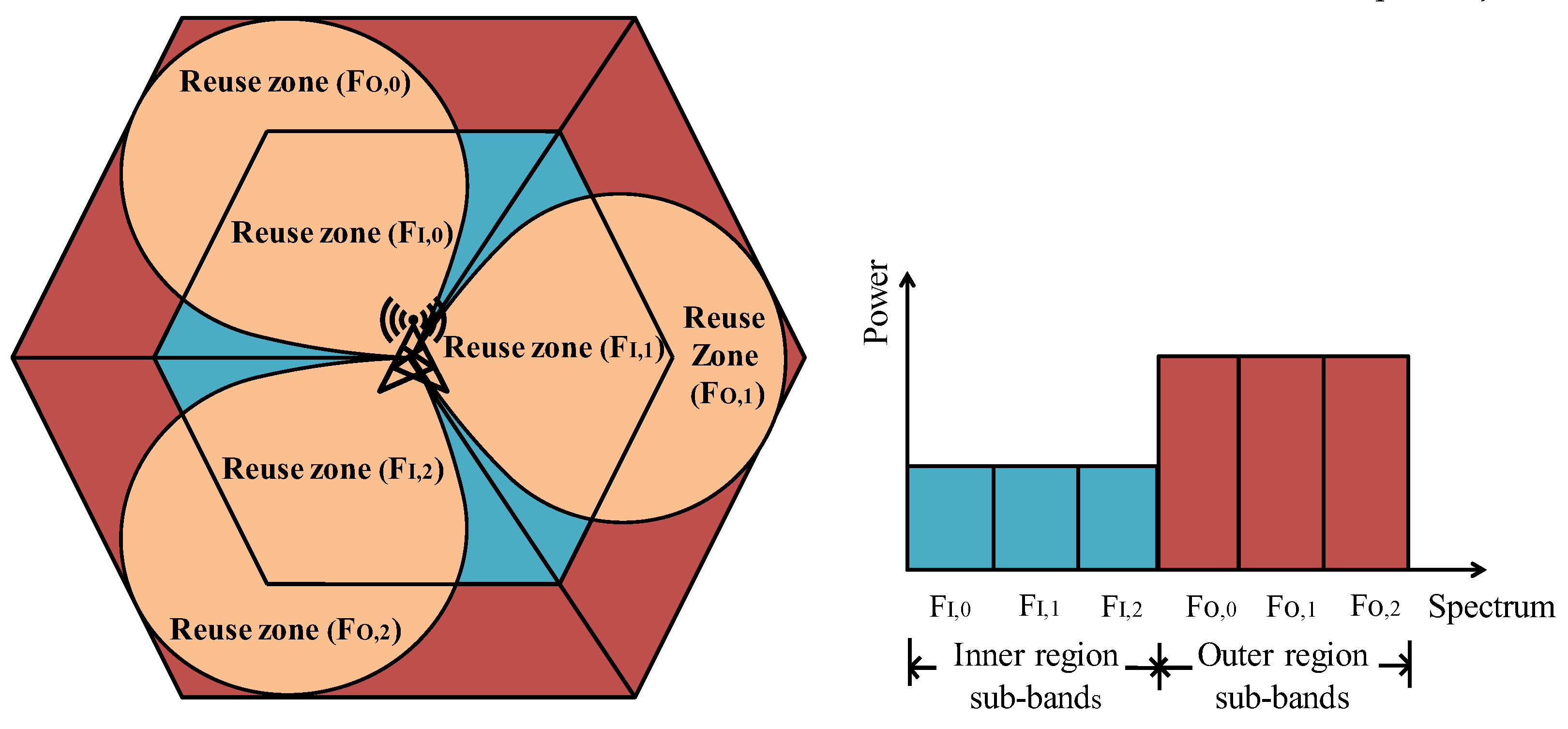
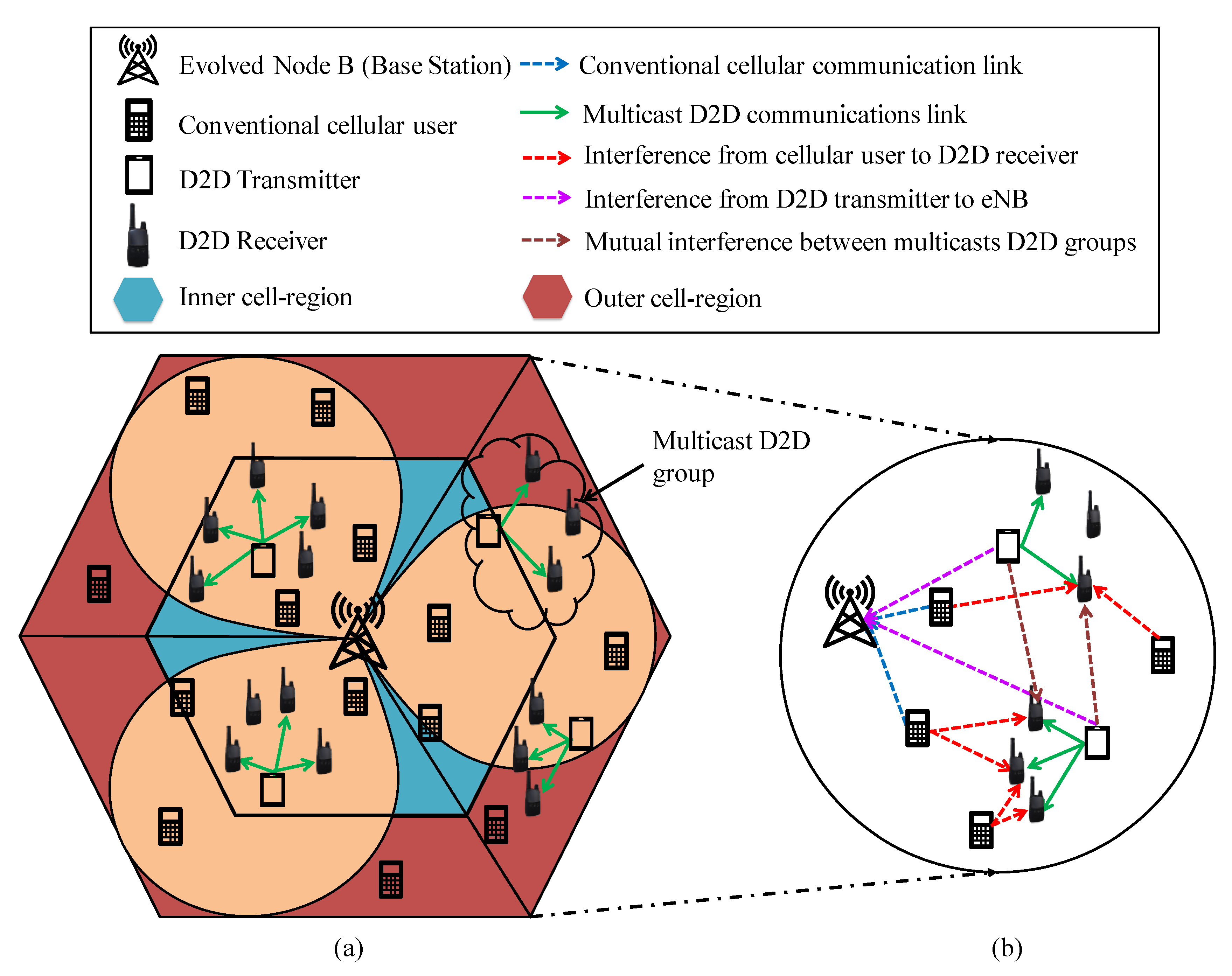
- We introduce the FFR technique, in which the whole cell region is divided into two non-overlapping regions, namely the inner region (the region nearby the eNB) having low transmission power and the outer/edge region (the region far away from the eNB) having high transmission power. Furthermore, both regions are sectorized into three equivalent sections using three directional antennas. In the FFR technique we have six different sections with different frequency sub-bands. The FFR technique can mitigate co-channel interference between cellular users and D2D users while reusing the same uplink cellular resources simultaneously, thus fulfills the demands of high data rate services for real-world applications.
- Then, to solve the non-convex issue in optimization problem, we introduce the Lagrangian relaxation technique (LRT). The LRT uses a Lagrangian multiplier ( to provide upper bounds of transmitting power.
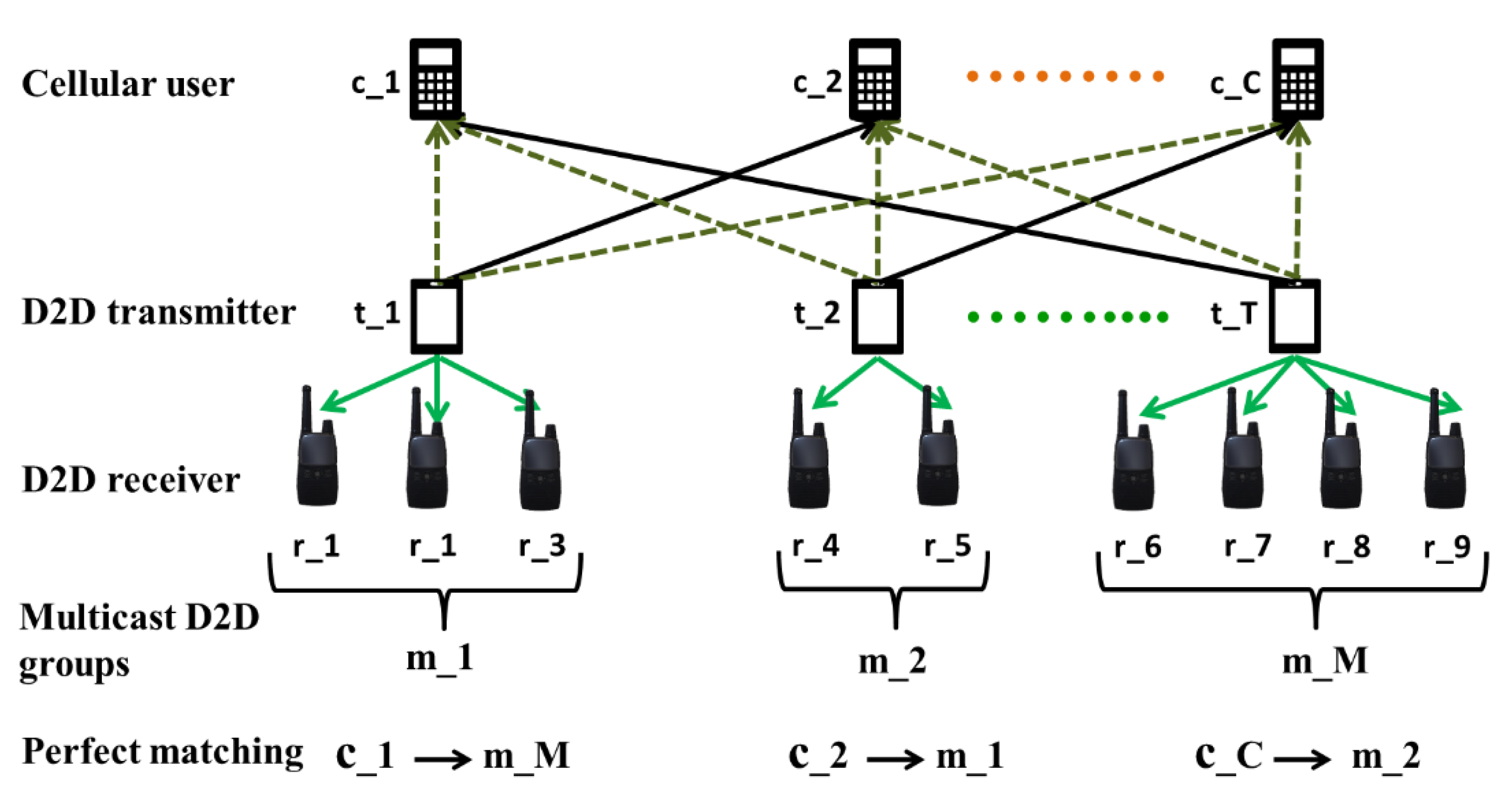
- Moreover, to achieve scalable and manageable RA, we propose a combinatorial auction-based matching algorithm. A combinatorial auction-based matching algorithm can find the most promising resource reuse partner with minimal co-channel interference between cellular users and D2D users. For analysis, the conventional cellular users are considered as sellers, the D2D users requesting to access the cellular resources as buyers, and the eNB as auctioneer. We divide the proposed algorithm into two stages. In the first stage, the auctioneer identifies the set of prices broadcasted by cellular users and bidding price from the D2D users. Then, the auctioneer announces prices for resources to buyers and the buyers specify the resources they wish to reuse at the current price. When the buyer’s bidding price is equal to or more than the seller’s prices, the auctioneer will choose the buyer as the winner of the auction. The process will continue for all set of the bids that maximize the total system gain and auction will end when the auctioneer fails to find the bids that maximize the system gain. In the second stage, to find a stable matching with low data traffic and high reuse satisfaction rate, the matching algorithm is introduced. In the matching algorithm, we perform one-to-one matching of a resource to a multicast D2D group. A mapping function is defined to verify the matching algorithm.
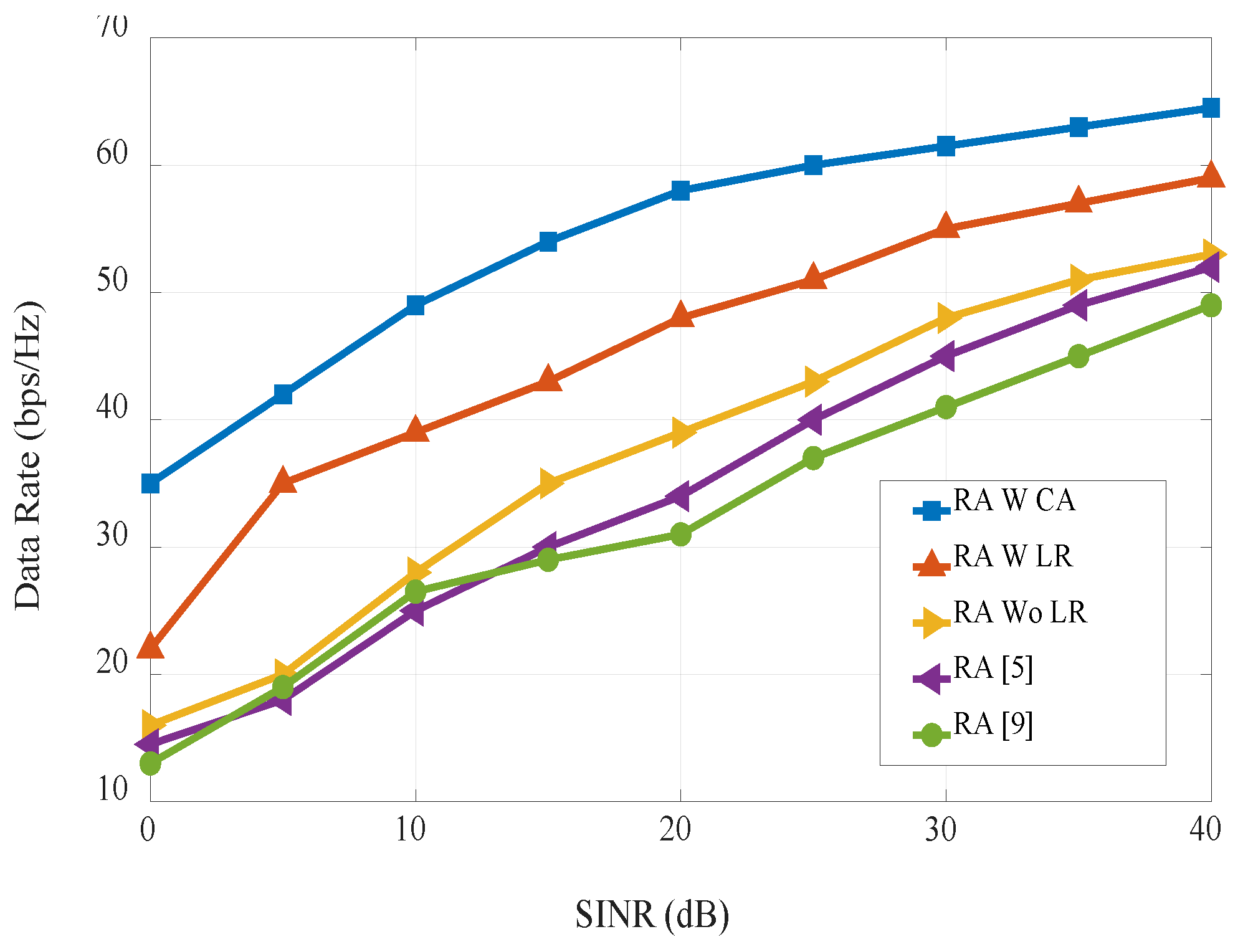
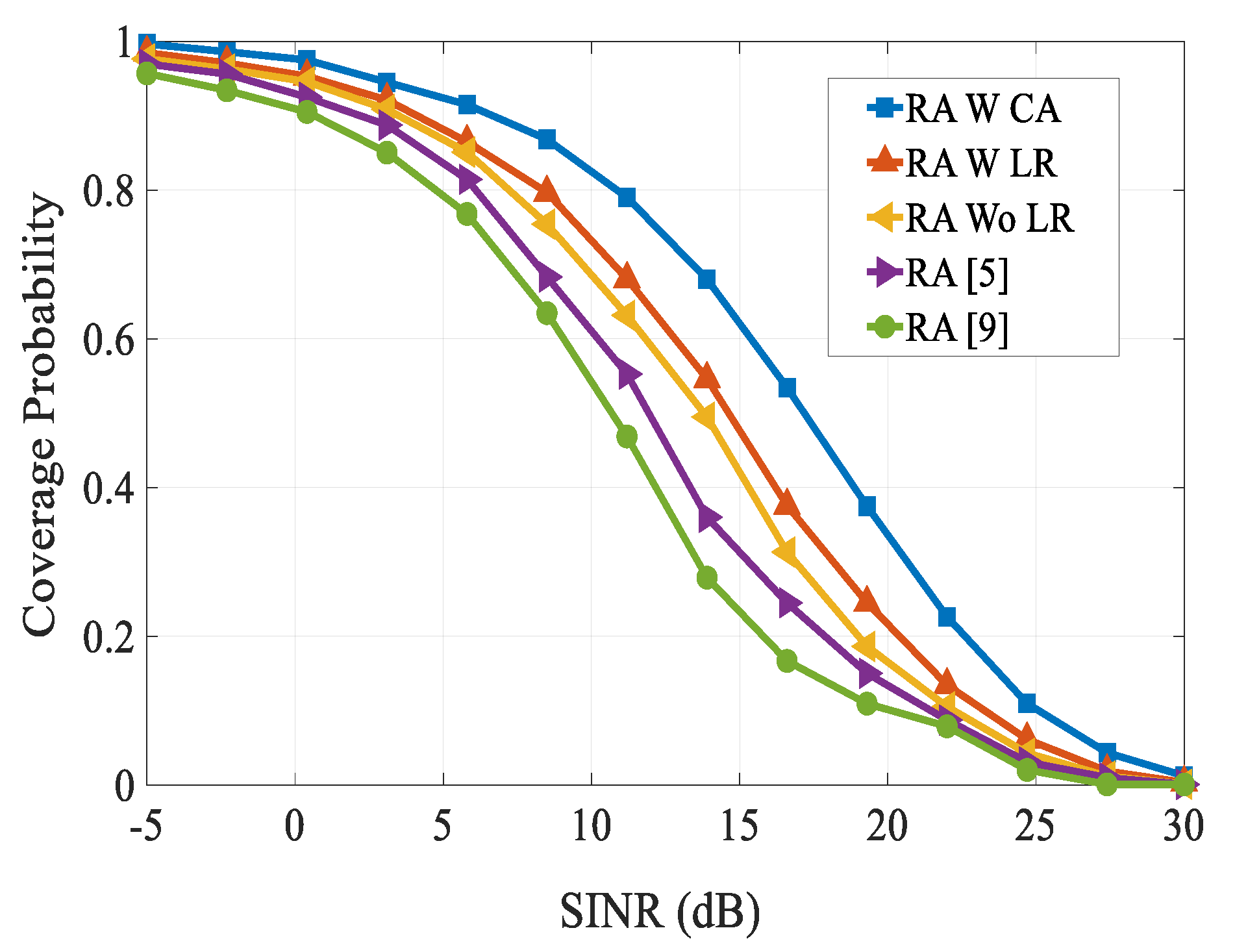
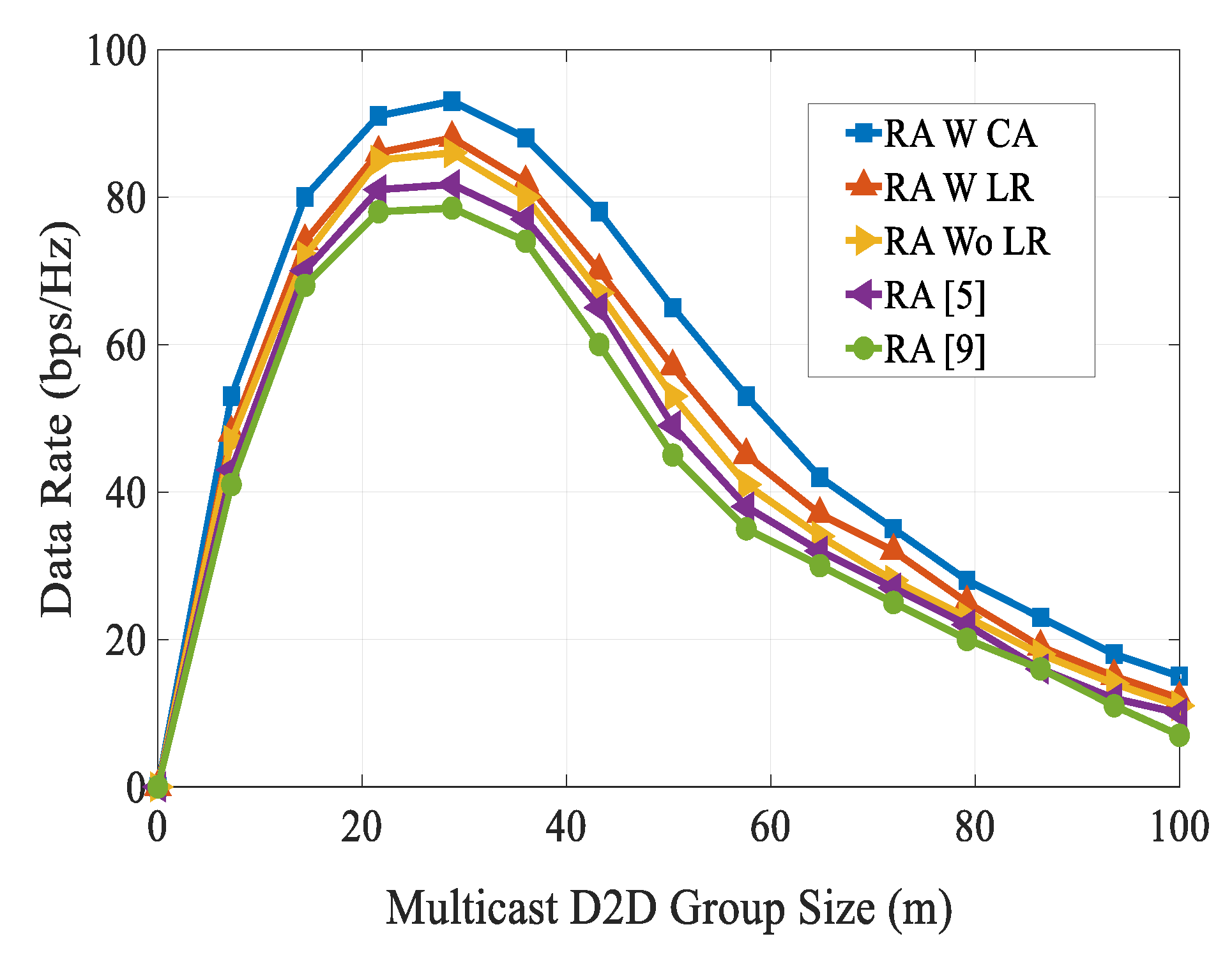
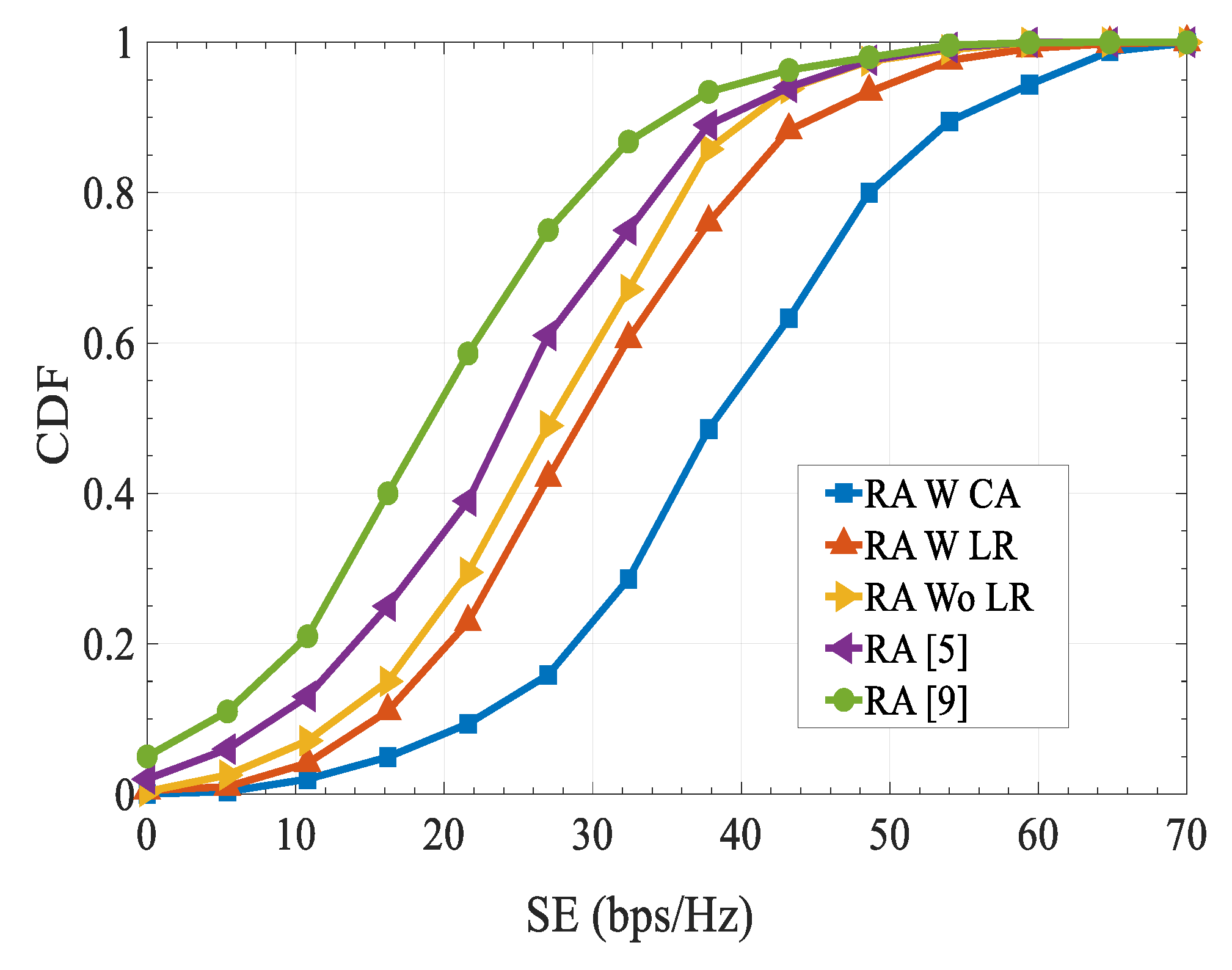
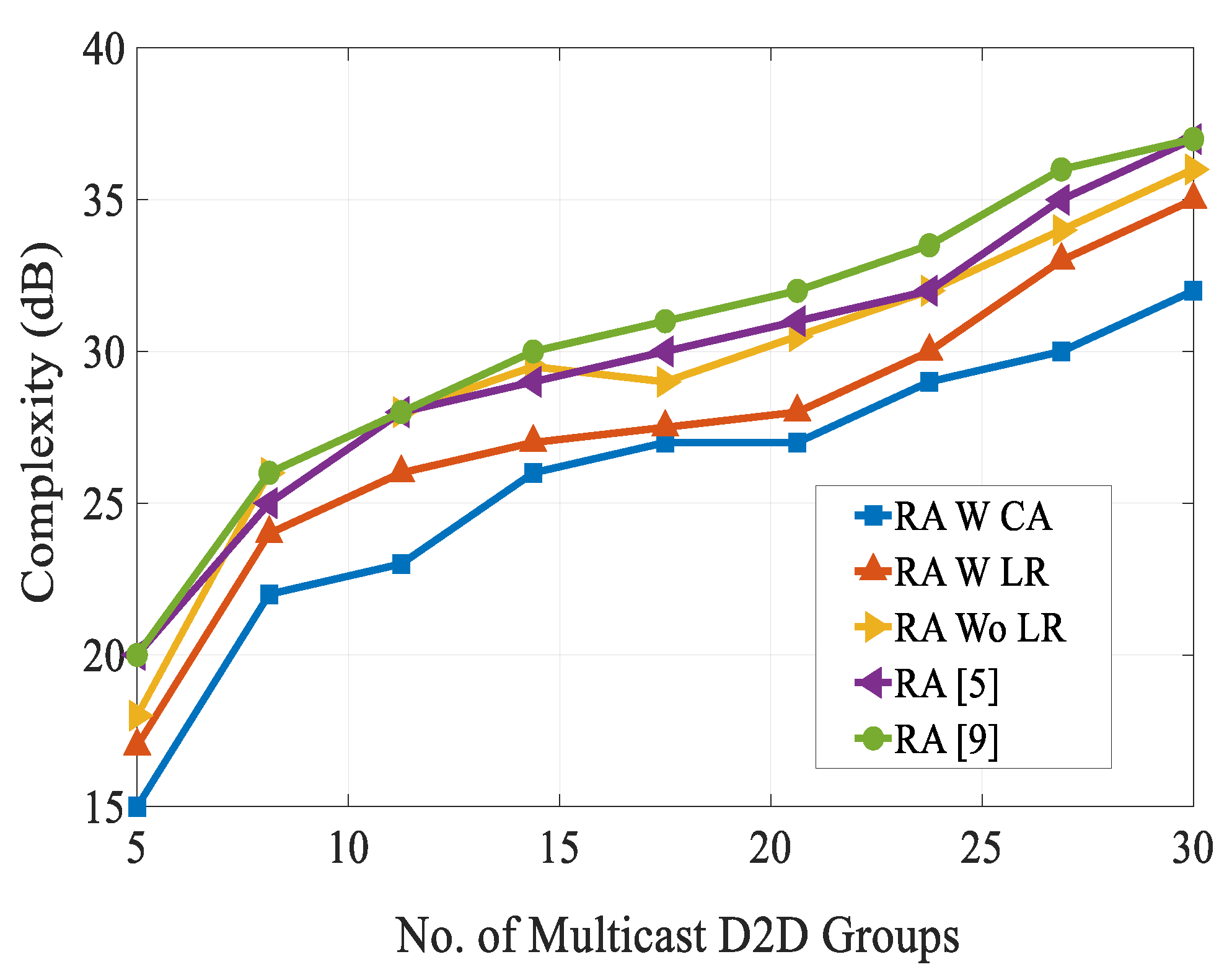
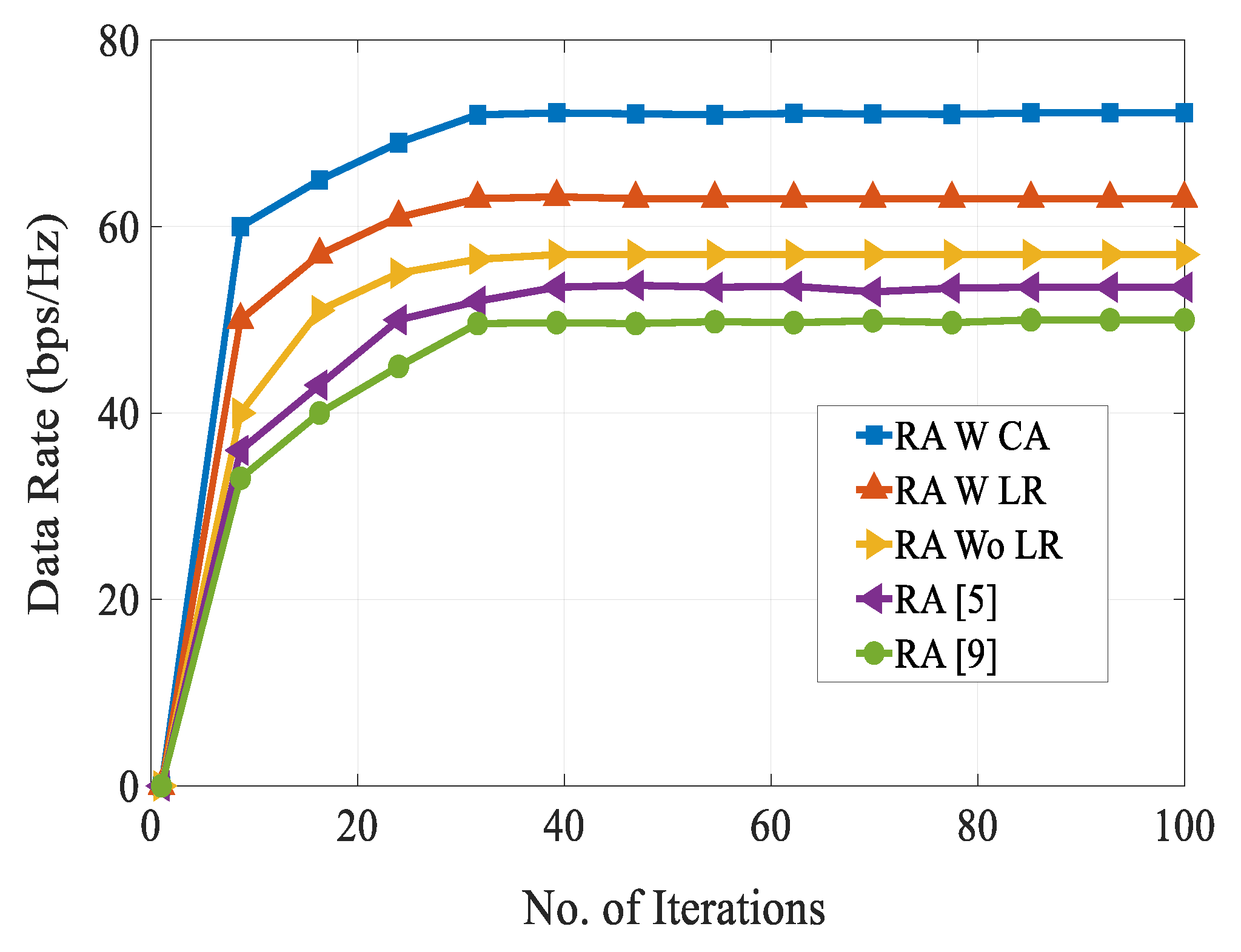
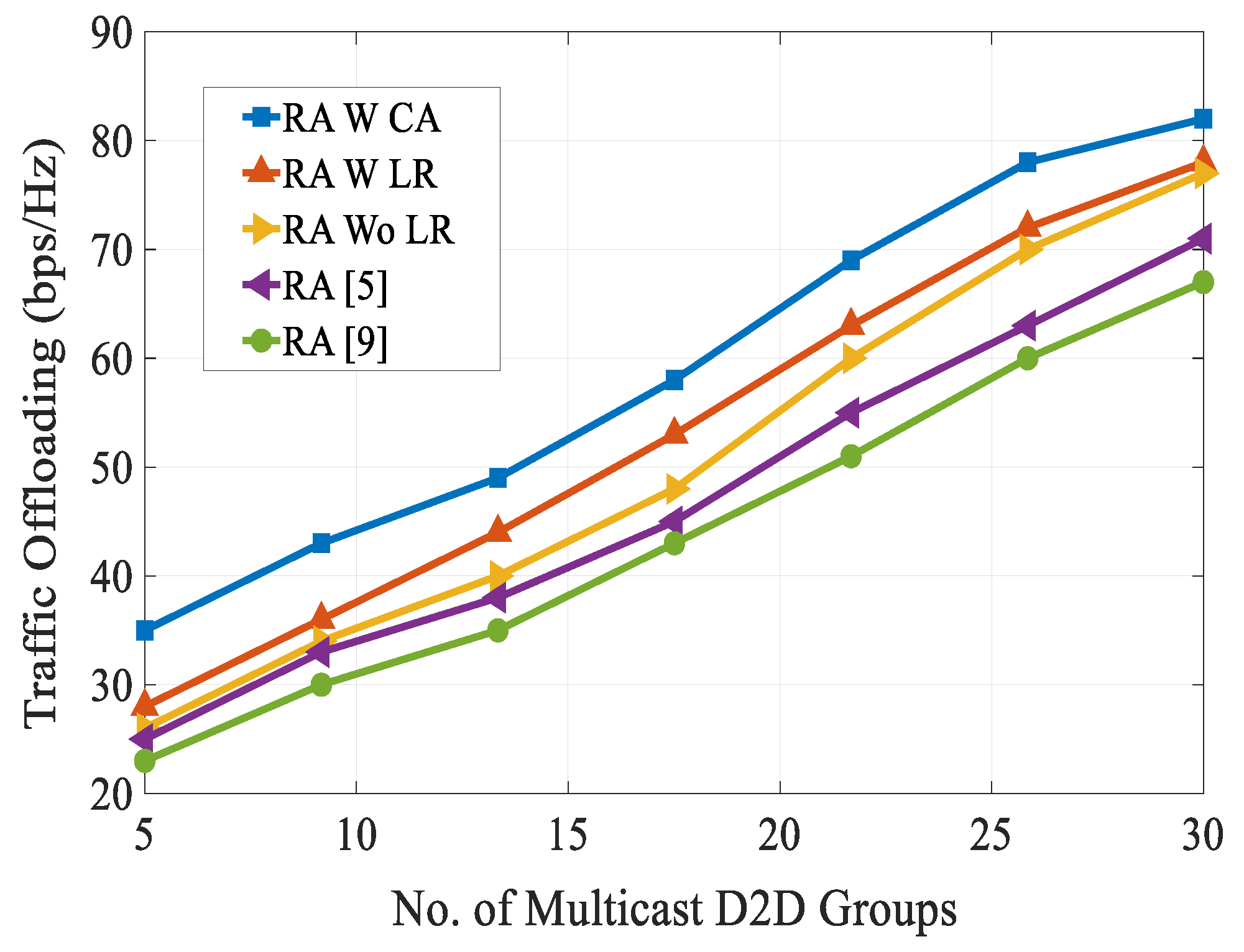
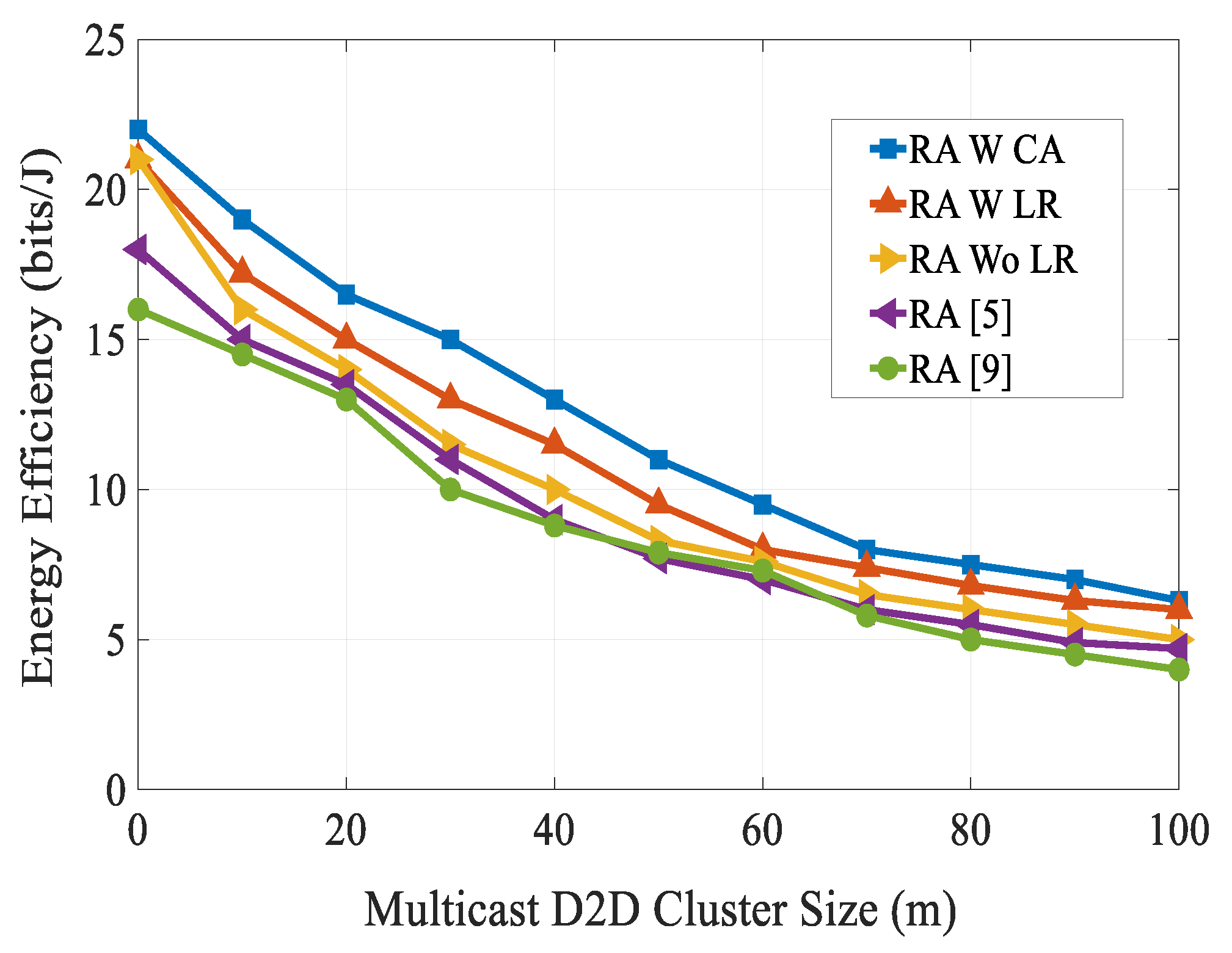
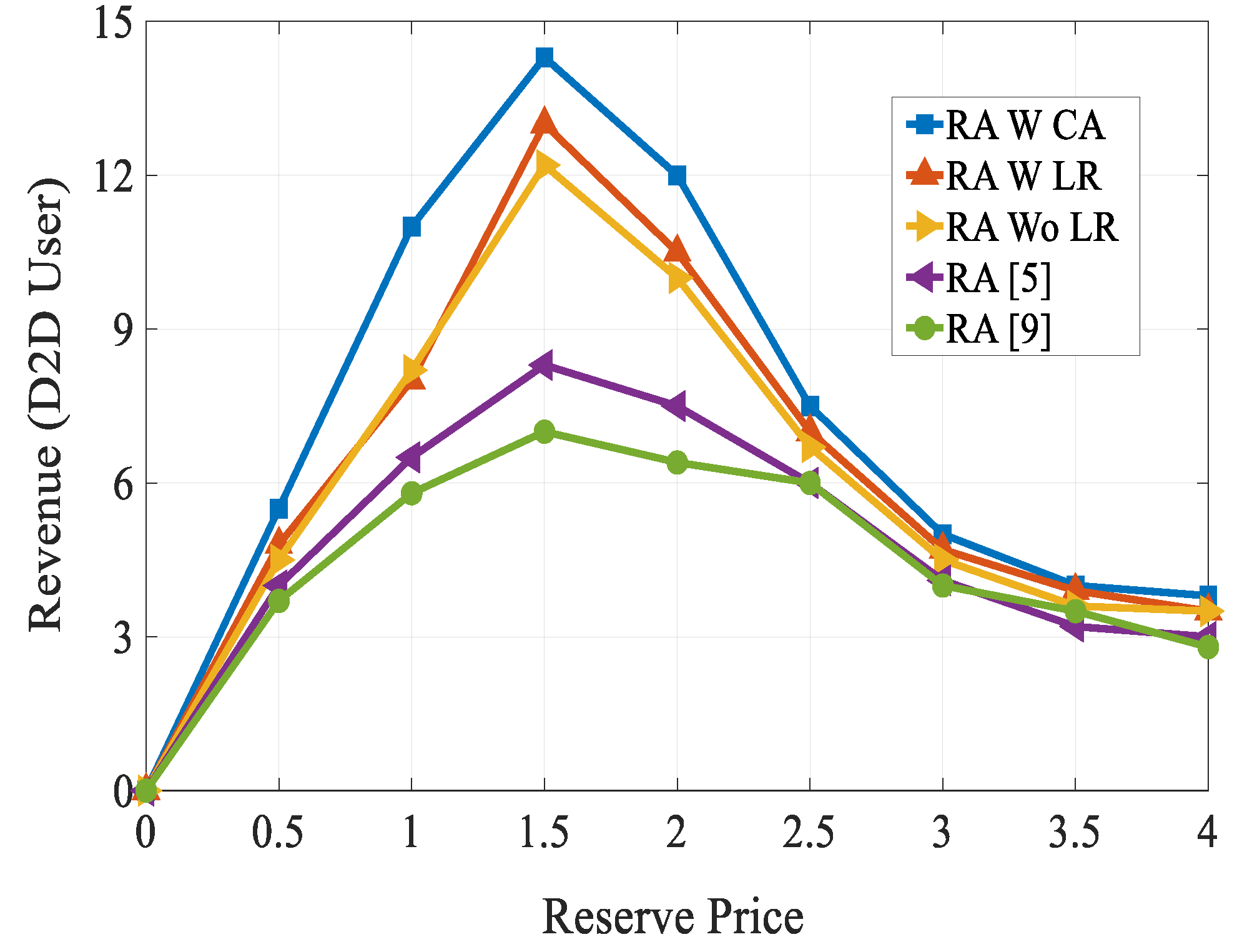
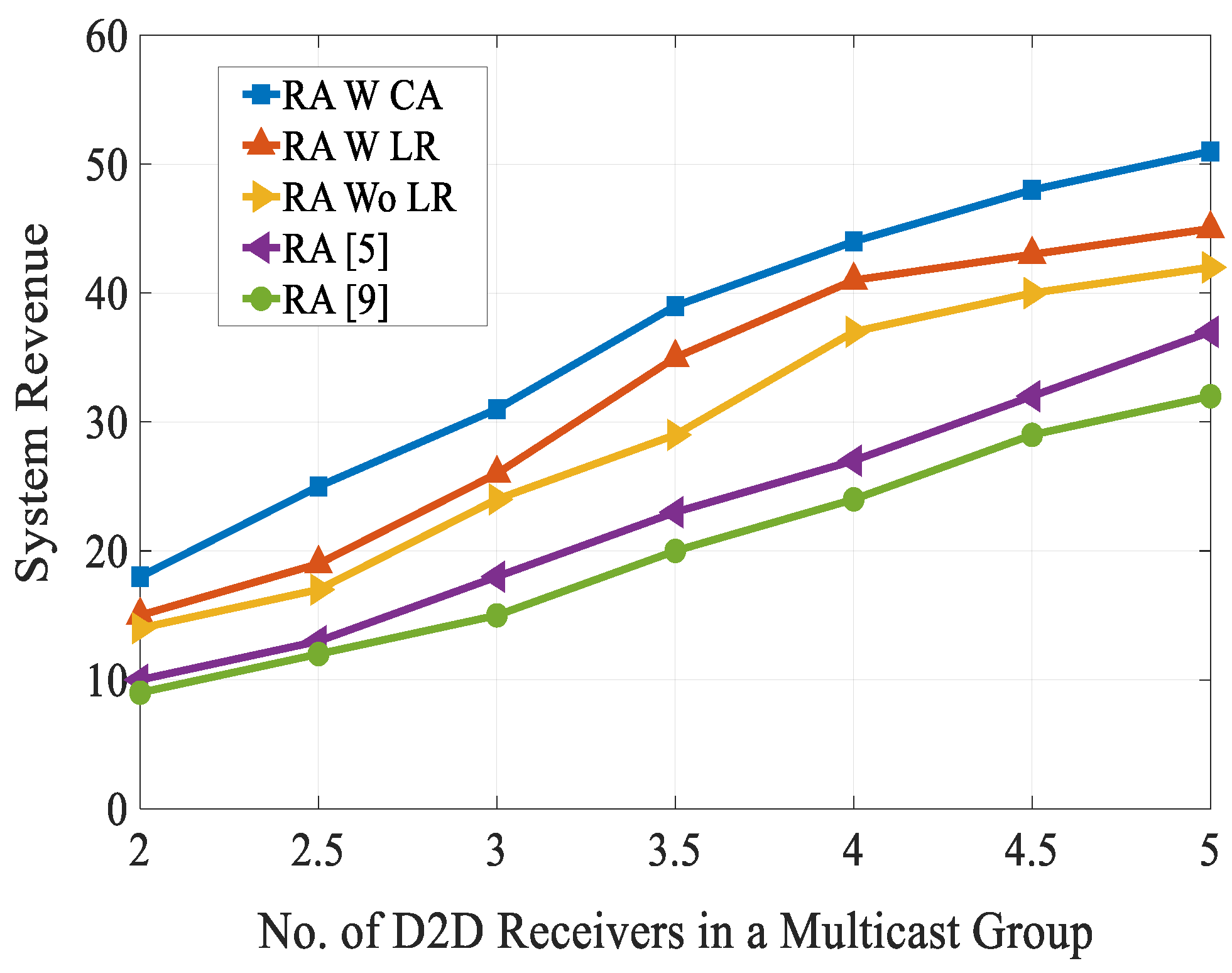
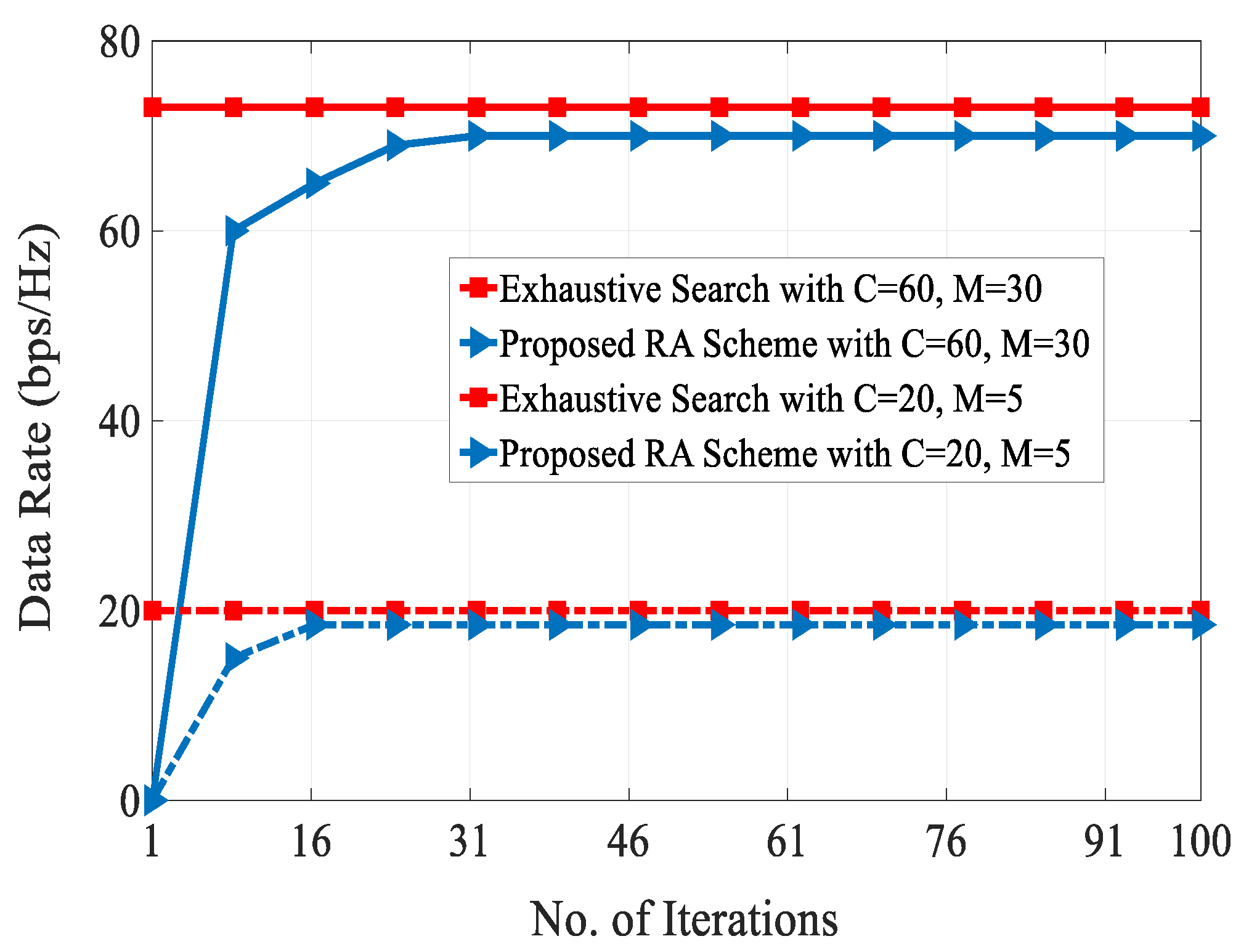
- We have verified the benefits of our proposed algorithm by comparing the performances with different algorithms. The results show that our proposed algorithm offloads data traffic and maximizes the system performance with very less computational complexity.
2. Related Work
3. System Model
4. Problem Formulation
4.1. Proposed RA Algorithm without Lagrange Relaxation Technique (RA Wo LR)
| Algorithm 1: Pseudo Code for the RA Algorithm. |
|
4.2. Proposed RA Algorithm with Lagrange Relaxation Technique (RA W LR)
- Case 1: and means that both performances constrains of cellular user and D2D user are invalid.
- Case 2: and means that the sub-optimal solution exits when and .
- Case 3: and means that the sub-optimal solution exits when and .
- Case 4: and means that the sub-optimal solution exits when both , and and .
4.3. Proposed RA with Combinatorial Auction-based Matching Algorithm (RA W CA)
- Resource reuse request Q: A D2D transmitter belonging to a multicast group send request (1, 2, …, ) to the auctioneer over wireless channel. The auctioneer acknowledges the bidding message for each of the requests that meet the requirements of eNB.
- Bidding price : The price to be pay by the buyer for reusing the resource i. Considering the same bidding price of all available resources, can be calculated as
- Resource reuse gain : The resource reuse gain for resource can be calculated asTherefore, the sum resource reuse gain can be denoted as
- Auctioneer’s gain : The auctioneer’s gain can be calculated asHence, the performance gain is expressed asThe optimization problem for maximizing the performance gain can be expressed assuch that
| Algorithm 2: Pseudo Code for the Auction Algorithm. |
|
- , iff
| Algorithm 3: Pseudo Code for the Auction-based Matching Algorithm. |
|
4.4. Computational Complexity Analysis
5. Performance Discussion
5.1. Simulation Environment
5.2. Simulation Results
6. Conclusions
Author Contributions
Funding
Conflicts of Interest
References
- Alkurd, R.; Shubair, R.M.; Abualhaol, I. Survey on device-to-device communications: Challenges and design issues. In Proceedings of the 2014 IEEE 12th International New Circuits and Systems Conference (NEWCAS), Trois-Rivieres, QC, Canada, 22–25 June 2014; pp. 361–364. [Google Scholar]
- Bakhuizen, M.; Horn, U. Mobile broadcast/multicast in mobile networks. Ericsson Rev. 2005, 1, 2005. [Google Scholar]
- Xu, Y.; Li, X.; Zhang, J. Device-to-device content delivery in cellular networks: Multicast or unicast. IEEE Trans. Veh. Technol. 2018, 67, 4401–4414. [Google Scholar] [CrossRef]
- Feng, L.; Zhao, P.; Zhou, F.; Yin, M.; Yu, P.; Li, W.; Qiu, X. Resource allocation for 5G D2D multicast content sharing in Social-aware cellular networks. IEEE Commun. Mag. 2018, 56, 112–118. [Google Scholar] [CrossRef]
- Wang, G.; Yang, Z.; Yuan, C.; Liu, P. Combinational auction-based two-stage matching mechanism for mobile data offloading. KSII Trans. Internet Inf. Syst. 2017, 11, 2811–2831. [Google Scholar]
- Shafiq, M.; Choi, J.-G. Adaptive Auction Framework for Spectrum Market in Cognitive Radio Networks. J. Netw. Syst. Manag. 2017, 26, 1–29. [Google Scholar] [CrossRef]
- Li, P.; Guo, S.; Stojmenovic, I. A Truthful Double Auction for Device-to-Device Communications in Cellular Networks. IEEE J. Sel. Areas Commun. 2016, 34, 71–81. [Google Scholar] [CrossRef]
- Zhang, Y.; Yuan, Y.; Zhou, J.; Hu, J.; Dong, J.; Shi, J. A weighted bipartite graph-based network selection scheme for multi-flows in heterogeneous wireless network. In Proceedings of the IEEE Global Telecommuns. Conf. (GLOBECOM), Honolulu, HI, USA, 30 November–4 December 2009; pp. 1–6. [Google Scholar]
- Wu, Y.; Liu, X.; He, X.; Yu, Q.; Xu, W. Maximizing throughput gain via resource allocation in D2D communications. EURASIP J. Wirel. Communs. Netw. 2017, 220, 1–9. [Google Scholar] [CrossRef]
- Zhou, Z.; Ota, K.; Dong, M.; Xu, C. Energy-Efficient Matching for Resource Allocation in D2D Enabled Cellular Networks. IEEE Trans. Veh. Technol. 2017, 66, 5256–5268. [Google Scholar] [CrossRef]
- Ningombam, D.D.; Shin, S. Throughput optimization using metaheuristic-tabu search in the multicast D2D communications underlaying LTE-A uplink cellular networks. Electronics 2018, 7, 440. [Google Scholar] [CrossRef]
- Ningombam, D.D.; Shin, S. Resource-sharing optimization for multicast D2D communications underlaying LTE-A uplink cellular networks. In Proceedings of the 34th ACM/SIGAPP Symposium on Applied Computing, Limassol, Cyprus, 8–12 April 2019; pp. 2001–2007. [Google Scholar]
- Kim, S. A new multicasting device-to-device communication control scheme for virtualized cellular networks. Wirel. Commun. Mob. Comput. 2019, 2019, 1–9. [Google Scholar] [CrossRef]
- Lin, X.; Ratasuk, R.; Ghosh, A.; Andrews, J.G. Modeling, Analysis and Optimization of Multicast Device-to-Device Transmission. IEEE Trans. Wirel. Commun. 2014, 13, 4346–4359. [Google Scholar] [CrossRef]
- Doo, K.-H.; Bang, J.; Han, M.S.; Lee, J.; Lee, S. Two-stage resource allocation to improve utilization of synchronous OFDM-PON supporting service differentiation. ETRI J. 2016, 37, 657–666. [Google Scholar] [CrossRef]
- Zhao, F.; Miao, Y.; Chen, H. Joint beamforming and power control for auction-based spectrum allocation in CoMP systems. Ad Hoc Net. 2017, 58, 191–197. [Google Scholar] [CrossRef]
- Zhao, F.; Nie, H.; Chen, H. Group buying spectrum auction algorithm for fractional frequency reuses cognitive cellular systems. Ad Hoc Netw. 2017, 58, 239–246. [Google Scholar] [CrossRef]
- Zhao, F.; Ji, S.; Chen, H. A spectrum auction algorithm for cognitive distributed antenna systems. Ad Hoc Netw. 2017, 58, 269–277. [Google Scholar] [CrossRef]
- Song, S.; Chang, K.; Yoon, C.; Chung, J.-M. Special issue on 5G communications and experimental trials with heterogeneous and agile mobile networks. ETRI J. 2018, 40, 7–9. [Google Scholar] [CrossRef]
- Kim, S. 5G network communication, catching, and computing algorithms based on the two-tier game model. ETRI J. 2018, 40, 61–71. [Google Scholar] [CrossRef]
- Wang, L.; Cheng, P.; Zhang, S.; Zhou, W. Auction Based Spectrum Efficient Offloading Mechanism in HetNets. In Proceedings of the 2017 IEEE 86th Vehicular Technology Conference (VTC-Fall), Toronto, ON, Canada, 24–27 September 2017; pp. 1–5. [Google Scholar]
- Bousia, A.; Kartsakli, E.; Antonopoulos, A.; Alonso, L.; Verikoukis, C. Auction-based offloading for base station switching off in Heterogeneous Networks. In Proceedings of the 2016 European Conf. on Netw. and Communs. (EuCNC), Athens, Greece, 27–30 June 2016; pp. 335–339. [Google Scholar]
- Zhang, Y.; Hou, F.; Cai, L.X.; Huang, J. QoS-Based Incentive Mechanism for Mobile Data Offloading. In Proceedings of the GLOBECOM 2017–2017 IEEE Global Communs. Conference, Singapore, 4–8 December 2017; pp. 1–6. [Google Scholar]
- Zhu, Y.; Jiang, J.; Li, B.; Li, B. Rado: A Randomized Auction Approach for Data Offloading via D2D Communication. In Proceedings of the 2015 IEEE 12th Int. Conf. on Mobile Ad Hoc and Sensor Systems, Dallas, TX, USA, 19–22 October 2015; pp. 1–9. [Google Scholar]
- Zhao, F.; Xu, X.; Chen, H. Reverse spectrum auction algorithm for cellular network offloading. Ad Hoc Netw. 2017, 58, 278–285. [Google Scholar] [CrossRef]
- Cai, H.; Jiang, L.; Chen, Y.; Zhang, J.; Li, B. Multi-seller combinatorial spectrum auction with reserve prices. In Proceedings of the 2016 IEEE International Conference on Communication Systems (ICCS), Shenzhen, China, 14-16 January 2016; pp. 1–6. [Google Scholar]
- Xu, C.; Gao, C.; Zhou, Z.; Chang, Z.; Jia, Y. Social Network-Based Content Delivery in Device-to-Device Underlay Cellular Networks Using Matching Theory. IEEE Access 2017, 5, 924–937. [Google Scholar] [CrossRef]
- Wang, L.; Araniti, G.; Cao, C.; Wang, W.; Liu, Y. Device-to-Device Users Clustering Based on Physical and Social Characteristics. Int. J. Distrib. Sens. Netw. 2015, 11, 1–14. [Google Scholar] [CrossRef]
- Hussain, F.; Md. Hassan, Y.; Md. Hossen, S.; Choudhury, S. An optimal resource allocation algorithm for D2D communication underlaying cellular networks. In Proceedings of the 14th IEEE Annual Consumer Communs. & Netw. Conf. (CCNG), Las Vegas, NV, USA, 8–11 January 2017; pp. 867–872. [Google Scholar]
- Pazhayakandathil, S.; Sukumaran, D.-K.; Koodamannu, A.H. Optimal user selection and power allocation for revenue maximization in non-orthogonal multiple access systems. ETRI J. 2019, 41, 626–636. [Google Scholar] [CrossRef]
- Yu, B.; Zhu, Q. A QoS-Based Channel Allocation and Power Control Algorithm for Device-to-Device Communication Underlaying Cellular Networks. JCM 2016, 11, 624–631. [Google Scholar]
- Han, J.; Cui, Q.; Yang, C.; Tao, X. Bipartite matching approach to optimal resource allocation in device to device underlaying cellular network. Electron. Lett. 2014, 50, 212–214. [Google Scholar] [CrossRef]
- 3GPP. Evolved Universal Terrestrial Radio Access (E-UTRA) and Evolved Universal Terrestrial Radio Access Network (E-UTRAN). Available online: https://www.etsi.org/deliver/etsi_ts/136300_136399/136300/11.05.00_60/ts_136300v110500p.pdf (accessed on 15 December 2019).





| Parameter | Value |
|---|---|
| Cellular layout | Seven hexagonal shaped cells |
| Cell radius (y) | 700 m |
| Multicast D2D group size | (5–100) m |
| Transmission power of eNB | 30 dBm |
| Maximum Transmission power of CUs | 24 dBm |
| Maximum Transmission power of DUs | 20 dBm |
| Noise spectral density | –174 dBm |
| Number of cellular users | 60 |
| Number of multicast D2D group | 5–30 |
| Number of D2D receivers in each multicast group | 2–5 |
| Uplink channel Bandwidth | 15 MHz |
| Shadowing standard deviation | 8 dB |
| CU density | 0.0001 |
| DU density | 0.0004 |
| Path loss exponent | 3–5 |
© 2020 by the authors. Licensee MDPI, Basel, Switzerland. This article is an open access article distributed under the terms and conditions of the Creative Commons Attribution (CC BY) license (http://creativecommons.org/licenses/by/4.0/).
Share and Cite
Ningombam, D.D.; Shin, S. Traffic Offloading in Multicast Device-to-Device Cellular Networks: A Combinatorial Auction-Based Matching Algorithm. Sensors 2020, 20, 1128. https://doi.org/10.3390/s20041128
Ningombam DD, Shin S. Traffic Offloading in Multicast Device-to-Device Cellular Networks: A Combinatorial Auction-Based Matching Algorithm. Sensors. 2020; 20(4):1128. https://doi.org/10.3390/s20041128
Chicago/Turabian StyleNingombam, Devarani Devi, and Seokjoo Shin. 2020. "Traffic Offloading in Multicast Device-to-Device Cellular Networks: A Combinatorial Auction-Based Matching Algorithm" Sensors 20, no. 4: 1128. https://doi.org/10.3390/s20041128
APA StyleNingombam, D. D., & Shin, S. (2020). Traffic Offloading in Multicast Device-to-Device Cellular Networks: A Combinatorial Auction-Based Matching Algorithm. Sensors, 20(4), 1128. https://doi.org/10.3390/s20041128