Article

Active 3D Imaging of Vegetation Based on Multi-Wavelength Fluorescence LiDAR

1
State Key Laboratory of Information Engineering in Surveying, Mapping and Remote Sensing, Wuhan University, Wuhan 430079, China
2
Faculty of Information Engineering, China University of Geosciences, Wuhan 430074, China
*
Author to whom correspondence should be addressed.
Sensors 2020, 20(3), 935; https://doi.org/10.3390/s20030935
Submission received: 17 January 2020 / Revised: 7 February 2020 / Accepted: 9 February 2020 / Published: 10 February 2020
(This article belongs to the Special Issue Imaging Sensors and Applications)

Abstract

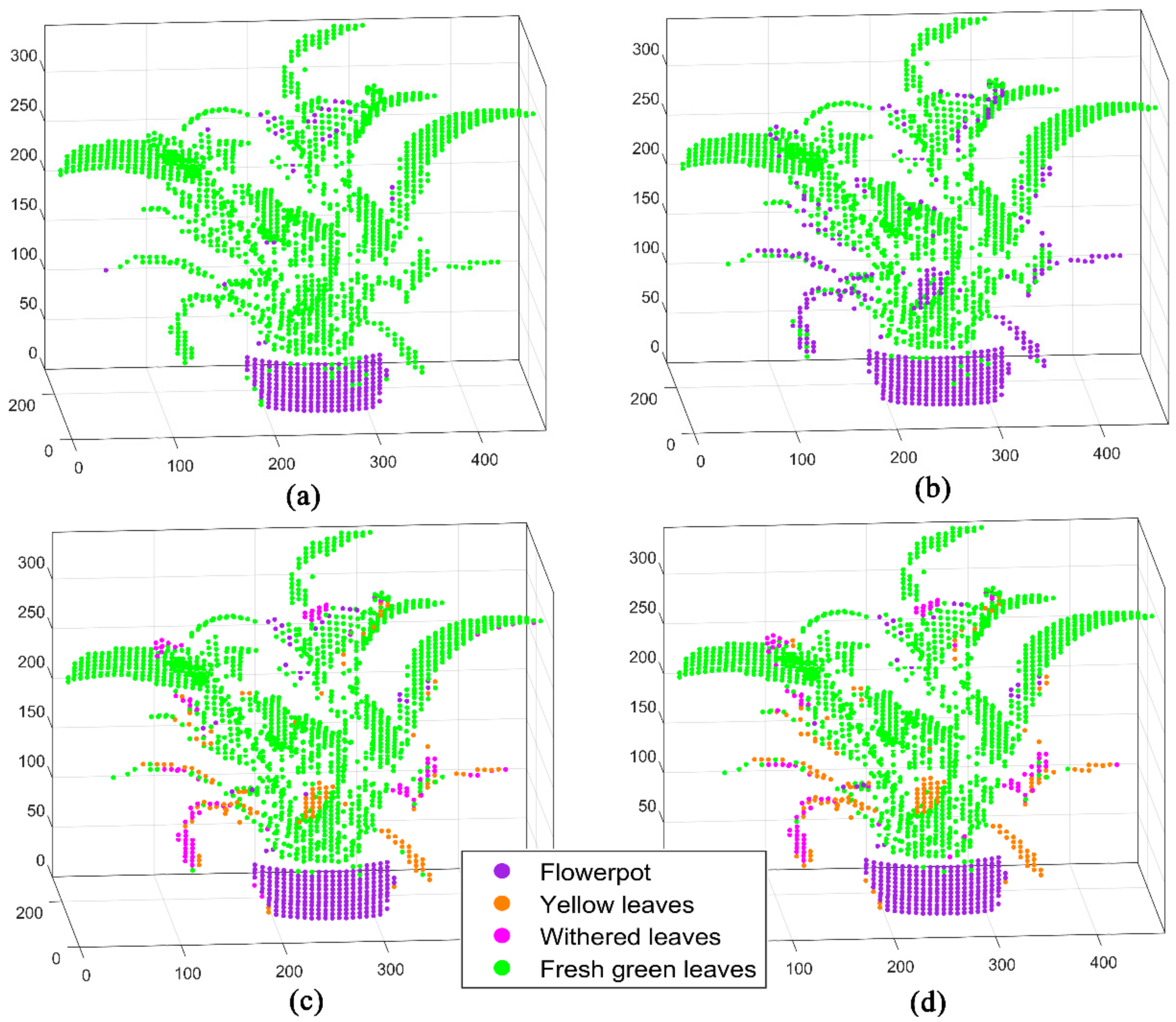
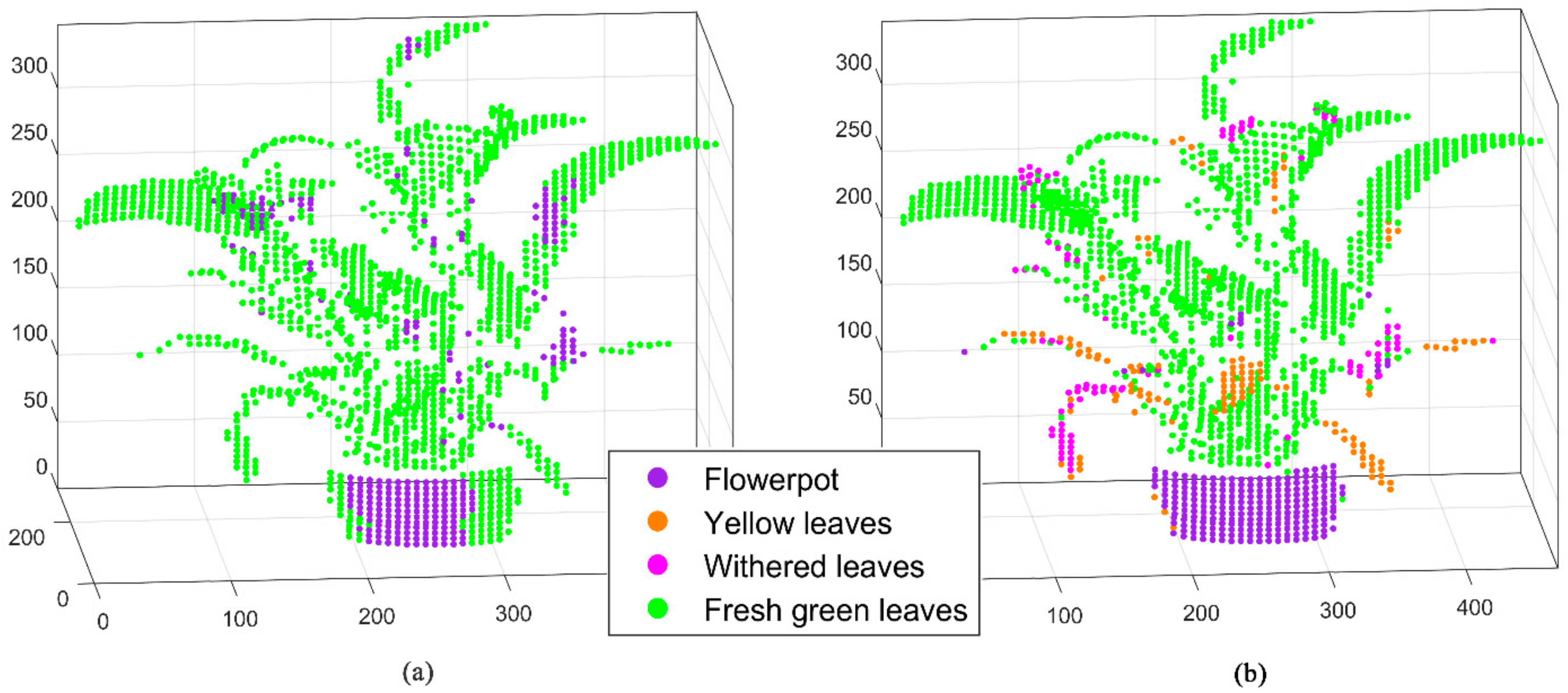
Comprehensive and accurate vegetation monitoring is required in forestry and agricultural applications. The optical remote sensing method could be a solution. However, the traditional light detection and ranging (LiDAR) scans a surface to create point clouds and provide only 3D-state information. Active laser-induced fluorescence (LIF) only measures the photosynthesis and biochemical status of vegetation and lacks information about spatial structures. In this work, we present a new Multi-Wavelength Fluorescence LiDAR (MWFL) system. The system extended the multi-channel fluorescence detection of LIF on the basis of the LiDAR scanning and ranging mechanism. Based on the principle prototype of the MWFL system, we carried out vegetation-monitoring experiments in the laboratory. The results showed that MWFL simultaneously acquires the 3D spatial structure and physiological states for precision vegetation monitoring. Laboratory experiments on interior scenes verified the system’s performance. Fluorescence point cloud classification results were evaluated at four wavelengths and by comparing them with normal vectors, to assess the MWFL system capabilities. The overall classification accuracy and Kappa coefficient increased from 70.7% and 0.17 at the single wavelength to 88.9% and 0.75 at four wavelengths. The overall classification accuracy and Kappa coefficient improved from 76.2% and 0.29 at the normal vectors to 92.5% and 0.84 at the normal vectors with four wavelengths. The study demonstrated that active 3D fluorescence imaging of vegetation based on the MWFL system has a great application potential in the field of remote sensing detection and vegetation monitoring.
Keywords: fluorescence LiDAR; laser-induced fluorescence; vegetation monitoring; classification discrimination fluorescence LiDAR; laser-induced fluorescence; vegetation monitoring; classification discrimination