4.1. Arctic Sea Ice Thickness Results Derived from Least Square Adjustment Method
Based on the LSA method, we are able to derive estimates of the Arctic sea ice thickness for November 2010 through April 2019 using CryoSat-2 altimetry data. In this paper, the Arctic sea ice region is defined as latitudes above and including 65° N. We do not calculate the sea ice thickness in the months of May to September due to melt ponds. This is because during the melt season, it is difficult to distinguish between measurements from leads and ice floes due to melt ponds forming on the ice that cause specular return echoes [
21,
40]. Specular return echoes caused by melt ponds dominate the majority of return waveforms, and less than 1% of the waveforms are classified as ice floe returns.
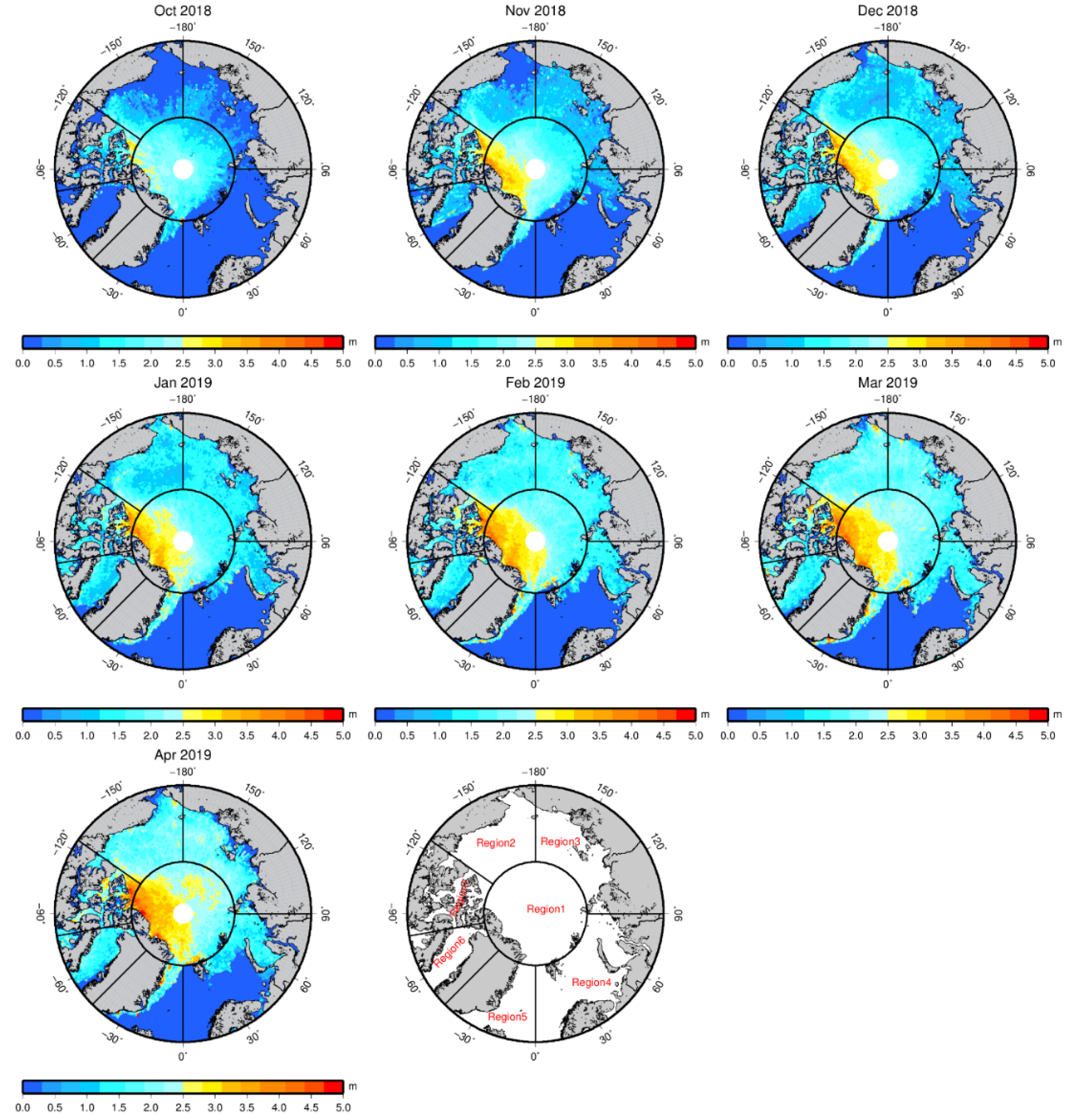
Figure 2 shows an example of the spatial distribution of the sea ice thickness for the 2018–2019 Arctic sea ice growth season.
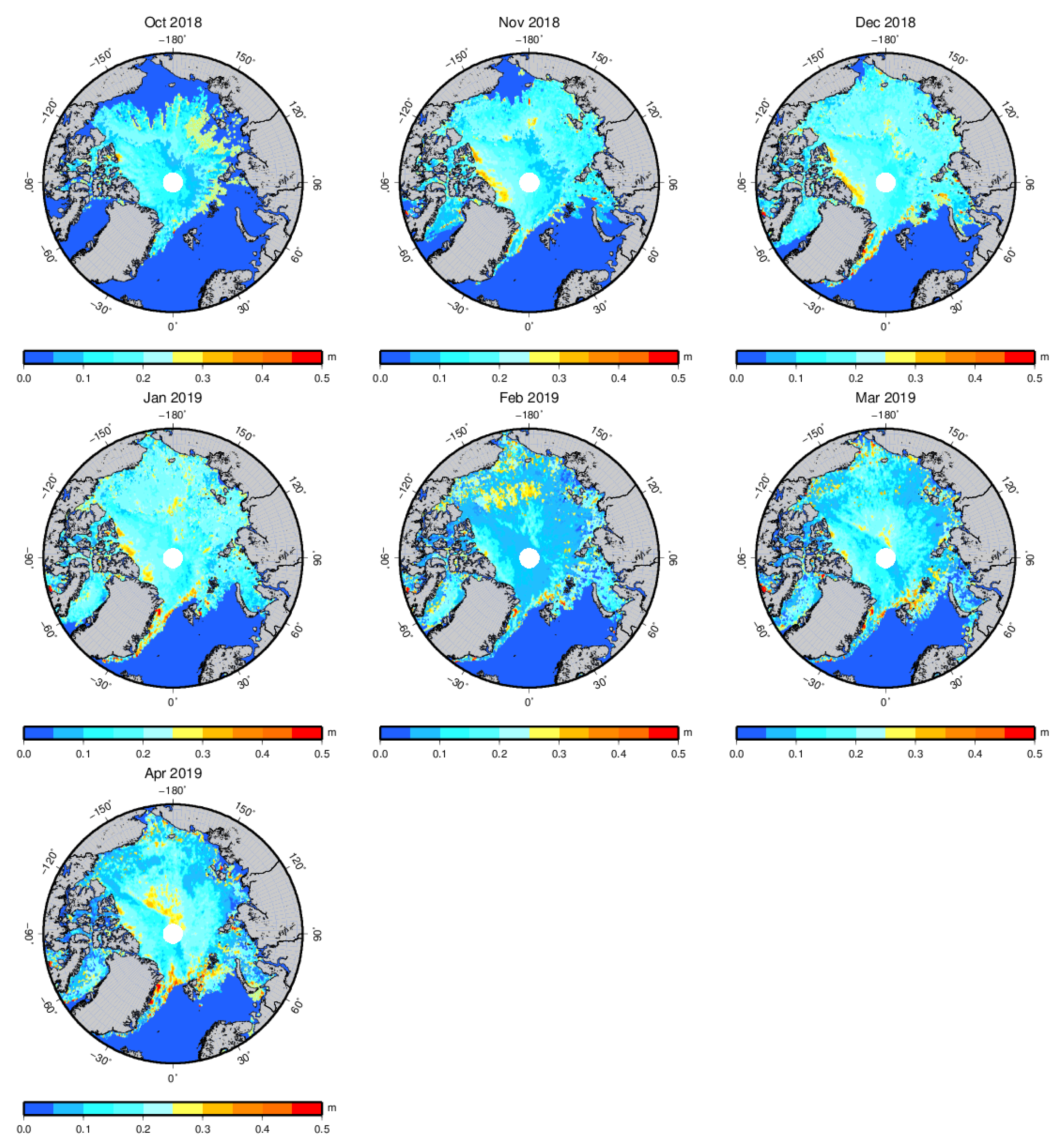
Figure 3 shows the sea ice thickness uncertainty distribution with the LSA method for the 2018–2019 Arctic sea ice growth season from October to April. The thickness estimation uncertainty is calculated by the difference of
in the last two iterations. The estimation uncertainty is less than 0.25 m in most areas of the Arctic Ocean. Large uncertainty can be found near the coast and sea ice margins.
We can also derive sea ice density from
by setting sea water density as a fixed value (1024 kg/m
3).
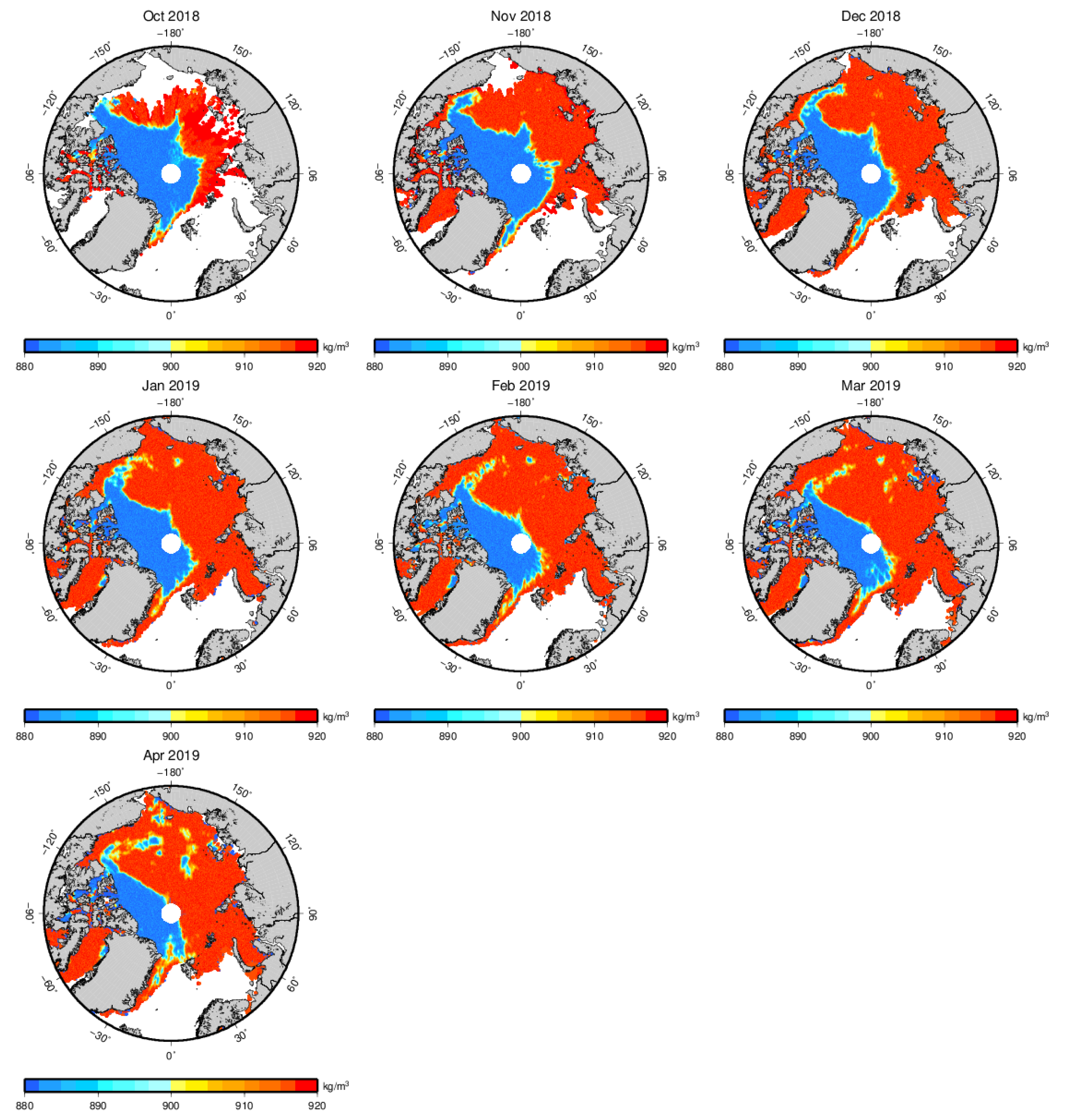
Figure 4 shows the sea ice density distribution for the 2018–2019 Arctic sea ice growth season from October to April. It can be easily found that the thin ice density is larger than thick ice density. Thin ice density ranges from 915 to 920 kg/m
3, while the thick ice density ranges from 880 to 885 kg/m
3.
The sea ice thickness results are presented in seven regions covering the Arctic Basin. The region-dividing criterion is based on Ye et al. [
41]. Region 1 covers the Arctic Basin with latitudes over 80° N, region 2 includes the Beaufort and Chukchi Seas, region 3 includes the Laptev and East Siberian Seas, region 4 includes the Kara and Barents Seas, region 5 is the Greenland Sea, region 6 covers Baffin Bay, and region 7 covers the Canadian Arctic Archipelago.
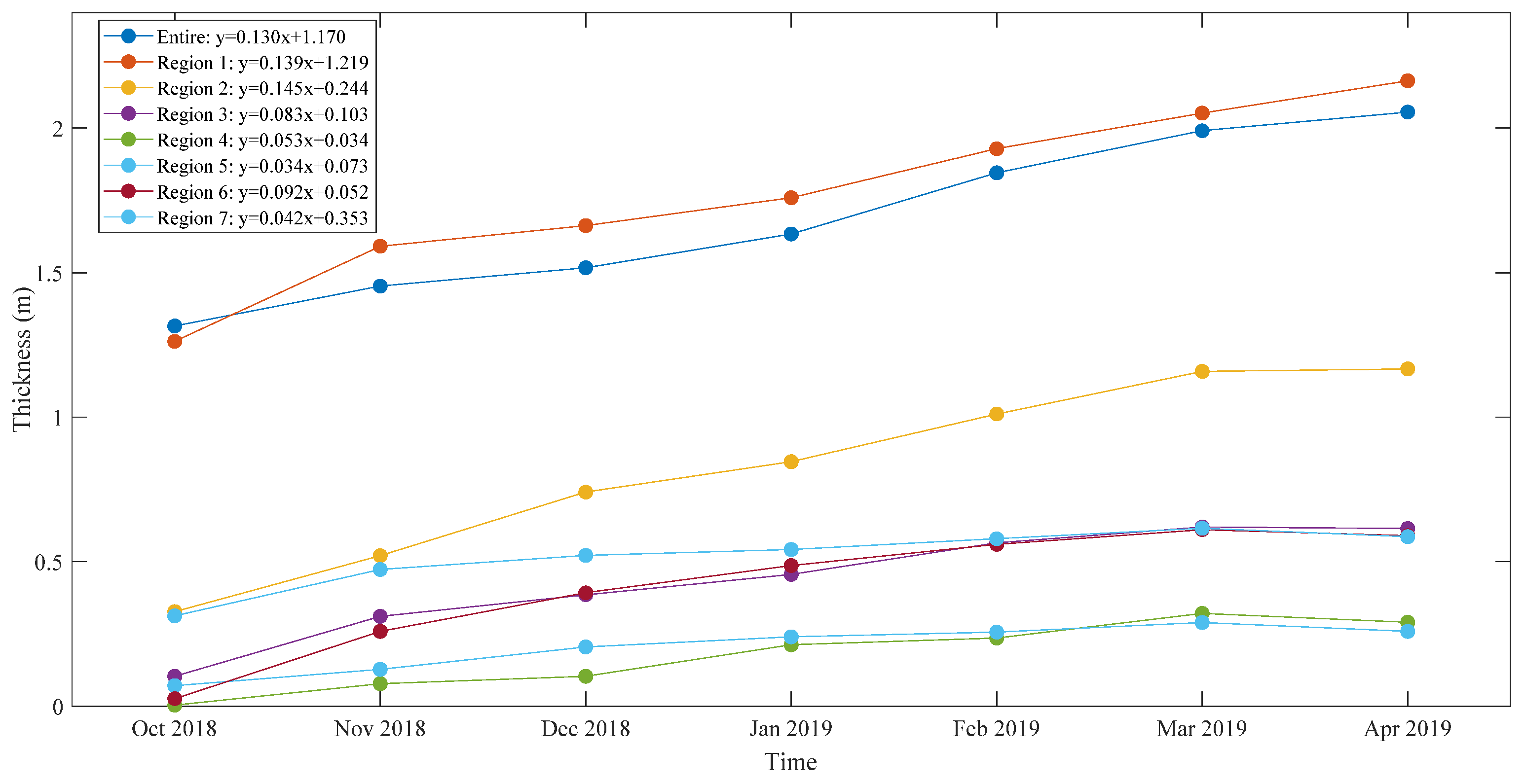
Table 2 and
Figure 5 show the mean sea ice thicknesses of the entire Arctic Basin and seven regions during the 2018–2019 Arctic sea ice growth season.
During the 2018–2019 sea ice growth season, the thickness growth rate of the entire Arctic Basin is approximately 13 cm per month. In October, the sea ice thickness is the smallest, with an average value of 1.315 m, and a few thick ice packs can be seen off the northern coast of the Canadian Archipelago. Afterward, the sea ice thickness increases over the course of the sea ice growth season. In November, more thick ice appears in region 1 and north of region 7, and thin ice begins to appear in the south of regions 2, 3, 4, and 6. In December, the ice thickness growth rate is small (6.4 cm per month), and more thin ice appears in the southwest of region 2. In January, more thick ice occurs in region 1. In February, the ice thickness experiences the largest growth rate (21.2 cm per month). In March, the thick ice area continues to expand. In April, the ice growth rate decreases to 6.5 cm per month, but more thick ice appears in the eastern part of region 1.
Region 1 features the largest mean ice thickness (1.775 m) and the second highest growth rate (13.9 cm per month) during the 2018–2019 sea ice growth season. The largest ice growth rate in region 1 occurs in November (32.9 cm per month). Region 2 features the highest ice growth rate (14.5 cm per month) and the second largest mean ice thickness (0.825 m). In region 2, the ice growth rate from October to December reaches 20.7 cm per month, which is much larger than the rate during the following months (11.7 cm per month). The ice thickness growth rates in region 3 and region 6 are very close. Region 4 has the smallest mean ice thickness (0.178 m), and region 5 has the lowest ice growth rate (3.4 cm per month). The ice thickness in regions 3, 4, 5, 6, and 7 decreases in April, while it continues to grow in the other regions. Owing to the growth in region 1 and region 2, the mean ice thickness in the entire Arctic Basin shows a small increase in April.
4.2. Arctic Sea Ice Thickness Variations
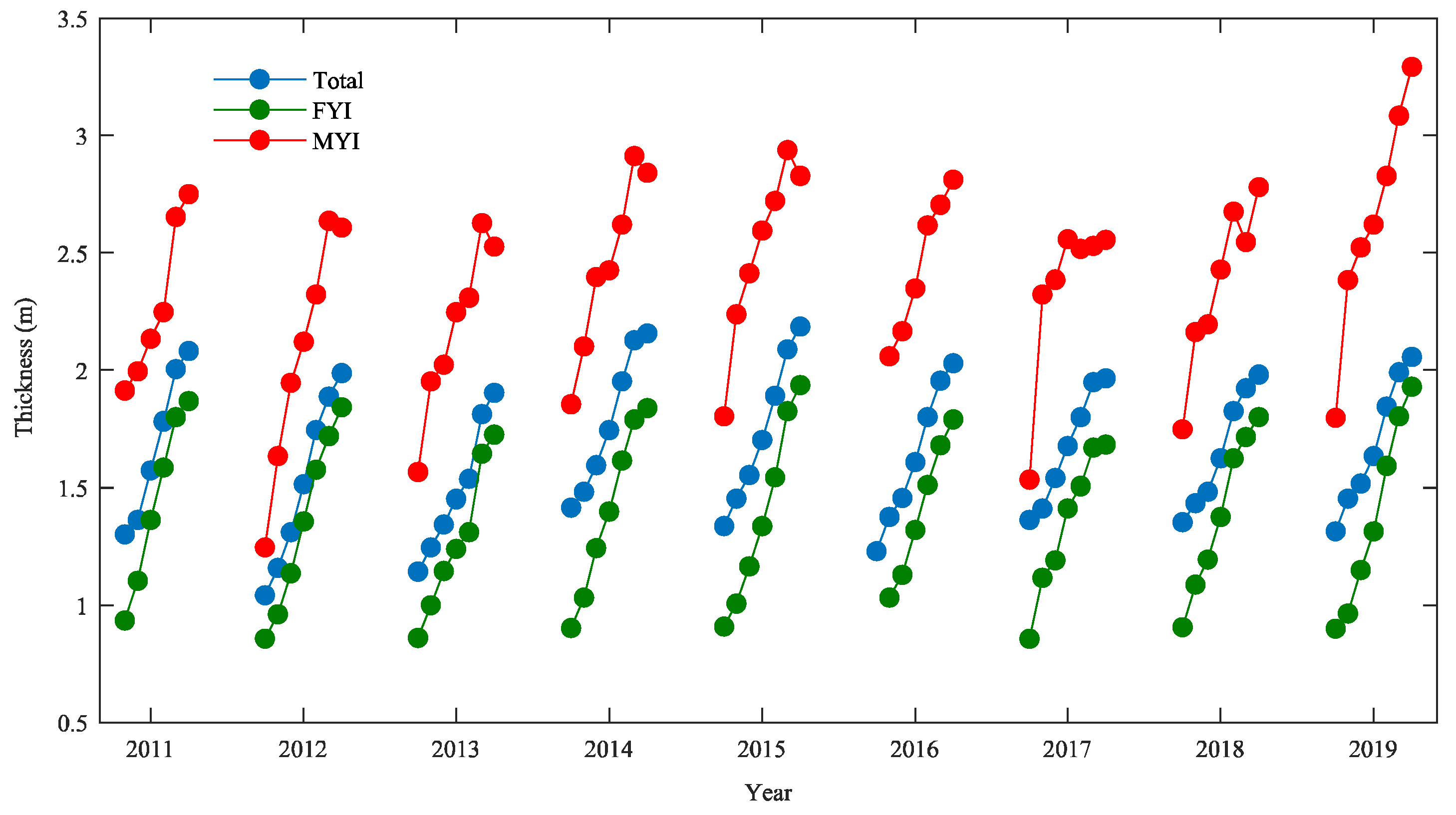
Monthly average thickness variations of the Arctic sea ice derived with the LSA method are shown in
Figure 6. Seasonal variations can be clearly found in the Arctic sea ice thickness. The total ice thickness increases each month over a given sea ice growth season from October until April, which is also generally true for the thickness of FYI and MYI. In some years (e.g., 2012, 2013, 2014, 2015), the MYI thickness drops slightly from March to April due to the onset of summer melt. The variations of total ice thickness are close to the variations of FYI thickness with a correlation coefficient of 0.916 (0.817 for MYI thickness versus total ice thickness), which indicates that FYI is the dominant ice type, because the MYI extent is now less than one-third of the Arctic Ocean [
42].
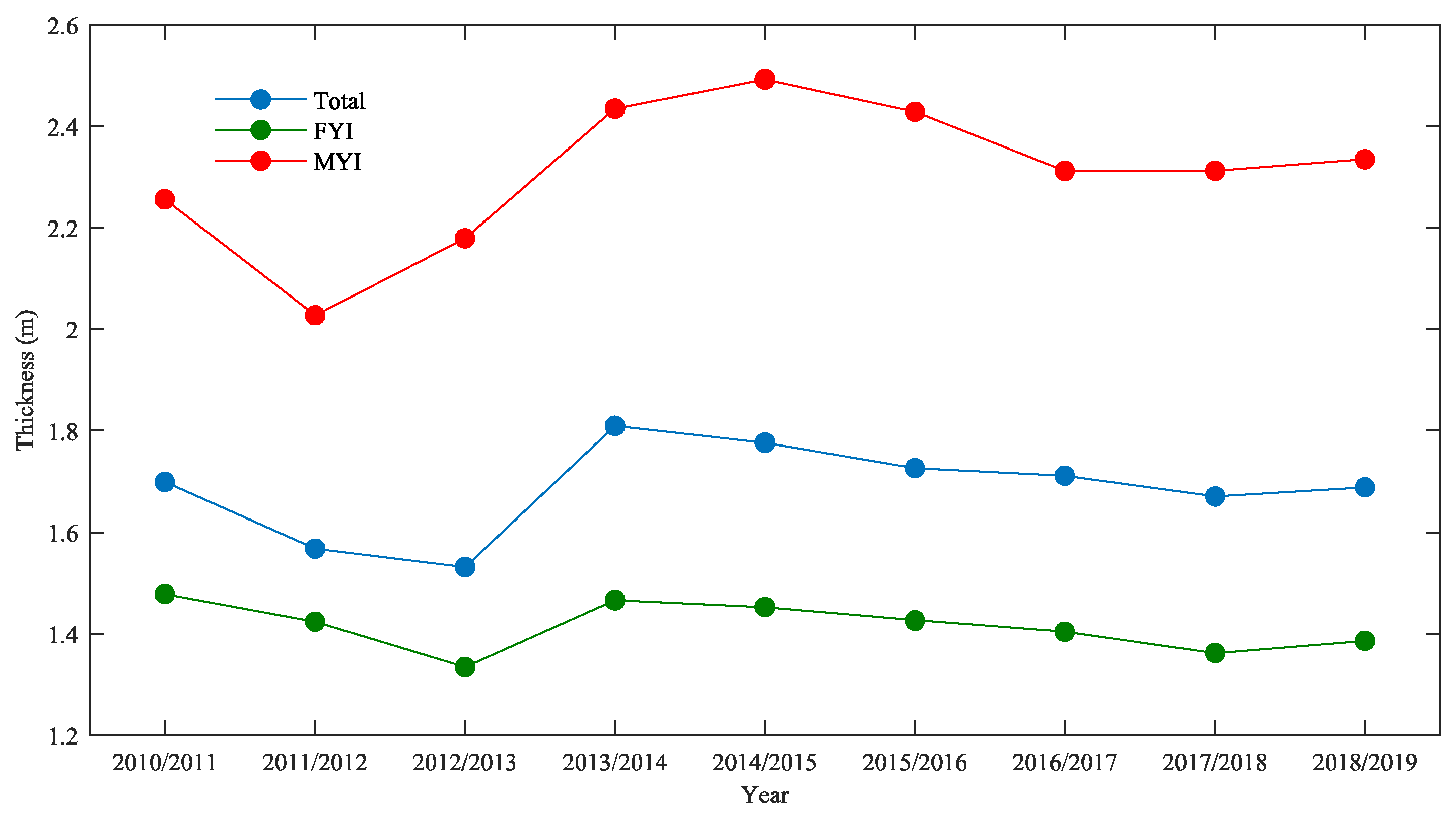
Figure 7 shows the annual variations of the Arctic sea ice thickness from 2010/2011 to 2018/2019. The annual average thickness value represents the mean ice thickness during a given sea ice growth season from October (November for 2010) to April. The thickness of Arctic sea ice has undergone large inter-annual fluctuations. We can observe that MYI is the most variable ice type. Between 2010/2011 and 2011/2012, MYI thickness declined by 10% (0.229 m), followed by an increase of 23% (0.446 m) from 2011/2012 to 2014/2015 and a decrease of 6% (0.158 m) from 2014/2015 to 2018/2019. The thickness of FYI cover is much less variable than that of MYI. From 2010/2011 to 2012/2013, FYI thickness declined by 9.6% (0.143 m), followed by an increase of 9.8% (0.131 m) in 2013/2014 and a decrease of 7% (0.104 m) from 2013/2014 to 2017/2018 and a slight increase of 1.8% (0.024 m) from 2018/2019. These changes impact the total Arctic sea ice thickness, which declined by 9.9% (0.168 m) from 2010/2011 to 2012/2013, increased by 18% (0.278 m) from 2013/2014, decreased by 7.6% (0.138 m) from 2013/2014 to 2017/2018, and increased by 1% (0.017 m) in 2018/2019. The annual variation of FYI thickness is similar to the variation of total ice thickness, which is consistent with the seasonal variations. As shown in
Figure 7, the mean thickness for the total sea ice during the growth season is smallest from October 2012 to April 2013. A sharp increase in total sea ice thickness in 2013/2014 can also be found in
Figure 7. Kwok et al. [
11] also found a notable increase in 2013 when estimating the Arctic sea ice thickness and volume with CryoSat-2 data from 2010 to 2014. Tilling et al. [
12] also found a sharp increase in Arctic sea ice volume in 2013 and 2014 with CryoSat-2 data. Tilling et al. [
12] pointed out that the increase was caused by the remaining thick sea ice northwest of Greenland over the summer of 2013. This is associated with the anomalous low temperature in 2013, which caused a 5% drop in the number of melting days.
4.3. Comparison with CryoSat-2 Sea Ice Thickness Products
Comparisons between sea ice thickness estimates using the LSA method and three CryoSat-2 ice thickness products (AWI, CPOM, and GSFC) are performed for the 2018–2019 Arctic sea ice growth season.
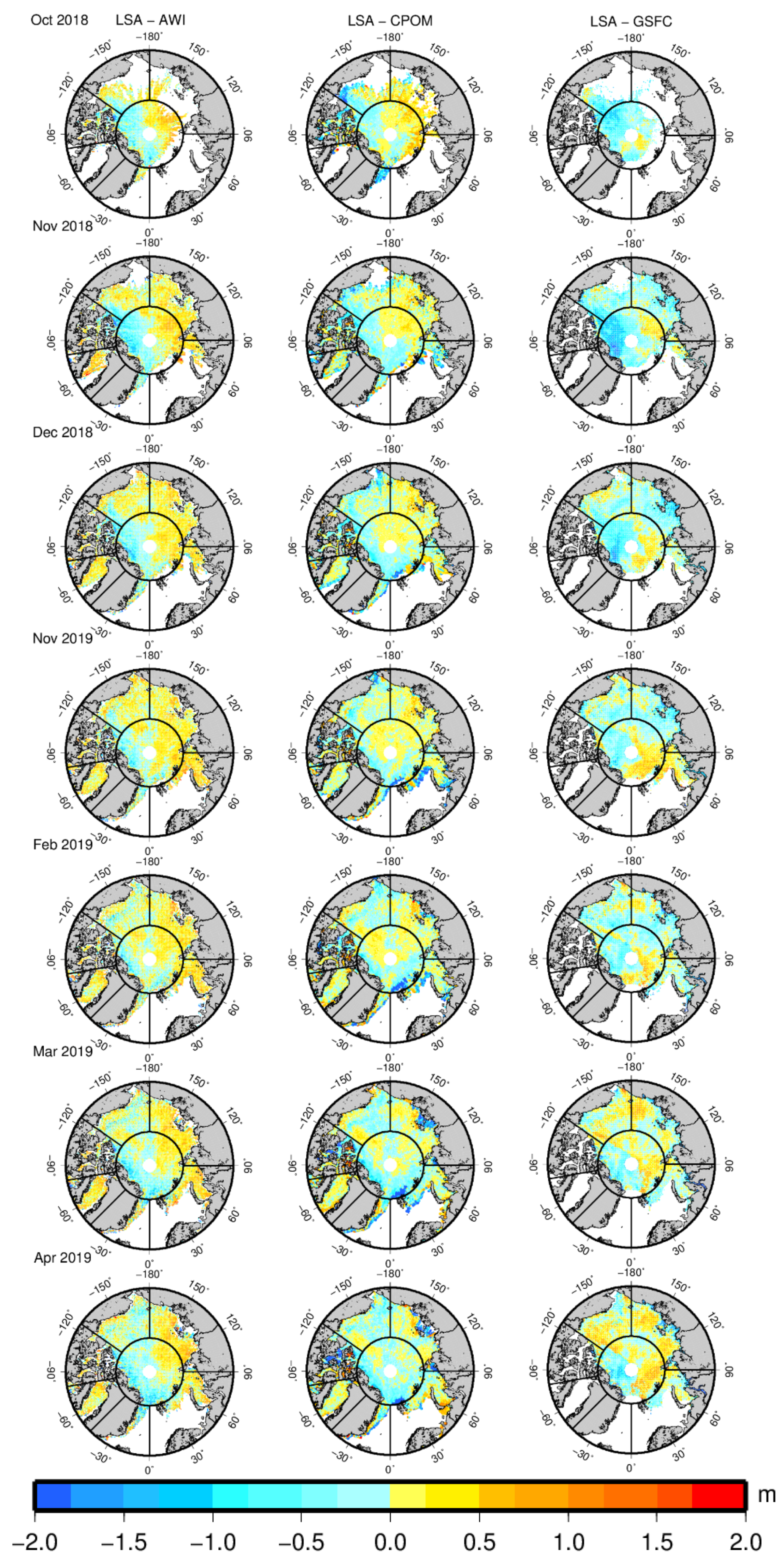
Figure 8 shows the spatial distributions of the bias between the LSA sea ice thickness and AWI, CPOM, and GSFC thicknesses. The bias distributions between the LSA and CPOM are presented on 5 km grids, while the bias distributions between the LSA and the other two products are on 25 km grids.
Table 3,
Table 4 and
Table 5 show the mean values and RMSEs of the thickness bias between the LSA and AWI, CPOM, and GSFC, respectively, in the entire Arctic Basin and seven regions. The overall thickness from the LSA method during the growth season is higher than the thickness from the AWI and lower than the thickness from the CPOM and GSFC.
The average bias between the LSA and AWI in the entire Arctic Basin during the growth season is 0.025 ± 0.640 m. In October, the AWI product does not provide any ice thickness estimates for region 4. The mean thickness of the LSA in the entire basin is larger than that of the AWI for November through March but smaller than that of the AWI for October and April. The maximum bias (0.094 ± 0.480 m) of the two products occurs in January, and the minimum bias (0.003 ± 0.594 m) occurs in November. In regions 1, 5, and 7, the mean thickness of the LSA is smaller than that of the AWI. The bias between the LSA and AWI is less than 0.1 m in region 1 and 2. In region 1, the difference between the two products is −0.080 ± 0.494 m from 2018 to 2019. The largest mean difference in region 1 occurs in April. The bias in the western part of region 1 is positive, while it is negative in the eastern part of region 1. Region 2 features the lowest bias (0.013 ± 0.399) of the seven regions, while region 5 has the largest bias (−0.285 ± 1.048 m). In regions 3 and 4, most of the bias is positive. The bias in region 6 during October reaches −0.442 ± 1.152 m because of the limited ice in this area. The bias in regions 6 and 7 is reduced as the growth season progresses.
The overall mean difference between the LSA and CPOM is −0.143 ± 0.640 m. The largest bias (−0.173 ± 0.691 m) of the two products occurs in March 2019. Region 5 features the largest thickness bias (−0.270 ± 1.017 m) from the LSA and CPOM for the seven regions, which is consistent with the bias of the LSA and AWI. In region 1, the difference between the two products is −0.197 ± 0.525 m from 2018 to 2019. The largest mean difference in region 1 occurs in March. The bias in region 1 is positive in October and negative from November to April. The largest difference in region 2 occurs in October, and the difference is reduced as the growth season progresses. In region 3, the largest difference occurs in April. Large differences occur in southern offshore areas of region 3 during March and April. The mean ice thickness of regions 4, 5, and 6 in October is less than 0.1 m, and the difference between the LSA and CPOM is extremely large in the three regions.
The GSFC product does not provide thickness estimates in regions 5 and 6. The difference between the LSA and GSFC is −0.274 ± 0.628 m. The bias for the entire basin of the two products reaches a maximum (−0.531 ± 0.577 m) in October, reduces as the growth season progresses, and reaches a minimum (−0.118 ± 0.687 m) in April. Region 7 shows the largest bias (−0.516 ± 0.864 m) of the seven regions, while region 2 features the lowest bias (−0.167 ± 0.423 m). The bias in region 1 is −0.345 ± 0.757 m during the entire season. In October, most of the bias in region 1 is negative, whereas more positive bias appears as the growth seasons progresses, especially in the western part of region 1. This phenomenon can also be found in regions 2 and 3. Limited ice is found in region 4 during October, and the bias is extremely large (−2.144 ± 0.005 m).
From the comparison, we can find that large biases tend to occur in areas covered with thin ice, such as the margin of the Arctic Basin. Moreover, regions 4 and 5 have the lowest sea ice thickness and feature the largest bias in the comparison, which is mainly because of the limited accuracy of CryoSat-2 and other satellite altimeters for observing thin ice.
4.4. Validation with Coincident OIB Sea Ice Thickness
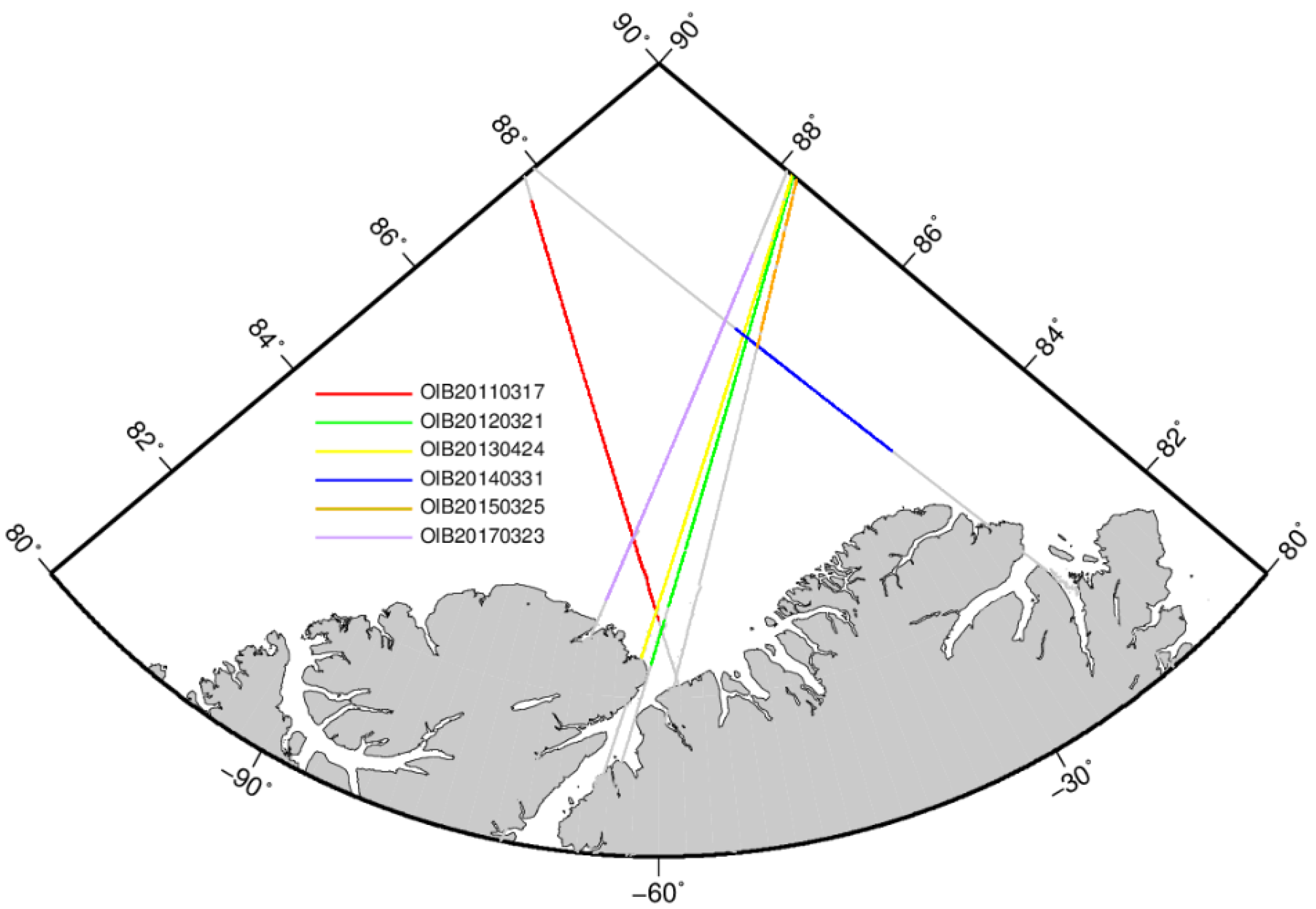
To assess our sea ice thickness estimates from the LSA method, we compare our results, as well as the three products, with the OIB sea ice thickness products. As shown in
Figure 9, the ice thickness results from six OIB tracks are used for comparison. The ground tracks of the OIB are spatiotemporally coincident with the CryoSat-2 tracks.
Table 6 shows the operation time of the OIB and CryoSat-2 passing times over the coincident tracks. The time differences between the two operations are within 10 h, and most of the time differences are less than 2 h. The distances of overlapping parts vary from 244 to 764 km.
The overlapping parts are divided into 628 segments every 5 km, and the mean sea ice thicknesses for the LSA and OIB are calculated for each segment. While comparing with the three sea ice thickness products, the OIB thickness is averaged within a grid cell.
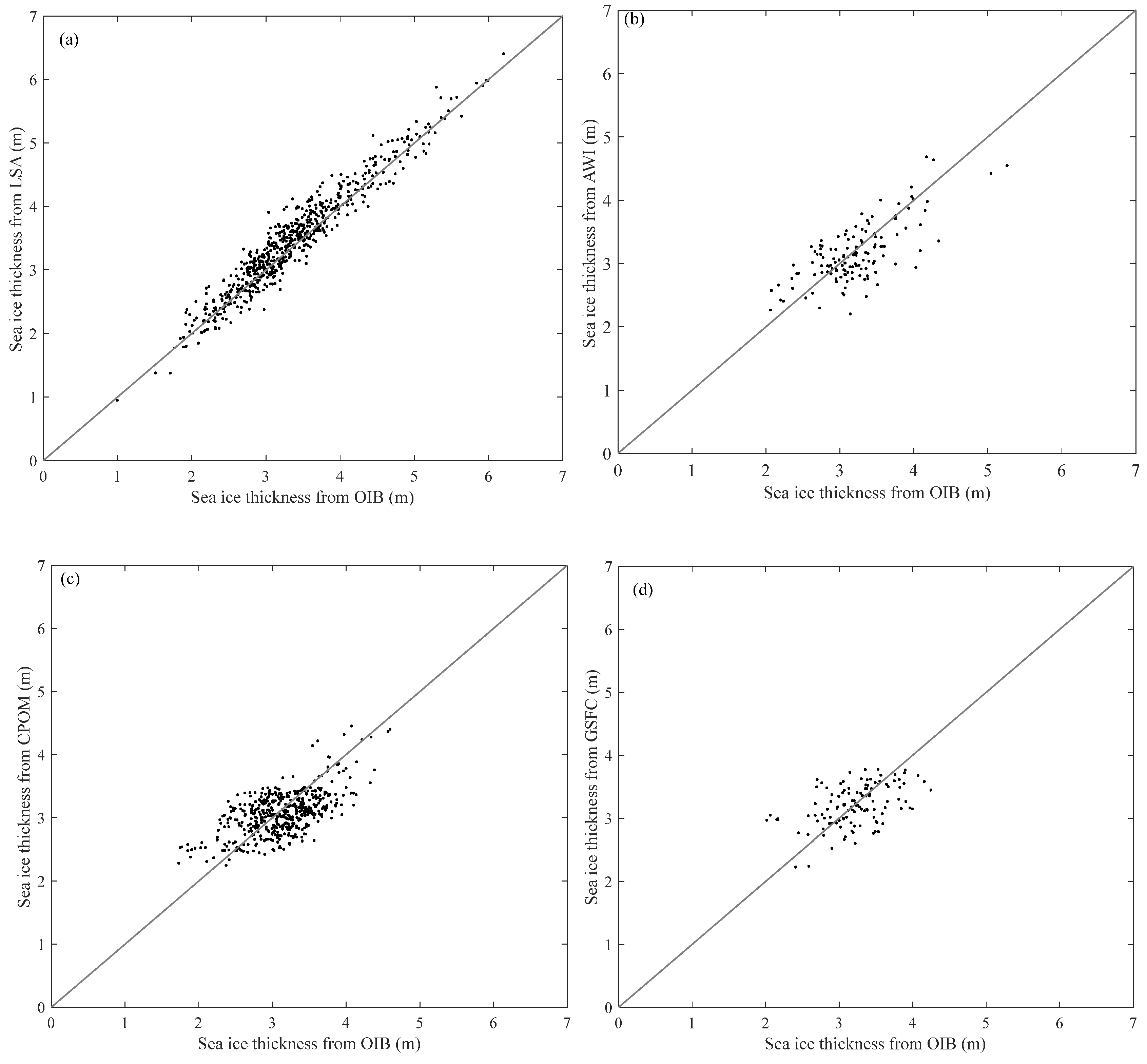
Figure 10 shows a scatterplot of sea ice thicknesses from the LSA and the three products against OIB.
Table 7 is the statistics of the comparison. The Root Mean Squared Error (RMSE) between LSA and OIB is 0.187 m, while RMSEs of the three products against OIB are larger than 0.37. Sea ice thickness from LSA also correlates well with OIB results with a correlation coefficient of 0.935. Among the three products, AWI features the highest correlation with OIB, while GSFC has the lowest correlation.