Letter

Synchronization Theory-Based Analysis of Coupled Vibrations of Dual-Tube Coriolis Mass Flowmeters

1
School of Instrumentation and Optoelectronic Engineering, Beihang University, Beijing 100191, China
2
School of Electronic and Information Engineering, Beihang University, Beijing 100191, China
3
Research Institute for Frontier Science, Beihang University, Beijing 100191, China
*
Author to whom correspondence should be addressed.
Sensors 2020, 20(21), 6340; https://doi.org/10.3390/s20216340
Submission received: 18 September 2020 / Revised: 30 October 2020 / Accepted: 2 November 2020 / Published: 6 November 2020
(This article belongs to the Special Issue Resonators Sensors)

Abstract

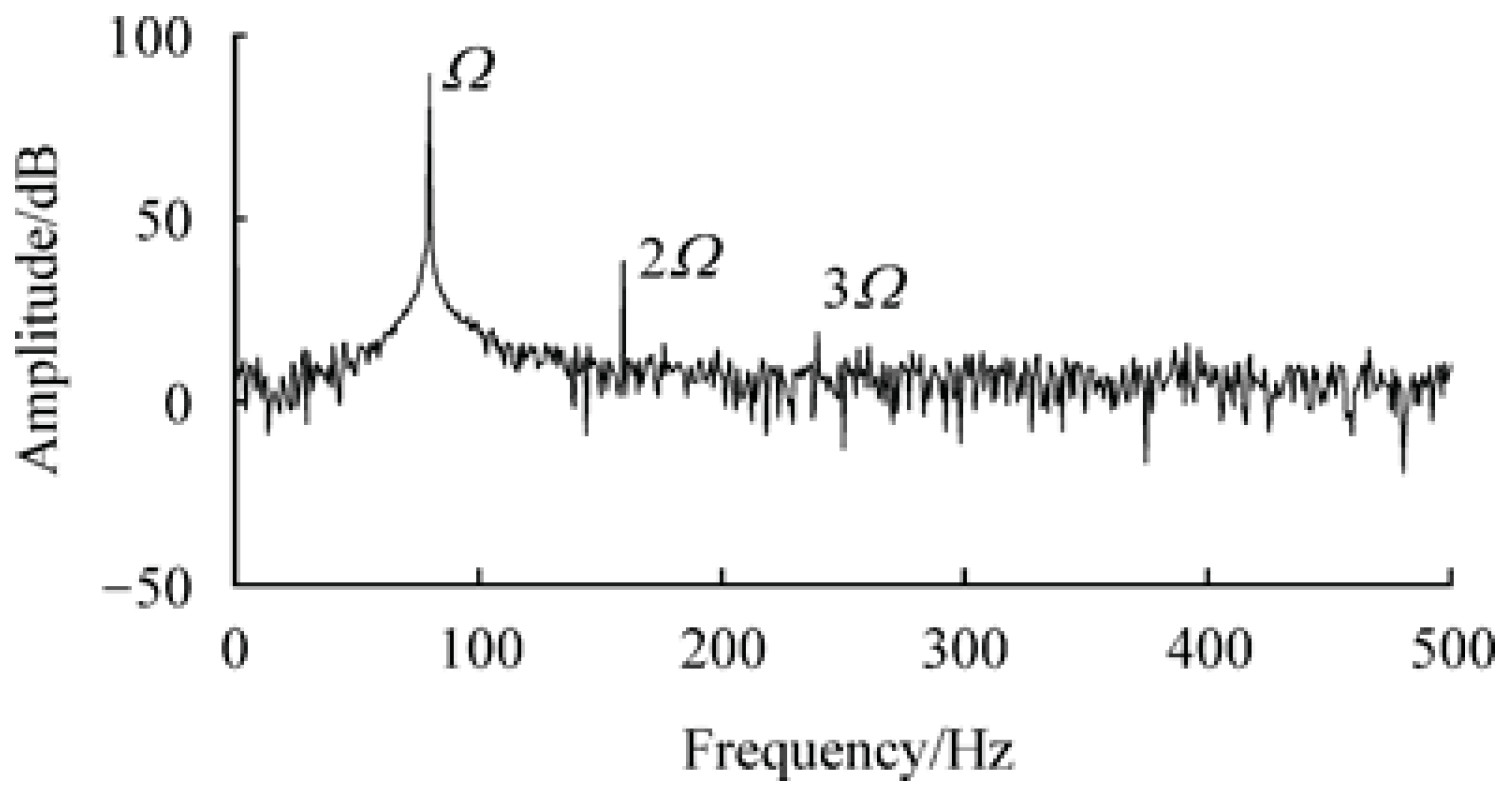
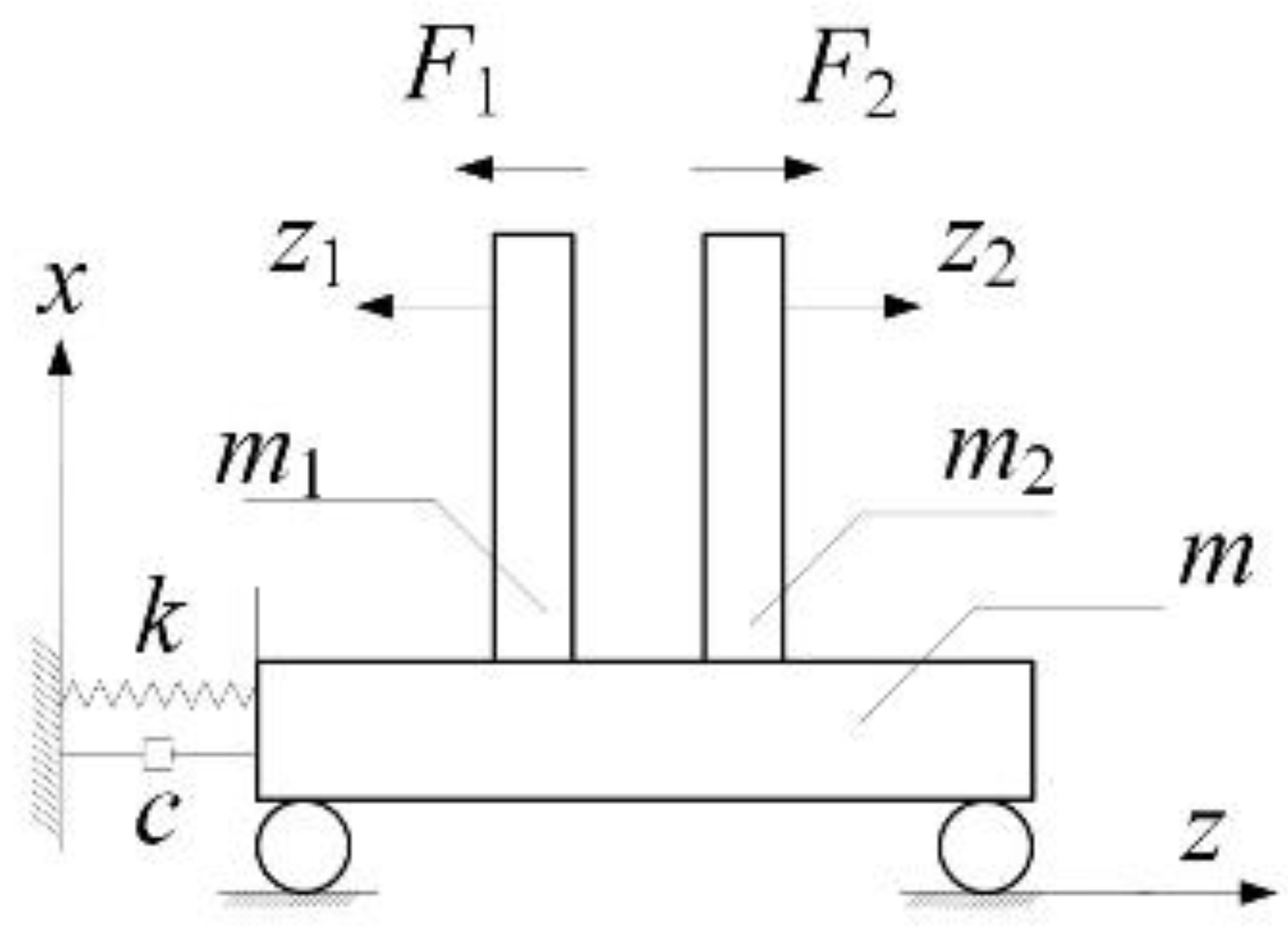
Certain nonlinear influences are found in dual-tube Coriolis mass flowmeters (CMFs). According to experimentation, a nonlinearity dominated by frequency-doubling signals can be observed in the measuring signal. In general, such nonlinear effects are simplified as linear systems or neglected through processing. In this paper, a simplified model has been constructed for dual-beam CMFs based on the theory of nonlinear dynamics, with the spring–damper system as the medium for the dual-beam coupled vibrations. Next, the dynamics differential equation of the coupled vibrations is set up on the basis of the Lagrangian equation. Furthermore, numerical solutions are obtained using the Runge–Kutta fourth-order method. The study then fits discrete points of the numerical solutions, which are converted into the frequency domain to observe the existence of frequency-doubling signal components. Our findings show that frequency-doubling components exist in the spectrogram, proving that these nonlinear influences are a result of the motions of coupled vibrations. In this study, non-linear frequency-doubling signal sources are qualitatively analyzed to formulate a theoretical basis for CMFs design.
Keywords: Coriolis mass flowmeter; coupled vibrations; nonlinear dynamics; frequency-doubling signal; modal analysis Coriolis mass flowmeter; coupled vibrations; nonlinear dynamics; frequency-doubling signal; modal analysis