Article

Sensor Node Activation Using Bat Algorithm for Connected Target Coverage in WSNs


School of Electrical and Computer Engineering, Pusan National University, Busan 46241, Korea
*
Author to whom correspondence should be addressed.
Sensors 2020, 20(13), 3733; https://doi.org/10.3390/s20133733
Submission received: 21 May 2020 / Revised: 1 July 2020 / Accepted: 2 July 2020 / Published: 3 July 2020
(This article belongs to the Section Sensor Networks)

Abstract

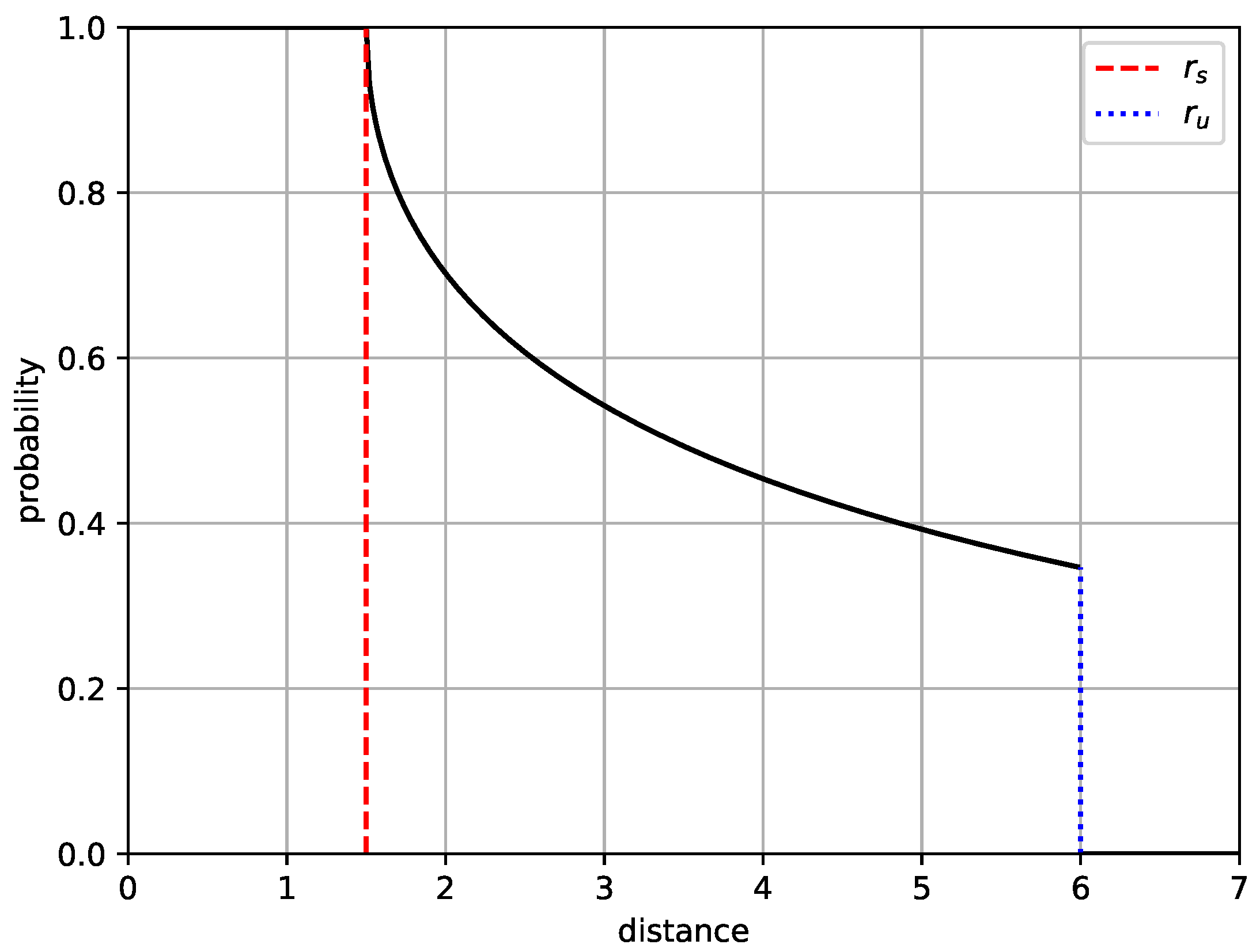
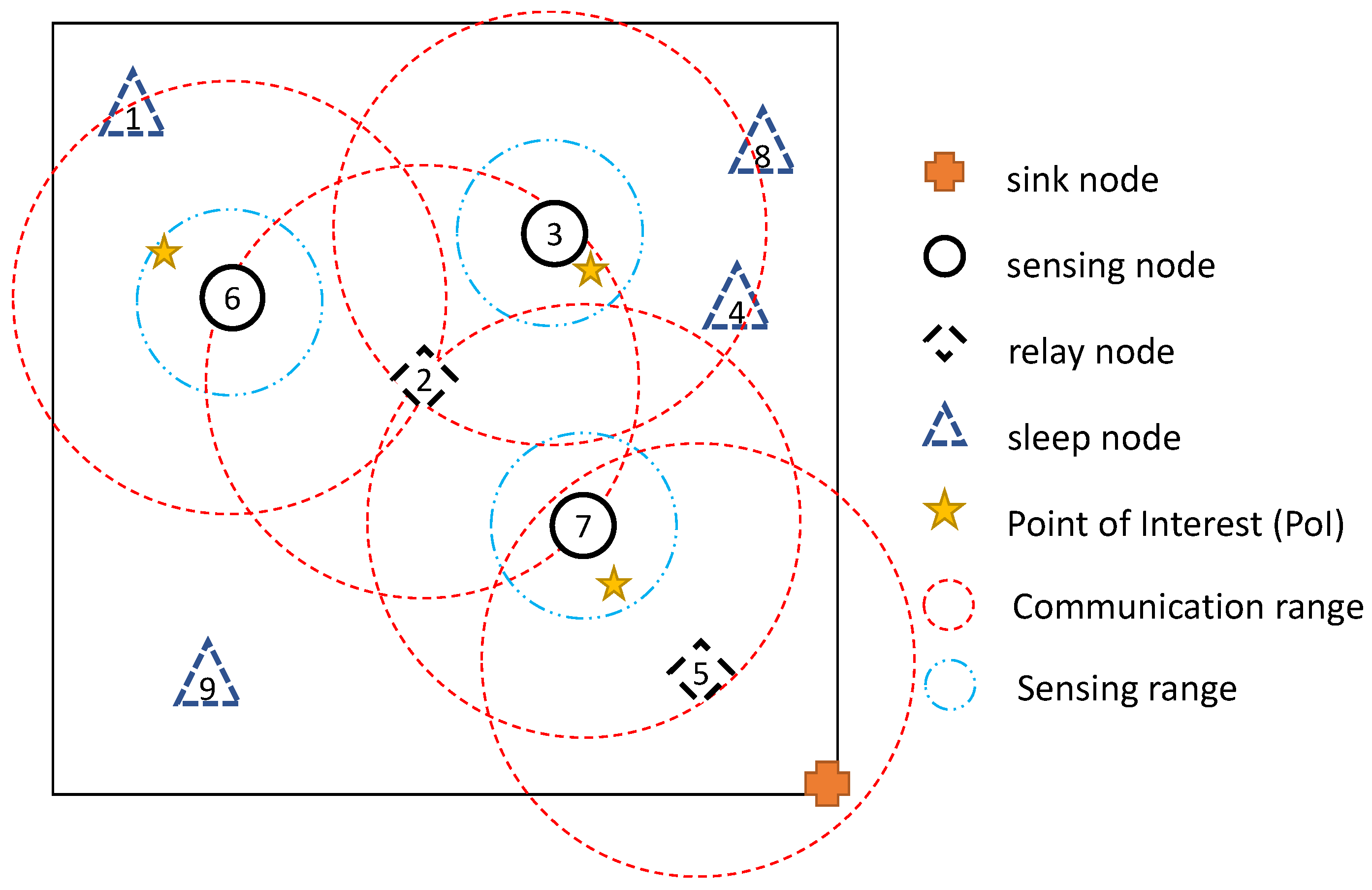
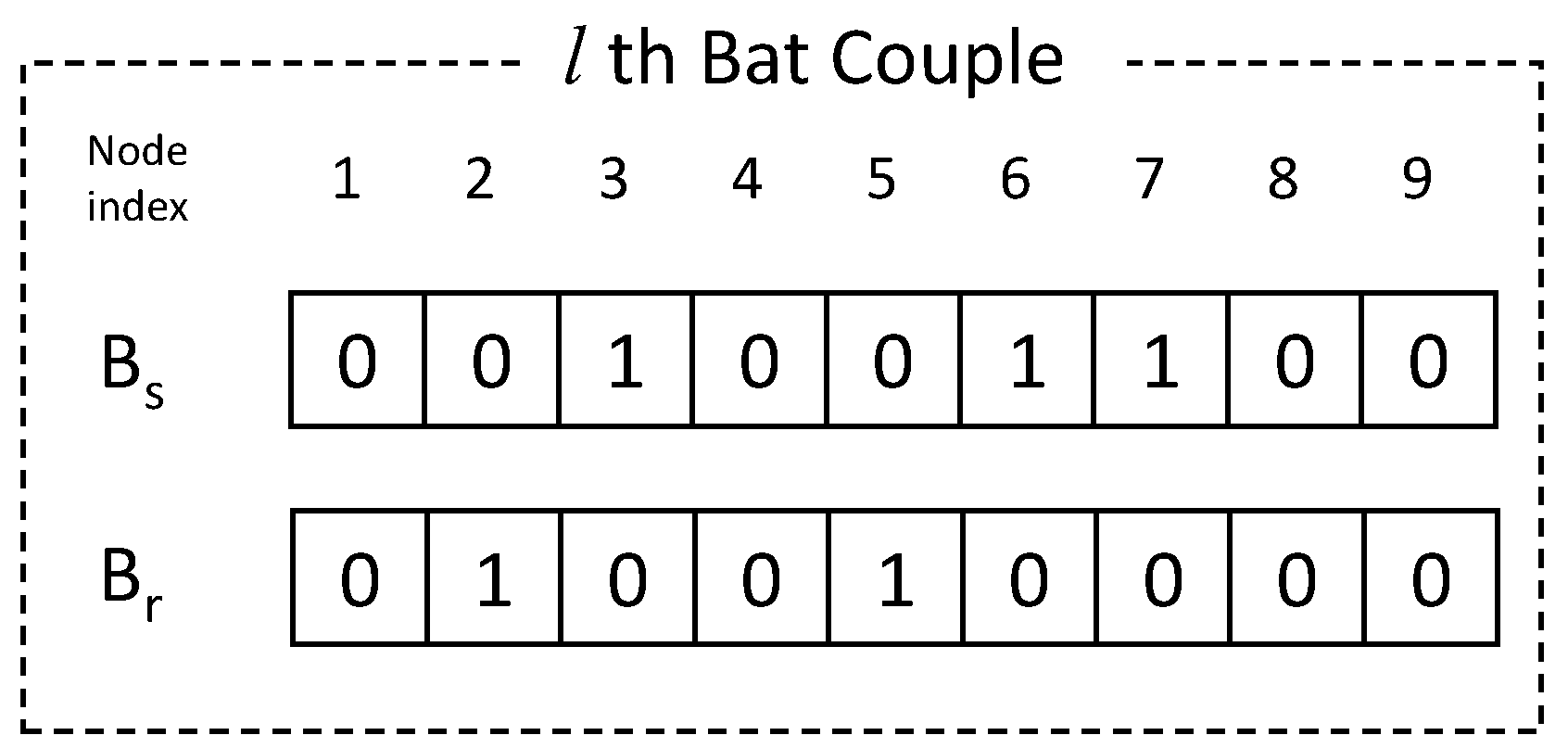
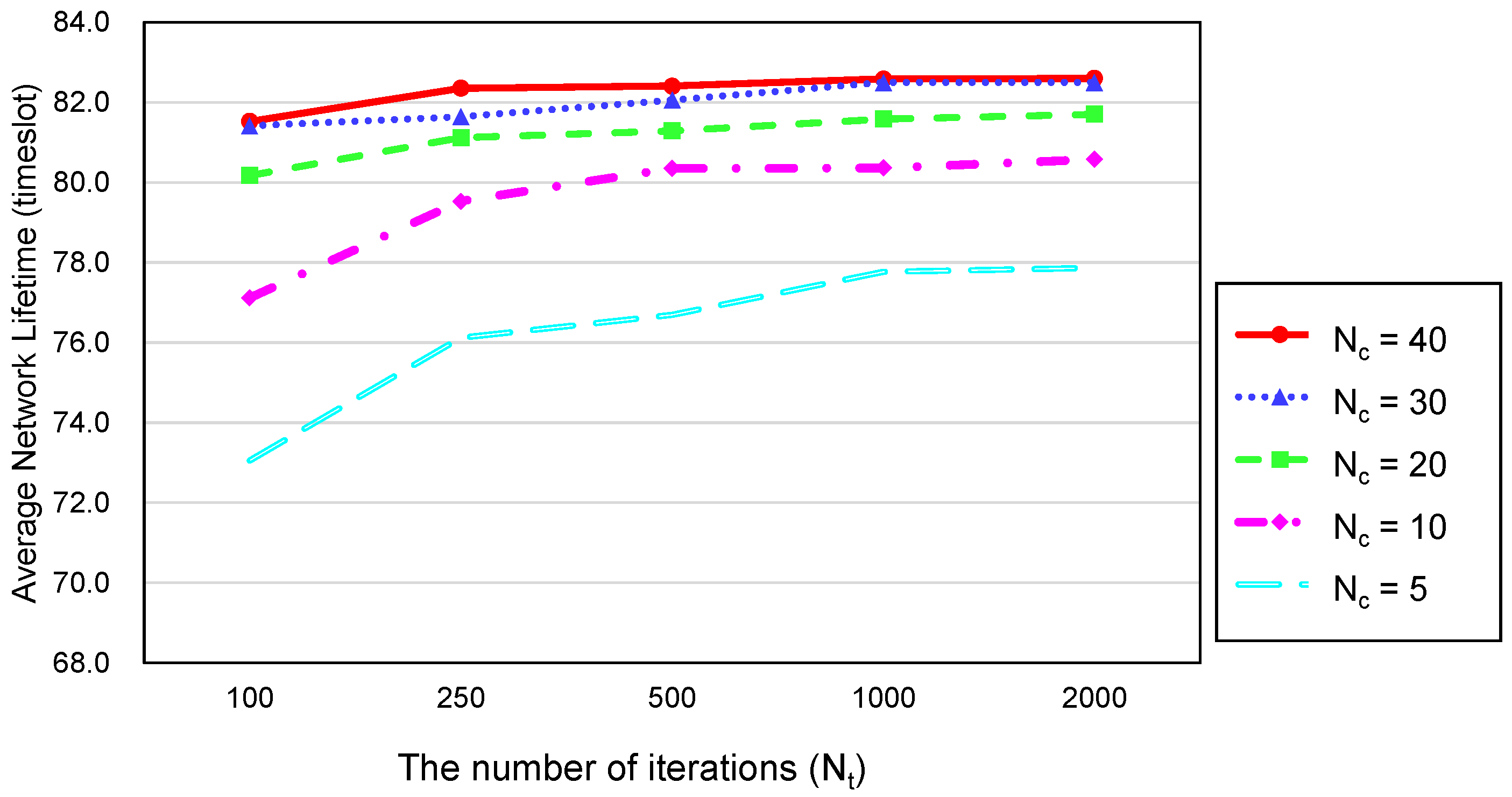
This paper proposes a sensor node activation method using the nature-inspired algorithm (NIA) for the target coverage problem. The NIAs have been used to solve various optimization problems. This paper formulates the sensor target coverage problem into an object function and solves it with an NIA, specifically, the bat algorithm (BA). Although this is not the first attempt to use the BA for the coverage problem, the proposed method introduces a new concept called bat couple which consists of two bats. One bat finds sensor nodes that need to be activated for sensing, and the other finds nodes for data forwarding from active sensor nodes to a sink. Thanks to the bat couple, the proposed method can ensure connectivity from active sensor nodes to a sink through at least one communication path, focusing on the energy efficiency. In addition, unlike other methods the proposed method considers a practical feature of sensing: The detection probability of sensors decreases as the distance from the target increases. Other methods assume the binary model where the success of target detection entirely depends on whether a target is within the threshold distance from the sensor or not. Our method utilizes the probabilistic sensing model instead of the binary model. Simulation results show that the proposed method outperforms others in terms of the network lifetime.
Keywords: wireless sensor networks; probabilistic sensing model; connected target coverage; bat algorithm; sensor node activation wireless sensor networks; probabilistic sensing model; connected target coverage; bat algorithm; sensor node activation