Article

Assessment of the Number of Valid Observations and Diurnal Changes in Chl-a for GOCI: Highlights for Geostationary Ocean Color Missions


1
School of Environmental Science and Engineering, Southern University of Science and Technology, Shenzhen 518055, China
2
Shenzhen Municipal Engineering Lab of Environmental IoT Technologies, Southern University of Science and Technology, Shenzhen 518055, China
*
Author to whom correspondence should be addressed.
Sensors 2020, 20(12), 3377; https://doi.org/10.3390/s20123377
Submission received: 18 April 2020 / Revised: 10 June 2020 / Accepted: 12 June 2020 / Published: 15 June 2020
(This article belongs to the Section Remote Sensors)

Abstract

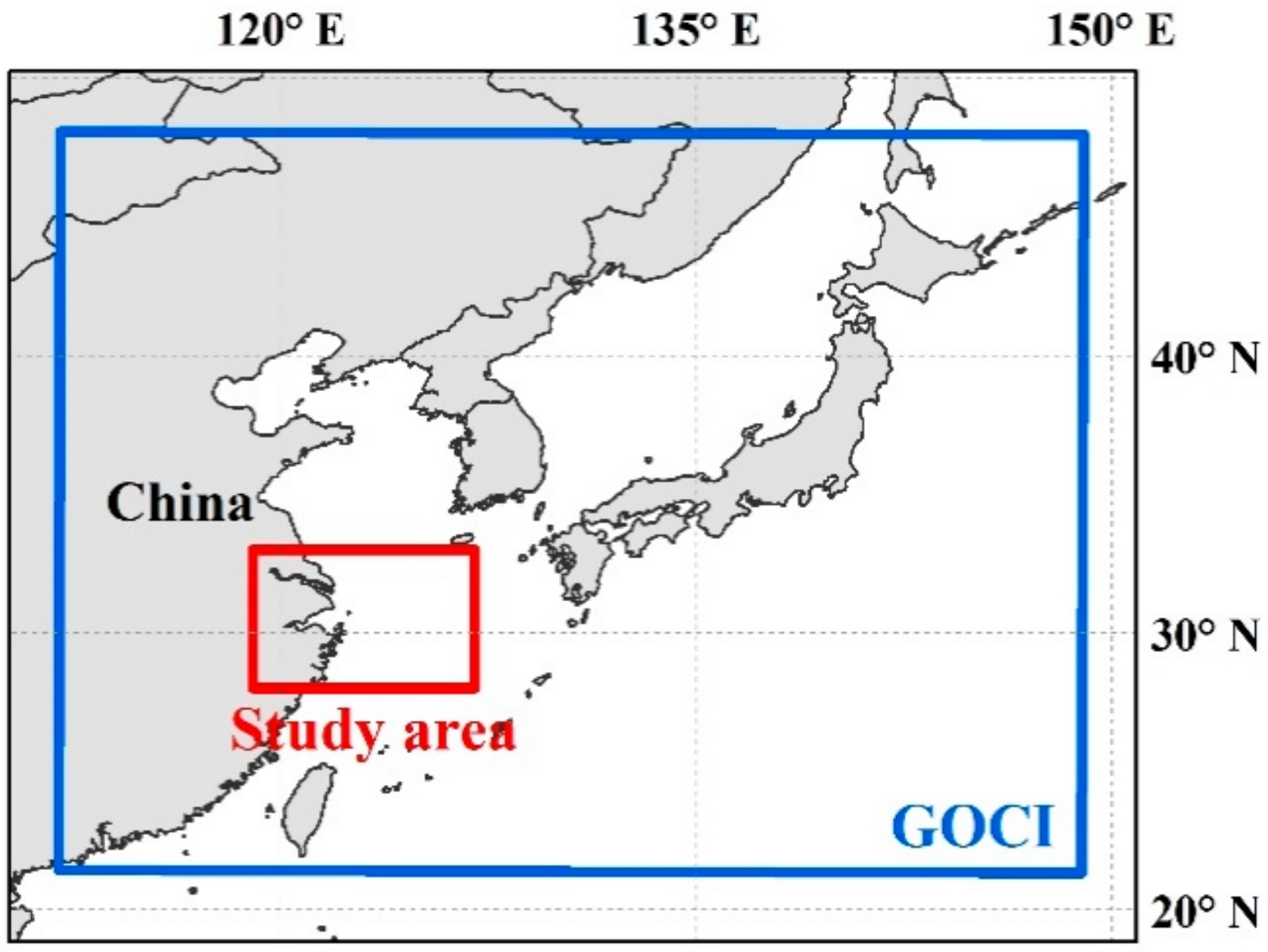
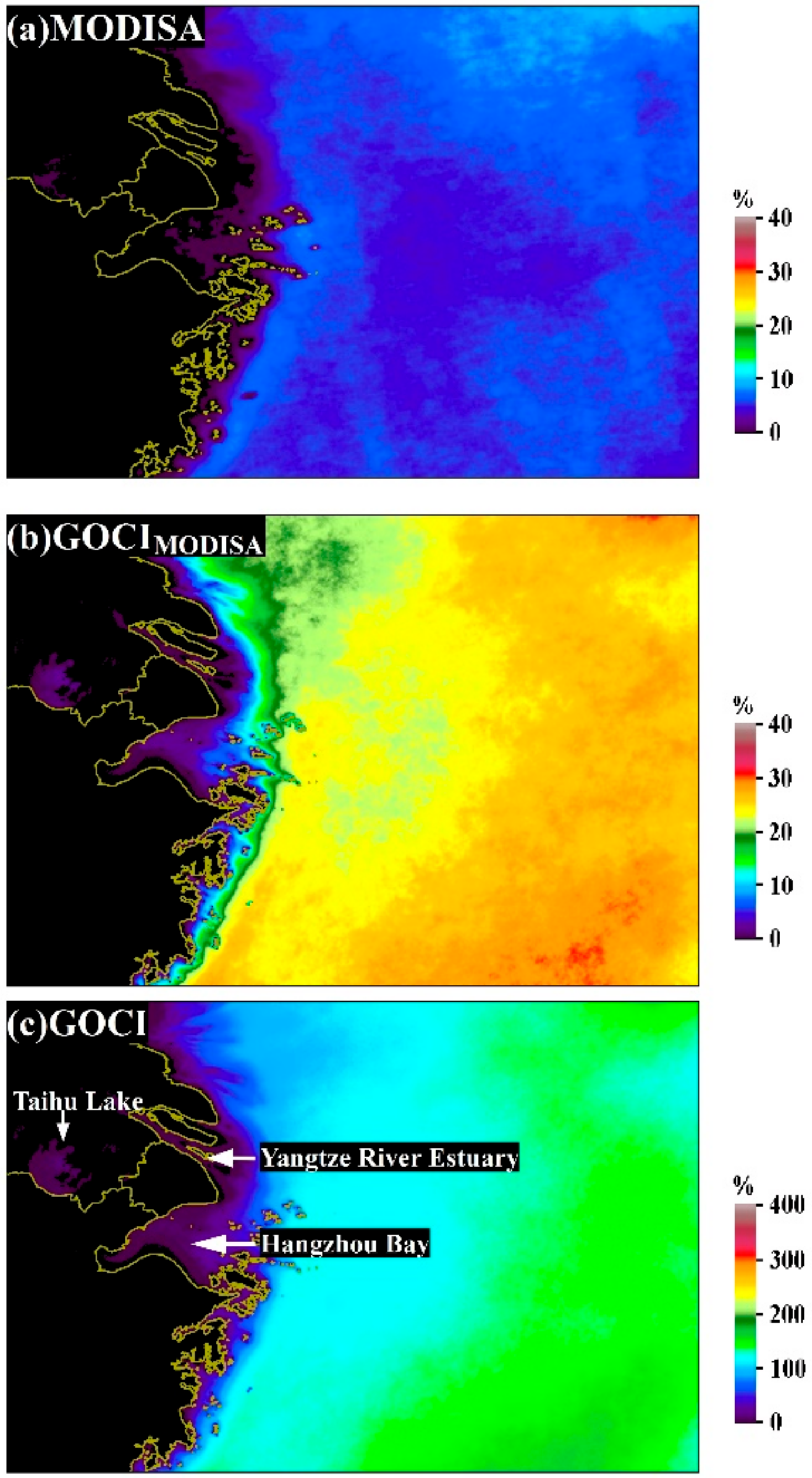
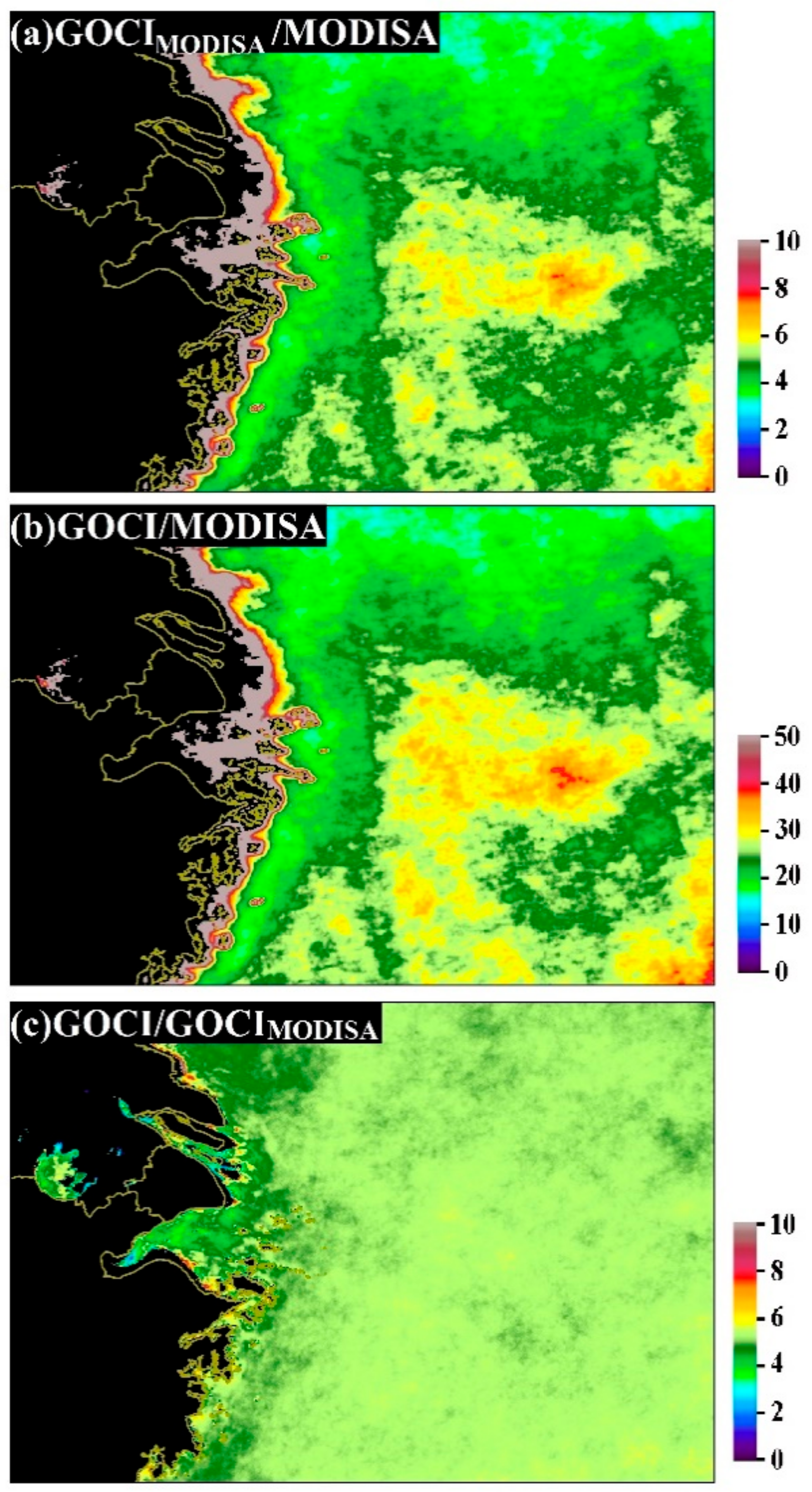
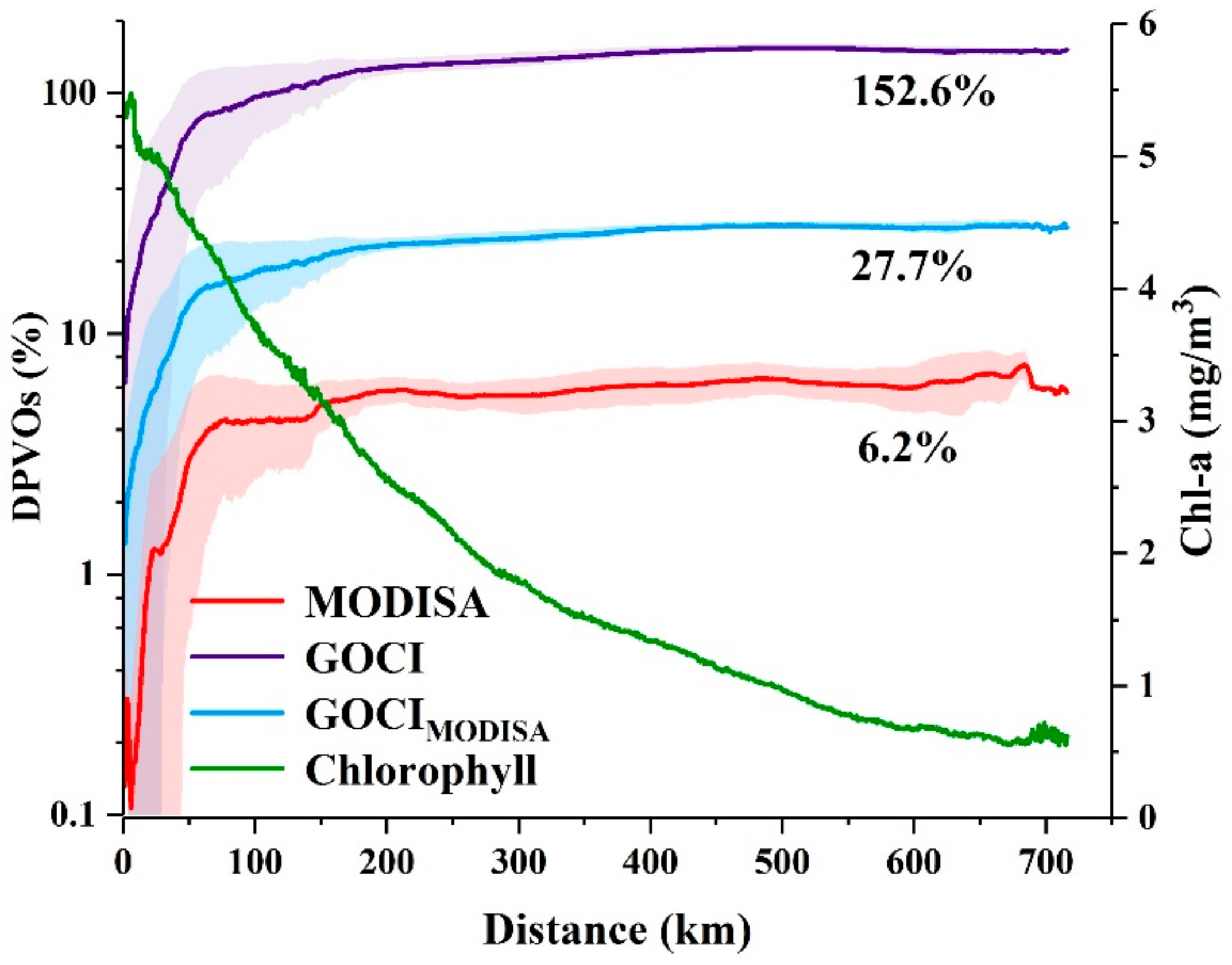
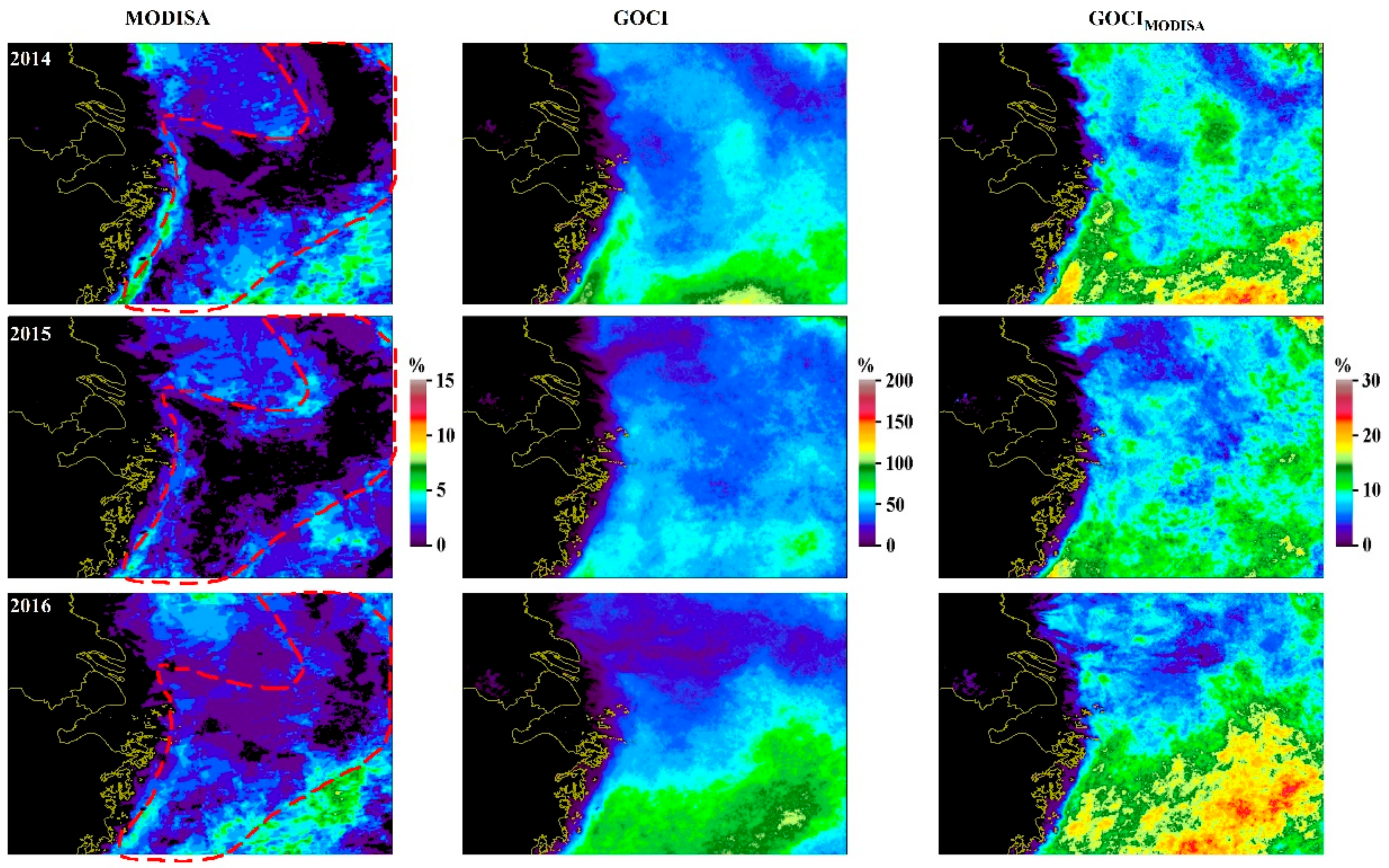
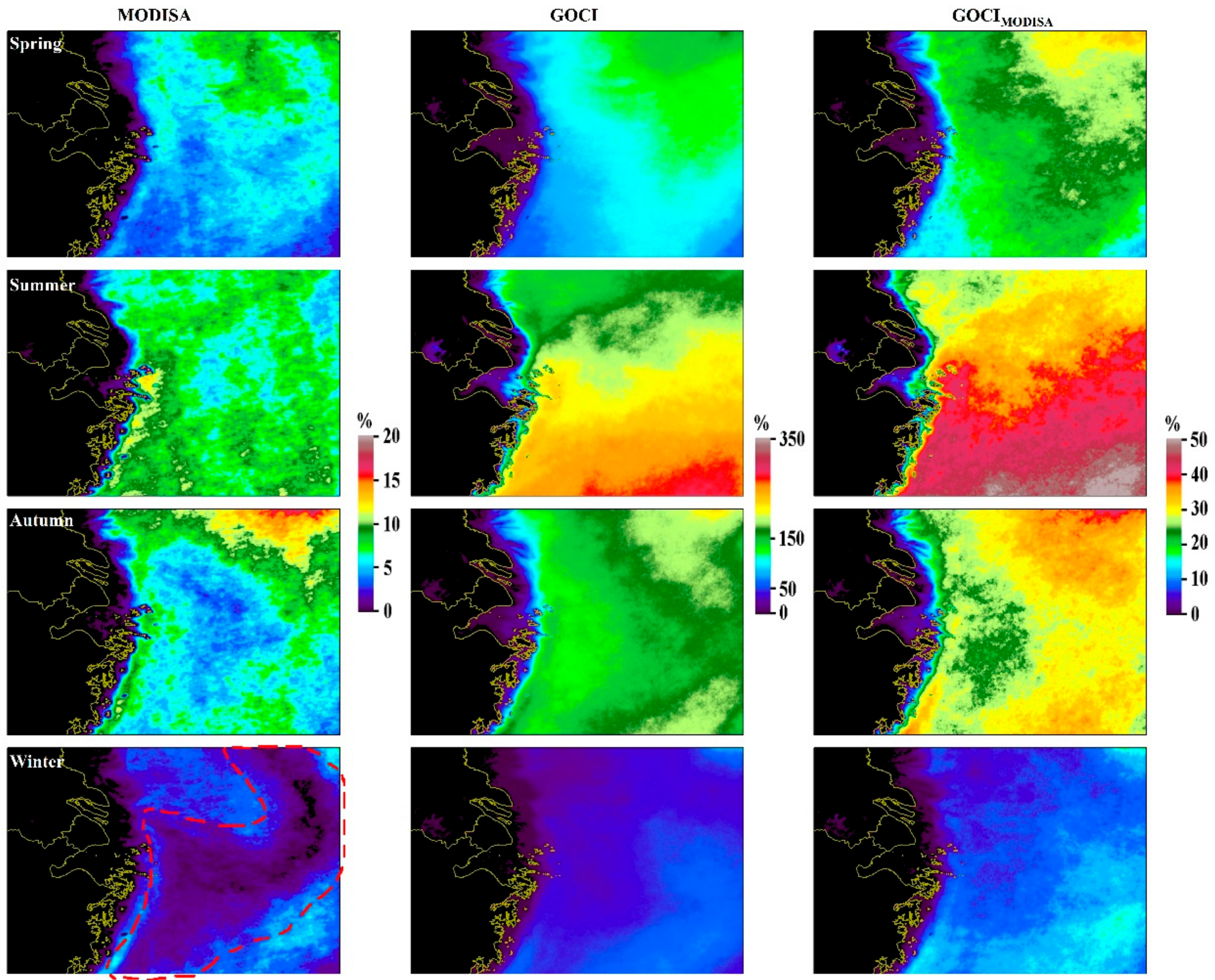
The first geostationary ocean color satellite mission (geostationary ocean color imager, or GOCI) has provided eight hourly observations per day over the western Pacific region since June 2010. GOCI imagery has been widely used to track the short-term dynamics of coastal and inland waters. Few studies have been performed to comprehensively assess the advantages of GOCI images in obtaining valid observations and estimating diurnal changes within the water column. Using the entire mission dataset between 2011 and 2017, these knowledge gaps were filled by comparing the daily percentages of valid observations (DPVOs) between GOCI and MODIS Aqua (MODISA) and by examining the diurnal changes in Chl-a over the East China Sea. The mean DPVOs of GOCI was 152.6% over the clear open ocean, suggesting that a daily valid coverage could be expected with GOCI. The GOCI DPVOs were ~26 times greater than the MODISA DPVOs; this pronounced difference was caused by the combined effects of their different observational frequencies and the more conservative quality flag system for MODISA. Diurnal changes in the GOCI-derived Chl-a were also found, with generally higher Chl-a in the afternoon than the morning and pronounced heterogeneities in the temporal and spatial domains. However, whether such diurnal changes are due to the real dynamics of the oceanic waters or artifacts of the satellite retrievals remains to be determined. This study provides the first comprehensive quantification of the unparalleled advantages of geostationary ocean color missions over polar orbiters, and the results highlights the importance of geostationary ocean color missions in studying coastal and inland waters.
Keywords: GOCI; geostationary; ocean color; MODISA; Chl-a; DPVOs; diurnal changes GOCI; geostationary; ocean color; MODISA; Chl-a; DPVOs; diurnal changes