1. Introduction
Based on the data provided by the Canadian Institution for Health Information (CIHI), the average health expenditure for every individual in Canada was 6604 Canadian dollars in 2017, which requires
% of the overall Gross Domestic Product (GDP), up from only 7% of the GDP in 1975. In other words, Canadians spent
% more of their wealth on healthcare over the past 43 years [
1]. Meanwhile, according to the report provided by Bacchus Barua from the Fraser Institute [
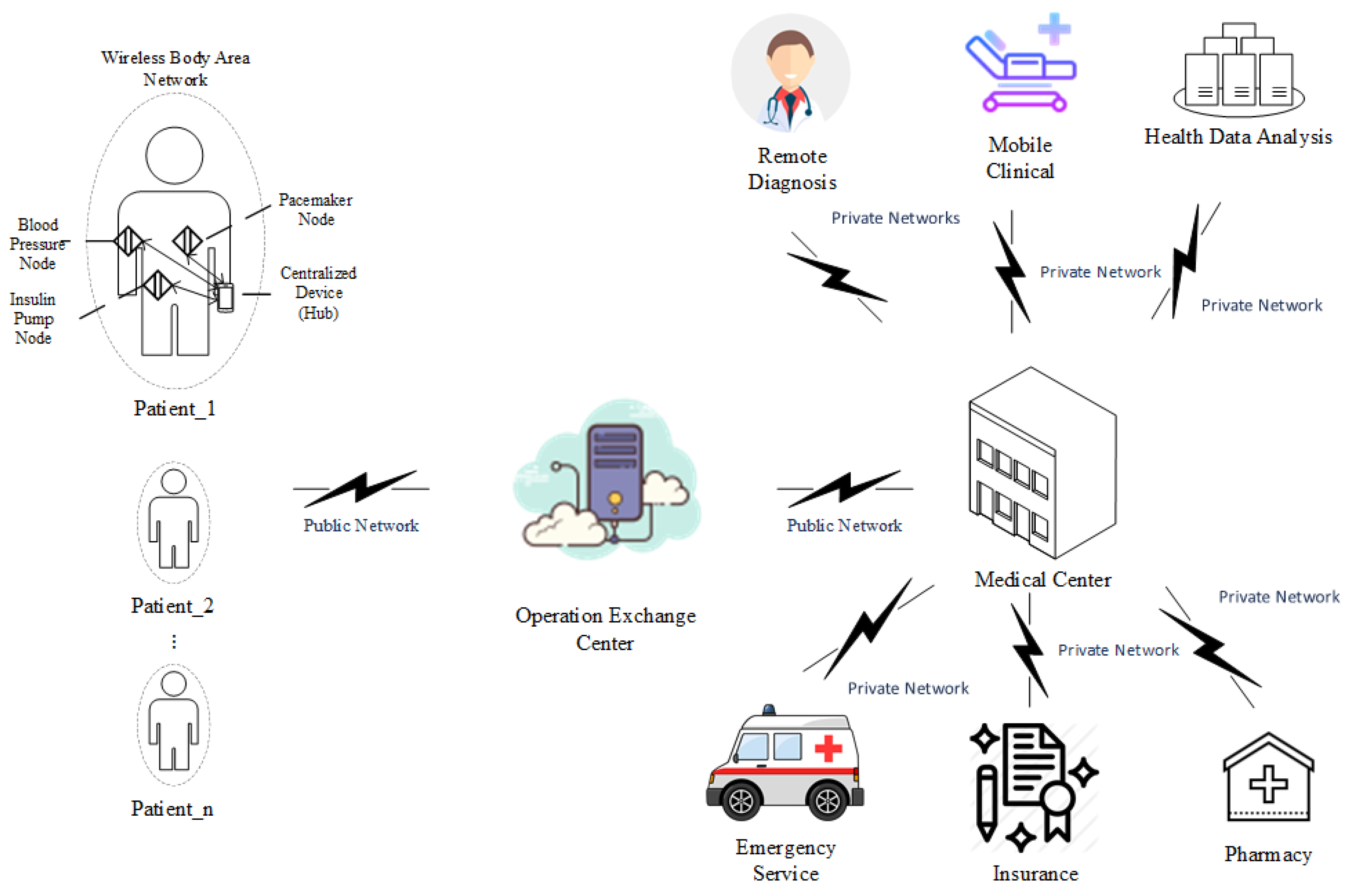
2], the average waiting time for consulting medical professionals was 21.2 weeks in 2017 in Canada due to the shortage of medical professionals, even though they have spent a huge amount of their income on healthcare. Therefore, there is a strong demand for an economical and efficient healthcare solution, which is capable of also addressing the shortage of medical professionals. One such solution can be a secured intelligent healthcare system, which can not only monitor the physical conditions of the patients remotely, but also analyze the potential physical issues the patients are facing and provide feedback to them, as demonstrated in
Figure 1.
By benefiting from the rapid development of modern technology, increasing types of biomedical data can be collected from patients and transmitted to the cloud for further data processing and storage. This is especially true with the rapid growth in advanced biomedical sensors, such as Electroencephalogram (EEG) and Electrocardiography (ECG) sensors [
3] and blood pressure sensors [
4], as well as wireless networking, such as the Fifth Generation (5G) cellular mobile standards and Bluetooth Low Energy (BLE). However, there are two potential issues that still restrict the development of intelligent healthcare systems [
5,
6]. First, the sensors on humans are extremely power-sensitive, especially the implanted sensors with limited power supply and the inconvenience of battery change. The most commonly-utilized wireless communication technologies in the proposed sensors are Bluetooth and ZigBee, which are not dedicated and optimized for biomedical data transmission. Secondly, the data collected from patients are private and critical, which could cause serious problems if the information were tampered with. Hence, an efficient and unique security scheme is also necessary for wireless communications in the intelligent healthcare system.
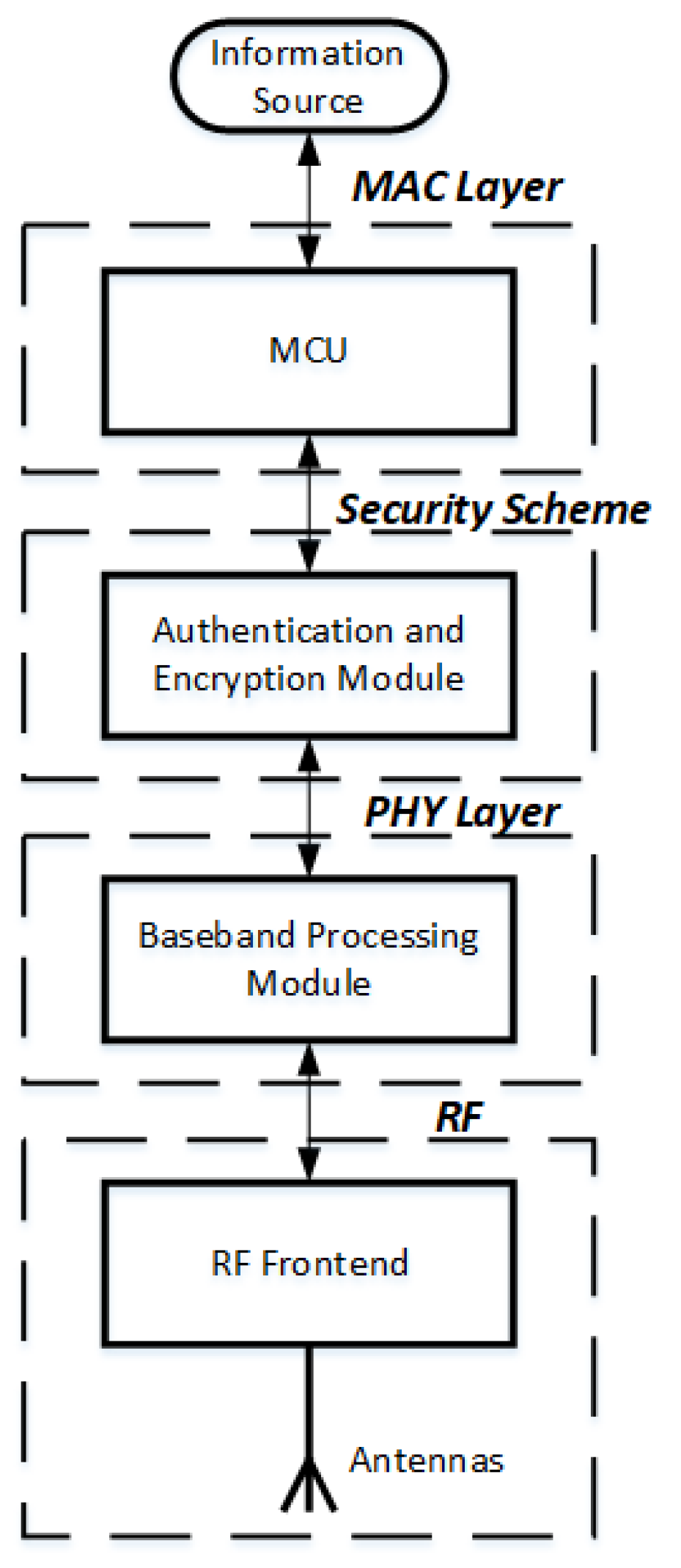
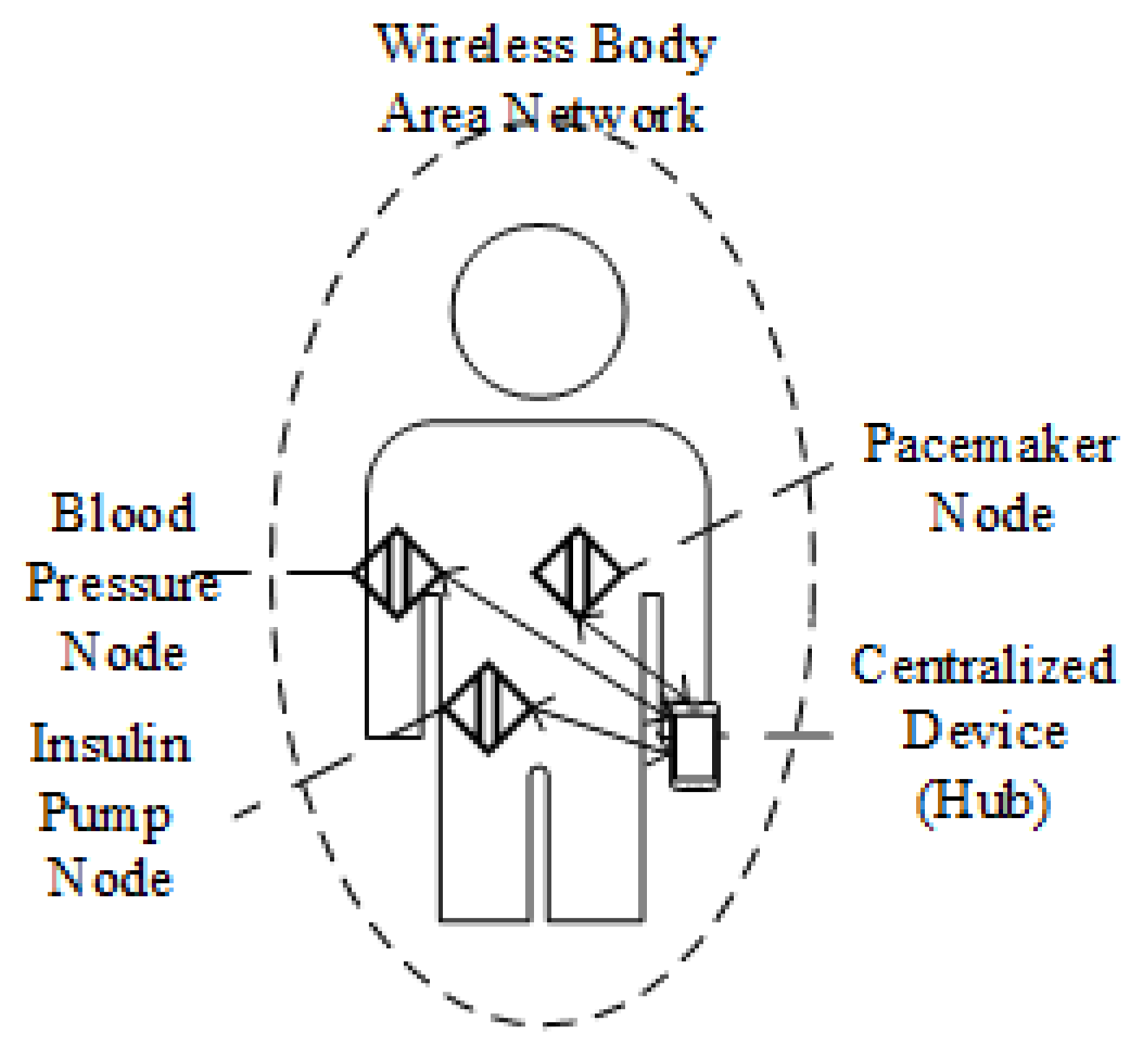
WBANs, illustrated in
Figure 2, have attracted huge academic and industrial attention in recent years because they define the shared communication infrastructure for wireless data transmission between sensors and other devices. Starting in 2012, the Institute of Electrical and Electronics Engineers (IEEE) released the 802.15.6 standard, which specifies and regulates the detailed configurations of WBANs. Based on the specifications of the IEEE 802.15.6 standard, multiple hardware-based and software-based implementations of WBAN have been proposed [
7,
8,
9]. The evaluation results of the implementations illustrate that WBAN has advantages in power consumption, privacy protection, and efficient communication for biomedical data. For instance, the power consumption of WBAN systems is between 0.1 mW–5 mW approximately when the transmitting data rate is 1 Mbps, while for the same transmitting data rate, Bluetooth consumes between 5 mW and 100 mW approximately. In this case, the battery can last approximately one year in WBAN systems, while it can only last less than a month in Bluetooth systems [
5], as illustrated in
Table 1.
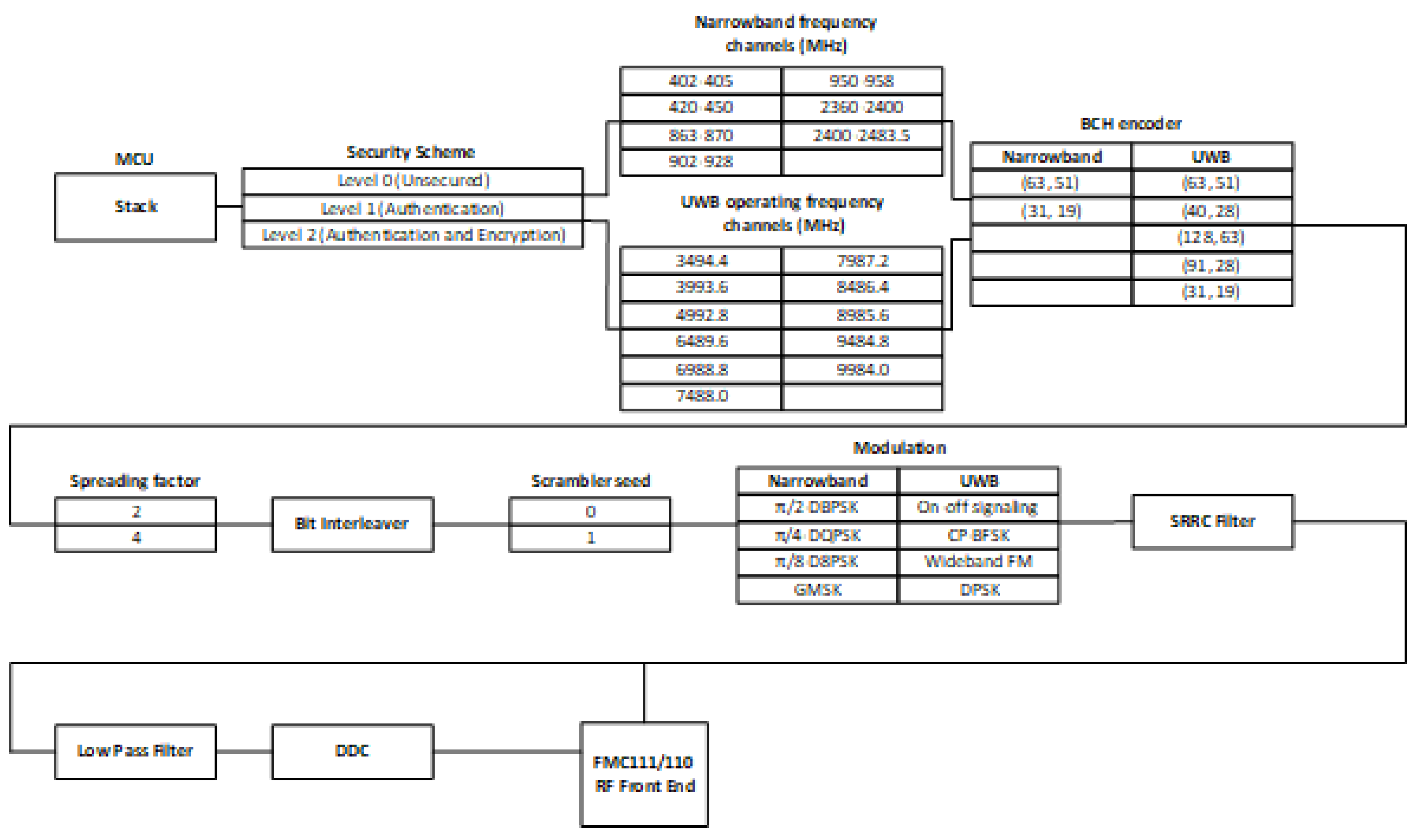
However, since the IEEE 802.15.6 standard supports three types of communications (Narrowband (NB), Ultra Wideband (UWB), and Human Body Communication (HBC)) and each communication corresponds to various transmission specifications such as encoding methods, modulations, and transmission frequencies, the designs were implemented in different platforms for evaluation purposes. However, evaluating different implementations of WBAN in various platforms could cause certain issues. On the one hand, the evaluation results are affected by different configurations of the platforms, such as the performance of the Field-Programmable Gate Array (FPGA), Random-Access Memory (RAM), and Read-Only Memory (ROM), which leads to unfair comparisons among different designs. On the other hand, establishing evaluation platforms for every individual implementation of WBAN is not only time consuming for the researchers and engineers, but it also increases the complexity of the design. Since each RF front-end design and fabrication can take many months, a platform is needed that can drastically speed up the evaluations.
The motivation of this research is to provide a rapidly-configurable SDR evaluation platform for WBAN systems, which not only can provide test cases that can help evaluate different modules in different environments (e.g., the Bit Error Rate (BER) for different distances), but also be reproducible in multiple implementation platforms. To provide a wider benefit to the research community, all the source code for this SDR platform is posted to a publicly-accessible GitHub repository. The SDR evaluation platform may be used to evaluate and prototype different applications, including, but not limited to, healthcare networks and vehicular networks [
10], which were found to be good candidates for WBAN implementations.
Further, to ensure that the proposed SDR evaluation platform can be supported on various FPGA platforms (other than the MiniBEE), the verification has been performed in the Xilinx Kintex-7 FPGA KC705 Evaluation Kit (Xilinx, Inc., San Jose, CA, USA) and the Altera Arria 10 SoC Development Kit (Intel, Santa Clara, CA, USA).
Our contributions are as follows. Firstly, the procedure of designing and validating the WBAN systems is dramatically shortened by utilizing the proposed evaluation platform, since there is no need to build circuits for each specific WBAN system, especially when the transceivers take exorbitantly long time to be developed in Application-Specific Integrated Circuits (ASICs).
Secondly, it is more feasible for researchers to evaluate the real performance of a certain optimized module in the WBAN by simply replacing the module in the evaluation platform and comparing the performance. By selecting the appropriate hardware on which the evaluation platform can be implemented, which would be dependent on the application, and evaluating two different modules on it, module optimization can be carried out to a certain extent. At the same time, the evaluation platform can be implemented in a different hardware, should a different application require that. Thirdly, it provides a fair comparison platform to evaluate different designs for WBAN systems at the RTL fferent circuit synthesis technologies.
The rest of this paper is organized as follows.
Section 2 provides the background and previous work focusing on the IEEE 802.15.6 standard and the general specifications of the SDR testbed. Functionality, structure, and hardware components of the proposed evaluation platform for WBAN systems are detailed in
Section 3. The implementation of the proposed testbed for WBAN and a demo performance of a baseband processing module with a WBAN security scheme is shown in
Section 4.
Section 5 concludes the paper and provides the future work guide.
5. Conclusions and Future Work
With the development of modern technology, it becomes possible to establish an intelligent healthcare system that increases the efficiency of conventional medical systems. As the most fundamental element in the intelligent healthcare system, WBAN provides an ultra-low power, reliable, and efficient wireless communication channel for the data exchanging between the sensors and a hub. At the same time, WBAN implementations can be found in other areas, as well, such as that of vehicular networks [
10].
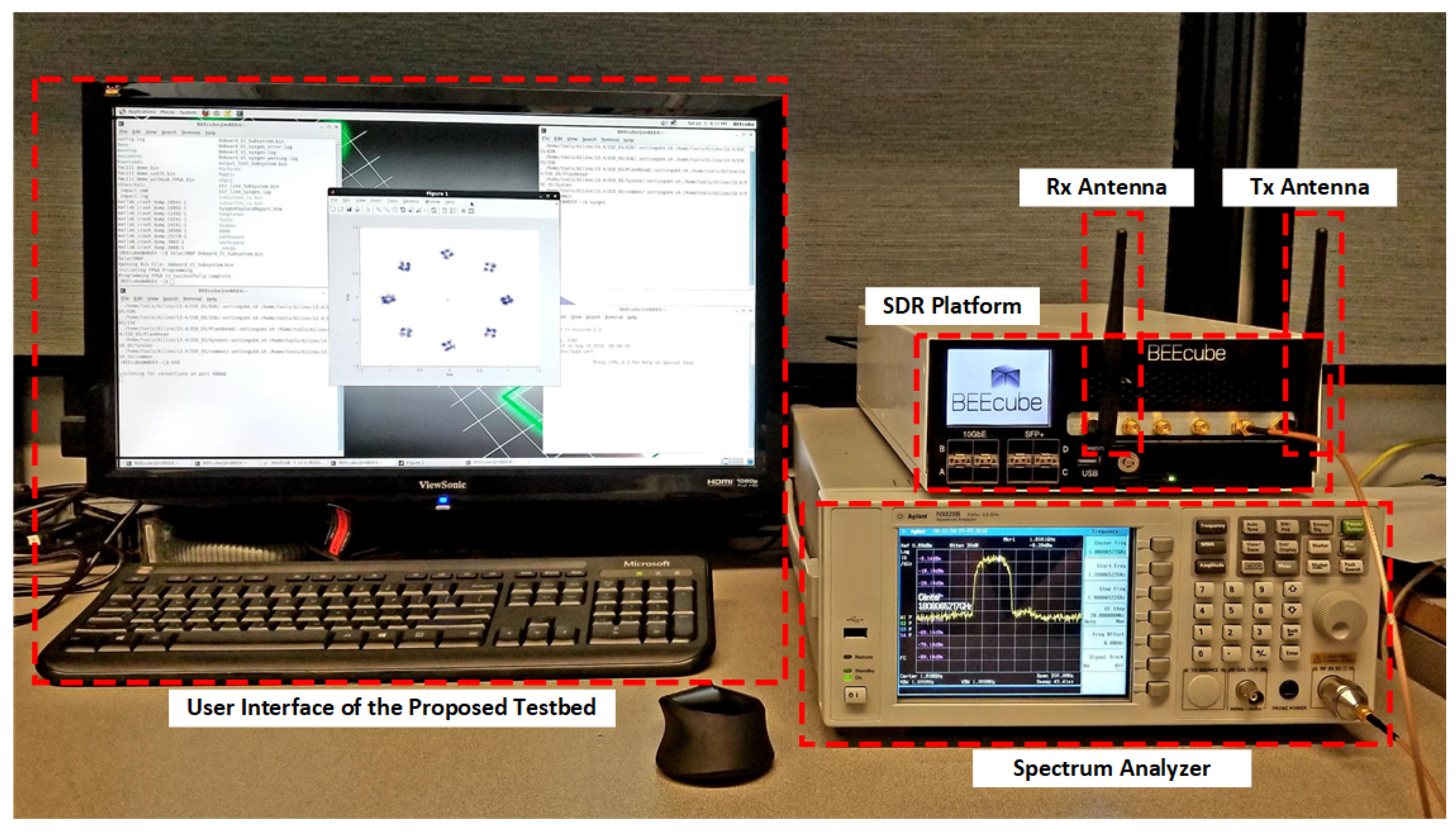
However, the lack of an evaluation platform for WBAN systems increases the complexity of designing novel systems for WBAN. Furthermore, evaluating WBAN designs on various platforms could cause unfair performance comparison among different designs intended for the same application. In this paper, an SDR evaluation platform implemented in MiniBEE4 is proposed that supports all the communication configurations specified in the IEEE 802.15.6 standard. To the best of our knowledge, this is the first such reported case of all functioning IEEE 802.15.6 RF channels. Moreover, a demonstration of an NB baseband processing module with the security scheme is set up to verify the performed evaluation platform. The demonstration results proved that the proposed SDR evaluation platform is functional, reliable, and provides the capability to build larger WBAN configurations with more complexity.
In the future, more research attention will be invested in a few additional topics. First, more RF channel cases, such as UWB communication channel evaluation, will be performed exhaustively in the proposed evaluation platform for WBAN systems. Moreover, a more rigorous verification procedure to evaluate WBAN systems in the proposed evaluation platform will be investigated, so that different designs for the same functionality in WBAN, such as the conventional BCH decoder and high-performance BCH decoder, could have fair comparisons.




 ,
,