


Biosignal Analysis to Assess Mental Stress in Automatic Driving of Trucks: Palmar Perspiration and Masseter Electromyography

Abstract
1. Introduction
2. Materials and Methods
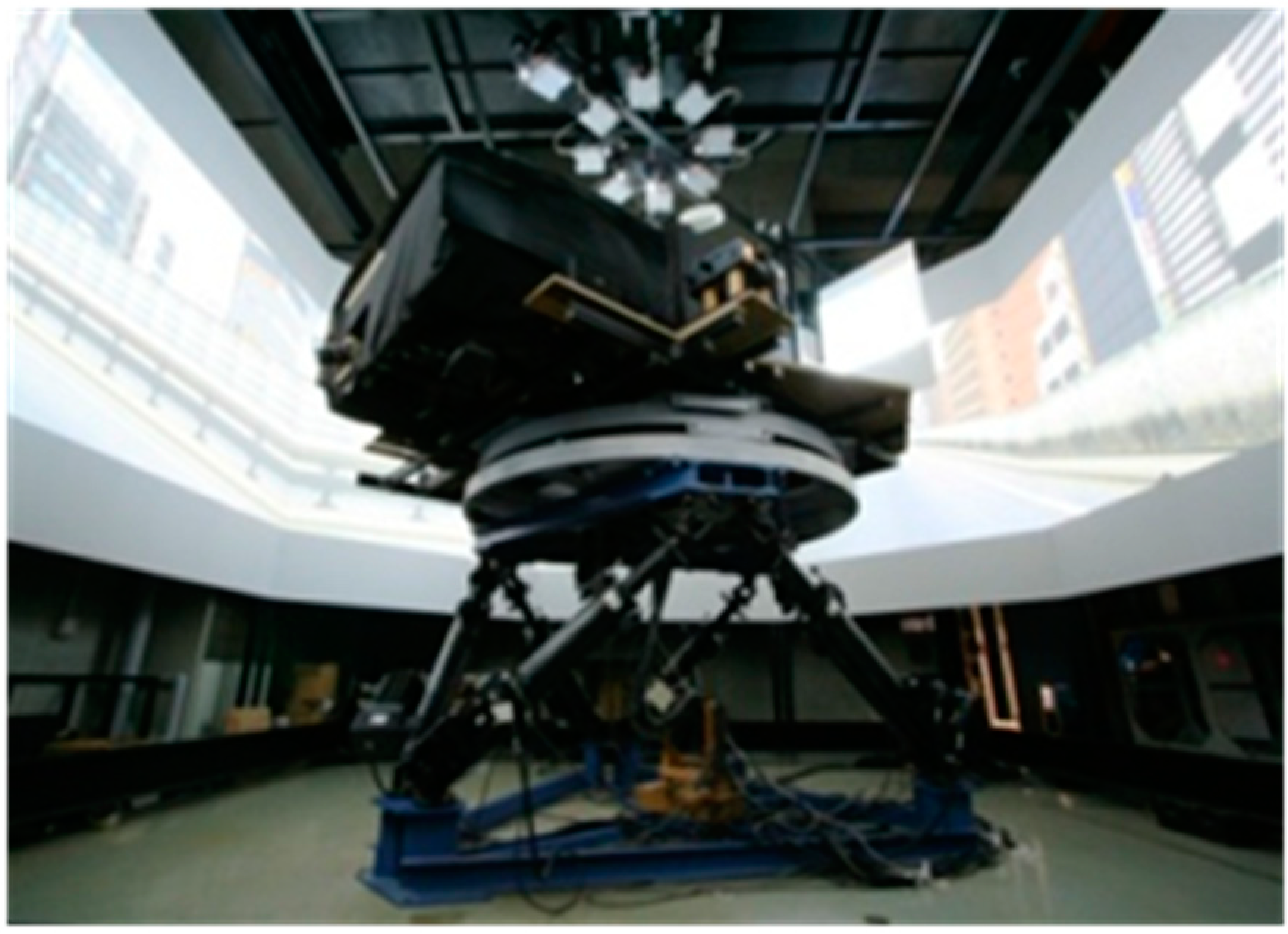
2.1. Automatic Driving of Trucks
2.2. Biosignal Measurement
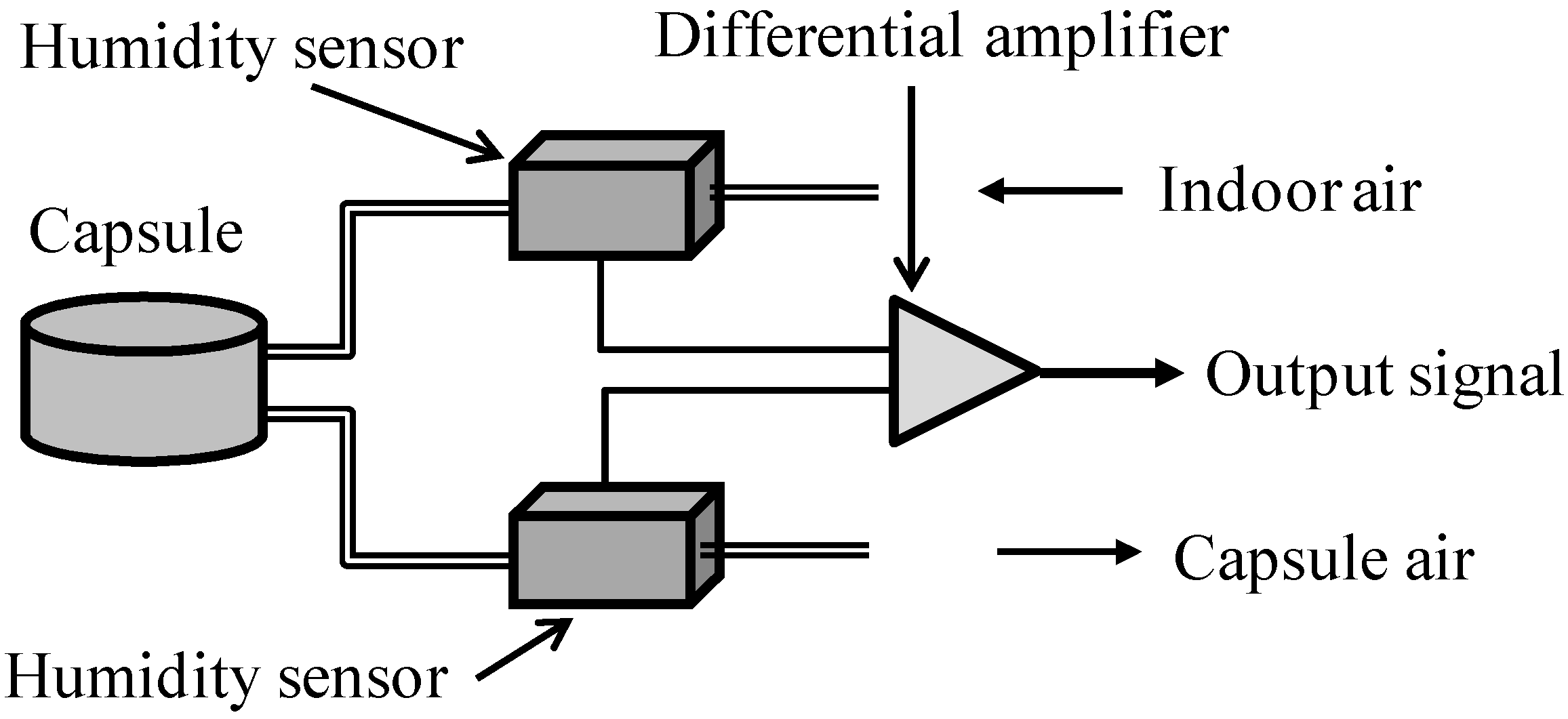
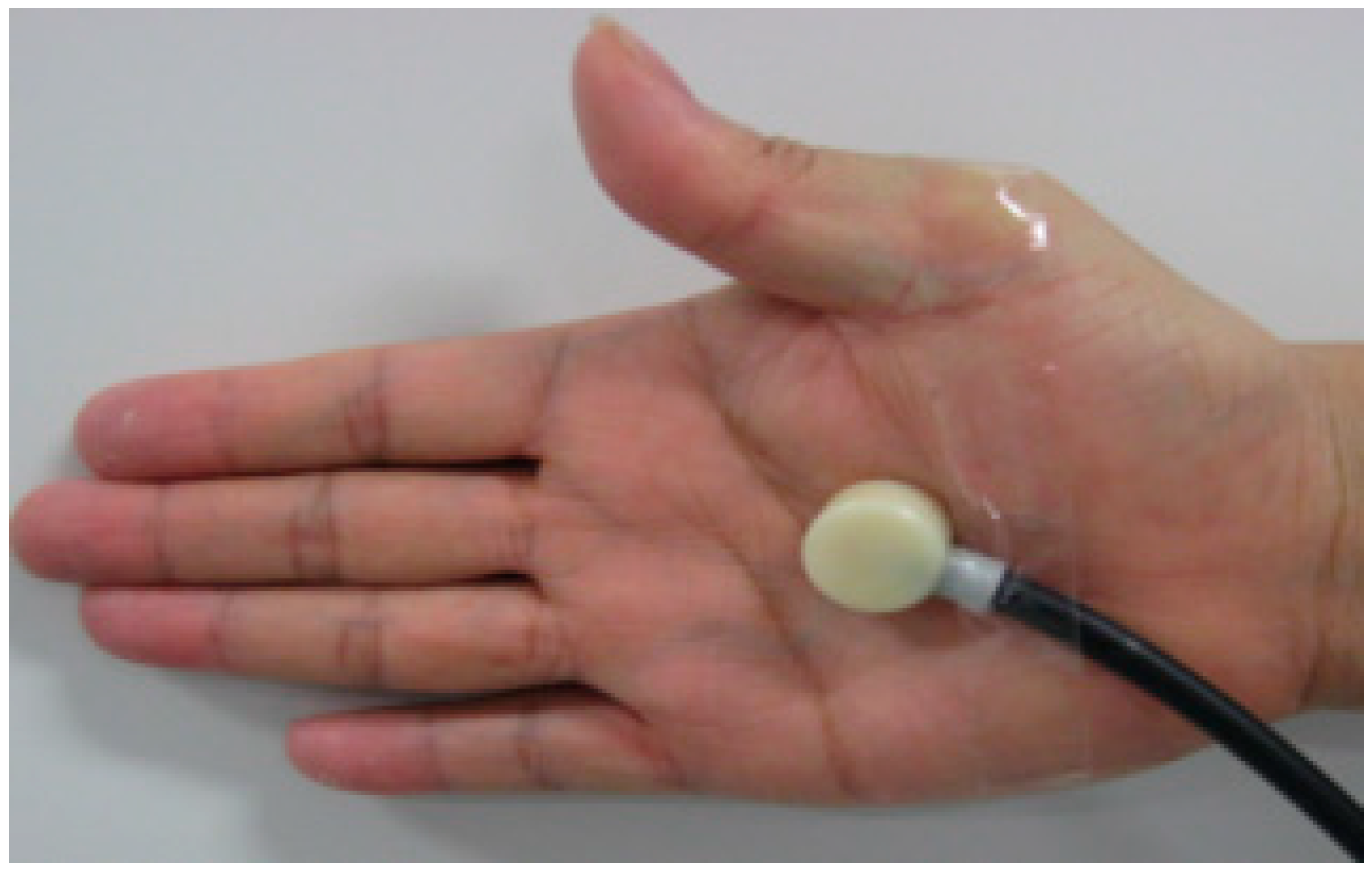
2.2.1. Palmar Perspiration
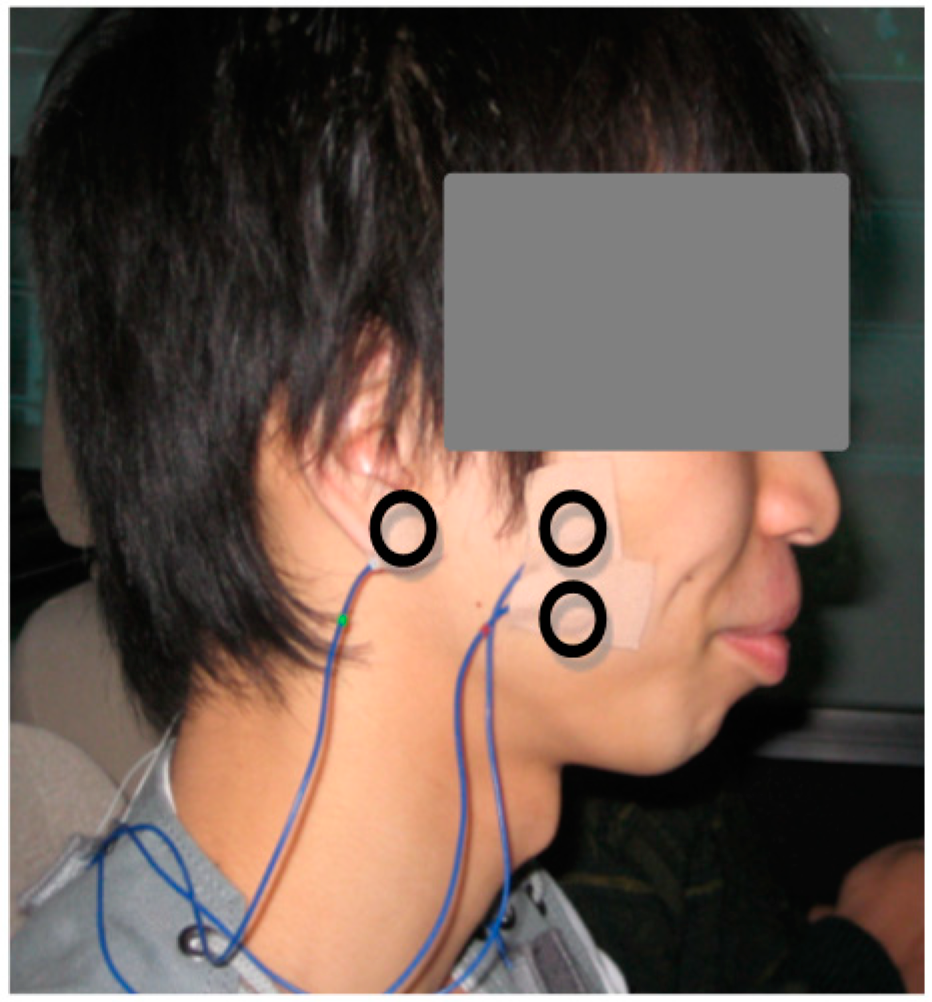
2.2.2. Masseter Electromyography
2.3. Biosignal Processing
2.4. Experiment
2.4.1. Participants
2.4.2. Protocol

| Experimental Condition | Repetition | Order | Duration |
|---|---|---|---|
| Manual driving with 20–30 m gap distance | twice | fixed | 5–8 min |
| Automatic driving with 12 m gap distance | twice | randomized | 5–8 min |
| Automatic driving with 8 m gap distance | twice | randomized | 5–8 min |
| Automatic driving with 4 m gap distance | twice | randomized | 5–8 min |
2.4.3. Data Collection
3. Results and Discussions
3.1. Driving Parameters
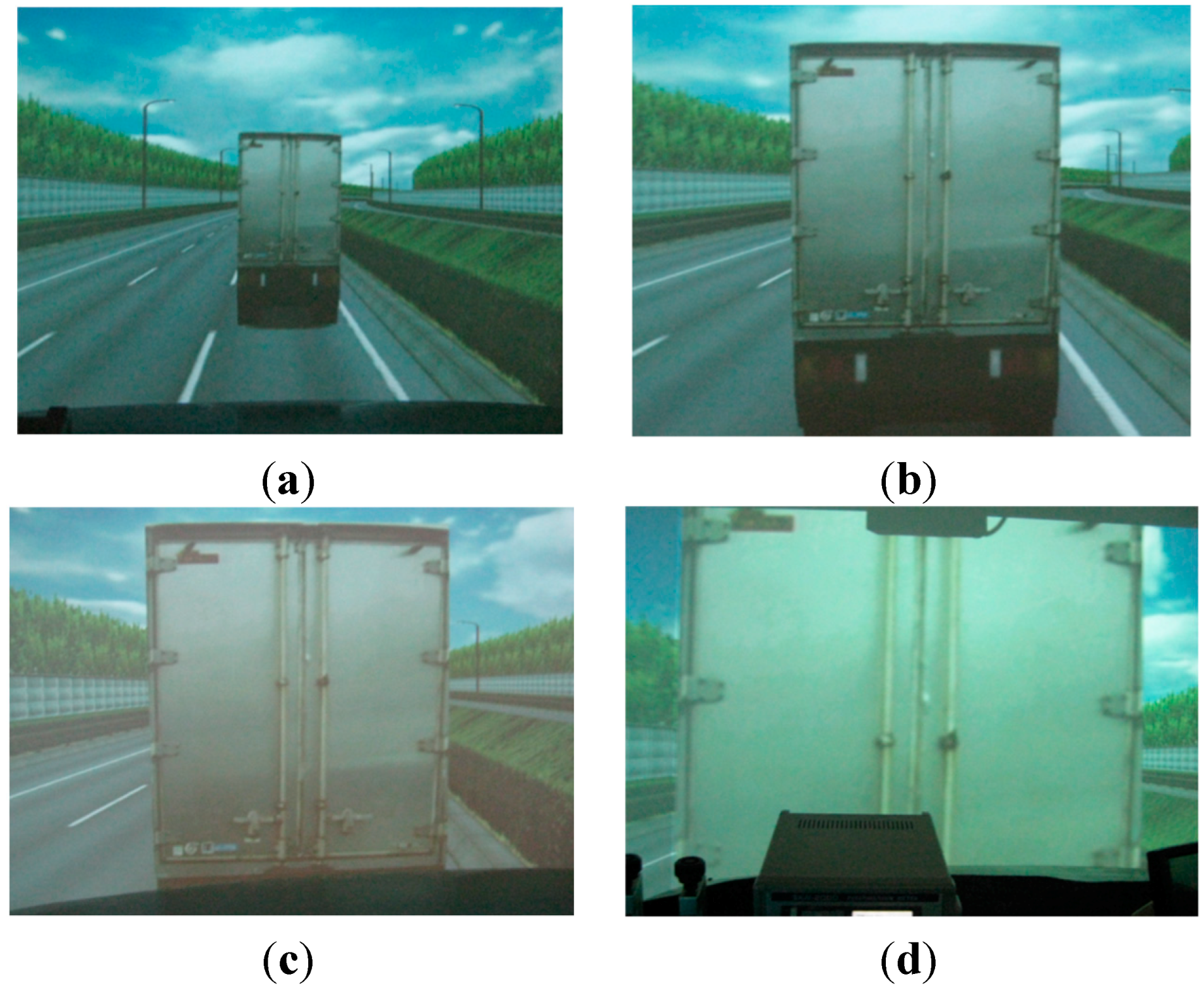
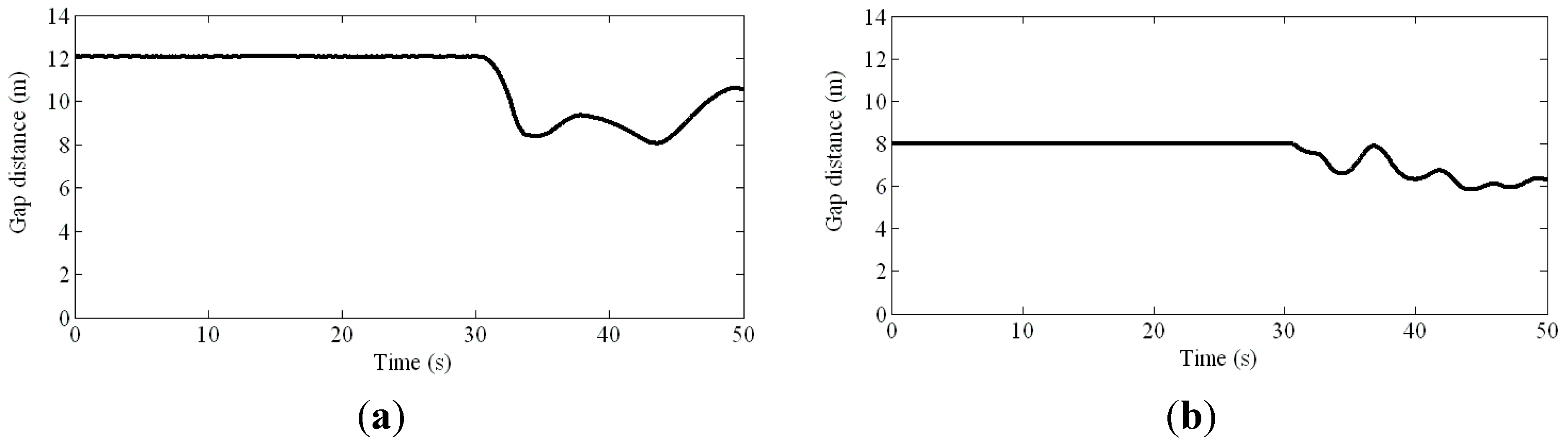
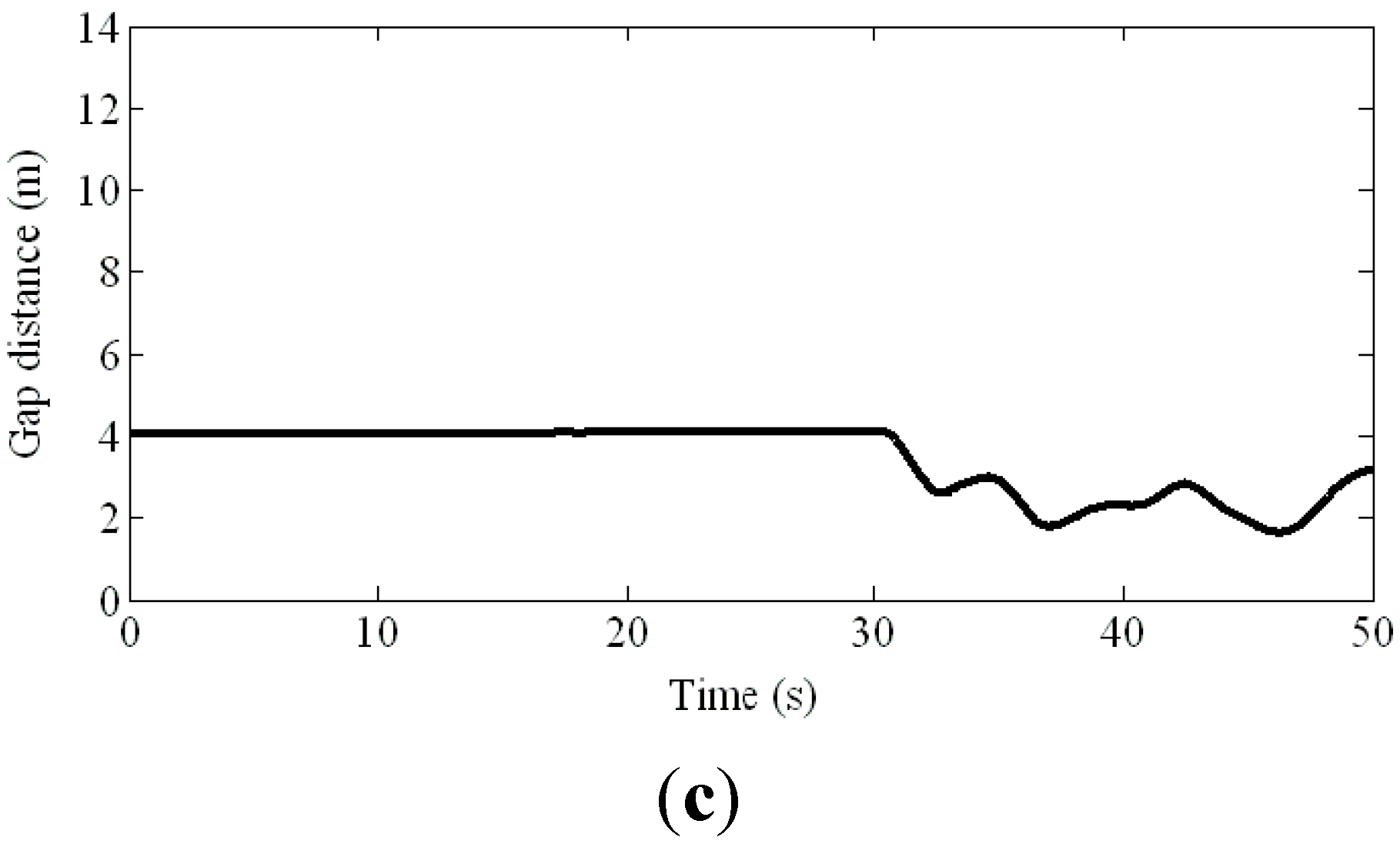
3.2. Biosignal Analysis
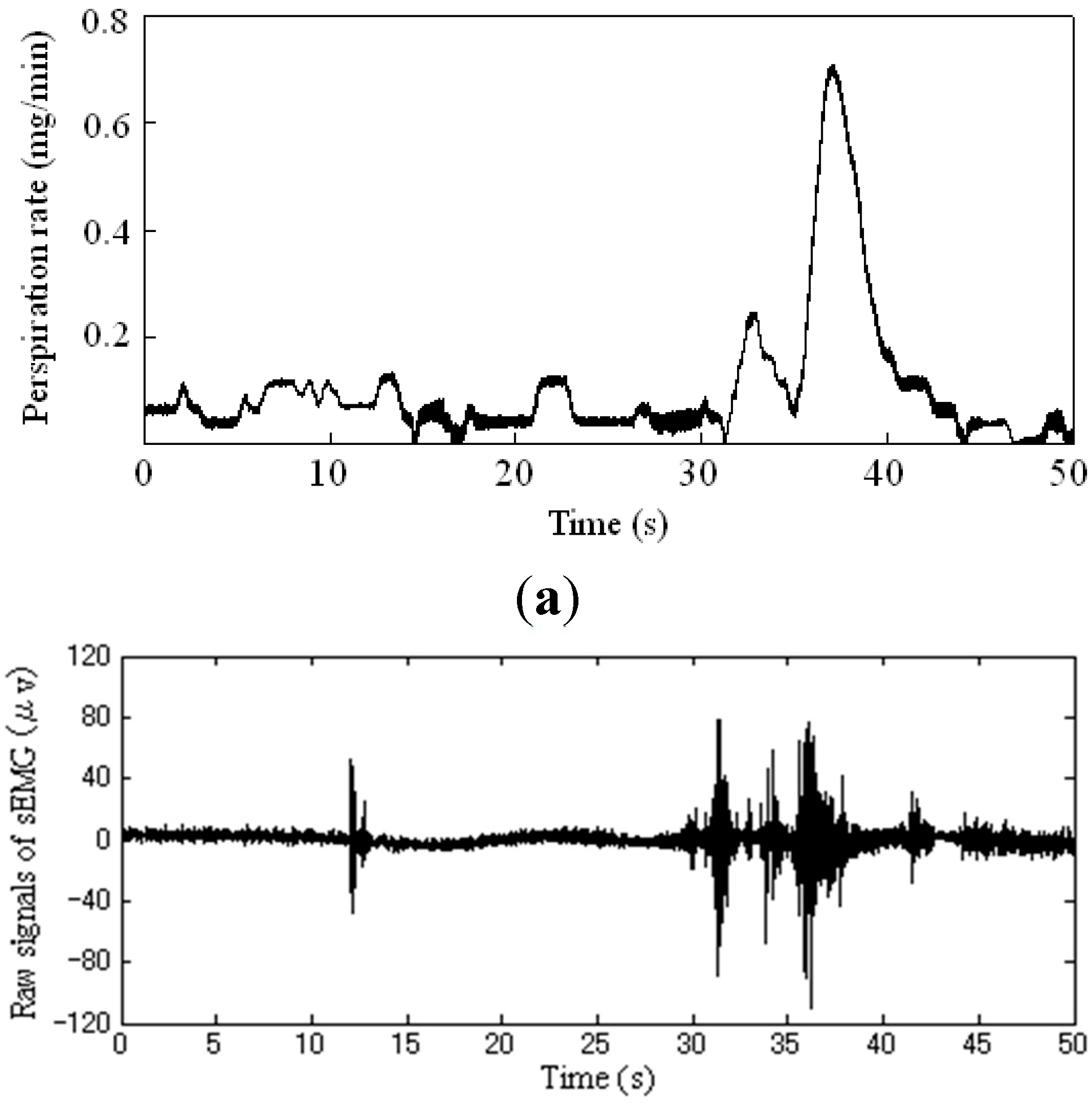
3.3. Subjective Evaluation
4. Conclusions
Acknowledgments
Author Contributions
Conflicts of Interest
References
- Markoff, J. Google cars drive themselves, in traffic. New York Times 2010, 1–4. [Google Scholar]
- Shladover, S.E. Cooperative (rather than autonomous) vehicle-highway automation systems. IEEE Intell. Transp. Syst. Mag. 2009, 1, 10–19. [Google Scholar]
- Kunze, R.; Ramakers, R.; Henning, K.; Jeschke, S. Organization and operation of electronically coupled truck platoons on German Motorways. Intell. Robot. Appl. 2009, 5928, 135–146. [Google Scholar]
- Tsugawa, S.; Kato, S. Energy ITS: Another application of vehicular communications. IEEE Commun. Mag. 2010, 18, 120–126. [Google Scholar] [CrossRef]
- Tsugawa, S.; Kato, S.; Aoki, K. An automated truck platoon for energy saving. In Proceedings of the IEEE/RSJ International Conference on Intelligent Robots and Systems, San Francisco, CA, USA, 25–30 September 2011; pp. 4109–4114.
- Merat, N.; de Waard, D. Human factors implications of vehicle automation: Current understanding and future directions. Transp. Res. Part F: Traff. Psychol. Behav. 2014, 27, 193–195. [Google Scholar] [CrossRef]
- Gouy, M.; Wiedemann, K.; Stevens, A.; Brunett, G.; Reed, N. Driving next to automated vehicle platoons: How do short time headways influence non-platoon drivers’ longitudinal control? Transp. Res. Part F: Traff. Psychol. Behav. 2014, 27, 264–273. [Google Scholar] [CrossRef]
- Cacuoppo, T.J.; Tassinary, L. Inferring psychological significance from physiological signals. Am. Psychol. 1990, 45, 16–28. [Google Scholar] [CrossRef] [PubMed]
- Rigas, G.; Goletsis, Y.; Fotiadis, D.I. Real-time driver’s stress event detection. IEEE Trans. Intell. Transp. Syst. 2013, 13, 221–234. [Google Scholar] [CrossRef]
- Seoane, F.; Mohino-Herranz, I.; Ferreira, J.; Alvarez, L.; Buendia, R.; Ayllón, D.; Llerena, C.; Gil-Pita, R. Wearable biomedical measurement systems for assessment of mental stress of combatants in real time. Sensors 2014, 14, 7120–7141. [Google Scholar] [CrossRef] [PubMed]
- Lee, B.; Lee, B.; Chung, W. Mobile healthcare for automatic driving sleep-onset detection using wavelet-based EEG and respiration signals. Sensors 2014, 14, 17915–17936. [Google Scholar] [CrossRef] [PubMed]
- Noh, Y.; Jeong, D. Implementation of a data packet generator using pattern matching for wearable ECG monitoring systems. Sensors 2014, 14, 12623–12639. [Google Scholar] [CrossRef] [PubMed]
- Wijsman, J.; Grundlehner, B.; Liu, H.; Penders, J.; Hermens, H. Towards continuous mental stress level estimation from physiological signals. Int. J. Psychophysiol. 2012, 85, 425. [Google Scholar] [CrossRef]
- Wijsman, J.; Grundlehner, B.; Penders, J.; Hermens, H. Trapezius muscle EMG as predictor of mental stress. ACM Trans. Embed. Comput. Syst. 2013, 12, 99:1–99:20. [Google Scholar] [CrossRef]
- Zheng, R.; Nakano, K.; Okamoto, Y.; Ohori, M.; Hori, S.; Suda, Y. Evaluation of sternocleidomastoid muscle activity of a passenger in response to a car’s lateral acceleration while slalom driving. IEEE Trans. Hum.-Mach. Syst. 2013, 43, 405–415. [Google Scholar] [CrossRef]
- Okino, K.; Miyoshi, J.; Kawada, T.; Matsuda, Y.; Fujisawa, M.; Domon, H.; Ishibashi, K.; Shobuzawa, M. Autonomic response and masseter muscle activity under stress loading. Jpn. Soc. Stomatognathic Funct. 1989, 8, 189–194. [Google Scholar] [CrossRef]
- Hidaka, O.; Yanagi, M.; Takada, K. Mental stress-induced physiological change in the human masseter muscle. J. Dent. Res. 2004, 83, 227–231. [Google Scholar] [CrossRef] [PubMed]
- Kumar, M.; Weippert, M.; Vilbrandt, R.; Kreuzfeld, S.; Stoll, R. Fuzzy evaluation of heart rate signals for mental stress assessment. IEEE Trans. Fuzzy Syst. 2007, 15, 791–808. [Google Scholar] [CrossRef]
- Ohsuga, M.; Futomi Shimono, F.; Genno, H. Assessment of phasic work stress using autonomic indices. Int. J. Psychophysiol. 2001, 40, 211–220. [Google Scholar] [CrossRef] [PubMed]
- Jorna, M.A.G.P. Spectral analysis of heart rate and psychological state: A review of its validity as a workload index. Biol. Psychol. 1992, 34, 237–257. [Google Scholar] [CrossRef] [PubMed]
- Nguyen, A.T.; Zeng, Y. A physiological study of relationship between designer’s mental effort and mental stress during conceptual design. Comput.-Aid. Des. 2014, 54, 3–18. [Google Scholar] [CrossRef]
- Dabbs, M.; Johnson, E.; Leventhal, H. Palmar sweating: A quick and simple measure. J. Exp. Psychol. 1968, 78, 347–350. [Google Scholar] [CrossRef] [PubMed]
- Kohler, T.; Weber, D.D.; Vogele, C. The behaviour of the PSI (palmar perspiration index) during two stressful laboratory situations. J. Psychophysiol. 1990, 4, 281–287. [Google Scholar]
- Ohashi, T.; Sakaguchi, M.; Tsuda, T. Human perspiration measurement. Physiol. Measur. 1998, 19, 449–461. [Google Scholar] [CrossRef]
- Masaoka, Y.; Onaka, Y.; Shimizu, Y.; Sakurai, S.; Homma, I. State anxiety dependent on perspiration during mental stress and deep inspiration. J. Physiol. Sci. 2007, 57, 121–126. [Google Scholar] [CrossRef] [PubMed]
- Fisher, D.L.; Rizzo, M.; Caird, J.K.; Lee, J.D. Handbook of Driving Simulation for Engineering, Medicine, and Psychology; CRC Press: New York, NY, USA, 2011. [Google Scholar]
- Yamaguchi, D.; Suda, Y.; Onuki, M.; Oda, T.; Ishikawa, H.; Ilgi, H. Improvement of realistic sensation on universal driving simulator. In Proceedings of the 16th ITS World Congress, Stockholm, Sweden, 17 August 2009.
- Zheng, R.; Nakano, K.; Yamabe, S.; Aki, M.; Nakamura, H.; Suda, Y. Study on emergency avoidance braking for the automatic platooning of trucks. IEEE Trans. Intell. Transp. Syst. 2014, 15, 1748–1757. [Google Scholar] [CrossRef]
- Toyooka, H.; Sasaki, H.; Suemitsu, T.; Munehisa, N.; Hashida, H.; Nagasawa, T.; Tsuru, H. The study on the standardization of electromyography of the masseter muscle and temporal muscle. Dent. Mag. Hiroshima Univ. 1974, 6, 109–116. [Google Scholar]
- Boileau, P.E.; Turcot, D.; Scory, H. Evaluation of whole-body vibration exposure using a fourth power method and comparison with ISO 2631. J. Sound Vibr. 1989, 129, 143–154. [Google Scholar] [CrossRef]
- Marieke, M.; Beukel, V.D. The road to automated driving: Dual mode and human factors considerations. In Proceeding of the 16th International IEEE Conference on ITS, Hague, The Netherland, 6–9 September 2013; pp. 2262–2267.
- Larsson, F.L.A.; Kircher, K.; Hultgren, A.J. Learning from experience: Familiarity with ACC and responding to a cut-in situation in automated driving. Transp. Res. Part F 2014, 27, 229–237. [Google Scholar] [CrossRef]
© 2015 by the authors; licensee MDPI, Basel, Switzerland. This article is an open access article distributed under the terms and conditions of the Creative Commons Attribution license (http://creativecommons.org/licenses/by/4.0/).
Share and Cite
Zheng, R.; Yamabe, S.; Nakano, K.; Suda, Y. Biosignal Analysis to Assess Mental Stress in Automatic Driving of Trucks: Palmar Perspiration and Masseter Electromyography. Sensors 2015, 15, 5136-5150. https://doi.org/10.3390/s150305136
Zheng R, Yamabe S, Nakano K, Suda Y. Biosignal Analysis to Assess Mental Stress in Automatic Driving of Trucks: Palmar Perspiration and Masseter Electromyography. Sensors. 2015; 15(3):5136-5150. https://doi.org/10.3390/s150305136
Chicago/Turabian StyleZheng, Rencheng, Shigeyuki Yamabe, Kimihiko Nakano, and Yoshihiro Suda. 2015. "Biosignal Analysis to Assess Mental Stress in Automatic Driving of Trucks: Palmar Perspiration and Masseter Electromyography" Sensors 15, no. 3: 5136-5150. https://doi.org/10.3390/s150305136
APA StyleZheng, R., Yamabe, S., Nakano, K., & Suda, Y. (2015). Biosignal Analysis to Assess Mental Stress in Automatic Driving of Trucks: Palmar Perspiration and Masseter Electromyography. Sensors, 15(3), 5136-5150. https://doi.org/10.3390/s150305136

