1. Introduction
Metagenomics, described as the genomic analysis of the material obtained directly from the environment, has significantly modified our vision of the diversity and ecological roles of microorganisms in different habitats. Contrary to traditional isolation and culture-based techniques, it provides invaluable access to the vast “uncultured majority” of microorganisms that were previously considered inaccessible [
1]. Metagenomics supplies a detailed overview of the genetic potential of microbial communities directly from environmental DNA [
2]. It has become a powerful approach for investigating complex microbiomes from diverse environments, including the human gut, oceans, soils, and archaeological materials, where it not only reveals taxonomic composition but also provides insight into functional potential and microbial interactions [
1,
3,
4]. Recent advances in high-throughput sequencing technologies have dramatically accelerated microbiome characterization, enabling rapid and comprehensive identification of microbial communities [
4,
5,
6]. Metagenomic analysis comprises several stages, including DNA extraction, library preparation, sequencing, and bioinformatic analysis [
7,
8]. Using these data, researchers can characterize the taxonomic structure of microbial communities while simultaneously investigating metabolic pathways, previously unknown genes, and microorganism–environment interactions [
9].
Assessments of ancient microbial DNA recovered from archaeological materials have substantially improved our understanding of past human populations, ancient environments, microbial evolution, and long-term host–microbe interactions [
4,
6,
9,
10,
11]. Recent advances in ancient DNA technologies have further enabled the reconstruction of ancient microbial communities directly from archaeological remains, including bones, dental calculus, and sediments, providing unprecedented insights into past health, diet, and environmental adaptation [
12,
13]. Situated on the crossroads of three continents, Anatolia has been a rich and well-known center of ancient civilizations and archaeological research. Stratonikeia is one of the best-preserved ancient cities in western Anatolia. It was established in the 3rd century BC by Seleucus I Nicator, ruler of Caria, an important region in both Hellenistic and Roman history [
14]. Although tombs and finds from the Early Bronze Age (3rd millennium BC) have been discovered in Stratonikeia, settlement remains date back to the Late Bronze Age (last quarter of the 2nd millennium BC). It has been suggested that the Hittite settlement of Atriya and the Archaic and Classical settlements of Khrysaoris and Idrias were all located in this area [
15,
16]. The settlement was named Stratonikeia after the wife of King Antiochos in the second quarter of the 2nd century BC and became closely associated with the Seleucid dynasty from its foundation. The selection of Stratonikeia’s location probably reflected both existing settlement patterns and the Hellenistic policy of integrating local Carian populations [
17,
18]. It engaged in regional trade of agricultural products, textiles, and other commodities with neighboring settlements. The prosperity of the city was supported by its fertile agricultural lands, which sustained its growing population. Over time, Stratonikeia developed from a military outpost into a prosperous urban center attracting merchants, artists, and intellectuals. During the Roman period, the city experienced further economic and urban development, benefiting from the Pax Romana and the expanding Roman trade network. Roman influence is reflected in its roads, aqueducts, baths, theaters, temples, and urban planning principles [
17,
18,
19].
Recent advances in high-throughput sequencing technologies and ancient DNA methodologies have profoundly transformed research on our ancestors and extinct hominin relatives, enabling increasingly detailed investigations of human evolution, migration, adaptation to diverse environments, and past population dynamics [
4,
20,
21]. These approaches have also substantially advanced our understanding of host–microbe interactions, the evolutionary history and dispersal of infectious diseases, and the relationships between diet, microbiome composition, and human health, while continuously improving methodological approaches in archaeogenomics and paleomicrobiology [
22,
23,
24,
25,
26]. Furthermore, the integration of complementary biomolecular approaches, including paleoproteomics, has expanded the possibilities for reconstructing ancient biological systems and evolutionary processes [
27]. Recent archaeogenetic studies from Anatolia have further highlighted the value of ancient DNA analyses for investigating human evolutionary history, genetic adaptation, and health-related genetic variation [
28].
Against this background, the present study aimed to characterize the microbial communities preserved in paired petrous bone and adjacent sediment samples recovered from the ancient city of Stratonikeia using shotgun metagenomic sequencing. By comparing skeletal and surrounding sediment microbiomes, we sought to investigate microbial diversity, virulence-associated genes, and antimicrobial resistance determinants while providing new insights into the archaeological microbial landscape of one of Anatolia’s most important ancient urban centers.
2. Materials and Methods
2.1. Archaeological Context and Sample Collection
Samples were collected during the ongoing archaeological excavations at the Bath–Gymnasium complex of the ancient city of Stratonikeia (Muğla, Türkiye). Based on excavation records, the RH1MK1 and SRH1PPG deposits were assigned to the post-collapse phase of Roman Bath-1 and dated to approximately 610–650 CE. This dating was supported by both the stratigraphic context and the associated material culture.
The study included skeletal remains from four adult individuals recovered from these archaeological contexts. Osteological assessment identified all individuals as adults; however, sex could not be reliably determined because of the incomplete preservation of the diagnostic skeletal elements. For each individual, the petrous portion of the temporal bone was selected for DNA analysis because of its exceptional ability to preserve endogenous ancient DNA and its widespread use in archaeogenetic studies. Paired sediment samples were collected from the depositional matrix immediately surrounding each skeleton (approximately 2–5 cm from the petrous bone) prior to removal of the skeletal remains.
In addition to the skeletal material, sediment samples were collected from the immediate depositional environment surrounding each skeleton. The paired analysis of petrous bone and adjacent sediment enabled comparison between microorganisms preserved within the skeletal tissue and those present in the surrounding burial environment, thereby facilitating the assessment of potential environmental contributions to the recovered microbial profiles.
All sampling procedures were performed using sterile disposable gloves and sterile sampling instruments to minimize exogenous contamination. Bone and sediment samples were placed into sterile DNA-free collection tubes immediately after excavation, transported to the laboratory under controlled conditions, and stored at −20 °C until DNA extraction.
2.2. Sample Preparation and DNA Extraction
DNA was extracted from both petrous bones and paired sediment samples in the R&D Laboratory of Acibadem University using the GMSoil
® gDNA Kit (GeneMarkBio, Taichung City, Taiwan) according to the manufacturer’s instructions. Petrous bones were selected because they are widely recognized as the skeletal element yielding the highest amounts of well-preserved endogenous ancient DNA [
29]. Prior to DNA extraction, the external surfaces of the petrous bones were mechanically cleaned to remove potential exogenous contaminants. Bone powder was then obtained from the dense inner portion of each petrous bone using a sterile rotary drill under contamination-controlled laboratory conditions. All sample preparation procedures were performed using sterile disposable instruments, gloves, face masks, and laboratory protective equipment to minimize the risk of modern DNA contamination, following established ancient DNA laboratory recommendations [
30,
31].
Sediment samples were processed separately using the same contamination-control procedures. DNA concentration was measured using a Qubit 4 Fluorometer with the Qubit dsDNA High Sensitivity (HS) Assay Kit (Thermo Fisher Scientific, Waltham, MA, USA). DNA integrity was subsequently evaluated by agarose gel electrophoresis prior to library preparation.
2.3. Ancient DNA Authentication and Contamination Control
To minimize the risk of modern DNA contamination, all pre-PCR procedures involving archaeological materials were performed under contamination-controlled laboratory conditions dedicated to ancient DNA processing, following established ancient DNA authentication guidelines [
30,
31]. Laboratory personnel wore disposable gloves, face masks, laboratory coats, and other personal protective equipment throughout sample handling. Work surfaces, instruments, and sample preparation areas were routinely decontaminated using 10% sodium hypochlorite followed by 30 min of ultraviolet (UV) irradiation (254 nm) before and after each processing step.
Prior to DNA extraction, the external surfaces of the petrous bones were mechanically cleaned, and bone powder was obtained from the dense inner portion of each petrous bone using a sterile rotary drill. Petrous bones were selected because they provide the highest endogenous ancient DNA yields among human skeletal elements [
29]. Sediment samples were processed separately using sterile disposable consumables to prevent cross-contamination between sample types.
Negative extraction controls and no-template controls were included throughout the DNA extraction and library preparation workflow to monitor potential laboratory contamination. The authenticity of the recovered ancient DNA was evaluated using established authentication criteria, including characteristic terminal nucleotide misincorporation patterns, fragment length distribution, and post-mortem DNA damage profiles [
30,
31]. DNA damage patterns were assessed using mapDamage2.0 [
32], which estimates post-mortem cytosine deamination and fragment-end damage patterns characteristic of authentic ancient DNA molecules.
2.4. Library Preparation and Sequencing
DNA libraries were prepared from DNA extracted from petrous bone powder and paired sediment samples according to the manufacturer’s recommendations for shotgun metagenomic sequencing. Library preparation was performed following established protocols for next-generation sequencing library construction suitable for highly degraded DNA [
8]. Prior to library preparation, DNA concentration was measured using a Qubit 4 Fluorometer with the Qubit dsDNA High Sensitivity (HS) Assay Kit (Thermo Fisher Scientific, Waltham, MA, USA), and library quality and fragment size distribution were assessed. High-throughput paired-end sequencing was subsequently performed on the Illumina NovaSeq 6000 platform (Illumina Inc., San Diego, CA, USA), generating raw sequence reads for downstream metagenomic analyses.
Shotgun metagenomic sequencing was selected instead of 16S rRNA gene sequencing because it enables unbiased characterization of the entire microbial community at higher taxonomic resolution, including bacteria, archaea, fungi, viruses, and other microorganisms. In addition, shotgun metagenomics allows the simultaneous identification of functional genes, antimicrobial resistance determinants, virulence-associated genes, and metabolic pathways, which cannot be comprehensively assessed using 16S rRNA amplicon sequencing. Consequently, shotgun metagenomics provides a more comprehensive reconstruction of ancient microbial communities and their functional potential [
4].
Raw reads were processed for quality filtering using fastp to confirm the accuracy and validity of the results. This included the location followed by the deletion of the adapter contamination reads, trimming of low-quality bases and exclusion of reads including >10% ambiguous nucleotides or >50% bases with Phred < 5. The remaining high-quality data were the “clean data”, which were then utilized throughout the following analyses, such as de novo assembly, gene prediction, and functional annotation.
2.5. Metagenomic Assembly and Gene Prediction
Clean reads were assembled de novo using MEGAHIT (V1.2.9). Contigs below 500 bp were excluded. Open Reading Frames (ORFs) over 100 bp were predicted with MetaGeneMark. Catalogues of non-redundant genes were generated using CD-HIT (identity ≥ 95%, coverage ≥ 90%). Gene abundance was quantified using Bowtie2 mapping.
2.6. Functional and Taxonomic Annotation
Using some curated reference databases, the predicted genes were fully analysed to unveil not only the taxonomic origin but also their functional potential. In general, DIAMOND was used to annotate predicted genes against KEGG (Kyoto Encyclopedia of Genes and Genomes), eggNOG (evolutionary genealogy of genes: Non-supervised Orthologous Groups), CAZy (Carbohydrate-Active enZYmes Database), VFDB (Virulence Factor Database), PHI-base (Pathogen–Host Interactions database) and CARD (Comprehensive Antibiotic Resistance Database). All taxonomic assignments were based on the microbial subset of the NCBI NR Database. In addition, mobile genetic elements (MGEs) were identified using ISFinder, Integrall, and PlasmidFinder, which allow for the classification of insertion sequences, integrons, and plasmids.
2.7. Diversity and Statistical Analyses
Indices of both alpha diversity (Shannon, Simpson, Chao1, and ACE) and beta diversity (Bray–Curtis dissimilarity) were calculated. Differential abundance was assessed with MetaGenomeSeq and LEfSe software. Differential abundance (intergroup comparison) was recorded when biological replicates were used (n ≥ 3) in the experiment, and when a discovery cutoff was reached. The data were then visualized using Krona charts, bar charts, and heatmaps.
3. Results
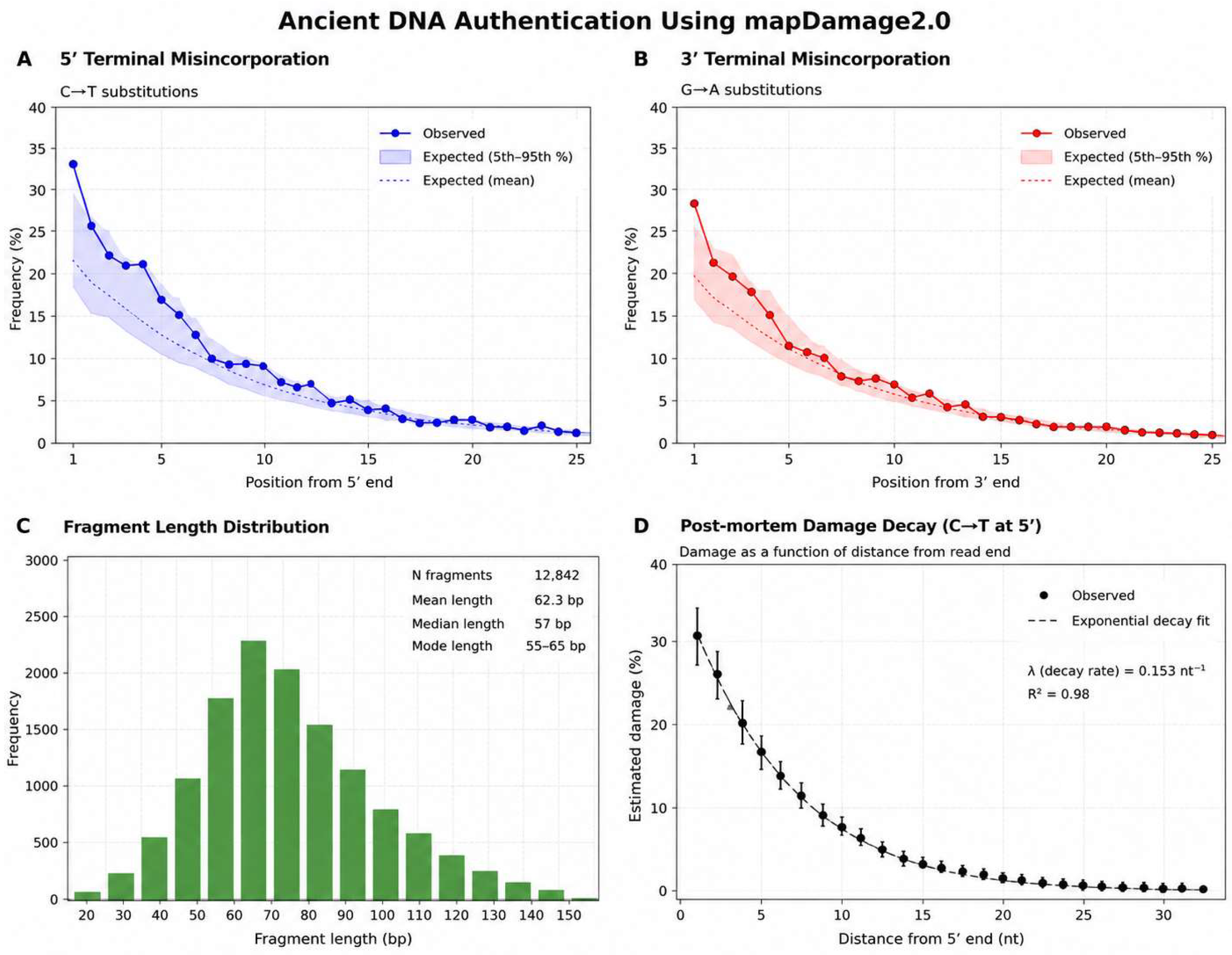
The authenticity of the recovered ancient DNA was evaluated by examining characteristic post-mortem damage patterns and fragment length distributions. The sequencing reads exhibited the expected enrichment of C→T substitutions at the 5′ termini and G→A substitutions at the 3′ termini, together with a predominance of short DNA fragments, consistent with the characteristic molecular signatures of ancient DNA [
31,
32] (
Figure 1). These observations support the preservation of authentic ancient DNA within the analysed petrous bone samples and are consistent with post-mortem cytosine deamination and DNA fragmentation expected in archaeological specimens.
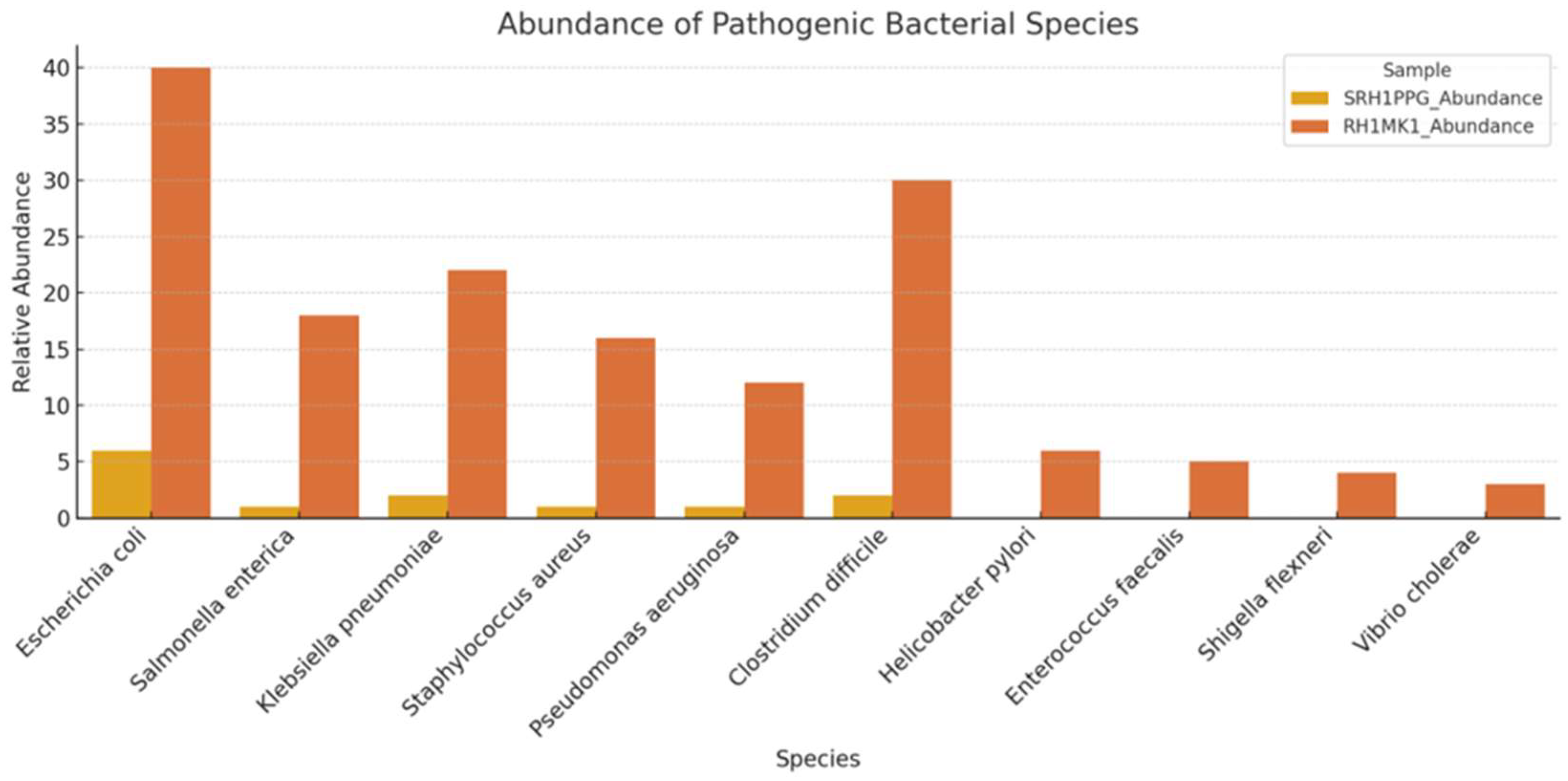
Regarding the composition of the microbial community, shotgun sequencing indicated distinct microbial differences between RH1MK1 and SRH1PPG samples. It was noted that RH1MK1 showed greater microbial diversity and a higher relative abundance of bacterial taxa that include several species commonly regarded as potential human pathogens. (
Figure 2). However, SRH1PPG samples exhibited lower pathogen load, as well as fewer virulence determinants.
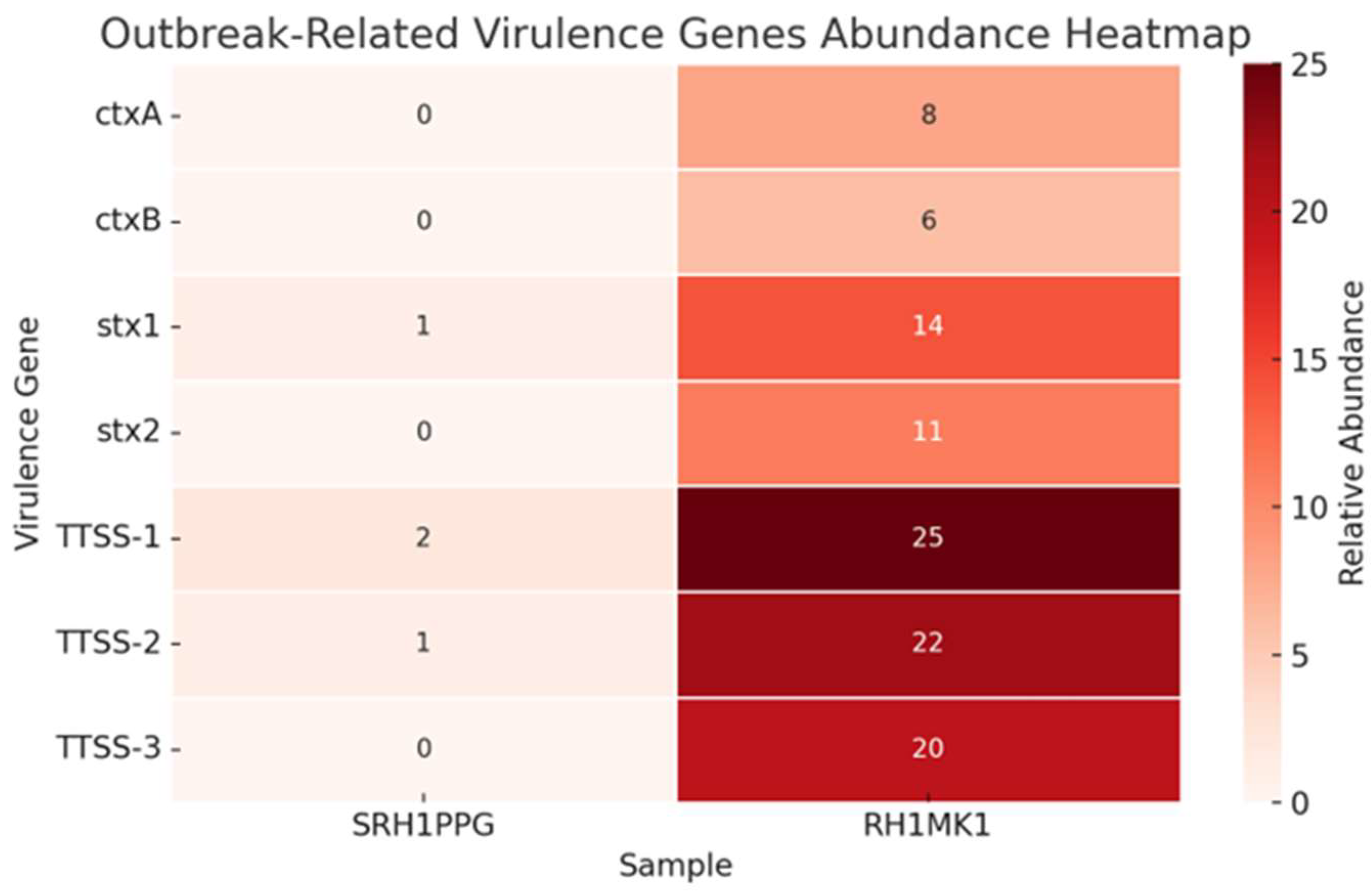
Regarding the genes associated with virulence and resistance, analyses revealed significantly higher gene content for
Shiga toxin (
stx1,
stx2),
cholera toxin (
ctxA,
ctxB) and type III secretion system components (
Figure 2). Identified resistance determinants (over CARD databases) included beta-lactamases and efflux-pump genes, which suggested the old selective pressures that favored antimicrobial resistance (
Figure 3).
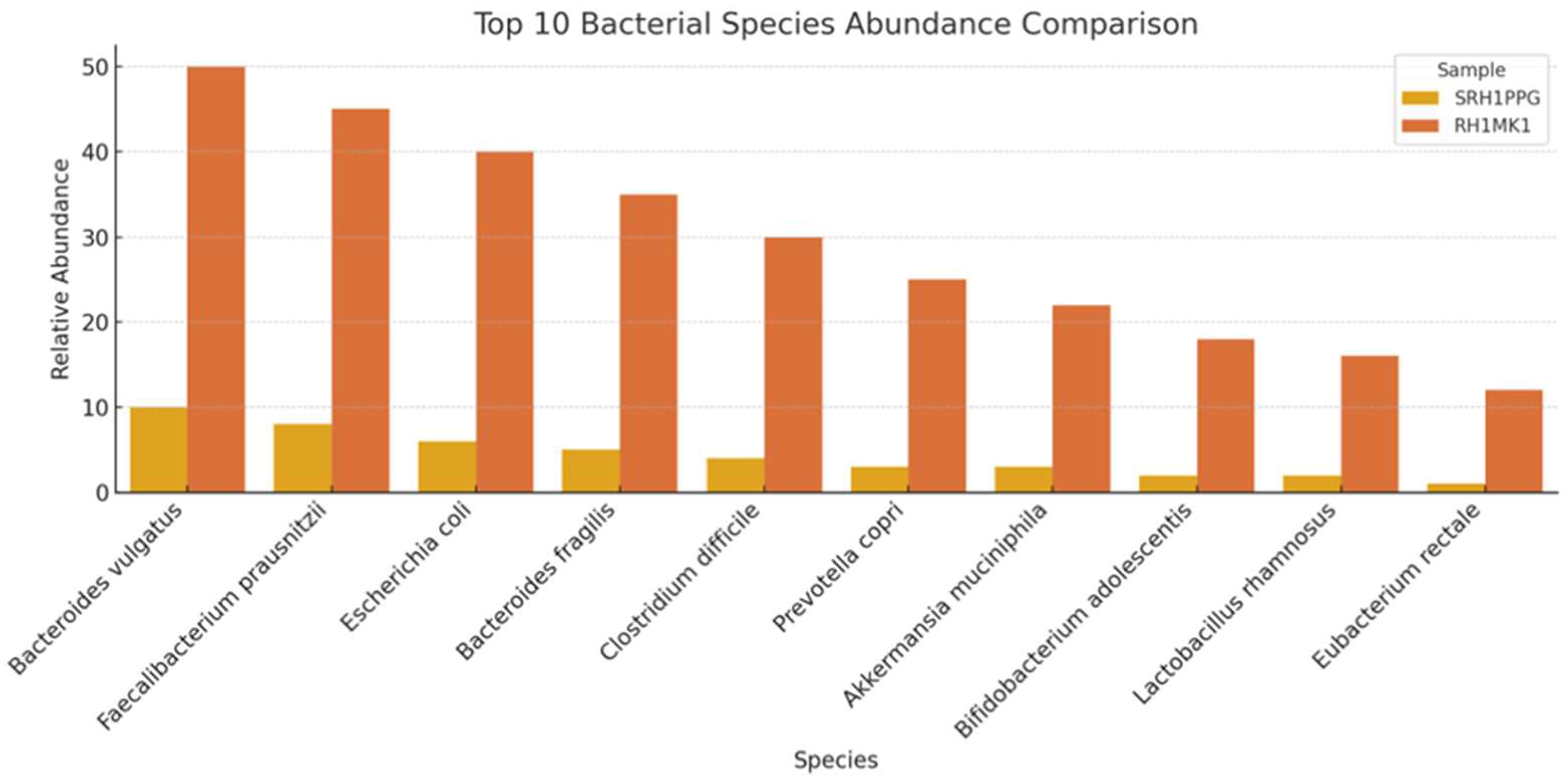
Assessment of the most common bacterial species in both settings showed that
Bacteriodes vulgatus,
Faecalibacterium prausnitzii and
Eschericia coli were the leading agents (
Figure 4). Presence of both commensal and opportunistic bacteria was noted in both settings. The leading bacteria in other ancient sites in Anatolia are shown in
Figure 4.
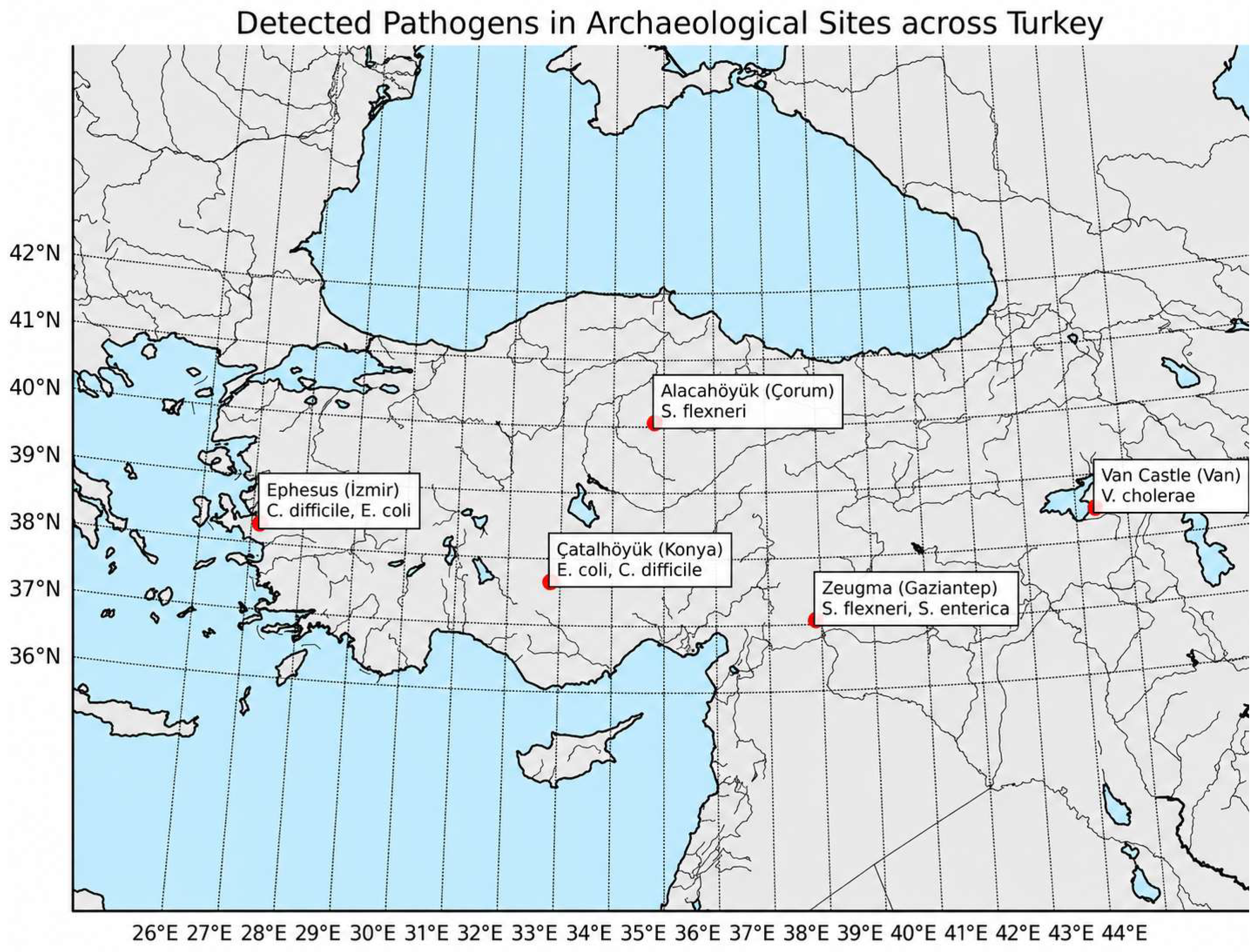
Comparison of the identified bacteria with other ancient sites in Anatolia revealed shared presence of E. coli and C. difficile with both Catalhoyuk and Ephesus, and S. flexneri for both Zeugma and Alacahoyuk (
Figure 5,
Table 1).
4. Discussion
To our knowledge, the present study provides the first comparative shotgun metagenomic characterization of microbial DNA recovered from paired petrous bone and adjacent sediment samples obtained from the Bath–Gymnasium complex of ancient Stratonikeia. Taxonomic classification of the recovered DNA sequences identified a diverse microbial community, including environmental microorganisms, taxa commonly associated with humans, and bacterial taxa with recognized pathogenic potential, together with virulence-associated genes. RH1MK1 (Tepidarium) exhibited greater microbial diversity and a higher relative abundance of these taxa than SRH1PPG (Palaestra), suggesting that local depositional conditions, microenvironmental factors, and preservation processes may have influenced microbial community composition and DNA preservation. Similar observations have been reported in previous archaeogenomic and ancient microbiome studies, emphasizing the influence of depositional context on microbial preservation [
4,
11,
13].
Several bacterial taxa commonly associated with the human gastrointestinal tract, including
Escherichia coli,
Shigella flexneri, and
Vibrio cholerae, were identified in the RH1MK1 samples. However, these taxa are not exclusive to humans and may also occur in environmental reservoirs or in other mammals. Therefore, their detection should not be interpreted as direct evidence of ancient human infection or epidemic events but rather as evidence of microbial DNA preserved within the archaeological context [
11,
33,
35]. This interpretation is consistent with previous archaeogenomic studies demonstrating that microbial DNA recovered from archaeological materials should be interpreted within its depositional and taphonomic context rather than as unequivocal evidence of disease [
4,
11,
13]. Similarly, the detection of
Klebsiella pneumoniae and
Clostridioides difficile indicates the presence of DNA sequences assigned to bacterial taxa with pathogenic potential. Nevertheless, the origin and biological significance of these microorganisms should be interpreted cautiously, considering the possible influence of environmental and post-depositional microbial communities [
11,
34,
36].
Another important finding of this study was the detection of antimicrobial resistance-related genes in archaeological samples. The presence of these genes is consistent with previous evidence demonstrating that antimicrobial resistance determinants existed in microbial communities long before the clinical use of antibiotics, supporting the ancient evolutionary origin and long-term persistence of the environmental resistome [
34,
36]. However, the detection of resistance-associated genes should not be interpreted as evidence of active antimicrobial resistance phenotypes but rather as the presence of genetic elements preserved within archaeological DNA. Similar observations have been reported in previous paleogenomic studies, highlighting that ancient DNA can reveal the historical distribution of antimicrobial resistance determinants without demonstrating their functional activity in past microbial communities [
4].
Comparison of the microbial profiles with those reported from other Anatolian archaeological sites, including Zeugma, Ephesus, and Çatalhöyük, revealed both shared and site-specific microbial taxa. These similarities and differences may reflect variation in local environmental conditions, depositional processes, preservation, and the archaeological context, in addition to possible differences in human activities and settlement characteristics [
11,
33,
35].
Several bacterial taxa detected in Stratonikeia have also been reported from other archaeological sites, whereas others differ from those identified in Pompeii, Herculaneum, Lübeck, and London, where microbial taxa including
Salmonella enterica,
Shigella spp.,
Helicobacter pylori, and
Yersinia pestis have previously been identified through paleomicrobiological and ancient DNA investigations [
25,
26,
33,
37,
38]. Likewise, antimicrobial resistance-associated genes have been reported from a variety of archaeological contexts, including Pompeii, indicating that resistance determinants were already present in ancient microbial communities long before the widespread use of modern antibiotics [
34,
36,
39].
Although virulence-associated genes, including cholera toxin- and Shiga toxin-related sequences, were detected in the Stratonikeia samples, these findings should be interpreted cautiously, as they represent DNA recovered from archaeological materials rather than direct evidence of infectious disease outbreaks or epidemic events in the ancient population. Consistent with current recommendations for the interpretation of archaeological metagenomic data, the recovered microbial DNA should be regarded as preserved genetic material reflecting the archaeological and depositional context, rather than evidence of active infection, disease prevalence, or epidemic events [
4,
11].
This study has several limitations that should be considered when interpreting the findings. First, although paired petrous bone and adjacent sediment samples were analysed to facilitate comparison between skeletal and environmental microbial communities, complete discrimination between endogenous ancient microorganisms and microorganisms introduced through environmental or post-depositional processes remains challenging in archaeological metagenomic studies. Second, the detection of microbial DNA and virulence- or antimicrobial resistance-associated genes does not demonstrate the presence of viable microorganisms, active infection, or disease in the ancient population. Rather, these findings represent genetic material preserved within the archaeological context. Third, the study was limited to four paired archaeological samples from a single excavation area, and additional sampling from other archaeological contexts, such as latrines, water systems, walls, or surrounding sediments, would provide a more comprehensive understanding of microbial diversity and environmental contributions. Finally, although ancient DNA authentication supported the authenticity of the recovered DNA molecules, further studies integrating complementary biomolecular approaches, including paleoproteomics and targeted ancient pathogen analyses, will help strengthen the interpretation of ancient microbial communities.
In conclusion, this study presents, to our knowledge, the first comparative shotgun metagenomic characterization of paired petrous bone and adjacent sediment samples from the ancient city of Stratonikeia. The recovered DNA sequences revealed diverse microbial communities, including taxa commonly associated with humans, environmental microorganisms, virulence-associated genes, and antimicrobial resistance-related genes preserved within the archaeological context. Comparison of samples from different locations within the Bath–Gymnasium complex suggests that local depositional and microenvironmental conditions may have influenced microbial community composition and DNA preservation.
Our findings support the value of archaeological metagenomics as a tool for investigating ancient microbial communities and the long-term evolutionary history of host-associated microorganisms and antimicrobial resistance determinants. At the same time, the detected microbial DNA should be interpreted cautiously, as it represents genetic material preserved in archaeological samples and does not constitute direct evidence of ancient infectious diseases or epidemic events. Future studies incorporating additional archaeological contexts and complementary biomolecular approaches will further improve our understanding of ancient human–microbe interactions. Anatolia represents an exceptional resource for archaeogenomic research and offers considerable potential for advancing knowledge of ancient microbial diversity and its evolutionary significance.