Article

Silvopastoral Systems Enhance Herbaceous Plant Richness and Abundance in the Low Hilly Area of Western Henan Province, China

1
Henan Province Key Laboratory of Germplasm Innovation and Utilization of Eco-Economic Woody Plants, Pingdingshan University, Pingdingshan 467000, China
2
College of Geography and Environmental Engineering, Pingdingshan University, Pingdingshan 467000, China
3
College of Chemistry and Chemical Engineering, Pingdingshan University, Pingdingshan 467000, China
4
Zhejiang Shiyuan Environmental Technology Co., Ltd., Huzhou 313200, China
*
Authors to whom correspondence should be addressed.
Diversity 2026, 18(5), 283; https://doi.org/10.3390/d18050283
Submission received: 5 April 2026 / Revised: 7 May 2026 / Accepted: 7 May 2026 / Published: 9 May 2026
(This article belongs to the Section Plant Diversity)

Abstract

Although silvopastoral systems are widely recognized to improve ecosystem services, empirical evidence regarding their long-term effects on herbaceous diversity during succession remains scarce. In 2011, we established a silvopastoral experiment in the low hilly area of western Henan Province, China. Four pure forest plots—poplar (Populus simonii, PS), oriental thuja (Platycladus orientalis, PO), Chinese cork oak (Quercus variabilis, QV) and black locust (Robinia pseudoacacia, RP)—were planted on natural wasteland, with perennial alfalfa (Medicago sativa, MS) intercropped to form silvopastoral systems (PS-MS, PO-MS, QV-MS, RP-MS), with a natural wasteland plot serving as the control (CK). In July 2024, we investigated the species density, richness, and aboveground biomass of herbaceous communities across all plots. Species composition differed significantly between MS and CK, PS-MS and PS, and PO-MS and PO. Silvopastoral systems and MS generally exhibited higher density, richness, and biomass than pure forests and CK. Furthermore, MS and silvopastoral systems showed uniform density and biomass across slope positions, whereas CK and pure forests had higher values downslope, along with shifts in relative biomass. Except for MS and PS-MS, all plots had higher species richness downslope. Soil nutrient properties were closely correlated with the biomass, richness, density, and functional groups. These findings indicate that silvopastoral systems can significantly increase herbaceous density, richness, and biomass and alter species composition, with the effects varying by the dominant tree species.

1. Introduction

The silvopastoral system, i.e., forest–grass complex system, integrates forest trees (e.g., woody plants) with herbaceous plants (e.g., forage grasses). Such systems can not only achieve economic benefits, such as improving timber output, forage production, and land utilization rates [1,2], but also provide important ecological services, including promotion of biodiversity, nutrient cycling, and soil quality [3,4,5]. Studying the species composition of silvopastoral systems across spatial and temporal scales is of significance to understanding the mechanisms underlying these ecological services.
Herbaceous plants are an essential intercropped component of silvopastoral systems. Surface-layer herbs often have important roles in water and soil conservation, regulating regional microclimates, and providing food and habitat for animals [6], as well as in community nutrient cycles and energy flows [7,8,9]. Moreover, herbaceous plants can also affect seed germination, seedling development, and the survival and growth of woody plants [10,11]. Studying their community structure and dynamic changes can reveal the patterns of ecosystem succession, providing theoretical support for ecological restoration and land management in fragile areas.
For the restoration of degraded lands, herbaceous plant species are not selected randomly in the initial stage; instead, they are intentionally chosen to facilitate the restoration of soil and biodiversity or gain economic benefits when intercropped with the trees. Previous studies have confirmed that nitrogen-fixing plants (e.g., Medicago sativa) can serve as pioneer species, especially in barren hills for vegetation restoration [12,13], because they can increase the soil quality and grass production [14,15]. It has been shown that alfalfa can accelerate the natural succession process of vegetation. For example, artificial alfalfa grassland can be succeeded by a secondary natural grassland stage dominated by Stipa bungeana (>10 years) on the Loess Plateau [16]. These legume-driven successional dynamics provide a critical basis for deploying silvopastoral systems in degraded regions.
Capitalizing on these dynamics, silvopastoral systems—particularly those integrating nitrogen-fixing legumes—have received increasing research attention globally as a key agroforestry practice due to their potential to improve soil fertility, reduce soil erosion, and increase landscape stability [17,18]. However, the responses of herbaceous plant diversity during long-term succession within these integrated systems remain highly variable. Compared with pure forests, mixed-species plantations can positively [19,20], neutrally [21,22], or negatively [23,24] affect herbaceous plant richness and abundance. Nevertheless, the responses of the herbaceous plant community under the silvopastoral systems established in degraded and barren areas (e.g., low hilly areas) are still not well examined, especially after long-term vegetation succession following the introduction of legume species.
Low hilly areas account for approximately 28% of China, with an elevation of 200–500 m [25,26]. This landform acts as a reservoir for plant and invertebrate species [27], with the main ecological functions of conserving water resources and preventing soil erosion [28,29]. The hilly areas of western Henan are an ecologically fragile area and currently face soil and water loss due to human activities (i.e., overgrazing, firewood mining, stone mining, and tree over-cutting) [30,31]. The silvopastoral system has been applied as a restoration strategy in these fragile areas. However, these studies are mostly confined to effects of silvopastoral systems on soil nutrients [4,32,33] and tree growth [34,35]. The responses of the herbaceous plant community under different woody plants are still not well examined, especially in the low hilly areas.
Based on this, we established four pure forest plots using four local tree species: Populus simonii (PS; Salicaceae), Platycladus orientalis (PO; Cupressaceae), Quercus variabilis (QV; Fagaceae), and Robinia pseudoacacia (RP; Fabaceae) in 2011, as well as silvopastoral systems combining these forests with alfalfa. We asked (1) whether the herbaceous plant abundance and species richness are higher in the silvopastoral systems than in the pure forest plots; (2) whether herbaceous species composition differs between the silvopastoral systems and pure forests; (3) and which soil nutrient factors are most closely associated with herbaceous plant abundance and species richness, given that silvopastoral systems can alter soil nutrient properties [4,33] and soil quality is closely linked to herbaceous plant community characteristics [36].

2. Materials and Methods

2.1. Study Sites

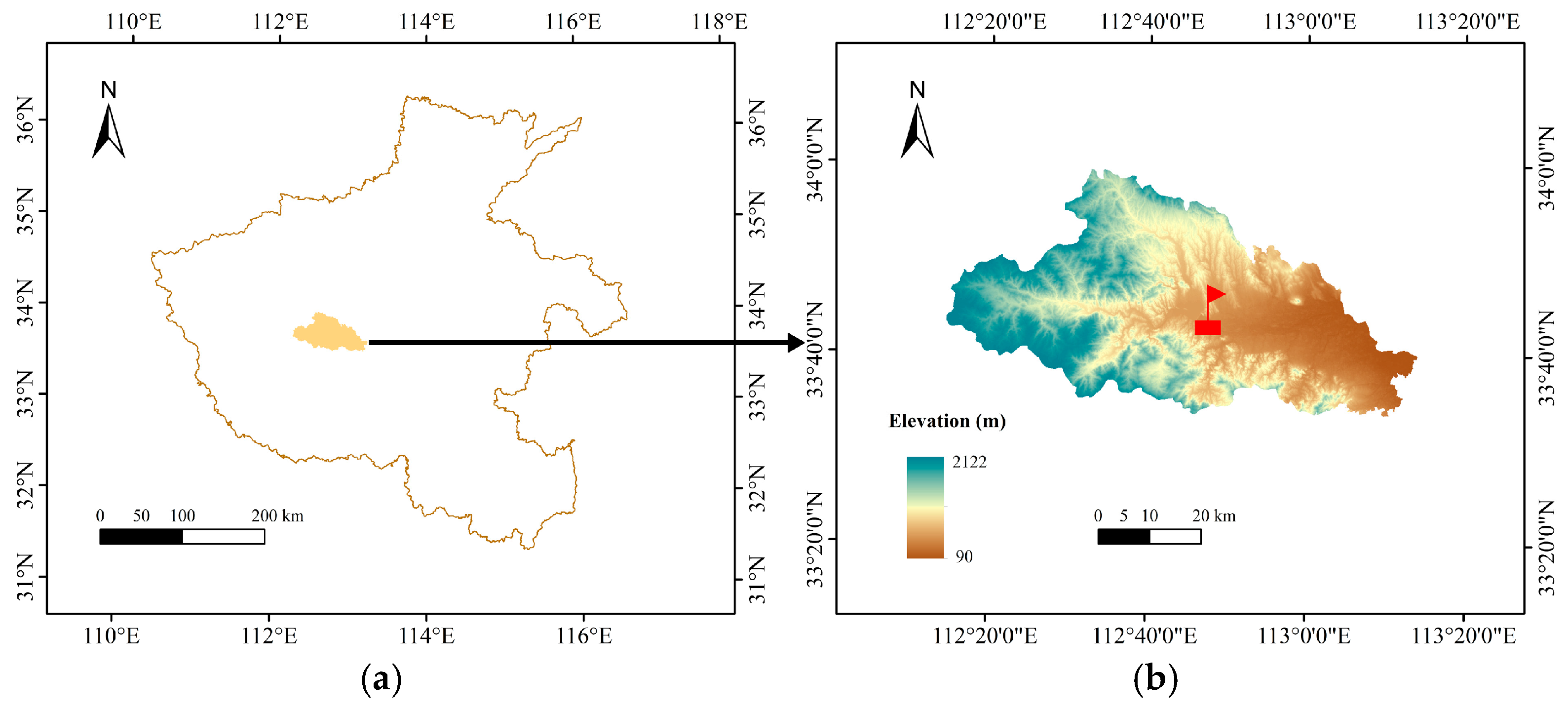
The study was conducted in the low hilly region of western Henan Province (E 112°47′54″, N 33°44′47″) at an altitude of ca. 195 m in Lushan County (Figure 1). The region experiences a warm-temperate monsoon climate, with a mean annual temperature of 14.85 °C and mean annual precipitation of 805 mm over the 1989–2018 period [4]. Rainfall is concentrated from July to September, accounting for >70% of the annual total. The dominant soil types include brown soil, moist soil, and yellow-brown loam [37]. The study site map was generated using ArcGIS 10.8 (ESRI, Redlands, CA, USA).
The natural vegetation consists of secondary forest communities dominated by woody species such as Albizzia kalkora (Fabaceae), Platycarya strobilacea (Juglandaceae), Platycladus orientalis (Cupressaceae), Populus simonii (Salicaceae), Quercus aliena (Fagaceae), Q. glandulifera (Fagaceae), Q. variabilis (Fagaceae), and Robinia pseudoacacia (Fabaceae). The herb layer is mainly composed of graminoids and forbs, including Carex lanceolata (Cyperaceae), C. rigescens (Cyperaceae), Cyperus rotundus (Cyperaceae), Dendranthema indicum (Asteraceae), Melica scabrosa (Poaceae), and Phlomis umbrosa (Lamiaceae). Among these, Q. variabilis, P. orientalis, P. simonii, and R. pseudoacacia are the most commonly planted tree species in local ecological restoration projects [37].

2.2. Experimental Setup and Plant Establishment

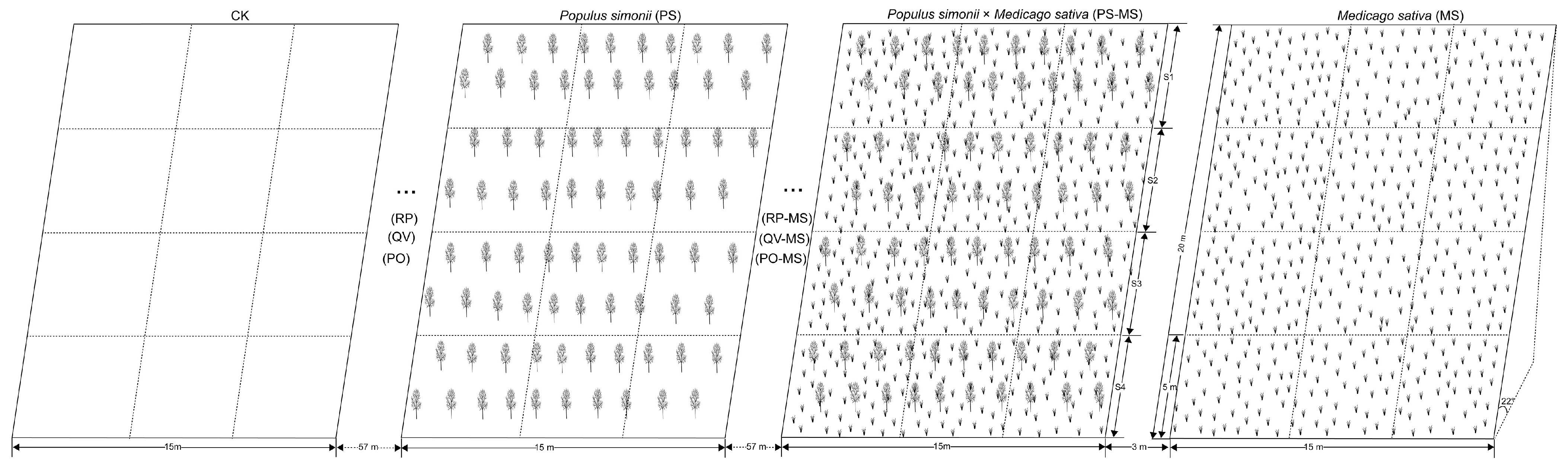
The experiment was established in 2011 on abandoned wasteland with a uniform slope of 22° that had been unused for over two decades. A total of 10 plots (300 m2 each, 20 m × 15 m) were arranged parallel to the contour line, with 3 m buffer zones to avoid edge effects. The treatments included a natural wasteland control (CK), a pure alfalfa stand (Medicago sativa, MS), alongside four monoculture forests: P. simonii (PS), P. orientalis (PO), Q. variabilis (QV), and R. pseudoacacia (RP). Additionally, four silvopastoral combinations were created by intercropping these specific tree species with M. sativa (yielding PS-MS, PO-MS, QV-MS, and RP-MS). Before planting, sparse spontaneous shrubs and grasses were removed uniformly across all plots.
Each plot was divided into four slope positions (S1–S4), covering 75 m2 per segment (15 m × 5 m). For vegetation and soil sampling, twelve 25 m2 subplots (5 m × 5 m) were established within each plot (Figure 2). Trees were planted in March 2011 using the fish-scale pit method to enhance survival and water storage [38]. All pure forest and silvopastoral plots had identical tree density: 8 rows per plot, 80 trees in total, with a spacing of 1.5 m along the contour and 2.5 m downslope, with two rows distributed within each slope position. In April 2011, M. sativa was sown along contour lines in silvopastoral treatments at a seeding rate of 22.49–37.48 kg·hm−2 (Figure 2).

2.3. Herbaceous Plant Biomass

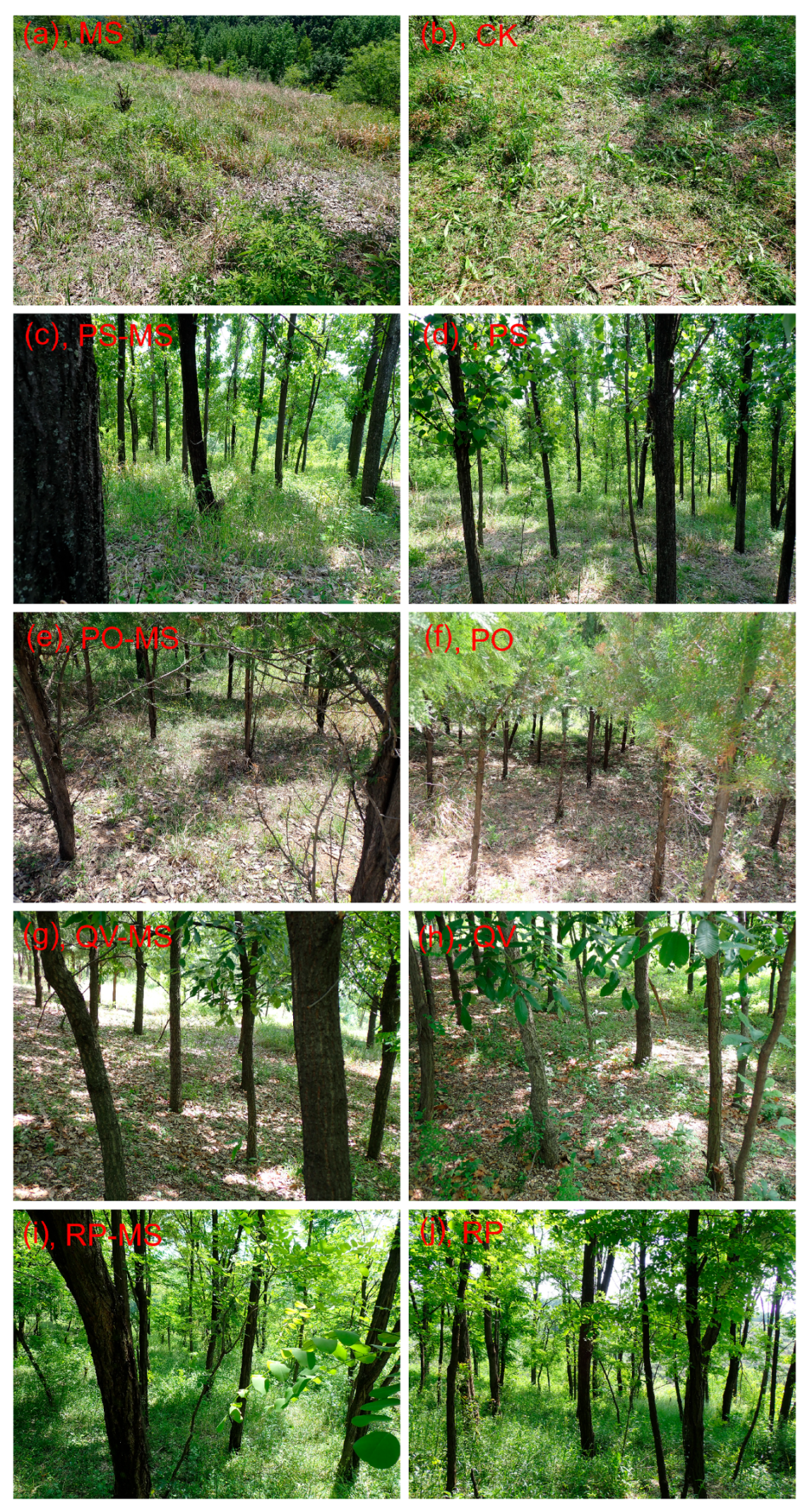
In late July 2024, we randomly placed three 50 × 50 cm quadrats in the central parts of each subplot, and each quadrat was divided into 10 × 10 cm2 grids to facilitate the estimation of plant density. Representative photographs illustrating the vegetation cover for the different treatments are presented in Figure 3. We recorded species presence and density (which was calculated for each species as the number of individuals per unit area, in individuals per square meter). Subsequently, we harvested aboveground stems and leaves of all herbaceous individuals within each quadrat. The aboveground plant biomass was weighed for each species after drying for 48 h at 65 °C to a constant weight.
After harvesting and drying, all herbaceous plant samples were stored for subsequent measurement. Voucher specimens of all identified herbaceous species were dry-pressed and deposited in the plant specimen collection of Pingdingshan University with unique identification numbers for future reference.

2.4. Soil Nutrient Properties

In late October 2024, 5 soil cores were collected in an S-shaped pattern from the 0–20 cm soil layer of each subplot using a 2.5 cm diameter auger. These cores were combined into a single composite sample per subplot, thus resulting in a total of 120 soil samples for all the plots of different vegetation types. After removing gravel and plant root residues, the soil samples were air-dried in the shade and passed through a 100-mesh sieve. Soil total carbon (STC) and total nitrogen (STN) were determined by a CHNOS Elemental Analyzer (Vario MACRO cube, Elementar, Langenselbold, Germany). Soil total phosphorus (STP) and available phosphorus (SAP) were determined by an Auto Discrete Analyzer (SmartChem-140, AMS, Bergamo, Italy). Soil total potassium (STK) and available potassium (SAK) were determined by a flame photometer (Model FP-640, Shanghai, China). Soil pH was measured by a pH meter (PHS-3C, Shanghai, China). Soil total organic carbon was measured by a TOC analyzer (TOC-L CPH/CPN, Shimadzu, Japan).

2.5. Data Analysis

Because aboveground biomass is a reliable indicator of relative abundance in herbaceous communities [39,40], we constructed a Bray–Curtis dissimilarity matrix using square-root-transformed relative biomass. This matrix was then used for non-parametric multidimensional scaling (NMDS) to assess changes in community composition between silvopastoral treatments and pure forest treatments (i.e., PS-MS vs. PS, PO-MS vs. PO, QV-MS vs. QV and RP-MS vs. RP), and between MS and CK. Permutational multivariate analysis of variance (PERMANOVA) was further used to test the differences in the species composition between treatments. Then, we used similarity percentage (SIMPER) analysis to determine the species contribution based on the Bray–Curtis similarity matrix derived from square-root transformed relative biomass data, with comparisons conducted between MS and CK and between silvopastoral systems and pure forests.
To approach normality, species density, richness and aboveground plant biomass for each plot at different slope positions were log (x + 1)-transformed [41]. Two-way ANOVA was used to evaluate the main effects of vegetation treatment, slope position, and their interaction on herbaceous density, richness, and biomass. We used one-way ANOVA followed by a Tukey post hoc test to evaluate differences in species density, richness and aboveground plant biomass among different vegetation treatments and 4 slopes in each vegetation treatment, and independent t-tests between silvopastoral treatments and pure forest treatments (i.e., PS-MS vs. PS, PO-MS vs. PO, QV-MS vs. QV and RP-MS vs. RP), between MS and CK, and between the upper slope (S1 + S2) and downslope (S3 + S4) positions.
To quantify the relative shift in aboveground plant biomass between downslope and upslope positions, the change in relative herbaceous plant biomass among slope positions was calculated using the formula: Rslo = [(Slo3 + Slo4) − (Slo1 + Slo2)]/(Slo3 + Slo4), where Slo1, Slo2, Slo3 and Slo4 are the herbaceous plant biomass values of subplots in each slope, respectively. Independent t-tests were then used to evaluate differences in this index between silvopastoral treatments and pure forest treatments, and between MS and CK. Moreover, we performed redundancy analysis (RDA) to identify soil properties significantly associated with the community structure.
All the statistical analyses were conducted in R 4.4.2 [42].

3. Results

3.1. Responses of Community Composition

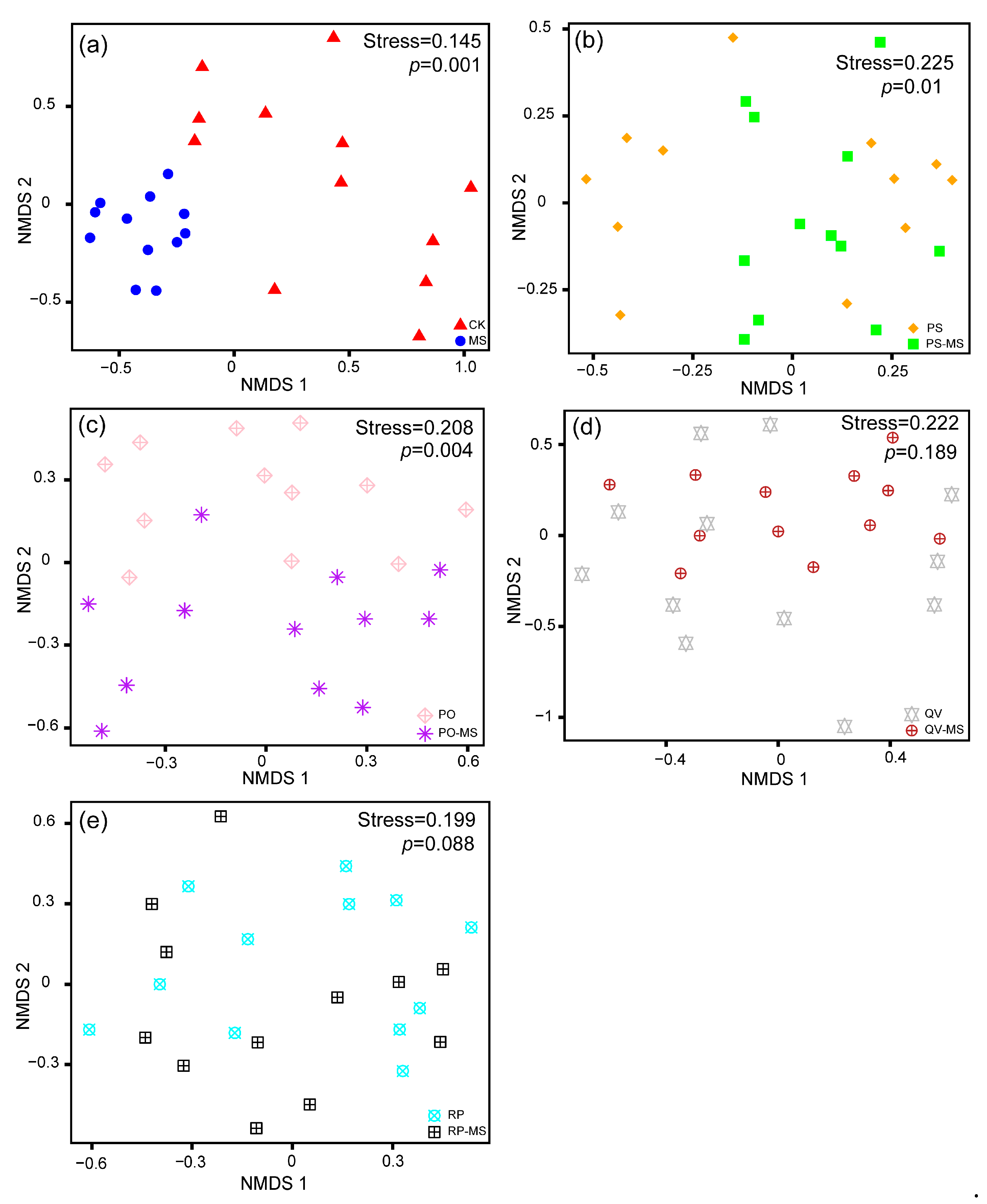
In total, 45 herbaceous plant species were collected across all plots, belonging to 2 classes, 14 orders, 15 families (Supplementary Table S1). Species with relative biomass greater than 10% were as follows: Imperata cylindrica (32.89%), Themeda triandra (21.84%) and Arthraxon hispidus (12.28%) in MS; I. cylindrica (16.23%), Hemisteptia lyrata (14.1%) and A. hispidus (13.37%) in PS-MS; T. triandra (36.33%) and I. cylindrica (17.21%) in PO-MS; I. cylindrica (23.1%) and A. hispidus (12.09%) in QV-MS; Duchesnea indica (18.76%) and Erigeron canadensis (16.43%) in RP-MS; T. triandra (23.21%), I. cylindrica (20.02%), Artemisia lavandulifolia (10.51%) and A. hispidus (12.09%) in PS; T. triandra (28.41%), Imperata cylindrica (15.75%), A. hispidus (10.59%) and Digitaria sp. (13.52%) in PO; Cynodon dactylon (22.13%), I. cylindrica (16.34%) and H. lyrata (10.16%) in QV; D. indica (23.28%) and C. dactylon (15.25%) in RP; H. lyrata (30.59%), I. cylindrica (14.07%) and D. indica (10.31%) in CK (Supplementary Table S1). The NMDS analysis showed that there were significant differences in the species composition in MS vs. CK (p = 0.001), PS-MS vs. PS (p = 0.01) and PO-MS vs. PO (p = 0.004), while no significant differences were detected in QV-MS vs. QV (p = 0.189), RP-MS vs. RP (p = 0.088) (Figure 4). SIMPER analysis indicated that the top ten species accounted for 54.09%, 50.93% and 56.81% of the total dissimilarity in MS vs. CK, PS-MS vs. PS and PO-MS vs. PO, respectively (Supplementary Figure S1).

3.2. Responses of the Functional Groups

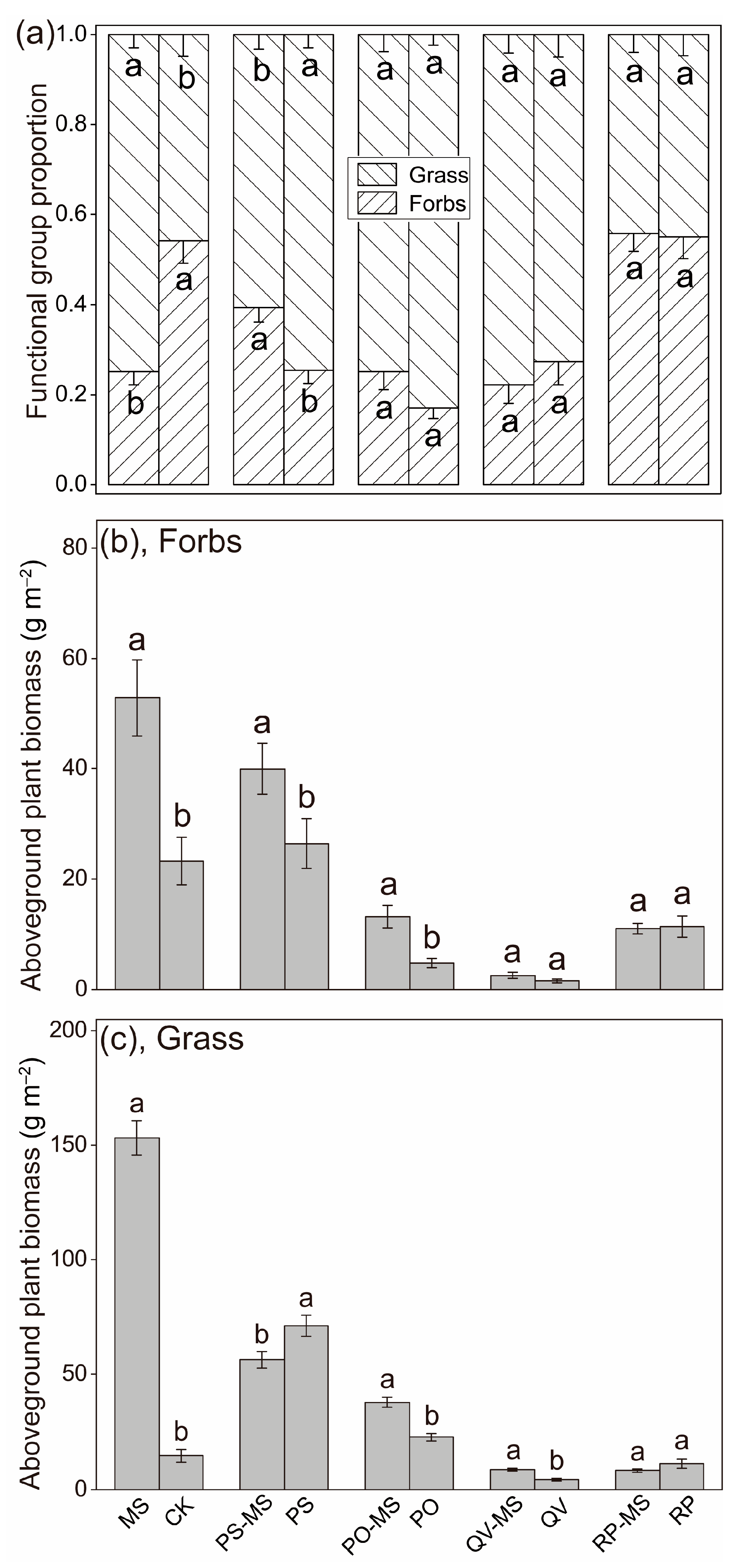
The proportion of grasses (including Poaceae and Cyperaceae plants) in the MS was significantly higher than that in CK, while the forb (Fabaceae and the other families) proportion was higher in CK than MS. The proportion of grasses in the PS was significantly higher than that in PS-MS, whereas the forb proportion was higher in PS-MS than PS. No significant differences were observed in the functional group proportions of grasses and forbs between PO-MS and PO, QV-MS and QV, or RP-MS and RP, respectively (Figure 5). The aboveground biomass of forbs and grasses in MS, PS-MS, PO-MS and QV-MS tended to be higher than in CK, PS, PO and QV (except that grasses were higher in PS than PS-MS), while there were no differences between RP-MS and RP (Figure 5b,c).

3.3. Responses of Overall Density, Richness and Biomass

Two-way ANOVA showed that herbaceous aboveground biomass, species richness, and density were all significantly affected by plots, slope positions, and their interaction (all p < 0.001; Table 1). Specifically, plot had the strongest effects on all three variables, followed by slope position and the plot × slope interaction.
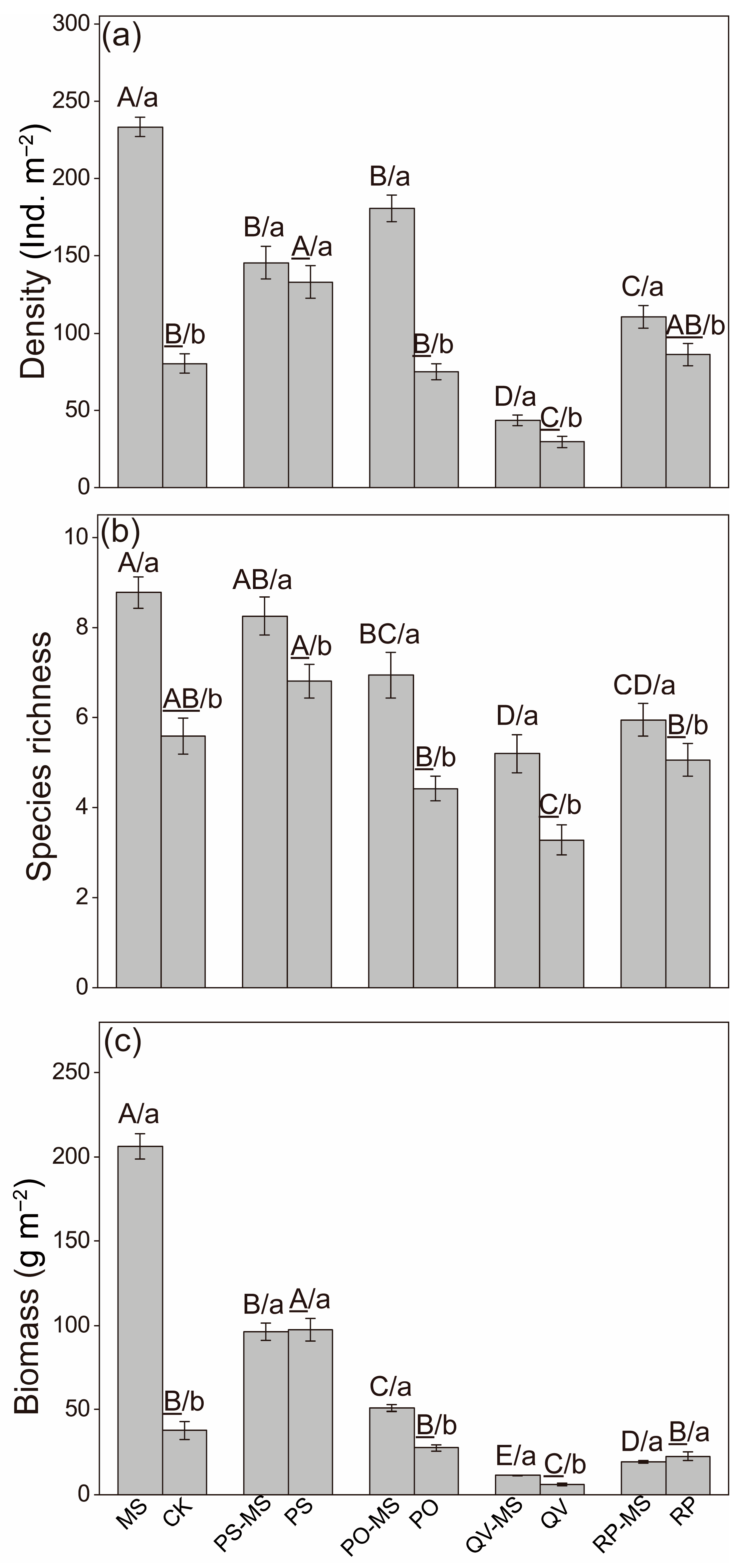
The overall density of MS and silvopastoral treatments (PO-MS, QV-MS and RP-MS) tended to be higher than that of CK and pure forest treatments (PO, QV and RP). Similarly, species richness of MS, PS-MS, PO-MS, QV-MS and RP-MS was higher than in CK and PS, PO, QV and RP, whereas overall density in PS-MS did not differ from that in PS. The aboveground plant biomass was higher in MS, PO-MS and QV-MS than CK, PO and QV, while PS-MS and RP-MS did not differ from those of PS and RP (Figure 6).
Among the MS and silvopastoral treatments, MS, PS-MS and PO-MS had a higher density, species richness and aboveground plant biomass than QV-MS and RP-MS. Moreover, density, species richness and aboveground plant biomass tended to be higher in MS than in PS-MS and PO-MS (Figure 6). Among the CK and pure forest treatments (PS, PO, QV and RP), the density of PS tended to be higher than the others. The density, species richness and aboveground plant biomass of QV-MS and QV were lower than the others in silvopastoral systems and pure forests, respectively (Figure 6).
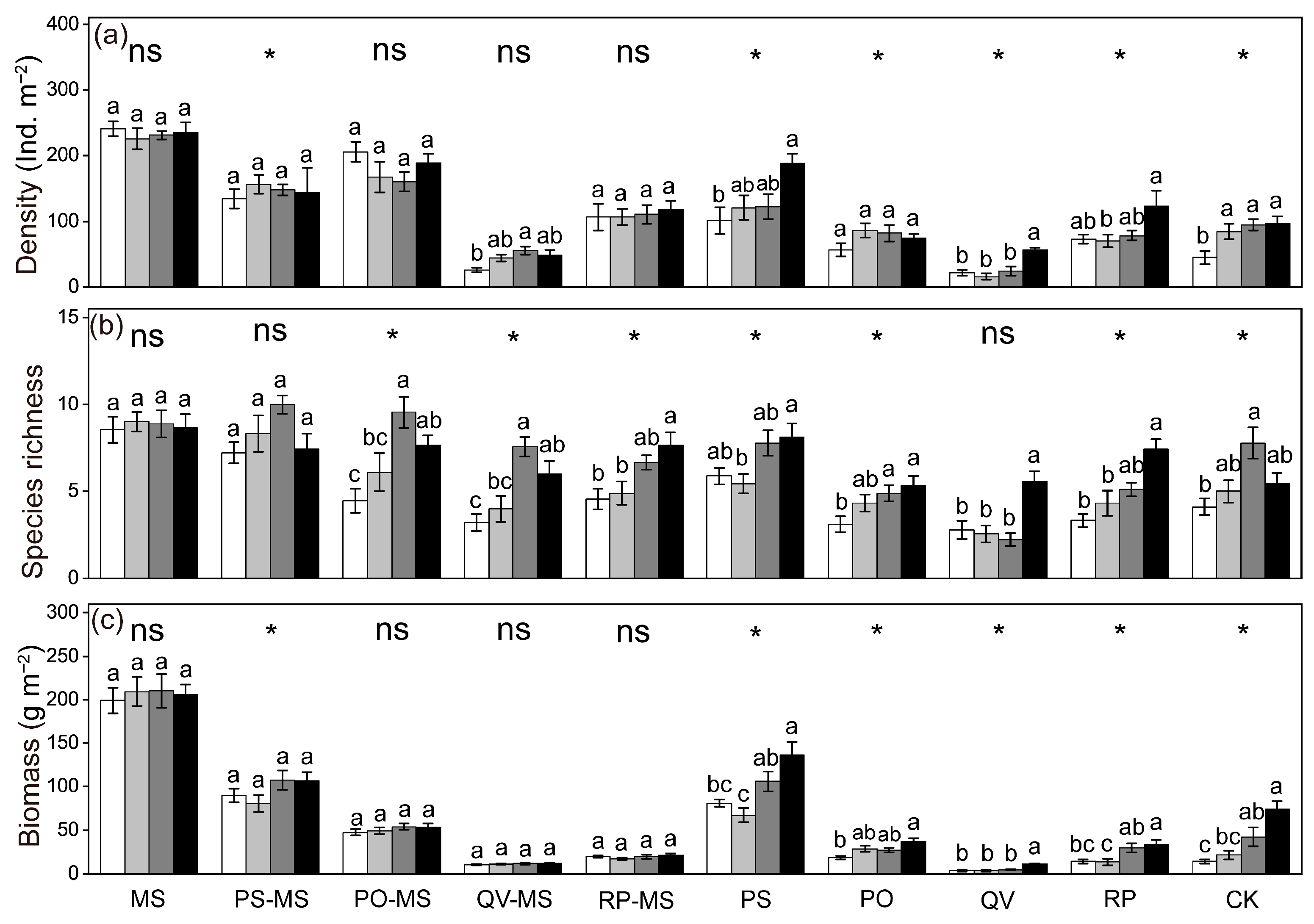
The density and aboveground plant biomass did not vary among the slope positions in MS and silvopastoral systems (PS-MS, PO-MS, QV-MS and RP-MS), while the CK and pure forests (PS, PO, QV and RP) showed that the upslope position (or S1 + S2) had lower density and aboveground plant biomass than the downslope position (or S3 + S4) (Figure 7a–c). Species richness did not vary in MS and PS-MS, while the other plots showed that the species richness was higher at downslope positions (or S3 + S4) than upslope positions (or S1 + S2) (Figure 7b).
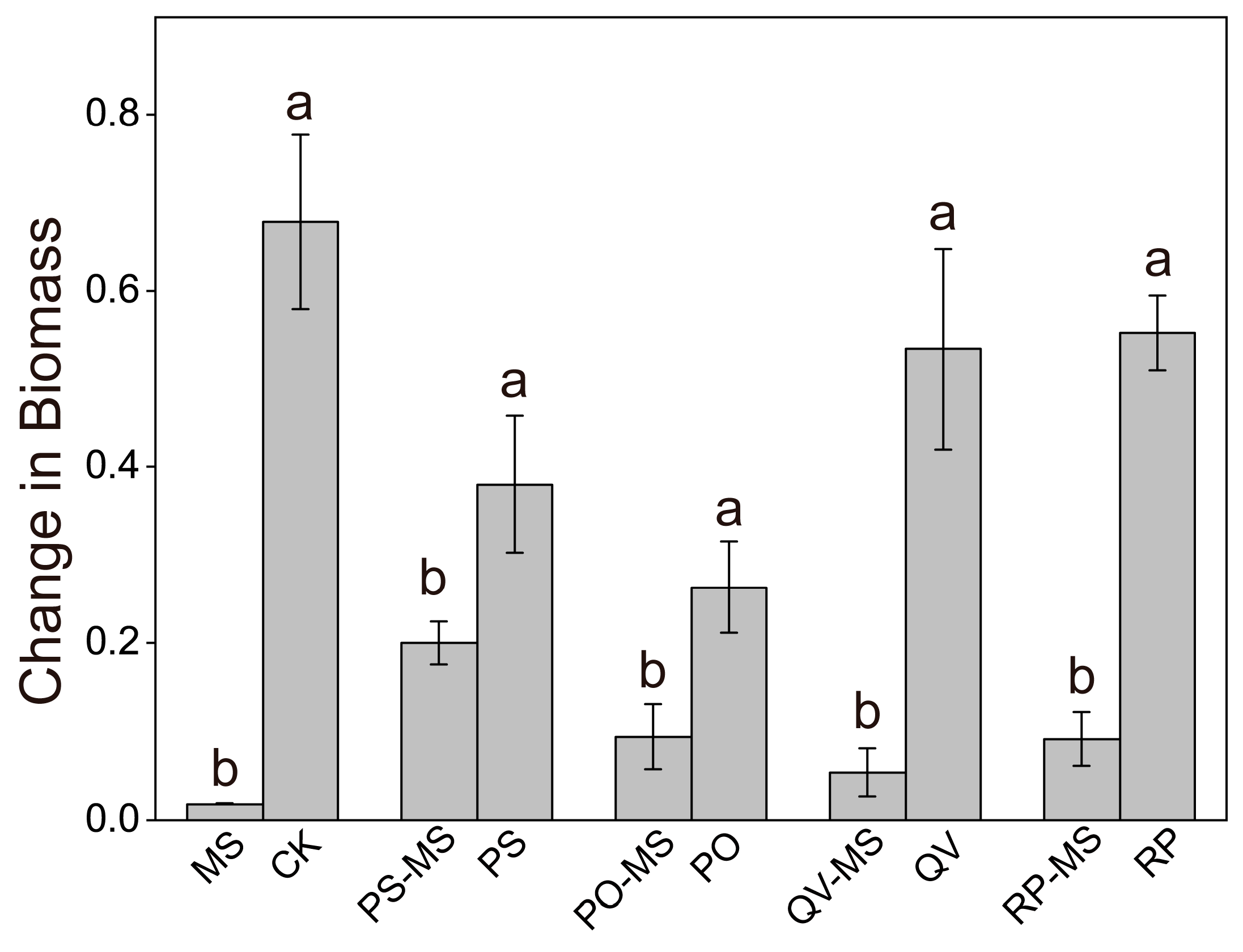
The change in relative aboveground plant biomass between downslope and upslope positions was higher in the CK and pure forests (PS, PO, QV and RP) than that in MS, PS-MS, PO-MS and RP-MS, respectively (Figure 8).

3.4. Relationships Between Plant Community Structure and Abiotic Factors

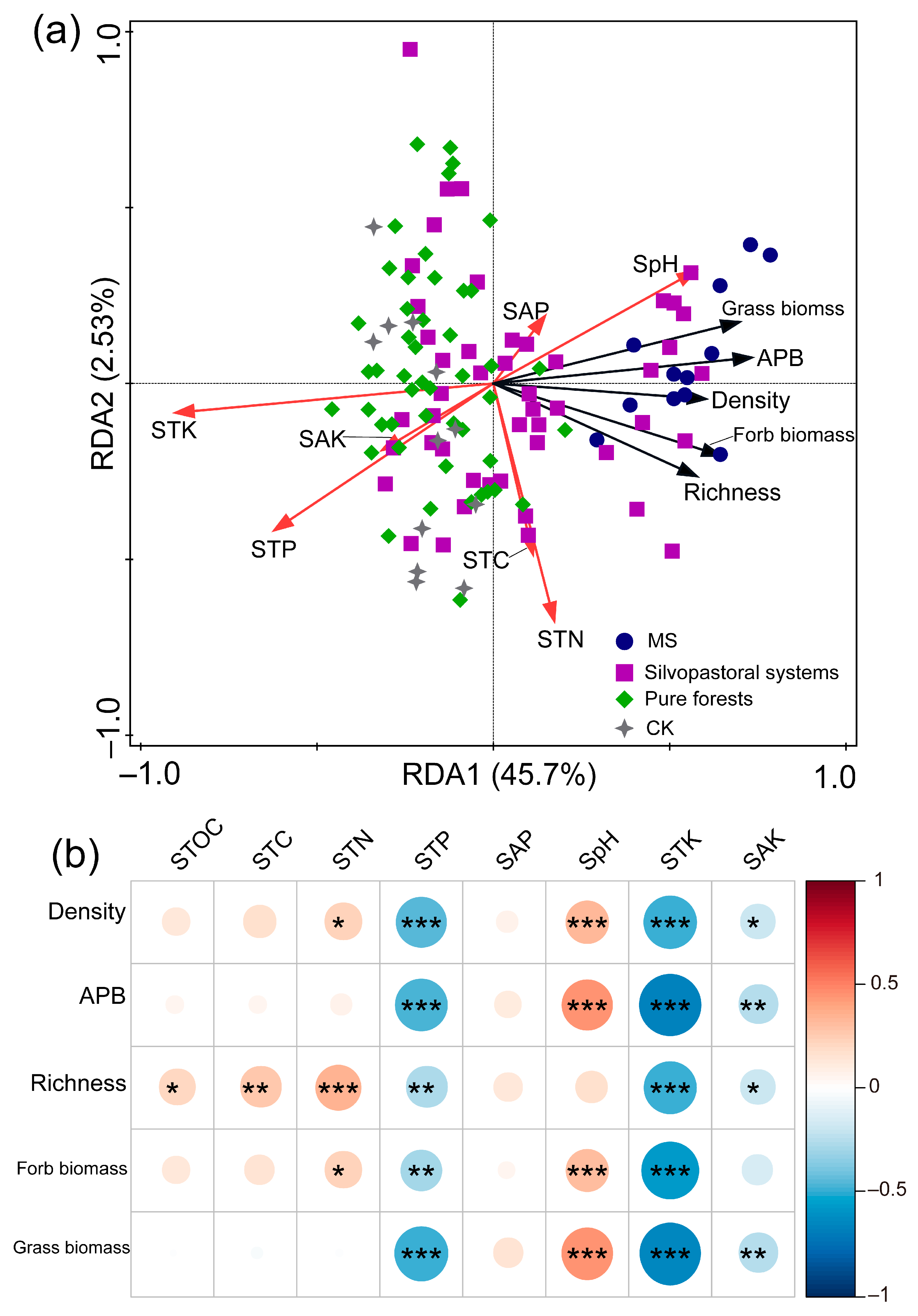
RDA axes 1 and 2 explained 45.7% and 2.53% of the total variation, respectively. The first axis of RDA was closely correlated with STK (F = 69.6, p = 0.002), STN (F = 9.4, p = 0.002), SpH (F = 7.6, p = 0.008) and STP (F = 2.9, p = 0.054), and these factors explained 37.1%, 4.7%, 3.6% and 1.3% of the variation in axis 1, respectively (Figure 9a).
The heatmap analysis results indicated that density, species richness and APB were significantly negatively correlated with STK, SAK and STP, as well as the biomass of forbs and grasses with STP and STK. In contrast, APB and density were significantly positively correlated with soil pH, as well as the species richness with STOC, STC and STN, and the biomasses of forbs and grasses with SpH (Figure 9b).

4. Discussion

Our results showed that community composition differed between silvopastoral systems and pure forests. The herbaceous plants in the systems tended to have a higher abundance, species richness and aboveground plant biomass than those in pure forests, consistent with other studies [43,44,45]. Moreover, the density and aboveground plant biomass were more evenly distributed among the slope positions in the silvopastoral systems, while there was a higher density and aboveground plant biomass in downslope positions than upslope positions in the pure forests. To the best of our knowledge, this study is one of the first to elucidate herbaceous plant diversity after succession in the silvopastoral systems in the hilly areas.
The difference in community composition of the silvopastoral systems (PS-MS and PO-MS) and MS compared with those of pure forests (PS and PO) and CK was largely driven by variation in dominant herbaceous species. Previous studies have shown that the herbaceous colonization intensity is higher in the mixed-species forests than in pure forests [46]. In this study, the plots with Medicago sativa offered favorable invasion conditions (e.g., improved soil conditions and altered competitive environments), thus facilitating plant diversity, consistent with other studies [16]. Following long-term stand development, herbaceous communities in MS, PS-MS, PS, PO-MS, PO, QV-MS and QV became grass-dominated (e.g., Themeda triandra and Imperata cylindrica), which is likely due to the strong clonal growth capacity of these grasses [47]. By contrast, communities in both RP-MS and RP were dominated by forbs (e.g., Duchesnea indica), as also shown in previous studies [48]. I. cylindrica and T. triandra constituted the dominant graminoid species across most plots, but their relative biomass varied markedly among treatments. Meanwhile, Hemisteptia lyrata was exceptionally dominant in PS-MS, whereas T. triandra predominated in PO-MS. Such distinct differentiation in dominant herb composition (the main species contributing to community dissimilarity) underlies the significant divergence in community structure between silvopastoral systems and pure forests (Supplementary Figure S1). Moreover, the lack of significant differences in grass and forb proportions between PO-MS and PO, QV-MS and QV, and RP-MS and RP suggested that the effects of silvopastoral systems on functional group composition may be dependent on tree species, as also suggested in other studies [49].
The silvopastoral systems generally increased the overall plant density, species richness and aboveground plant biomass in the present study. The primary mechanism driving this increase appears to be closely linked to significant alterations in soil chemical properties. Herb abundance, species richness and aboveground plant biomass were negatively associated with soil total phosphorus (STP) and total potassium (STK), likely because the leguminous plants consume large amounts of phosphorus and potassium elements during growth [50,51]. Notably, soil total nitrogen and pH were positively correlated with herbaceous richness and biomass, reflecting the coupling effect of soil nutrients. The nitrogen fixation of M. sativa increased soil nitrogen levels and alleviated nitrogen limitation, while the consumption of phosphorus and potassium became a new limiting factor. This nutrient change pattern of “nitrogen increase and phosphorus-potassium decrease” is a typical soil nutrient characteristic of silvopastoral systems involving leguminous plants in the warm temperate zone, rather than the independent effect of a single nutrient [52]. Consequently, silvopastoral systems and MS plots had lower phosphorus and potassium contents compared to pure forests and CK plots, as also observed in recent studies [50].
It is important to note that the overall biomass was not significantly higher in PS-MS and RP-MS than in PS and RP, indicating that the positive effect of the silvopastoral system may not be universal but rather varies depending on the dominant tree species. Populus simonii is a fast-growing poplar species with a high timber yield. Large amounts of soil water and nutrients are consumed along with its fast growth [53,54], and the fastest growth period of poplar trees is within the first five years after they are planted [34,55]. Generally, alfalfa achieves high yields and exerts a significant nitrogen-fixing effect in the initial 5–6 years of growth. After a long period of coexistence, the nitrogen-fixing effect of alfalfa may have been fully utilized by poplar trees. Moreover, P. simonii is a deep-rooted tree species, while M. sativa is a shallow-rooted leguminous plant, and their nutrient absorption layers in the vertical soil space overlap partially. In addition to the transfer of nitrogen utilization, there is also competition for shallow soil water and available phosphorus in the long-term growth (both of which are primary limiting factors for herbaceous plant growth in this region [56,57]). Such resource competition, rather than a single nitrogen effect, likely accounts for the lack of significant biomass differences between PS-MS and PS. This interpretation is consistent with the non-significant differences in soil fertility observed in our previous study [4].
For the N-fixing tree Robinia pseudoacacia, nitrogen is likely not the limiting factor for herbaceous biomass between RP-MS and RP. Both R. pseudoacacia and M. sativa depend on rhizobial symbionts for nitrogen fixation and compete for rhizobia in soil microdomains. This rhizobial competition reduces the N-fixation efficiency of M. sativa and prevents further increases in soil nitrogen content [58]. This very likely mechanism, rather than independent N-fixation by R. pseudoacacia alone, explains why nitrogen no longer limits herbaceous biomass. Symbiotic N2 fixation in R. pseudoacacia can compensate for low external N supply, maintaining comparable growth and biomass accumulation across contrasting N regimes. Moreover, leaf N content and N:P ratios of R. pseudoacacia often indicate P limitation rather than N limitation in many afforestation and restoration contexts [59,60,61], as supported by the positive relation of the biomasses of forbs and grasses with STN, and their negative relation with STP in our study.
It is noteworthy that the biomass of QV-MS and QV was lower compared to other plots, and the most likely reason is that the trees with allelopathic effects on herbaceous plants mostly belong to the Quercus spp. and may inhibit seed germination and radicle growth of understory grassland [62]. The allelochemicals may also reduce the activity of phosphorus and potassium-solubilizing bacteria in the soil, resulting in low content of available soil nutrients [63]. Moreover, the thick litter of cork oak tends to affect seed germination and seedling settlement. This suggests that when constructing Q. variabilis-based silvopastoral systems, allelopathy-tolerant herb species (e.g., C. dactylon, M. sativa) can be properly intercropped to alleviate the allelopathic inhibition. The nitrogen supply from RP and the allelopathic effects of QV can also explain the lack of significant differences in herbaceous biomass and functional group composition between QV-MS and QV and between RP-MS and RP.
Moreover, our study confirmed that the silvopastoral systems had a higher pH compared to pure forests. This contradicts previous studies by Yang et al. [64], who reported that pH decreased with increasing years of planting alfalfa. Such inconsistency was possibly attributed to differences in community structure. Pure alfalfa stands tend to ameliorate alkaline soil, decreasing the pH with the increasing years of planting [64,65], while in our study site the plant community has been transformed into a community dominated by grasses (e.g., Imperata cylindrica and Themeda triandra), consistent with previous studies [66]. Specifically, litter from pure M. sativa grasslands is characterized as leguminous soft litter, which decomposes rapidly and releases acidic substances. By comparison, the graminoid litter of I. cylindrica and T. triandra is rich in cellulose and lignin, and releases substantially higher concentrations of alkaline cations (e.g., calcium, magnesium, and potassium) during decomposition; these cations subsequently neutralize soil acidity. Therefore, the elevated soil pH in silvopastoral systems can be attributed to the abundant calcium and magnesium cations derived from plant litter in these systems [67].
Topographic factors such as slopes also affect the spatial distribution of herbaceous plants. In this study, plant density and biomass generally shifted from upper slopes to lower slopes in pure forests relative to silvopastoral systems. This pattern mainly occurs because the upper slope positions of pure forest and control plots are generally affected by rainfall erosion. Dense herbaceous vegetation and intricate root networks in silvopastoral plots can effectively reduce soil erosion [68], as well as the difference in nutrient loss between slope positions, as shown in our previous studies [4]. This indicates that silvopastoral systems can balance the herb distribution between slope positions, rather than simply nutrient accumulation. However, the species richness tended to be higher in downslope positions than upslope positions in both silvopastoral systems (except PS-MS) and pure forests. This can be explained by the dispersal of herbaceous plant seeds along the slope via surface runoff and wind, as shown in other studies [69,70,71].

5. Conclusions

Herbaceous plant responses to silvopastoral systems vary depending on the dominant tree species. Compared with pure forest plantations and the control, silvopastoral systems and pure Medicago sativa stands significantly enhance herbaceous density, species richness, and aboveground biomass. Silvopastoral systems also alter herbaceous community composition and reduce downslope accumulation of biomass and density, thereby stabilizing spatial distribution across slope positions after long-term succession. Soil properties—especially nitrogen, potassium, phosphorus, and pH—are closely correlated with herbaceous community structure, revealing strong soil–vegetation linkages. Pure M. sativa plantings are most effective for enhancing vegetation diversity and soil restoration, whereas silvopastoral systems offer a flexible and ecologically beneficial strategy for degraded hill ecosystem restoration.

Supplementary Materials

The following supporting information can be downloaded at: https://www.mdpi.com/article/10.3390/d18050283/s1.

Author Contributions

Conceptualization, Supervision, Writing—original draft, Writing—review and editing, Investigation, Resources, Data curation, Formal analysis, Methodology, Visualization, Funding acquisition, L.K.; Writing—review and editing, Investigation, Data curation, Formal analysis, Methodology, Validation, F.C.; Writing—review and editing, Investigation, X.L.; Writing—review and editing, Investigation, S.Y.; Writing—review and editing, Investigation, M.L.; Writing—review and editing, Investigation, H.W.; Writing—review and editing, Investigation, D.Z.; Writing—review and editing, Investigation, J.L.; Writing—review and editing, Investigation, Z.L.; Writing—review and editing, Validation, L.C.; Conceptualization, Supervision, Writing—review and editing, Resources, P.L. All authors have read and agreed to the published version of the manuscript.

Funding

This study was supported by the National Natural Science Foundation of China (32401366), Natural Science Foundation of Henan Province (252300420712), Henan Provincial Science and Technology Research Project (242102320253 and 262102321107), the Research Fund for High-Level Talents of Pingdingshan University (PXY-BSQD-2023041), and the Henan Key Laboratory for Germplasm Innovation and Utilization of Eco-economic Woody Plant.

Data Availability Statement

The original contributions presented in this study are included in the article/Supplementary Materials; further inquiries can be directed to the corresponding author.

Acknowledgments

We are grateful to Xinyao Wu, Ying He and Guanjin Wang for field investigation and sample collection. We sincerely thank Weishuang Tong from Pingdingshan University for her professional assistance in plant identification. Meanwhile, we highly appreciate Yangyang Liu from Northwest A&F University for his technical support and guidance in completing the study site map.

Conflicts of Interest

Xueping Luo was employed by Zhejiang Shiyuan Environmental Technology Co., Ltd. The remaining authors declare that the research was conducted in the absence of any commercial or financial relationships that could be construed as a potential conflict of interest.

Abbreviations

The following abbreviations are used in this manuscript:
MSMedicago sativa
PSPopulus simonii
POPlatycladus orientalis
QVQuercus variabilis
RPRobinia pseudoacacia
STCSoil total carbon
STNSoil total nitrogen
STPSoil total phosphorus
STKSoil total potassium
SAPSoil available phosphorus
SAKSoil available potassium
SpHSoil pH
APBAboveground plant biomass
STOCSoil total organic carbon

References

  1. Porfírio-da-Silva, V. Silvopastoral system for wood production: Opportunities and challenges in tropical and subtropical environments. Agrofor. Syst. 2024, 98, 2325–2335. [Google Scholar] [CrossRef] [Scilit]
  2. Jose, S.; Dollinger, J. Silvopasture: A sustainable livestock production system. Agrofor. Syst. 2019, 93, 1–9. [Google Scholar] [CrossRef] [Scilit]
  3. Feng, Q.; Peng, H.; Li, F.; Zeng, Q.; Su, Z.; Kong, X.; He, H.; Zhang, J. Effects of silvopastoral systems on ecological environment. J. Grassl. For. Sci. 2020, 5, 45–51. [Google Scholar]
  4. Liu, P.; Cheng, F.; Hu, J.; Li, M.; Wang, X.; You, S.; Tong, W.; Cheng, L.; Zhang, J.; Kou, L. Effects of silvopastoral systems on soil nutrient properties in the low hilly area of western Henan province, China. Agrofor. Syst. 2024, 98, 1343–1353. [Google Scholar] [CrossRef] [Scilit]
  5. Argote, K.; Rodríguez-Sánchez, B.; Quintero, M.; Francesconi, W. One tree at a time: Restoring landscape connectivity through silvopastoral systems in transformed Amazon landscapes. Diversity 2022, 14, 846. [Google Scholar] [CrossRef] [Scilit]
  6. Hart, S.A.; Chen, H.Y.H. Fire, logging, and overstory affect understory abundance, diversity, and composition in boreal forest. Ecol. Monogr. 2008, 78, 123–140. [Google Scholar] [CrossRef] [Scilit]
  7. Standish, R.J.; Williams, P.A.; Robertson, A.W.; Scott, N.A.; Hedderley, D.I. Invasion by a perennial herb increases decomposition rate and alters nutrient availability in warm temperate lowland forest remnants. Biol. Invasions 2004, 6, 71–81. [Google Scholar] [CrossRef] [Scilit]
  8. Nilsson, M.-C.; Wardle, D.A. Understory vegetation as a forest ecosystem driver: Evidence from the northern Swedish boreal forest. Front. Ecol. Environ. 2005, 3, 421–428. [Google Scholar] [CrossRef]
  9. Gilliam, F.S. Response of the herbaceous layer of forest ecosystems to excess nitrogen deposition. J. Ecol. 2006, 94, 1176–1191. [Google Scholar] [CrossRef] [Scilit]
  10. Wu, Y.; Li, Z.; Cheng, C.; Liu, R. Responses of soil organic carbon to long-term understory removal in subtropical Cinnamomum camphora stands. Int. J. Ecol. 2014, 2014, 615348. [Google Scholar] [CrossRef] [Scilit]
  11. Frei, K.; Tölgyesi, C.; Kelemen, A.; Bátori, Z.; Hábenczyus, A.A.; Sonkoly, J.; Kiss, R.; Tóth, K.; Havadtői, K.; Varga, A.; et al. Herb layer vegetation patterns of silvopastoral systems: The interactive role of succession, disturbance and seed bank. Agrofor. Syst. 2025, 99, 265. [Google Scholar] [CrossRef] [Scilit]
  12. Yang, T.; Zhu, Y.; Duan, Z.P.; Lu, W.H.; Zhang, F.F.; Wan, S.M.; Xu, W.X.; Zhang, W.; Li, L.H. Root distribution and productivity in a poplar tree + alfalfa silvopastoral system in northwest China’s Xinjiang Province. Agrofor. Syst. 2020, 94, 997–1010. [Google Scholar]
  13. Wang, J.; He, Q.; Wu, Y.; Zhu, H.; Sun, H.; Zhou, J.; Wang, D.; Li, J.; Bing, H. Effects of pioneer N2-fixing plants on the resource status and establishment of neighboring non-N2-fixing plants in a newly formed glacier floodplain, eastern Tibetan Plateau. Plant Soil 2021, 458, 261–276. [Google Scholar]
  14. Li, S.; Liber, K. Influence of different revegetation choices on plant community and soil development nine years after initial planting on a reclaimed coal gob pile in the Shanxi mining area, China. Sci. Total Environ. 2018, 618, 1314–1323. [Google Scholar]
  15. Lira Junior, M.A.; Fracetto, F.J.C.; Ferreira, J.d.S.; Silva, M.B.; Fracetto, G.G.M. Legume-based silvopastoral systems drive C and N soil stocks in a subhumid tropical environment. CATENA 2020, 189, 104508. [Google Scholar] [CrossRef] [Scilit]
  16. Li, Y.; Shao, M. Degradation process and plant diversity of alfalfa grassland in North Loess Plateau of China. Chin. J. Appl. Ecol. 2005, 16, 2321–2327. [Google Scholar]
  17. Amorim, H.C.S.; Ashworth, A.J.; O’Brien, P.L.; Thomas, A.L.; Runkle, B.R.K.; Philipp, D. Temperate silvopastures provide greater ecosystem services than conventional pasture systems. Sci. Rep. 2023, 13, 18658. [Google Scholar] [CrossRef] [Scilit]
  18. Ngaba, M.J.Y.; Mgelwa, A.S.; Gurmesa, G.A.; Uwiragiye, Y.; Zhu, F.; Qiu, Q.; Fang, Y.; Hu, B.; Rennenberg, H. Meta-analysis unveils differential effects of agroforestry on soil properties in different zonobiomes. Plant Soil 2024, 496, 589–607. [Google Scholar] [CrossRef] [Scilit]
  19. Szigeti, N.; Berényi Üveges, J.; Berki, I.; Vityi, A. Grassy-floral soil covering as a tool for increasing herbaceous diversity in agroforestry. J. Cent. Eur. Agric. 2022, 23, 898–908. [Google Scholar]
  20. Giraldo, L.P.; Chará, J.; Velásquez-Valencia, A.; Ordoñez-García, M. Vegetation structure and bird diversity in silvopastoral systems of the Amazonian piedmont of Colombia. Agrofor. Syst. 2024, 98, 2253–2266. [Google Scholar] [CrossRef] [Scilit]
  21. Kremer, K.; Jonsson, B.-G.; Dutta, T.; Tavares, M.F.; Bauhus, J. Single- vs mixed-species plantations: A systematic review on the effects on biodiversity. Biol. Conserv. 2025, 307, 111182. [Google Scholar] [CrossRef] [Scilit]
  22. Royer-Tardif, S.; Paquette, A.; Messier, C.; Bournival, P.; Rivest, D. Fast-growing hybrids do not decrease understorey plant diversity compared to naturally regenerated forests and native plantations. Biodivers. Conserv. 2018, 27, 607–631. [Google Scholar] [CrossRef] [Scilit]
  23. Querné, A.; Battie-laclau, P.; Dufour, L.; Wery, J.; Dupraz, C. Effects of walnut trees on biological nitrogen fixation and yield of intercropped alfalfa in a Mediterranean agroforestry system. Eur. J. Agron. 2017, 84, 35–46. [Google Scholar] [CrossRef] [Scilit]
  24. Oelbermann, M.; Voroney, R.P.; Kass, D.C.L.; Schlönvoigt, A.M. Above- and below-ground carbon inputs in 19-, 10- and 4-year-old Costa Rican Alley cropping systems. Agric. Ecosyst. Environ. 2005, 105, 163–172. [Google Scholar] [CrossRef] [Scilit]
  25. Li, X.; Li, R.; Sha, Z. Modeling carbon uptake by vegetation of grassland ecosystems and its associated factors in China based on remote sensing. Front. Earth Sci. 2023, 10, e1077885. [Google Scholar] [CrossRef] [Scilit]
  26. Xiao, S.; Chen, M.; Cheng, X.; Lai, Z. Spatial differentiation and driving forces behind non-grain agricultural production in the low mountain and hilly areas of southern Jiangxi: A case study of Xunwu County. J. Agric. Resour. Environ. 2024, 41, 305–316. [Google Scholar]
  27. Chen, Y.; Cao, Y. Response of tree regeneration and understory plant species diversity to stand density in mature Pinus tabulaeformis plantations in the hilly area of the Loess Plateau, China. Ecol. Eng. 2014, 73, 238–245. [Google Scholar] [CrossRef] [Scilit]
  28. Chen, L.; Huang, Z.; Gong, J.; Fu, B.; Huang, Y. The effect of land cover/vegetation on soil water dynamic in the hilly area of the loess plateau, China. CATENA 2007, 70, 200–208. [Google Scholar] [CrossRef] [Scilit]
  29. Chen, J.; Xiao, H.; Li, Z.; Liu, C.; Wang, D.; Wang, L.; Tang, C. Threshold effects of vegetation coverage on soil erosion control in small watersheds of the red soil hilly region in China. Ecol. Eng. 2019, 132, 109–114. [Google Scholar] [CrossRef] [Scilit]
  30. Zhang, Y.; Wang, J.; Zhu, Y. Effects of land subsidence caused by coal mining on the spatial variation of soil total nitrogen and organic matter concentrations in loess area. Chin. J. Ecol. 2018, 37, 1676–1684. [Google Scholar]
  31. Minea, G.; Ciobotaru, N.; Ioana-Toroimac, G.; Mititelu-Ionuș, O.; Neculau, G.; Gyasi-Agyei, Y.; Rodrigo-Comino, J. Designing grazing susceptibility to land degradation index (GSLDI) in hilly areas. Sci. Rep. 2022, 12, 9393. [Google Scholar] [CrossRef] [Scilit]
  32. Mackay-Smith, T.H.; Burkitt, L.L.; López, I.F.; Reid, J.I. The impact of a kānuka silvopastoral system on surface runoff and sediment and nutrient losses in New Zealand hill country. CATENA 2022, 213, 106215. [Google Scholar] [CrossRef] [Scilit]
  33. Sileshi, G.W.; Mafongoya, P.L.; Nath, A.J. Agroforestry systems for improving nutrient recycling and soil fertility on degraded lands. In Agroforestry for Degraded Landscapes: Recent Advances and Emerging Challenges, 1st ed.; Dagar, J.C., Gupta, S.R., Teketay, D., Eds.; Springer: Singapore, 2020; pp. 225–253. [Google Scholar]
  34. Liu, P.; Cheng, F.; Wang, X.; Liu, Z.; Cheng, L.; Tong, W.; Qi, G.; Kou, L. Tree growth as an effect indicator of silvopastoral systems in the low hilly area of western Henan province, China. Front. For. Glob. Change 2023, 6, 1244303. [Google Scholar] [CrossRef] [Scilit]
  35. Archer, S.; Boutton, T.W.; Hibbard, K.A. Trees in grasslands: Biogeochemical consequences of woody plant expansion. In Global Biogeochemical Cycles in the Climate System, 1st ed.; Schulze, E.D., Harrison, S.P., Heimann, M., Holland, E.A., Lloyd, J., Prentice, I.C., Schimel, D., Eds.; Academic Press: San Diego, CA, USA, 2001; pp. 115–138. [Google Scholar]
  36. Han, D.; Wang, J.; Ahan, J.; Zhao, Y.; Yang, Y. Soil and shrub differentially determine understorey herbaceous plant richness and abundance in a semi-arid riparian meadow. Community Ecol. 2021, 22, 113–125. [Google Scholar] [CrossRef] [Scilit]
  37. Liu, P.; Wang, J.; Chu, C.; Jiang, Y.; Guo, Q.; Wen, Z. Effect of different land use types on soil properties of steep slope in low hilly areas of western Henan. Agr. Res. Arid Areas 2014, 32, 208–212. [Google Scholar]
  38. Ma, H.; Xie, Y.; Wei, Q. Influence of different site preparing modes on species diversity of grassland plant communities in loess hilly area of Southern Ningxi. J. Agric. Sci. 2006, 27, 1–4. [Google Scholar]
  39. Henderson, P.A.; Magurran, A.E. Direct evidence that density-dependent regulation underpins the temporal stability of abundant species in a diverse animal community. Proc. R. Soc. B 2014, 281, 20141336. [Google Scholar] [CrossRef] [Scilit]
  40. Johnson, D.J.; Beaulieu, W.T.; Bever, J.D.; Clay, K. Conspecific negative density dependence and forest diversity. Science 2012, 336, 904–907. [Google Scholar] [CrossRef] [Scilit]
  41. Zhao, P.; Fallu, D.J.; Pears, B.R.; Allonsius, C.; Lembrechts, J.J.; Van de Vondel, S.; Meysman, F.J.R.; Cucchiaro, S.; Tarolli, P.; Shi, P.; et al. Quantifying soil properties relevant to soil organic carbon biogeochemical cycles by infrared spectroscopy: The importance of compositional data analysis. Soil Tillage Res. 2023, 231, 105718. [Google Scholar] [CrossRef] [Scilit]
  42. R Core Team. R: A Language and Environment for Statistical Computing; R Foundation for Statistical Computing: Vienna, Austria, 2024. [Google Scholar]
  43. Sharrow, S.H.; Ismail, S. Carbon and nitrogen storage in agroforests, tree plantations, and pastures in western Oregon, USA. Agrofor. Syst. 2004, 60, 123–130. [Google Scholar] [CrossRef] [Scilit]
  44. Qian, P.; Han, Y.; Li, X.; Jin, S. Ecological benefits and structure of mixed vs. Pure forest plantations in subtropical China. Forests 2025, 16, 738. [Google Scholar] [CrossRef] [Scilit]
  45. Xie, C.; Song, P.; Zhang, Z.; Gong, Q.; Wu, J.; Sun, Z. Change patterns of understory vegetation diversity and rhizosphere soil microbial community structure in a chronosequence of Phellodendron chinense plantations. Forests 2025, 16, 1298. [Google Scholar] [CrossRef] [Scilit]
  46. Xu, Z. Study on the Diversity of Herbaceous Plant Communities in Reclaimed Land of Antaibao Opencast Mine. Master’s Thesis, China University of Geosciences, Beijing, China, 2013. [Google Scholar]
  47. Li, Y.; Shao, M.; Shangguan, Z.P.; Fan, J.; Wang, L. Study on the degrading process and vegetation succession of Medicago sativa grassland in North Loess Plateau, China. Acta Pratacult. Sin. 2006, 15, 85–92. [Google Scholar]
  48. Wang, Y.; Wang, Y.; Duan, W.; Li, P.; Yu, P.; Zhen, L.; Li, Z.; Shang, H. Effects of canopy density on understory plant diversity in Robinia pseudoacacia plantations on the Loess Plateau of China. Chin. J. Appl. Ecol. 2023, 34, 305–314. [Google Scholar]
  49. Vallé, C.; Le Viol, I.; Nabias, J.; Princé, K.; Gosselin, F. Tree species identity shapes the relationship between canopy cover and herb-layer species in temperate forests. J. Ecol. 2025, 113, 582–597. [Google Scholar] [CrossRef] [Scilit]
  50. White, K.E.; Cavigelli, M.A.; Bagley, G. Legumes and nutrient management improve phosphorus and potassium balances in long-term crop rotations. Agron. J. 2021, 113, 2681–2697. [Google Scholar] [CrossRef] [Scilit]
  51. Wen, S.; Pan, Z.; Xu, H. Comprehensive evaluation of soil fertility quality of alfalfa field in the dryland of loess hilly region in southern Ningxia. Res. Soil Water Conserv. 2015, 22, 56–60. [Google Scholar]
  52. Tognetti, P.M.; Prober, S.M.; Báez, S.; Chaneton, E.J.; Firn, J.; Risch, A.C.; Schuetz, M.; Simonsen, A.K.; Yahdjian, L.; Borer, E.T.; et al. Negative effects of nitrogen override positive effects of phosphorus on grassland legumes worldwide. Proc. Natl. Acad. Sci. USA 2021, 118, e2023718118. [Google Scholar] [CrossRef] [Scilit]
  53. Randriamanana, T.R.; Nybakken, L.; Lavola, A.; Aphalo, P.J.; Nissinen, K.; Julkunen-Tiitto, R. Sex-related differences in growth and carbon allocation to defence in Populus tremula as explained by current plant defence theories. Tree Physiol. 2014, 34, 471–487. [Google Scholar] [CrossRef] [Scilit]
  54. Lukac, M.; Calfapietra, C.; Godbold, D.L. Production, turnover and mycorrhizal colonization of root systems of three Populus species grown under elevated CO2 (POPFACE). Glob. Change Biol. 2003, 9, 838–848. [Google Scholar] [CrossRef] [Scilit]
  55. Niemczyk, M. The effects of cultivar and rotation length (5 vs. 10 years) on biomass production and sustainability of poplar (Populus spp.) bioenergy plantation. GCB Bioenergy 2021, 13, 999–1014. [Google Scholar] [CrossRef] [Scilit]
  56. Niu, B.; Chen, Z.; Li, M.; Yan, M.; Xu, Y.; Niu, X.; Zhang, H.; Zhang, H.; Liu, Y.; Liu, S. Long-term drought reduced the biodiversity of understory herb layer in warm temperate natural forests. For. Res. 2025, 38, 73–81. [Google Scholar]
  57. Wang, X.; Zhao, W. Spatial distribution patterns of Themeda japonica populations and relationships with soil factors a regional scale. Pratacult. Sci. 2019, 36, 335–345. [Google Scholar]
  58. Dagan, R.; Dovrat, G.; Masci, T.; Sheffer, E. Competition-induced downregulation of symbiotic nitrogen fixation. New Phytol. 2023, 240, 2288–2297. [Google Scholar] [CrossRef] [Scilit]
  59. Binkley, D.; Senock, R.; Cromack, K. Phosphorus limitation on nitrogen fixation by Facaltaria seedlings. For. Ecol. Manag. 2003, 186, 171–176. [Google Scholar] [CrossRef] [Scilit]
  60. Güsewell, S. N:P ratios in terrestrial plants: Variation and functional significance. New Phytol. 2004, 164, 243–266. [Google Scholar] [CrossRef] [Scilit]
  61. Chen, B.; Yang, H.; Jiang, J. Leaf N and P resorption and stoichiometry characteristics of main tree species in the plain afforestation area of Beijing. J. Beijing For. Univ. 2022, 44, 8–15. [Google Scholar]
  62. Xu, Y.; Chen, X.; Ding, L.; Kong, C.-H. Allelopathy and allelochemicals in grasslands and forests. Forests 2023, 14, 562. [Google Scholar] [CrossRef] [Scilit]
  63. Bonifacio, E.; Petrillo, M.; Petrella, F.; Tambone, F.; Celi, L. Alien red oak affects soil organic matter cycling and nutrient availability in low-fertility well-developed soils. Plant Soil 2015, 395, 215–229. [Google Scholar] [CrossRef] [Scilit]
  64. Yang, H.; Zhang, Q.; Liu, J.; Tai, J.; Miao, S. Distribution of root and rhizosphere microorganism in alfalfa with different ages. Pratacult. Sci. 2007, 24, 38–41. [Google Scholar]
  65. Yang, H.; Zhang, Q.; Tai, J.C.; Ge, X.; Wang, N. Effects of growth years on soil pH and phosphatase activities in alfalfa fields. Chin. J. Grassl. 2009, 31, 32–35. [Google Scholar]
  66. Sujatha, S.; Bhat, R. Response of vanilla (Vanilla planifolia A.) intercropped in arecanut to irrigation and nutrition in humid tropics of India. Agric. Water Manag. 2010, 97, 988–994. [Google Scholar] [CrossRef] [Scilit]
  67. Haynes, R.J.; Mokolobate, M.S. Amelioration of Al toxicity and P deficiency in acid soils by additions of organic residues: A critical review of the phenomenon and the mechanisms involved. Nutr. Cycl. Agroecosyst. 2001, 59, 47–63. [Google Scholar] [CrossRef] [Scilit]
  68. Reubens, B.; Poesen, J.; Danjon, F.; Geudens, G.; Muys, B. The role of fine and coarse roots in shallow slope stability and soil erosion control with a focus on root system architecture: A review. Trees 2007, 21, 385–402. [Google Scholar] [CrossRef] [Scilit]
  69. Wang, N.; Jiao, J.; Du, H.; Wang, D.; Jia, Y.; Chen, Y. The role of local species pool, soil seed bank and seedling pool in natural vegetation restoration on abandoned slope land. Ecol. Eng. 2013, 52, 28–36. [Google Scholar] [CrossRef] [Scilit]
  70. Reshad, M.; Asfaw, Z.; Mohammed, M. Perennial plant species diversity and its socio-ecological determinants in selected agroforestry practices at eastern escarpments of Chercher Massive, Ethiopia. Agrofor. Syst. 2023, 97, 1627–1643. [Google Scholar] [CrossRef] [Scilit]
  71. Wang, Z.; Yang, L.; Li, G.; Chai, C.; Zhang, Y.; Chen, R.; Zhang, J. Effects of alfalfa (Medicago sativa L.) degradation on herbage distribution and diversity in the semi-arid Loess Plateau. Acta Ecol. Sin. 2019, 39, 3720–3729. [Google Scholar] [CrossRef] [Scilit]
Figure 1. Geographic location of the study site in Lushan County, western Henan Province, China. (a) The location of Lushan County within Henan Province. (b) Digital elevation model (DEM) of Lushan County, with the experimental site indicated by a red flag. The color gradient represents elevation (m), ranging from 90 m (brown) to 2122 m (blue).
Diversity 18 00283 g001
Figure 2. Schematic diagram of the experimental design. CK = control (natural wasteland); PS = pure Populus simonii (representative of all four pure forest treatments: PS, RP, QV, PO); PS-MS = Populus simonii × Medicago sativa silvopastoral system (representative of all four silvopastoral treatments: PS-MS, RP-MS, QV-MS, PO-MS); MS = pure Medicago sativa. The dashed lines represent the divisions of sampling plots. Tree symbols represent arbor species, and grass symbols represent Medicago sativa. The ellipsis (...) indicates the other three pure forest and silvopastoral treatments, which share the same spatial layout (plot size, slope division, and sampling design) as shown in the representative plots.
Diversity 18 00283 g002
Figure 3. Representative vegetation photographs of the ten experimental treatments. (a) Pure Medicago sativa (MS); (b) natural control wasteland (CK). Panels (cj) show paired comparisons of silvopastoral systems and corresponding pure forests: (c,d) PS-MS vs. PS (Populus simonii); (e,f) PO-MS vs. PO (Platycladus orientalis); (g,h) QV-MS vs. QV (Quercus variabilis); (i,j) RP-MS vs. RP (Robinia pseudoacacia).
Diversity 18 00283 g003
Figure 4. Nonmetric multidimensional scaling (NMDS) based on species relative biomass indicating 2-dimensional distances of species communities between MS and CK (a), PS-MS and PS (b), PO-MS and PO (c), QV-MS and QV (d) and RP-MS and RP (e).
Diversity 18 00283 g004
Figure 5. Variations in overall proportion of functional groups (a), aboveground plant biomass of forbs (b) and grasses (c) in different vegetation types. The different lowercase letters between treatment of MS vs. CK, PS-MS vs. PS, PO-MS vs. PO, QV-MS vs. QV and RP-MS vs. RP indicate significant differences.
Diversity 18 00283 g005
Figure 6. Variations in overall density (a), species richness (b) and aboveground plant biomass (c) in different vegetation types. Different uppercase letters above the error bars denote statistically significant differences at p < 0.05 level among treatments of plots with MS (MS, PS-MS, PO-MS, QV-MS and RP-MS), and uppercase letters underlined for plots without MS (CK, PS, PO, QV and RP). Different lowercase letters between treatments of MS vs. CK, PS-MS vs. PS, PO-MS vs. PO, QV-MS vs. QV and RP-MS vs. RP.
Diversity 18 00283 g006
Figure 7. Variations in overall density (a), species richness (b) and aboveground plant biomass (c) in different slopes in different vegetation types. The different lowercase letters within one plant type indicate significant difference among slope positions of S1, S2, S3, and S4 at the 0.05 level; the * indicates significant difference between S1 + S2 and S3 + S4, and ns indicates non-significant difference.
Diversity 18 00283 g007
Figure 8. Variations in changes in relative biomass in different vegetation types. Different lowercase letters between treatments of MS vs. CK, PS-MS vs. PS, PO-MS vs. PO, QV-MS vs. QV and RP-MS vs. RP indicate significant difference.
Diversity 18 00283 g008
Figure 9. Relationships between herbaceous community structure and soil properties. (a) Redundancy analysis (RDA) ordination. Blue circles, purple squares, green diamonds and gray stars represent the Medicago sativa plots, silvopastoral systems, pure forest treatments and control, respectively. (b) Pearson correlation heatmap between herbaceous community indices and soil variables. In the heatmap, the size of the circles represents the absolute value of the correlation coefficient (|r|), with larger circles indicating stronger correlations. Significance levels: * p < 0.05; ** p < 0.01; *** p < 0.001. APB, aboveground plant biomass; SAK, soil available potassium; SAP, soil available phosphorus; STC, soil total carbon; STK, soil total potassium; STN, soil total nitrogen; STP, soil total phosphorus; STOC, soil total organic carbon.
Diversity 18 00283 g009
Table 1. Two-way ANOVA of the effects of plots, slope position, and their interaction on herbaceous density, species richness, and aboveground biomass. Significance levels: *** p < 0.001.
Response VariableSourcesdfF-Valuep-Value
DensityPlot985.72<0.001 ***
Slope position313.83<0.001 ***
Plot × Slope position273.27<0.001 ***
Residuals320
Species RichnessPlot928.04<0.001 ***
Slope position332.89<0.001 ***
Plot × Slope position272.8<0.001 ***
Residuals320
aboveground BiomassPlot9262.42<0.001 ***
Slope position336.09<0.001 ***
Plot × Slope position274.25<0.001 ***
Residuals320
Disclaimer/Publisher’s Note: The statements, opinions and data contained in all publications are solely those of the individual author(s) and contributor(s) and not of MDPI and/or the editor(s). MDPI and/or the editor(s) disclaim responsibility for any injury to people or property resulting from any ideas, methods, instructions or products referred to in the content.