Article

Population Structure and Morphometrics of Trollius altaicus C.A. Mey and Trollius dschungaricus Regel (Ranunculaceae Juss.) from Kazakhstan


by
Dina Karabalayeva
1,
Meruyert Kurmanbayeva
1,*,
Saule Mukhtubayeva
2,3,
Moldir Sharipova (Zhumagul)
1,3,*,
Kanat Kulymbet
1,4,
Adil Kusmangazinov
1,
Gábor Sramkó
5,6,
Assem Mamurova
1,
Almagul Aldibekova
1,
Konyrzhay Kassymzhanova
1 and
Nashtay Mukhitdinov
1
1
Al-Farabi Kazakh National University, Almaty 050000, Kazakhstan
2
Astana Botanical Garden, Astana 010000, Kazakhstan
3
Higher School of Natural Sciences, Astana International University, Astana 010000, Kazakhstan
4
U.U.Uspanov Kazakh Research Institute of Soil Science and Agrochemistry, Almaty 050000, Kazakhstan
5
Department of Botany, University of Debrecen, Egyetem tér 1., H4032 Debrecen, Hungary
6
HUN-REN–UD Conservation Biology Research Group, Egyetem tér 1., H4032 Debrecen, Hungary
*
Authors to whom correspondence should be addressed.
Diversity 2026, 18(5), 244; https://doi.org/10.3390/d18050244
Submission received: 26 March 2026 / Revised: 17 April 2026 / Accepted: 19 April 2026 / Published: 23 April 2026
(This article belongs to the Section Plant Diversity)

Abstract

The genus Trollius L. remains insufficiently studied in Kazakhstan, necessitating comprehensive monitoring of its distribution and population status assessments. In Kazakhstan, this genus is represented by the following five species: T. asiaticus, T. altaicus, T. dschungaricus, T. lilacinus and T. komarovii. Of those, T. altaicus and T. dschungaricus are the most widely distributed. This study focuses on analyzing the population structure of Trollius altaicus and Trollius dschungaricus in relation to varying ecological and geographical conditions within Kazakhstan, along with conducting a comprehensive morphometric assessment. To study plant communities with Trollius L. species, classical geobotanical methods were applied, including the route-reconnaissance method to determine the species’ range and carry out a detailed population survey which involved the assessment of the age structure of populations and species composition of associated vegetation. Population structure analysis showed that the majority of T. altaicus plants were in the generative stage, with the right skewed age spectrum suggesting a decline in population size. Meanwhile, populations of T. dschungaricus were dominated by juvenile and virginal individuals, with the left skewed age spectrum suggesting a high regenerative potential. The morphometric analysis revealed high variability of plant height, number of leaves, flower diameter, diameter of generative bushes, number of basal leaves, and leaf length and width. The obtained results can serve as a basis for developing effective conservation and management strategies for T. altaicus and T. dschungaricus under ongoing climate change and anthropogenic impact. This research demonstrates that a detailed assessment of phenotypic characteristics is vital for formulating preservation frameworks and managing biological resources sustainably.

1. Introduction

The buttercup family (Ranunculaceae) with ca 62 genera and over 2200 species is widely distributed in temperate and subtropical zones. Represented by roughly 40 species, the genus Trollius L. is primarily distributed throughout the extratropical zones of the Northern Hemisphere [1,2,3]. In Kazakhstan, the following five species of the genus Trollius occur: Trollius asiaticus L., Trollius altaicus C.A. Mey., Trollius dschungaricus Regel, Trollius lilacinus Bunge, Trollius komarovii Pachom In the scientific literature, there are disagreements regarding the systematic position of some species within this genus. For instance, in Flora of Kazakhstan [4], three Trollius species were listed, while later studies [5] identified five species, due to the re-assignment of two species from the genus Hegemone to the genus Trollius.
The genus Trollius is valued by traditional medicine and ornamental use. Research confirms that the perennial plant Trollius altaicus exhibits diverse pharmacological properties, including antiviral, antibacterial, anti-inflammatory, and antioxidant effects [6]. This species is also recommended as a perennial agricultural crop capable of reducing the need for fertilizers, preventing water runoff, and increasing drought resistance [7]. The ornamental qualities of T. altaicus are highly valued in landscape design in the forest-steppe zone of the Altai region [8,9]. Species of the genus Trollius are perennial herbaceous plants possessing a well-developed underground system of adventitious roots. These roots are typically thickened and often exhibit rhizome-like features. In mountain taxa, including T. acaulis, T. lilacinus, T. pumilus, and several related species, root system is particularly well-developed. Such an adaptation contributes to their survival under harsh environmental conditions, including low temperatures and unstable substrates [10].
Plants of the genus Trollius exhibit pronounced morphological differences between species. In the genus Trollius, transitional forms between stem and perianth leaves can be found. The stigmas of the flowers are yellow or orange, except for T. altaicus whose stigmas are dark purple. The fruit of the genus Trollius is a cluster of achenes; in one cluster, from 5 to about 50 achenes can develop, demonstrating significant diversity in fruit structure [11,12,13,14,15].
The object of the present study is two wide-spread species, T. altaicus and T. dschungaricus. To our knowledge, no specialized studies on these species have been conducted in Kazakhstan to date. At the same time, the prospects for data acquisition exist in the form of well-preserved herbarium collections, creating a solid background for further research which would unlock the full potential of plant applications in various industries and in traditional and modern medicine. According to the data, the most common species of this genus, such as T. asiaticus, T. altaicus, and T. dschungaricus, have a similar distribution in Siberia and Kazakhstan [16].
In this work, we conducted an integrated analysis of geobotanical, ecological, and morphological features, as well as the population structure of Trollius altaicus and Trollius dschungaricus in five contrasting habitats of Kazakhstan. The results are expected to support the design of conservation approaches, especially in light of climate change and intensified human pressure on natural ecosystems.

2. Materials and Methods

2.1. Description of the Study Area

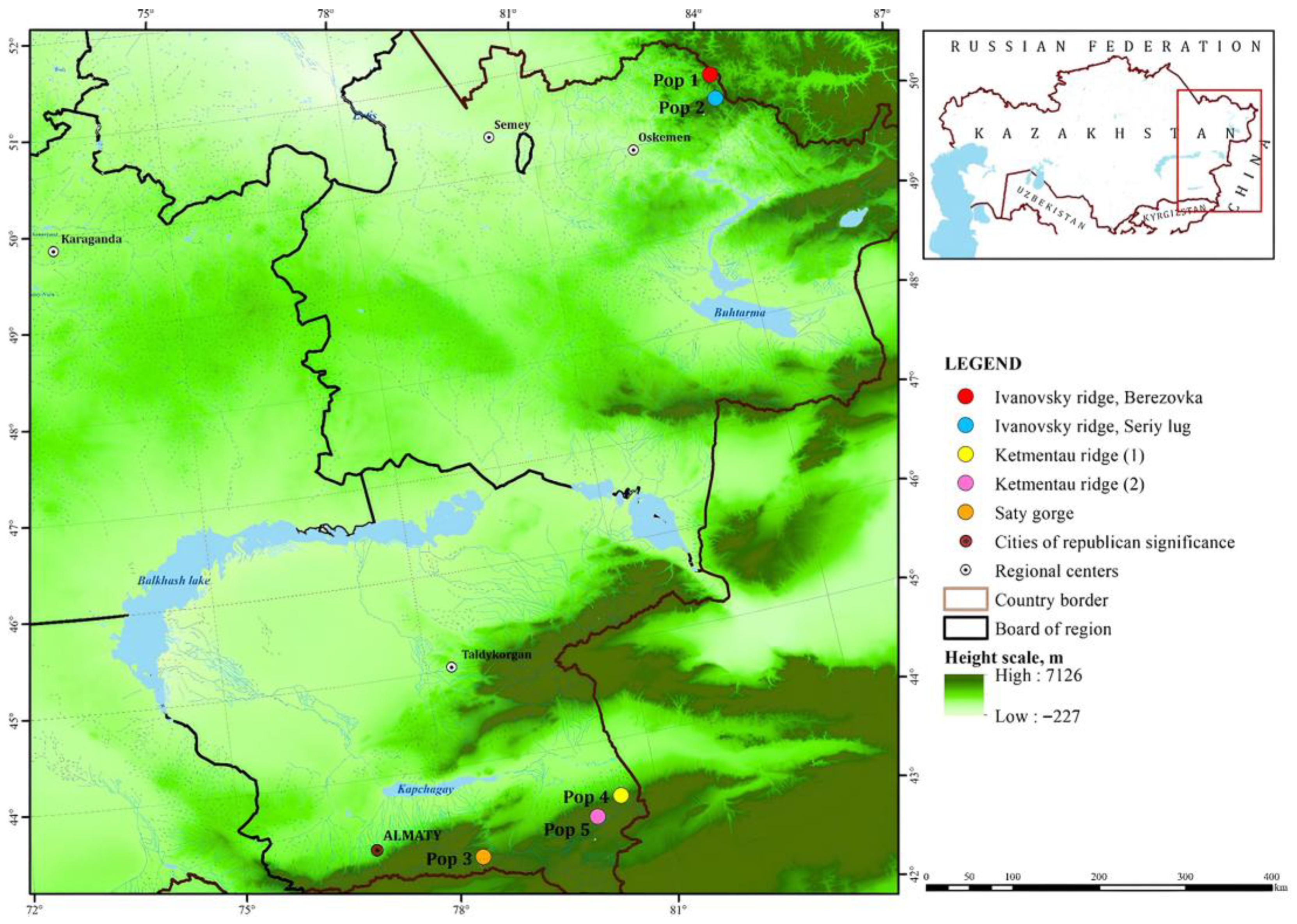
The study was conducted in eastern and southeastern Kazakhstan, where two populations of T. altaicus were examined in the eastern part of the country, while three populations of T. dschungaricus were sampled in the southeast (Figure 1). Site-specific data are summarized in Table 1. For each locality, habitat features, population density, and population status were recorded alongside general environmental parameters.
The Ketpen and Kungey Alatau mountain systems are notable components of the northern Tien Shan, located at the convergence of the following three floristic and geographic provinces that differ in their ecological conditions: the central Tian Shan-Zalaiskaya, Kashgar-Eastern Tian Shan Transitional, and Dzungarian Transitional provinces. This largely explains a high species diversity of their flora: Kungey has 1662, and Ketpen has 1890 species of vascular plants [17,18]. Due to inaccessibility of the Kungey Alatau Range many areas in its eastern part have been preserved in their natural state and therefore serve as a benchmark for the flora and vegetation accounts of the entire northern Tian Shan.

2.2. Field Studies (2023–2024)

During the survey of plant communities with Trollius species, classical botanical methods were used (floristic, ecological-geographical, and geobotanical). The following two main methods were applied: (a) route reconnaissance method to determine the species’ distribution; (b) detailed survey of the populations of Trollius species. During the entire research period, three expedition routes were laid out. Plant identification was carried out using Flora of Kazakhstan [19,20] and the Illustrated Guide to the Flora of Kazakhstan [21]. Taxonomic nomenclature, including Latin and common names, was cross-checked against the Catalog of Life (COL) [22] and Plants of the World Online (POWO) [23]. Herbarium samples were collected in accordance with established standard procedures [24,25].
Classification of ontogenetic groups was used to determine the age structure of the populations studied. To determine the age structure, the approach developed by A.A. Uranov’s was used [26]; this approach provides a deeper understanding of the plant life cycle and adaptation to the environment.
To evaluate the age distribution across each population, we established transects at every research site. Depending on the landscape, we positioned 10 m2 plots at intervals of 10–20 m, resulting in a total of 10 transects per population. Within these plots, we documented the age of every individual of the target species. We calculated population density as the count of individuals per 10 m2. Geobotanical assessments for each site involved recording the status of plant communities, life forms, and specific density. Finally, the cenopopulation types were categorized following the classification system of T.A. Rabotnov [27,28], whose classification is based on the structure and dynamics of plant populations within plant communities, distinguishes cenopopulations by their spatial distribution, age composition, and regeneration patterns. Population classification was based on the “delta-omega” method by L.A. Zhivotovsky [29], which evaluates population stability and dynamics by calculating the following two parameters: delta (Δ), representing the intensity of population growth or decline, and omega (ω), reflecting the stability of the population structure over time.

2.3. Population Age Structure and Correlation Analysis

The age structure of the T. altaicus and T. dschungaricus populations spanned all ontogenetic stages. The ontogenetic stage was identified at the peak flowering phase.
The age index of the cenopopulation (Δ) was calculated using the formula:
Δ = ΣKimi/ΣKi,
where ΣKi is the sum of plants from all age groups; mi—ageness.
The effectiveness index (ω) was determined as follows:
ω = Σpiei,
where pi = ni/n is the proportion of plants; i—the states within the given population; ni—the absolute number of plants of the i-th state, n = Σni—the total number of plants; ei—energy efficiency.
Energy efficiency (ei) is an integral index reflecting physiological and reproductive activity of individuals at different ontogenetic stages. The highest value of this index is in mature generative plants (g2), which are at the peak of reproductive capacity, while it is significantly lower in pre-generative and subsenile individuals. The use of energy efficiency in the calculation of the efficiency index allows us to assess the functional state of the cenopopulation in terms of its ability to maintain abundance and self-sustaining.
The recovery index (I) is determined by the formula:
I = Σj→v/Σg1→g3,
where Σj→v is the number of plants of all pre-generative age states; Σg1→g3—the number of plants of all generative age states [30].
To assess the similarity between the age structures of the Trollius populations from the nearby distribution areas, correlation analysis was carried out. We used Pearson’s correlation coefficient that measured linear correlation between two sets of data. In our case the data sets represented individual populations and consisted of the numbers of individuals in different ontogenetic stages. Pearson’s correlation coefficient was also calculated to measure the strength of linear correlation between various morphometric characters within each of the five populations studied. All analyses were carried out in RStudio 2024.12.1.

2.4. Study Species and Morphometrics

To evaluate the morphological profiles of the five populations, we measured key parameters including height, leaf size, and leaf count per plant. Additionally, the number of generative shoots and basal leaves was documented to determine the structural variability between T. altaicus and T. dschungaricus. All morphological parameters were studied using standard botanical methods. Criteria for selecting plant specimens for morphological analysis: to ensure objectivity and representativeness of the morphological data, plant selection was carried out based on the following measurable characteristics: plant height (cm) was recorded as the distance from the plant base to the apex of the primary shoot. Plants showing typical height for the population were selected. Leaf length (cm)—the longest leaf was measured. Preference was given to plants with well-developed leaves. Leaf width (cm)—measured at the widest point of the same leaf used for length measurement. Flower diameter (mm)—the maximum diameter of a fully open flower was measured. Only flowering plants were considered. Number of leaves (pieces)—all leaves on the plant were counted. Plants with a characteristic number of leaves for the population were selected. Diameter of generative bushes—the diameter of the entire above-ground part of a mature plant was measured. This reflects the general habit of the plant. Number of root leaves—basal leaves were counted separately as they reflect adaptive traits of the plant. Selection principle: from each site, 15 typical individuals were selected, representing average population values for the listed traits. Atypical or damaged plants were excluded. The main goal was to obtain comparable data for statistical analysis and to assess intraspecific and interspecific variability.

Statistical Analysis

To summarize the morphological variability across the five populations, we employed a descriptive statistical framework. This involved calculating the arithmetic mean, standard deviation, and full range of values for each trait. Statistical processing and comparative analysis were executed within the R-Studio environment (R-Studio Team, 2020).
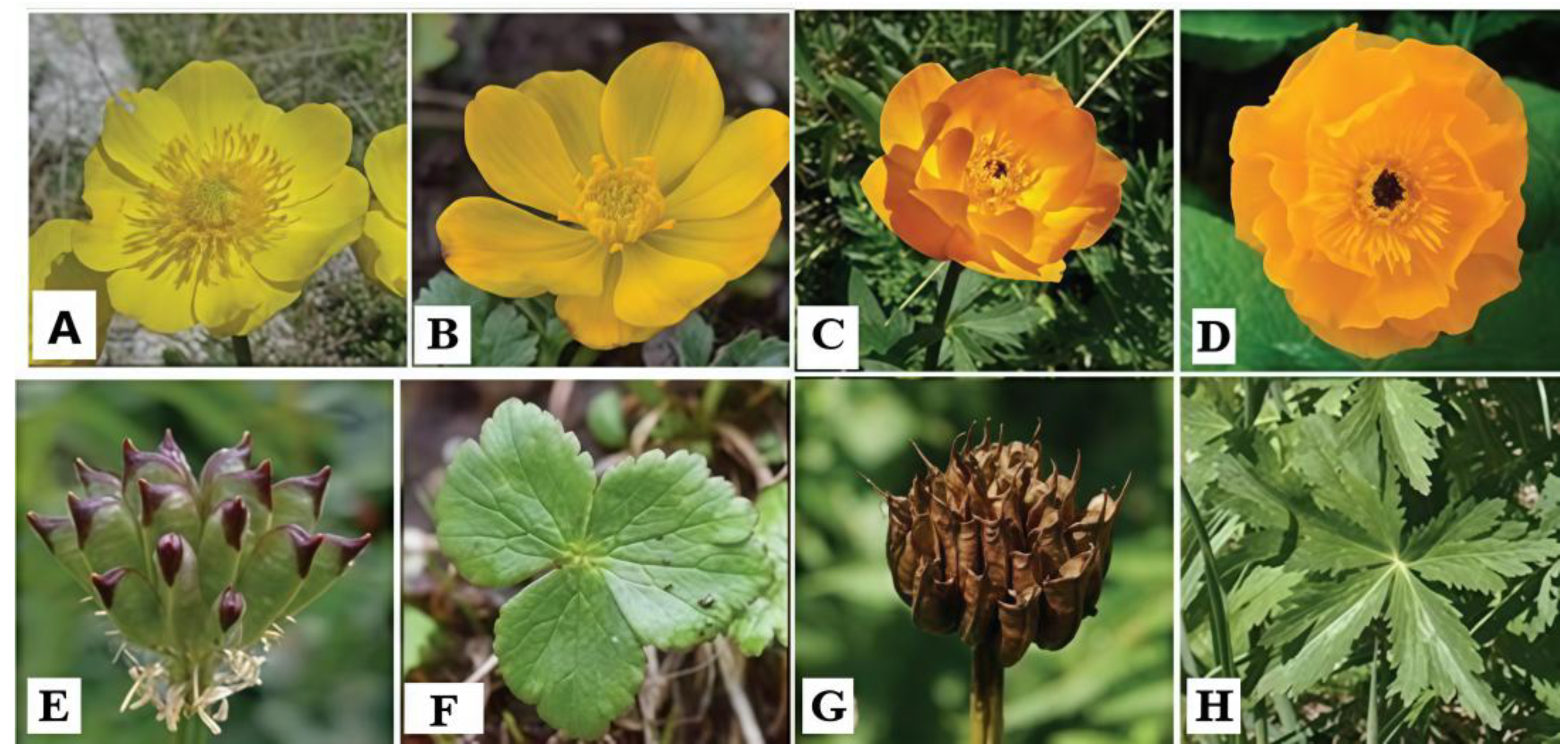
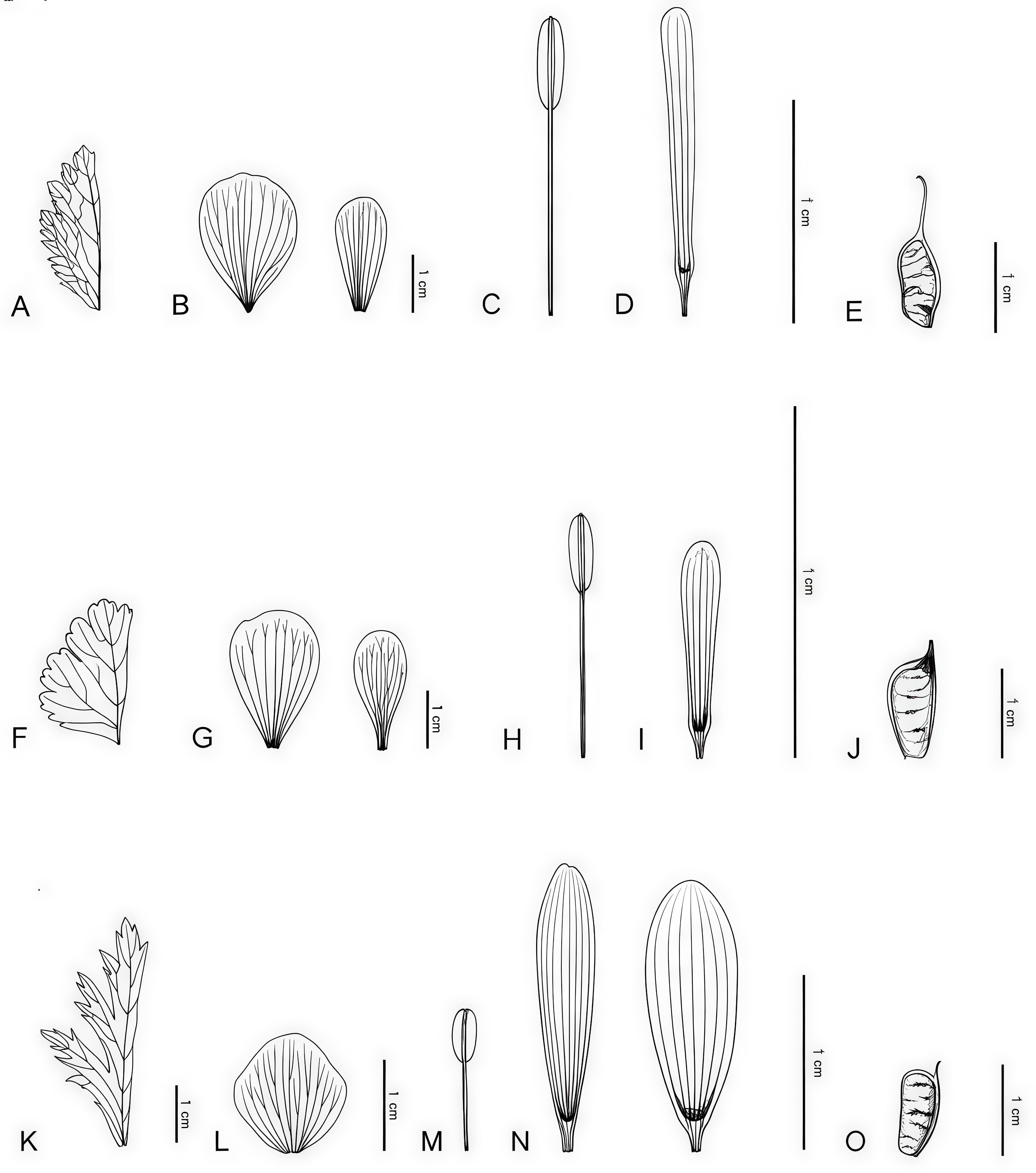
The length of stamens and nectary petals varies significantly at different stages of development. In T. dschungaricus, the length of the stamens exceeds that of the nectary petals, whereas in T. altaicus, the lengths of stamens and nectary petals are equal (Figure 2 and Figure 3) [23,31,32].
In the present study we assessed the following morphometric parameters: plant height, number of leaves, flower diameter, and diameter of generative bushes. A total of about 15 individuals were sampled from each of the five populations for the analyses. Morphometric measurements were carried out on herbarium material.

2.5. Herbarium Collections of T. altaicus and T. dschungaricus

To clarify the species distribution in Kazakhstan, as well as to design expedition routes, herbarium materials were studied. These materials (more than 100 herbarium sheets) provided valuable information on the distribution and changes in the population structure of Trollius in the flora of Kazakhstan over the past centuries, from 1841 to 2018, allowing for the assessment of population dynamics in the context of natural changes and anthropogenic impact.
An inventory of herbarium collections was conducted in the following herbaria: Al-Farabi Kazakh National University Herbarium—19 sheets; Altai Botanical Garden Herbarium (Ridder, Kazakhstan)—15 sheets; Institute of Botany and Phytointroduction Herbarium—168 sheets; Herbarium of the South Siberian Botanical Garden (ALTB, Barnaul, Russia)—22 sheets; Herbarium of the Lomonosov State University (MW, Moscow, Russia), where 40 herbarium sheets of Trollius species were found [33]. While studying the herbarium collections, the data from labels were recorded without changes, including the collectors’ names, collection date, and the geographical and administrative location of sites.

3. Results and Discussion

3.1. Phytocenotic Characteristics of the Populations Studied

3.1.1. Population 1

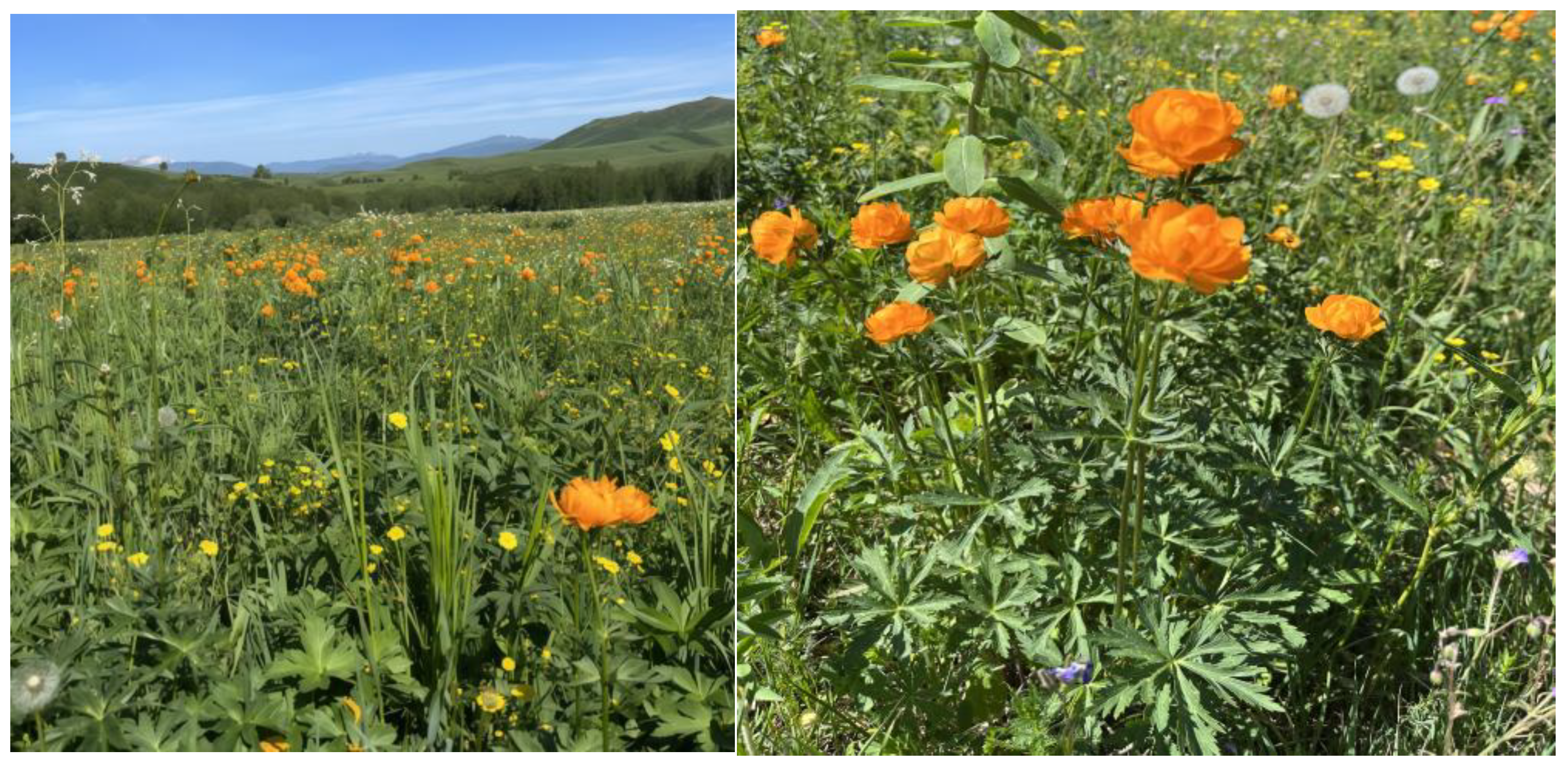
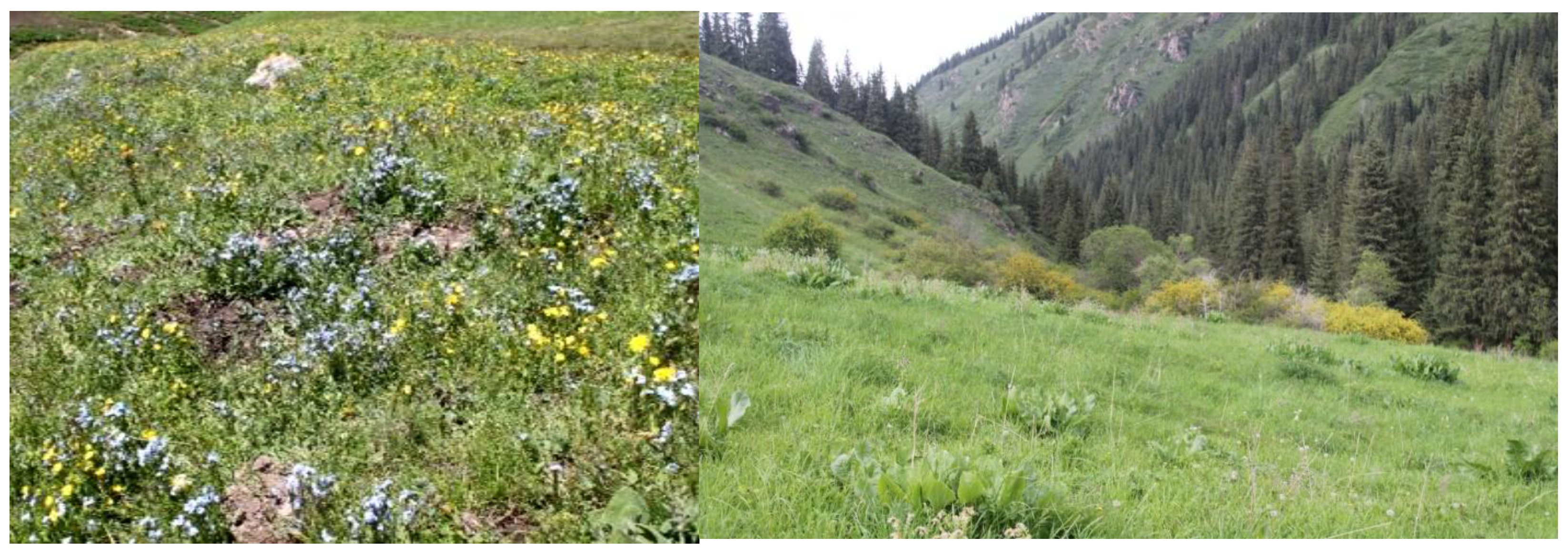
Population 1 (P1) of T. altaicus was located on the Ivanovsky ridge, near Berezovka, in the area of a recreation base. The site was located at 50°33′20″ N and 83°65′46″ E, 1033 m above sea level.
The population belongs to the Trollius-Potentilla-Sanguisorba phytocenosis, represented by T. altaicus, Ranunculus grandifolius C.A. Mey., and Sanguisorba officinalis L. The terrain is leveled, with a noticeable slope from southeast to northwest at an angle of 15°. The soils are lightly moist mountain chernozems. The total area of the population was ca 10 hectares. The main typical habitats are open floodplain forb meadows (Figure 4).
The phytocenosis has a shrub layer. The herbaceous cover is dominated by R. grandifolius and S. officinalis, which together account for approximately 50% of the phytocenosis structure, and consist of three layers (Table S1).

3.1.2. Population 2

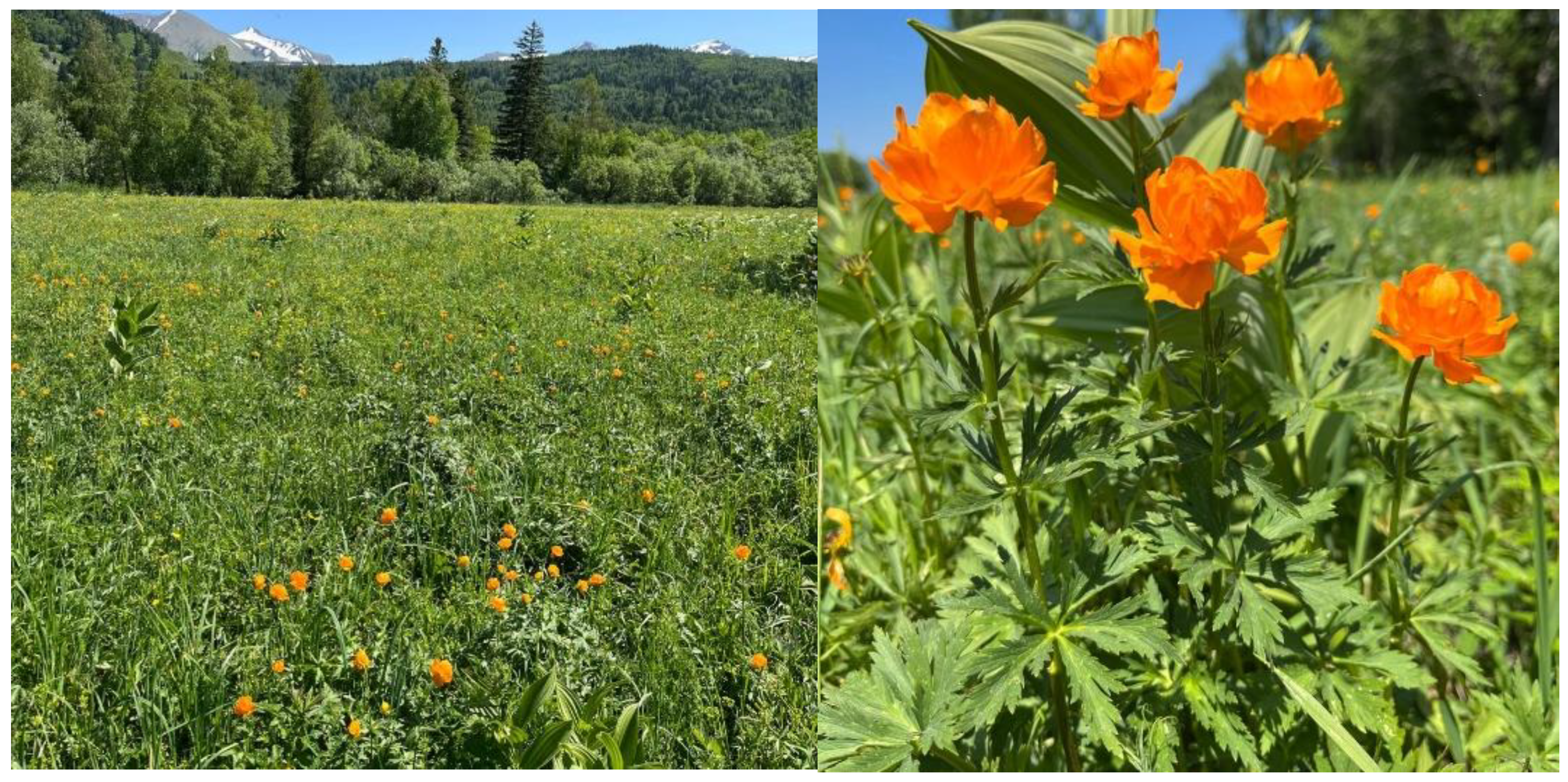
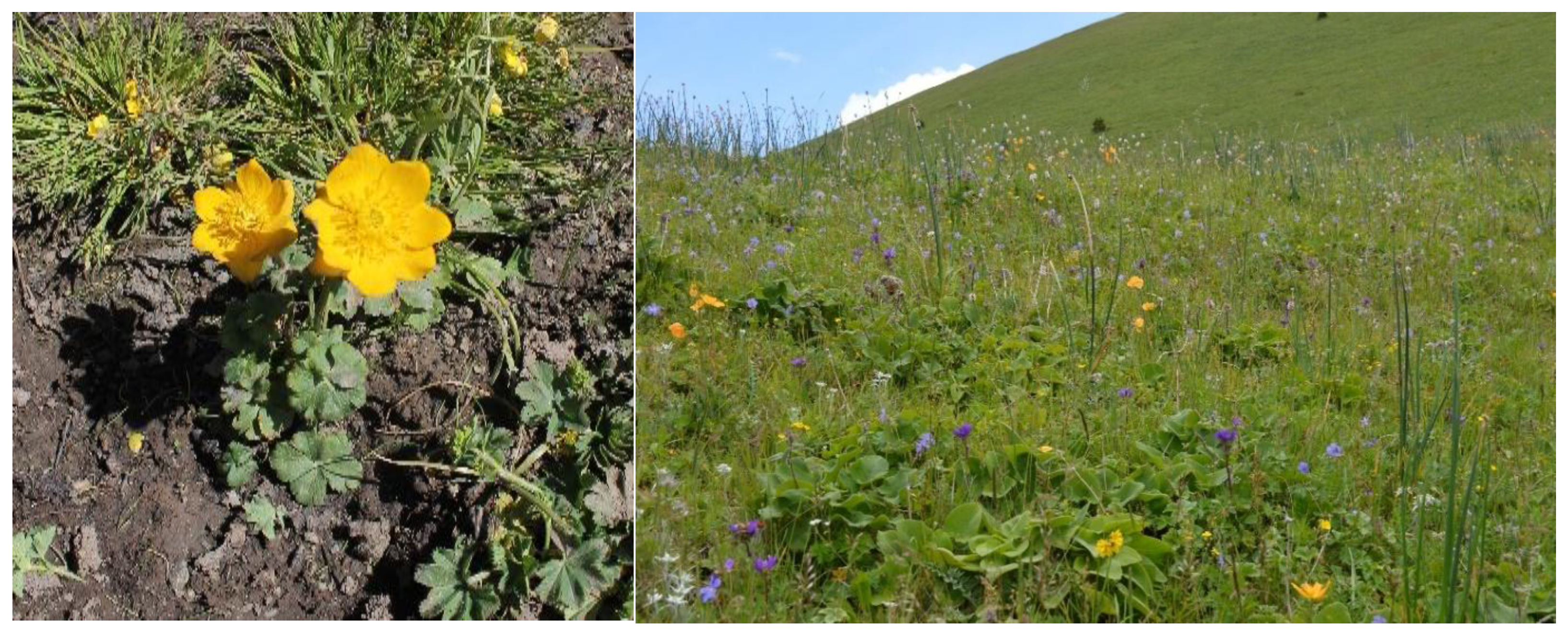
Population 2 (P2) of T. altaicus was situated in the Ivanovsky ridge area, near the recreation base “Seryi Lug”. The site was located at 50°36′01.55″ N and 83°89′63.42″ E, 1150 m above sea level.
The population is part of the Trollius-gramineous phytocenosis, represented by T. altaicus and Calamagrostis macilenta (Griseb.) Litv. The area of cenopopulation was 6 hectares. The site was a leveled intermountain plain with a 5° south–north slope. The soils were moist mountain chernozems. The typical habitats were open floodplain forb meadows (Figure 5), creating favorable conditions for the growth of this plant community.
The phytocenosis of P2 was characterized by a complex multi-layered vegetation structure. The woody-shrub layer was primarily composed of Populus × ramulosa Dode., Picea abies (L.) H.Karst., Salix padifolia Rydb., Prunus padus L., Padus avium Mill., and Betula pendula Roth. Shrubs were 2–5 m tall, creating shady environment necessary for the growth of the lower vegetation layers. The herbaceous cover under the woody-shrub layer had three levels of herbaceous vegetation, each differing in height and species composition (Table S1).

3.1.3. Population 3

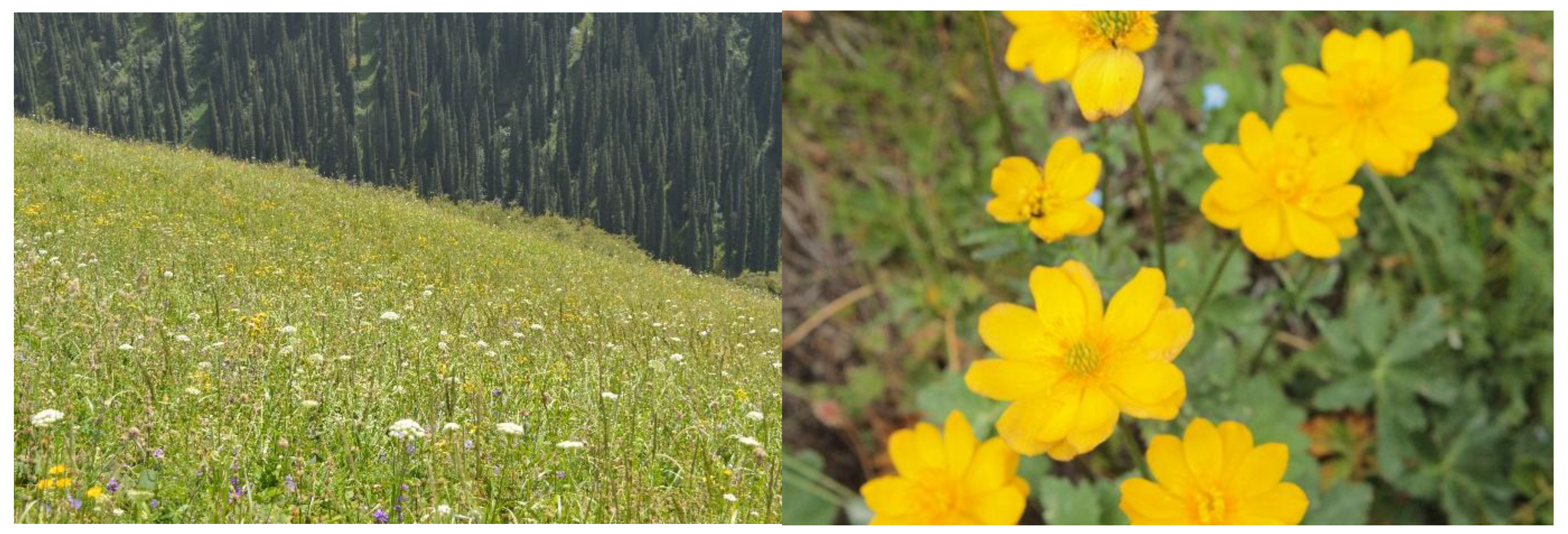
Population 3 (P3) of T. dschungaricus was located in the Saty River (Figure 6), on its eastern slope, in a dry seasonal watercourse on clay-stony soil. The community was of a shrub-herbaceous type, with a somewhat shaded herbaceous layer and sparse vegetation in open areas. The slope was up to 35°. The site was located at N 43°01′29.6″ E 78°23′20.5″, 2278 m above sea level. The total area occupied by this population ranged from 1 to 1.5 hectares. The soils were brown mountain-steppe, typically forming under shrub and steppe phytocenoses. The surface alternated between grassy turf patches and moss clumps, with occasional outcrops of bedrock.
The herbaceous layer was very dense, with the projective cover of up to 90% and height from 35 to 70 cm. The condition of the population was good, as it was located Park “Kolsai kolderi”. The vegetation was a complex combination of meadow-forest and high-altitude species (Table 1).
In the community studied, mature generative and juvenile individuals dominated. P3 had the lowest numbers of T. dschungaricus plants among all the sites studied. A total of 111 individuals of T. dschungaricus was recorded, distributed evenly or scattered, sometimes forming small groups of 5–9 individuals. The average population density ranged from 4.7 to 9.4 individuals per square meter, with good regeneration observed.
Unlike populations P1 and P2, P3 had a lower moisture level and a predominance of open spaces over shaded areas, which limited the growth of T. dschungaricus.

3.1.4. Population 4

Population 4 (P4) of T. dschungaricus was located in the place Arlyksay of the Ketpen ridge, near the Ketpen Pass on the southern slope of the range (Figure 7). The site was located at N 43°19′134′′, E 80°18′028′′, 2878 m above sea level. The site description was made at the peak flowering phase. The site vegetation was represented by subalpine meadow forbs on brown mountain-steppe soil varieties formed under shrub, fescue, and oatgrass-fescue steppes.
The projective cover ranged from 95% to 100%, indicating a high plant cover density. The total area occupied by the population varied from 1.0 to 1.7 hectares. There were 8–11 generative individuals, and 9–13 vegetative individuals per square meter. The height of T. dschungaricus individuals varied from 40 to 55 cm. The plant community with T. dschungaricus was represented by subalpine meadow forbs forming two vegetation layers (Table S1).

3.1.5. Population 5

Population 5 (P5) of T. dschungaricus in the Ketpen ridge was located in the Sunkarsay gorge, on fine-earth turf-covered slopes with a southwestern exposure. The site was located at N 43°24′247″ and E 80°28′960″, 2132 m above sea level (Figure 8). The projective cover in this community ranged from 90% to 95%, and the height of the herbaceous layer varied from 30 to 60 cm. At the time of observation, the flowering of T. dschungaricus had just started. The population was in good condition, with a noticeable potential for regeneration, as evidenced by the predominance of immature and mature generative individuals. The vegetative cover consisted of two herbaceous layers (Table S1).
This population was relatively small. According to A. Alyokhin’s viability assessment, it scored 2 points, indicating a satisfactory condition. A total of 89 specimens of T. dschungaricus were recorded, distributed diffusely, forming small groups of 4–6 individuals. The average population density ranged from 2.8 to 6.1 individuals per square meter.
The most pronounced anthropogenic impact on populations in the eastern parts of the Kungey Alatau and Ketpen mountain ranges was associated with hiking trails and the movement of private vehicles. In some localities, livestock grazing was also recorded. Notably, populations in the Ketpen Ridge currently lack formal territorial protection, underscoring the necessity for regular monitoring of their status.
In the case of T. altaicus, precipitation appeared to be a more influential environmental factor, which may be related to its adaptations to the extreme climatic conditions of Kazakhstan. These adaptations include entering dormancy or reducing aboveground biomass under unfavorable thermal conditions, thereby enabling survival in harsh environments [34]. For instance, T. altaicus may reduce its plant height and shed part of its foliage, retaining only the leaves required for photosynthetic activity during the growing season. During winter, the species undergoes dormancy and senescence, resuming growth in the following spring.
By contrast, T. dschungaricus exhibits higher cold tolerance, which is consistent with its occurrence at higher altitudinal zones. Nevertheless, both species are sensitive to precipitation during the peak growing season, indicating that moisture availability and temperature are key limiting factors during this period [35].
Field observations indicate that T. dschungaricus is distributed in subalpine and alpine meadow ecosystems of the Kungey Alatau. Scientific investigations of this species date back to 1994, particularly in the studies of Professor S.K. Mukhtubayeva, as reported in earlier publications [36].
It has been demonstrated that moderate increases in atmospheric CO2 concentrations can enhance plant growth and improve photosynthetic efficiency in terrestrial ecosystems [37]. Accordingly, moderate CO2 enrichment may facilitate the expansion of Trollius populations, whereas excessively high emission levels may adversely affect herbaceous species due to their relatively limited carbon sequestration capacity compared with woody plants [38,39].
In addition, ecotone zones between mountainous and lowland areas, such as foothill regions, often function as both sources of range expansion and zones of habitat loss. Alongside climate change, tourism development, livestock grazing, and illegal harvesting have contributed significantly to the reduction in Trollius habitats. Because Trollius habitats frequently overlap with pasturelands, the absence of targeted conservation measures results in substantial trampling and grazing pressure. Moreover, the medicinal and culinary value of Trollius has intensified illegal collection, further accelerating population decline.
From a conservation perspective, it is essential to delineate core habitat areas of T. altaicus and T. dschungaricus by integrating existing protected area boundaries with distributions of highly suitable habitats and to establish ecological corridors to support connectivity between populations. Lower and moderately suitable habitats may function as stepping-stone areas facilitating dispersal. In addition, the establishment of ecological barriers across major mountain systems such as the Tien Shan and Altai, the development of a biodiversity conservation network, strengthened protection of natural forest and meadow ecosystems, and the definition of ecological red lines are recommended. Finally, regulating livestock pressure within the species’ range is crucial for ensuring long-term population stability.

3.2. Population Structure of the Trollius Species

The individuals of T. altaicus (Berezovka, P1, and Seryi Lug, P2), while in the population Saty (P3) of T. dschungaricus, buds and immature individuals dominated (Table 2). In the two remaining populations of T. dschungaricus (P4 and P5), immature and young vegetative individuals dominated. The presence of a small number of old generative and subsenile individuals was associated with high mortality of some mature generative individuals and the rapid aging of old generative individuals.
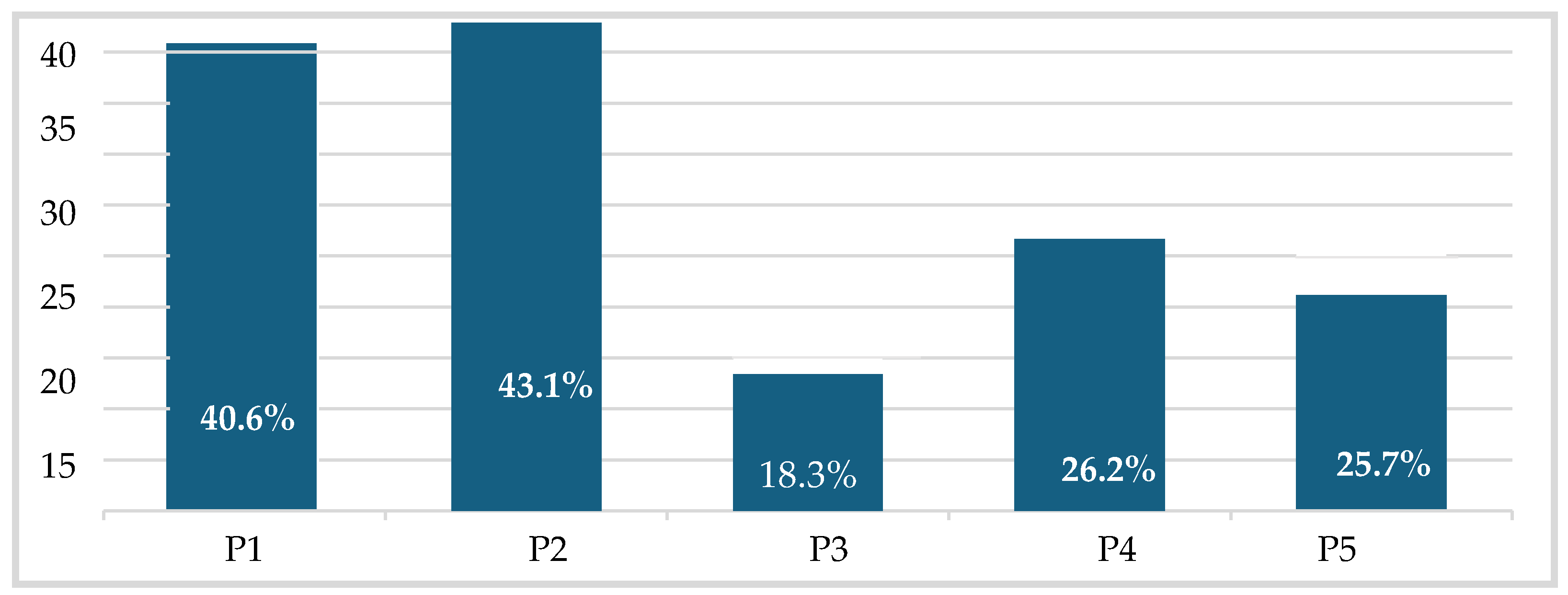
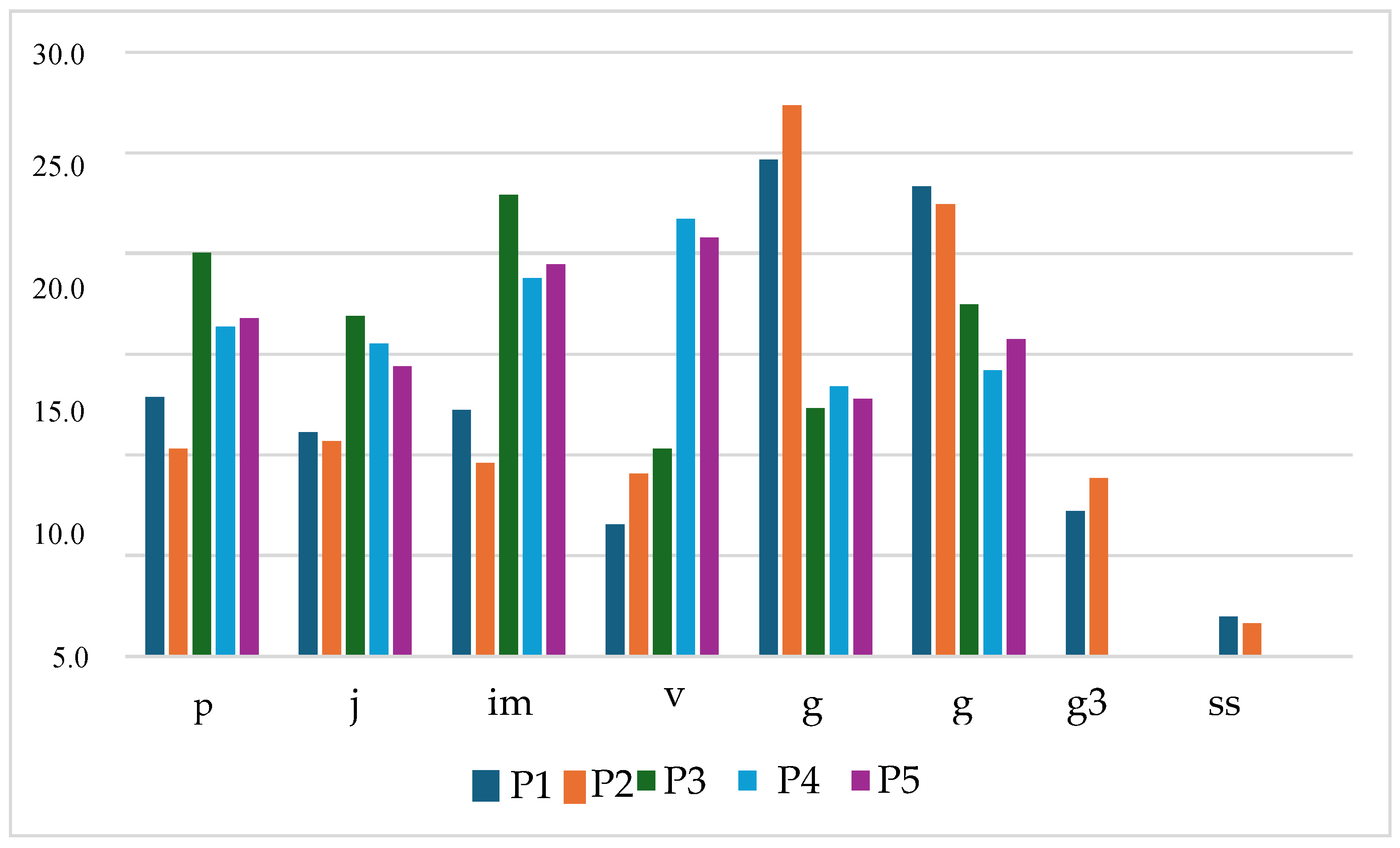
As seen from Figure 9, P3 had the highest percentage of plants in the pre-generative stage (seedlings, juvenile, and immature). In ontogenetic stages g3 (old generative) and ss (subsenile) in populations P3, P4, and P5, the absence of individuals was noted (indicated in the table by *). This may indicate either the young age status of these cenopopulations or high mortality of plants at late stages of ontogenesis, which prevents the accumulation of older generative and subsenile individuals in their structure.
The study was conducted on plots of 2–3 ha, which allows us to consider the obtained data representative for assessing the structure and status of populations within the corresponding phytocenoses.
A consistently high proportion of pre-generative individuals was observed across all coenopopulations (Figure 10), indicating active seed-based regeneration. This pattern is likely driven by high seed productivity, effective germination, and rapid juvenile growth rates [40]. In addition, favorable ecological and phytocenotic conditions appear to enhance recruitment success. For instance, in wet meadow habitats, sufficient soil moisture supports the development of juvenile plants and facilitates their progression to subsequent ontogenetic stages.
The highest population densities of T. altaicus were recorded in P1 and P2, reaching 43.1 and 40.6 individuals m−2, respectively. This pattern is likely associated with elevated soil moisture conditions at these sites (Figure 10).
The studied soils across the populations belong to subalpine soil types, differing in their morphological structure and degree of profile development. Soils of P1 and P2 are characterized by a medium-textured (loam) composition, providing a balance between water retention and drainage. Although humus content is moderate, these soils show relatively higher concentrations of total nitrogen and phosphorus compared to other sites, indicating increased fertility and biological activity.
Soils of P3 and P4 represent a transitional type with a heavier mechanical composition, reduced humus content, and moderate levels of key nutrients such as phosphorus and potassium. Exchangeable sodium remains low, though slightly elevated compared to P1 and P2. These soils are more prone to compaction and exhibit reduced aeration.
In contrast, soils of P5 contain the thickest humus horizon and the highest organic matter content. While nutrient levels fall within the normal range, these soils demonstrate higher cation exchange capacity and increased sodium proportion. They are characterized by a heavier texture and greater water-holding capacity.
All studied populations occur on different parent materials, which largely explains the observed variation in soil structure and composition. However, across all sites, a tendency toward structural breakdown under excessive moisture was noted, likely due to a high proportion of silt and fine particles (>20%). Soil reaction ranged from neutral to slightly alkaline, with no evidence of harmful carbonate accumulation, salinization, or solonetz development.
In P4 and P5, T. dschungaricus showed moderate population density, with 26.2 and 25.7 individuals m−2, respectively. These populations were at higher elevations on the western side of the ridge. Despite a large number of pre-generative individuals, P3 had the lowest density of 18.3 individuals per m2, leading to the conclusion that ontogenetic development occurred at a moderate or low rate.
The age index evaluates the ontogenetic level of coenopopulation at a specific point in time. It ranges from 0 to 1, with the values closer to 1 indicating a higher population age. P1 and P2 could be described as mature populations, while P3, as a young population.
The efficiency index (the environmental energy load caused by the “average” plant) was from 0.74 to 0.83. According to the delta-omega classification of populations, all populations were considered mature.
The recovery index is determined by the proportion of individuals in the pre-generative stage and ranges from 0 to 1. A low recovery index of P1 (0.16) suggested that the population was aging. In P3, it was relatively high (0.64), suggesting instability of the population (Table 3).
As part of the assessment of the functional state of populations, we used an approach to determine the energy efficiency of ontogenetic stages based on their biological importance in the plant life cycle. Energy efficiency in this context is understood as a conditional coefficient reflecting the total contribution of individuals of a certain stage to the productivity and reproduction of the population. This value takes into account both physiological activity and the potential for progeny generation or participation in vegetative growth.
Mature generative individuals (g2) have the highest energy efficiency, since it is at this stage that the main reproductive potential of the plant is realized. The efficiency of young generative (g1) and old generative (g3) individuals is estimated somewhat lower, which is associated, respectively, with their incomplete maturity or age-related decline in physiological functions. Individuals of the pre-generative stages (seedling, juvenile, immature and vegetative) are assigned minimum energy efficiency values, since at these stages the plant does not participate in reproduction and consumes resources mainly for growth and development. Sub-penile stages are also characterized by low energy efficiency due to the decline of vital functions and inability to reproduce.
The use of this conditional energy efficiency scale allowed a comprehensive assessment of the qualitative composition of populations. For example, high values of the efficiency index in T. altaicus populations (especially in P1) are due to a significant number of individuals at the most productive generative stages, which reflects the mature and stable state of the population. In contrast, the predominance of individuals with low energy efficiency in T. dschungaricus populations (especially at P3–P5) indicates a young age composition and dominance of growing but not yet reproducing individuals.
Thus, the concept of energy efficiency serves as a convenient tool for integral assessment of the ontogenetic and functional structure of populations, allowing us to compare their current state, developmental dynamics and adaptive capabilities under different ecological conditions.

3.3. Correlation Between the Age Structures of the Trollius Populations

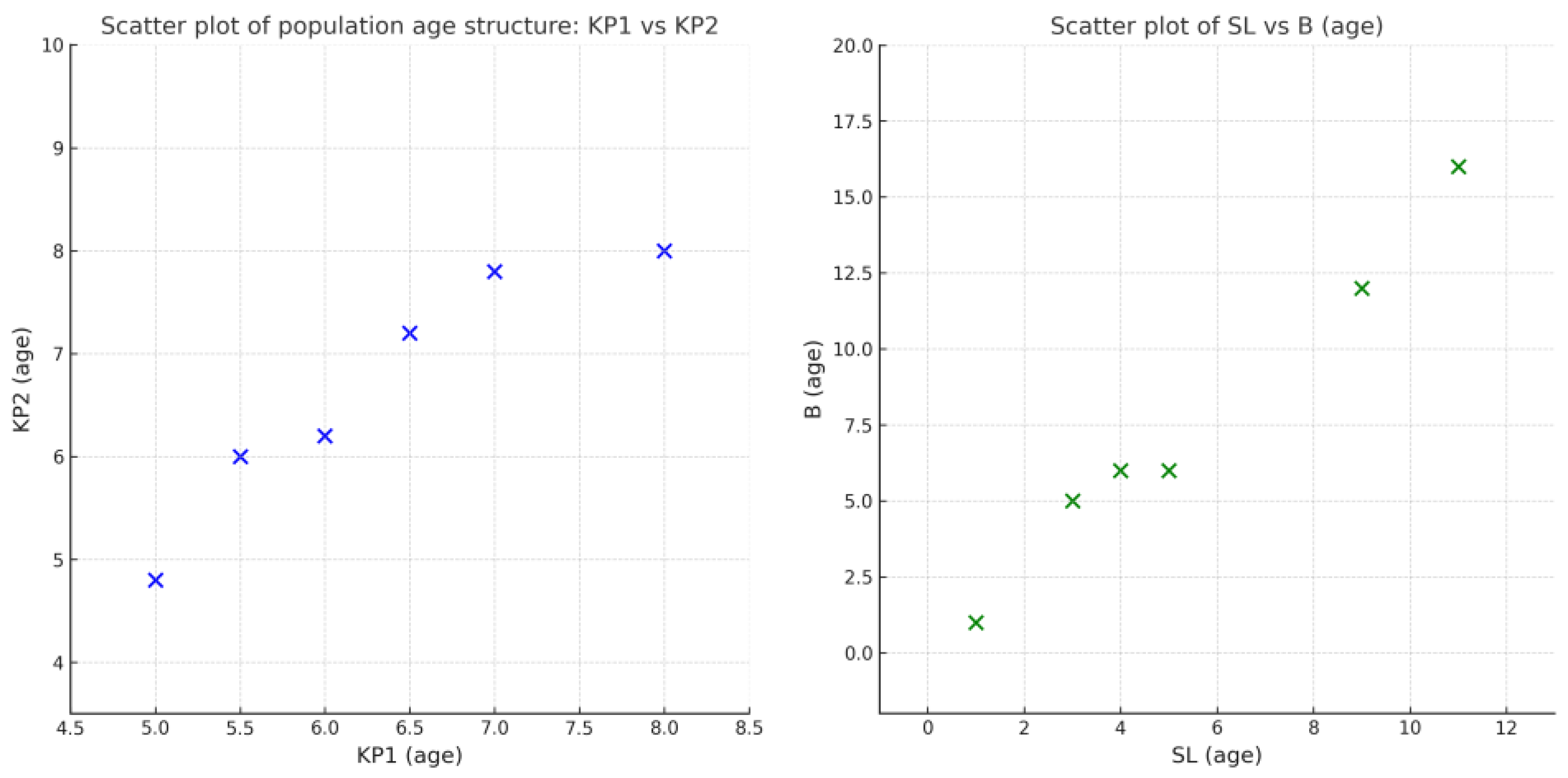
As seen from Figure 11, Pearson correlation coefficient was an appropriate statistics to assess the covariance (i.e., measure of joint variability) between the age structures of different populations, because the associations could be approximated by a straight line. We assessed the strength of associations between P1 and P2 and between P4 and P5. In both cases, the correlation was strong and positive, indicating a high similarity between the age structures of the populations considered. The result could be expected given high similarity between the environmental conditions and vegetation structure of the sites of P1 and P2, as well as between the sites of P4 and P5.
The analysis revealed a strong positive correlation between the age structures of the studied populations. For the KP1–KP2 and P4–P5 pairs, Spearman’s rank correlation coefficient was p = 1.0 (p < 0.05), indicating perfectly identical rank sequences across age groups. A robust association was also observed for the SL and B populations (p = 0.98). These values confirm the statistical significance of the similarity in age spectra, consistent with the homogeneous environmental conditions of the sites.

3.4. Morphological Characters of T. altaicus and T. dschungaricus

The largest plant size was recorded in P4, while P3 was characterized by the smallest plant height and flower diameter. The average plant height ranged from 21 ± 6 cm (P4, T. dschungaricus) to 54 ± 6 cm (P2, T. altaicus), indicating a high interspecific variability in the growth strategies and environmental conditions of different populations, with higher values of plant height indicating favorable light and soil conditions. The average number of leaves varied from 3 ± 1 to 6 ± 2 and reflected plant productivity levels. For example, T. altaicus from the Saty population (P3) had the highest number of leaves, which is associated with high resource availability. Flower diameter ranged from 3.1 ± 0.7 cm (P5, T. dschungaricus) to 4.8 ± 0.7 cm (P2, T. altaicus). Larger flowers are characteristic of populations with lower competition for pollinators [21]. Large differences in bush diameter (from 7 ± 3 cm to 25 ± 3 cm) suggested high interspecific variation in the density of generative organs. For instance, T. altaicus populations showed higher values, indicating greater reproductive activity. Leaf length and width were highly variable, 4.1 ± 6 cm and 2.7 ± 5 cm, respectively. Such morphological variability between T. altaicus and T. dschungaricus populations may be related to ecological and geographical habitat characteristics as well as genetic differences. Further research, including genetic analysis and environmental factor assessment, will help identify the main causes of the variation observed.
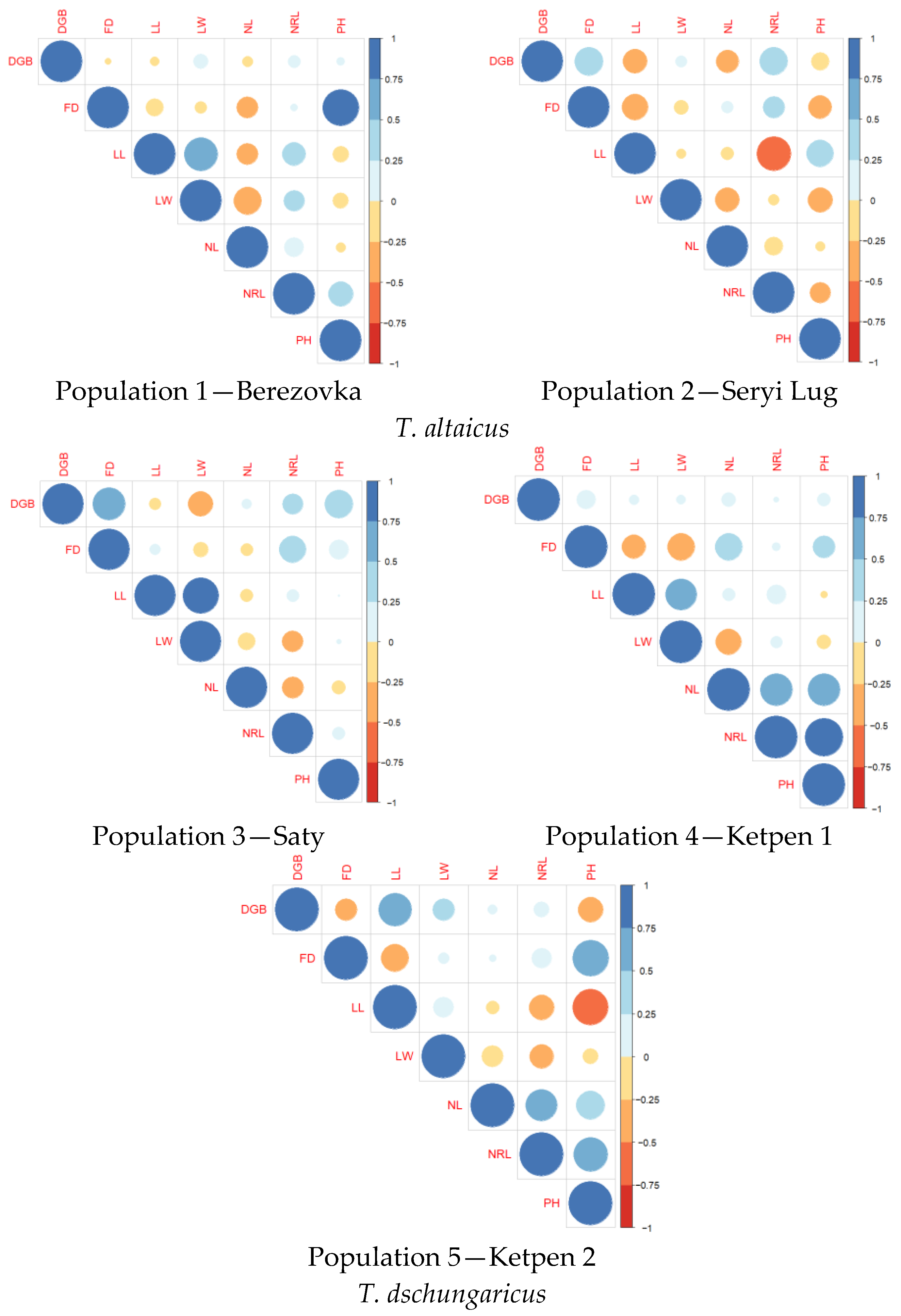
The correlation analysis revealed significant differences in the relationships between morphometric parameters across the populations studied (Figure 12). In P5 (T. dschungaricus) a strong positive association between plant height and leaf length (r > 0.7, p < 0.05) was found, while in P2 (T. altaicus), there was a strong positive correlation between the number of lower leaves and leaf lenghth. However, these relationships were not as strong in other populations. In P3 (T. dschungaricus), leaf length was strongly and negatively associated with leaf width, and in P4 (T. dschungaricus), plant height was strongly and negatively associated with the number of lower leaves. Correlation between traits in different populations: in population P3 (T. dschungaricus), a strong negative correlation was found between leaf length and leaf width (p < 0.05), indicating that as leaf length increases, its width tends to decrease. In population P4 (T. dschungaricus), a strong negative correlation was observed between plant height and the number of lower leaves (p < 0.05), which may suggest adaptive differences in growth strategies. In the other populations, such correlations were either absent or much weaker (|r| < 0.3, p > 0.05), possibly reflecting differences in environmental conditions or genetic characteristics of the populations. In other populations, these associations were not as strong. The observed disparity confirms high variability of morphometric characters, due to intra- and interspecific variability and differences in growing conditions. The results obtained can be used for further monitoring of the population structure of Trollius and for assessing their adaptive potential.

4. Conclusions

The joint phytocenotic, ontogenetic, and morphometric analyses revealed both similarities and differences in the state of the T. altaicus and T. dschungaricus populations. P1 (T. altaicus) was growing in an area under a strong anthropogenic load; however, the plants formed fruits, dispersed seeds, and developed strong roots. The multi-layered structure of the vegetation cover in the P2 (T. altaicus) phytocenosis, including tree-shrub and herbaceous layers, ensured ecosystem stability and provided optimal conditions for the growth of T. altaicus. A gradual transition from tall shrubs to low grasses created a diversity of microhabitats, which supported the biodiversity of this community. In P3, T. dschungaricus was able to complete its full life cycle, including growth, flowering, and fruiting phases; however, its population size remained low. This leads to the degradation of vegetation cover and changes in microclimatic conditions. P4 of T. dschungaricus was classified as normal, consisting of a small number of individuals from all age groups, with a predominance of mixed-age vegetative individuals that sustain themselves through seed reproduction. The viability index was 2 points, indicating a satisfactory condition, and the species was not protected. P5 of T. dschungaricus was rapidly declining in the vicinity of a large settlement, raising concerns about its survival. The main contributing factors to this decline include: mass uprooting for bouquet-making, which significantly reduces the population size; digging up plants for transplantation to private garden plots; trampling by livestock; and the narrow ecological niche of the species.
Overall, the study of T. altaicus and T. dschungaricus contributes to both theoretical knowledge and practical applications, deepening our understanding of plant biology and guiding conservation efforts in the face of environmental change.

Supplementary Materials

The following supporting information can be downloaded at https://www.mdpi.com/article/10.3390/d18050244/s1, Table S1: Composition of vegetation layers in the populations of T. altaicus and T. dschungaricus; Table S2: Morphometric measurements of Trollius population.

Author Contributions

Conceptualization, D.K. and M.K.; methodology, M.S.; software, S.M.; validation, K.K. (Kanat Kulymbet), A.M.; formal analysis, A.K. and A.A.; investigation, M.K.; resources, K.K. (Kanat Kulymbet); data curation, D.K. and K.K. (Konyrzhay Kassymzhanova); writing—original draft preparation, D.K., G.S. and S.M.; writing—review and editing, M.K. and K.K. (Konyrzhay Kassymzhanova); visualization, M.S. and N.M.; supervision, A.K.; funding acquisition, D.K. All authors have read and agreed to the published version of the manuscript.

Funding

This research received no external funding.

Institutional Review Board Statement

Not applicable.

Informed Consent Statement

Not applicable.

Data Availability Statement

The raw data supporting the conclusions of this article will be made available by the authors on request.

Conflicts of Interest

The authors declare no conflicts of interest.

References

  1. Ziaja, M.; Wójcik, T. Occurrence of the globeflower Trollius europaeus L. in “Łąki w Komborni” Natura 2000 site (Podkarpackie Province, SE Poland). Ecol. Quest. 2016, 23, 61–69. [Google Scholar] [CrossRef]
  2. Sproat, C.D.; Zhan, R. Altaethyrella (Brachiopoda) from the Late Ordovician of the Tarim Basin, Northwest China, and its significance. J. Paleontol. 2018, 92, 1005–1017. [Google Scholar] [CrossRef]
  3. He, L.; Wang, Z.; Lu, J.; Qin, C.; He, J.; Ren, W.; Liu, X. Trollius chinensis Bunge: A Comprehensive Review of Research on Botany, Materia Medica, Ethnopharmacological Use, Phytochemistry, Pharmacology, and Quality Control. Molecules 2024, 29, 421. [Google Scholar] [CrossRef] [PubMed]
  4. Flora of Kazakhstan. Vol. IV; Izd of the Academy of Sciences of the Kazakh SSR: Almaata, Kazakhstan, 1961; pp. 14–16. (In Russian)
  5. Abdulina, S.A. List of Vascular Plants of Kazakhstan; Steka Printing House: Almaty, Kazakhstan, 1999. (In Russian) [Google Scholar]
  6. Witkowska-Banaszczak, E.; Bylka, W. New flavonoid compound of Trollius europaeus. Acta Physiol. Plant. 2015, 37, 99. [Google Scholar] [CrossRef]
  7. Kantar, M.B.; EAnderson, J.; ALucht, S.; Mercer, K.; Bernau, V.; Case, K.A.; Le, N.C.; Frederiksen, M.K.; DeKeyser, H.C.; Wong, Z.-Z.; et al. Vitamin variation in Capsicum spp. provides opportunities to improve nutritional value of human diets. PLoS ONE 2016, 11, e0161464. [Google Scholar] [CrossRef]
  8. Zhou, M.; Wang, H.; Zeng, X.; Yin, P.; Zhu, J.; Chen, W.; Li, X.; Wang, L.; Wang, L.; Liu, Y.; et al. Mortality, morbidity, and risk factors in China and its provinces, 1990–2017: A systematic analysis for the Global Burden of Disease Study 2017. Lancet 2019, 394, 1145–1158. [Google Scholar] [CrossRef]
  9. Larina, G.V.; Kaigorodov, E.V.; Daibova, E.B.; Yalbacheva, O.A.; Vidyaykina, L.G. Peculiarities of acid-base properties of peat formed in various agroclimatic zones of the Altai mountainous region. IOP Conf. Ser. Earth Environ. Sci. 2021, 928, 012003. [Google Scholar] [CrossRef]
  10. Buglova, L.V.; Gusar, A.S. Liliopsida anatomical traits in the Trollius species (Ranunculaceae). BIO Web Conf. 2021, 38, 00019. [Google Scholar] [CrossRef]
  11. Serebryany, M.M.; Fedorova, A.V. On the species of Trollius L., often classified under the genus Hegemone Bunge ex Ledeb. (Ranunculaceae). Bull. Mosc. Soc. Nat. Biol. Sect. 2023, 128, 63–71. (In Russian) [Google Scholar]
  12. Sulborska-Różycka, A.; Weryszko-Chmielewska, E. Detaling morphological traits of Trollius europeus L. flowers, nectary structure, and holocrine nectar secretion through combined light and electron microscopy. Micron 2022, 162, 103345. [Google Scholar] [CrossRef]
  13. Serebryanyi, M.M.; Fedorova, A.V. Endemic Trollius from southeast Sakhalin: Revealing another taxonomic confusion in Trollius L. taxonomy–the T. miyabei case. Bot. Pacifica 2023, 12, 32–41. [Google Scholar] [CrossRef]
  14. Kim, D.H.; Jo, S.; Sung, J.W.; Yoon, J.W. Effect of Alternating Temperature Conditions, and GA 3 Treatment on Seed Germination of Trollius macropetalus (Regel) F. Schmidt. Korean J. Plant Resour. 2024, 37, 79–86. [Google Scholar] [CrossRef]
  15. Kostrakiewicz-Gierałt, K.; Kozak, M.; Kozłowska-Kozak, K. The impact of extensive sheep grazing on the population and individual traits of Trollius altissimus Crantz. Pol. J. Ecol. 2015, 63, 523–533. [Google Scholar] [CrossRef]
  16. Krasnoborov, I.M.; Malyshev, L.I. Flora Sibiri. In Ranunculaceae; Central Siberian Botanical Garden, Novosibirsk Nauka: Novosibirsk, Russia, 1997; Volume 14, p. 108. [Google Scholar]
  17. Mukhtubayeva, S.K. Flora of the Eastern Part of the Kungey Alatau Range; Gylym Publishing House: Almaty, Kazakhstan, 2000; p. 17. (In Russian) [Google Scholar]
  18. Sadyrova, G. Biodiversity of floristic complexes in the territory of the Ketpen-Temirlik Range. Exp. Biol. 2019, 1, 46–57. (In Russian) [Google Scholar] [CrossRef]
  19. Pavlov, N.V. (Ed.) Flora of Kazakhstan, I–IX Volumes; Nauka: Alma-Ata, Kazakhstan; pp. 1956–1966. (In Russian)
  20. Buglova, L.V. Natural hybrids of Trollius asiaticus × T. altaicus: Characteristics and distribution. Probl. Bot. South. Sib. Mong. 2018, 17, 180–183. (In Russian) [Google Scholar]
  21. Illustrated Identifier of Plants of Kazakhstan; Izd of the Academy of Sciences of the Kazakh SSR: Alma-Ata, Kazakhstan, 1969; Volume 17, p. 641. (In Russian)
  22. COL Version. Available online: https://www.catalogueoflife.org/data/taxon/82XP (accessed on 13 February 2025).
  23. The International Plant Names Index and World Checklist of Vascular Plants 2025; Royal Botanic Gardens: London, UK, 2025.
  24. Lavrenko, E.M.; Korchagin, A.A. Field Geobotany 1964; Publishing House of the Academy of Sciences of the USSR: Moscow-Leningrad, Russia, 1964; Volume 3, p. 332. [Google Scholar]
  25. Yurtsev, B.A. Theoretical and Methodological Issues of Comparative Floristics; Nauka: Leningrad, Russia, 1987; 235p. [Google Scholar]
  26. Smirnova, O.V. Criteria of Age States and Peculiarities of Ontogenesis in Plants of Different Biomorphs; Nauka: Moscow, Russia, 1976; pp. 14–44. (In Russian) [Google Scholar]
  27. Uranov, A.A. Age spectrum of phytocenopopulations as a function of time and energy processes. Biol. Sci. 1975, 2, 7–34. (In Russian) [Google Scholar]
  28. Rabotnov, T.A. Life Cycle of Perennial Herbaceous Plants in Forest Cenoses; Ser. 3; BIN of the USSR Academy of Sciences: Leningrad, Russia, 1950; Volume 6, pp. 7–204. (In Russian) [Google Scholar]
  29. Zhivotovskiy, A.A. Ontogenetic states, effective density and classification of plant populations. Ecology 2001, 1, 3–7. (In Russian) [Google Scholar] [CrossRef]
  30. Zhukova, L.A. Dynamics of Populations of Meadow Plants in Natural Phytocenoses; Nauk. Dumka: Kiev, Ukraine, 1987; pp. 9–19. (In Russian) [Google Scholar]
  31. Erst, A.; Luferov, A.; Troshkina, V.; Shaulo, D.; Kuznetsov, A.; Xiang, K.; Wang, W. Trollius austrosibiricus (Ranunculaceae), a new species from South Siberia. PhytoKeys 2019, 115, 83. [Google Scholar] [CrossRef]
  32. Mitrenina, E.Y.; Erst, A.S.; Skaptsov, M.V.; Veklich, T.N.; Chernysheva, O.A.; Kutsev, M.G.; Kuznetsov, A.A. Cytogenetic characteristics of some Trollius L. species (Ranunculaceae) from Asian Russia. Ukr. J. Ecol. 2020, 10, 321–328. [Google Scholar] [CrossRef]
  33. Sitpayeva, G.T. On the scientific importance of the collection funds of the Institute of Botany and Phytointroduction of KN MES RK. In The Role of Botanical Gardens and Arboretums in the Conservation, Study and Sustainable Use of Plant Diversity; KN MES RK: Almaty, Kazakhstan, 2017; pp. 505–507. (In Russian) [Google Scholar]
  34. Jiang, H.; Peng, J.; Liu, M.; Dong, J.; Ma, C. Integrating Patch Stability and Network Connectivity to Optimize Ecological Security Pattern. Landsc. Ecol. 2024, 39, 54. [Google Scholar] [CrossRef]
  35. Zhang, K.; Yao, L.; Meng, J.; Tao, J. Maxent Modeling for Predicting the Potential Geographical Distribution of Two Peony Species under Climate Change. Sci. Total Environ. 2018, 634, 1326–1334. [Google Scholar] [CrossRef]
  36. Mukhtubayeva, S.K.; Sitpayeva, G.T.; Danilov, M.P.; Shormanova, A.A. Rare plants of the gorges of the Sites and Kolsai of the Kungei Alatau range. Probl. Bot. South Sib. Mong. 2016, 249–256. [Google Scholar]
  37. Zeng, Z.; Wu, W.; Li, Y.; Huang, C.; Zhang, X.; Penuelas, J.; Zhang, Y.; Gentine, P.; Li, Z.; Wang, X.; et al. Increasing Meteorological Drought under Climate Change Reduces Terrestrial Ecosystem Productivity and Carbon Storage. One Earth 2023, 6, 1326–1339. [Google Scholar] [CrossRef]
  38. Sun, S.; Zhang, Y.; Huang, D.; Wang, H.; Cao, Q.; Fan, P.; Yang, N.; Zheng, P.; Wang, R. The Effect of Climate Change on the Richness Distribution Pattern of Oaks (Quercus L.) in China. Sci. Total Environ. 2020, 744, 140786. [Google Scholar] [CrossRef]
  39. Karabalayeva, D.; Kurmanbayeva, M.; Kulymbet, K.; Kusmangazinov, A.; Zhumagul, M.; Anatoliy, R.; Saken, M.; Kuanyshbayeva, M.; Alzhanova, B. Influence of soil characteristics on the distribution and evolution of Trollius dschungaricus Regel populations in the Northern Tien Shan, Kazakhstan. J. Ecol. Eng. 2025, 26, 450–459. [Google Scholar] [CrossRef]
  40. Erst, A.S.; Luferov, A.N.; Troshkina, V.I.; Xiang, K.; Wang, W. The genus Trollius L. (Ranunculaceae) in the flora of the Altai Mountain Country. In Systematic Notes Based on the Materials of the P.N. Krylov Herbarium of Tomsk State University; Tomsk State University: Tomsk, Russia, 2018; pp. 64–76. [Google Scholar]
Figure 1. Study sites of T. altaicus and T. dschungaricus in Kazakhstan.
Diversity 18 00244 g001
Figure 2. Species of the genus Trollius: (A,B)—flowers of T. dschungaricus; (C,D)—flowers of T. altaicus; (E)—fruitlets of T. dschungaricus; (F)—basal leaf of T. dschungaricus; (G)—achenes of T. altaicus; (H)—basal leaf of T. altaicus [23].
Diversity 18 00244 g002
Figure 3. Segments of the leaf blade, sepals, stamens, petals, and achenes of investigated Trollius species. T. altaicus: (A)—segments of the leaf blade, (B)—sepals, (C)—stamen, (D)—petal nectary, (E)—ovary; T. dschungaricus: (F)—segments of the leaf blade, (G)—sepals, (H)—stamen, (I)—petal nectary, (J)—ovary; T. asiaticus: (K) segments of the leaf blade, (L) sepals, (M) stamen, (N) petal nectary, (O) ovary [23].
Diversity 18 00244 g003
Figure 4. P1 in Berezovka: general view (left) and a generative individual T. altaicus (right).
Diversity 18 00244 g004
Figure 5. P2 in the Seryi Lug: general view (left) and a generative individual of T. altaicus (right).
Diversity 18 00244 g005
Figure 6. P3 on the right slope of the Saty Gorge: general view (left) and a generative individual of T. dschungaricus (right).
Diversity 18 00244 g006
Figure 7. Population of T. dschungaricus (P4) in the Ketpen Ridge, Arlyksay Gorge.
Diversity 18 00244 g007
Figure 8. Population of T. dschungaricus (P5) at the Ketpen Pass (Subalpine meadows).
Diversity 18 00244 g008
Figure 9. Age structure (%) of T. altaicus (P1, P2) and T. dschungaricus (P3–P5) populations.
Diversity 18 00244 g009
Figure 10. Population density, individuals per 1 m2, of Trollius altaicus and Trollius dschungaricus: x-, individuals in 1 m2, %.
Diversity 18 00244 g010
Figure 11. Scatter plots of the population age structure of KP1 (P4) against KP2 (P5), (left) and of SL (P2) against B (P1), (right). Correlations with p < 0.05.
Diversity 18 00244 g011
Figure 12. Correlation analysis of morphometric parameters and quantitative indicators of specimens within Population 1—Population 5 populations. Correlations with p < 0.05 are highlighted. The color indicates either positive (blue) or negative (red) correlation. Morphometric data of the plant: plant height, number of leaves, flower diameter, diameter of generative bushes, number of basal leaves, leaf length and width.
Diversity 18 00244 g012
Table 1. Overview of Trollius species populations recorded in the field study.
PopulationSpeciesPopulation NameCoordinates [°]Elevation, mGeographical Location
1T. altaicusBerezovkaN 50°33′20.17″
E 83°65′46.75″
1033“Berezovka” countyside, Ivanovsky ridge, Ridder, Eastern Kazakhstan region
2T. altaicusSeriy lugN 50°36′01.55″
E 83°89′63.42″
1150Recreation center “Seriy Lug”, Ivanovsky ridge, Ridder, Eastern region
3T. dschungaricusSatyN 43˚01′29.6″
E 78˚23′20.5″
2278Saty gorge, Park “Kolsai Kolderi”, Kegen county, Kungey Alatau ridge, Almaty region
4T. dschungaricusKetpen-1N 43°24′247″, E 80°28′960″2132Sunkarsay gorge, Ketpen ridge, Uyghur County, Almaty region
5T. dschungaricusKetpen-2N 43°19′134″, E 80°18′028″2878Arlyksay gorge, Ketpen ridge, Uygur County, Almaty region
Table 2. Number of individuals of Trollius altaicus and Trollius dschungaricus in various ontogenetic stages.
Ontogenetic StateTrollius altaicusTrollius dschungaricus
P1P2P3P4P5
p—seedling5.75.97.06.16.3
j—juvenile5.95.15.95.85.4
im—immature5.35.68.07.07.3
v—virginal5.03.03.68.17.8
g1—young generative15.111.34.35.04.8
g2—middle generative12.410.76.15.35.9
g3—old generative4.93.3***
ss—senile0.90.9***
*—ontogenetic stage not recorded in the studied population.
Table 3. Values of the age index, recovery index, and efficiency index for Trollius populations P1–P5.
PopulationSpeciesAge IndexRecovery
Index
Population Status
P1T. altaicus0.870.16Mature, aging
P2T. altaicus0.830.22Mature
P3T. dschungaricus0.410.64Young, unstable
P4T. dschungaricus0.690.47Intermediate
P5T. dschungaricus0.720.49Intermediate
Disclaimer/Publisher’s Note: The statements, opinions and data contained in all publications are solely those of the individual author(s) and contributor(s) and not of MDPI and/or the editor(s). MDPI and/or the editor(s) disclaim responsibility for any injury to people or property resulting from any ideas, methods, instructions or products referred to in the content.