Article

Morphological, Pomological, and Bioactive Compound Diversity of 33 Cherry Laurel (Prunus laurocerasus L.) from Düzce, Türkiye


Department of Horticulture, Faculty of Agriculture, Pamukkale University, 20600 Denizli, Türkiye
Diversity 2026, 18(2), 124; https://doi.org/10.3390/d18020124
Submission received: 14 January 2026 / Revised: 7 February 2026 / Accepted: 9 February 2026 / Published: 14 February 2026
(This article belongs to the Section Plant Diversity)

Abstract

Cherry laurel is becoming increasingly popular due to its unique flavor, attractive appearance, and nutritional benefits. However, the morphological, pomological, and biochemical characteristics of the existing population in the Kaynaşlı district of Düzce, Türkiye, remain unclear. To address this, 33 genotypes in this area were systematically characterized in terms of pomological and biochemical traits and their interrelationships. The results revealed a wide variation in fruit and bunch characteristics, including fruit weight (ranging from 2.34 to 7.39 g), the number of fruits per bunch (ranging from 3 to 18), and total soluble solids content (from 10.00% to 22.40%). Notably, the G3 exhibited a superior fruit weight of 7.39 g, surpassing that of currently registered varieties. The study found that phenolic compounds, particularly catechin, were dominant across the individuals, along with significant levels of myricetin, rutin, gallic acid, and syringic acid. Multivariate analyses, including principal component analysis and hierarchical clustering, confirmed a high level of diversity and identified eight individuals with superior traits related to fruit size, phenolic content, color, and astringency. These findings highlight the rich diversity in cherry laurel populations in the region and provide essential breeding material for future studies.

1. Introduction

Anatolia serves as a vital genetic reservoir for numerous plant species, situated at the intersection of three major global gene centers. This remarkable biodiversity facilitates the cultivation of a wide array of fruit trees, including the cherry laurel (Prunus laurocerasus L.) [1]. Belonging to the Rosaceae family, wild varieties of cherry laurel are natively distributed across the Balkans, Türkiye, and the Caspian region [2]. Historical records indicate that the species was collected from Türkiye as early as 1546 before spreading throughout Europe [3]. In Türkiye, where it is locally known by names such as Taflan or Laz cherry, it is predominantly grown along the Black Sea coastline and remains a culturally and economically significant fruit in these regions [4,5].
The cherry laurel is a perennial evergreen that can reach heights of 5–20 m, exhibiting significant variation in leaf morphology, fruit size, and flavor profiles [6]. The tree typically flowers in March and April [2], with fruit ripening occurring between June and July [1]. As the cherry-like drupes mature, their color shifts from red to deep black, accompanied by a reduction in astringency and an increase in sugar content [1,7]. Beyond its aesthetic value as an ornamental plant [8], cherry laurel is highly regarded for its diverse applications in the food industry, ranging from fresh consumption to the production of jams, marmalades, pickles, and traditional molasses [5,9]. Furthermore, it is recognized as a medicinal plant used in the treatment of various ailments [10]. However, caution is required in its utilization, as the leaves and seeds contain toxic cyanogenic glycosides; consequently, only the ripe fruit peel and pulp are typically incorporated into human and animal diets [11].
In recent years, the nutritional and pharmacological importance of cherry laurel has gained international attention, largely due to its rich composition of bioactive compounds. The fruits are a significant source of vitamins (A, C, and E) and phenolic compounds, including flavonoids, anthocyanins, and tannins [12,13]. These phytochemicals provide potent antioxidant activity, neutralizing free radicals and offering protective health benefits [14]. Despite this potential, cherry laurel remains a relatively “underutilized” crop. In Türkiye, it is primarily grown as border trees or found in wild populations scattered by birds, rather than in organized commercial orchards [8,15]. Accordingly, standard cultural and technical practices are rarely applied to its cultivation. To transition from wild populations to standardized fruit production, selection studies are essential for identifying the fruit characteristics in the natural populations [16,17]. While two varieties (Alis1 and Odü) have already been registered in Türkiye [18,19], the vast genetic diversity present in different ecological niches remains largely uncharacterized. Therefore, selection studies are critically important to utilize the rich population [20]. Detailed analyses of fruit weight, skin color, flesh firmness, and chemical composition are critical for determining the breeding potential of these local populations [7]. Therefore, this study aims to evaluate the morphological and biochemical fruit characteristics of cherry laurels naturally grown in the Kaynaşlı (Düzce) region, establishing the relationships between these traits to identify promising individuals for future breeding and cultivation programs.

2. Materials and Methods

2.1. Plant Material

The material for this study consists of cherry laurel accessions (individual trees) in the Kaynaşlı district of Düzce province. To represent local environmental diversity, 33 individuals aged 10 to 30 years were selected based on pre-selection criteria, which included healthy trees free from any fungal diseases, fruit-bearing, and attractive fruit characteristics like shiny peel color. Fruit sampling from selected trees was conducted consecutively over two years, in 2019 and 2020. The individuals were coded according to field records (G1–G34), with G18 absent (not included among the 33 evaluated individuals).
Kaynaşlı district is located in a valley that stretches eastward from the Düzce Plain and runs along the Istanbul–Ankara route, extending westward from the foothills of Mount Bolu. The district has an elevation of 273 m above sea level and covers an area of 24,240 hectares. Topographically, it is surrounded by hills that are parallel extensions of the Bolu Mountains to the north and south, with the highest points being Menekşe Hill (1577 m) and the ridges of Bolu Mountain (790 m). The district has a Black Sea climate, with cool summers and cold winters, and the highest rainfall occurs in spring and autumn. The district center is surrounded by these hills, which are covered with forests characteristic of Black Sea vegetation [21].
Climate data for Kaynaşlı (2018–2020) revealed that 2020 was the warmest year, with summer averages reaching 23.6 °C—approximately 1.9 °C higher than 2019 (Figure 1). Peak temperatures occurred in July and August 2020 (24.4 °C and 24.2 °C), while winter temperatures fluctuated between 3–8 °C. Annual precipitation totaled 747.8, 820.0, and 625.5 mm for 2018, 2019, and 2020, respectively. A severe summer drought was noted in 2020, with rainfall dropping to 9.0 mm in July and 0.0 mm in August. Consequently, relative humidity in summer 2020 (74.3–68.1%) was significantly lower than in 2019 (80.9–83.6%). Wind speed remained stable across the period, ranging from 1.2 to 2.4 m/s [22] (Figure 1).
Fruit samples were collected from clustered fruits between July 30 and August 5. Fifteen clusters were sampled from each tree, with samples taken from the four cardinal directions (north, south, east, and west) to ensure a representative selection. Leaf samples were also collected in a similar manner, consisting of 20 healthy, fully developed leaves from each tree.
To minimize the degradation of bioactive compounds, all samples were collected before noon. After harvesting, the fruits were placed in appropriately labeled containers and transported to the laboratory. For the analysis of phenolic compounds, juice was extracted from the fruits using a fruit press and stored in tubes at −20 °C in a deep freezer until analysis could be conducted.

2.2. Morphological and Pomological Characterization

After harvest, the following parameters are evaluated for cherry laurel: bunch length, bunch weight, number of fruits per cluster, fruit length, fruit weight, fruit width, leaf length, leaf width, petiole width, petiole length, seed length, seed weight, seed width, total soluble solids (TSS), pH, TA (titration acidity), fruit color, taste, astringency, and the separation of the seed from the fruit flesh were determined.
The bunch, fruit, and seed weights of cherry laurel individuals were measured on a precision balance with a sensitivity of 0.01 g (Precica 320XT, Dietikon, Switzerland). Fruit and seed size, bunch length, and leaf characteristics were measured using a digital caliper with 0.01 mm sensitivity. Fruit color (L*, a*, b*, Chroma*, and Hue° was obtained at two different points on the fruit rind surface using a colorimeter (PCE Instruments Colorimeter, model PCE-CSM 1, Manchester, England). L*, a*, b*, Chroma*, and Hue° have been measured. L* is the brightness value, where zero represents black and 100 represents white. a* represents red, −a* represents green, b* represents yellow, and −b* represents blue. The Chroma* value represents the intensity and saturation of the color, while the Hue° value represents the color’s vividness. Bunch weights were measured on 10 bunches representing each tree, and fruit and seed measurements were performed on 20 fruits each. The number of fruits in each bunch was determined by counting them. Genotypic and chemical measurements were performed by a single researcher to maximize consistency and eliminate subjective variation and measurement errors that could arise from different evaluators. Sensory evaluations were conducted by a panel of five experienced researchers. The final score for each individual was determined by averaging the individual scores from the five panelists. The following scoring systems were utilized: Taste was rated on a 5-point scale (1: poor, 5: perfect); Astringency was rated on a 5-point scale (1: very astringent, 5: not astringent); and Separation from the seed (SFF) was rated on a 3-point scale (1: difficult, 2: intermediate, 3: easy). Fruit juices were used for physicochemical analyses. Total soluble solids matter content was determined as Brix using a refractometer (Greinorm, Lemgo, Germany). The pH value was determined at room temperature using a digital pH meter (Hanna Instruments, HI 9124, Woonsocket, RI, USA). Titratable acidity was determined by titration; the pH meter probe was immersed in the prepared fruit juice sample, and the sample was titrated with 0.1 N NaOH to pH 8.1; results were expressed as malic acid.

2.3. Phenolic Compound Analysis

This research determined the phenolic compounds of cherry laurel fruits using the Pehluvan et al. [23] method with an HPLC system (CTO-20A, Shimadzu Corporation, Kyoto, Japan). In the fruit samples, 5 g of fruit was homogenized with 10 mL of solvent and centrifuged at 15,000 rpm for 15 min. Individual phenolic compounds were determined using chlorogenic acid, caffeic acid, rutin, p-coumaric acid, myricetin, q-coumaric acid, syringic acid, gallic acid, quercetin, and catechin standards. Readings were made in the wavelength range of 190–800 nm.

2.4. Data Analysis

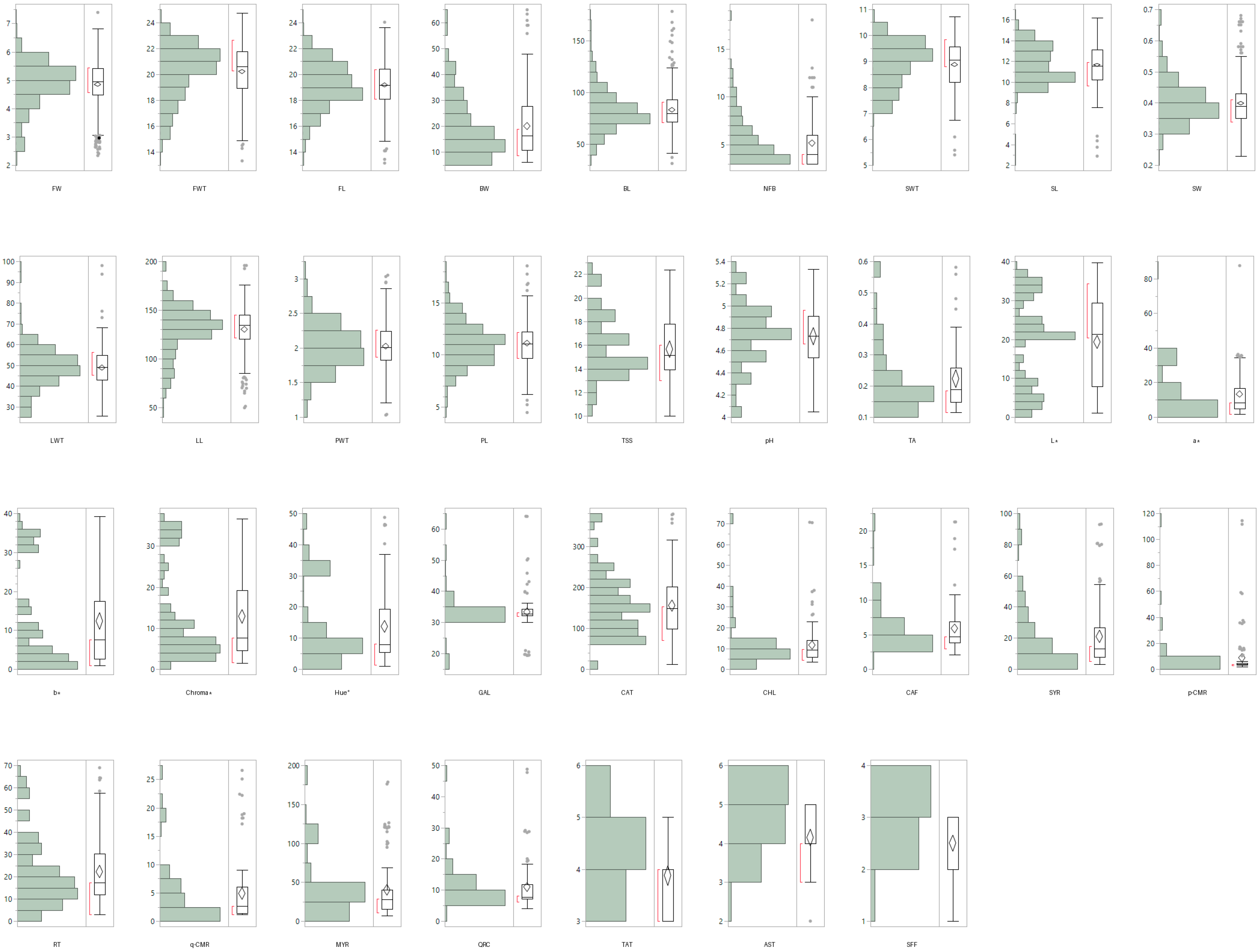
Descriptive statistical analysis was performed to determine the relationships between the fruit traits. Principal component analysis (PCA) and hierarchical clustering were performed to evaluate relationships among the examined traits and individuals, and a heat map was generated. Using the Ward’s method. This method was selected to ensure that samples are divided into the most meaningful, clearly separated, homogeneous groups, based on the principle of minimizing variance across multiple traits. The main objective of this study was preliminary screening and characterization under the same ecological conditions, rather than formal year-to-year stability testing. Although seasonal climatic differences were observed between 2019 and 2020 (Figure 1), pooling the data from both years was preferred to represent overall genotypic performance and to reduce the influence of single-season anomalies. Since cherry laurel is a perennial fruit species, selection studies prioritize individuals that exhibit stable traits across years. Additionally, Box Plots were used to visualize the distribution and changes in cherry laurel individuals across the examined traits (Figure 2). JMP Pro 17.0.0 software was used for all statistical analyses.

3. Results and Discussion

3.1. Plant Botanical Traits

In this study, the descriptive statistics for 33 morphological, pomological, and biochemical characteristics evaluated revealed significant variability within the population (Table 1). Bunch weight ranged from 6.00 g to 64.90 g, bunch length from 31.51 mm to 178.13 mm, and the number of fruits per bunch from 3.00 pieces to 18.00 pieces, indicating substantial diversity among individuals. These ranges are generally consistent with values reported in previous studies [6,18,19,24,25,26,27].
Among bunch characteristics, bunch weight exhibited the highest variability (CV = 58.40%), suggesting strong discriminative power and high breeding potential [28]. In contrast, bunch length showed lower variability (CV = 25.82%), indicating relatively greater trait stability. Given the strong influence of environmental factors such as altitude, climate, and soil conditions, variation in bunch traits alone does not necessarily reflect yield potential [24]. However, the observed bunch weight range differed from the higher values reported by Beyhan et al. [29] and Karadeniz and Kalkışım [27]. These discrepancies with the data of Beyhan et al. [29] are specifically addressed and can be explained by the ecological heterogeneity and genetic divergence within the unique microclimatic context of the Düzce region, where our study was conducted. Differences in sampling years and individual origin further contribute to these variations. Similar variability in physical fruit traits has been widely associated with genotype × environment interactions in cherry laurel and related fruit species [30,31].

3.2. External Fruit Quality Traits

Fruit weight among the examined individuals ranged from 2.34 to 7.39 g (Table 1), which is generally consistent with previously reported values for cherry laurel [25,27,29,32]. However, the maximum fruit weight observed in this study (7.39 g) exceeded the ranges reported for the registered cultivars ‘Alis1’ (4.16–6.23 g) and ‘Odü’ (2.03–3.90 g) [18,19], highlighting the presence of individuals with superior potential for fresh consumption. Fruit weight is considered one of the most important quality traits in table fruits, and recent breeding efforts have prioritized the development of large-fruited genotypes [15,19]. One of the most significant findings of this research is the identification of genotype “G3,” which achieved a fruit weight of 7.39 g. This weight is heavier than that of previously reported genotypes and cultivars, making G3 a strong candidate for use as breeding material for the fresh consumption of cherry laurel.

3.3. Internal Fruit Quality Traits

Sensory traits exhibited moderate variability, with coefficients of variation ranging from 18.45% to 22.88%. Significant differences were observed for taste, astringency, and the ease of separation of the seed from the flesh (Table 1). The presence of individuals combining good taste with low astringency, in agreement with previously reported ranges [24,26,27,33], indicates variation relevant to consumer preference and processing suitability. Fruit astringency is primarily associated with phenolic compound composition [34], while ease of seed separation represents an important criterion for both fresh consumption and industrial use.
Fruit color parameters possessed a pronounced diversity, with values ranging from 1.12–39.69 for L*, 1.66–87.53 for a*, 1.00–39.23 for b*, 1.52–36.60 for Chroma, and 0.95–48.70 for hue° angle. All color traits exhibited very high variability (CV > 86%), exceeding previously reported ranges [35]. The highest variation was observed in b*, a*, and hue°, indicating substantial heterogeneity in fruit tone and color saturation. This level of color diversity is fundamental, as fruit color is a significant determinant of consumer acceptance and market appeal [36]. Similar trends linking color variation with differences in anthocyanin content have been reported for cherry laurel genotypes [37], confirming the value of the studied population as genetic material for future breeding programs.

3.4. Fruit Bioactive Substances and Biochemical Properties

This study provides a systematic and comprehensive evaluation of the phenolic composition of cherry laurel individuals in the region. By documenting these bioactive profiles in detail, this research contributes to a better understanding of the nutritional potential of local genetic resources in the region. The total soluble solids content of the examined individuals ranged from 10.00% to 22.40%, indicating moderate variability (CV = 16.94%) and generally agreeing with previously reported values [25,29]. Titratable acidity showed markedly higher variation (0.12–0.58%, CV = 48.73%) than pH (4.05–5.33, CV = 6.07%), suggesting that TA is a more discriminative trait for differentiating individuals based on sourness and processing suitability, while pH appears to be relatively stable and genetically controlled [33,35].
The phenolic compound profiles revealed substantial genotypic diversity. Catechin was the dominant phenolic compound (11.45–378.44 mg·L−1), in contrast to some previous reports that identified chlorogenic acid as the major compound [14]. However, the markedly higher catechin levels observed in this study highlight the biochemical richness of the examined individuals. Other phenolics, including myricetin (6.94–178.39 mg·L−1), p-coumaric acid (1.77–114.35 mg·L−1), gallic acid (19.40–64.04 mg·L−1), and syringic acid (3.04–93.03 mg·L−1), were present at considerable levels, whereas q-coumaric and caffeic acids occurred at lower concentrations.
Among phenolic compounds, p-coumaric acid exhibited the highest variability (CV > 197%), followed by syringic, myricetin, q-coumaric, and chlorogenic acids (CV > 90%), indicating strong discriminatory power among genotypes. In contrast, gallic acid showed relatively low variability (CV = 19.43%), suggesting greater stability. The wide variation observed in phenolic composition is consistent with findings that both genotypic factors and environmental conditions strongly influence phenolic accumulation in fruits [34,38,39]. Additionally, in the study conducted by Todorova et al. [40], significant variations in phenolic content and antioxidant activity were similarly reported across different extracts, demonstrating the biochemical profile diversity of cherry laurel fruits.

3.5. Multivariate Analysis of Traits (PCA and HCA)

3.5.1. Principal Component Analysis (PCA)

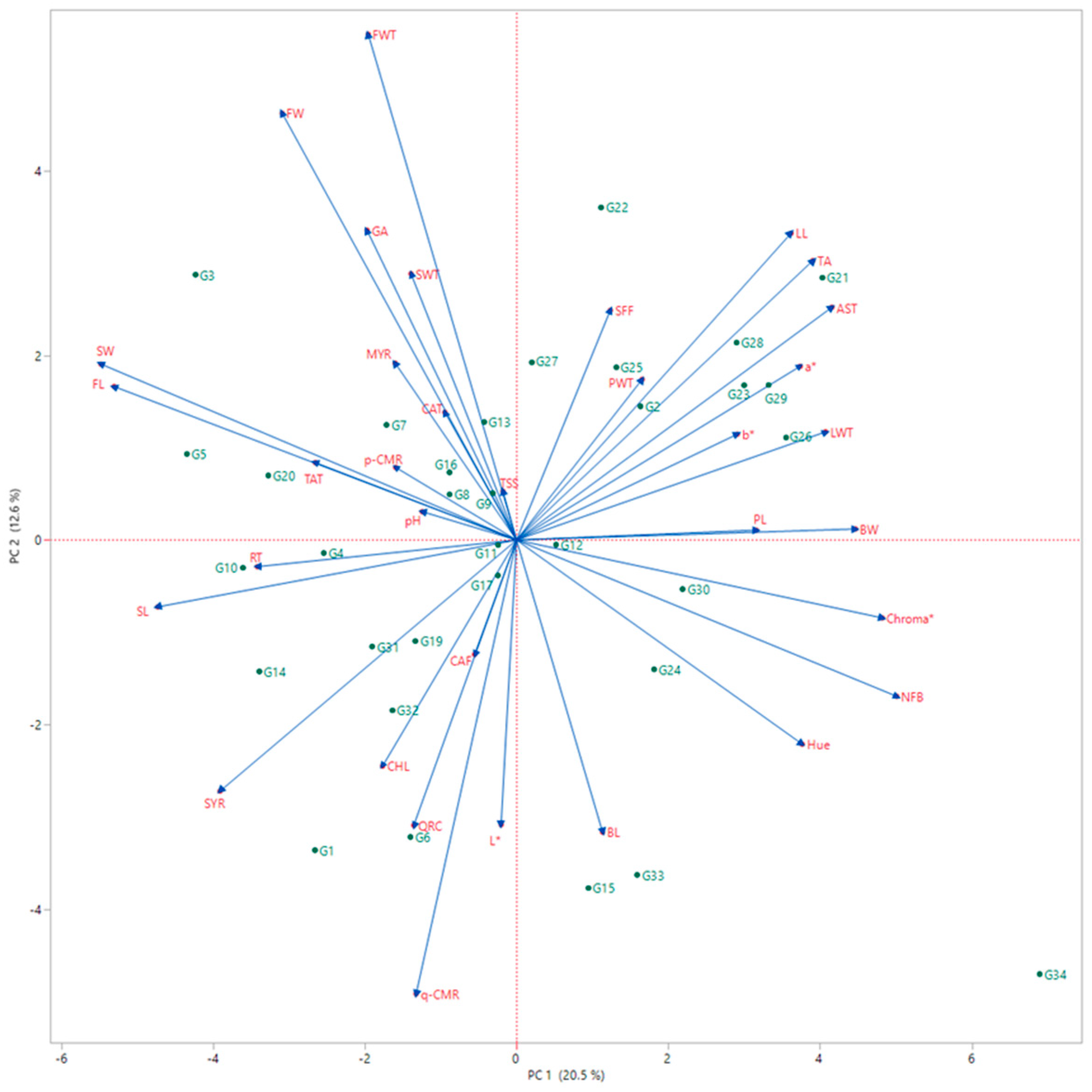
Principal Component Analysis (PCA) results showed significant differences among the cherry laurel individuals studied. The first eight components explained 73.04% of the total variance, with PC1 (20.42%), PC2 (12.58%), and PC3 (10.23%) being important (Table 2). PC1 reflects the balance between genotypic and biochemical differences, specifically separating fruit/seed dimensions from bunch characteristics. In PC1, seed weight (SW), fruit length (FL), and seed length (SL) have negative loadings, while number of fruits in the bunch (NFB), chroma, and bunch weight (BW) have positive loadings. PC2 is primarily related to fruit size and phenolic compounds; fruit width (FW) and weight (FWT) are positively loaded, while some phenolic compounds (q-CMR, QRC) and brightness (L*) are negatively loaded. PC3 is related to fruit ripeness and leaf characteristics, dominated by pH and TSS. This may guide the selection of individuals with large fruits but different phenolic content. Furthermore, it has been observed that fruit size genes generally overlap with seed numbers and that the balance between yield and quality is controlled by genes [41]. These findings are highly consistent with the results of Macit [33]’s study (PC1 22.1%, PC2 12.9%) and those of Sayinci et al. [42], allowing us to conclude that this study successfully models genotypic variation with an adequate number of principal components.
In the biplot graph (Figure 3), fruit weight, fruit width, and seed width are positioned close to each other. Taste characteristics such as acidity (TA) and astringency (AST) are also closely related. Phenolic compounds (q-CMR, QRC) and fruit size (FW, FWT) vectors are positioned opposite each other, indicating a negative relationship between phenolic content and fruit size. As fruit size increases, brightness (L*) decreases, while color intensity and red hue increase. Indeed, there is a relationship between fruit size, ripeness, and color [43]. Similarly, fruit size and sensory characteristics are linearly related [33]. The number of fruits in the bunch is inversely related to fruit weight and width, consistent with similar negative relationships reported in the literature [7,44].
From a selection perspective, the G34 exhibits strong positive correlations with high NFB and bunch weight (BW), making it a unique resource for yield-oriented breeding. The G9 (TSS), G21 (TA and AST), and G28 (TA) stand out as specific selection targets for industrial or sensory-based quality. The G3, G5, G7, and G10 are positioned close to the fruit size (FW, FWT) vectors and stand out for their large fruit, making them ideal for fresh consumption. Vector analysis confirmed inverse relationships between bunch yield (NFB, BW) and fruit quality. Additionally, a strong negative correlation was observed between fruit size and phenolic compounds. These findings are highly consistent with the results of Macit [33]’s study (PC1 22.1%, PC2 12.9%) and those of Sayinci et al. [42], allowing us to conclude that this study successfully models genotypic variation with an adequate number of principal components. The main source of genotypic variation among individuals is the interaction between genotype and environment, as widely accepted in the literature [33,45]. The PCA loadings matrix provides a strategic interpretation for future breeding programs. PC1 primarily represents the trade-off between fruit size and yield traits, indicating that selection for larger fruit weight may require careful balancing with bunch productivity. The PCA results reveal a critical negative correlation between yield-related traits (bunch weight) and fruit quality parameters (phenolic content). On the other hand, PC2 reflects the strong relationship between phenolic compounds and fruit color intensity. This finding is innovative as it provides a strategic roadmap for breeders, suggesting that a balance must be struck between productivity and bioactive richness during selection.

3.5.2. Hierarchical Cluster Analysis (HCA)

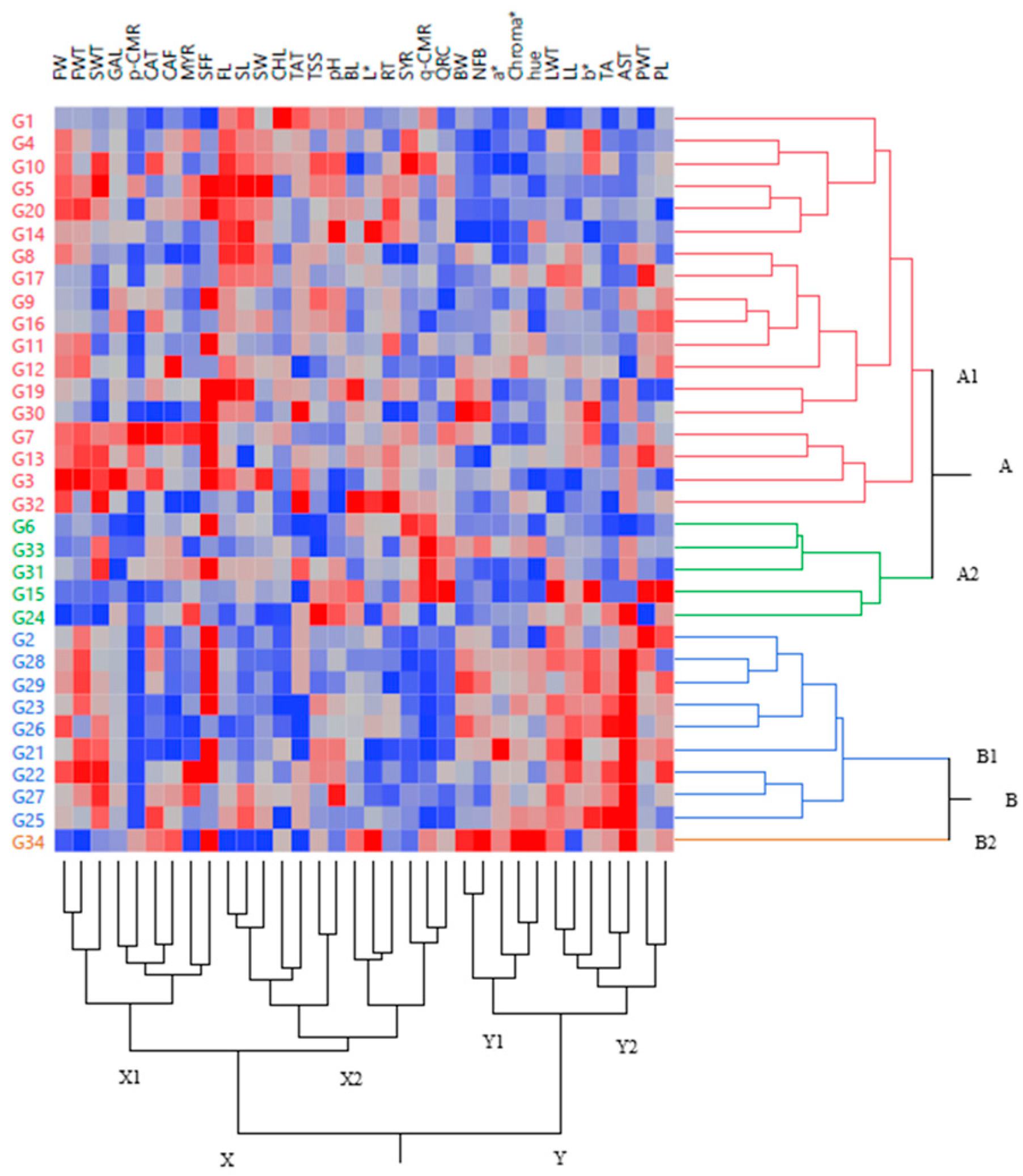
The results of the heat map hierarchical clustering analysis are presented in Figure 4. The dendrogram separated the 33 cherry laurel individuals into two main clusters (A and B), which were further subdivided into four subclusters (A1, A2, B1, and B2). Most individuals were grouped in cluster A (subclusters A1 and A2), whereas cluster B comprised subclusters B1 and B2; notably, G34 formed a distinct single-individual subgroup (B2), indicating a markedly different multivariate profile.
Trait patterns on the heatmap indicated that A1 was generally associated with higher values for key pomological traits and seed-related measurements (FL, FW, FWT, SL, SW, SWT) and with ease of seed separation (SFF), as well as with higher gallic acid (GAL) levels. In contrast, A2 was characterized by the prominence of specific phenolics, particularly q-coumaric acid (q-CMR) and quercetin (QRC). In B1, individuals were mainly distinguished by a combination of quality-related traits, including colorimetric parameters, titratable acidity (TA), astringency (AST), and several leaf traits. The separation of G34 (B2) was primarily driven by its distinctive bunch-related traits (BW and NFB), along with color- and sensory-related variables, supporting its value as a unique candidate for selection.
At the variable level, the examined traits were also separated into two major groups (X and Y), reflecting the covariation of pomological/seed attributes and biochemical–quality attributes within the dataset. Overall, the observed clustering agrees with the existence of clearly differentiated groups reported in previous multivariate studies of cherry laurel accessions [42]. Moreover, since phenotypic and biochemical traits can be influenced by microenvironmental conditions, harvest-related factors, and stress responses, the formation of distinct clusters is consistent with the influence of genotype × environment effects reported in the literature [33]. Importantly, recent SSR-based studies have also confirmed substantial genetic differentiation within cherry laurel populations [46,47], supporting the interpretation that the phenotypic diversity observed here reflects a broad genetic background that is valuable for future breeding and conservation efforts.

4. Conclusions

The cherry laurel fruit is a lesser-known fruit that has been the focus of research in recent years. This study examined 34 different traits from 33 cherry laurel individuals grown in Kaynaşlı, Türkiye. The results offer three significant contributions: a systematic evaluation of phenolic profiles, the identification of the superior individual “G3”, and a strategic PCA-based roadmap for cherry laurel breeding.
The findings reveal a wide variation among individuals, suggesting a rich genetic diversity. Given the limited existing literature on this species, the discovery of superior individuals within local populations, and the identification of new variety candidates by studying the traits of these individuals over many years, breeding programs can gain valuable insights.
In this research, the G34 was distinguished from the other individuals based on the examined traits, using PCA and hierarchical clustering analyses. Notably, G3, G6, G1, G15, G33, and G22 were recognized as prominent individuals for phenolic compounds. Meanwhile, G3 and G22 excelled in fruit weight, G34 in number of fruits per bunch and bunch weight, and G21 showed strong results for color-related traits.
Since research on cherry laurel is limited, these results may guide future studies. These eight individuals primarily form a basis for future breeding efforts, while large-fruited individuals such as G3 stand out as valuable genetic material. Because climatic conditions differed between 2019 and 2020, some biochemical traits may show seasonal variability; therefore, the superior individuals identified in this study should be validated through further multi-year and multi-location trials to confirm their stability before potential cultivar release. While G3 stands out as a promising candidate for breeding due to its high fruit weight, it should be noted that pomological traits can fluctuate depending on annual climatic variations. Therefore, the long-term performance and stability of these superior individuals must be validated through further trials in diverse locations and successive years before any formal cultivar release.

Funding

This research received no external funding.

Institutional Review Board Statement

Not applicable.

Data Availability Statement

The data presented in this study are available on request from the corresponding author.

Acknowledgments

The author would like to thank Emrah Güler and Berna Doğru Çokran for their support. The author has reviewed and edited the output and takes full responsibility for the content of this publication.

Conflicts of Interest

The author declares no conflicts of interest.

Abbreviations

The following abbreviations are used in this manuscript:
Bunch lengthBL
Bunch weightBW
Number of fruits in the bunchNFB
Fruit lengthFL
Fruit weightFW
Fruit widthFWT
Leaf lengthLL
Leaf widthLWT
Petiole widthPWT
Petiole lengthPL
pHpH
Seed lengthSL
Seed weightSW
Seed widthSWT
Titratable acidityTA
Total soluble solidsTSS
LightnessL*
a* (red-green axis)a*
b* (yellow -blue axis)b*
Chroma* (color saturation)Chroma*
Hue° (hue angle)hue
GallicGAL
CatechinCAT
ChlorogenicCHL
CaffeicCAF
SyringicSYR
p-coumaricp-CMR
RutinRT
q-coumaricq-CMR
MyricetinMYR
QuercetinQRC
TasteTAT
AstringencyAST
The state of separation of the seed from the flesh of the FruitSFF

References

  1. İslam, A. ‘Kiraz’ cherry laurel (Prunus laurocerasus). N. Z. J. Crop Hortic. Sci. 2002, 30, 301–302. [Google Scholar] [CrossRef]
  2. Fat, A.; Beyhan, N. Floral Bud Development of Cherry Laurel (Laurocerasus officinalis Roemer) in the Black Sea Region of Türkiye. Appl. Fruit Sci. 2024, 66, 2433–2442. [Google Scholar] [CrossRef]
  3. Ercisli, S. A short review of the fruit germplasm resources of Turkey. Genet. Resour. Crop Evol. 2004, 51, 419–435. [Google Scholar] [CrossRef]
  4. Alasalvar, C.; Al-Farsi, M.; Shahidi, F. Compositional Characteristics and Antioxidant Components of Cherry Laurel Varieties and Pekmez. J. Food Sci. 2005, 70, S47–S52. [Google Scholar] [CrossRef]
  5. Karadeniz, T. Şifalı Meyveler (Meyvelerle Beslenme ve Tedavi Şekilleri); Burcan Ofset Matbaacılık Sanayii: Ordu, Türkiye, 2004. [Google Scholar]
  6. İslam, A.; Deligöz, H. Ordu ilinde karayemiş (Laurocerasus officinalis L.) seleksiyonu. Akad. Ziraat Derg. 2012, 1, 37–44. [Google Scholar] [CrossRef]
  7. Sulusoglu, M. The cherry laurel (Prunus laurocerasus L.) tree selection. Afr. J. Agric. Res. 2011, 6, 3574–3582. [Google Scholar]
  8. Karadeniz, T.; Bak, T.; Güler, E. Cherry Laurel (Prunus laurocerasus) As Landscape and Garden Plant. In Agriculture, Forestry and Aquaculture Sciences; Özrenk, K., Bolat, A., Eds.; Serüven Publishing: Ankara, Türkiye, 2024; pp. 249–261. [Google Scholar]
  9. Kırca, L.; Bak, T.; Karadeniz, T. Kuzeyin Süper Meyvesi: Karayemiş. In Abstract Book of the 7th International Agricultural Congress, Nakhichevan, Azerbaijan, 26–30 September 2024; Uçar, R., Uskutoğlu, T., Eds.; Anatolian Association of Agricultural Engineers: Denizli, Türkiye, 2024; p. s69. [Google Scholar]
  10. Baytop, T. Therapy with Medicinal Plants in Turkey (Past and Present); Istanbul University Press: Istanbul, Turkey, 1984; 419p. [Google Scholar]
  11. Malaspina, P.; Betuzzi, F.; Ingegneri, M.; Smeriglio, A.; Cornara, L.; Trombetta, D. Risk of Poisoning from Garden Plants: Misidentification between Laurel and Cherry Laurel. Toxins 2022, 14, 726. [Google Scholar] [CrossRef]
  12. Karahalil, F.Y.; Şahin, H. Phenolic composition and antioxidant capacity of cherry laurel (Laurocerasus officinalis Roem.) sampled from Trabzon region, Turkey. Afr. J. Biotechnol. 2011, 10, 16293–16299. Available online: https://citeseerx.ist.psu.edu/document?doi=4ee16f033b0aca4991047f993a69e117f2489122 (accessed on 8 February 2026).
  13. Kolayli, S.; Küçük, M.; Duran, C.; Candan, F.; Dinçer, B. Chemical and antioxidant properties of Laurocerasus officinalis Roem. (cherry laurel) fruit grown in the Black Sea region. J. Agric. Food Chem. 2003, 51, 7489–7894. [Google Scholar] [CrossRef] [PubMed]
  14. Vahapoğlu, B.; Altan, E.N.; Gülseren, İ. Karayemiş Meyvesinin Biyoaktif Özellikleri ve Fonksiyonel Gıdalarda Kullanım Potansiyeli. J. Food 2018, 43, 751–764. [Google Scholar] [CrossRef]
  15. Sulusoglu, M.; Cavusoglu, A.; Erkal, S. A promising fruit: Cherry laurel (Prunus laurocerasus L.) and steps on breeding. Ekin J. Crop Breed. Genet. 2015, 1, 26–32. [Google Scholar]
  16. Bak, T. Pomological Characteristics of Cherry Laurel Genotypes in Denizli (Acıpayam). Int. J. Agric. Environ. Food Sci. 2025, 9, 971–979. [Google Scholar] [CrossRef]
  17. Karadeniz, T.; Doğru Çokran, B.; Kırca, L.; Güler, E.; Kokaj, T. Farklı İki İncir Genotipinde Fenolik Madde İçerikleri. In Proceedings of the 5th International Agricultural Congress, Online, 5–6 December 2022; Kırca, L., Bak, T., Güler, E., Çokran, B.D., Kılıç, D., Eds.; Anatolian Association of Agricultural Engineers: Denizli, Türkiye, 2022; pp. 250–255. [Google Scholar]
  18. İslam, A. A New Cherry Laurel Cultivar: ‘Odü’. Akad. Ziraat Derg. 2024, 13, 219–226. [Google Scholar] [CrossRef]
  19. İslam, A. A New Cherry Laurel Cultivar: ‘Alis1’. Anadolu Tarım Bilim. Derg. 2025, 40, 87–97. [Google Scholar] [CrossRef]
  20. Karadeniz, T.; Kırca, L.; Şenyurt, M.; Bak, T. Tirebolu Harkköy Yöresinde Yabani Fındık Genotiplerinin Tespiti ve Değerlendirilmesi. Uluslararası Anadolu Ziraat Mühendisliği Bilim. Derg. 2020, 2, 13–23. [Google Scholar]
  21. Kaynaşlı District Governor’s Office. Geographical Structure. 2025. Available online: http://www.kaynasli.bel.tr/ (accessed on 27 November 2025).
  22. TSMS. Turkish State Meteorological Service. 2025. Available online: https://www.mgm.gov.tr/ (accessed on 16 December 2025).
  23. Pehluvan, M.; Kaya, T.; Doğru, B.; Lara, I. The effect of frozen storage on the phenolic compounds of Morus nigra L. (Black mulberry) and Morus alba L. (white mulberry) fruit. Fruits 2015, 70, 117–122. [Google Scholar] [CrossRef]
  24. İslam, A.; Karakaya, O.; Gün, S.; Karagöl, S.; Öztürk, B. Seçilmiş karayemiş genotiplerinin meyve özellikleri ile biyokimyasal bileşiklerin karakterizasyonu. J. Agric. Fac. Ege Univ. 2020, 57, 105–110. [Google Scholar] [CrossRef]
  25. Akbulut, M.; Macit, I.; Ercisli, S.; Koc, A. Evaluation of 28 cherry laurel (Laurocerasus officinalis) genotypes in the Black Sea region, Turkey. N. Z. J. Crop Hortic. Sci. 2007, 35, 463–465. [Google Scholar] [CrossRef]
  26. Macit, I.; Demirsoy, H. New promising cherry Laurel (Prunus laurocerasus L.) genotypes in Turkey. Bulg. J. Agric. Sci. 2012, 18, 77–82. [Google Scholar]
  27. Karadeniz, T.; Kalkışım, Ö. Akçaabat’ta Yetiştirilen Karayemiş (Prunus laurocerasus L.) Tiplerinde Seleksiyon Çalışması. Yuz. Yıl Univ. J. Agric. Sci. 1996, 6, 147–153. [Google Scholar]
  28. Khadivi, A.; Safdari, L.; Hajian, M.H.; Safari, F. Selection of the promising almond (Prunus amygdalus L.) genotypes among seedling origin trees. Sci. Hortic. 2019, 256, 108587. [Google Scholar] [CrossRef]
  29. Beyhan, Ö.; Demir, T.; Yurt, B. Determination of antioxidant activity, phenolic compounds and biochemical properties of cherry laurel (Laurocerasus officinalis R.) grown in Sakarya Turkey. Bahçe 2018, 47, 17–22. [Google Scholar]
  30. Celik, F.; Ercisli, S.; Yilmaz, S.O.; Hegedus, A. Estimation of Certain Physical and Chemical Fruit Characteristics of Various Cherry Laurel (Laurocerasus officinalis Roem.) Genotypes. HortScience 2011, 46, 924–927. [Google Scholar] [CrossRef]
  31. Nicotra, A.B.; Atkin, O.K.; Bonser, S.P.; Davidson, A.M.; Finnegan, E.J.; Mathesius, U.; Poot, P.; Purugganan, M.D.; Richards, C.L.; Valladares, F.; et al. Plant phenotypic plasticity in a changing climate. Trends Plant Sci. 2010, 15, 684–692. [Google Scholar] [CrossRef]
  32. Kayalak Balık, S.; Balık, H.İ. Giresun’da Yetişen Karayemiş (Laurocerasus officinalis Roomer) Genotiplerinin Özelliklerinin Belirlenmesi. In Proceedings of the Doğu Karadeniz II. Organik Tarım Kongresi, Rize, Turkey, 6–9 October 2015; pp. 640–648. [Google Scholar]
  33. Macit, I. Evaluation of agronomic, bioactive and element status of promising cherry laurel (P. laurocerasus) accessions in the genetic collection by multivariate analysis. Sci. Hortic. 2021, 287, 110253. [Google Scholar] [CrossRef]
  34. Bayrambaş, K.; Çakır, B.; Gülseren, İ. Influence of phenolic profile on the RP-HPLC detection and anti-carcinogenic potential of cherry laurel extracts from Black Sea Region-Turkey. Microchem. J. 2019, 149, 103963. [Google Scholar] [CrossRef]
  35. Halilova, H.; Ercisli, S. Several Physico-Chemical Characteristics of Cherry Laurel (Laurocerasos officinalis Roem.) Fruits. Biotechnol. Biotechnol. Equip. 2010, 24, 1970–1973. [Google Scholar] [CrossRef]
  36. Ozturk, B.; Celik, S.M.; Karakaya, M.; Karakaya, O.; Islam, A.; Yarilgac, T. Storage temperature affects phenolic content, antioxidant activity and fruit quality parameters of cherry laurel (Prunus laurocerasus L.). J. Food Process. Preserv. 2017, 41, e12774. [Google Scholar] [CrossRef]
  37. Kasim, R.; Sulusoglu, M.; Kasim, M.U. Relationship between total anthocyanin level and colour of natural cherry laurel (Prunus laurocerasus L.) fruits. Afr. J. Plant Sci. 2011, 5, 323–328. [Google Scholar]
  38. Alasalvar, C.; Chang, S.K. Antioxidants, polyphenols, and health benefits of cherry laurel: A review. J. Food Bioact. 2020, 10, 47–52. [Google Scholar] [CrossRef]
  39. Bilenler, T.; Karabulut, İ. Effect of Altitude and Location on Compositions and Antioxidant Activity of Laurel Cherry (Prunus laurocerasus L.). J. Agric. Fac. Gaziosmanpaşa Univ. 2023, 40, 50–57. [Google Scholar] [CrossRef]
  40. Todorova, M.; Petkova, N.; Ivanov, I.; Tumbarski, Y.; Yanakieva, V.; Vasileva, I.; Barakova, Y.; Cherneva, E.; Nikolova, S. Chemical Characteristics and Biological Potential of Prunus laurocerasus Fruits. Life 2025, 15, 1847. [Google Scholar] [CrossRef] [PubMed]
  41. Hussain, Q.; Shi, J.; Scheben, A.; Zhan, J.; Wang, X.; Liu, G.; Yan, G.; King, G.J.; Edwards, D.; Wang, H. Genetic and signalling pathways of dry fruit size: Targets for genome editing-based crop improvement. Plant Biotechnol. J. 2020, 18, 1124–1140. [Google Scholar] [CrossRef]
  42. Sayinci, B.; Ercisli, S.; Akbulut, M.; Şavşatli, Y. Determination of shape in fruits of cherry laurel (Prunus laurocerasus) accessions by using elliptic Fourier analysis. Acta Sci. Pol. Hortorum Cultus 2015, 14, 63–82. [Google Scholar]
  43. Aglar, E.; Saracoglu, O.; Ozturk, B.; Karakaya, O.; Ateş, U. The Influence of Fruit Size on Quality Attributes and Bioactive Compounds of Sweet Cherry Fruit. Erwerbs-Obstbau 2023, 65, 701–707. [Google Scholar] [CrossRef]
  44. Bak, T.; Güler, E.; Karadeniz, T. Relationships between the number of nuts per cluster and fruit characteristics in the Foşa hazelnut cultivar. Mustafa Kemal Univ. Tarım Bilim. Derg. 2024, 29, 622–628. [Google Scholar] [CrossRef]
  45. Turfan, N.; Kara, F.; Yıldız, F.; Güney, K.; Kaya, O. Revealing the Environmental Factors That Influence the Leaf Biochemistry and Total Antioxidant Activity of Prunus laurocerasus L. Horticulturae 2025, 11, 1403. [Google Scholar] [CrossRef]
  46. İslam, A.; Orta, H.; Aka Kaçar, Y.; Dönmez, D. Genetic Diversity of Cherry Laurel (Laurocerasus officinalis Roemer) BY SSR Markers. J. Agric. Sci. 2023, 29, 239–248. [Google Scholar] [CrossRef]
  47. Hegedűs, A.; Honfi, P.; Ercisli, S.; Ilhan, G.; Tóth, E.G.; Halász, J. Genetic Differentiation of Ornamental and Fruit-Bearing Prunus laurocerasus Revealed by SSR and S-Locus Markers. Horticulturae 2025, 11, 854. [Google Scholar] [CrossRef]
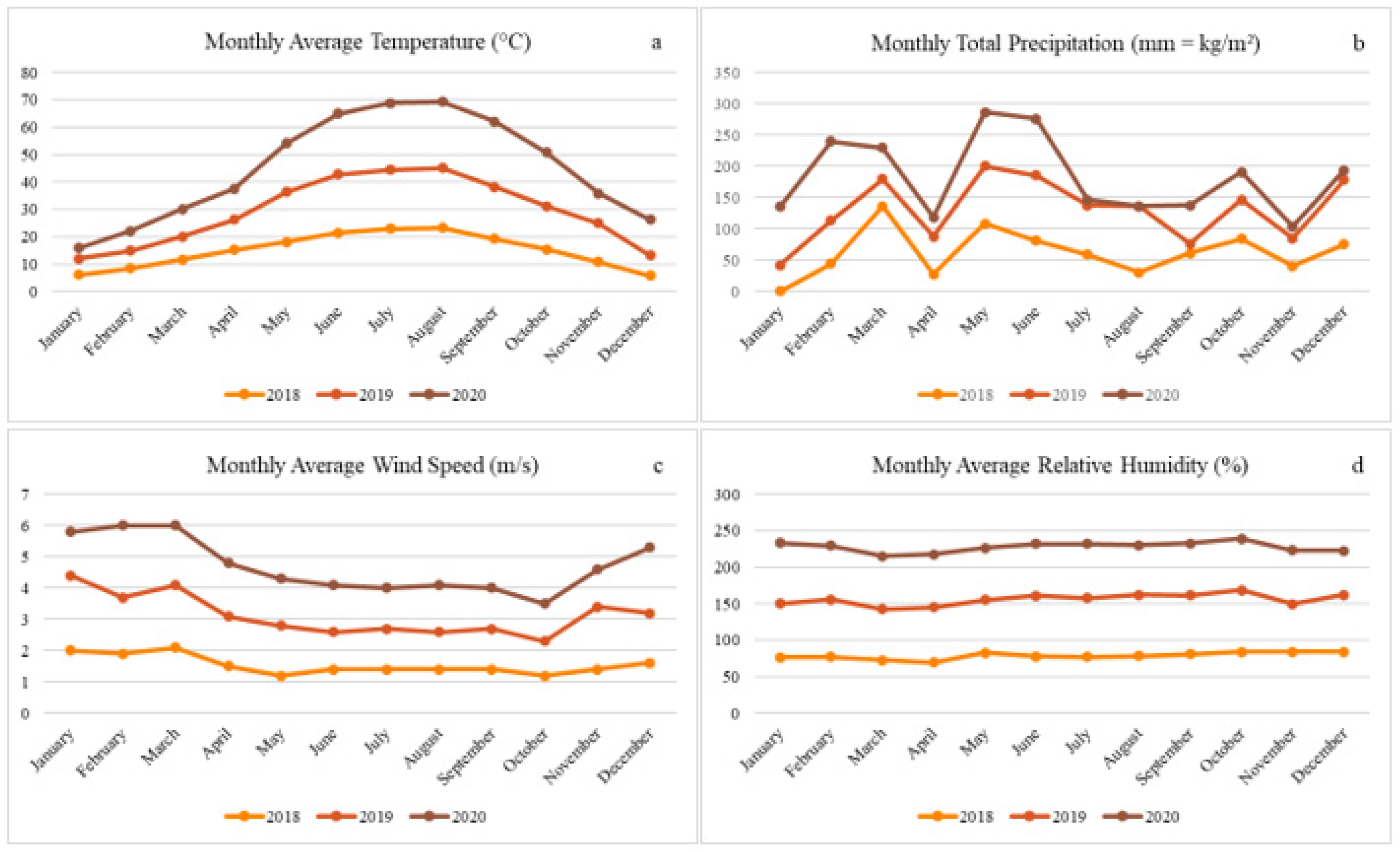
Figure 1. Distribution of monthly average temperature (°C), relative humidity (%), total precipitation (mm), and wind speed (m·s−1) values in Kaynaşlı district between 2018–2020.
Diversity 18 00124 g001
Figure 2. Frequency distribution of examined traits in 33 cherry laurels. (red lines indicate median values and dots represent outliers).
Diversity 18 00124 g002
Figure 3. Principal components analysis biplot plot showing relationships between cherry laurel individuals and traits. The asterisk (*) symbols represent CIELAB color space parameters, and the red dashed lines indicate the origin axes.
Diversity 18 00124 g003
Figure 4. Hierarchical clustering analysis results show the relationships between cherry laurel individuals and traits. The heatmap illustrates similarities and differences between samples and traits using color coding, where red indicates higher values and blue indicates lower values. The asterisk (*) symbols represent CIELAB color space parameters.
Diversity 18 00124 g004
Table 1. Descriptive statistics of the investigated characteristics of the examined cherry laurels.
Traits AbbreviationUnitMean±Std DevMinMax%CV
Bunch lengthBLmm83.2721.5031.51178.1325.82
Bunch weightBWg20.1311.766.0064.9058.40
Number of fruits in the bunchNFBpieces5.202.463.0018.0047.28
Fruit lengthFLmm19.171.8113.1624.019.46
Fruit weightFWg4.850.822.347.3917.00
Fruit widthFWTmm20.212.0813.3324.7110.27
Leaf lengthLLmm130.2724.9449.70195.6919.14
Leaf widthLWTmm48.8310.0225.6598.0020.52
Petiole widthPWTmm2.020.341.033.0516.58
Petiole lengthPLmm11.112.174.4518.5619.56
pHpH-4.730.294.055.336.07
Seed lengthSLmm11.651.792.8816.1515.38
Seed weightSWg0.400.070.230.6817.29
Seed widthSWTmm8.870.905.4010.7110.18
Titratable acidityTA%0.220.110.120.5848.73
Total soluble solidsTSS%15.662.6510.0022.4016.94
LightnessL*-19.2711.311.1239.6958.69
a* (red-green axis)a*-13.2512.231.6687.5392.32
b* (yellow -blue axis)b*-12.3912.361.0039.2399.79
Chroma* (color saturation)Chroma*-12.8711.141.5236.6086.54
Hue° (hue angle)Hue°-13.7212.500.9548.7091.11
GallicGALmg·L−133.426.4919.4064.0419.43
CatechinCATmg·L−1155.1474.7311.45378.4448.17
ChlorogenicCHLmg·L−111.6910.543.4070.6490.16
CaffeicCAFmg·L−15.883.522.0821.2459.77
SyringicSYRmg·L−121.0420.613.0493.0397.97
p-coumaricp-CMRmg·L−18.8317.451.77114.35197.63
RutinRTmg·L−122.3015.573.0468.9169.80
q-coumaricq-CMRmg·L−14.945.571.1426.59112.94
MyricetinMYRmg·L−140.3237.476.94178.3992.93
QuercetinQRCmg·L−110.947.184.0648.7465.65
TasteTAT-3.880.723.005.0018.45
AstringencyAST-4.140.822.005.0019.76
The state of separation of the seed from the flesh of the fruitSFF-2.500.571.003.0022.88
L*, a*, b*, and Chroma* represent CIELAB color space parameters. Hue° represents the hue angle.
Table 2. Eigen statistics and vectors for eight PCs.
TraitsPC1PC2PC3PC4PC5PC6PC7PC8
SW−0.790.280.100.060.06−0.160.27−0.04
FL−0.770.25−0.02−0.230.23−0.230.120.21
NFB0.72−0.220.37−0.150.35−0.08−0.140.08
Chroma*0.71−0.140.35−0.03−0.110.090.410.10
SL−0.69−0.10−0.25−0.260.35−0.010.190.16
BW0.650.020.36−0.220.44−0.15−0.230.05
AST0.610.360.10−0.24−0.030.36−0.25−0.30
LWT0.580.17−0.410.430.11−0.150.070.08
TA0.570.43−0.15−0.020.030.380.25−0.25
SYR−0.57−0.39−0.080.400.040.050.04−0.24
Hue°0.56−0.340.30−0.14−0.080.300.370.08
a*0.550.260.01−0.01−0.120.050.320.00
LL0.520.48−0.460.15−0.02−0.21−0.030.01
PL0.450.02−0.330.27−0.26−0.12−0.040.26
FWT−0.280.800.160.040.01−0.200.090.03
q-CMR−0.20−0.71−0.070.340.09−0.15−0.01−0.38
FW−0.440.670.30−0.11−0.01−0.220.09−0.09
GAL−0.270.490.34−0.070.010.26−0.150.44
BL0.16−0.460.14−0.16−0.15−0.06−0.360.15
pH−0.190.05−0.78−0.05−0.060.260.170.18
L*−0.02−0.460.56−0.07−0.38−0.100.200.12
TSS−0.030.08−0.55−0.14−0.290.45−0.190.25
CAT−0.130.200.530.380.170.310.070.01
QRC−0.21−0.44−0.060.68−0.04−0.03−0.27−0.10
CAF−0.08−0.180.280.510.370.310.360.33
p-CMR−0.230.120.460.500.070.24−0.270.29
TAT−0.380.130.15−0.460.080.03−0.39−0.18
RT−0.49−0.050.30−0.04−0.620.28−0.150.05
b*0.420.17−0.090.220.53−0.05−0.19−0.05
PWT0.240.250.030.46−0.26−0.520.060.32
MYR−0.240.28−0.240.440.170.49−0.25−0.01
SWT−0.190.420.260.27−0.110.160.27−0.56
CHL−0.26−0.35−0.09−0.260.400.210.090.16
SFF0.190.360.330.25−0.14−0.10−0.390.00
Eigenvalue6.944.283.482.881.991.951.791.53
Variance (%)20.4212.5810.238.475.865.725.254.50
Cumulative (%)20.4233.0043.2351.7057.5663.2968.5473.04
L*, a*, b*, and Chroma* represent CIELAB color space parameters. Hue° represents the hue angle.
Disclaimer/Publisher’s Note: The statements, opinions and data contained in all publications are solely those of the individual author(s) and contributor(s) and not of MDPI and/or the editor(s). MDPI and/or the editor(s) disclaim responsibility for any injury to people or property resulting from any ideas, methods, instructions or products referred to in the content.