Article

Microbial Community Characterization of Nine Korean Sponge Species from Gageodo Island

1
School of Advanced Biotechnology, Konkuk University, Seoul 05029, Republic of Korea
2
College of Korean Medicine, Gachon University, Seongnam 13120, Republic of Korea
3
Department of Convergence Study on the Ocean Science and Technology, Korea Maritime and Ocean University, Busan 49112, Republic of Korea
4
Natural History Museum, Hannam University, Daejeon 34430, Republic of Korea
*
Authors to whom correspondence should be addressed.
Diversity 2026, 18(1), 42; https://doi.org/10.3390/d18010042
Submission received: 22 October 2025 / Revised: 7 January 2026 / Accepted: 9 January 2026 / Published: 14 January 2026
(This article belongs to the Special Issue Dynamics of Marine Communities—Second Edition)

Abstract

Marine sponges are known to be associated with diverse and functionally specialized microbial consortia that are implicated in host metabolism, biogeochemical cycling, and bioactive compounds production. The microbiome diversity and composition of nine sponge species from the remote waters of Gageodo Island, Korea, were evaluated via full-length 16S rRNA sequencing and bioinformatic analyses. Each sponge species harbored a distinct microbial community, with differences potentially influenced by ecological factors, evolutionary history, and host–symbiont associations. The dominant microbial phyla identified across the sponge samples include Pseudomonadota, Cyanobacteriota, Acidobacteriota, Planctomycetota, and Chloroflexota, which were widely distributed across samples. In addition, the classes Gammaproteobacteria, Acidobacteriae, and Anaerolineae appeared as characteristic groups, being particularly abundant in specific sponge samples. Community structures ranged from dominance by one or two abundant taxa to more taxonomically diverse and evenly distributed microbiomes. A notable proportion of sequences were unassignable to known taxa, suggesting the occurrence of previously uncharacterized microbial lineages in these sponges. By combining host species identification with microbiome profiling, this study provides new foundations on the microbial ecology of Korean sponge holobionts, providing higher-resolution taxonomic classification, improved diversity estimates, and enhanced characterization of evolutionary relationships among symbionts. These findings may support future investigations into host–microbe interactions, potential ecological functions, and the management of marine genetic resources.

1. Introduction

Marine sponges are among the most prolific sources of bioactive marine natural products, largely owed to symbiotic associations established with diverse and specialized microbial communities that are enriched by the highly efficient filter-feeding features of the host [1]. Sponge microbiomes display pronounced biogeographical patterns, with sampling site and environmental factors often explaining substantial variation in microbial community structure [2,3]. In addition to supporting host physiology and ecological adaptation, these symbionts are prolific producers of secondary metabolites with potent anticancer, anti-inflammatory, antifungal, and antiviral activities [4,5]. Increasing evidence indicates that several natural products originally attributed to sponges are in fact synthesized by their microbial symbionts, particularly bacteria [6,7].
The Korean Peninsula is characterized by distinct seasonal dynamics and diverse coastal habitats, likely supports unique host–symbiont relationships distinct from those in other regions. In particular, the Gageodo Island (34°03′ N, 125°07′ E) in Sinangun (Province Jeollanamdo, Republic of Korea) represents a unique marine environment at the confluence of the cold waters of the Yellow Sea and the warm currents of the South Sea. Designated an “Island Ecosystem Conservation Area” by the Ministry of Oceans and Fisheries, Gageodo supports exceptional biodiversity, including vibrant soft corals, diverse sea slug species, and a particularly rich and taxonomically varied sponge community [8,9,10]. Numerous bioactive natural products have been isolated from these sponges, underscoring their value as reservoirs of novel compounds [11,12,13].
Despite mounting evidence showing that these communities exhibit strong host specificity, research on sponge-associated microbiomes in Korean waters remains scarce. Moreover, recent studies have demonstrated that host population genetics can influence sponge microbiome composition even among conspecific populations. Therefore, a comprehensive understanding of the symbiotic microorganisms within sponge communities offers a unique strategic path for discovering new bioactive compounds and developing sustainable marine-resource scalable platforms [14]. In the present study, we explored the symbiotic microbial communities of nine Korean sponge species from the Gageodo region aiming to contribute to the current knowledge in the field and advance our fundamental understanding of sponge–microbe interactions in this understudied region. The present findings are expected to help identify novel microbial resources to support marine biotechnology and clarify host–microbe coevolution in geographically distinct marine ecosystems.

2. Materials and Methods

2.1. Sponge Collection and Identification

Nine sponge specimens were collected during scuba diving expeditions at depths ranging from 10 to 28 m around Gageodo Island, located at the southwestern most point of Korea (34°06–12′ N, 125°08–09′ E), during 2024 (Table 1). Following collection, the specimens were immediately placed in sterile plastic bags containing seawater to minimize contamination and stress and were rapidly transported to the surface and immediately preserved in liquid nitrogen, individually packaged, and transported in insulated containers with dry ice. Specimens intended for molecular and metabolite analyses were subsequently stored at −80 °C to ensure optimal preservation.
For taxonomy identification, representative samples were placed in container bottles filled with 95% ethanol and stored. An integrative approach combining traditional morphological examination with molecular characterization was employed for the taxonomic identification of the sponges. Morphological identification involved detailed microscopic examination of external morphology, skeletal architecture, and spicule characteristics. Spicule morphology, dimensions, and configurations were documented and compared with established taxonomic keys and reference materials. The characterized specimens were formally cataloged and deposited at the Hannam University Natural History Museum (Table 1).

2.2. Full-Length 16S rRNA Amplicon Sequencing of Sponge-Associated Microbial Communities

Frozen sponge samples were subjected to freeze-drying for 24 h. Once dried, the tissue was thoroughly ground into a fine powder using a sterile mortar and pestle under aseptic conditions. Genomic DNA was then isolated from 250–500 mg of the powdered sample employing the Dneasy PowerSoil Pro Kit (QIAGEN, Hilden, Germany) according to manufacturer’s protocol. The complete 16S rRNA sequence was amplified via polymerase chain reaction using universal primers targeting conserved regions (27F: 5′-AGAGTTTGATCCTGGCTCAG-3′ and 1429R: 5′-TACGGYTACCTTGTTACGACTT-3′). The obtained sequence products were purified and converted into sequencing libraries optimized for high-accuracy long-read sequencing using the HiFi platform (Pacific Biosciences, Menlo Park, CA, USA). SMRTbell libraries were prepared using the SMRTbell Express Template Prep Kit, followed by annealing with Sequel II binding reagents (Pacific Biosciences). Sequencing was performed on the Sequel II instrument utilizing 8M SMRT Cells (Pacific Biosciences).

2.3. Bioinformatic Analysis

Full-length 16S sequences underwent comprehensive bioinformatic processing using CLC Genomics Workbench (Version 20.0.4) and Microbial Genomics Module (Version 20.1.1) (QIAGEN, Germany). Raw sequencing reads were quality-filtered and trimmed to eliminate adapter sequences and low-confidence bases. Taxonomic profiling was conducted through an open-reference I clustering approach, employing 97% similarity thresholds against the SILVA 138.2 reference database (SSU Ref NR 99) [15]. The most predominant sequences were considered representative of each cluster and taxonomically classified according to the default parameters set in CLC Microbial Genomics Module. For phylogenetic reconstruction, multiple sequence alignments of representative sequences were performed followed by maximum-likelihood tree estimation. Diversity metrics were calculated as follows: alpha diversity (Phylogenetic diversity, Chao 1 bias-corrected, Shannon entropy, and Simpson index) and beta diversity (Bray-Curtis dissimilarity, weighted UniFrac distances). To improve taxonomic resolution for unassigned representative sequences from classification using CLC Workbench, BLAST searches against the NCBI nucleotide database (v2.15.1, Core nucleotide database, corent) were performed excluding uncultured and environmental sample sequences. Final taxonomic ranks were assigned based on sequence similarity thresholds (phylum: 80–86%, class: 86–89%, order: 89–92%, family: 92–95%, genus: 95–97%).

3. Results and Discussion

3.1. Sampling, Taxonomic Identification, and Research Gaps

A total of nine sponge specimens were collected from three point of coastal rocky reef habitats around Gageodo Island, Korea (Figure 1A), at comparable depths (10–28 m) (Table 1). Environmental parameters, including temperature (20–23 °C), salinity (30–31 PSU), pH (7.98–8.07) and dissolved oxygen (7–8 mg/L), were obtained from the Marine Environment Monitoring Network, accessible via the Marine Environment Information System portal (https://meis.go.kr (accessed on 5 December 2025). These environmental parameters (dissolved oxygen, pH, temperature, and salinity) are provided to characterize the sampling conditions and to facilitate comparisons with future studies. All nine sponge specimens collected in this study were taxonomically identified as belonging to the class Demospongiae. Eight of these specimens were successfully identified to the species level (Figure 1B, Table 1), whereas one specimen (Phakettia sp., SP5) was identified only to the genus level due to insufficient morphological characteristics for definitive species determination.
Research on the nine sponge specimens herein investigated within Korean marine science has been minimal. To date, only sporadic taxonomic or chemical ecology reports have addressed a subset of these species, and virtually, no studies have applied metagenomic approaches to characterize their symbiotic microbial communities in Korean waters. Moreover, global efforts focused on metagenomic profiling of sponge microbiomes have similarly overlooked most of these genera, with only a handful of deep-sea or polar species receiving genome-centric recognition. The absence of comprehensive metagenome-based investigations for both regional and international populations of these sponge taxa implies the high novelty and significance of the present work.
To address these gaps, we selected nine sponge specimens representing nine demospongian taxa spanning broad phylogenetic, ecological, and morphological diversity, with the goal of capturing representative between-host variability in sponge-associated microbial communities. This breadth-first sampling strategy facilitates cross-taxon comparisons, including the identification of host-associated core microbiome signatures and the exploration of broader patterns in host–microbe associations. Due to field and resource constraints, only one specimen per taxon was analyzed; however, this design is commonly used in exploratory sponge microbiome surveys because interspecific differences in community composition often exceed intraspecific variation [16,17,18]. Accordingly, 16S rRNA gene amplicon sequencing was employed to profile the microbial community of each specimen and to infer putative core members at the host level. We note that the single-specimen-per-taxon design limits inference about within-species variability, and future studies incorporating biological replicates will be necessary to validate the stability of these patterns.

3.2. Taxonomic Profiling of Sponge-Associated Microbial Communities

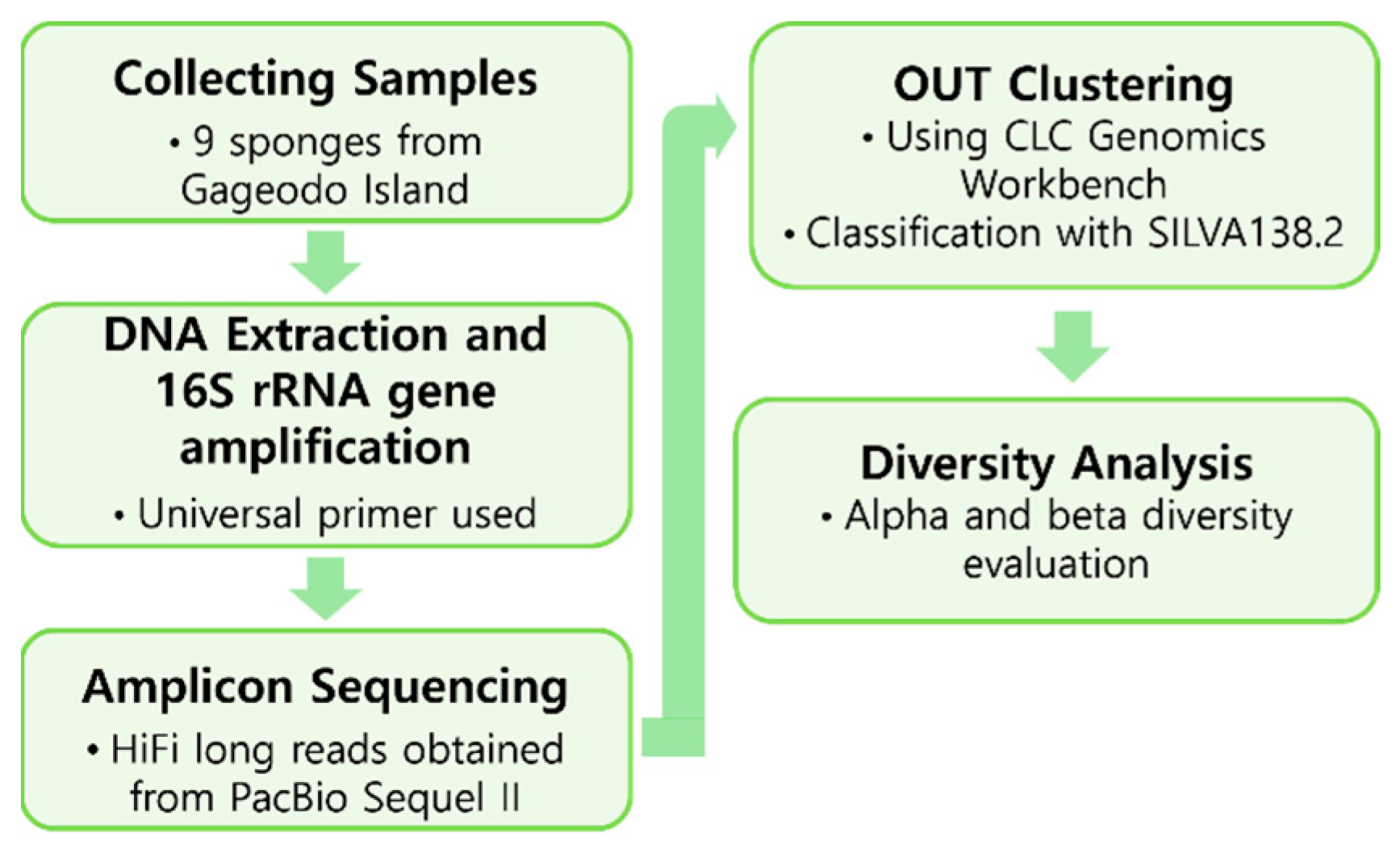
Full-length 16S rRNA gene amplicon sequencing was used to evaluate the microbial community of the nine sponge samples and to provide an overview of sponge–microbe associations in this unique Korean ecosystem (Figure 2).
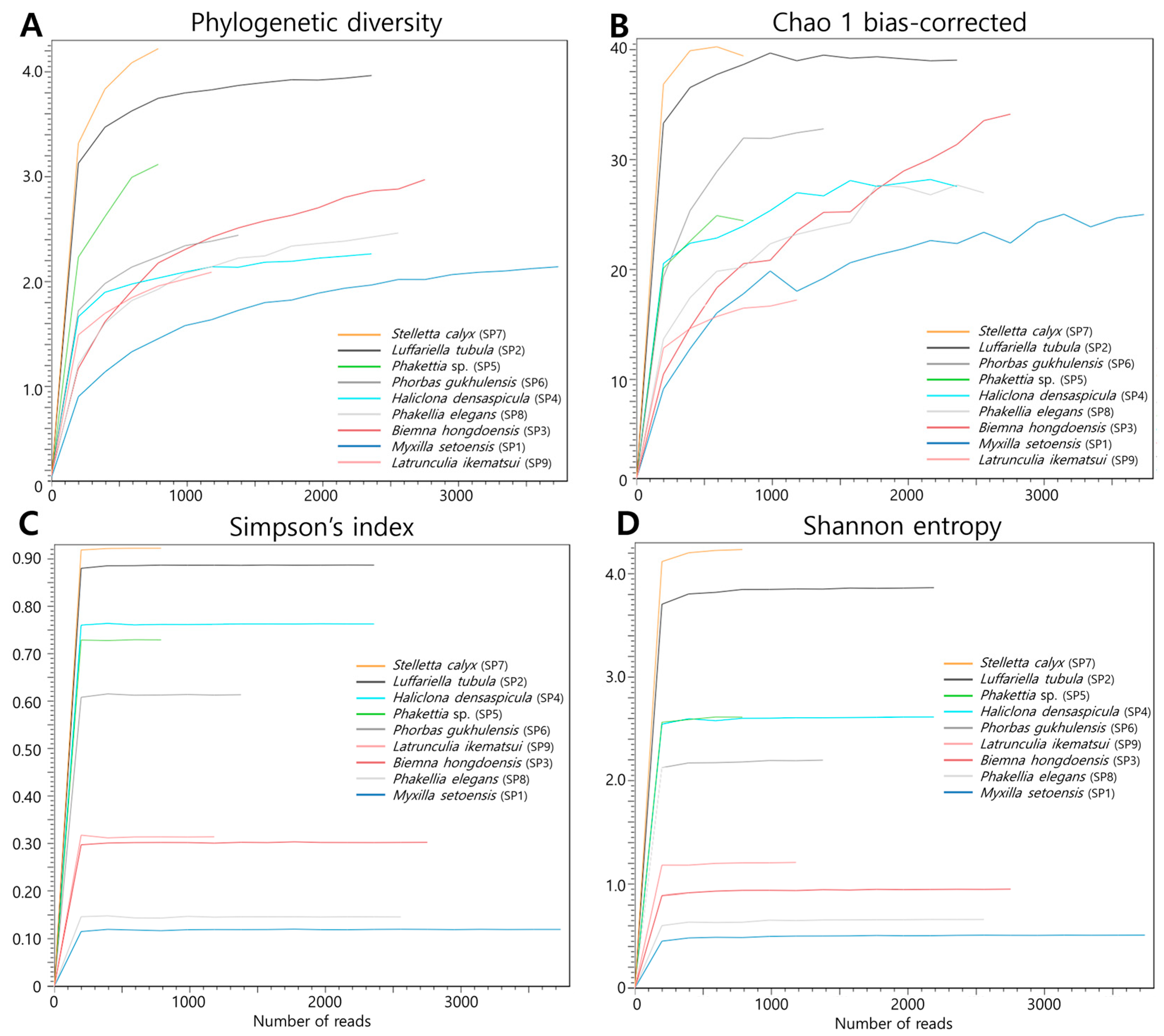
Full-length 16S sequencing generated a total of 355,188 raw reads, with an average read length of 1490 bp. Read counts per sample ranged from 31,454 (SP6) to 46,178 (SP2) (Table 2). Operational taxonomic unit (OTU) clustering at a 97% similarity threshold resulted in 218 distinct OTUs across all samples. Marked variation in OTU richness was observed, with SP7 showing the highest richness, followed by SP2 and SP4, whereas SP9 and SP1 harbored the lowest richness values. Phylogenetic diversity mirrored OTU richness, with SP7 and SP2 exhibiting the highest phylogenetic diversity values, consistent with their greater taxonomic heterogeneity.
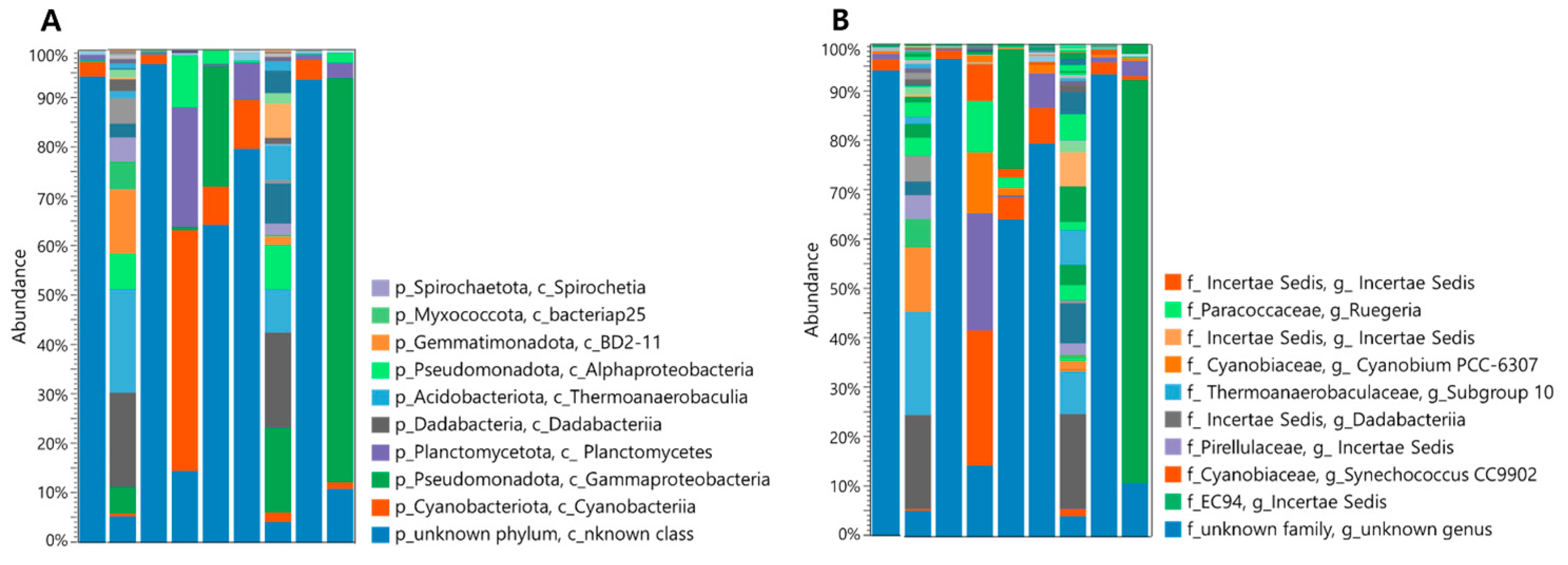
Taxonomy diversity analyses revealed distinct community composition patterns among the nine sponge samples, as visualized by stacked bar charts at both the phylum and genus levels (Figure 3). Taxonomic profiling revealed that members of the phylum Pseudomonadota (Proteobacteria) dominated the classified reads (15–78% per sample, excluding unassigned sequences), primarily represented by Gammaproteobacteria, Alphaproteobacteria, and Betaproteobacteria. Cyanobacteriota accounted for up to 40% of the communities in SP4 and SP6, largely belonging to Synechococcus and Prochlorococcus (Figure 3B). Planctomycetota reached relative abundances of 18% in SP4 and 15% in SP6, mainly from the family Pirellulaceae. Other major taxa included Acidobacteriota (up to 25% in SP2), Dadabacteria (10–15% in SP2 and SP7), Gemmatimonadota (5–8% in SP2 and SP7), and Nitrospirota (7% in SP5).
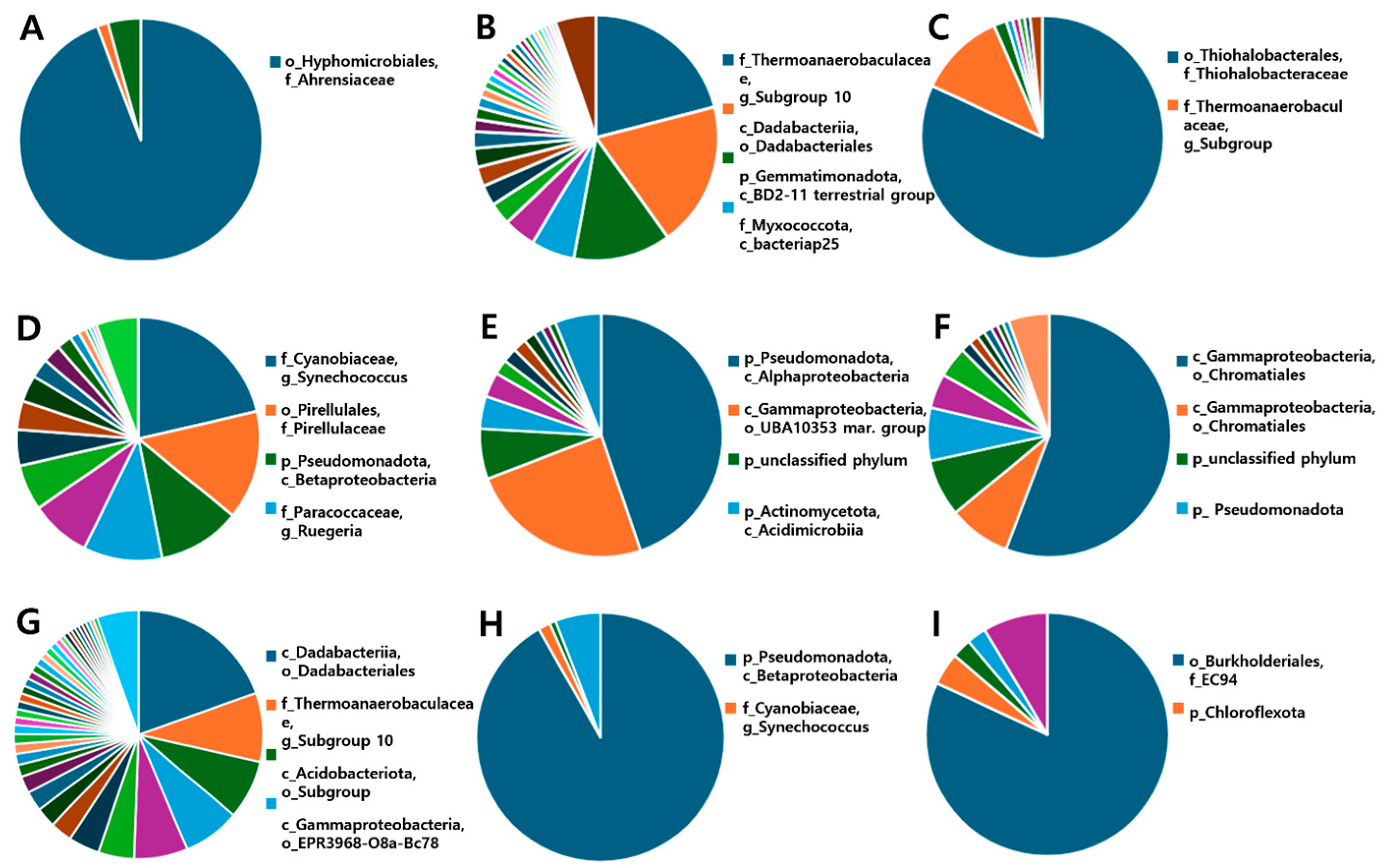
At lower taxonomic levels, including family, genus and species, OTU clustering frequently led to ambiguous classifications, with a significant proportion of OTUs annotated as Incertae sedis or uncultured bacteria (Figure 3B and Table S1). Notably, taxonomic annotation using the open-reference clustering approach revealed that a significant portion, specifically 58.9%, of all reads could not be assigned to taxa in the SILVA reference database at a 97% similarity threshold, with the highest proportion being observed in SP8 (72%) and the lowest in SP2 (42%). BLAST-based reclassification refined several dominant OTU assignments, including the reannotation of the most abundant OTU of SP1 and SP3 from order Rhodobacterales to order Hyphomicrobiales and from order Legionellales to order Thiohalobacterales, respectively, while the dominant taxon of SP8 changed from Gammaproteobacteria (family EC94) to unknown Betaproteobacteria (Figure 4).
Despite the use of full-length 16S rRNA gene sequencing, accurate taxonomic classification at the genus or species level was often not achievable in our dataset. A significant portion of operational taxonomic units (OTUs) were annotated as Incertae sedis or uncultured bacteria, especially at lower taxonomic levels such as genus and species. This outcome is not a reflection of limitations in sequencing depth or quality but rather a consequence of the inherent novelty and unculturability of many sponge-associated symbiotic microorganisms. Such ambiguous classification results are frequently observed when analyzing environmental microbiomes, particularly marine invertebrate symbionts, due to the limited representation of these taxa in publicly available reference databases such as SILVA. The majority of existing databases are heavily biased toward cultivable and well-characterized microbial species, leaving a large proportion of environmental microbial diversity, especially from sponges, unaccounted for. Sponge microbiomes are known to harbor phylogenetically unique and highly divergent bacterial lineages, many of which remain unclassified due to their novelty and lack of cultured representatives. For example, prominent symbionts such as Candidatus Entotheonella or Candidatus Poribacteria were only recently described and are still underrepresented in standard taxonomic databases. Furthermore, current taxonomic assignment algorithms often rely on sequence similarity thresholds and fail to account for novel or uncultured lineages. Even with high-quality, full-length 16S sequences, the absence of closely related reference sequences prevents accurate annotation beyond the family or order level. Therefore, the prevalence of unclassified or ambiguously classified OTUs in this study underscores the need for expanded genomic sampling, improved database curation, and refined classification methods. Importantly, this taxonomic ambiguity also reveals the potential for discovering novel microbial lineages with unexplored biosynthetic capabilities, which is one of the primary motivations for conducting microbial surveys in sponge holobionts.
Distinct community composition patterns were evident among the samples. SP3 was dominated by Thiohalobacteraceae (~82% relative abundance), SP8 by a single Betaproteobacteria OTU (~88%), and SP1 by Ahrensiaceae (~76%), each accompanied by minor contributions from other taxa. The extreme cases of taxonomic specialization observed in SP3 and SP8, as reflected by the high dominance of their symbiont microbial community by one single taxa, may indicate strong host selection for particular symbionts or competitive exclusion within the host microenvironment, potentially linked to functional specialization, such as sulfur oxidation (in SP3) [19]. or substrate-specific heterotrophy (in SP8). In contrast, SP2 and SP7 harbored diverse and phylogenetically varied communities, with no single OTU exceeding 20% relative abundance, and included various lineages, such as Acidobacteria subgroups, Dadabacteria, Gemmatimonadota, Nitrosococcaceae, and Porticoccaceae, some of which are taxa known for metabolic versatility and involvement in carbon and nitrogen cycling [20].
Phototrophic associations were particularly evident in SP4 and SP6, presenting high proportions of phototrophic Cyanobacteria (Synechococcus, Prochlorococcus) and Planctomycetota (Pirellulaceae). Such combinations, consistent with prior reports of photoautotrophic-heterotrophic complementarity in sponge symbioses, may contribute to both primary production and remineralization within the holobiont [21]. Additionally, SP6 also featured sulfur oxidizing Chromatiales (30% relative abundance), suggesting an additional layer of biogeochemical function, potentially coupling sulfur and carbon cycles [22]. In turn, SP9 microbiome was dominated by Burkholderiales family EC94 (52%) and Parendozoicomonas (18%), groups associated with complex polysaccharide degradation and potential host-beneficial functions (e.g., resilience under environmental stress). Such specialization may enhance host microbial stability in dynamic habitats [23].

3.3. Diversity Patterns and Community Composition in Sponge Microbiomes

To evaluate within-sample microbial diversity, several alpha diversity metrics—phylogenetic diversity, Chao1 richness, Shannon entropy, and Simpson’s index—were determined, revealing pronounced differences in bacterial richness and evenness among sponge samples (Figure 5). SP7 and SP2 had the highest phylogenetic diversity and OTU richness, indicating broad phylogenetic and taxonomic representation. SP1, SP8, and SP9 showed low richness and phylogenetic diversity, suggesting restricted and uneven communities. Shannon and Simpson indices confirmed that some samples (SP7, SP2, SP4, SP5) supported rich and evenly distributed microbiota, whereas others (SP1, SP8 and SP9) were dominated by few taxa. The patterns point to strong influences of host species and environmental conditions in shaping alpha diversity.
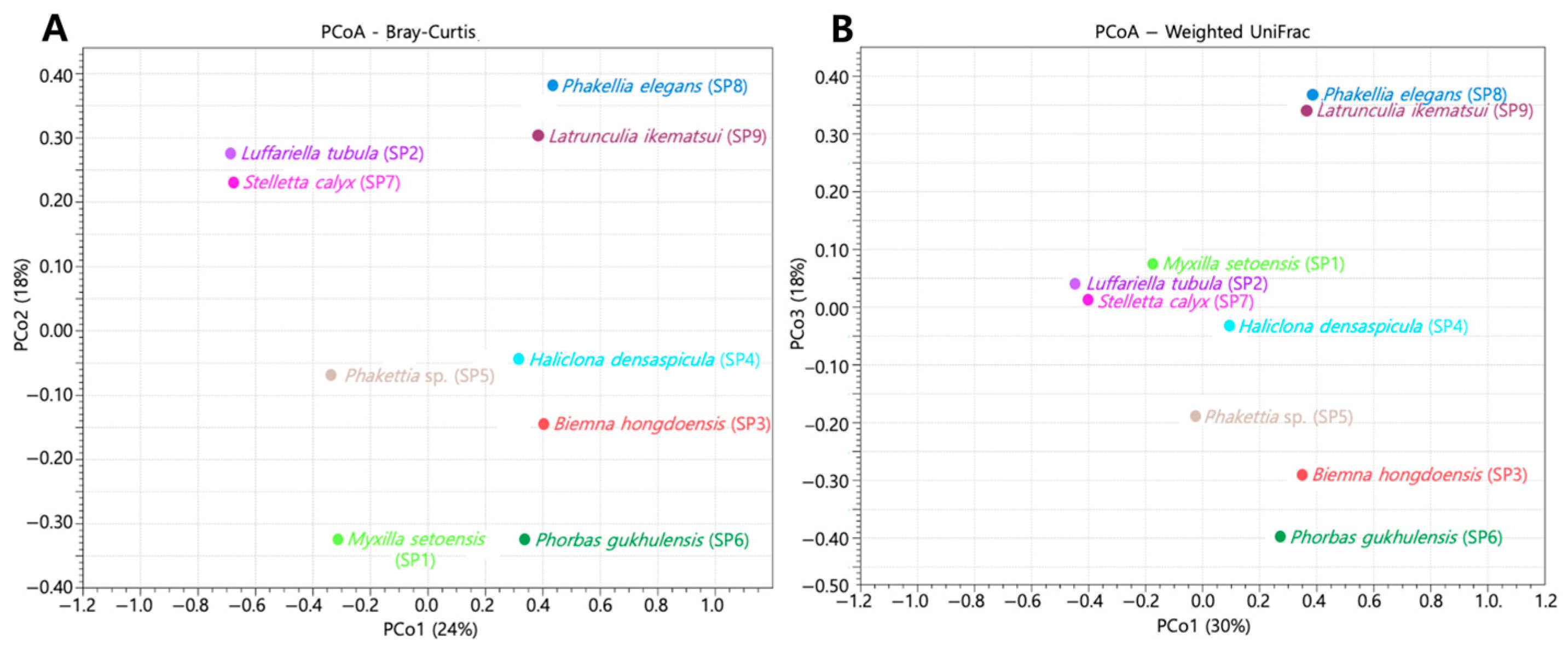
To further assess between-sample variation in microbiome composition, we re-analyzed beta diversity by calculating pairwise dissimilarity matrices using both phylogenetic-based (e.g., Unweighted UniFrac) and abundance-based (e.g., Bray-Curtis) metrics. This approach revealed distinct clustering of the microbial communities (Figure 6). Bray–Curtis analysis showed clear separations, with SP2 and SP7 clustering due to shared key taxa (e.g., Dadabacteriales and Thermoanaerobaculaceae), and SP8 and SP9 grouping due to Betaproteobacteria dominance. SP1 and SP6 were distinct, reflecting unique microbiomes possibly shaped by rare or specialized taxa. Weighted UniFrac (phylogeny + abundance) confirmed that samples with phylogenetically related dominant taxa (SP8 and SP9) clustered closely, whereas SP6 and SP3 were separated due to unique evolutionary lineages. These results suggest both host-specific selection and small-scale environmental drivers in structuring sponge-associated microbiomes.
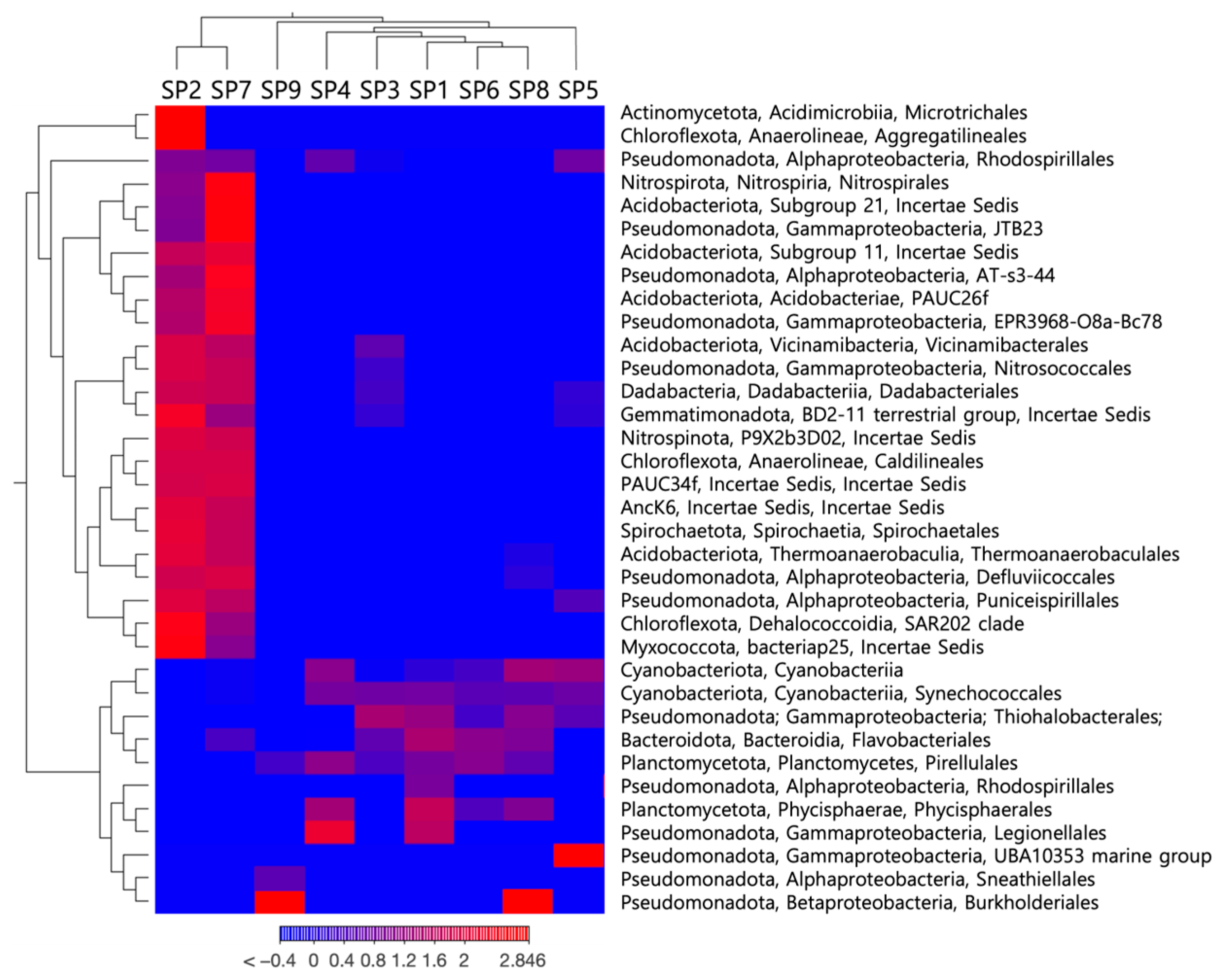
In line with the previous results, hierarchical clustering heatmaps showed strong variation in relative microbial abundance across sponge samples. SP2 and SP7 displayed enrichment of specific microbial lineages, whereas SP1, SP3, SP8, and SP9 were dominated by low-abundance taxa (Figure 7). Major phyla/classes included Pseudomonadota (Gammaproteobacteria, Alphaproteobacteria, Betaproteobacteria), Cyanobacteriota, Planctomyceota (Phycisphaerae, Planctomycetes), and Bacteroidota.
Collectively, the microbial community of the sponges from the Gageodo region revealed distinct host-specific compositions, with marked differences in both phylogenetic diversity and relative abundance patterns. While some sponges hosted diverse and evenly structured assemblages, others exhibited simplified communities dominated by one or two taxa. Although lineages, such as Pseudomonadota, Acidobacteriota, Chloroflexota, Cyanobacteriia, and Dadabacteria, were widely distributed, their combinations and proportions were unique to each host. The observed clustering patterns reflect both universally present and sample-specific microbial groups, highlighting the fine-scale heterogeneity of the sponge–microbe consortia, as well as the evolutionary traits of their hosts and their subtle microenvironmental conditions, but additional studies are required to validate this.

3.4. Putative HMA/LMA Inference from Community Profiles

The taxonomic profiles observed across the nine sponge specimens were highly distinct, providing an ecological context to interpret these communities within the high microbial abundance (HMA) and low microbial abundance (LMA) framework—widely used concepts in sponge microbiology that reflect broad differences in symbiotic complexity and host ecology [24]. Because HMA/LMA status is classically defined based on microbial cell density and tissue characteristics, and we did not directly quantify absolute microbial abundance (e.g., by microscopy or absolute qPCR), we refer to HMA/LMA here as a putative, community-signature–based inference rather than a definitive classification.
In general, HMA sponges tend to harbor denser and more taxonomically diverse microbiomes and are frequently enriched in lineages such as Acidobacteriota, Planctomycetota, and other diverse heterotrophic taxa, whereas LMA sponges often display comparatively simpler communities dominated by subsets of Proteobacteria (Pseudomonadota) and/or phototrophic Cyanobacteria [17,25]. Consistent with an HMA-like community signature, samples such as SP2 and SP7 showed elevated representation of taxa including Acidobacteriota and Dadabacteria, suggesting the presence of more complex microbial assemblages that may support expanded metabolic functions [26]. In contrast, SP8 and SP9 were characterized by dominance of Pseudomonadota classes together with prevalent Synechococcus, a pattern more frequently reported in LMA-like sponges. Notably, these samples also contained Planctomycetota (e.g., Pirellulaceae), indicating mixed or intermediate features and underscoring that HMA/LMA traits may occur along a continuum rather than as a strict dichotomy.
Collectively, the compositional patterns observed in this study support the value of the HMA–LMA framework for contextualizing host–microbe interactions and potential functional differences among sponge taxa, while highlighting the need for future studies incorporating biological replicates and direct abundance measurements to validate HMA/LMA status and assess within-species variability [27].

3.5. Implications for Biotechnology and Holobiont Health

3.5.1. Putative Biosynthetic Potential and Priorities for Future Genome-Resolved Studies

Marine sponges are recognized reservoirs of bioactive natural products, and increasing evidence indicates that many sponge-derived metabolites are produced by microbial symbionts rather than the host itself [1,28,29]. Although this study is based on 16S rRNA gene amplicon sequencing and therefore cannot directly resolve biosynthetic gene clusters (BGCs) or confirm metabolite production, the observed taxonomic composition provides a useful first-pass framework for prioritizing specimens and symbiont lineages for downstream functional exploration. In particular, several samples contained substantial representation of bacterial lineages (e.g., within Pseudomonadota and other diverse heterotrophic groups) that include documented secondary-metabolite producers in other marine systems.
Notably, a large fraction of reads could not be confidently assigned to known taxa using reference databases, even with full-length 16S rRNA sequences. This taxonomic novelty suggests that these Korean sponge holobionts may harbor undercharacterized microbial lineages with unexplored metabolic capabilities. While canonical actinomycetes such as Streptomyces or Salinispora were not dominant in the present dataset, the prevalence of unclassified or poorly resolved symbionts supports the rationale for applying genome-resolved metagenomics and integrative metabolomics to these hosts. Recent studies have shown that uncultured sponge symbionts (e.g., Candidatus Entotheonella) can encode complex and pharmaceutically valuable natural products [29], underscoring the potential value of targeting sponges that host novel and/or highly host-enriched microbial assemblages.

3.5.2. Low-Abundance Taxa Affiliated with Opportunistic Pathogens: Interpretation Limits and Validation Needs

In addition to dominant symbionts, a small number of OTUs were assigned to genera that include opportunistic pathogens. For example, reads affiliated with Pseudomonas and Legionella were detected at low relative abundance in selected samples (e.g., SP2 and SP4; Table S1). Because genus-level 16S rRNA assignments do not demonstrate pathogenicity, and because sponges continuously filter large volumes of seawater, such detections may reflect transient environmental exposure, low-level background colonization, or rare community members rather than active infection.
Nevertheless, the sporadic presence of these taxa may be relevant as a hypothesis-generating observation, particularly in the context of holobiont stability and potential stress-associated community shifts. Targeted follow-up will be required to evaluate their ecological significance, including biological replication, absolute quantification (e.g., qPCR), and genome-resolved approaches to assess functional traits (e.g., virulence- or persistence-associated genes), as well as visualization or localization methods (e.g., FISH) to distinguish resident symbionts from transient seawater-derived signals [19,30,31].

4. Conclusions

In this study, we performed an in-depth taxonomic and ecological characterization of the symbiotic microbial communities associated with nine sponge species collected from the remote waters of Gageodo Island, Korea, using full-length 16S rRNA sequencing coupled with advanced bioinformatic analyses (Table 3). This methodology offers a significant advance over previous Korean sponge microbiome research that primarily used partial sequences and limited diversity metrics. The use of long-read sequencing provided higher-resolution taxonomic assignments, more accurate diversity estimates, and deeper insights into evolutionary relationships within these microbial assemblages.
Our findings revealed that each sponge species hosted a distinct microbial community shaped by ecological factors, evolutionary history, and host–symbiont specificity. While some sponges were dominated by one or two highly abundant taxa, indicating strong host selection or niche specialization, others contained taxonomically diverse and evenly distributed microbiomes with broad metabolic potential. This variability highlights the ecological complexity and adaptability of sponge-associated microbiomes within their specific host environments. Remarkably, a substantial proportion of sequences could not be classified against the SILVA reference database at the 97% similarity threshold, highlighting the presence of novel microbial lineages unique to Korean sponges and representing an untapped reservoir of genetic diversity.
By integrating precise host species identification with detailed microbiome profiling, this study establishes a vital baseline for Korean sponge ecology research. The framework laid out here will facilitate future studies on host–microbe functional interactions, sponge holobiont contributions to coastal ecosystem processes, and comparative evaluations of HMA vs. LMA sponge types across wider geographic regions. Taken together, our findings advance both the taxonomic cataloging and ecological comprehension of sponge-associated microbes in Korean waters, underpinning conservation, sustainable utilization, and exploration of these valuable marine genetic resources.
Overall, this study provides a high-resolution baseline of sponge-associated microbial communities for nine demosponges from the understudied waters of Gageodo Island, revealing strong host-specificity that ranges from highly specialized, taxon-dominated assemblages to more diverse and evenly distributed communities. The substantial fraction of reads unclassified against the SILVA database underscores the presence of underrepresented microbial lineages in Korean sponges and highlights these holobionts as valuable reservoirs of marine genetic diversity. Although our breadth-first design (one specimen per species) enabled cross-taxon comparisons across broad phylogenetic and ecological diversity, it limits inference regarding within-species variability. Future studies incorporating biological replicates across sites and seasons, direct measurements of microbial abundance, and genome-resolved multi-omics will be essential to validate the stability of the observed patterns and to link dominant symbionts to ecological function and biotechnological potential. Together, these findings expand the taxonomic foundation for Korean sponge microbial ecology and support conservation-oriented and sustainable exploration of coastal marine genetic resources.

Supplementary Materials

The following supporting information can be downloaded at: https://www.mdpi.com/article/10.3390/d18010042/s1, Table S1: Supplementary Table_OTU_Microbiome_Metadata.xlxs.

Author Contributions

Conceptualization, I.Y. and H.K.; methodology, Y.A.K.; formal analysis, M.K. and Y.A.K.; investigation, M.-S.S., Y.A.K. and I.Y.; resources, H.K.; data curation, M.-S.S., S.J.K. and S.P.; writing—original draft preparation, M.-S.S.; writing—review and editing, M.K., I.Y. and H.K.; supervision, H.K.; project administration, H.K.; funding acquisition, M.K. and H.K. All authors have read and agreed to the published version of the manuscript.

Funding

This work was financed by the Basic Science Research Program of the Ministry of Science and ICT (RS-2022-NR072431), and Ministry of Food and Drug Safety (RS-2025-02303306).

Data Availability Statement

The raw sequencing data are available at the NCBI Sequence Read Archive (SRA) under BioProject PRJNA1299070 with accession numbers SRR35022191–SRR35022199 (16S amplicon).

Acknowledgments

We gratefully acknowledge Hannam University Natural History Museum for their invaluable assistance with sponge identification.

Conflicts of Interest

The authors declare no conflicts of interest. The funders had no role in the design of the study; in the collection, analyses, or interpretation of data; in the writing of the manuscript; or in the decision to publish the results.

Abbreviations

The following abbreviations are used in this manuscript:
OTUOperational taxonomic unit
HMAHigh Microbial Abundance
LMALow Microbial Abundance

References

  1. Taylor, M.W.; Radax, R.; Steger, D.; Wagner, M. Sponge-associated microorganisms: Evolution, ecology, and biotechnological potential. Microbiol. Mol. Biol. Rev. 2007, 71, 295–347. [Google Scholar] [CrossRef]
  2. Easson, C.G.; Chaves-Fonnegra, A.; Thacker, R.W.; Lopez, J.V. Host population genetics and biogeography structure the microbiome of the sponge Cliona delitrix. Ecol. Evol. 2020, 10, 2007–2020. [Google Scholar] [CrossRef]
  3. De Castro-Fernández, P.; Ballesté, E.; Angulo-Preckler, C.; Biggs, J.; Avila, C.; García-Aljaro, C. How does heat stress affect sponge microbiomes? Structure and resilience of microbial communities of marine sponges from different habitats. Front. Mar. Sci. 2023, 9, 1072696. [Google Scholar] [CrossRef]
  4. Webster, N.S.; Taylor, M.W. Marine sponges and their microbial symbionts: Love and other relationships. Environ. Microbiol. 2012, 14, 335–346. [Google Scholar] [CrossRef] [PubMed]
  5. Bibi, F.; Faheem, M.; Azhar, E.I.; Yasir, M.; Alvi, S.A.; Kamal, M.A.; Ullah, I.; Naseer, M.I. Bacteria From Marine Sponges: A Source of New Drugs. Curr. Drug Metab. 2017, 18, 11–15. [Google Scholar] [CrossRef]
  6. Hentschel, U.; Piel, J.; Degnan, S.M.; Taylor, M.W. Genomic insights into the marine sponge microbiome. Nat. Rev. Microbiol. 2012, 10, 641–654. [Google Scholar] [CrossRef]
  7. Kim, H.; Ahn, J.; Kim, J.; Kang, H.-S. Metagenomic insights and biosynthetic potential of Candidatus Entotheonella symbiont associated with Halichondria marine sponges. Microbiol. Spectr. 2025, 13, e02355-24. [Google Scholar] [CrossRef] [PubMed]
  8. Kim, H.J.; Lee, S.H.; Kang, D.W. New species of the Genus Haliclona (Haplosclerida: Chalinidae) from Korea. Zootaxa 2017, 4347, 181–186. [Google Scholar] [CrossRef] [PubMed]
  9. Sim, C.J.; Kim, H.J. Taxonomic Study on Marine Sponges from Gageodo Island (Sohuksando), Korea. Korean J. Syst. Zool. 2002, 18, 219–231. Available online: https://api.semanticscholar.org/CorpusID:83643245 (accessed on 8 January 2026).
  10. Hyung June, K.; Dong Won, K. Two new species of the genus Callyspongia (Haplosclerida:Callyspongiidae) from Korea. J. Asia-Pac. Biodivers. 2017, 10, 448–452. [Google Scholar] [CrossRef]
  11. Rho, J.R.; Hwang, B.S.; Sim, C.J.; Joung, S.; Lee, H.Y.; Kim, H.J. Phorbaketals A, B, and C, sesterterpenoids with a spiroketal of hydrobenzopyran moiety isolated from the marine sponge Phorbas sp. Org. Lett. 2009, 11, 5590–5593. [Google Scholar] [CrossRef]
  12. Wang, W.; Lee, Y.; Lee, T.G.; Mun, B.; Giri, A.G.; Lee, J.; Kim, H.; Hahn, D.; Yang, I.; Chin, J.; et al. Phorone A and Isophorbasone A, Sesterterpenoids Isolated from the Marine Sponge Phorbas sp. Org. Lett. 2012, 14, 4486–4489. [Google Scholar] [CrossRef]
  13. Lee, Y.; Wang, W.; Kim, H.; Giri, A.G.; Won, D.H.; Hahn, D.; Baek, K.R.; Lee, J.; Yang, I.; Choi, H.; et al. Phorbaketals L-N, cytotoxic sesterterpenoids isolated from the marine sponge of the genus Phorbas. Bioorg. Med. Chem. Lett. 2014, 24, 4095–4098. [Google Scholar] [CrossRef]
  14. Mehbub, M.F.; Yang, Q.; Cheng, Y.; Franco, C.M.M.; Zhang, W. Marine sponge-derived natural products: Trends and opportunities for the decade of 2011–2020. Front. Mar. Sci. 2024, 11, 1462825. [Google Scholar] [CrossRef]
  15. Quast, C.; Pruesse, E.; Yilmaz, P.; Gerken, J.; Schweer, T.; Yarza, P.; Peplies, J.; Glöckner, F.O. The SILVA ribosomal RNA gene database project: Improved data processing and web-based tools. Nucleic Acids Res. 2013, 41, D590–D596. [Google Scholar] [CrossRef]
  16. Weigel, B.L.; Erwin, P.M. Intraspecific Variation in Microbial Symbiont Communities of the Sun Sponge, Hymeniacidon heliophila, from Intertidal and Subtidal Habitats. Appl. Environ. Microbiol. 2016, 82, 650–658. [Google Scholar] [CrossRef]
  17. Schmitt, S.; Tsai, P.; Bell, J.; Fromont, J.; Ilan, M.; Lindquist, N.; Perez, T.; Rodrigo, A.; Schupp, P.J.; Vacelet, J.; et al. Assessing the complex sponge microbiota: Core, variable and species-specific bacterial communities in marine sponges. ISME J. 2012, 6, 564–576. [Google Scholar] [CrossRef] [PubMed]
  18. Lesser, M.P.; Pankey, M.S.; Slattery, M.; Macartney, K.J.; Gochfeld, D.J. Microbiome diversity and metabolic capacity determines the trophic ecology of the holobiont in Caribbean sponges. ISME Commun. 2022, 2, 112. [Google Scholar] [CrossRef] [PubMed]
  19. Rua, C.P.J.; Trindade-Silva, A.E.; Appolinario, L.R.; Venas, T.M.; Garcia, G.D.; Carvalho, L.S.; Lima, A.; Kruger, R.; Pereira, R.C.; Berlinck, R.G.S.; et al. Diversity and antimicrobial potential of culturable heterotrophic bacteria associated with the endemic marine sponge Arenosclera brasiliensis. PeerJ 2014, 2, e419. [Google Scholar] [CrossRef] [PubMed]
  20. Hoffmann, F.; Radax, R.; Woebken, D.; Holtappels, M.; Lavik, G.; Rapp, H.T.; Schläppy, M.L.; Schleper, C.; Kuypers, M.M.M. Complex nitrogen cycling in the sponge Geodia barretti. Environ. Microbiol. 2009, 11, 2228–2243. [Google Scholar] [CrossRef]
  21. Kaboré, O.D.; Godreuil, S.; Drancourt, M. Planctomycetes as Host-Associated Bacteria: A Perspective That Holds Promise for Their Future Isolations, by Mimicking Their Native Environmental Niches in Clinical Microbiology Laboratories. Front. Cell. Infect. Microbiol. 2020, 10, 519301. [Google Scholar] [CrossRef]
  22. Lavy, A.; Keren, R.; Yu, K.; Thomas, B.C.; Alvarez-Cohen, L.; Banfield, J.F.; Ilan, M. A novel Chromatiales bacterium is a potential sulfide oxidizer in multiple orders of marine sponges. Environ. Microbiol. 2018, 20, 800–814. [Google Scholar] [CrossRef]
  23. Taylor, J.A.; Palladino, G.; Wemheuer, B.; Steinert, G.; Sipkema, D.; Williams, T.J.; Thomas, T. Phylogeny resolved, metabolism revealed: Functional radiation within a widespread and divergent clade of sponge symbionts. ISME J. 2021, 15, 503–519, Correction in ISME J. 2022, 16, 1200. https://doi.org/10.1038/s41396-021-01099-2. [Google Scholar] [CrossRef]
  24. Weisz, J.B.; Hentschel, U.; Lindquist, N.; Martens, C.S. Linking abundance and diversity of sponge-associated microbial communities to metabolic differences in host sponges. Mar. Biol. 2007, 152, 475–483. [Google Scholar] [CrossRef]
  25. Giles, E.C.; Kamke, J.; Moitinho-Silva, L.; Taylor, M.W.; Hentschel, U.; Ravasi, T.; Schmitt, S. Bacterial community profiles in low microbial abundance sponges. FEMS Microbiol. Ecol. 2013, 83, 232–241. [Google Scholar] [CrossRef]
  26. Moitinho-Silva, L.; Steinert, G.; Nielsen, S.; Hardoim, C.C.P.; Wu, Y.-C.; McCormack, G.P.; López-Legentil, S.; Marchant, R.; Webster, N.; Thomas, T.; et al. Predicting the HMA-LMA Status in Marine Sponges by Machine Learning. Front. Microbiol. 2017, 8, 752. [Google Scholar] [CrossRef] [PubMed]
  27. Ribes, M.; Jiménez, E.; Yahel, G.; López-Sendino, P.; Diez, B.; Massana, R.; Sharp, J.H.; Coma, R. Functional convergence of microbes associated with temperate marine sponges. Environ. Microbiol. 2012, 14, 1224–1239. [Google Scholar] [CrossRef] [PubMed]
  28. Karimi, E.; Keller-Costa, T.; Slaby, B.M.; Cox, C.J.; da Rocha, U.N.; Hentschel, U.; Costa, R. Genomic blueprints of sponge-prokaryote symbiosis are shared by low abundant and cultivatable Alphaproteobacteria. Sci. Rep. 2019, 9, 1999. [Google Scholar] [CrossRef]
  29. Wilson, M.C.; Mori, T.; Rückert, C.; Uria, A.R.; Helf, M.J.; Takada, K.; Gernert, C.; Steffens, U.A.E.; Heycke, N.; Schmitt, S.; et al. An environmental bacterial taxon with a large and distinct metabolic repertoire. Nature 2014, 506, 58–62. [Google Scholar] [CrossRef] [PubMed]
  30. Thomas, T.; Rusch, D.; DeMaere, M.Z.; Yung, P.Y.; Lewis, M.; Halpern, A.; Heidelberg, K.B.; Egan, S.; Steinberg, P.D.; Kjelleberg, S. Functional genomic signatures of sponge bacteria reveal unique and shared features of symbiosis. ISME J. 2010, 4, 1557–1567. [Google Scholar] [CrossRef]
  31. Webster, N.S.; Thomas, T. The Sponge Hologenome. mBio 2016, 7, 2. [Google Scholar] [CrossRef]
  32. diCenzo, G.C.; Yang, Y.Q.; Young, J.P.W.; Kuzmanović, N. Refining the taxonomy of the order Hyphomicrobiales (Rhizobiales) based on whole genome comparisons of over 130 type strains. Int. J. Syst. Evol. Microbiol. 2024, 74, 006328. [Google Scholar] [CrossRef] [PubMed]
  33. Liu, J.; Wang, Y.N.; Liu, Y.; Zhang, X.H. Ahrensia marina sp. nov., a dimethylsulfoniopropionate-cleaving bacterium isolated from seawater, and emended descriptions of the genus Ahrensia and Ahrensia kielensis. Int. J. Syst. Evol. Microbiol. 2016, 66, 874–880. [Google Scholar] [CrossRef] [PubMed]
  34. Kielak, A.M.; Barreto, C.C.; Kowalchuk, G.A.; van Veen, J.A.; Kuramae, E.E. The Ecology of Acidobacteria: Moving beyond Genes and Genomes. Front. Microbiol. 2016, 7, 744. [Google Scholar] [CrossRef]
  35. Graham, E.D.; Tully, B.J. Marine Dadabacteria exhibit genome streamlining and phototrophy-driven niche partitioning. ISME J. 2021, 15, 1248–1256. [Google Scholar] [CrossRef] [PubMed]
  36. Schübbe, S.; Williams, T.J.; Xie, G.; Kiss, H.E.; Brettin, T.S.; Martinez, D.; Ross, C.A.; Schüler, D.; Cox, B.L.; Nealson, K.H.; et al. Complete Genome Sequence of the Chemolithoautotrophic Marine Magnetotactic Coccus Strain MC-1. Appl. Environ. Microbiol. 2009, 75, 4835–4852. [Google Scholar] [CrossRef]
  37. Martins, P.D.; Medrano, M.J.E.; Arshad, A.; Kurth, J.M.; Ouboter, H.T.; op den Camp, H.J.M.; Jetten, M.S.M.; Welte, C.U. Unraveling Nitrogen, Sulfur, and Carbon Metabolic Pathways and Microbial Community Transcriptional Responses to Substrate Deprivation and Toxicity Stresses in a Bioreactor Mimicking Anoxic Brackish Coastal Sediment Conditions. Front. Microbiol. 2022, 13, 798906. [Google Scholar] [CrossRef]
  38. Wang, T.; Li, J.L.; Jing, H.M.; Qin, S. Picocyanobacterial Synechococcus in marine ecosystem: Insights from genetic diversity, global distribution, and potential function. Mar. Environ. Res. 2022, 177, 105622. [Google Scholar] [CrossRef]
  39. de Celis, M.; Belda, I.; Ortiz-Álvarez, R.; Arregui, L.; Marquina, D.; Serrano, S.; Santos, A. Tuning up microbiome analysis to monitor WWTPs’ biological reactors functioning. Sci. Rep. 2020, 10, 4079. [Google Scholar] [CrossRef]
  40. Nair, S.; Zhang, Z.; Wang, X.; Zhang, B.B.; Jiao, N.Z.; Zhang, Y. Engineering microbiomes to enhance macroalgal health, biomass yield, and carbon sequestration. Green Carbon 2025, 3, 63–73. [Google Scholar] [CrossRef]
  41. Rust, M.; Helfrich, E.J.N.; Freeman, M.F.; Nanudorn, P.; Field, C.M.; Rückert, C.; Kündig, T.; Page, M.J.; Webb, V.L.; Kalinowski, J.; et al. A multiproducer microbiome generates chemical diversity in the marine sponge Mycale hentscheli. Proc. Natl. Acad. Sci. USA 2020, 117, 9508–9518. [Google Scholar] [CrossRef]
  42. Nunoura, T.; Takaki, Y.; Kazama, H.; Kakuta, J.; Shimamura, S.; Makita, H.; Hirai, M.; Miyazaki, M.; Takai, K. Physiological and Genomic Features of a Novel Sulfur-Oxidizing Gammaproteobacterium Belonging to a Previously Uncultivated Symbiotic Lineage Isolated from a Hydrothermal Vent. PLoS ONE 2014, 9, e104959. [Google Scholar] [CrossRef] [PubMed]
  43. Mosley, O.E.; Gios, E.; Handley, K.M. Implications for nitrogen and sulphur cycles: Phylogeny and niche-range of Nitrospirota in terrestrial aquifers. ISME Commun. 2024, 4, ycae047. [Google Scholar] [CrossRef] [PubMed]
  44. Levy, N.; Marques, J.A.; Simon-Blecher, N.; Bourne, D.G.; Doniger, T.; Benichou, J.I.C.; Lim, J.Y.; Tarazi, E.; Levy, O. Ecosystem transplant from a healthy reef boosts coral health at a degraded reef. Nat. Commun. 2024, 15, 10033. [Google Scholar] [CrossRef] [PubMed]
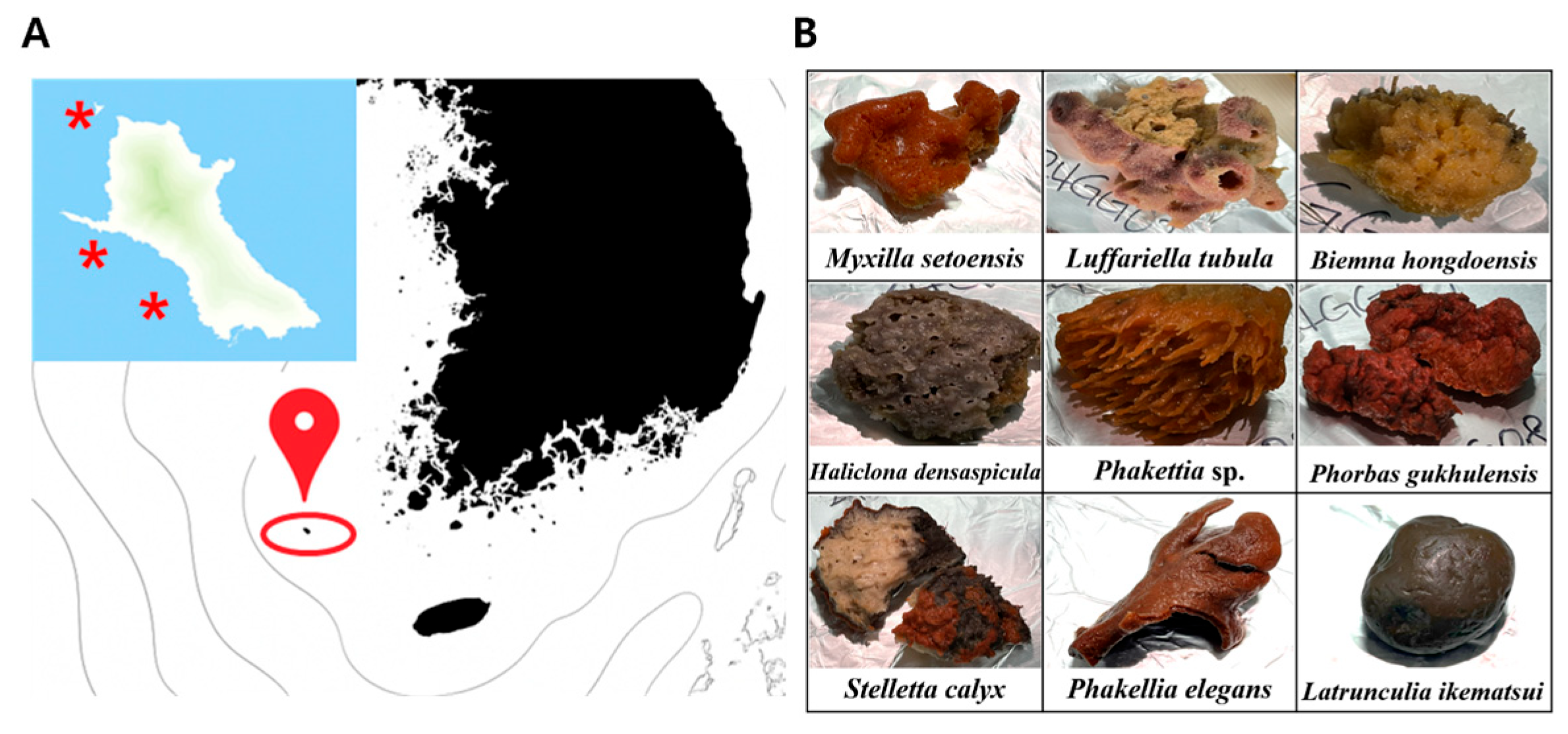
Figure 1. (A) Geographical location of the scuba sampling sites (indicated by red asterisks in the inset) nearby the coastline of the Gageodo Island (marked by a red circle and location pin). (B) Photographs of the nine marine sponge samples collected.
Diversity 18 00042 g001
Figure 2. Workflow for metagenomic microbial diversity analysis.
Diversity 18 00042 g002
Figure 3. Microbial community composition of the sponge samples. Distribution of the most abundant top 10 bacterial (A) phyla, (B) class and order. Distinct colors represent different bacterial taxa, with the height of each colored segment indicating the relative abundance of a specific bacterium within the total bacterial community in each sample. SP1–SP9 sponge samples are represented from left to right in each graph. SP1 =  Myxilla setoensis, SP2 = Luffariella tubula, SP3 = Biemna hongdoensis, SP4 = Haliclona densaspicula, SP5 = Phakettia sp., SP6 = Phorbas gukhulensis, SP7 = Stelletta calyx, SP8 = Phakellia elegans and Latrunculia ikematsui.
Diversity 18 00042 g003
Figure 4. Symbiotic bacterial community composition of the sponge samples. The charts represent the relative abundance of operational taxonomic units (OTUs) constituting the microbial community of (A) Myxilla setoensis (SP1), (B) Luffariella tubula (SP2), (C) Biemna hongdoensis (SP3), (D) Haliclona densaspicula (SP4), (E) Phakettia sp. (SP5), (F) Phorbas gukhulensis (SP6), (G) Stelletta calyx (SP7), (H) Phakellia elegans (SP8), and (I) Latrunculia ikematsui (SP9). For each sponge, OTUs are displayed in descending order of relative abundance, and the four most dominant populations are consistently color-coded as follows: dark blue (most abundant OTU), orange (second most abundant), green (third most abundant), and sky blue (fourth most abundant). Remaining OTUs are shown in distinct colors and collectively represent less abundant community members. The four most abundant OTUs are annotated using the lowest taxonomic rank identified by NCBI BLAST analysis of their representative sequences; taxonomic levels are indicated as p_: phylum, c_: class, o_: order, f_: family, and g_: genus. The complete OTU abundance data and full taxonomic classification for each sponge are provided in Table S1.
Diversity 18 00042 g004
Figure 5. Within-samples microbial community diversity assessment. Alpha rarefaction curves of (A) phylogenetic diversity, (B) Chao1, (C) Shannon entropy, and (D) Simpson’s index.
Diversity 18 00042 g005
Figure 6. Between-samples microbial community diversity assessment. (A) Bray-Curtis and (B) Weighted UniFrac principal coordinate analyses of microbial communities in sponge samples and seawater. Sample IDs are indicated in parenthesis.
Diversity 18 00042 g006
Figure 7. Heatmap and phylogenetic tree of the top 35 most abundant OTUs across the nine sponge samples and one seawater sample based on 16S rRNA amplicon analysis. The heatmap illustrates the relative abundance of each OTU (rows) in the different samples (columns), with color intensity (low: blue; high: red) reflecting proportional contributions to total microbial load. The dendrogram on the left groups OTUs based on phylogenetic similarity, with each taxon labeled at the levels of phylum, class, and order (on the right). The dendrogram at the top clusters the samples based on microbial community composition similarity. Sample IDs: SP1 =  Myxilla setoensis, SP2 = Luffariella tubula, SP3 = Biemna hongdoensis, SP4 = Haliclona densaspicula, SP5 = Phakettia sp., SP6 = Phorbas gukhulensis, SP7 = Stelletta calyx, SP8 = Phakellia elegans and Latrunculia ikematsui.
Diversity 18 00042 g007
Table 1. Information of collected samples.
Sample IDSponge TaxonomyMuseum CodeSampling Depth (m)Coordinates 1
SP1Myxilla setoensis24GG1310Site A
SP2Luffariella tubula24GG0215Site A
SP3Biemna hongdoensis24GG0318Site B
SP4Haliclona densaspicula24GG0523Site B
SP5Phakettia sp.24GG0725Site C
SP6Phorbas gukhulensis24GG0828Site C
SP7Stelletta calyx24GG1020Site A
SP8Phakellia elegans24GG1122Site B
SP9Latrunculia ikematsui24GG1218Site B
1 Samples were collected from each of three sites: Site A (34°09′ N, 125°09′ E), Site B (34°06′ N, 125°09′ E), and Site C (34°12′ N, 125°08′ E).
Table 2. Summary of HiFi sequencing reads of 16s rRNA amplicon sequencing and observed OTUs of the sponge specimens.
Sample IDSponge TaxonomyNo. HiFi ReadsHiFi
N50
Average
Read Length
Average
Read Quality
Reads in
Distinct OTUs
Observed OTUs
SP1Myxilla setoensis39,60514471453Q32373534
SP2Luffariella tubula46,17815041496Q32246666
SP3Biemna hongdoensis44,28415061526Q32285128
SP4Haliclona densaspicula41,55214541466Q30240363
SP5Phakettia sp.31,45414881485Q3295835
SP6Phorbas gukhulensis36,47215041493Q31150548
SP7Stelletta calyx38,95015021497Q3278670
SP8Phakellia elegans38,12115001490Q32271442
SP9Latrunculia ikematsui38,57215011509Q31134923
Notes: No. HiFi Reads: number of reads in the HiFi read; HiFi Read N50: 50% of all bases come from HiFi reads longer than this value; Average Read Length: mean length of HiFi reads; Average Read Quality (Phred Quality Score): mean quality of HiFi reads (A quality score of 30 to a base [Q3] meaning the chances of having a base call error were 1 in 1000).
Table 3. Dominant microbial taxa, relative abundances, and putative ecological functions in sponge samples from Gageodo Island (Korea).
Sample IDDominant Taxa
(Top 1–3)
Relative Abundance (%)Putative Functional/Ecological RoleKey Ref.
SP1Ahrensiaceae
(Alphaproteobacteria)
~76Dimethylsulfoniopropionate-cleaving[32,33]
SP2Acidobacteria subgroups (Subgroups 10, 11)/Dadabacteria/
Nitrosococcaceae
<20 eachPossible host-specific association/sulfur-nitrogen and carbon cycling potential[34,35,36]
SP3Thiohalobacteraceae
(Gammaproteobacteria)
~82Metabolic versatility; carbon and nitrogen cycling; adaptability to oligotrophic environments[37]
SP4Synechococcus,
Prochlorococcus,
Pirellulaceae,
Ruegeria atlantica
38, 18, 6Carbon and Nitrogen Fixation, biogenic silicon cycling/Sulfur oxidation, niche specialization in marine habitats/Nitrogen fixation and host growth[38,39,40]
SP5Unclassified Alphaproteobacteria; UBA10353 marine group<30Possible bioactive metabolites production for symbiotic host[41]
SP6Gammaproteobacteria; Chromatiales; Sedimenticolaceae30, 25, 15Sulfur-oxidizing[42]
SP7Acidobacteria subgroups, Dadabacteria,
Nitrospira
<20 eachCoupled sulfur–carbon cycling/phototrophy–heterotrophy synergy[34,35,43]
SP8Novel Betaproteobacteria lineage~88--
SP9EC94 (Burkholderiales)52, 18Likely host-specific, potential specialized heterotrophy[23,44]
Disclaimer/Publisher’s Note: The statements, opinions and data contained in all publications are solely those of the individual author(s) and contributor(s) and not of MDPI and/or the editor(s). MDPI and/or the editor(s) disclaim responsibility for any injury to people or property resulting from any ideas, methods, instructions or products referred to in the content.