


Abstract
In the summer of 2022 and 2023, a shift was detected in the biological carbon pump system in the northeastern Black Sea, deviating from the traditional seasonal pattern: carbonate pump (late spring–early summer) → organic pump (summer–autumn). The coccolithophore Gephyrocapsa (=Emiliania) huxleyi (Lohmann) P. Reinhardt, 1972, responsible for the carbonate pump, dominated until the end of July, while the intensive growth of large diatom species representing the organic pump was shifted to August–September. These changes were associated with deviations in meteorological conditions from long-term averages. The absence of strong wind-induced mixing led to water column stabilization and the formation of a shallow thermocline. Low nitrogen and high phosphorus concentrations promoted a coccolithophore bloom in July, while low nitrogen levels prevented intensive diatom growth during summer. Thermocline deepening in September 2022 and August 2023 enhanced organic pump operation via a short-term bloom of the large diatom Pseudosolenia calcar-avis (Schultze) B.G. Sundström, 1986.
1. Introduction
The ocean serves as a crucial regulator of the global climate, absorbing approximately half of the atmospheric carbon dioxide (CO2) [1]. The biological carbon pump (BCP) plays a key role in this process, performing—through a complex set of physical and biogeochemical processes—the capture of atmospheric carbon and its transfer from surface waters to deep layers and bottom sediments, thereby removing it from short-term atmospheric cycles for extended periods [2,3].
The BCP traditionally comprises two main components with distinct biogeochemical pathways: the organic pump and the carbonate pump [4,5]. The organic pump is based on the conversion of atmospheric CO2 into organic matter through photosynthesis. Diatoms represent the primary producers and exporters of organic carbon in the ocean [6,7]. The carbonate pump involves the binding of inorganic carbon in biological calcification reactions, resulting in calcium carbonate (CaCO3) formation [8]. The main agents of this process in the ocean’s pelagic zone are coccolithophores, with the species Gephyrocapsa (=Emiliania) huxleyi dominating and forming extensive blooms from temperate to polar waters [9,10].
The effects of these two pumps on the partial pressure of CO2 in surface waters are contrasting over short timescales. The organic pump directly consumes CO2, thereby reducing partial pressure, while calcification produces CO2 and consequently increases partial pressure. The overall contribution of the BCP to the climate system is determined not only by the intensity of each pump separately but also by their ratio and temporal dynamics.
One component of the BCP is the export of bound carbon to the ocean’s deep layers. Carbon export beyond the euphotic zone occurs through gravitational settling (the gravitational pump) and physical processes [11,12,13,14]. Additionally, biological mechanisms involving the active transport of organic matter by vertically migrating animals, primarily zooplankton and fish, contribute to this export [15,16,17]. Although quantifying the contribution of each pump is challenging, approximately 70% of carbon exported beyond the euphotic zone is attributed to the gravitational pump [18].
The production rates of both organic and inorganic carbon, as well as the sinking rates of phytoplankton cells, depend on cell size [19,20,21]. Phytoplankton seasonal dynamics, which govern BCP operation, are regulated by a complex set of biotic and abiotic factors, including trophic interactions [22,23]. In the annual cycle of the World Ocean, a sequential alternation between the dominance of the organic (diatoms) and carbonate (coccolithophores) pumps is typically observed. In the North Atlantic, an intense spring bloom of small diatoms [24] is followed by an equally extensive bloom of coccolithophores, which covers vast areas [25]. However, the mechanisms regulating this transition remain poorly understood. Without understanding these mechanisms, accurately predicting the response of marine ecosystems and the carbon cycle to global climate change is impossible.
The Black Sea represents a unique model for studying BCP seasonal dynamics, as it contains both organic and carbonate pumps [26]. The sea experiences both diatom blooms [27] and extensive coccolithophore blooms [28,29,30]. A pattern of diatom and coccolithophore dominance has been identified for the eastern part of the sea [26]: small diatoms (spring) → Coccolithophores (late spring–early summer) → large diatoms (summer–autumn). The environmental conditions favoring each component in this scheme have been identified based on factors such as temperature, nitrogen and phosphorus concentrations, and wind direction and speed [26,31].
Thus, a clear seasonal alternation between the dominance of organic and carbonate pumps occurs in the Black Sea, making it an ideal testing ground for investigating the mechanisms of this shift. However, in recent years, a trend toward an extended period of carbonate pump dominance has been observed, necessitating investigation. Addressing this issue is fundamentally important for predicting the response of marine ecosystems to climate change.
According to long-term data [26], the bloom typically terminates by mid-June. Intensive growth of large diatoms generally commenced in July and persisted for two months. In 2022 and 2023, however, we observed a prolonged coccolithophore bloom that lasted until the end of July. The causes of this significant temporal shift remain unidentified.
In this study, we aimed to investigate the mechanisms underlying coccolithophore bloom formation and identify the key factors governing their dynamics. We formulated the following hypothesis: the primary driver of prolonged coccolithophore blooms is meteorological forcing, predominantly wind speed.
2. Materials and Methods
2.1. Sampling Scheme and Hydrophysical Parameter Measurements
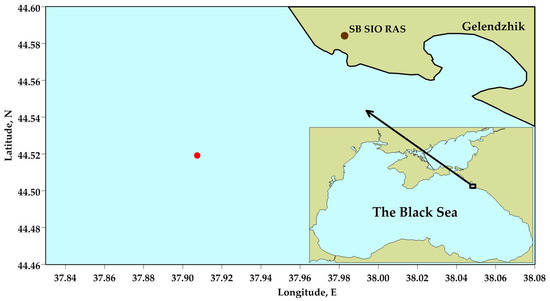
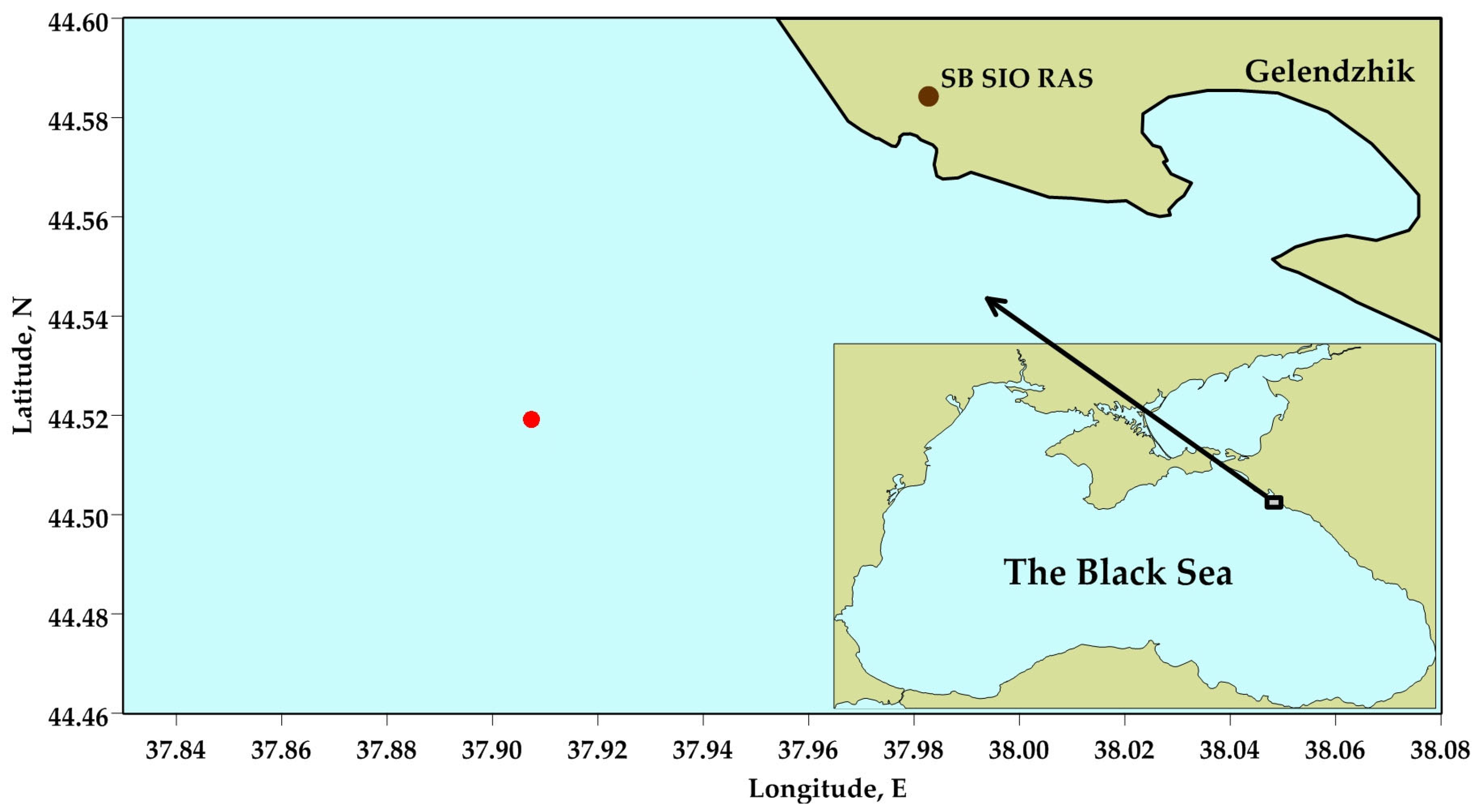
Hydrophysical and hydrochemical parameters, along with quantitative and qualitative characteristics of the phytoplankton community (including taxonomic structure and species abundance), were determined during one-day expeditions on the R/V “Ashamba” from May to November 2022 and from April to August 2023. In addition, this study uses data obtained earlier and very partially published [26,31]. Observations were conducted at least twice a month at a station at a depth of 500 m (slope) (Figure 1).
Figure 1.
Field studies map.
A CTD probe (Sea-Bird Electronics, Inc., Bellevue, WA, USA) was used to measure hydrophysical parameters (vertical distribution of temperature, salinity, and density). Based on these data, the thickness of the upper mixed layer (UML) was estimated. The lower boundary of the UML (which is also the upper boundary of the thermocline) was determined by the split and merge method [32]. Water sampling for hydrochemical analyses and phytoplankton studies was conducted using 5 L Niskin-type bottles mounted on a Rosette sampler. At each station, samples were taken from the surface, the middle of the UML, the seasonal thermocline layer, and below it. The sample volume for phytoplankton analysis was 1.5 L. Phytoplankton samples were fixed with neutralized formaldehyde to a final concentration of 0.8–1.0%. The reduced formaldehyde concentration compared to the typical 4% was used because sample processing was carried out within one month after sampling, and during this period, mild fixation ensured better cell preservation. Samples were stored in the dark at room temperature for two weeks, after which they were slowly decanted.
2.2. Meteorological Data
Meteorological data (wind speed and direction and precipitation) were obtained from the Gelendzhik weather station (44.55° N, 38.05° E). The wind speed was measured with an interval of three hours. We calculated the average wind speed as the arithmetic mean for the month and the probabilities of the dominance of winds from different directions during the calendar month for the period from 2016 to 2023. The probability of winds dominating at speeds above 12 m s−1 was also calculated.
2.3. Determination of Nutrient Concentrations
Concentrations of silicates (Si), phosphates (P-PO4−), nitrates (N-NO3−), nitrites (N-NO2−), and ammonium (N-NH4+) were determined by standard spectrophotometric methods [33,34] with the same frequency and at the same depths as phytoplankton sampling. The sum of dissolved inorganic nitrogen (DIN) was calculated as the sum of nitrates, nitrites, and ammonium. The detection limit of nitrogen determination is no more than 0.05 µM, phosphorus 0.03 µM, and silicon no more than 0.1 µM.
2.4. Phytoplankton Analysis
Species identification and cell counting of phytoplankton were performed using an Ergoval light microscope (Karl Zeiss, Jena, Germany) at magnifications of 160× and 400×. Cells with linear dimensions less than 20 µm were counted in a 0.05 mL Najotte chamber. Counting was considered statistically sufficient when at least 100 cells of each species were enumerated. For larger cells, a 1 mL Naumann chamber was used, and typically the entire chamber was counted. Cells smaller than 2 µm were not considered in the calculation of total phytoplankton biomass. Species identification was based on morphological characteristics according to identification guides [35,36,37]. Cells of unknown taxonomic affiliation ranging in size from 4 to 10 µm were classified as “small flagellates”. A method based on the geometric shape of cells was used to calculate biovolume [38,39,40]. Wet weight was calculated from the cell biovolume, assuming cell density is equal to 1 mg mL−1. Biomass was expressed in units of wet weight (mg/m3). A species was considered dominant if its biomass was more than half of the total phytoplankton biomass at a given station. The bloom level was taken as a cell abundance equal to 106 cells L−1 or a total phytoplankton biomass equivalent to 1000 mg m−3 [41].
2.5. Statistical Data Processing
A significance level of α = 0.05 was used for statistical processing. Student’s t-test and the Mann–Whitney U-test were used to determine the significance of differences between samples. Pearson’s rank correlation coefficients were calculated for paired data. All statistical analyses were performed using PAST software version 4.17 (accessed on 15 July 2025).
3. Results
3.1. Wind and Species Domination
Over 25 years of observations, four cases of coccolithophore dominance in March and April were identified (Table S1). Only two cases (2022 and 2023) were recorded when coccolithophores formed a bloom and dominated in July. During this period, large diatoms shifted their dominance to June only twice (2008 and 2009), and a shift to August was observed twice (2022 and 2023). Coccolithophores predominantly dominate (80%) during SE winds (from the S to E direction), while large diatoms prevail during northern winds (over 80%).
The time when the frequency of winds with a speed above 12 m s−1 was below 6% is typically observed in May and June, as seen in 2017, 2019, and 2023 (Table 1 and Table S2). In 2016 and 2019 weak winds occurred as early as April and continued until mid-June and in 2023 until July. In 2022, the minimum wind speed was observed in June and July. In 2023, the period of minimal winds lasted from April to July. Almost always, with the exception of April 2019 and July 2016 and 2019, blooms of the coccolithophore Gephyrocapsa huxleyi were recorded during periods of weak winds. Coccolithophore abundance reached maximum values in June 2017 and 2022.
Table 1.
Months with the minimum annual wind speed (m s−1) (highlighted in blue) and abundance of coccolithophorid Gephyrocapsa huxleyi (106 cells L−1). The bloom is highlighted in yellow.
3.2. Dynamics of the Vertical Structure of the Water Column in 2022
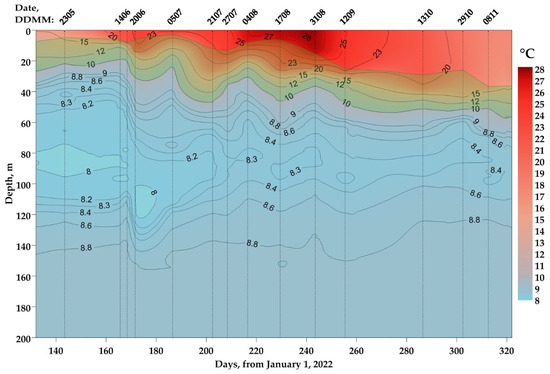
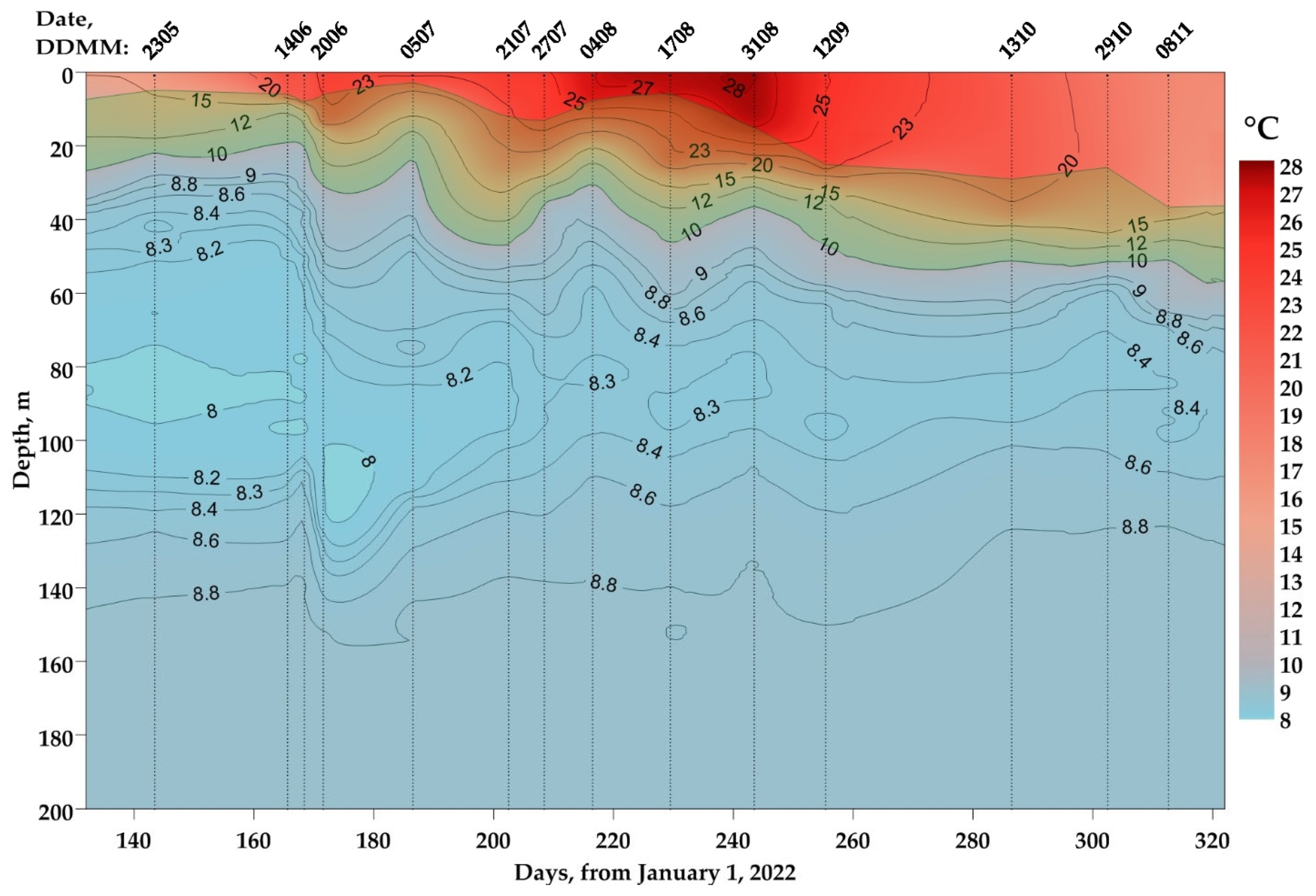
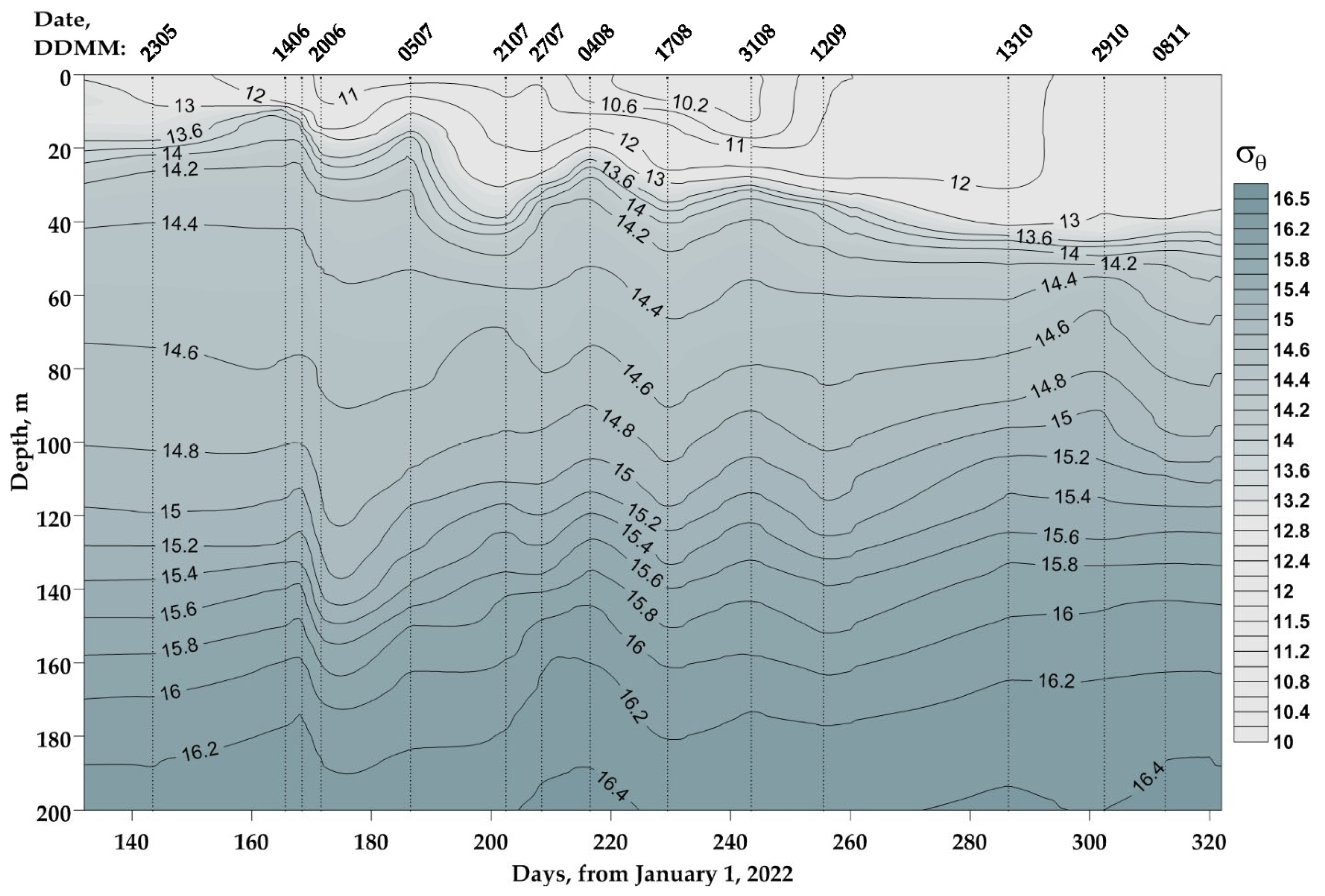
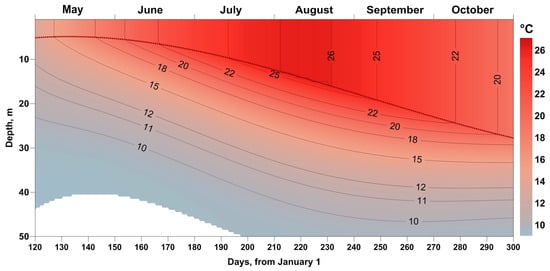
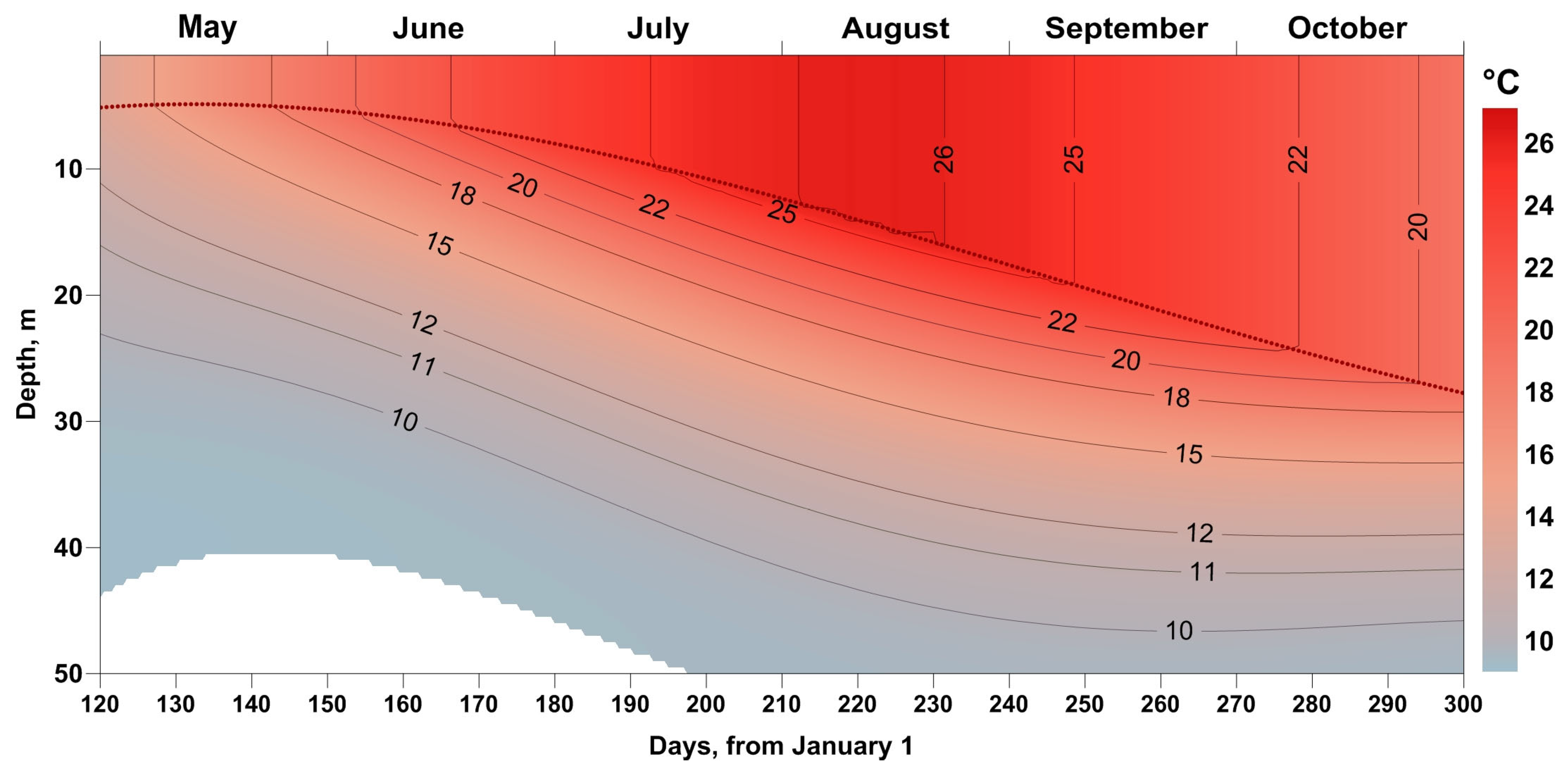
By the start of the research period on May 23, the UML was in the initial stage of formation (Figure 2 and Figure 3). Throughout the first half of the summer, the UML remained thin, with its thickness not exceeding 3–8 m, and it transitioned smoothly into the seasonal thermocline layer without a sharp boundary. A stable UML with a thickness more than 8 m formed only in the second half of July and persisted until the end of August. During this period, the average temperature in the UML increased from 24.3 to 27.6 °C. In general, the upper boundary of the seasonal thermocline in 2022 in July and August was higher than the long-term average (Figure 4).
Figure 2.
Seasonal dynamics of temperature over the 500 m depth in 2022. The thermocline zone, with a lower boundary of 10 °C, is highlighted in green.
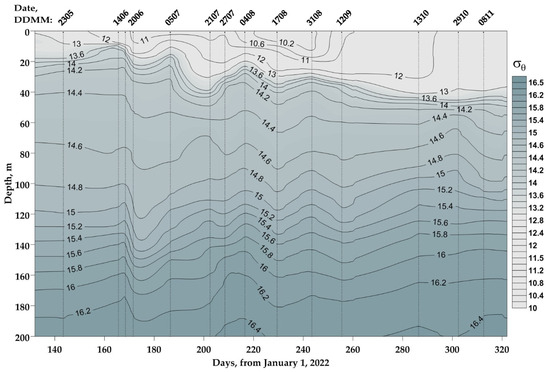
Figure 3.
Seasonal dynamics of water density over the 500 m depth in 2022.
Figure 4.
General temperature dynamics in the UML and thermocline during the warm period of the year (May–October) in the study area, based on long-term average. The lower boundary of the UML (the upper boundary of the thermocline) is shown as the red dotted line, and the isotherm of 10 °C is taken as the lower boundary of the thermocline.
In late August, a prolonged period of strong northeasterly winds caused intensive mixing of the upper layer, leading to an increase in UML thickness to 25 m by mid-September and a decrease in the average temperature to 24.7 °C. Subsequently, as seasonal cooling progressed, the temperature in the UML continued to decrease, and its thickness increased, reaching 17.3 °C and 38 m, respectively, by November 8.
The average thermocline thickness in 2022 was approximately 22 m, reaching a maximum (40 m) on August 17. The minimum value (12 m) was recorded on June 17, when the 10 °C isotherm (traditionally taken as the thermocline’s lower boundary) rose to a depth of 20 m, and the UML thickness increased from 5–6 m to 8 m after an episode of weak wind influence.
By the end of the summer season, the thermocline thickness decreased to 21 m. In September–October, its values fluctuated between 21 and 25 m, and by early November, it decreased to 13 m.
3.3. Dynamics of Nutrient Concentrations
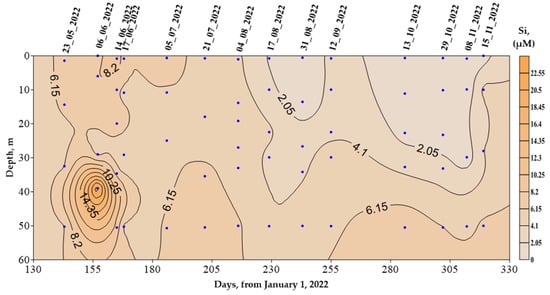
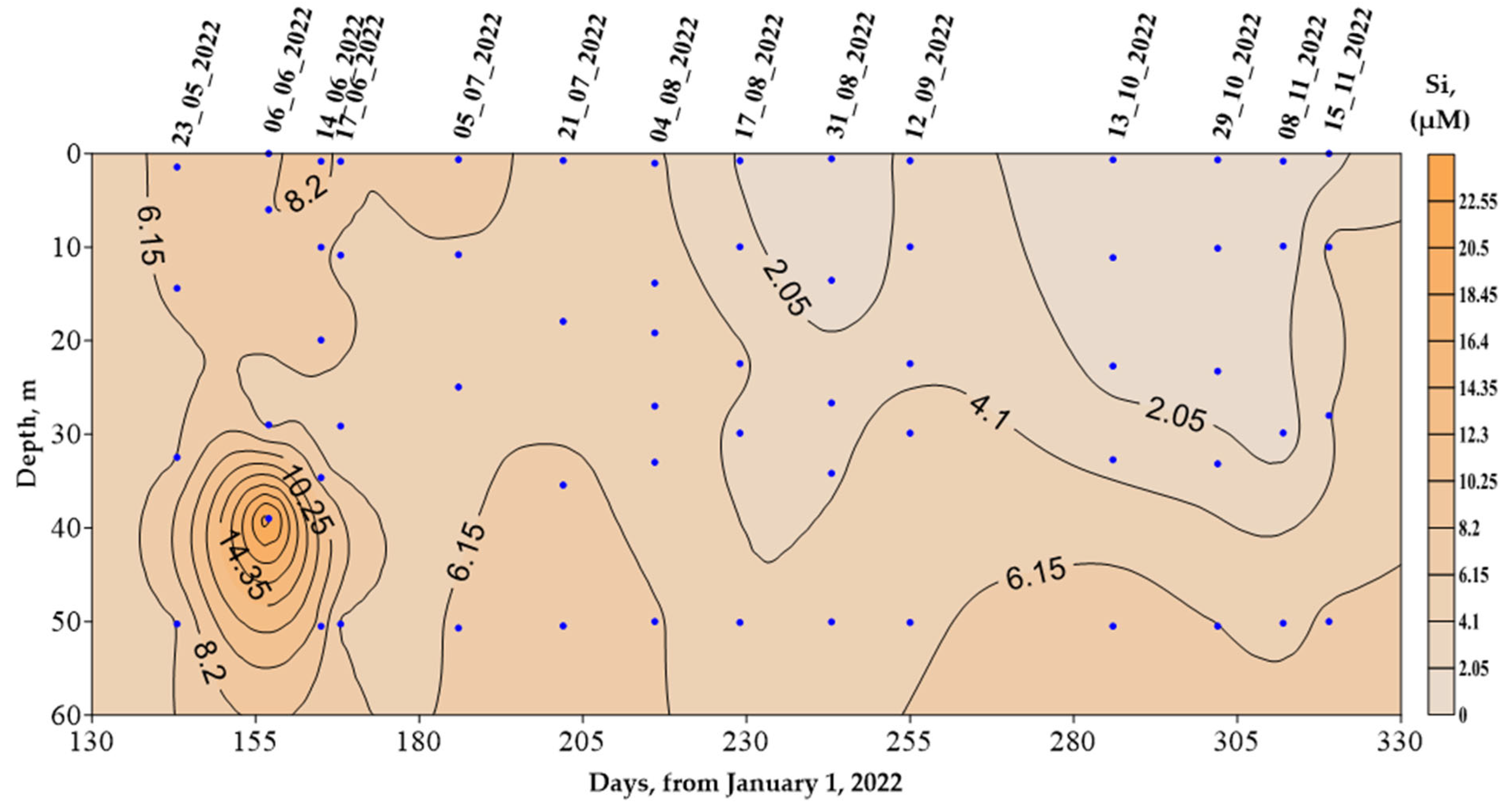
The silicon concentration remained high (until 8.2 µM L−1) during the period of carbonate pump operation, decreasing to 2 µM L−1 and below in the second half of August during organic pump dominance (Figure 5; Table 2).
Figure 5.
Seasonal dynamics of silicon concentration at the station above a depth of 500 m.
Table 2.
Temperature (°C), salinity (PSU), density (kg m−3), phosphorus, silicon, nitrogen concentrations (µM L−1), and their ratios in the water layer above the thermocline in June–July and August 2022. p1 and p2 are the probability of equality of average values (t-test) and medians (Mann–Whitney U-test), respectively.
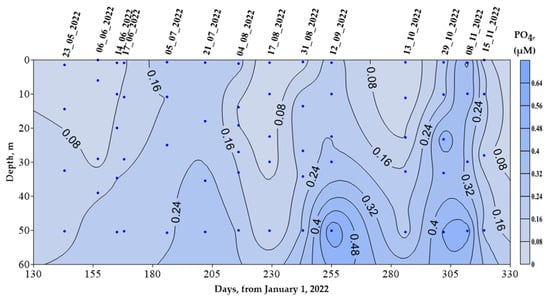
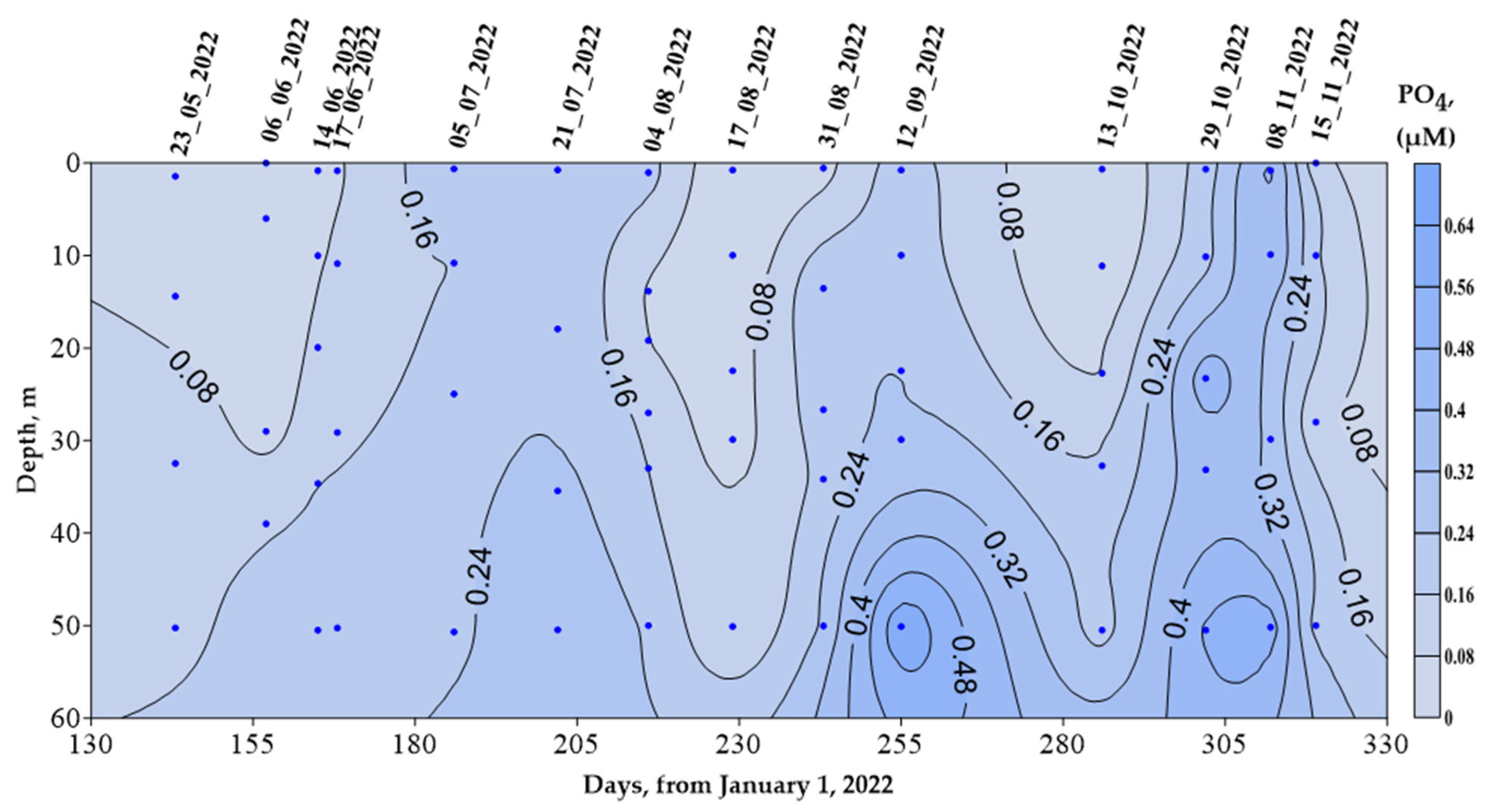
The phosphate concentration showed complex dynamics: below 0.08 µM L−1 until mid-June then exceeded this level and remained elevated until early August (Figure 6; Table 2), after which it decreased. In September, it increased again briefly.
Figure 6.
Seasonal dynamics of phosphate concentration in 2022 at the station above a depth of 500 m.
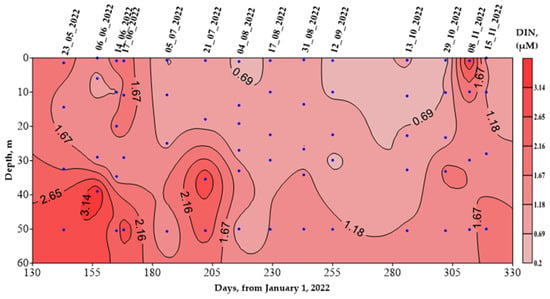
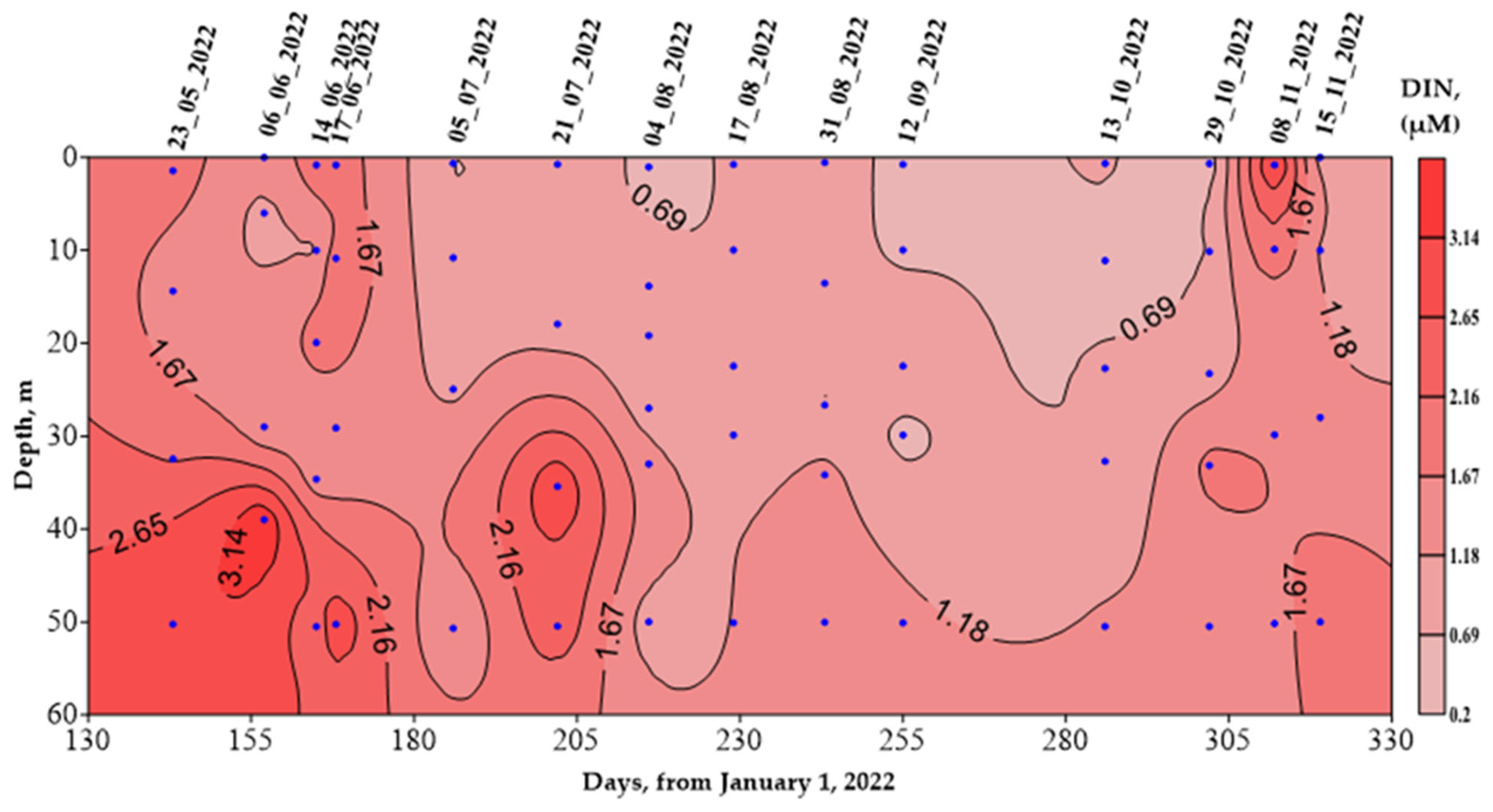
The DIN concentration exceeded 1.67 µM L−1 in June, decreased noticeably in July, and reached minimal levels by early August, increasing slightly thereafter (Figure 7; Table 2).
Figure 7.
Seasonal dynamics of DIN concentration in 2022 at the station above a depth of 500 m.
The organic pump operated at higher temperatures and salinity but a lower density compared to the carbonate pump (Table 2). Nitrogen, silicon concentrations, and the Si:N ratio were higher during carbonate pump dominance, while N:P was lower.
3.4. Dynamics of Coccolithophore and Diatom Biomass
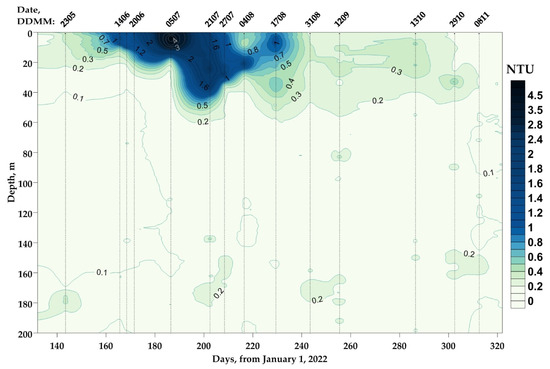
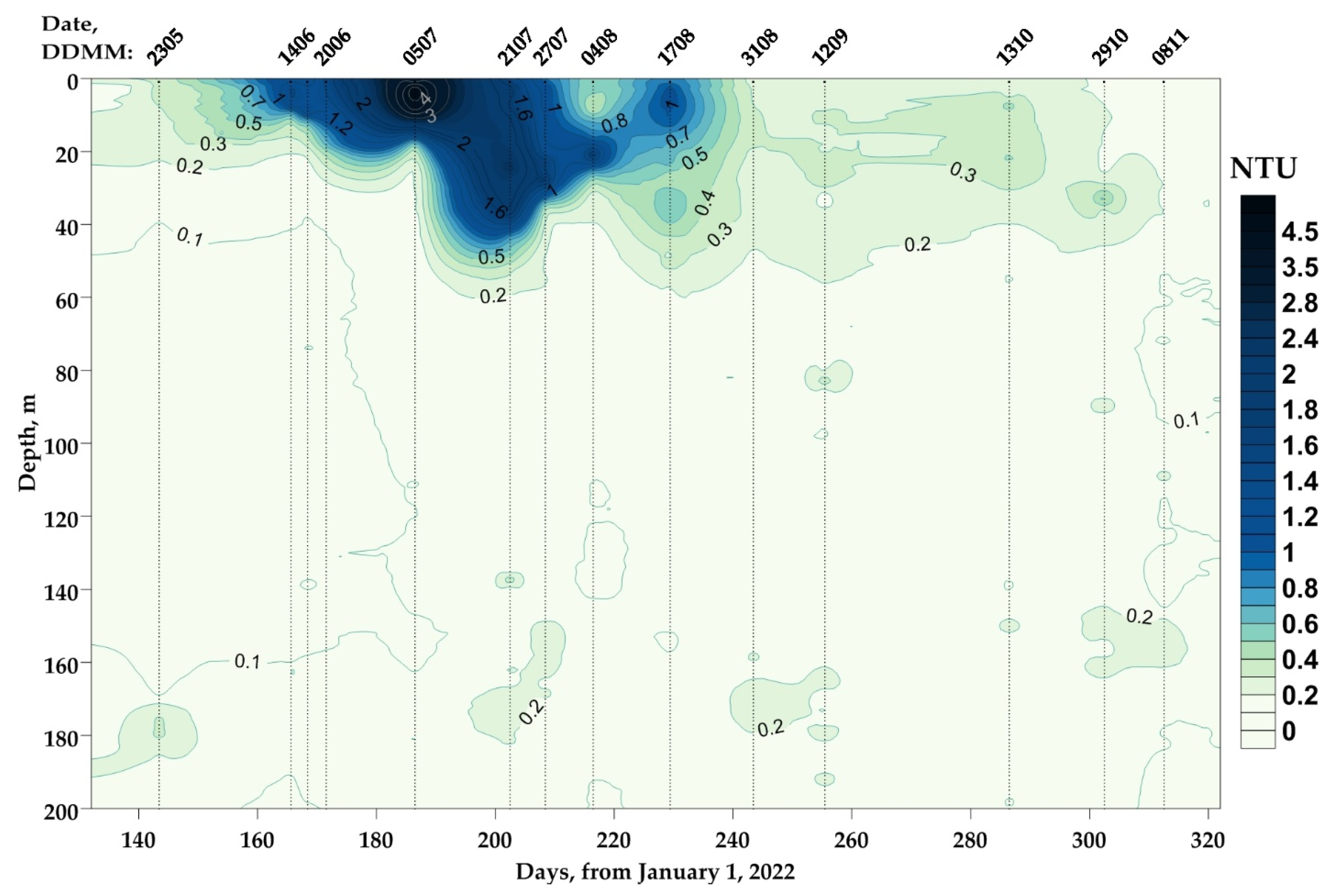
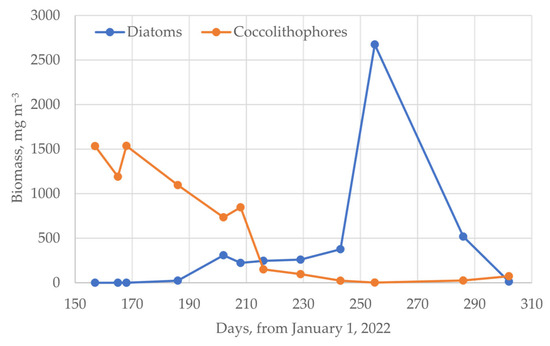
Coccolithophore abundance is reflected in water turbidity or optical density, associated with the formation of particles with high backscattering, such as Gephyrocapsa huxleyi cells and free coccoliths. Turbidity dynamics generally reflect the dynamics of G. huxleyi cell abundance [30,42]. It showed a significant increase in water absorption by mid-June, reaching a maximum in early July, located closer to the water surface (Figure 8). On July 21, the layer deepened to almost 40 m, but by early August, this layer rose to a depth of 20 m. In mid-August, only a slight increase in water turbidity from the surface to a depth of 10 m was noted. The maximum biomass of the coccolithophore G. huxleyi was recorded in mid-June, contributing 98% to total phytoplankton biomass, after which it gradually decreased and leveled off with diatom biomass by early August (Figure 9). Subsequently, coccolithophores did not show growth, and their biomass remained at low levels.
Figure 8.
Annual dynamics of turbidity in 500 m deep water in 2022.
Figure 9.
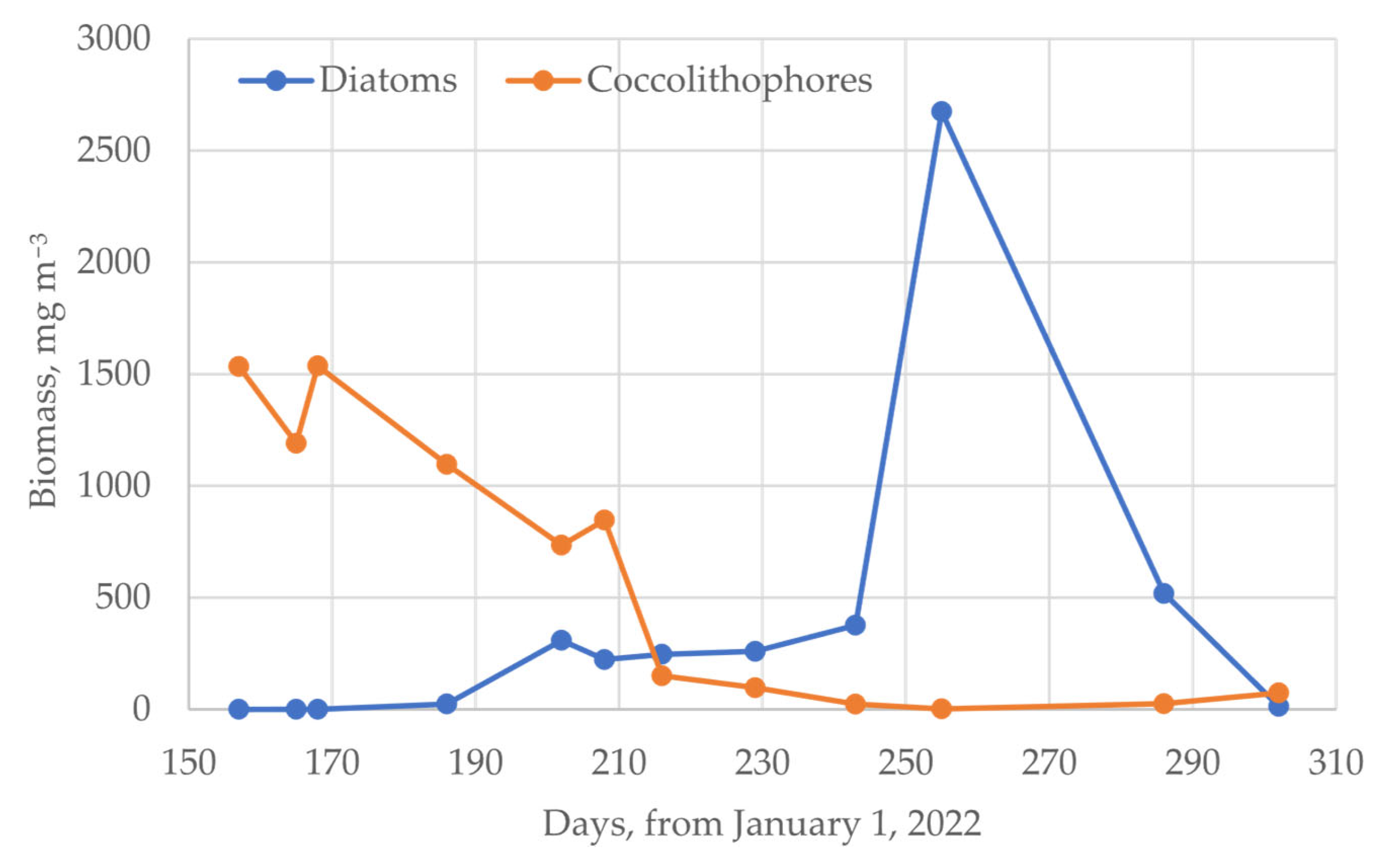
Dynamics of biomass of coccolithophores and diatoms in 2022 at a station above a depth of 500 m.
Diatom biomass, represented by the large-celled Pseudosolenia calcar-avis, showed no noticeable growth until mid-July then increased slowly, and in late August, intensive biomass growth was observed with an equally sharp decline (Figure 9). The maximum contribution of this species to total phytoplankton biomass reached 97.3%.
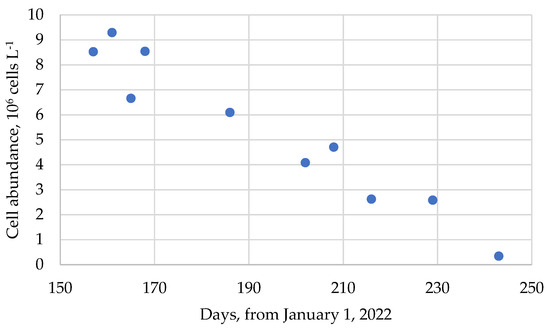
Coccolithophore abundance dynamics show that it reached maximum values, exceeding nine million cells per liter in June (Figure 10), then decreased at a constant rate of 0.06 day−1 (correlation coefficient 0.94, p = 0.0004). And only by the end of August, the abundance of cells decreased below the bloom level.
Figure 10.
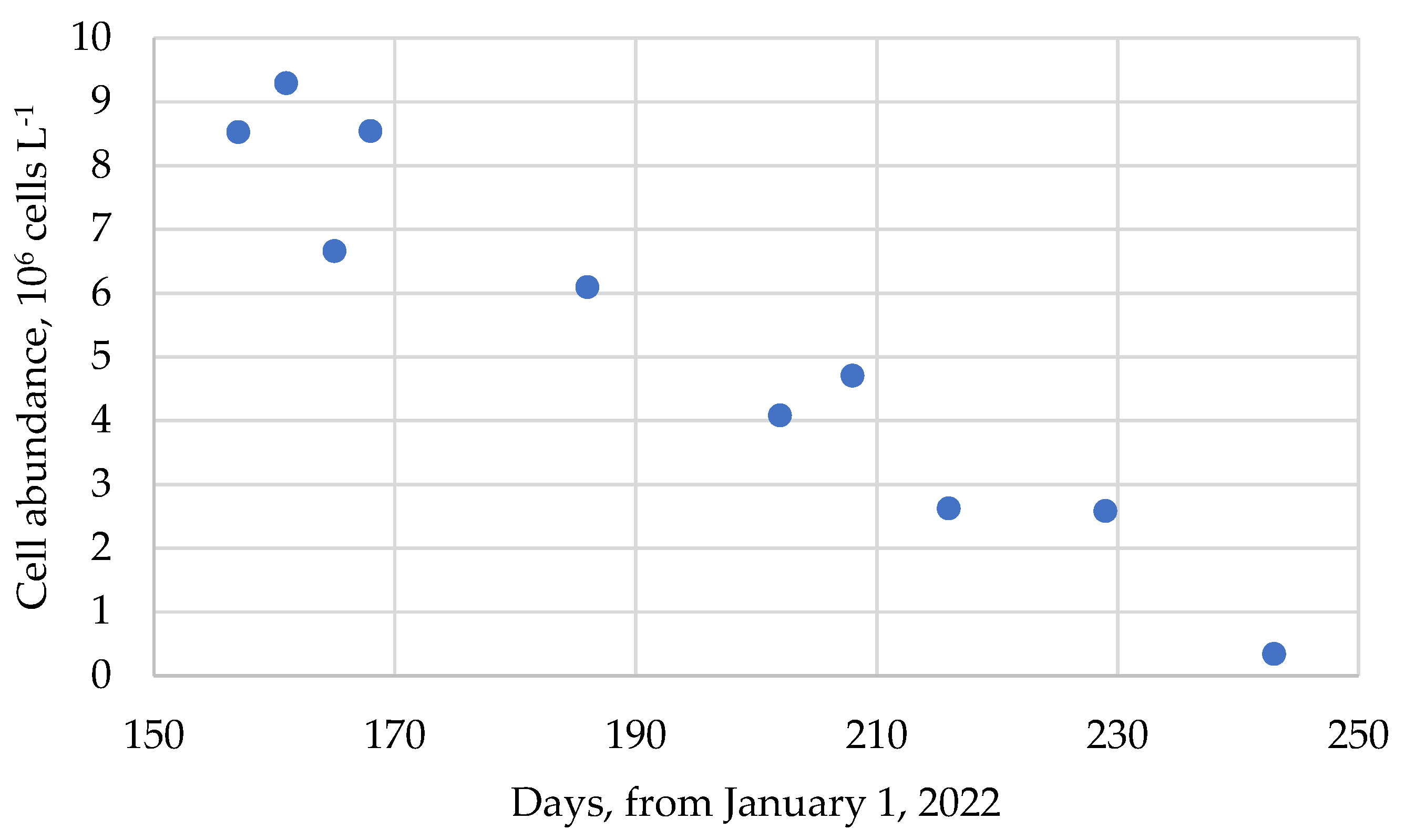
Dependence of the natural logarithm of coccolithophorid abundance on time. Day zero is 17 June 2022. The correlation coefficient is 0.94, p = 0.0004.
4. Discussion
4.1. Phenology of Coccolithophore Bloom
Data from a twenty-five-year investigation indicate that the carbonate pump is relatively stable over time, with its operation typically confined to the end of spring and the beginning of summer. However, shifts in the timing of the bloom initiation and dominance of coccolithophores have been observed, most often towards an earlier occurrence in spring. Notably, prolonged coccolithophore blooms encompassing the entire month of July were recorded only in 2022 and 2023. In 2023, intense carbonate pump activity was tracked over a four-month period.
The implications for the biological carbon pump are significant. Since the operation of the carbonate pump increases the partial pressure of carbon dioxide in surface waters [43], it reduces the rate of carbon transfer across the air–sea interface [44]. Consequently, an extended duration of carbonate pump activity would alter the biological carbon pump’s efficiency. It remains unclear whether a recent trend towards prolonged operation exists. Our data show that the bloom onset has shifted to April in some years, but this is not consistently tied to a specific period, highlighting the role of stochastic factors. Therefore, these early events are best considered anomalies. Similarly, the shift of bloom persistence into July was observed solely in 2022 and 2023. Based on this short record, it is premature to classify this as a trend, and these recent events must also be considered anomalous at present.
4.2. Influence of Wind on the Dynamics of the Coccolithophores and Large Diatoms
Our five-year observations demonstrate that blooms of the coccolithophore Gephyrocapsa huxleyi are almost always recorded during periods of minimum wind speeds (Table S2). This indicates that minimal wind-induced mixing is a necessary but insufficient condition for intensive carbonate pump operation. The increased stability of the water column as a necessary condition for coccolithophore blooms has been previously indicated [10,26,31]. The second condition is the wind direction. Coccolithophore blooms are more likely to be observed during SE winds, whereas blooms of large diatoms are associated with NE winds, as previously discovered [26]. These two wind directions are dominant in the eastern Black Sea [45].
In July 2016, the probability of high-intensity winds throughout the month was relatively low, suggesting high water column stability and, consequently, a high probability of coccolithophore bloom formation. However, in June, intense winds (Table 1) led to the destruction of the shallow thermocline. It is within this layer that the specific optical conditions favoring Gephyrocapsa huxleyi growth are established [46]. The thermocline deepened, and under these conditions, large diatoms thrive [26].
In July 2017, despite a relatively low probability of strong winds, there were two days in the middle of the month with high-intensity winds reaching up to 25 m s−1, which also resulted in thermocline deepening. In July 2019, the weather was relatively stable; however, high-intensity winds were observed in the second half of June.
4.3. Physical and Chemical Conditions
The annual dynamics of water temperature and density show that a shallow, sharp-gradient thermocline formed in June. Its depth did not exceed 8 m. After some disturbance on July 21, the thermocline rose closer to the water surface again. The absence of high-intensity winds is necessary for the formation of such a thermocline. In the Black Sea, the probability of storms is minimal in June [47,48]. This shallow thermocline is a necessary condition for coccolithophore blooms [10,26], and this condition was met until the end of August.
Subsequently, the thermocline began to deepen and approached a depth of 20 m in September. A deep thermocline is necessary for the development of large diatoms, as its lower boundary reaches nitrogen-rich layers [26]. A shift in the timing of this process leads to a shift in organic pump operation.
The silicon concentration was high during intensive coccolithophore growth then began to decrease with diatom growth. However, until the end of August, its concentration (approximately 2 µM L−1) could not limit diatom growth [49,50]. At the end of August and beginning of September, it increased due to intensified vertical exchange, as indicated by thermocline deepening.
High phosphate concentrations and low nitrogen concentrations represent necessary conditions for coccolithophore blooms [26]. This is due to the low half-saturation constant for nitrogen uptake and the high half-saturation constant for phosphorus uptake. Long-term observations show that by mid-June, the phosphate concentration typically becomes less than 0.1 µM L−1, and coccolithophores leave the pelagic ecosystem, replaced by large diatoms that are less sensitive to the phosphate concentration [26]. However, in 2022, a different pattern was observed: the phosphate concentration remained high until the end of July, which increased the competitiveness of coccolithophores relative to large diatoms.
The DIN concentration during the coccolithophore bloom was low (approximately 1 µM L−1); however, in mid-June, it briefly increased, then returned to previous levels and remained there almost until the end of August. Relatively low nitrogen concentrations hinder the successful development of large diatoms [26,31]. According to competition theory [51,52], at a low nitrogen concentrations, the species with a low half-saturation constant for nitrogen uptake wins, and this species is Gephyrocapsa huxleyi.
4.4. The Dynamics of Coccolithophore and Diatom Biomass
The dynamics of coccolithophore and diatom biomass demonstrate a classic example of species replacement in response to changing limiting factors. For coccolithophores, the limiting factor is phosphorus concentration; for large diatoms, it is nitrogen concentration. In an open system, species coexistence is possible if they have different limiting factors [53]. In our case, coexistence was relatively short-lived, most likely explained by different limiting factors. Short-term minor fluctuations in environmental factors, as well as predator influence, can alter coexistence duration [53,54,55].
To explain the observed dynamics of phosphorus and nitrogen concentrations in 2022, we hypothesize a connection to meteorological anomalies. In June, when an intensive coccolithophore bloom was recorded (over 9 × 10⁶ cells L−1), weak E and SE winds prevailed (Tables S1 and S2). In July, weak NE and E winds also dominated, which did not destroy the seasonal thermocline, and coccolithophore blooms did not disappear. On July 11 and 27, torrential rains (floods) occurred, with half of the monthly precipitation norm falling (32.2 and 21.2 mm). In August, weak SE winds were observed, but only 18.1 mm of precipitation fell, leading to an increase in salinity to 18.55, the highest values recorded from 1990 to 2022. Heavy rains in July contributed to an increased phosphorus concentration, which promoted coccolithophore retention in the ecosystem. The eastern Black Sea is characterized by the presence of major rivers in Georgia, whose discharge governs the nutrient concentrations. These riverine waters are advected to the study area within one to two weeks, depending on the velocity of the Rim Current. This mechanism can account for the elevated phosphate concentrations measured on 21 July 2022. In August, due to the absence of precipitation, the phosphorus concentration decreased, and coccolithophores nearly disappeared from the ecosystem. The role of precipitation in replenishing the phosphorus budget in coastal ecosystems of the northwestern Black Sea was confirmed earlier [56].
The confirmation of precipitation’s role as a factor regulating species composition in the coccolithophore–diatom system was noted during a powerful flood following torrential rains on 6 July 2012 (Table 3). By the flood’s onset, the ecosystem had restructured from a coccolithophore bloom in June (3 × 10⁶ cells L−1) to the dominance of large diatoms (Pseudosolenia calcar-avis). After the flood, by 11 July 2012, Gephyrocapsa huxleyi cell abundance increased to 9.6 × 10⁶ cells L−1, while P. calcar-avis biomass sharply increased simultaneously. This case represents an example of species coexistence when nutrient limitation is lifted.
Table 3.
Relationship of the cell’s abundance of Gephyrocapsa huxleyi during intense bloom with the amount of precipitation preceding this phenomenon.
Intensive diatom growth requires water column instability associated with wind-induced mixing, leading to increased turbulent exchange in the UML [57,58,59].
Thus, increased precipitation with a relatively stable water column promotes carbonate pump dominance, while an unstable water column with a deep thermocline promotes organic pump dominance.
The reasons for the unusual behavior of the coccolithophore blooms and as a result of the functioning carbonate pump in 2022 should be sought in interannual variability. However, identifying climatic trends in such interannual variability is challenging and requires long observation periods. Regarding coccolithophore blooms in late spring and early summer, a hypothesis exists that bloom intensity, and consequently carbonate pump operation intensity, relates to winter severity; after cold winters with increased vertical turbulence, blooms become more intense. This results from deeper mixing in cold winters when denser waters enter upper layers, enhancing vertical exchange upon water column stabilization [60]. However, the causes of intense coccolithophore blooms, as well as blooms of large diatoms, remain unclear.
Our research advances the understanding of how the complex system of the biological carbon pump will be altered by climate change. Two scenarios for changes in the pump’s structure and functioning can be hypothesized: (1) increasing temperature leads to enhanced water column stratification and, consequently, to carbonate pump prevalence, which would significantly reduce CO2 fluxes at the atmosphere–ocean boundary; (2) if climate change consequences include the intensification of vertical exchange, then organic pump dominance should be expected.
5. Conclusions
In the summer of 2022, a pronounced shift in the operation of the biological carbon pump was observed in the northeastern Black Sea, manifested in the prolongation of the carbonate pump dominance period (Gephyrocapsa huxleyi) until the end of July and the shift of the organic pump’s intensive phase (Pseudosolenia calcar-avis) to September. The cause of this anomaly was a deviation of meteorological conditions from long-term averages. The absence of strong wind-induced mixing and the occurrence of torrential precipitation led to stable stratification with a shallow thermocline and altered nutrient ratios (high phosphorus concentrations at low nitrogen concentrations), which created favorable conditions for coccolithophores and limited diatom growth in summer. These results are not inconsistent with the proposed hypothesis. Organic pump prevalence was observed with intensified vertical exchange, which increased the nitrogen concentration and consequently led to large diatom dominance. These data emphasize the high sensitivity of the biological carbon pump to changes in meteorological conditions.
Supplementary Materials
The following supporting information can be downloaded at: https://www.mdpi.com/article/10.3390/d18010004/s1.
Author Contributions
V.S.: conceptualization and writing; L.P.: field data collection and writing; O.P.: hydrophysical data; V.C.: hydrochemical data; V.K.: data analysis. All authors have read and agreed to the published version of the manuscript.
Funding
This work was supported by the Ministry of Science and Higher Education of the Russian Federation, theme FMWE-2023-0001 “Study of greenhouse gases fluxes at the carbon test area in the Krasnodar Region”.
Institutional Review Board Statement
Not applicable.
Informed Consent Statement
Not applicable.
Data Availability Statement
The original contributions presented in this study are included in the article and Supplementary Materials. Further inquiries can be directed to the corresponding author.
Acknowledgments
The authors thank the crew of the R/V “Ashamba” for their assistance during field operations.
Conflicts of Interest
The authors declare no conflicts of interest.
References
- Field, C.B.; Behrenfeld, M.J.; Randerson, J.T.; Falkowski, P. Primary Production of the Biosphere: Integrating Terrestrial and Oceanic Components. Science 1998, 281, 237–240. [Google Scholar] [CrossRef] [Scilit] [PubMed]
- Volk, T.; Hoffert, M.I. Ocean Carbon Pumps: Analysis of Relative Strengths and Efficiencies in Ocean-Driven Atmospheric CO2 Changes. In The Carbon Cycle and Atmospheric CO2: Natural Variations Archean to Present; Sundquist, E.T., Broecker, W.S., Eds.; American Geophysical Union: Washington, DC, USA, 1985; Volume 32, pp. 99–110. [Google Scholar]
- Sarmiento, J.L.; Gruber, N. Ocean Biogeochemical Dynamics; Princeton University Press: Princeton, NJ, USA, 2006; 526p. [Google Scholar]
- Legendre, L.; Rivkin, R.B.; Weinbauer, M.G.; Guidi, L.; Uitz, J. The Microbial Carbon Pump Concept: Potential Biogeochemical Significance in the Globally Changing Ocean. Prog. Oceanogr. 2015, 134, 432–450. [Google Scholar] [CrossRef] [Scilit]
- Le Moigne, F.A.C. Pathways of Organic Carbon Downward Transport by the Oceanic Biological Carbon Pump. Front. Mar. Sci. 2019, 6, 634. [Google Scholar] [CrossRef] [Scilit]
- Falkowski, P.G.; Barber, R.T.; Smetacek, V. Biogeochemical Controls and Feedbacks on Ocean Primary Production. Science 1998, 281, 200–206. [Google Scholar] [CrossRef] [Scilit]
- Smetacek, V. Diatoms and the Ocean Carbon Cycle. Protist 1999, 150, 25–32. [Google Scholar] [CrossRef] [Scilit]
- Milliman, J.D. Production and Accumulation of Calcium Carbonate in the Ocean: Budget of a Non-Steady State. Glob. Biogeochem. Cycles 1993, 7, 927–957. [Google Scholar] [CrossRef] [Scilit]
- Poulton, A.J.; Adey, T.R.; Balch, W.M.; Holligan, P.M. Relating Coccolithophore Calcification Rates to Phytoplankton Community Dynamics: Regional Differences and Implications for Carbon Export. Deep. Sea Res. Part II Top. Stud. Oceanogr. 2007, 54, 538–557. [Google Scholar] [CrossRef] [Scilit]
- Iglesias-Rodriguez, M.D.; Brown, C.W.; Doney, S.C.; Kleypas, J.; Kolber, D.; Kolber, Z.; Hayes, P.K.; Falkowski, P.G. Representing Key Phytoplankton Functional Groups in Ocean Cycle Models: Coccolithophorids. Glob. Biogeochem. Cycles 2002, 16, 1070. [Google Scholar] [CrossRef] [Scilit]
- Omand, M.M.; D’Asaro, E.A.; Lee, C.M.; Perry, M.J.; Briggs, N.; Cetinić, I.; Mahadevan, A. Eddy-Driven Subduction Exports Particulate Organic Carbon from the Spring Bloom. Science 2015, 348, 222–225. [Google Scholar] [CrossRef] [Scilit]
- Resplandy, L.; Lévy, M.; Mcgillicuddy, D.J. Effects of Eddy-Driven Subduction on Ocean Biological Carbon Pump. Glob. Biogeochem. Cycles 2019, 33, 1071–1084. [Google Scholar] [CrossRef] [Scilit]
- Stukel, M.R.; Ducklow, H.W. Stirring up the biological pump: Vertical mixing and carbon export in the Southern Ocean. Glob. Biogeochem. Cycles 2017, 31, 1420–1434. [Google Scholar] [CrossRef] [Scilit]
- Boyd, P.W.; Claustre, H.; Levy, M.; Siegel, D.A.; Weber, T. Multi-Faceted Particle Pumps Drive Carbon Sequestration in the Ocean. Nature 2019, 568, 327–335. [Google Scholar] [CrossRef] [Scilit] [PubMed]
- Siegel, D.A.; Buesseler, K.O.; Doney, S.C.; Sailley, S.F.; Behrenfeld, M.J.; Boyd, P.W. Global Assessment of Ocean Carbon Export by Combining Satellite Observations and Food-Web Models. Glob. Biogeochem. Cycles 2014, 28, 181–196. [Google Scholar] [CrossRef] [Scilit]
- Steinberg, D.K.; Landry, M.R. Zooplankton and the Ocean Carbon Cycle. Ann. Rev. Mar. Sci. 2017, 9, 413–444. [Google Scholar] [CrossRef] [Scilit]
- Pinti, J.P.A.; Kiørboe, T.; Thygesen, U.H.; Visser, A. Trophic Interactions Drive the Emergence of Diel Vertical Migration Patterns: A Game-Theoretic Model of Copepod Communities. Proc. R. Soc. B Biol. Sci. 2019, 286, 20191645. [Google Scholar] [CrossRef] [Scilit]
- Nowicki, M.; DeVries, T.; Siegel, D.A. Quantifying the Carbon Export and Sequestration Pathways of the Ocean’s Biological Carbon Pump. Glob. Biogeochem. Cycles 2022, 36, e2021GB007083. [Google Scholar] [CrossRef] [Scilit]
- Henson, S.A.; Laufkötter, C.; Leung, S.; Giering, S.L.C.; Palevsky, H.I.; Cavan, E.L. Uncertain Response of Ocean Biological Carbon Export in a Changing World. Nat. Geosci. 2022, 15, 248–254. [Google Scholar] [CrossRef] [Scilit]
- Serra-Pompei, C.; Ward, B.A.; Pinti, J.; Visser, A.W.; Kiørboe, T.; Andersen, K.H. Linking Plankton Size Spectra and Community Composition to Carbon Export and Its Efficiency. Glob. Biogeochem. Cycles 2022, 36, e2021GB007275. [Google Scholar] [CrossRef] [Scilit]
- Stukel, M.R.; Décima, M.; Kelly, T.B.; Landry, M.R.; Nodder, S.D.; Ohman, M.D.; Selph, K.E.; Yingling, N. Relationships between Plankton Size Spectra, Net Primary Production, and the Biological Carbon Pump. Glob. Biogeochem. Cycles 2024, 38, e2023GB007994. [Google Scholar] [CrossRef] [Scilit]
- Barton, A.D.; Finkel, Z.V.; Ward, B.A.; Selph, K.E.; Yingling, N. On the Roles of Cell Size and Trophic Strategy in North Atlantic Diatom and Dinoflagellate Communities. Limnol. Oceanogr. 2013, 58, 254–266. [Google Scholar] [CrossRef] [Scilit]
- Lindemann, C.; St. John, M.A. A Seasonal Diary of Phytoplankton in the North Atlantic. Front. Mar. Sci. 2015, 1, 37. [Google Scholar] [CrossRef] [Scilit]
- Siegel, D.A.; Doney, S.C.; Yoder, J.A. The North Atlantic Spring Phytoplankton Bloom and Sverdrup’s Critical Depth Hypothesis. Science 2002, 296, 730–733. [Google Scholar] [CrossRef] [Scilit] [PubMed]
- Holligan, P.; Fernandez, E.; Aiken, J.; Balch, W.M.; Boyd, P.; Burkill, P.H.; Finch, M.; Groom, S.B.; Malin, G.; Muller, K.; et al. A Biogeochemical Study of the Coccolithophore, Emiliania huxleyi, in the North Atlantic. Glob. Biogeochem. Cycles 1993, 7, 879. [Google Scholar] [CrossRef] [Scilit]
- Silkin, V.A.; Pautova, L.A.; Giordano, M.; Chasovnikov, V.K.; Vostokov, S.V.; Podymov, O.I.; Pakhomova, S.V.; Moskalenko, L.V. Drivers of Phytoplankton Blooms in the Northeastern Black Sea. Mar. Pollut. Bull. 2019, 138, 274–284. [Google Scholar] [CrossRef] [Scilit] [PubMed]
- Mikaelyan, A.S. Winter Bloom of Diatom Nitzschia delicatula in the Open Waters of the Black Sea. Mar. Ecol. Prog. Ser. 1995, 129, 241–251. [Google Scholar] [CrossRef] [Scilit]
- Cokacar, T.; Kubilay, N.; Oguz, T. Structure of Emiliania huxleyi Blooms in the Black Sea Surface Waters as Detected by SeaWIFS Imagery. Geophys. Res. Lett. 2001, 28, 4607–4610. [Google Scholar] [CrossRef] [Scilit]
- Kideys, A.E. Fall and Rise of the Black Sea Ecosystem. Science 2002, 297, 1482–1484. [Google Scholar] [CrossRef] [Scilit]
- Kopelevich, O.V.; Burenkov, V.I.; Sheberstov, S.V.; Vazyulya, S.; Kravchishina, M.; Pautova, L.; Silkin, V.; Artemiev, V.; Grigoriev, A. Satellite Monitoring of Coccolithophore Blooms in the Black Sea from Ocean Color Data. Remote Sens. Environ. 2014, 146, 113–123. [Google Scholar] [CrossRef] [Scilit]
- Silkin, V.A.; Mikaelyan, A.S.; Pautova, L.A.; Fedorov, A.V. Annual Dynamics of Phytoplankton in the Black Sea in Relation to Wind Exposure. J. Mar. Sci. Eng. 2021, 9, 1435. [Google Scholar] [CrossRef] [Scilit]
- Thomson, R.; Fine, I. Estimating Mixed Layer Depth from Oceanic Profile Data. J. Atmos. Ocean. Tech. 2003, 20, 319–339. [Google Scholar] [CrossRef] [Scilit]
- Bordovsky, O.K.; Chernyakova, A.M. Sovremennye Metody Gidrokhimicheskikh Issledovanij Okeana [Modern Methods of Hydrochemical Ocean Research]; IO RAN: Moscow, Russia, 1992; 200p. (In Russian) [Google Scholar]
- Grasshoff, K.; Kremling, K.; Ehrhardt, M. (Eds.) Methods of Seawater Analysis, 3rd ed.; Wiley-VCH: Weinheim, Germany, 1999; 632p. [Google Scholar]
- Tomas, C.R. (Ed.) Identifying Marine Phytoplankton; Academic Press: San Diego, CA, USA, 1997; 858p. [Google Scholar]
- Throndsen, J.; Hasle, G.R.; Tangen, K. Norsk Kystplanktonflora; Almater Forlag: Oslo, Norway, 2003; 341p. [Google Scholar]
- WoRMS Editorial Board. World Register of Marine Species. 2025. Available online: https://www.marinespecies.org (accessed on 29 October 2025).
- Kiselev, I.A. Plankton of Seas and Continental Basins; Nauka: Leningrad, Russia, 1969; Volume 1, p. 657. (In Russian) [Google Scholar]
- Hillebrand, H.; Dürselen, C.-D.; Kirschtel, D.; Pollingher, U.; Zohary, T. Biovolume Calculation for Pelagic and Benthic Microalgae. J. Phycol. 1999, 35, 403–424. [Google Scholar] [CrossRef] [Scilit]
- Moncheva, S.; Parr, B. Manual for Phytoplankton Sampling and Analysis in the Black Sea; Black Sea Commission: Istanbul, Turkey, 2010; Available online: http://www.blacksea-commission.org (accessed on 15 July 2025).
- Tyrrell, T.; Merico, A. Emiliania huxleyi: Bloom Observations and the Conditions That Induce Them. In Coccolithophores: From Molecular Processes to Global Impact; Thierstein, H.R., Young, J.R., Eds.; Springer: Berlin/Heidelberg, Germany, 2004; pp. 75–97. [Google Scholar]
- Kirk, J.T.O. Light and Photosynthesis in Aquatic Ecosystems, 3rd ed.; Cambridge University Press: Cambridge, UK, 2011; 649p. [Google Scholar]
- Paasche, E. A Review of the Coccolithophorid Emiliania huxleyi (Prymnesiophyceae), with Particular Reference to Growth, Coccolith Formation, and Calcification-Photosynthesis Interactions. Phycologia 2001, 40, 503–529. [Google Scholar] [CrossRef] [Scilit]
- Lauderdale, J.M.; Dutkiewicz, S.; Williams, R.G.; Follows, M.J. Quantifying the Drivers of Ocean–Atmosphere CO2 Fluxes. Glob. Biogeochem. Cycles 2016, 30, 983–999. [Google Scholar] [CrossRef] [Scilit]
- Krivosheya, V.G.; Moskalenko, L.V.; Melnikov, V.A.; Skirta, A.Y. Effects of the Wind and Thermal Conditions Variability on the Structure and Dynamics of the Seawater in the Northeastern Black Sea. Oceanology 2012, 52, 453–466. [Google Scholar] [CrossRef] [Scilit]
- Tyrrell, T.; Holligan, P.M.; Mobley, C.D. Optical Impacts of Oceanic Coccolithophore Blooms. J. Geophys. Res. 1999, 104, 3223–3241. [Google Scholar] [CrossRef] [Scilit]
- Arkhipkin, V.S.; Gippius, F.N.; Koltermann, K.P.; Surkova, G.V. Wind Waves in the Black Sea: Results of a Hindcast Study. Nat. Hazards Earth Syst. Sci. 2014, 14, 2883–2897. [Google Scholar] [CrossRef] [Scilit]
- Kubryakov, A.A.; Stanichny, S.V.; Zatsepin, A.G.; Kremenetskiy, V.V. Long-Term Variations of the Black Sea Dynamics and Their Impact on the Marine Ecosystem. J. Mar. Syst. 2016, 163, 80–94. [Google Scholar] [CrossRef] [Scilit]
- Krause, J.W.; Brzezinski, M.A.; Villareal, T.A.; Wilson, C. Increased Kinetic Efficiency for Silicic Acid Uptake as a Driver of Summer Diatom Blooms in the North Pacific Subtropical Gyre. Limnol. Oceanogr. 2012, 57, 1084–1098. [Google Scholar] [CrossRef] [Scilit]
- Krause, J.W.; Duarte, C.M.; Marquez, I.A.; Assmy, P.; Fernández-Méndez, M.; Wiedmann, I.; Wassmann, P.; Kristiansen, S.; Agustí, S. Biogenic Silica Production and Diatom Dynamics in the Svalbard Region during Spring. Biogeosciences 2018, 15, 6503–6517. [Google Scholar] [CrossRef] [Scilit]
- Tilman, D. Resource Competition between Planktonic Algae: An Experimental and Theoretical Approach. Ecology 1977, 58, 338–348. [Google Scholar] [CrossRef] [Scilit]
- Tilman, D. Resource Competition and Community Structure; Princeton University Press: Princeton, NJ, USA, 1982; 296p. [Google Scholar]
- Abrosov, N.S.; Bogolyubov, A.G. Ekologo-Geneticheskie Zakonomernosti Sushchestvovaniya i Koėvolyutsii Vidov [Ecological and Genetic Patterns of Species Existence and Coevolution]; Nauka: Novosibirsk, Russia, 1988; 333p. (In Russian) [Google Scholar]
- Shoemaker, L.G.; Barner, A.K.; Bittleston, L.S.; Teufel, A.I. Quantifying the Relative Importance of Variation in Predation and the Environment for Species Coexistence. Ecol. Lett. 2020, 23, 939–950. [Google Scholar] [CrossRef] [Scilit]
- Siegel, P.; Baker, K.G.; Low-Décarie, E.; Geider, R.J. Phytoplankton Competition and Resilience under Fluctuating Temperature. Ecol. Evol. 2023, 13, e9851. [Google Scholar] [CrossRef] [Scilit]
- Mikaelyan, A.S.; Kubryakov, A.A.; Silkin, V.A.; Pautova, L.A.; Chasovnikov, V.K. Regional climate and patterns of phytoplankton annual succession in the open waters of the Black Sea. Deep. Sea Res. Part I Oceanogr. Res. Pap. 2018, 142, 44–57. [Google Scholar] [CrossRef] [Scilit]
- Margalef, R. Life Forms of Phytoplankton as Survival Alternatives in an Unstable Environment. Oceanol. Acta 1978, 1, 493–509. [Google Scholar]
- Smayda, T.J. Ecological Features of Harmful Algal Blooms in Coastal Upwelling Ecosystems. S. Afr. J. Mar. Sci. 2000, 22, 219–253. [Google Scholar] [CrossRef] [Scilit]
- Glibert, P.M. Margalef Revisited: A New Phytoplankton Mandala Incorporating Twelve Dimensions, Including Nutritional Physiology. Harmful Algae 2016, 55, 25–30. [Google Scholar] [CrossRef] [Scilit]
- Kubryakov, A.A.; Mikaelyan, A.S.; Stanichny, S.V. Extremely Strong Coccolithophore Blooms in the Black Sea: The Decisive Role of Winter Vertical Entrainment of Deep Water. Deep. Sea Res. Part I Oceanogr. Res. Pap. 2021, 125, 103554. [Google Scholar] [CrossRef] [Scilit]

Disclaimer/Publisher’s Note: The statements, opinions and data contained in all publications are solely those of the individual author(s) and contributor(s) and not of MDPI and/or the editor(s). MDPI and/or the editor(s) disclaim responsibility for any injury to people or property resulting from any ideas, methods, instructions or products referred to in the content. |
© 2025 by the authors. Licensee MDPI, Basel, Switzerland. This article is an open access article distributed under the terms and conditions of the Creative Commons Attribution (CC BY) license.