
Article

Weed Management Reduces Wild Bee Diversity in Cherry Orchards of the Moroccan Middle Atlas

1
International Center of Agricultural Research in Dry Area (ICARDA), Station Exp. INRA-Quich, Street Hafiane Cherkaoui, Agdal, Rabat 10090, Morocco
2
Laboratory of Zoology, Research Institute for Biosciences, University of Mons, Place du Parc 20, 7000 Mons, Belgium
*
Author to whom correspondence should be addressed.
Diversity 2025, 17(11), 782; https://doi.org/10.3390/d17110782
Submission received: 30 September 2025 / Revised: 23 October 2025 / Accepted: 27 October 2025 / Published: 7 November 2025
(This article belongs to the Special Issue Ecology of Plant-Pollinators Interactions)

Abstract

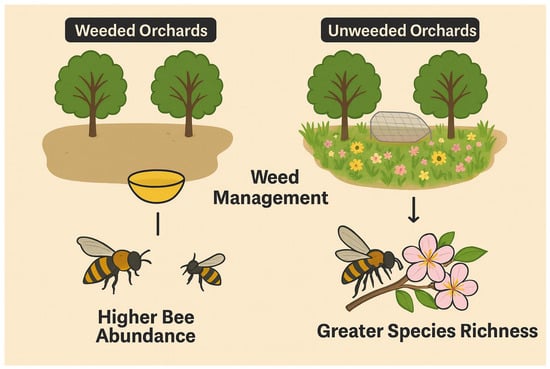
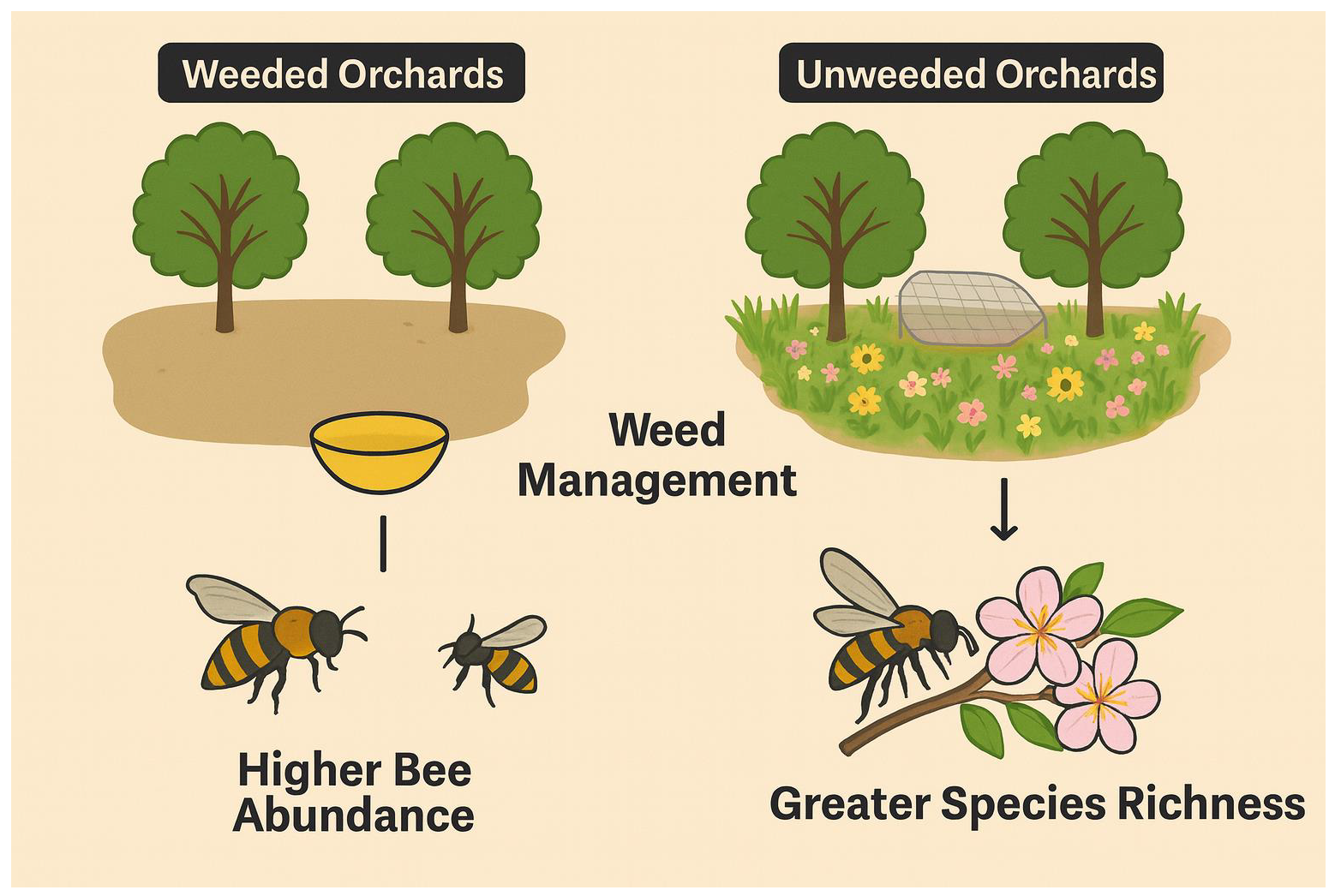
Pollinators are essential for the productivity of many fruit crops, yet their diversity and abundance can be strongly influenced by local management practices. This study investigates the impact of weed management on the abundance and diversity of wild bee communities in Moroccan cherry orchards (Ain Leuh, Middle Atlas). Using a sampling strategy combining pan traps in the orchard and netting on the cherry flowers and the weeds during the cherry bloom season, we found that weeded orchards had significantly higher bee abundance (i.e., number of specimens), while unweeded orchards supported greater species richness (i.e., number of species). Vegetation structure significantly influences bee activity and the performance of sampling techniques. Yellow pan traps contributed to collecting more individuals in weeded orchards, likely due to enhanced visual contrast in the absence of floral cues. Across all sites, the most observed flower visitors included species from the genera Andrena and Lasioglossum, known as important cherry pollinators. These findings highlight the ecological value of maintaining wildflower resources through reduced weed management intensity and suggest that enhancing floral complexity in orchards can support more diverse and abundant pollinator communities, with potential benefits for crop pollination services.

Graphical Abstract

1. Introduction

Insect pollinators are essential for the sexual reproduction of most flowering wild plants and for most agricultural crops. They enhance crop yield, fruit quality, and market value [1,2], including in orchards [3,4]. In Morocco, several studies demonstrated the importance of wild pollinator diversity for effective pollination and crop yield [1,5]. The country is recognized for its rich diversity of pollinators [6,7], which contributes to an estimated economic output of US$ 1235.06 M [8].
In cherry orchards, pollinator diversity is crucial for successful pollination, fruit set and yield [9]. Sweet cherry cultivars are often self-incompatible, relying heavily on insect-mediated cross-pollination [10]. A diverse pollinator community enhances pollination efficiency and improves fruit quality, while also ensuring resilience under varying environmental conditions [11,12,13].
However, agricultural intensification and simplification have led to widespread habitat loss, reducing floral resource availability in time, quantity and diversity, and threatening wild pollinator populations [14,15]. In particular, conventional weed management practices in orchards can eliminate important floral resources for pollinators. In response, agri-environmental schemes have been developed as alternative management practices to reverse negative trends of pollinators [16]. One widely adopted practice involves integrating wildflower strips into agricultural landscapes to support biodiversity and pollination services [17]. This approach is regarded as a sustainable strategy for orchard productivity, including cherry [18]. Wildflowers have been shown to attract a wide array of flower-visiting insects [19], help mitigate population declines [20,21], and provide crucial pollen and nectar resources [22,23]. In addition to sowing wildflowers, many studies recognize the ecological value of maintaining common agricultural weeds for supporting pollinators and other wildlife [24,25].
Despite this growing body of evidence, little is known about how weed management practices affect pollinator communities in North Africa. This knowledge gap is especially relevant in Moroccan regions like Ain Leuh (Middle Atlas), known for its ecological richness, characterized by a diverse flora of wild plants [26]. Moreover, sweet cherry is a high-value crop in Morocco, cultivated on approximately 4000 hectares and producing over 14,100 tons annually [27]. Understanding the drivers of effective pollination in this crop is therefore of both economic and ecological importance.
To address this critical research gap, the present study aims to describe the impact of weed management on pollinator abundance and diversity in Moroccan cherry orchards. Specifically, we compare weeded and unweeded orchards using multiple biodiversity assessment tools, including pan traps, insect netting, and visual observations. We hypothesize that unweeded cherry orchards, with a greater availability of floral resources, will support higher abundance and diversity of flower-visiting insects compared to weeded orchards. The findings may provide key insights for developing sustainable orchard management practices and conserving biodiversity in Mediterranean and mountainous agricultural landscapes.

2. Materials & Methods

2.1. Study Site

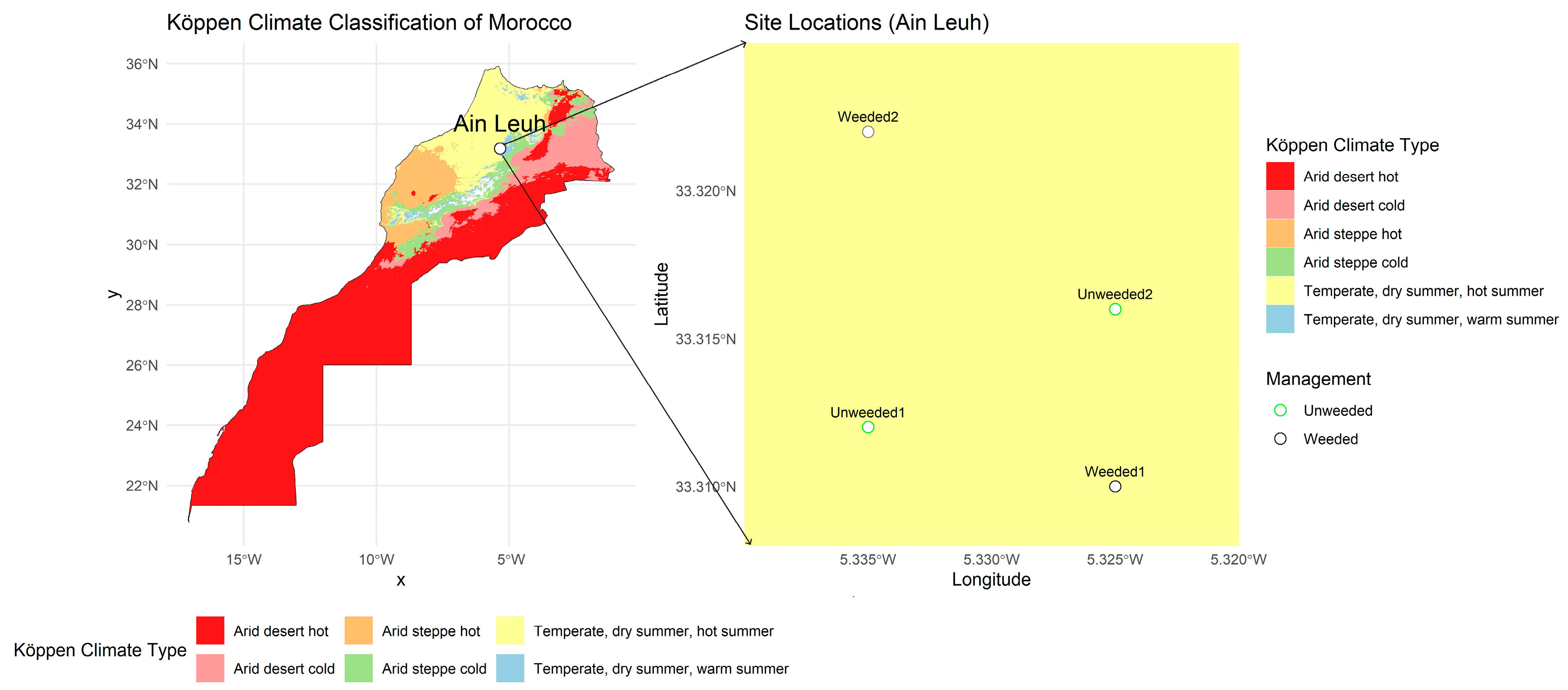
Fieldwork was conducted in the mountainous region of Morocco, specifically in the Ain Leuh rural commune, located in the central Middle Atlas at an elevation of 1743 m. The region experiences a Mediterranean mountain climate, characterized by mild summers, snowy winters, and annual rainfall ranging between 400 and 450 mm. Cherry orchards represent a significant portion of the agricultural landscape in Ain Leuh, with nearby orchards cultivating various crops, each separated by at least 20 m of inter-orchard spacing. The study compared two weeded orchards (Weeded1: 33.3224, −5.3359; Weeded2: 33.3166, −5.3259) with two unweeded orchards (Unweeded1: 33.3124, −5.3359, Unweeded2: 33.3104, −5.3251;) (Figure 1). Each orchard covered an area of 1 hectare (100 × 100 m2). Notably, there were no beehives in the vicinity of the cherry orchards at least 500 m based on visual inspection. The orchards were randomly selected within the region, ensuring a minimum distance of 1000 m between them. In the weeded orchards, mechanically weeding was carried out between rows and around the trees. The other agricultural management operations such as drip irrigation, regular pruning, and soil fertilization with farm manures were carried out every year. The unweeded orchards were managed without the weeding operation between rows, and trees. Perennial weeds such as Papaver umbonatum, Calendula arvensis, Verbesina encelioides, Borago officinalis, Thapsia villosa, Centaurea involucrate, and Anthemis cotula were covering the whole area available only in unweeded orchards. In addition to all the cultural operations mentioned above. Both orchards were conducted without insecticide treatment.

2.2. Sampling of Flower Visitors

Wild bee communities were sampled using netting and pan trapping, following a standardized protocol. Each field was sampled three times during the cherry bloom season, from the last week of February to the last week of March 2019. Sampling was conducted for three days each week, from 10am to 4pm, weather permitting. In both the weeded and unweeded orchards, cherry flower visitors were collected along two transects for 15 min. Transect 1 (T1) ran along the edge of the orchard, while transect 2 (T2) was in the center of the orchard. This approach was designed to capture the diversity of flower visitors at both the edges and the center of the orchard. In addition to these transects, a third transect (T3) was walked along re-growing ground flora in the weeded orchards for 15 min. The same protocol was applied to the unweeded orchards, the third transect (T3) was walked along weeds for 15 min. During each sampling, flower visitors were collected and killed with ethyl acetate in separate jars labeled according to the transect and orchard type (weeded or unweeded). Pan traps were employed to sample the circulating entomofauna in both weeded and unweeded orchards. We used 12 pan traps in each orchard. Three sets of pan traps (blue, yellow, and white) were used per location, each filled halfway with odorless soapy water [28,29]. The traps were placed on the ground at four locations within the orchard, and they were approximately 30 m spaced: two in the center and two at the edges of the field. Each set of traps remained in place for 48 h, starting at 10am on the first day and ending at 4pm on the second day. All specimens collected were brought to the lab, where they were sorted to the genus level using the adapted genus key of Michez et al. [30], pinned, digitized, and then sent to taxonomists for identification at the species level (see Acknowledgment Section).

2.3. Impact of Orchard Management on Bee Diversity

To evaluate the impact of orchard management on bee diversity, we computed four key diversity indices: species richness, Shannon diversity index, Inverse Simpson index and Pielou’s Evenness.
Species richness was calculated as the total number of unique species observed in each orchard. Shannon diversity index accounts for both species richness and evenness, providing a measure of diversity that gives more weight to rarer species. The Inverse Simpson index was used as a measure of effective species diversity, which is inversely related to dominance. Higher values indicate lower dominance by a few species and thus a more balanced community. Finally, Pielou’s Evenness was computed to assess how evenly individuals are distributed among species.
All indices were computed in R, using the vegan package [31] based on a species-by-orchard abundance matrix, where rows represented individual orchards and columns represented species abundances.
To determine whether bee diversity differed between weeded and unweeded orchards, we compared the four diversity indices across management types. Given the small sample size (only 2 orchards per management type), statistical tests are underpowered to detect significant differences. Therefore, we computed effect sizes (Cohen’s d) to assess the magnitude of the observed differences between weeded and unweeded orchards. Cohen’s d was calculated in R using the effsize package and interpreted as follows:
d < 0.2 → negligible effect
0.2 ≤ d < 0.5 → small effect
0.5 ≤ d < 0.8 → medium effect
d ≥ 0.8 → large effect
This analysis enabled us to assess the biological relevance of the observed differences in bee diversity across management types.

2.4. Impact of Orchard Management on Bee Community Composition

To compare genus-level species richness across management types, we used R and the ggplot2 package. For each management type (weeded vs. unweeded fields), we calculated the number of unique species per genus using an aggregation function. The results were visualized as a bar chart, where the number of species per genus was plotted for each management type, allowing for side-by-side comparison. This analysis is mostly descriptive, and no inferential statistical tests were performed. The visualization aims to provide a preliminary overview of how species richness is distributed across genera under different management regimes.
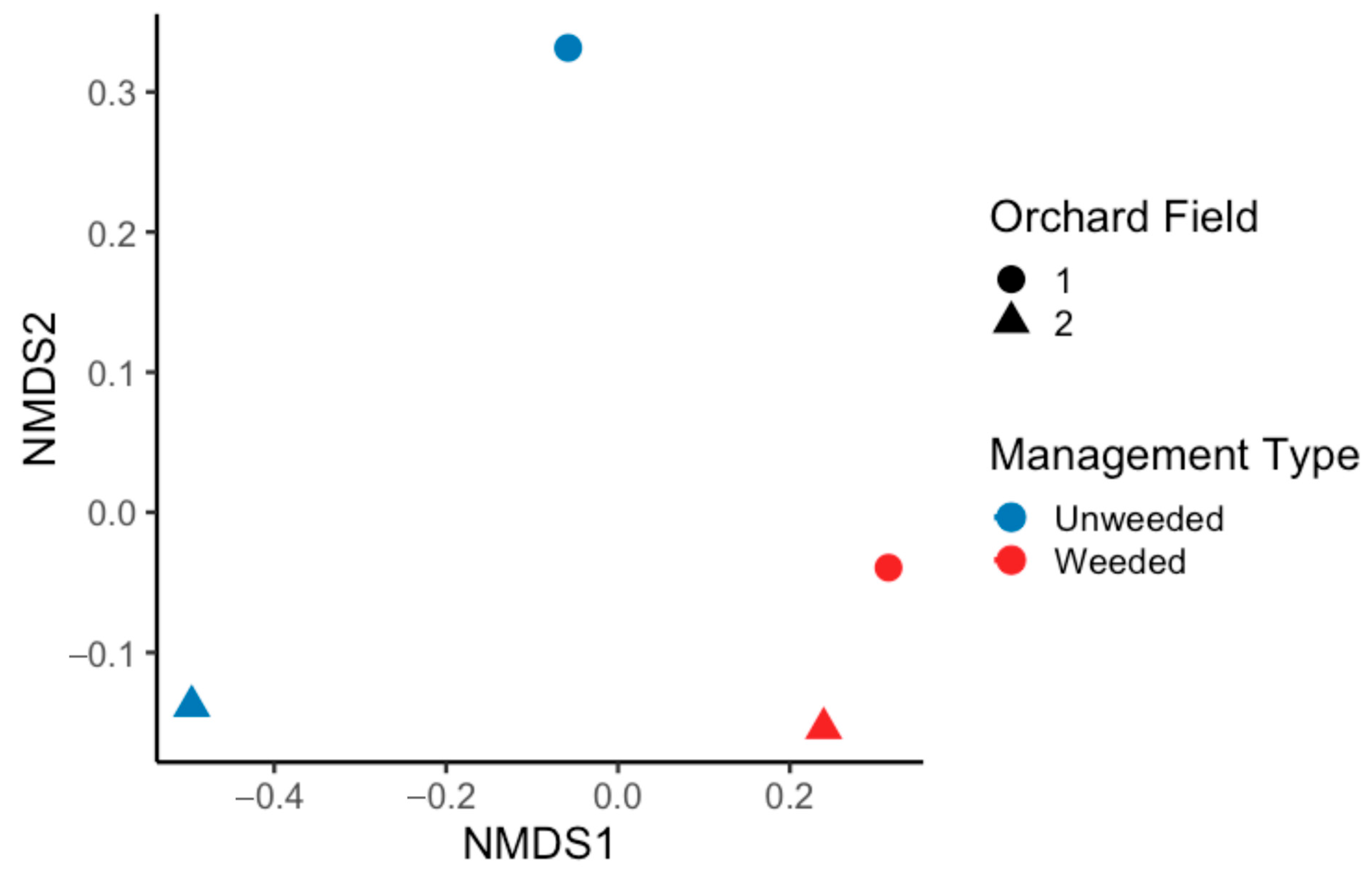
To visualize differences in bee community composition between weeded and unweeded cherry orchards, we conducted a Non-Metric Multidimensional Scaling (NMDS) ordination based on Bray–Curtis dissimilarity [32]. The Bray–Curtis index quantifies differences in species composition between sites based on the relative abundance of each species. We first constructed a species-by-orchard matrix, where rows represented individual orchards and columns represented unique bee species. Species abundances were used to compute a Bray–Curtis dissimilarity matrix, which was then analyzed using NMDS to visualize potential clustering of sites based on orchard management type. NMDS was chosen because it is well-suited for ecological data, which often exhibit non-linear relationships and high variance.

2.5. Impact of Orchard Management and Sampling Method on Bee Abundance

To analyze differences in bee abundance (total number of bees collected) between orchard management types (weeded vs. unweeded) and sampling methods (pan traps vs. transects), we performed a Bayesian mixed-effects model, as it allows for more flexible modeling and accounts for the hierarchical structure of the data. The model was fit using the brms package [33] in R, with the following formula: Bee Abundance ∼ Management × Sampling + (1∣Sampling)
This model accounts for the fixed effects of management type (weeded vs. unweeded) and sampling method (pan traps vs. transects), as well as their interaction, while also considering the random effect of sampling method. The model was run with four chains, each with 2000 iterations and a warmup of 1000 iterations, resulting in a total of 4000 post-warmup draws. The Gaussian family was used to model the bee abundance data, and we assessed model fit and convergence using standard diagnostics (Rhat, Bulk_ESS, and Tail_ESS).
To evaluate the effectiveness and complementarity of the sampling methods (pan traps and insect nets) in capturing bee species, Venn diagrams were generated to display the total number of unique species captured by each method, as well as the species shared between both methods. This comparison was made across both weeded and unweeded orchards. The Venn diagrams were created using the VennDiagram package in R [34].

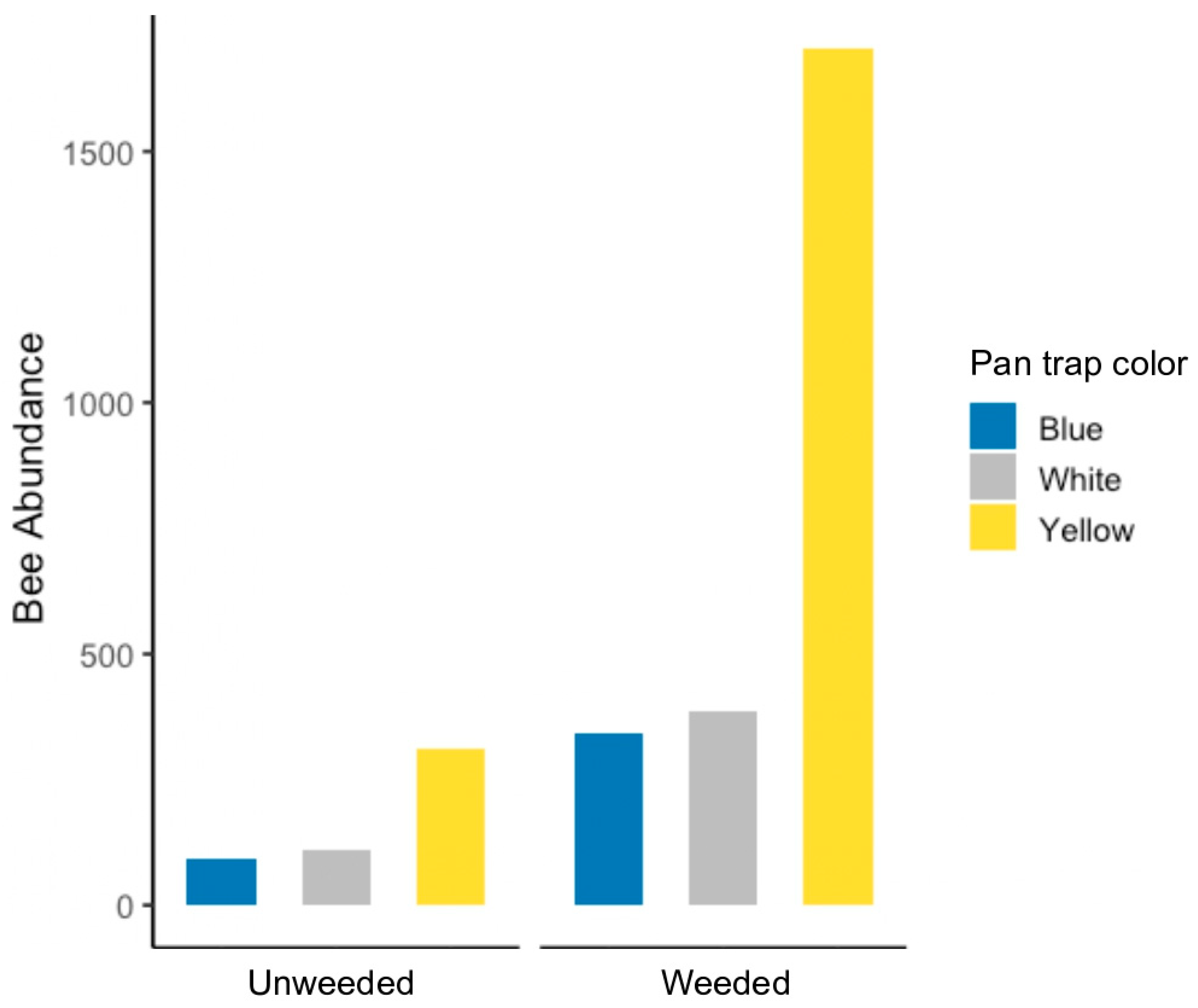
2.6. Impact of Color and Orchard Management on Bee Captures in Pan Traps

To analyze the effect of orchard management type (weeded vs. unweeded) and pan trap color (blue, white, and yellow) on the abundance of captured bees, we used a Bayesian mixed-effects model. Management, sampling method, and their interaction were specified as fixed effects, and site was included as a group-level (random) effect to account for among-site variability:
Bee abundance ~ management × sampling + (1 + sampling|site)
This model was fit using the brms package in R [33] using a negative binomial likelihood to accommodate count data and overdispersion. Four chains were used, with 2000 iterations per chain and a warmup period of 1000 iterations, for a total of 4000 post-warmup draws. We assessed model fit and convergence using standard diagnostics (Rhat, Bulk_ESS, and Tail_ESS) and posterior predictive checks.

2.7. Pollinators of Cherry in Ain Leuh

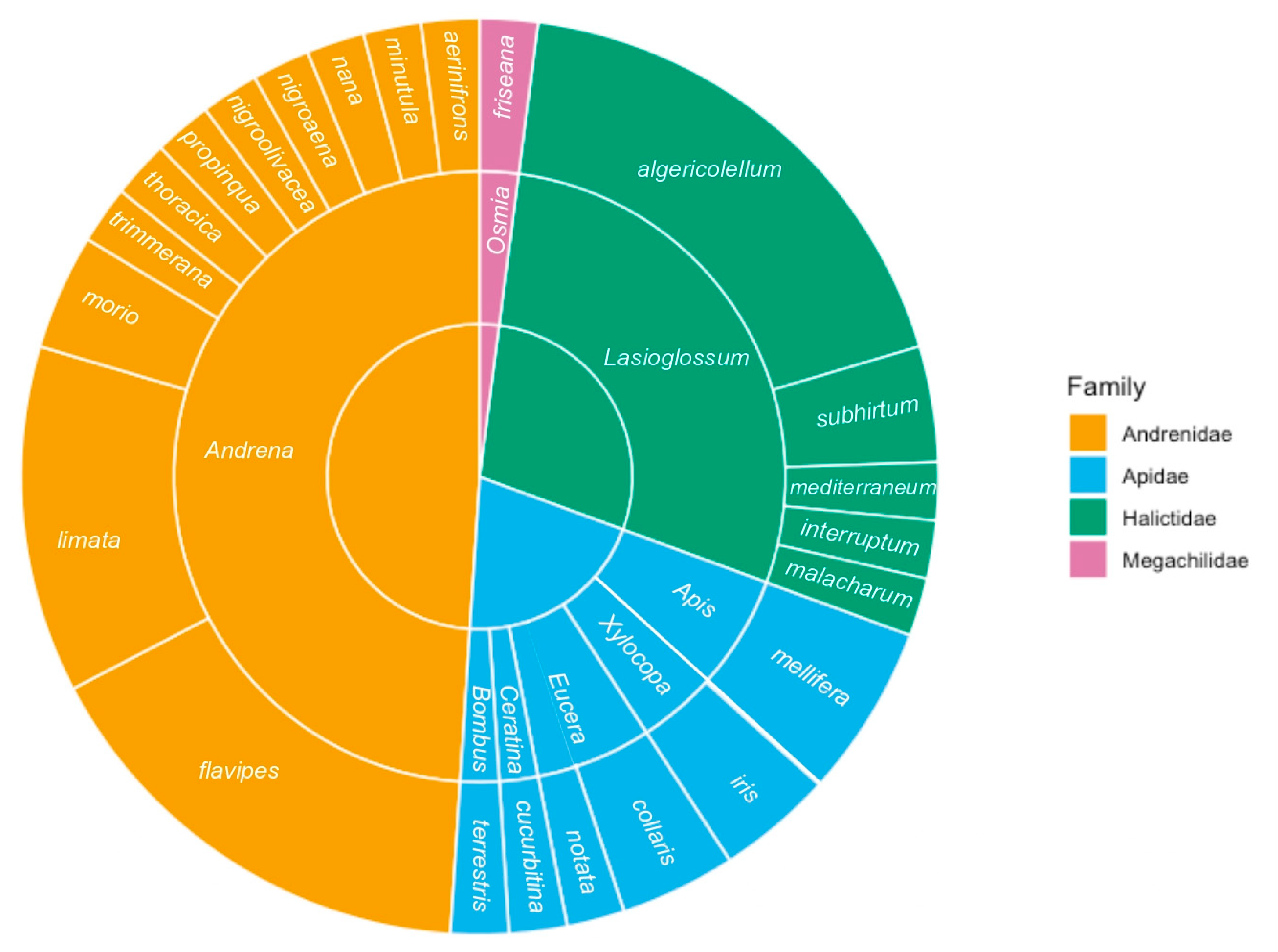
This analysis is purely descriptive, as it is based on a limited number of individuals (n = 44) and species (n = 23), and no statistical comparisons were performed. To illustrate the taxonomic composition of bee species collected during the survey, we created a nested sunburst chart using R with the ggplot2, dplyr, and tidyr packages. This chart visually represents the hierarchical structure of pollinator diversity, with three nested levels: family (center), genus (middle ring), and species (outer ring). The dataset included the abundance (counts) of each identified species. A hierarchical plotting and a radial coordinate system wereused to generate the sunburst layout. Each family was assigned a distinct color, which was consistently applied to its respective genus and species levels for visual coherence. This approach allowed for a proportional display of taxonomic diversity and relative abundance across families.

3. Results

3.1. Impact of Orchard Management on Bee Diversity

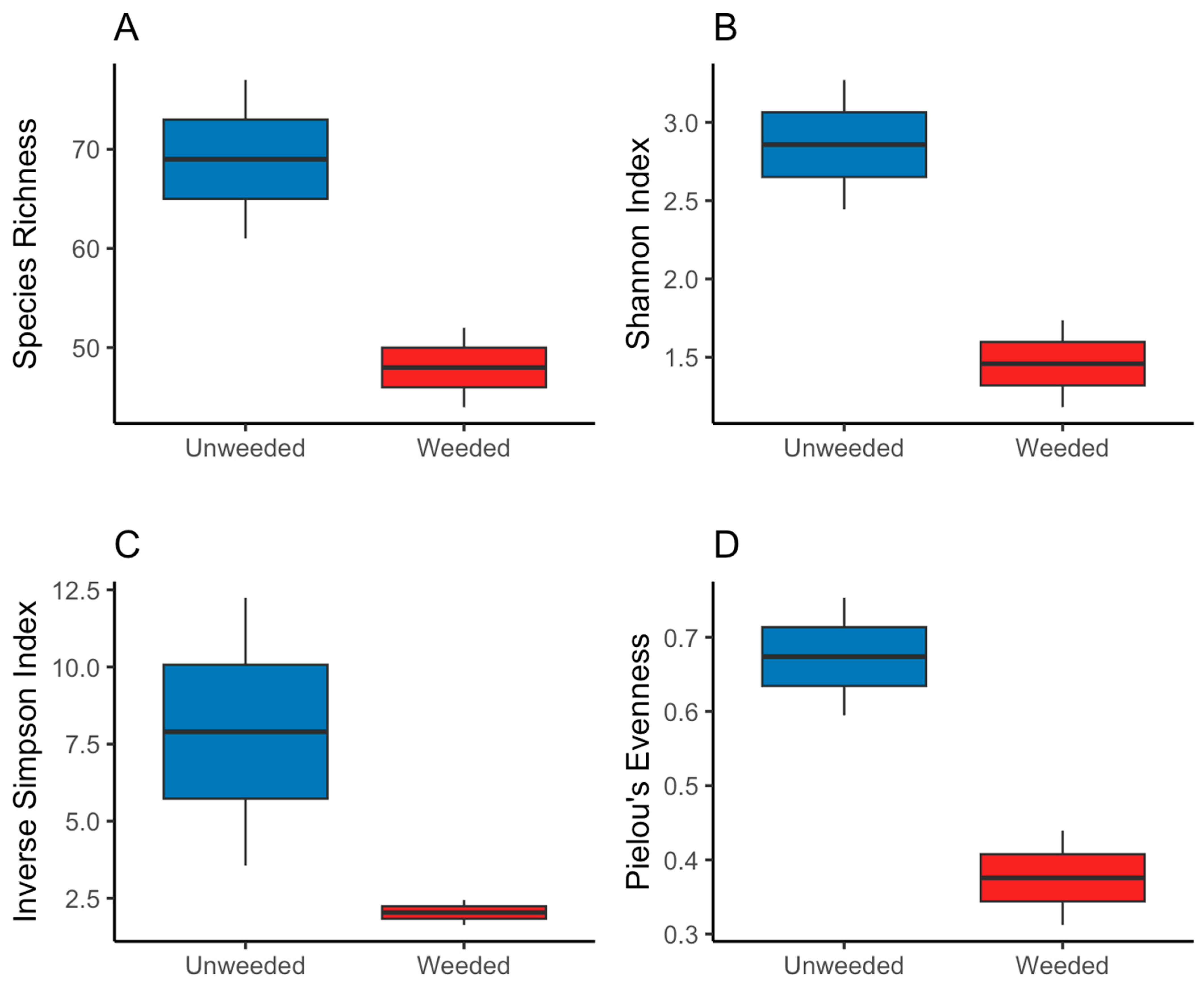
Bee diversity indices varied between weeded and unweeded cherry orchards, with consistently higher values observed in unweeded orchards (Figure 2). Species richness was higher in unweeded orchards, with median values of (X) species compared to (Y) species in weeded orchards (Figure 2A). The Cohen’s d effect size (d = 2.35) suggests a large effect despite the lack of significance. Shannon diversity followed a similar pattern, with unweeded orchards exhibiting higher diversity values than weeded orchards (Figure 2B). The large Cohen’s d (d = 2.81) suggests a substantial ecological difference. Concerning the Inverse Simpson Index, which accounts for both species richness and dominance, was higher in unweeded orchards (Figure 2C), the effect size remained large (Cohen’s d = 1.34). Finally, Pielou’s Evenness was greater in unweeded orchards, indicating a more balanced distribution of species relative to weeded sites (Figure 2D). The effect size was the highest among all indices (Cohen’s d = 2.93), reinforcing the observed pattern.

3.2. Impact of Orchard Management on Bee Community Composition

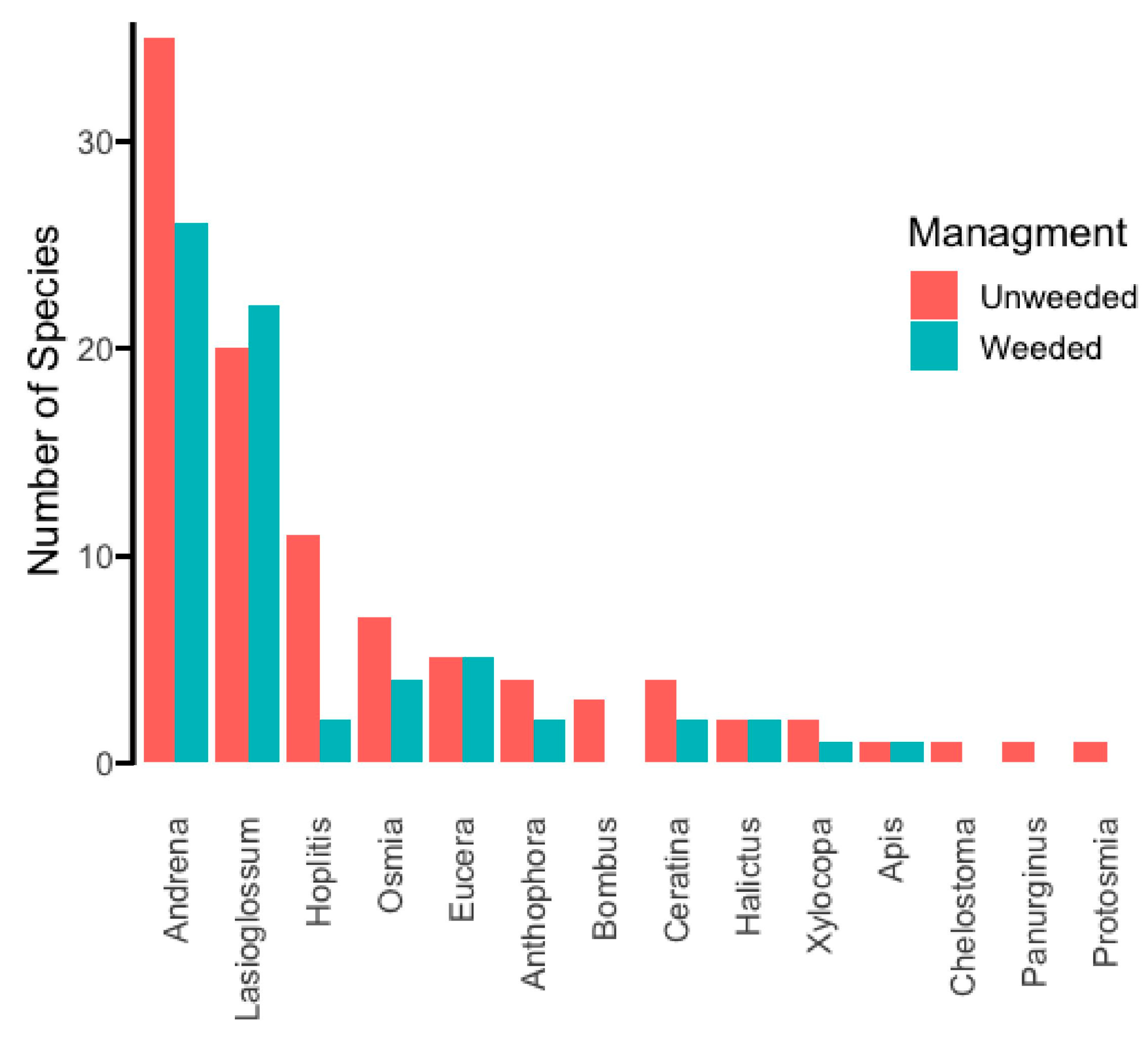
The analysis of genus diversity and species richness in weeded and unweeded orchards revealed notable differences. The genus Andrena exhibited the highest species richness overall, with a greater number of species recorded in unweeded fields compared to weeded orchards (Figure 3). A similar trend was observed for Hoplitis, which showed a much higher species count in unweeded orchards. Among all genera collected, Lasioglossum is the only genera showing higher species richness in weeded orchards (Figure 3).
Conversely, genera such as Hoplitis, Osmia, Eucera, and Anthophora display relatively balanced species richness across both management types. Some genera, including Bombus, Chelostoma, Panurginus, and Protosmia, were exclusively found in unweeded orchards (Figure 3).
The NMDS ordination (Figure 4) suggests a clear differentiation in bee community composition between weeded and unweeded cherry orchards, based on the Bray–Curtis dissimilarity index. The weeded orchards (red) appear more clustered, indicating a higher degree of similarity in species composition. In contrast, the unweeded orchards (blue) exhibit greater variability, with orchards 1 and 2 positioned far apart in the ordination space. This suggests that while weed management influences bee community composition, there are also strong differences between the two unweeded orchards. The two weeded orchards, however, are positioned closer together, indicating more similarity in species composition across sites under this management type. The distribution of points in the ordination suggests that bee assemblages in unweeded orchards are more variable between sites compared to weeded orchards, where community composition appears more homogeneous.

3.3. Impact of Orchard Management and Sampling Method on Bee Abundance and Species Richness

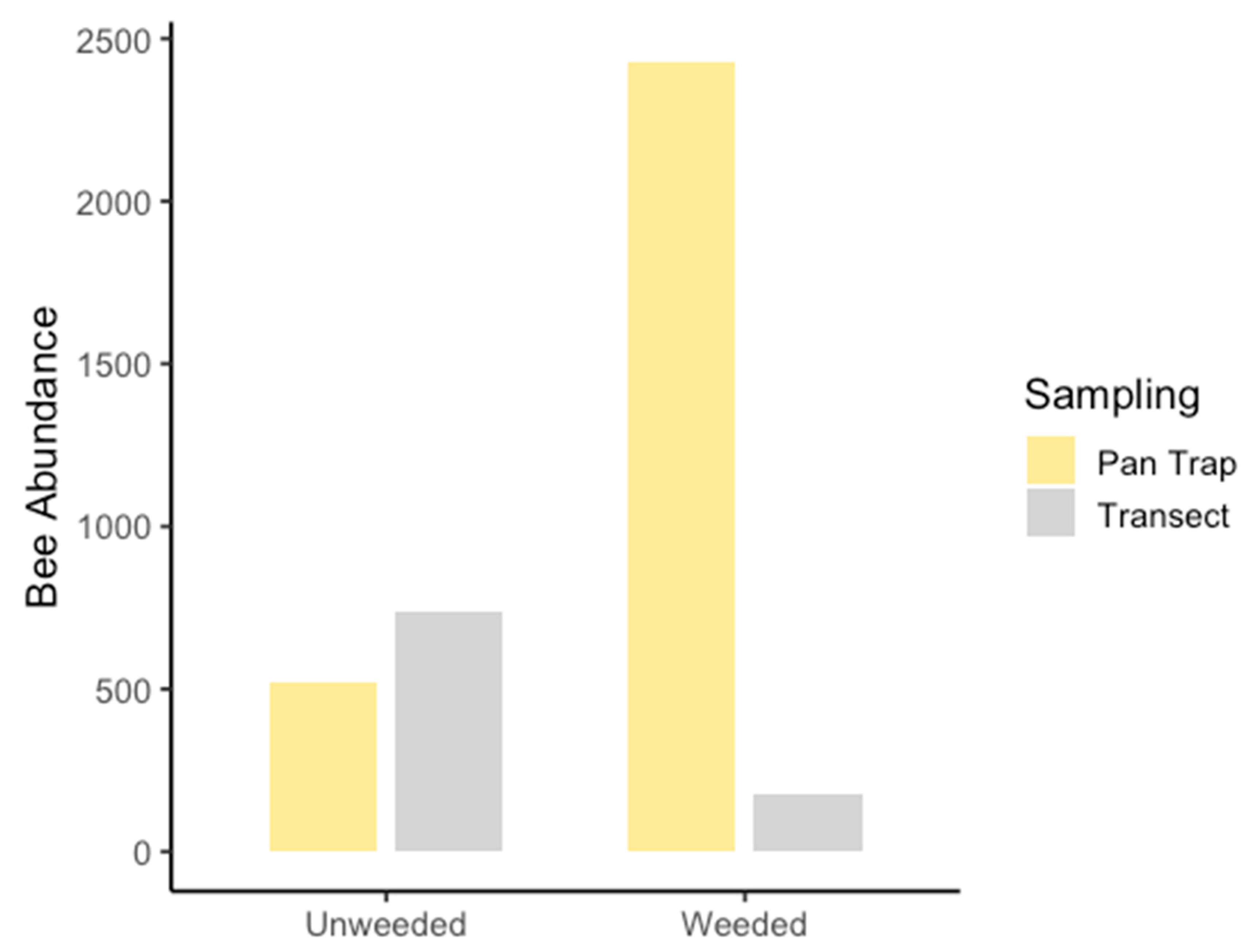
The Bayesian mixed-effects model showed significant effects of both orchard management and sampling method on bee abundance, as well as a strong interaction between the two factors (Figure 5). Bee abundance was generally higher in weeded orchards and when sampled with pan traps, but the difference between methods depended on management type. In weeded orchards, pan traps captured far more bees than transects (Estimate = −2.67, 95% CI: −3.85, −1.13), whereas in unweeded orchards this difference was much smaller, as indicated by the positive interaction term (Estimate = 2.48, 95% CI: 1.35, 3.60). Within pan traps, bee abundance was lower in unweeded than in weeded orchards (Estimate = −1.27, 95% CI: −2.12, −0.34), corresponding to a more than 3-fold reduction in captured individuals. These results indicate that while pan traps are generally more effective at capturing bees, transect counts become nearly equivalent under unweeded management.
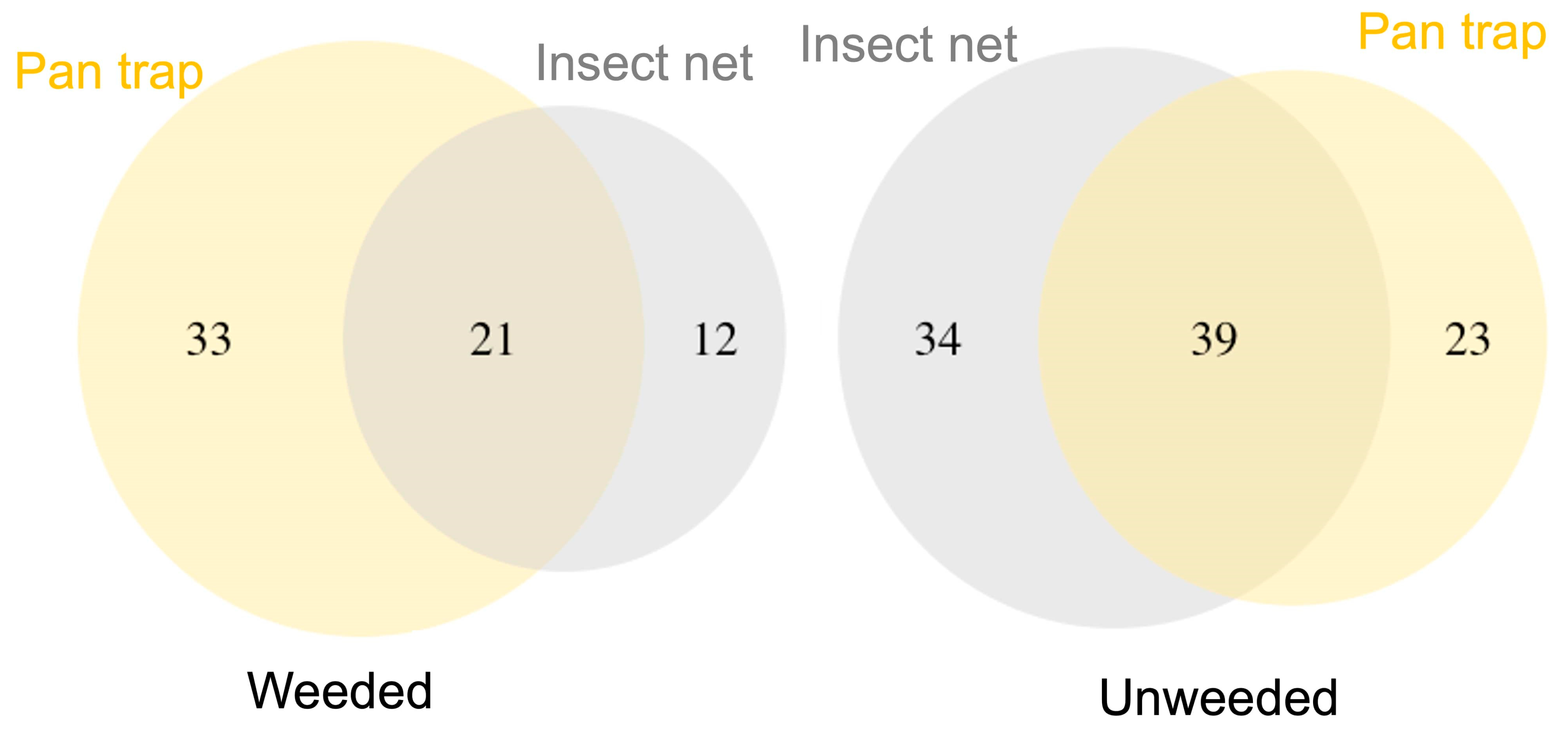
The Venn diagrams (Figure 6) compare the species captured by pan traps and insect nets across weeded and unweeded orchards. In the weeded orchards, a total of 33 species (50% of total captures) were captured exclusively by pan traps, and 12 species (18% of total captures) were uniquely captured by insect nets. In the unweeded orchards, the diversity of species captured by both sampling methods increased. 34 species (35% of total captures) were captured exclusively by insect nets, while 23 species (24% of total captures) were captured solely by pan traps. This suggests a wider range of species were attracted to the pan traps in weeded orchards, and much more species were collected with insect nets in unweeded orchards.

3.4. Impact of Pan Trap Color and Orchard Management on Bee Captures

The Bayesian mixed-effects model revealed several insights into the effects of orchard management type and pan trap color on bee abundance (Figure 7). Weeded orchards tended to have higher bee abundance compared to unweeded orchards, though this effect was imprecise, with a 95% credible interval that included zero (Estimate = 265.95, CI: −547.15, 1107.64). Regarding pan trap color, yellow pan traps attracted more bees compared to blue pan traps, with a positive effect of 232.16 (CI: −601.12, 1017.16), though the confidence interval was wide, suggesting uncertainty. White pan traps showed a similar trend to blue pan traps, with a smaller effect size (Estimate = 19.51, CI: −865.71, 857.45), and considerable uncertainty in the estimate. The interaction between “Weeded” orchards and “Yellow” pan traps was particularly strong, with a significant positive effect (Estimate = 1125.21, CI: 4.76, 2335.15), suggesting that yellow pan traps are especially effective in attracting bees in weeded orchards (Figure 7). In contrast, the interaction between management type and white pan traps was minimal (Estimate = 10.81, CI: −1099.43, 1267.45), indicating little difference in bee abundance between white and blue pan traps in weeded orchards (Figure 7).

3.5. Pollinators of Cherry in Ain Leuh

A total of 44 individual bee specimens were recorded visiting cherry flowers in Ain Leuh, representing four bee families: Andrenidae, Apidae, Halictidae, and Megachilidae (Figure 8). The most diverse family observed was Andrenidae, with 10 species from the genus Andrena. Despite this high species richness, most Andrena species were represented by a single individual, except for Andrena flavipes (8 individuals) and Andrena limata (6 individuals). The Apidae family was represented by both managed and wild pollinators, including Apis mellifera (3 individuals), Bombus terrestris (1 individual), Ceratina cucurbitina (1 individual), Eucera collaris (1 individual), Eucera notata (2 individuals), and Xylocopa iris (2 individuals). The Halictidae family, consisting only of bees from the genus Lasioglossum, had the most abundant single species, Lasioglossum algericolellum, with 9 individuals recorded. Other Lasioglossum species were less frequent, with L. interruptum, L. malachurum, L. mediterraneum, and L. subhirtum each represented by only one or two individuals. The Megachilidae family was the least represented, with only one specimen of Osmia friseana recorded.

4. Discussion

Although not significant, likely due to the limited sample size (n = 2 per orchard type), our results suggest consistent trends indicating higher bee diversity in unweeded cherry orchards. All diversity indices, including species richness, Shannon diversity, Inverse Simpson index, and Pielou’s evenness, were higher in unweeded sites. Moreover, large effect sizes (e.g., Cohen’s d > 2 for most indices) suggest that these differences are ecologically meaningful and warrant further investigation with larger datasets. Our findings point to a potential positive role of weeds in supporting a more diverse pollinator community. Specifically, dominant bee genera such as Andrena and Lasioglossum, key cherry pollinators, exhibited higher species richness in unweeded orchards. We hypothesize that unweeded habitats offer key floral and nesting resources for wild bees, which should be verified in future studies including vegetation and nesting habitat survey [35]. The only exception was Lasioglossum, which showed slightly higher species richness in one weeded orchard. This could reflect species-specific responses to weed management practices, or most probably, a higher Lasioglossum richness in one weeded orchard is attributed, which could make them more attractive to certain bee taxa. The NMDS ordination further supports this differentiation in community composition, revealing that weeded orchards host more homogeneous bee assemblages, while unweeded orchards support more variable and distinct communities. This compositional heterogeneity in unweeded orchards may reflect a more complex and resource-rich environment that allows for niche differentiation and the coexistence of more species. These observations align with previous research by Requier et al. [36] and Mateos-Fierro et al. [37] showing that plant diversity and floral resource are key drivers of pollinator richness, although these factors were not evaluated in the present study. Notably, Andrena and Lasioglossum, which were better represented in unweeded orchards, are known to benefit from continuous floral cover and undisturbed ground for nesting. While initiatives like sowing flower strips are often proposed to support pollinator populations [38], their implementation can be resource-intensive and may not always guarantee success [39]. In contrast, maintaining spontaneous weed cover within orchards could be a low-cost and ecologically beneficial alternative that enhances pollinator diversity and associated ecosystem services without requiring additional inputs from farmers. Although our results are preliminary, they highlight the importance of allowing natural vegetation to persist within cherry orchards.
Our results also show that the sampling methods used strongly influence the abundance and diversity of flower-visiting insects captured. Pan traps and insect nets offered complementary sampling approaches, with each method demonstrating varying effectiveness depending on orchard management and floral availability. Notably, pan traps in weeded orchards captured more bees than insect nets, while the reverse was observed in unweeded orchards, highlighting the importance of tailoring sampling methods to environmental conditions and vegetation structure [40]. In weeded orchards, the scarcity may increase the visibility and attractiveness of artificial traps, especially yellow pan traps, which mimic floral cues. In contrast, the richer floral diversity in unweeded orchards likely encourages more active foraging behavior among pollinators, making insect netting more effective in capturing a broader range of species [41].
As with many other fruit crops, sweet cherry is self-incompatible and relies on insect-mediated cross-pollination for fruit set [42]. In our study, the most frequently recorded pollinators were the solitary bees Lasioglossum algericolellum (9 individuals), Andrena flavipes (8 individuals), and Andrena limata (6 individuals). These results suggest that small-bodied, short-tongued solitary bees, particularly from the genera Lasioglossum and Andrena, likely play a central role in sweet cherry pollination in Ain Leuh. This finding supports previous research emphasizing the importance of wild bees in cherry orchards. For instance, Holzschuh et al. [12] demonstrated that wild pollinators (mostly Andrena spp.) significantly enhance cherry production, and Hamroud et al. [43] highlighted the role of Osmia and Andrena species as key contributors in Moroccan cherry orchards. Although mason bees (Osmia spp.) have been identified as particularly effective pollinators in Morocco, only a single individual of Osmia friseana was recorded in our survey, indicating low abundance during the sampling period. Larger-bodied bees such as Bombus terrestris and Xylocopa iris were present but relatively scarce, with just one and two individuals recorded, respectively. This observation aligns with [42] who noted that bumble bees have limited effectiveness at the single-flower level in sweet cherry pollination. However, Hamroud et al. [43] emphasized that bumble bees, along with solitary bees, are important members of the cherry pollinator community, complementing the activity of managed honey bees. In our study, honey bees (Apis mellifera) accounted for only 6.8% of the recorded visits, suggesting that although they contribute to pollination, they are not dominant. This relatively low abundance further underlines the critical role of wild bees in ensuring effective cherry pollination in Ain Leuh. Similar patterns have been observed in other rosaceous crops such as apple and peach, where bumble bees and solitary bees often outperform honey bees in pollination efficiency [44]. Nonetheless, differences in floral traits and phenology between these crops and cherry limit direct extrapolation of these findings. Taken together, our results confirm the growing body of evidence that solitary bees can be more effective pollinators than honey bees in cherry orchards. They also highlight the need to maintain and enhance habitats that support diverse wild bee communities, particularly in traditional orchard systems like those in the Middle Atlas region of Morocco.

5. Conclusions

This study reveals the important role of orchard management in shaping both the abundance and diversity of pollinator communities. We also show that the effectiveness of sampling methods is context-dependent: insect nets performed better in unweeded orchards, likely reflecting greater foraging activity among floral patches, while pan traps were more efficient in weeded orchards, especially yellow traps, which were significantly more attractive than white or blue ones. These findings confirm the importance of using complementary sampling techniques for biodiversity assessments. Ultimately, our results emphasize the ecological value of maintaining spontaneous vegetation in orchards, which can enhance pollinator presence and potentially contribute to ecosystem service delivery.

Supplementary Materials

The following supporting information can be downloaded at: https://www.mdpi.com/article/10.3390/d17110782/s1.

Author Contributions

Y.B.: Writing—original draft, conceptualization, data curation, methodology. D.M.: Review & editing, data curation. G.G.: Review & editing, data curation. M.B.: Review & editing, data curation. P.L.: Writing—original draft, conceptualization, data curation, methodology, formal analysis. All authors have read and agreed to the published version of the manuscript.

Funding

This work was supported by the CGIAR Initiative Fragility to Resilience in Central and West Asia and North Africa (F2R-CWANA). We would like to thank all funders who supported this research through their contributions to the CGIAR Trust Fund: https://www.cgiar.org/funders/.

Data Availability Statement

The datasets presented in this study can be found in online repositories. The names of the repository/repositories and accession number(s) can be found in the article/Supplementary Material.

Acknowledgments

We would like to thank the specialists for identifying the materials to the species level. Osmiini were determined by Andreas Müller, Eucera were identified by Achik Dorchin, Andrena by Thomas J. Wood, Anthophora by Pierre Rasmont and Halictidae were determined by Simone Flaminio and Alain Pauly.

Conflicts of Interest

The authors declare no conflict of interest.

References

  1. Klein, A.M.; Vaissière, B.E.; Cane, J.H.; Steffan-Dewenter, I.; Cunningham, S.A.; Kremen, C.; Tscharntke, T. Importance of pollinators in changing landscapes for world crops. Proc. R. Soc. B Biol. Sci. 2007, 274, 303–313. [Google Scholar] [CrossRef]
  2. Ollerton, J.; Winfree, R.; Tarrant, S. How many flowering plants are pollinated by animals? Oikos 2011, 120, 321–326. [Google Scholar] [CrossRef]
  3. Bartholomée, O.; Aullo, A.; Becquet, J.; Vannier, C.; Lavorel, S. Pollinator presence in orchards depends on landscape-scale habitats more than in-field flower resources. Agric. Ecosyst. Environ. 2020, 293, 106806. [Google Scholar] [CrossRef]
  4. Pardo, A.; Borges, P.A.V. Worldwide importance of insect pollination in apple orchards: A review. Agric. Ecosyst. Environ. 2020, 293, 106839. [Google Scholar] [CrossRef]
  5. Sentil, A.; Fiordaliso, W.; Michez, D. Relation between honey bee abundance and wild bee communities in Moroccan agro-ecosystems. Biodivers. Conserv. 2024, 34, 299–314. [Google Scholar] [CrossRef]
  6. El-Abdouni, I.; Lhomme, P.; Christmann, S.; Dorchin, A.; Sentil, A.; Pauly, A.; Hamroud, L.; Ihsane, O.; Reverté, S.; Patiny, S.; et al. Diversity and Relative Abundance of Insect Pollinators in Moroccan Agroecosystems. Front. Ecol. Evol. 2022, 10, 866581. [Google Scholar] [CrossRef]
  7. Lhomme, P.; Michez, D.; Christmann, S.; Scheuchl, E.; El-Abdouni, I.; Hamroud, L.; Ihsane, O.; Sentil, A.; Smaili, M.C.; Schwarz, M.; et al. The wild bees (Hymenoptera: Apoidea) of Morocco. Zootaxa 2020, 4892, 1–159. [Google Scholar] [CrossRef]
  8. Sabbahi, R. Economic value of insect pollination of major crops in Morocco. Int. J. Trop. Insect Sci. 2022, 42, 1275–1284. [Google Scholar] [CrossRef]
  9. Osterman, J.; Mateos-Fierro, Z.; Siopa, C.; Castro, H.; Castro, S.; Eeraerts, M. The impact of pollination requirements, pollinators, landscape and management practices on pollination in sweet and sour cherry: A systematic review. Agric. Ecosyst. Environ. 2024, 374, 109163. [Google Scholar] [CrossRef]
  10. Free, J.B. Insect Pollination of Crops; Academic Press: London, UK; New York, NY, USA, 1970; 768p, ISBN 012266650X. [Google Scholar]
  11. Brittain, C.; Williams, N.; Kremen, C.; Klein, A. Synergistic effects of non-Apis bees and honey bees for pollination services. Proc. R. Soc. B Biol. Sci. 2013, 280, 20122767. [Google Scholar] [CrossRef]
  12. Holzschuh, A.; Dudenhöffer, J.H.; Tscharntke, T. Landscapes with wild bee habitats enhance pollination, fruit set and yield of sweet cherry. Biol. Conserv. 2012, 153, 101–107. [Google Scholar] [CrossRef]
  13. Reilly, J.R.; Artz, D.R.; Biddinger, D.; Bobiwash, K.; Boyle, N.K.; Brittain, C.; Brokaw, J.; Campbell, J.W.; Daniels, J.; Elle, E.; et al. Crop production in the USA is frequently limited by a lack of pollinators. Proc. R. Soc. B Biol. Sci. 2020, 287, 0922. [Google Scholar] [CrossRef]
  14. Potts, S.G.; Imperatriz-Fonseca, V.L.; Ngo, H.T.; Biesmeijer, J.C.; Breeze, T.D.; Dicks, L.V.; Garibaldi, L.A.; Hill, R.; Settele, J.; Vanbergen, A.J. Summary for Policymakers of the Assessment Report of the Intergovernmental Science-Policy Platform on Biodiversity and Ecosystem Services on Pollinators, Pollination and Food Production; Intergovernmental Science-Policy Platform on Biodiversity and Ecosystem Services: Bonn, Germany, 2016; ISBN 978-92-807-3568-0. [Google Scholar]
  15. Hallmann, C.A.; Sorg, M.; Jongejans, E.; Siepel, H.; Hofland, N.; Schwan, H.; Stenmans, W.; Müller, A.; Sumser, H.; Hörren, T.; et al. More than 75 percent decline over 27 years in total flying insect biomass in protected areas. PLoS ONE 2017, 12, e0185809. [Google Scholar] [CrossRef]
  16. Geppert, C.; Hass, A.; Földesi, R.; Donkó, B.; Akter, A.; Tscharntke, T.; Batáry, P. Agri-environment schemes enhance pollinator richness and abundance but bumblebee reproduction depends on field size. J. Appl. Ecol. 2020, 57, 1818–1828. [Google Scholar] [CrossRef]
  17. Haaland, C.; Naisbit, R.E.; Bersier, L.F. Sown wildflower strips for insect conservation: A review. Insect Conserv. Divers. 2011, 4, 60–80. [Google Scholar] [CrossRef]
  18. Albrecht, M.; Kleijn, D.; Williams, N.M.; Tschumi, M.; Blaauw, B.R.; Bommarco, R.; Campbell, A.J.; Dainese, M.; Drummond, F.A.; Entling, M.H.; et al. The effectiveness of flower strips and hedgerows on pest control, pollination services and crop yield: A quantitative synthesis. Ecol. Lett. 2020, 23, 1488–1498. [Google Scholar] [CrossRef]
  19. Williams, N.M.; Ward, K.L.; Pope, N.; Isaacs, R.; Wilson, J.; May, E.A.; Ellis, J.; Daniels, J.; Pence, A.; Ullmann, K.; et al. Native wildflower plantings support wild bee abundance and diversity in agricultural landscapes across the United States. Ecol. Appl. 2015, 25, 2119–2131. [Google Scholar] [CrossRef]
  20. Ganser, D.; Mayr, B.; Albrecht, M.; Knop, E. Wildflower strips enhance pollination in adjacent strawberry crops at the small scale. Ecol. Evol. 2018, 8, 11775–11784. [Google Scholar] [CrossRef]
  21. Ganser, D.; Albrecht, M.; Knop, E. Wildflower strips enhance wild bee reproductive success. J. Appl. Ecol. 2021, 58, 486–495. [Google Scholar] [CrossRef]
  22. Blaauw, B.R.; Isaacs, R. Flower plantings increase wild bee abundance and the pollination services provided to a pollination-dependent crop. J. Appl. Ecol. 2014, 51, 890–898. [Google Scholar] [CrossRef]
  23. Carreck, N.L.; Williams, I.H. Food for insect pollinators on farmland: Insect visits to flowers of annual seed mixtures. J. Insect Conserv. 2002, 6, 13–23. [Google Scholar] [CrossRef]
  24. Balfour, N.J.; Ratnieks, F.L.W. The disproportionate value of ‘weeds’ to pollinators and biodiversity. J. Appl. Ecol. 2022, 59, 1209–1218. [Google Scholar] [CrossRef]
  25. Kremen, C.; Williams, N.M.; Thorp, R.W. Crop pollination from native bees at risk from agricultural intensification. Agric. Water Manag. 2002, 96, 1485–1496. [Google Scholar] [CrossRef]
  26. Akdime, H.; Boukhira, S.; Mansouri, L.E.; Youbi, A.H.E.; Bousta, D. Ethnobotanical Study and Traditional Knowledge of Medicinal Plants in Ain Leuh Region (Middle-Atlas of Morocco). Am. J. Adv. Drug Deliv. 2015, 3, 248–263. [Google Scholar]
  27. El Baji, M.; Nohaissi, Z.; En-Nahli, S.; Hanine, H.; Kodad, O. Year and genotype effects on the fruit physico-chemical traits of sweet cherry cultivated under Southern Mediterranean climate in Morocco. E3S Web Conf. 2020, 183, 03004. [Google Scholar] [CrossRef]
  28. Westphal, C.; Bommarco, R.; Carré, G.; Lamborn, E.; Morison, N.; Petanidou, T.; Potts, S.G.; Roberts, S.P.M.; Szentgyörgyi, H.; Szentgyörgyi, S.; et al. Measuring bee diversity in different European habitats and biogeographical regions. Ecol. Monogr. 2008, 78, 653–671. [Google Scholar] [CrossRef]
  29. Leclercq, N.; Marshall, L.; Weekers, T.; Anselmo, A.; Benda, D.; Bevk, D.; Bogusch, P.; Cejas, D.; Drepper, B.; Galloni, M.; et al. A comparative analysis of crop pollinator survey methods along a large-scale climatic gradient. Agric. Ecosyst. Environ. 2022, 329, 107871. [Google Scholar] [CrossRef]
  30. Michez, D.; Rasmont, P.; Terzo, M.; Vereecken, N.J. Bees of Europe. In Hymenoptera of Europe; NAP Editions: Paris, France, 2019; Volume 1, 552p, ISBN 978-2-913688-34-6. [Google Scholar]
  31. Oksanen, J.; Simpson, G.L.; Blanchet, F.G.; Kindt, R.; Legendre, P.; Minchin, P.R.; O’Hara, R.B.; Solymos, P.; Stevens, M.H.H.; Szoecs, E.; et al. Vegan: Community Ecology Package. R package Version 2.4-3. 2022. Available online: https://github.com/vegandevs/vegan (accessed on 2 September 2025).
  32. Ricotta, C.; Podani, J. On some properties of the Bray-Curtis dissimilarity and their ecological meaning. Ecol. Complex. 2017, 31, 201–205. [Google Scholar] [CrossRef]
  33. Bürkner, P.C. Bayesian Item Response Modeling in R with brms and Stan. J. Stat. Softw. 2021, 100, 1–54. [Google Scholar] [CrossRef]
  34. Chen, H. Generate High-Resolution Venn and Euler Plots: Package ‘VennDiagram’. 2025. Available online: https://cran.r-project.org/web/packages/VennDiagram/VennDiagram.pdf (accessed on 2 September 2025).
  35. Eeraerts, M.; Isaacs, R. Different Semi-Natural Habitat Types Provide Complementary Nesting Resources for Wild Bees. J. Pollinat. Ecol. 2022, 32, 101–107. [Google Scholar] [CrossRef]
  36. Requier, F.; Odoux, J.F.; Tamic, T.; Moreau, N.; Henry, M.; Decourtye, A. Honey bee diet in intensive farmland habitats reveals an unexpectedly high flower richness and a major role of weeds. Ecol. Appl. 2015, 25, 881–890. [Google Scholar] [CrossRef]
  37. Mateos-Fierro, Z.; Garratt, M.P.D.; Fountain, M.T.; Ashbrook, K.; Westbury, D.B. Wildflower strip establishment for the delivery of ecosystem services in sweet cherry orchards. Asp. Appl. Biol. Ecosyst. Habitat. Manag. Res. Policy Pract. 2018, 139, 179–186. [Google Scholar] [CrossRef]
  38. Tschumi, M.; Albrecht, M.; Dubsky, V.; Herzog, F.; Jacot, K. Les bandes fleuries pour auxiliaires limitent les ravageurs dans les grandes cultures. Rech. Agron. Suisse 2016, 7, 260–267. [Google Scholar]
  39. Kleijn, D.; Bommarco, R.; Fijen, T.P.M.; Garibaldi, L.A.; Potts, S.G.; van der Putten, W.H. Ecological Intensification: Bridging the Gap between Science and Practice. Trends Ecol. Evol. 2019, 34, 154–166. [Google Scholar] [CrossRef] [PubMed]
  40. Templ, B.; Mózes, E.; Templ, M.; Földesi, R.; Szirák, Á.; Báldi, A.; Kovács-Hostyánszki, A. Habitat-dependency of transect walk and pan trap methods for bee sampling in farmlands. J. Apic. Sci. 2019, 63, 93–115. [Google Scholar] [CrossRef]
  41. Lezzeri, M.; Lozano, V.; Brundu, G.; Floris, I.; Pusceddu, M.; Quaranta, M.; Satta, A. Standardized transect walks outperform pan traps in assessing wild bee community in a Mediterranean protected area (Asinara National Park, Italy). Biodivers. Conserv. 2024, 33, 1–16. [Google Scholar] [CrossRef]
  42. Eeraerts, M.; Vanderhaegen, R.; Smagghe, G.; Meeus, I. Pollination efficiency and foraging behaviour of honey bees and non-Apis bees to sweet cherry. Agric. For. Entomol. 2020, 22, 75–82. [Google Scholar] [CrossRef]
  43. Hamroud, L.; Lhomme, P.; Christmann, S.; Sentil, A.; Michez, D.; Rasmont, P. Conserving wild bees for crop pollination: Efficiency of bee hotels in Moroccan cherry orchards (Prunus avium). J. Apic. Res. 2022, 62, 1123–1131. [Google Scholar] [CrossRef]
  44. Zhang, H.; Huang, J.; Williams, P.H.; Vaissière, B.E.; Zhou, Z.; Gai, Q.; Dong, J.; An, J. Managed bumblebees outperform honeybees in increasing peach fruit set in China: Different limiting processes with different pollinators. PLoS ONE 2015, 10, e0121143. [Google Scholar] [CrossRef] [PubMed]
Figure 1. Map of Morocco and location of experimental plots in Ain Leuh region showing weeded and unweeded orchards.
Diversity 17 00782 g001
Figure 2. Diversity indices between weeded and unweeded orchards in Ain Leuh region. Boxplots show differences across management types in (A): species richness, (B): Shannon index, (C): Inverse Simpson index, and (D): Pielou’s Evenness.
Diversity 17 00782 g002
Figure 3. Species richness per bee genus in weeded and unweeded orchards.
Diversity 17 00782 g003
Figure 4. NMDS ordination of pollinator communities across two orchards under weeded and unweeded management.
Diversity 17 00782 g004
Figure 5. Bee abundance between weeded and unweeded orchards using two methods of sampling (pan trap and transect).
Diversity 17 00782 g005
Figure 6. Venn diagram showing the difference between the two management types (weeded and unweeded) in the number of bee species collected with insect nets and pan traps.
Diversity 17 00782 g006
Figure 7. The effect of pan trap color on bee abundance between weeded and unweeded management types.
Diversity 17 00782 g007
Figure 8. Pie chart showing the relative abundance of bee families, genera, and species recorded visiting cherry flowers in the Ain Leuh region.
Diversity 17 00782 g008
Disclaimer/Publisher’s Note: The statements, opinions and data contained in all publications are solely those of the individual author(s) and contributor(s) and not of MDPI and/or the editor(s). MDPI and/or the editor(s) disclaim responsibility for any injury to people or property resulting from any ideas, methods, instructions or products referred to in the content.